Archiv der Kategorie: Relaxen

230101 – Immer noch im Gran Chaco >

Sonntag / Sunday, January 1, 2023

Tag 259 – Immer noch im Gran Chaco

Wir schlafen uns aus und genießen dann noch den Tag bei Renato und Cecile und im Pool. Heute bekommt Sigi den Pool sogar verordnet – eine grausliche schwarze Wespe sticht ihn in den Oberschenkel. Wir kühlen sofort mit Eis, und Renato empfiehlt: Salzwasser – also ab in den Pool, weil das Wasser leicht salzhaltig ist. Am frühen Nachmittag füllen sich Gastgarten und Pool mit Einheimischen, schwimmen ist kaum mehr möglich. Wir verabschieden uns von unseren netten Gastgebern und machen uns auf den Weg.

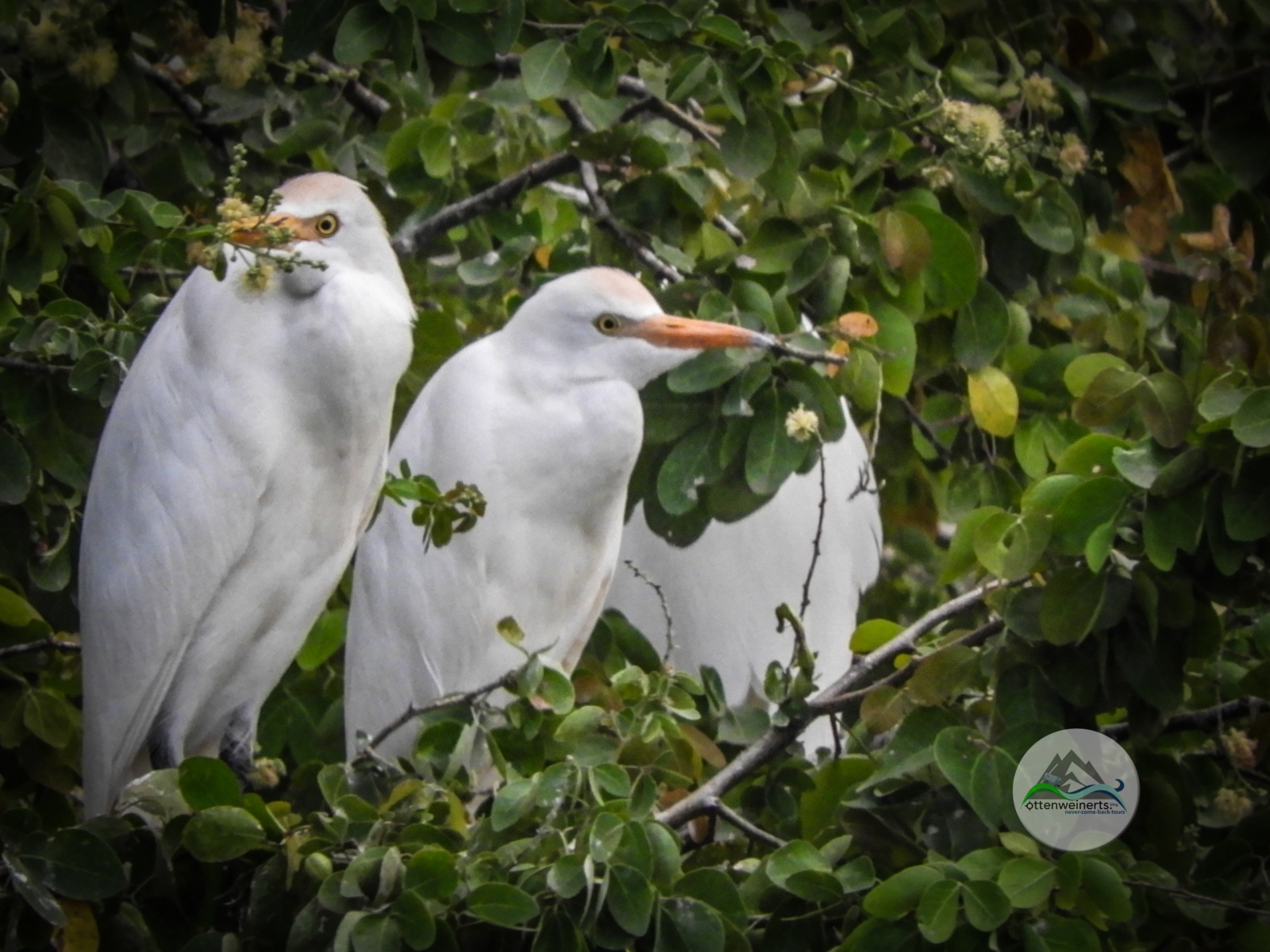
Sonntag und 1. Jänner nach dazu – fast alles geschlossen hier. Einer unserer Reifen benötigt Luft – aber erst die dritte Tankstelle am Weg hat auch offen. Dann geht es nach Südosten, Richtung Filadelfia, eine der Mennonitenstädte im Gran Chaco. Flaschenbäume säumen die „Autobahn“, auf den Telegraphenmasten hängen riesige Sittich-Nester und Geierfalken (Schopf-Karakaras) sitzen in den Bäumen.

Kaum verlassen wir die Routa Trans-Chaco, sind wir auch schon wieder auf einer Sandpiste, und die führt direkt nach Filadelfia, vorbei an Ortstafeln wie Schönbrunn, Schönwiese und Friedensruh. Am Parkplatz vom Hotel Florida parken wir uns ein, neben Overlandern aus Berlin mit ihrem großen Mercedes Truck – es ist nett hier, ruhig und es gibt einen schönen, großen Pool. Morgen werden wir Filadelfia erkunden.

Day 259 – Still in Gran Chaco

We sleep in and then enjoy the day at Renato´s and Cecile´s and the pool, of course. Today, the pool is also sort of necessary for Sigi who got stung by a large black wasp. We cool the area with ice, and Renato recommends salt water – so, into the pool because the water is slightly salty. In the early afternoon, lots of locals arrive, the pool is very crowded which makes swimming almost impossible. We say good-bye to our lovely hosts and then we are on our way.

Sunday, and January, 1st – almost everything is closed. One of our tires needs air – but the first two gas stations are closed, the third one is open for business. Then we drive south-east towards Filadelfia, one of the Mennonite towns in the Gran Chaco. Bottle trees grow on both sides of the “Highway”, there are huge parakeet-nests on the telegraph poles and in the trees, we see vulture falcons (crested caracara).

As soon as we leave the routa Trans-Chaco, we find ourselves on a sand road again, leading directly to Filadelfia, on the way seeing names like Schönbrunn, Schönwiese and Friedensruh. We drop our camper at the parking lot of Hotel Florida, right next to the big Mercedes Truck from German Overlanders from Berlin. It is nice here, quiet, and thre is a large pool. Tomorrow we will visit Filadelfia.

Routw 230101

221231 – Silvester in Paraguay >

Samstag / Saturday, December 31, 2022

Tag 258 – Silvester in Paraguay

Es ist heiß. Es ist Samstag. Und es ist Silvester. Und hier gibt es eine Waschmaschine. Und WiFi. Und einen Pool. Wir beschließen, heute einfach hier zu bleiben – unser tapferer Camper hat eine Pause verdient, und wir eigentlich auch. Der Tag vergeht mit Wäsche waschen, aufräumen und putzen, Updates und bürokratisches erledigen. Zwischendurch verfüttern wir alt gewordenes Brot an die Pferde, gehen schwimmen und suchen unser zweites Pannendreieck – man benötigt in Paraguay, so wie auch in Argentinien, zwei Pannendreiecke an Bord, und die Polizei kontrolliert das angeblich sehr gerne.

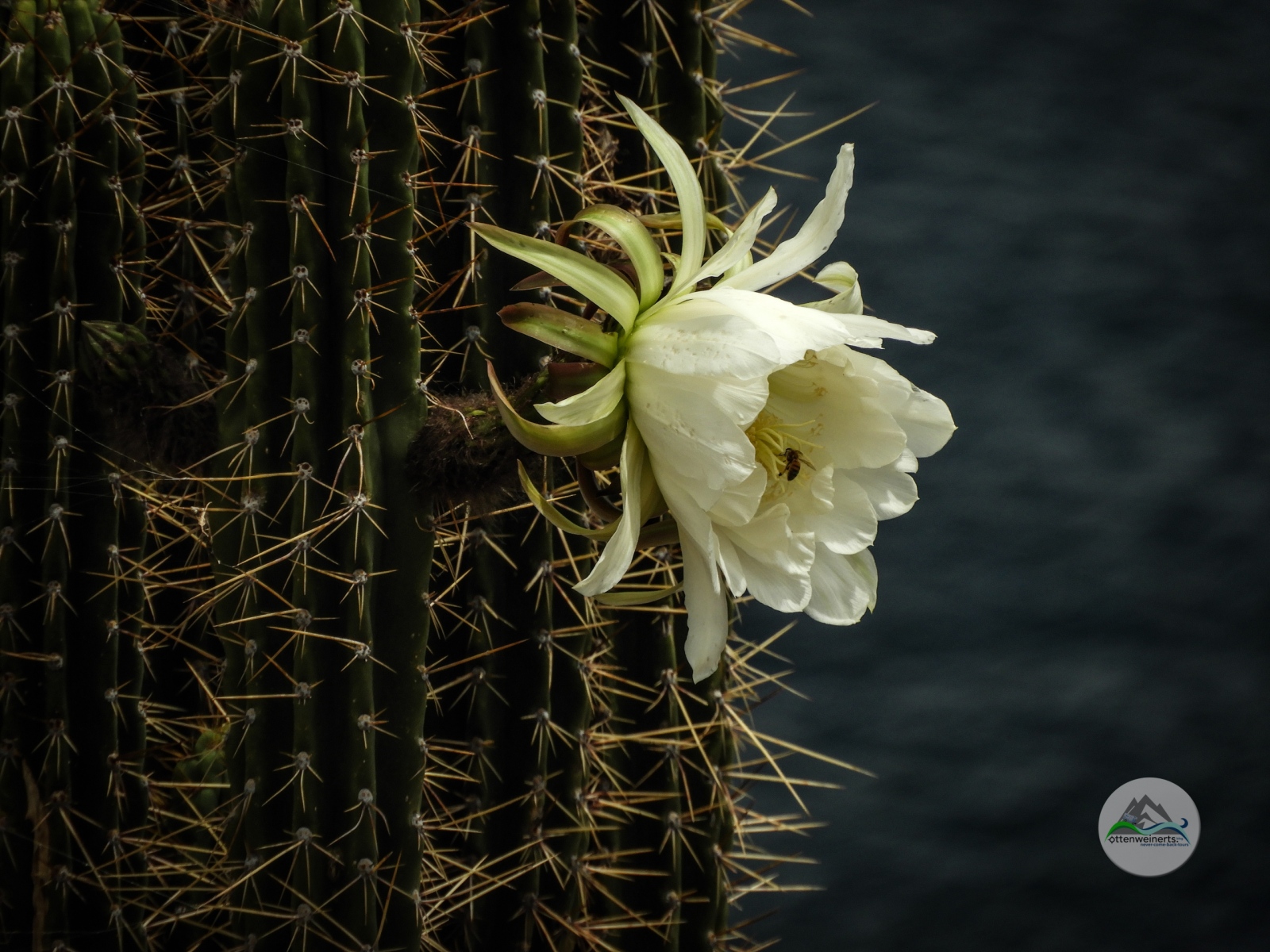
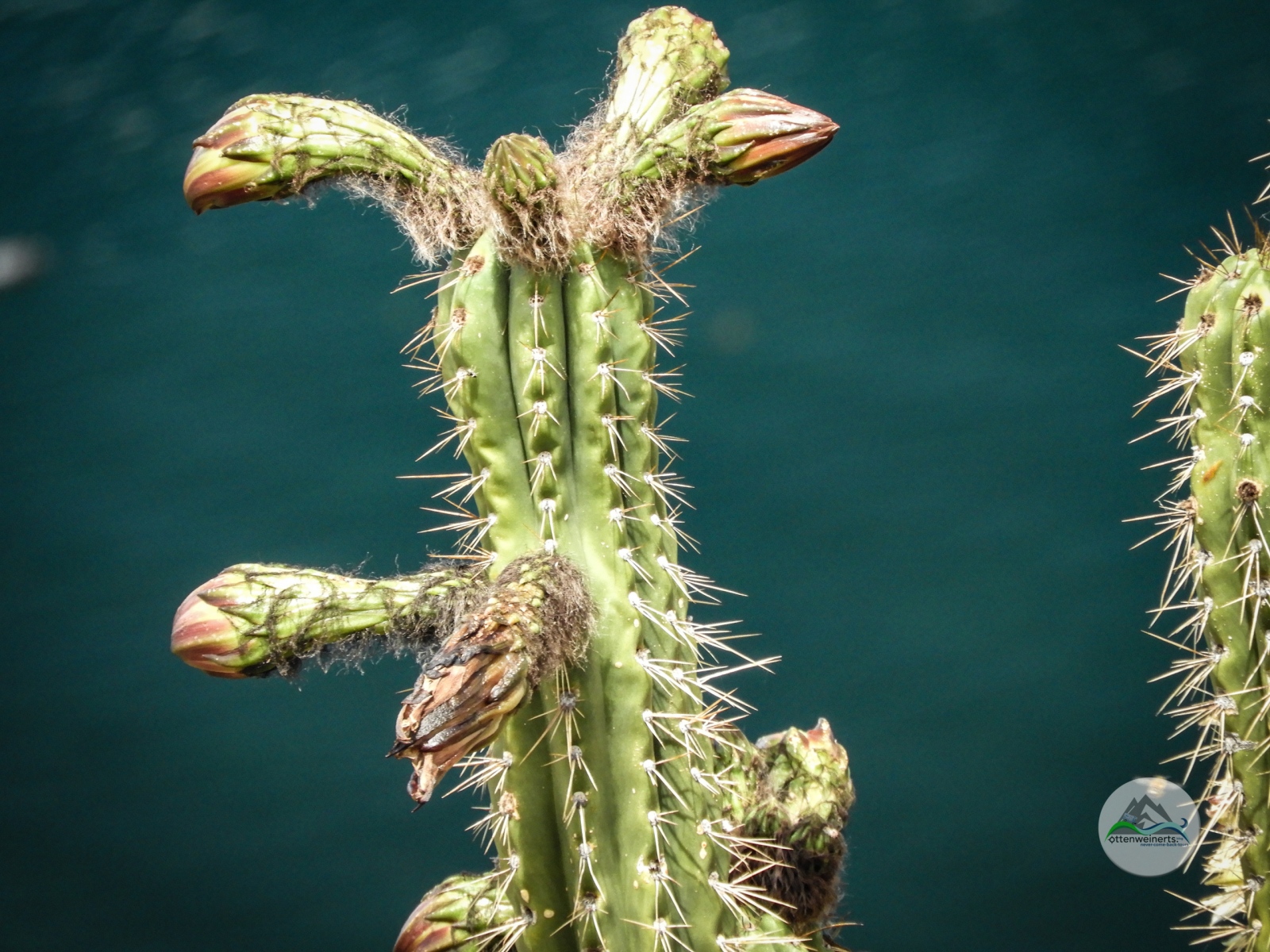
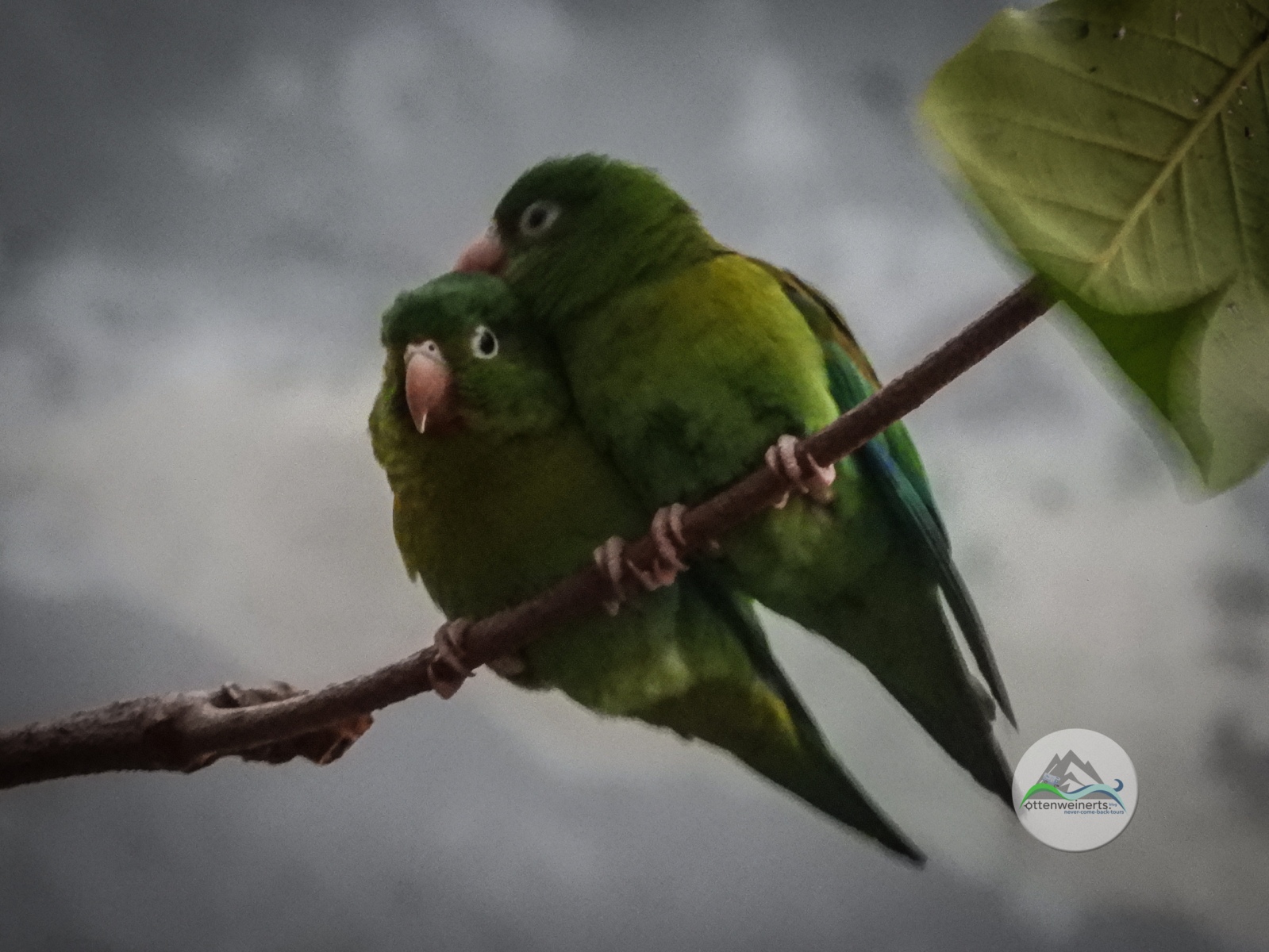
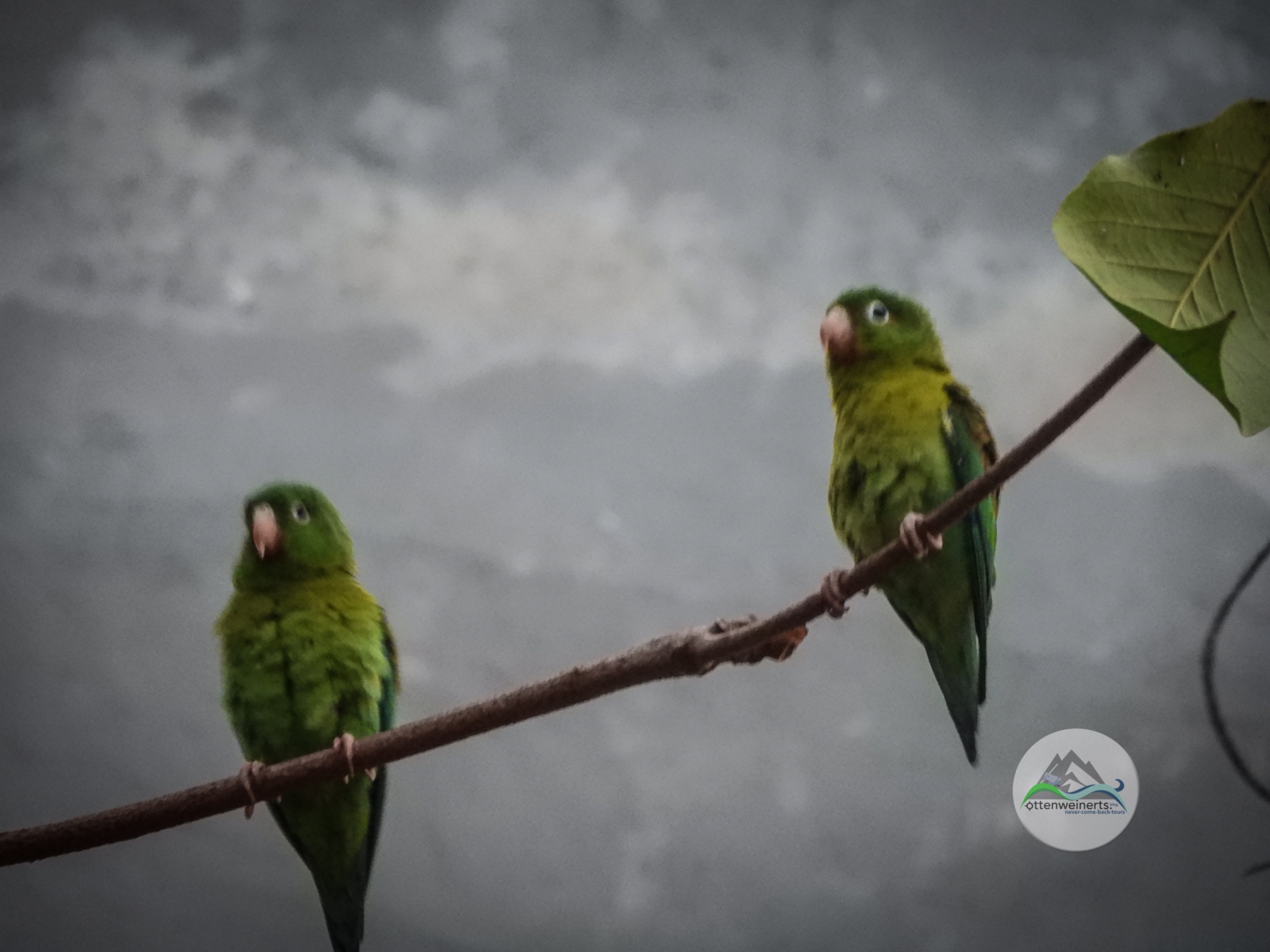
Dann finden wir heraus, dass Flaschenbäume ziemlich stachelig sind, und dass es sich bei den kleinen grünen Krachmachern in den Bäumen ringsum sowohl um Sittiche als auch um Papageien handelt. Die Sittiche bauen hier Gemeinschaftsnester, die uns an die Webervögel in Namibia erinnern – entsprechend ist auch der Geräuschpegel.

Mittags ist es beinahe unerträglich heiß, am späten Nachmittag erwachen die Moskitos aus ihrem Mittagsschlaf und abends gibt es ein Silvester-Buffet. Ich spiele mit dem jüngsten Sohn aus dem Hause Rosaleda eine Partie Tischfußball und dann auch noch Billard – und verlieren natürlich haushoch. Wir halten durch bis Mitternacht, und stoßen dann mit Leuten, die wir noch nie zuvor gesehen haben, auf das Neue Jahr an. YouTube liefert den Donauwalzer für ein paar Umdrehungen, und dann fallen wir in unsere Betten – so lange waren wir in den letzten 8 Monaten nicht auf.

Day 258 – New Year´s Eve in Paraguay

It is hot. Today is Saturday. And New Year´s Eve. And they have a washing machine here. And WiFi. And a pool. We decide to stay here today – our brave camper is entitled to a brake, and so are we. The day goes by with doing the laundry and cleaning our home on wheels, downloading updates and writing emails. We meet the horses here, they get our old bread, and we go swimming. Then we search for our second break down triangle – in Paraguay you need 2 of them, same in Argentina, and we heard that the police like to check if you really have 2.

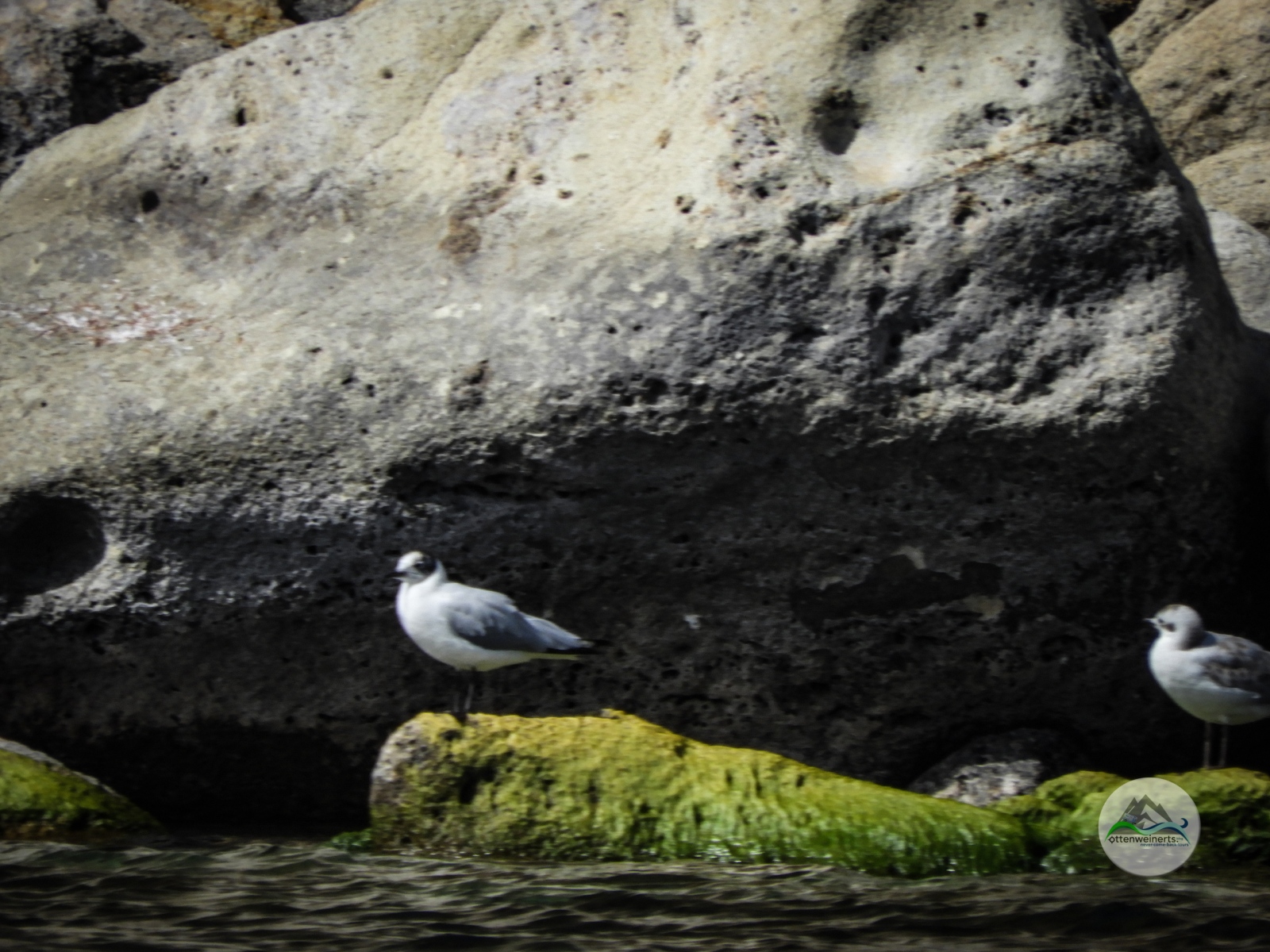
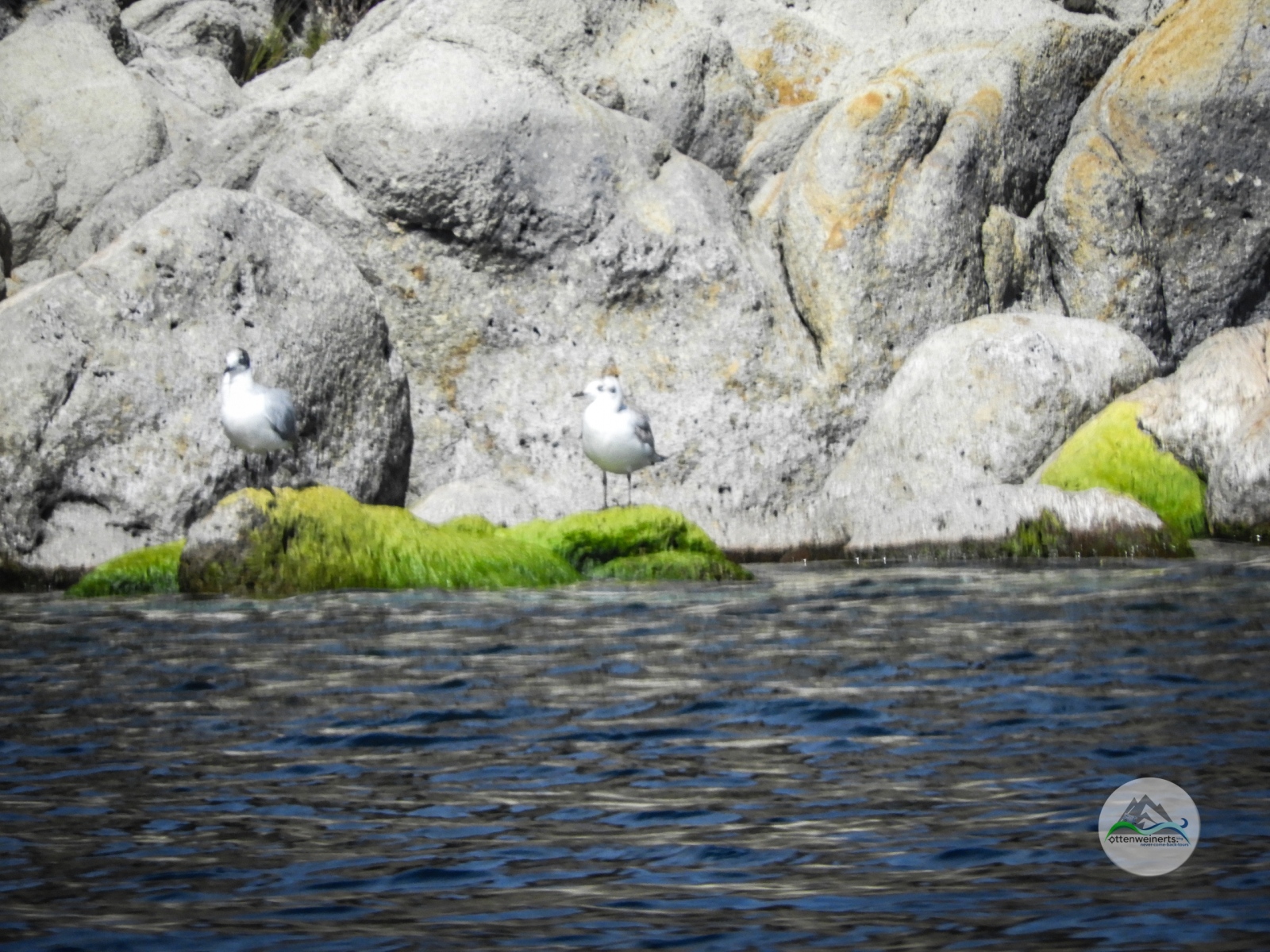
Then we find out that the bottle trees do have impressive thorns, and that there are parrots and parakeets in the trees around here – the little green birds which are causing quite a ruckus are the parakeets, and the build large community nests which remind us of the weaver birds in Namibia.
At noon it is almost unbearably hot, late afternoon the mosquitoes awake from their siesta, and in the evening, we enjoy the New Year´s Eve buffet. I try my luck, playing table top soccer and also Billiard with the youngest son of House Rosaleda – and loose both games. We endure till midnight, and then raise our glasses to a toast for 2023, with people we have never met before. YouTube plays the Danube Waltz for us – we are Austrians, that´s a tradition – and then we fall into our beds. We haven´t been up till past midnight in the last 8 months!

221220 – Isla del Sol, Titicaca-See

Dienstag / Tuesday, December 20, 2022

Tag 247 – Isla del Sol, Titicaca-See

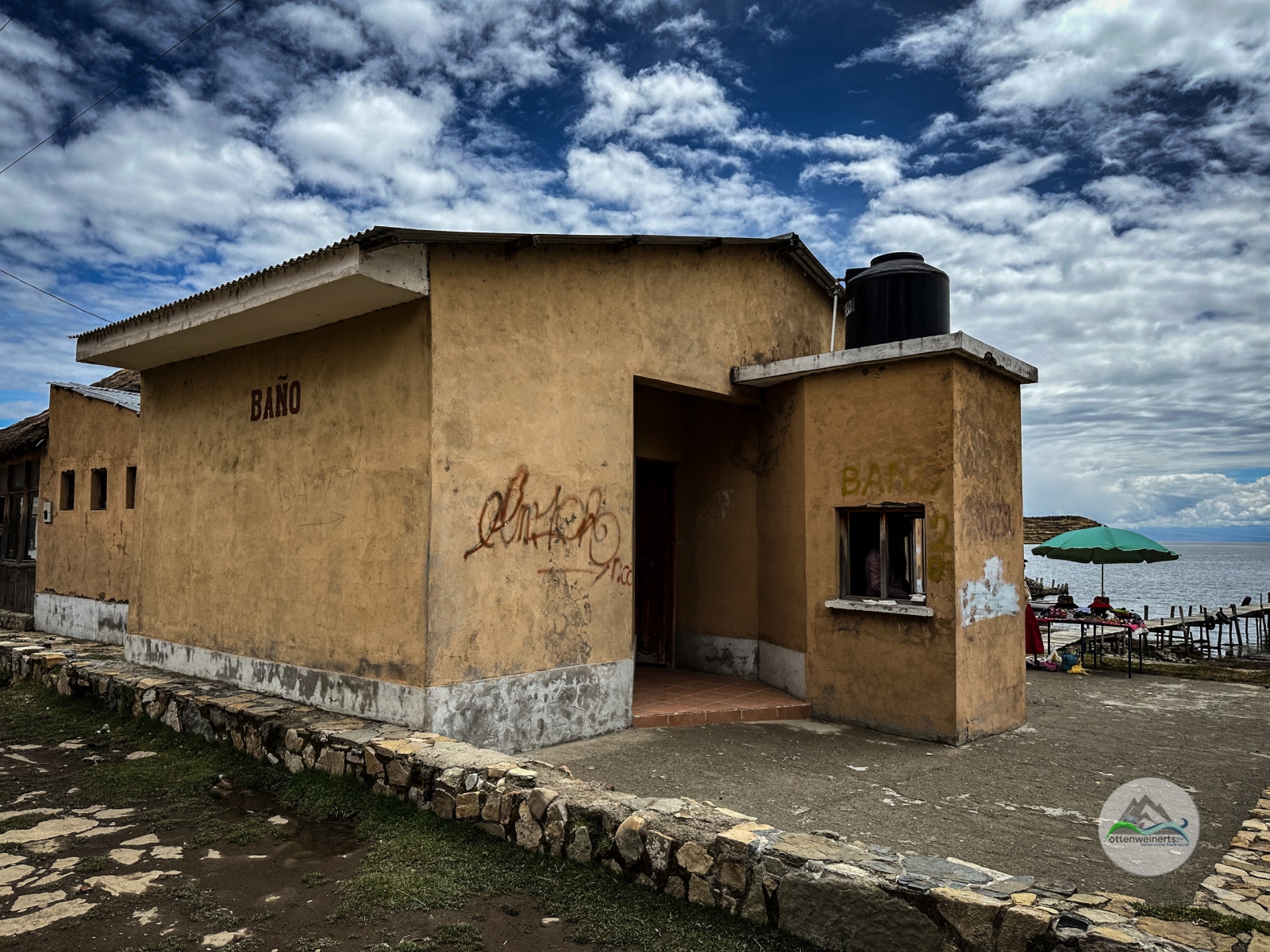
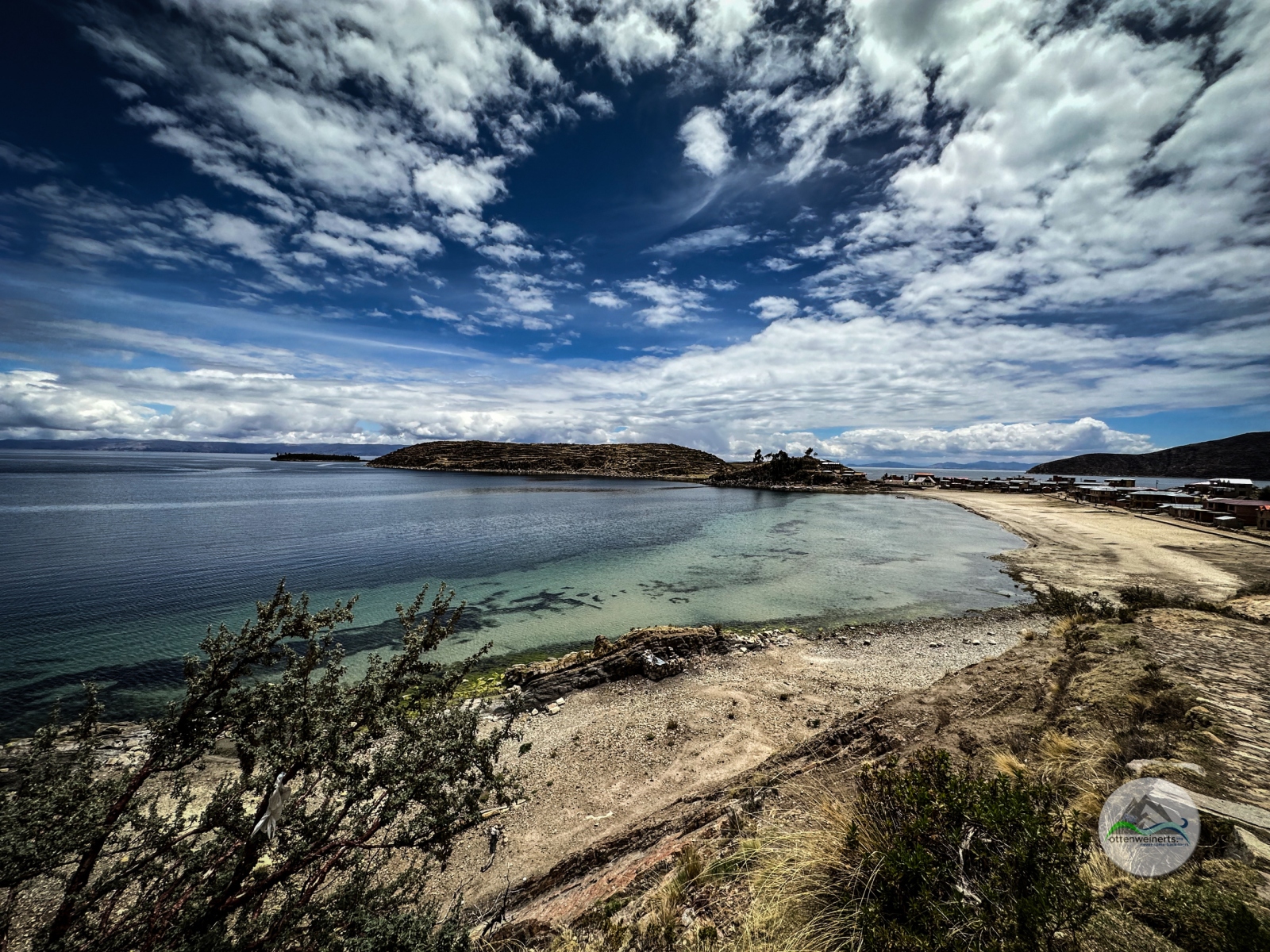
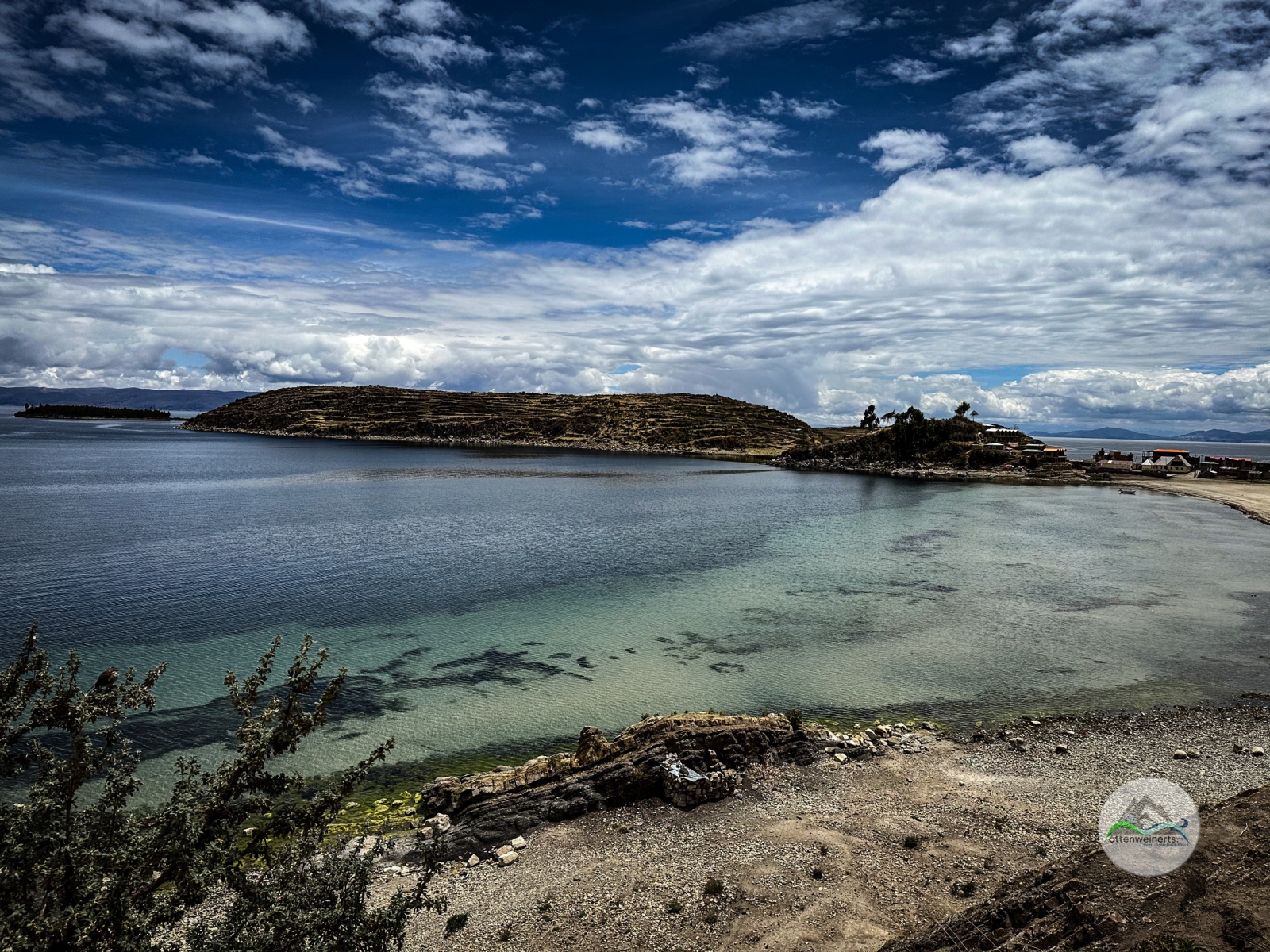
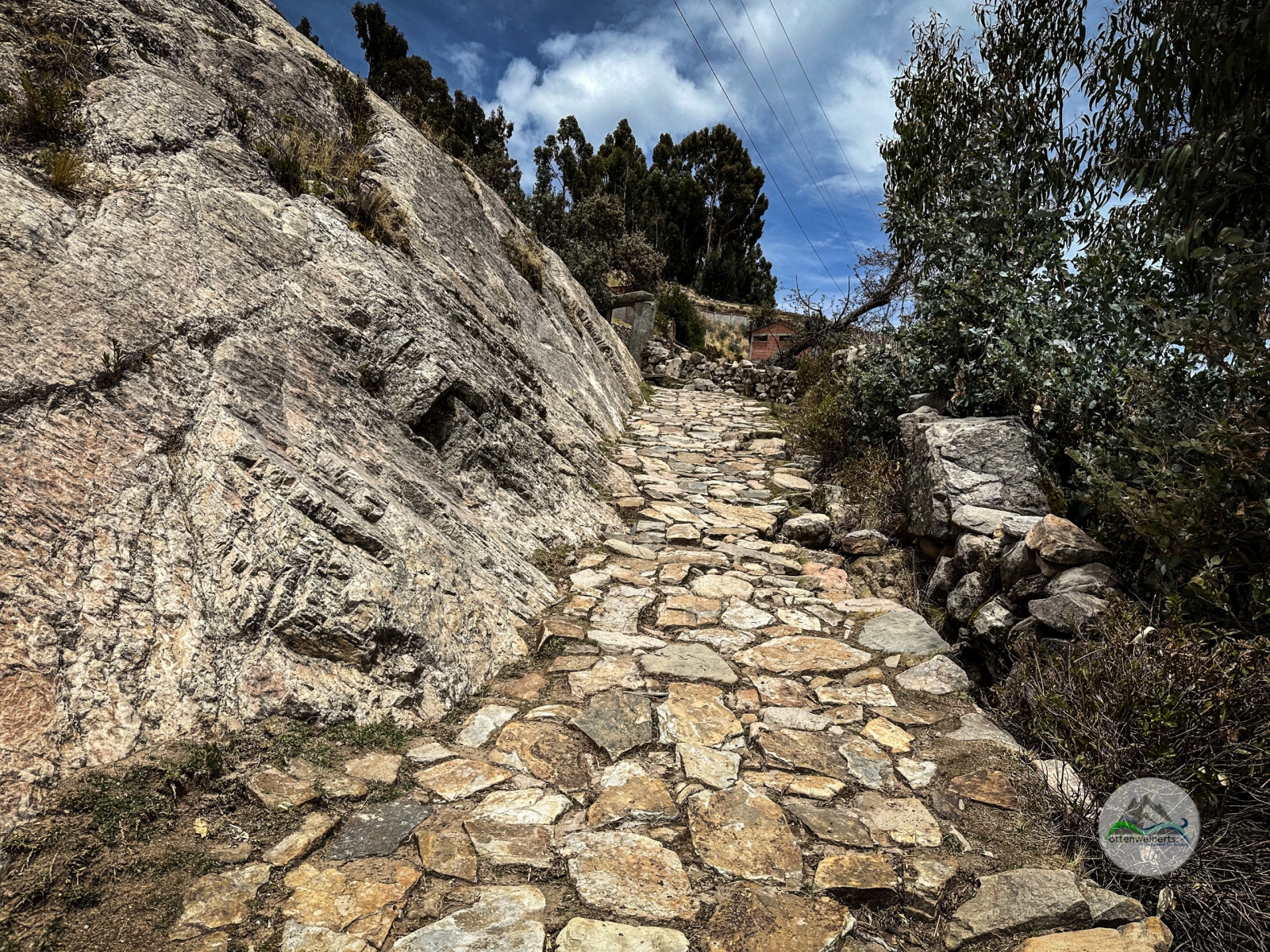
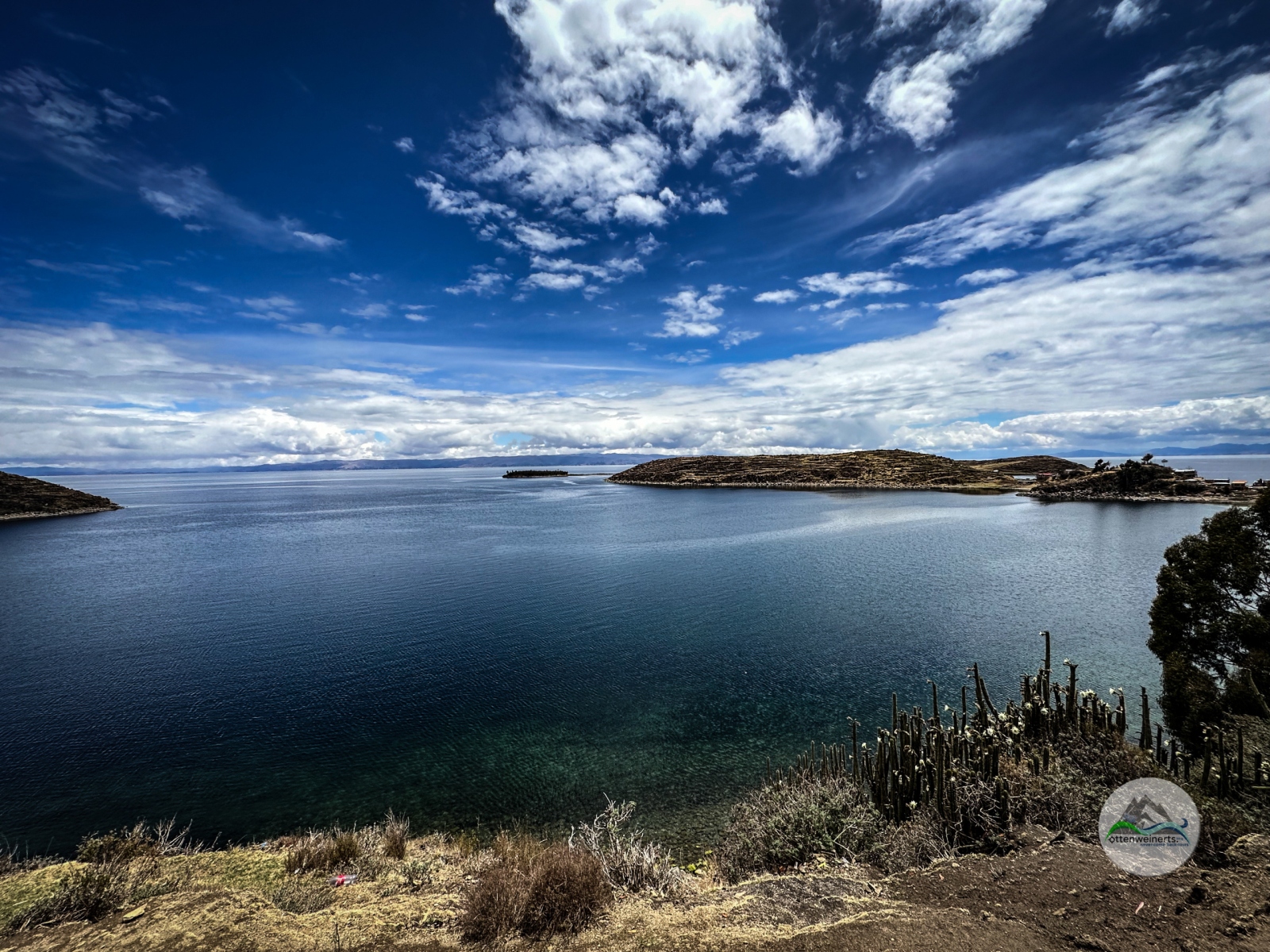
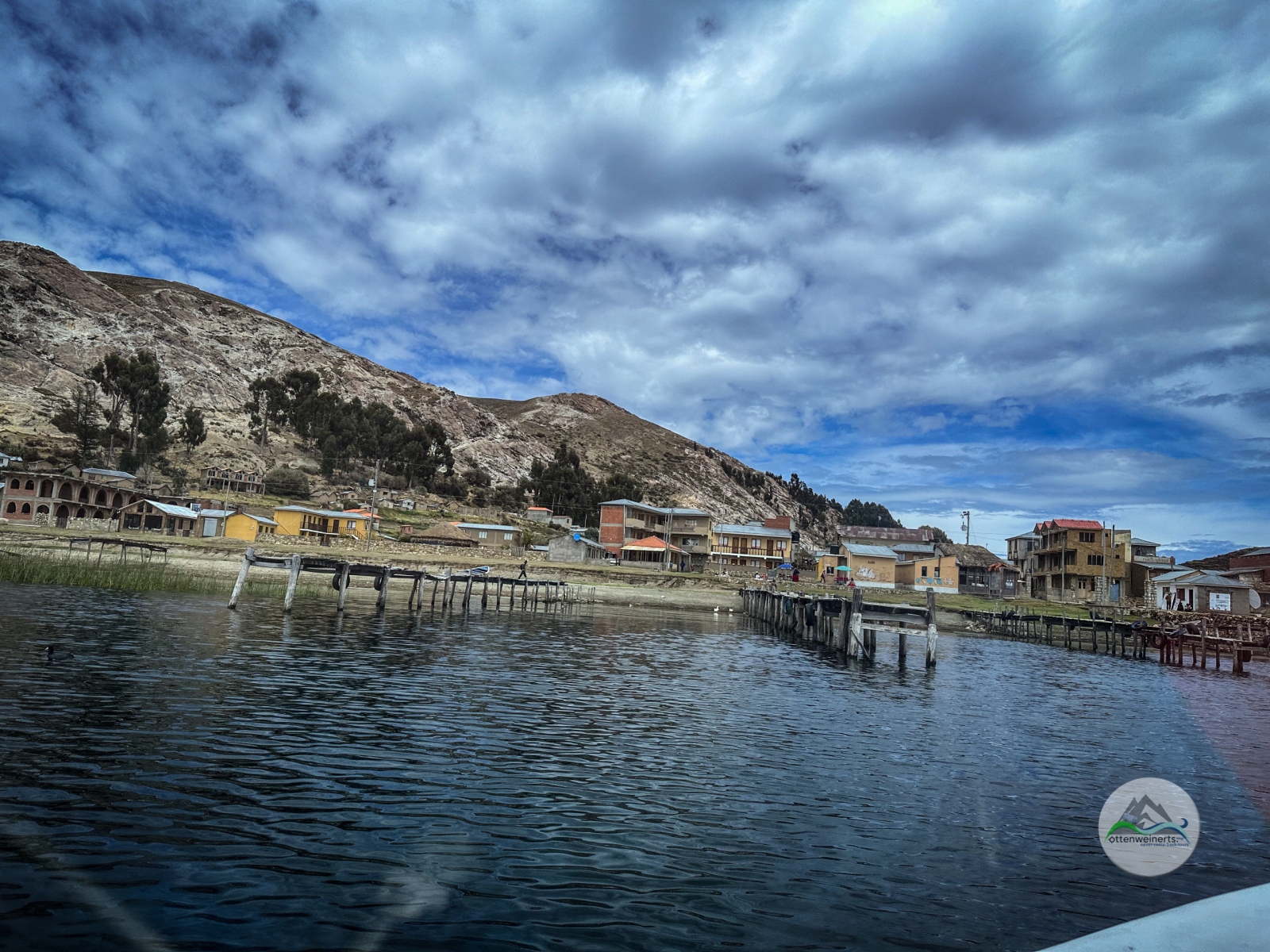
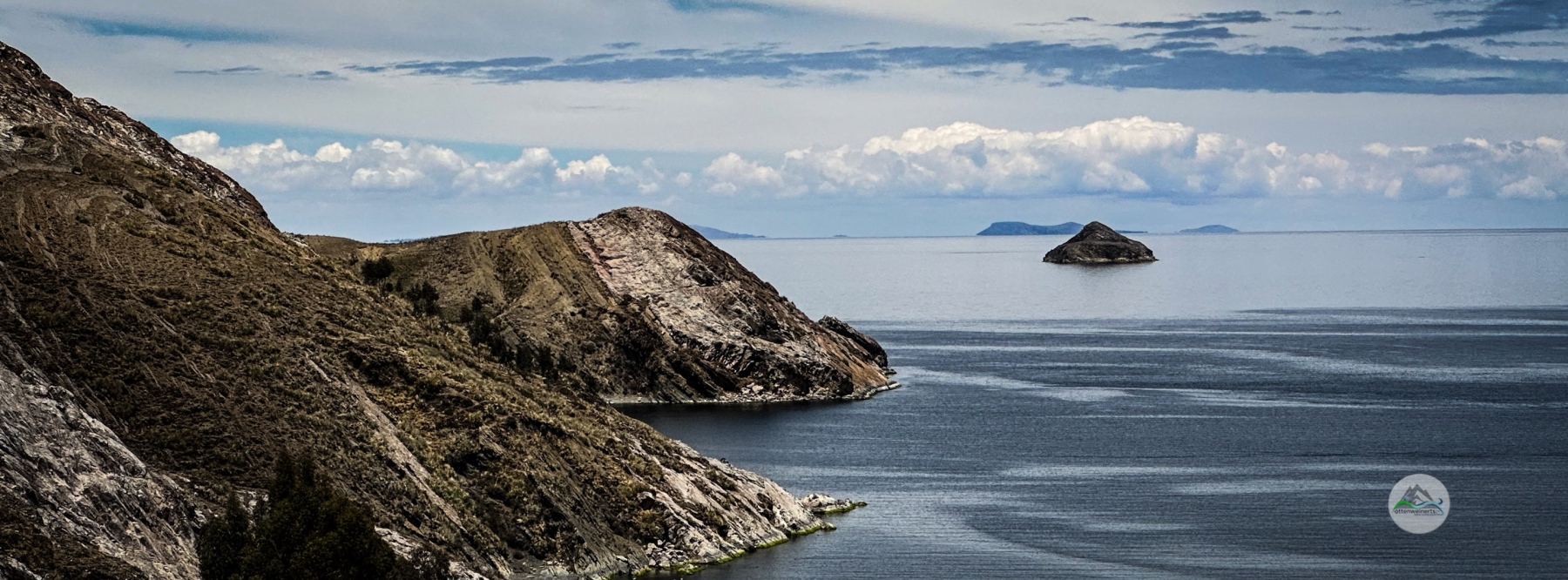
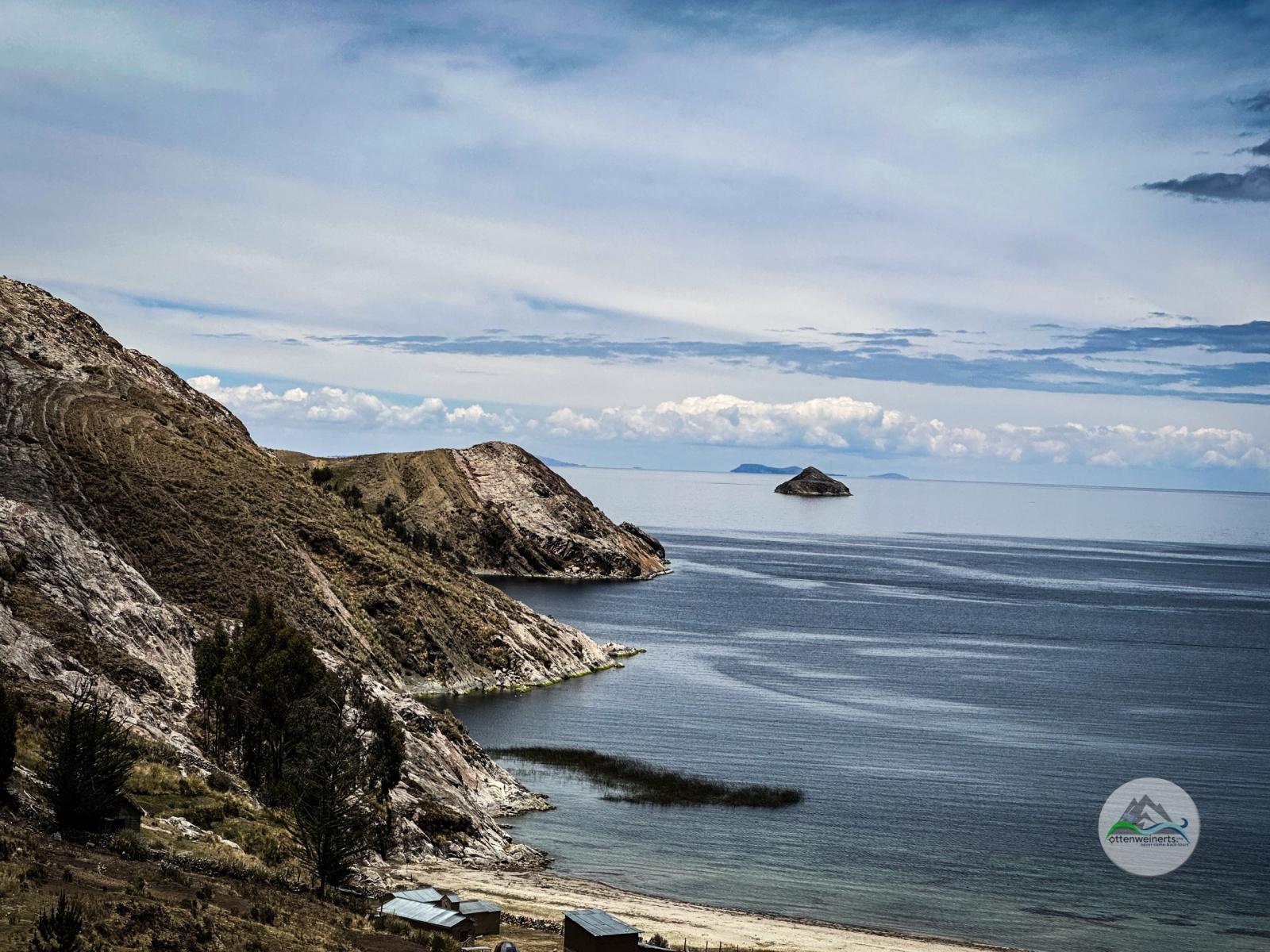
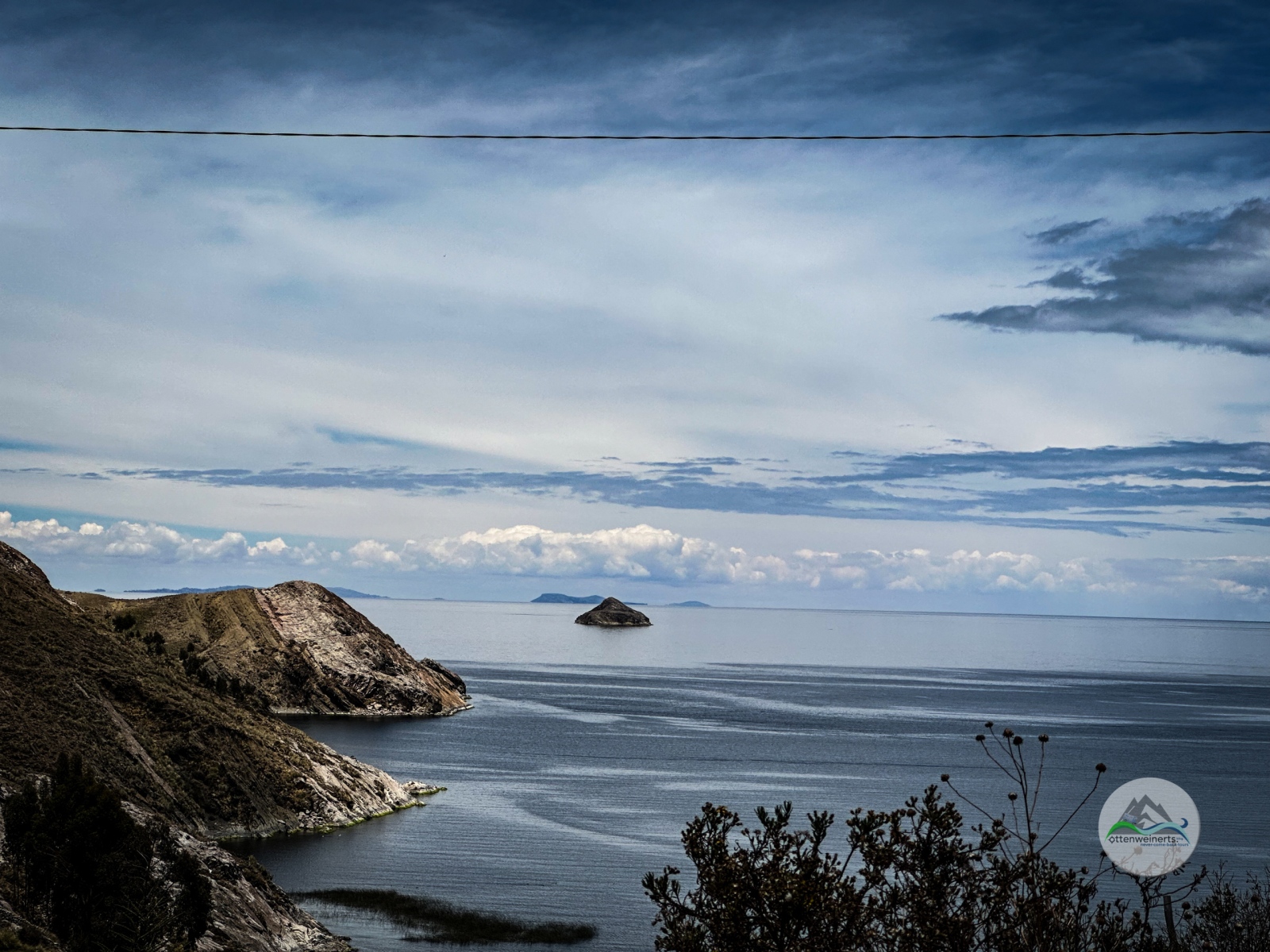
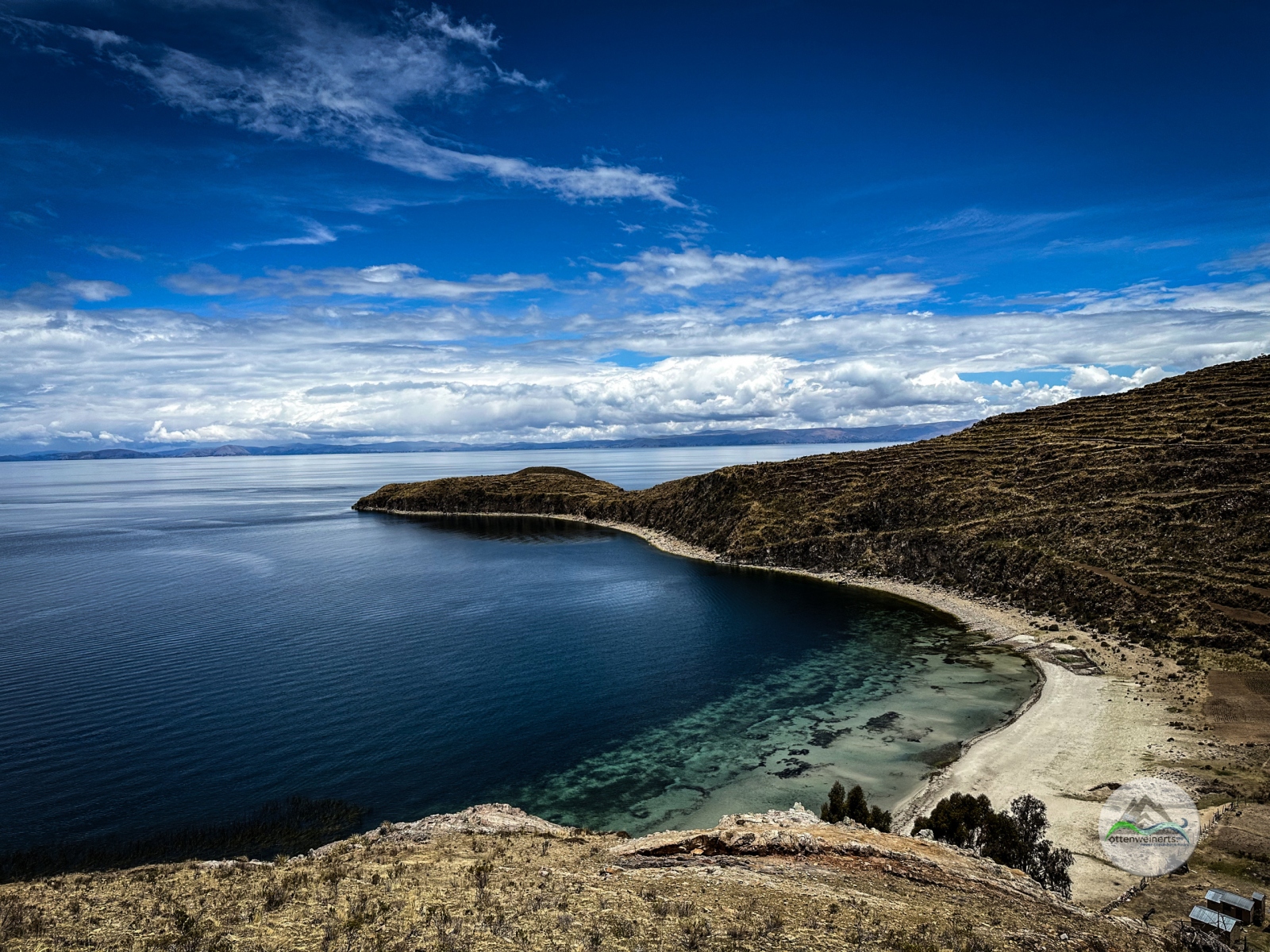
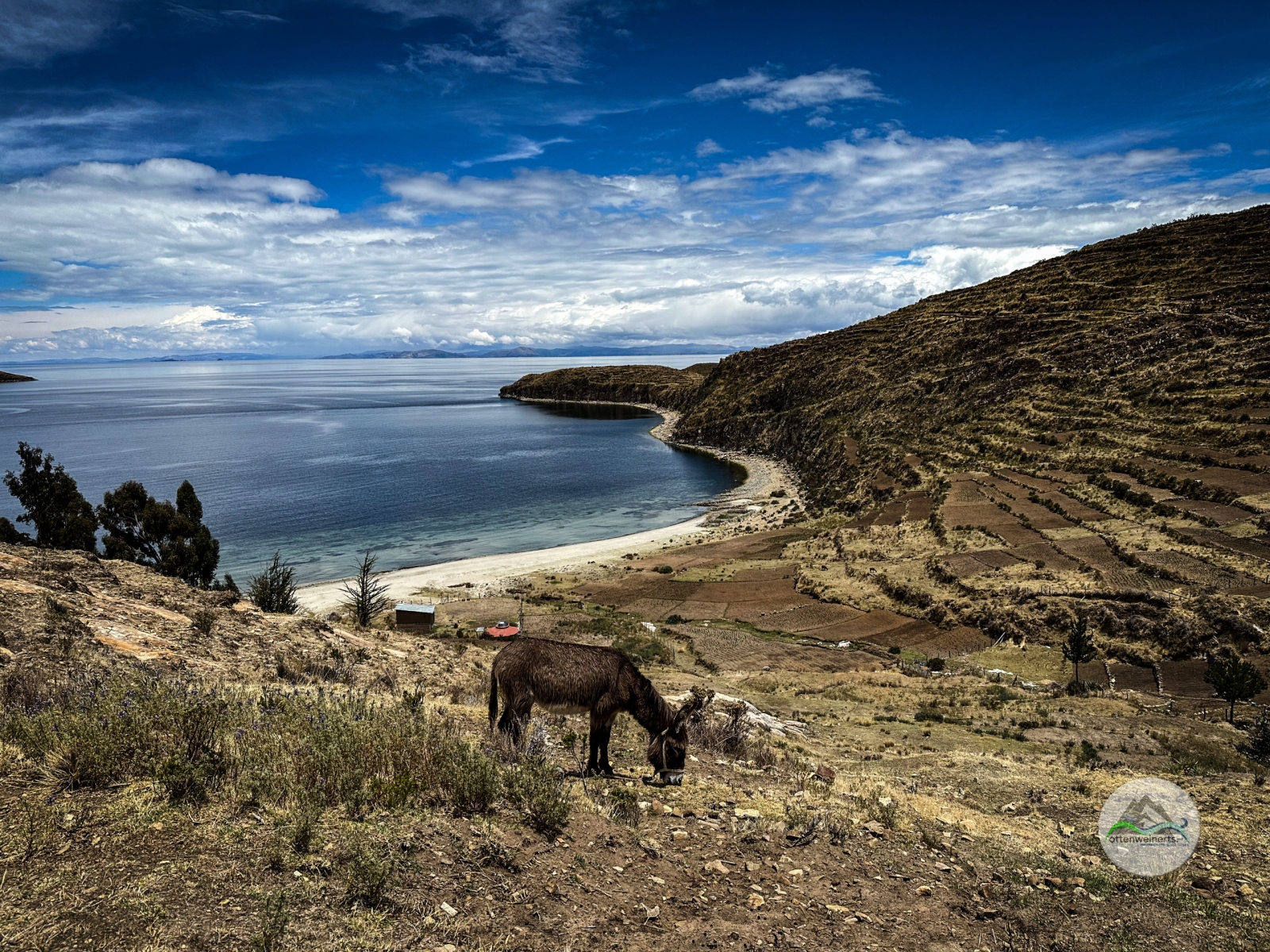
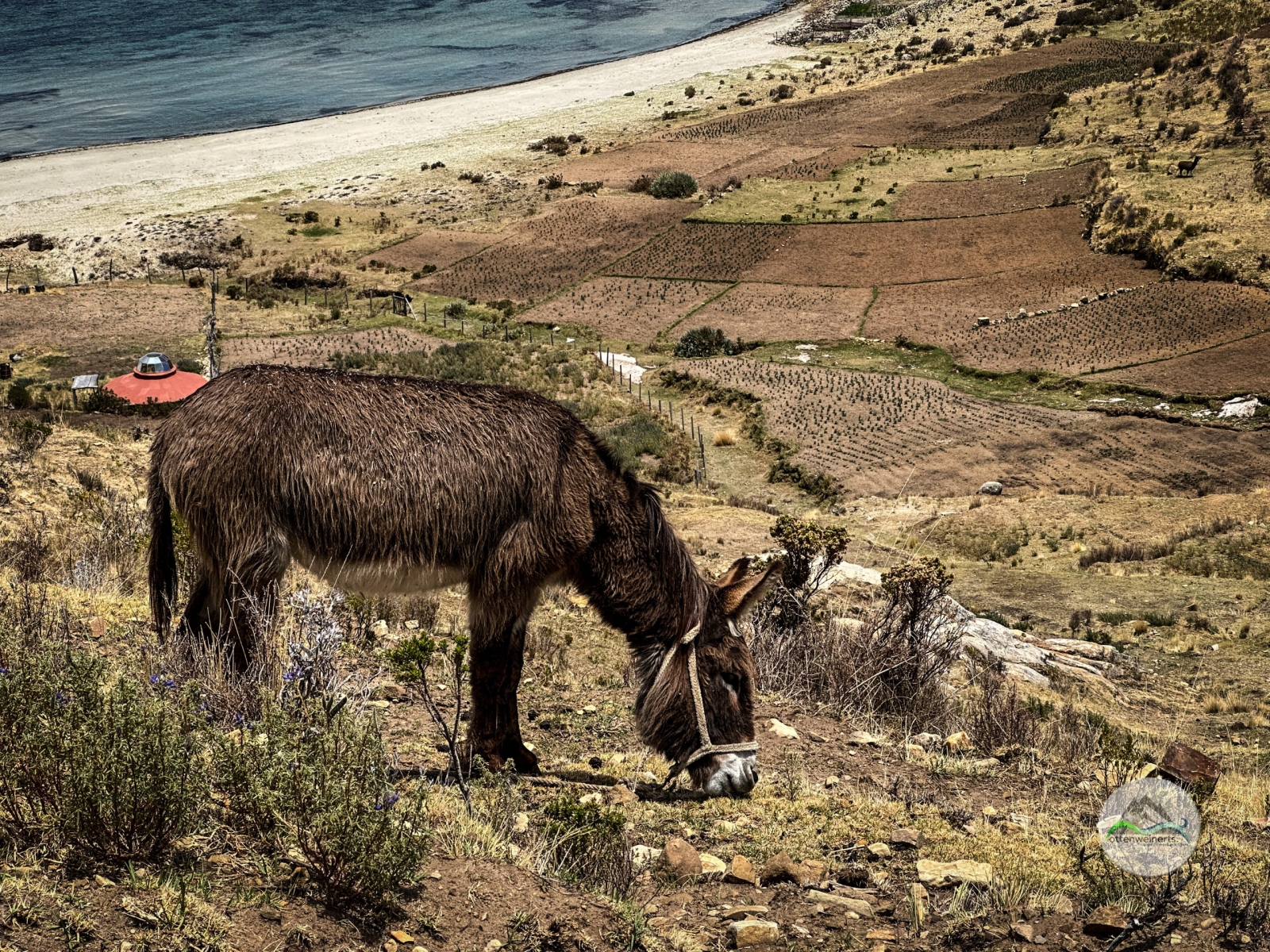
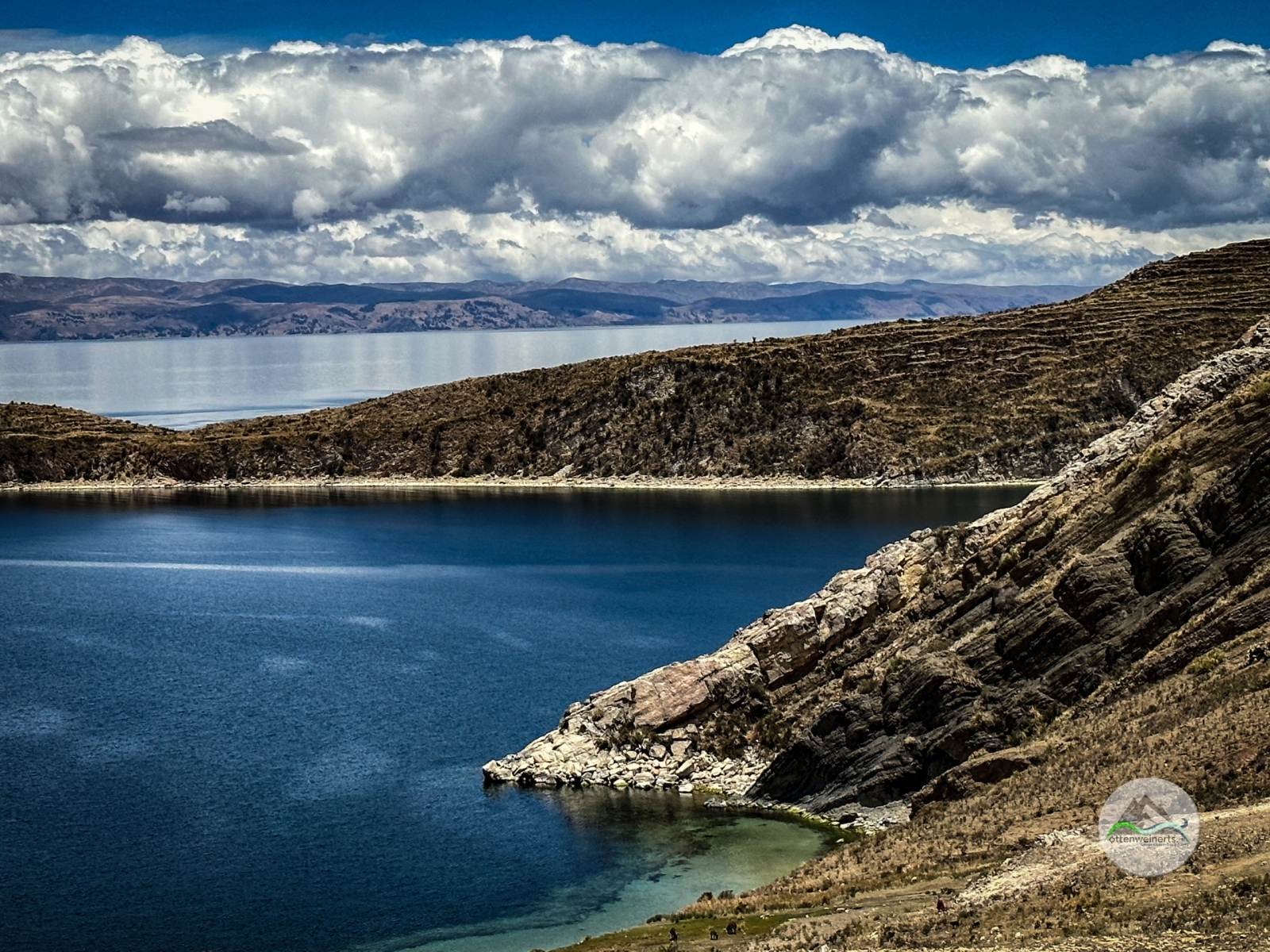
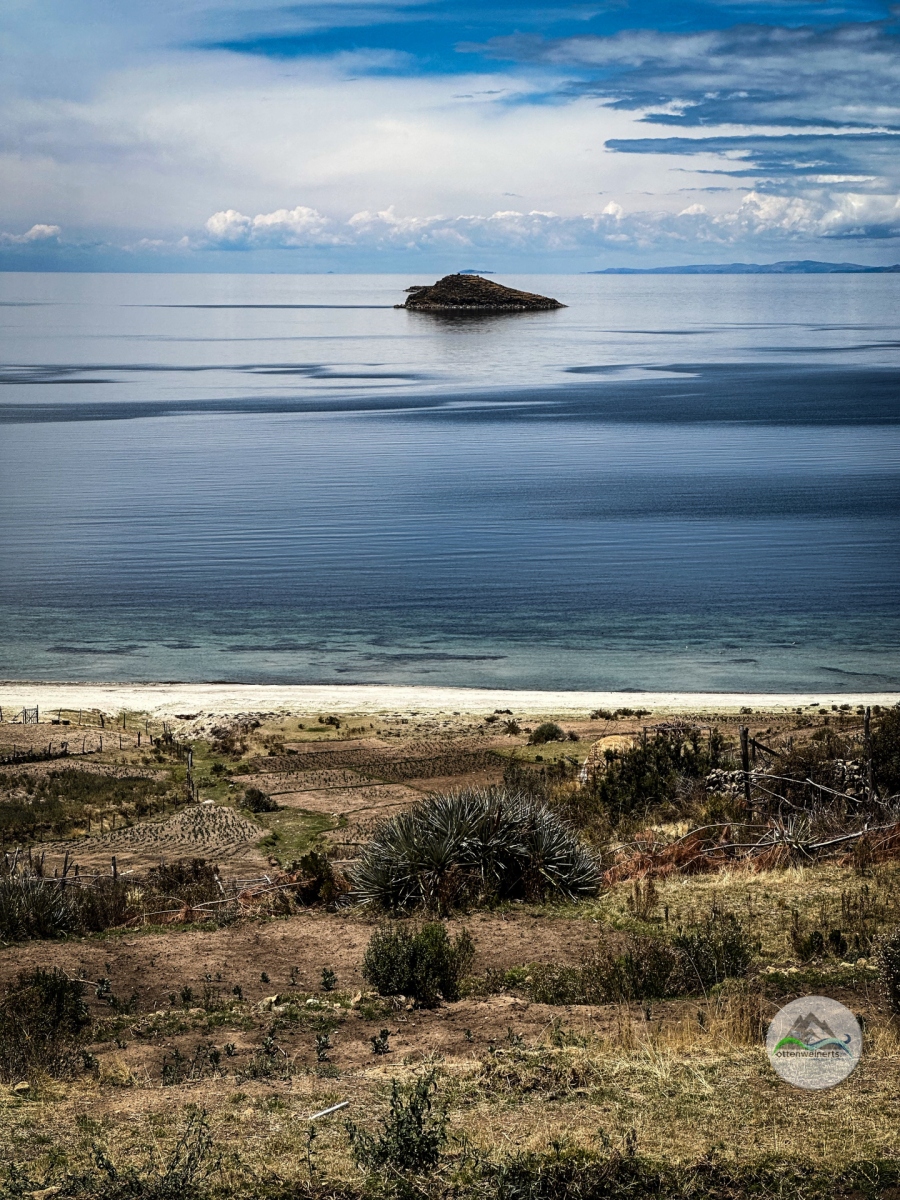
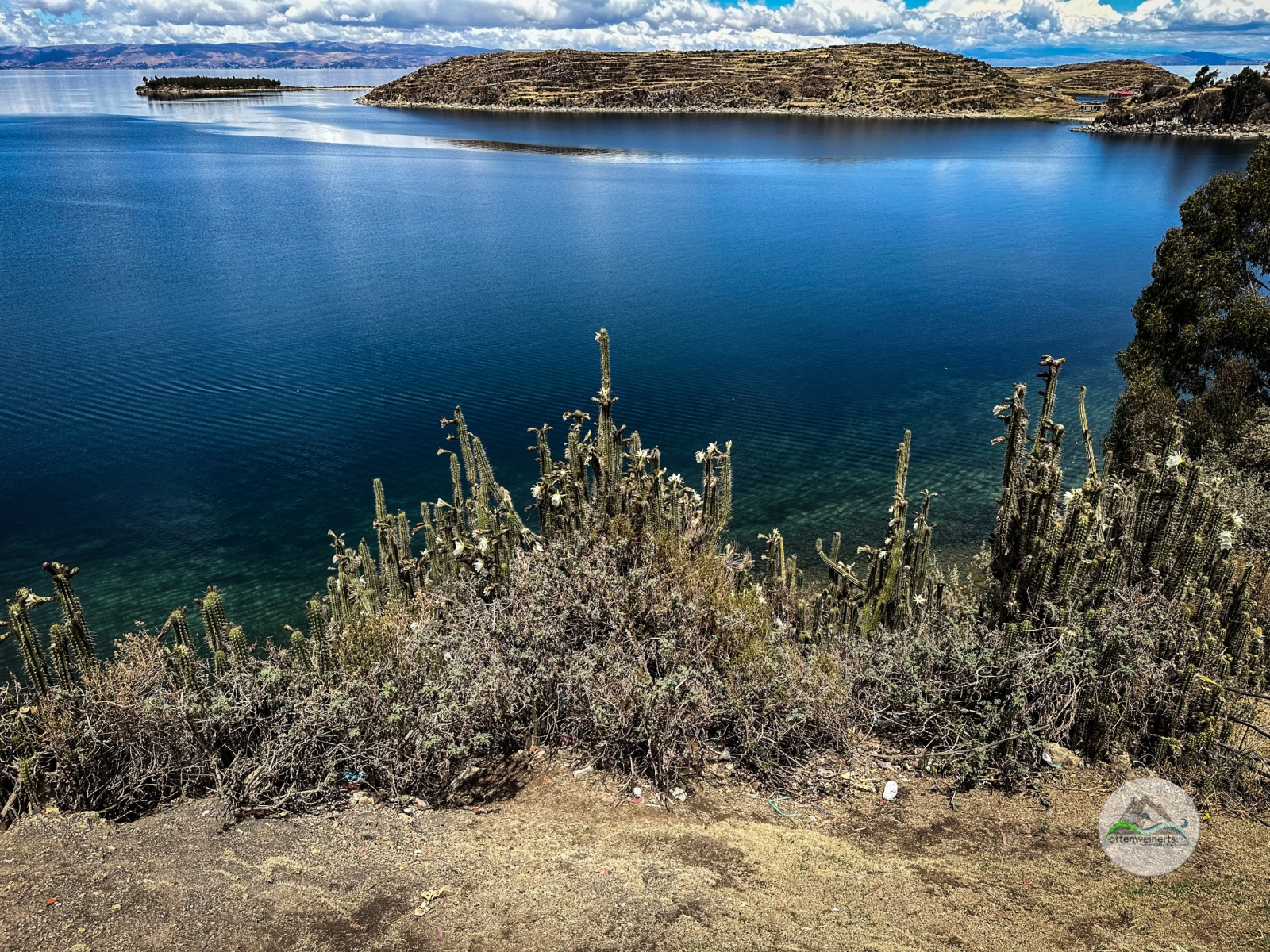
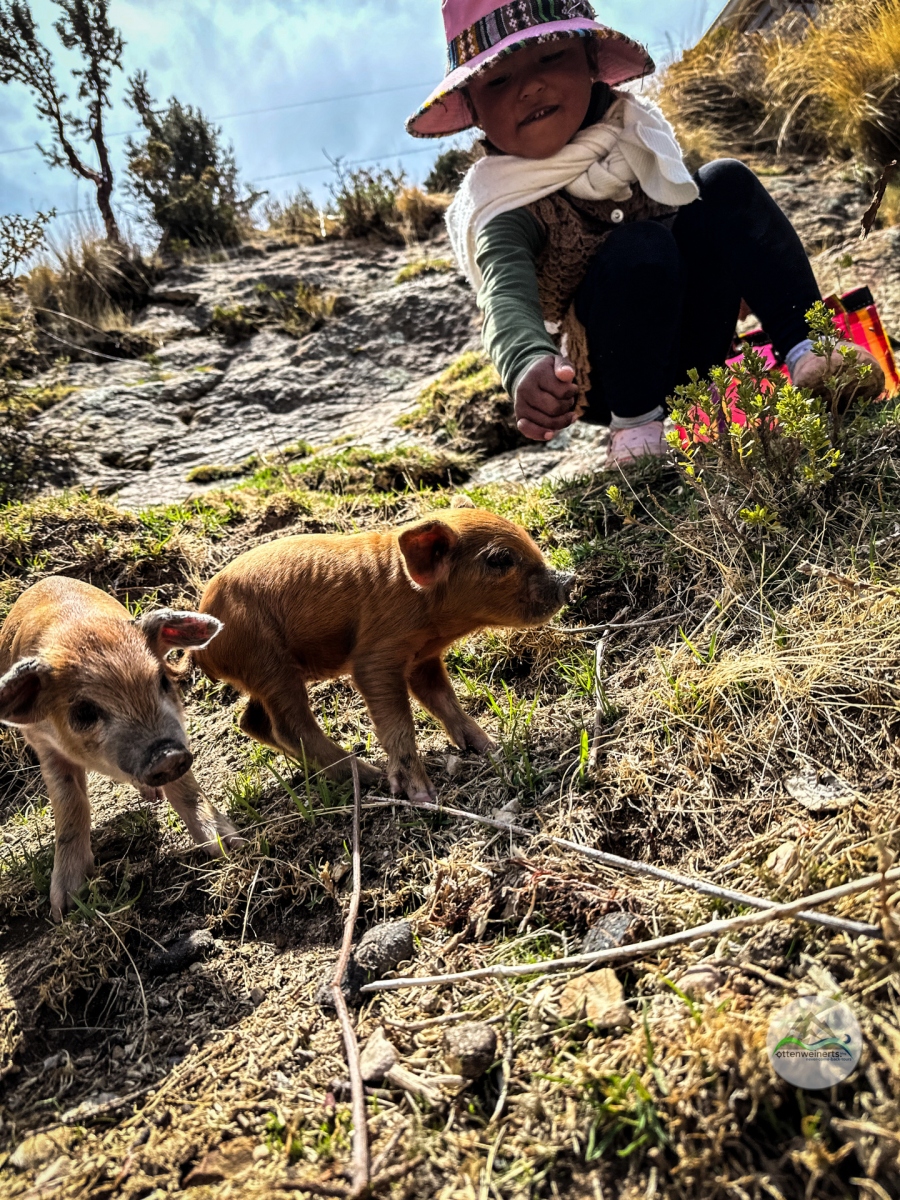
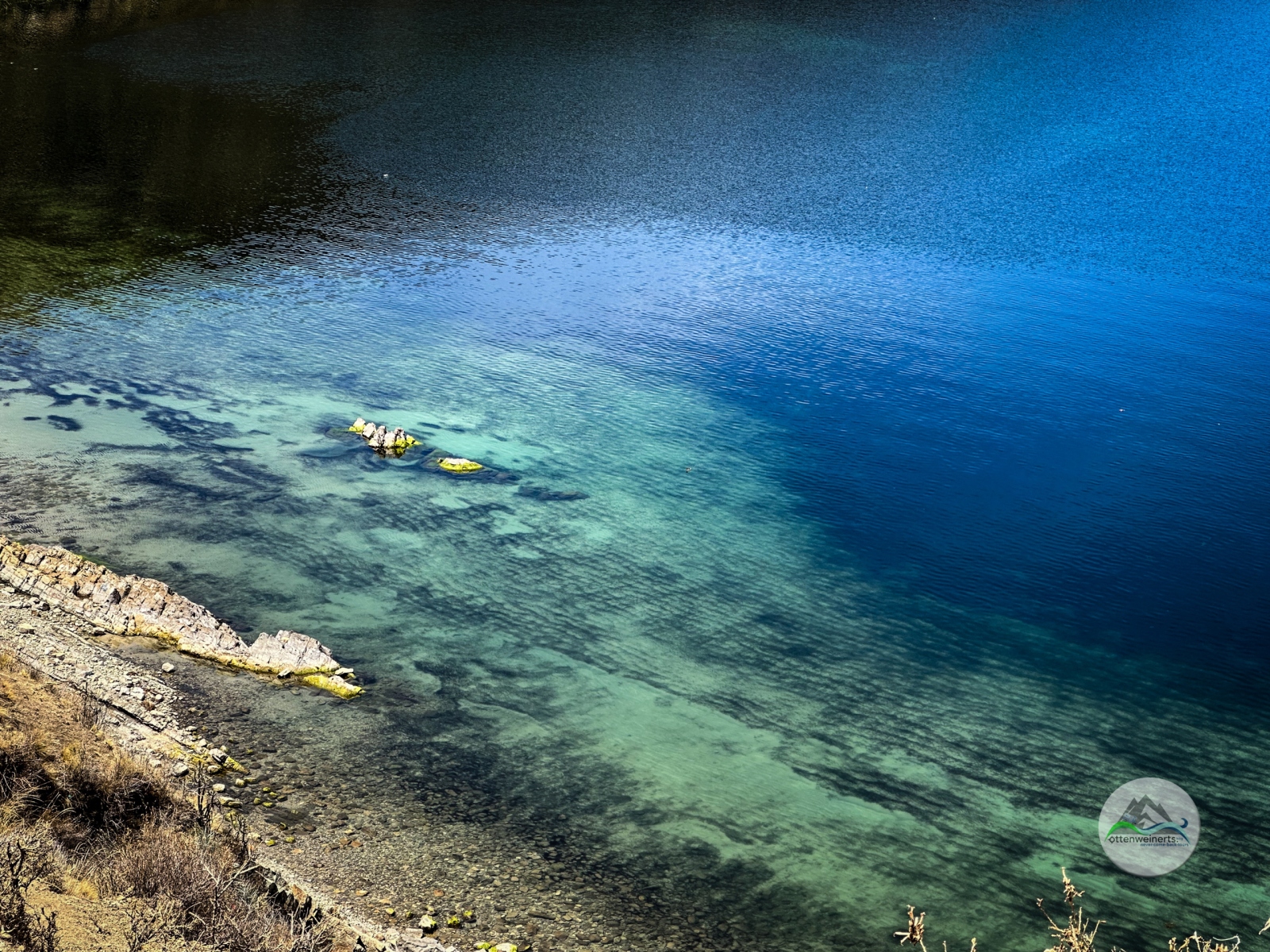
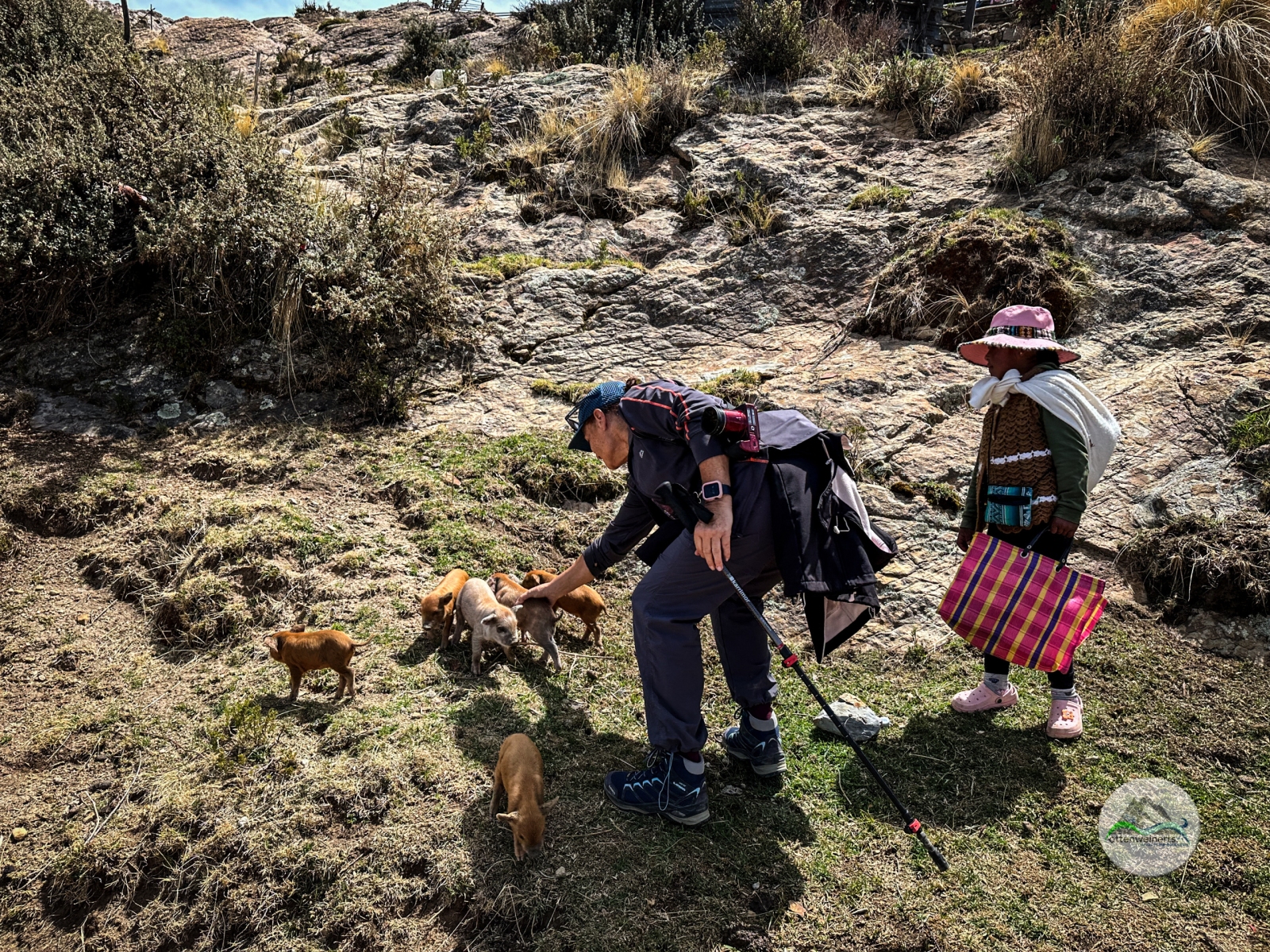
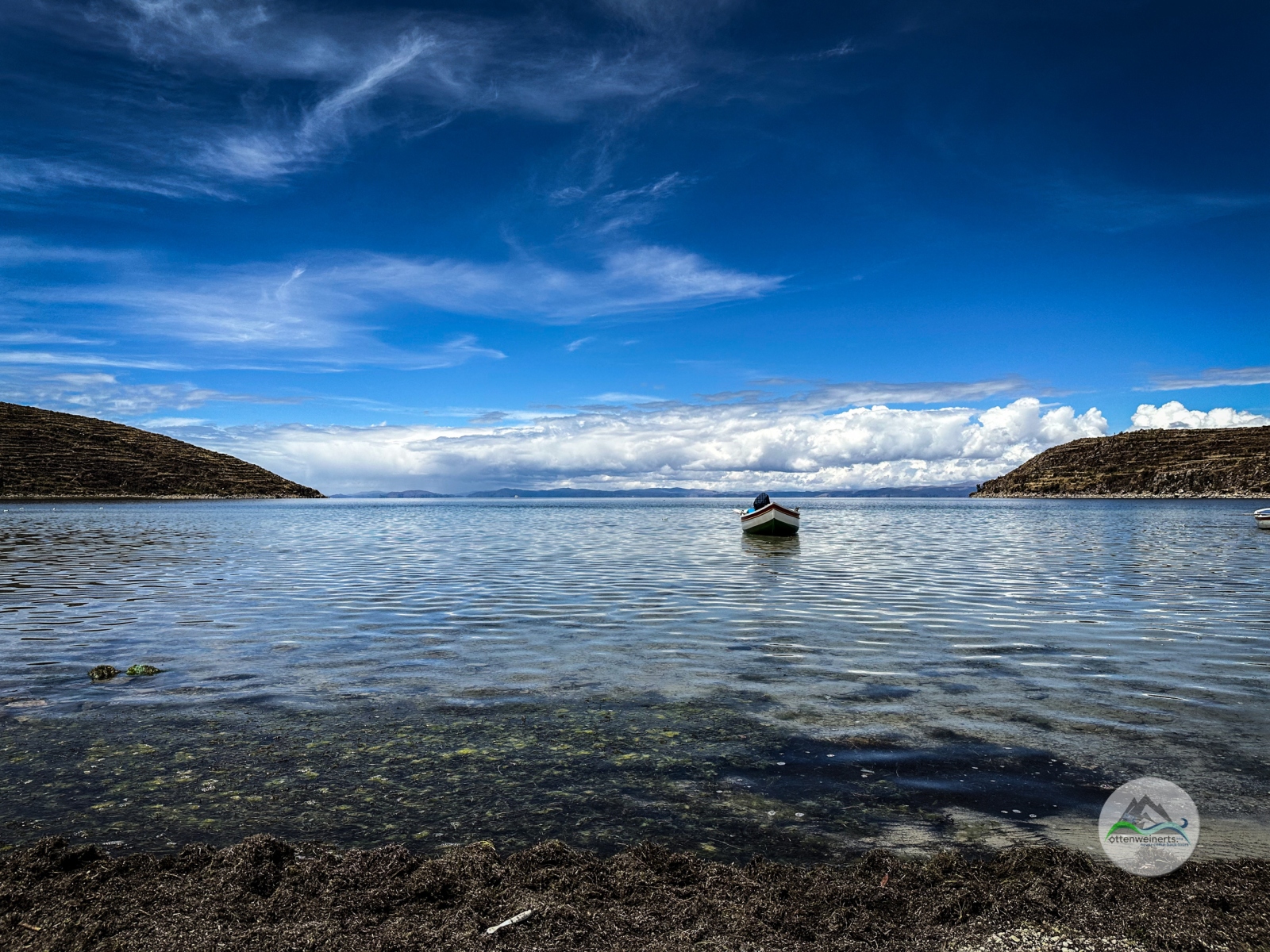
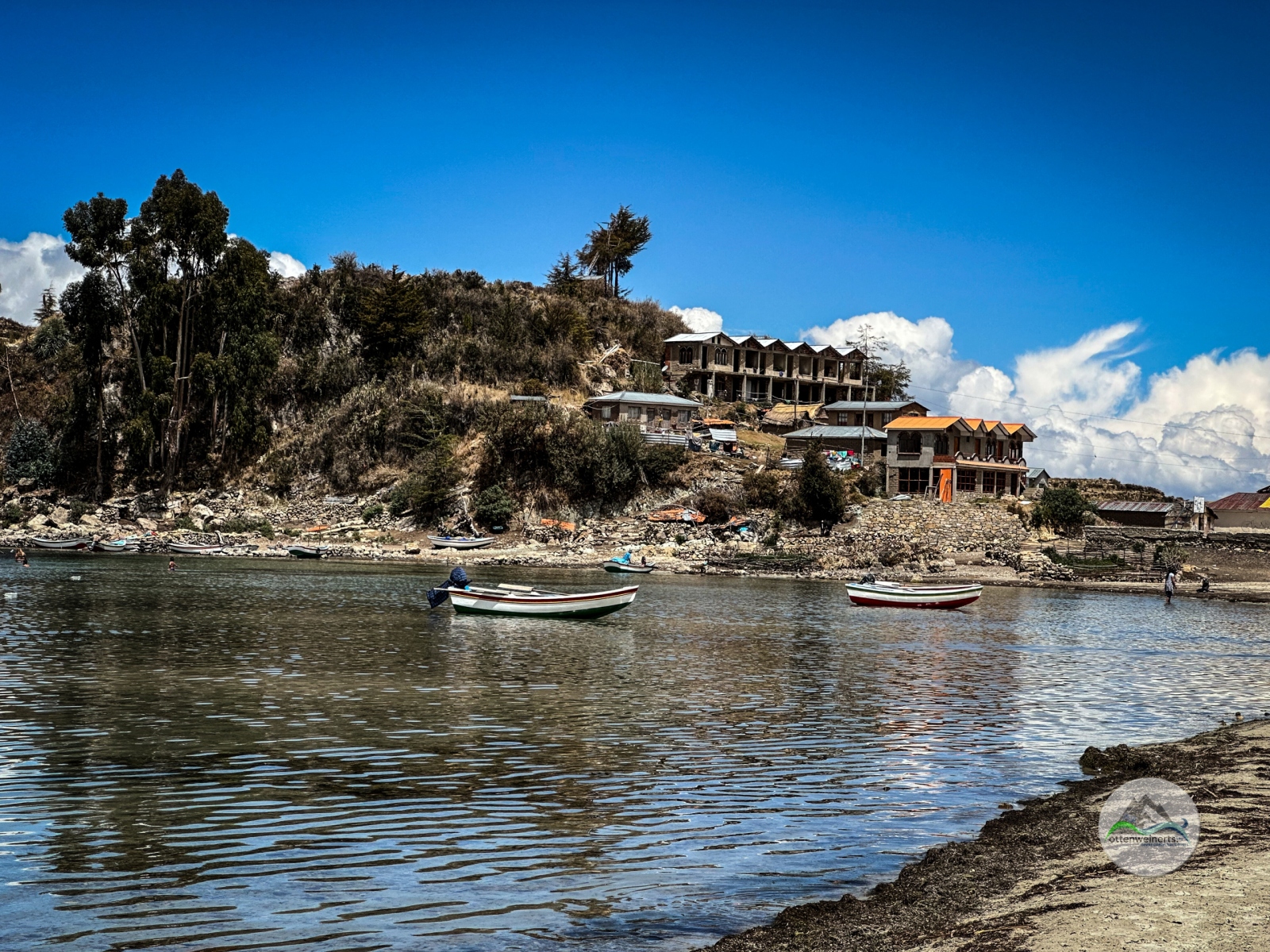
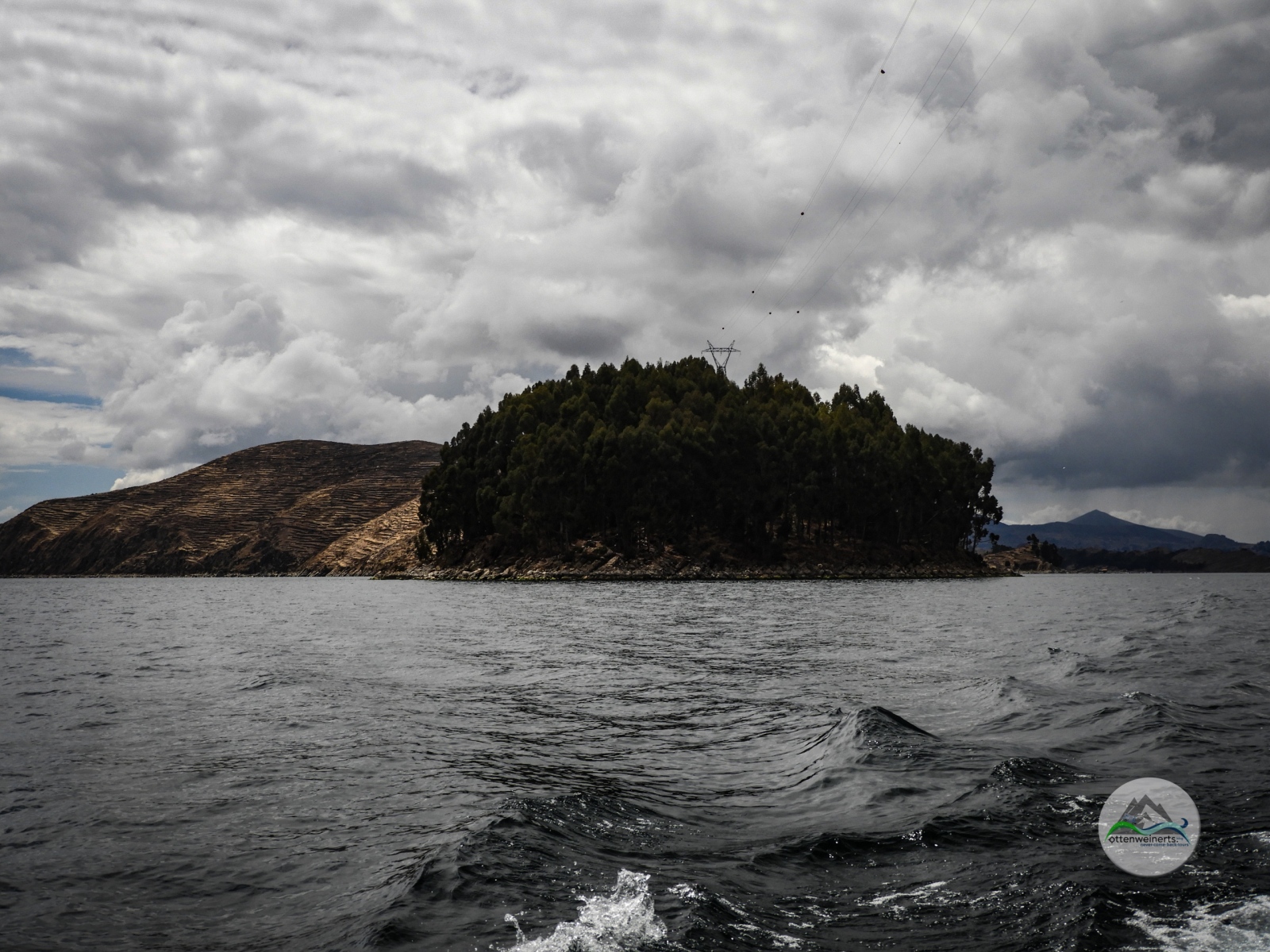
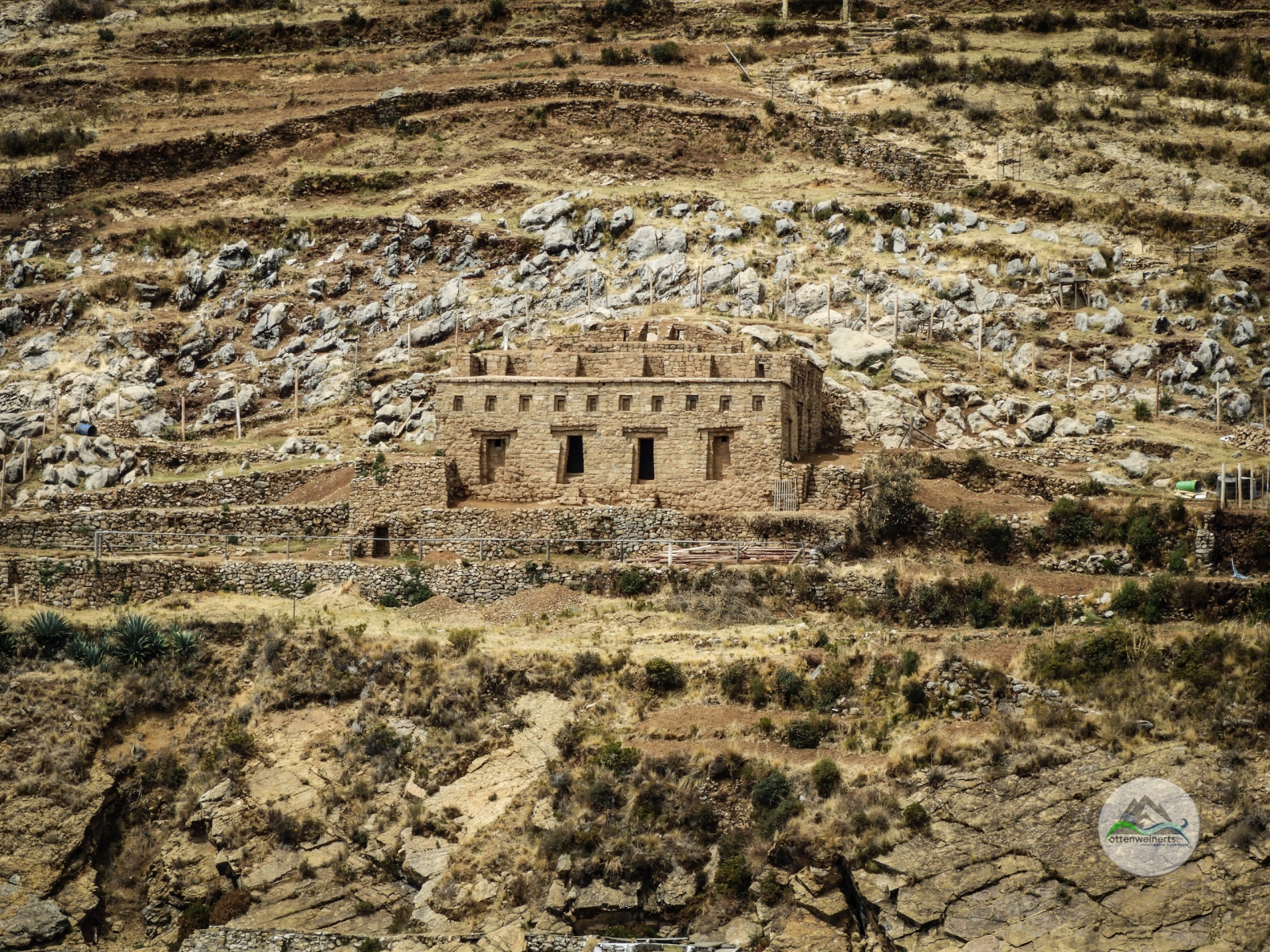
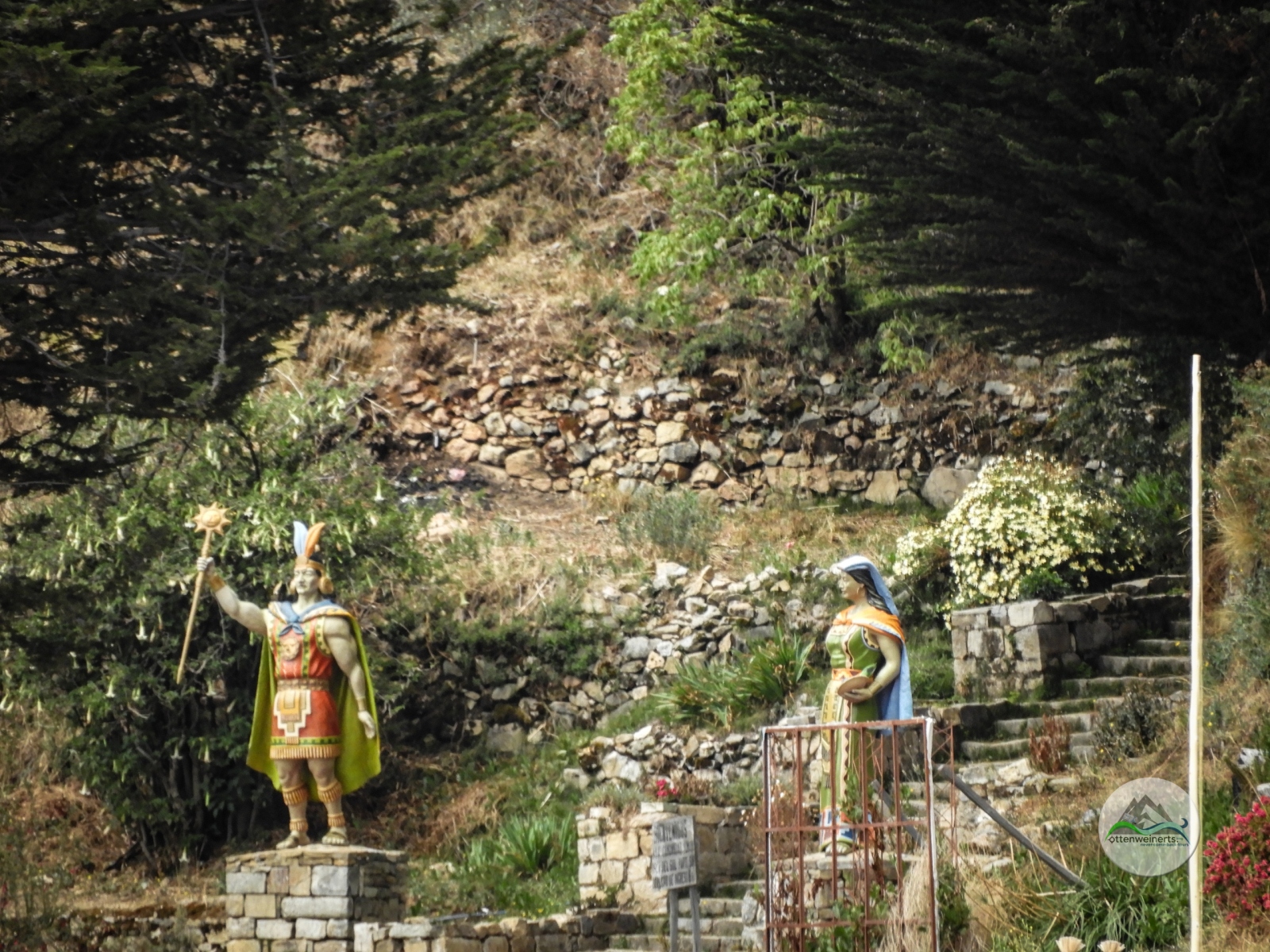
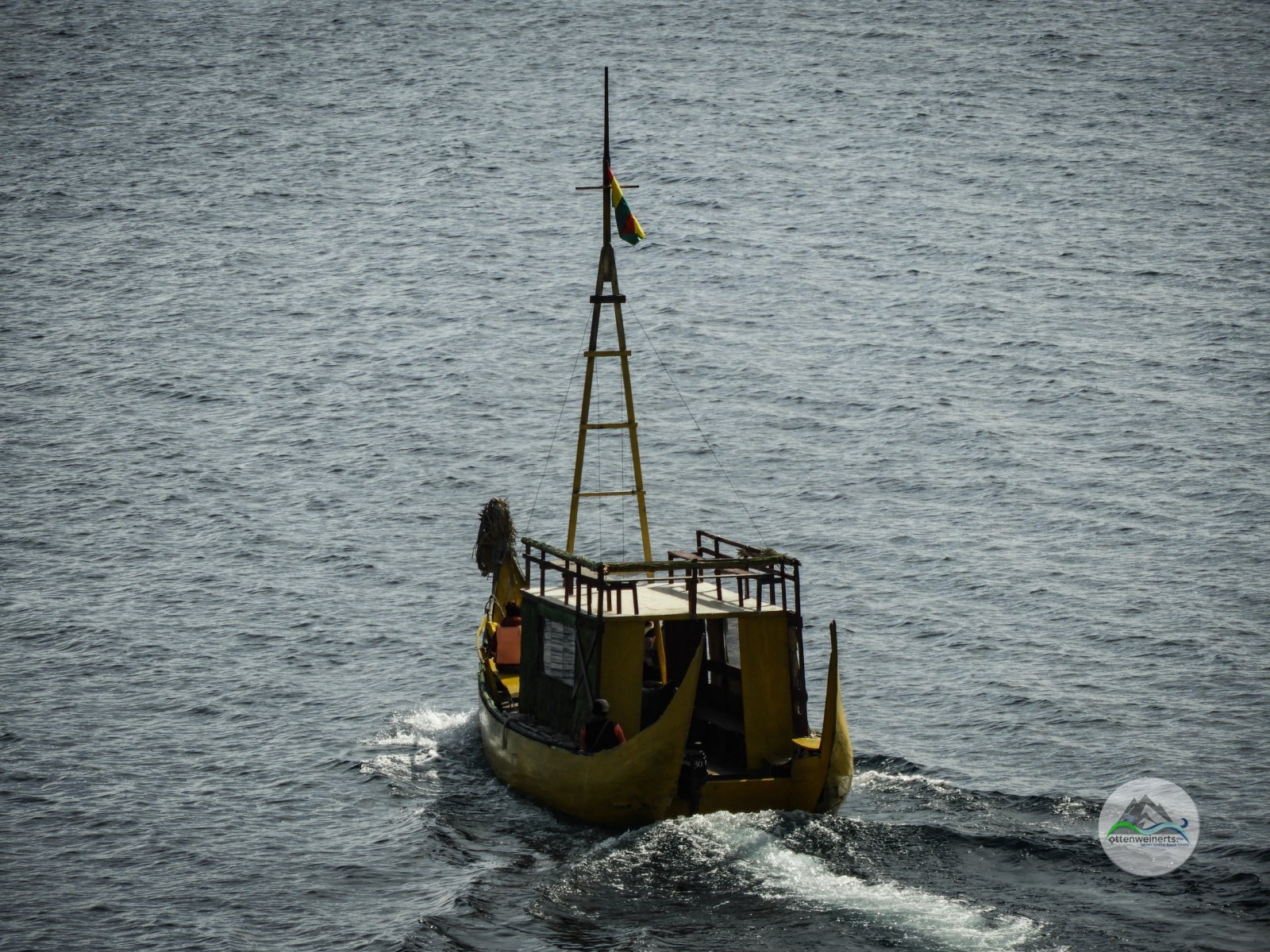
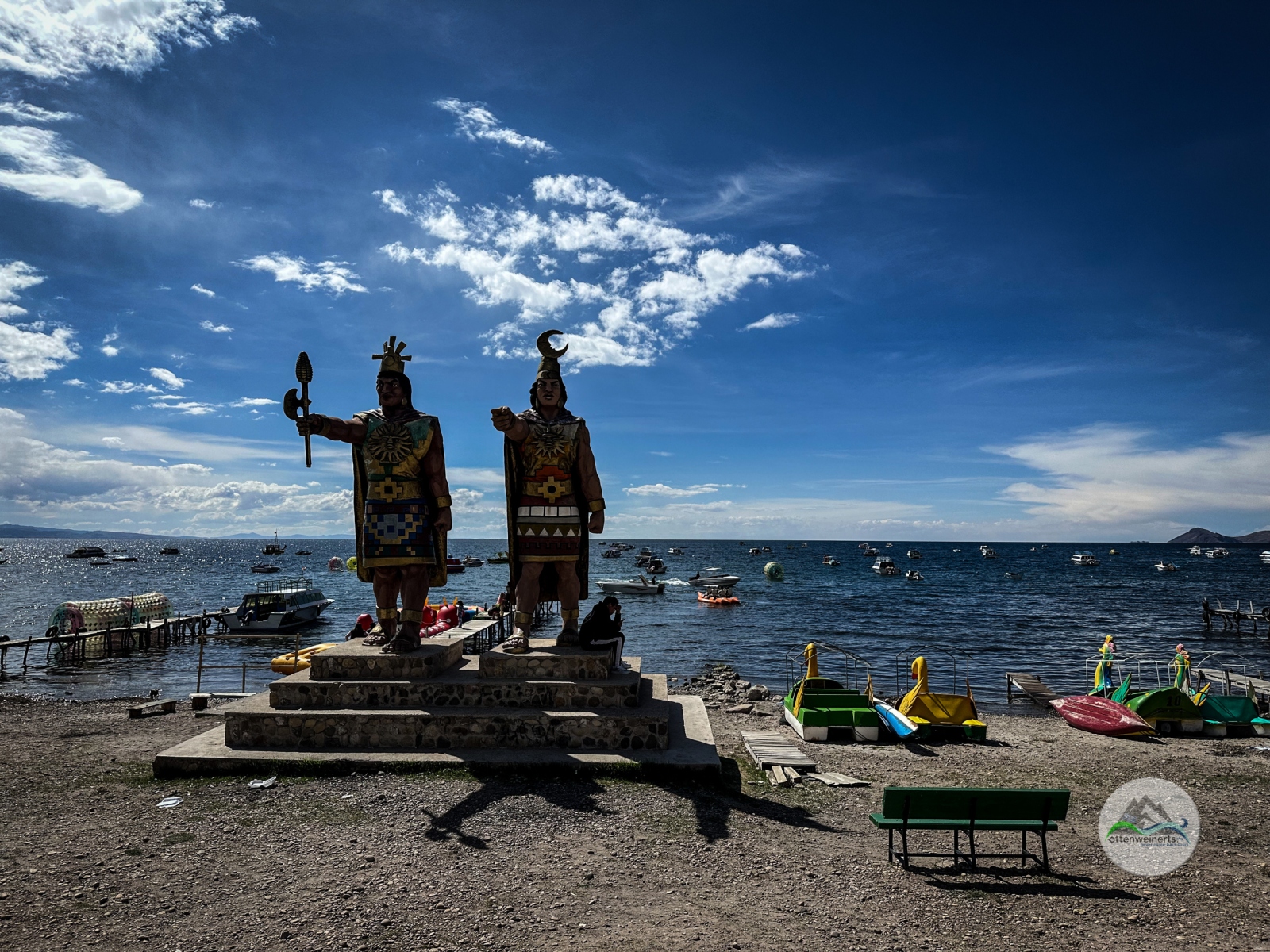
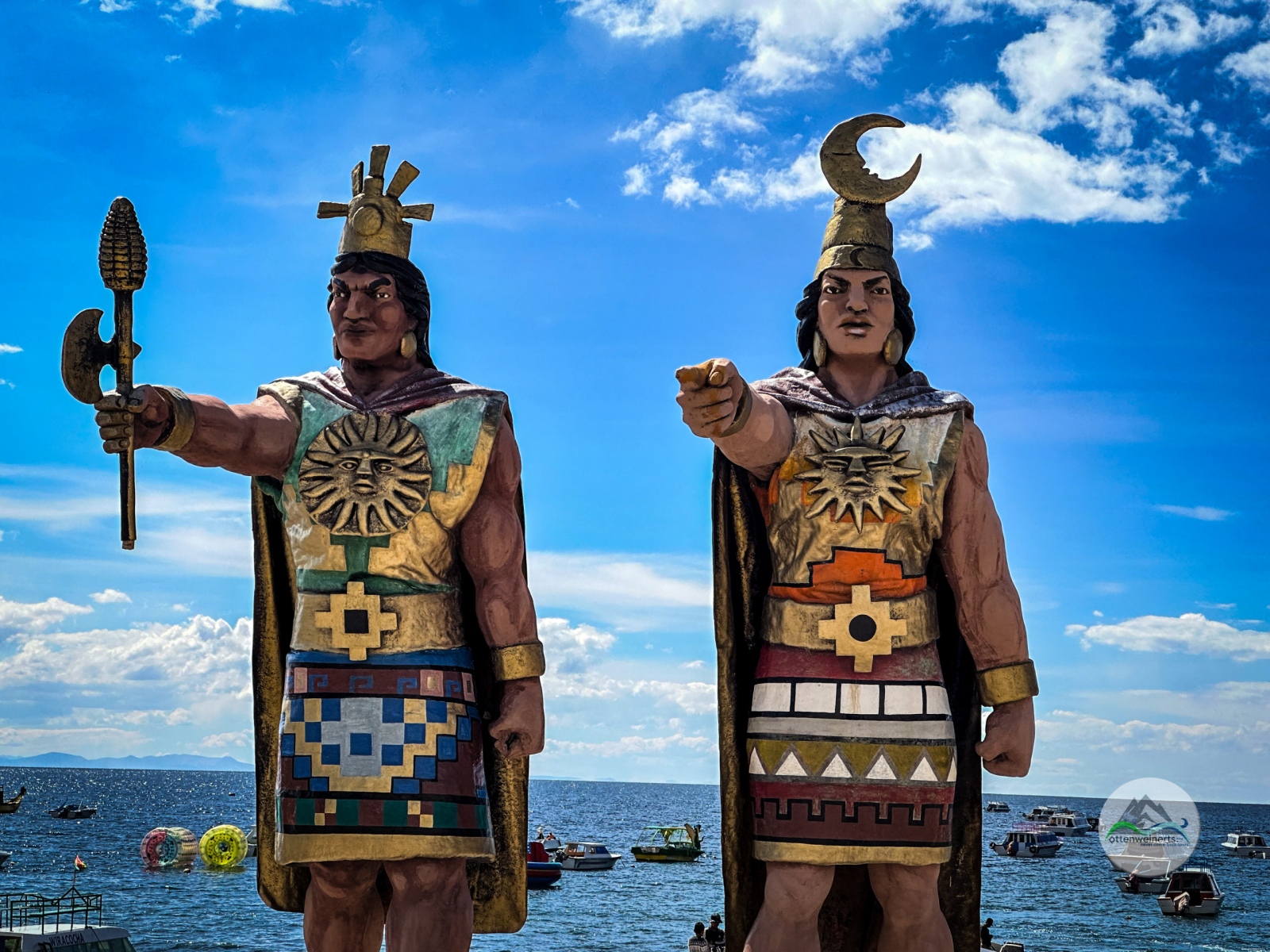
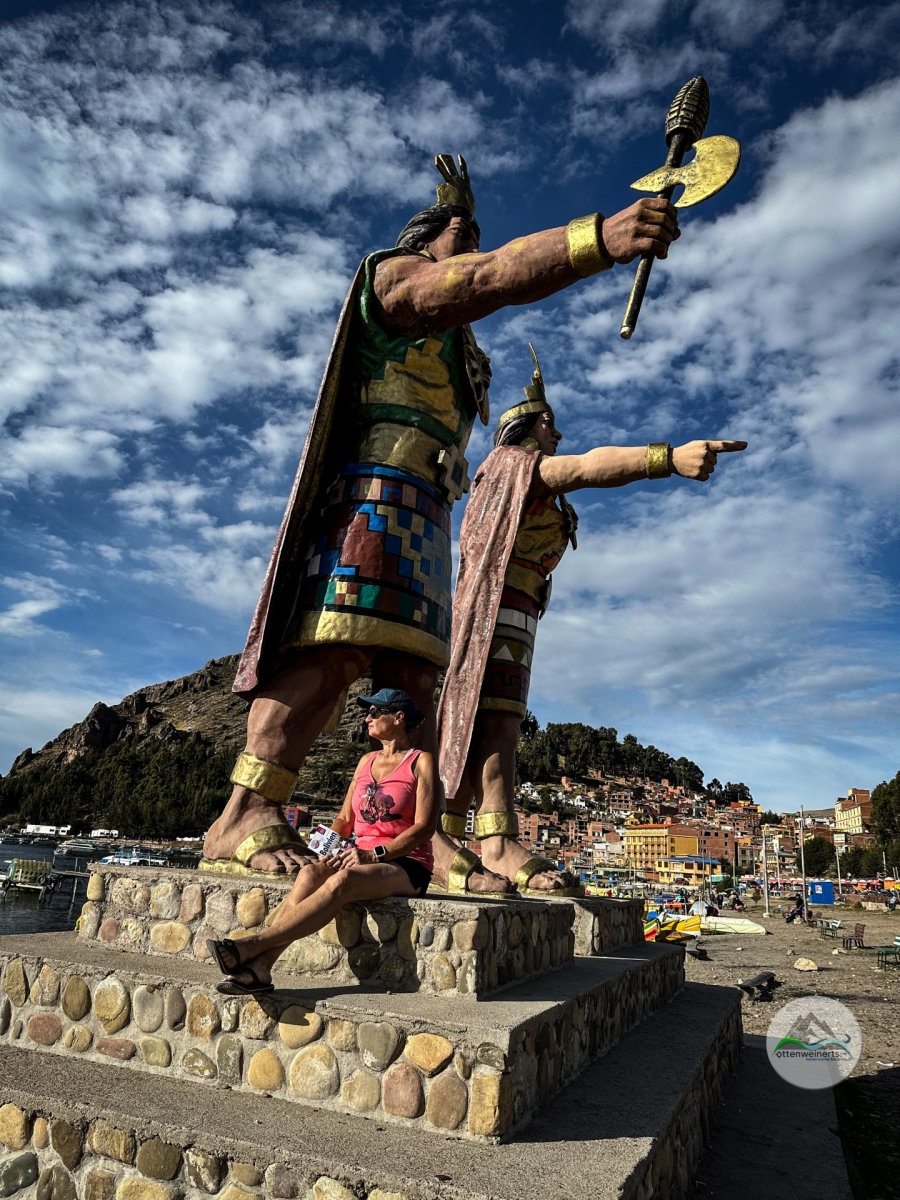
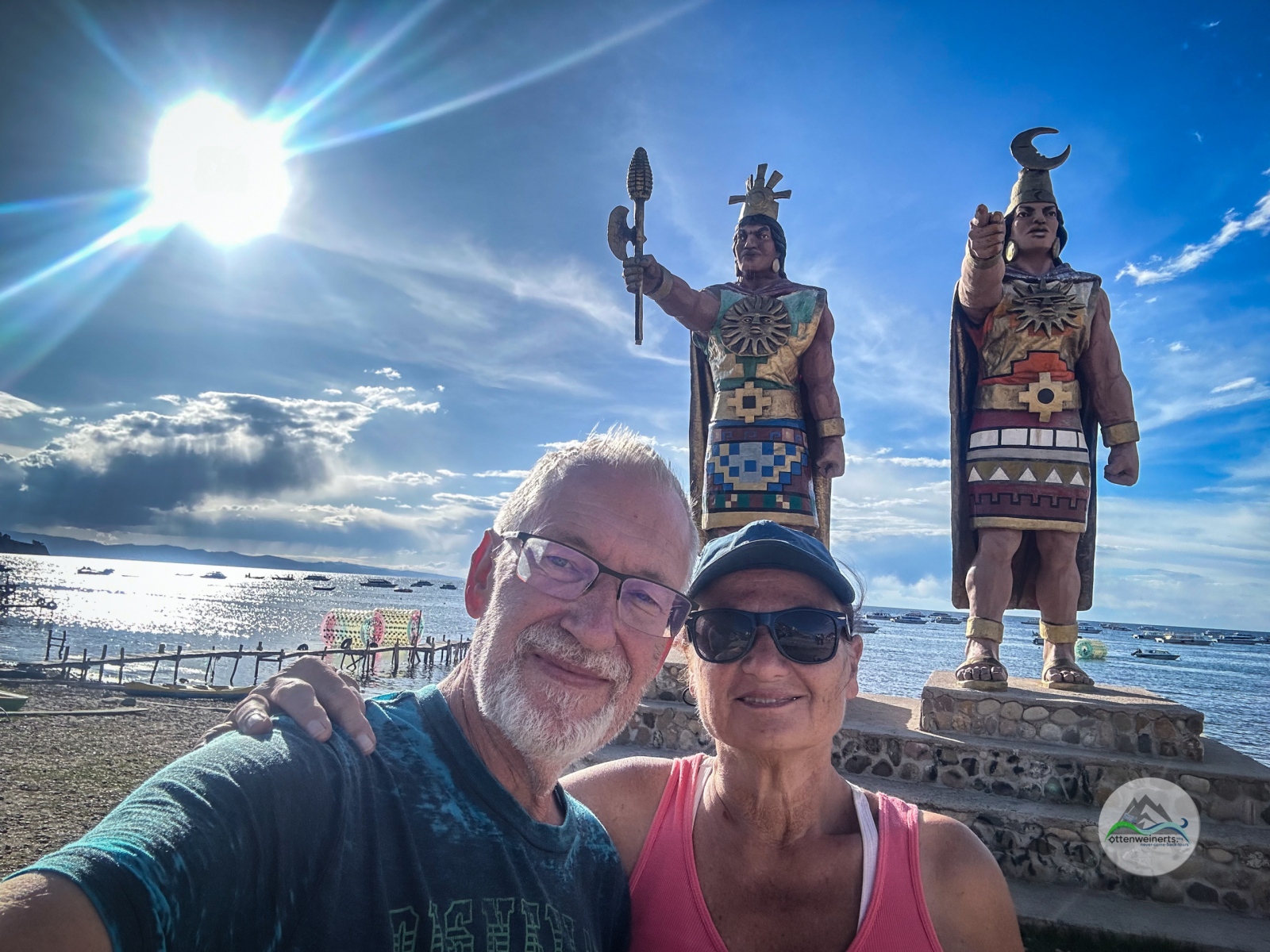
Die “Insel der Sonne” ist mit 11 km Länge die größte Insel im Titicaca-See, und auch die bedeutendste. Hier schickte – der Legende nach – der Sonnengott Inti seine beiden Kinder auf die Erde, die von hier aus das Inka-Imperium gründeten. Wir fahren an der Südspitze der Insel vorbei, sehen einen Inka-Palast und die Inka-Stiege vom Boot aus. Leider kann man derzeit nicht Süd- und Nordteil der Insel an einem Tag besuchen, da die beiden Orte miteinander und / oder mit dem Dorf in der Mitte der Insel im Streit liegen (das ändert sich alle paar Wochen).

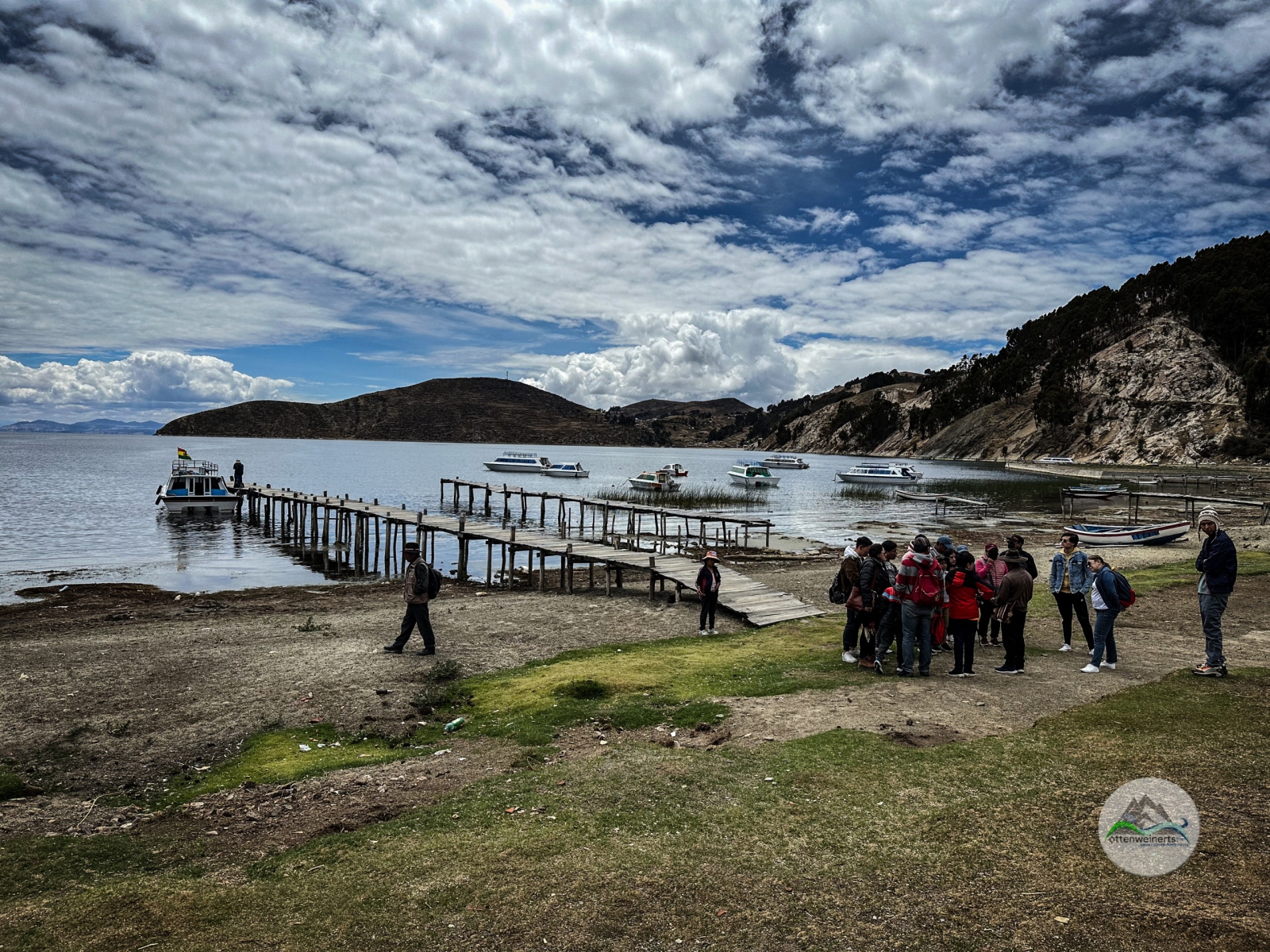
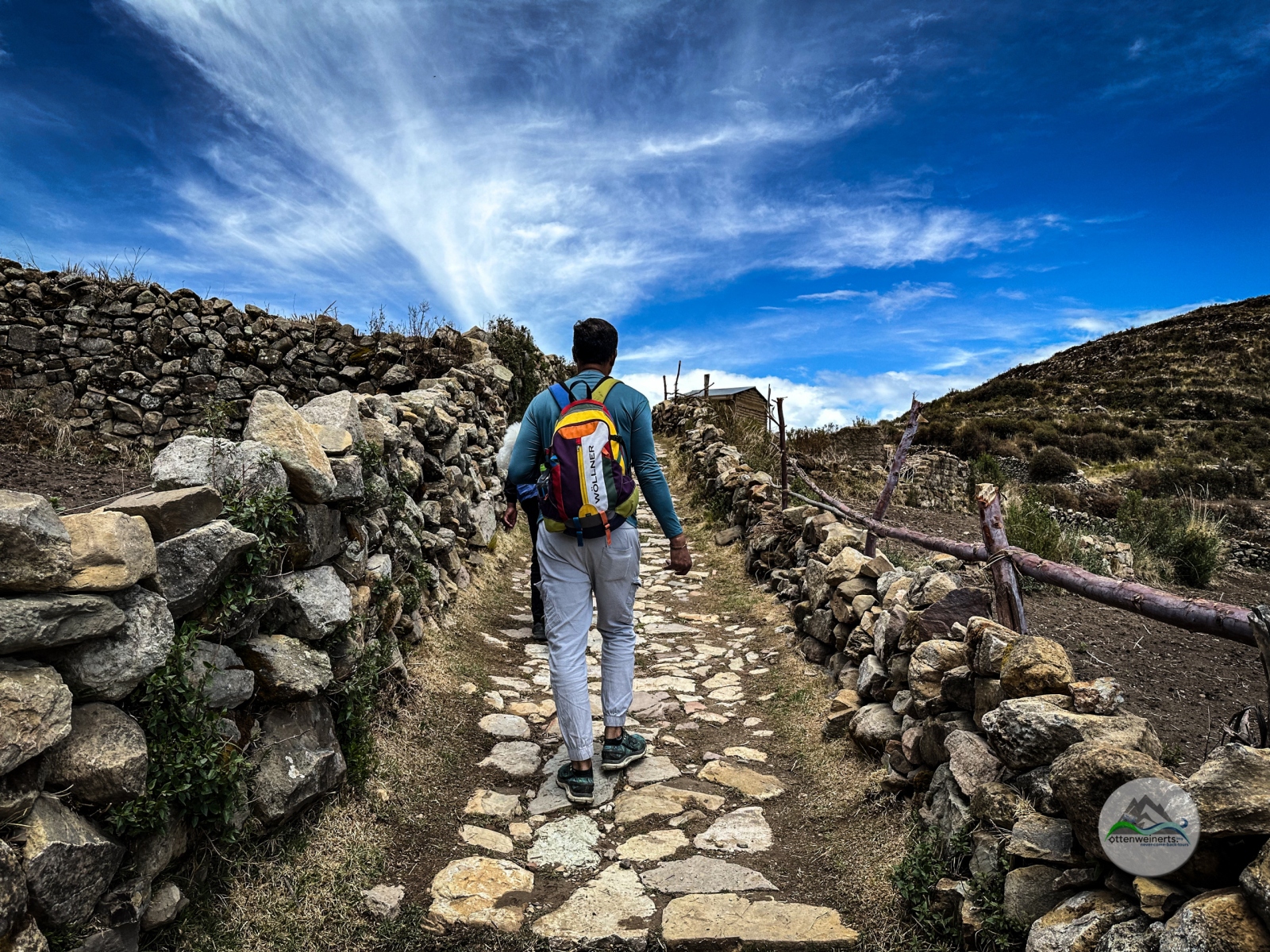
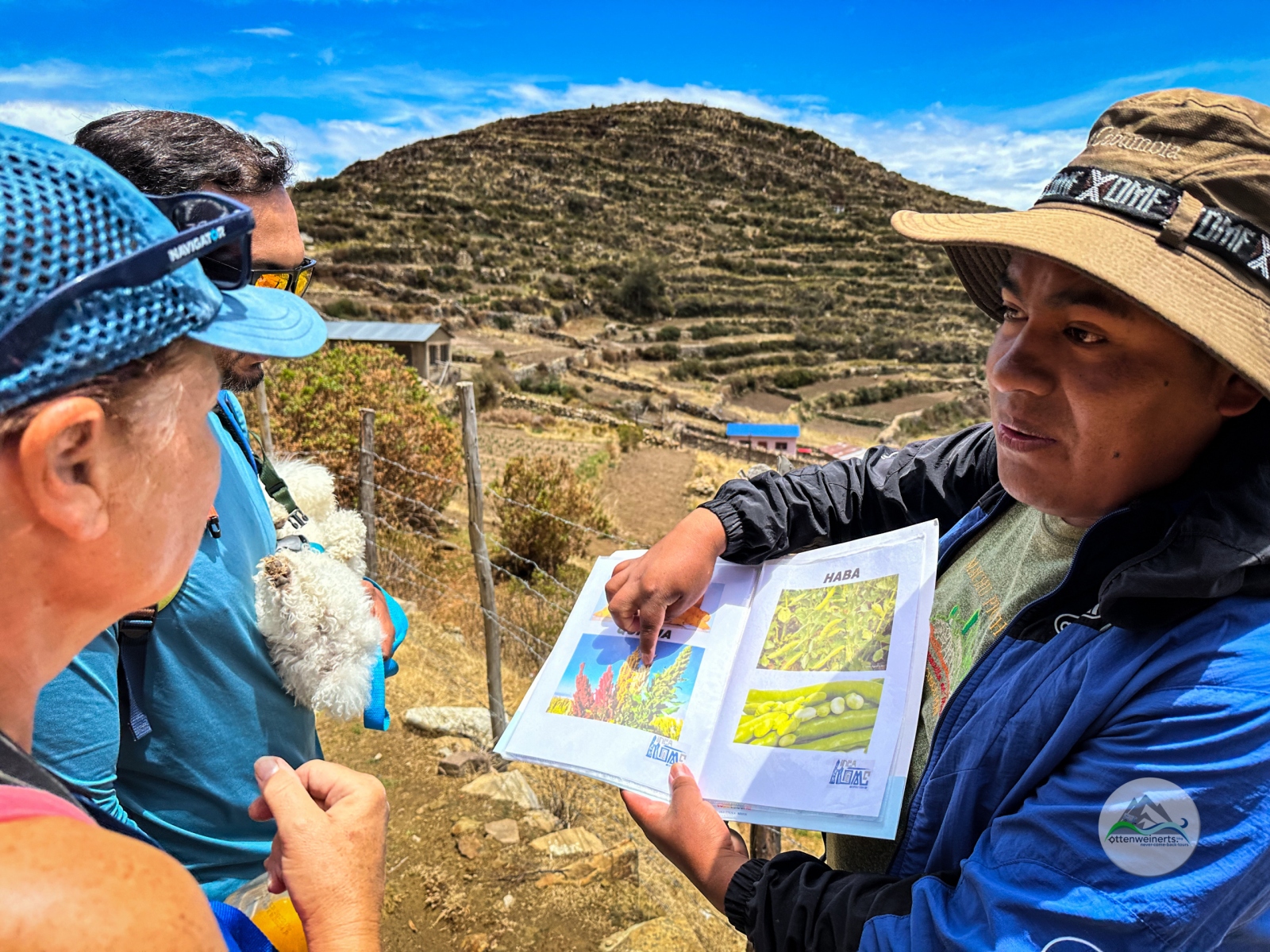
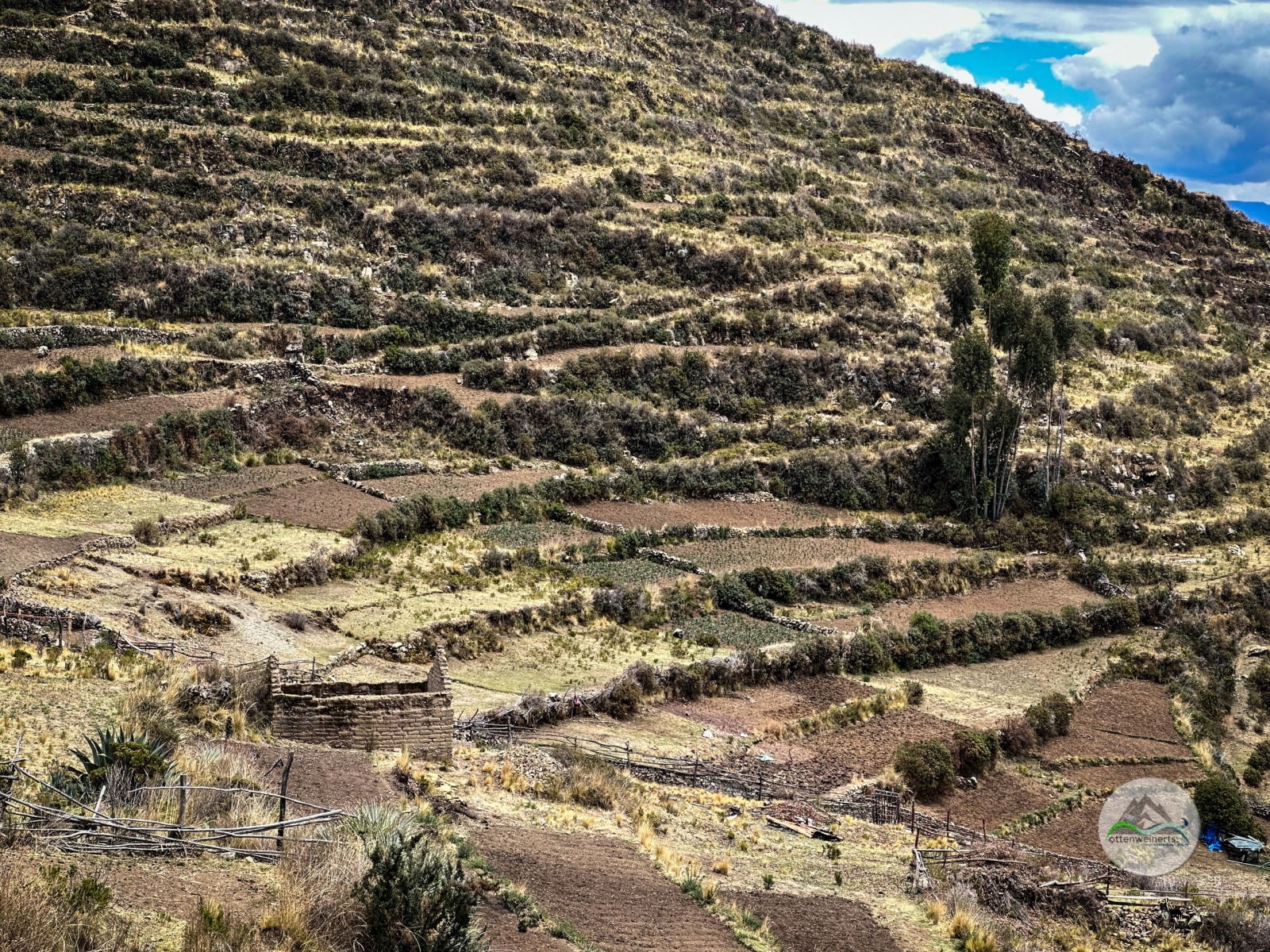
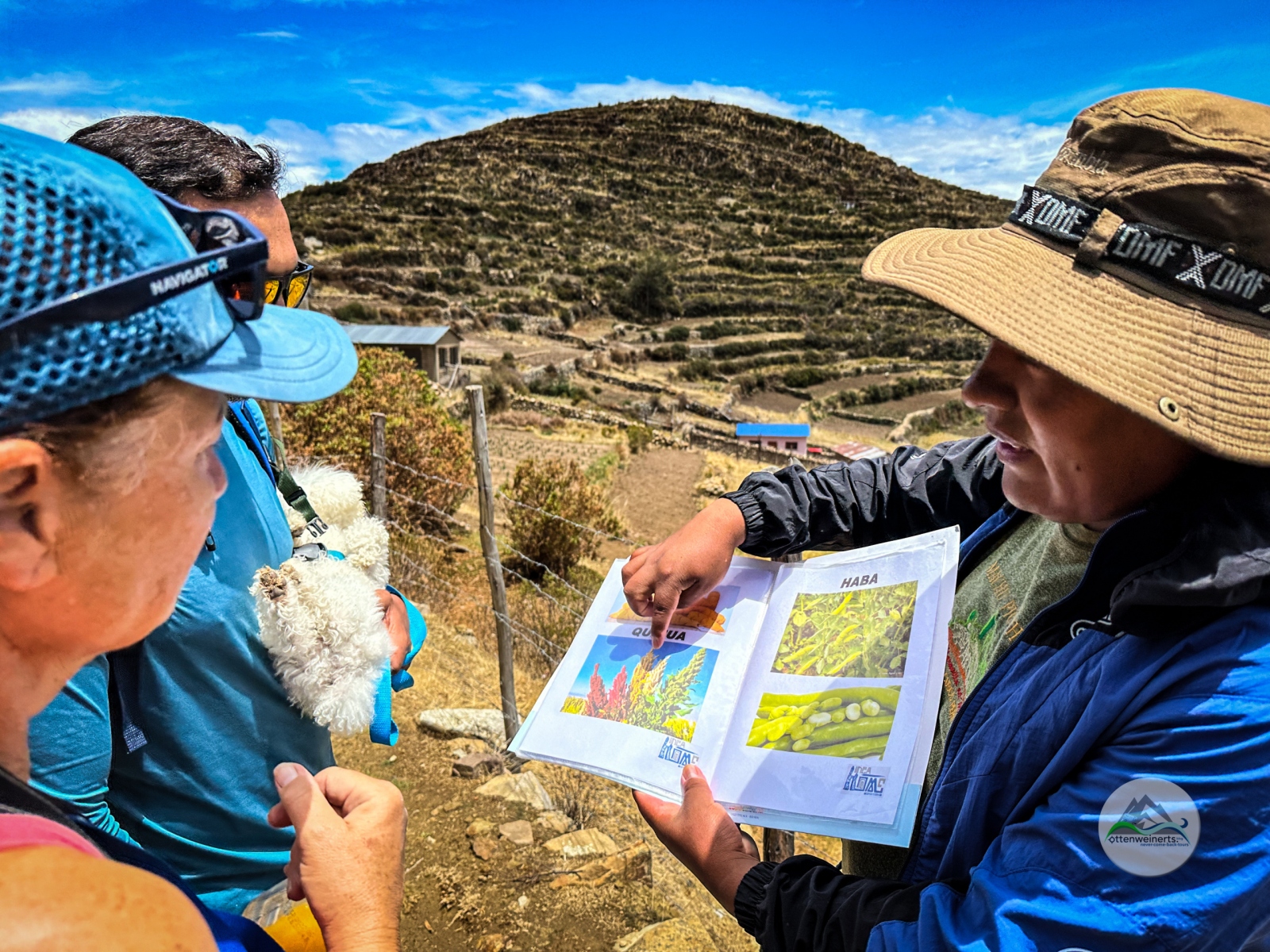
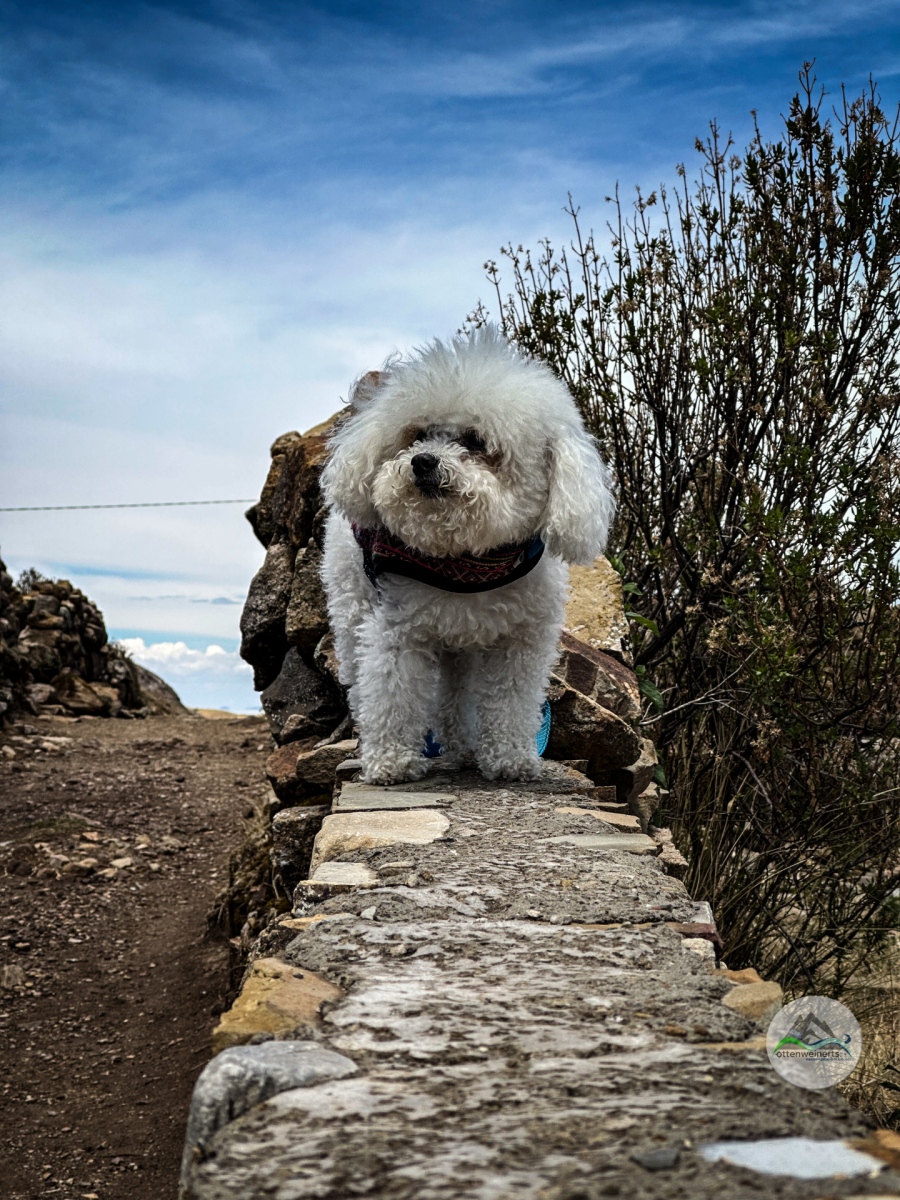
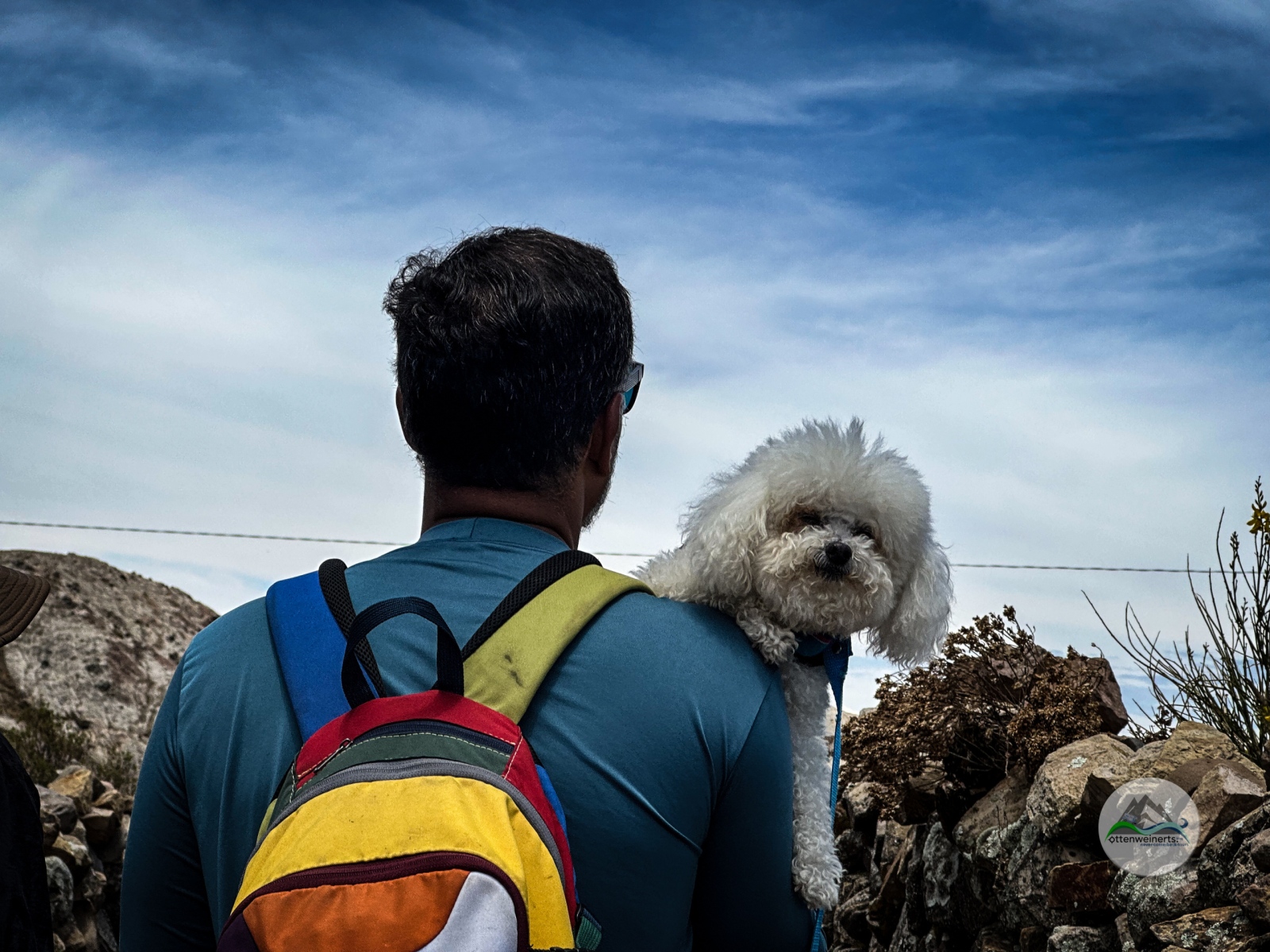
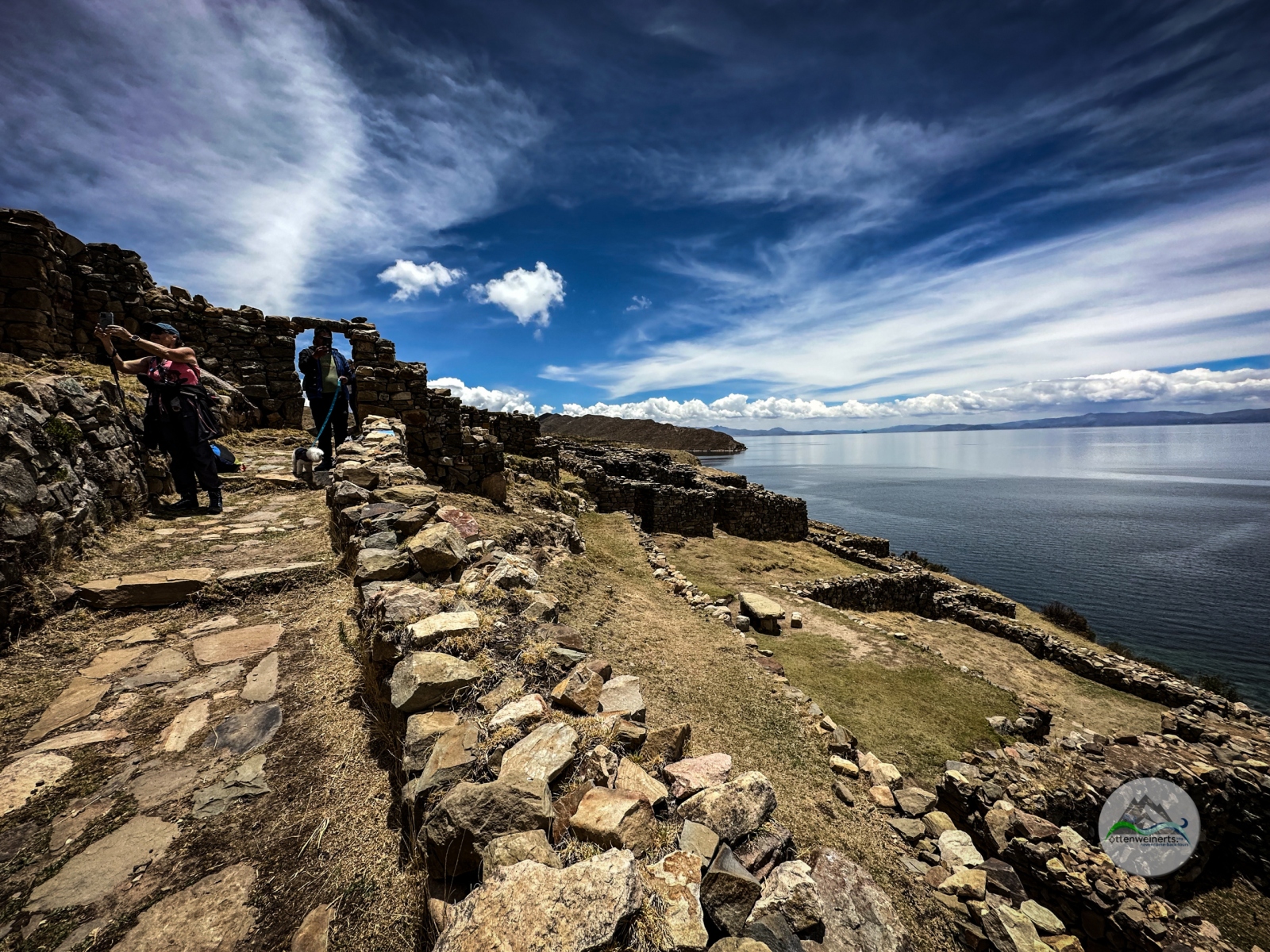
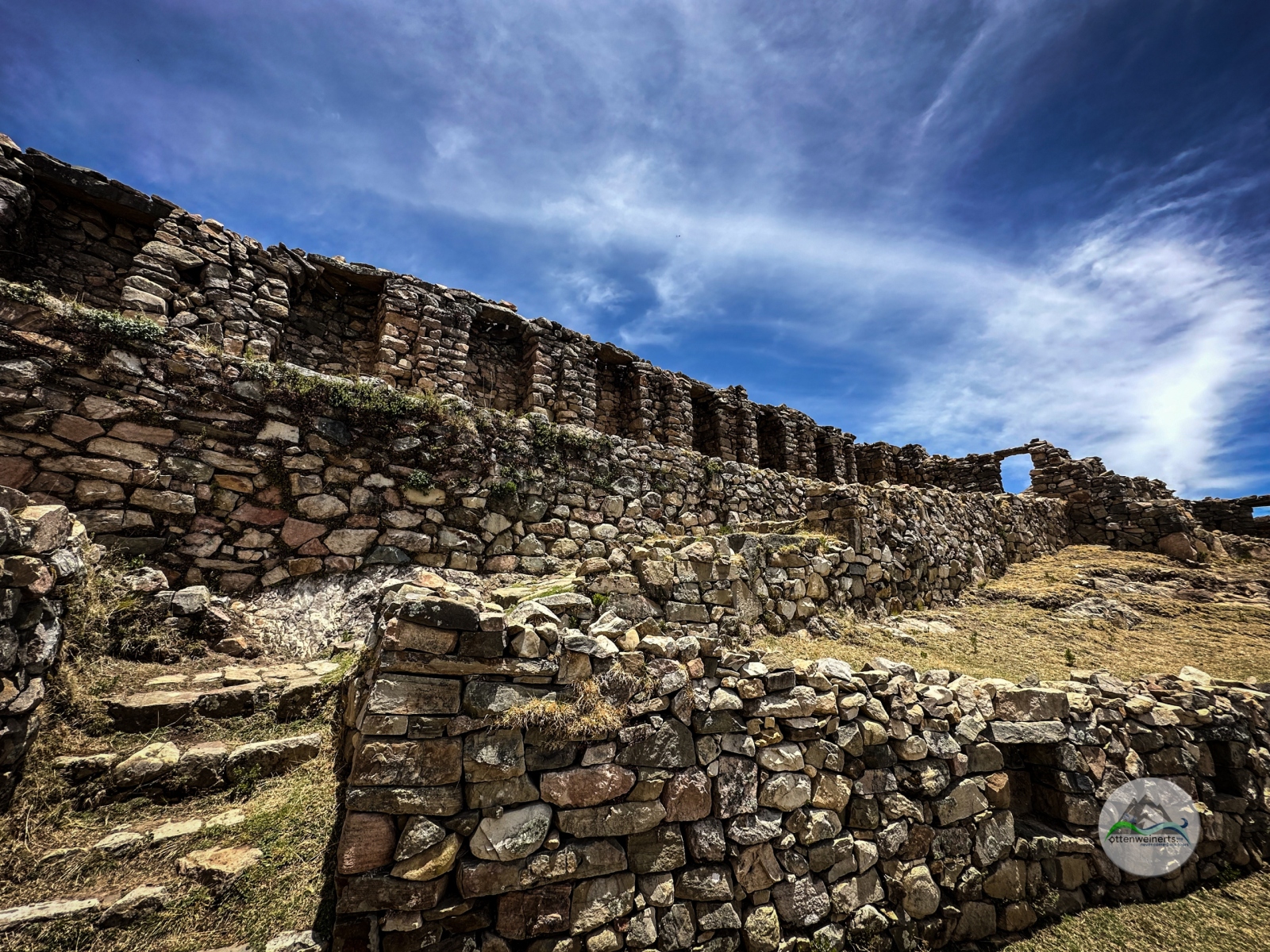
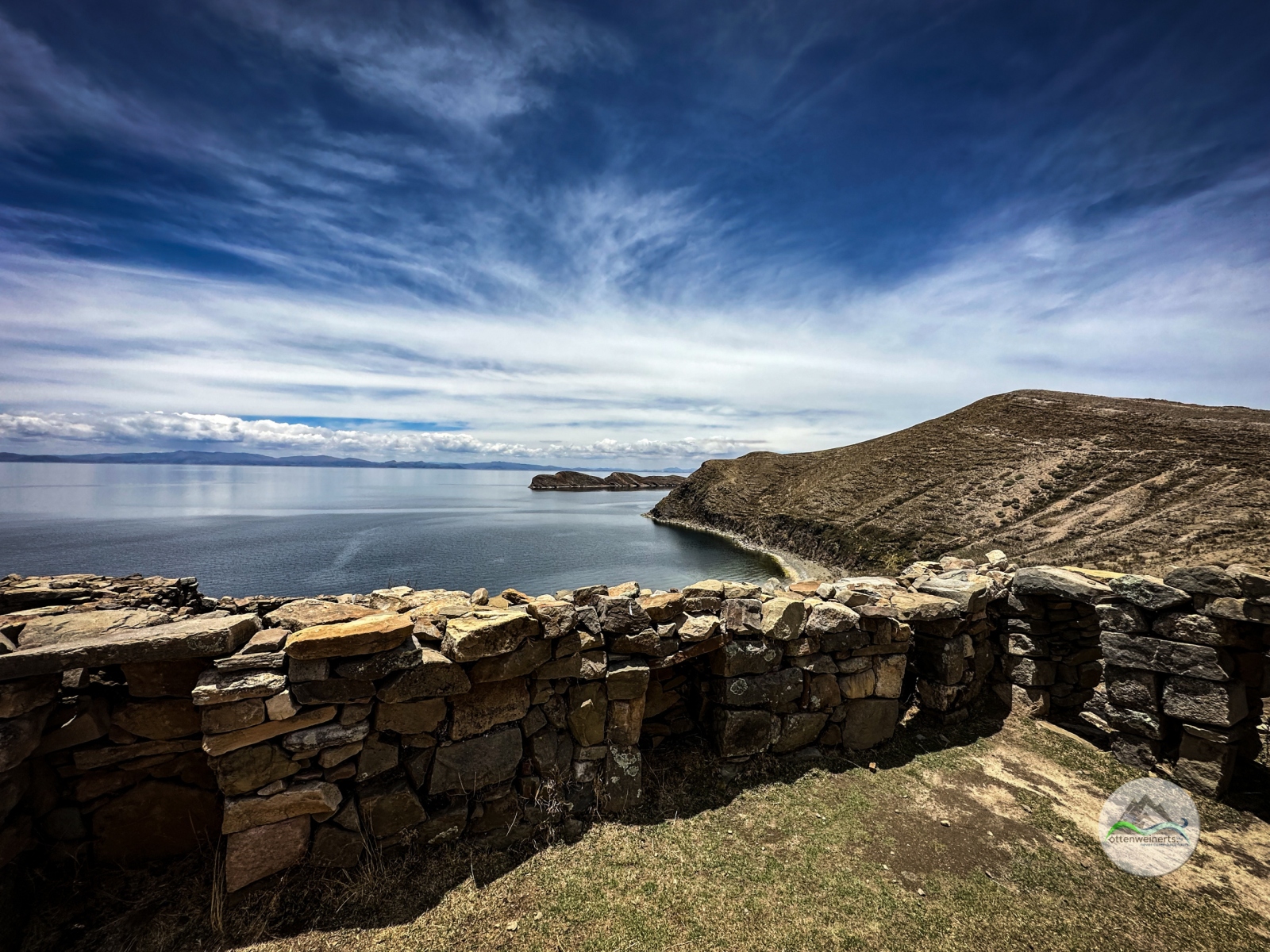
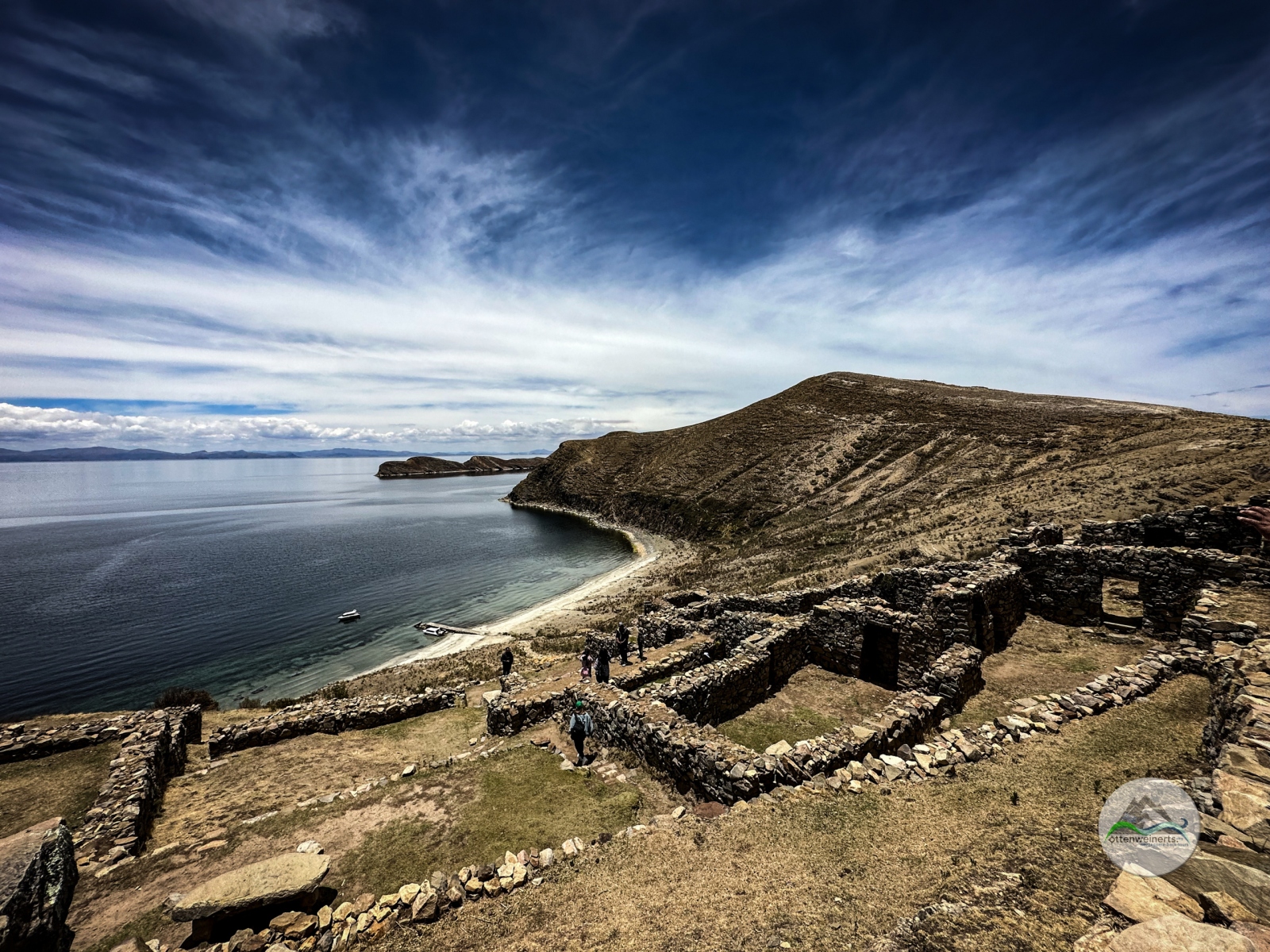
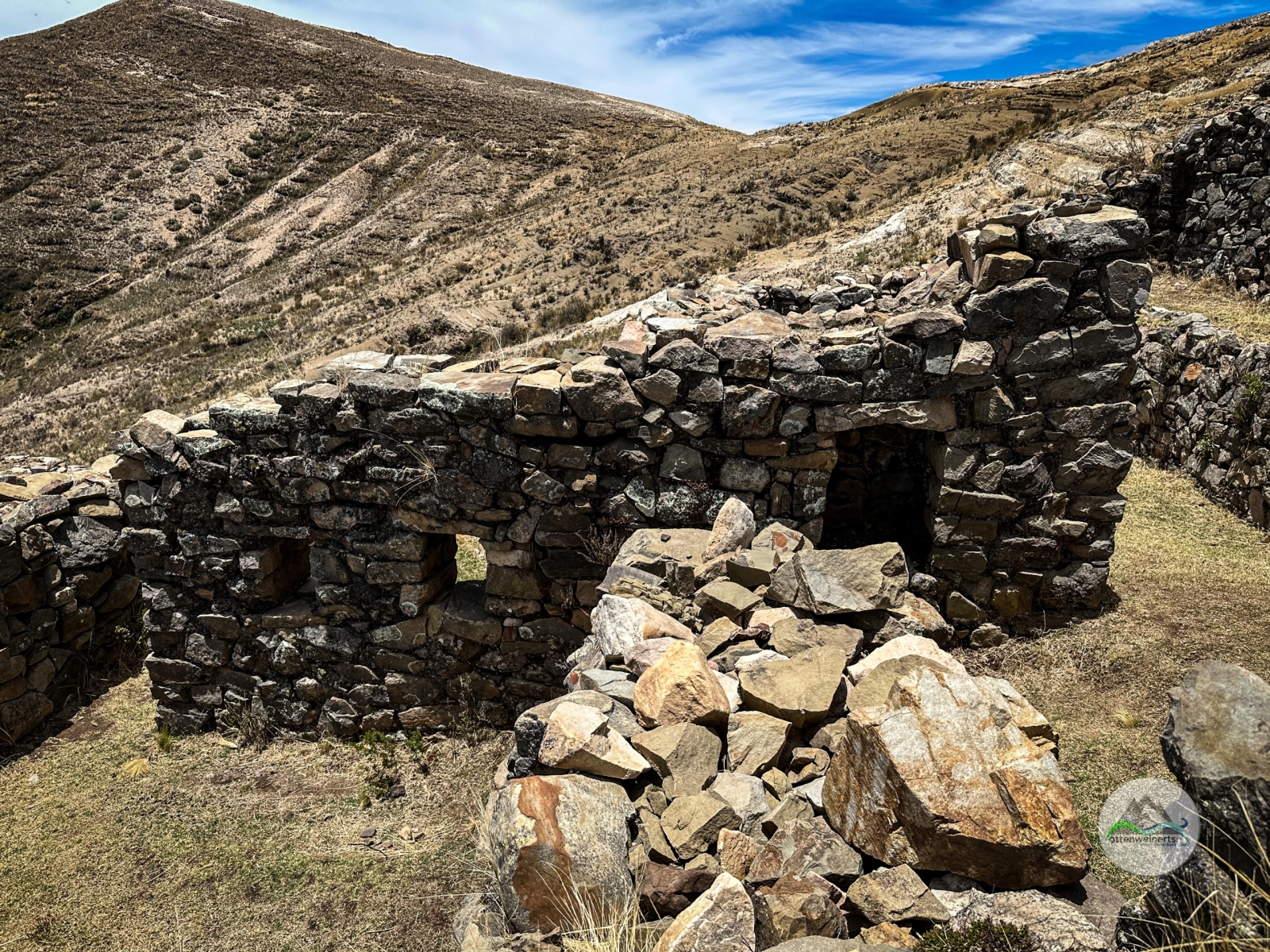
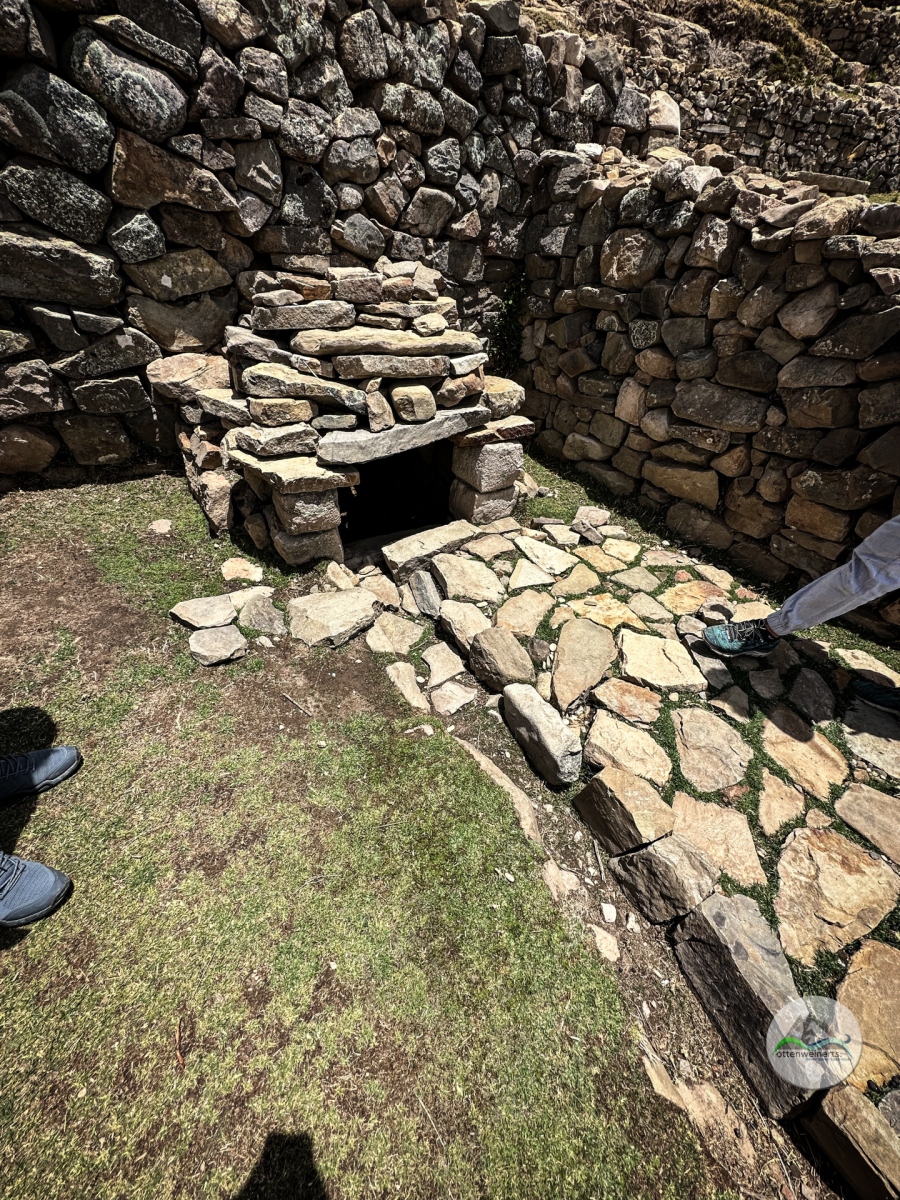
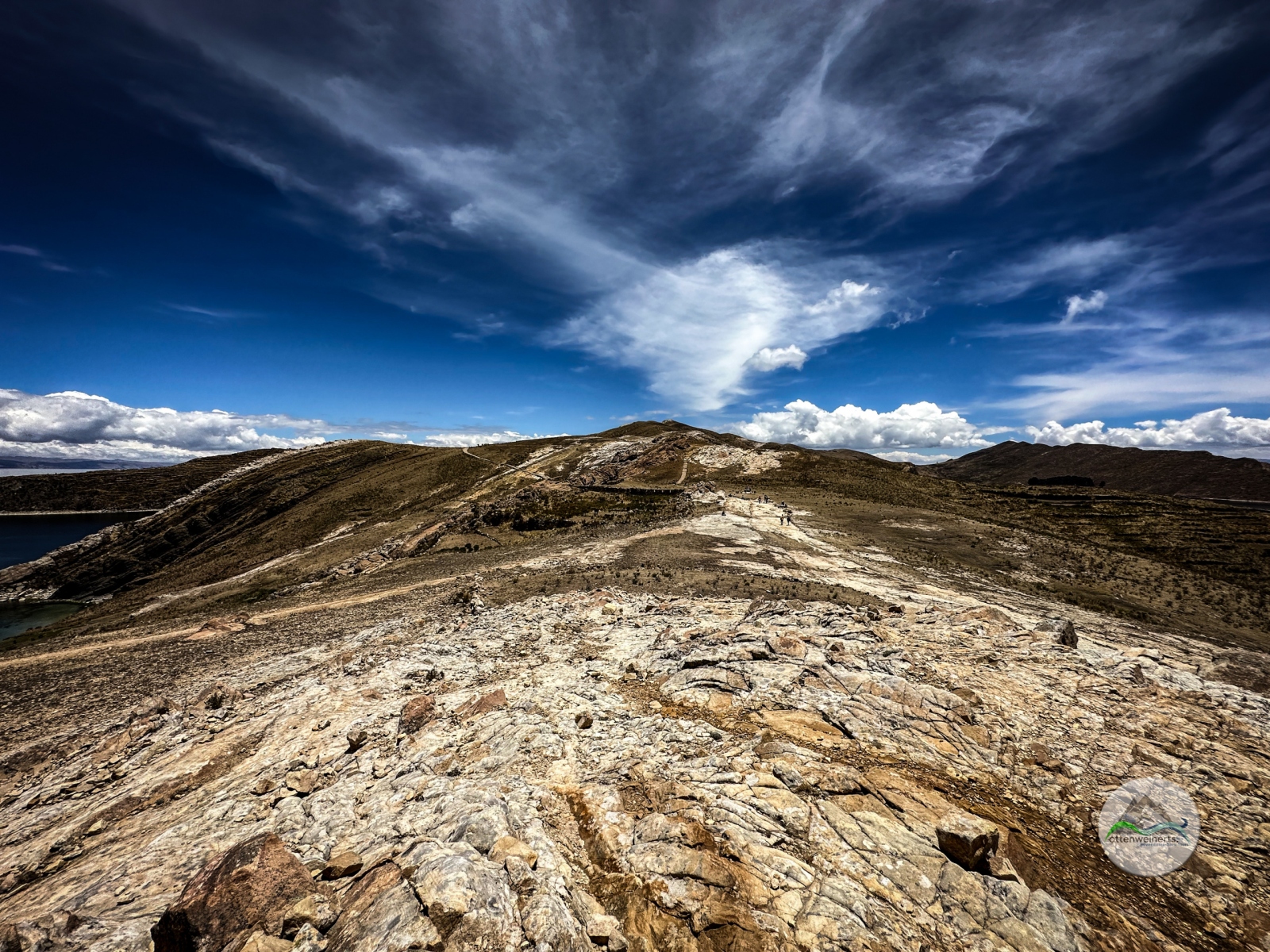
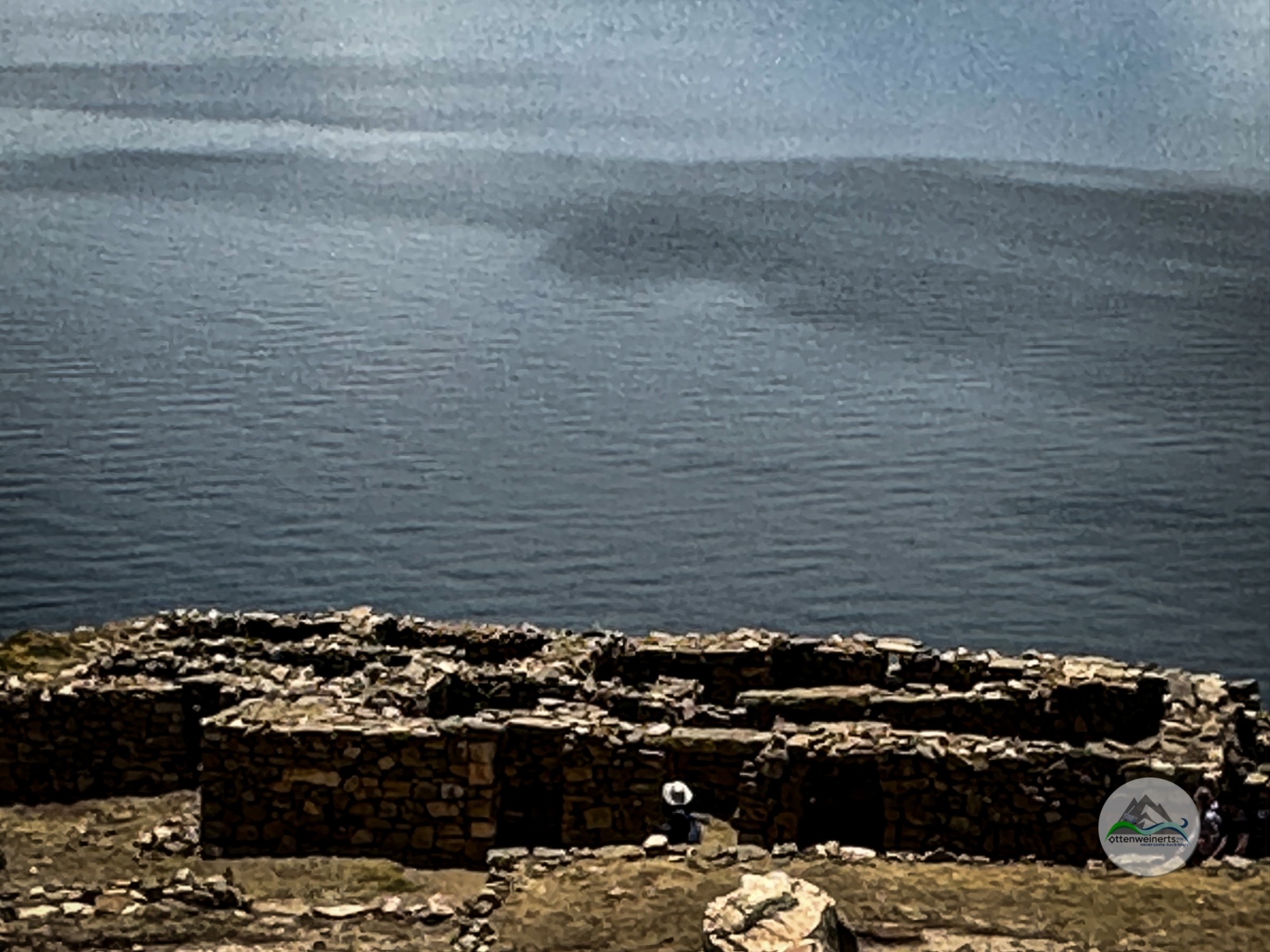
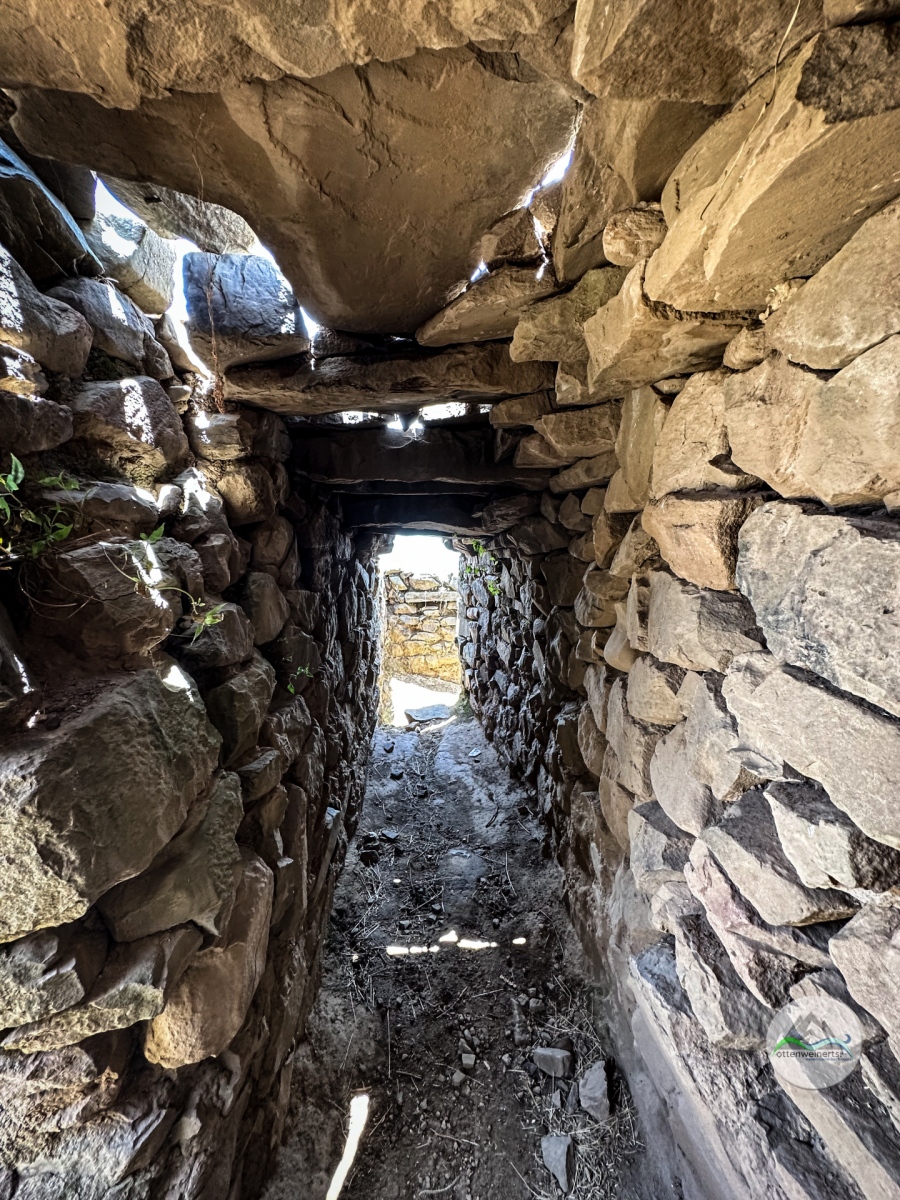
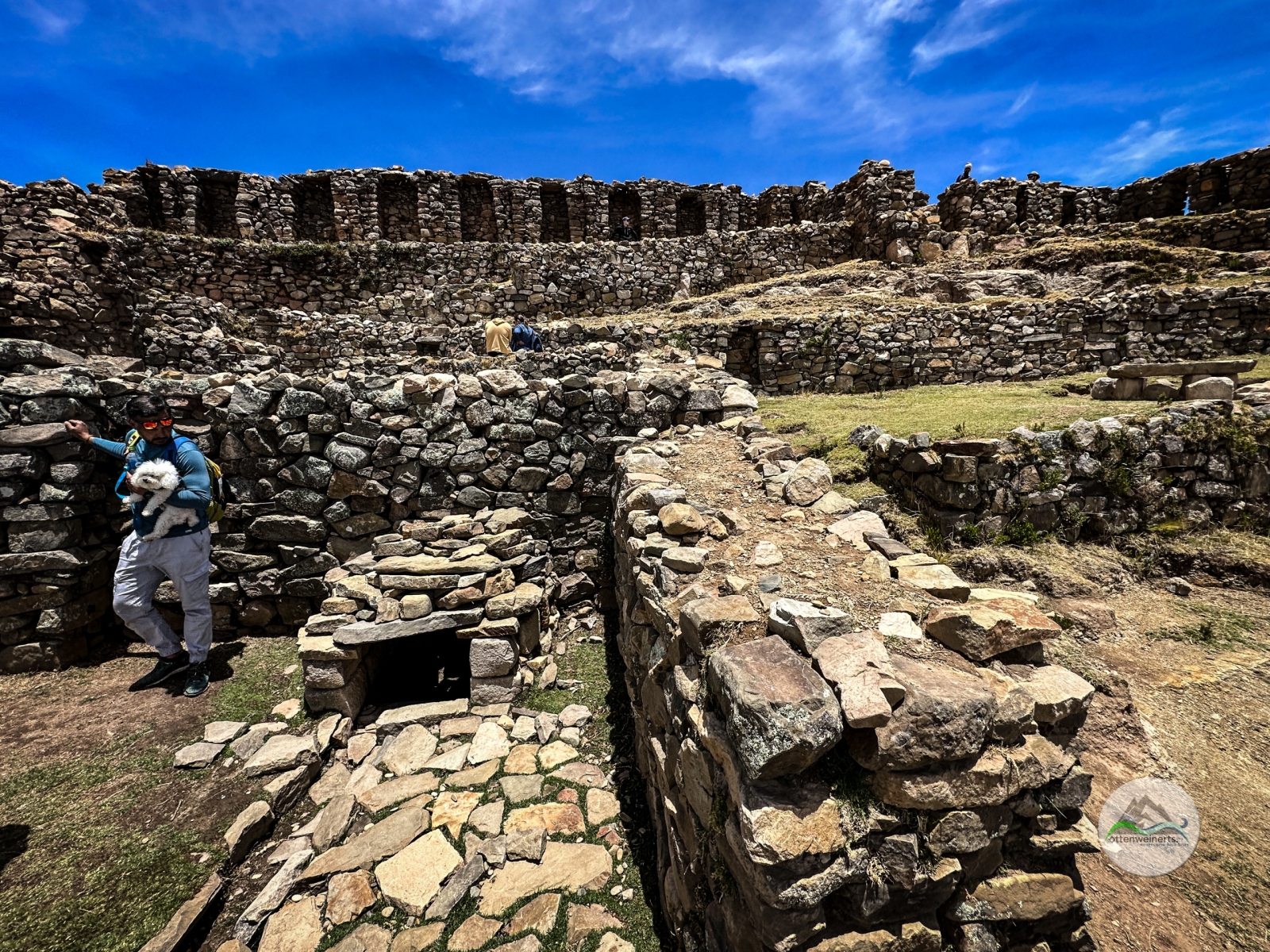
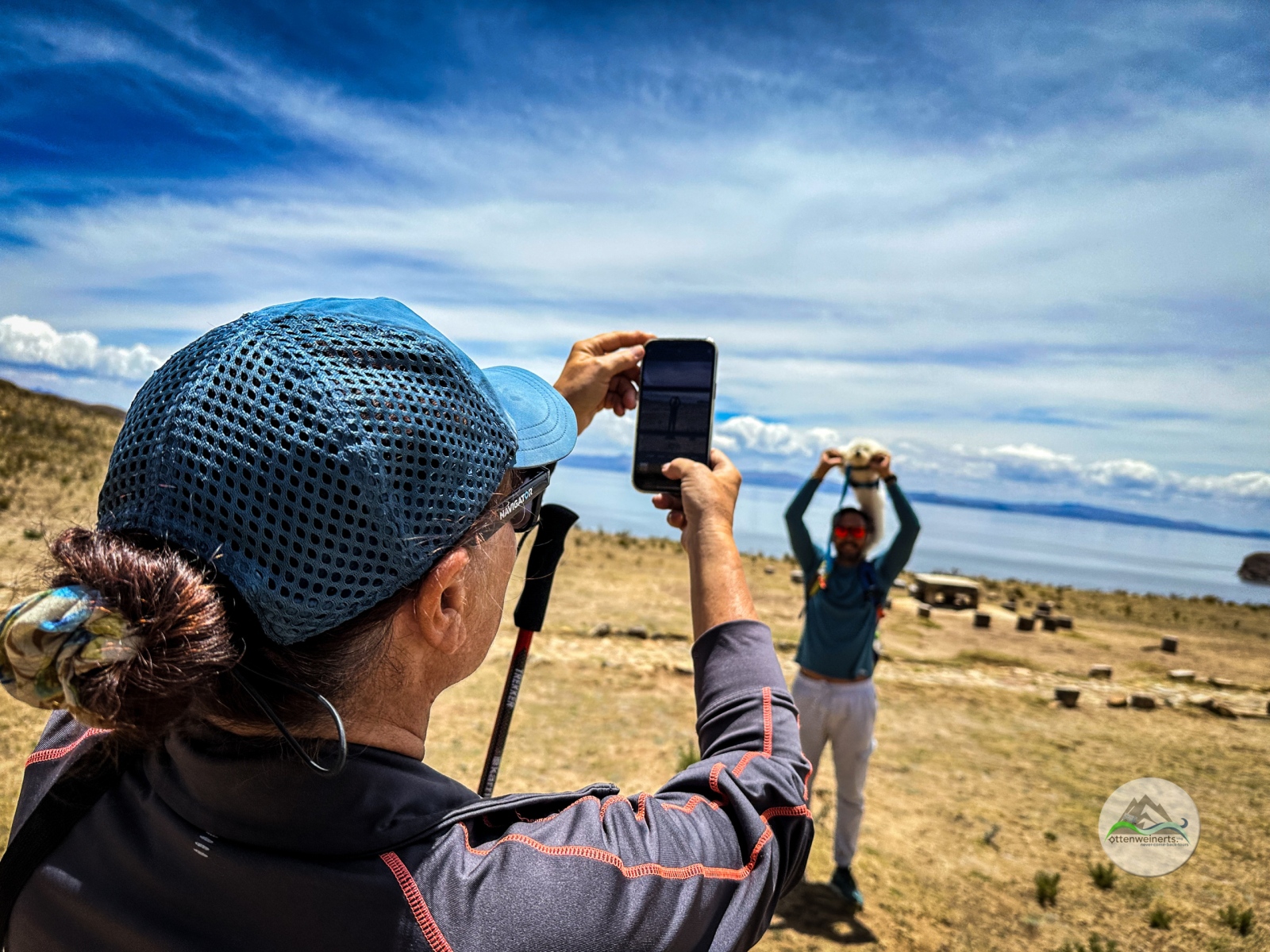
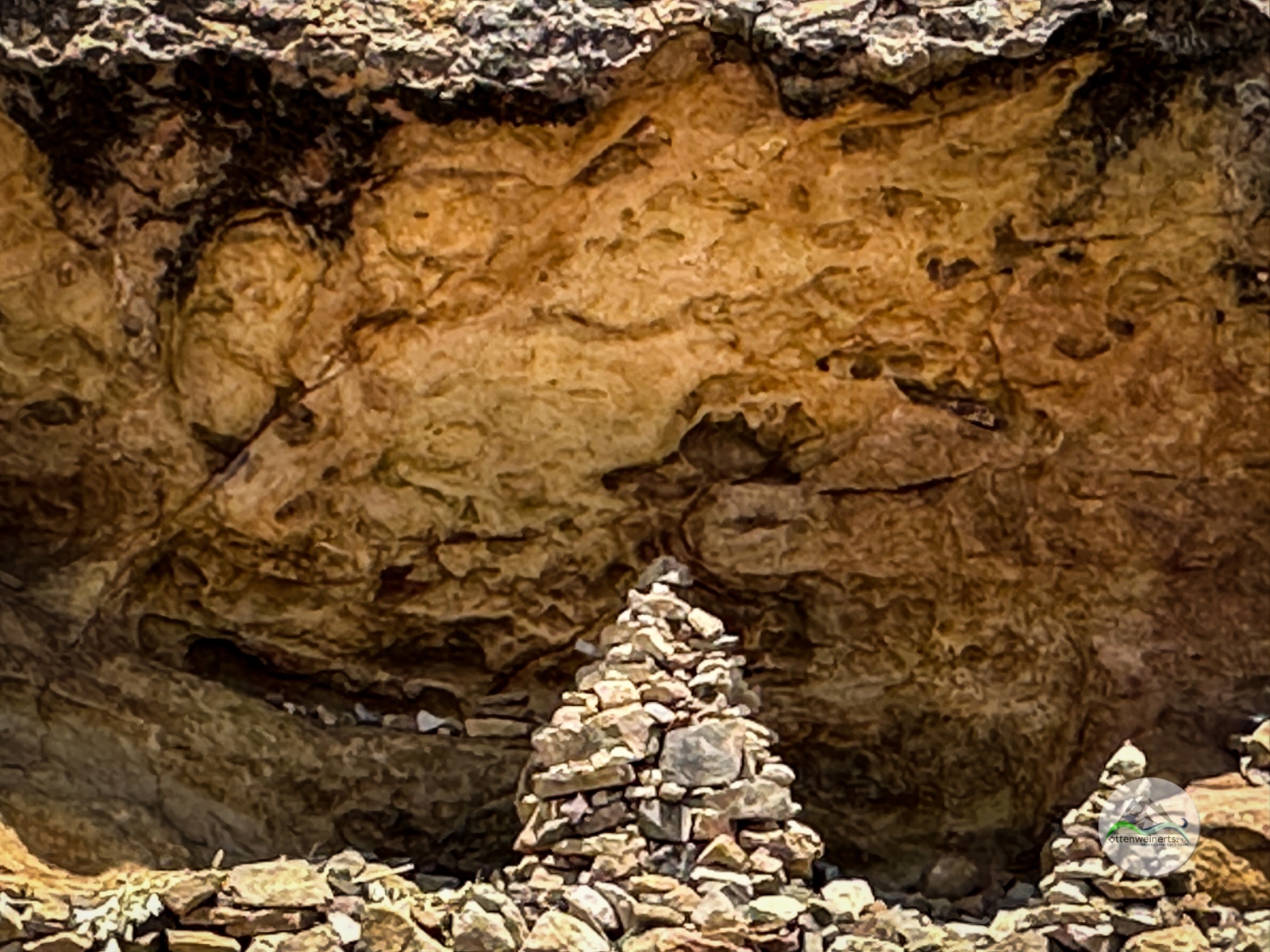
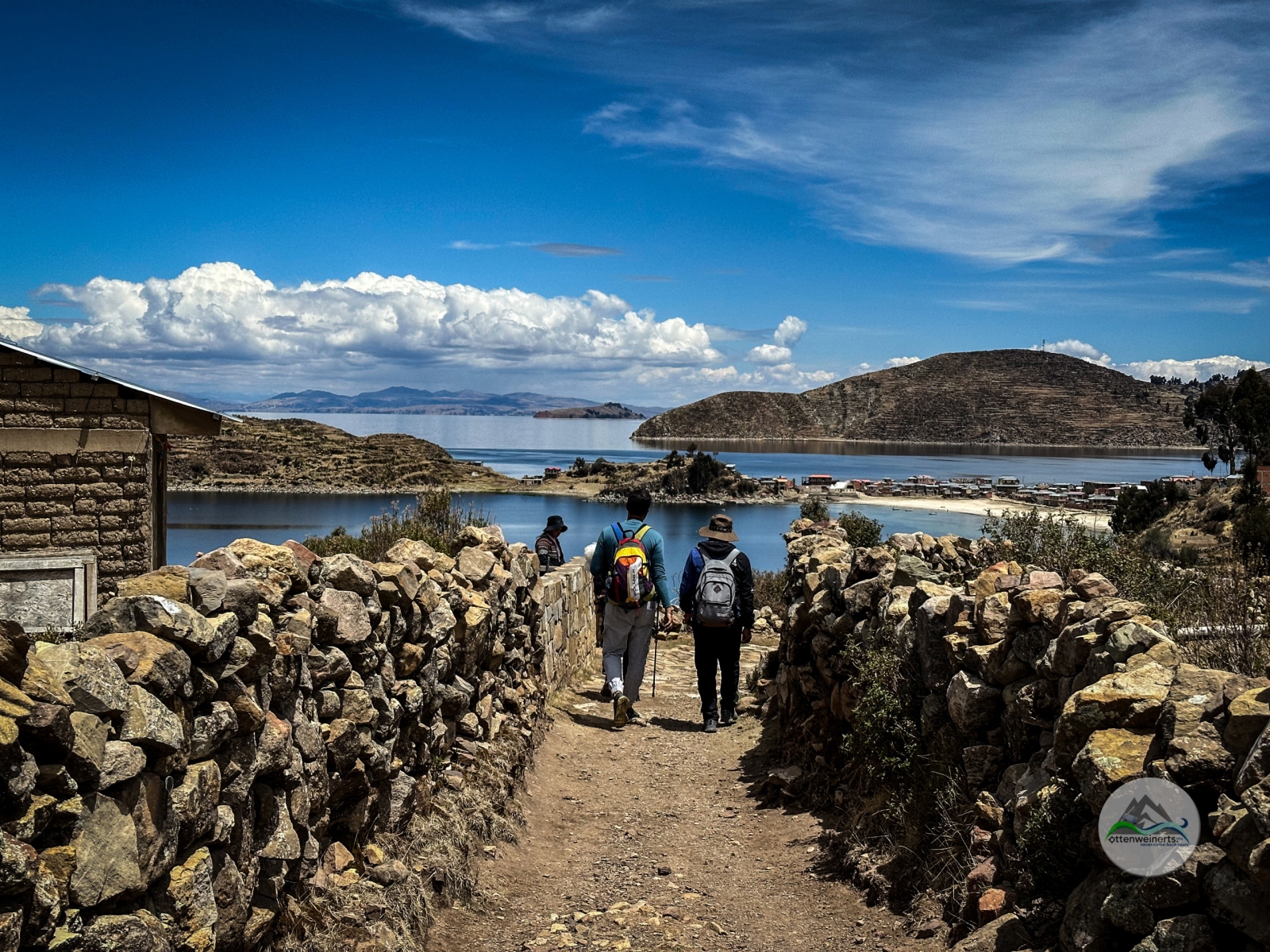
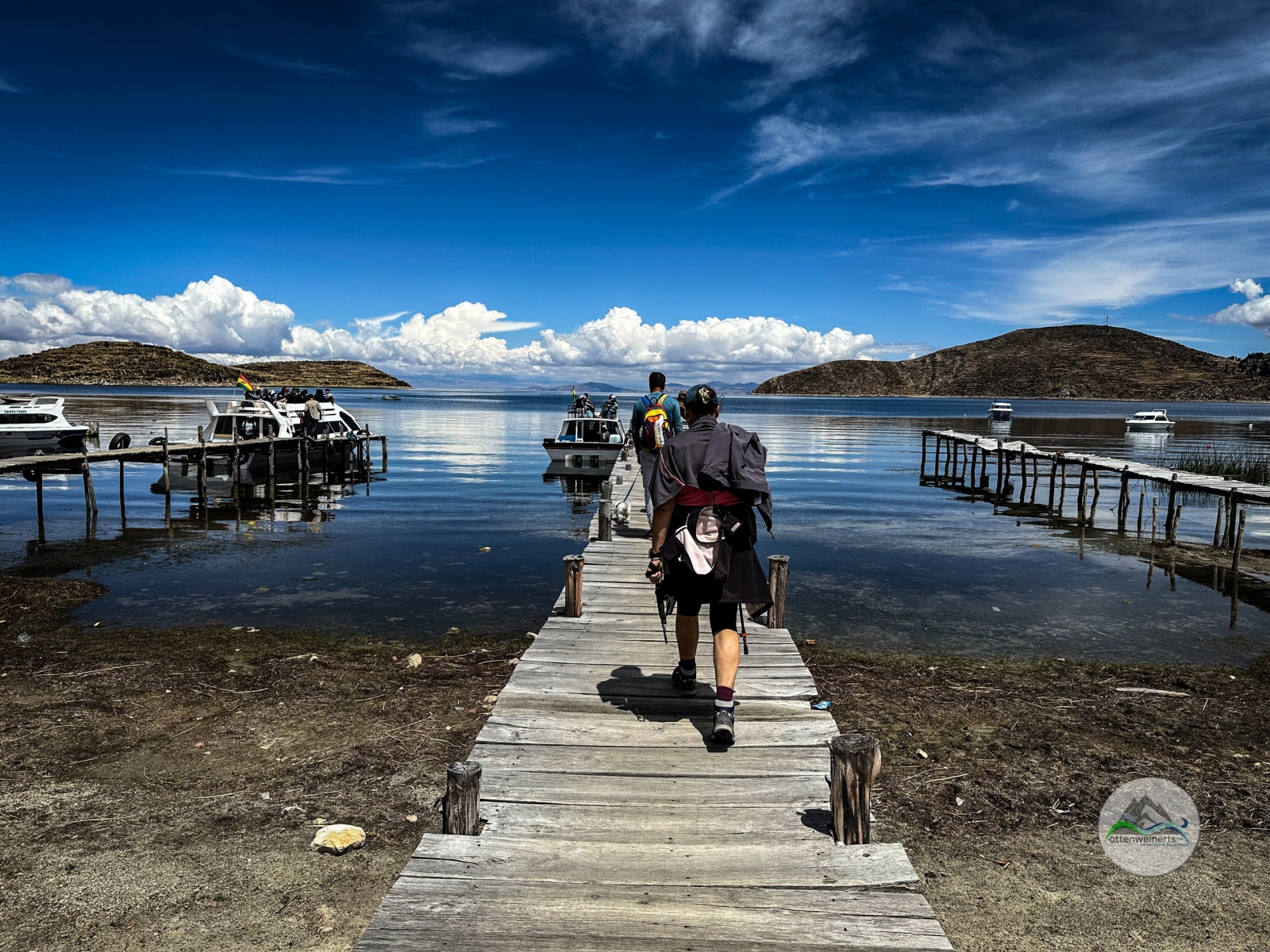
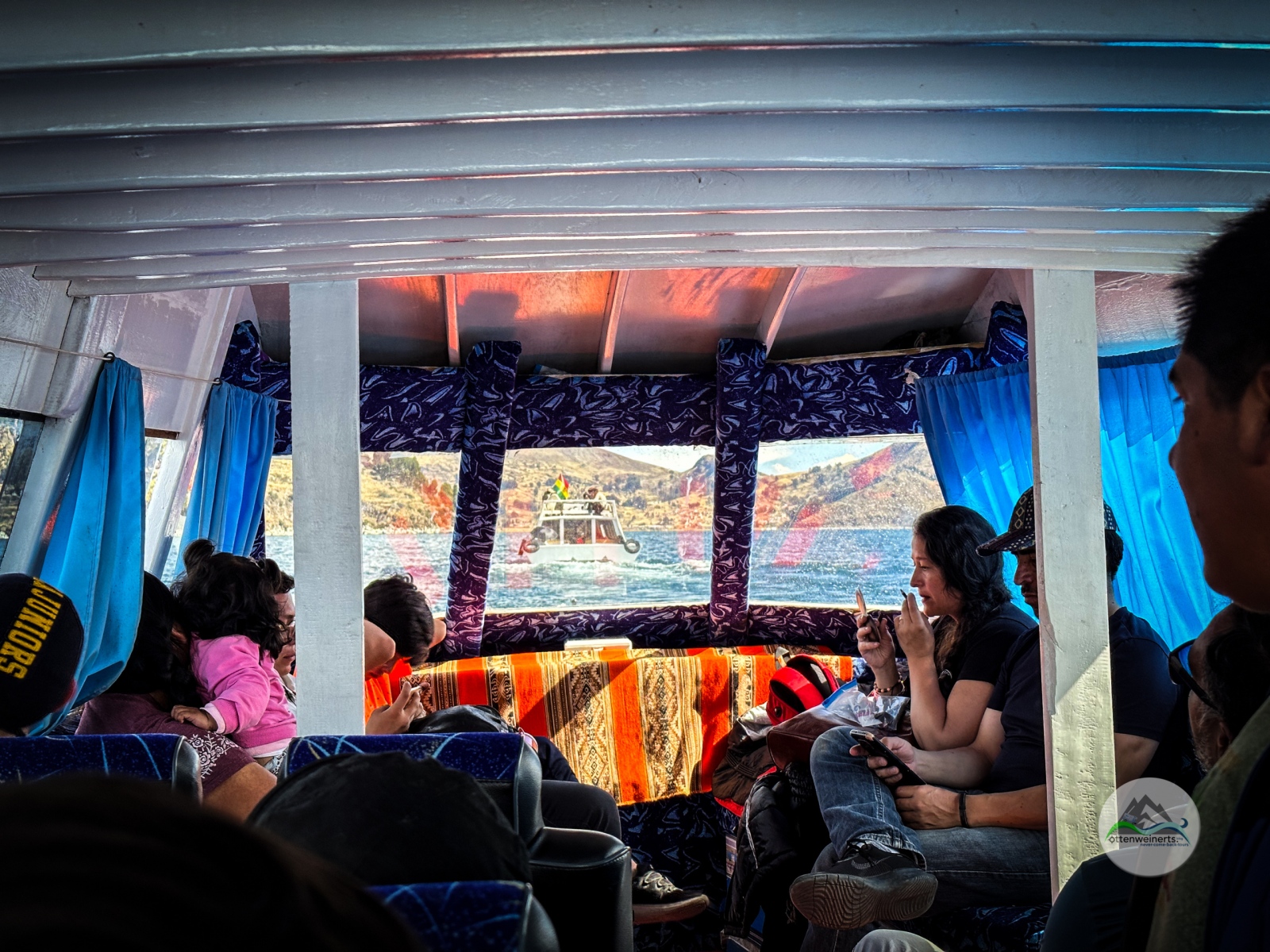
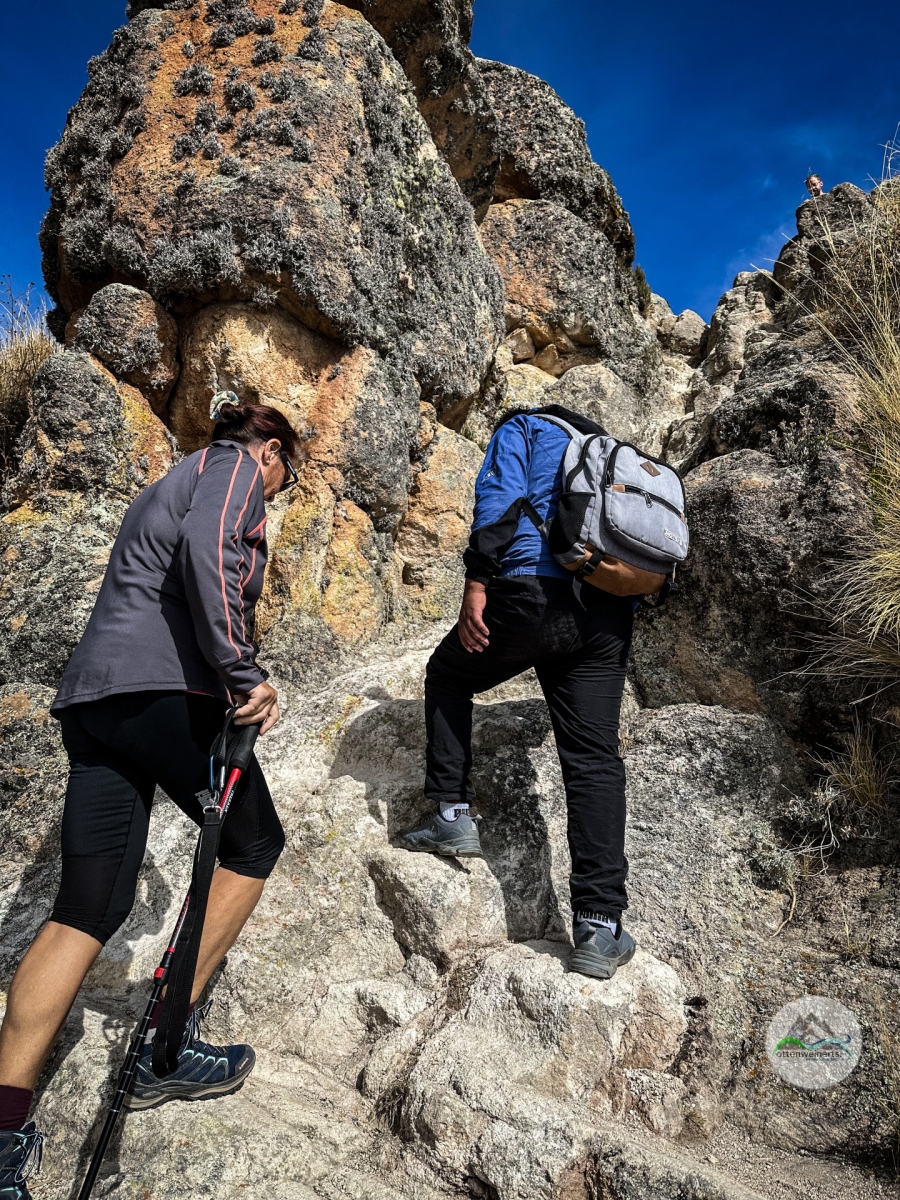
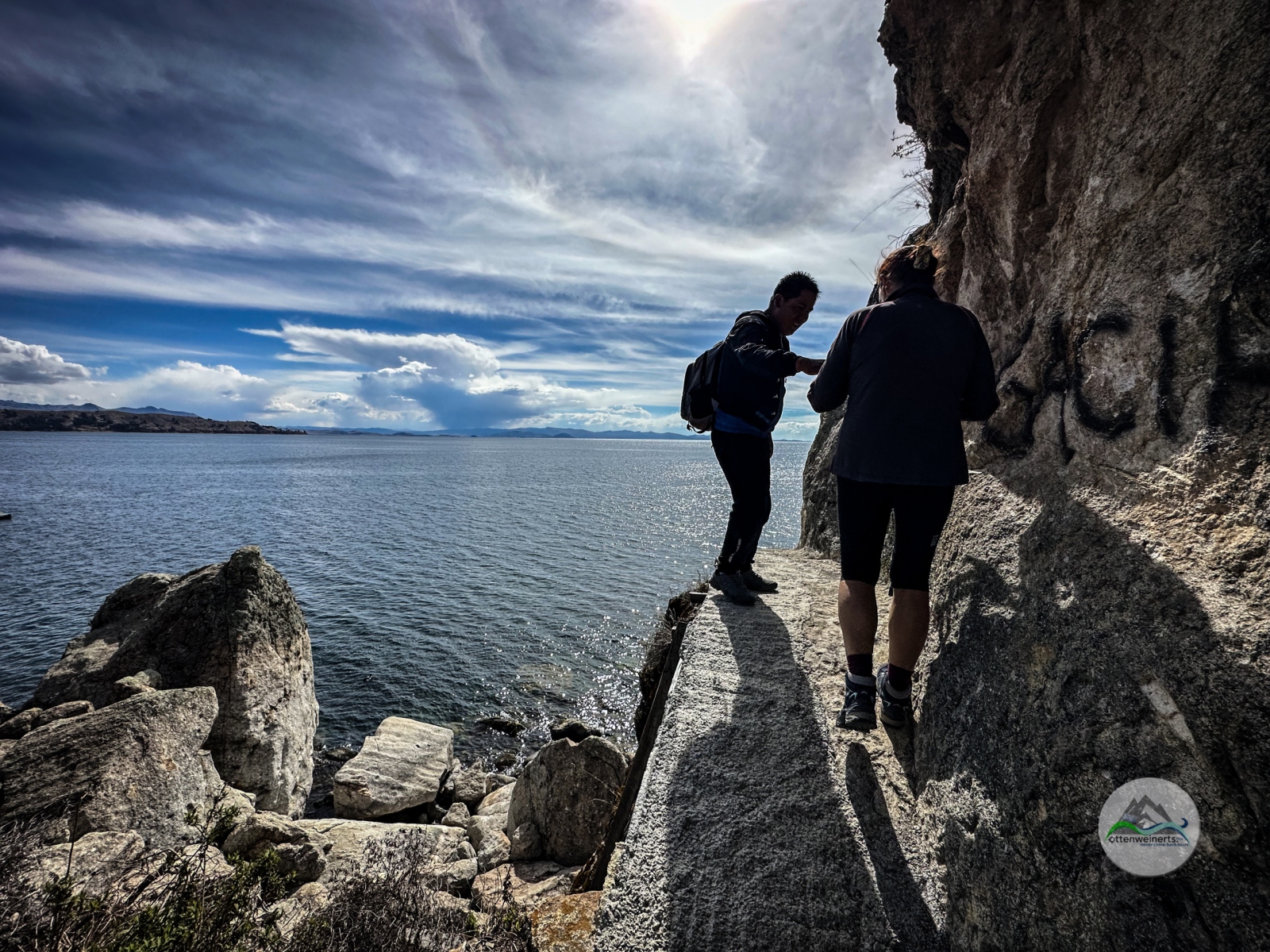
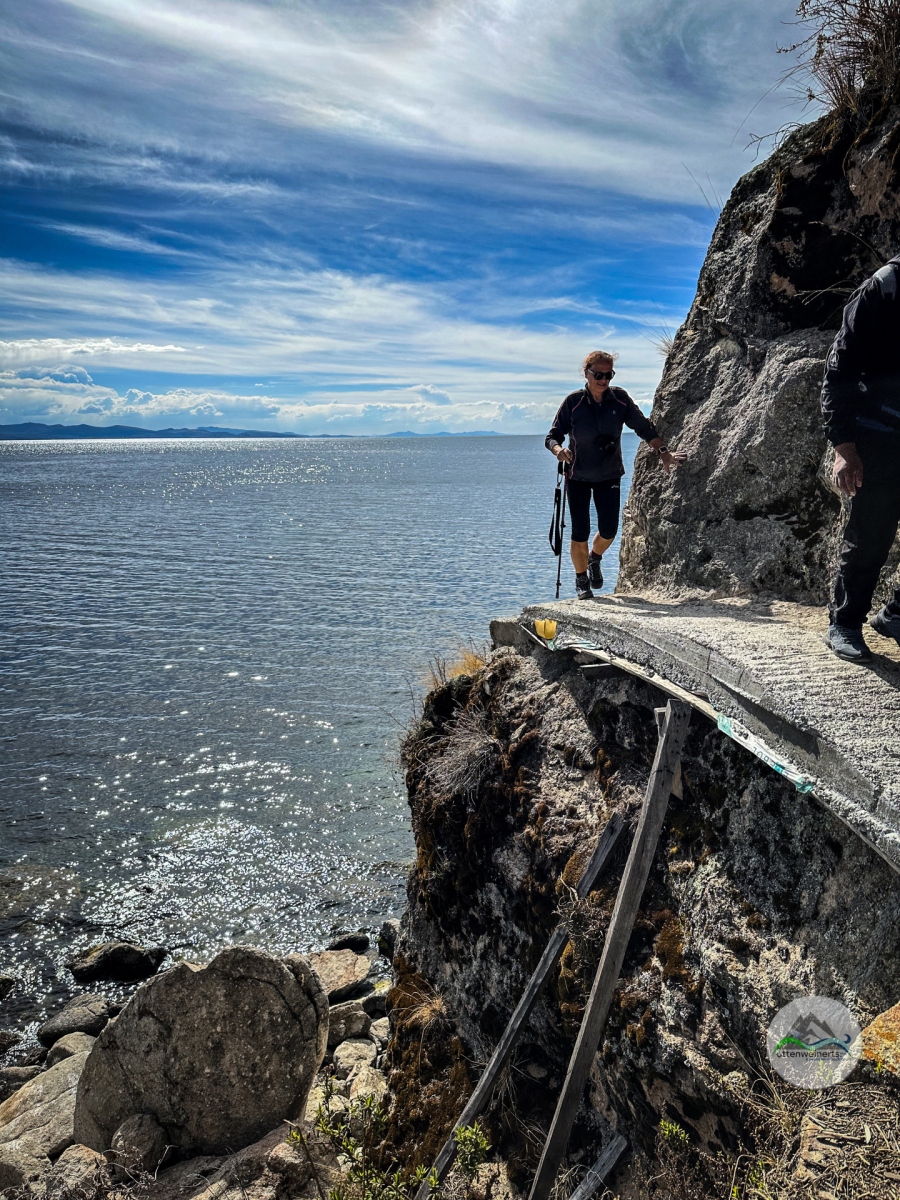
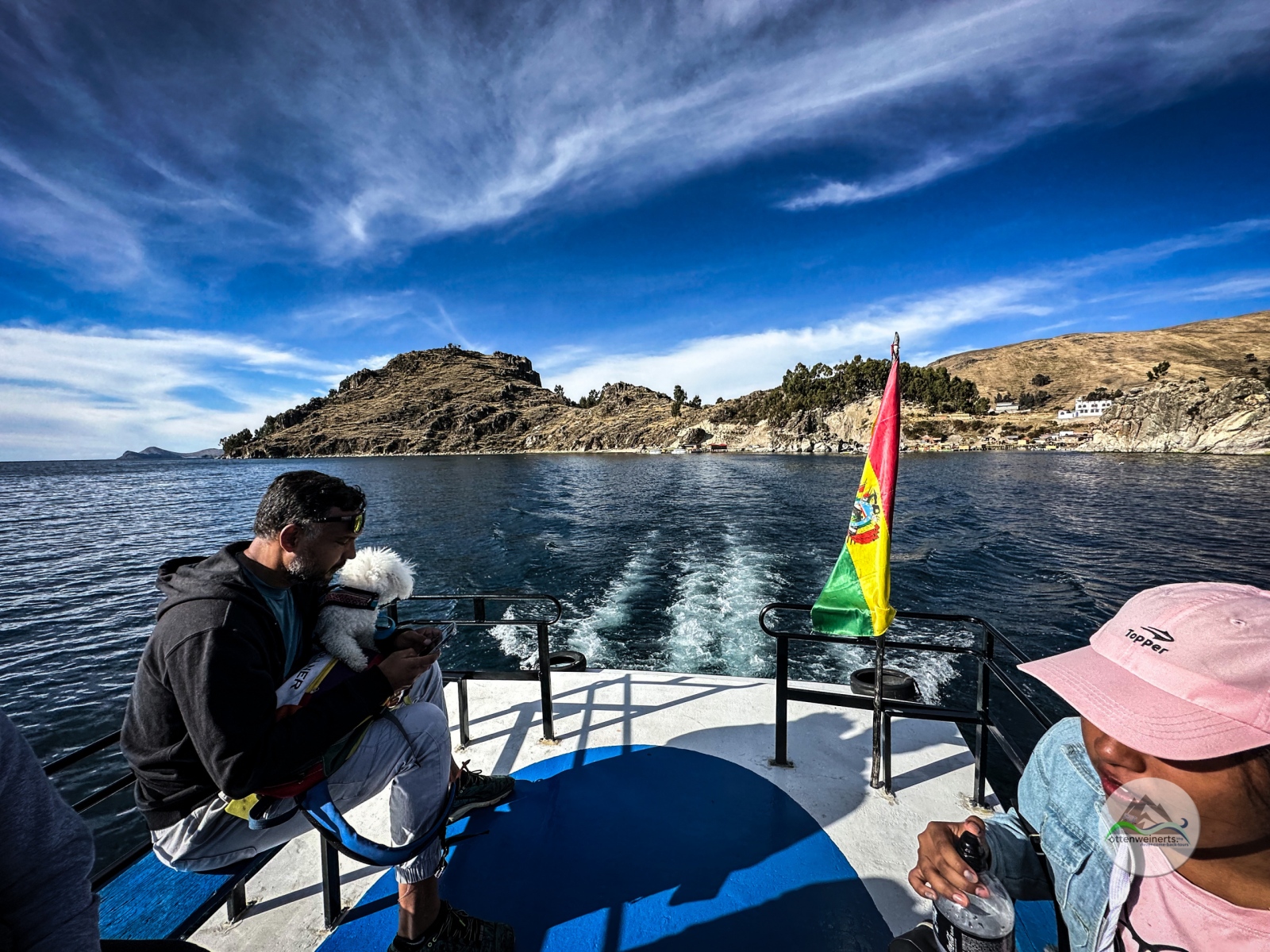
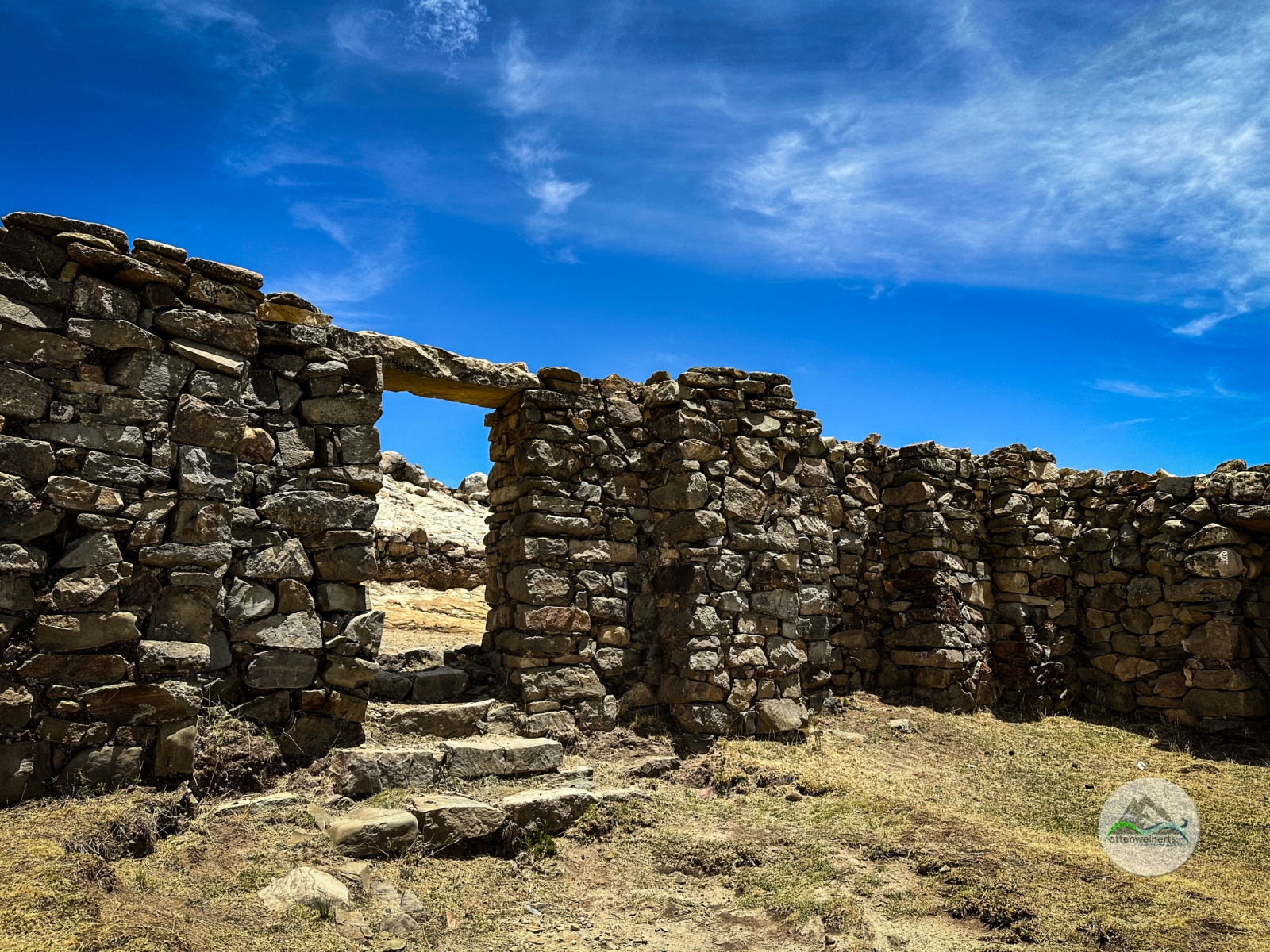
Nach knapp eineinhalb Stunden Bootsfahrt gehen wir an der Nordspitze der Insel an Land und stapfen bergauf. Mit dabei sind auch Elton, Overlander aus Brasilien mit seinem Begleiter Nick, ein 14 Jahre alter Mini-Pudel. In den Ruinen des Chincana-Palastes zeigt uns unser Guide Vidal architektonische Spuren sowohl der Inka als auch der früheren Tiwanaku-Kultur (deren Dächer etwa waren aus Stein) und einen Eingang zu einem Tunnelsystem. Ob diese Tunnel wirklich unter dem Titikaka-See durch bis nach Cuzco führen, wagen wir allerdings zu bezweifeln. Vidal erklärt uns die Bedeutung des heiligen Steins und des Puma-Felsens, und zeigt uns die Fußspuren der Sonne – hier wurde der Legende nach der Sonne und dem Mond befohlen, in den Himmel aufzusteigen.

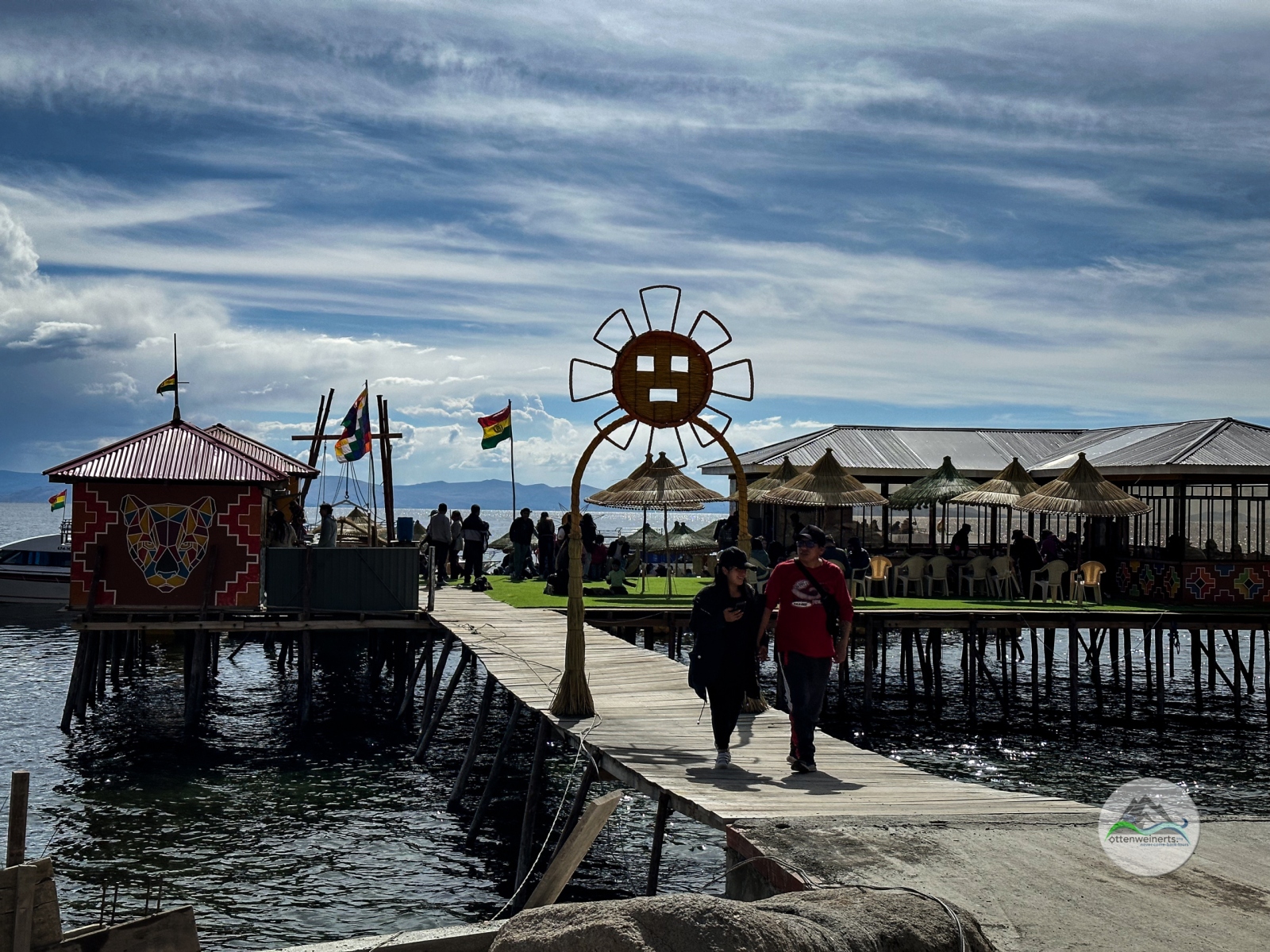
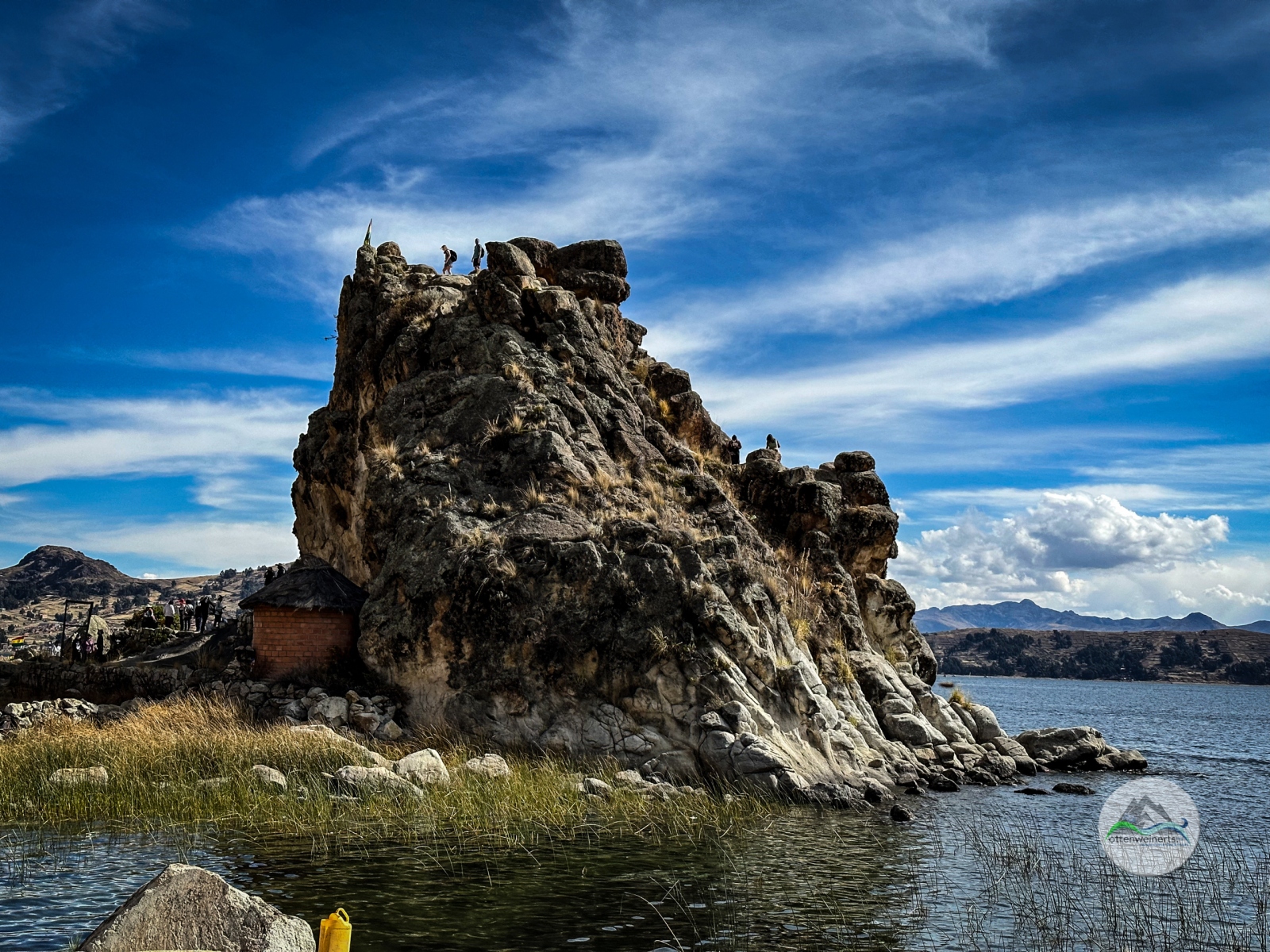
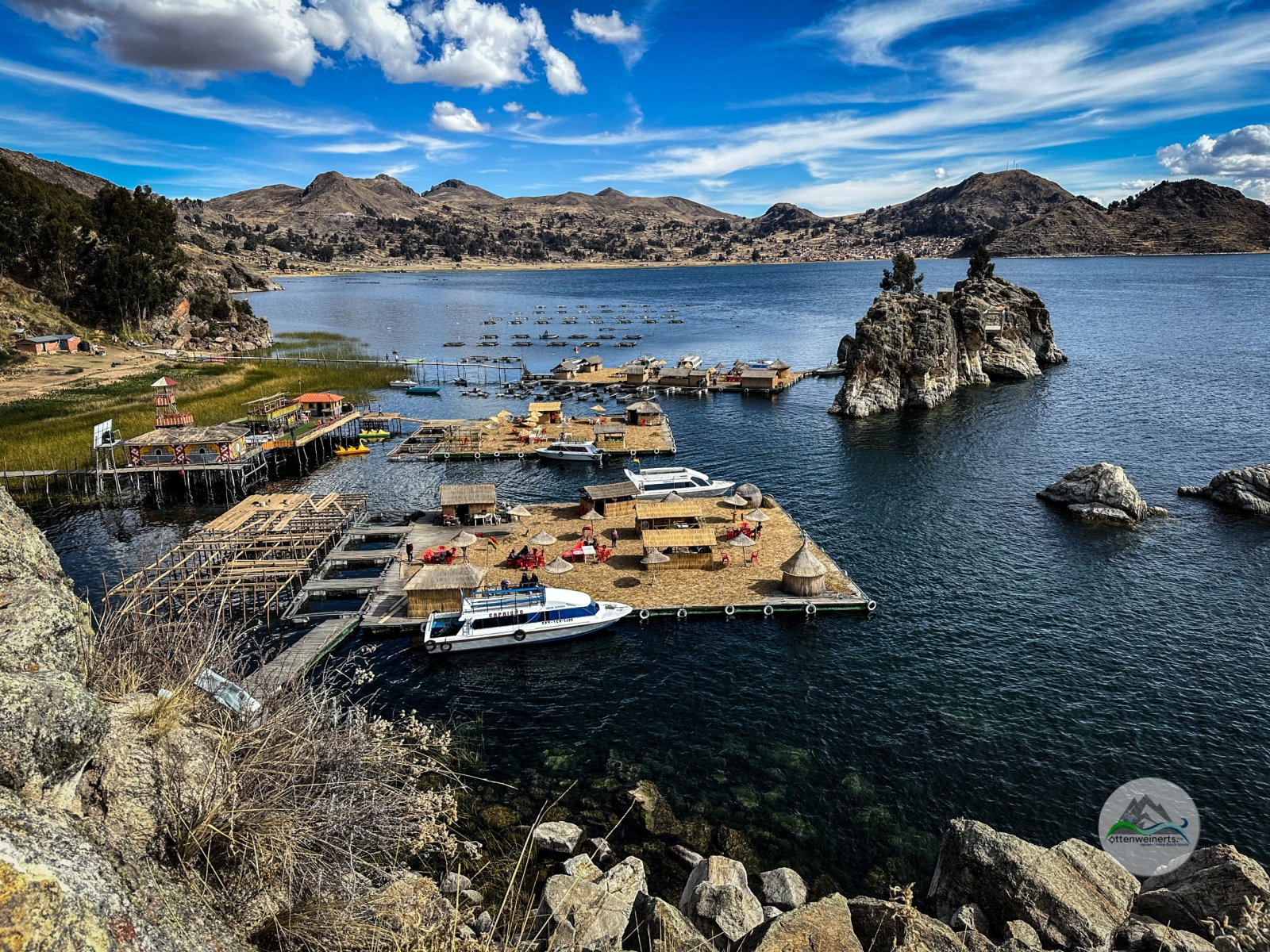
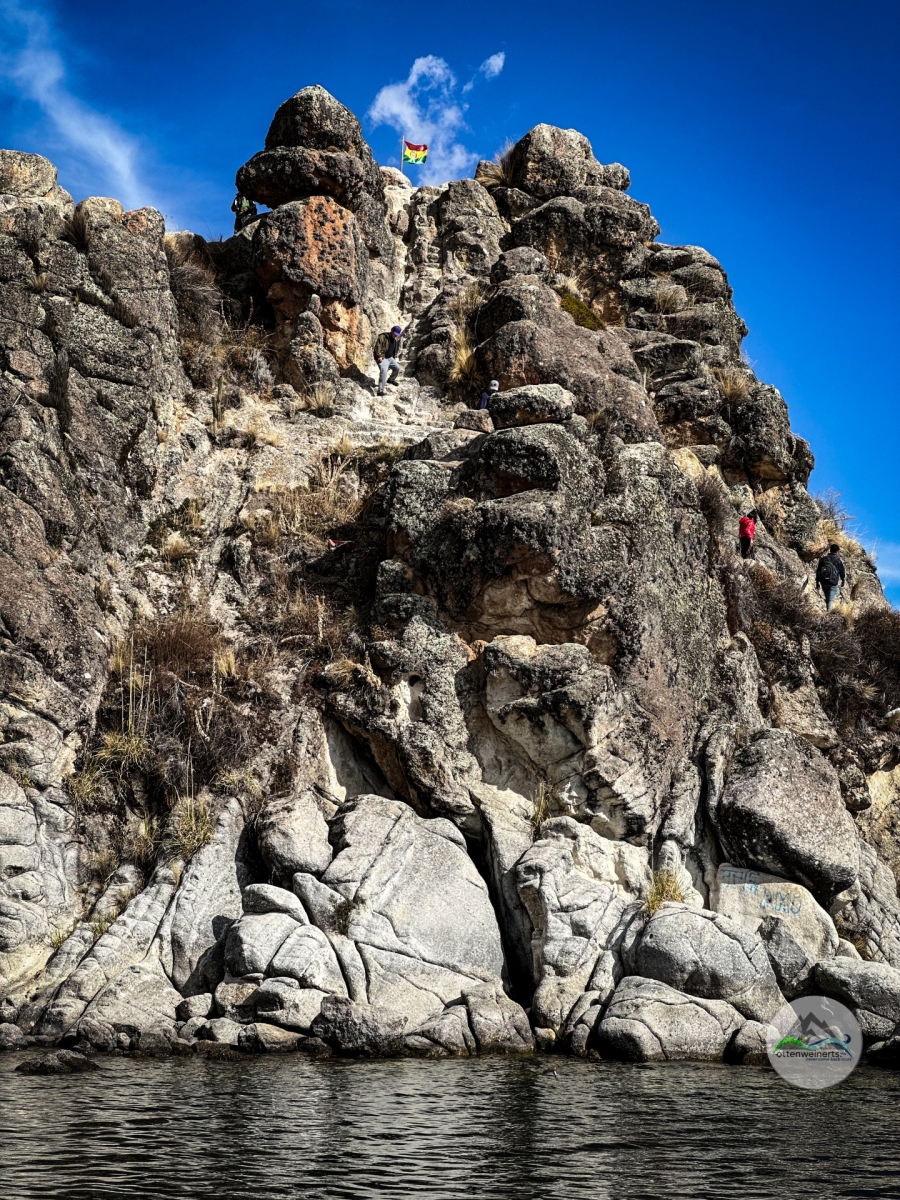
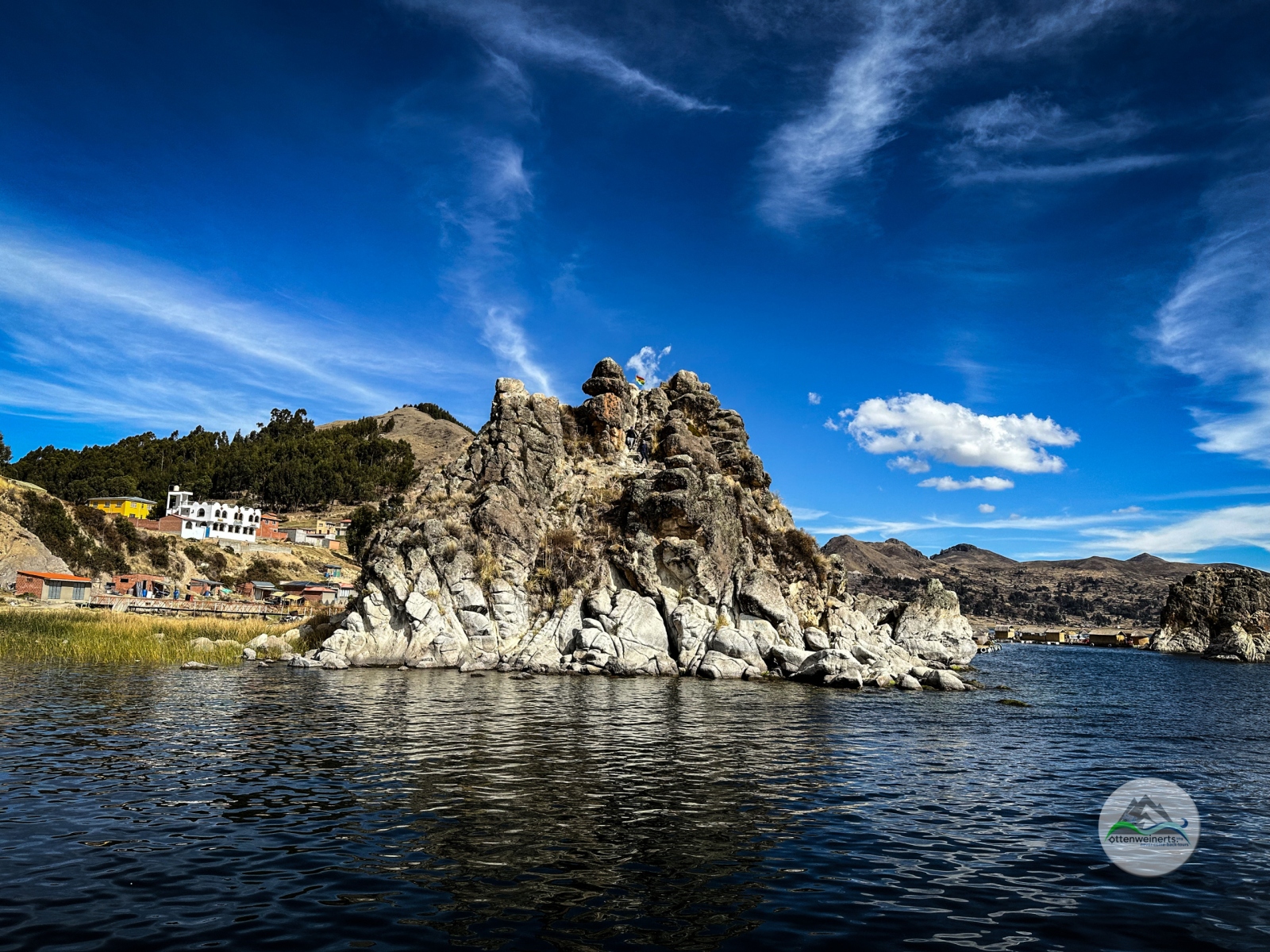
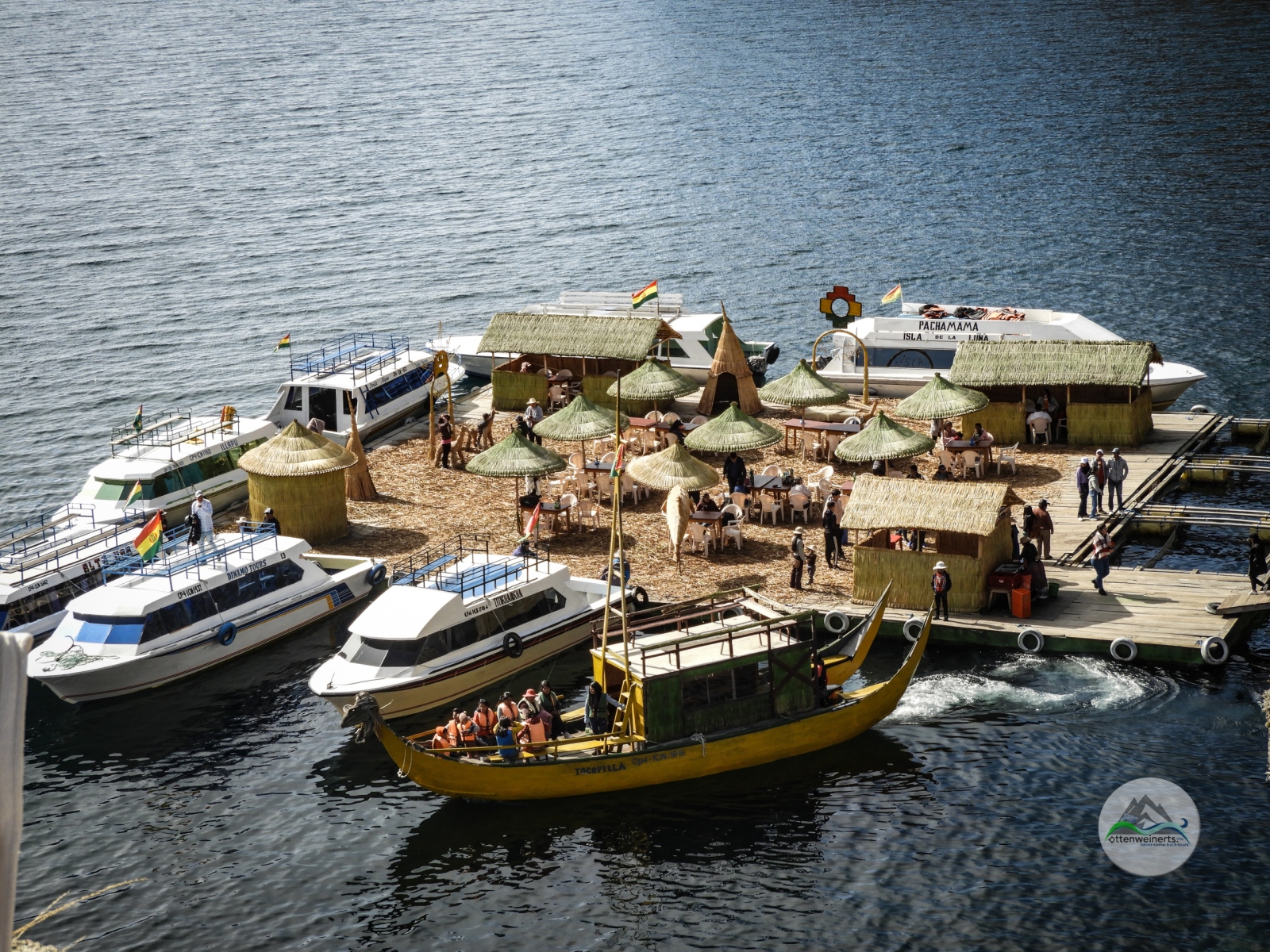
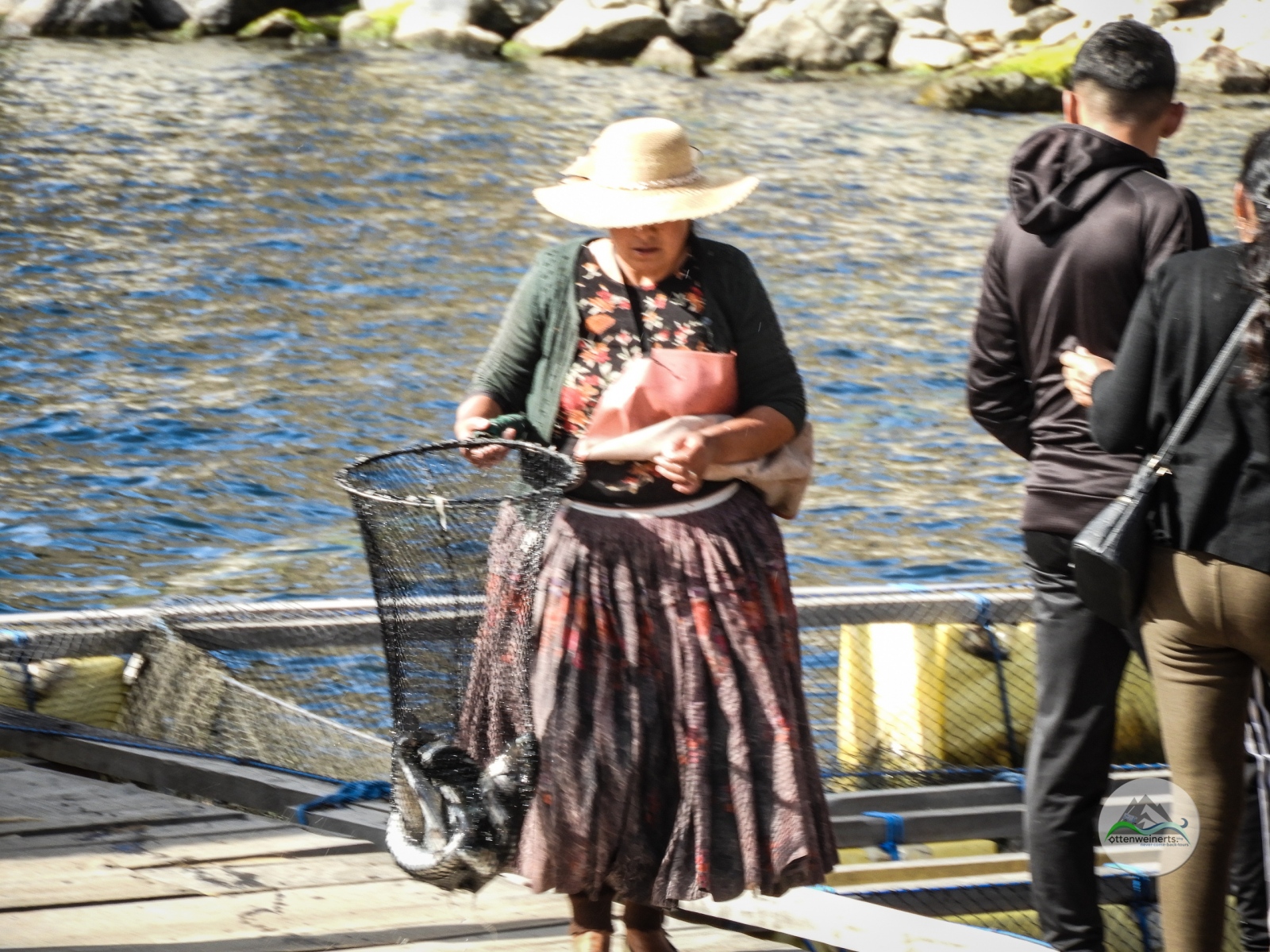
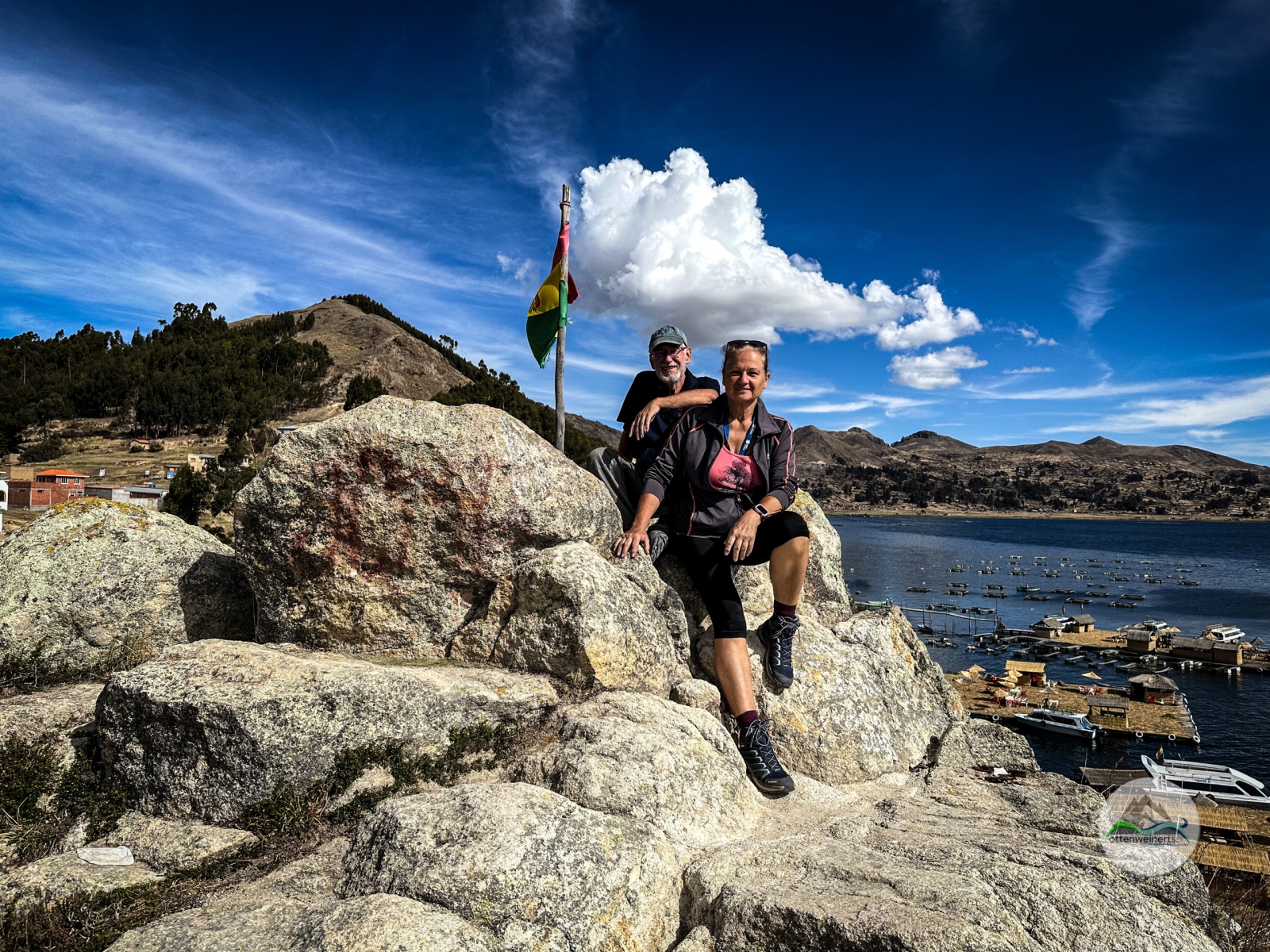
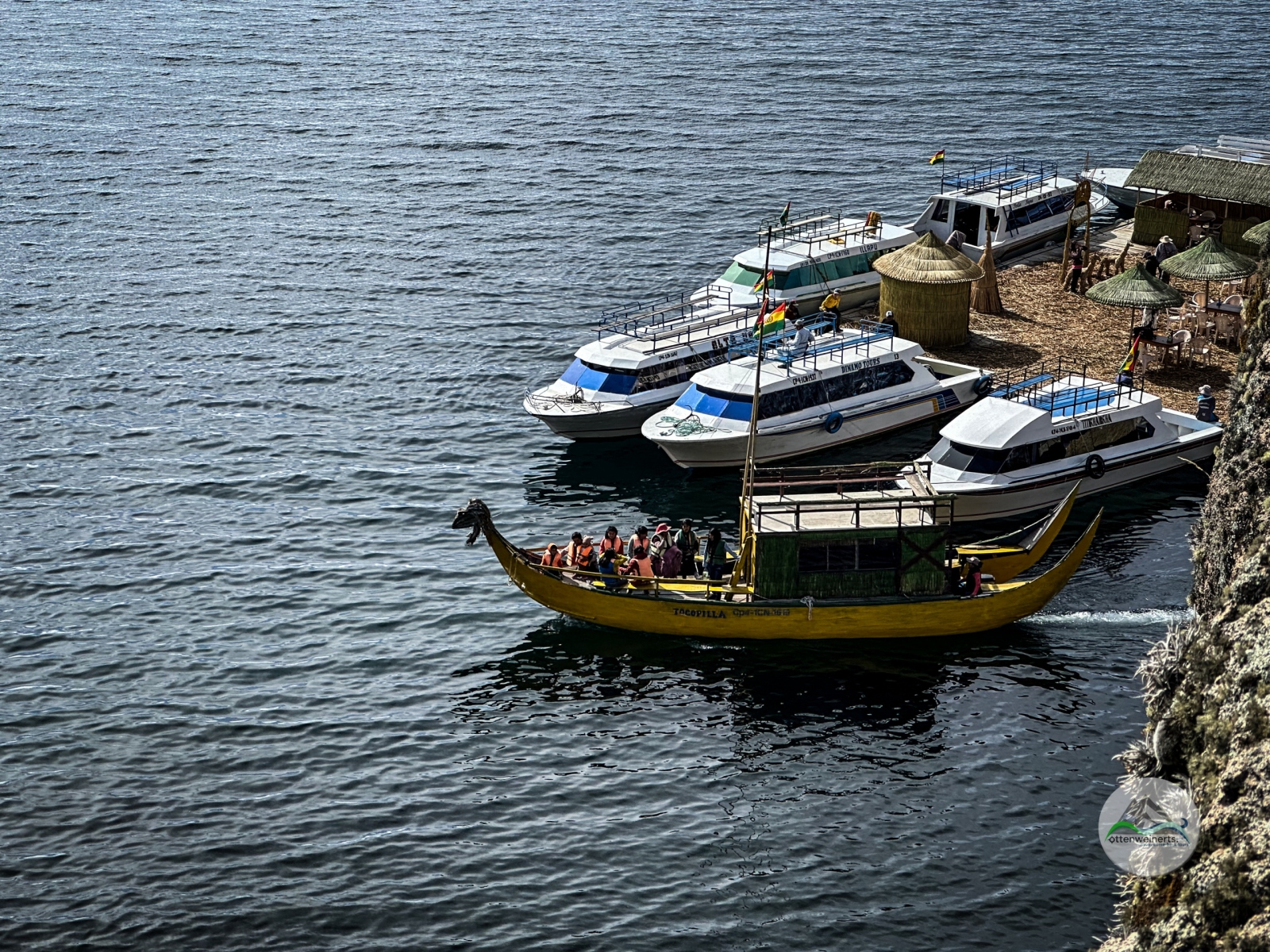
Anschließend fahren wir weiter, an der Isla de la Luna, der Mondinsel, vorbei zu einer der schwimmenden Totoro-Schilfinseln. Das sind zwar nicht die berühmten Originale (die befinden sich am nördlichen See Ende, vor Puno – mussten wir leider wegen der Situation in Perú auslassen), erfreuen sich aber dennoch großer Beliebtheit wegen der regionalen Spezialität – frische Forellen. Der Andrang ist so groß, dass wir aufs Essen verzichten – außerdem bringen wir es nicht übers Herz, uns eine lebende Forelle auszusuchen, die dann vor unseren Augen ihr Leben lassen muss. Stattdessen klettern wir auf den nahen Felsen, der eine schöne Aussicht über den See und einige der Pseudo-Totoro-Schilfinseln bietet.

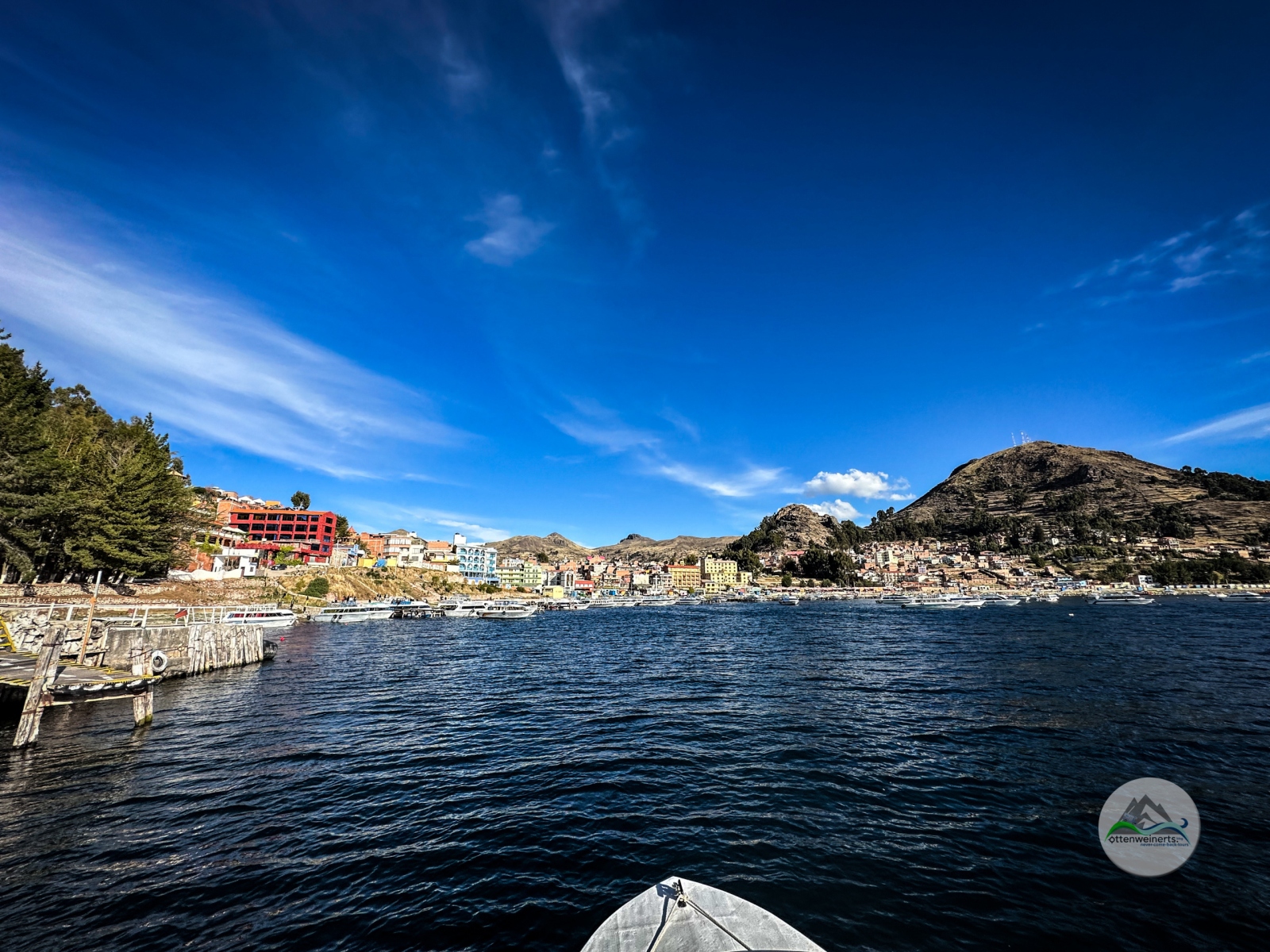
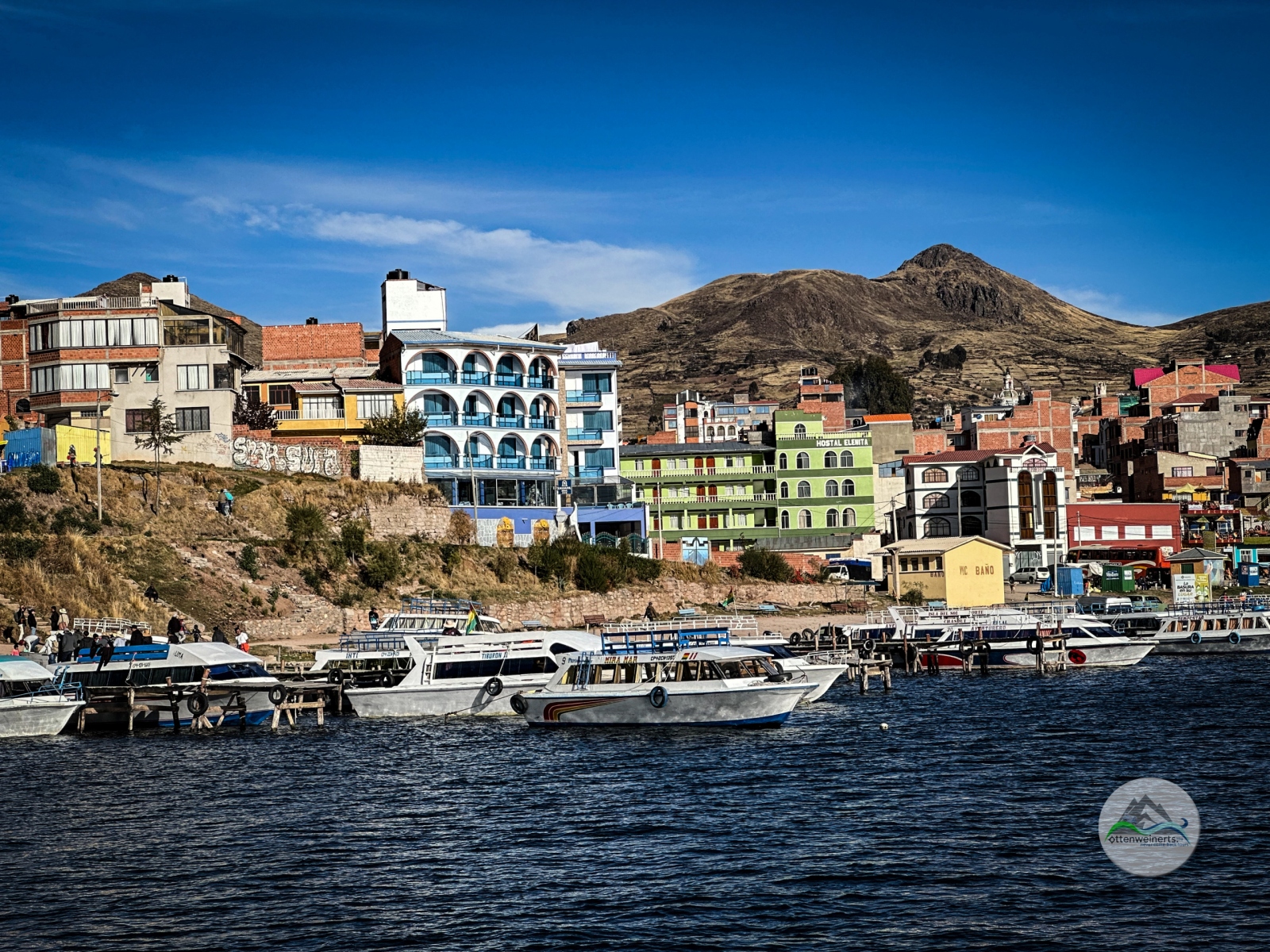
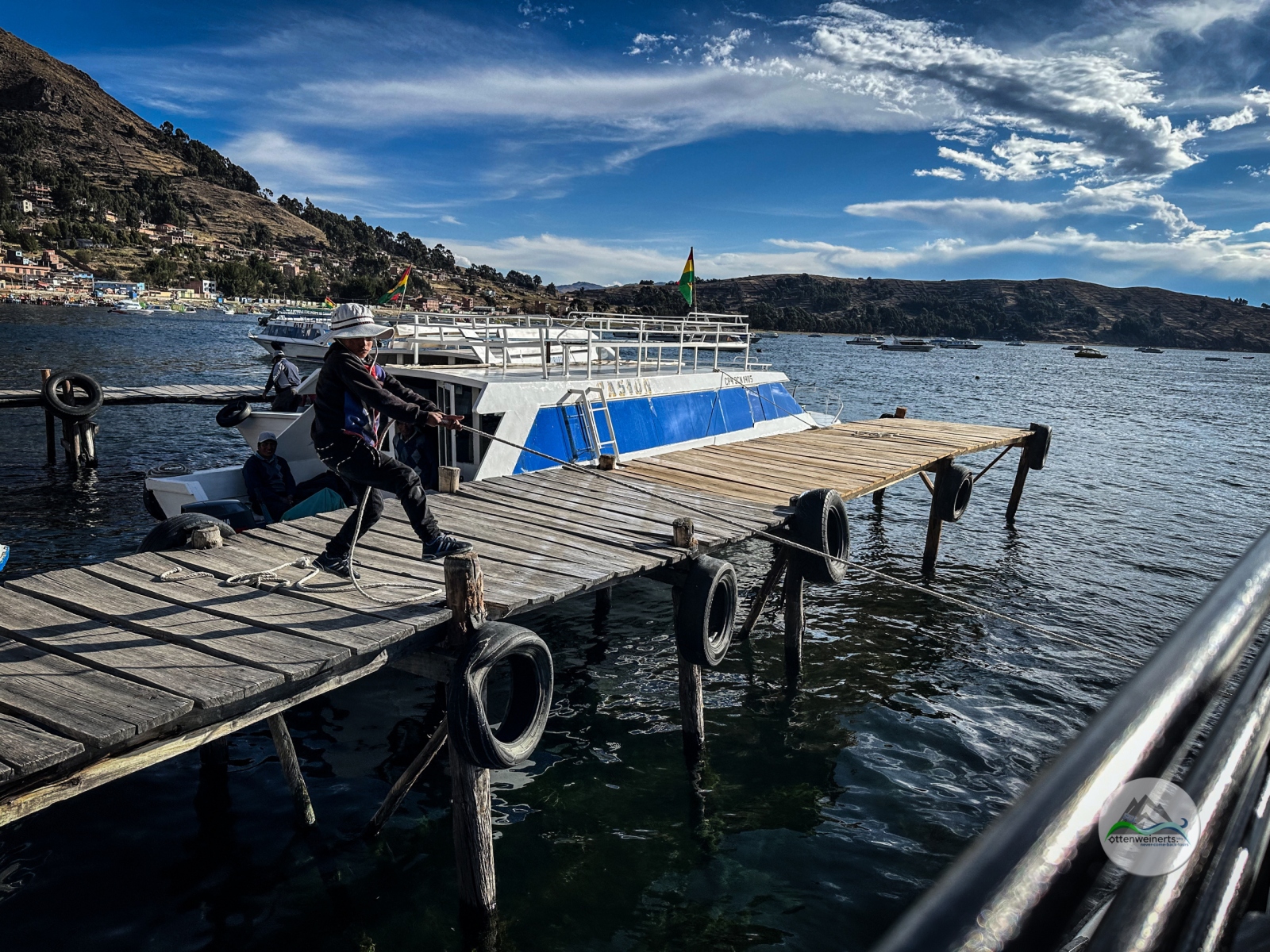
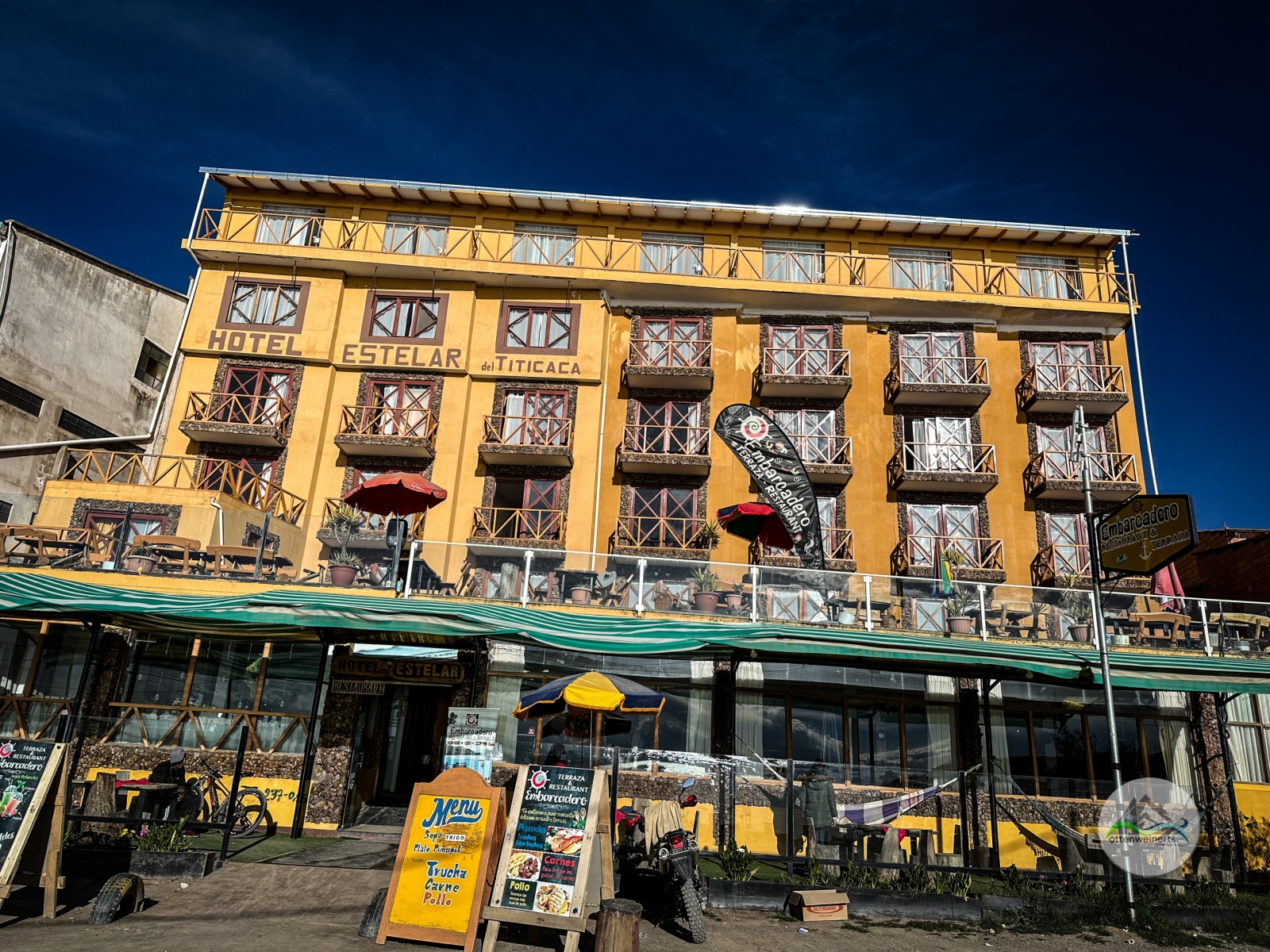
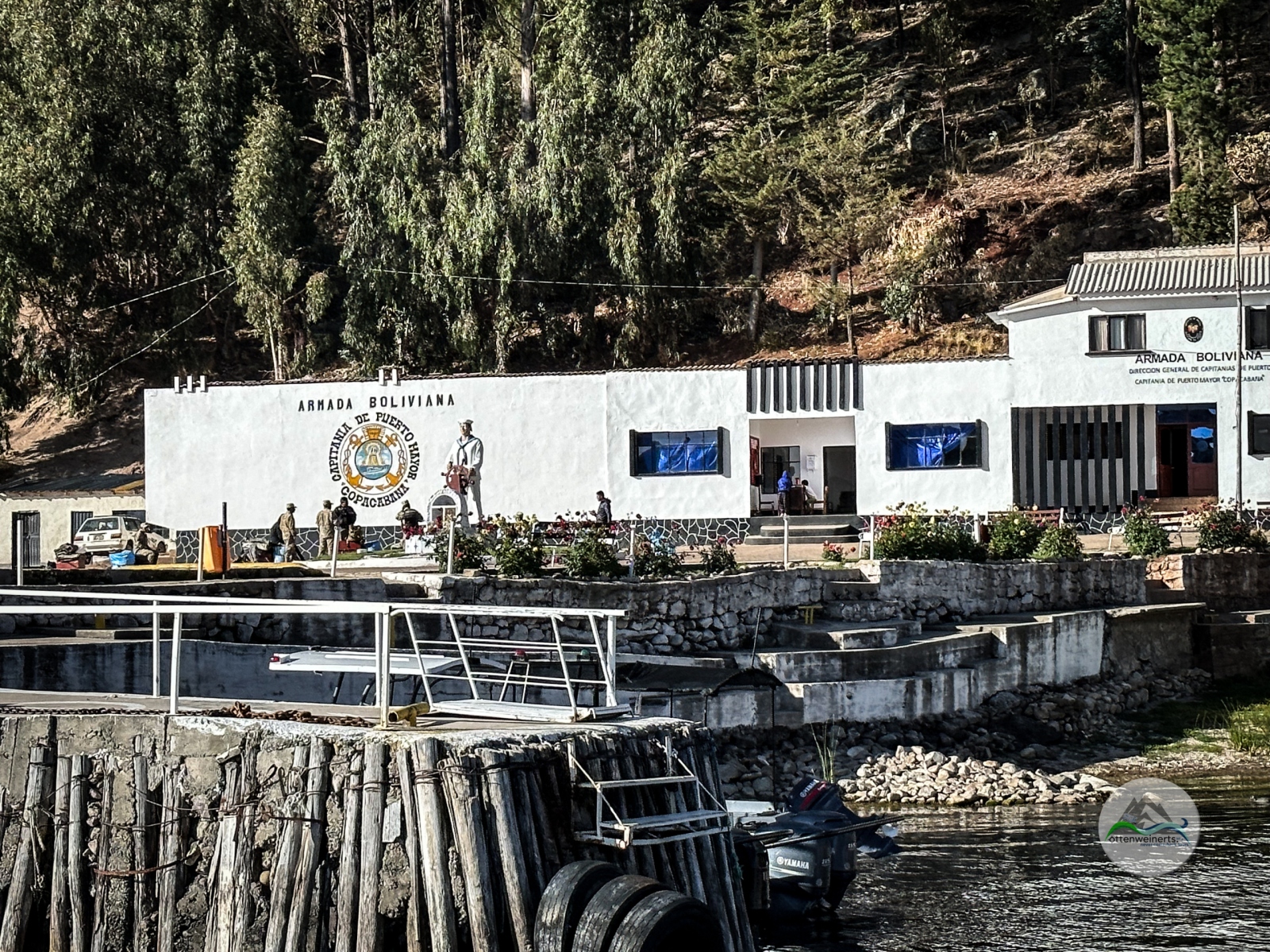
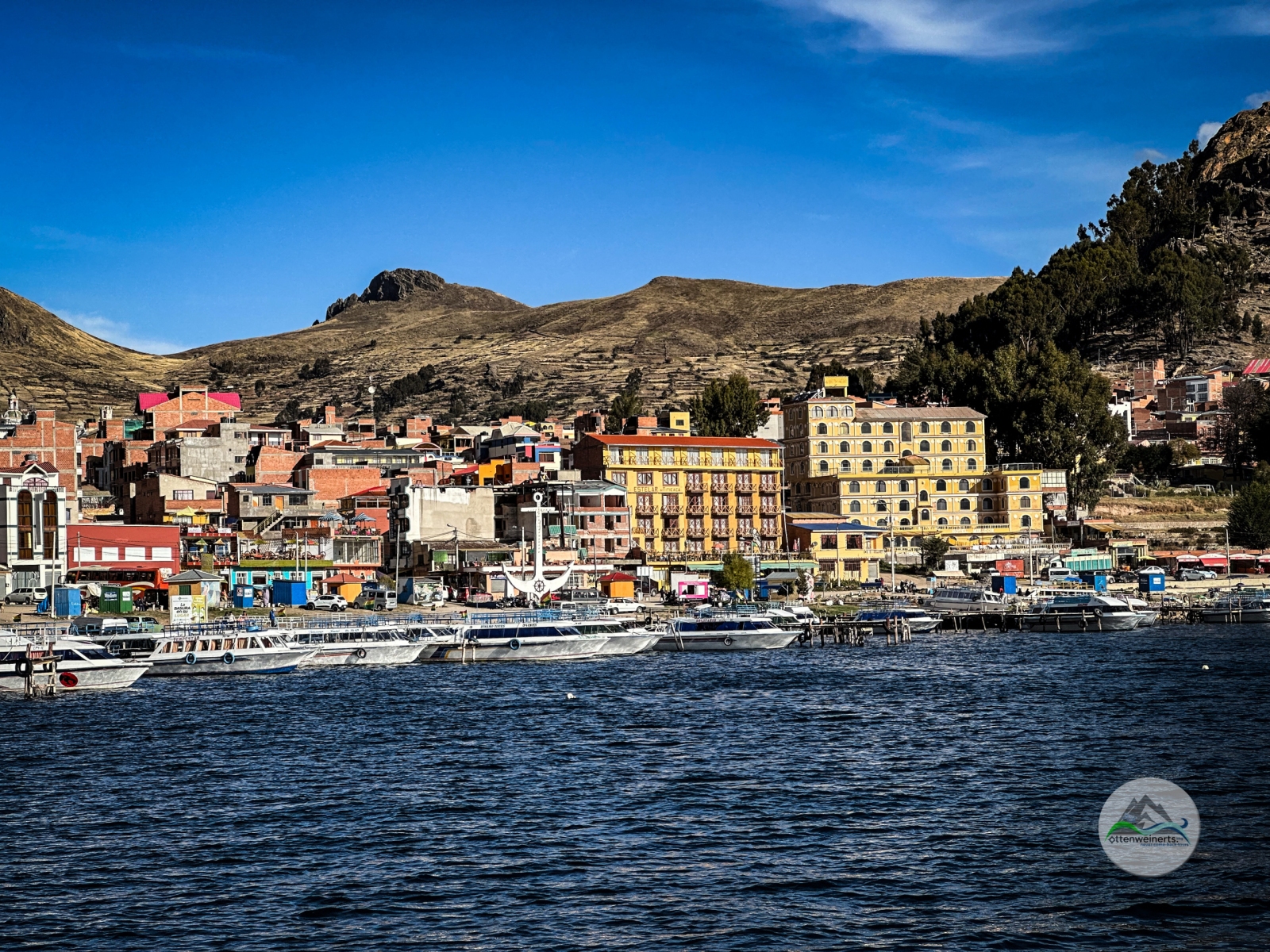
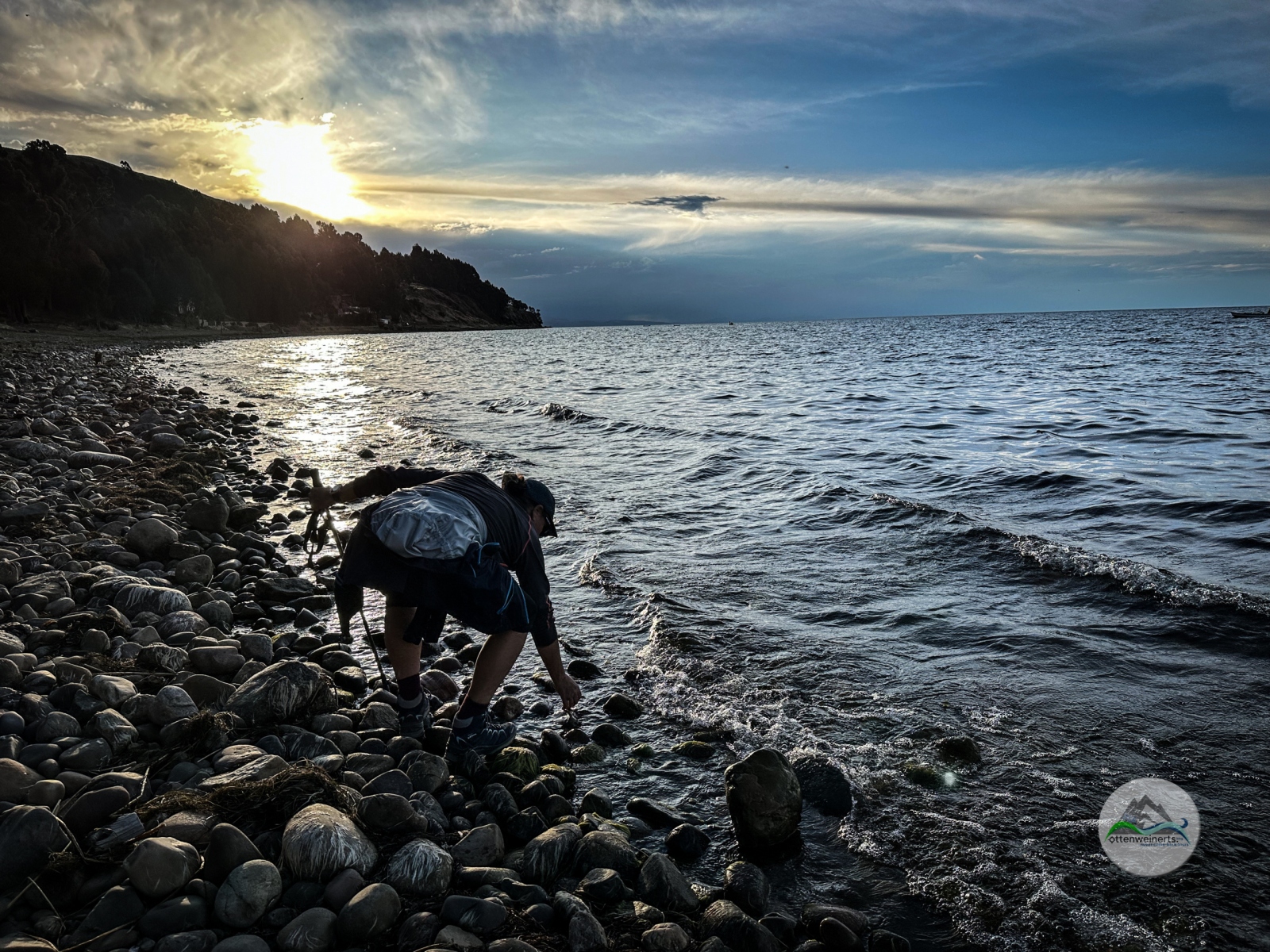
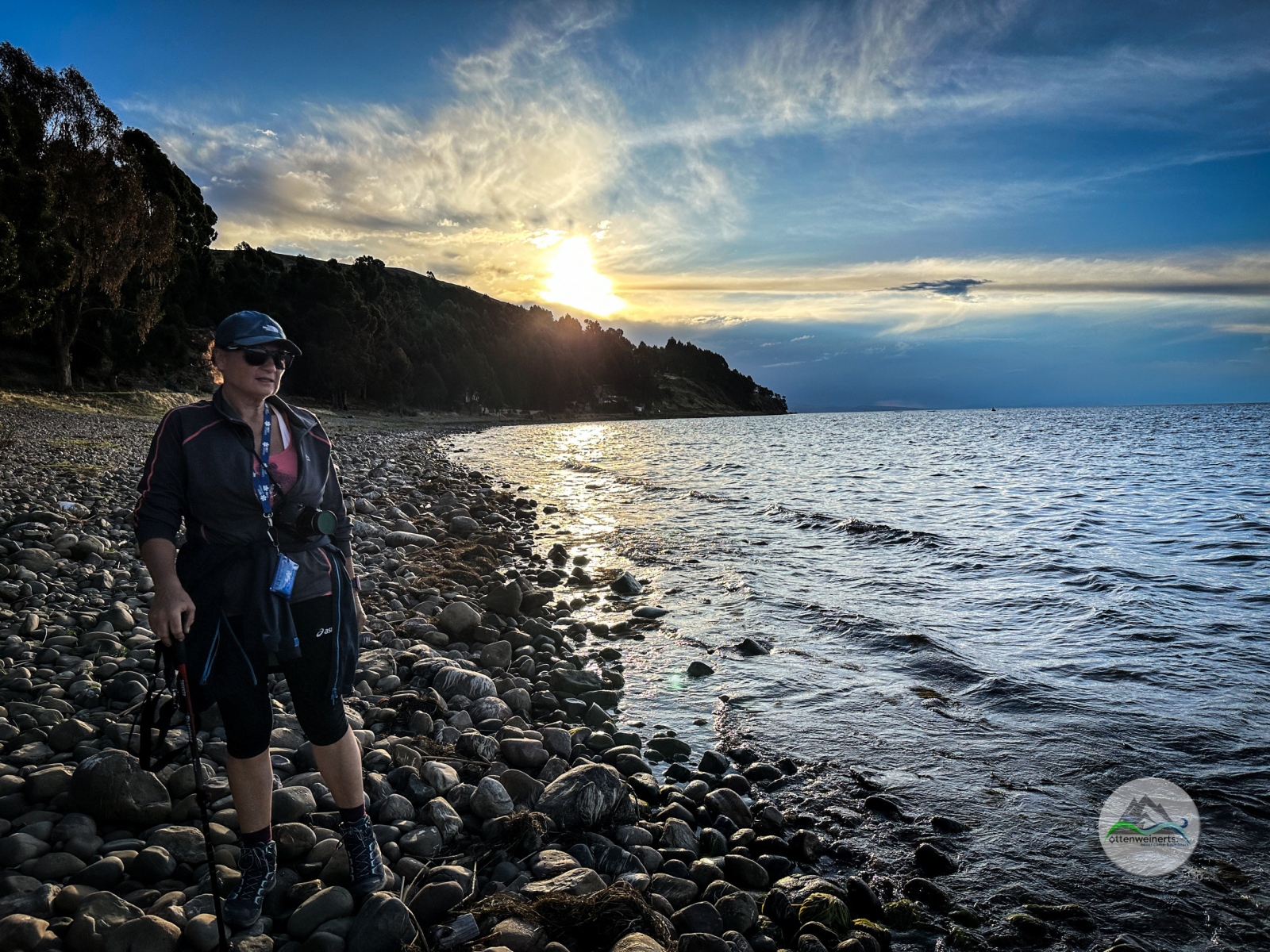
Dann geht es zurück in den Hafen von Copacabana, vorbei an einer Station der Bolivianischen Marine. Bolivien hat zwar seit dem Salpeterkrieg Ende des 19. Jhd. keinen Zugang mehr zum Meer, leistet sich aber trotzdem noch eine Marine. Man soll die Hoffnung nie aufgeben. Es ist später geworden als geplant, der See ist deutlich kühler als gedacht, und ich verzichte auf das „ich war im Titicaca-See schwimmen“-Foto. Wir kehren zurück zum Campingplatz, den wir mit anderen Overlandern teilen – eine Familie aus Solingen, D, mit drei Kleinkindern in einem Hanomag, der fast so alt ist wie wir; ein weiteres Pärchen aus Deutschland in einem kleinen Geländewagen; die vierköpfige spanische Familie, die uns den Tipp mit dem Campingplatz gegeben hat; und Elton mit Pudel Nick aus Balneário Camboriú, Santa Catarina, Brasilien, in ihrem „NicKombi“, einem VW-Bus-Camper. Morgen geht es Richtung El Alto / La Paz weiter, in der Hoffnung, eine Werkstatt zu finden, die unsere Probleme mit der Schaltung beheben kann.

Day 247 – Isla del Sol, Lake Titicaca

The “island of the Sun” is the largest and the most important of all islands in Lake Titicaca. Legend has it that the sun good Inti sent his two children to this place on earth, from where the founded the Inka empire. Our Boot passes the Inka palace and the Inka stairs on the south tip of the island – unfortunately it isn´t possible to visit both north and south on the same day because the villages are fighting with each other and / or with the one in the middle of the island (situation changing every few weeks).
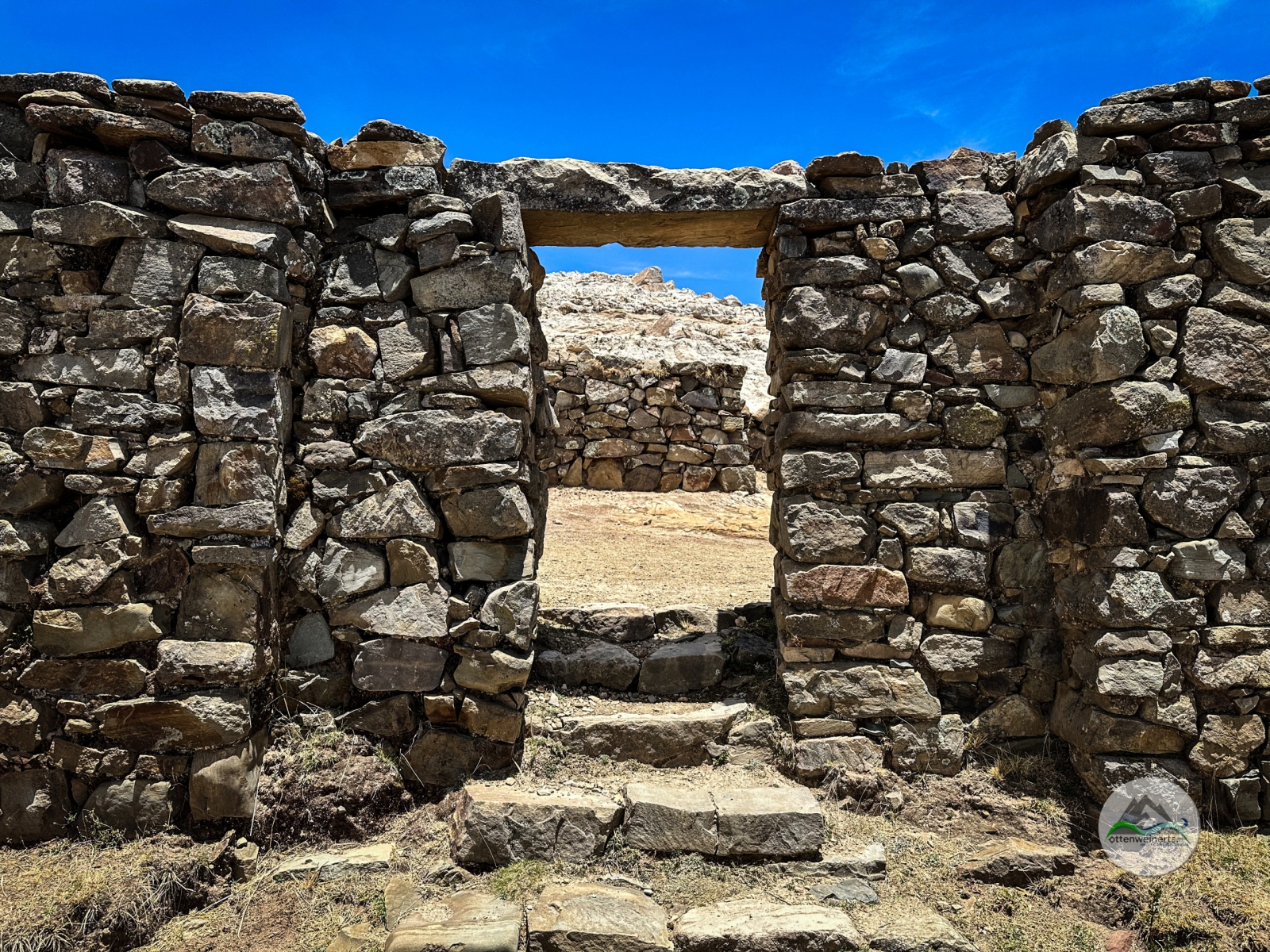
After 90 minutes boat ride we alight at the northern tip of the island and start walking uphill. We are a small group – Elton, overlander from Brazil and his 14 years-old mini poodle Nick, our guide Vidal and the two of us. In the ruins of the Chincana palace Vidal shows us the different architectural styles of the Inka and the Tiwanaku culture (who built their roofs with stones for example) and points out the entry to a tunnel system. These tunnels are believed to lead beneath Lake Titicaca north to Cuzco – not sure if we believe that. Vidal also explains the significance of the sacred stone and the puma rock and the footprints of the sun – here sun and moon were ordered to ascend to the sky, according to legend.

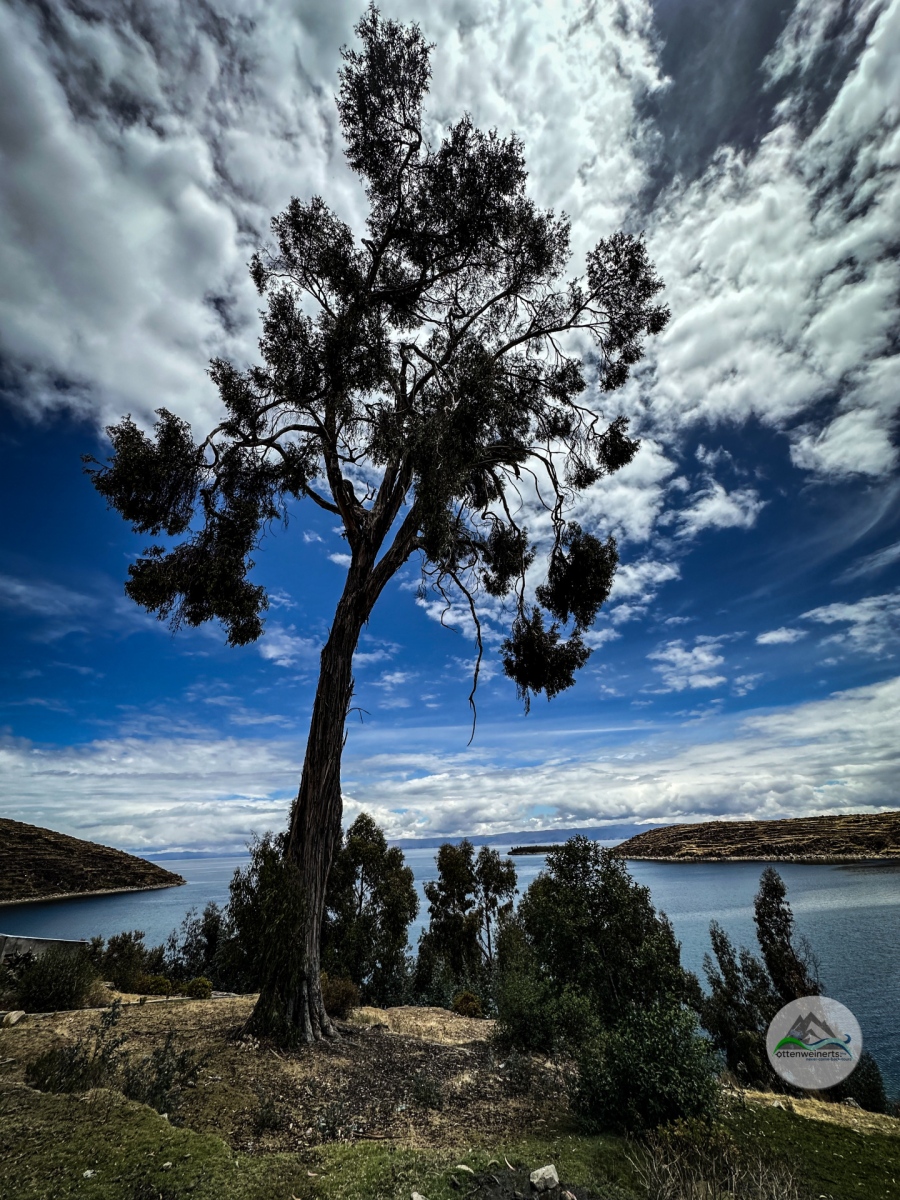
Then we continue, passing the Isla de la Luna, the Moon Island, and stop at one of the swimming Totoro-reed islands. These are not the original, famous ones (these are located on the northern end of Lake Titicaca, near Puno which we couldn´t visit due to the political situation in Perú), but they are famous for their local specialty – grilled trout. There are so many people in line waiting for their food that we decide to skip lunch – and we also don´t have the heart to choose a live trout which then has to die for our lunch right in front of us. Instead, we climb up a nearby rock – from the top we have a great view of the lake and several pseudo-Totoro-reed islands.

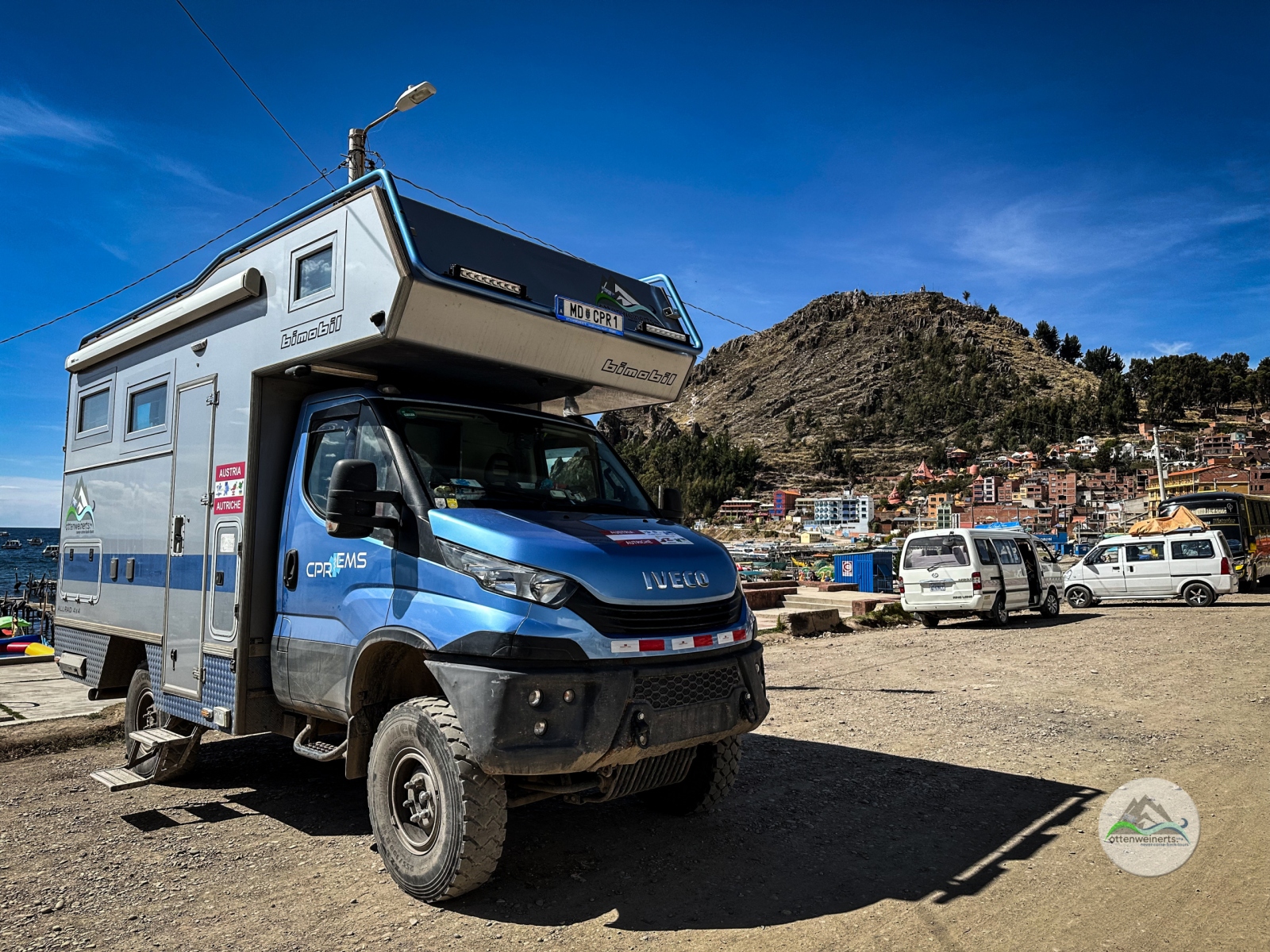
Then we return to the harbor of Copacabana, passing a complex of the Bolivian Marine corps. Due the War of the Pacific of late 19th century, Bolivia does not have access to the Pacific anymore – but it never gave up hope and still has a marine. It´s later than expected, the lake temperature is way lower than anticipated, and I decide to skip the “I went swimming in Lake Titicaca” picture. We return to our camping place which we share with several other overlanders – a family with three small kids from Solingen in Germany in a blue Hanomag truck which is almost as old as we are; another couple from Germany in a smaller off-road vehicle; the family of four from Spain who gave us the tip for this camping place; and Elton and poodle Nick from Balneário Camboriú, Santa Catarina, Brazil, in their “NicKombi”, a Volkswagen camper. Tomorrow we will continue towards El Alto / La Paz, hoping to find a mechanic who can solve the problems with our gear shift.

Isla del Sol – by ship
Route 221220

221219 – Hola, Bolivia >

Montag / Monday, December 19, 2022

Tag 246 – Hola, Bolivia

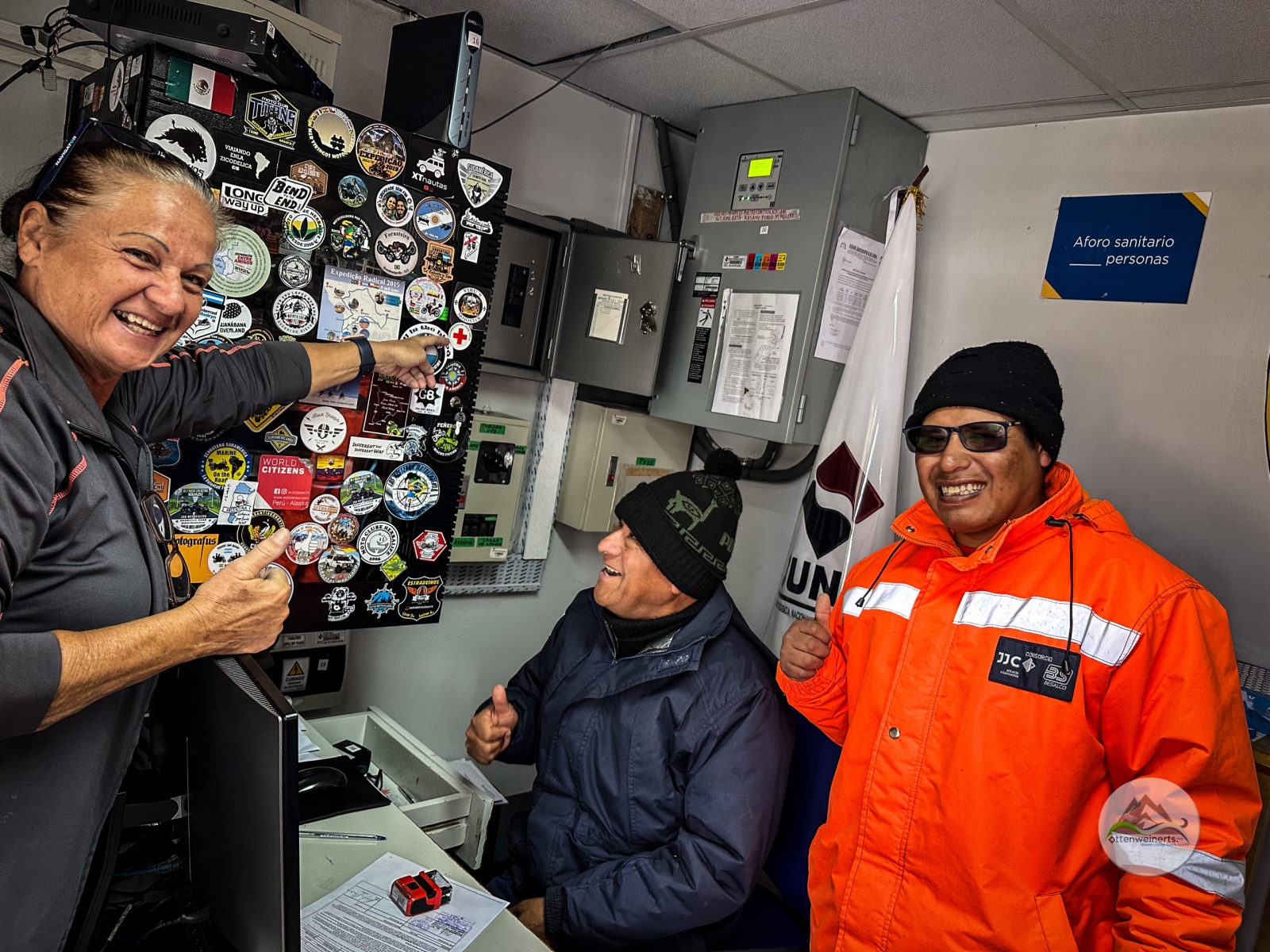
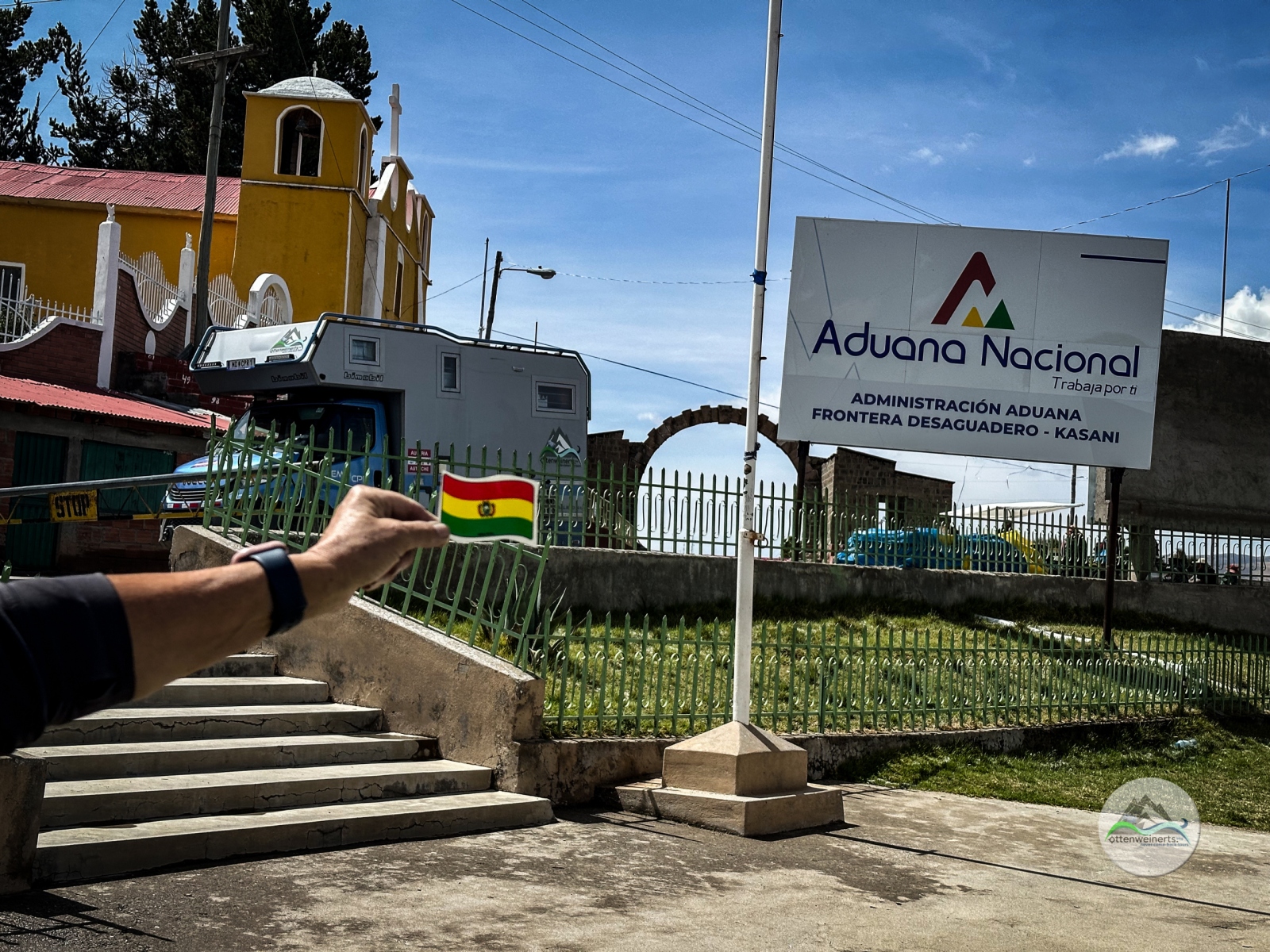
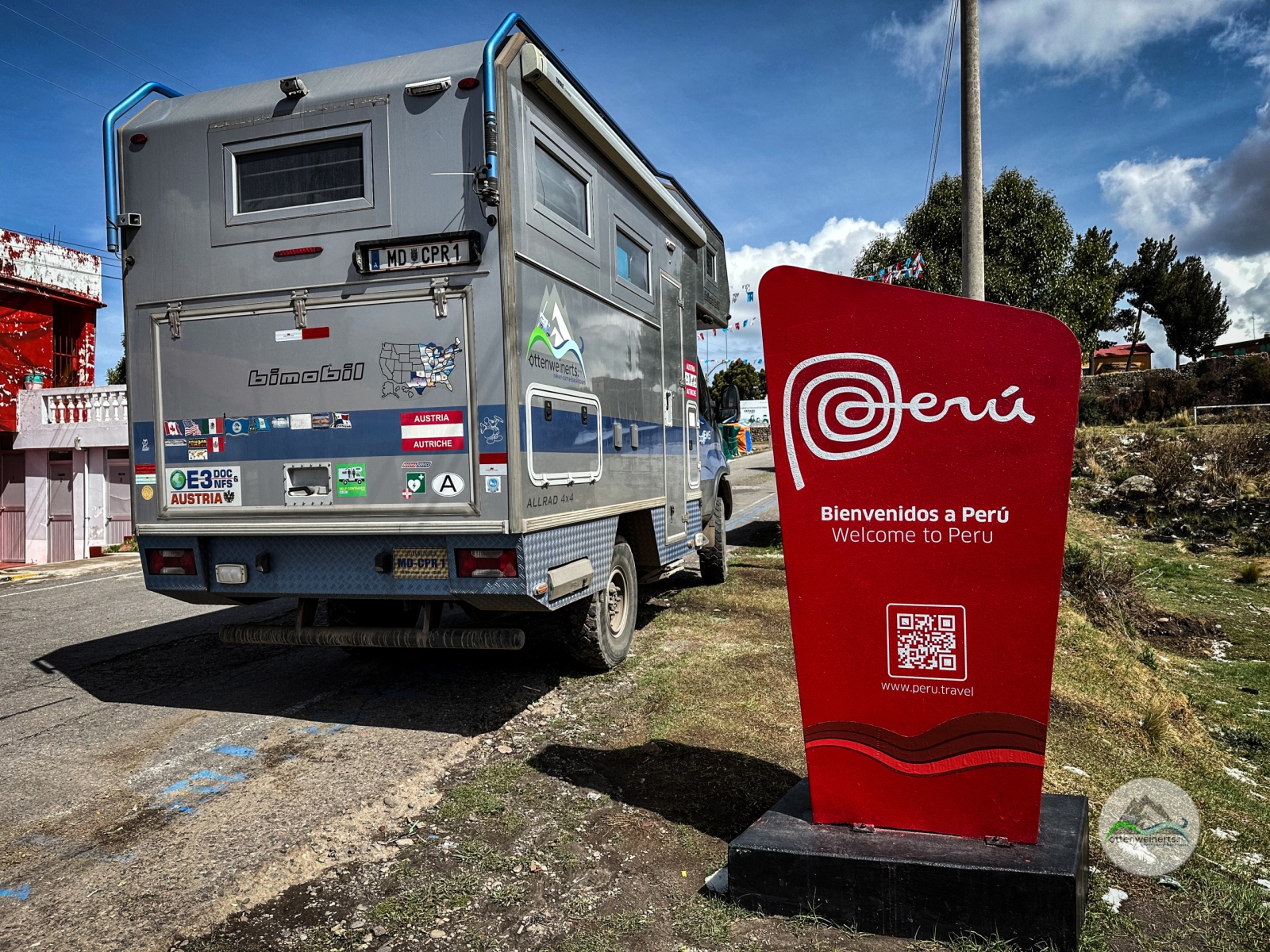
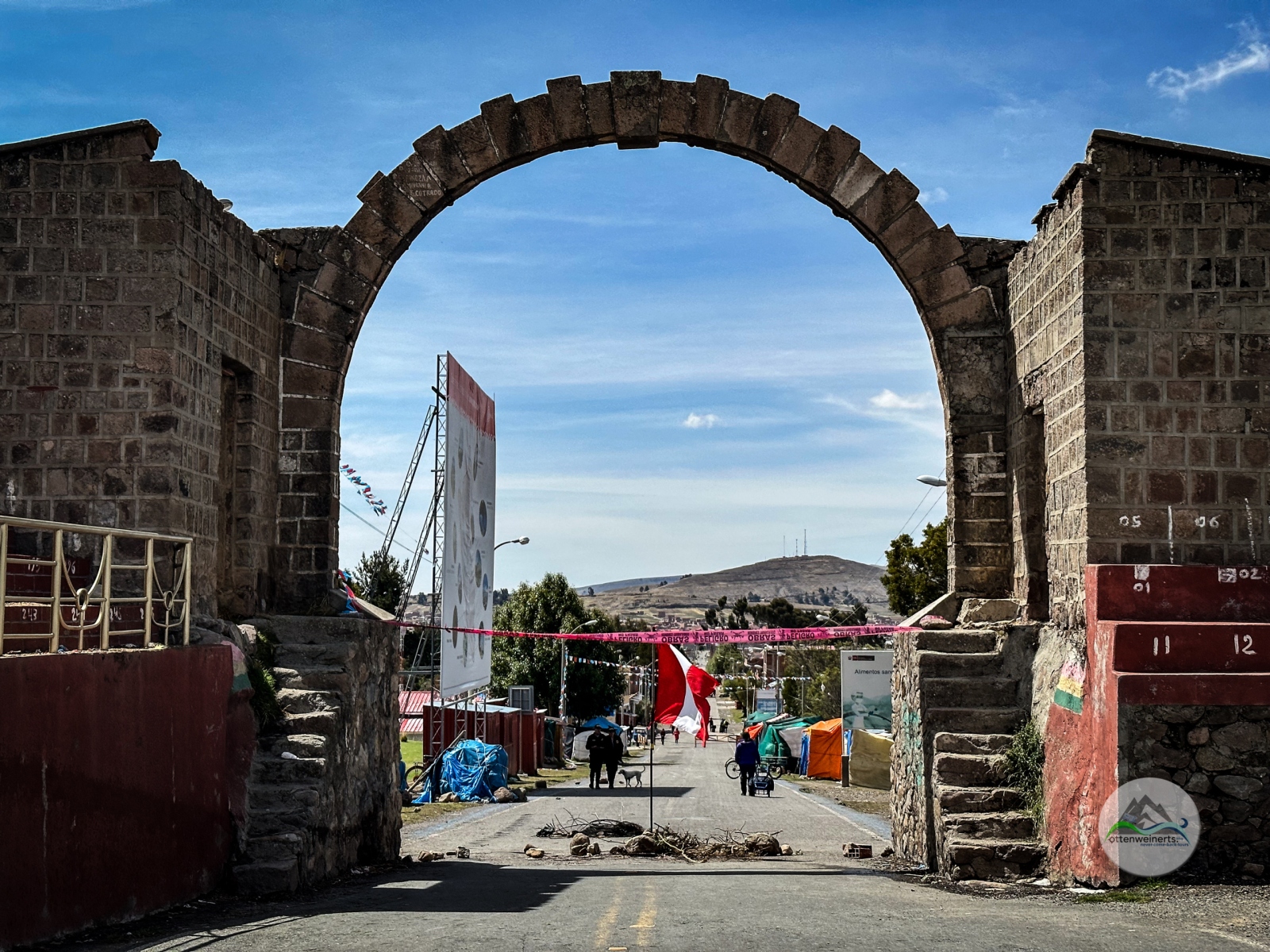
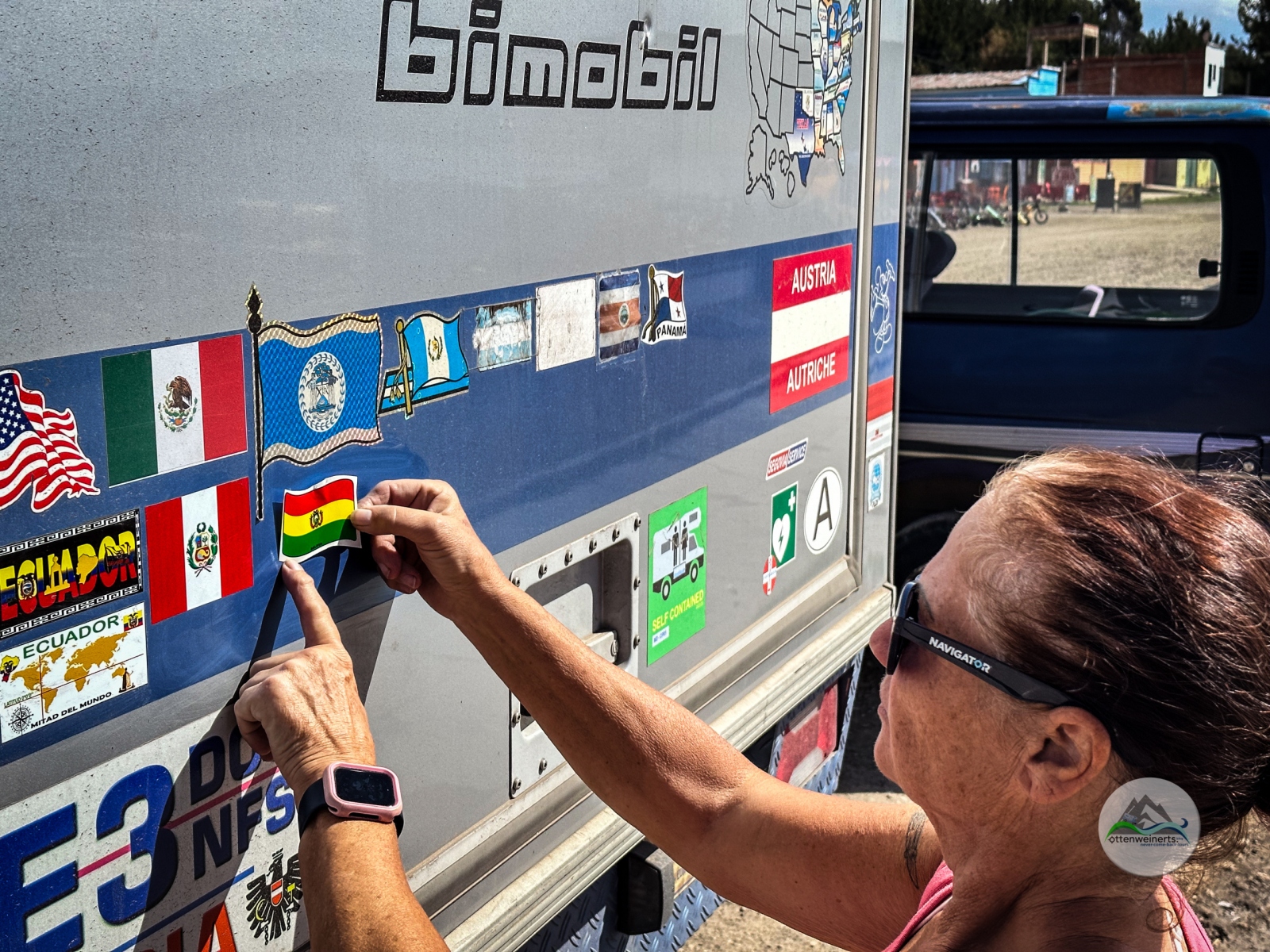
Nach knappen vier Stunden Schlaf krabbeln wir aus dem Bett. Der Grenzposten hat schon geöffnet, und das ist der schnellste Grenzübertritt unserer gesamten bisherigen Reise. Ausreise aus Perú – Stempel im Pass, Ausfuhr unseres Krassen Pferdes – Stempel am Formular, das der Beamte behält; hinüber auf die andere Seite, Einreise in Bolivien – Stempel im Pass, Einfuhr unseres tapferen Campers – der Beamte benötigt nicht mal 5 Minuten für das Formular – was im Auto drin ist, interessiert niemanden, COVID-Impfnachweis auch nicht. Wir sind nach 20 Minuten mit allem fertig, investieren unsere letzten peruanischen Soles in Lebensmitteln im Grenzshop und dann sind wir in Bolivien.

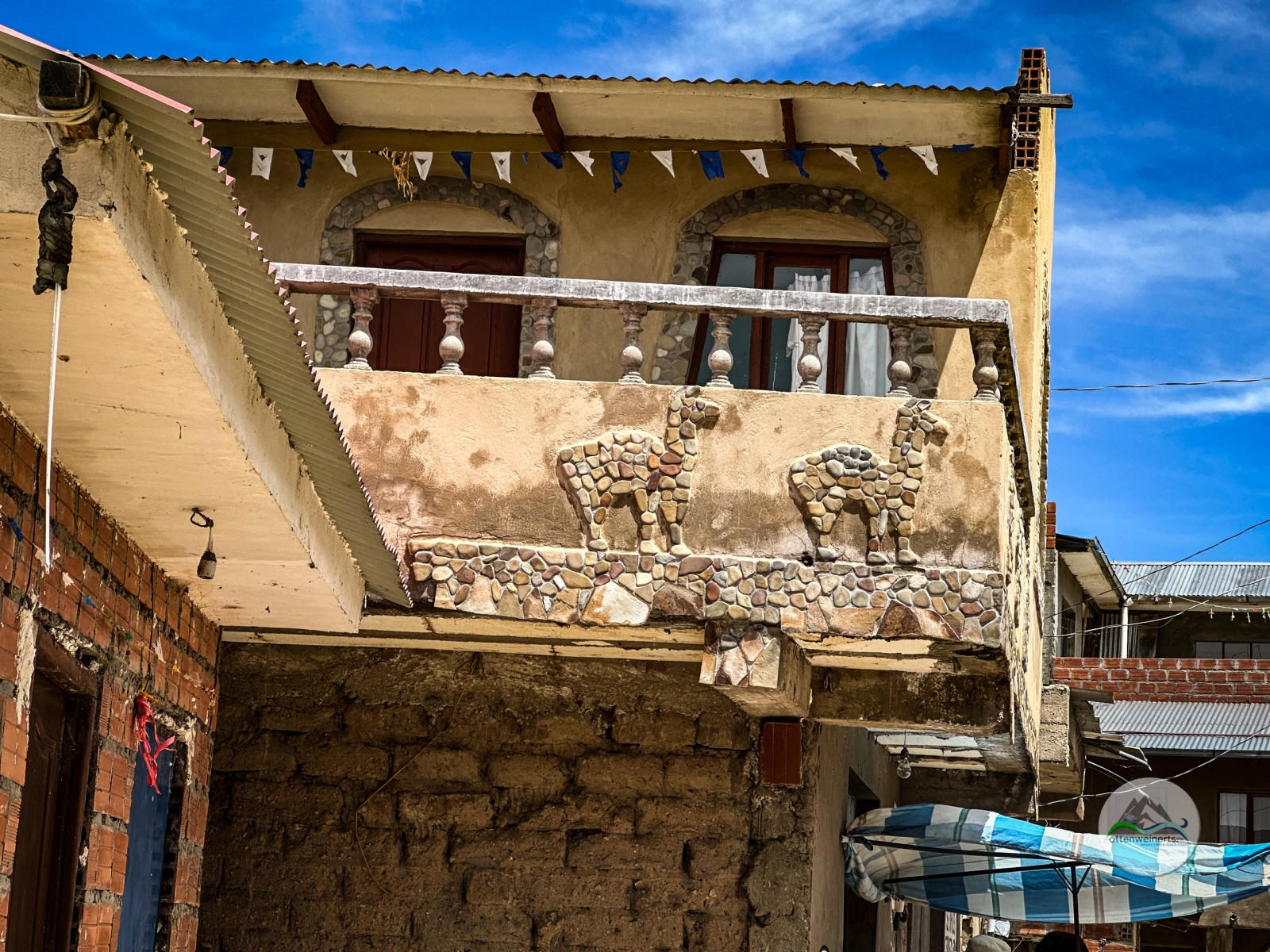
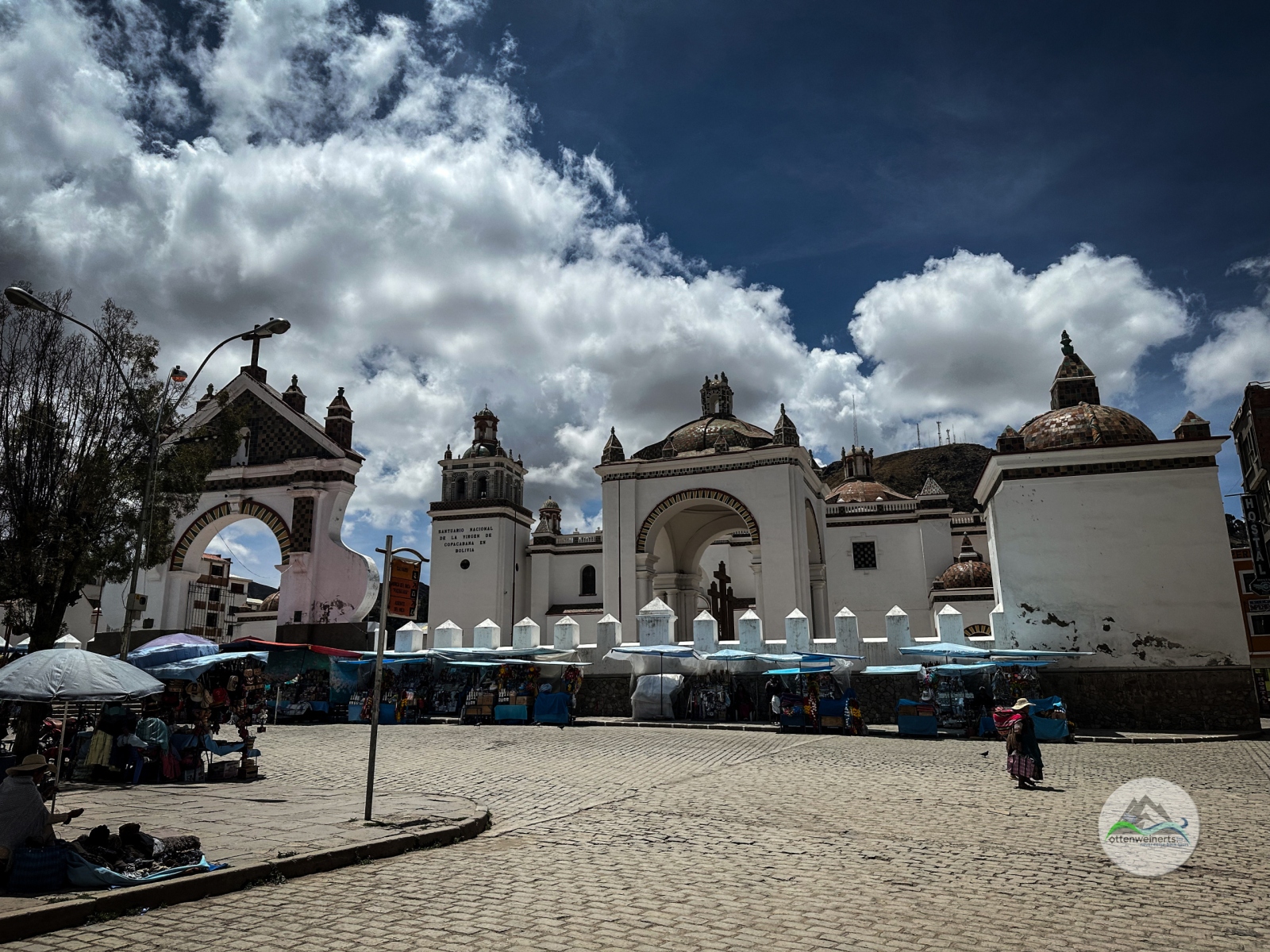
Die Municipalidad Copacabana liegt nur ein paar km von der Grenze entfernt; an der Strecke liegt der internationale Flughafen, bestehend aus einer Start- und Landebahn und einem Gebäude. Viele Flieger werden hier wohl nicht ankommen. Wir fahren in den Ort, gehen ein wenig spazieren, versorgen uns mit Bargeld, werfen einen Blick in die Kirche (aber da ist grad Messe, also gehen wir wieder), erstehen bolivianische SIM-Karten, und fürs Mittagessen Empanadas und Ceviche. Jetzt spüren wir beide den Stress von gestern, die Anspannung der letzten Tage und den Schlafmangel der letzten Nacht. Also fahren wir hinunter an den Strand und legen eine längere Mittagspause ein.

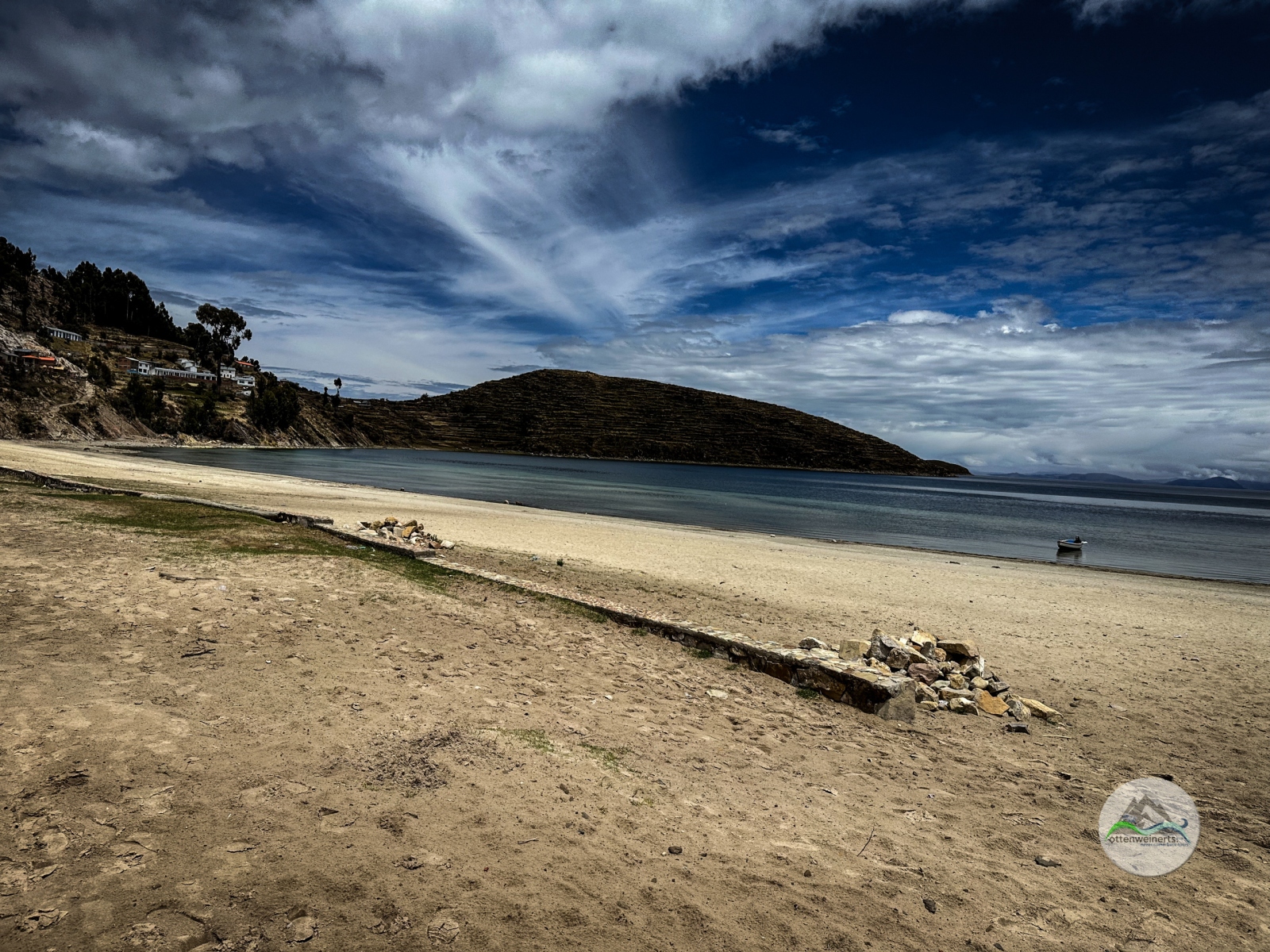
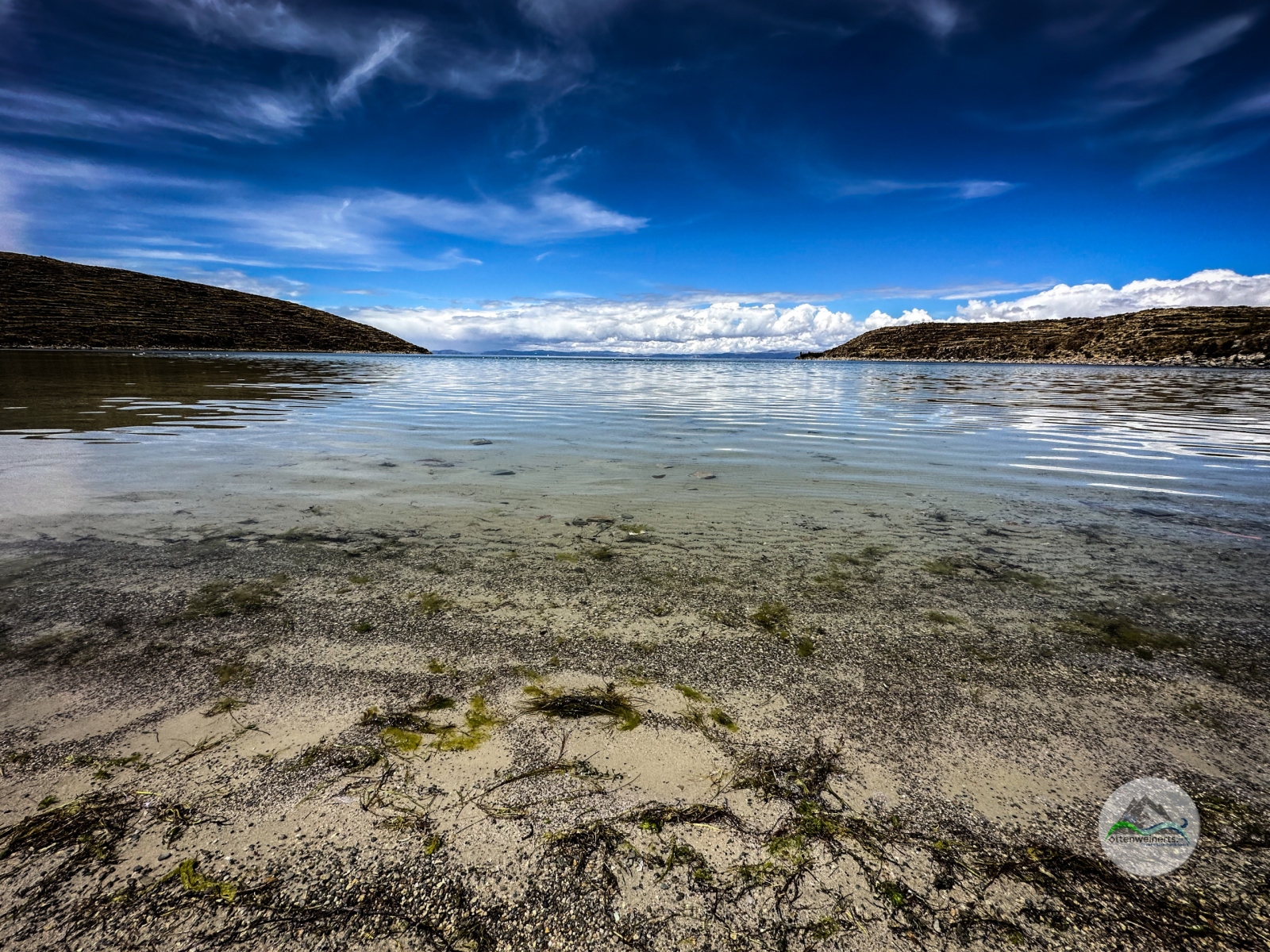
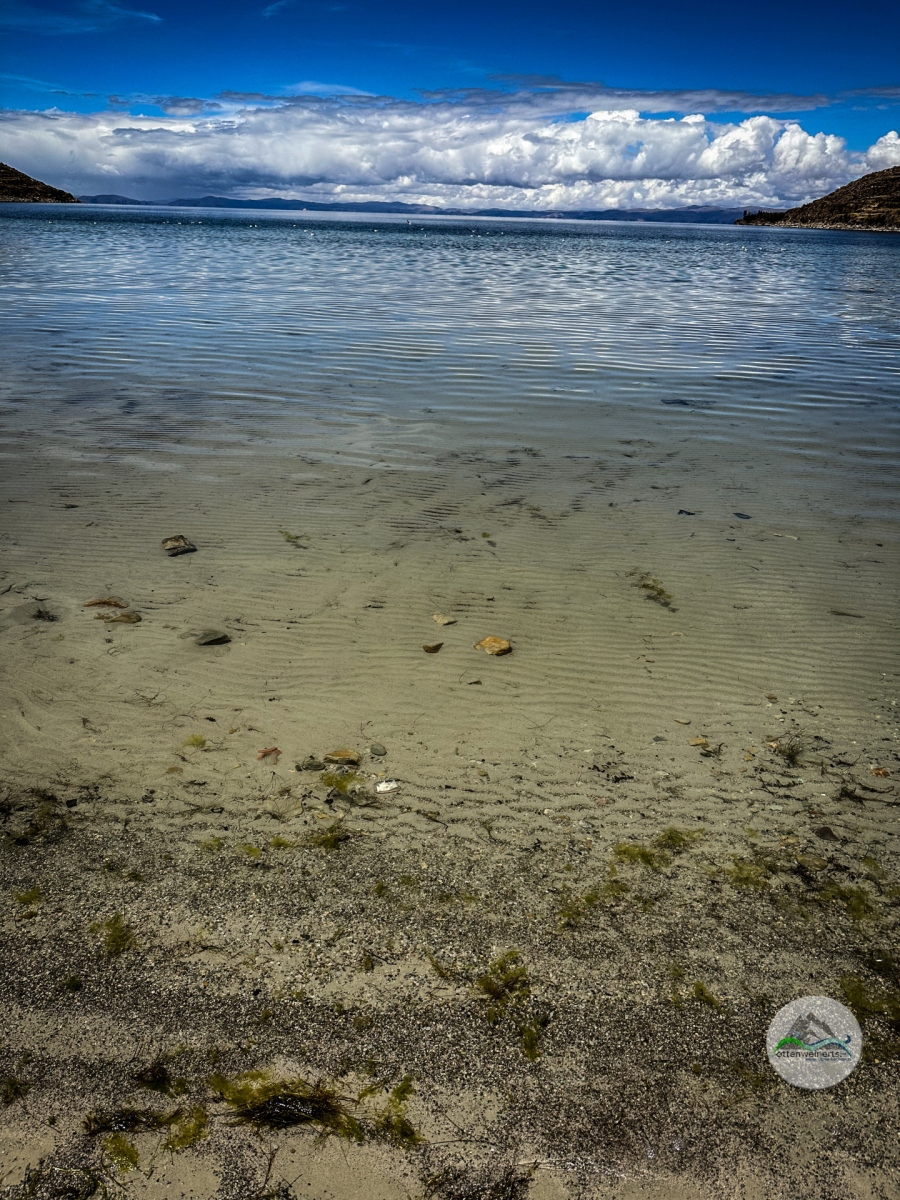
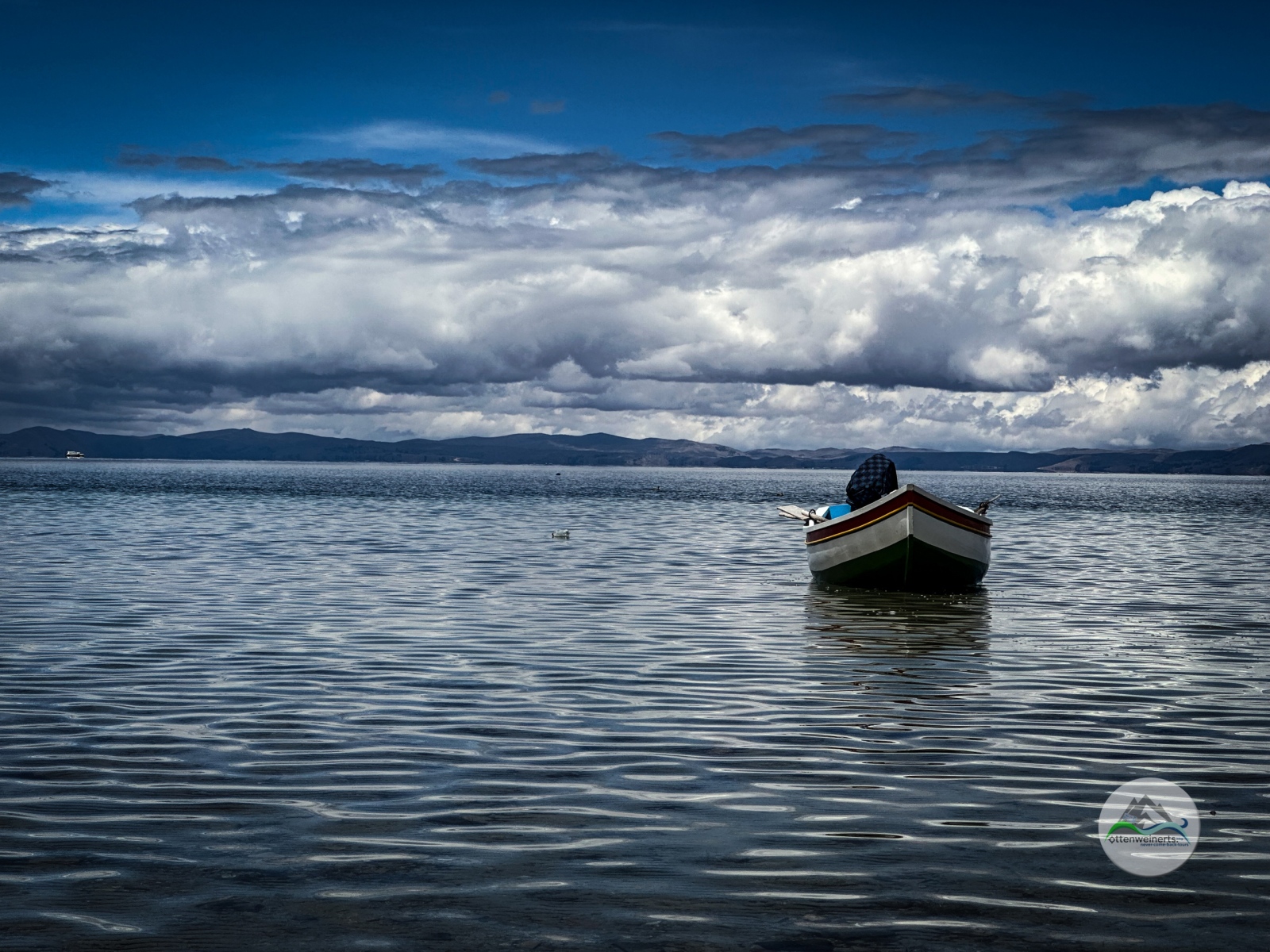
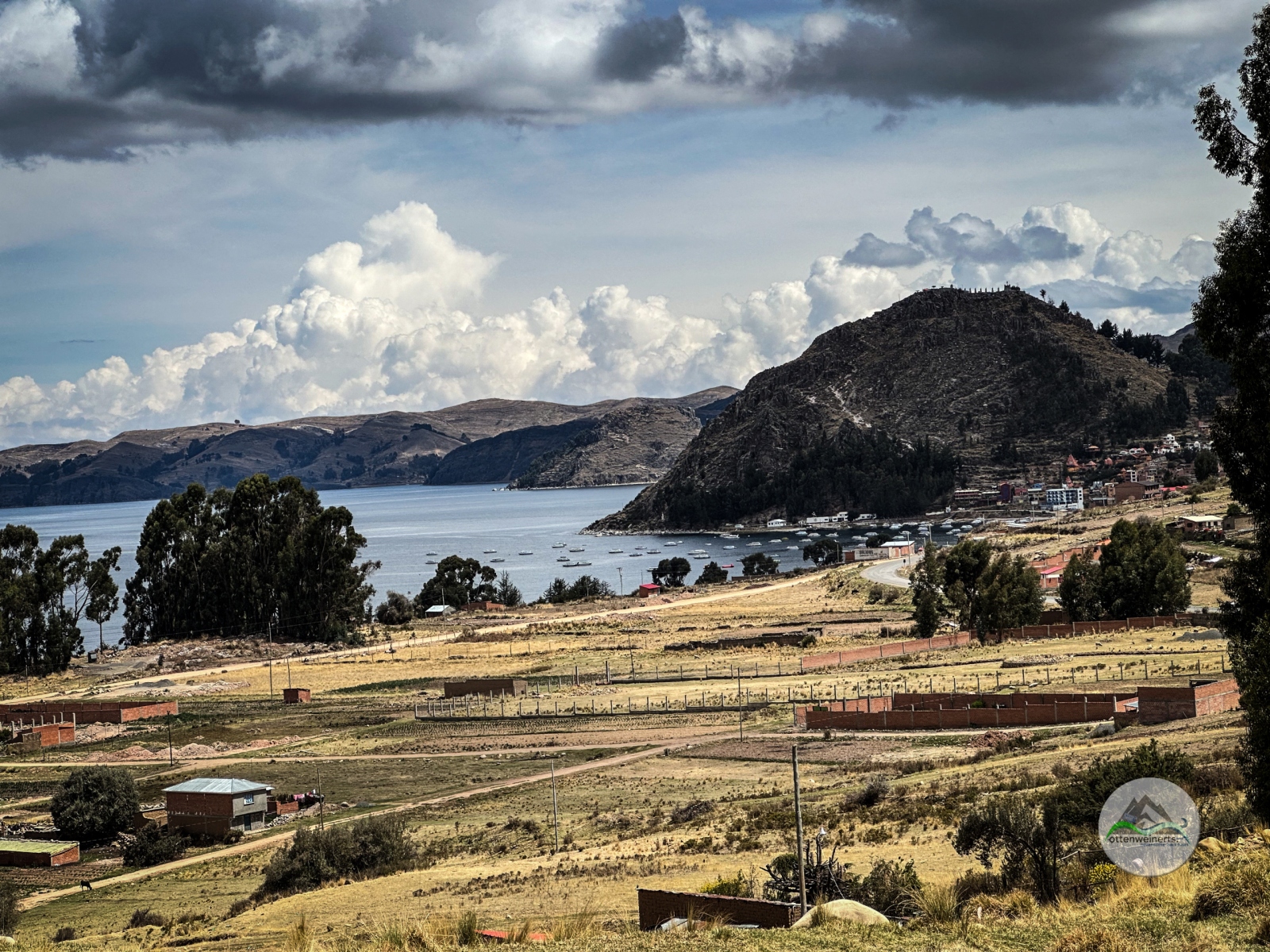
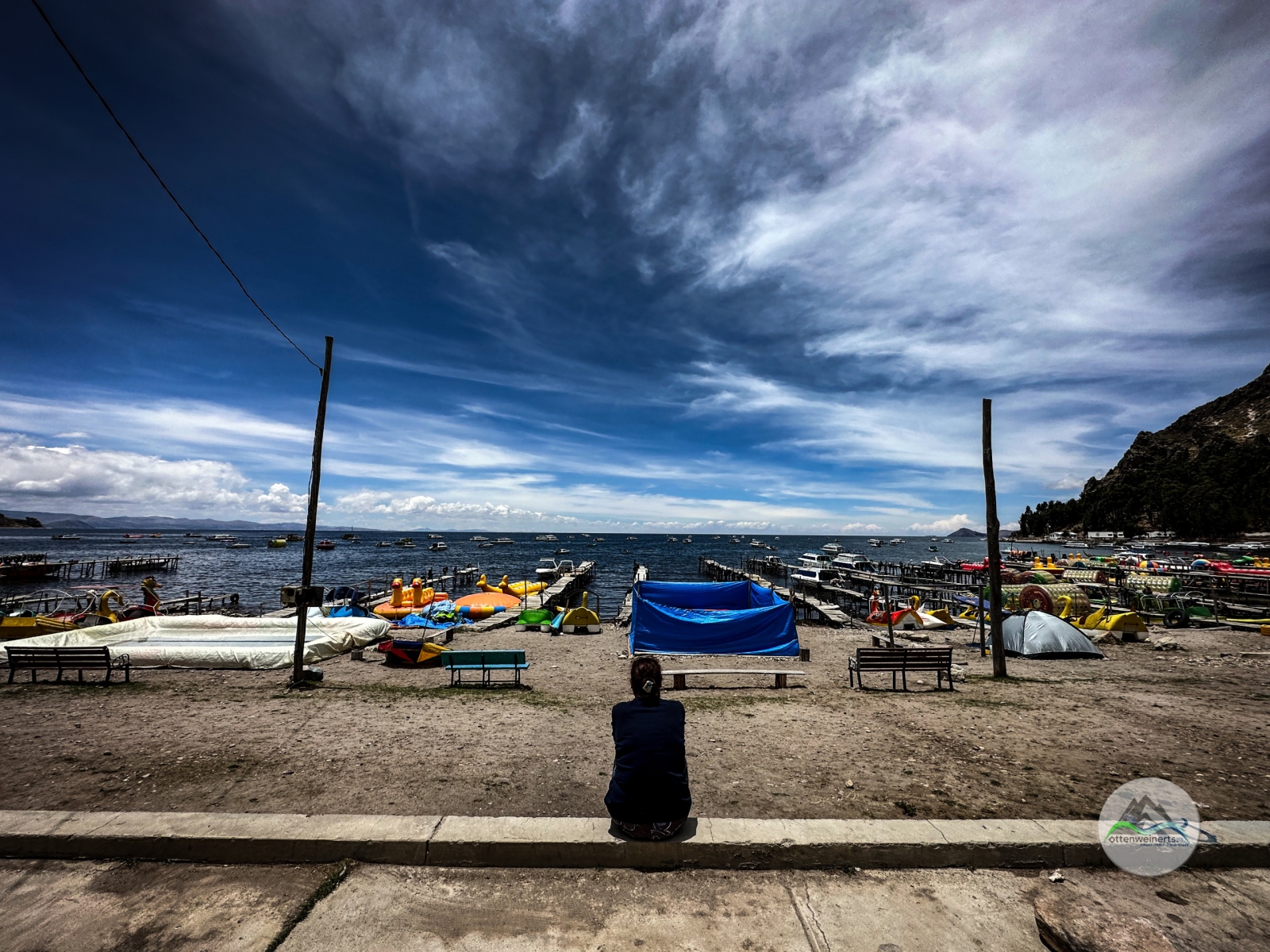
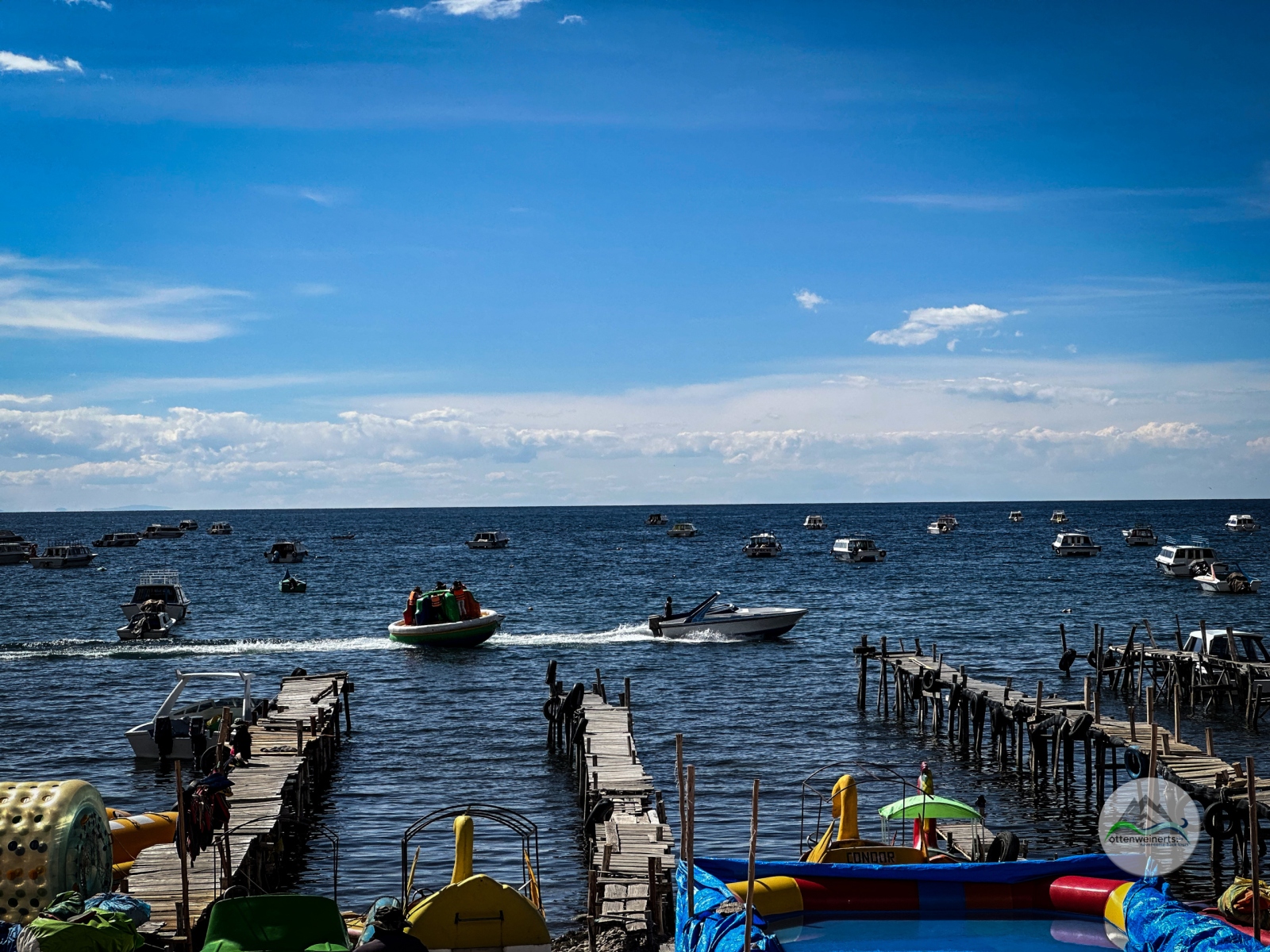
Und dann bewundern wir unsere neue Umgebung. Der Titicaca-See ist riesig, der Himmel unverschämt blau, die Hügel rundherum malerisch, die Sonne scheint und der Strand ist gut besucht. Wir treffen Overlander aus Argentinien und Spanien, plaudern ein wenig und entscheiden uns dann, uns den Campingplatz anzusehen, den uns die spanische Familie empfohlen hat. Hier gefällt es uns, es gibt heiße Duschen und ein schnelles WiFi. Und die nette Señora an der Rezeption organisiert uns für morgen einen Ausflug zur Isla del Sol, mit Guide.

Day 246 – Hola, Bolivia

After four hours of sleep, we get up, the border offices are already open, and here we experience the fastest immigration procedure of our journey so far. Leaving Perú – passports get stamped, exporting our brave camper – handing over the TIP form from immigration; on the other side, immigration office Bolivia – passports get stamped, and the TIP for our camper is done in under 5 minutes. No one is interested in the contents of our camper, or if we are vaccinated against COVID. We use our last Peruvian soles to buy some food at the border shop and then we are in Bolivia.
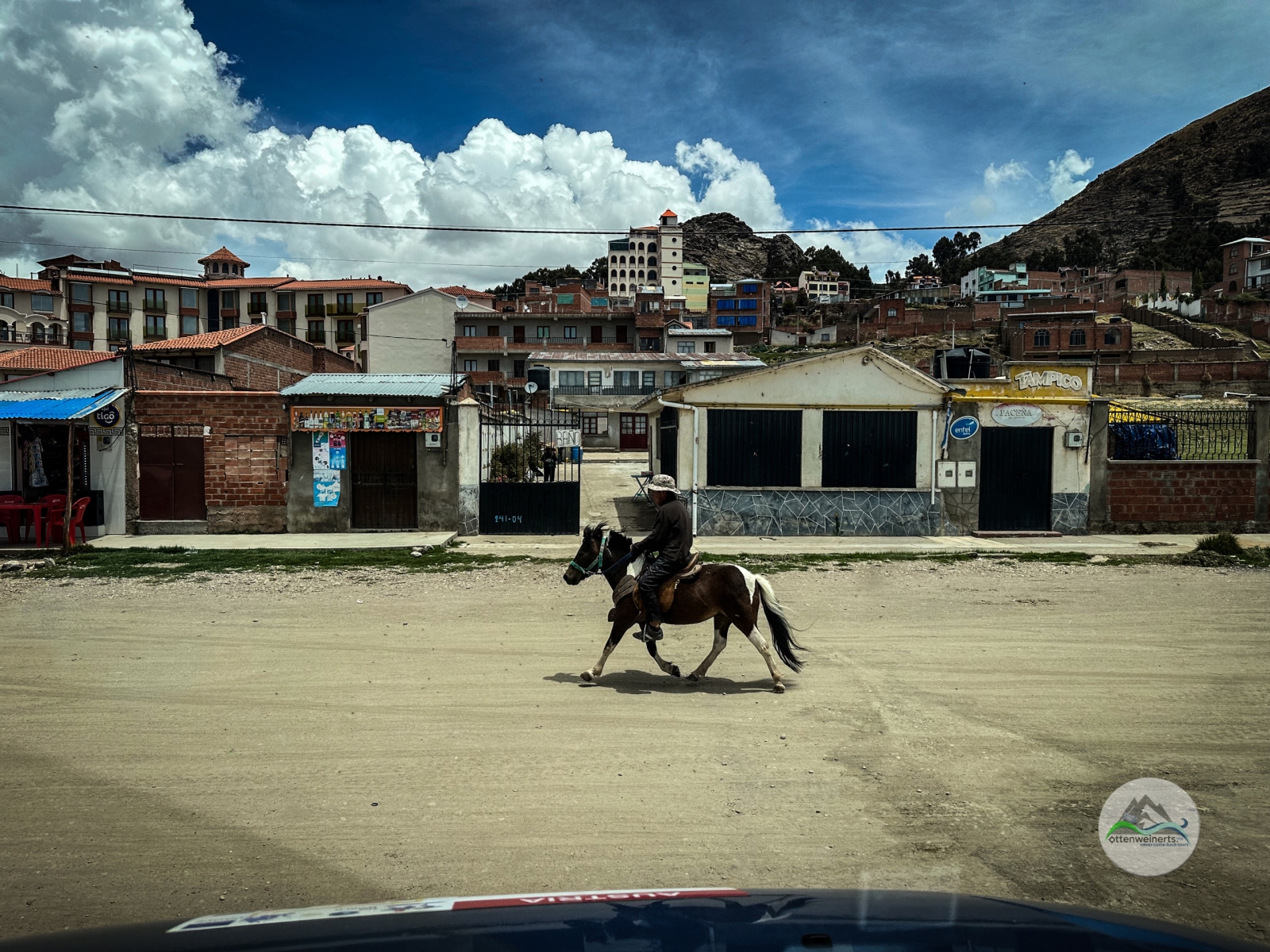
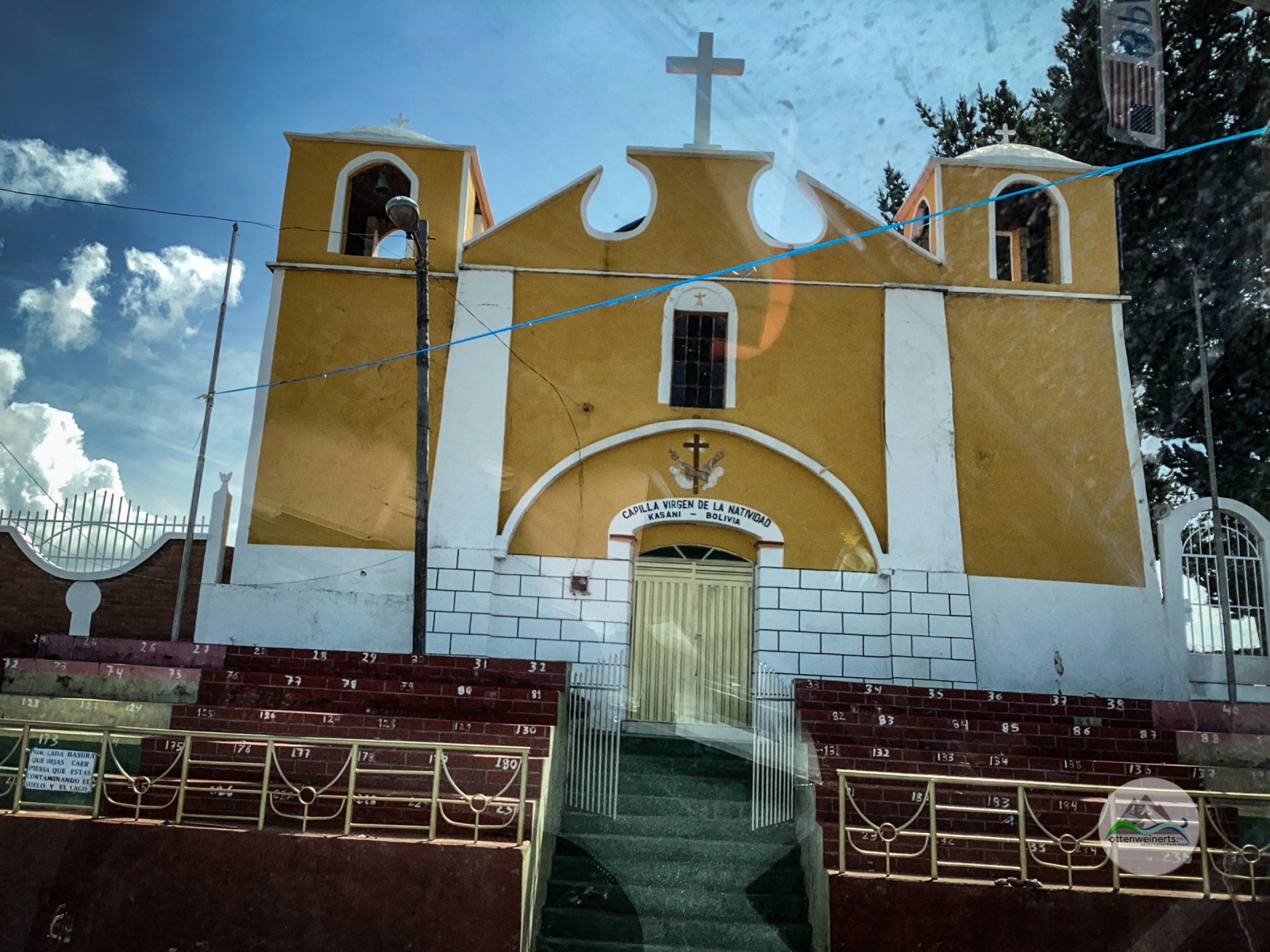
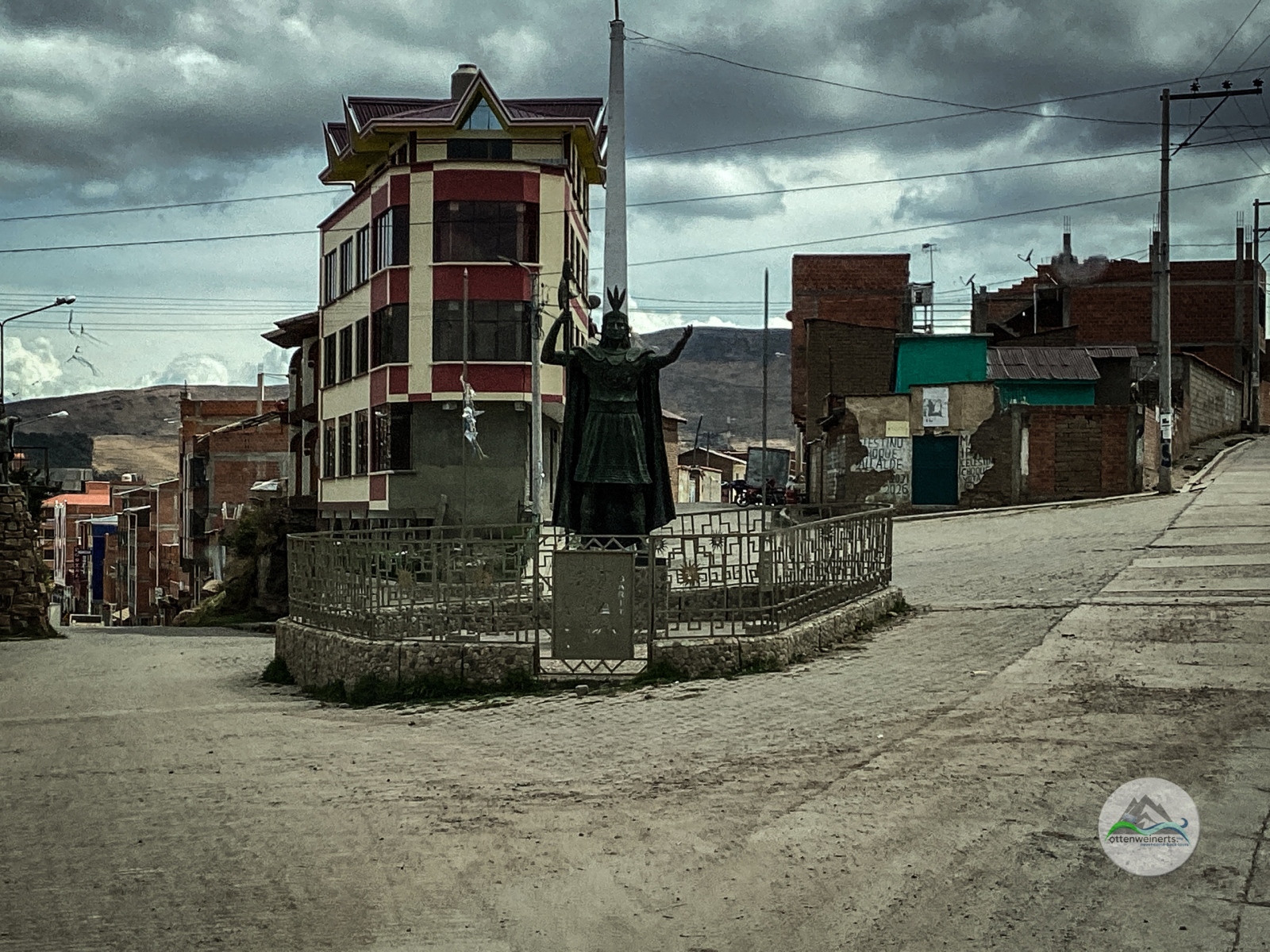
To the village of Copacabana, it is just a short drive from the border; we pass by the international airport, consisting of one runway and one (1) building – not much air traffic here, we presume. We park at the center, go for a walk, have a quick peek into the church (but there are many people attending mass, so we don´t want to disturb and leave), we get Bolivian cash and sim-cards, and empanadas and ceviche for lunch. We both feel exhausted due to yesterday´s stress, the tension of the last days, and the lack of sleep last night. So we drive to the beach and enjoy an extended siesta.
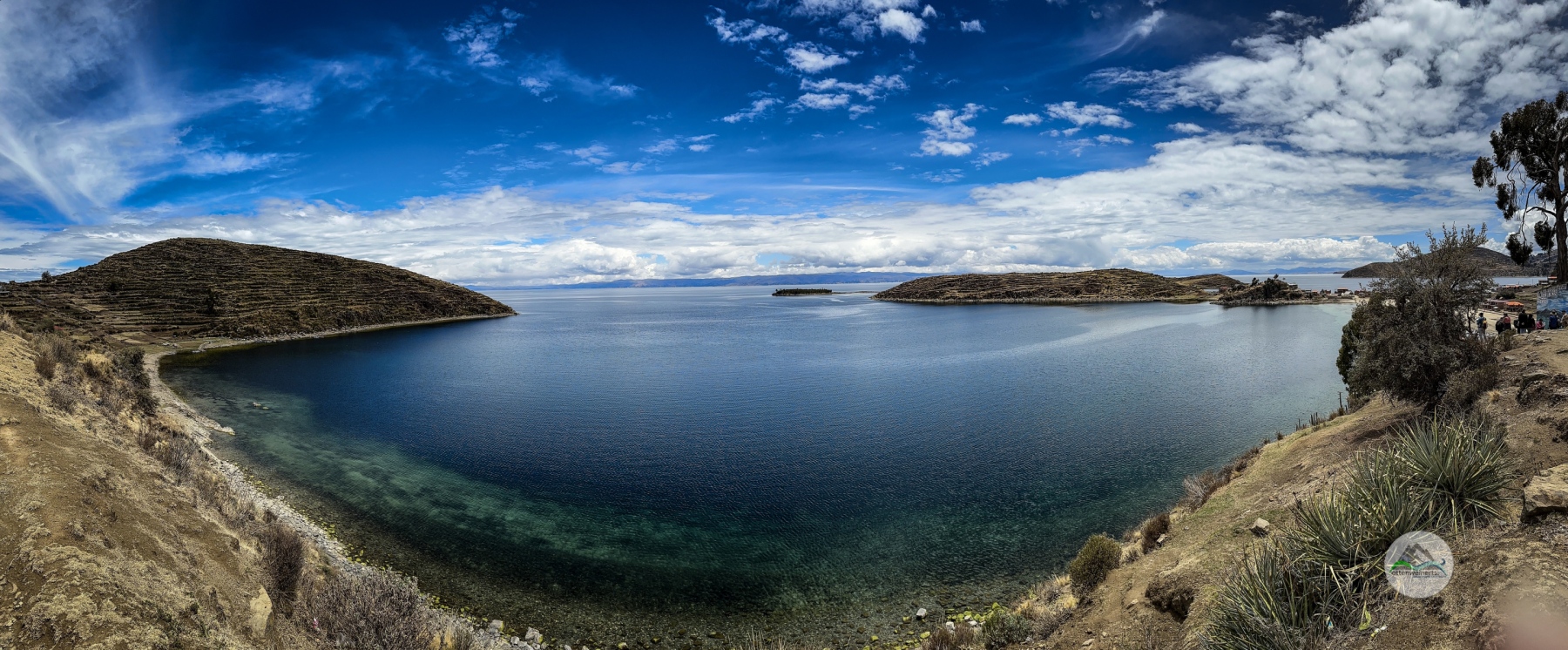
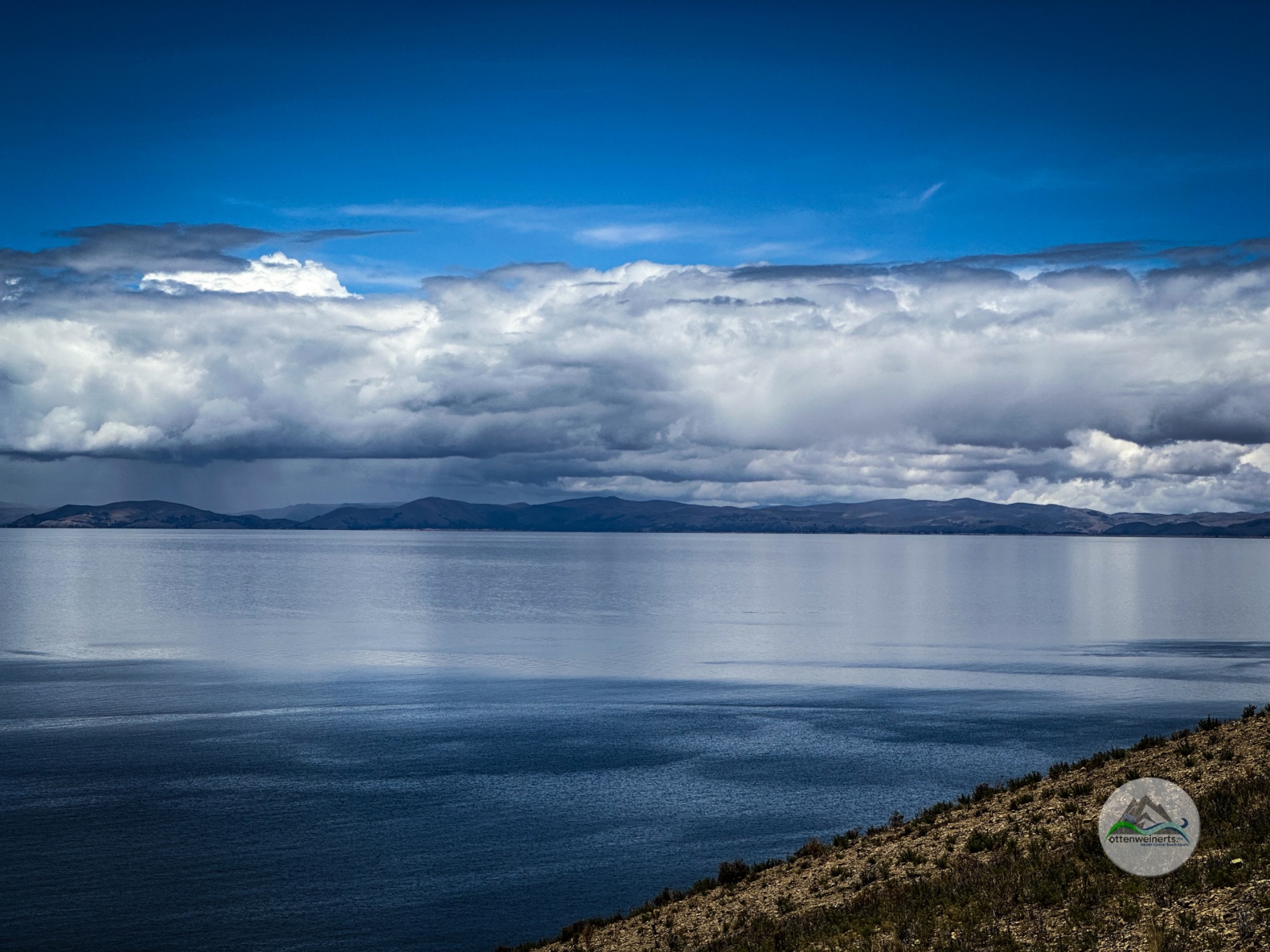
Refreshed, we look around and we agree – this is a very nice place. Lake Titicaca is enormous, the sky is radiant blue, the hills are scenic, the sun is shining and many people are enjoying the beach. We meet fellow overlanders from Argentina and from Spain, chat a bit and then we decide to look at the camping area where the Spanish family is staying. And we like it, they have hot showers and a fast WiFi. And the nice Señora at the reception is able to organize a boat trip and a guided tour to the Isla del Sol for tomorrow.

221116 – Vom Cotopaxi Nationalpark nach Baños >

Mittwoch / Wednesday, November 16, 2022

Tag 213 – Vom Cotopaxi Nationalpark nach Baños

Eine ruhige Nacht, dann ein total nebeliger Morgen – die Landschaft wurde quasi aus Kostengründen eingespart, man sieht nicht mal die Ausfahrt vom Campingplatz, geschweige denn irgendein Stück vom Cotopaxi – womit wir eine hervorragende Ausrede haben, keine weitere Wanderung zu machen. Wir verabschieden uns von den Radlern und Wanderern, und ich muss natürlich unbedingt das Lama füttern, das neben der Trinkgeld-Box angebunden ist. Ich werfe ganz brav ein Trinkgeld ein, was macht das Lama? Es verschmäht die Karotten und spuckt nach mir. Na dann halt nicht. Wir nehmen die Straße zur südlichen Ausfahrt aus dem Nationalpark, treffen unterwegs nochmals Christophe und Jean-Pierre, und fahren Richtung Panamericana.

Über Lacatunga (4 neue Ambulanzen für die Sammlung in einem Spielzeuggeschäft gefunden) und Ambato geht es weiter, wir biegen nach Osten ab, Richtung Baños. Ja, der Ort heißt wirklich so (Baños spanisch = WC). Von 3.900 m noch in der Früh geht es hinunter auf 1.800 m, immer den Fluss entlang, und es ist auch deutlich wärmer. In Baños steuern wir die Thermas de la Virgen an, ein Thermalbad mit malerischem Wasserfall im Hintergrund, und verbringen den Nachmittag im warmen Wasser.

Day 213 – From Cotopaxi National Park to Baños

A quiet night, but then a totally foggy morning – the scenery has been shut down, so to speak, we can´t even see the exit from the camping area, let alone some piece of Cotopaxi. This is a fantastic excuse for not doing another hike. We say good-bye to the cyclists and hikers and of course I have to feed the Llama which is waiting next to the tip box. I put the tip in the box, but what does the Llama do? It ignores my carrots and spits in my direction. Well, no carrots for you, then. We drive towards the south exit of the National Park and meet Christophe and Jean-Pierre again on the way.

We continue on the Panamericana, through Lacatunga (where we find 4 new ambulances for our collection, in a toy store) and Ambato, and then we turn east, towards Baños – yes, that is really the name of the village (baños in Spanish means toilet). We were at almost 12.800 ft this morning, now we are at 5.900 ft, following the Pastaza River eastwards, and it is warmer, too. In Baños, we park at the Thermas de la Virgen, hot springs with a scenic waterfall in the background, and spend the rest of the day soaking in the warm water.

Route 221116

221115 – Von Quito zum Cotopaxi >

Dienstag / Tuesday, November 15, 2022

Tag 212 – Von Quito zum Cotopaxi

Nach der – für uns Wohnmobilisten – luxuriösen Nacht im Apartment der Firma Austral verabschieden wir uns von der Belegschaft und fahren ein paar Blocks weiter, zu einem Schlüsselspezialisten. Und tatsächlich, Señor Wilson kann uns nicht nur Autoschlüssel anfertigen, sondern auch programmieren – eine Sorge weniger.

Und dann verlassen wir Quito endlich, es geht in den Cotopaxi Nationalpark. Wir nehmen die Südzufahrt, registrieren uns und treffen am Parkplatz Christophe und Jean-Pierre mit ihrem Wohnmobil aus Frankreich. Nach einer netten Plauderei fahren wir weiter zum Lago de Limpiopungo auf 3.900 m. Ein gemütlicher Spaziergang führt rund um den See, es gibt viele Wasservögel zu sehen, Wildpferde und einen Fuchs (unverletzt in einer Lebendfalle – nachdem viele der Wasservögel beringt sind, nehmen wir an, dass auch der Fuchs untersucht und oder gechipt wird). Und wir haben Glück – und etwas Sonne – auch der gewaltige Cotopaxi lässt sich blicken.

Kurz vor Einbruch der Dämmerung fahren wir am Campingplatz zu, wo wir eine nette, bunt zusammen gewürfelte Radlergruppe treffen – aus Frankreich, Holland, Mexiko und Marokko, und 2 Bergsteiger aus Kanada. Die jungen Leute schlafen alle in Zelten – wir sind echt froh über unser gut isoliertes Krasses Pferd, es hat nur 8°C draußen, aber herinnen ist es mollig warm, auch ohne Heizung.

Day 212 – From Quito to Cotopaxi

After the luxurious night at Austral´s apartment we say good-bye to the lovely people from Austral and search for a special key service place a few blocks further. With some luck and a lot of patience, Señor Wilson is able to provide us with two more car keys and do the programming.

Then, finally, we leave Quito, direction Cotopaxi National Park. We enter through the South entrance, and at the registration we meet Christophe and Jean-Pierre with their camper from France. After a nice chat we continue to Lago Limpiopungo at almost 12.800 Ft. We take a walk around the lake and get to see a lot of birds, wild horses and even a fox (in a live trap – as most of the birds have rings or markings, we suppose that the fox also will get a chip). And we are lucky, we get to see the mighty Cotopaxi glistening in the sun.

Shortly before sundown we arrive at the camping area where we meet a nice, international group of cyclists (from France, the Netherlands, Mexico and Marokko) and two hikers from Canada. They spend the night in tents – we are happy to have our well insulated camper, it is only 46°F outside, but it is nice and cozy inside, even without heating.

[wpcloudgallery id=“G-r5″]

Route 221115

221108 – Automundo in Tulcán >

Dienstag / Tuesday / Martes, November 8, 2022

Tag 205 – Automundo in Tulcán

Nach einer erstaunlich ruhigen Nacht am Parkplatz bei der Einreise nach Ecuador finden wir – dank IOverlander – in Tulcán, ein paar km hinter der Grenze, die Werkstatt Automundo. Anna, die Schwiegertochter von Firmenchef René senior und Gattin von dessen Sohn, der auch René heißt, ist aus Gleisdorf in der Steiermark, und freut sich, wieder einmal Österreicher zu treffen. Wir dürfen ohne Termin unser armes krankes Krasses Pferd einfach in die Werkstattbox stellen und man beginnt, die Bremsen auseinanderzunehmen. Die Bremsbeläge sind vorne fast völlig verbrannt – vielleicht waren wir doch ein wenig zu schwungvoll unterwegs und zu sorglos beim Bremsen. Dafür sind die Bremsen hinten in Ordnung.

Während das Werkstatt-Team arbeitet, gehen wir Obst und Gemüse einkaufen, besorgen SIM-Karten fürs internet in Ecuador, nehmen die Wäscherei in Anspruch und erledigen emails und räumen das Auto ein bisschen auf. Am Abend sind wir bei Anna und René zum Essen eingeladen, und wir plaudern noch lange. Dann übernachten wir in unserem Haus auf Rädern in der Werkstatt; die Bremsen sind zwar fertig, aber es wurden noch andere Schäden festgestellt, die morgen behoben werden. Diese Werkstatt war wirklich ein Glücksgriff.

Day 205 – Automundo in Tulcán

After a quiet night at the Ecuadorian immigration parking lot, we drive a few miles to Tulcán to “Automundo”, a car workshop (mentioned in the IOverlander App), owned by René senior. His son, René junior, is married to Anna, an Austrian from Gleisdorf in Styria, who is happy to meet fellow Austrians. The team of Automundo takes care of our poor, sore camper – the front brake pads are almost completely burned – we might have been driving down the mountains a bit too careless – and too fast. The rear brakes are ok, though.

In the meantime, we go grocery shopping, buy sim cards for internet access in Ecuador, bring the laundry to the lavandería, write emails, and reorganize stuff in the camper. Anna and René invite us to dinner at their home, and we have a lot to talk about. Then we spend the night in our camper at the car workshop; the work on the brakes is done, but there are some more damages which will be fixed tomorrow. We are lucky to have found this place!

Día 205 – Automundo in Tulcán

Después una tranquila noche en el estacionamiento de la inmigración ecuatoriana manejamos algunos kilómetros hasta Tulcán donde encontramos el taller “Automundo” (gracias, IOverlander App). El dueño, René senior, tiene un hijo, René junior, quien está casado con Anna, una austríaca – ella está feliz encontrar austríacos. Los mecánicos desmontan nuestros frenos – los frenos delante están casi completamente quemados. Quizás bajamos las montañas demasiado rápido. Pero los frenos traseros están bien. Mientras tanto vamos a comprar frutas y verduras, obtenemos tarjetas sim, y llevamos la ropa a la lavandería. Anna y René nos invitan a cenar a su casa, y tenemos mucho de qué hablar. Luego pasamos la noche en nuestra caravana en el taller – los frenos están listos, pero se

Route 221108

221022 – Bucaramanga und Chicamocha Cañyon >

Samstag/Saturday, Oktober 22, 2022

Tag 188 – Bucaramanga und Chicamocha Cañyon

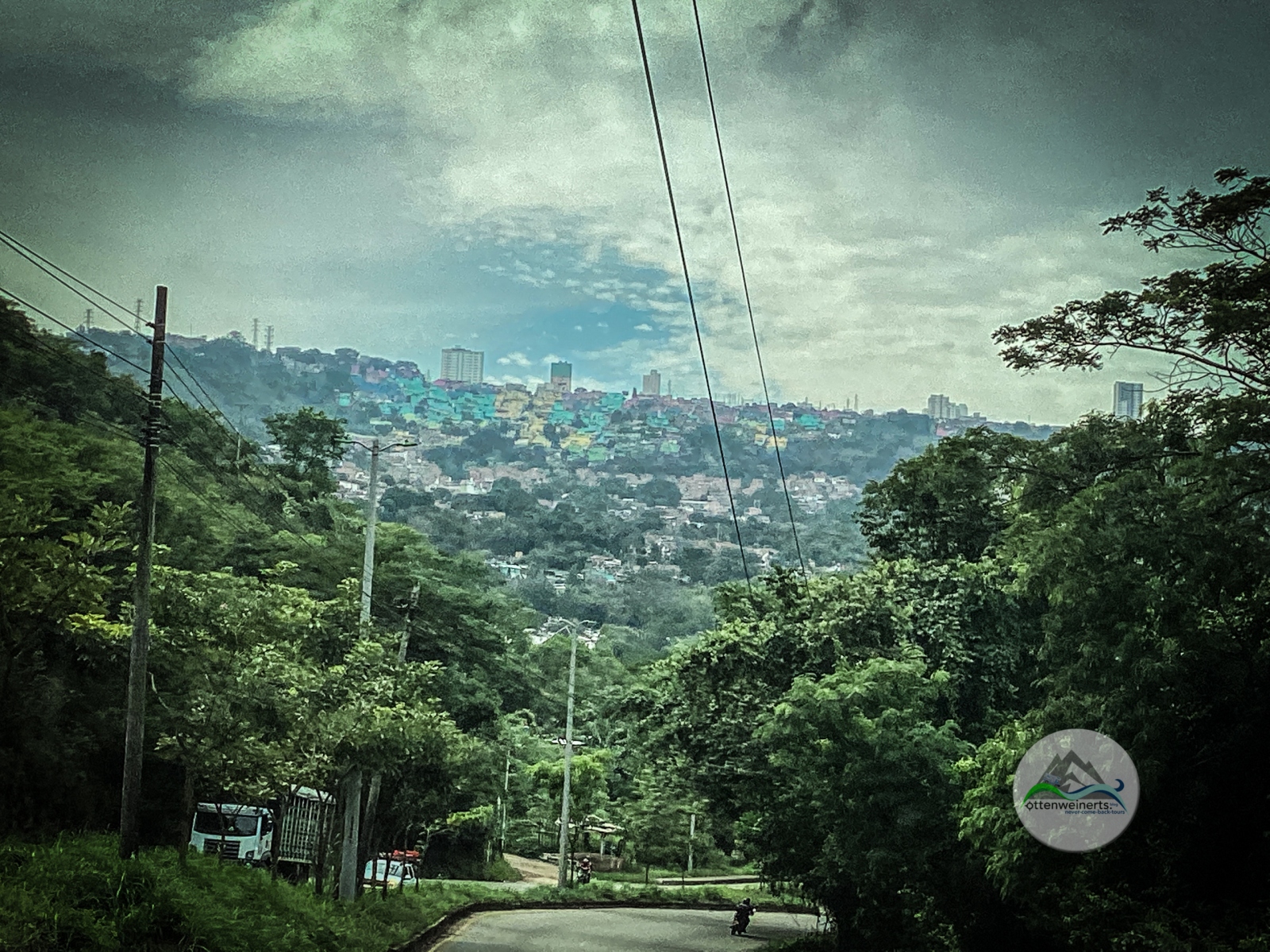
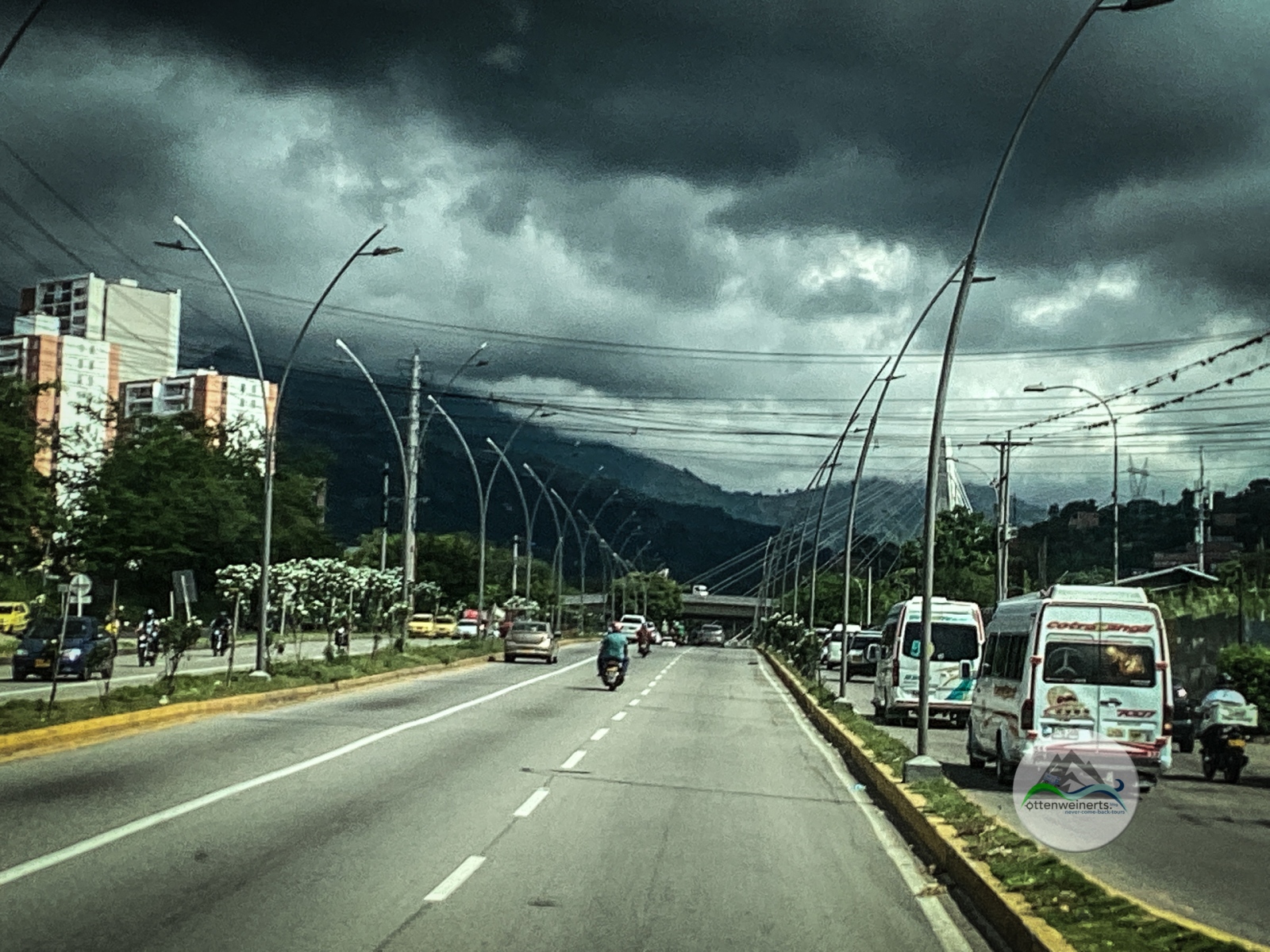
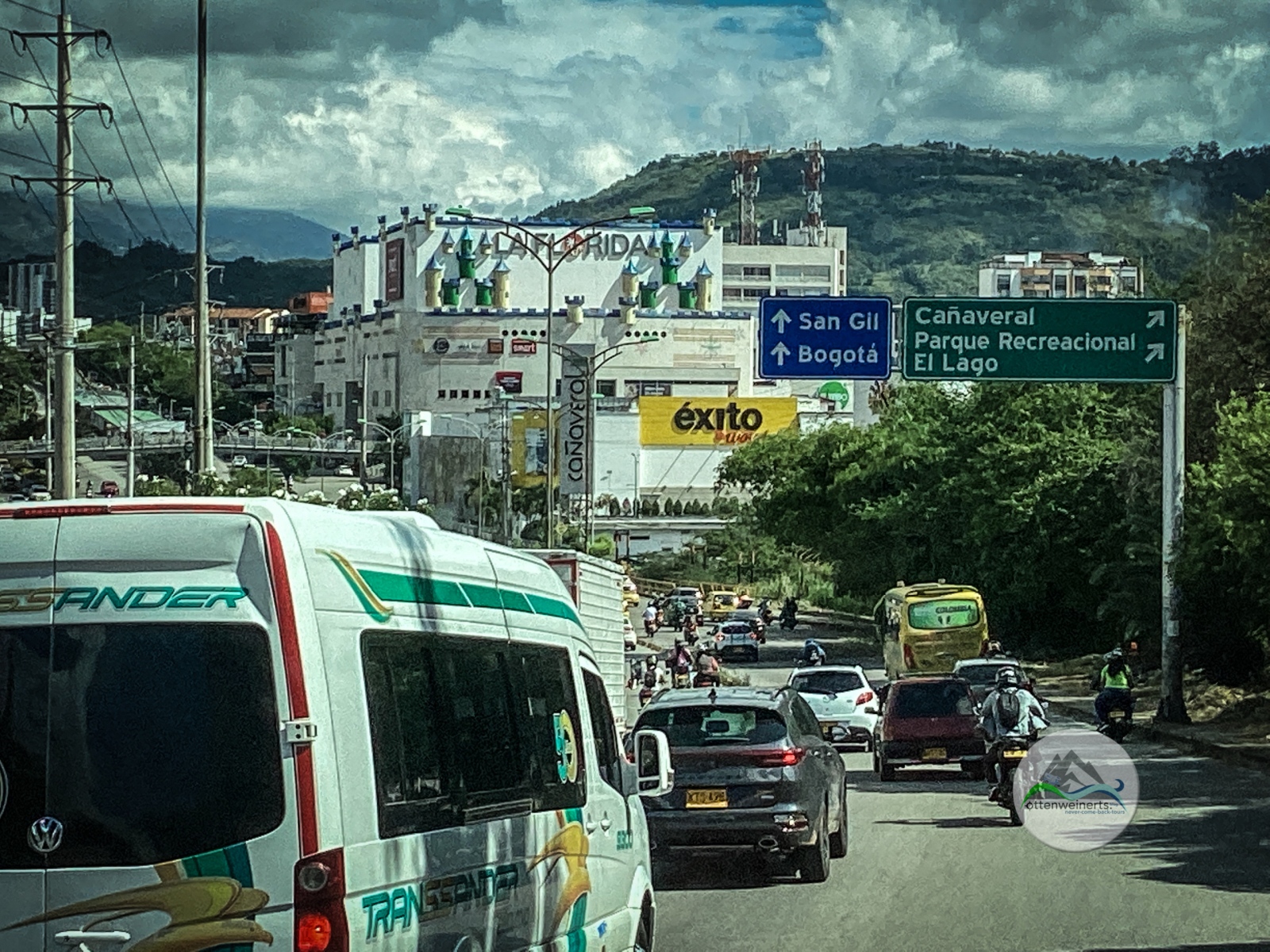
Da wir in den letzten Tagen oft erst bei Einbruch der Dunkelheit einen Übernachtungsplatz gefunden haben, haben wir gestern beschlossen, unseren Tagesbeginn einfach 2 Stunden vorzuverlegen. Tatsächlich sind wir heute um 6 Uhr früh aufgestanden – und gut war´s: viel Verkehr nach Bucaramanga und in der Stadt selbst auch Stau. Bucaramanga, die große Stadt in den Bergen, hat uns zwar nicht wirklich begeistert, aber das Einkaufszentrum war schon sehr praktisch – im AppleStore alle Updates auf allen Geräten erledigen, Mittagessen, Einkaufen (auch eine Ambulanz für unsere Sammlung haben wir gefunden) und Kaffee trinken.

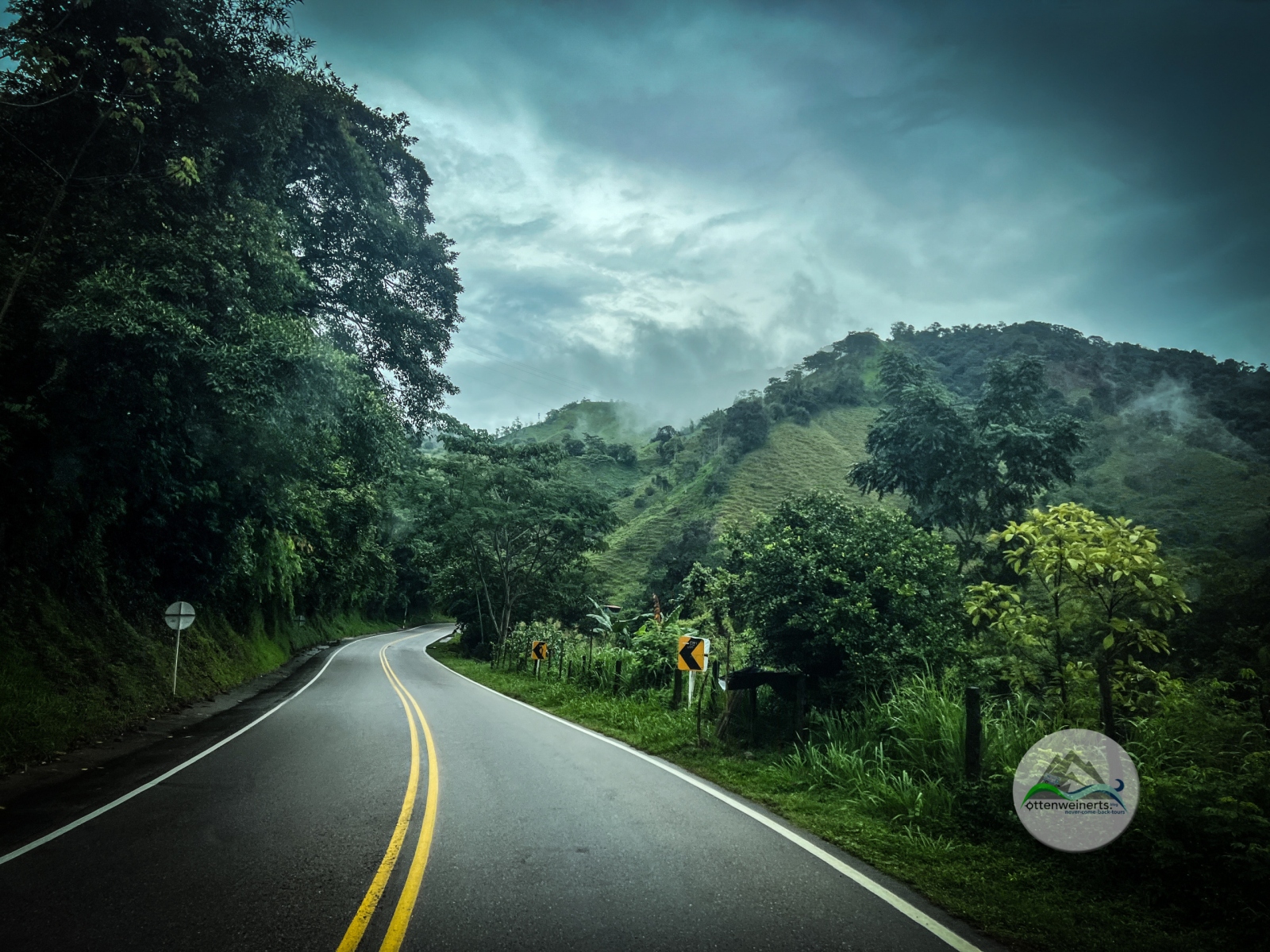
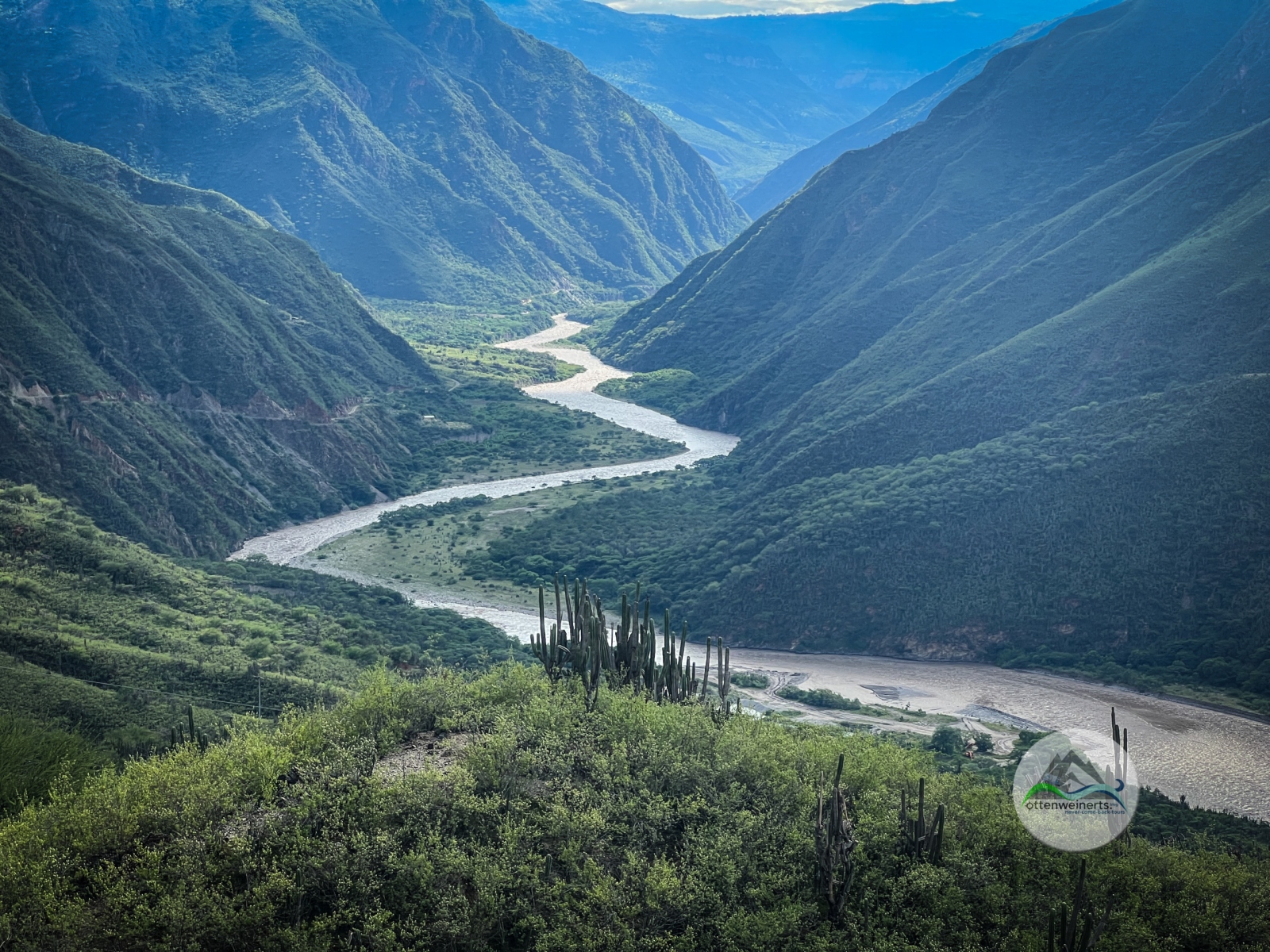
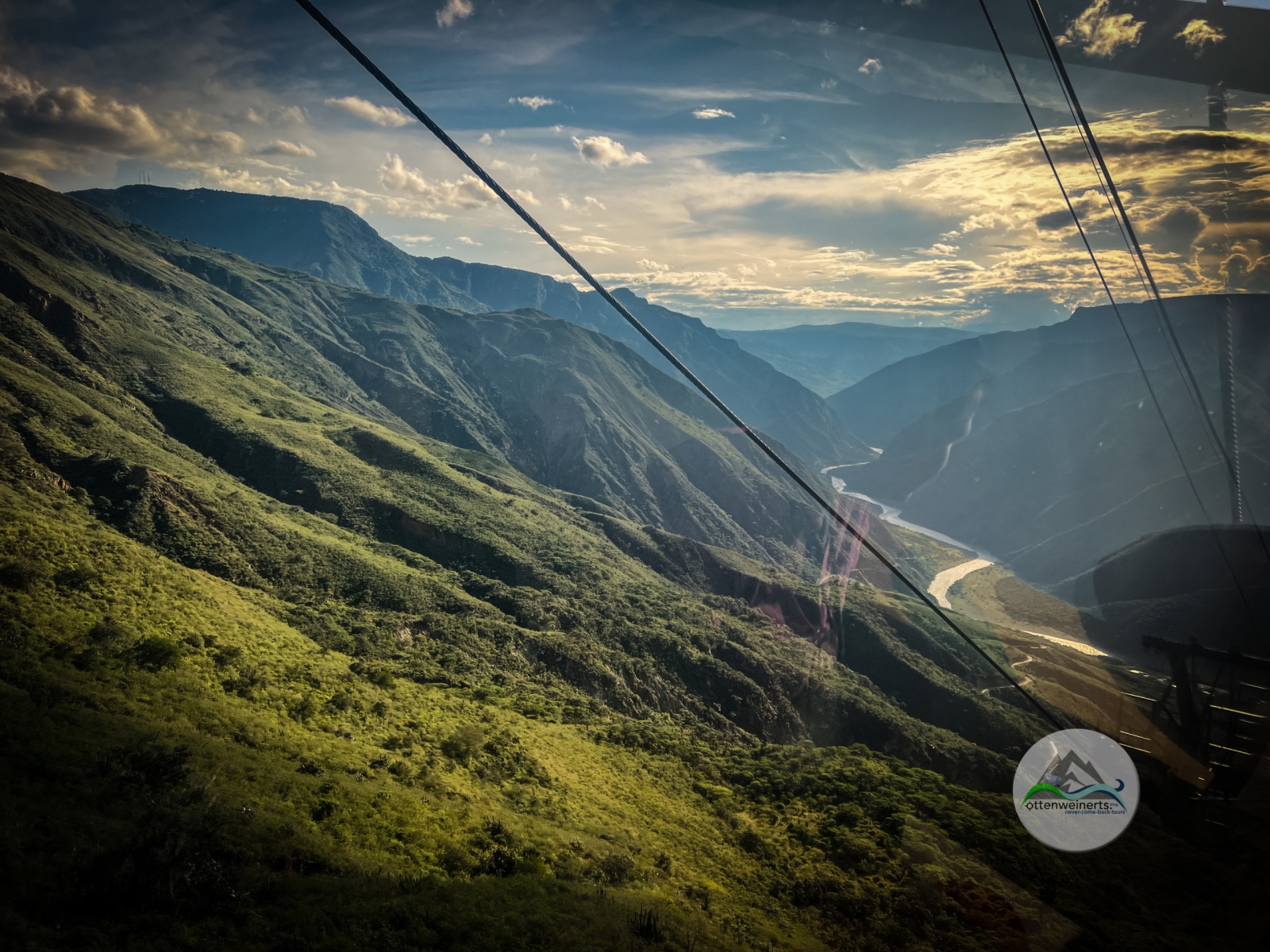
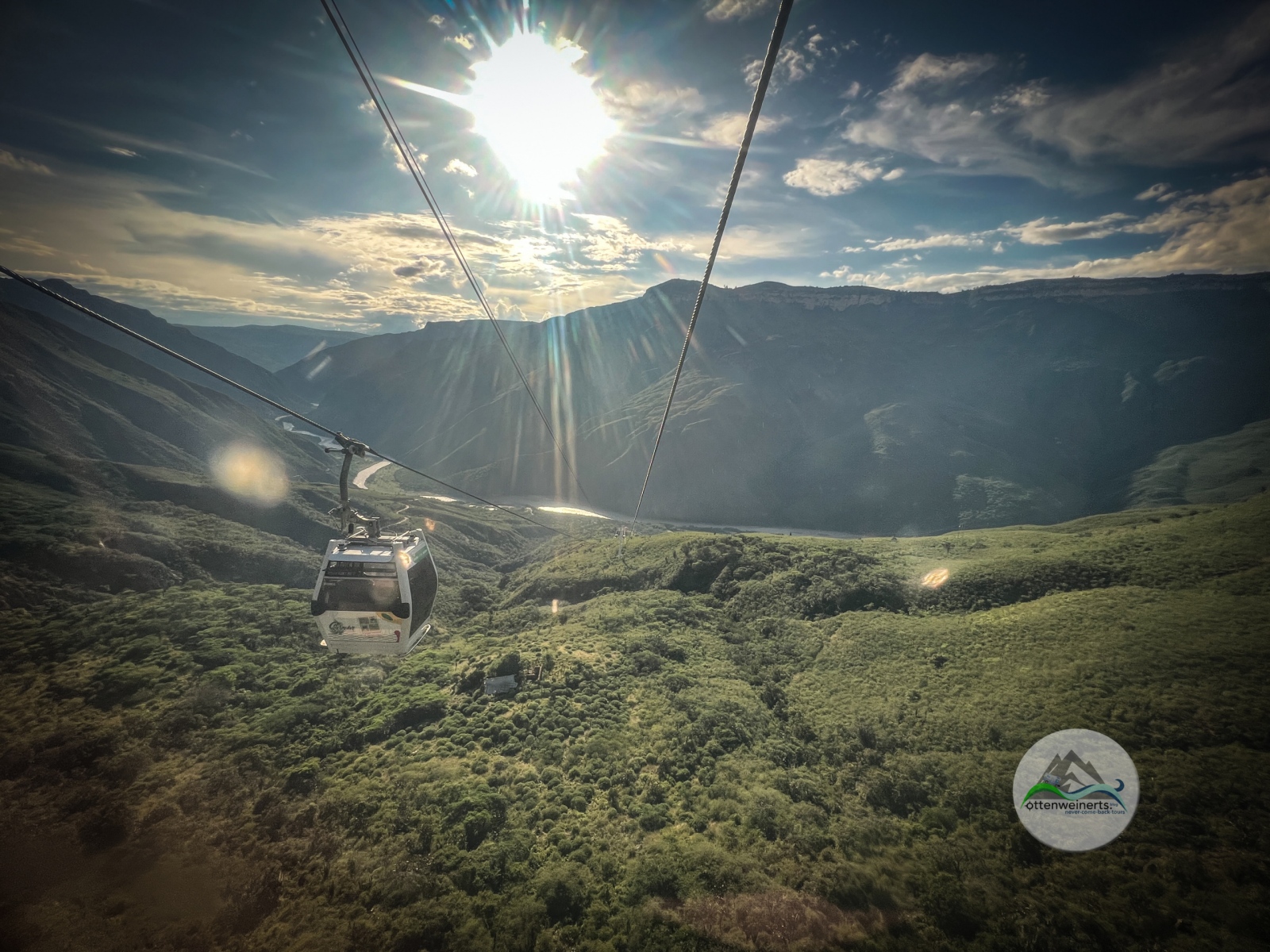
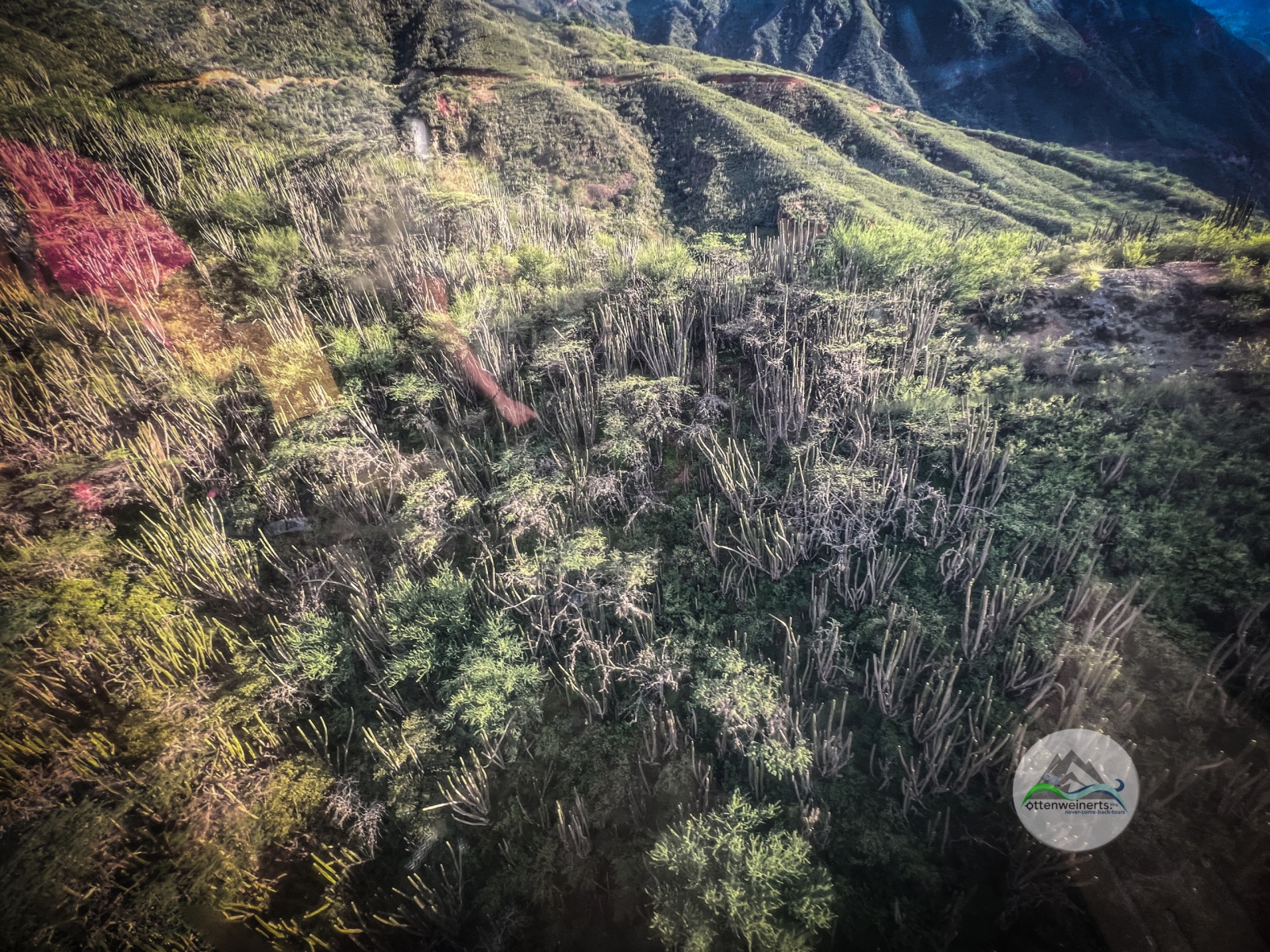
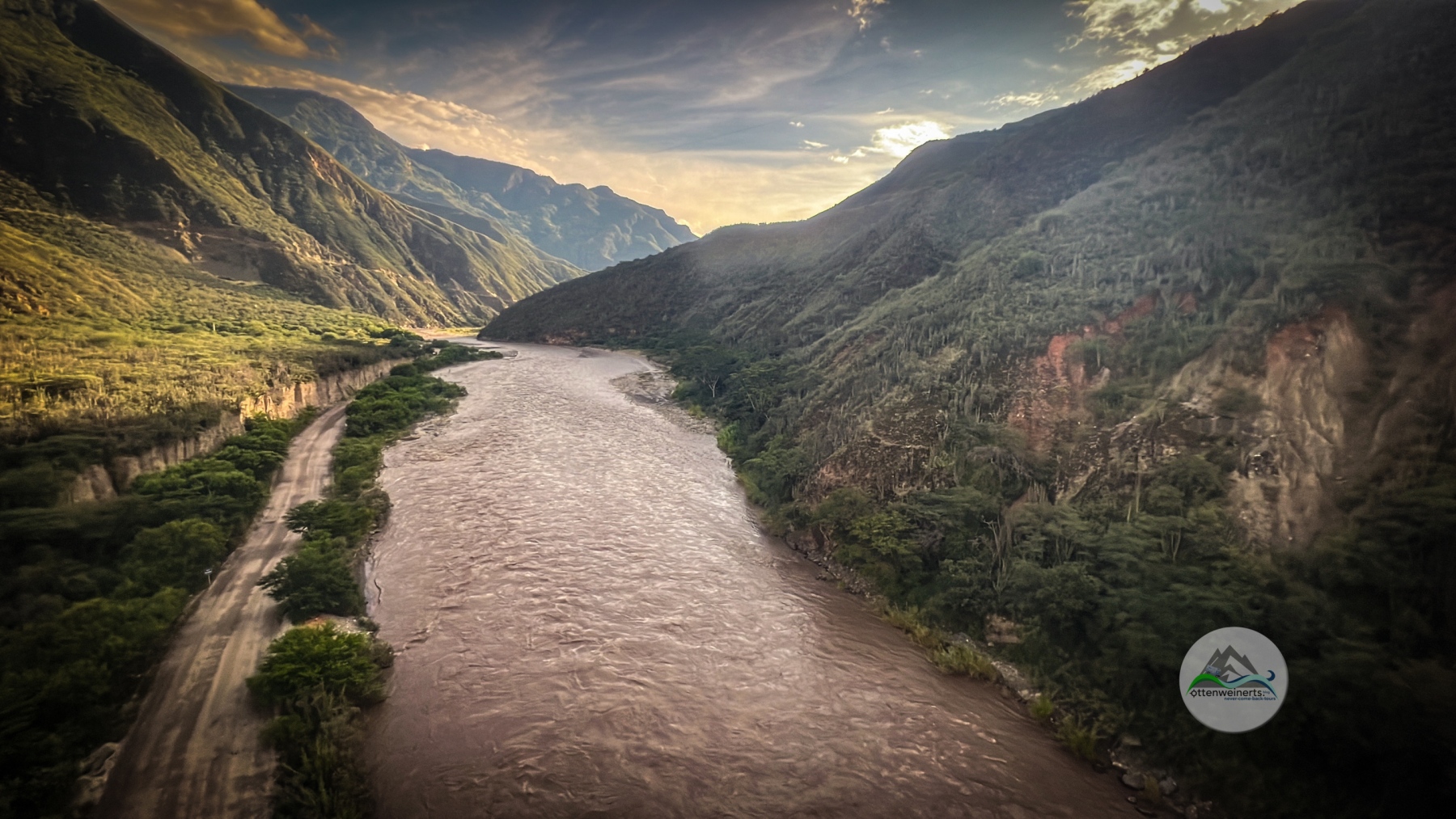
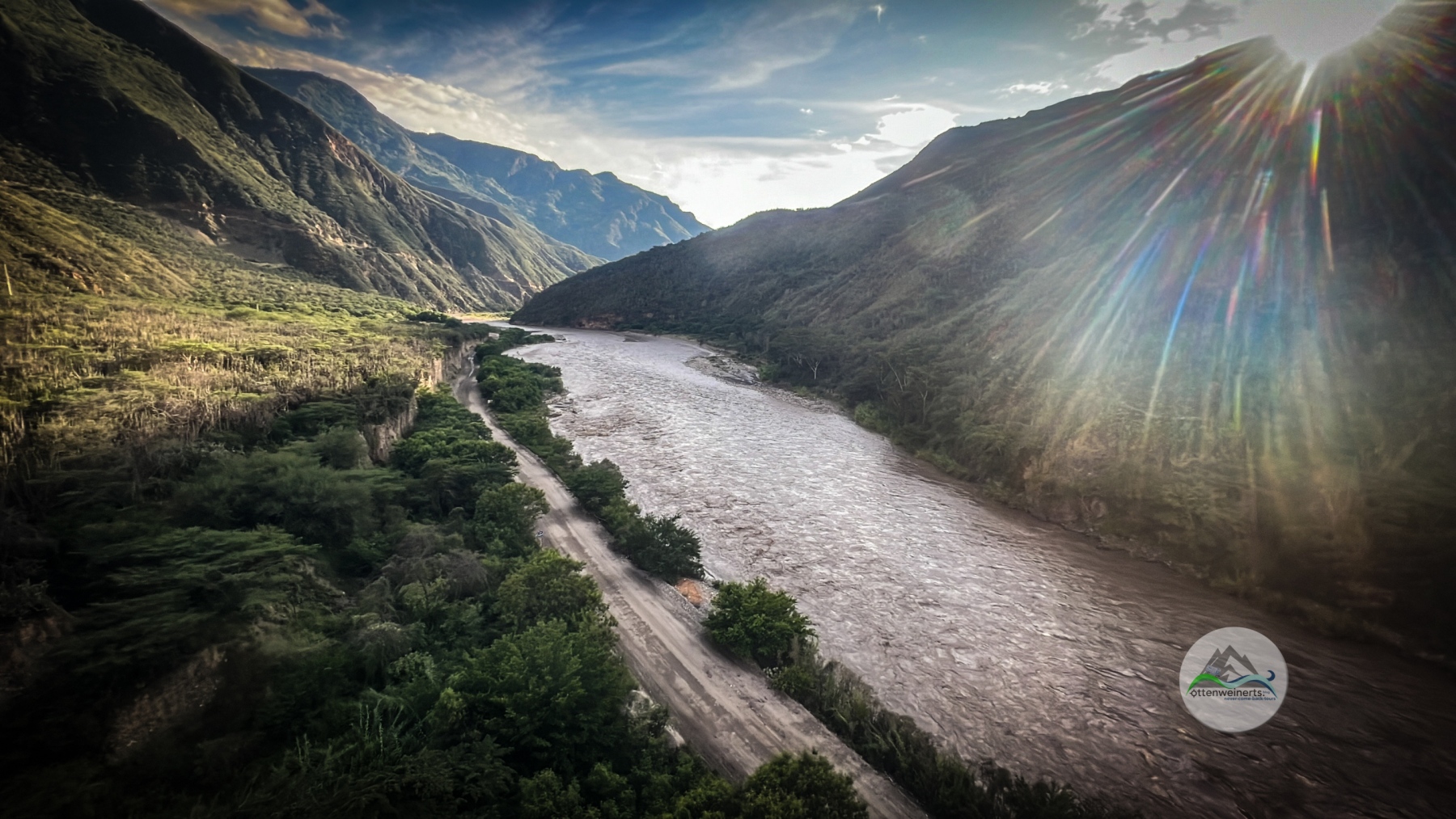
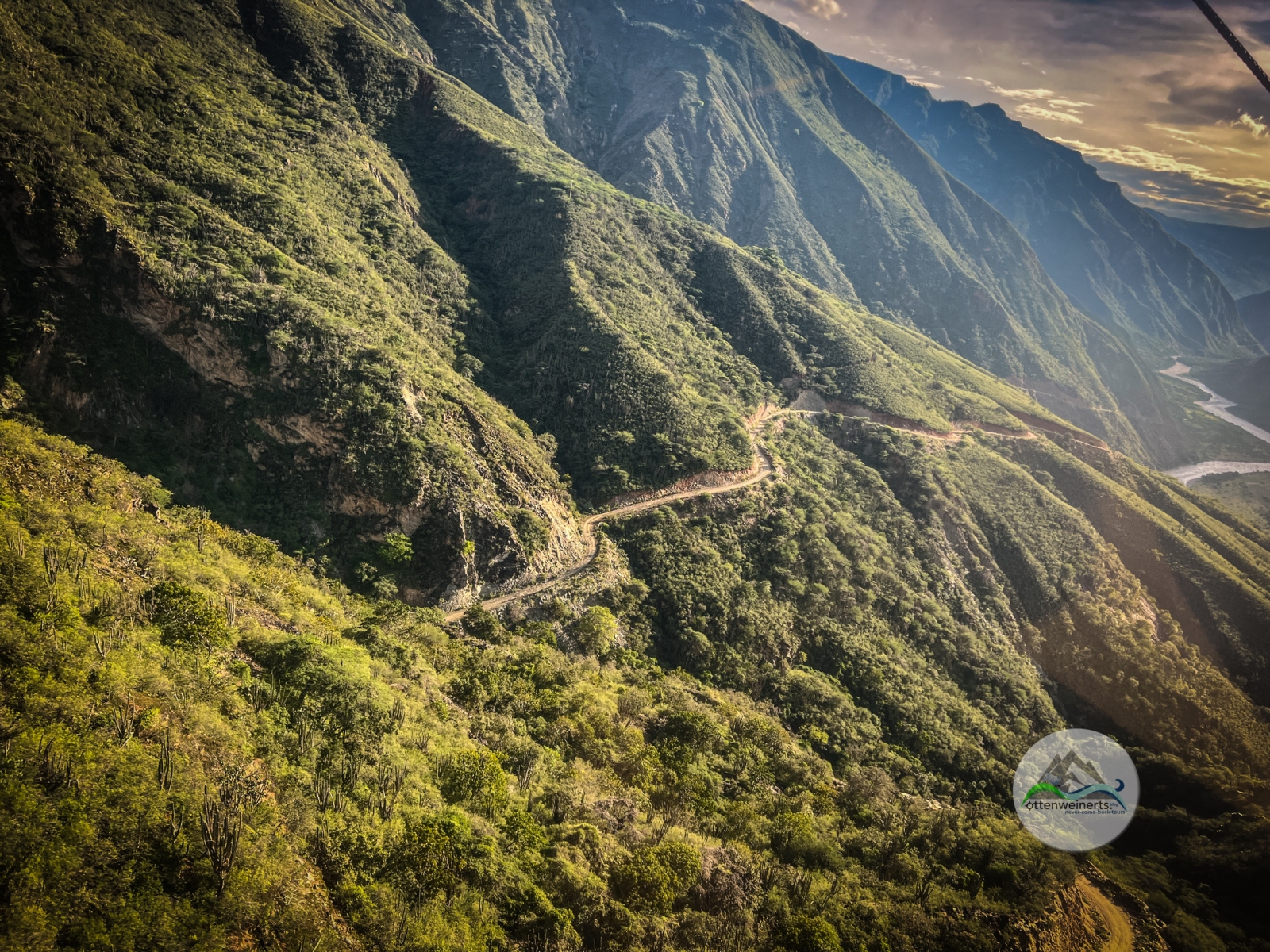
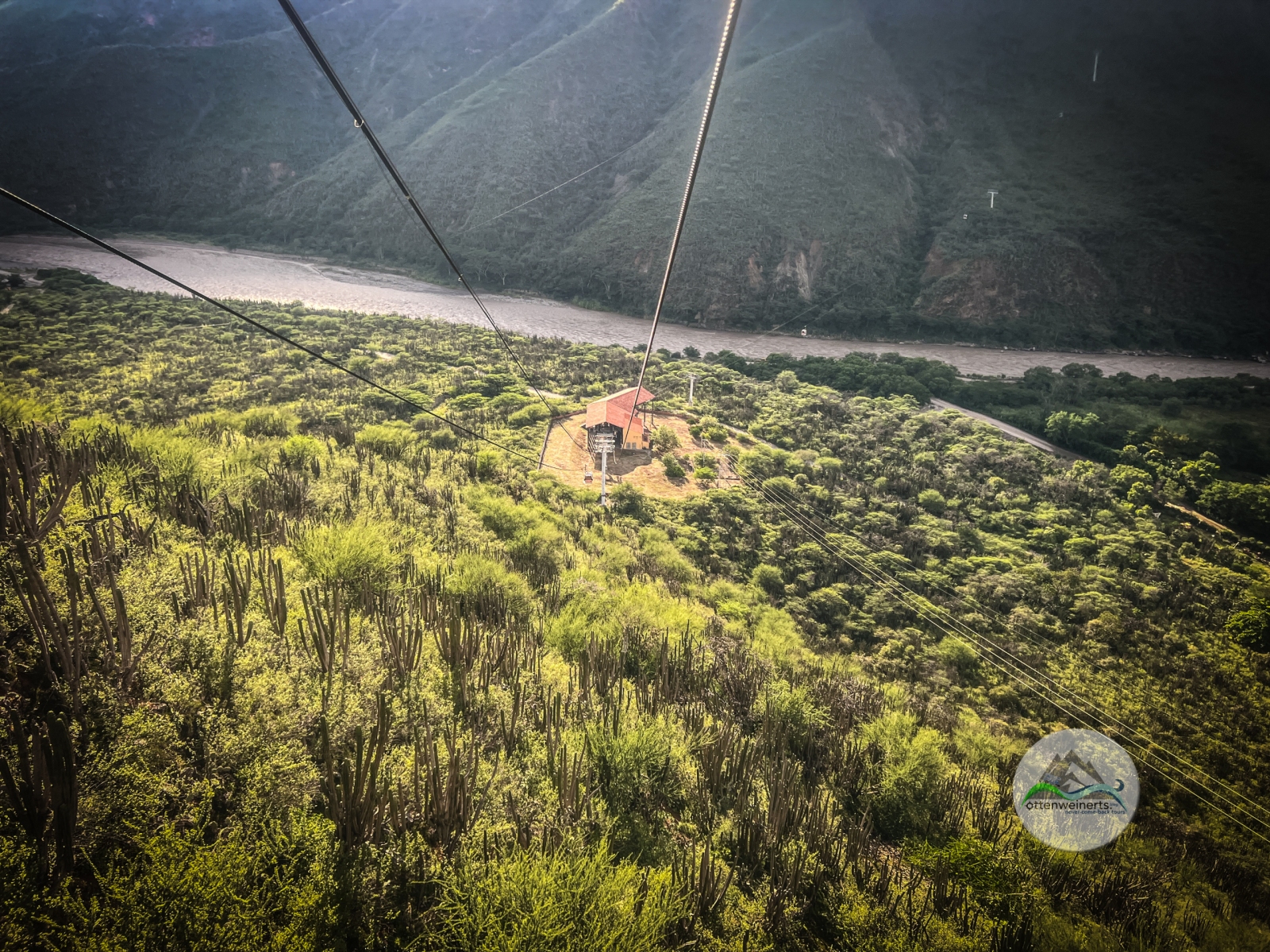
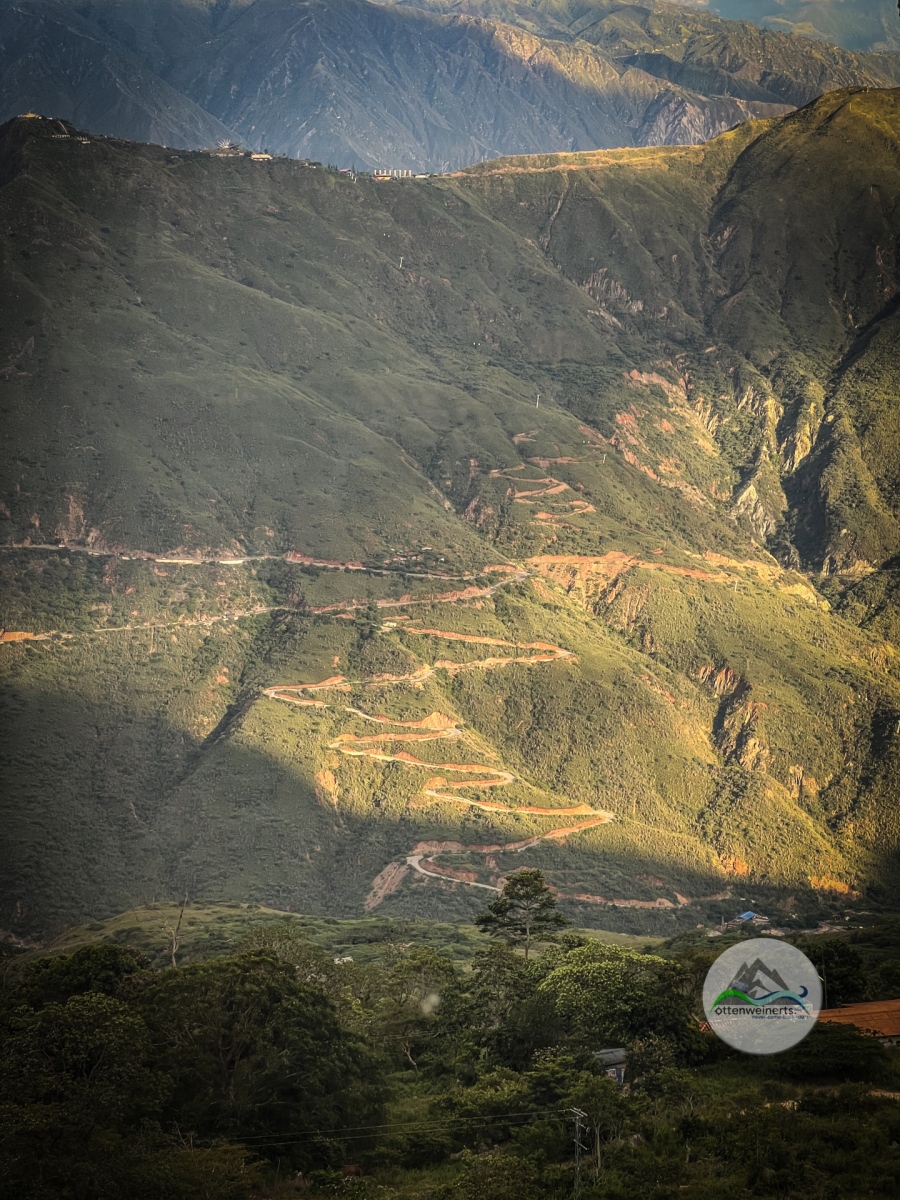
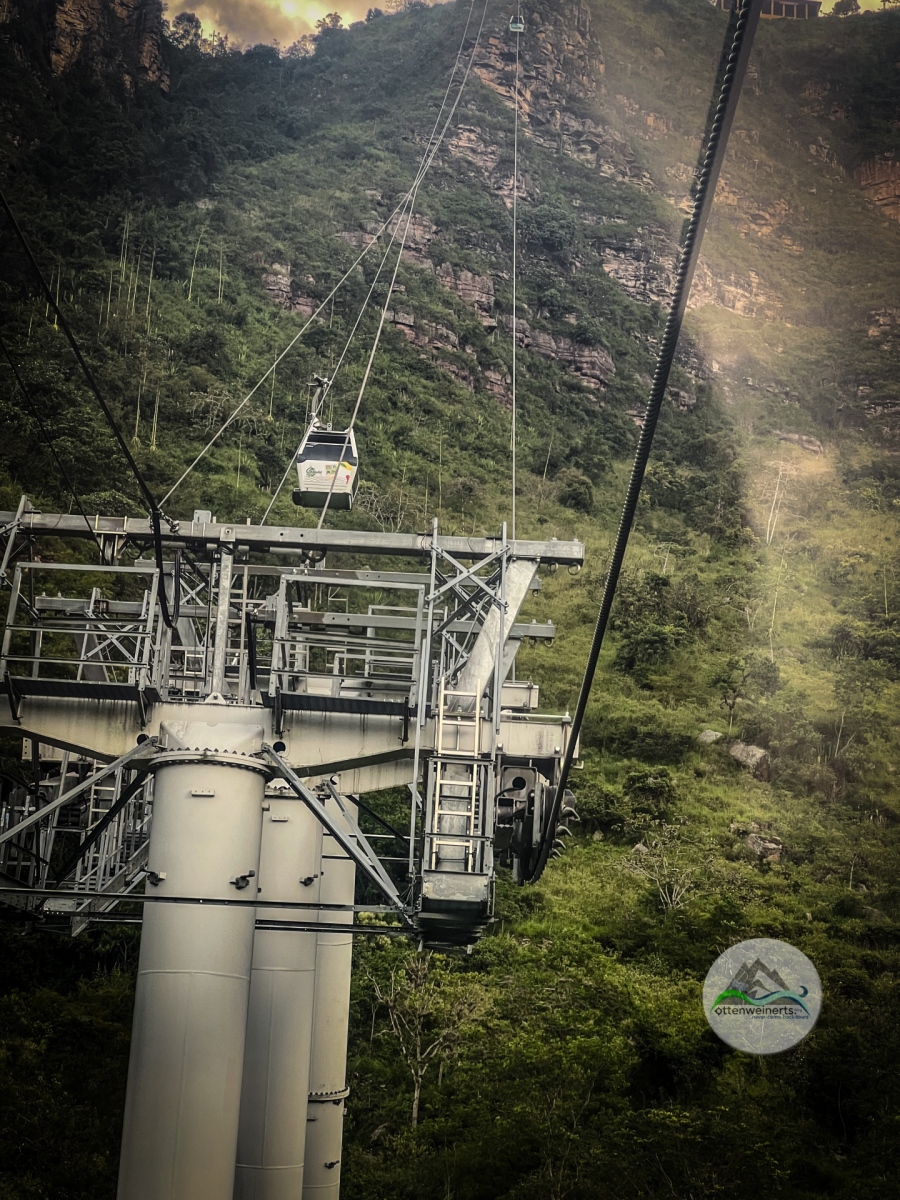
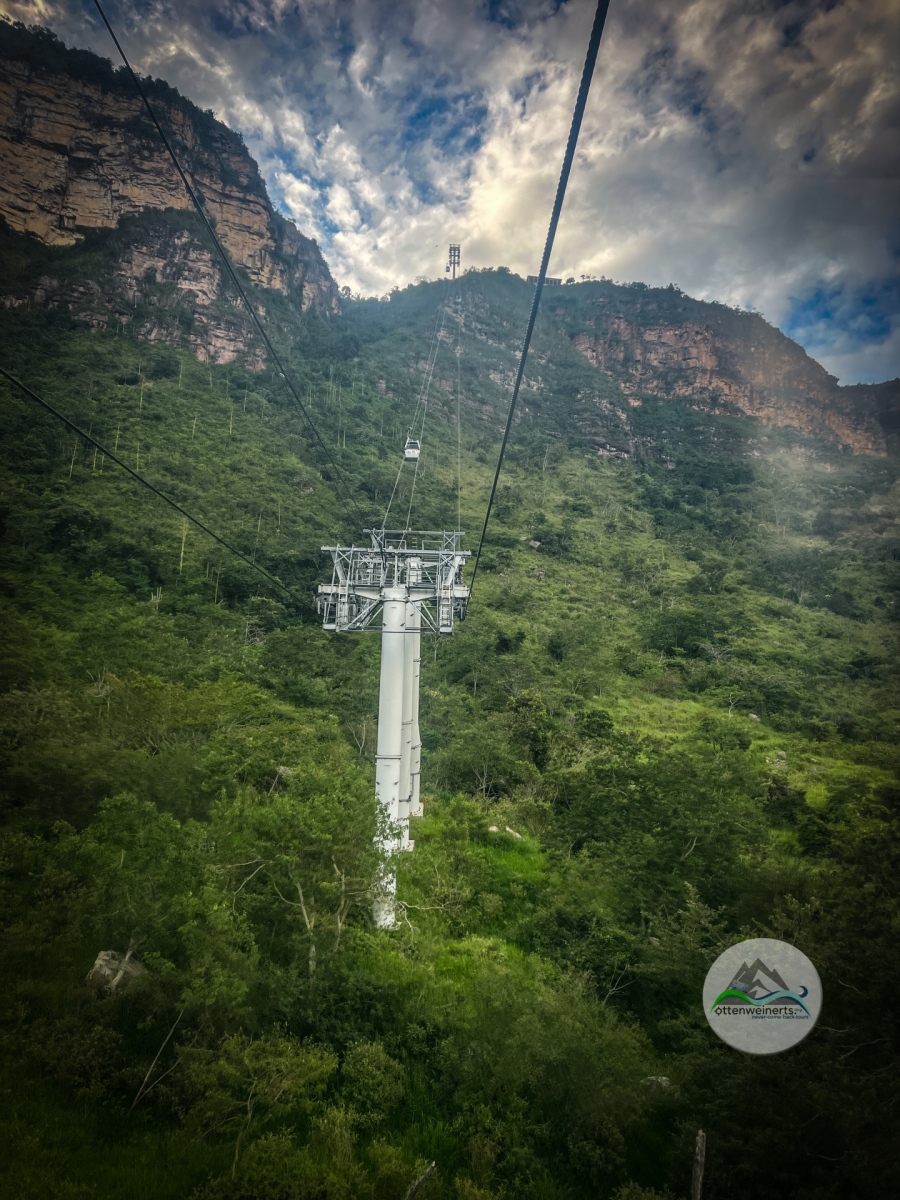
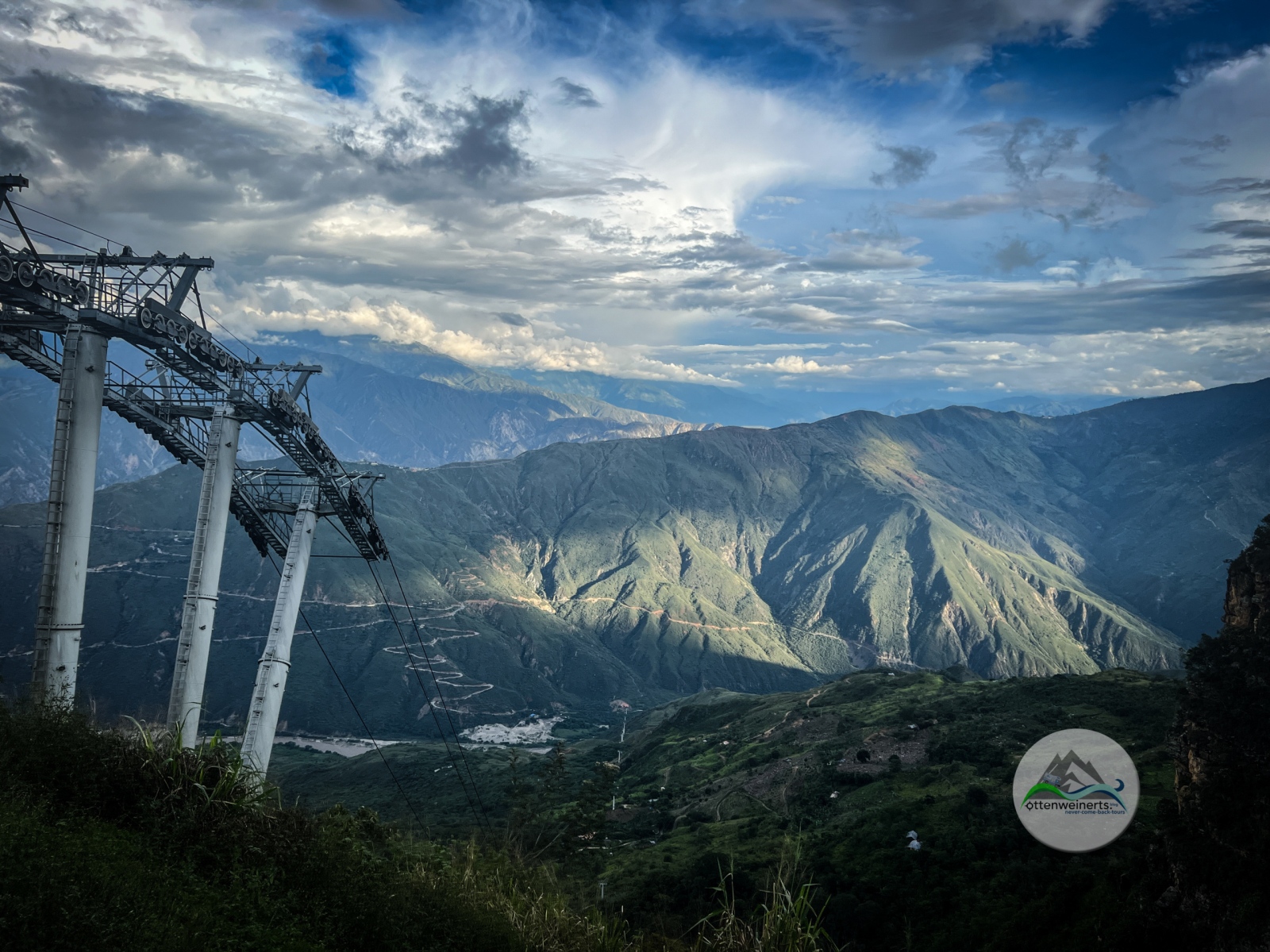
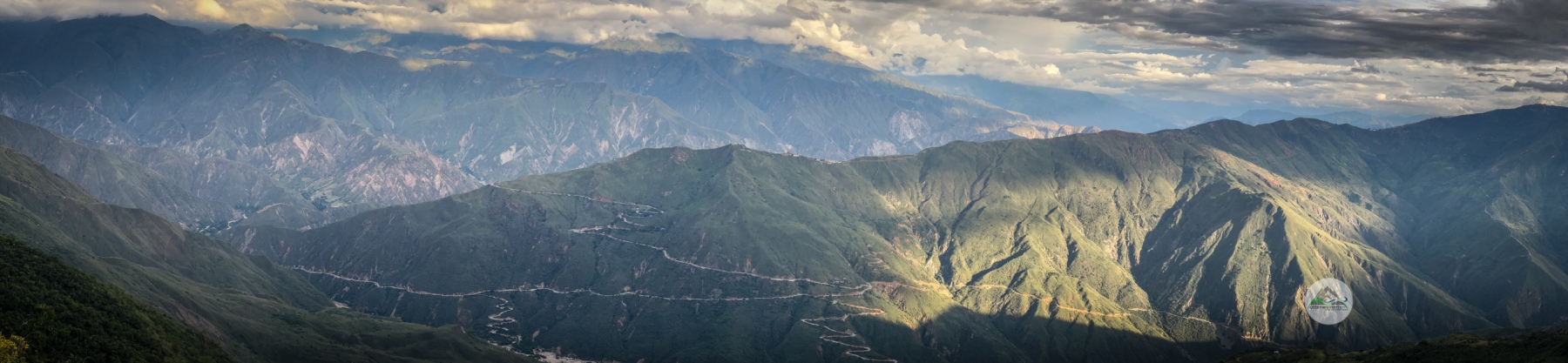
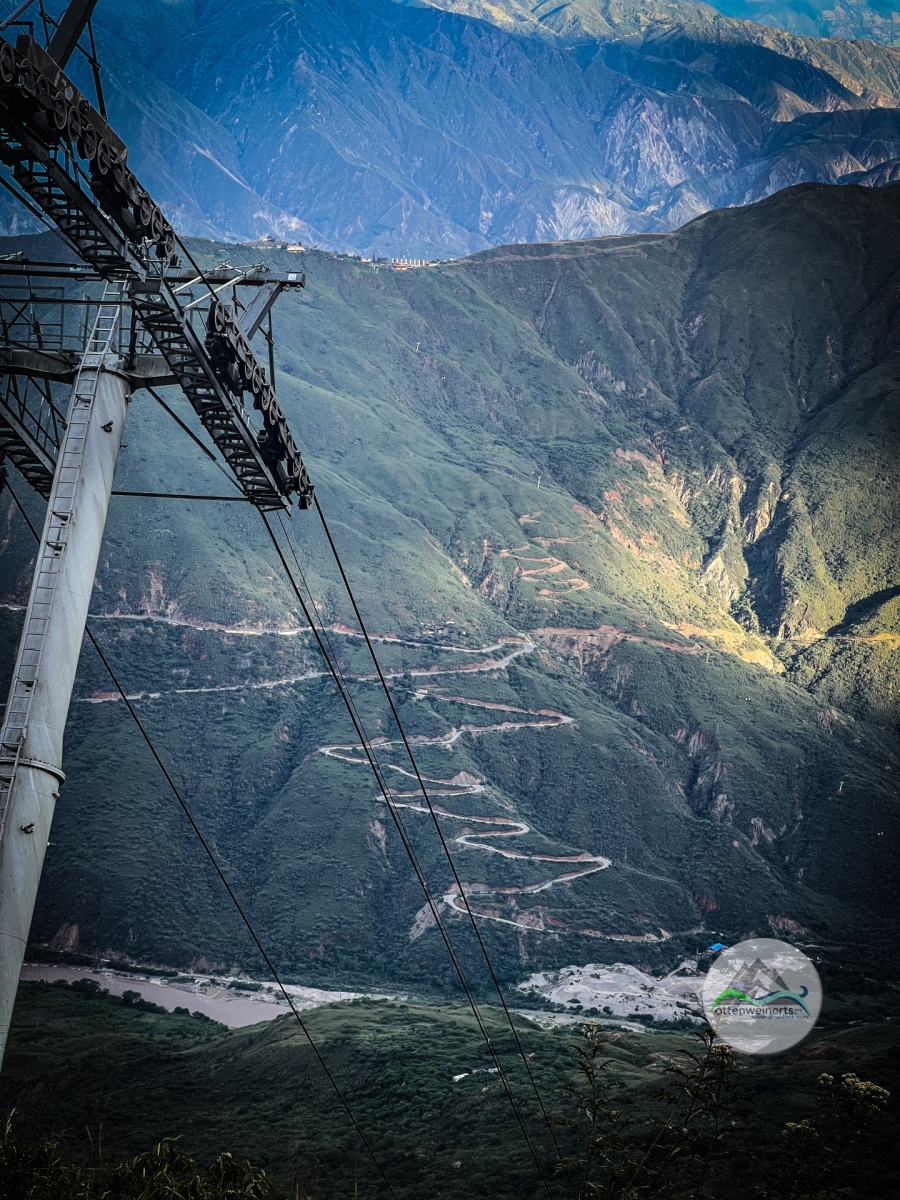
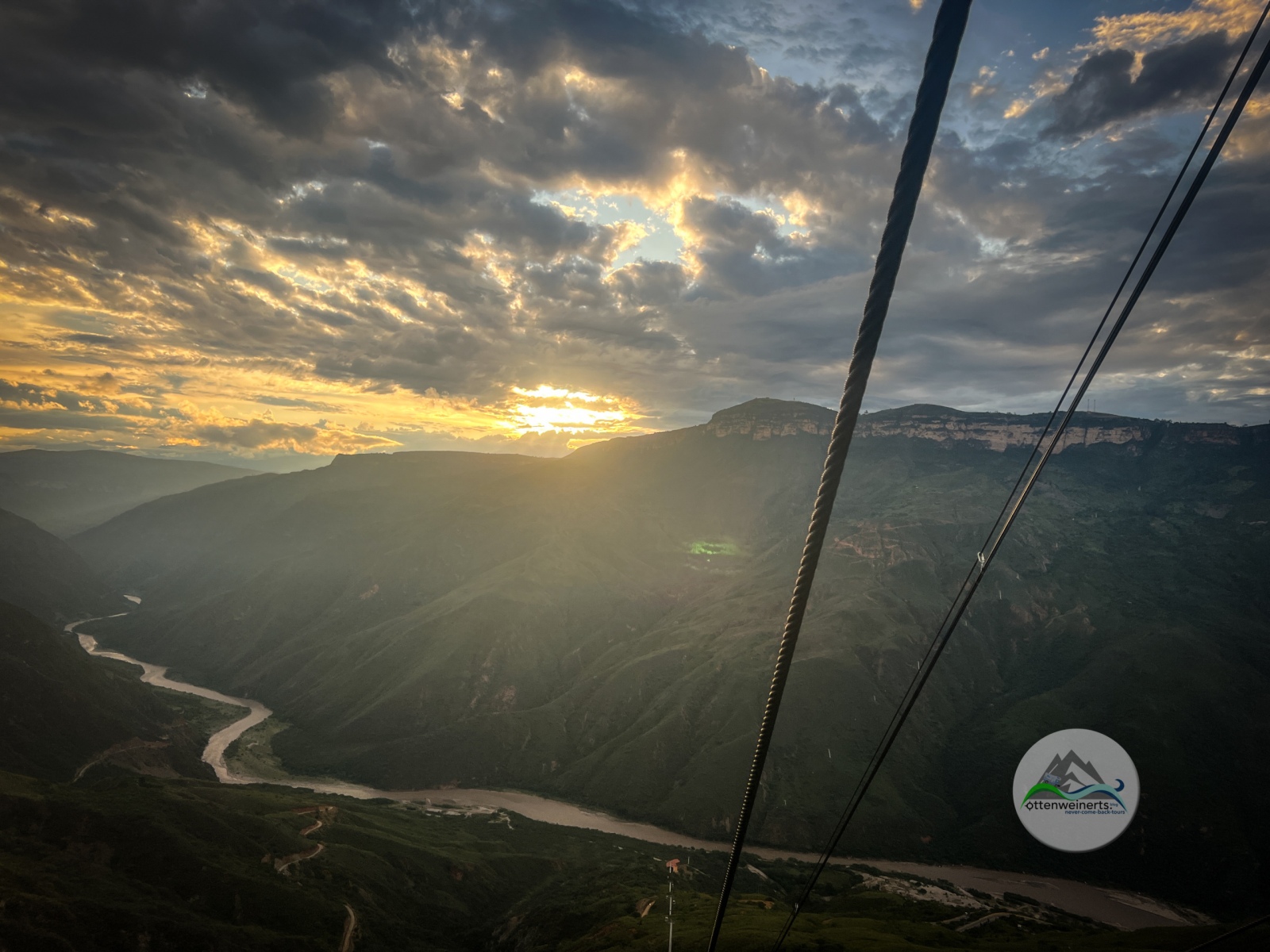
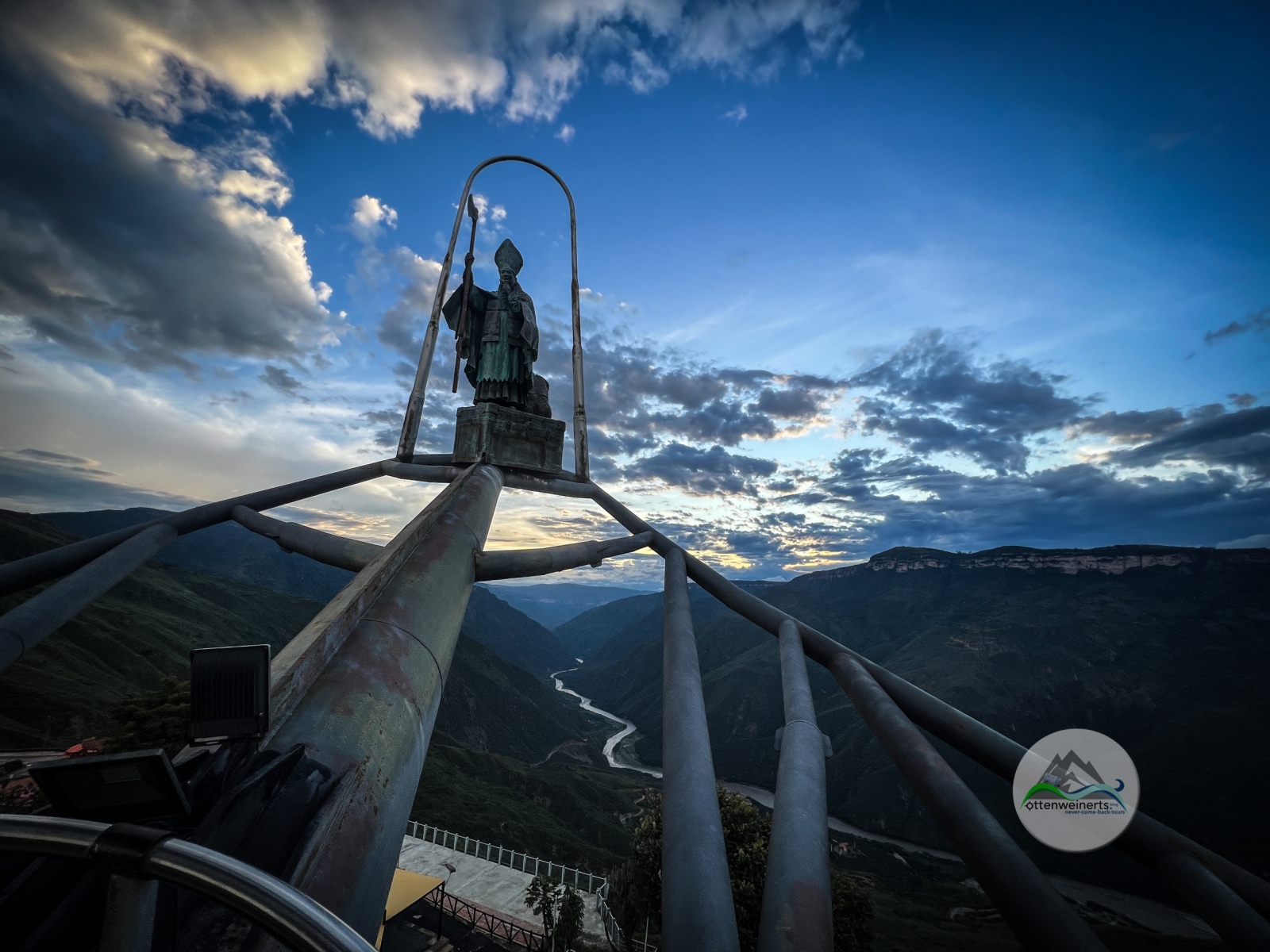
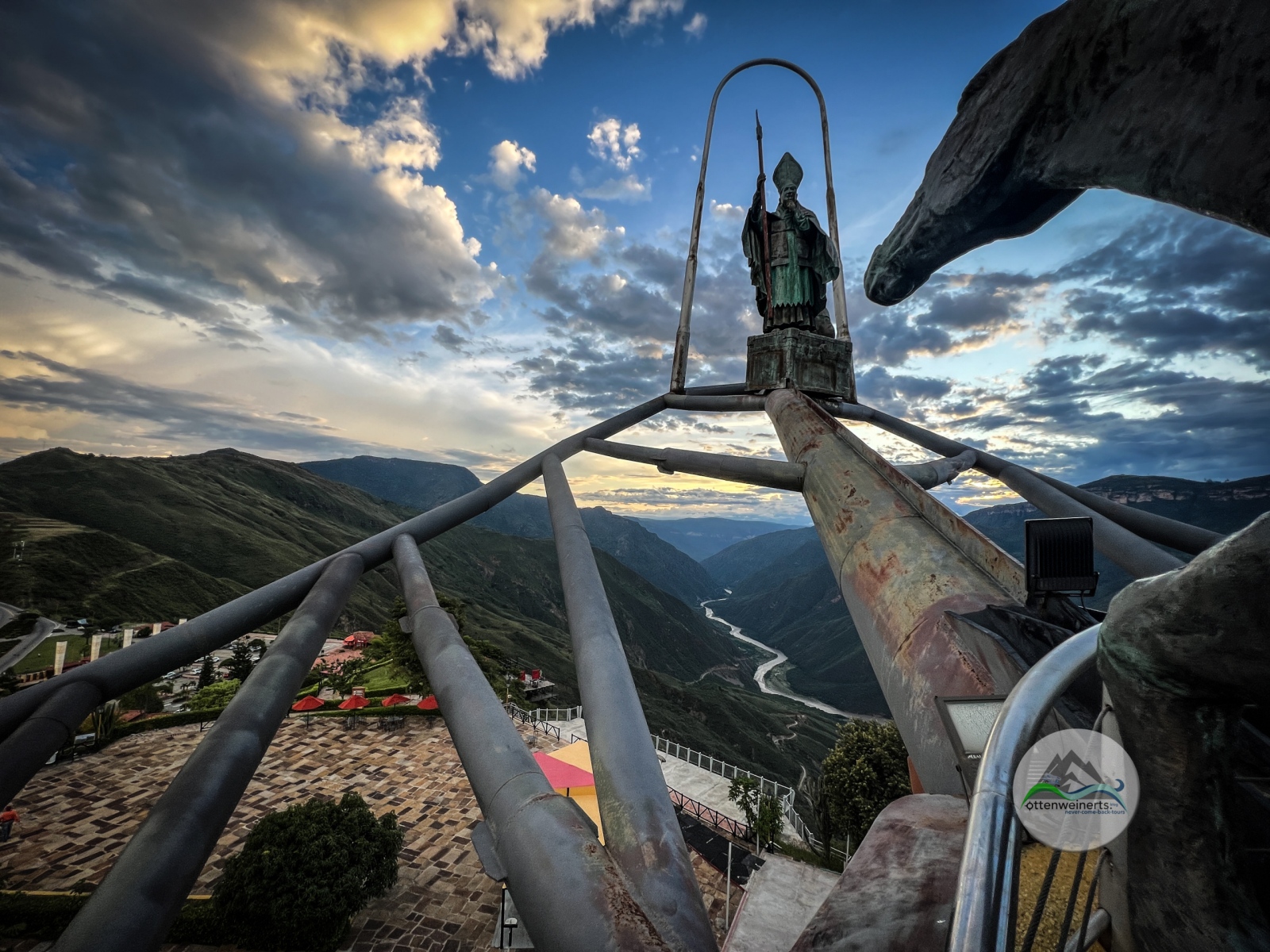
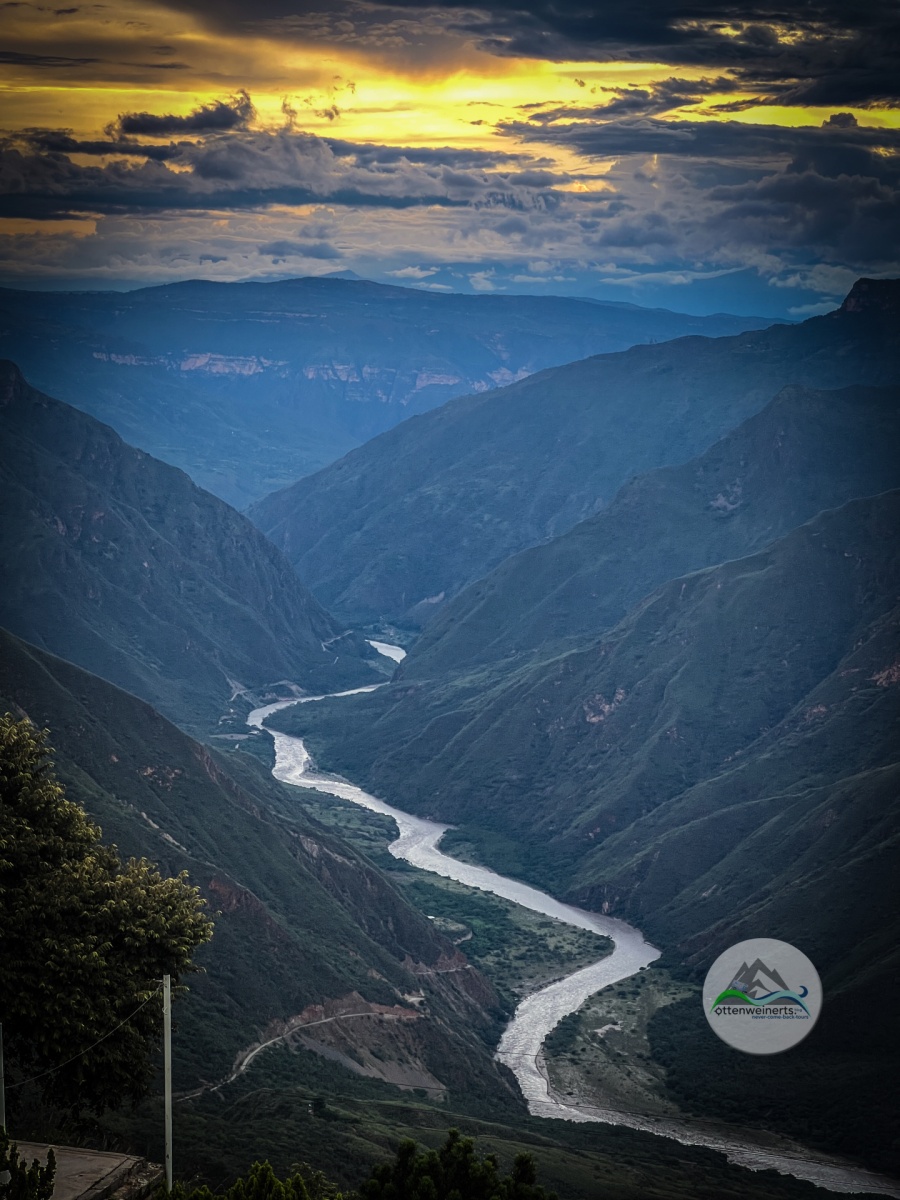
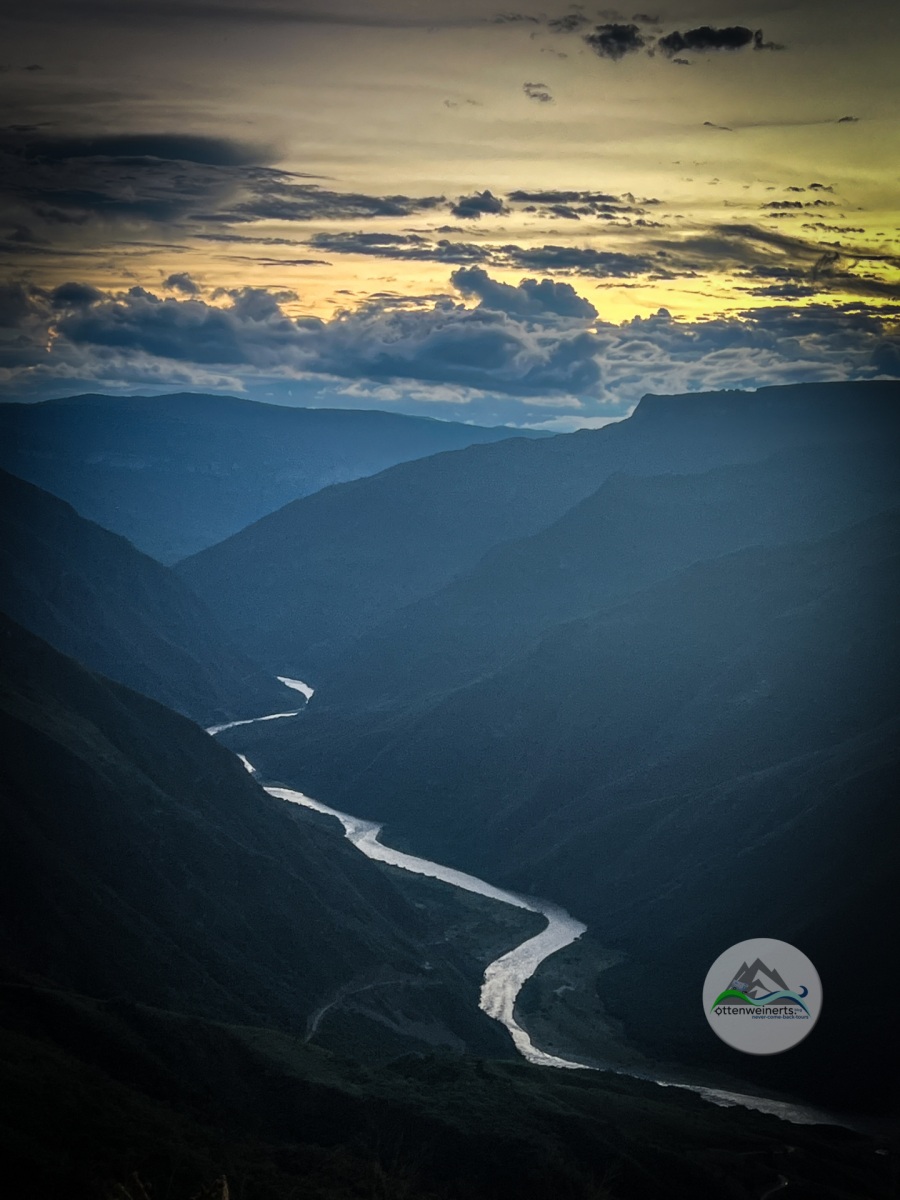
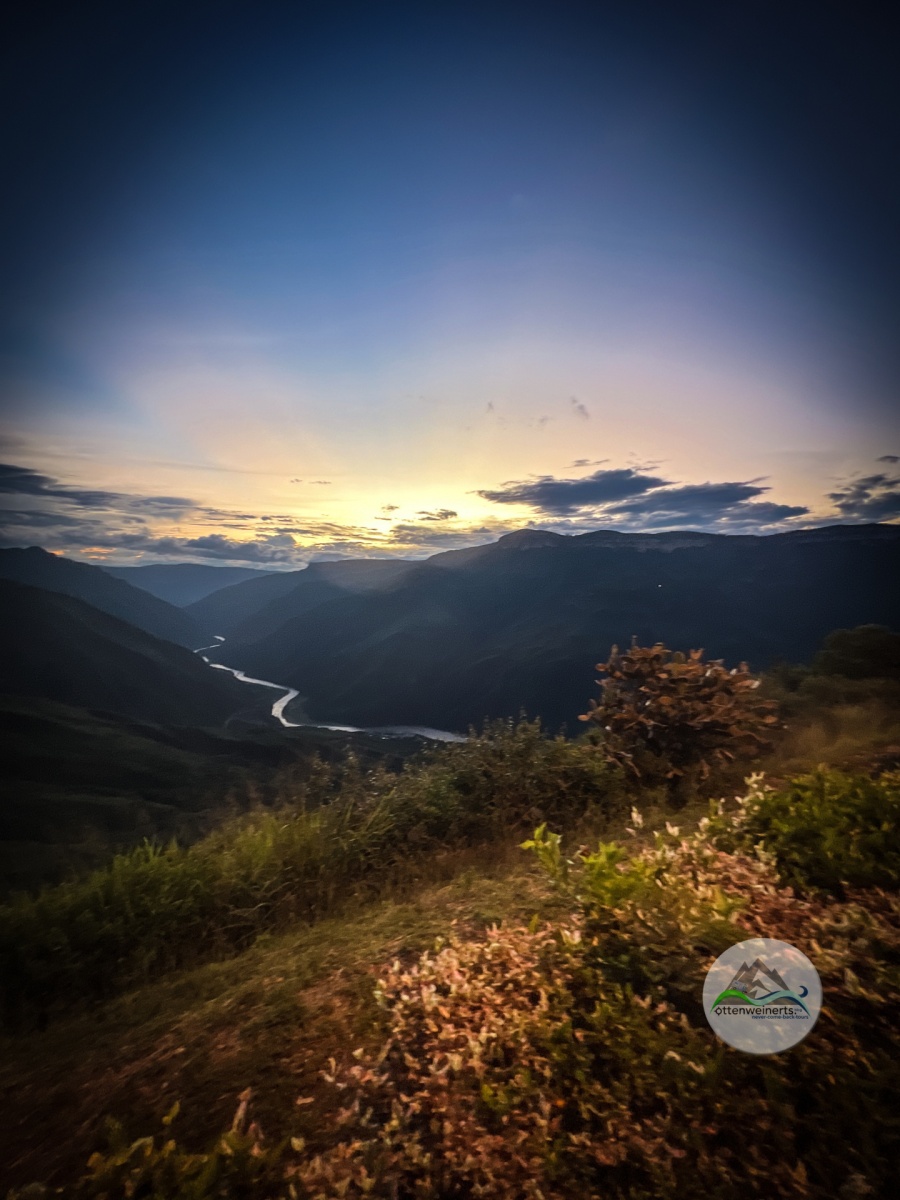
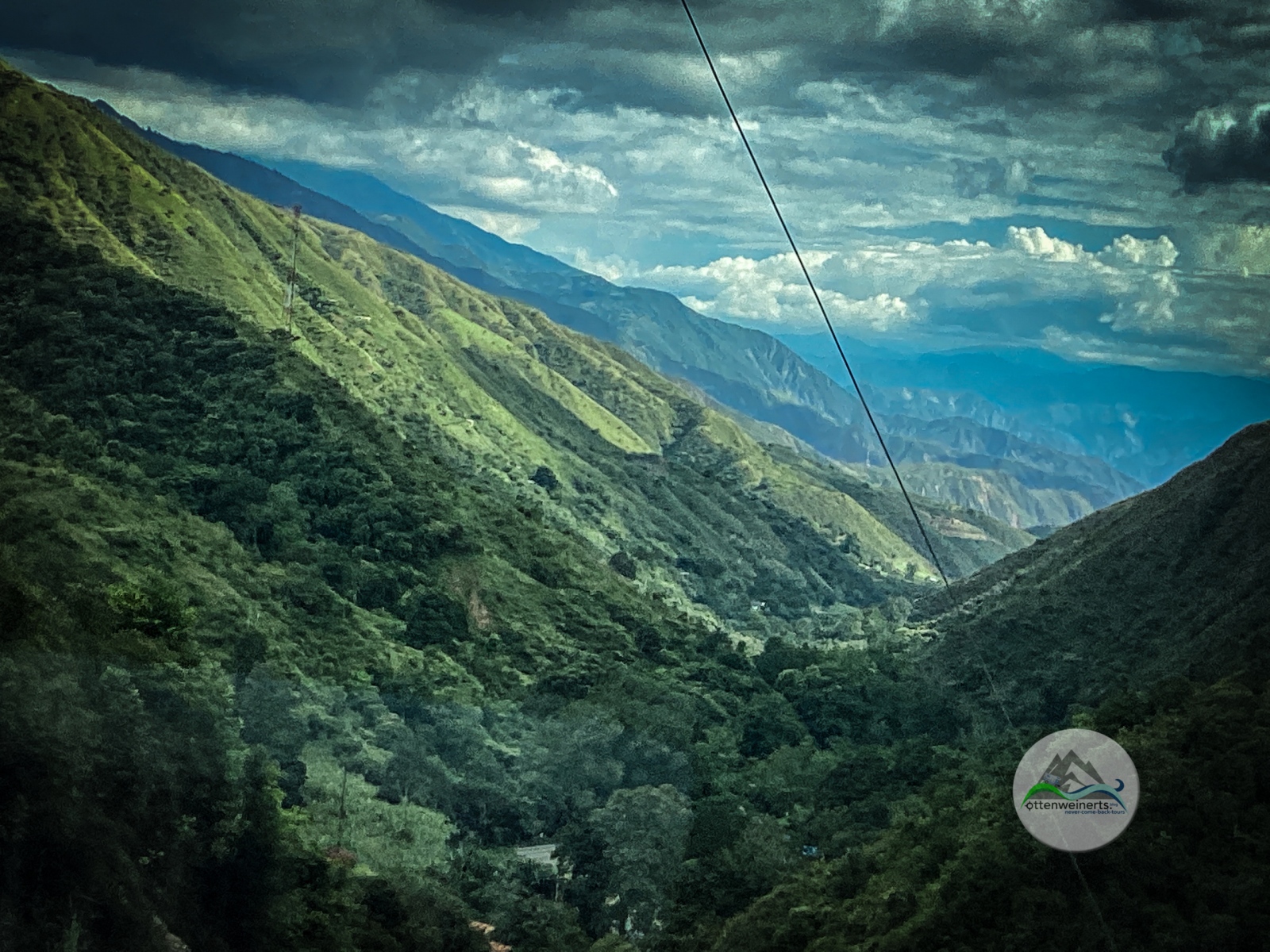
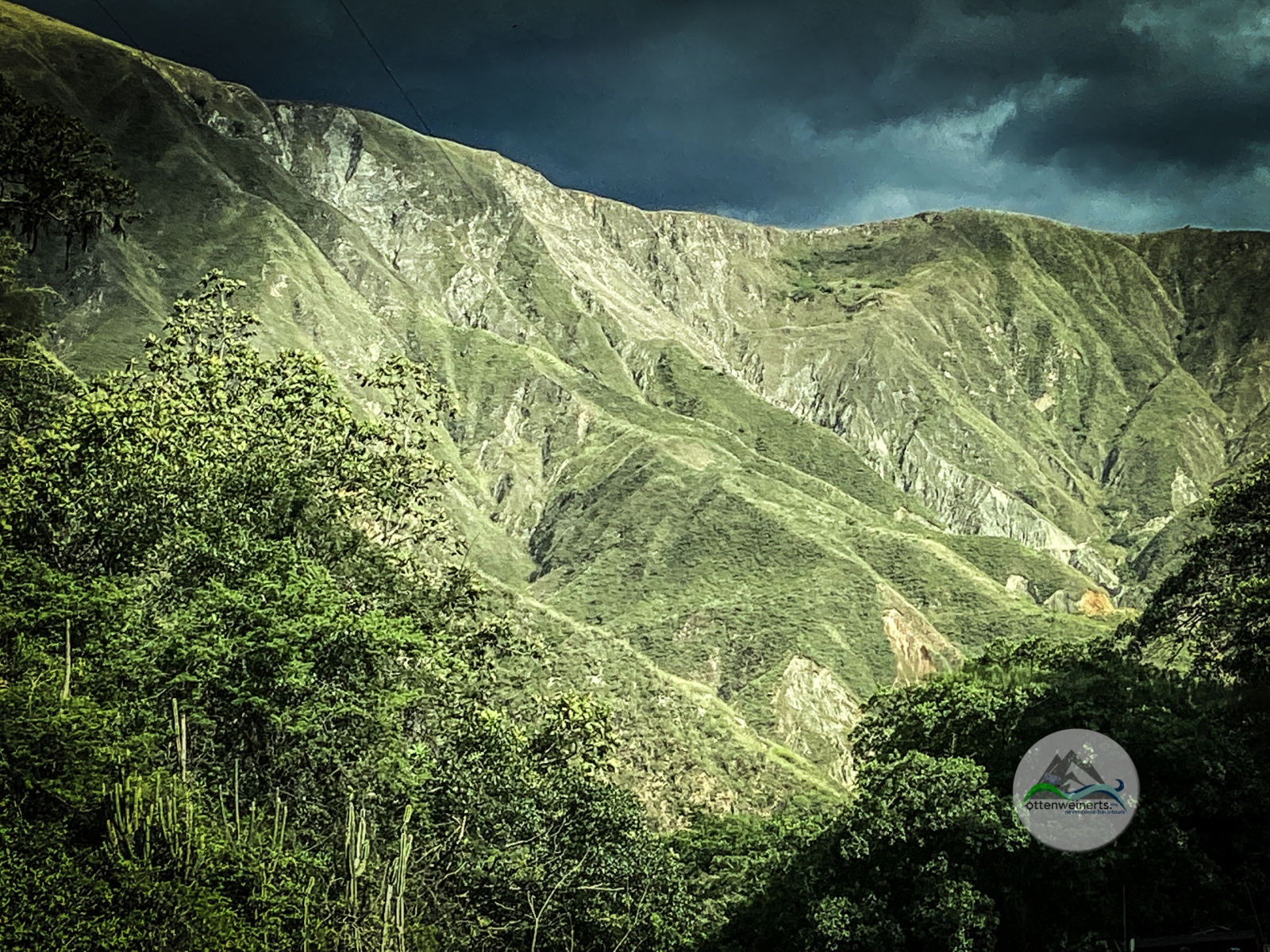
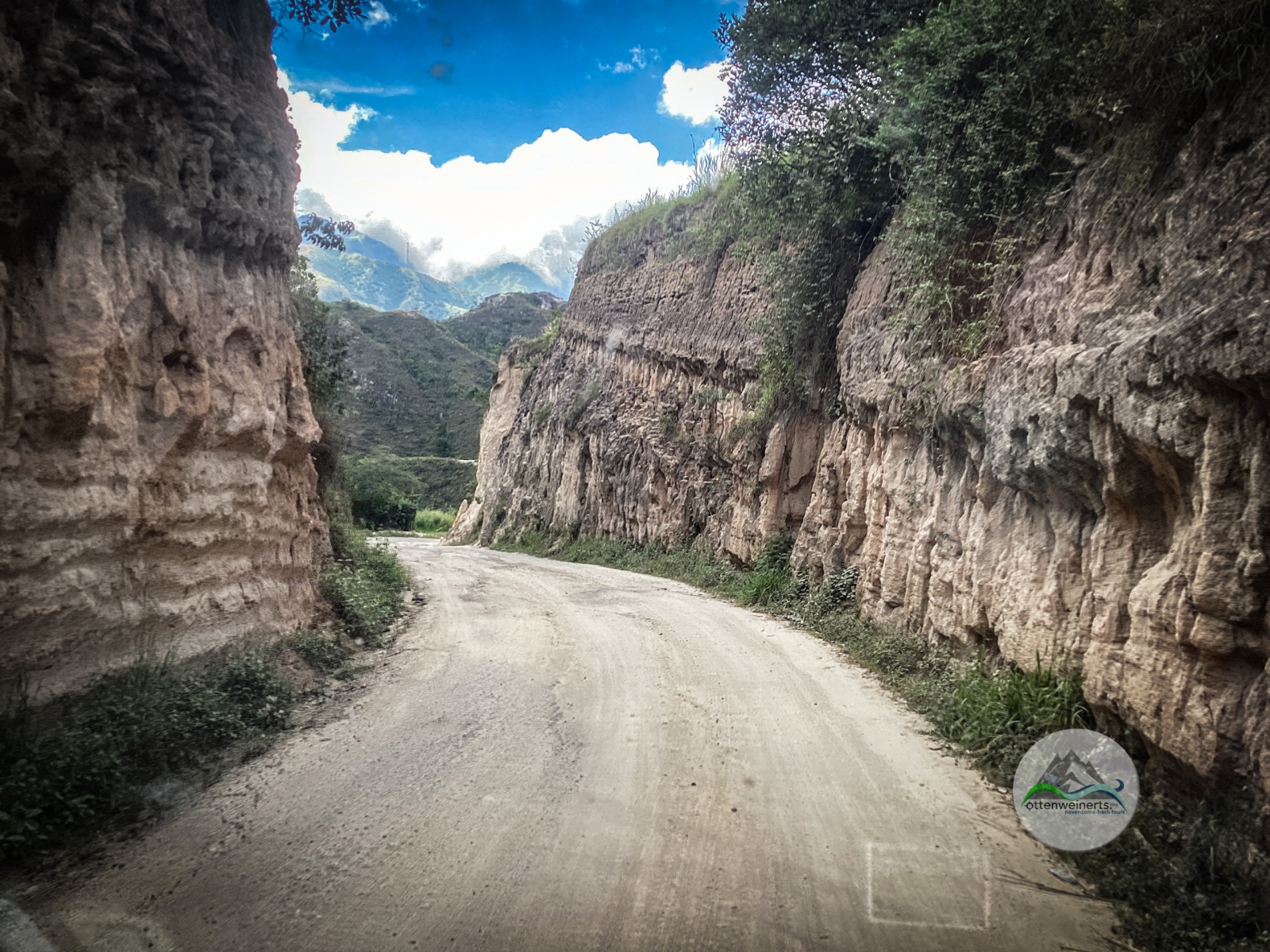
Dann geht es über Floridablanca nach Süden, Richtung Chicamocha Cañyon. Die Strecke ab Piedecuesta ist eine der schönsten, die wir bisher in Kolumbien gefahren sind, nach jeder Kurve tun sich neue Fotomotive auf und das Fahren ist ein Vergnügen. Richtig toll wird es, nachdem wir den Rio Umpala überquert und den Berg auf der anderen Seite bezwungen haben. Die Aussicht vom Parque Chicamocha ist phänomenal, und die Gondelfahrt fantastisch. In 25 Minuten fährt man von 1273 Meter Seehöhe hinunter auf 537 m, überquert den Fluss und dann geht es auf der anderen Seite wieder hinauf, auf 1712 Meter auf die Mesa de los Santos. Und da bläst dann ziemlich der Wind, es ist kalt und wir beeilen uns, wieder zurück zugondeln – die letzte Gondel fährt kurz nach 17 Uhr und wir wollen nicht am Berg oben bleiben.

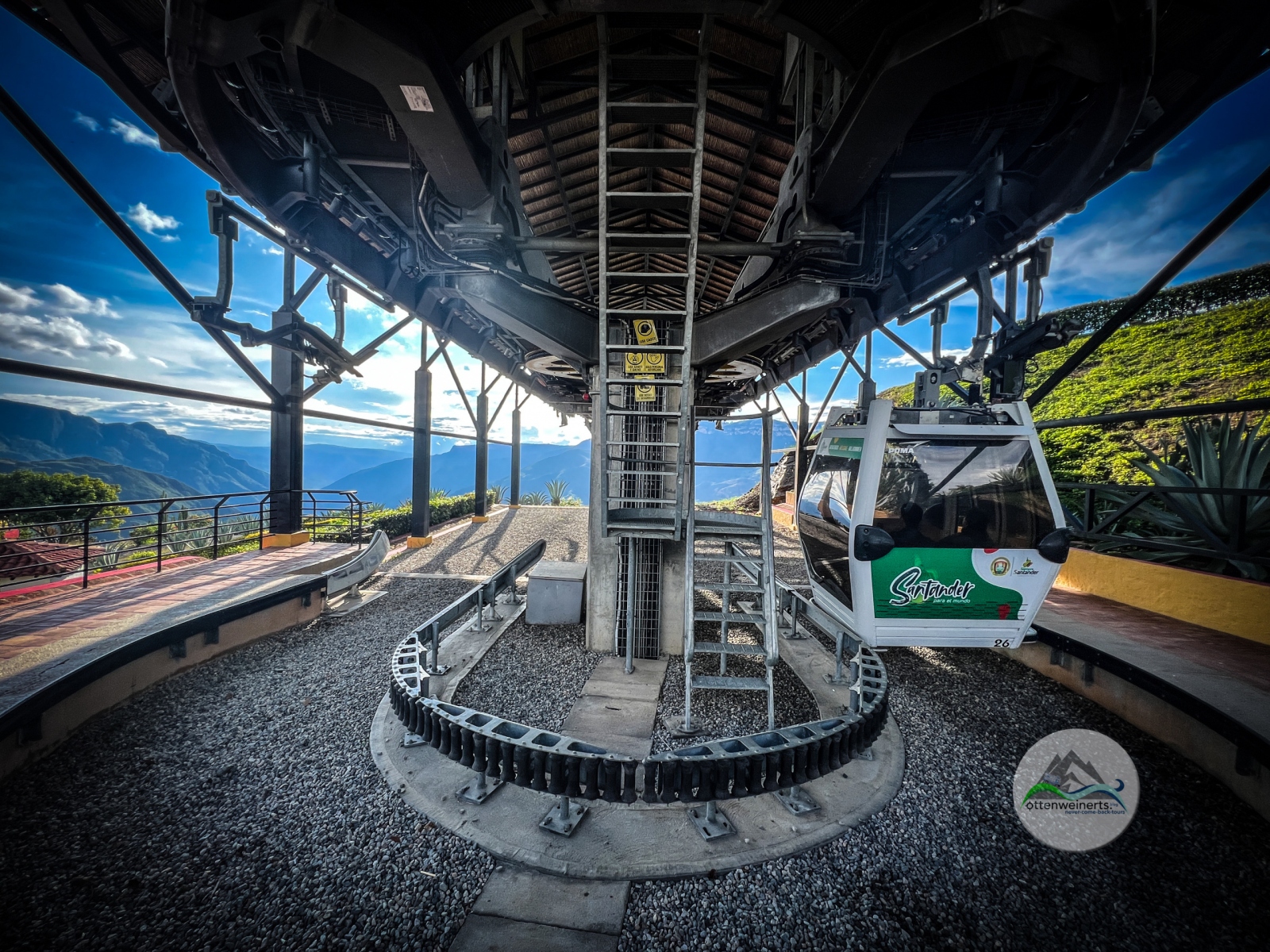
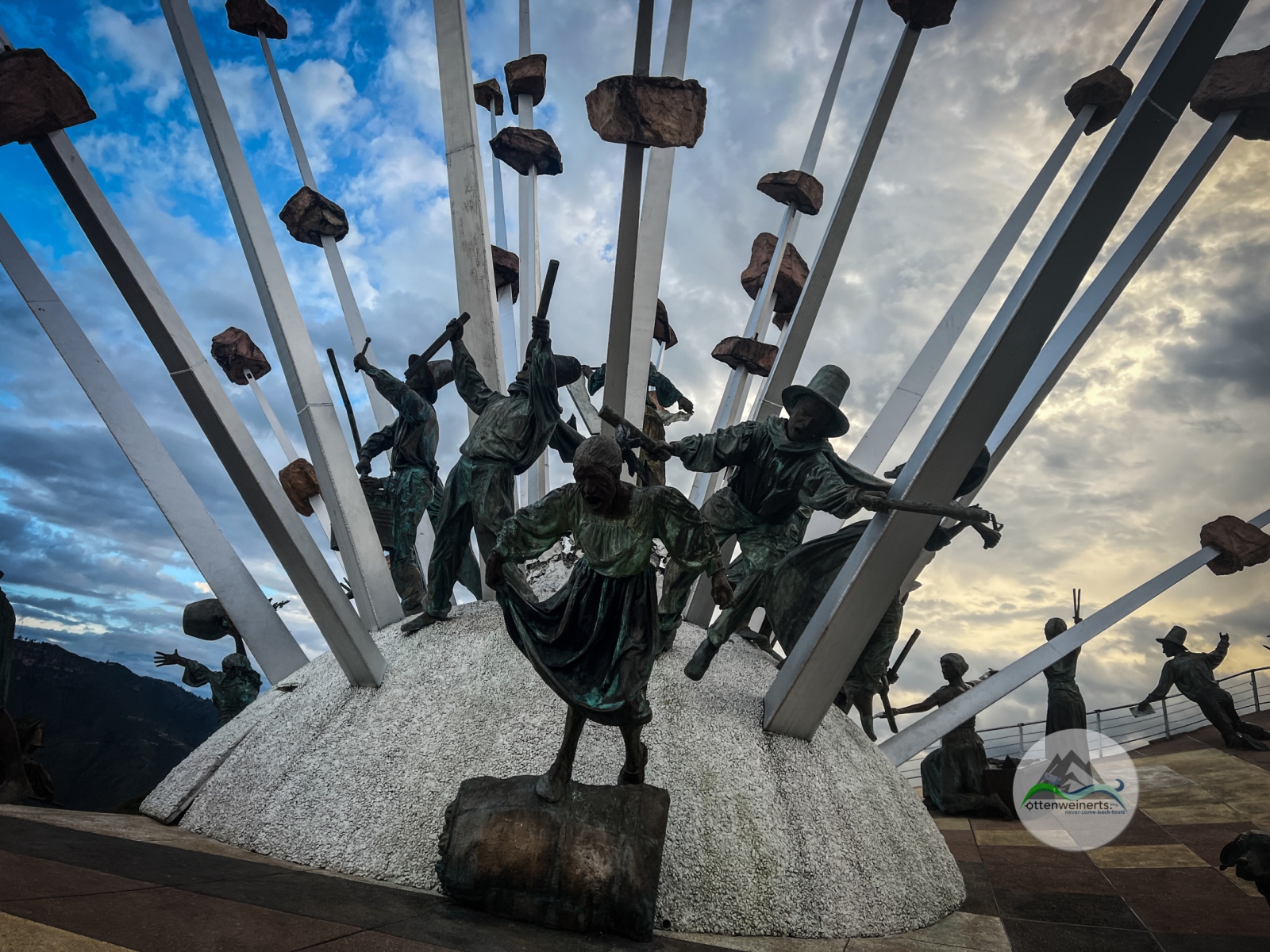
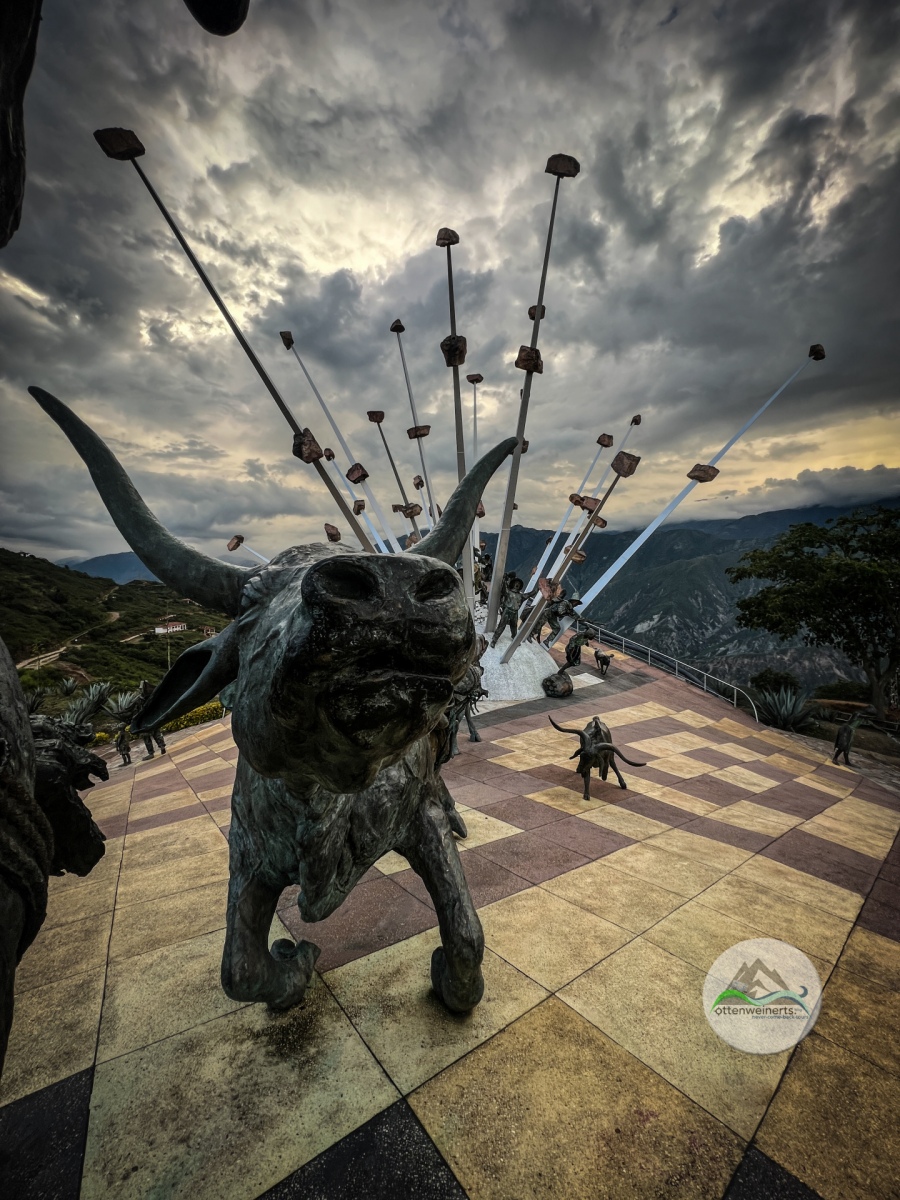
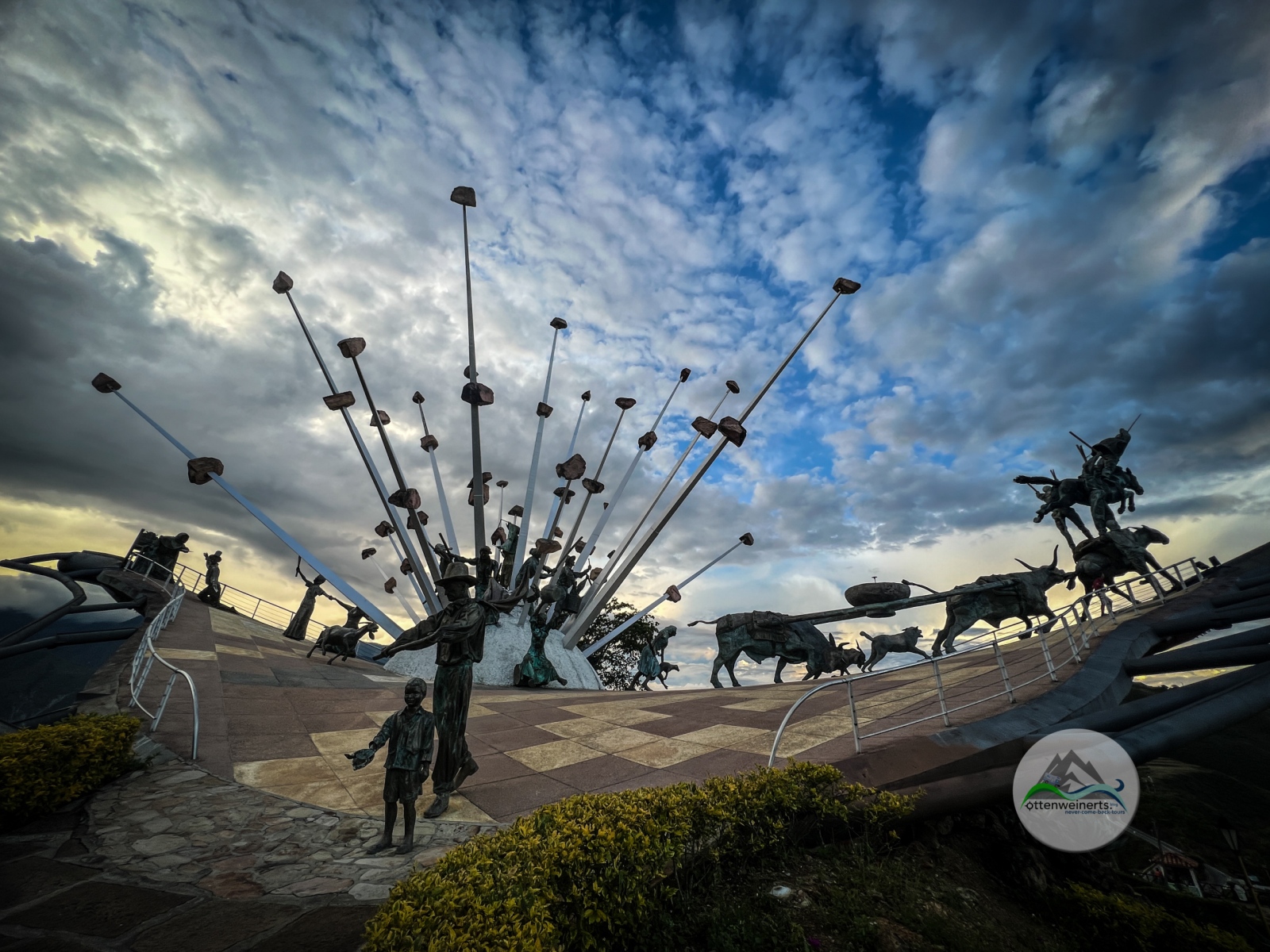
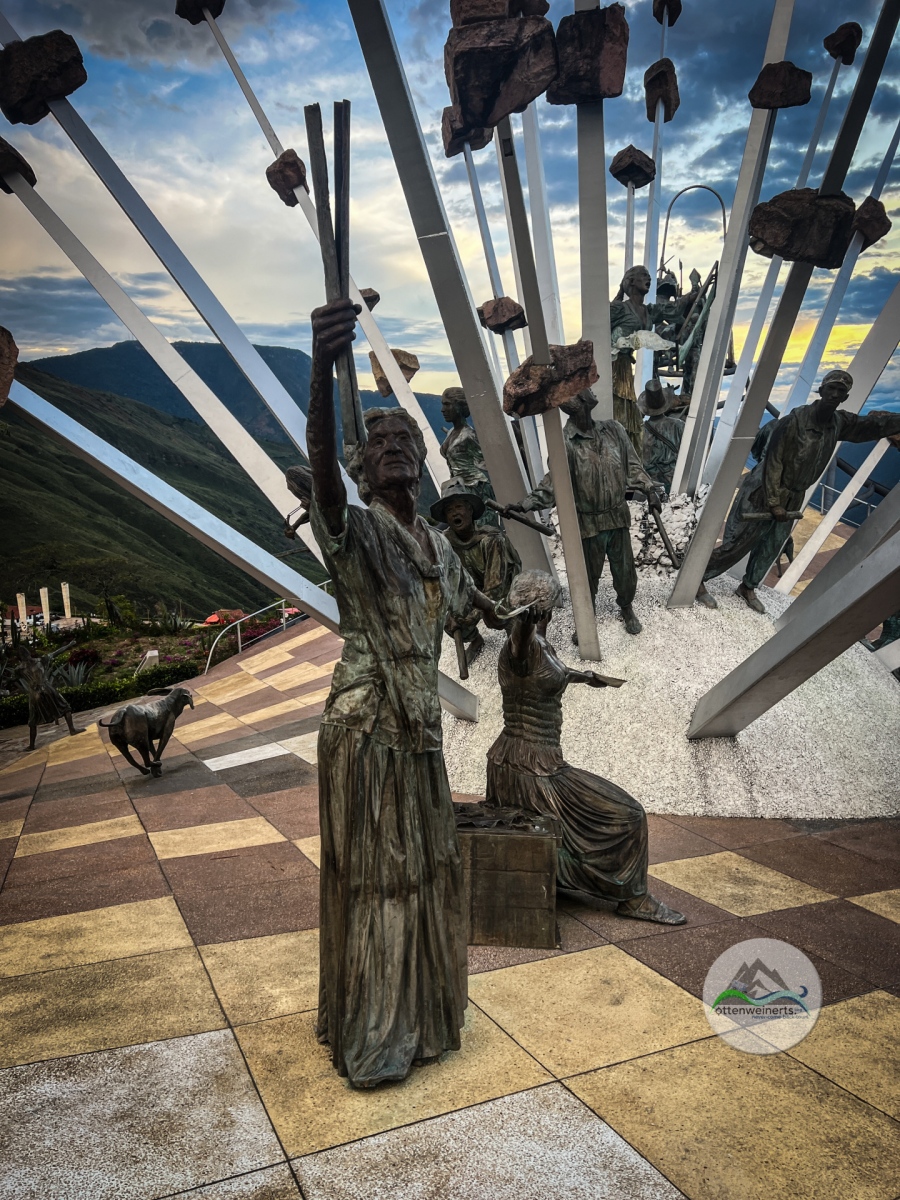
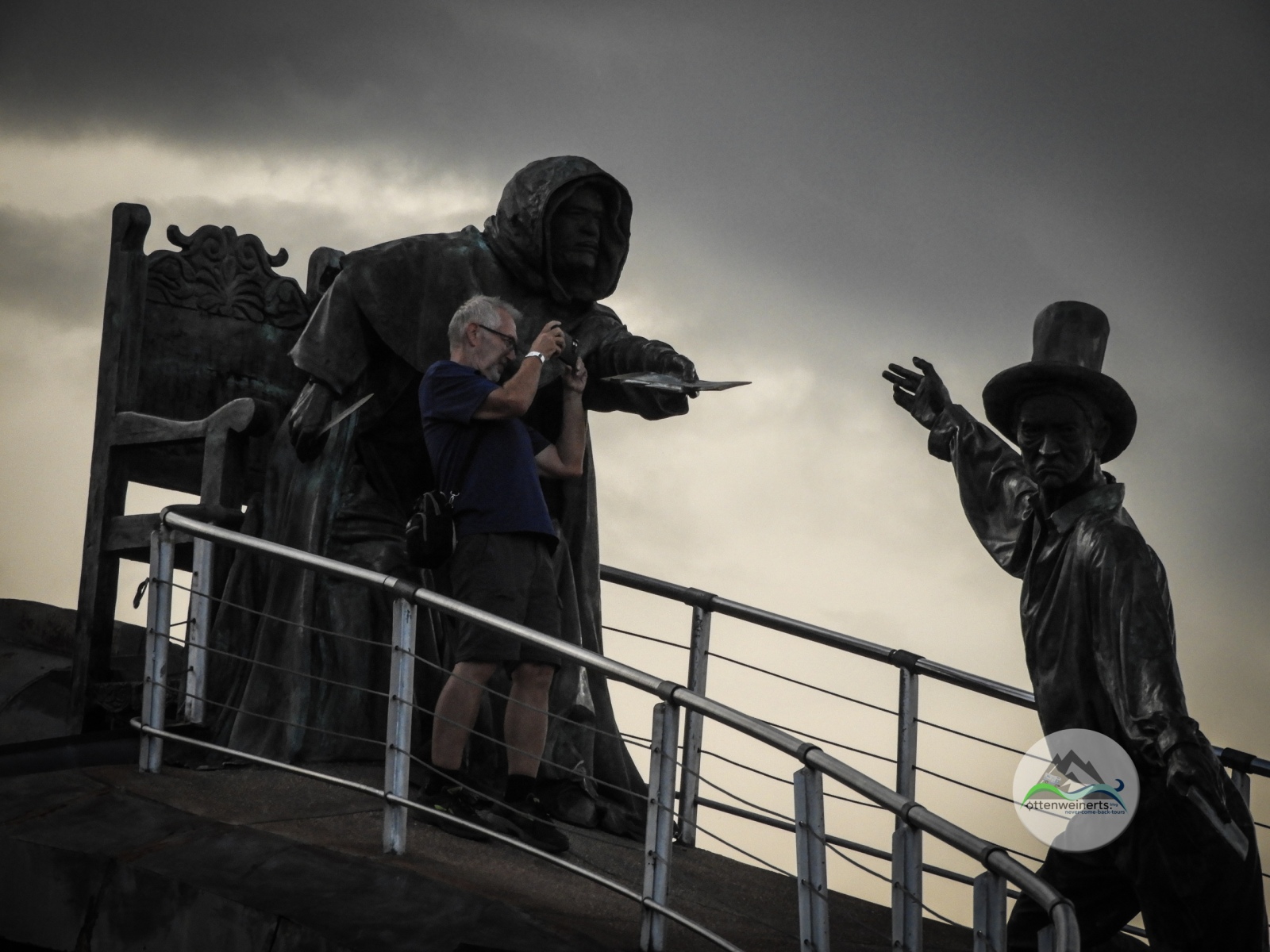
Der Parque Chicamocha ist kein Nationalpark mit Wanderwegen, sondern eher eine Ansammlung von Attraktionen am Berg – neben der Gondelbahn gibt es ein Museum, eine großartige Skulptur (Monumento a la Santandereanidad), einen 360°-Aussichtspunkt, eine kleine Kapelle, zwei Streichelzoos und einen Wasserpark, sowie etliche Cafés und ein Restaurant und etliche Souvenirshops. Der Besucherandrang ist dennoch nur mäßig, der Parkplatz ist bereits vor 18 Uhr fast leer. Also fragen wir einfach, ob wir heute hier übernachten dürfen. Die nette Security-Mitarbeiterin ruft den Chef an – ja, kein Problem, wir müssen bloß morgen nochmals die Gebühr für den Parkplatz zahlen. Das machen wir gerne – wir sind bestens bewacht, genau neben der Polizeistation, und das Panorama, mit dem wir morgen früh aufwachen werden, ist sowieso unbezahlbar.

Day 188 – Bucaramanga and Chicamocha Cañyon

During the last days, we often found places for the night at dusk, so yesterday, we decided to start our days earlier. We really got up at 6 am today and that proved to be a good idea – a lot of traffic on the road to Bucaramanga and in the city as well. Bucaramanga, the big city in the mountains, is not a touristic highlight, but the large shopping center was worth it – at the Apple Store we could update all our “i-lectronic” devices, we had lunch, did some grocery shopping, found a new ambulance for our collection and then treated ourselves to coffee.

Then we continue direction south, towards Chicamocha Cañyon. The road south of Piedecuesta is one of the most picturesque routes we have been driving so far in Colombia – the drive is a pleasure. After crossing the Rio Umpala and climbing the mountain on the other side, it gets even better. The view from Parque Chicamocha is phenomenal, and the ride with the cable car is fantastic – 25 minutes from 4176 ft elevation at the park, down to the river at 1761 ft and up on the other side to the Mesa de los Santos at 5616 ft. It is rather windy and cold up there; we take some pictures and then we hurry back – the last cable leaves shortly after 5 pm and we don´t want to miss it.

Parque Chicamocha is not a national park with hiking trails; it contains several attractions in addition to the cable car: a museum, a fantastic sculpture (Monumento a la Santandereanidad), a 360° view point, a small chapel, two mini zoos, a water park, a restaurant, several cafés and souvenir shops. In spite of all these attractions, there aren´t many visitors; the parking lot is almost empty even before the park closes. So, we ask the nice security employee, if we might stay here for tonight. She calls her boss – yes, no problem, we just have to pay the parking fee again tomorrow. We gladly accept – we are safe and secure here, next to the police station, and the panoramic view we will wake up to tomorrow is priceless anyway.

Route 221022

221021 – Von La Playa de Belén nach Süden >

Freitag/Friday, Oktober 21, 2022

Tag 187 – Von La Playa de Belén nach Süden

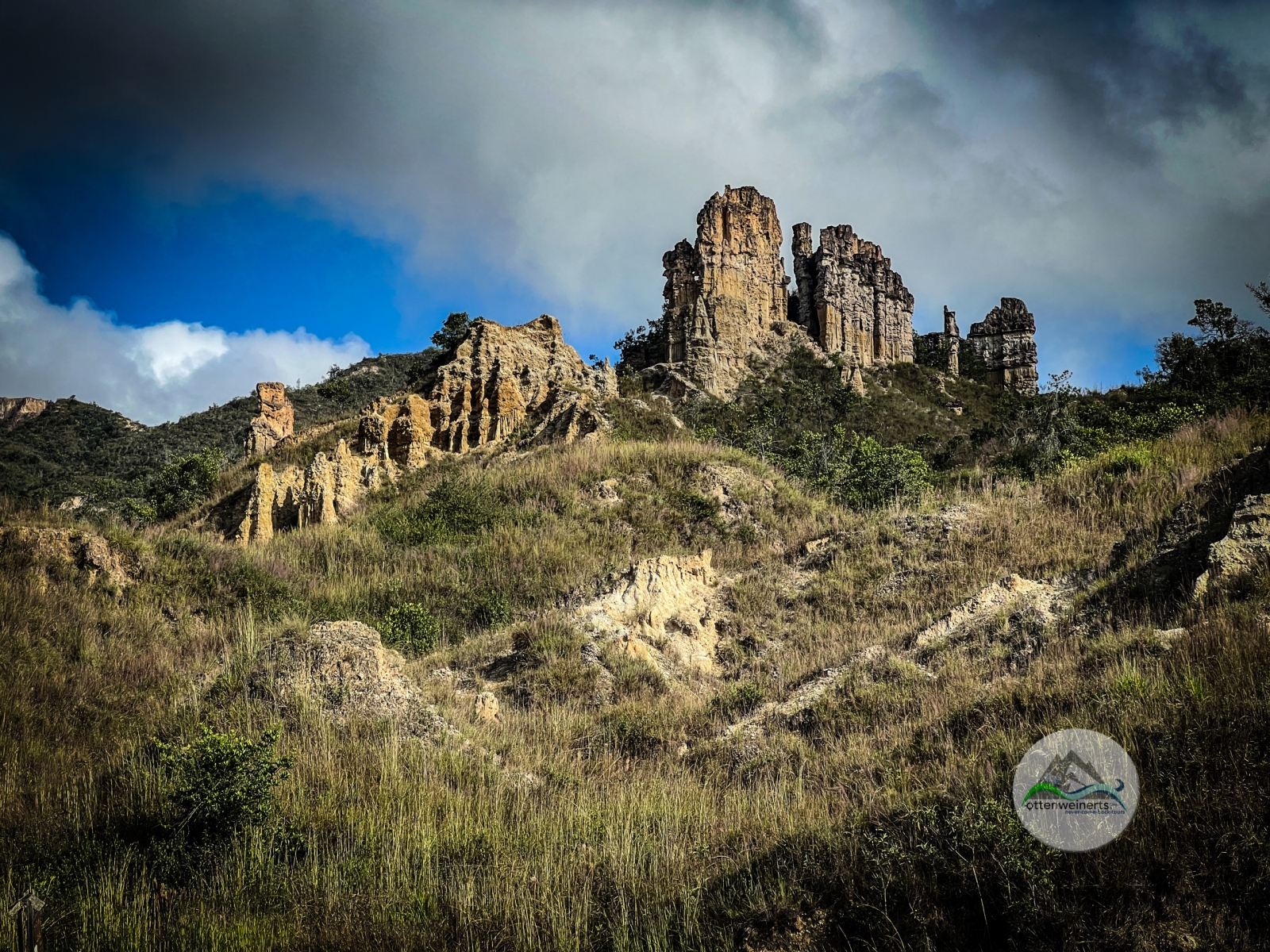
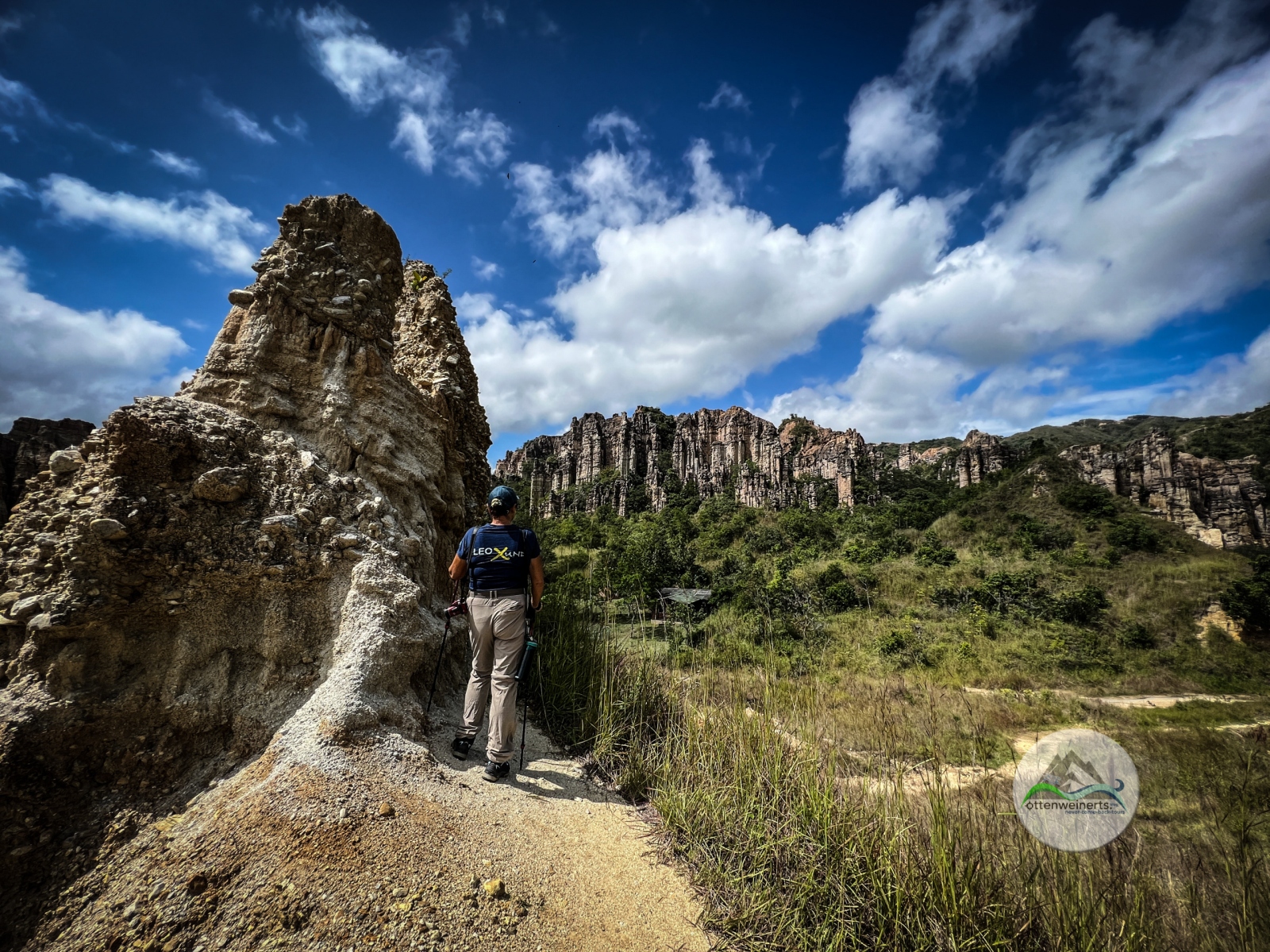
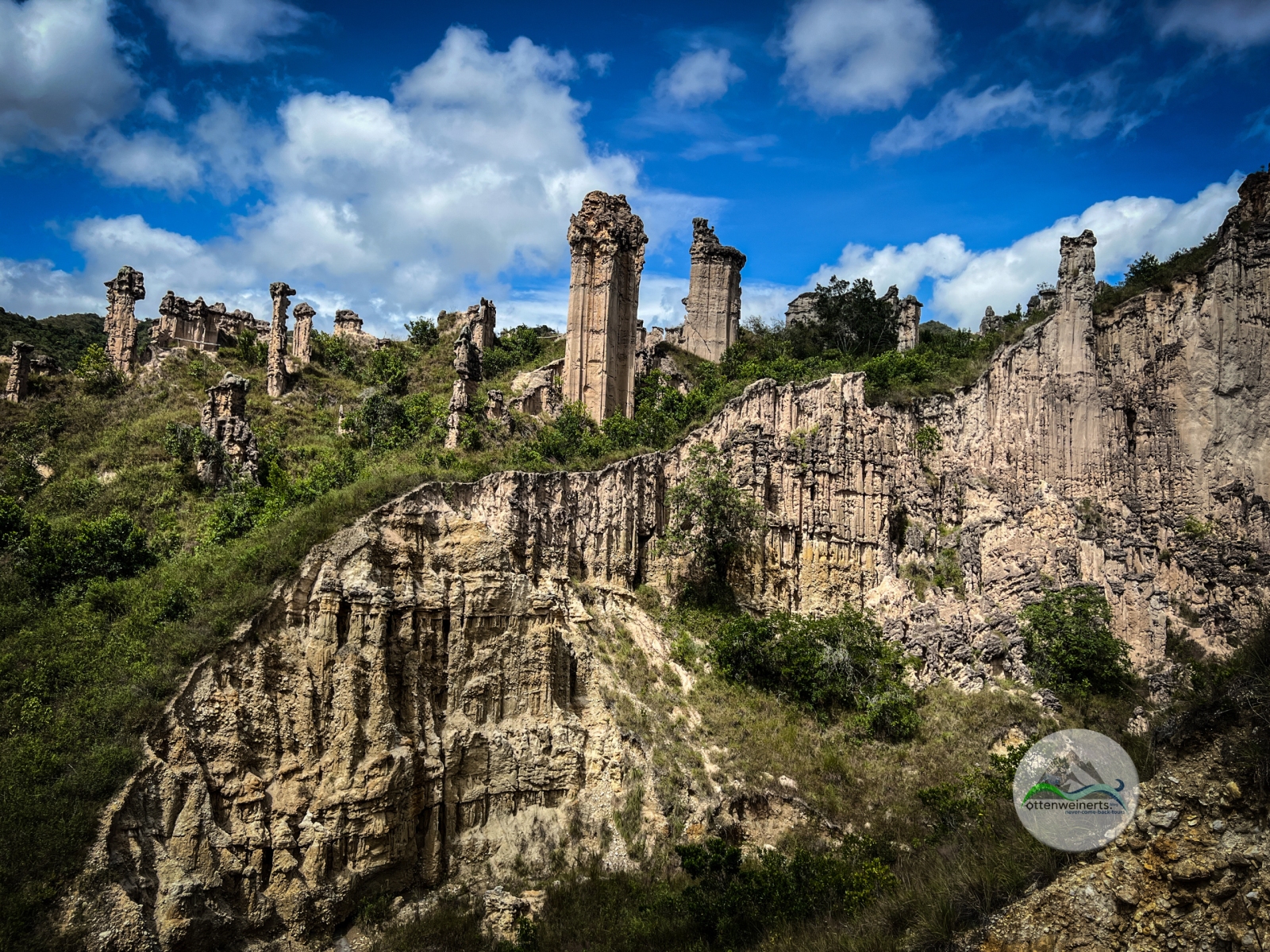
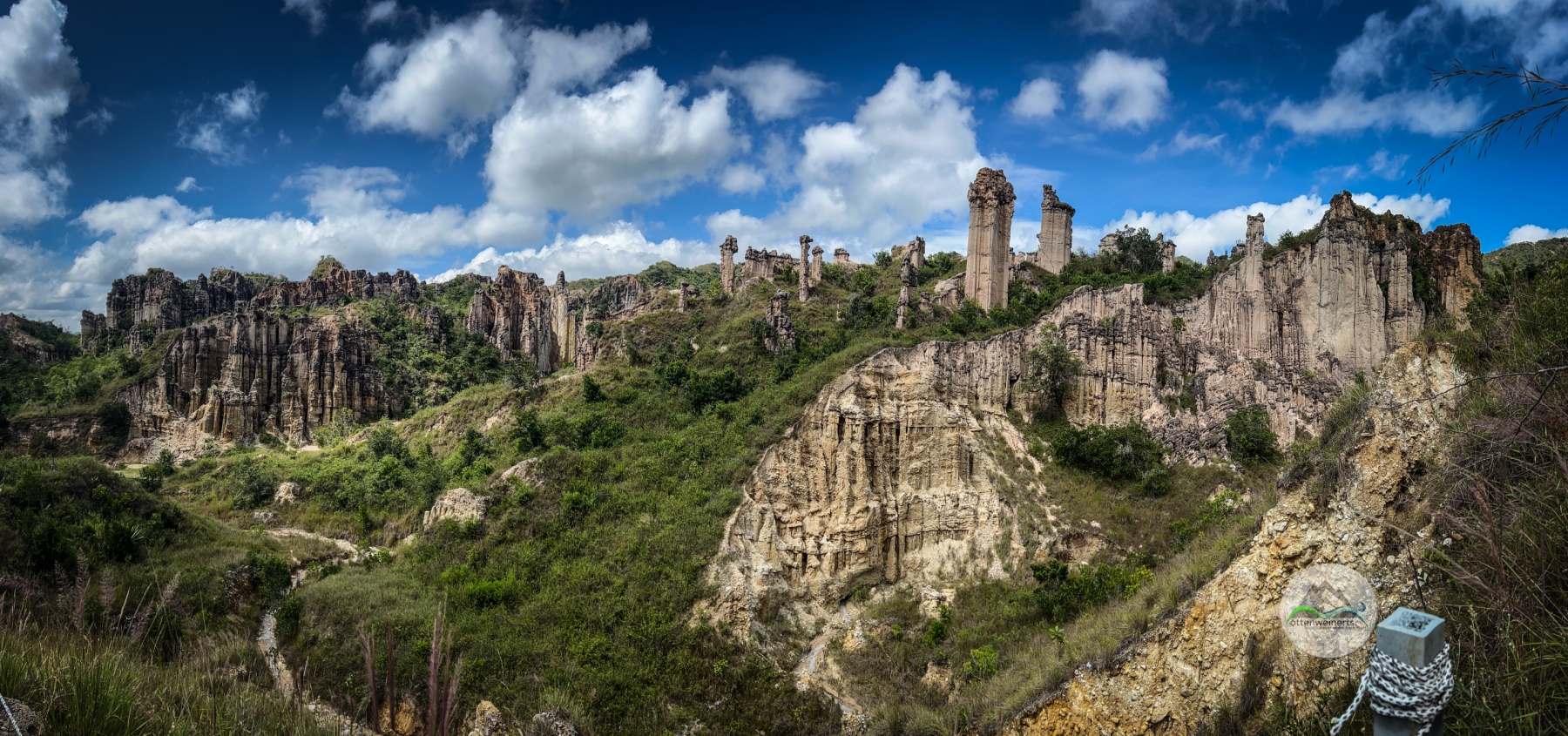
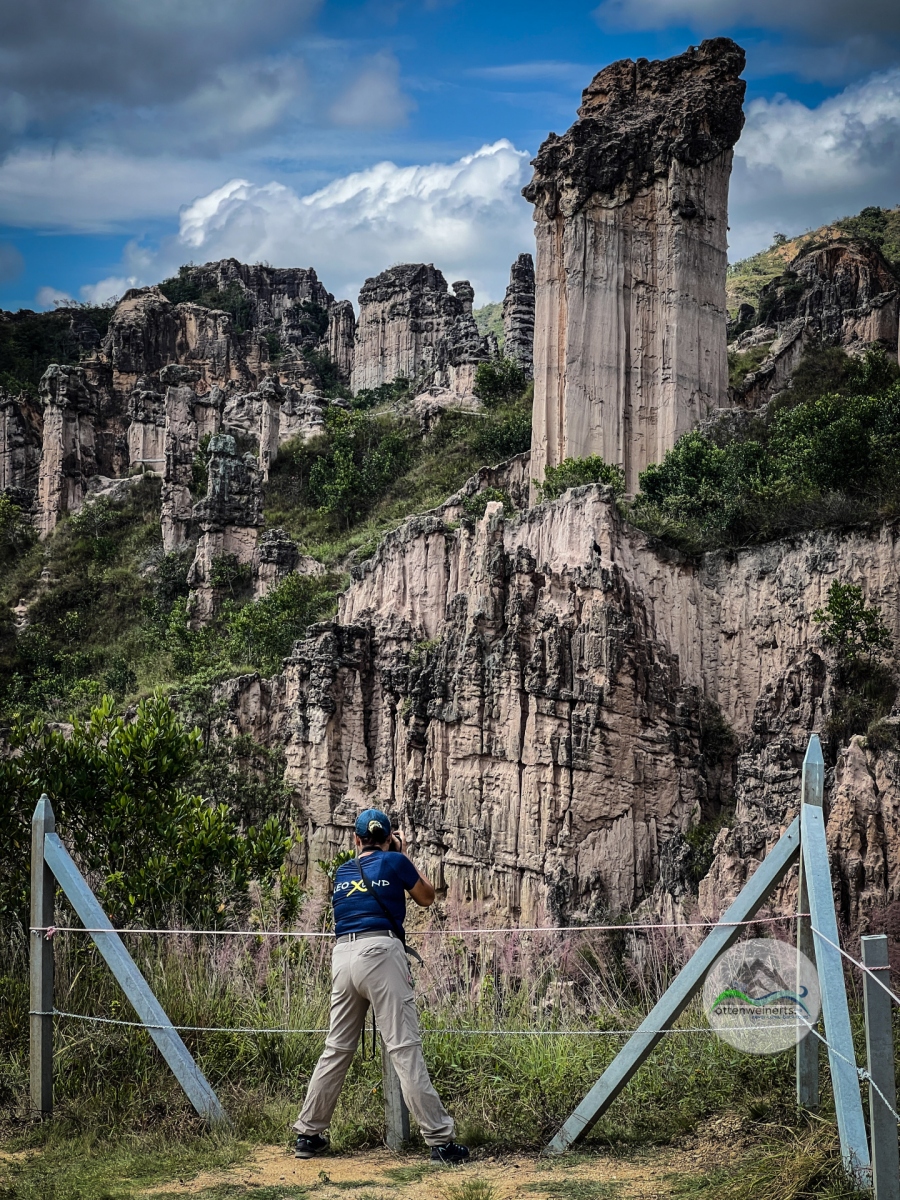
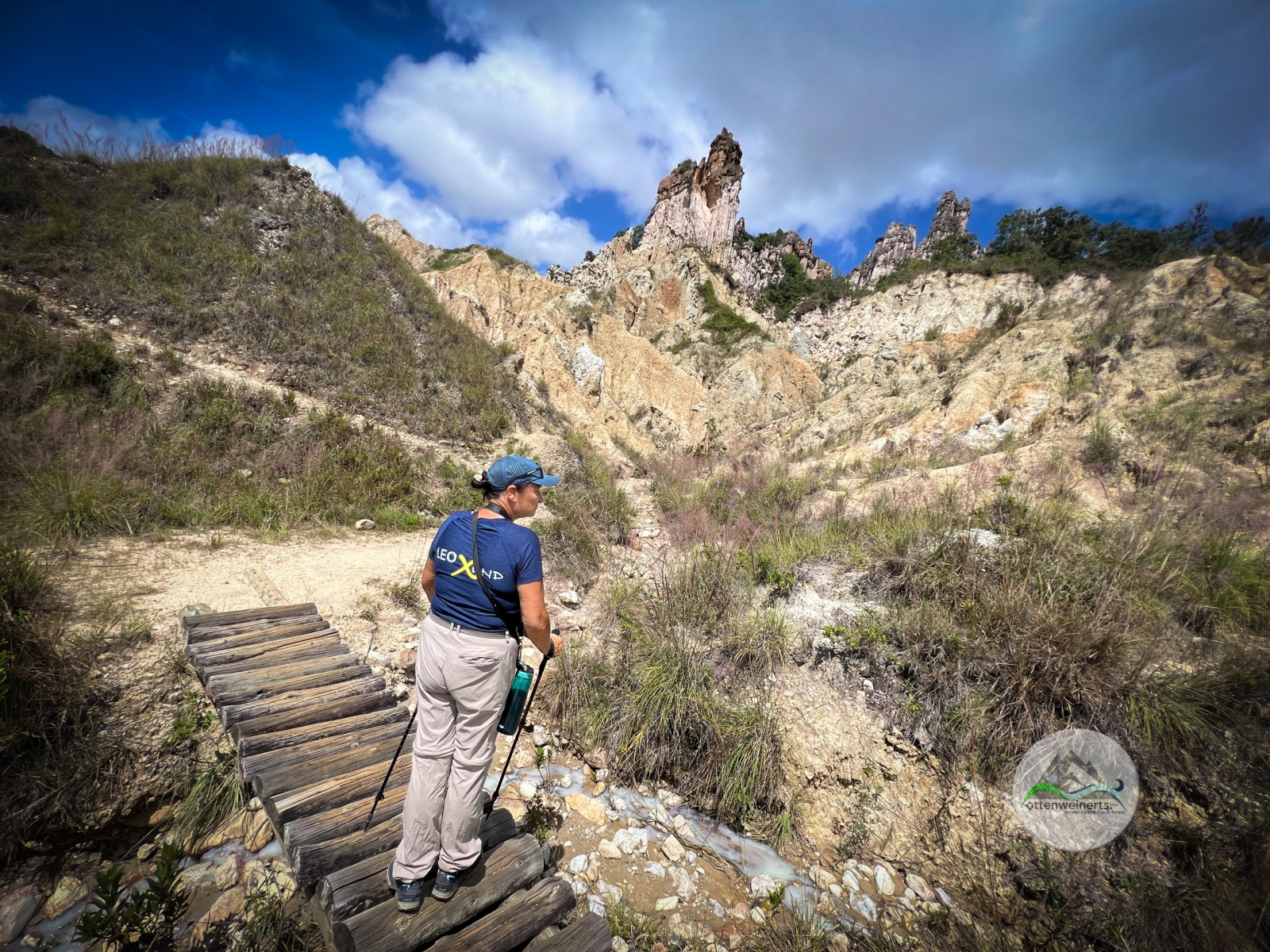
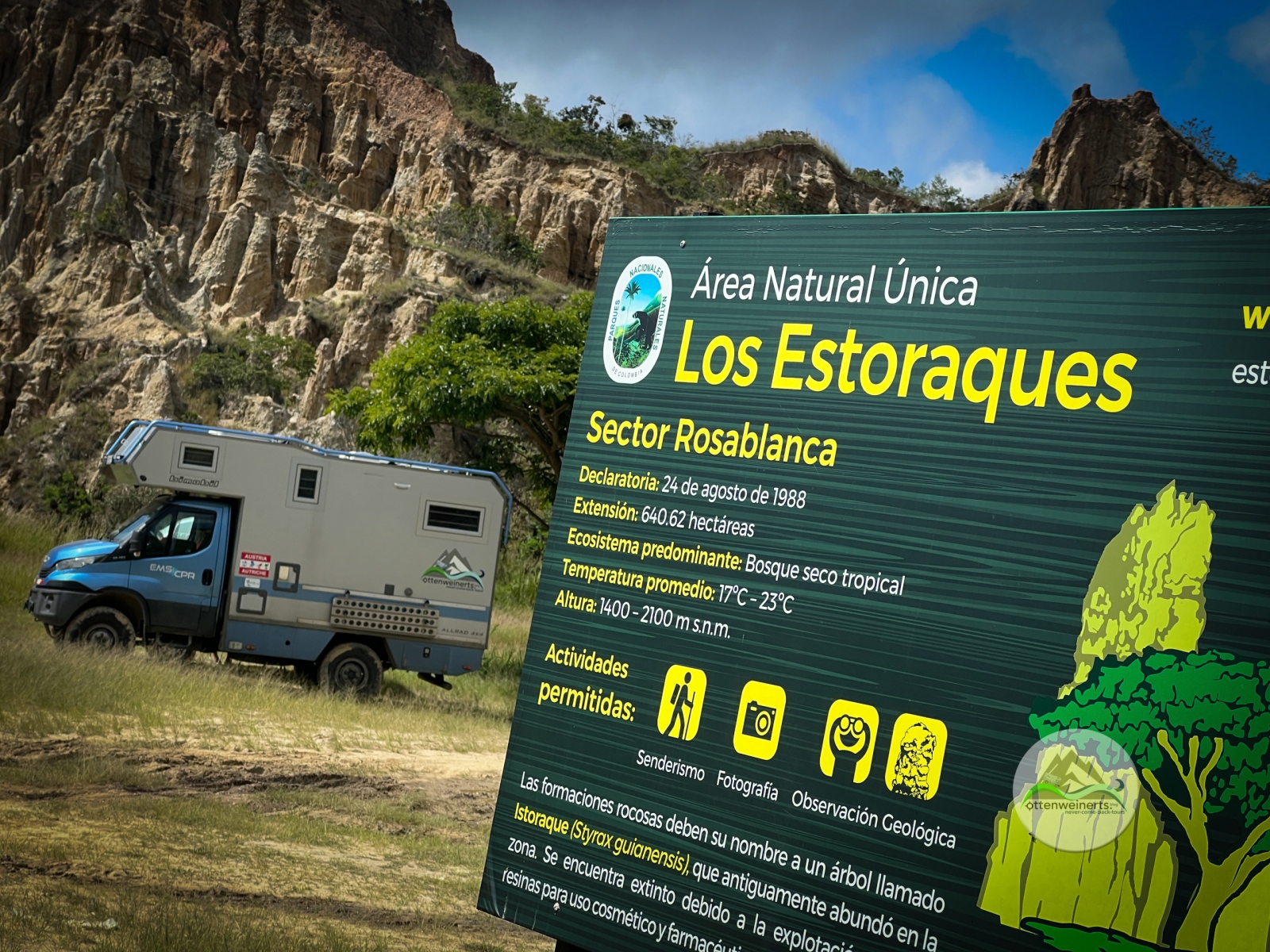
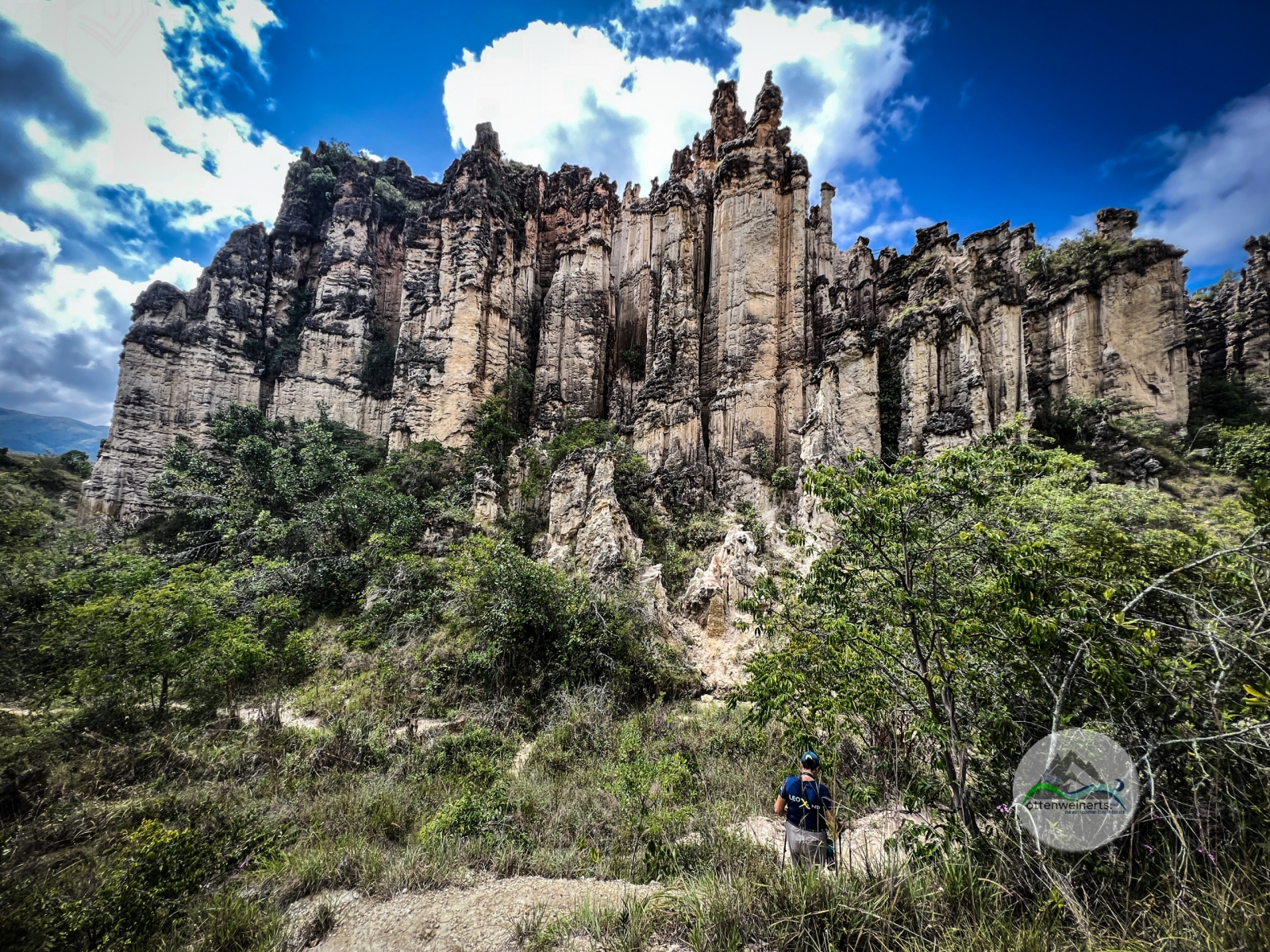
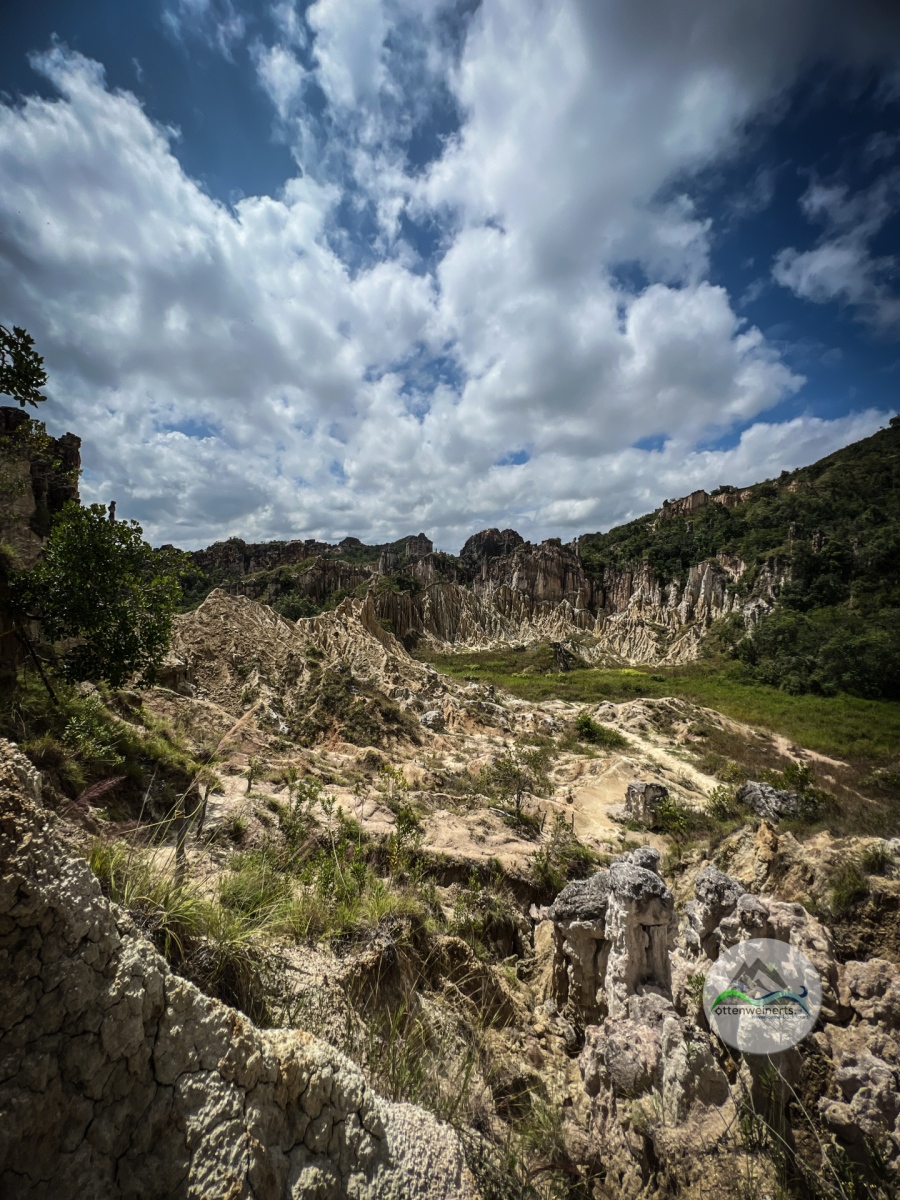
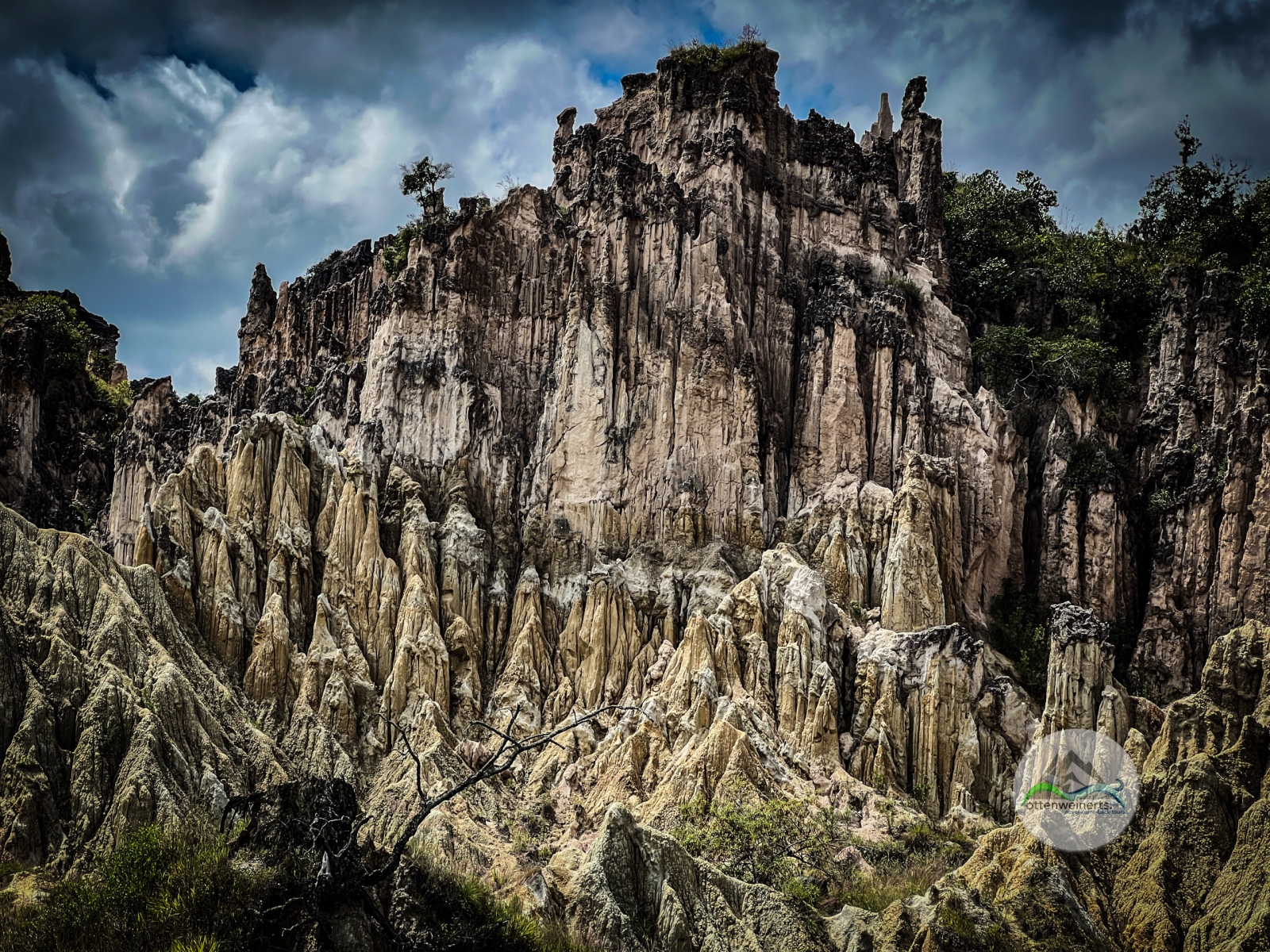
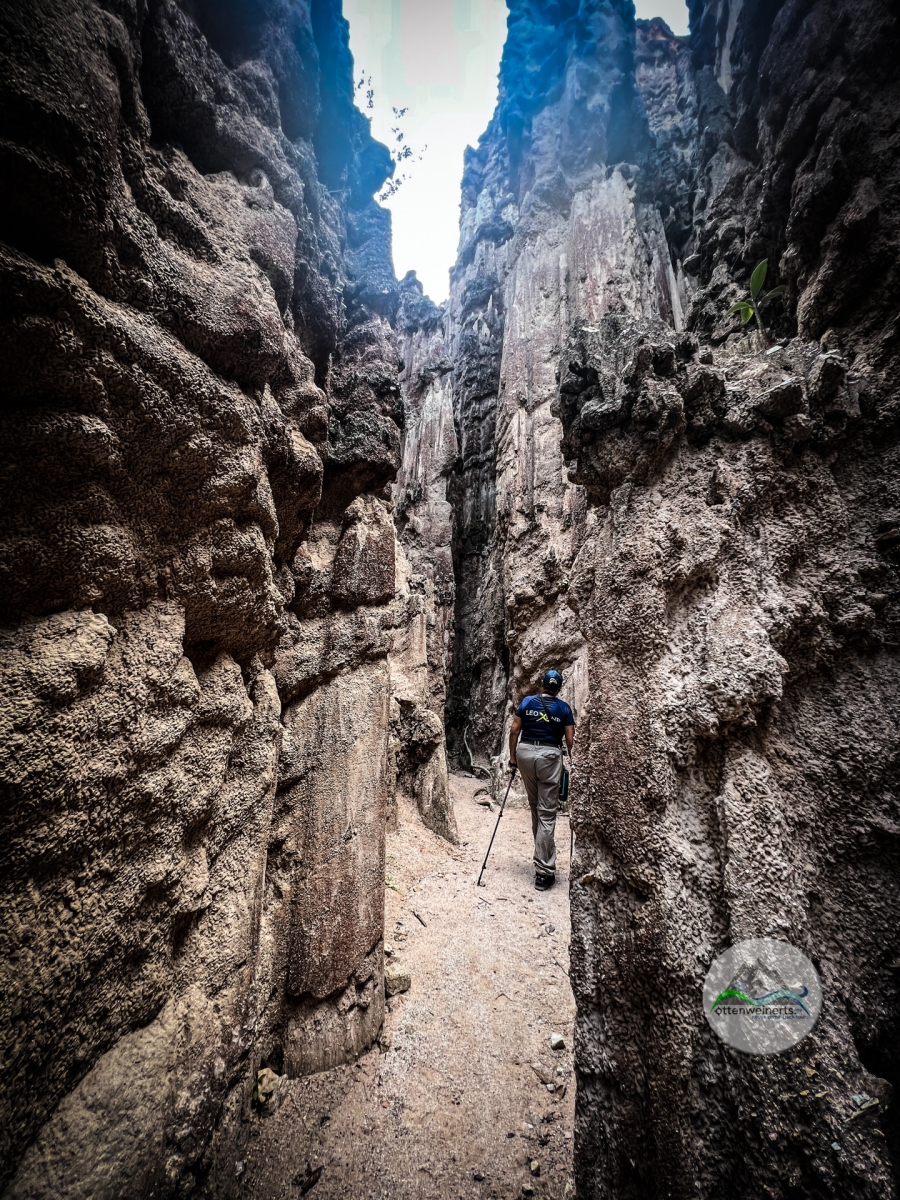
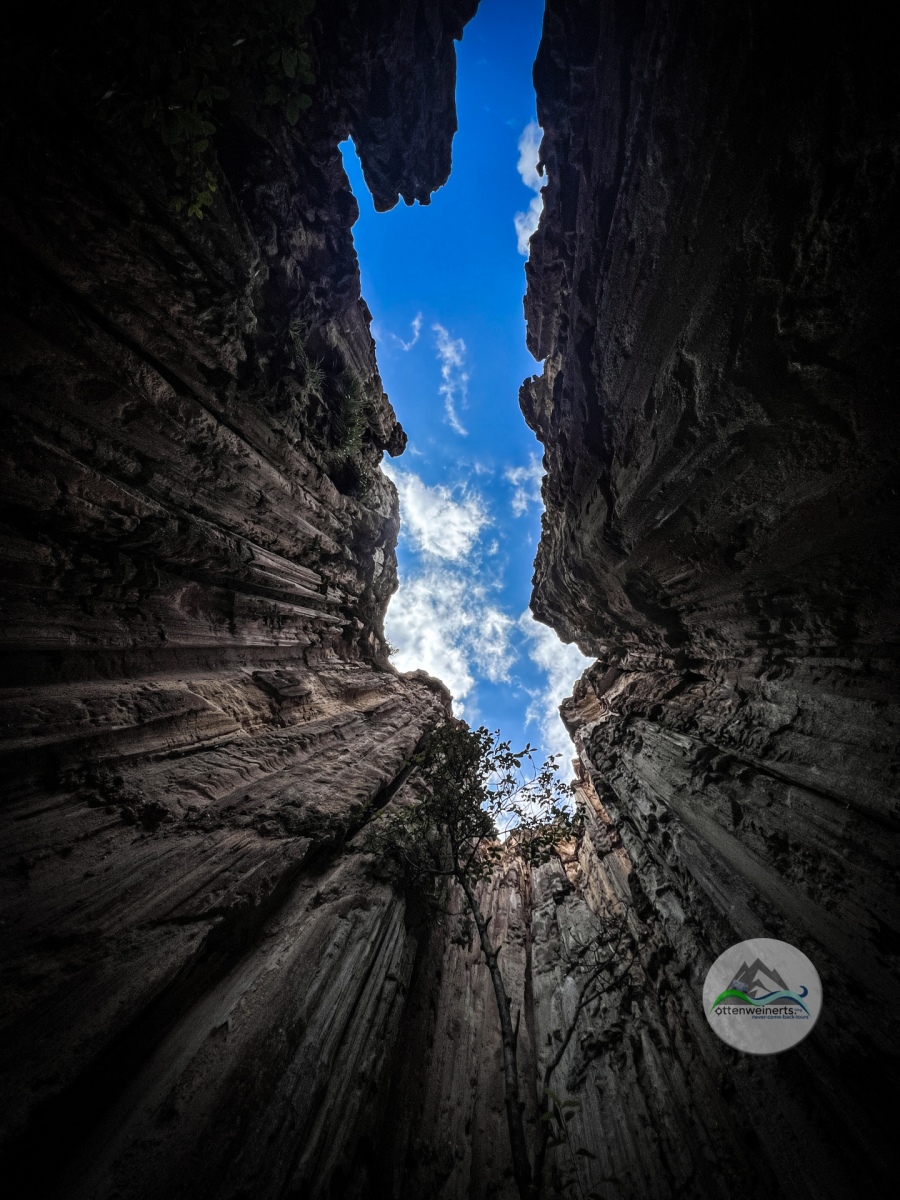
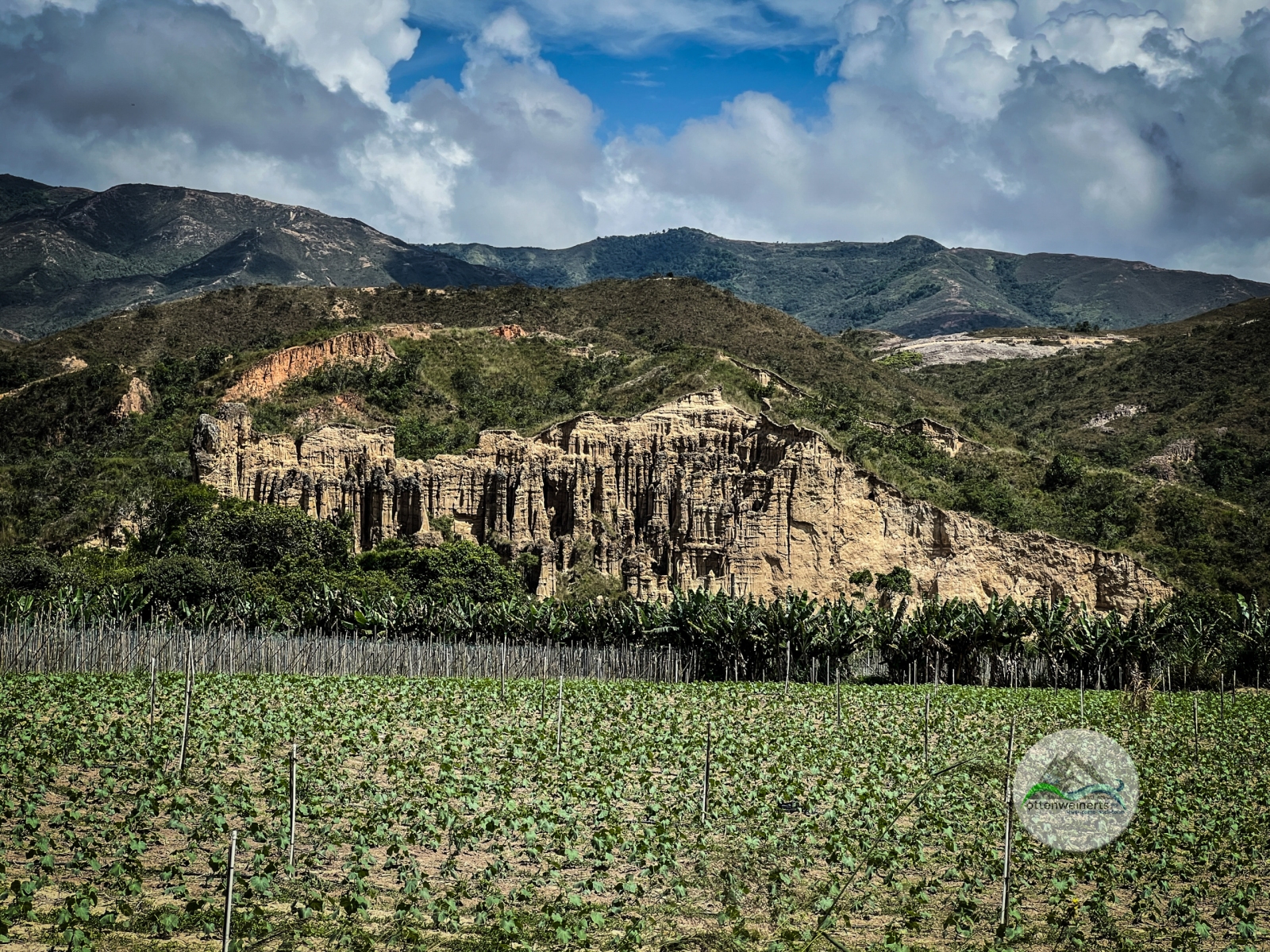
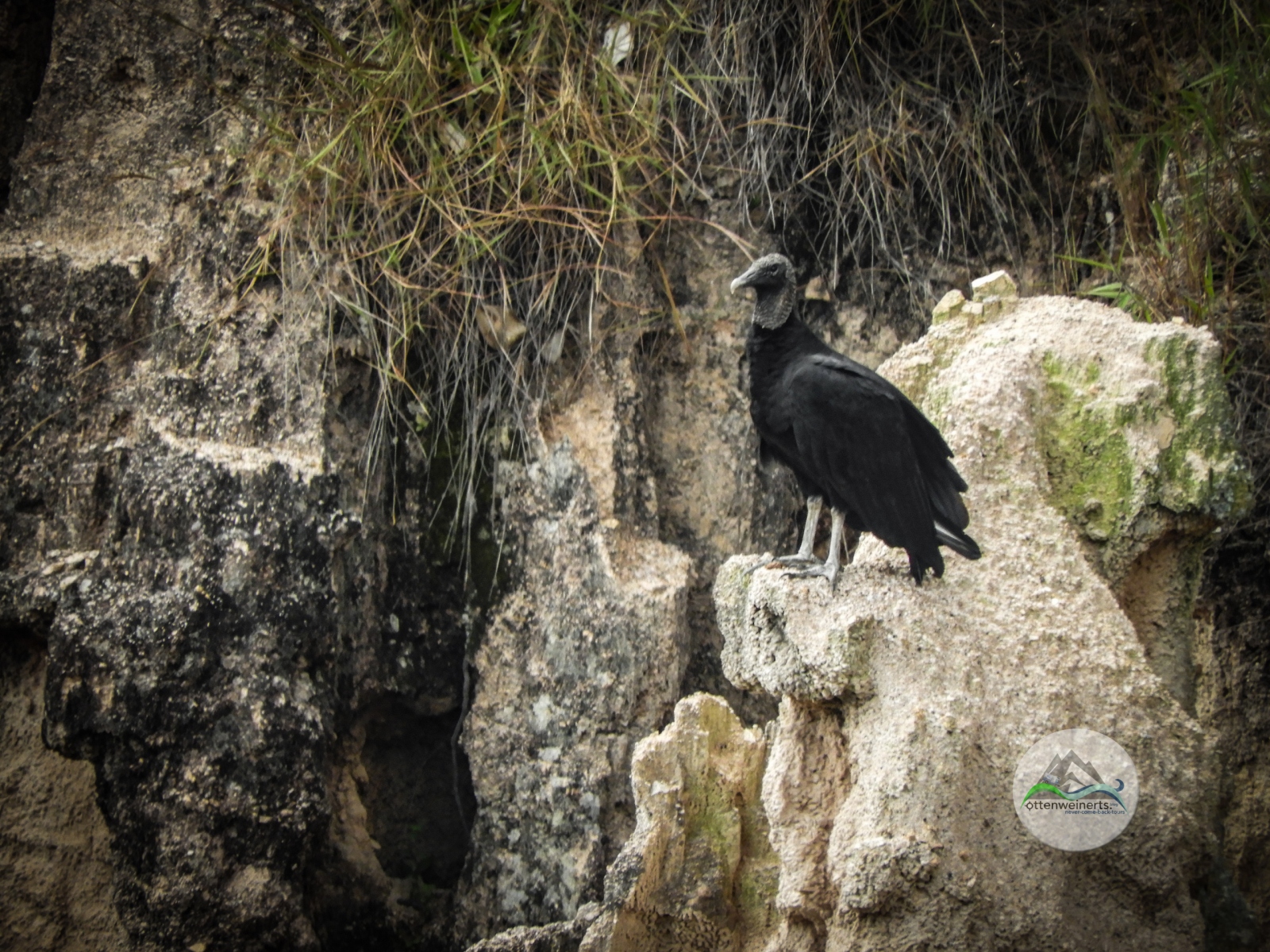
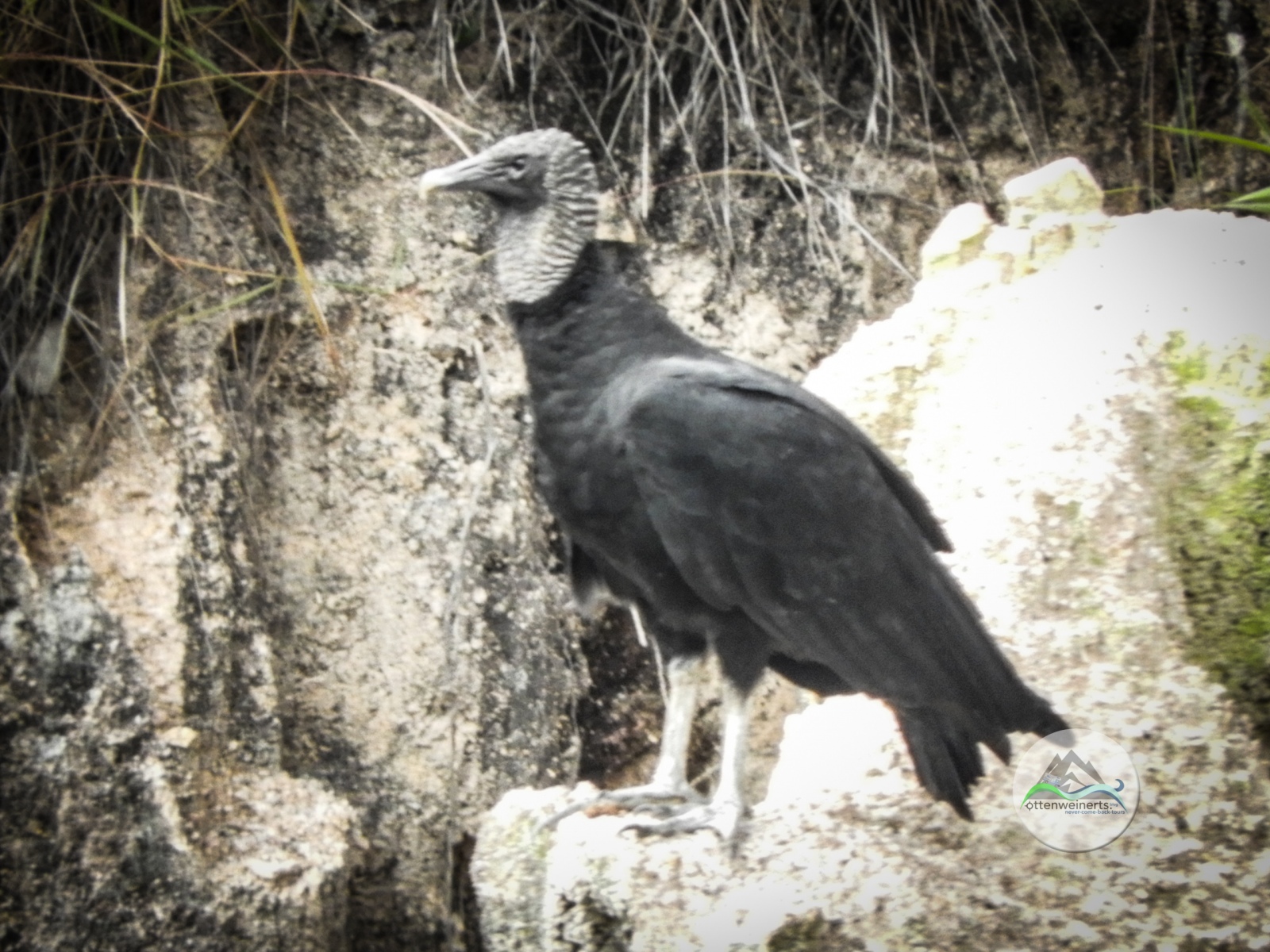
Die Nacht am großen Parkplatz vom Nationalpark war ruhig und erfrischend kühl, in der Früh sehen wir das großartige Panorama. Wir packen unsere Wanderstecken aus und machen uns auf den Weg. Die „Area nacional única Los Estoraques“ ist zwar einer der kleinsten Nationalparks von Kolumbien, aber trotzdem atemberaubend. Die Sandsteinformationen, Säulen und Kegel sehen haben etwas außerirdisches, es ist friedlich, Schmetterlinge tanzen, Wasser plätschert, Geier kreisen, und irgendwie erinnert uns die Landschaft an die alten Karl-May-Verfilmungen.

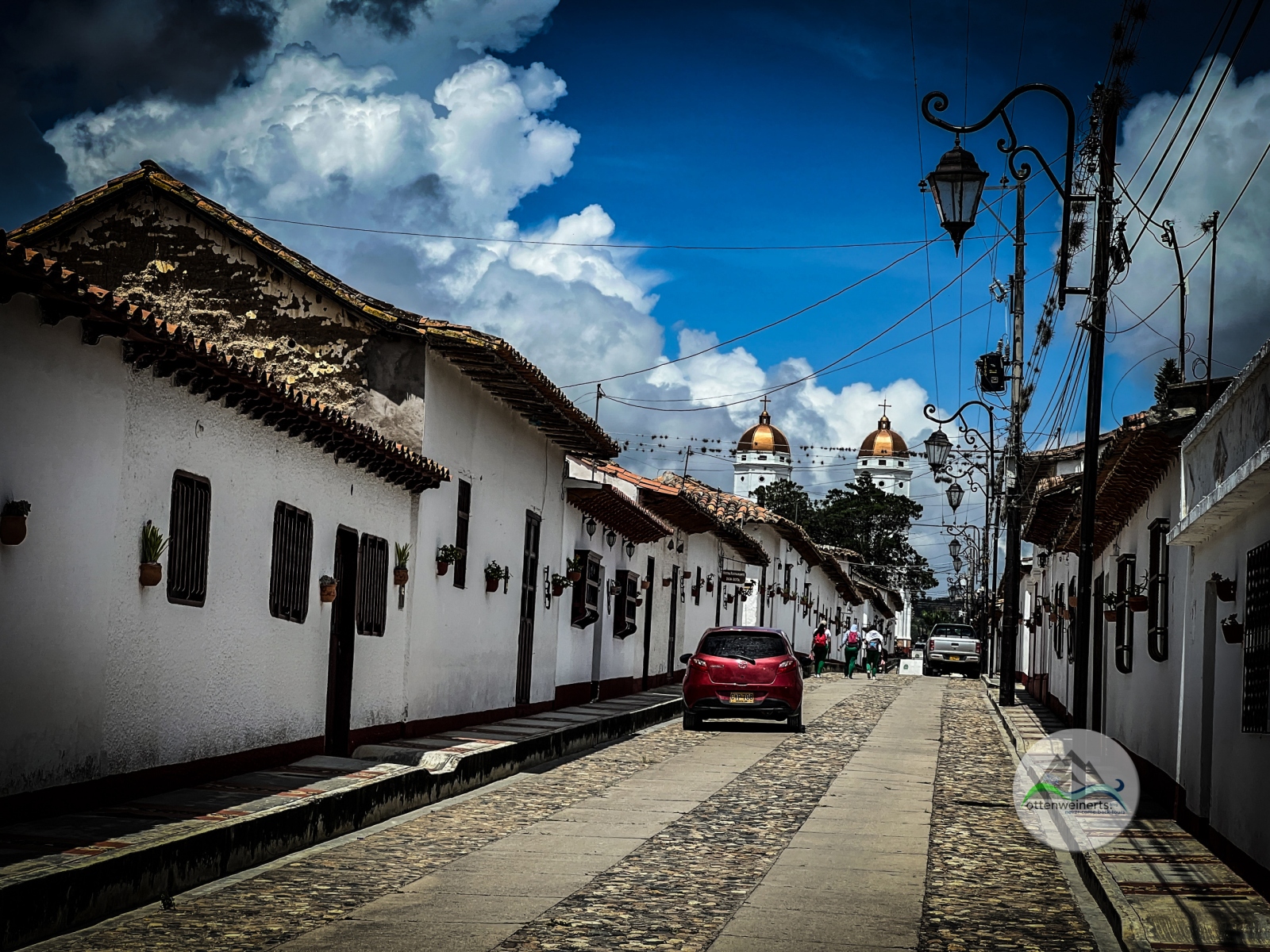
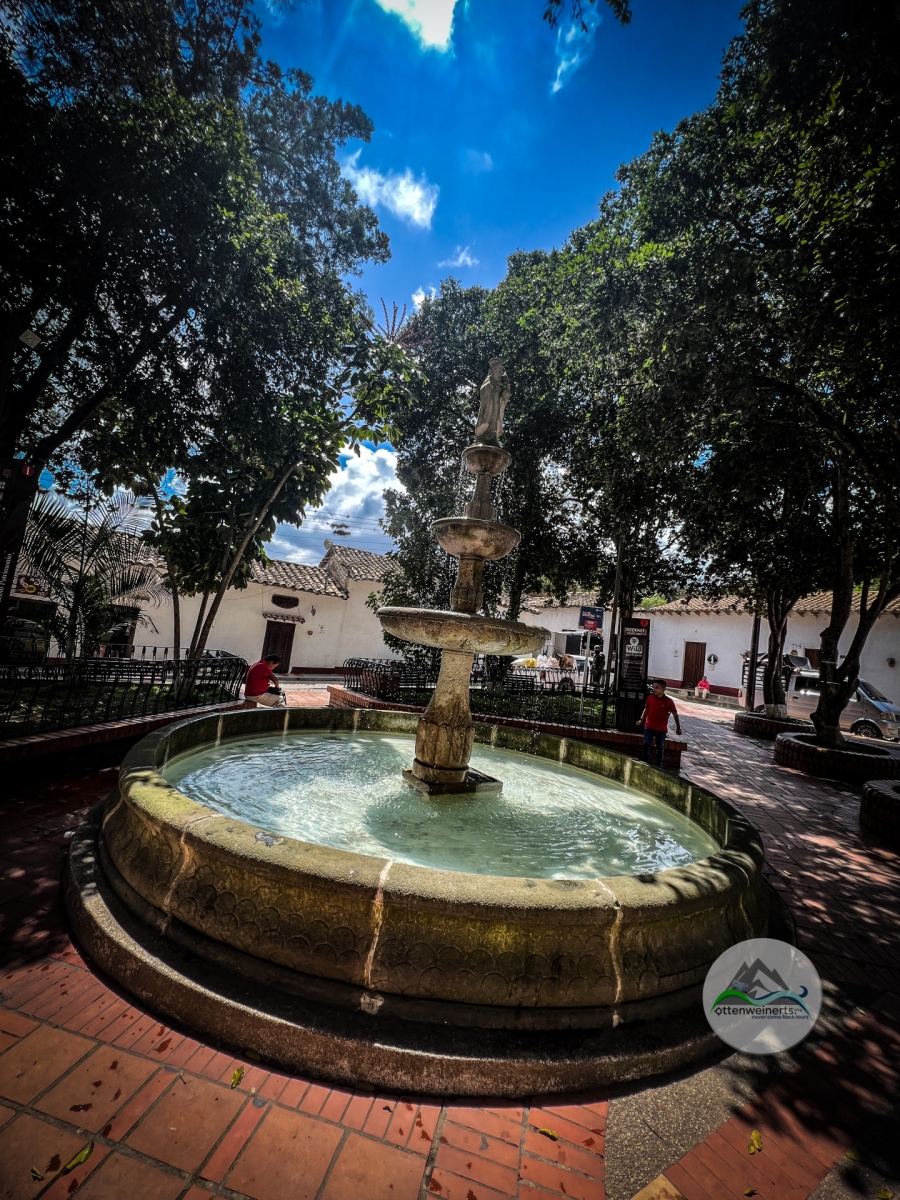
Nach dem Mittagessen verabschieden wir uns von Dieke und Rob, die überlegen, noch einen Tag hier in dieser fantastischen Umgebung zu bleiben. Wir fahren die gleiche Strecke zurück, die wir gestern gekommen sind und legen in Playa de Belén einen Stop ein. Dieses winzige Dorf besteht nur aus drei Parallelstraßen und ein paar Seitengassen, ebenerdigen weißen Häusern mit Blumentöpfen an den Wänden und einer dazu passenden weißen Kirche. Alles sehr friedlich und keine Touristen hier, so weit im Inneren des Departments Norte de Santander – unser Krasses Pferd ist die Attraktion der Woche. Mindestens.

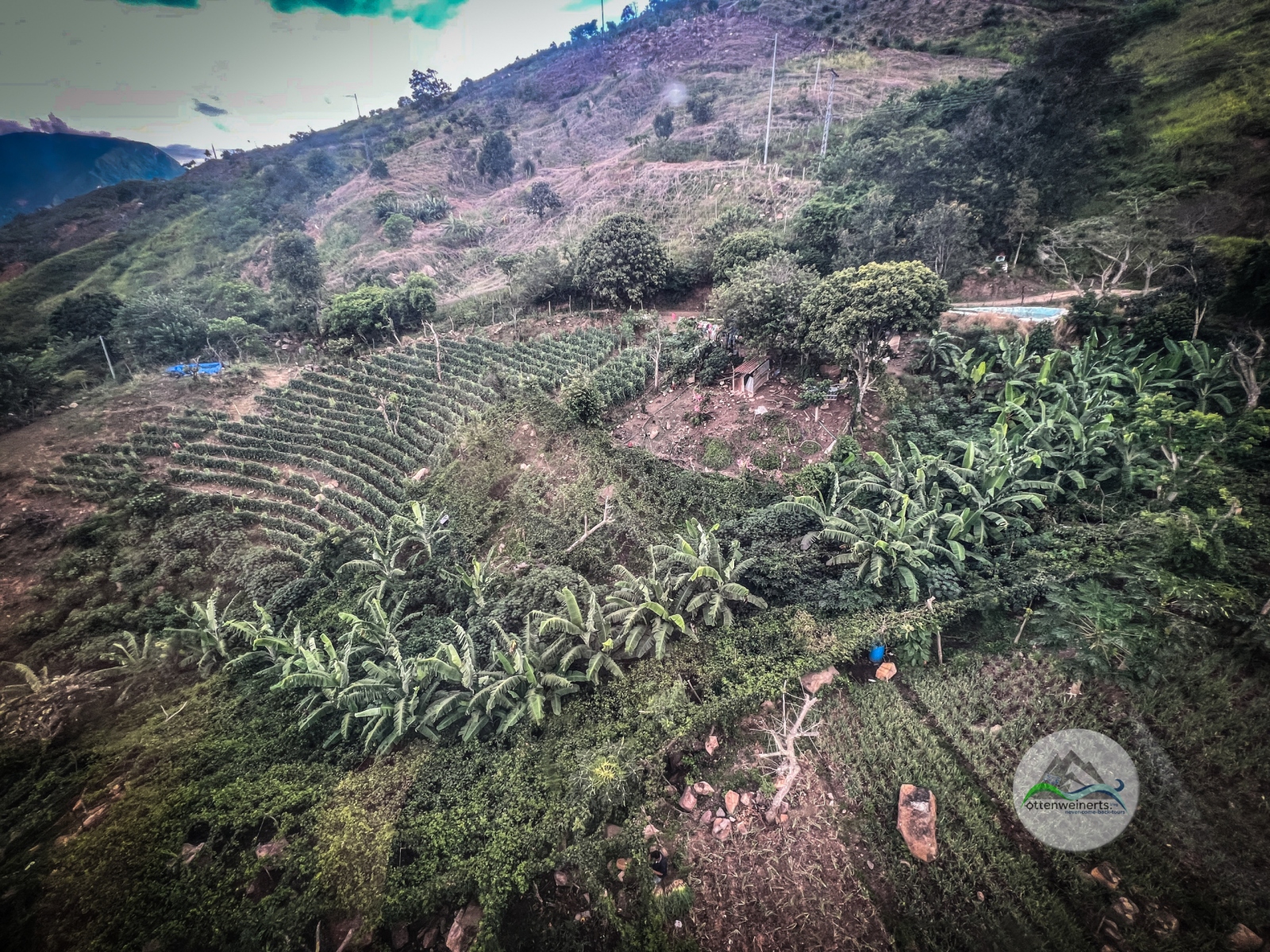
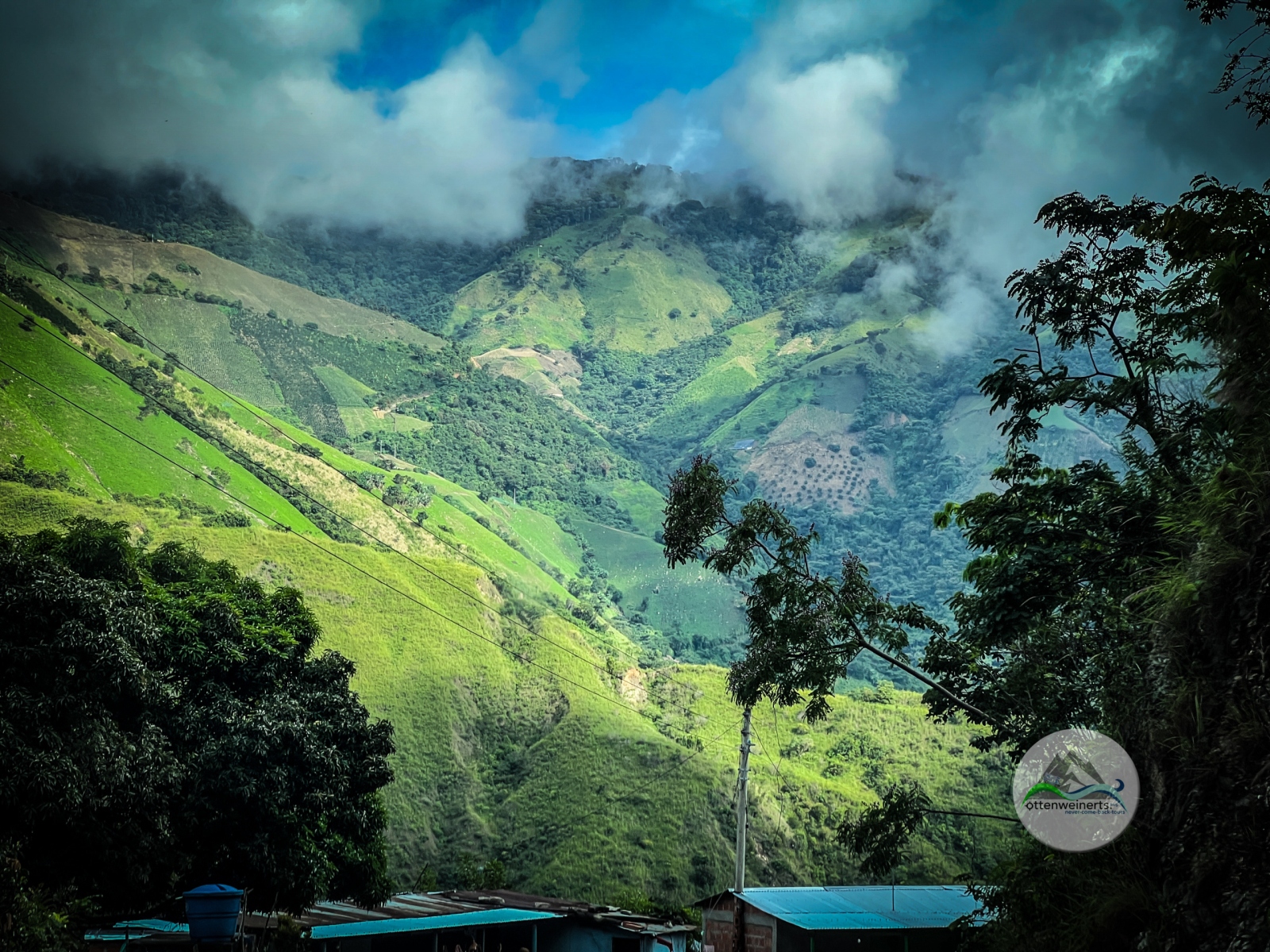
Es geht weiter, wieder durch Ocaña, wo heute im Gegensatz zu gestern gar nichts los ist – es regnet nämlich. Wir halten an der Tankstelle – bei einem Dieselpreis von umgerechnet etwa 1,80 € für eine Gallone (=3,7 Liter) ist volltanken fast ein Vergnügen. Dann schrauben wir uns wieder über den gleichen Bergrücken wie gestern, und schauen nochmals genau hin: die Häuser, die hier am Abhang kleben, sind tatsächlich zumeist mit Stelzen gestützt. Vorne, an der Straße, der Verkauf – Restaurants und Waren von Obst und Gemüse über Fleisch bis zu Reifenreparaturen, im rückwärtigen Teil der Wohnbereich. Wenn man hier aus dem Bett fällt, wacht man 500 m tiefer wieder auf. Und die in Reih und Glied stehenden grünen Tupfen auf den steilen Berghängen sind tatsächlich Plantagen.

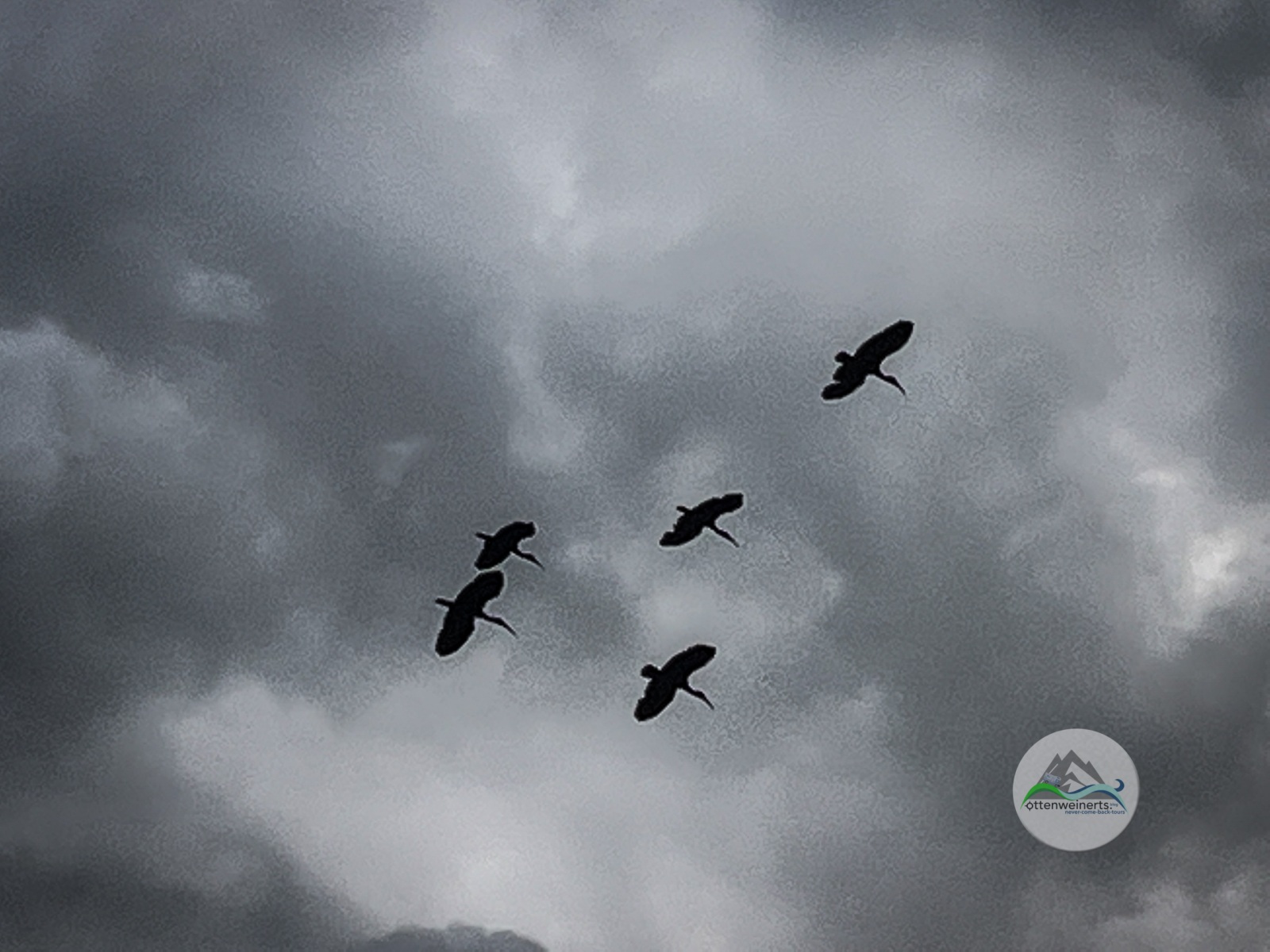
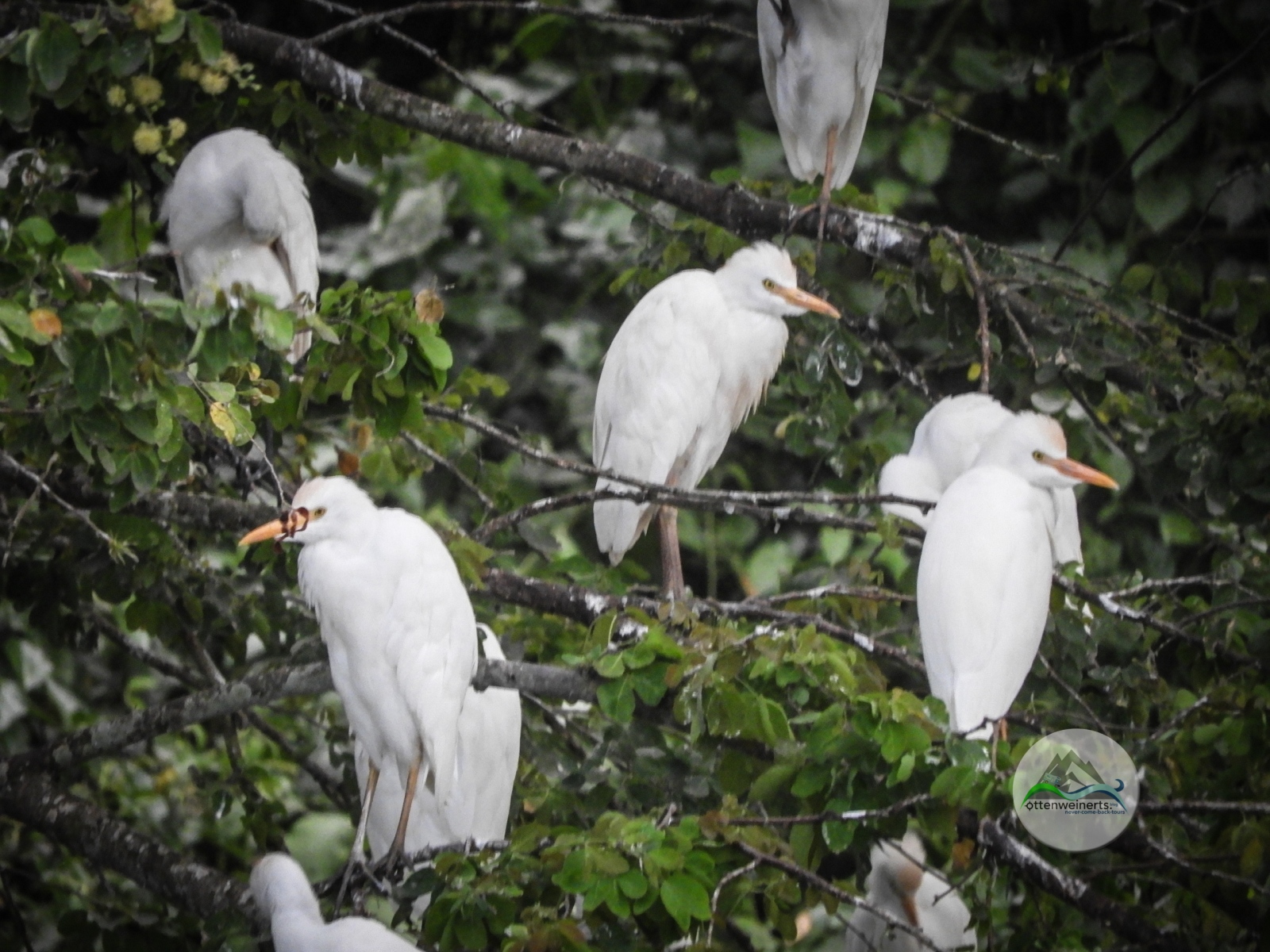
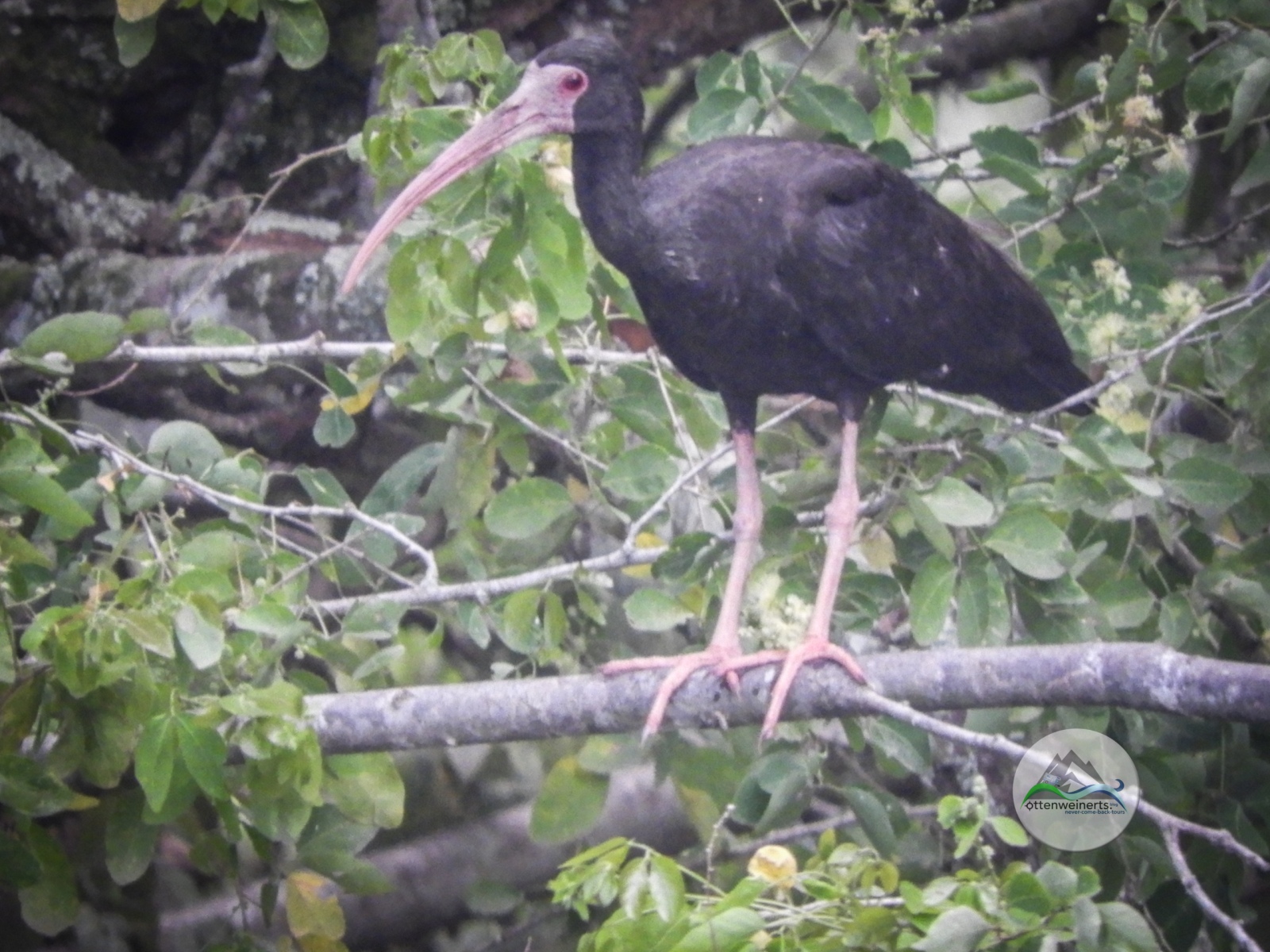
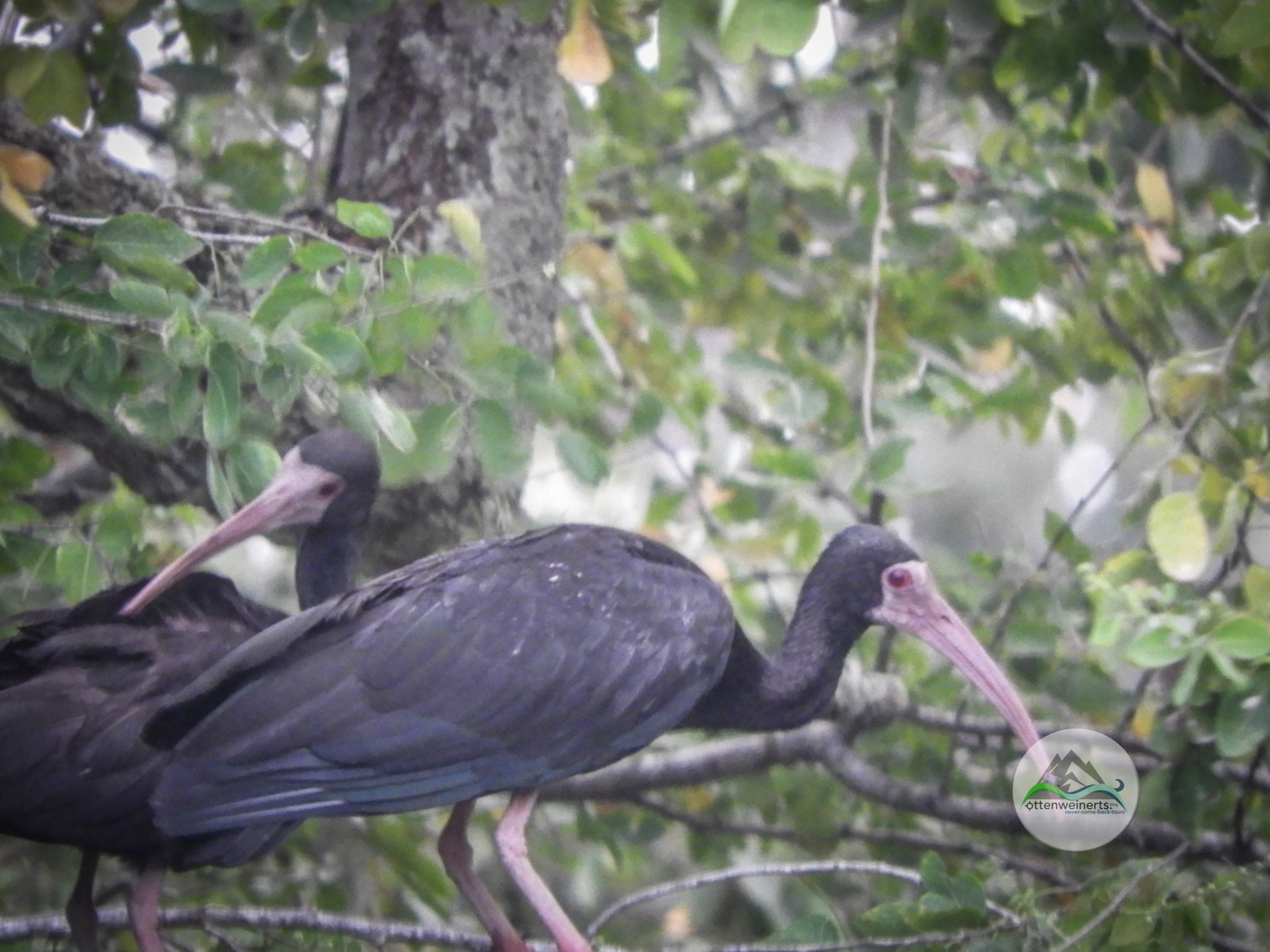
Zurück auf der Carretera 45 kommen wir drauf, dass es viel später ist als gedacht, wir schaffen es nicht mehr bei Tageslicht nach Bucaramanga. Also bleiben wir bei einer Tankstelle mit Hotel stellen – wir dürfen über Nacht am bewachten Parkplatz bleiben, es gibt gratis Duschen und auf den Bäumen rundherum lassen sich Hunderte Reiher, Ibisse und grüne Loris nieder, die allen einen Höllenwirbel machen. Aber so bald es dunkel ist, scheinen alle auf einmal einzuschlafen, und es ist Ruhe.

Day 187 – From La Playa de Belén direction south

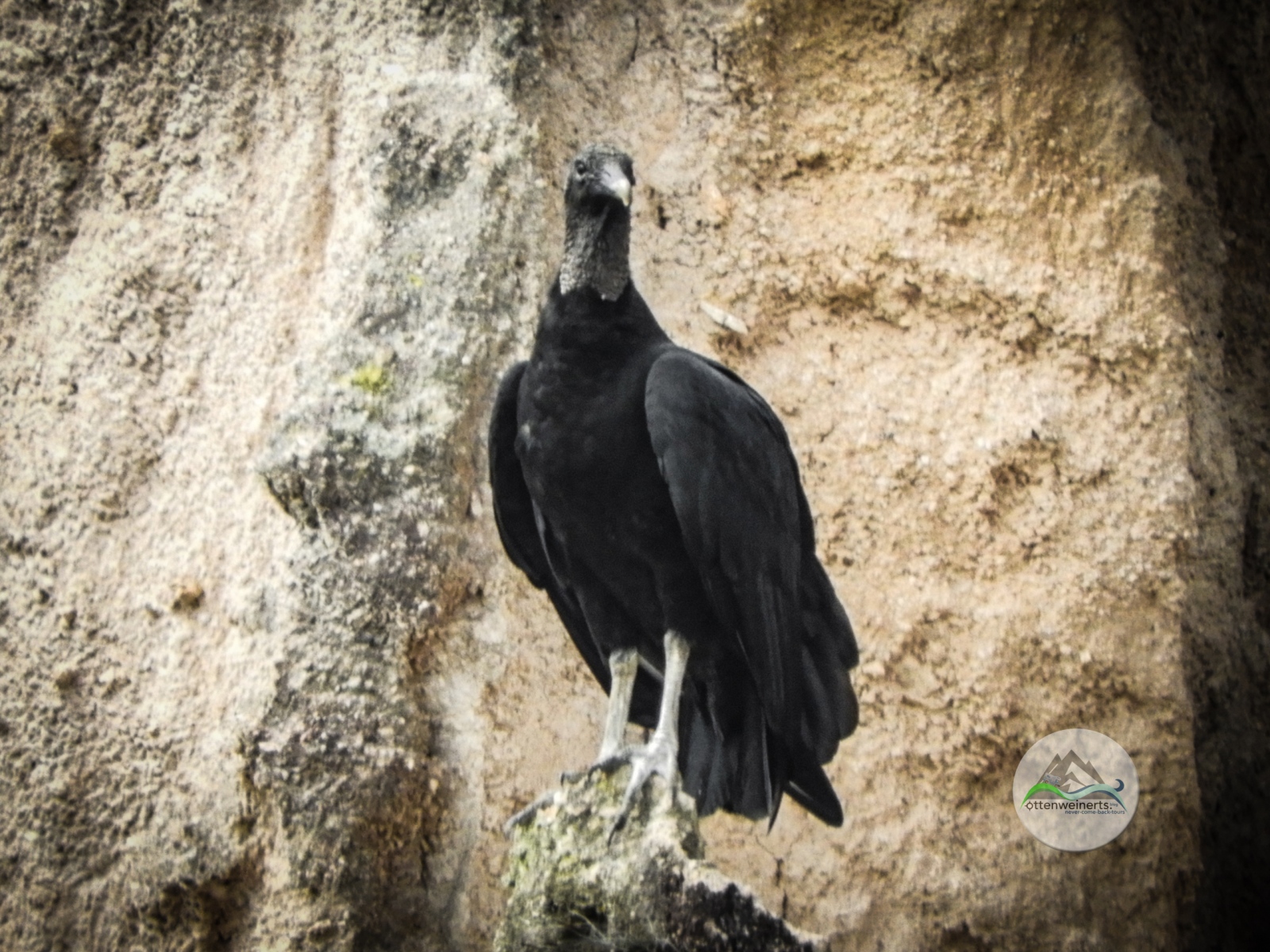
The night at the parking lot of the national park was quiet and cool, and in the morning, we wake up to a fantastic panoramic view. We grab our walking sticks and enter the park. The “Area nacional única Los Estoraques“ is one of Colombia´s smallest national parks, but it is breathtaking. The sandstone formations, columns and cones seem to be out of this world; it is peaceful, butterflies dancing over the bushes, water trickling down the slopes, vultures circling over our heads, and somehow the scenery reminds us of the old Karl-May-movies.

After lunch we say good-bye to Dieke and Rob, they are thinking about staying another day here in this beautiful place. We drive back the way we came yesterday, and stop in La Playa de Belén. This little village consists of three parallel streets and some minor roads, single-story, white buildings with flower pots on the walls and a matching white church. Very peaceful and no tourists, this far in the department Norte de Santander – our camper is this week´s attraction.

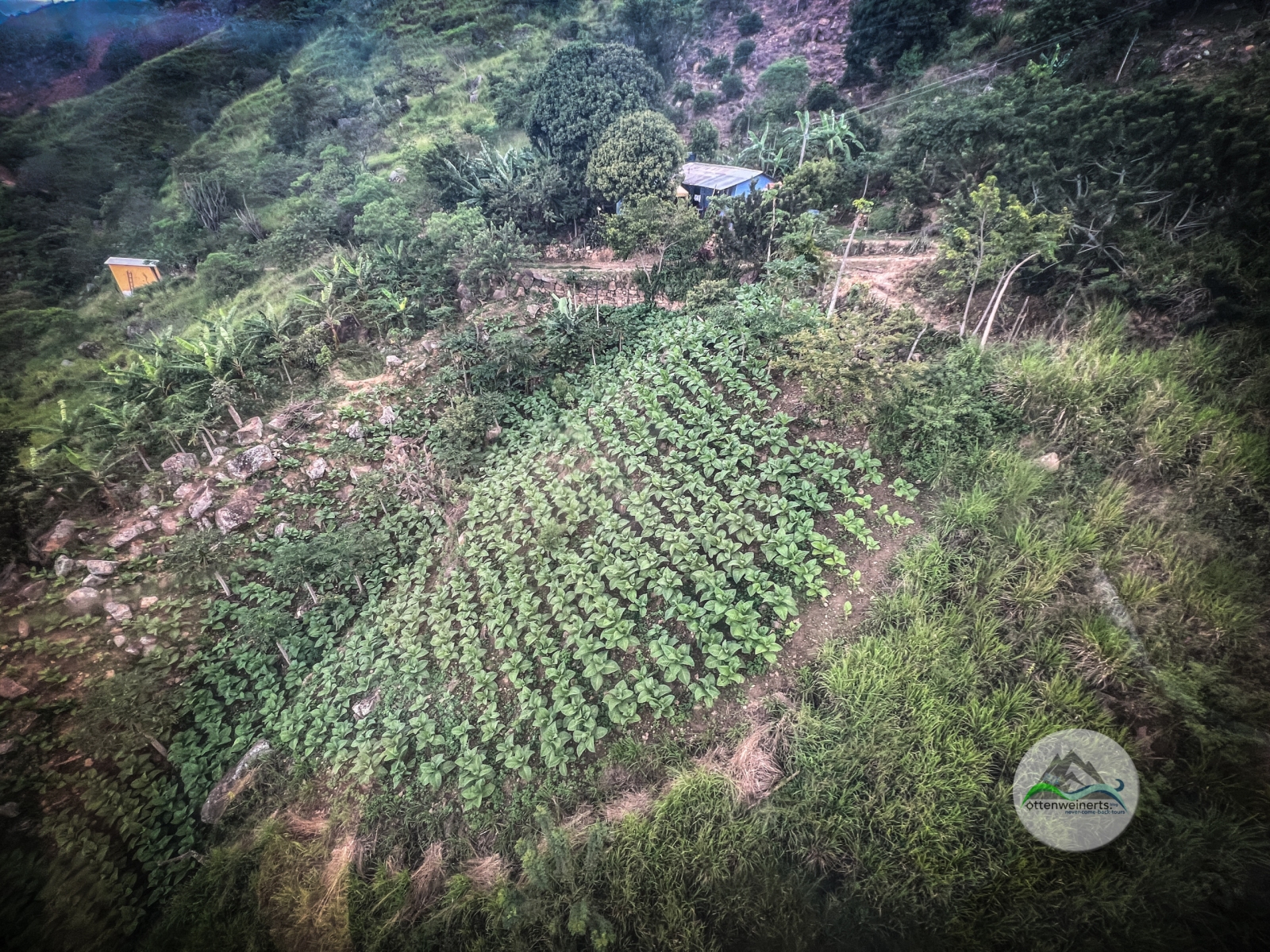
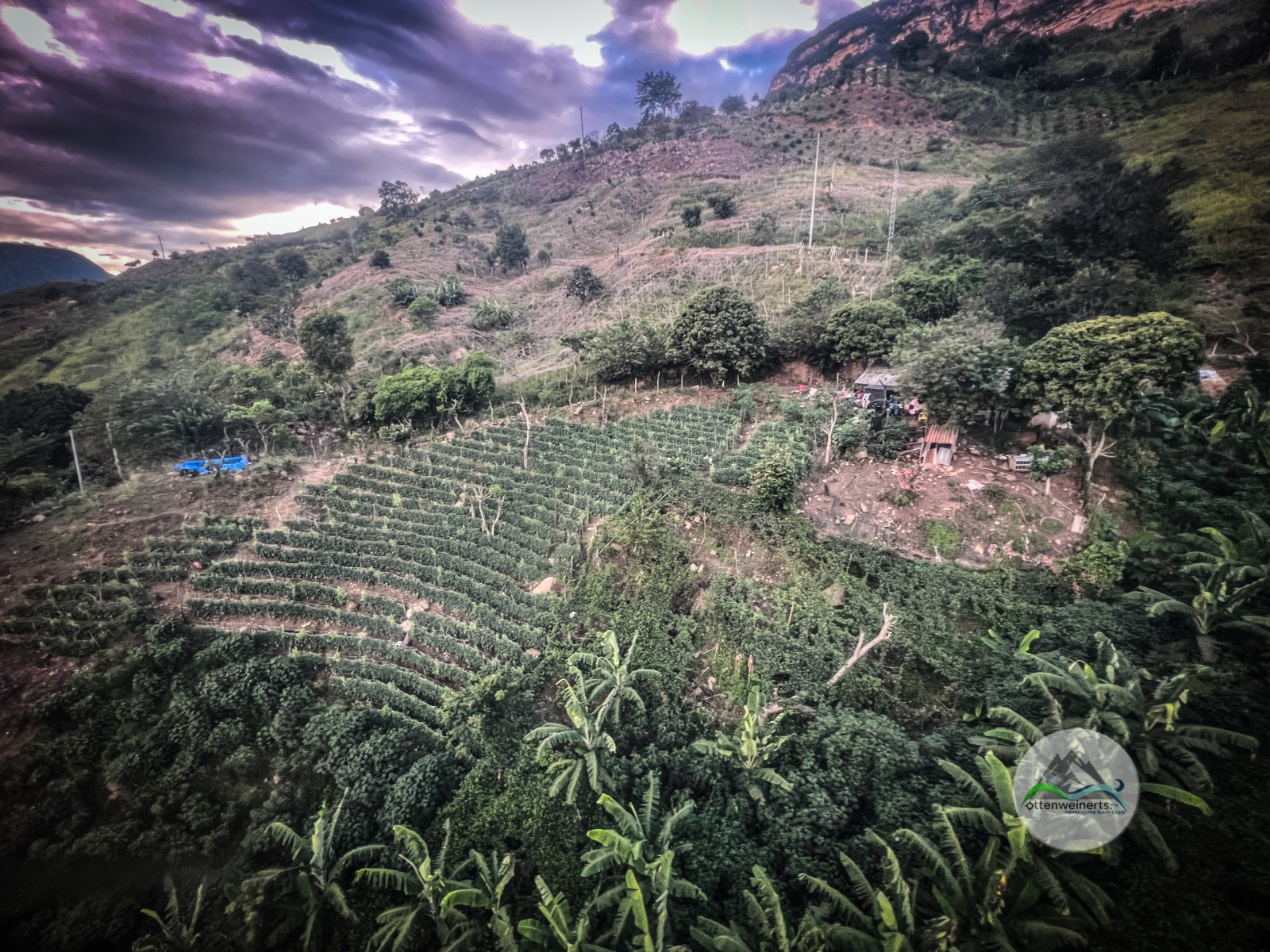
Moving on, we pass through Ocaña; yesterday´s bustling town is very quiet today – it is raining. We stop at the gas station – filling our tank is almost a pleasure here, with the diesel price of approx. 1,80 € per gallon. Then we have to cross the same mountain as yesterday, and we take a closer look at the houses here, perched at the abyss – the back part is supported by stilts only. The front parts are shops and restaurants, offering fruits and vegetable, meat and tire repair, the back part are the living quarters. If you fall out of your bed here, you wake up about 1600 ft below your house. And the green dots, lined up orderly on the steep mountain slopes, are agricultural plantations.

Back on the Carretera 45 we notice that it is later than we thought – we won´t make it to Bucaramanga before nightfall. We stop at a gas station with a hotel – we may stay at the back parking lot overnight and even use the free showers. Hundreds of herons, ibis and loris search their places for the night on the trees all around, making an incredible noise – but as soon as it is dark, all of them seem to fall asleep, and it is quiet.

Route 221021