Archiv der Kategorie: Natur

260606 – Samstag, 6. Juni – Guangzhou Bird Park –

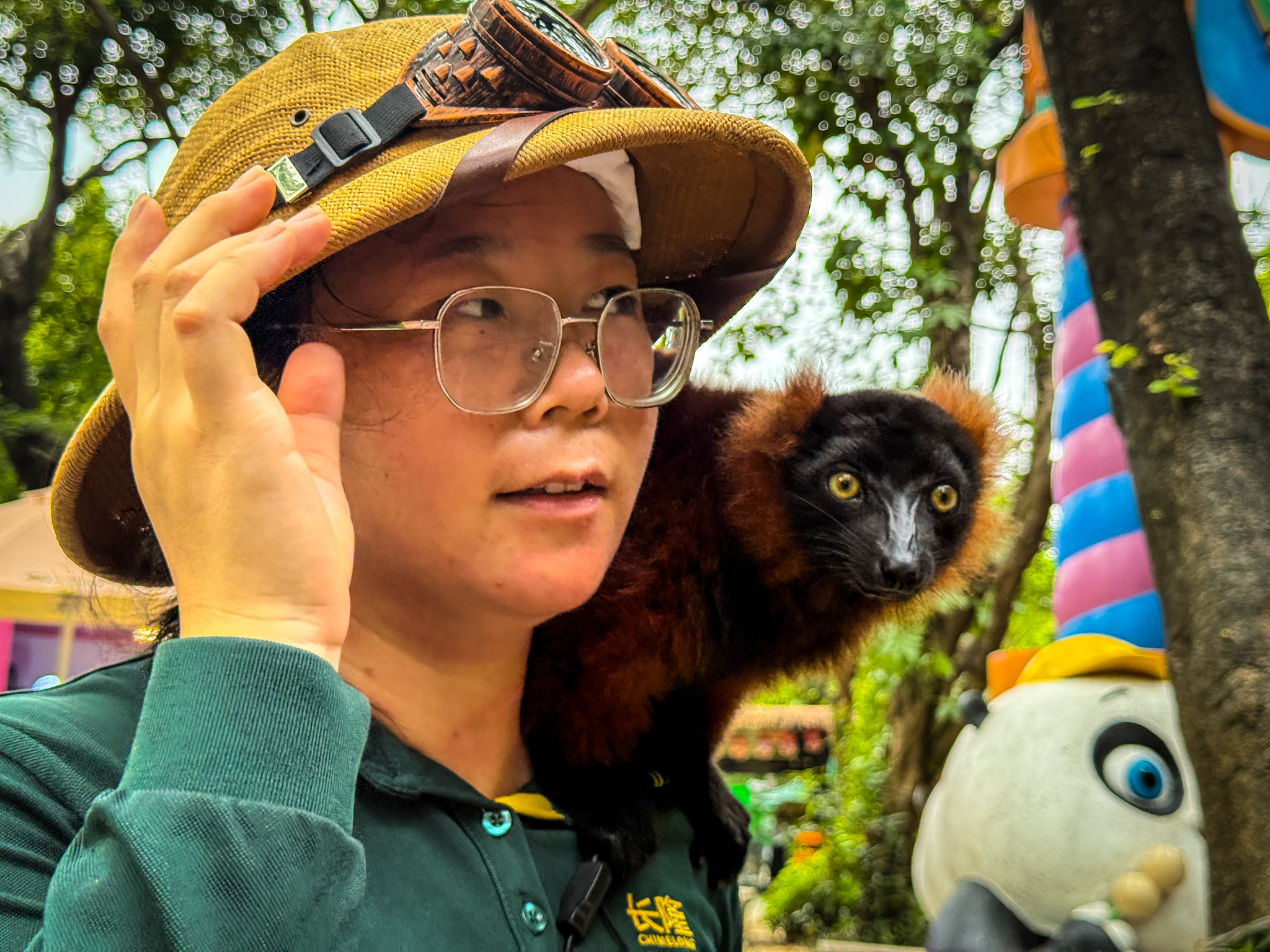
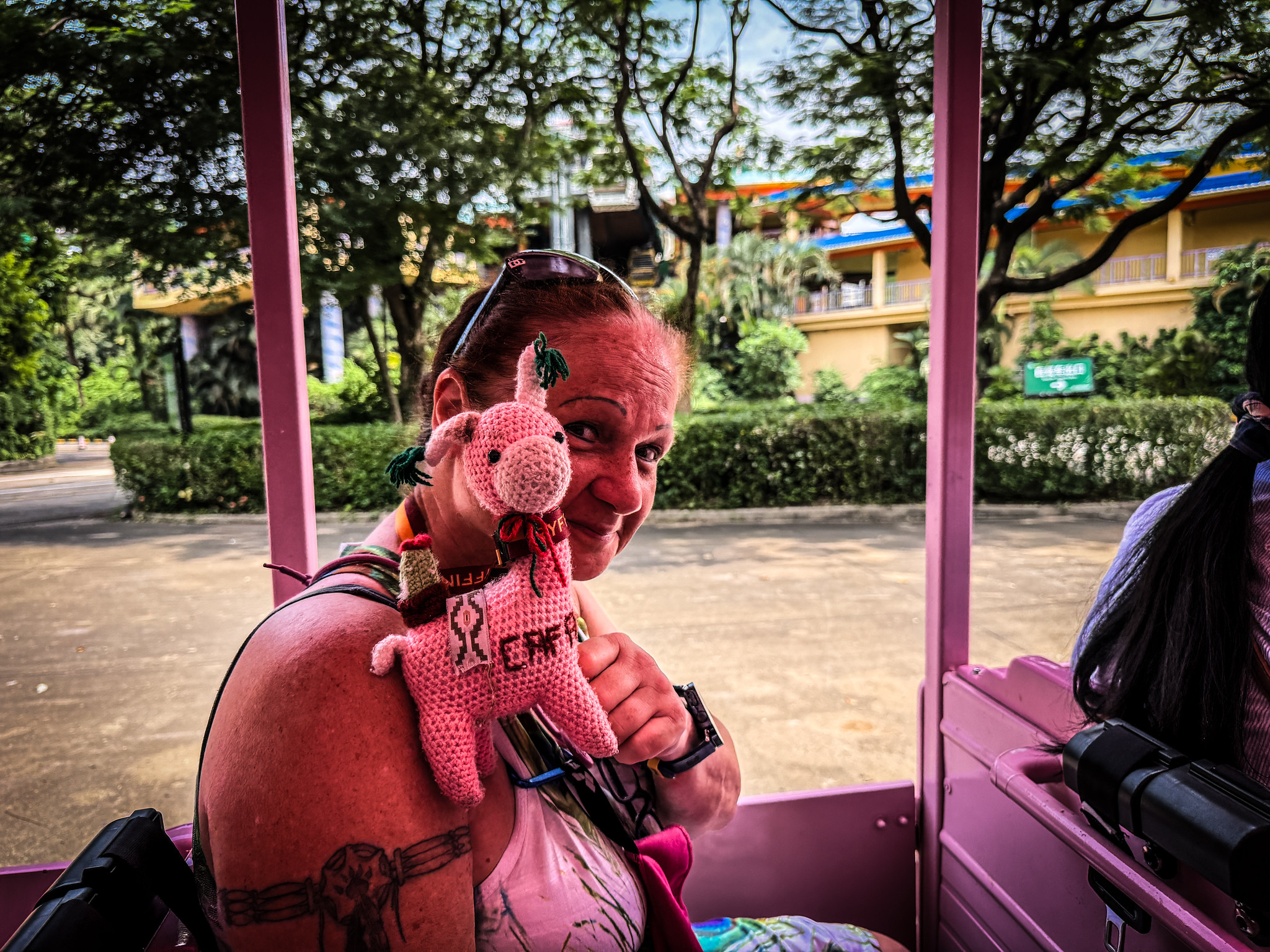
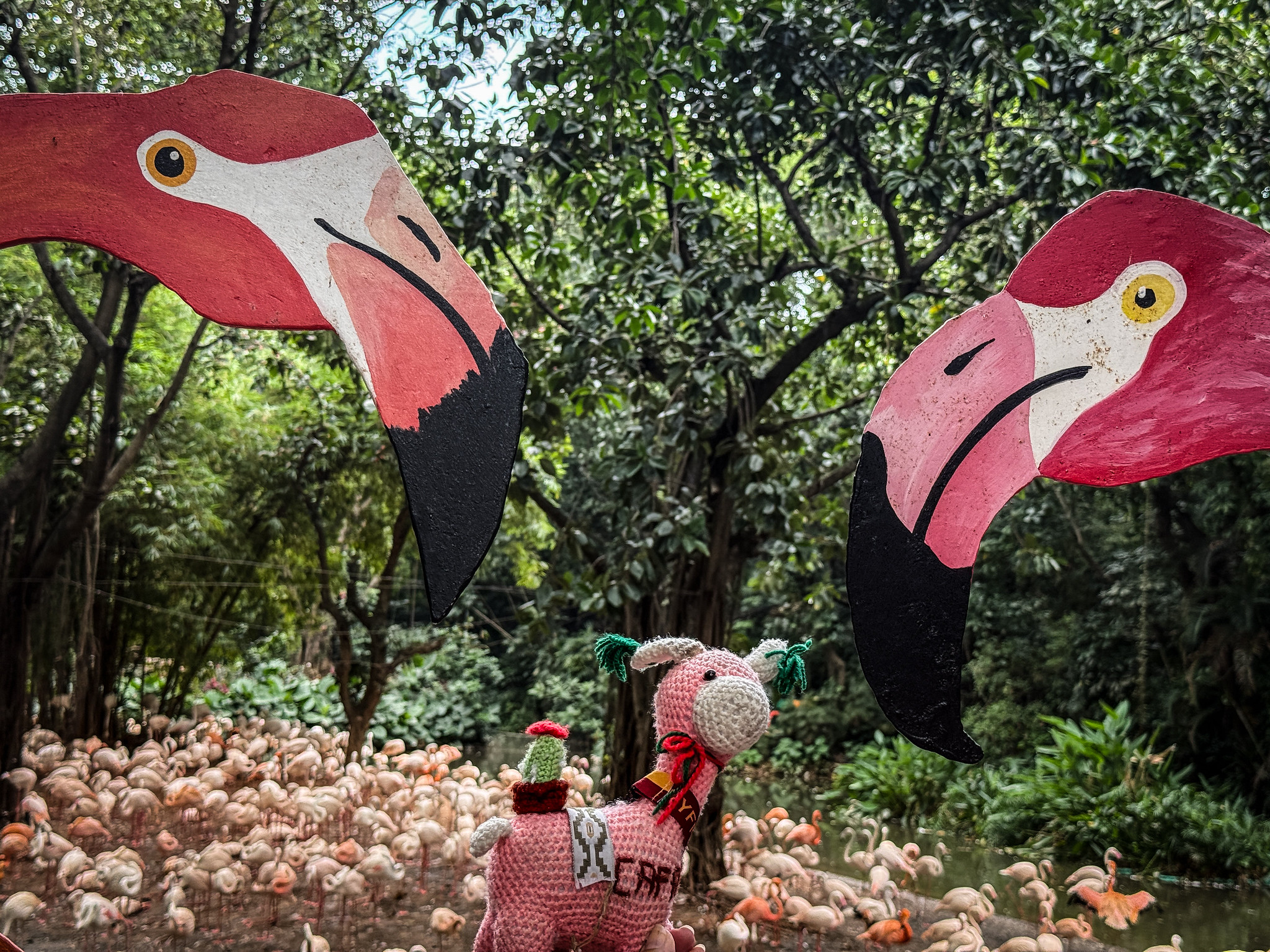
Heute frühstücken wir neben Flamingos und roten Ibissen, und dann nehmen wir das Hotel-Shuttle zum Bird Park, einige Kilometer entfernt und eigentlich mitten in der Stadt; dorthin brauchen wir immerhin eine halbe Stunde. 

Gleich nach dem Eingangsbereich sehen wir eine Präsentation, zwar auf chinesisch, aber das macht nichts – es ist die „Wetland Show“ und die Stars sind ohnehin die Tiere. Es gibt einen großen Auftritt für Stachelschweine, und trainierte Kormorane haben wir auch noch nie gesehen.

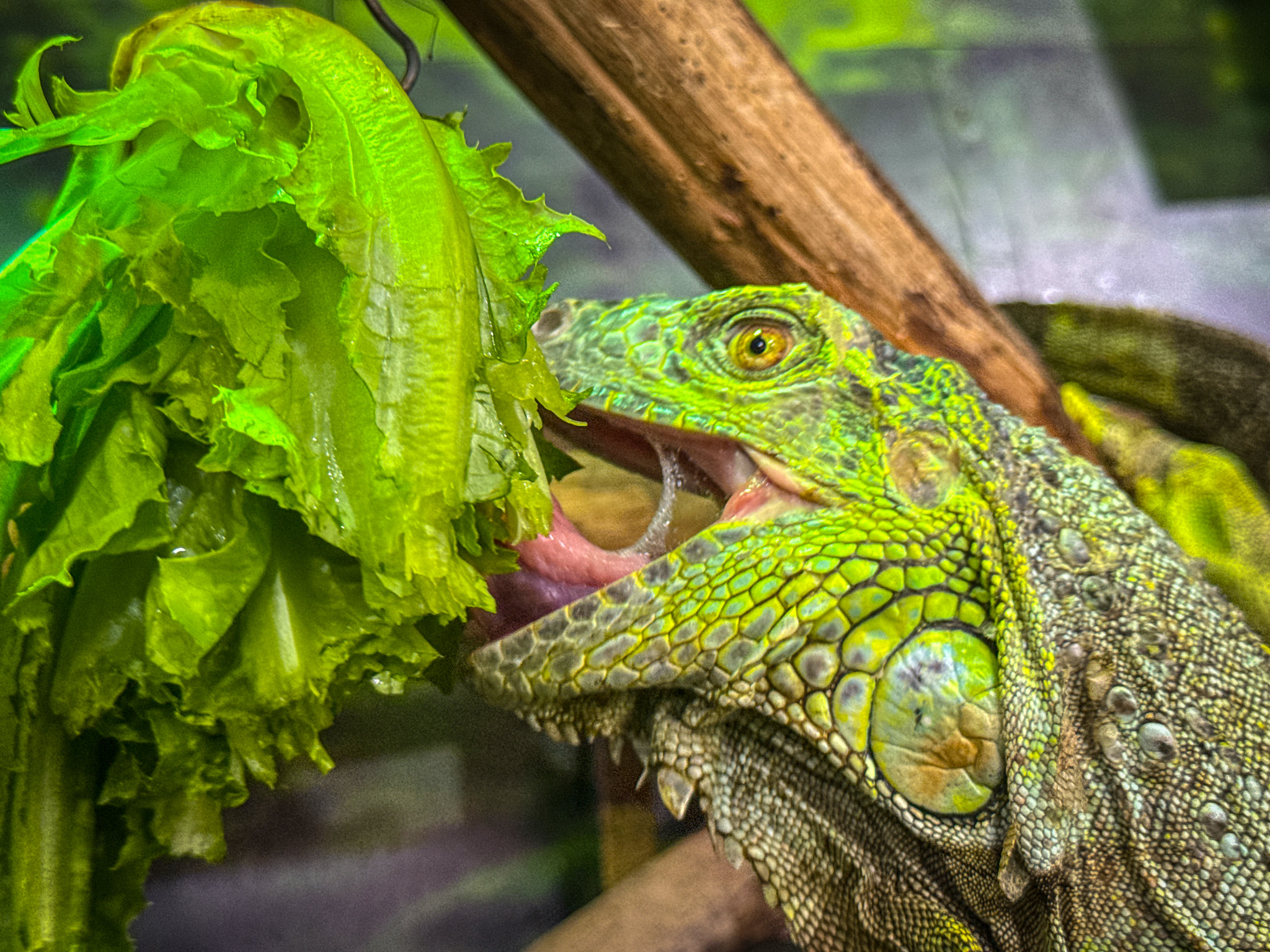
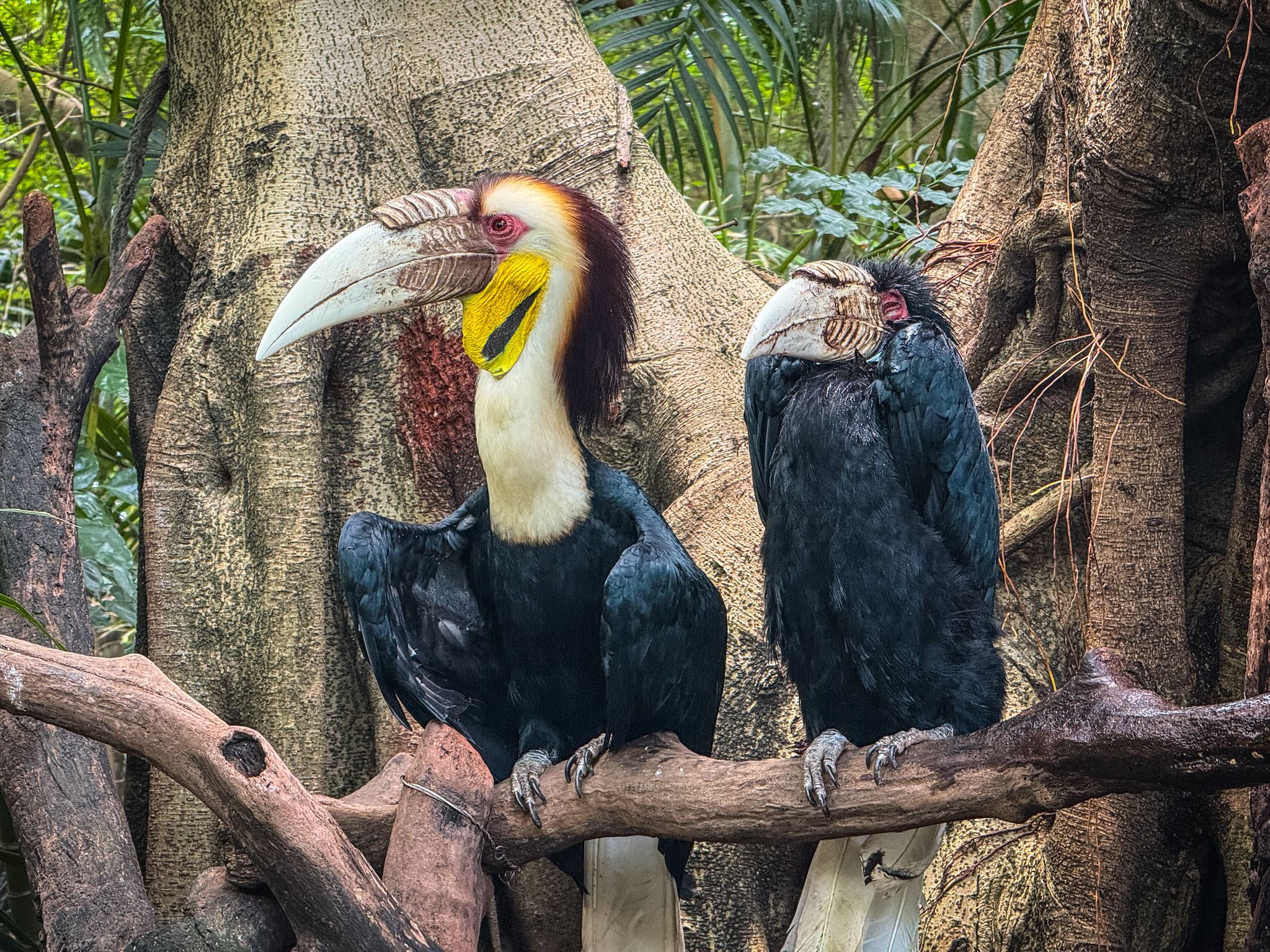
Anschließend spazieren wir durch den Park und bewundern die Vögel – besonders beeindruckend finden wir die Hornbills, Tucans  und die Eulen. Außerdem gibt es jede Menge Reptilien, Schlangen, Frösche und Affen zu sehen, und Vierbeiner wie zum Beispiel Flughörnchen oder Igel – letztere gelten hier als Exoten.

Dann machen wir eine Bootsfahrt, mit Rettungsweste (!), verfolgt von hungrigen Pelikanen, die natürlich auch wieder gefüttert werden müssen. Und es ist drückend heiß, 37 Grad Celsius mit hoher Luftfeuchtigkeit – kurz nach Mittag machen wir schlapp.

Wir kehren zum Hotel zurück, holen unser Gepäck und mit einem Taxi geht es knapp 2 Stunden nach Shenzen. Wir wären zwar lieber mit den öffentlichen Verkehrsmitteln gefahren, aber wir würden etwa vier Stunden brauchen mit dreimal umsteigen und da wir zu viert sind, ist das Taxi auch die billigere Variante. In Shenzhen steuert Ada ein Shopping-Center an, und hier ist die Hölle los – es ist Wochenende und gefühlt halb Hongkong ist in Shenzen zum Shoppen und Essen. Ada geht mit uns in ein Steak-Restaurant – Steak auf asiatisch- das Fleisch kommt in Streifen geschnitten medium rare auf einer heißen Platte und man kann es nach Belieben selbst fertig braten. 

Dann geht es mit der U-Bahn zwei Stationen bis zur Grenze. Wir verlassen China nun endgültig und reisen zum zweiten Mal in Hongkong ein. Wir übernachten wieder bei Ada und Liman – morgen in der Früh übersiedeln wir ein letztes Mal, ins Disney Hollywood Hotel.

Saturday, June 6 – Guangzhou Bird Park

This morning we have breakfast next to flamingos and red ibises, then take the hotel shuttle to the Bird Park, which is about half an hour away and actually right in the middle of the city. 

Right after entering, we watch a presentation. It’s in Chinese, but that doesn’t matter—it’s the “Wetland Show,” and the real stars are the animals anyway. There is a major performance featuring porcupines, and we’ve never seen trained cormorants before.

Afterward, we stroll through the park and admire the birds. We are particularly impressed by the hornbills, toucans, and owls. There are also plenty of reptiles, snakes, frogs, and monkeys to see, as well as four-legged animals such as flying squirrels and hedgehogs—the latter are considered exotic here.

Next, we take a boat ride, complete with life jackets (!), while being pursued by hungry pelicans which of course, have to be fed again. It is extremely hot—37°C (99°F) with high humidity—and shortly after noon we run out of energy.

We return to the hotel, collect our luggage, and then take a taxi to Shenzhen, a journey of just under two hours. We would have preferred to use public transportation, but it would have taken about four hours with three transfers, and since there are four of us, the taxi is actually the cheaper option.

In Shenzhen, Ada heads for a shopping mall, and the place is absolutely packed. It’s the weekend, and it feels as if half of Hong Kong has come to Shenzhen to shop and eat. Ada takes us to a steak restaurant—Asian-style steak. The meat is served medium-rare, sliced into strips on a hot plate, and you can finish cooking it yourself to your liking.

Then we take the subway, it’s only two stops to the border. We leave China for good and enter Hong Kong for the second time, where we stay once again with Ada and Liman. Tomorrow morning, we will move one last time—to the Disney Hollywood Hotel.

260605 – Freitag, 5. Juni – Chimelong Safari Park –

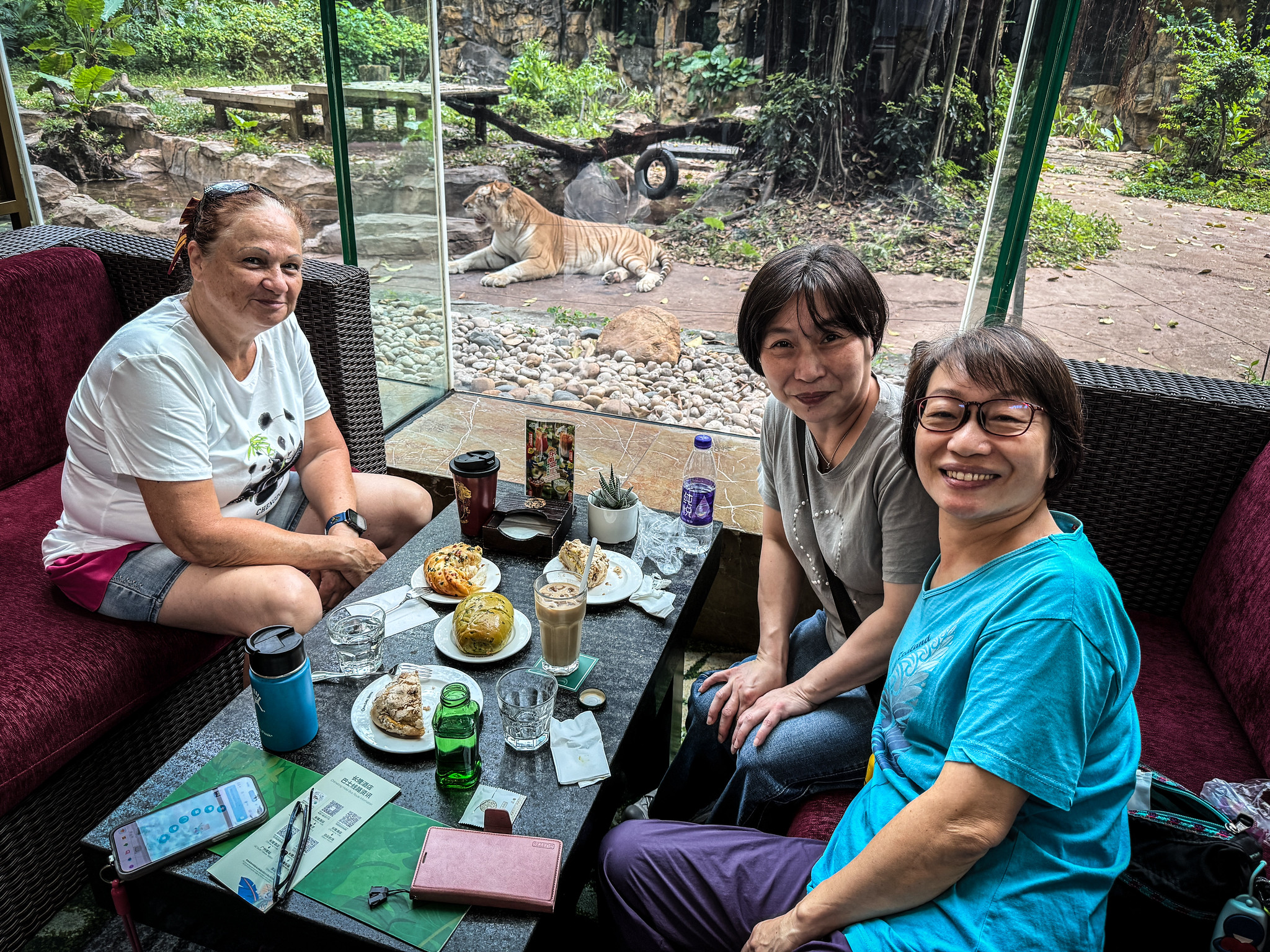
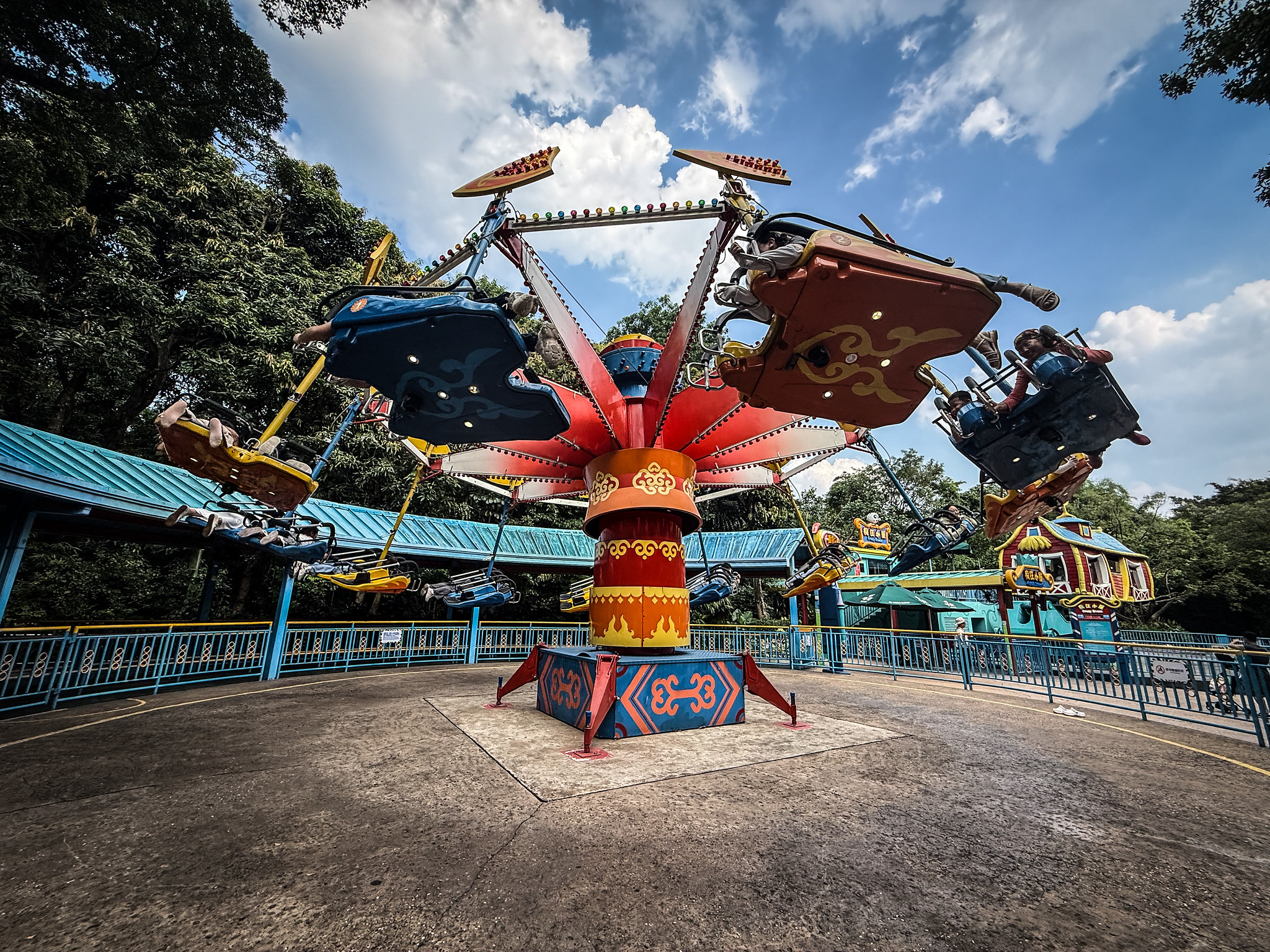
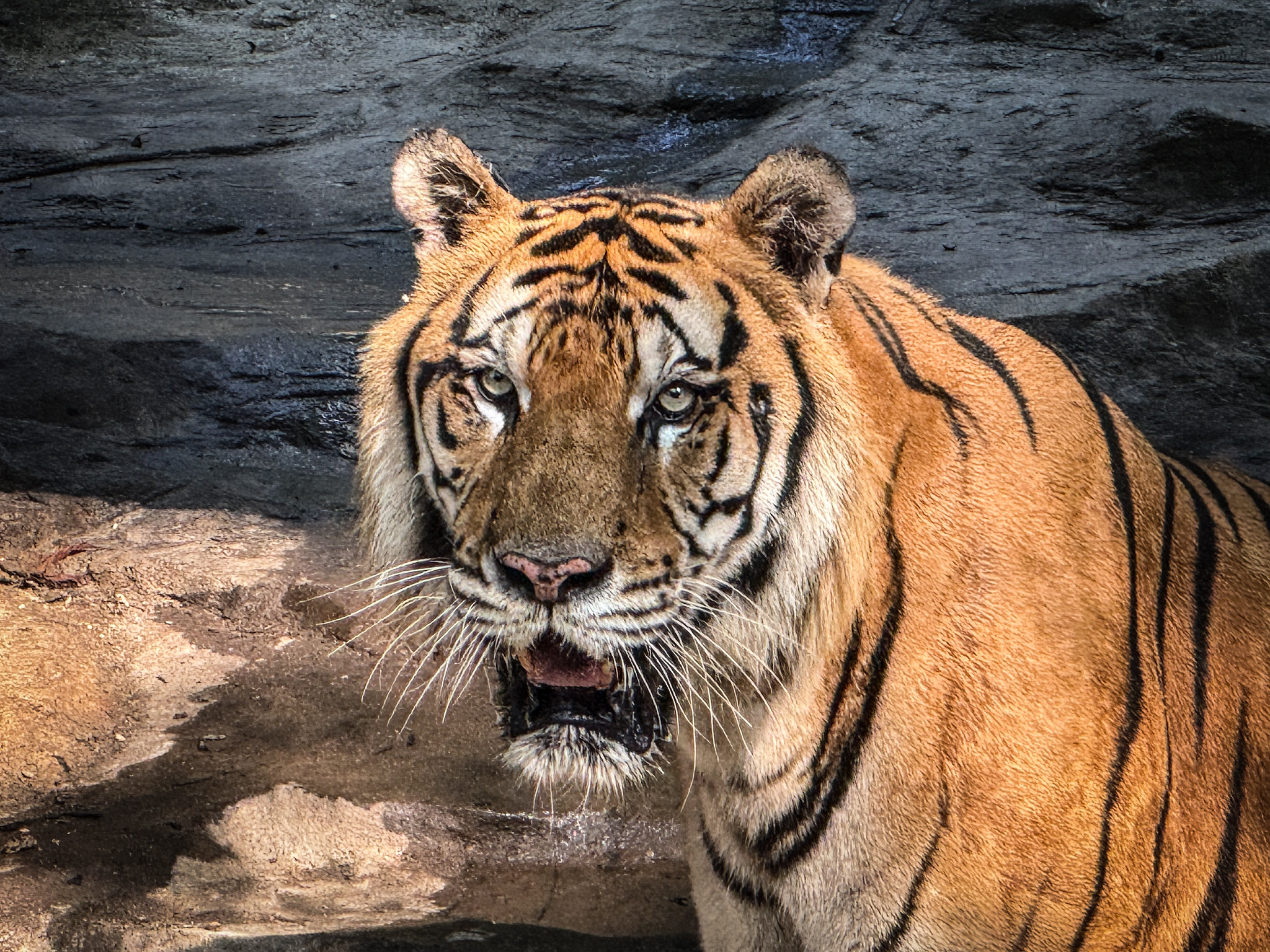
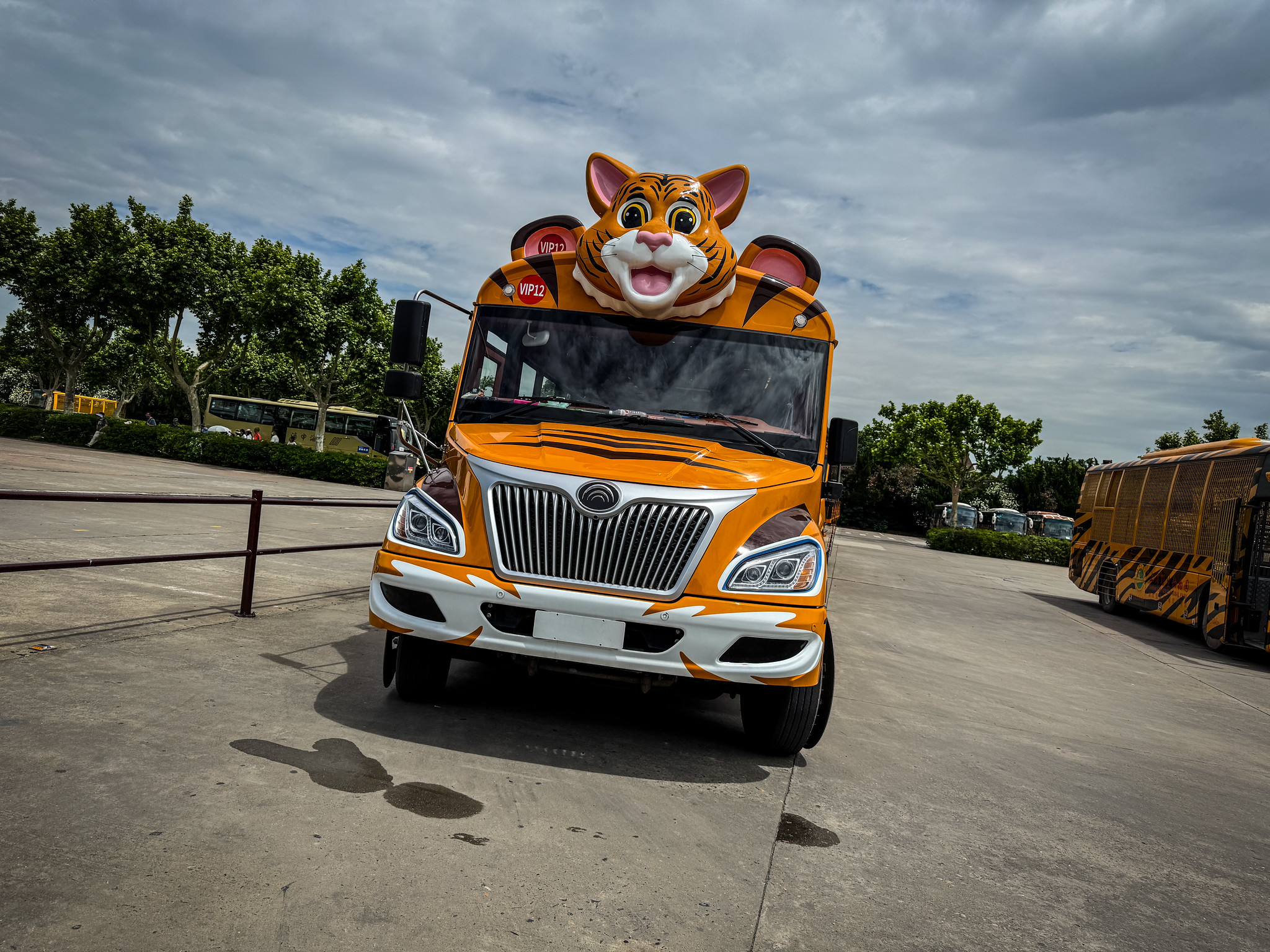
Wir stehen zeitig auf, und gehen mit Ada und Cathy neben den Tigern frühstücken. Dann nehmen wir den Shuttlebus zum Park, in der Hoffnung, jetzt am Morgen, solange es noch nicht zu heiß ist, noch etwas aktivere Tiere zu sehen. Aber, Überraschung: die Gondelbahn macht erst um 11:00 Uhr auf – also gehen wir zu Fuß den ganzen Park der Länge nach vom Südeingang nach Norden zum Einstiegspunkt der Safari. Und dann stecken wir inmitten Horden von Schulkindern, die von den Tieren hier mindestens so begeistert sind wie wir.

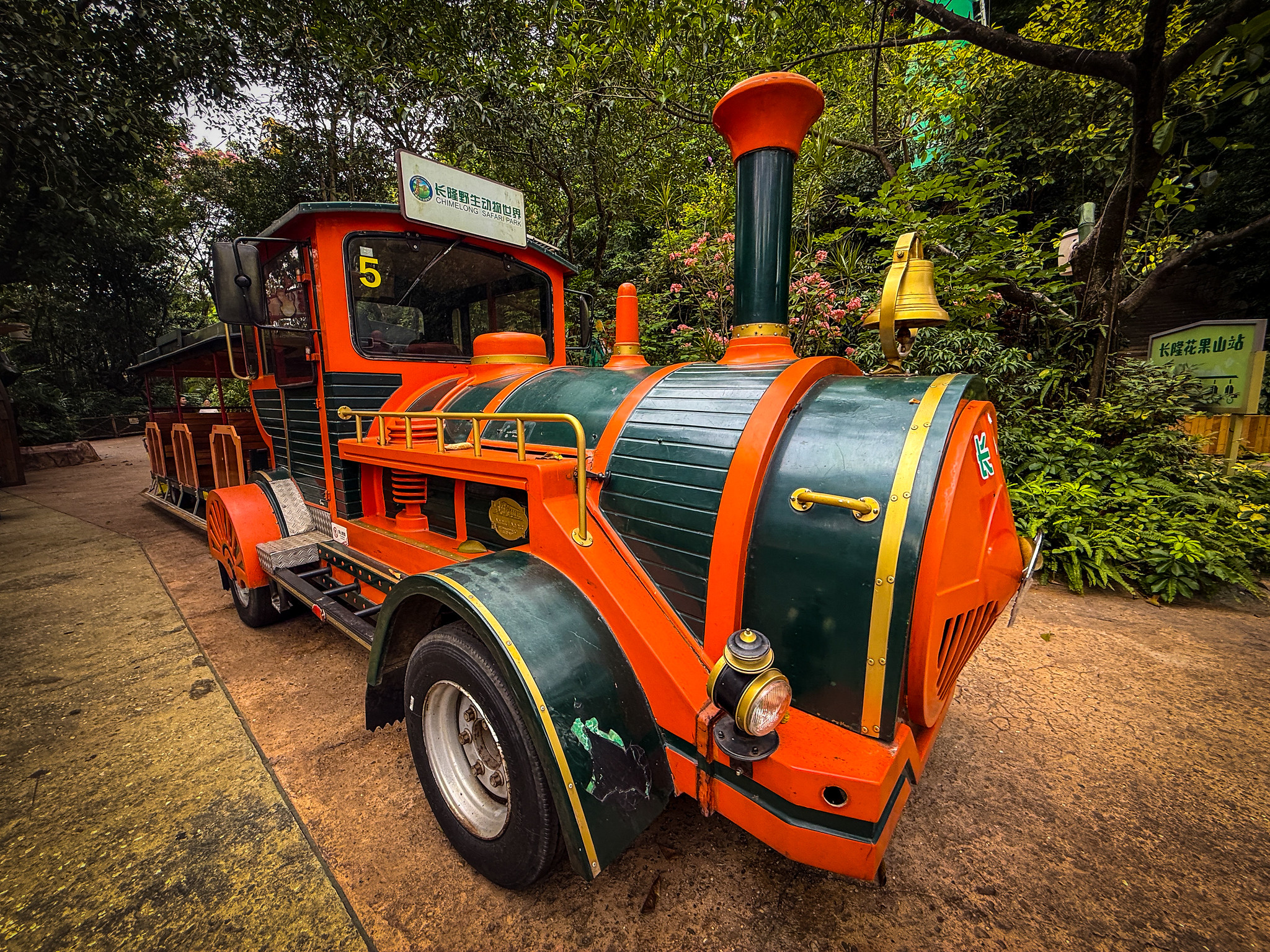
Die Safari on wheels wird mit einem “Tschu-Tschu-Train” (aus Neumarkt in Deutschland) durchgeführt, dauert 35 Minuten und ist wirklich sehr nett. Anschließend spazieren wir durch den Jurassic Trail (mit fast echten Dinosauriern), durch Regenwaldbereich und durch “das Reich der gelben Schlange”. Im “Tierkindergarten” ist der Nachwuchs zu sehen, vom Mini-Tiger im Brutkasten bis zum Erdmännchen-Baby.

Mittlerweile ist es mittags vorbei, es ist furchtbar heiß und drückend schwül, und wir sind völlig erledigt. Also kehren wir ins Hotel zurück, machen eine Erholungspause und ziehen am frühen Nachmittag noch mal los. Wir besuchen die Koalas, die großen Pandas, und die goldenen Takins. Und dann ist es schon abends, der Park sperrt zu, und wir gehen ins Hotel zurück – müde und erschöpft, nach 19.000 Schritten oder 12 km, aber mit vielen vielen Fotos, die wir jetzt sortieren und vielen Ideen für unseren Blog.

Friday, June 5 – Chimelong Safari Park

We get up early and have breakfast with Ada and Cathy next to the tigers. Then we take the shuttle bus to the park, hoping to see some more active animals in the morning before it gets too hot. But surprise: the cable car doesn’t open until 11:00 a.m. So we walk the entire length of the park from the south entrance to the north, all the way to the safari boarding point. Along the way, we find ourselves surrounded by lots of schoolchildren who seem to be as excited about the animals as we are.

The safari ride is done on a little “choo-choo train” (from Neumarkt, Germany), lasts 35 minutes, and is really quite enjoyable. Afterwards, we stroll through the Jurassic Trail (with almost real dinosaurs), the rainforest section, and the “Realm of the Yellow Snake.” In the “Animal Kindergarten,” visitors can see the young animals, from a tiny tiger cub in an incubator to a baby meerkat.

By now it is well past noon. The weather is terribly hot and very humid, and we are completely worn out. So we return to the hotel, take a break to recover, and head out again in the early afternoon. We visit the koalas, the giant pandas, and the golden takins. Before long, evening arrives, the park closes, and we make our way back to the hotel—tired and exhausted after 19,000 steps, or about 12 kilometers, but with countless photos to sort through and plenty of ideas for our blog.

260604 – Donnerstag, 4. Juni – zurück nach China –

Voriges Jahr haben unsere Freunde aus Hongkong mit uns einen mehrtägigen Ausflug zum Chimelong Ocean Kingdom bei Zuhai, nördlich von Macau gemacht, und wir waren begeistert. Dieses Mal geht’s für drei Tage und zwei Nächte zum Chimelong Resort bei Gouangzhou, mit insgesamt fünf verschiedenen Attraktionen: Safaripark, Vogelpark, Zirkus, Vergnügungspark und Wasserpark. Mit dem Taxi geht es zur Grenze bei Futian, und schwupps, schon sind wir wieder in China – dabei sind wir doch gestern erst ausgereist.

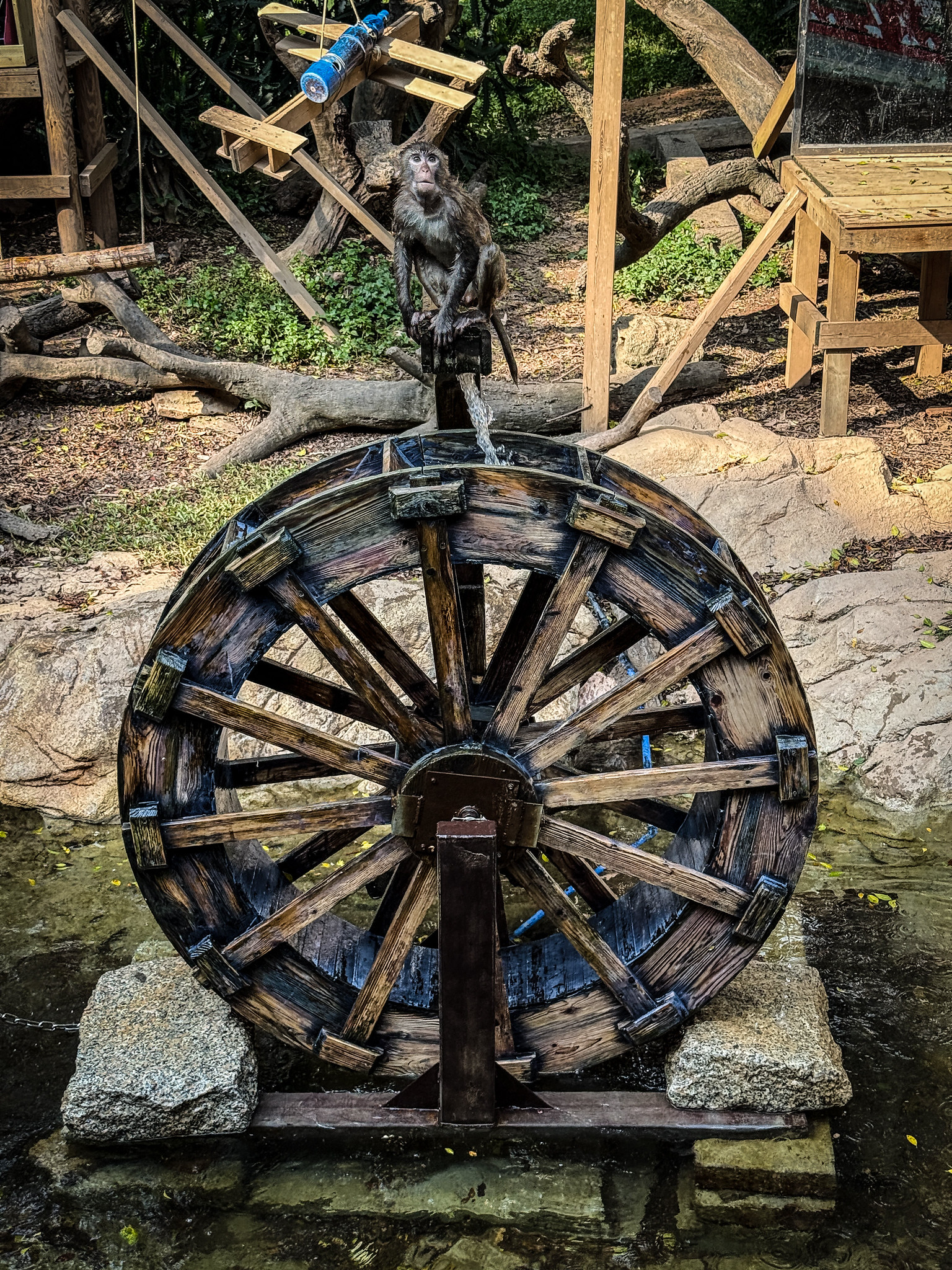
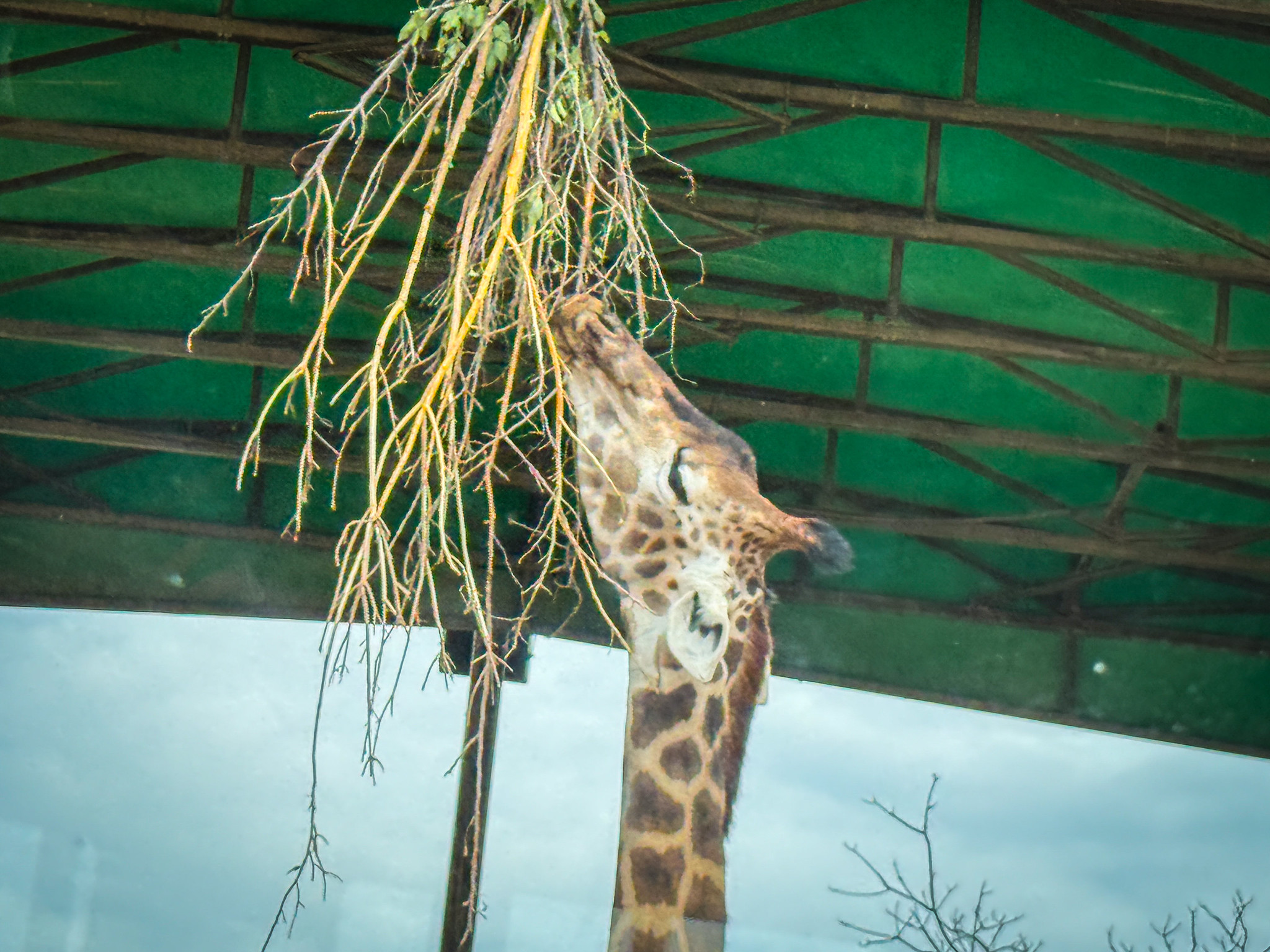
Eineinhalb Stunden später checken wir im Chimelong Hotel ein – ein Riesenkasten – natürlich, wir sind ja wieder in China. Wir nehmen das Shuttle zum Safari Park und verschaffen uns erst mal einen Überblick über das gewaltige Areal. Mit der Gondelbahn schweben wir über den Park, dann gehen wir Tiere füttern, dieses Mal Giraffen, und auch die Affen, die für ihr Futter schwimmen und tauchen.

Dann starten wir wieder einen Versuch mit dem 4D Kino, diesmal für uns verständlich, mit englischen Untertiteln und einer sehr netten Story über drei Pandabär-Kinder, die ihren Papa vom Mond retten. 

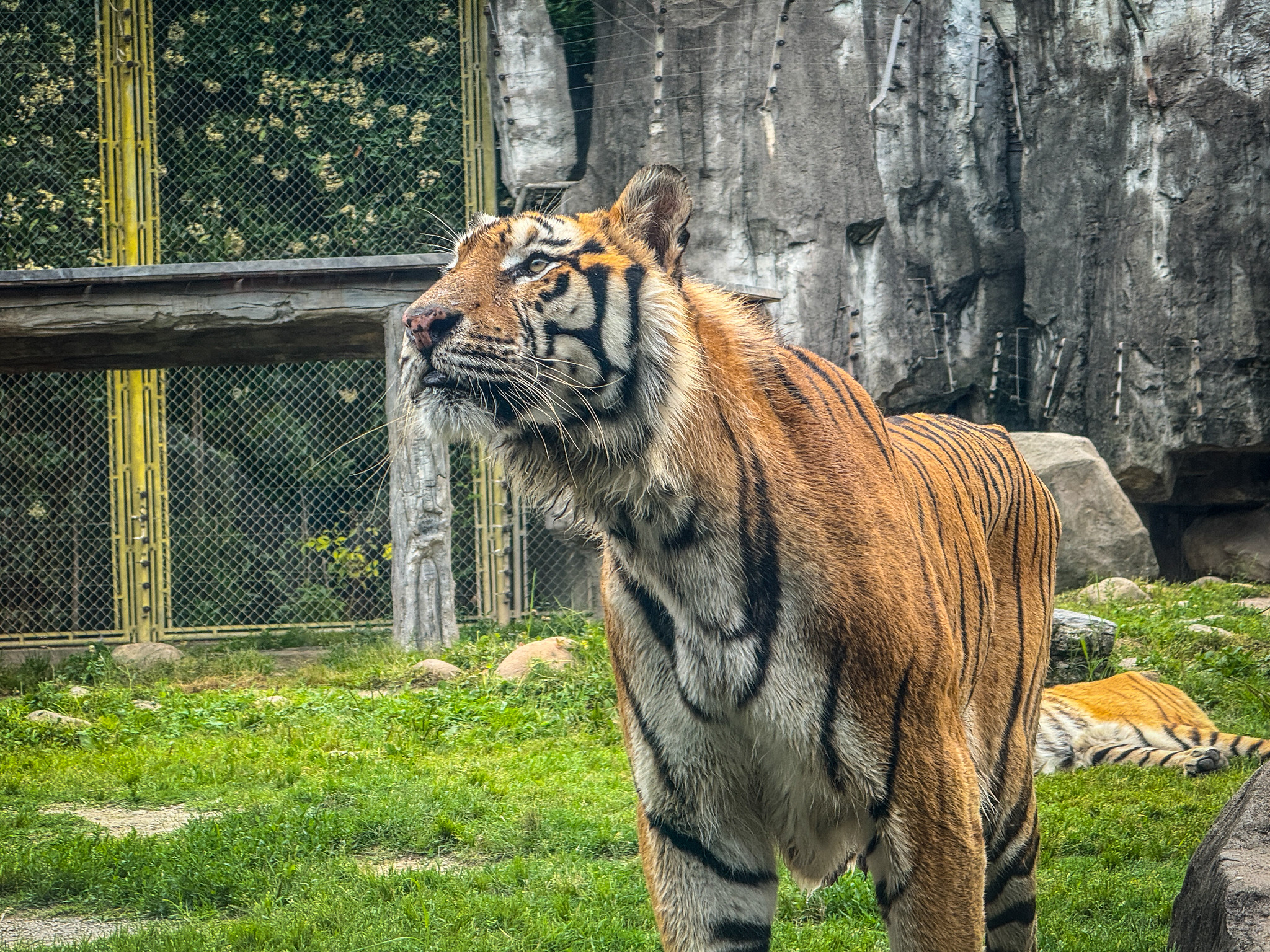
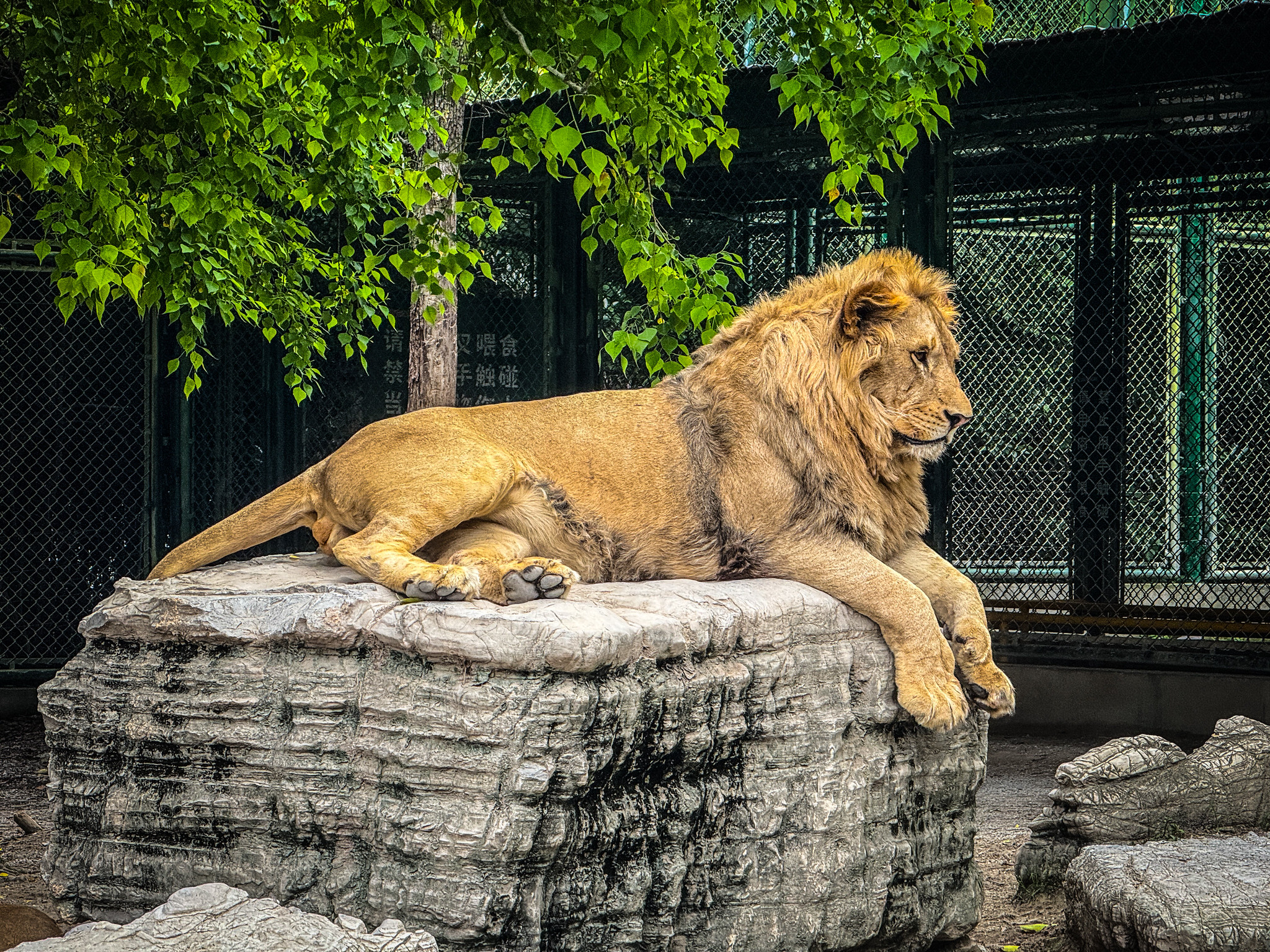
Anschließend ist es bereits Zeit für die Abendvorstellung im Internationalen Zirkus – mit über 7.500 Sitzplätzen das größte permanente Zirkuszelt der Welt – allerdings leider nicht klimatisiert, also sehr heiß, und auch sehr, sehr laut. Über 300 Artisten aus mehr als 20 Ländern treten hier auf, und die Show beginnt schon einmal spektakulär, nämlich mit zwei menschlichen Kanonenkugeln – ein Zirkusakt, den wir bis jetzt noch nie gesehen haben. Außerdem gibt es eine Reitertruppe mit Tiger und Löwen in der Arena , tolle Hochseilakte, eine unglaubliche Artistengruppe aus Afrika, eine äußerst athletische Feuerwehr (wir hätten da so ein paar Ideen für die nächsten Feuerwehrbewerbe)und viele tierische Beteiligte: Hornbills schweben ein, Schweine, Gänse und Flamingos sind in der Parade ebenso mit von der Partie. Den Abschluss bilden Kunstspringer, Motorräder in der Stahlkugel (diesmal nur vier Motorräder) und das Rad des Todes. Eine tolle Vorstellung.

Thursday, 4 June – Back to China

Last year, our friends from Hong Kong took us on a multi-day trip to Chimelong Ocean Kingdom near Zhuhai, north of Macau, and we absolutely loved it. This time, we’re heading to the Chimelong Resort near Guangzhou for three days and two nights, with a total of five different attractions: a safari park, bird park, circus, amusement park, and water park. We take a taxi to the border crossing at Futian and, just like that, we’re back in China—even though we only left yesterday.

An hour and a half later, we check into the Chimelong Hotel—a gigantic complex – of course, we’re back in China. We take the shuttle to the Safari Park and first get an overview of the vast grounds. Riding the cable car, we glide above the park before heading off to feed some animals. This time it’s giraffes, as well as monkeys that swim and dive to retrieve their food.

Next, we give the 4D cinema another try. This time we can actually follow the story thanks to English subtitles. It’s a charming tale about three panda cubs who set out to rescue their father from the moon.

Afterwards, it’s already time for the evening performance at the International Circus. With more than 7,500 seats, it is the largest permanent circus venue in the world. Unfortunately, it isn’t air-conditioned, making it very hot, and it’s also extremely loud. More than 300 performers from over 20 countries take part, and the show opens spectacularly with two human cannonballs—a circus act we have never seen before.

The program also features an equestrian troupe performing alongside tigers and lions in the arena, breathtaking high-wire acts, an incredible acrobatic group from Africa, and a remarkably athletic fire brigade (we came up with a few ideas for future firefighter competitions back home). There are plenty of animal performers as well: hornbills soar into the arena, while pigs, geese, and flamingos all take part in the parade.

The grand finale includes high divers, motorcycles racing inside the steel globe (this time only four bikes), and the Wheel of Death. A fantastic show.

260601 – Montag, 1. Juni – Haichang Ocean Aquarium –

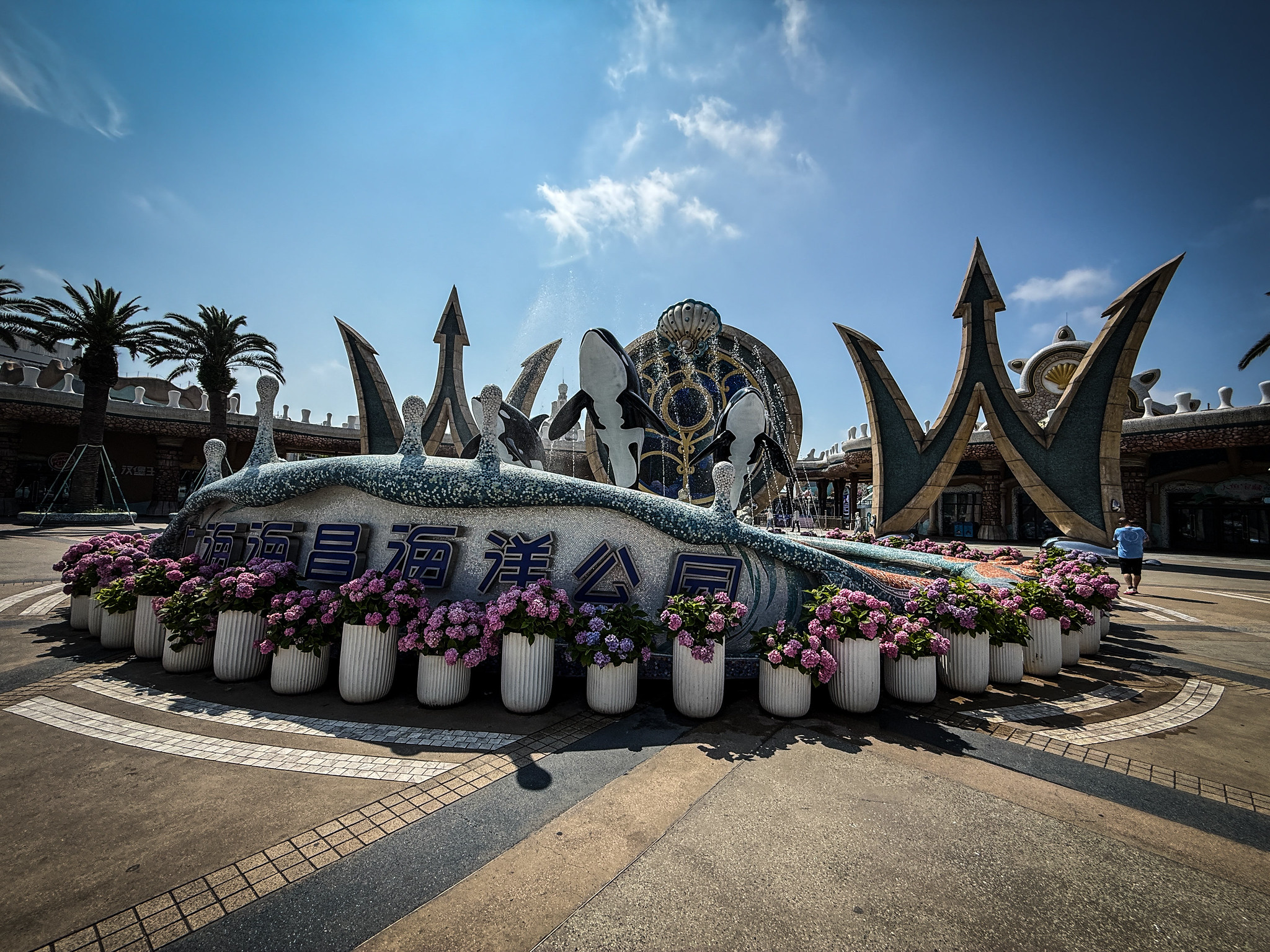
Nach Wild Animal Park und Legoland sind die Erwartungen heute recht hoch – wir besuchen das Haichang Ocean Aquarium und denken an eine Mischung aus Information und Entertainment, Aquarien und Shows, Hochschaubahnen und Ringelspielen plus Kulinarik – also Seaworld x Chimelong Ocean Park (letzteren haben wir voriges Jahr besucht, und er war fantastisch)

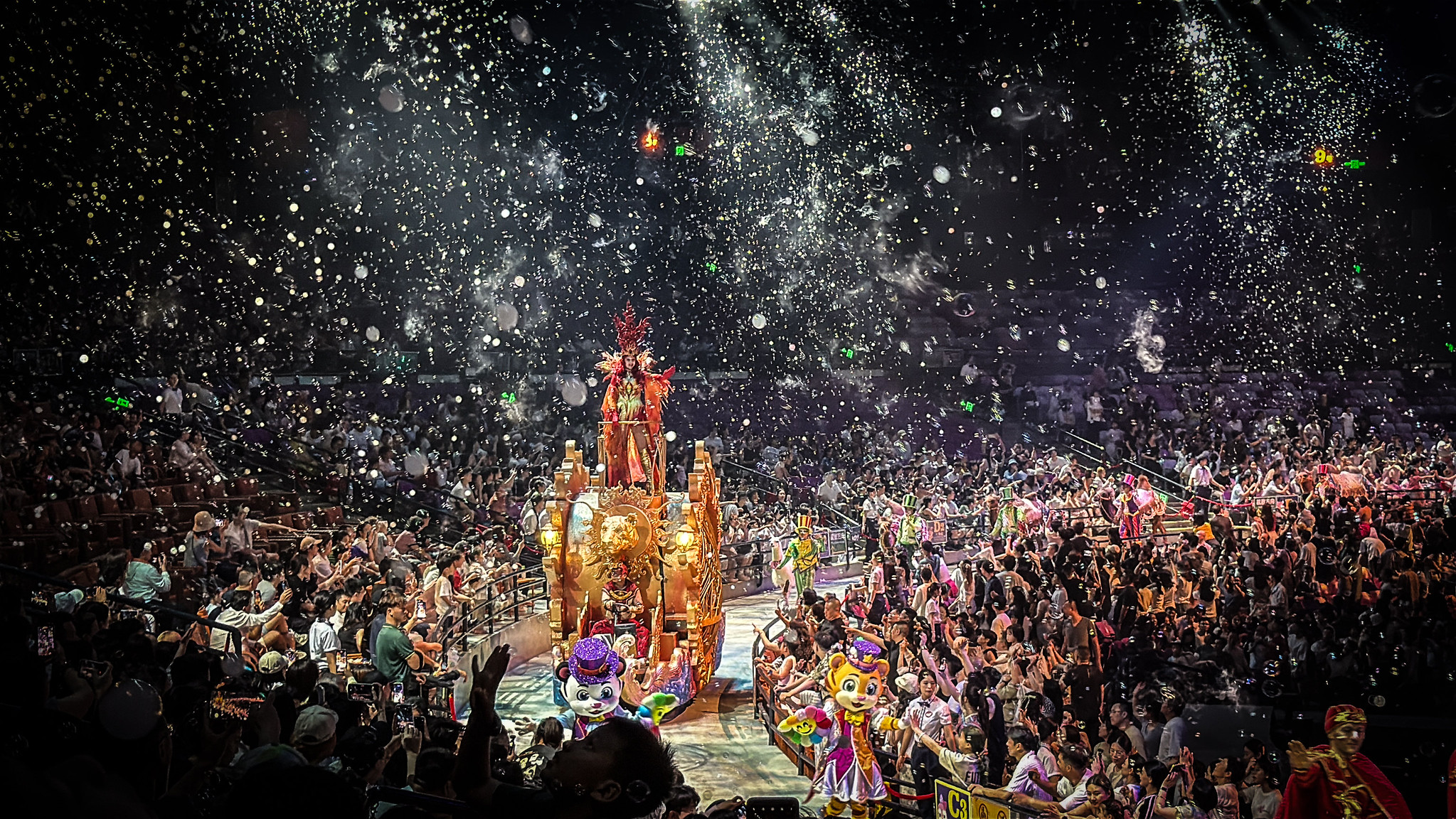
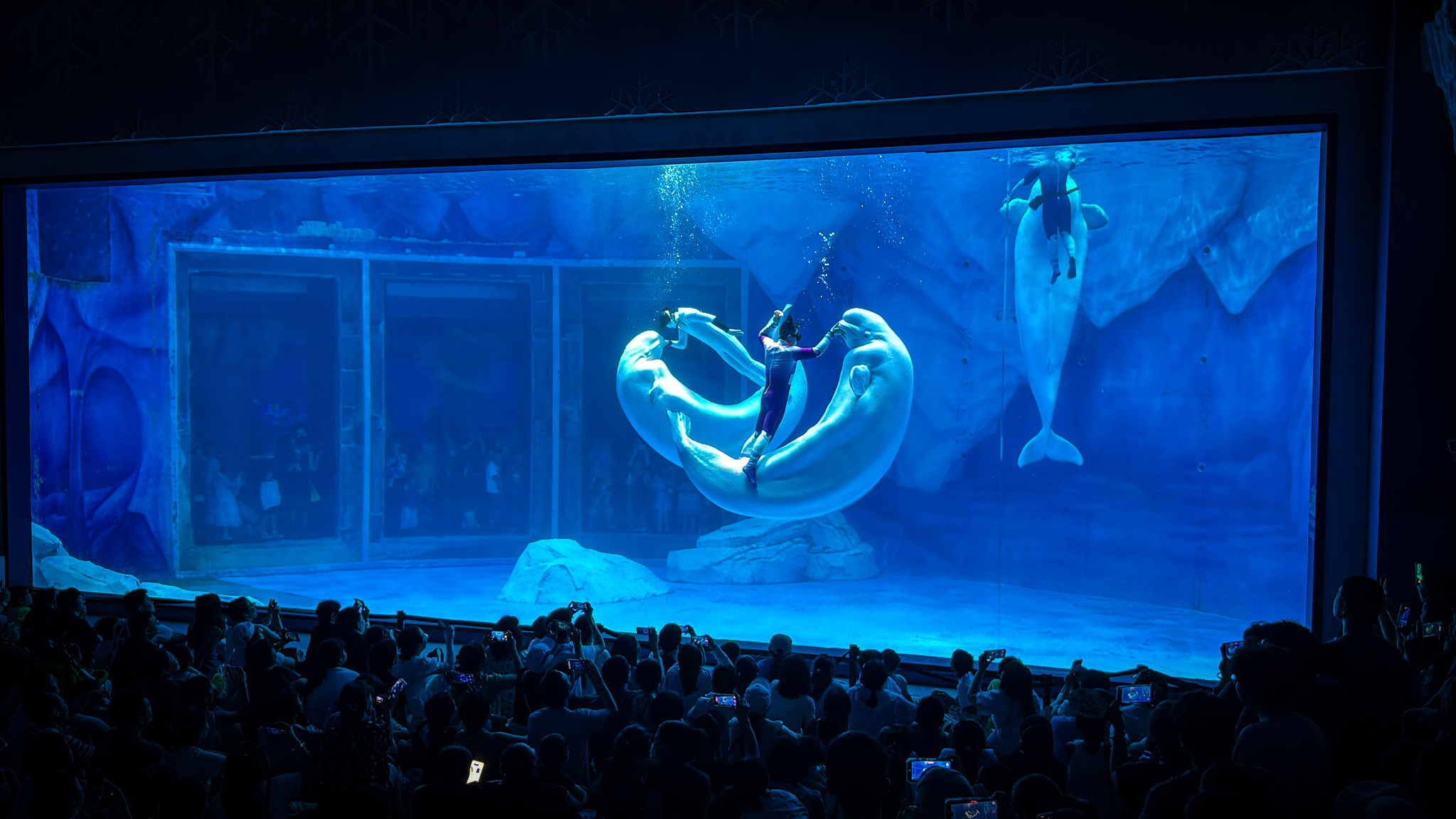
Es beginnt recht nett mit den bunten Kulissen der Christmas Town und dann einer Unterwassershow mit Belugawalen. Aber insgesamt haben sich unsere Erwartungen leider nicht erfüllt. Die Attraktionen bestehen hauptsächlich aus Shows – alle nur auf chinesisch – und Restaurants. Die Wasserbahn ist leider geschlossen (es ist auch kein Wasser drin), die (einzige) Hochschaubahn steht still  und die Gondelbahn fährt auch nicht, wir sehen auch gar keine Gondeln. 

Es ist Montag, es sind nicht wirklich viele Besucher im Park, aber alle, die da sind, kommen auch zu jeder Show (die meisten Shows finden heute nur einmal statt) – entsprechend hoch ist der Lärmpegel, bis zu 100 Dezibel, vor allem weil es bis auf die Orca-Show alles indoor Events sind. Die Shows sind zwar nicht so schlecht, einen Tango mit Seelöwe haben wir noch nie gesehen, aber nach der Show wollen alle Besucher wieder hinaus, gleichzeitig natürlich – und die Wege sind mit Kinderwägen und Trolleys zugeparkt – würde der Arbeitsinspektor bei uns niemals erlauben.

Dann sehen wir ein Museum für den japanischer SF- und Anime-Helden Ultraman, den es seit 1966 gibt – wir haben noch nie von ihm gehört. Und schließlich finden wir auch noch ein Gebäude mit einigen kleinen Aquarien und einem Glastunnel. Naja. Vielleicht sind wir schon zu verwöhnt und unsere Ansprüche zu hoch, aber der Park erscheint in die Jahre gekommen und es gibt einfach viel zu wenig zum Anschauen. Schlampig recherchiert – werde mich bei der Reiseleiterin beschweren. 

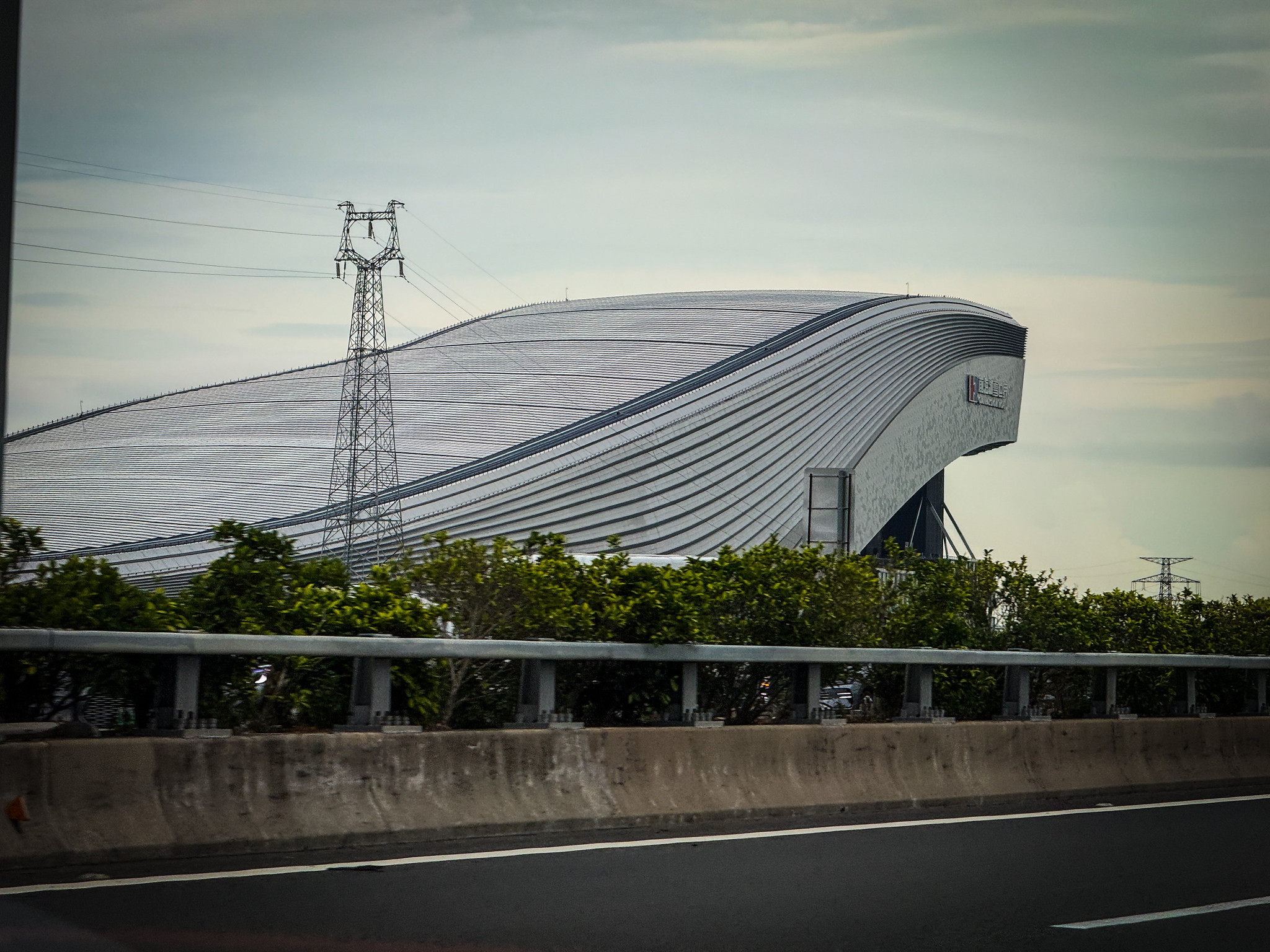
Nach der Orca-Show haben wir eigentlich genug, das 4D-Kino ersparen wir uns (nach der enttäuschenden Erfahrung in LEGOLAND). Am Weg zum Ausgang finden wir ganz zufällig noch das Pinguin-Habitat, aber das war’s dann endgültig. Wir haben Zeit, und beschließen mit den Öffis zu fahren. Am Weg zur U-Bahn-Station kommen wir an einem Riesenkasten vorbei, das ist die Yaoxue Eis- und Schneewelt. Nach Shanghai zum Skifahren … auf die Idee muss man erst mal kommen…

Wir brauchen vom Aquarium etwa eine Stunde zurück zum Hotel, gehen noch Abendessen einkaufen, und machen uns dann ans Blog schreiben und Fotos sortieren. Heute haben wir 15.293 Schritte bzw. 10,1 km zurückgelegt – morgen, in Disneyland, könnte es wieder mehr werden.

Monday, June 1 – Haichang Ocean Aquarium

After the Wild Animal Park and LEGOLAND, expectations are quite high today. We visit the Haichang Ocean Aquarium, expecting a mix of information and entertainment: aquariums and shows, roller coasters and rides, plus good food—in other words, something like SeaWorld × Chimelong Ocean Park (which we visited last year and found fantastic).

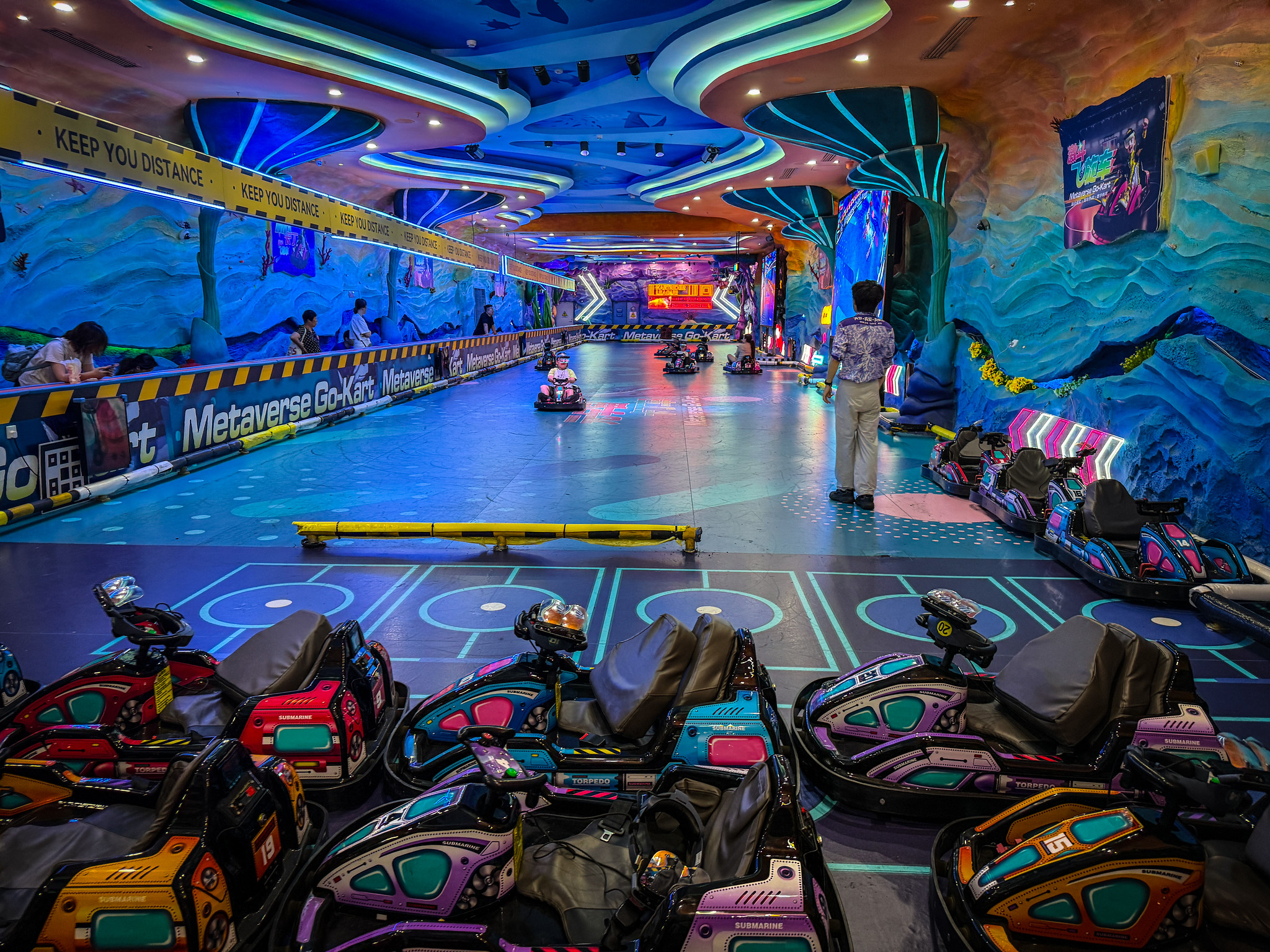
The day starts pleasantly enough with the colorful scenery of Christmas Town and an underwater show featuring beluga whales. Overall, however, the park does not meet our expectations. The attractions consist mainly of shows—all in Chinese—and restaurants. The water ride is closed (there isn’t even any water in it), the only roller coaster is standing still, and the cable car isn’t running either; in fact, we don’t see any gondolas at all.

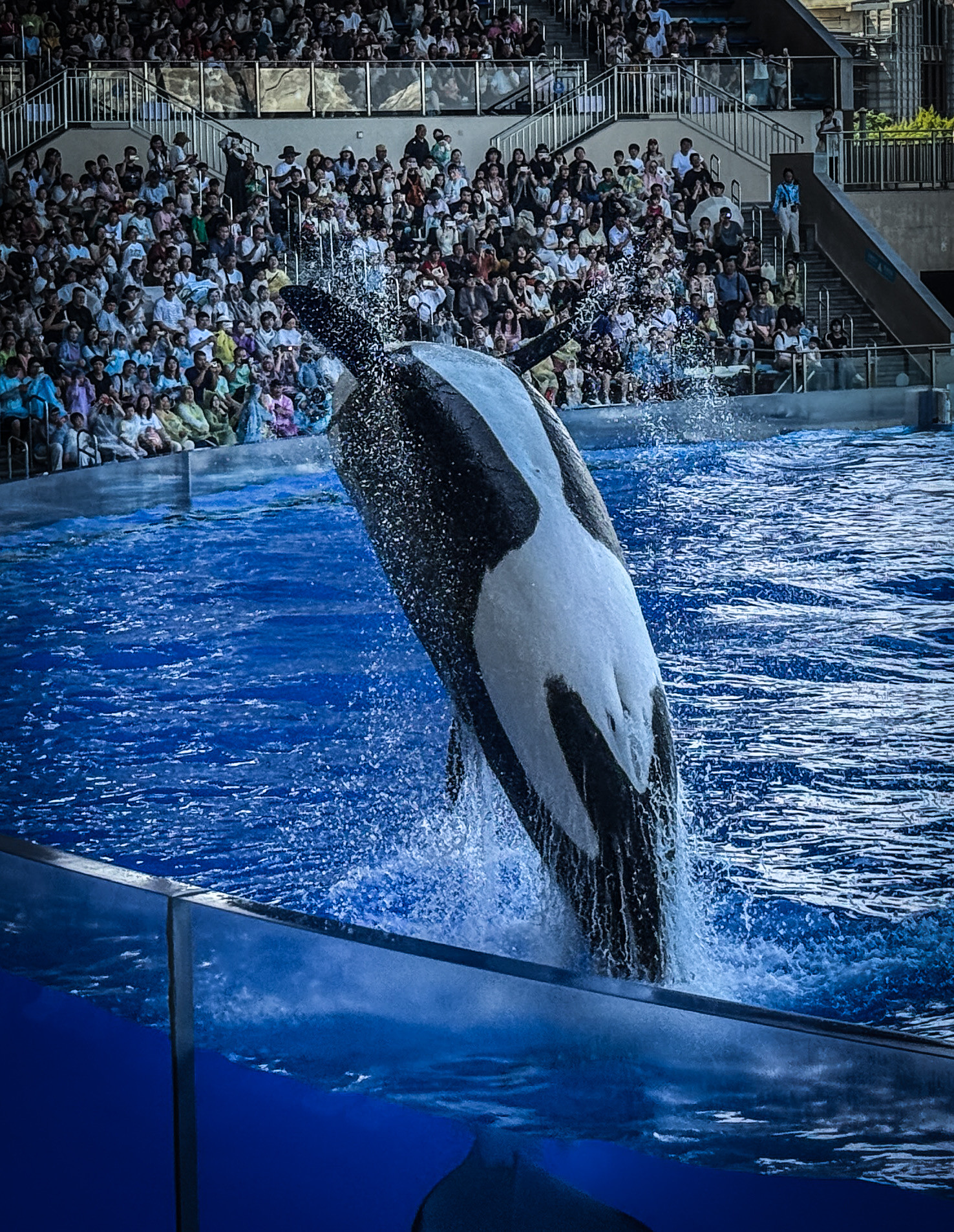
It’s Monday, so there aren’t many visitors in the park, but everyone who is there attends every show (most of them are only performed once today). As a result, the noise level is extremely high—up to 100 decibels—especially since, apart from the orca show, all events take place indoors. The shows themselves aren’t bad; we had never seen a tango with a sea lion before. But once a show ends, all visitors try to leave at the same time, and the pathways are blocked with strollers and trolleys. A workplace safety inspector back home would never allow that.

Then we come across a museum dedicated to the Japanese sci-fi and anime hero Ultraman, who has been around since 1966—we had never even heard of him. Eventually, we also find a building containing a few small aquariums and a glass tunnel. Well. Maybe we’ve become spoiled and our standards are too high, but the park feels dated and there is simply not enough to see. Poor research – I’m going to complain to the tour guide.

After the orca show, we’ve had enough. We skip the 4D cinema (after the disappointing experience at LEGOLAND). On the way to the exit, we randomly discover the penguin habitat, but that’s really the end of it.

We have plenty of time, so we decide to take public transportation. On the way to the subway station, we pass a huge building—the Yaoxue Ice and Snow World. Going skiing in Shanghai… now that’s an idea that takes some imagination.

It takes us about an hour to get back to the hotel from the aquarium. We stop to buy dinner, then spend the evening writing the blog and sorting photos. Today we covered 15,293 steps, or 10.1 kilometers. Tomorrow, at Disneyland, it could be even more.

260530 – Samstag, 30.5. – Shanghai Wild Animal Park –

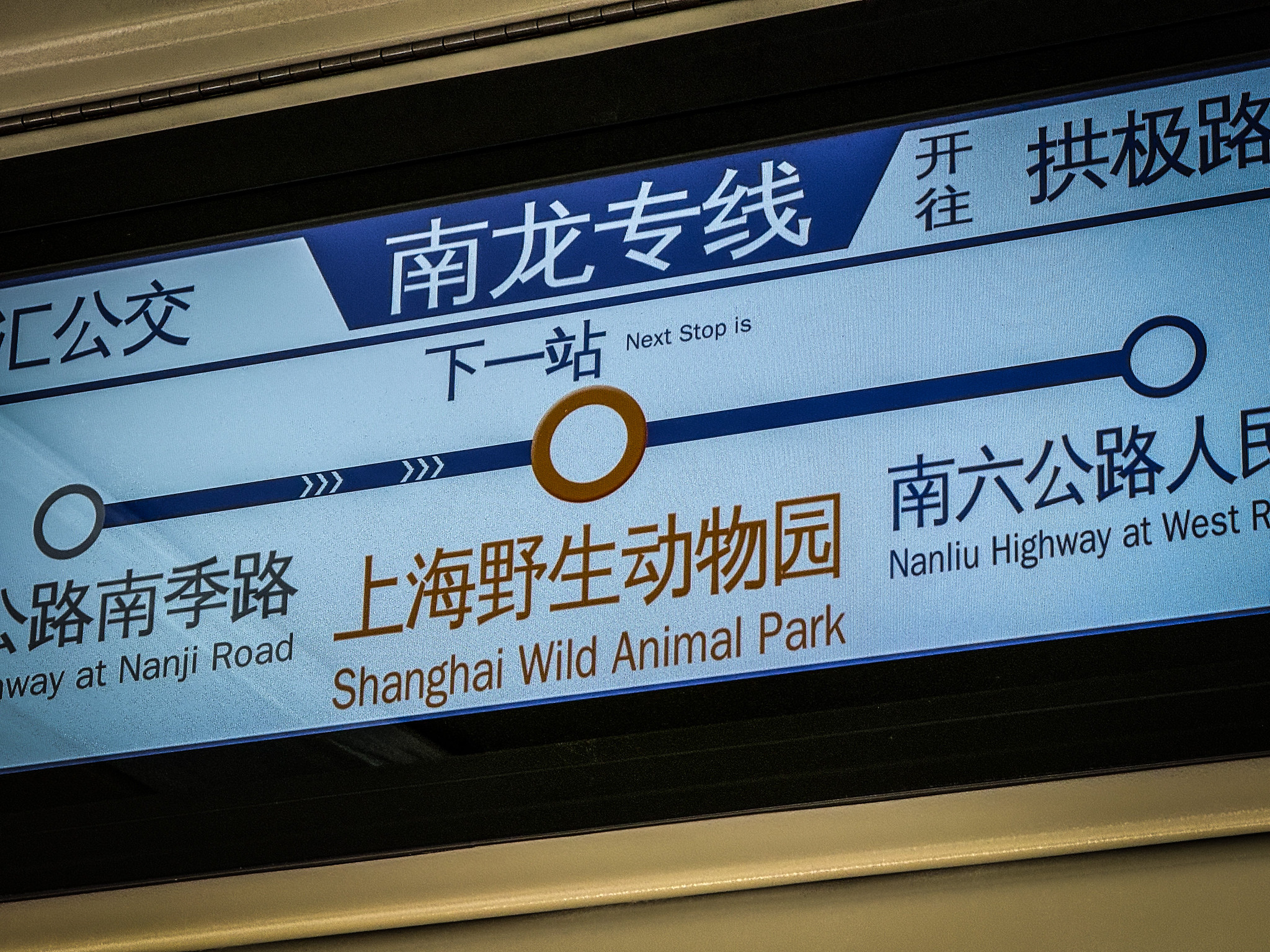
In der Früh nehmen wir von unserem Motel den öffentlichen Bus zum Wild Animal Park. Eigentlich sollten wir mittlerweile daran gewöhnt sein, dass in China alles riesengroß ist. Aber dieser Park überrascht uns dann doch wieder – deutlich größer als Disneyland Shanghai, wobei etwa die Hälfte der Fläche der Bus-Safari und den Wasserwegen für die Boot-Safari vorbehalten ist. 

Bereits beim Eingang begrüßen uns Alpakas, eine buntgemischte Gruppe aus Artisten (aus Indien, Äthiopien, dem Sudan, Kenia und anderen afrikanischen Ländern), eine Reitertruppe, und eine Schar Gänse mit rosa Windeln … sicher ist sicher.

Als erstes fahren wir mit dem Safaribus, mit vergitterten Fenstern mit Löchern, damit man den Großkatzen, Wölfen und Bären ihr Frühstück hinausreichen kann. Während der Bootsfahrt gibt es Grünzeug für die Schwäne, während sich die Affen ihr Futter direkt vom Bootsführer holen. 

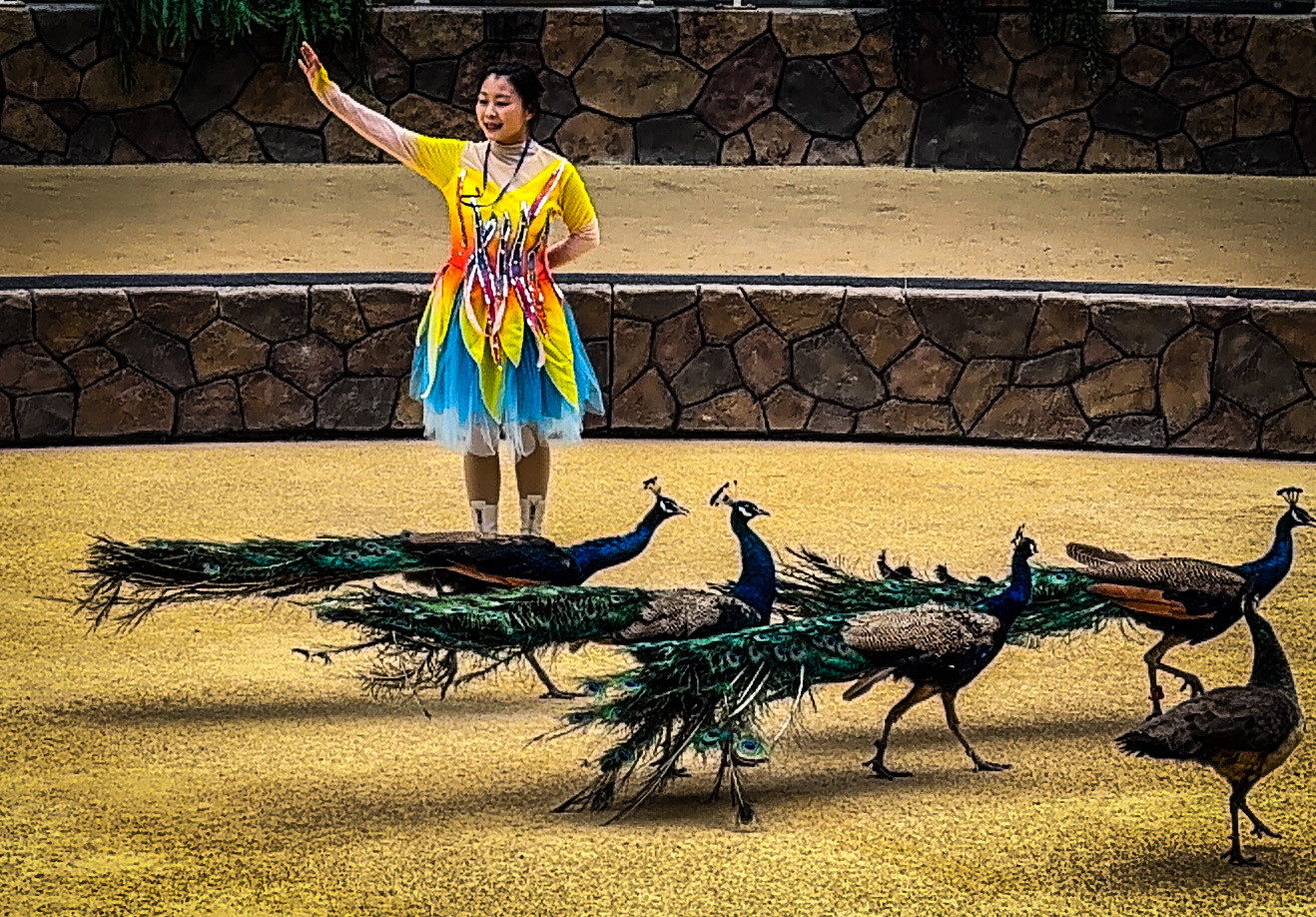
Anschließend stolpern wir zufällig in eine Show hinein, wieder mit den afrikanischen Artisten und der Reitertruppe, zusätzlich aber einem Windhundrennen, Affen, Emus und Zebras, und sogar Hornbills, die majestätisch am Auditorium vorbeischweben. Die nächste Show bietet außerdem tanzende Roboter, einen Schimpansen am Fahrrad, eine Schar Pfaue und eine Herde Stachelschweine.

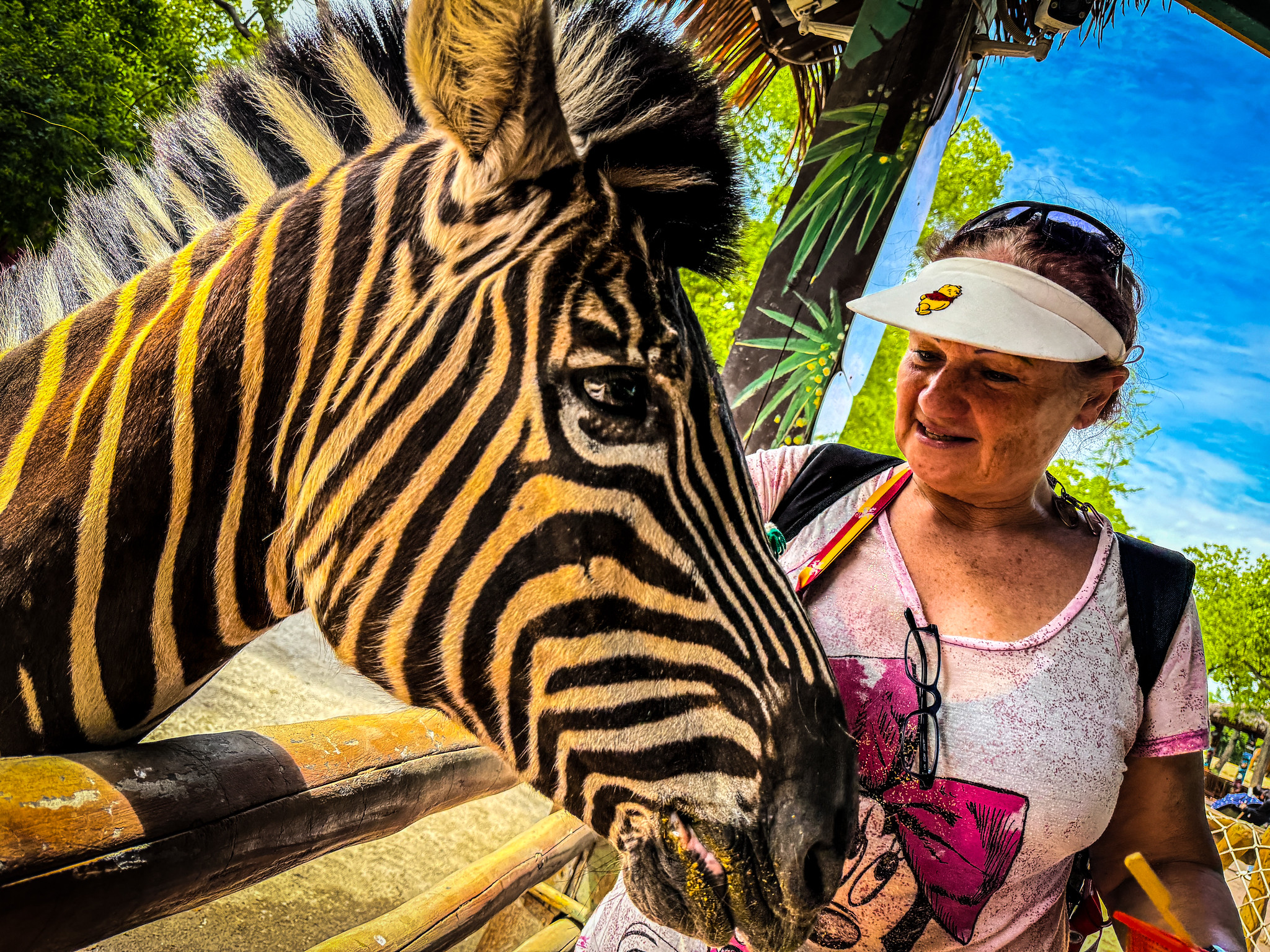
Dann füttern wir Flamingos (!), Llamas, Elefanten (!), Zebras und Capybaras – letztere nehmen das angebotene Grünzeug gnädig im Liegen entgegen, in ihrem Gehege, wo die Häuschen aussehen wie in Hobbiton. Und mittlerweile wissen wir auch, warum die Eintrittskarten so billig waren – man zahlt dann im Park ein Vielfaches davon für Safari, Bootsfahrt und vor allem Tierfutter….

Wir schaffen gerade mal eine Runde durch den Park, sehen unter anderem Riesenpandas und Rote Pandas, Waschbären und Wüstenfüchse, und dabei haben wir nicht alles gesehen. Die Seelöwen-Show und den Zirkus lassen wir aus. Sollten wir wieder mal nach Shanghai kommen, wäre dieser Park definitiv wieder einen Besuch wert. Auch die Anrainer dürften öfter hierher kommen, mit Zelt und manche sogar mit aufblasbarem Bett auf der großen Liegewiese. Und heute haben wir immerhin 9 km bzw. etwa 13.000 Schritte geschafft.

Saturday, May 30 – Shanghai Wild Animal Park

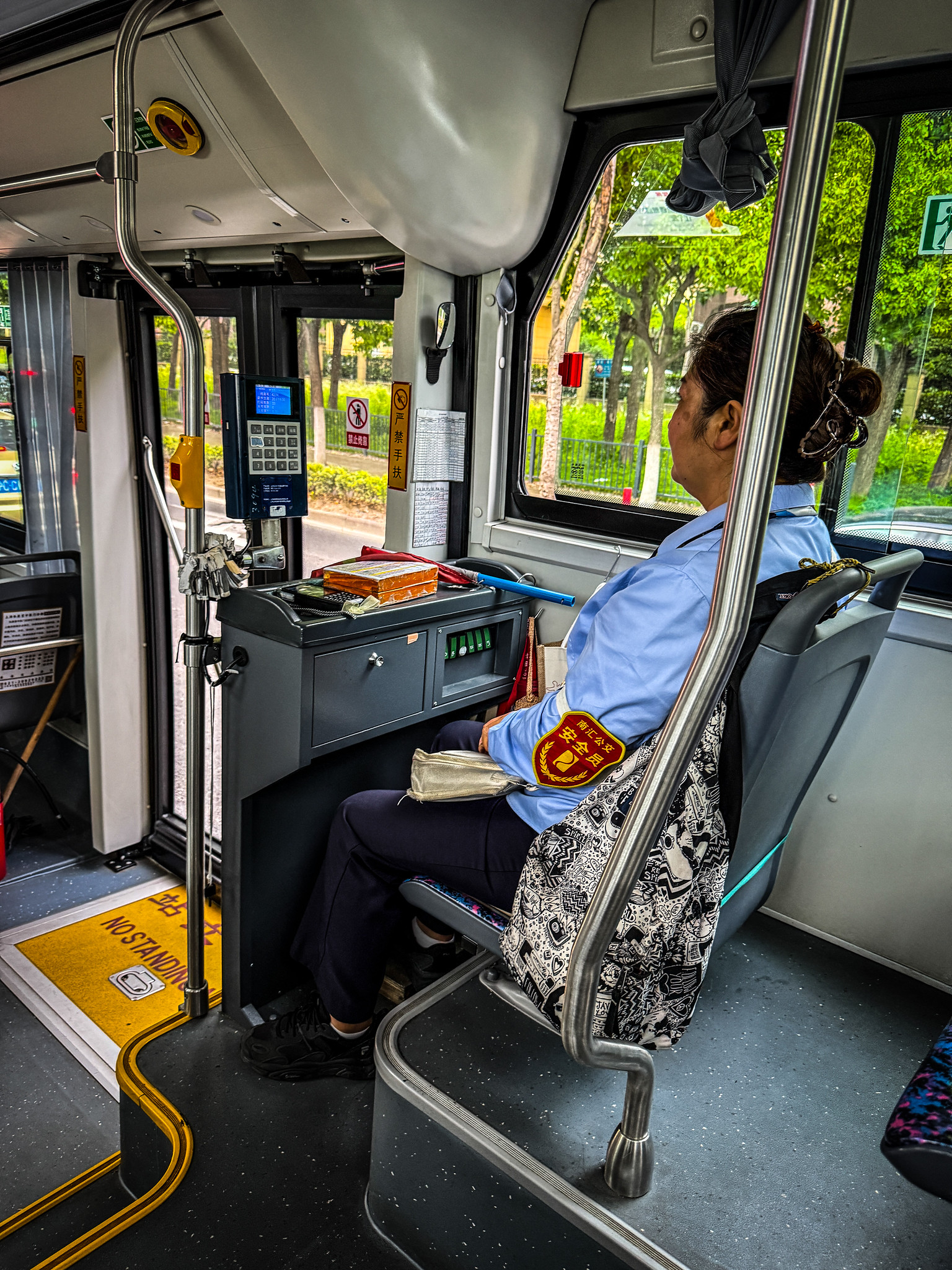
In the morning, we take a public bus from our motel to the Shanghai Wild Animal Park. By now, we should really be used to the fact that everything in China is enormous. Yet this park still manages to surprise us – it is significantly larger than Shanghai Disneyland, with about half of its area dedicated to the bus safari and the waterways used for the boat safari.

Right at the entrance, we are greeted by alpacas, a colorful group of performers (from India, Ethiopia, Sudan, Kenya, and other African countries), a cavalry troupe, and a flock of geese wearing pink diapers … better safe than sorry.

Our first activity is the safari bus ride. The buses have barred windows with small openings so visitors can hand out breakfast to the big cats, wolves, and bears. During the boat safari, we feed greens to the swans, while the monkeys collect their food directly from the boat driver.

Afterward, we accidentally stumble into a show featuring the African performers and the cavalry troupe. In addition, there is a greyhound race, monkeys, emus, and zebras, and even hornbills majestically gliding past the auditorium. The next show includes dancing robots, a chimpanzee riding a bicycle, a flock of peacocks, and a herd of porcupines.

Later, we feed flamingos (!), llamas, elephants (!), zebras, and capybaras. The latter graciously accept the offered greens while lying down in their enclosure, where the little huts look as if they were taken straight out of Hobbiton. By now, we also understand why the admission tickets were so inexpensive – once inside the park, you end up paying several times that amount for the safari rides, the boat tour, and especially for animal feed.

We manage only one full circuit of the park, seeing giant pandas and red pandas, raccoons and fennec foxes, among many others – and even then, we do not get to d ee everything. We skip the sea lion show and the circus.

If we ever return to Shanghai, this park would definitely be worth another visit. The locals also seem to enjoy the park, many of them brought tents and even inflatable beds to enjoy the Sunday afternoon. And today, we at least managed to cover 9 kilometers, or about 13,000 steps.

260526 – Dienstag, 26.5. – das chinesische Laxenburg –

Wir haben gestern Abend schon heftiges Wetterleuchten beobachtet. Irgendwann mitten in der Nacht wache ich durch Rütteln und Lärm auf – wir haben ungeplant auf halber Strecke nach Nanjing angelegt. Und es schüttet, blitzt und donnert. In der Früh erfahren wir, dass die Behörden den Schiffsverkehr aufgrund der Wetterlage komplett eingestellt haben. 

Daher wird das Programm einfach umgestellt, der Vormittagsausflug findet nach dem Mittagessen statt und das für den Abend geplante Karaoke am Vormittag. Auf letzteres verzichten wir dankend, setzen uns in die Bibliothek, sortieren unsere Fotos und schreiben am Blog weiter. Das Wetter hat sich inzwischen beruhigt, zwischen grauen Wolkenfetzen sehen wir auch ein wenig blauen Himmel. Wir fahren weiter Richtung Nanjing, begleitet von zwei Schiffen der Küstenwache und einem Schlepper – warum, können wir leider nicht in Erfahrung bringen; vielleicht wurde in der Nacht beim Anlegen irgendetwas am Schiff beschädigt.  

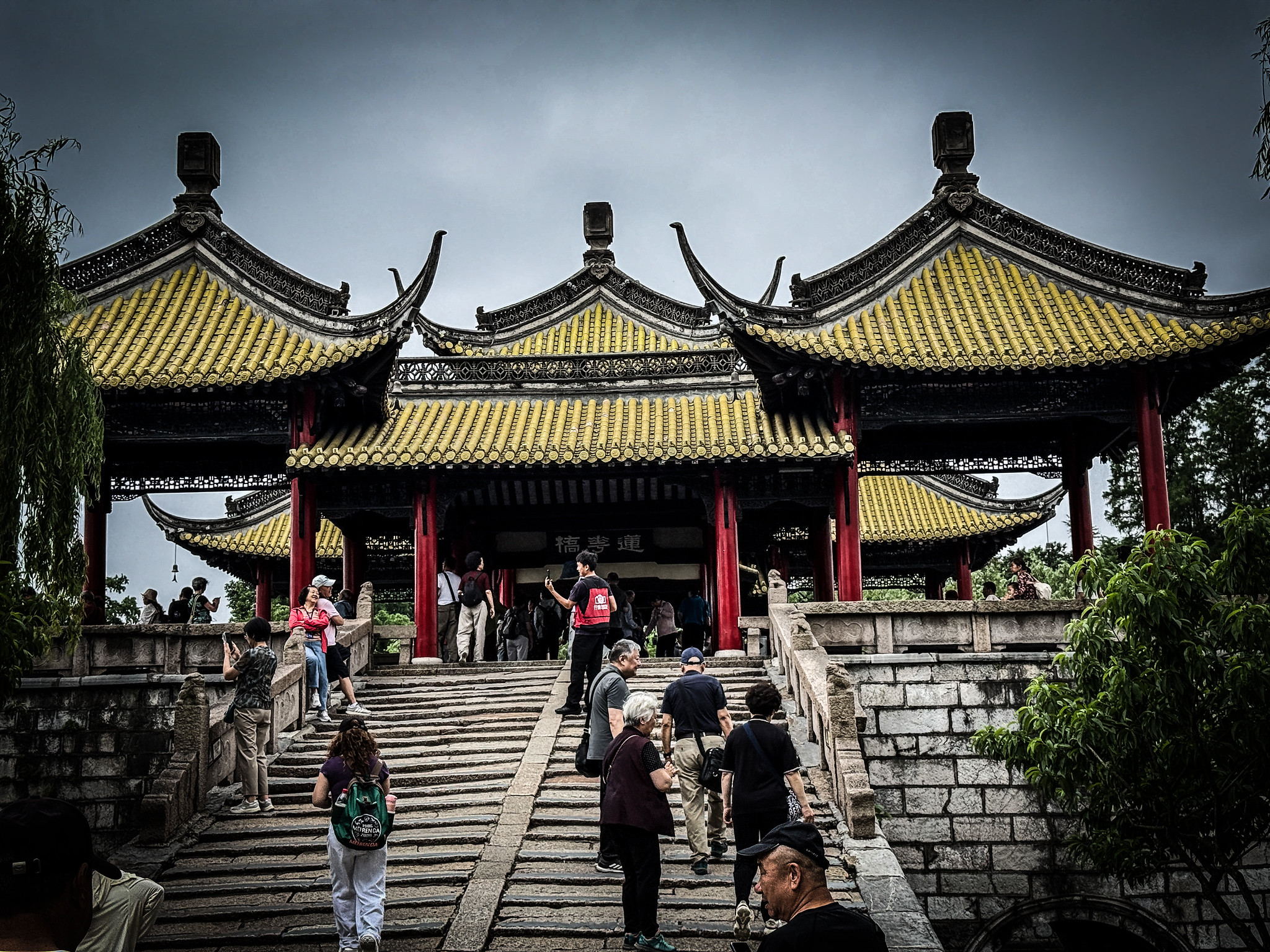
In Nanjing angekommen, werden wir wieder mit Bussen weiter transportiert, und zwar über 100 km nach Nordosten nach Yangzhou in den Slender West Lake Park. Es ist ein schöner Park mit Wasserläufen, Pavillions und Brücken, manchmal auch Pavillons auf Brücken wie zB die 5-Pavillon-Brücke, erbaut 1756 (Tang-Dynastie). Die Weiße Pagode ist eine Kopie der Pagode im Beihai-Park in Beijing (die wir vom Kohlehügel aus gesehen haben). Blühende Magnolienbäume säumen den Weg, ganz versteckt im Grün finden wir den Fahai-Tempel.

Also: schöner Park, aber viel zu viele Leute. Und eigentlich hätten uns Ausgrabungen, Museen, Tempel oder andere historische Stätten, oder auch ein großartiges Ziel wie der Mt. Jiuhua gestern mehr interessiert als das chinesische Laxenburg – zumindest wären wir für einen Spaziergang im Park nicht 100 km weit gefahren. Und außerdem gäbe es ja auch in Nanjing etliches zum Ansehen – aber wir sind ja auch morgen noch hier. Unser Schiff macht heute hier fest und legt gar keine Kilometer mehr zurück, und auch für uns waren es nur schwache 8.516 Schritte oder 5,4 km.

Tuesday, May 26 – The Chinese Laxenburg

Last night we had already noticed intense flashes of lightning in the distance. At some point in the middle of the night, I woke up because of shaking and noise — we had made an unscheduled stop halfway to Nanjing. And it was pouring rain, with lightning and thunder. In the morning we learned that the authorities had completely suspended ship traffic due to the weather conditions.

As a result, the schedule is simply rearranged: the morning excursion is moved to the afternoon and the karaoke planned for the evening is shifted to the morning. We politely decline the latter, sit down in the library, sort our photos, and continue writing the blog. The weather calmes down; between scraps of gray clouds we can even see a bit of blue sky. We continue toward Nanjing, accompanied by two coast guard vessels and a tugboat — unfortunately we can’t find out why; perhaps something on the ship has been damaged during the nighttime docking.

After arriving in Nanjing, we are transferred again by bus, this time over 100 km northeast to Yangzhou and the Slender West Lake Park. It’s a beautiful park with waterways, pavilions, and bridges, sometimes even pavilions built on bridges, such as the Five-Pavilion Bridge, built in 1756 (Tang Dynasty). The White Pagoda is a replica of the pagoda in Beihai Park in Beijing (which we have seen from Coal Hill). Blooming magnolia trees line the paths, and hidden among the greenery we discover the Fahai Temple.

So: a beautiful park, but far too crowded. And honestly, excavations, museums, temples, or other historical sites — or even a spectacular destination like Mt. Jiuhua yesterday — would have interested us much more than the Chinese version of Laxenburg Park in Lower Austria. At the very least, we wouldn’t have traveled 100 km for a walk in a park. Besides, there’s also plenty to see in Nanjing itself — but we’ll still be here tomorrow. Our ship is staying docked here today and won’t cover any more distance, and for us it was only a modest 8,516 steps or 5.4 km.

260525 – Montag, 25.6 – am Mt. Jiuhua – 

Nach dem Frühstück fahren wir mit Autobussen eineinhalb Stunden Richtung Jiuhuashan UNESCO Global Geo Park. An sich war für heute Regen angesagt, aber wir haben mal wieder Glück, es ist trocken und freundlich, allerdings wieder bei sehr hoher Luftfeuchtigkeit. Es geht ordentlich bergauf, über eine Bergstraße mit vielen Serpentinen inmitten von viel Grün. Könnte man fast mit Österreich verwechseln – wenn da nicht der Bambus am Straßenrand wäre.

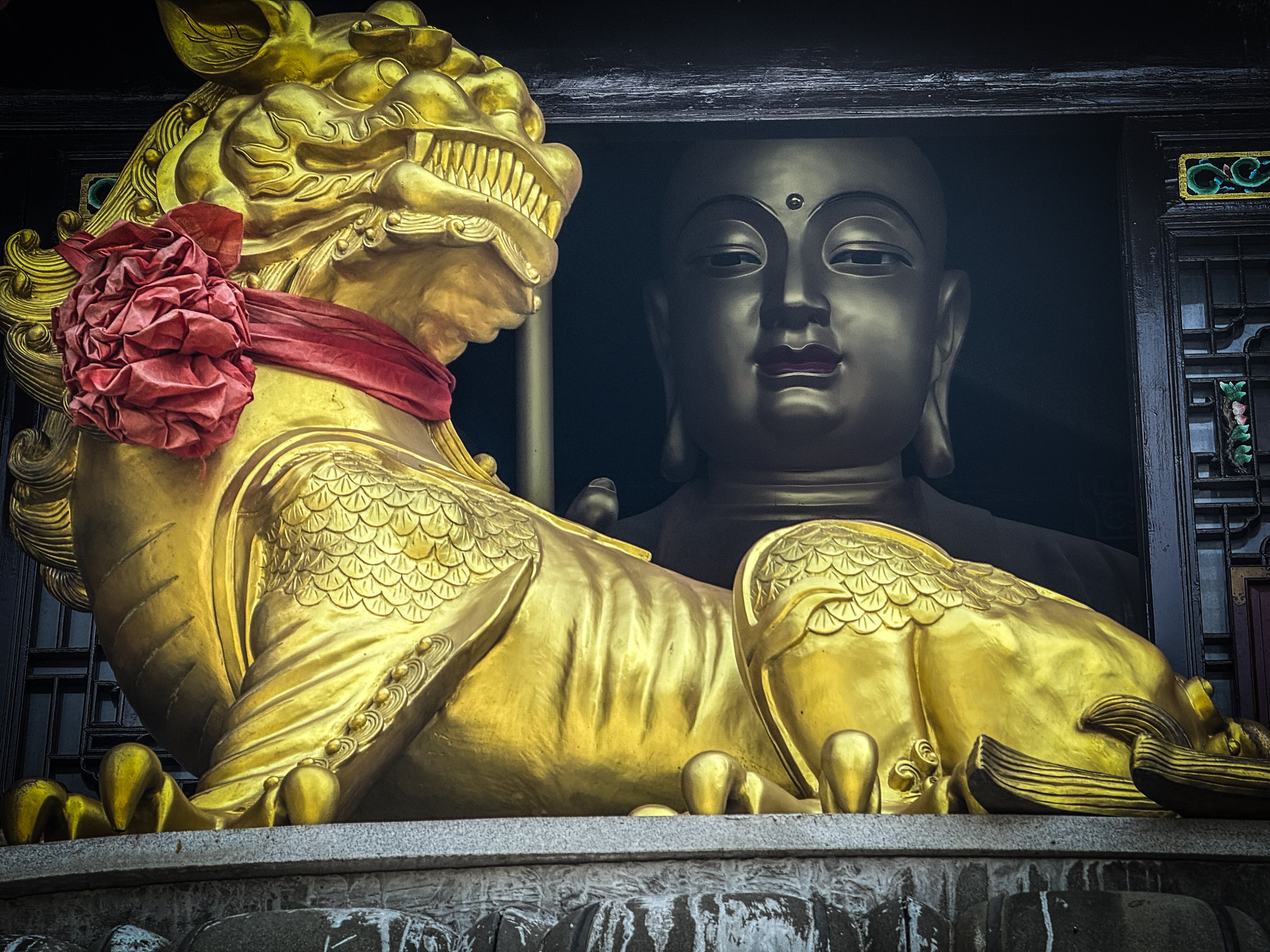
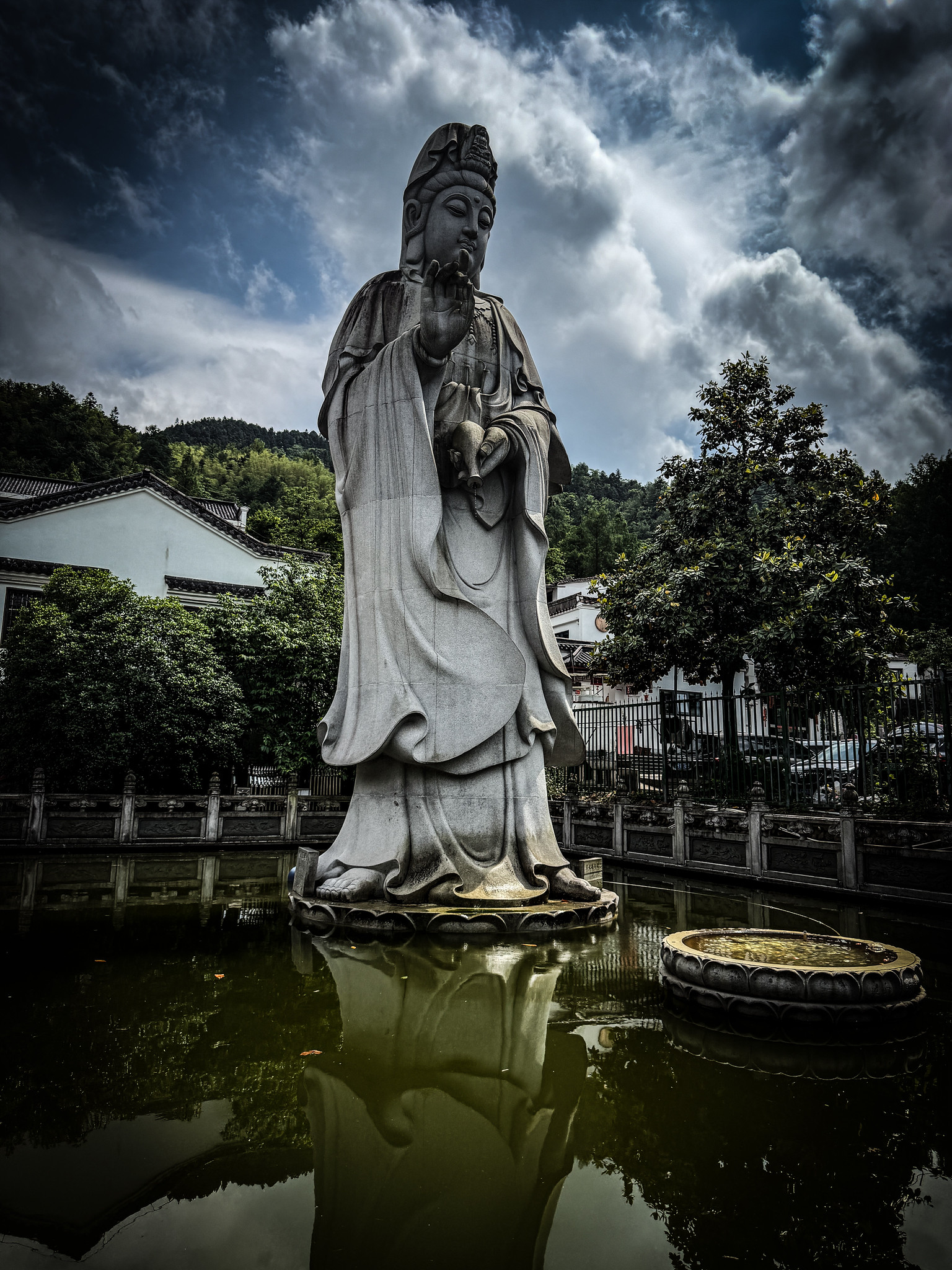
Der Mt. Jiuhua ist einer der vier berühmten Berge des chinesischen Buddhismus, die jeweils einem der vier großen Bodhisattvas geweiht sind – hier wird Kśitigarbha/Dizang verehrt, Bodhisattva der Erlösung und des Lichts. Als erstes geht’s mit der Standseilbahn (made in Austria) hinauf zum Baisui Palast (1579, Ming Dynastie), auch Zhaixing Tempel genannt. Die Tempel sind grandios, und der Ausblick auf die umliegenden Berge ebenso – an den Hängen und auf den Gipfeln kleben weitere Klöster.

Am Weg zurück zur Seilbahn werden wir von einer zweiköpfigen Patrouille angehalten – die Makaken möchten die Touristen ein wenig näher begutachten – leider halten sich nicht alle an das Gebot, die Wildtiere nicht zu füttern.

Das Mittagessen ist wieder viel zu viel, zumal wir nur zu viert an einem Tisch für zehn Leute sitzen, wo aber dennoch die Menge für zehn Personen aufgetragen wird. Wir fragen mal unsere Guide, was mit dem übrig gebliebenen Essen passiert, in der Hoffnung, dass die Angestellten es bekommen oder es sonst irgendwie weiter verwendet wird. Leider müssen wir dann mit ansehen, wie alles in große Kübeln geleert und weggebracht wird – also das bekommen die Angestellten so sicher nicht zu essen.

Anschließend bekommen wir noch zwei Tempel zu sehen, zuerst den Huacheng-Tempel, dessen Eingang von Elefanten mit sechs Stoßzähnen bewacht wird. Diese symbolisieren die sechs Tugenden im Buddhismus, die zur Erleuchtung führen sollen. Und der letzte Tempelkomplex besteht eigentlich aus drei großen Palästen, einer schöner als der andere. 

Nach dem Abendessen macht sich unser Schiff auf den Weg Richtung Nanjing, 225 km sind es bis dorthin. Wir haben zumindest 11.034 Schritte oder 6,6 km zurückgelegt heute.

Monday, June 25 – at Mt. Jiuhua –

After breakfast, we travel by coach for an hour and a half toward the Jiuhuashan UNESCO Global Geopark. Rain had actually been forecast for today, but once again we are lucky: it stays dry and pleasant, although the humidity is extremely high again. We head steadily uphill along a mountain road full of switchbacks, surrounded by lush greenery. You could almost mistake it for Austria — if it weren’t for the bamboo lining the roadside.

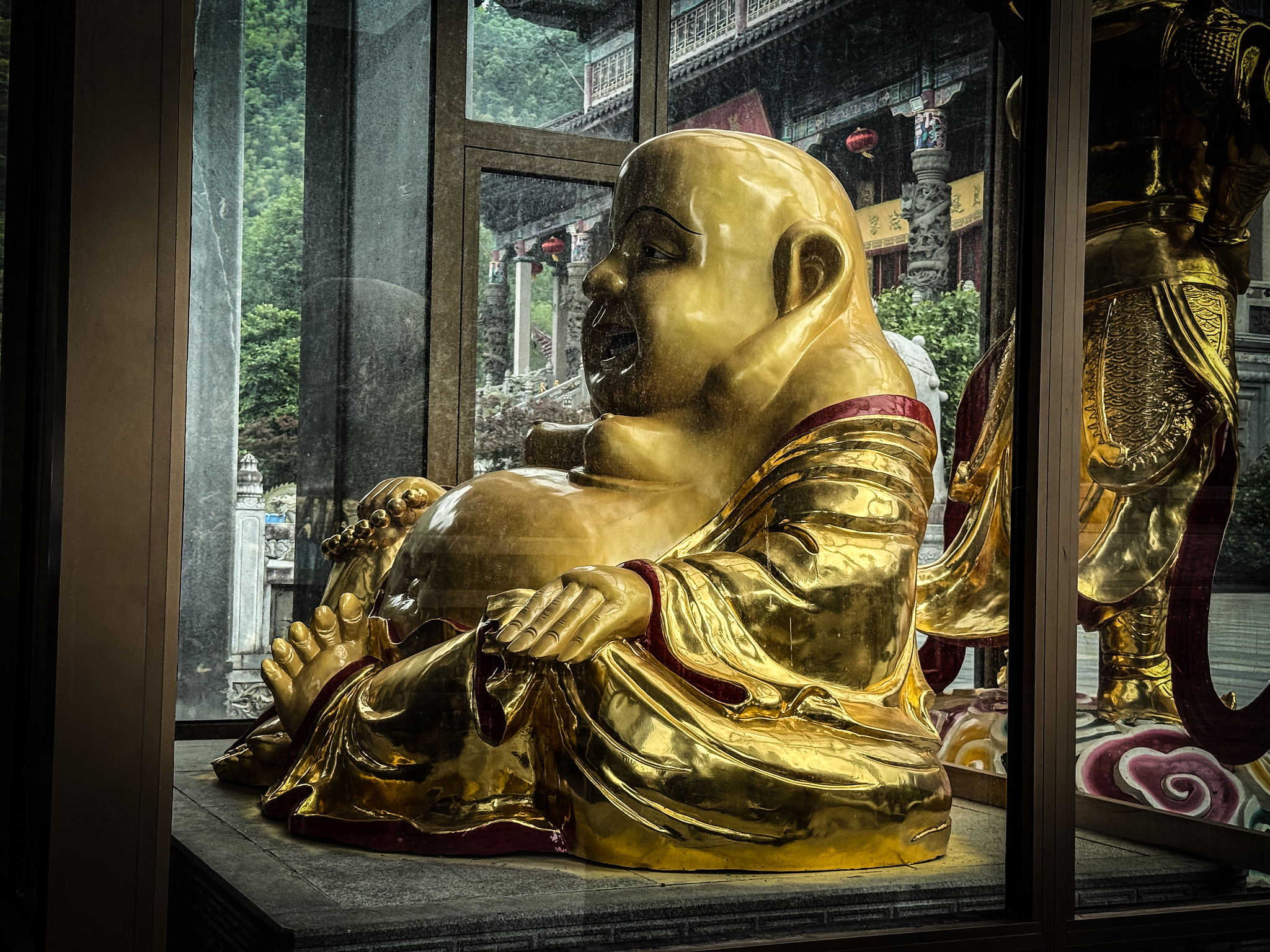
Mt. Jiuhua is one of the four famous mountains of Chinese Buddhism, each dedicated to one of the four great Bodhisattvas. Here, Kṣitigarbha (Dizang), the Bodhisattva of salvation and light, is venerated. First, we take the funicular railway (made in Austria, by the way) up to Baisui Palace (1579, Ming Dynasty), also called Zhaixing Temple. The temples are magnificent, and so are the views of the surrounding mountains — additional monasteries cling to the hillsides and mountaintops.

On the way back to the cable car, we are stopped by a two-member patrol — the macaques want to take a closer look at the tourists. Unfortunately, not everyone follows the rule against feeding wild animals.

Lunch is served once again in a local restaurant- with far too much food, especially considering that there are only four of us sitting at a table meant for ten people, yet the amount served is still enough for ten. We ask our guide what happens to the leftovers, hoping that the staff get to eat them or that the food is otherwise reused somehow. Sadly, we then have to watch as everything is dumped into large bins and carried away — so the staff definitely are not getting it to eat.

Afterwards, we visit two more temples. First, the Huacheng Temple, whose entrance is guarded by elephants with six tusks. These symbolize the six Buddhist virtues that are said to lead to enlightenment. The final temple complex actually consists of three large palaces, each more beautiful than the last.

After dinner, our ship sets course for Nanjing, which lies 225 km away. At least we managed 11,034 steps — or 6.6 km — today.

260521 – Donnerstag, 21.5 – das Megabauwerk – 

In der Früh bringt uns eine Standseilbahn vom Schiff zum Autobus Richtung DreiSchluchtenmuseum. Das ganze Gebiet rund um den Damm ist militärisch kontrolliert und kann nur im Rahmen von organisierten Ausflügen besucht werden – ein Besuch auf eigene Faust ist nicht möglich.

Im Außenbereich des Museums sind Baumaschinen zu sehen, die in den 90er Jahren aus Europa und Amerika importiert wurden, weil es die entsprechende Technologie in China noch nicht gab. Ein Raupen-Fahrzeug aus den USA kostete damals 2 Millionen US $, einer der riesigen Goodyear Reifen 500.000 Renminbi (wobei der durchschnittliche Monatslohn 480 RMB betrug)

Der Yangtse kommt aus Tibet vom Mt. Everest und fließt 6.300 km bis Shanghai – somit der drittlängste Fluss der Welt, und außerdem sehr fischreich. Karpfen und Barsch fischen ist erlaubt, aber Störe zu fangen ist verboten und wird mit sieben Jahren Gefängnis bestraft – der Stör steht auf der gleichen Stufe wie der große Panda. Außerdem leben hier angeblich 1.249 Süßwasserdelfine – wie man auf diese Zahl kommt, konnten wir leider nicht herausfinden.

Wasser zu bändigen und zu nutzen, ist nicht neu in China. Der Kanal Beijing – Hanghzou, 1.800 km lang, ist ca 2.500 Jahre alt und nach wie vor in Verwendung. Der Yangtze verursachte etwa alle zehn Jahre verheerende Überschwemmungen. Bereits 1919 träumte Dr. Sun Yat-Sen davon, diese Überflutungen zu verhindern. 1944 wurden amerikanische Wissenschaftler eingeladen, ein Projekt für eine Talsperre zu entwickeln, da kam dann aber der chinesische Bürgerkrieg dazwischen. 1958 traf Mao Tse Tung die Entscheidung, den DreiSchluchtendamm bauen zu lassen, scheiterte aber an den damals schon immensen Kosten (stattdessen wurde eine kleinere Talsperre etwa 35 km weiter flussabwärts erbaut). Erst durch Chinas Öffnung für den Westen konnte auch westliche Technologie hier zum Einsatz kommen. Baubeginn war 1994, fertig gestellt wurde das Megaprojekt mit einer Höhe von 175 m im Jahre 2012. Die Konstruktionskosten betrugen 95 Mrd Yuan, und 86 Mrd Yuan kostete die Umsiedlung der etwa 1,4 Millionen Menschen, die von der Entstehung des 600 km langen Stausees betroffen waren. Die Reste ihrer Siedlungen befinden sich nun tief unter uns, im Wasser.

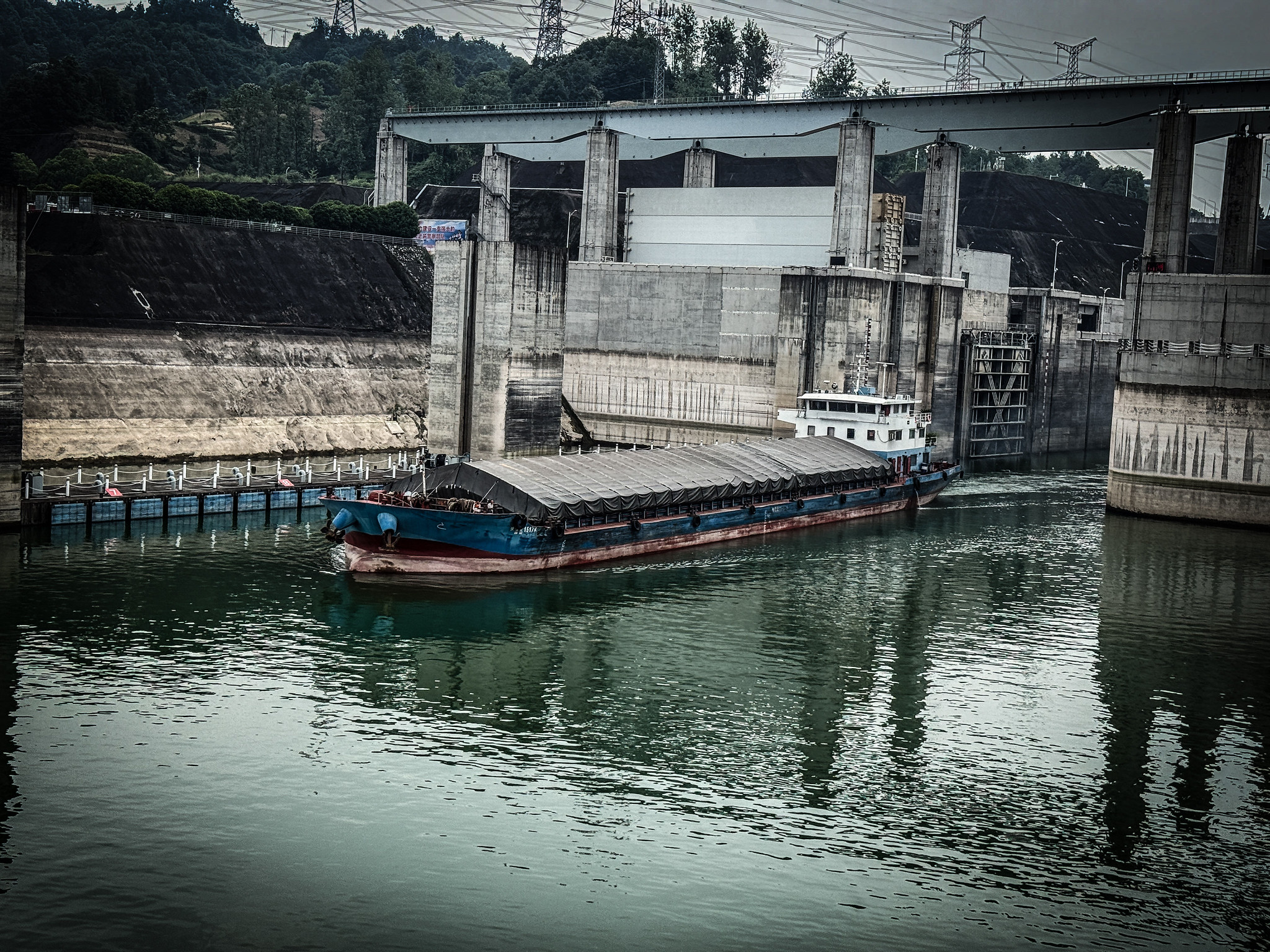
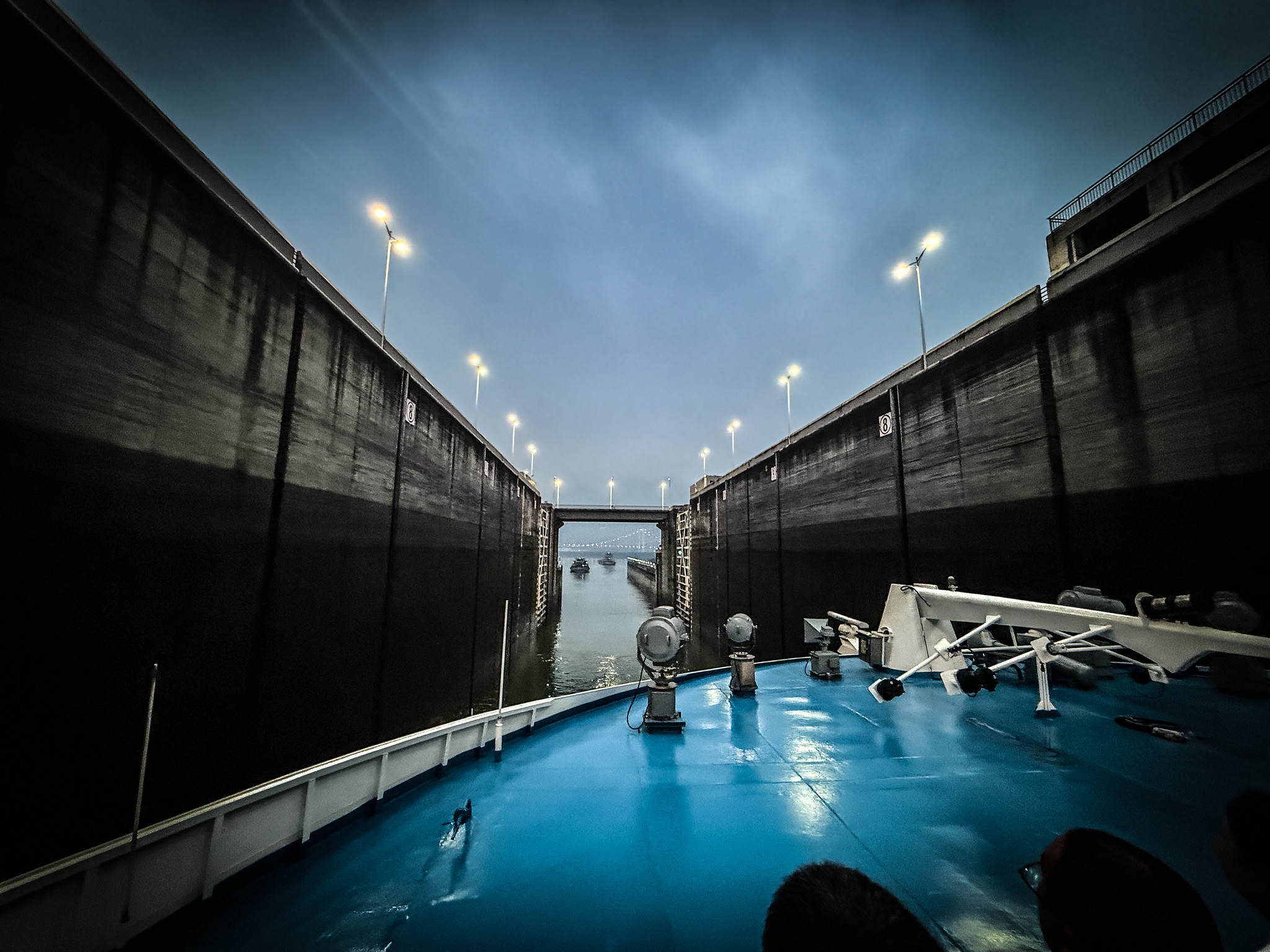
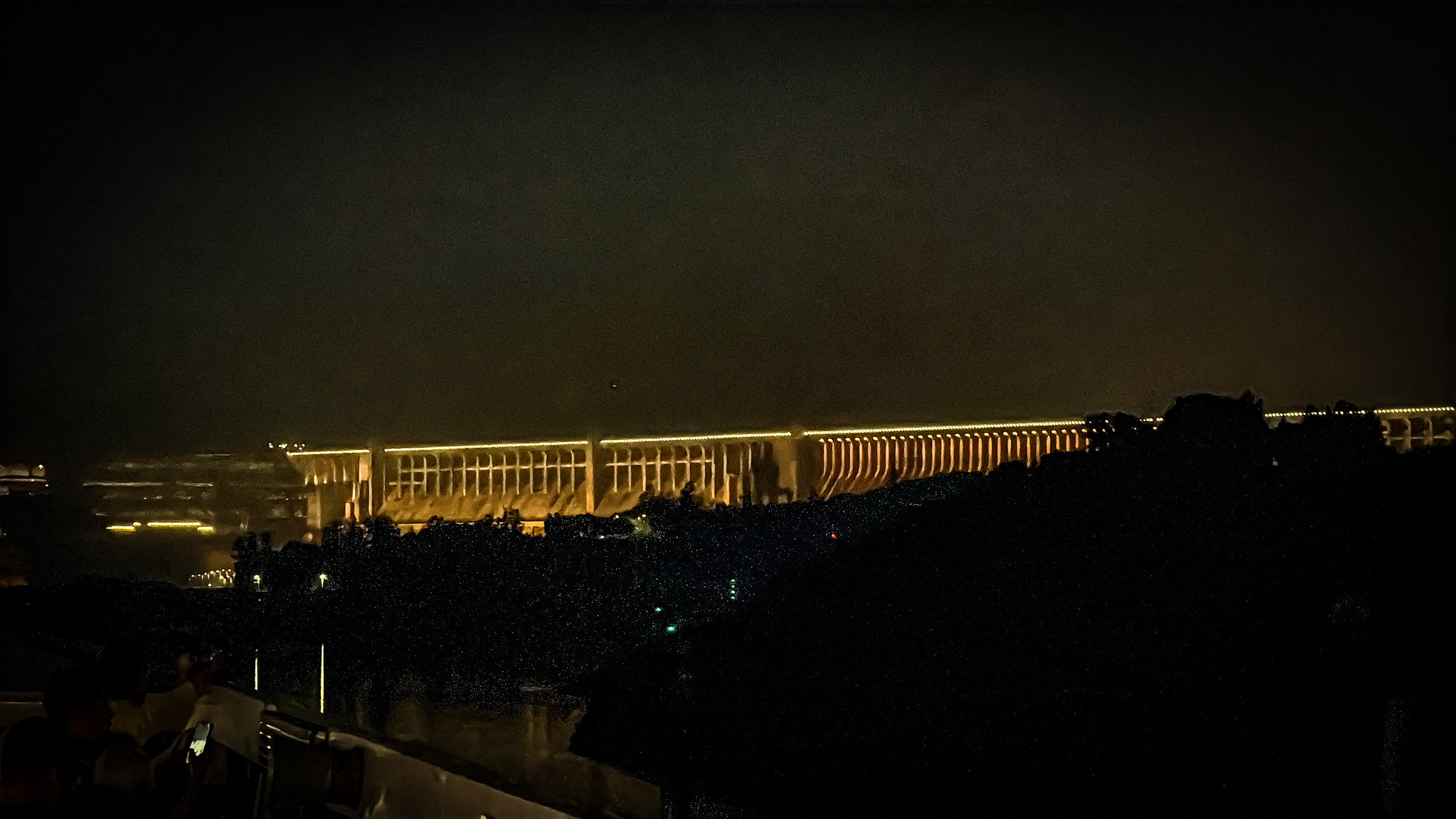
Am Nachmittag, mit gut 2,5 Stunden Verspätung, passiert unser Schiff, gemeinsam mit zwei Frachtkähnen, die fünfstufige Schiffsschleuse. Rechts und links ist da wirklich nicht mehr viel Platz. Mit jeder Schleuse sinken wir ca 25 m tiefer, der ganze Spaß dauert etwa dreieinhalb Stunden. Es gibt zwar auch einen Schiffsaufzug, mit diesem würde das Ganze nur etwa 1 Stunde dauern, aber der eignet sich nur für kleinere Schiffe bis 3500 t. Als wir um 19:40 Uhr endlich aus der Schleuse heraußen sind, ist es dämmrig und 20 Minuten später ist es finster – der Damm und die fünfstufige Schleuse sind toll beleuchtet – hätten wir ohne die Verspätung nicht zu sehen bekommen. Dafür sehen wir dann von der Xiling-Schlucht, der dritten und mit 76 km längsten der drei Schluchten eigentlich nichts, weil es stockfinster ist. Und die Passage der Schleuse des Gezhou Damms verschlafen wir bereits, genauso wie den Rest der Fahrt nach Jingzhou. 

Unser Schiff hat heute 148 km zurückgelegt, unsere Eigenleistung betrug nur 10.655 Schritte oder 6,9 km.

Thursday, May 21 – The Mega Structure

In the morning, a funicular takes us from the ship to a bus heading toward the Three Gorges Museum. The entire area around the dam is under military control and can only be visited as part of organized tours – it is not possible to visit on your own.

Outside the museum, construction machinery is on display that was imported from Europe and America in the 1990s because China did not yet have the necessary technology. One crawler vehicle from the USA cost 2 million US dollars at the time, and one of the giant Goodyear tires cost 500,000 renminbi (while the average monthly salary was only 480 RMB).

The Yangtze originates in Tibet near Mt. Everest and flows 6,300 km to Shanghai, making it the third-longest river in the world. It is also very rich in fish. Fishing for carp and perch is allowed, but catching sturgeon is prohibited and punishable by seven years in prison — sturgeon are considered on the same protection level as the giant panda. Supposedly, 1,249 freshwater dolphins also live here — unfortunately, we could not find out how anyone arrived at that exact number.

Controlling and making use of water is nothing new in China. The Beijing–Hangzhou Canal, 1.800 km long, is about 2,500 years old and still in use today. The Yangtze caused devastating floods roughly every ten years. As early as 1919, Dr. Sun Yat-Sen dreamed of preventing these floods. In 1944, American scientists were invited to develop a dam project, but the Chinese Civil War interrupted those plans. In 1958, Mao Zedong decided to have the Three Gorges Dam built, but the enormous costs prevented the realization  (instead, a smaller dam was built about 35 km downstream). It took decades and the opening of China to the West in order to import Western technology. Construction began in 1994, and the mega-project, standing 175 meters high, was completed in 2012. Construction costs amounted to 95 billion yuan, while another 86 billion yuan were spent relocating approximately 1.4 million people affected by the creation of the 600 km long reservoir. The remains of their settlements now lie deep beneath us, underwater.

In the afternoon, running more than 2.5 hours behind schedule, our ship enters the five-stage ship lock together with two cargo barges. There really isn’t much room to spare on either side. With each lock, we descend around 25 meters lower. The whole process takes about three and a half hours. There is also a ship lift, which would reduce the journey to only about one hour, but it is suitable only for smaller vessels of up to 3,500 tons.

When we finally emerge from the last lock at 7:40 p.m., it is already dusk, and twenty minutes later it is completely dark. The dam and the five-stage lock are beautifully illuminated — something we would not have seen without the delay. On the other hand, we see practically nothing of the Xiling Gorge, the third and longest of the three gorges at 76 km, because it is pitch black. We also sleep through the passage of the Gezhou Dam lock, as well as the remainder of the journey to Jingzhou.

Today our ship covered 148 km. Our own contribution amounted to only 10,655 steps, or 6.9 km.

260520 – Mittwoch, 20.5 – Zwei Kaiser und zwei Schluchten – 

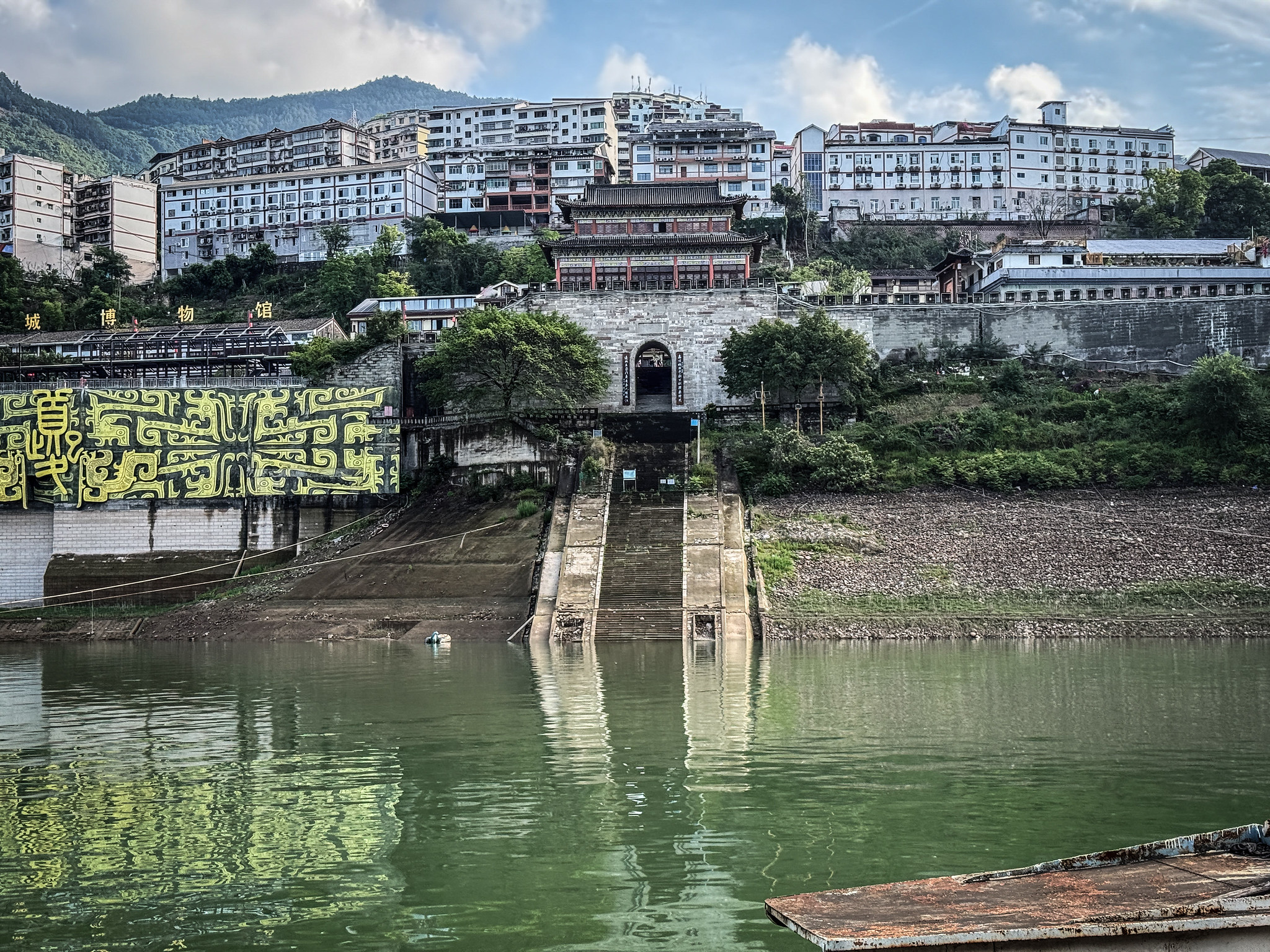
Und wieder haben wir von unserer nächtlichen Fahrt, diesmal über 212 km bis nach Fengjie,  nichts mitbekommen. Das Programm heute Vormittag: die Stadt des weißen Kaisers, auf dem Berg des weißen Kaisers, einer Insel am Eingang zur Qutang-Schlucht. Mehrere Hundert Stufen führen hinauf, und es ist strahlend schön und heiß. Es gäbe auch die Möglichkeit, sich mit einer Sänfte hinauf tragen zu lassen, aber wir beschließen, uns diesen Besuch zu erarbeiten. Kaiser Liu Bang, Begründer der Han Dynastie, wird hier als Sohn des weißen Kaisers verehrt. Und hier begegnen wir auch Kaiser Liu Bei und seinem loyalen Kanzler Zhuge Liang wieder.

Den Nachmittag verbringen wir am Sonnendeck, wegen des phänomenalen Panoramas. Als erstes fahren wir in die malerische Qutang-Schlucht, die auch auf der Rückseite des 10-Yuan-Scheins abgebildet ist: mit 8 km ist sie die kürzeste und engste der drei Schluchten. An den steilen Felswänden sehen wir in unregelmäßigen Abschnitten Löcher – hier wurden früher Pflöcke waagerecht in den Fels getrieben, und die Verstorbenen darauf gebettet.

In der Provinz Chongqing gibt es über 20.000 Brücken. Bei der Einfahrt in die zweite der drei Schluchten, die Wu-Schlucht, passieren wir die letzte dieser Brücken, bevor wir in die Provinz Hubei wechseln. Wir sind jetzt in Zentral China, die Provinz Hubei hat 75 Mio EW, allein die Bevölkerung der Hauptstadt Wuhan übersteigt mit 12 Millionen die Bevölkerungszahl Österreichs. An den steilen Hängen der Schlucht kleben Tempel (bitte, wie hat man das Baumaterial da hinauf geschafft?), und im etwas flacheren Terrain sehen wir Orangenhaine.

Nach dem Abendessen gehen wir voller Neugierde zum im Abendprogramm angekündigten Gruppen-Tanzunterricht, der für uns aussieht wie eine Mischung aus Tai Chi und Linedance. Da macht die anschließende Dance Party mit der beschwingten Musik von Toni und Coco schon mehr Spaß. Inzwischen legt das Schiff 274 km bis Yichang zurück; wir haben heute zumindest 13.077 Schritte bzw. 8,8 km geschafft – und da ist die Danceparty nicht mitgerechnet.

Wednesday, May 20 – Two Emperors and Two Gorges –

Once again, we missed everything from our overnight journey of 212 km to Fengjie. This morning’s program: the City of the White Emperor, located on White Emperor Mountain, an island at the entrance to the Qutang Gorge. Several hundred steps lead up to it, the weather is beautiful and hot. There is also the option of being carried up in a sedan chair, but we decide to earn this visit ourselves. Emperor Liu Bang, founder of the Han Dynasty, is revered here as the son of the White Emperor. And here we also encounter Emperor Liu Bei and his loyal chancellor Zhuge Liang once again.

We spend the afternoon on the sun deck because of the phenomenal panorama. First, we sail through the picturesque Qutang Gorge, which is also depicted on the back of the 10-yuan banknote. At only 8 km, it is the shortest and narrowest of the Three Gorges. On the steep rock faces we see holes at irregular intervals—this is where people used to put their dead: wooden stakes were driven horizontally into the cliffs, with the deceased laid to rest upon them.

There are more than 20,000 bridges in Chongqing Province. As we enter the second of the Three Gorges, Wu Gorge, we pass the last of these bridges before crossing into Hubei Province. We are now in Central China. Hubei Province has 75 million inhabitants, and the population of its capital, Wuhan alone—12 million—exceeds the population of Austria. Temples cling to the steep slopes of the gorge (seriously, how did they get the building materials up there?), and in the flatter areas we see orange groves.

After dinner, full of curiosity, we attend the group dance lesson announced in the evening program, which looks to us like a mixture of Tai Chi and line dancing. The dance party afterward, with the lively music of Toni and Coco, is much more fun. Meanwhile, the ship covers another 274 km toward Yichang. Today, at least, we managed 13,077 steps, or 8.8 km—and that doesn’t even include the dance party.

260515 – Freitag, 15. Mai – Riesenpandas, Riesenbuddha und Riesenfreude –

Wir haben uns während der Reiseplanung überlegt, hier im RiesenPanda- Forschungszentrum von Chengdu – sowie im Jänner in der Central Florida Animal Reserve – ein „Keeper for a Day“ Programm zu machen, also Gehege reinigen, Futter zubereiten, und Panda Kuchen machen. Aber man darf die Pandas nicht mehr angreifen, und das Programm ist dermaßen unverschämt und damit abschreckend teuer, dass wir uns dann doch für einen normalen Besuch entschieden haben. 

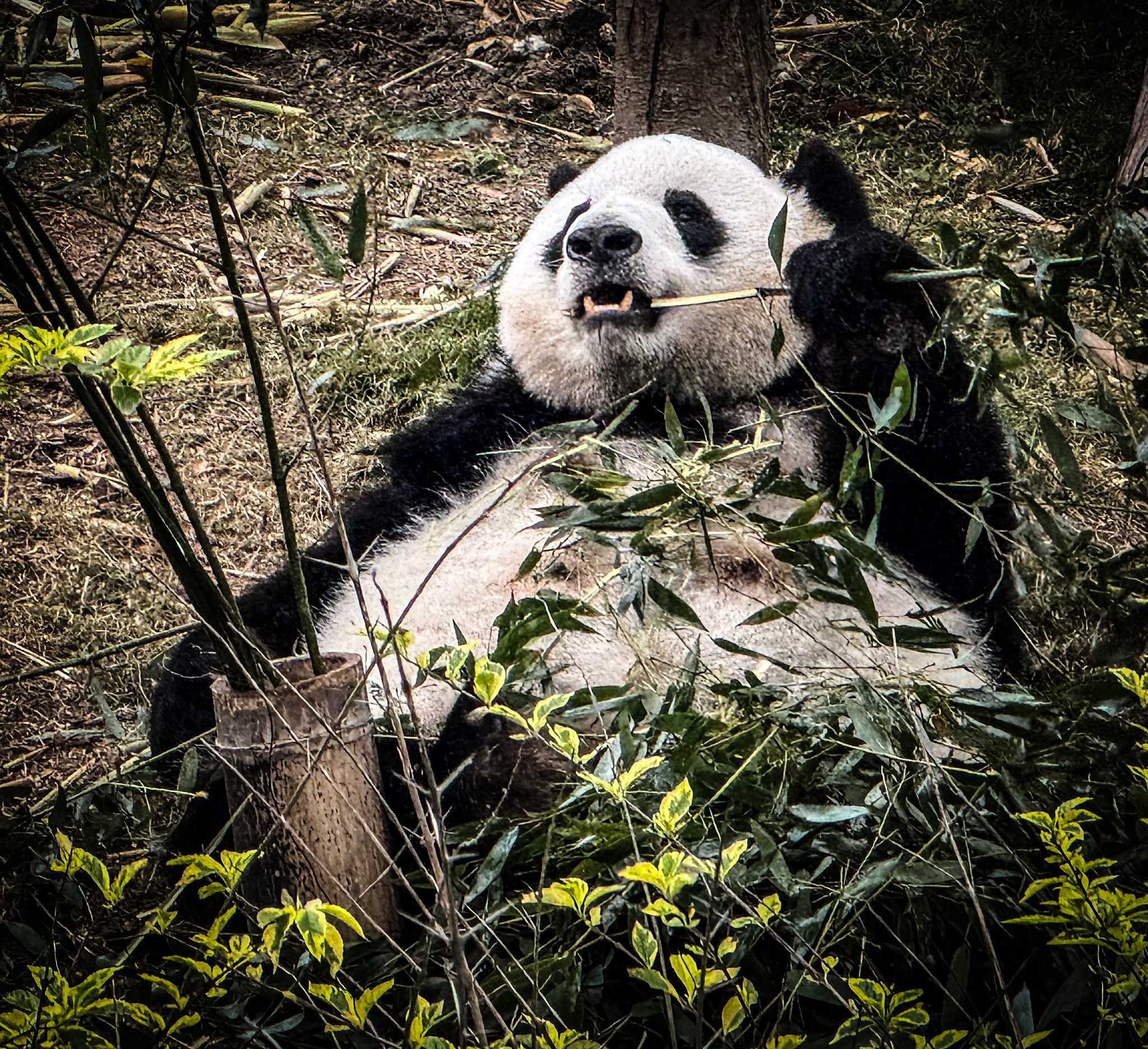
Und das war gut so, wir haben eine Tagestour gebucht, und unser Guide Samuel empfiehlt uns dringend, im Forschungszentrum das Shuttle zu nehmen und das neue eröffnete Westareal zu besuchen. Hier gibt es viel, viel weniger Touristen als beim Südeingang, außerdem auch kleine rote Pandas und RiesenPandabären. Große und kleine. Junge und ältere. Dicke und noch dickere. Pandabären mit großen Ohren und Pandabären mit noch größeren Ohren. Beim Essen – Bambusblätter oder Bambussprossen –  oder schlafend. Und erfreulicherweise – sagt unser Guide – ist das Forschung und Zuchtprogramm so erfolgreich, dass die Pandabären nicht mehr auf der Liste der gefährdeten Arten stehen.

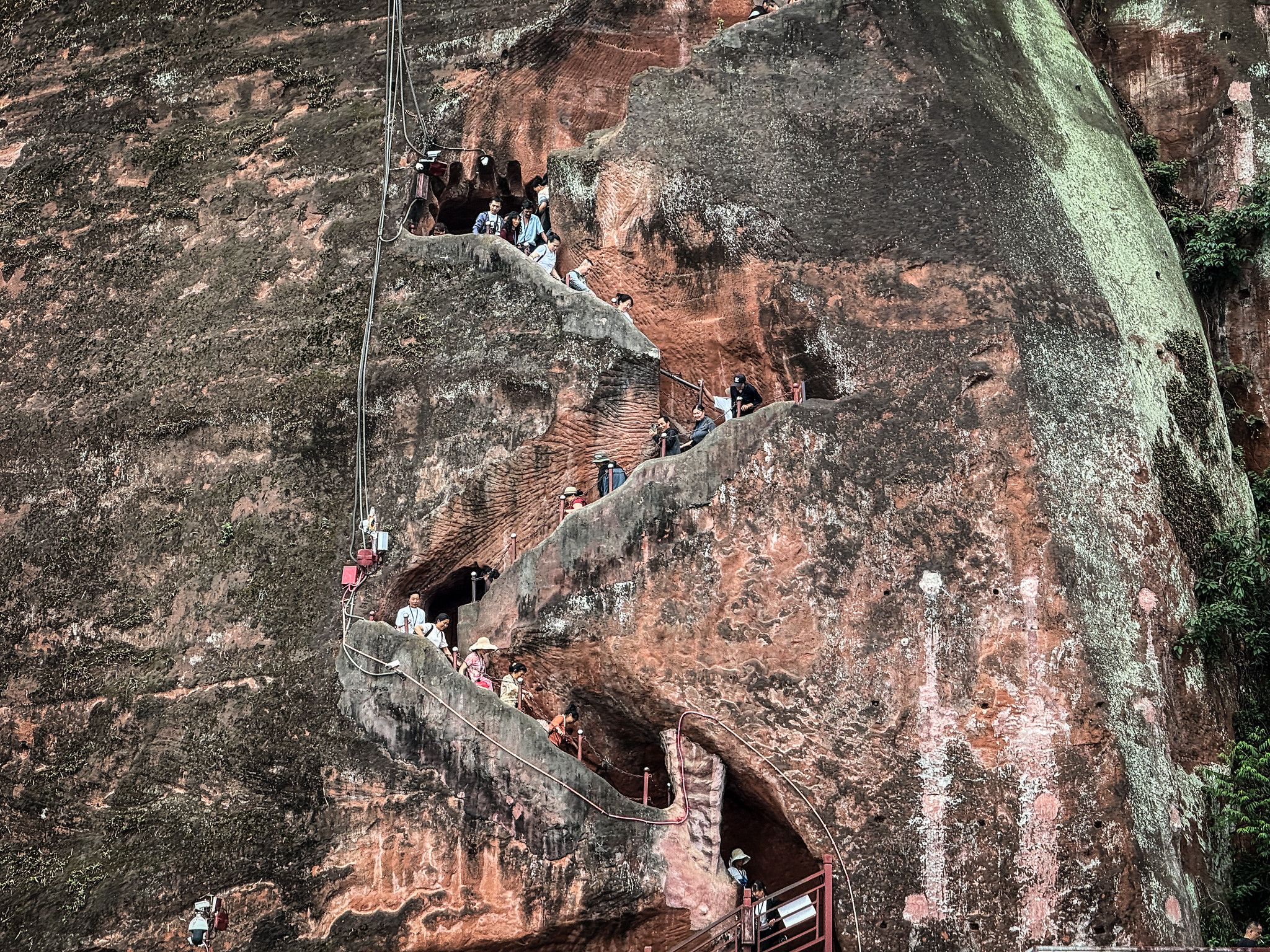
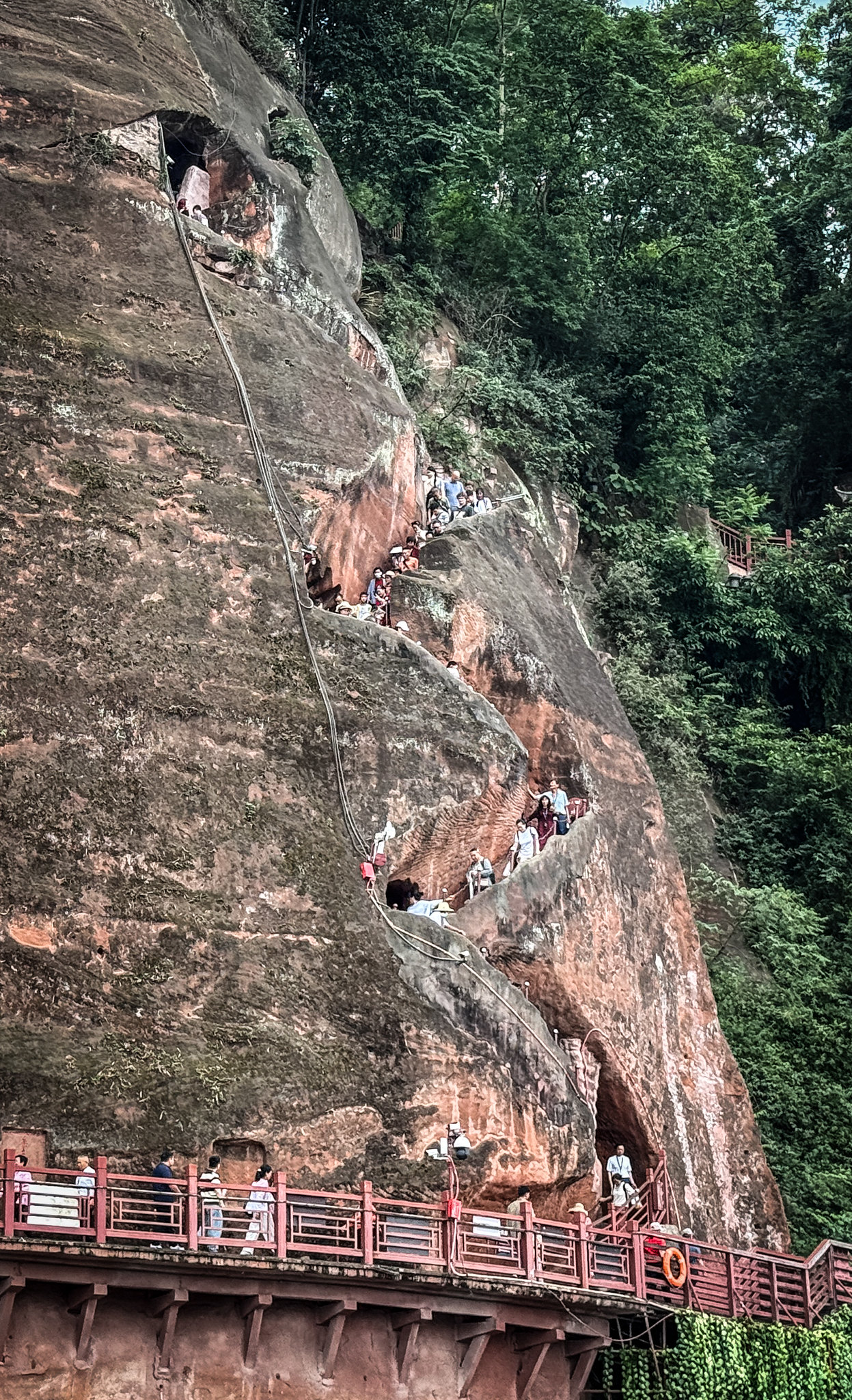
Etwa 2 Stunden und ungefähr 11.738 Fotos später steigen wir wieder ins Auto und fahren Richtung Süden, nach Leshan, wo wir vom Schiff aus die mit 71 m Höhe größte sitzende Buddhastatue der Welt bestaunen. Man kann die riesige Sandsteinskulptur auch zu Fuß besichtigen, wir sehen die Touristen die steilen Felstreppen hinauf- und hinunterkrabbeln, aber allein bei dem Anblick tun mir die Knie weh. Dann die Quizfrage des Tages: wie viele Locken hat der Buddha auf seinem Kopf? Es sind 1051. Die Zahl hat keine besondere Bedeutung, irgendjemand hat sich einfach den Spaß gemacht, die Locken zu zählen.

Dann geht es wieder 2 Stunden mit dem Auto zurück zu unserem Hotel, zum krönenden Abschluss des Abends: Julie und Peter warten hier auf uns. Wir haben die beiden, auch begeisterte Reisende und Wohnmobilisten, vor drei Jahren im Rahmen unseres Sabbaticals in Argentinien kennen gelernt und sind ein Stückchen der Reise gemeinsam gefahren. 

Vor ein paar Tagen hat sich Julie bei uns gemeldet, die beiden sind in Chongqing zum 100. Geburtstag von Julies Mama, sie kommen heute nach Chengdu und wir verabreden uns spontan zum Abendessen.

Die Wiedersehensfreude ist riesengroß, wir haben einander viel zu erzählen, und Julie bestellt für uns die lokalen Köstlichkeiten – sie hat ja hier Heimvorteil. Anschließend geht es zurück ins Hotel – heute waren es „nur“ 14.078 Schritte oder 9,75 km. Es heißt Koffer packen, morgen geht es weiter in die nächste Stadt am Programm. 

Friday, May 15 – Giant Pandas, Giant Buddha, and Giant Joy

While planning our trip, we considered joining a “Keeper for a Day” program here at the Giant Panda Research Center in Chengdu, like we did at the Central Florida Animal Reserve back in January. You usually get to clean enclosures, prepare food, and even make panda cakes. But you can’t hug a Panda anymore and it was so outrageously expensive that we decided against it and chose a regular visit instead.

And that turned out to be the right decision. We booked a day tour, and our guide Samuel strongly recommended taking the shuttle at the research center and visiting the newly opened western area. There are far fewer tourists there than at the south entrance, plus there are also little red pandas. And of course giant pandas. Big and small. Young and old. Chubby and even chubbier. Pandas with big ears and pandas with even bigger ears. Eating bamboo leaves or bamboo shoots—or sleeping. And fortunately, as our guide tells us, the research and breeding program has been so successful that giant pandas are no longer on the list of endangered species.

About two hours and roughly 11,738 photos later, we get back into the car and head south to Leshan, where we take a boat to admire the world’s largest seated Buddha statue, a towering 71 meters high. You can also visit the enormous sandstone sculpture on foot; we see tourists climbing up and down the steep stone stairways, but just looking at them makes my knees hurt.

Then comes the quiz question of the day: How many curls does the Buddha have on his head? The answer is 1,051. The number has no special significance—someone simply had fun counting them.

Then it’s another two-hour drive back to our hotel, leading up to the highlight of the evening: Julie and Peter are waiting for us there. We met the two of them—fellow travel enthusiasts and motorhome travelers—three years ago during our sabbatical in Argentina, where we traveled together for part of the journey.

A few days ago, Julie got in touch with us. The two of them are in Chongqing for Julie’s mother’s 100th birthday, and since they were coming to Chengdu today, we spontaneously arranged to meet for dinner.

The joy of seeing each other again is enormous. We have so much to catch up on, and Julie orders local specialties for us—she has the home advantage here, after all.

Afterward, it’s back to the hotel. Today it was “only” 14,078 steps or 9.75 kilometers. Time to pack our bags—tomorrow we move on to the next city on the itinerary.