Archiv der Kategorie: Hafen

230827 – Noch ein Sonntag in Buenos Aires >

Sonntag / Sunday, August 27, 2023
Tag 497 – Noch ein Sonntag in Buenos Aires

Es ist sonnig, halbwegs warm und Sonntag – wieder Flohmarkt in San Telmo. Wir bahnen uns einen Weg durch die Marktstände und die Besucher Richtung Rio Dique, wo die Fregatte Sarmiento auf Besucher wartet. Das ehemalige Schulschiff lief 1899 auf ihre Jungfernfahrt aus und absolvierte bis 1939 insgesamt 39 Ausbildungsreisen in alle Welt, dann war es bis 1960 in argentinischen Gewässern unterwegs. 1961 wurde es in ein Museumsschiff umgewandelt; leider sind derzeit Teile wie etwa die Kapitänskajüte wegen Renovierung nicht zugänglich.

Nach dem Besuch am Schiff geht es zurück Richtung Flohmarkt. Wir kommen an der Casa minimal vorbei, dem schmalsten Haus von Buenos Aires, erbaut Anfang 19. Jhd. Ein Stückchen weiter, am Flohmarkt, kaufen wir dann doch das Buch, das wir letzte Woche gesehen haben – ein Fachbuch über argentinisches Blechspielzeug von 1900 bis 1970, im Handel vergriffen, auch online nicht erhältlich, kleine Auflage, dementsprechend teuer. Aber wir wissen, dass wir dieses Buch wahrscheinlich nie wieder finden werden. Also heute Geld ausgeben oder ab morgen ärgern. Zwei schöne Blechschilder und eine Holzambulanz laufen uns auch noch zu.

Wir bringen die Beute in unser Apartment, machen Mittagspause und überlegen dann, was wir uns noch anschauen wollen. Es gäbe in der Nähe noch Museen, aber das Wetter ist zu schön. Also steigen wir in den Bus und fahren zum Eco-Parque, dem zoologischen Garten. Eigentlich Ex-zoologischen Garten – die meisten Gehege sind leer und viele Gehwege sind abgesperrt, aber Pfaue, Enten und Gänse, Maras (Pampashasen) und sogar Bisamratten laufen uns vor die Füße. Wir können uns das nicht erklären und fragen eine der netten Parkwärterinnen. Es stellt sich heraus, dass sich der Zoo umorientiert und auf Schutz, Zucht und Auswilderung gefährdeter autochthoner Arten ausrichtet. Daher sind viele Tiere bereits in Schutzgebiete in Argentinien und im Ausland übersiedelt. Die Elefanten reisen demnächst in ein Reservat in Mato Grosso, Brasilien, auch die Tapire bekommen ein neues Zuhause. Die Riesenotter dagegen sollen hier Nachwuchs produzieren, der dann in die Ibera-Sümpfe ausgewildert werden soll. Die Giraffen und das Kamel dagegen dürfen für den Rest ihres Lebens hier bleiben. Der Park wird umgestaltet, Pfaue, Enten, Gänse und Fische dürfen bleiben, und die Maras sowieso – die kümmern sich um die Rasenpflege.
Wir machen uns auf den Heimweg, und versuchen ein letztes Mal unser Glück bei der Iglesia y Convento de San Francisco und der Capilla San Roque, die bis jetzt immer geschlossen hatten. Heute Abend hat zumindest die Kapelle offen, Messe wird gelesen, aber die wunderschöne Franziskanerkirche ist nach wie vor zu – durch das große Glasportal sehen wir eingepackte Heiligenstatuen – also wegen Renovierung geschlossen.

Nach dem Abendessen ziehen wir nochmals los. Wir haben die ganze Woche im Internet nach Tango-Shows gesucht, haben auch viele gefunden, konnten uns aber zu nichts entschließen. Gestern abend sehen wir zufällig das La Ventana, nur einen Block von unserem Apartment entfernt und können online „Show only“ buchen, also ohne Abendessen und Transfer. Und diese Show ist wirklich exzellent – die Musiker fantastisch, die beiden Sänger ausgezeichnet, und die drei Tangopaare wirbeln ihre Beine in schwindelerregendem Tempo herum. Das Publikum ist international, von Brasilien und Uruguay über USA bis Italien und sogar Österreich  dementsprechend ist das Programm gestaltet. Als „Evita“ auf der Bühne auftaucht und „Don´t cry for me, Argentina“ singt, bleibt kein Auge trocken. Der schönste Teil für uns aber war die Folklore-Gruppe – zu Klängen von Panflöte und Gitarre ziehen auf der Riesenleinwand im Hintergrund argentinische Impressionen vorbei – genau das, was wir in unseren insgesamt 4 Monaten Reise durch dieses großartige Land gesehen haben – Anden und Atlantik, Kakteenwüste und Dörfer mit geduckten, weißen Adobe-Häuschen, Pampa und weiter Horizont mit Kondoren. Da kommen auch uns ein paar Abschiedstränen – übermorgen geht es schon nach Hause.

Day 497 – Another Sunday in Buenos Aires

It is sunny, acceptably warm, and Sunday – flea market again in San Telmo. We make our way through the market stalls and the visitors towards Rio Dique, where the frigate Sarmiento is waiting for visitors. The former school ship began her career in 1899, traveling 39 times all over the world until 1939; then she served as school ship in Argentinian waters until 1960. In 1961, she was turned into a museum; unfortunately, some parts like the captain´s quarters are closed for renovation right now.

Then, we return to the flea market, passing by Casa Minima, the smallest house of Buenos Aires, built at the beginning of the 19th century. At the flea market, we find ourselves standing at the book stall where we saw a very special book last week – a book about Argentinian tin plate toys from 1900 to 1970, limited edition, no available in the book stores anymore, and not available online, either. And we know that we probably will never find that book ever again. So, it´s “spend money today or cry tomorrow”. We also find a nice handmade wooden ambulance and two tin plate signs.
We carry our booty back to our apartment; after lunch break, we need to decide what to do. There are several museums around, but the weather is too nice to be inside, so we take the bus to the Eco-Parque, the zoological garden. Well, the former zoological garden – most of the enclosures are empty, many walkways are cordoned off, but peacocks, ducks and geese, maras (pampas hares) and even muskrats cross our way. We are puzzled and ask one of the nice park guards. She explains to us that the zoo has changed its goals and projects, concentrating on protection, breeding and releasing endangered autochthon Argentinian fauna. Therefore, many animals have been relocated to reservations in Argentina and also other countries. The elephants will find move to an animal reservation in Mato Gross, Brazíl, very soon, the tapirs will also find a new home. The giant otters on the other hand, are supposed to produce off-spring here, which will be released into the Ibera swamps in the north of Argentina. The camel and the giraffes are allowed to stay for the rest of their lives. The park will be remodeled; the peacocks, ducks, geese and the fish in the ponds will stay, and the maras of course – they are taking care of the lawn.

On our way home, we try our luck one last time at the Iglesia y Convento de San Francisco – Capilla San Roque, which we have never seen open all week. Now, at least the chapel is open for mass, but the beautiful San Francisco church is still closed. Through the big glass portal, we can see covered statues standing in the front area – the church is obviously closed for renovation.

After dinner, we leave again – we have been searching for Tango shows all week, found many all-around Buenos Aires but couldn´t make a decision. Yesterday evening, by chance, we passed by the “La Ventana” on our way home, just a block away from our apartment. It is possible to book “show only” online – without dinner and transfer. And the show is really excellent – fantastic musicians and singers and three pairs of incredible tango dancers. The auditorium is international, from Brazíl and Uruguay to the US and Italy, and even Austria  and the program is adjusted to the expectations – all of a sudden “Evita” appears on stage, singing „Don´t cry for me, Argentina “– the crowd goes wild. But the best part for us was the folklore ensemble – pan flute and guitar accompany images of Argentina, on a big screen in the back. These are the landscapes we have seen and the memories we have made during our 4 months travel through this beautiful country – Andes and Atlantic, cactus desert and low, white adobe houses, pampa and endless horizon with condors flying. We have to hold back the tears – the day after tomorrow we are going home.

Route 230827 – Buenos Aires

230825 – Tigre >

Freitag / Friday, August 25, 2023
Tag 495 – Tigre

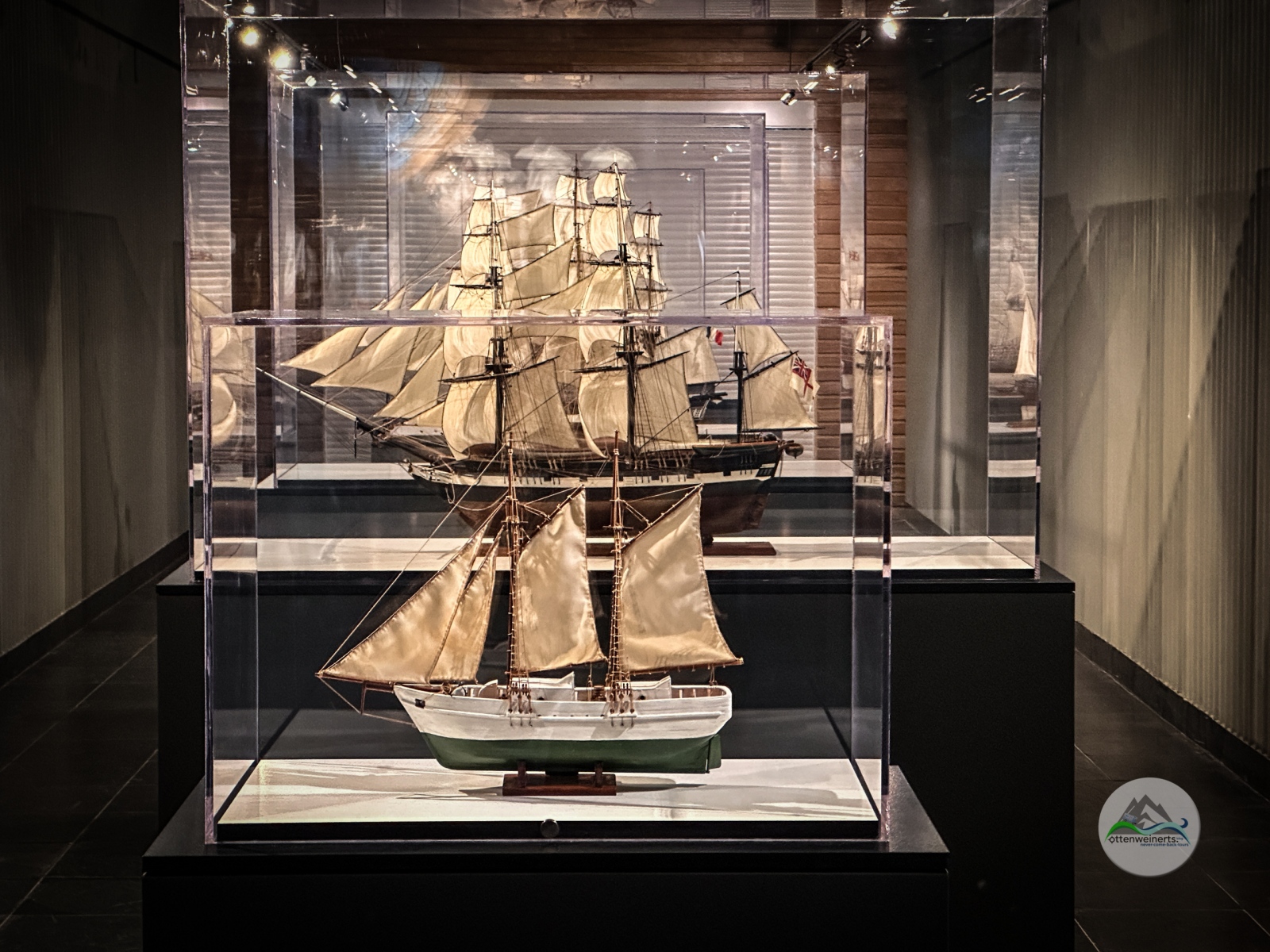
In der Früh fahren wir wieder einmal mit dem Zug – aber es ist keine Touristen-Attraktions-Schmalspurbahn oder Dampflok, sondern die Vorortelinie nach Tigre, wo wir das Museo Nacional Naval besuchen. In großen Hallen illustrieren maßstabgetreue, liebevoll bis ins kleinste Detail nachgebaute Schiffsmodelle die Geschichte der Seefahrt allgemein mit historischen Modellen (z. B. ein ägyptisches Schiff, das einen Obelisken transportiert, ein Schiff der Phönizier oder ein Wikingerschiff) und der argentinischen Seefahrt. Die Marinefliegerei ist ebenfalls mit Modellen vertreten (mit passenden Flugzeugnamen wie Seehund oder Albatros), eine weitere Abteilung beschäftigt sich mit der Präsenz der Marine in der Antarktis.

Natürlich dürfen auch die Malvinas und ein Modell der dort versenkten General Belgrano nicht fehlen; für den Falkland-Krieg wurden zwei Schiffe der Antarktis-Flotte (Eisbrecher) in Hospitalschiffe verwandelt, auch hiervon gibt es maßstabgetreue Modelle. Die venezianische Gondel dagegen im Maßstab 1:1 ist echt, genauso wie die LEHG II von Weltumsegler Vito Dumas, der 1942/43 in 272 Tagen und sieben Etappen mit insgesamt über 20.000 Meilen die Welt umsegelte – allein. Sogar die Beleuchtung in den Hallen ist stilecht, sie besteht aus Steuerrädern.

Nach dem Museumsbesuch spazieren wir am Wasser entlang zurück Richtung Bahnhof, da entdecken wir eine YPF mit „Full“. Wir haben nicht mitgezählt, wie oft wir von Februar bis Juni bei dieser argentinischen Tankstellenkette mit Restaurant und Shop getankt, gegessen, eingekauft, geduscht und übernachtet haben – wir werden ein wenig sentimental und machen hier Mittagspause, es ist wahrscheinlich die letzte YPF / Full auf unserer Reise. Und wie der Zufall will, schwimmt unser Krasses Pferd jetzt in der Nähe vorbei – das Transportschiff ist gerade am Weg von Zarate nach Santos, Brazíl. 

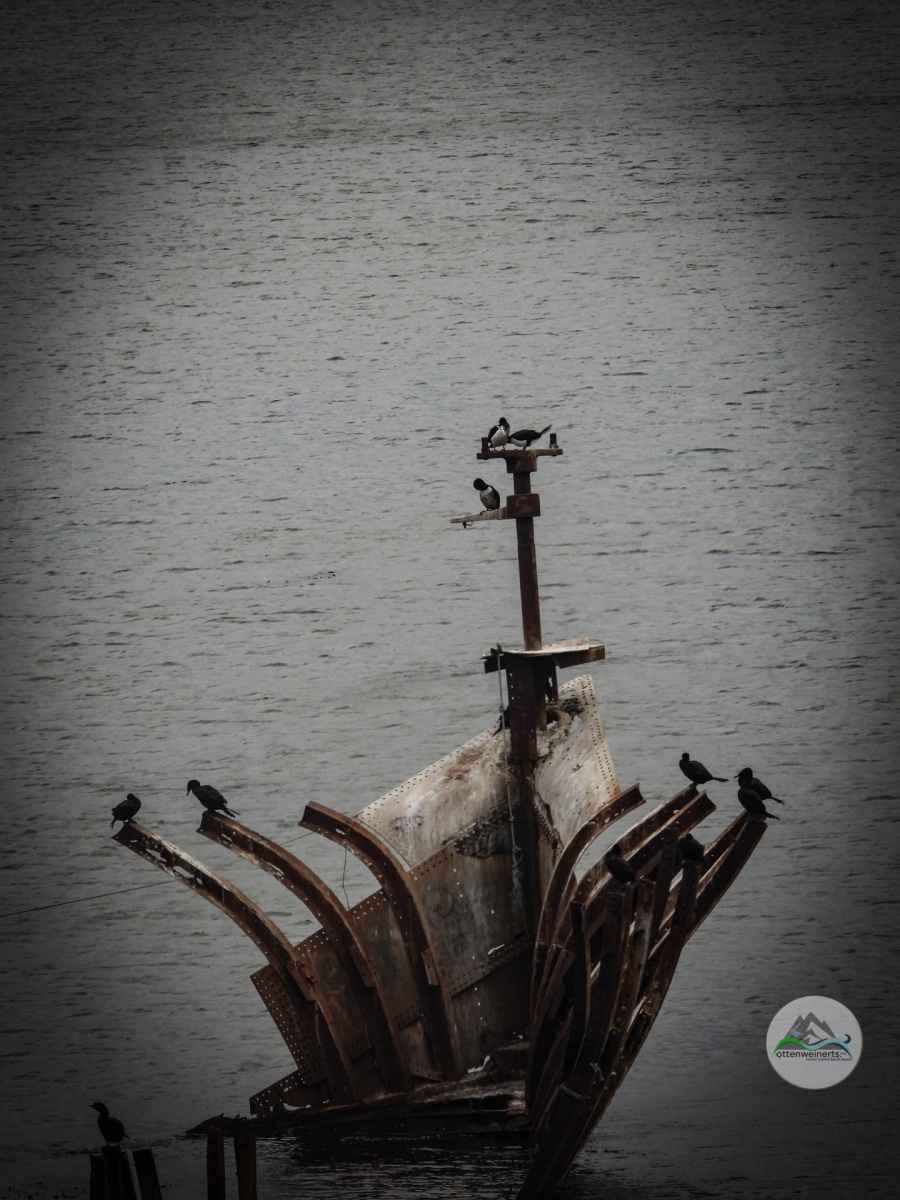
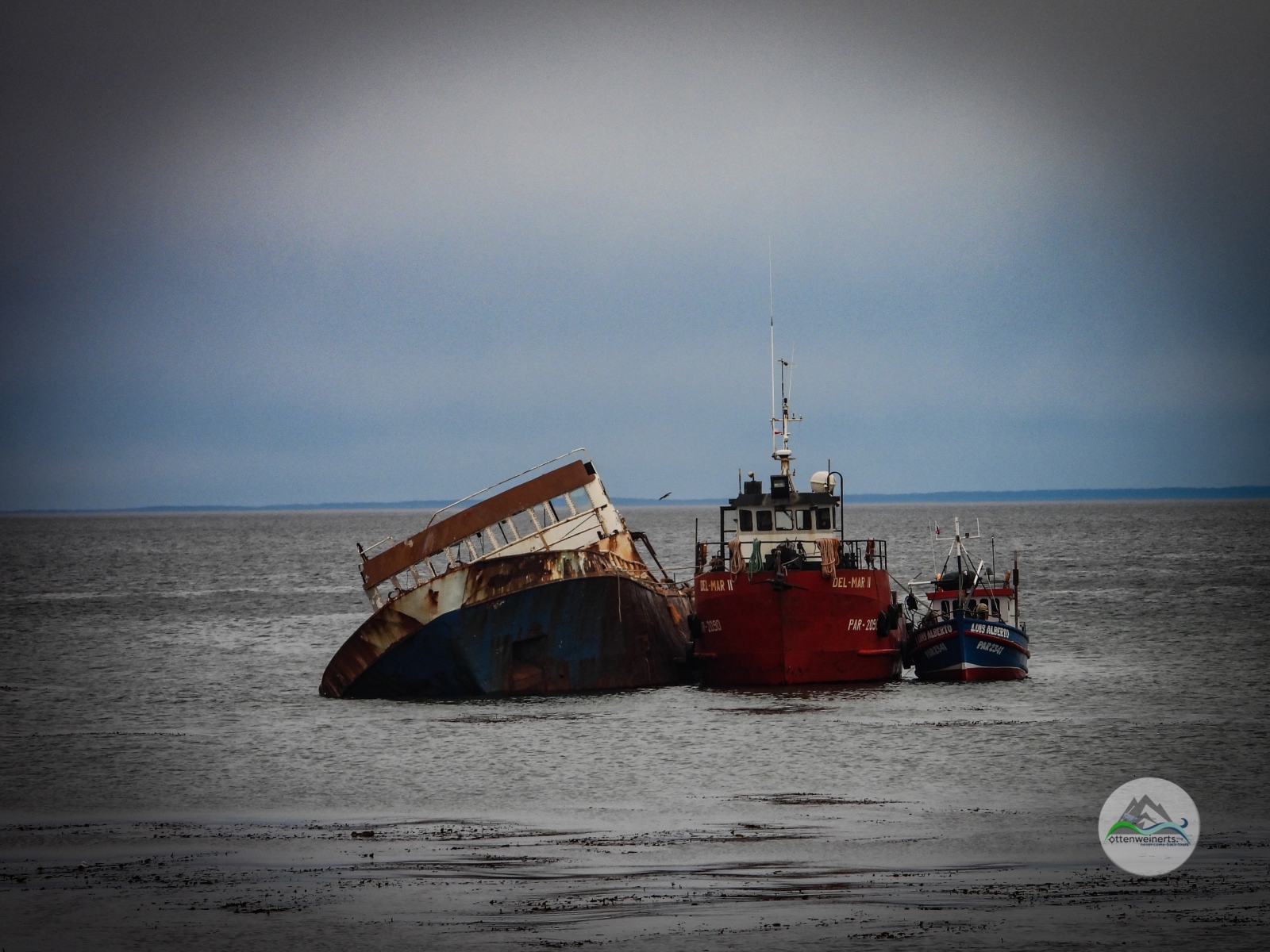
Wir gehen weiter Richtung Bahnhof, es ist warm und sonnig, am Ufer liegen Ausflugsschiffe, eine 2-Stunden-Tour durch das Flussgewirr des Tigre-Deltas startet in einer Viertelstunde. Wir überlegen nicht lange, kaufen Tickets und sitzen kurze Zeit später am Oberdeck des Katamarans, plaudern mit Jenna und Arthur, einem netten brasilianisch-amerikanischen Paar aus der Nähe von São Paulo und lassen die Landschaft an uns vorüberziehen. Auf den Inseln im Delta gibt es keine asphaltierten Straßen oder Garagen, nur Wasserstraßen und Bootsstege; schwimmende Supermärkte versorgen die lokale Bevölkerung. Wir fahren vorbei am ehemaligen Haus von Präsident Sarmiento (zum Schutz vor Wind und Wetter in einem Glascontainer, obwohl es eine Replika ist), heute ein Museum; an hübschen Sommerhäuschen, die jetzt – im Winter – verlassen daliegen; an Schiffsruinen, aus denen Bäume wachsen, bevölkert von Reihern und Kormoranen, und an Restaurants und Bars, wo im Sommer die Hölle los sein muss. 

Nach der Tour geht es dann endgültig zurück Richtung Stadtzentrum, wir haben noch Zeit und besuchen das Museo Evita, untergebracht in dem Haus, das sie als Übergangsheim für sozial Bedürftige gegründet hatte. Mit Filmsequenzen, Photographien und persönlichen Gegenständen, vor allem viel Garderobe inklusive Schuhe und Handtaschen, wird Eva Maria Duarte de Peróns Leben nachgezeichnet, von der Kindheit am Land über ihre Tätigkeit als Schauspielerin und Radiomoderatorin zur Präsidentengattin und sozialpolitischen Aktivistin – ein leider sehr kurzes Leben einer außergewöhnlichen Frau.

Day 495 – Tigre

In the morning, we go for a train ride again, but this time it´s not a tourist attraction narrow gauge or steam train, it´s the Mitre Line to Tigre, where we visit the Museo Nacional Naval. Large halls are home to very detailed, exquisite scale models, illustrating naval history in general – there are ships from Egypt (carrying an obelisk), from the Phoenicians or the Vikings – and the naval history of Argentina. There are models of naval aircrafts (with names like “Seal” or “Albatros”), and there is information about Argentina´s presence in the Antarctic. 

Of course, a part of the exhibition is dedicated to the Malvinas, including a scale model of the General Belgrano which was destroyed there. To take care of the wounded during the Falkland War, two ships of the Antarctic fleet were turned into hospital ships – the models are exhibited. The Venetian gondola on the other hand is in scale 1:1, and it´s original, same as the LEHG II, the ship of Vito Dumas, who sailed around the world in 1942/43, in 272 days, conquering more than 20.000 miles, all alone. Even the lights inside the halls are made from original ship parts.

After the visit to the museum, we walk the riverbank towards the train station, suddenly we see an YPF with “Full” – from February to June this year, we have used YPF gas stations and the “Full” shop and restaurant countless times for buying diesel, having lunch, taking a shower and staying overnight. A bit sentimental, we take our lunch break here – probably the last YPF / Full on our journey. And by chance, our Brave Camper is not far away – the shipping transporting our vehicle back to Europe is passing Buenos Aires right now, on the way from Zarate, Argentina, to Santos, Brazíl.

Then, we walk towards the train station, it is warm and sunny, there are tour boats moored here, waiting for tourists – a 2 hours tour through the Tigre delta will start in about 15 minutes. We don´t think twice, buy tickets and a few minutes later, we find ourselves sitting on the upper deck, chatting with Jenna and Arthur, a nice Brazilian-American couple from the area of São Paulo while the landscape glides by. There are no roads or garages on the islands in the Tigre delta, just waterways and jetties; swimming supermarkets cater to the needs of the locals. We pass by a replica of the former house of President Sarmiento (under a glass cover, protecting it from wind and rain), now a museum. We see very nice vacation homes – abandoned, it´s winter here; we see the ruins of half sunken ships with trees and shrubs growing on deck, there are cranes and cormorants, and we see quiet restaurants and bars – during summer time, these places must be packed.

It´s early afternoon, so we return to the city and visit the Museo Evita, in the original house she founded for one of her charities, a home for people in need. Film sequences, photos, and a lot of personal items (dresses, shoes, accessories) document the life of Eva Maria Duarte de Perón – from childhood to her career as actress and radio host and then first lady, political activist, engaged in a lot of charity work – a very short life, unfortunately, but an extraordinary woman.

Roze 230825 – Buenos Aires

230818 – Das letzte Kapitel >

Freitag / Friday, August 18, 2023
Tag 488 – Das letzte Kapitel

Eigentlich gibt’s im Hotel Frühstück erst ab 8:30, aber um 9:00 sollen wir ja schon beim Buquebus-Terminal sein, das geht sich nicht aus – wir fragen mal höflich, ob wir früher zum Kaffee dürfen. Gar kein Problem, das Frühstücksbuffet ist schon fertig – gut so, denn für den kurzen Weg vom Hotel zum Schiffsterminal brauchen wir alle unsere Kräfte, auch wenn es nur 600 m sind. Der ursprüngliche Plan war, nur mit minimalem Gepäck nach Buenos Aires und von dort nach Hause zu reisen. Aber die Schauergeschichten von aufgebrochenen Fahrzeugen und gestohlenem Inhalt, vor allem Kleidung und natürlich Elektronik, haben dazu geführt, dass wir jetzt drei große und viele kleine Gepäckstücke mit uns schleppen.

Das gesamte Gepäck muss beim Buquebus-Terminal durchs Röntgen wie am Flughafen – Sigis Koffer voller Elektronik, Kameras, Kabel, Akkus, unsere Laptops, iPads, etc. interessieren niemanden, aber meine kleine Schere muss leider in Uruguay bleiben. Für immer. Trost bringt der Duty-Free Laden, wir wandeln unsere letzten uruguayischen Pesos in Schokolade um. Die Boarding-Zugänge sind gut gekennzeichnet, allerdings halten sich weder Passagiere noch Personal an die Einteilung – als wir aufs Schiff dürfen, gleicht das einer Stampede. Erschöpft sinken wir in unsere Sitze, und warten auf die Abfahrt, um 11 Uhr sollte die „San Francisco“ ablegen. Um 11:30 kommt die Durchsage, dass die Motoren der Fähre ein Problem haben – entsetzt sehen wir uns schon das ganze Gepäck wieder von Bord schleppen und auf eine Ersatzfähre bringen, aber um 12:00 geht’s dann endlich los.

Wir verlassen Montevideo im Regen, irgendwo am Río de la Plata hört es dann auf zu regnen und die Skyline von Buenos Aires präsentiert sich bereits in strahlendem Sonnenschein. Die Beamtin am Immigration-Schalter ist scheinbar ein wenig verwundert, weil wir schon wieder einreisen wollen, mittlerweile das siebente Mal innerhalb von sieben Monaten, aber dann stempelt sie unsere Pässe und wir sind wieder in Argentinien – und stehen vor dem nächsten Problem. Auf Uber sind keine XL-Fahrzeuge verfügbar, ob wir wohl mit unserem gesamten Gepäck in einen VW Crossover passen? 

Tatsächlich geht es sich aus, und nach einer kurzen Fahrt durchs Zentrum, über die Plaza de Mayo und am Präsidentenpalast vorbei, kommen wir wohlbehalten bei unserem Quartier im Stadtteil San Telmo an. Wir haben ein nettes AirBnB gebucht, Señora Marta erwartet uns schon, zeigt uns alles und gibt uns noch Einkaufstipps. Wir versorgen uns bei Western Union mit Bargeld (wir bekommen heute fast doppelt so viele Pesos für einen Euro wie bei unserem ersten Aufenthalt im Februar, gut für uns, aber keine guten Aussichten für die argentinische Wirtschaft), gehen einkaufen und ziehen uns dann in unser Apartment zurück – für heute reicht´s.

Day 488 – The last chapter

Regular breakfast hours at our hotel start at 8:30 am, but that´s too late for us, we have to be at the Buquebus terminal at 9 am. So, we ask politely if we may get some coffee earlier – no problem, the buffet is ready. Good for us because we need all our strength for the walk from the hotel to the ship´s terminal, even if it´s only a short distance of not even 2.000 ft. The original plan was to travel lightly to Buenos Aires and then home. But the horror stories about vehicles broken into and cleaned out (mostly clothes and electronics, of course) made us take three large suitcases and several small luggage items with us. All the luggage has to go through the x-ray, same as at the airport. No one is interested in Sigi´s suitcase, stuffed with electronics, cameras, cables, batteries, power banks, laptops, iPads, but my small pair of scissors has to stay in Uruguay. Forever. I have to get some emotional support, so we exchange our last Uruguayan pesos for some chocolate at the duty- free shop. The boarding gates are well marked, but neither guests nor personal seem to care – the boarding process is like a human stampede. Exhausted, we sink into our seats, waiting for the ”San Francisco” to depart at 11 am. At 11:30 am, we hear the captain´s announcement that there is an engine problem – in our minds, we see ourselves dragging all our luggage from board and onto another ferry, but half an hour later we are able to depart.
We leave Montevideo in pouring rain, somewhere on Río de la Plata the rain stops and the skyline of Buenos Aires appears under a sunny, brilliant blue sky. The nice officer at the immigration booth seems a bit puzzled because we want to enter the country again, for the seventh time in seven months; but she stamps our passports, we are in – and facing another problem: there are no Uber XL vehicles available. If we and all our luggage can fit into a VW Crossover?

Yes, we can. After a short ride through the city center, passing Plaza de Mayo and the presidential palace, we arrive safely in San Telmo. We have booked a nice AirBnB, Señora Marta is already waiting for us, shows us around and also has some shopping information for us. We go and get cash at Western Union (today, we get almost twice as many Argentinian pesos for one Euro compared to our first visit in February – good for us but not so good for the Argentinian economy), go groceries shopping and then we retreat to our apartment – enough for today.

Route 230818

Route 230818 – Buquebus
Route 230818 Buenos Aires – Uber

230817 – (temporärer) Abschied vom Krassen Pferd >

Donnerstag / Thursday, August 17, 2023
Tag 487 / 463 – (temporärer) Abschied vom Krassen Pferd

Uruguay lässt es zum Abschied nochmal so richtig krachen, die ganze Nacht.

Es donnert und blitzt beinahe gleichzeitig, es schüttet, in der Früh ist die Wiese schlammig und neben dem Weg hinunter zu den Werkstätten könnte man Wildwasser-raften. Dennoch müssen wir in diesem grauslichen Wetter die letzten nötigen Dinge erledigen – Toilettentank reinigen, Wasser- und Abwassertank auslassen, Gasflasche ausbauen. Die Gasflasche lassen wir hier, mitnehmen dürfen wir sie ohnehin nicht, vielleicht haben andere Reisende Verwendung dafür. 

Wir verabschieden uns zum dritten und letzten Mal von Timo, Felix, Michael und Lehrling David, und von Frieda, die zitternd Schutz sucht, weil sie Angst vor dem Gewitter hat, das immer noch hier herumzieht.

Die Fahrt nach Montevideo dauert trotz regennasser Fahrbahn nicht viel länger als geplant, dafür ist die Zufahrt zum Hotel im Einbahngewirr rund um den alten Markt im historischen Zentrum ein wenig mühsam. Aber schließlich finden wir doch hin und deponieren unser Gepäck in der Lobby.

Dann geht es zum Büro der Verschiffungsagentur, wo wir die letzten Papiere unterschreiben – Parkplätze hier in der Altstadt gibt es hier keine, wir machen es wie die Einheimischen – man bleibt einfach möglichst wenig verkehrsbehindernd irgendwo stehen und schaltet die Warnblinkanlage ein. Nächster Stopp: Bei der Hafenbehörde die Genehmigung zur Einfahrt bzw. zum Betreten des Hafengeländes einholen. Auch hier keine Parkmöglichkeit, und es regnet – also stehen bleiben, Warnblinkanlage an, Motor aus, fertig. Ich lege beide Pässe vor, und bekomme überraschenderweise problemlos Genehmigungen für uns beide (obwohl angeblich nur eine Person das Fahrzeug zur Übergabe in den Hafen fahren darf). Dann suchen wir die Nordeinfahrt zum Hafen – mühsam, Baustellen, Absperrungen, Einbahnen; dort wartet Señor Nelson auf uns, der die Gasüberpüfung durchführt – Gastank leer, beim Herd kommt kein Gas mehr raus, und auch die Toilette ist gasfrei (!!), somit bekommen wir die nötige Bescheinigung. 

Anschließend fahren wir ins Hafengelände ein (die Genehmigungen will niemand sehen), wo uns schon der Shipping Agent, Señor Fernando erwartet. Wir durchqueren das gesamte Areal einmal der Länge nach, um die Ausfuhrgenehmigung vom Zoll zu bekommen – es regnet nach wie vor, niemand kontrolliert das Fahrzeug, Fernando erledigt alles für uns, wir müssen nicht mal aussteigen. Dann geht es den ganzen Weg retour bis zur Abstellfläche für die Fahrzeuge, die kommendes Wochenende mit der Grande Buenos Aires verschifft werden; ein anderes Wohnmobil steht auch hier. Und jetzt heißt es Abschied nehmen – alle Außenklappen versperren, die Durchgangstür innen mit der Stiege blockieren, das Handgepäck nehmen, die Seitentür absperren, Schlüssel abgeben – und hoffen, dass wir unser Treues Krasses Pferd Mitte September wohlbehalten und vollständig in Hamburg abholen können. 

Day 487 / 463 – Saying good-bye to our Brave Camper (temporarily)

We get a grand finale with fireworks for our last day here at Uruguay Storage – thunder and lightning all through the night, pouring rain, the campground is muddy and we could go whitewater rafting on the little creek running parallel to the path down to the workshops. Despite of the weather, we have to finish the preparations – clean the toilet tank, empty water and grey water tanks, take out the LPG bottle which is not allowed on board the ship. So, we leave it here – maybe other travelers can put it to good use.

We say good-bye to Timo, Felix, Michael and apprentice David for the third and last time; and to Frieda who is shaking like a leaf because she is afraid of the thunderstorms which is still very active above our heads. The drive to Montevideo doesn´t take much longer than anticipated, despite the rain and the bad driving conditions; but getting to our hotel near the old market in the historic part of Montevideo is a bit tricky due to the many one-ways. Finally, we find a spot to unload our luggage, leaving it at the hotel lobby.

Then, we drive to the office of the shipping agency where we have to sign the final papers. There are no parking spots here, so we do as the locals do – park without being too much of a traffic obstruction and use the hazard lights. Next stop: getting the entry permission for the harbor area at the harbor control. Same here – no parking spots, so stop, hazard lights on, motor off and go. We present both our passports and to our surprise be both get the permission for entering the harbor (usually it´s only one the person driving the vehicle who may enter). After that, we search the north entrance to the harbor – very tricky, lots of construction, blocked roads, one-ways – where Señor Nelson is waiting for us to do the gas check. The gas tank is empty (otherwise we would have had to take it out), the stove is gas-free and also the toilet (!!), so we get the necessary certificate.

Afterwards, we drive into the harbor area (no one wants to see our permissions) where Señor Fernando, the shipping agent is waiting for us; he guides us from the north end of the harbor area all the way to the south end to get the custom´s permission to export our vehicle. It is still raining, there is no car inspection, Fernando does the paper work for us, we don´t even have to get out of the car. Then we drive all the way back to the north entrance to the parking lot for all the vehicles which will be shipped with Grande Buenos Aires this coming weekend. And now we have to say good-bye. We lock all the exterior hatchets and compartments, block the inner door from the driver´s compartment into the living room with the foldable stair, take our carry-on, lock the side door and leave the keys with the harbor official. We hope and pray that we will get our Brave Camper back, in good shape and with all the contents, mid-September in Hamburg, Germany.

Route 230817

230727 – Noch ein Tag in Río >

Donnerstag / Thursday, July 27, 2023
Tag 464 / 442 – Noch ein Tag in Río

In der Früh fahren wir – wieder mit Uber, das funktioniert gut hier – nach Santa Teresa, wir wollen das Museu do Bonde, das Straßenbahnmuseum besuchen. Allerdings finden wir am Zielort kein Museum, nur die Remise und Werkstatt für die berühmte Straßenbahn. Das Museum ist schon vor einiger Zeit in die Station bei der Kathedrale umgezogen, hat aber dummerweise Google Maps nicht Bescheid gesagt. Macht nichts, wir folgen einfach den Schienen durch die steilen Straßen hinunter, bis wir zu einer Haltestelle kommen. Leider kann man hier aber weder Tickets kaufen noch zusteigen, sagt uns der nette Stationswärter, beides geht nur bei der Haupthaltestelle nahe der Kathedrale. Das ist sehr schade, wir würden wirklich gern zumindest ein Stückchen mit der historischen Bim fahren.

Also warten wir ein paar Minuten, bis die nächste Tram kommt, winken aufgeregt, lächeln freundlich, und machen auf „ausländische Touristen, die kein portugiesisch verstehen“. Und es funktioniert – der Fahrer bleibt tatsächlich stehen und lässt uns einsteigen, es ist nicht mehr weit bis zur Kathedrale, aber immerhin fahren wir über den Viadukt Arcos de Lapa, den wir gestern schon gesehen haben. Und bei der Haupthaltestelle kaufen wir dann auch brav Tickets, halt im Nachhinein. Im Untergeschoß finden wir dann auch das Museum, eine kleine Ausstellung mit historischen Fotos, Instrumenten und Geräten für Betrieb und Erhaltung der Straßenbahn.

Am Weg durch die Innenstadt kommen wir am prunkvollen Teatro Municipal vorbei; auch hier gibt es Führungen, allerdings erst um 16 Uhr, das passt nicht in unseren Plan, und außerdem nur auf portugiesisch, also lassen wir es bleiben. Dafür sehen wir gleich gegenüber am Palacio Pedro Ernesto ein großes Banner „Visit us“ – machen wir doch glatt, ohne zu wissen, was wir da eigentlich besuchen. Es ist die Camara Municipal, die Legislative von Río de Janeiro Stadt. Wieder sind wir die einzigen englischsprachigen Touristen, und Luana, die fließend Englisch spricht, führt uns durch das schöne Gebäude.

Anschließend geht es Richtung Bucht, hier liegt auf einem Hügel die Klosterkirche Mosteiro de São Bento. Gestern waren wir der Meinung, die Igreja São Francisco de Penitência wäre die prunkvollste Kirche von Río – heute sind wir nicht mehr sicher. Auch São Bento, außen eigentlich eher unauffällig, ist innen verschwenderisch in Blattgold gekleidet, inklusive der Decke im Hauptschiff. Der große Kontrast, ein paar hundert Meter weiter Richtung Wasser, an der Praça Mauá: das Museo do Amanha, das „Museum von Morgen“, ein Wissenschaftsmuseum, das uns mit seiner außergewöhnlichen Konstruktion beeindruckt – und wir waren auch nur wegen der Architektur hier, das Museum selbst lassen wir aus.

Wir haben noch Zeit und überlegen, was wir gerne sehen wollen – doch das Teatro Municipal von innen, auch wenn die Führung auf portugiesisch ist, oder die Copacabana, die wir bis jetzt nur aus der Luft gesehen haben, währen des Hubschrauber-Rundfluges; wir entscheiden uns für das Theater, weil es in der Nähe ist, aber mittlerweile ist auch die 16-Uhr-Führung ausverkauft. Also doch Copacabana. Wir wählen das Forte Copacabana am Südende der Bucht als Ziel für unsere Uber-Fahrt, und sind überrascht: Eintritt gratis, das ganze Gelände, das immer noch Militärgelände ist, wuselt vor Touristen, die paar Soldaten dazwischen gehen in der Menschenmenge fast unter, und die Confeitaria Colombo hat eine Außenstelle hier. Das Fort bietet eine gut gemachte Ausstellung über die Geschichte Brasiliens, die ja in großen Teilen auch Militärgeschichte ist, die unterirdischen Anlagen sind zur Besichtigung geöffnet, und vom Dach hat man einen grandiosen Ausblick über den Strand von Copacabana und auch auf den Zuckerhut.

Nach der Besichtigung des Forts und einem kurzen Abstecher zu den Bombeiros / Life Guards / Sanitätern und ihrer schönen roten Ambulanz muss ich dann doch an den Strand, die Schuhe ausziehen und ins Wasser watscheln – tut meinen Moskitostich-übersäten Knöcheln gut, und ich kann sagen: „ich war an der Copacabana im Wasser“. Neben uns machen andere Touristen ähnliche Fotos wie wir, ich höre deutsche Töne und gehe hinüber, und traue meinen Augen nicht: das sind doch tatsächlich Dagmar und Manfred, die wir seit Februar bereits dreimal getroffen haben, das letzte Mal am 8. Juli in Chapada das Guimarães. Ein unglaublicher und statistisch gesehen völlig unmöglicher Zufall! Und ein netter Abschluss unseres Besuches in Río, morgen geht es weiter Richtung Süden.

Day 464 / 442 – One more day in Río

In the morning, we take an Uber again – that works really great here – to Santa Teresa, destination Museo do Bonde, the city tramway museum. But at the supposed location we only find a workshop and the garage for the famous transport cars, the museum moved some time ago to the main station near the cathedral. Unfortunately, without informing Google Maps. So, we follow the tracks down the steep roads until we arrive at a tram station. The station guard informs us that it is not possible to board the train here or to buy tickets, only at the main station.

We wait a few minutes till the arrival of the next tram, then we wave our hands frantically, put a broad smile on and behave like “tourists who don´t understand Portuguese”. And it works – the driver stops the tram and lets us board. It isn´t far to the cathedral, but at least we cross the Arcos de Lapa which we have already seen yesterday. At the main tram station, we obediently buy tickets, after the tram ride. And we also find the museum downstairs, a small exhibition with historic photos, instruments and tools for operation and maintenance of the trams.

On the way to the city center, we pass the beautiful Teatro Municipal; there are guides tours, but the next available one would be at 4 pm, that does not work with our plan, and in Portuguese only, so we skip the theatre. Just opposite we see another palace, the Palacio Pedro Ernesto, with a large banner “visit us” hanging in front. So we do, without even knowing what we are visiting. Turns out, it is the Camara municipal, the legislative building of Río de Janeiro municipality. We are again the only English speaking visitors; Luana, our guide, is fluent in English and gives us an interesting tour through the impressive building.

Afterwards, we walk towards the bay; the monastery and cloister Mosteiro de São Bento is located here, on a small hill. Yesterday, we thought the Igreja São Francisco de Penitência, to be the most ornate and richly decorated baroque church in Río. Today, we are not sure about that anymore. São Bento hides an incredible interior behind a rater plain façade, every inch covered in gold leaf, including the ceiling in the main nave. The striking contrast, a few hundred yards away at the Praça Mauá: the Museo do Amanha, the museum of tomorrow, a scientific museum, an extraordinary construction. We are here because of the architecture, we skip the inside of the museum.

We have some more time left and we try to decide what we want to see – the Teatro municipal, even if the tour is in Portuguese only, or Copacabana beach which we have only seen from above during the helicopter flight. We choose the theater because it is close, but in the meantime the guided tours are sold out. Well, it´s Copacabana then. We choose the Copacabana Fortress as destination for our Uber ride, and we are surprised: free entry, the whole area which is still a military compound, buzzing with tourists, only a few soldiers in between. And a branch of Confeitaria Colombo is also on the premises. The fortress offers a nicely done exhibition about Brazil´s history which in large parts is also military history, the subterranean parts are open for a visit, and the view from the roof over Copacabana and Sugar Loaf is priceless.

After visiting the fortress and also the bombeiros / life guard / paramedic station with the nice red ambulance, I decide I “have to” go to the beach, take off my shoes and wade into the water. It´s a relief for my poor ankles, covered with mosquito bites, and I can honestly say “I have been in the water at Copacabana Beach”. Next to us, other tourists are taking pictures, I hear them talking in German, walk over to them and I can hardly believe my eyes: It´s Dagmar and Manfred, who we have met three times already since February, last time on July 8th, in Chapada das Guimarães. A totally unexpected and statistically completely impossible coincidence! And a nice last evening in Río, tomorrow we´ll continue south.

Route 230727

Tour in Rio de Janeiro:

230610 – Ein rosa Palast, eine Windmühle und eine Dose Corned Beef >

Samstag / Saturday, June 10, 2023

Tag 419 / 395 – Ein rosa Palast, eine Windmühle und eine Dose Corned Beef

Wir beginnen heute mit einem Traum in Rosa – im Palacio San José wohnte dereinst Justo José de Urquiza, der erste verfassungsmäßige Präsident Argentiniens. Das Anwesen hat unzählige um zwei Innenhöfe angeordnete Räume, zwei Türmchen, eine Kapelle, einen großen Teich und viel Grün rundherum, und heute wohnen hier hauptsächlich kleine grüne Krachmacher.

In Colón, von Urquiza gegründet und nach Columbus benannt, machen wir an der Hafenpromenade Mittagspause. Bevor die internationale Brücke General Artigas über den Río Uruguay gebaut wurde, legten hier die Schiffe aus Puerto Paysandú an – ein altes, rostiges Wrack erinnert noch daran. Jetzt gibt es hier eine Flaniermeile, und einen kleinen Hafen für Segelboote und Ausflugsschiffe.

Ein paar km weiter nördlich befindet sich ein historisches Denkmal, der Molino Forclaz,

die möglicherweise einzige Windmühle Argentiniens. Von einem Schweizer Müller nach holländischem Vorbild erbaut, hat die Mühle aber nie richtig funktioniert, weil es hier zu wenig windig ist. Also wurden die Flügel wieder abmontiert, man griff auf den bewährten vierbeinigen Esel-Antrieb zurück, und das hölzerne Gerüst der Mühlenflügel dient den allgegenwärtigen Sittichen als Basis für ihre Nester.

Ein anderes ungewöhnliches Denkmal befindet sich in Puerto Liebig. Eine riesige Corned Beef – Dose erinnert an Schlachthof und Rindfleischproduktion in dem Ort, der nach dem deutschen Chemiker Justus von Liebig benannt wurde.

Und schon wieder ist es später Nachmittag, wir beeilen uns, noch vor Sonnenuntergang in den Nationalpark El Palmar zu kommen, ein Schutzgebiet für Yatay-Palmen, die einst das argentinische Zwischenstromland und das westliche Uruguay bedeckten – vor der Ankunft der Siedler und der Abholzung der Wälder um Platz für Viehweiden zu machen. Und es ist auch ein Schutzgebiet für allerlei Getier – am Weg zum Campingplatz sehen wir bereits einen Fuchs, jede Menge Capybaras, die wasserliebenden Riesenmeerschweinchen, und Vizcachas, die neugierigen Chinchillas. Und die Vizcachas mit ihren lustigen schwarzen Schnurrbärten sind auch am Campingplatz daheim und lassen sich bereitwillig fotografieren. Mal schauen, was uns morgen sonst noch vor die Kamera läuft.

Day 419 / 395 – A pink palace, a windmill and a can of corned beef

Pretty in pink – that´s Palacio San José, the former home of Justo José de Urquiza, the first constitutional president of Argentina. The “palace” consists of two nice patios with many rooms around them, two towers, a chapel, a large pond and lots of gardens and park areas. Today, the park is the home of many, very vocal green parakeets.

In Colón, founded by Urquiza and named after Columbus, we take our lunchbreak at the harbor promenade. Before the international bridge General Artigas was built, boats crossing the Río Uruguay from Puerto Paysandú arrived here – an old, rusty ship wreck is still visible. Now, there is a nice promenade and a small harbor for sailing boats and tour boats.

A few miles further north there is a historic monument, the Molino Forclaz, a dutch windmill, possibly the only one in Argentina. Built by a Swiss miller, it never worked properly because there is not enough wind here. So, they took the wings down and used the previous, far more reliable four-legged power source again – donkeys. The remaining wooden construction was put to good use again by the ubiquitous parakeets.

In Puerto Liebig, a village named after the German chemist Justus von Liebig, we find another unusual monument – a giant can of Corned Beef, symbol for the local beef production since 1903.

And then it´s late afternoon, and we hurry north to reach El Palmar National Park before sunset. This is a protected area for the huge Yatay palms which once covered most of the land between the rivers and western Uruguay before the arrival of the colonists and the deforestation to make room for cattle farming. And it is also home for a lot of different species – on the way to the campground we see a fox, groups of Capybaras, the giant guineapigs and Vizcachas, the curious Chinchillas. And the Vizcachas with their funny, black moustaches also rule the campsite and pose for pictures. We´ll see what else our camera will find tomorrow.

Route 230610

230402 – Die Marmorkapellen am Lago General Carrera >

Sonntag / Sunday, April 2, 2023

Tag 350 / 326 – Die Marmorkapellen am Lago General Carrera

Als der Wecker kurz nach 7 läutet, ist es hell – wir wundern uns, gestern in Puerto Yungai ging die Sonne kurz vor 8 auf, so viel Unterschied können die 250 km ja wohl nicht ausmachen? Des Rätsels Lösung: auch Chile hat Sommerzeit, und letzte Nacht wurde wieder auf Normalzeit umgestellt. Haben wir überhaupt nicht mitbekommen, aber es erleichtert das Aufstehen, wenn es draußen nicht mehr finster ist. 

Die ersten Touranbieter in ihren kleinen Holzhütten haben schon geöffnet, einer der Señores spricht mich an – ja, er hat noch Plätze im Boot, und das fährt in 15 Minuten los. Also schnell in die dicken Jacken von der Antarktis-Expedition, die Fahrt über den See ist trotz Sonnenschein windig und kalt. In der Früh steht die Sonne günstig, das Licht fällt in die Spalten und Höhlen der Marmorfelsen und lässt die Farben strahlen – auch das Türkis des Sees leuchtet. Einige Höhlen sind so groß, dass man mit dem Boot hineinfahren kann, dann geht es zu Formationen wie Schildkröte, Hundekopf und Elefant. Auch Kajakfahrer finden sich bei diesem Naturschauspiel ein, es ist ein wirklich schöner Bootsausflug.

Als wir nach eineinhalb Stunden leicht durchgefroren zu unserem Krassen Pferd zurückkommen, parkt dahinter, am Rasenparkplatz, ein anderes Pferd – ein Gaucho, ganz modern mit Handy am Ohr. Wir genehmigen uns ein zweites Frühstück, bevor wir die Ruta 7 weiter nach Norden fahren. Die Strecke ist wieder mühsam, mit großen Schlaglöchern und viel Schotter am Straßenrand – aber dann erreichen wir endlich den asphaltierten Teil der Carretera Austral, ab jetzt ist die Fahrt deutlich ruhiger und es geht auch schneller vorwärts. Allerdings stehen immer wieder Schilder am Straßenrand, die auf Kettenpflicht hinweisen – wir hoffen, dass wir es noch vor den ersten Schneefällen nach Norden schaffen.

Durch das breite Tal des Río Ibañez, mit Blick auf den Cerro Castillo, geht es Richtung Monumento Nacional Manos de Cerro Castillo – Höhlenmalereien, ähnlich denen in der Cueva de las Manos in Santa Cruz, Argentinien. Wir finden auch hin, leider ist der Zugang verschlossen, das Museum hat zu, und es ist niemand da, den man fragen könnte – obwohl am Schild steht „geöffnet bis 18 Uhr“. Sehr schade, es wäre schön gewesen, die beiden prähistorischen Stätten zu vergleichen.

Wir durchqueren den Cerro-Castillo-Nationalpark, in der Hoffnung, hier endlich ein Huemul zu Gesicht zu bekommen. Aber die scheuen Andenhirsche lassen sich nicht blicken. Wir fahren noch bis Coyhaique, wo wir uns an einer ruhigen Plaza einparken. Es ist zwar erst kurz nach 18:30, aber schon finster – ahja, Zeitumstellung.

Day 350 / 326 – The marble cathedrals at Lago General Carrera

In the morning, at 7 am, the sun is shining – we are confused; yesterday, at Puerto Yungai, sunrise was around 8 am – 155 miles north can´t make so much difference? The real reason: daylight saving in Chile, changed to regular time last night. We didn´t even think about that, but getting up in the morning is easier when it isn´t dark anymore.

Some of the tour operator offices in their small wooden stalls are already open, one of the señores asks me if we want to join the tour at 8 am. That´s in 15 minutes! We hurry to get our warm jackets from our Antarctic expedition, it will be cold and windy in the boat, despite the sunshine. In the morning, the sunlight shines into the caves and crevices of the marble rocks, the colors are vibrant, and the water of General Carrera Lake is a brilliant turquois. Some of the caves are big enough to enter with the boat; and there are formations shaped like a turtle, a dog´s head or an elephant. There are kayakers, too – it´s a really beautiful place and a nice tour.

90 minutes later and a bit cold, we return to our brave camper at the parking lot; right behind our vehicle, another means of transport is parked at the lawn – a Gaucho on his horse (a modern gaucho, with his cell phone). We treat ourselves to a second breakfast before we continue on Ruta 7 north. The dirt road is very unpleasant, lots of deep potholes and a lot of gravel on the sides. Finally, we reach the paved part of the Carretera Austral, driving is much easier now and we can drive faster, too. But we see several signs mentioning mandatory use of snow chains – we hope that we will make it all the way north before the first snow.

After driving through the broad valley of Río Ibañez, looking at the snow- and ice-covered Cerro Castillo, we arrive at the Monumento Nacional Manos de Cerro Castillo. Here we want to see the cave paintings which are similar to the ones in the Cueva de las Manos in Santa Cruz, Argentina. But the path to the painted rocks is closed, the museum is closed, too – although the sign says “open until 6 pm”. What a pity, it would have been nice to compare the two archeological sites.

So, we continue north, crossing the Cerro Castillo National Park, hoping to finally see a huemul. But the elusive Andean deer are not in the mood. We drive till Coyhaique where we park for tonight at a quiet plaza. It is only 6:30 pm, but it´s dark already – no more daylight saving.

Route 230402

230401 – Puerto Yungai – Cochrane – Puerto Tranquilo >

Samstag / Saturday, April 1, 2023

Tag 349 / 325 – Puerto Yungai – Cochrane – Puerto Tranquilo

Als wir in der Früh – ganz altmodisch – auf der analogen Karte unsere Reisestrecke eintragen, bemerken wir, wie nahe wir gestern dem Parque Nacional Los Glaciares, dem Lago del Desierto und El Chaltén in Argentinien waren. Ein Katzensprung, quasi, verglichen mit der bisherigen Reisestrecke. Aber da es keine mit dem Auto befahrbare Straße gibt, waren es für uns und unser treues Krasses Pferd 1200 km durch Santa Cruz, Argentinien, nach Norden und dann auf der chilenischen Seite wieder nach Süden. Wir wollen gar nicht nachrechnen, wieviel von diesen 1200 km „ripio“ waren.

In der Nacht ist eine große Fähre angekommen, vollgepackte Overlander-Bikes stehen vor dem Passagier-Warteraum und warten auf ihre Besitzer. Einige hundert Meter weiter, auf einem Parkplatz, treffen wir Daniel und Zahnärztin Javiera wieder – sie haben es gestern mit einer früheren Fähre zurück nach Puerto Yungai geschafft, einen Mechaniker getroffen, das Teil ist repariert und alles ist gut.

Wir machen uns auf den Rückweg nach Cochrane. Es ist nebelig und es regnet (auch ok – dann hat es wenigstens keine Minusgrade, und es schneit und friert nicht). Die Straße ist noch etwas schlechter als vorgestern, die Wasserfälle noch beindruckender – einige nahe an der Straße könnte man als Autowaschanlage verwenden. Es regnet stärker, wir fahren durch den Wald. Regenwald, also. Die Huflattichblätter sind so groß wie ein Regenschirm für zwei, haushohe Fuchsiensträucher und Hagebutten wachsen am Wegrand.

Kurz vor Cochrane scheint endlich wieder Sonne, dennoch haben wir heute für die 123 km fünf Stunden benötigt. In Cochrane machen wir Mittagspause. Hier findet gerade ein Sportereignis, ein Lauf statt – es gibt tatsächlich Leute, die hier 35, 45, 55 und sogar 70 km laufen – und das ist keine flache Gegend hier! Eine hübsche Ambulanz steht am Eck, Claudio und Roberto machen Ambulanzdienst, wir geben uns als Familienmitglieder zu erkennen und werden herzlichst begrüßt.

Dann folgen wir dem Río Baker nach Norden; am Zusammenfluss mit dem Rio Chacabuco sehen wir tief unten ein paar Kajakfahrer – das Echo in der Schlucht ist unglaublich, wir hören die begeisterten Sportler bis hierher vor Begeisterung jauchzen. Hoch über ihnen, auf einem Felsvorsprung sitzt ein gelangweilter Kondor, und ein Adler zieht seine Kreise. Der Río Baker führt türkises Wasser; in Puerto Bertrand am Lago Bertrand legen wir einen Fotostopp ein, die Farbe ist einfach unglaublich. Wenig später erreichen wir den Lago General Carrera, wieder einmal in den letzten Strahlen der untergehenden Sonne (wie machen wir das bloß immer?). An der COPEC-Tankstelle in Puerto Tranquilo fährt eine Ambulanz vor – Claudio & Roberto sind am Heimweg vom Ambulanzdienst in Cochrane, wir plaudern noch ein wenig. Dann parken wir uns vor dem lokalen Museum ganz in der Nähe der Bootsanlegestelle ein – morgen wollen wir die Marmorkapellen besichtigen.

Day 349 / 325 – Puerto Yungai – Cochrane – Puerto Tranquilo

As we highlight our travel route in the morning – on paper, very old fashioned – we notoe how close we came to Parque Nacional Los Glaciares, Lago del Desierto and El Chaltén in Argentina yesterday. A stone´s throw away, compared to the distance we have traveled so far. But there is no road, so we had to drive our brave camper 745 miles north through Santa Cruz, Argentina, and then south again on the Chilean side. We don´t even want to know how many of these 745 miles were “ripio”.

A large ferry has arrived in the early morning, some overlander bikes are waiting for their owners. A few hundred yards further, at a parking lot, we see Daniel, dentist Javiera and their camper again. They took the earlier ferry from Río Bravo and met a mechanic here – the broken part has been repaired; they are able continue their journey.

We start the drive back to Cochrane, through mist and rain (which is ok, at least the temperatures are above freezing and it is not snowing). The Carretera seems to be in even worse condition than yesterday, the waterfalls are even more impressive. Some of them are so close to the road, they could even be used as car wash. We are driving through the forest, in the rain. Therefore, it´s rainforest. The coltsfoot leaves are as large as an umbrella for two, fuchsia and dog-rose bushes, high as a house, are growing on the side of the road. 

Shortly before arriving in Cochrane, the sun comes out again; but we have needed 5 hours today to conquer the 76 miles. In Cochrane, we take brake. There is a sports event going on, the participants are running distances from 21 miles up to 43 miles – and this is no flat terrain here! There is a nice ambulance waiting around the corner; Claudio and Roberto are on shift; we identify ourselves as family members of the worldwide EMS family and receive a very warm welcome.
Later, we continue north, following the Río Baker. At the confluence with Río Chacabuco, deep down in the gorge, we see some kayaks – the echo is incredible, we can hear their excited cheers up here. A bored condor is sitting high above them on a ledge, and an eagle is circling over the cliffs. The waters of Río Baker are of an intensive turquois, at Puerto Bertrand at Lago Bertrand, we have to stop for some pictures – the color is incredible. Sometime later, we arrive at Lago General Carrera, just before sunset (why do we always arrive so late?). At the COPEC gas station in Puerto Tranquilo, we see an ambulance – Claudio and Roberto are on their way home from their shift at Cochrane´s sport event. We find a nice parking spot for tonight in front of the local museum, close to the boat ramp. Tomorrow, we want to visit the marble chapels.

Route 230401

230331 – Villa O´Higgins – Fin de la Carretera Austral >

Freitag / Friday, March 31, 2023

Tag 348 / 324 – Villa O´Higgins – Fin de la Carretera Austral

Als die Gefahrgut-Spezialfähre um 8 Uhr, also im Morgengrauen, ablegt, ist ein Tanker an Bord, ein Klein-LKW, Max mit seinem Fahrrad und wir mit unserem Krassen Pferd. War gar kein Problem, natürlich nimmt man uns mit, und die Fähre kostet auch nichts, weil sie quasi Straßenersatz ist – es gibt nur Fähre oder Flugzeug. Wir trinken Kaffee, bewundern das Farbenspiel am Morgenhimmel und genießen die 45 Minuten Fahrt zum Südende des Mitchell-Fjords nach Rio Bravo, wo wir uns von Max verabschieden – wahrscheinlich sehen wir uns am Rückweg wieder.

Nach den ersten 9 km gibt es eine Abzweigung, und jetzt sind wir verwirrt. Das „Carretera Austral“ Logo am Straßenschild weist nach rechts / Süden, die zugehörige Straßenbezeichnung „7“ auch, und das deckt sich mit den Bezeichnungen sowohl auf Google Maps als auch auf Pocket Earth. Aber das Ende der Carretera Austral mit den Hinweisschildern „Ende der Straße“ ist doch in Bahía Bahamonde, südlich von Villa O´Higgins – sagen sowohl unser Chile-Buch als auch die Eintragungen auf IOverlander. Doch diese Straße heißt angeblich X-91? Nach kurzem Konzil vertrauen wir dem Buch und IOverlander und biegen links ab, Richtung Südosten und Villa O´Higgins.

Die Landschaft ist wild und ungezähmt, die Straße auch – aber das kennen wir jetzt schon. Den Schnee am Straßenrand übersehen wir mal, die Sonne scheint und der Himmel ist blau, und es sind ja nur 100 km bis Villa O´Higgins. Aber für diese 100 km benötigen wir 4 Stunden – einerseits wegen des Straßenzustandes und etlicher Steigungen und Serpentinen, andererseits wegen häufiger Fotostopps – und schließlich auch wegen Hilfeleistungen unterwegs. Nach etwa 50 km steht mitten auf der Piste ein VW-Bus Wohnmobil. Irgendein Teil beim hinteren Stoßdämpfer scheint kaputt zu sein, und Daniel fragt, ob wir ein … hätten? Sigi spricht nicht Spanisch, ich spreche nicht mechanisch, unser offline Wörterbuch kennt das Wort nicht. Also packen wir unser ganzes Werkzeug aus, aber das Gesuchte ist nicht dabei. Dann finden wir heraus, dass ein Bolzen abgebrochen ist – haben wir nicht, aber wir haben ja gestern den superstarken Klebstoff gekauft. Ja, das sollte funktionieren, und Javiera mischt mit gekonnten Bewegungen mittels eines Buttermessers und eines Schneidbretts den Kleber zusammen. Wir schauen verwundert – sie ist Zahnärztin und kennt das 2-Komponenten-Kleber-Prinzip natürlich! 

Nach der hoffentlich erfolgreichen Reparatur geht es weiter nach Süden, und jetzt wird die Straße etwas besser. Viele Wasserfälle reihen sich aneinander, viele Brücken über malerische kleine Flüsse. Am Lago Cisnes sehen wir immerhin vier Schwäne – wahrscheinlich die Minimalbesetzung, um dem Namen „Schwanensee“ gerecht zu werden. 10 km vor Villa O´Higgins, in einer Kurve mit extrem viel Schotter, liegt ein Motorrad im Graben. Fernando und Pia bemühen sich vergeblich, es aufzurichten und herauszuschieben – aber 350 kg sind einfach zu viel. Mit vereinten Kräften können wir die schwere Maschine aufrichten und herausziehen. Die BMW ist zwar voller Gatsch, aber fahrtüchtig und fast unbeschädigt (nur der Stolz des Lenkers hat eine kleine Delle abbekommen).

Ein paar km südlich von Villa O´Híggins erreichen wir unser heutiges Ziel – das Ende der Carretera Austral. Es gibt hier eine neu ausgebaute Fähranlegestelle mit kleinem Parkplatz, einen mini Militärstützpunkt und mittlerweile 3 „Ende der Straße“ Schilder: ein altes und ein ganz altes oberhalb der Straße und ein ganz neues am Hafen. Am neuen Schild steht „Ende der Carretera Austral 1.247 km“, aber auf der Rückseite, also Richtung Süden, lautet die Inschrift „Eintrittspforte zur Carretera Austral, 0 km““ – eine nette Begrüßung für die Passagiere, die mit der Fähre aus dem Süden hier ankommen.

Dann machen wir uns auf den Rückweg – wir wollen die letzte Fähre nach Puerto Yungai um 19 Uhr erwischen – morgen ist der 1. April, damit beginnt die Nachsaison und es gibt nur mehr 2 Fährverbindungen pro Tag, die erste um 13 Uhr. Wir fahren durch Villa O´Higgins durch – vor einer Cafeteria steht die BMW, Pia und Fernando winken, alles gut. Einige Zeit später radelt uns Max entgegen – er hat bereits zwei Drittel des Weges nach Villa O´Higgins geschafft, trotz der schwierigen Strecke – Respekt! Wir kommen problemlos zur Fähranlegestelle, fahren mit der letzten Fähre zurück nach Puerto Yungai und bleiben gleich dort, am gleichen Parkplatz wie letzte Nacht, es ist schon fast ganz dunkel. Morgen geht es zurück nach Cochrane und dann weiter nach Norden.

Day 348 / 324 – Villa O´Higgins – Fin de la Carretera Austral

The hazardous cargo ferry leaves at dawn, at 8 am, with a tank truck and another small truck, with Max and his bicycle and with us and our brave camper on board. It was no problem at all, of course they´ll take everyone who is waiting at the pier. And the service is free because there is no road – the only other option would be flying. We enjoy our morning coffee and admire the changing colors in the sky during the 45 min trip to Río Bravo at the south end of the Mitchell-Fjord. Here we say good-bye to Max – we will see each other again on our way back.

After 5,5 miles, there is a crossing, and now we are confused. The “Carretera Austral” sign with the “Ruta 7” points to the right / south, which coincides with the info on Google Maps and Pocket Earth. But the end of the Carretera Austral with the famous signs is south of Villa O´Higgins in Bahía Bahamonde, at least as far as we know – and that coincides with our Chile travel book and IOverlander. But this road, to the left, is named X-91 here? After some discussion we decide to trust the book and IOverlander and turn left /southeast towards Villa O´Higgins.

The landscape is fantastic, wild and untamed – as is the road, but we are getting used to that. We try not to look at the snow along the road, the sun is shining and the sky is blue, and it´s only 62 miles to Villa O´Higgins. But for these 62 miles we need four hours – because of the road condition, several steep uphill and downhill parts, multiple photo stops – and also because of some roadside assistance. After 31 miles, we see a VW-camper standing on the road, some part of the rear shock absorber seems to be broken, and Daniel asks if we have a ….? Sigi doesn´t speak Spanish, I don´t speak Mechanics and our off line dictionary doesn´t know that special word. So, we take out our repair equipment, but that doesn´t help. Then we find out that a bolt is broken – we don´t have that part, but didn´t we buy that super strong glue just yesterday? Daniel thinks that could work; Javiera gets a butter knife and a wooden board and very fast and elegantly, she mixes the 2 component glue – we are surprised – but Javiera is a dentist and she knows the 2 component principle very well.

Then we continue south, the road is getting a bit better. We cross a lot of small rivers and pass many picturesque waterfalls. At Lago Cisne, we see four swans – the absolute minimum amount for the name – Swan Lake. A few miles before Villa O´Higgins, in a curve with an extra amount of gravel, we see a motorbike lying on the side. Fernando and Pia are trying in vain to get the bike back on the road, 770 lbs is too much. But the four of us together manage to get the heavy BMW bike out of the ditch and back on its tires. The bike is full of mud, but otherwise almost unharmed (only Fernando seems to be a bit down).

A few miles south of Villa O´Higgins, we reach today´s goal: the end of the Carretera Austral. There is a new ferry pier with a small parking lot, a tiny military base and the famous “End of the Road” sign – meanwhile there are 3 signs: an old one and a very old one above the road, and the brand-new one at the pier. The new sign reads “End of the Carretera Austral 1.247 km” – but on the back, facing south, it reads “Entry point for the Carretera Austral, 0 km”. A nice welcome for the passengers arriving here by ferry from the south.

Then we turn around and start driving back, we want to catch the last ferry back to Puerto Yungai at 7 pm. Tomorrow, April 1st, is the start of the intermediate season with reduced ferry service, the first one at 1 pm. We pass through Villa O´Higgins again – in front of a cafeteria, we see a heavy BMW bike – Pia and Fernando wave, everything is fine. Sometime later, we Max on his bicycle again – he has already conquered 2 thirds of the way despite of the difficult route – we are impressed! We make it to the ferry pier in time, take the last ferry back to Puerto Yungai and stay at the same parking lot there as last night, it´s almost dark already. Tomorrow we´ll drive back to Cochrane and then further north.

Route 230331

230315 – Ein Faro, ein Fort und frierende Flamingos >

Mittwoch / Wednesday, March 15, 2023

Tag 332 / 308 – Ein Faro, ein Fort und frierende Flamingos

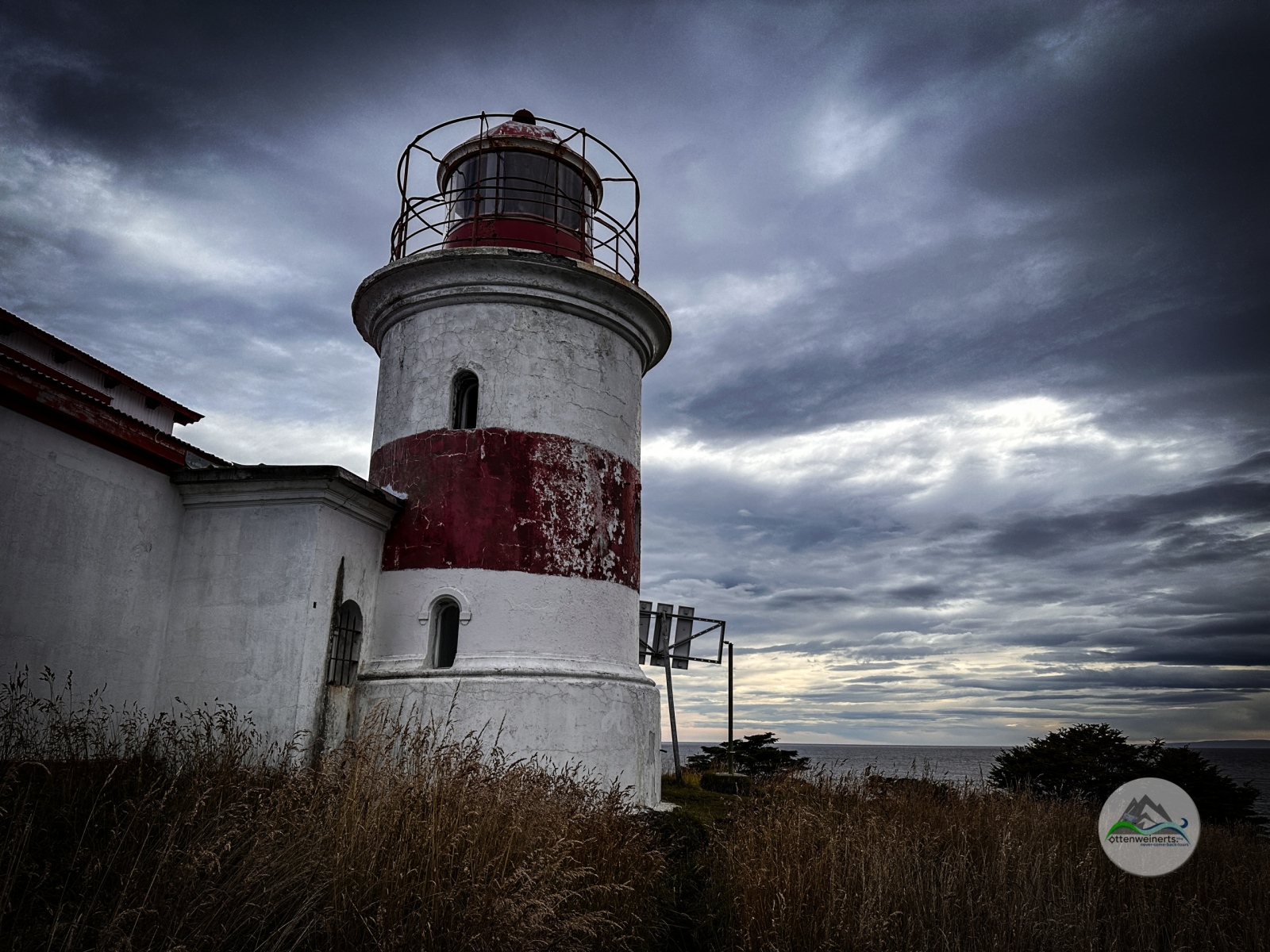
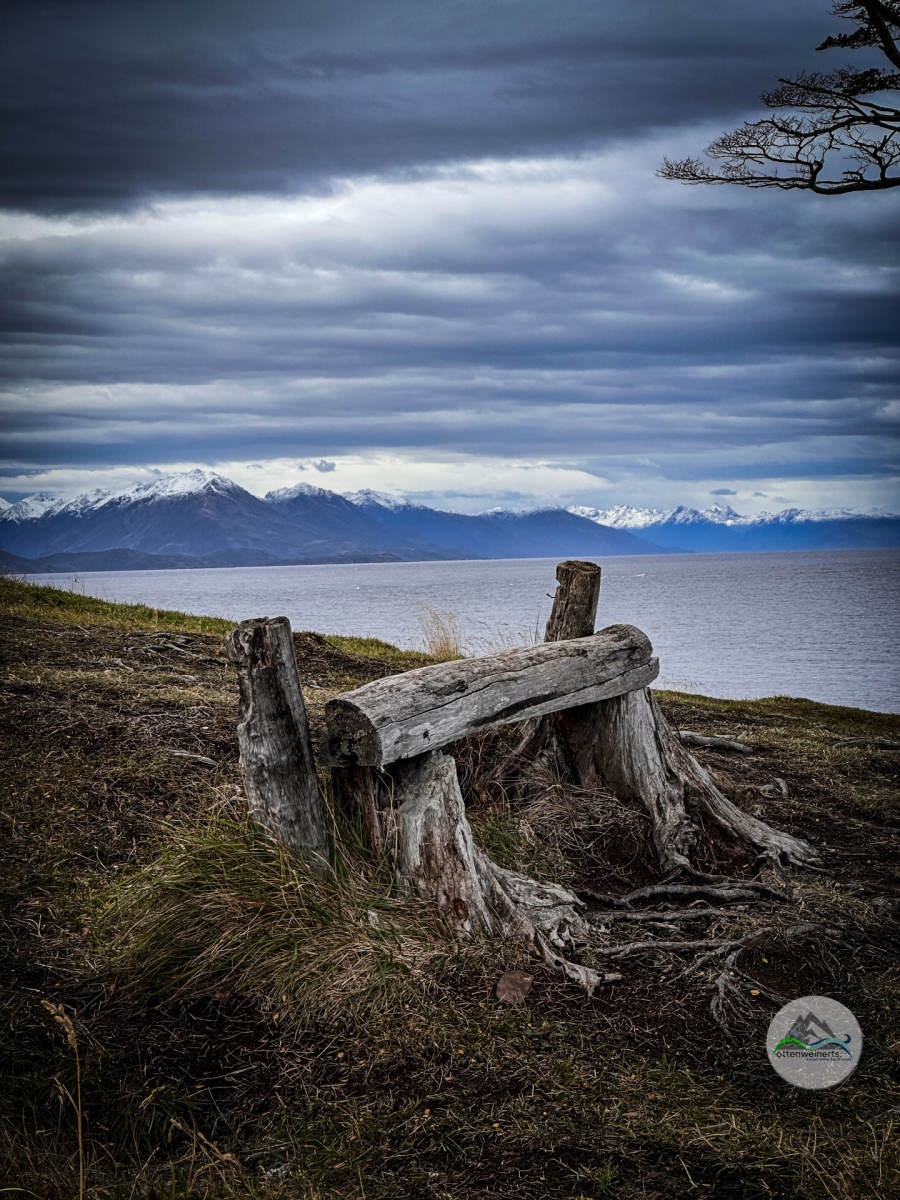
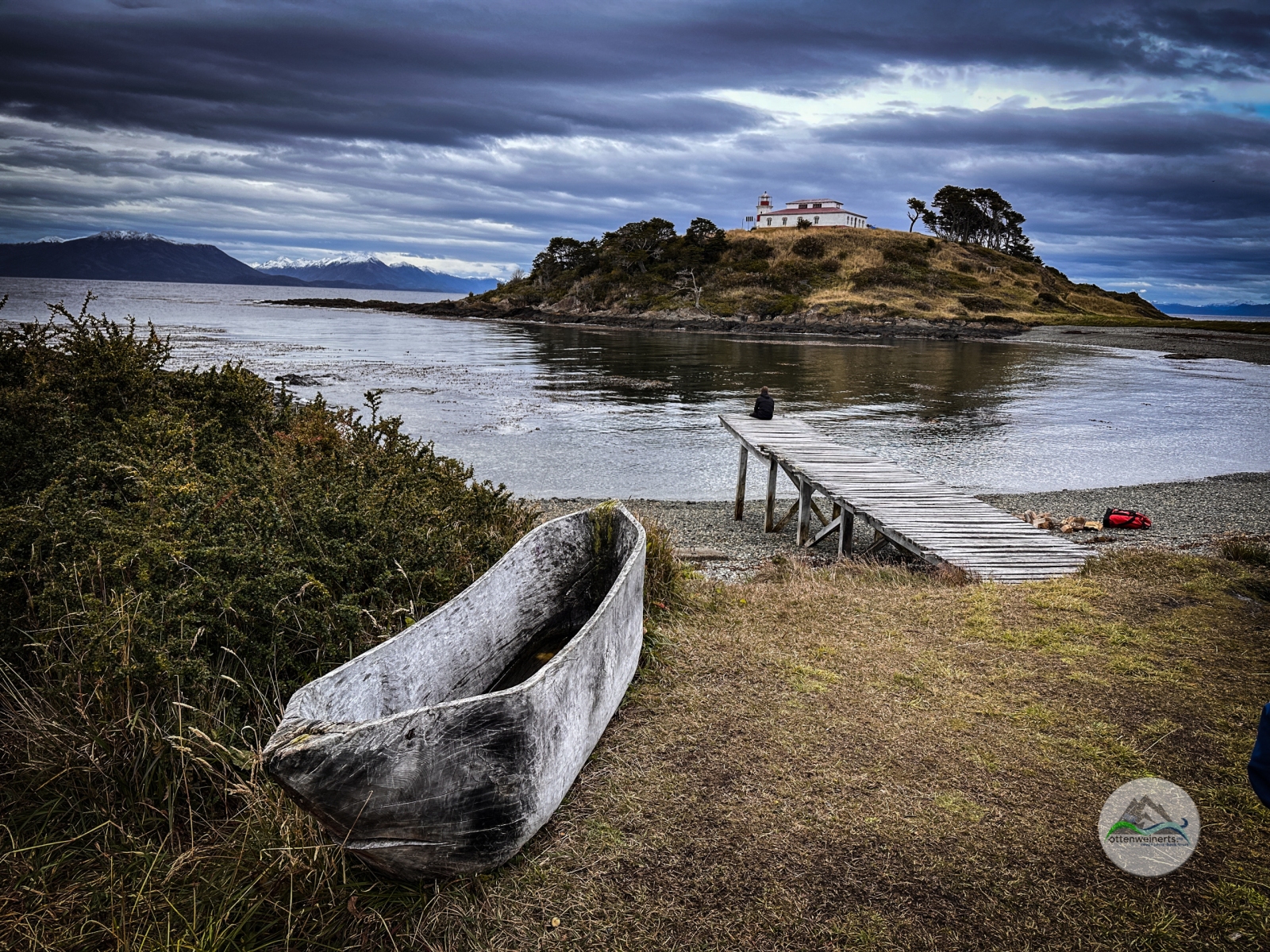
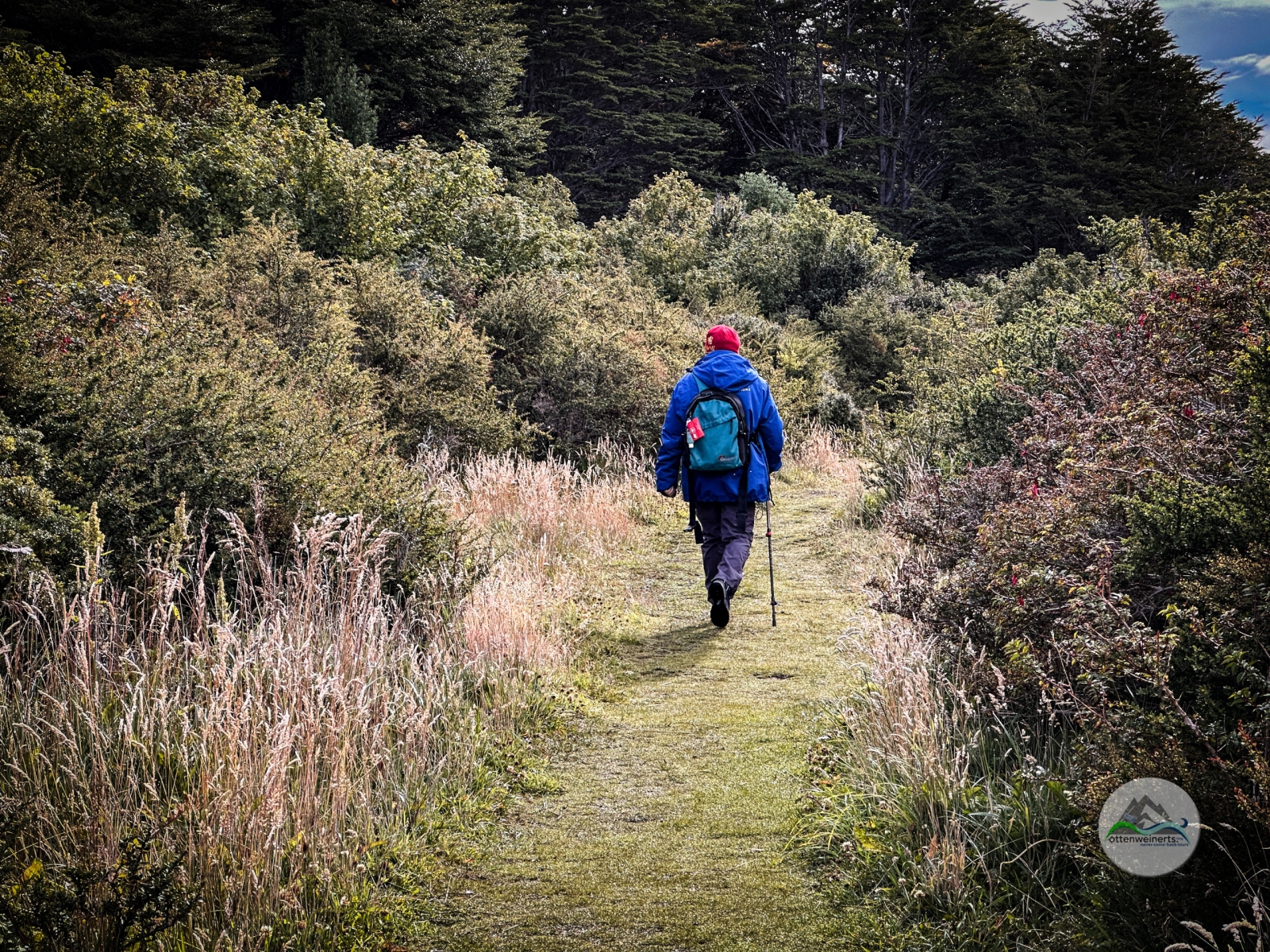
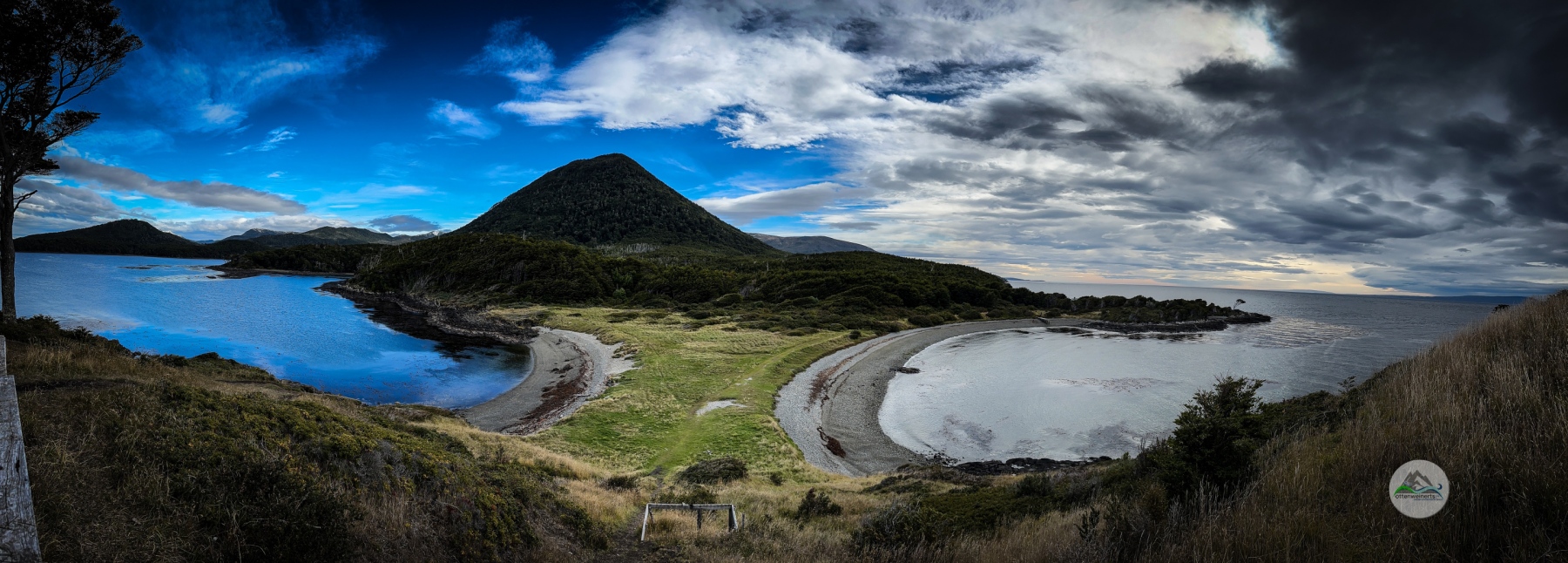
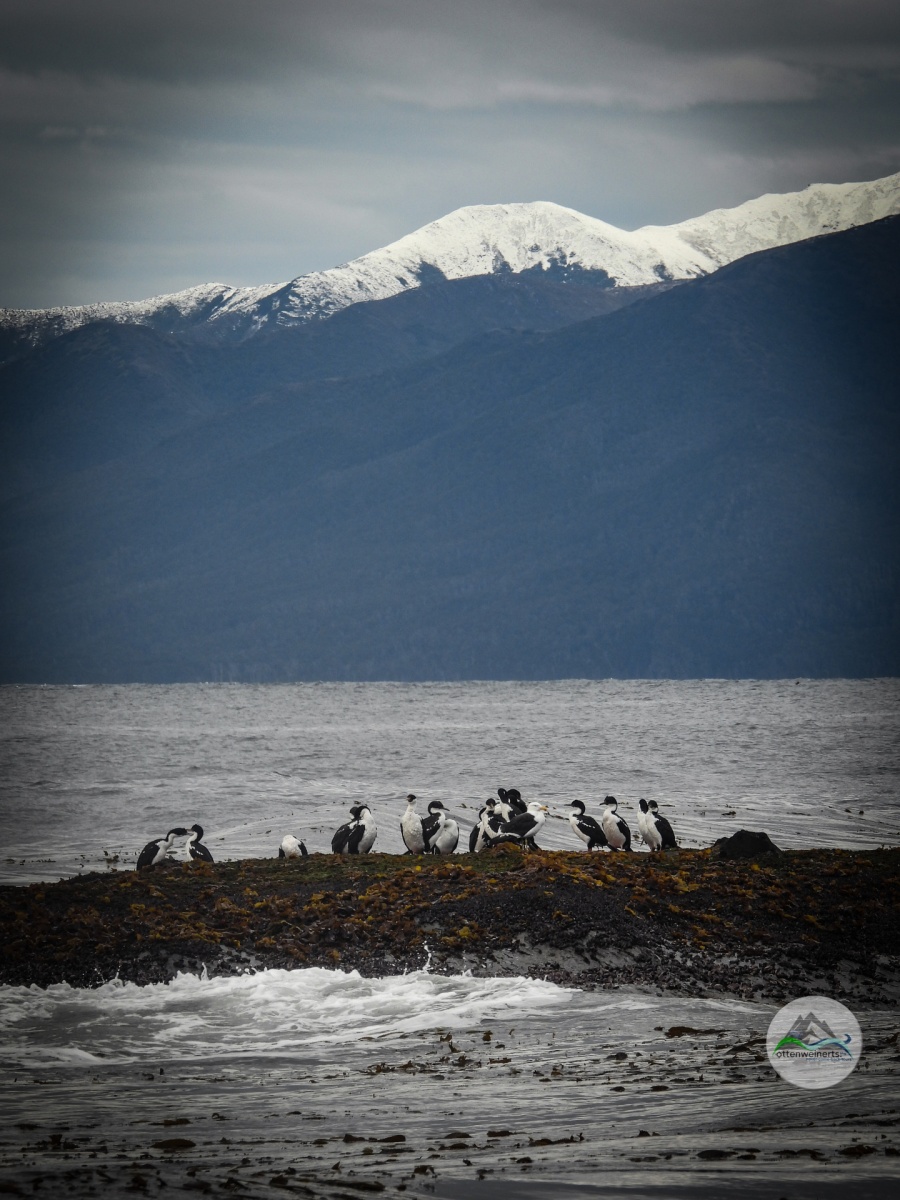
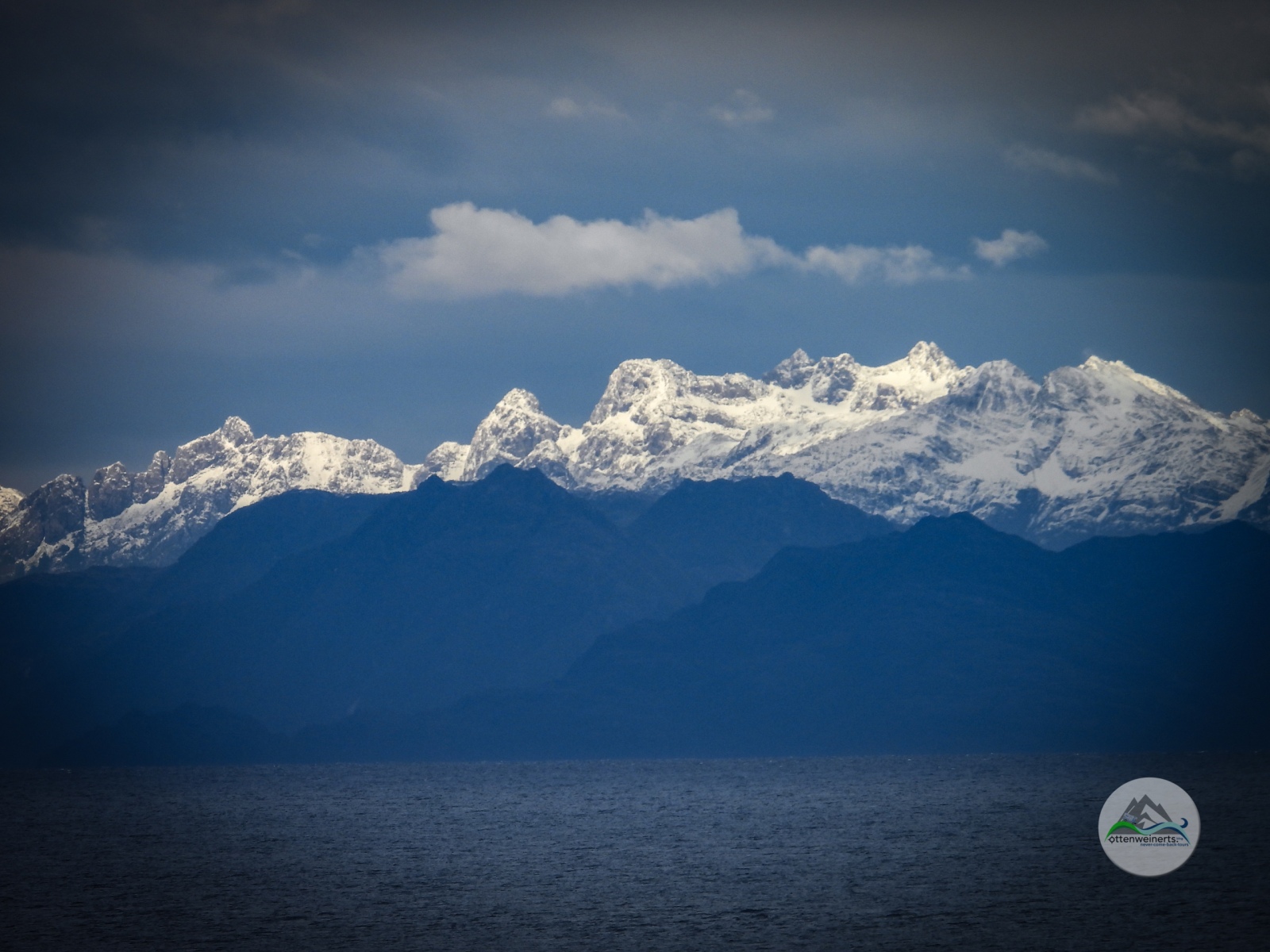
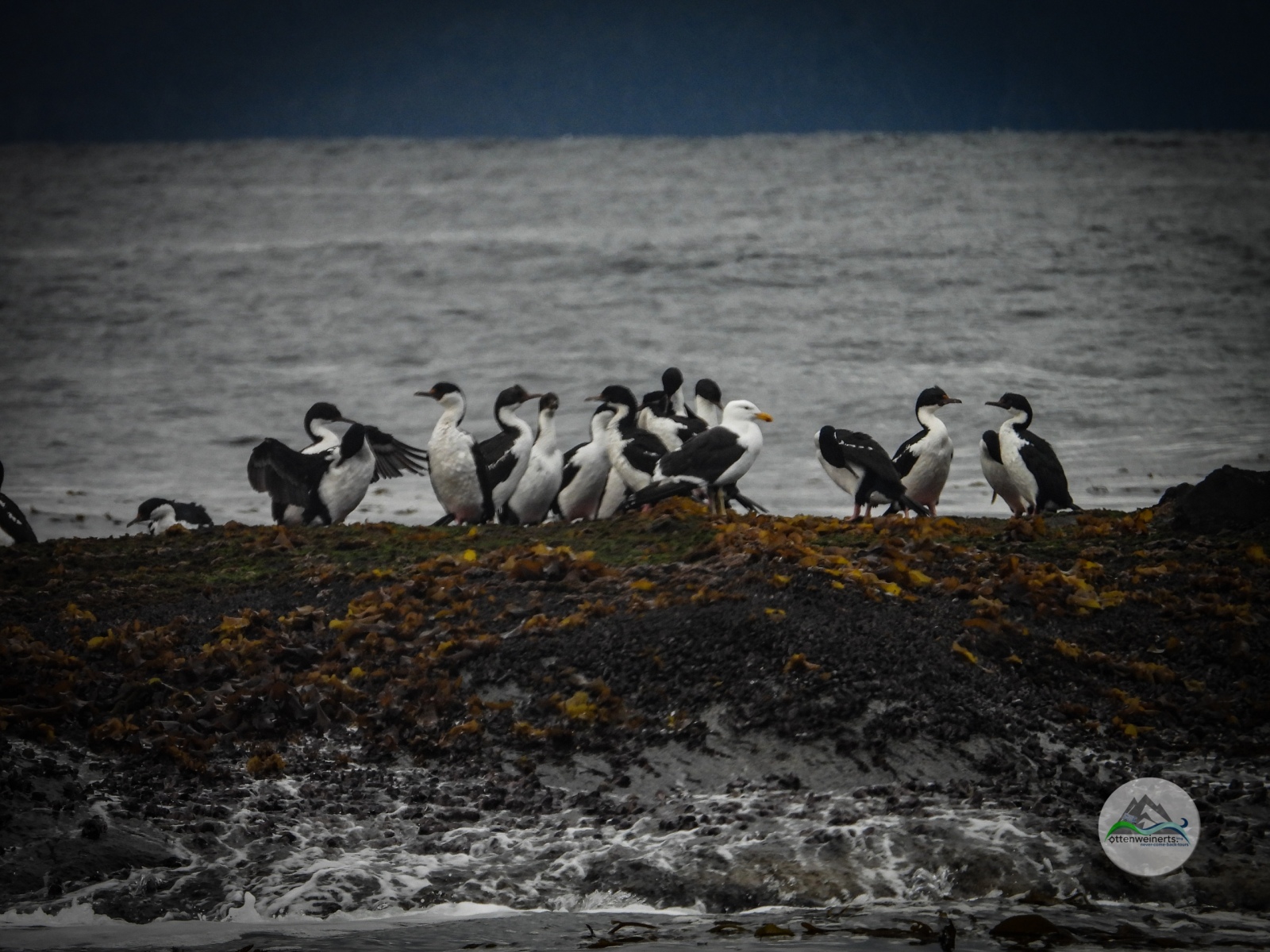
Vor 2 Tagen haben wir mit einem netten Pärchen aus Punta Arenas geplaudert, die uns den Besuch vom Leuchtturm, Faro San Isidro empfohlen haben. Das wären vom Parkplatz am Ende der Ruta 9 angeblich 4 km Spazierweg, in angeblich 1,5 Stunden lässig zu bewältigen. Nach dem Frühstück packen wir also Wanderschuhe und Stecken aus und marschieren los. Die Landschaft ist wunderschön, einsam und wildromantisch, rechts Wald, links die Wasser der Magellan-Straße, im Hintergrund schneebedeckte Berggipfel. Nach ein paar hundert Metern führt der Pfad aus dem Wald heraus und auf den Strand, und ab jetzt wird´s mühsam. Der Untergrund ist abwechselnd nasser Sand, der sich an die Schuhe heftet, loses Geröll, in dem man einsinkt und wegrutscht oder feuchte glitschige Felsen und dazwischen glitschiger, feuchter Kelp. Zwischendurch sind vier kleine Bäche zu überqueren – ohne Brücken natürlich. Nach 3 km sehen wir endlich das Leuchtturm-Gebäude – aber das schaut noch sehr weit weg aus! Im Endeffekt haben wir dann 6 km zum Faro San Isidro zurückgelegt. Aber die Aussicht ist ein Traum – vor uns die Magellanstraße, im Hintergrund die Darwin-Kordillere, am Strand und im Wasser jede Menge Kormorane, Gänse, Enten und Möven. Außer uns sind noch drei weitere Touristen da – aus Baden-Württemberg.

Das Leuchtturmgebäude ist geschlossen, durch eines der Fenster sieht man ein fein säuberlich ausgebreitetes Walskelett, sowie Werkzeug, Farben und Planen. Vielleicht wird das mal ein Museum, wer weiß. Wir machen uns auf den Rückweg, und diese nochmals 6 km sind jetzt wirklich anstrengend, das Geröll am Strand rutscht, der Sand klebt und die Schuhe sind mittlerweile feucht. Völlig erledigt kommen wir nach fast 5 Stunden wieder bei unserem Krassen Pferd an. Es ist bereits nachmittag und wir sind hungrig, aber viel zu müde zum Kochen. Wir fahren die paar km zurück Richtung Fuerte Bulnes, fallen in der Cafeteria im Besucherzentrum ein und gönnen uns eine Pizza. 

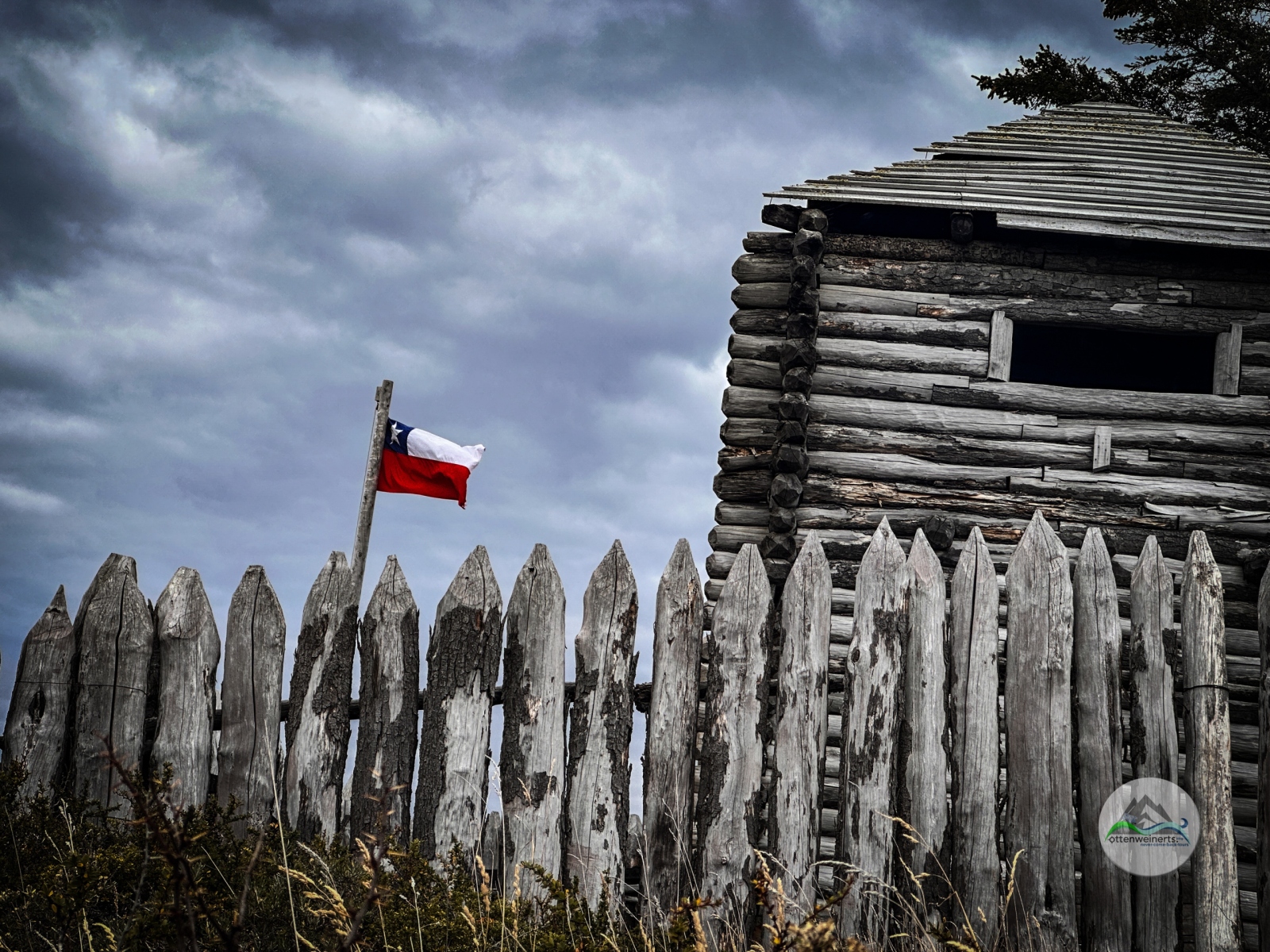
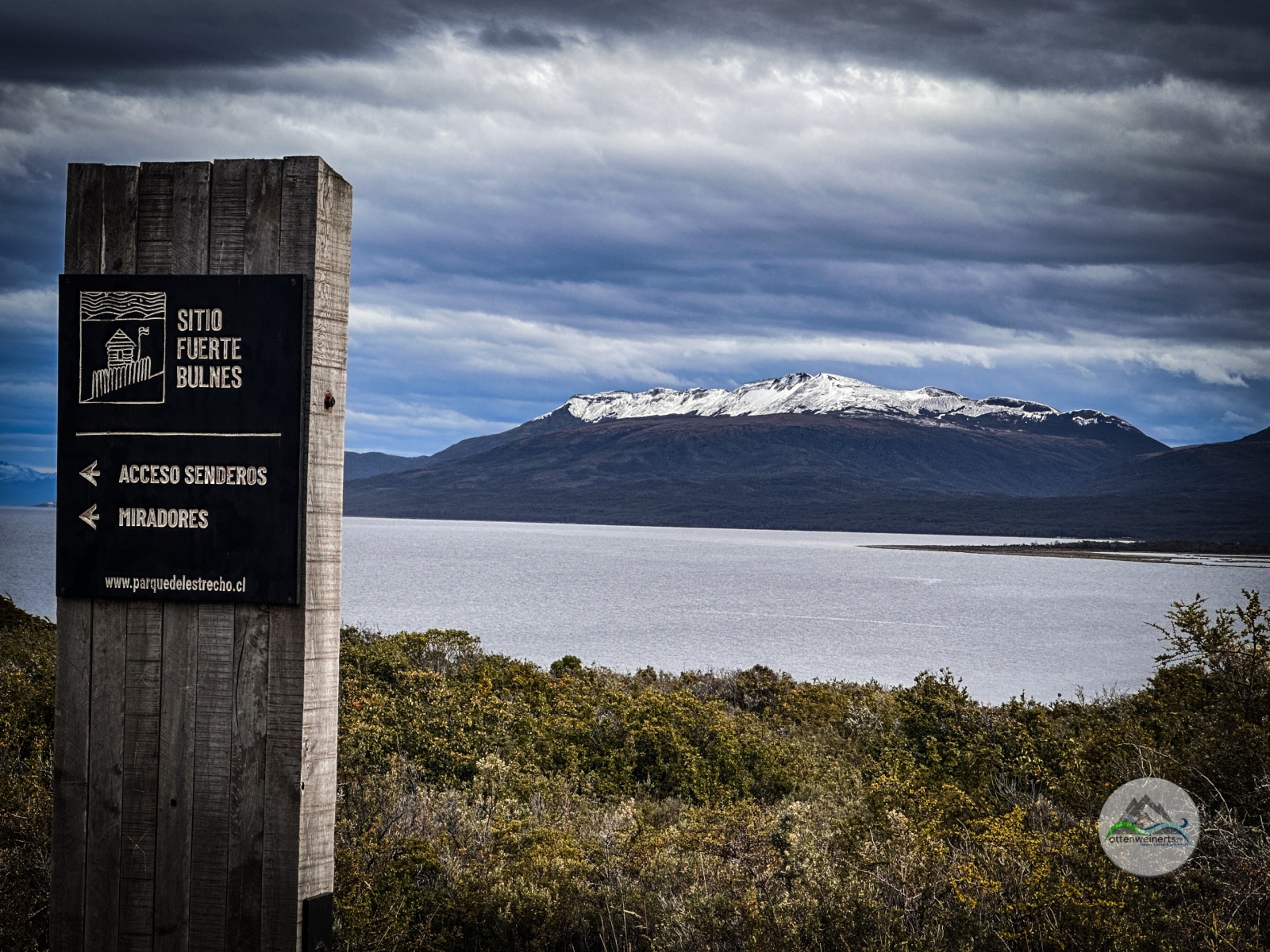
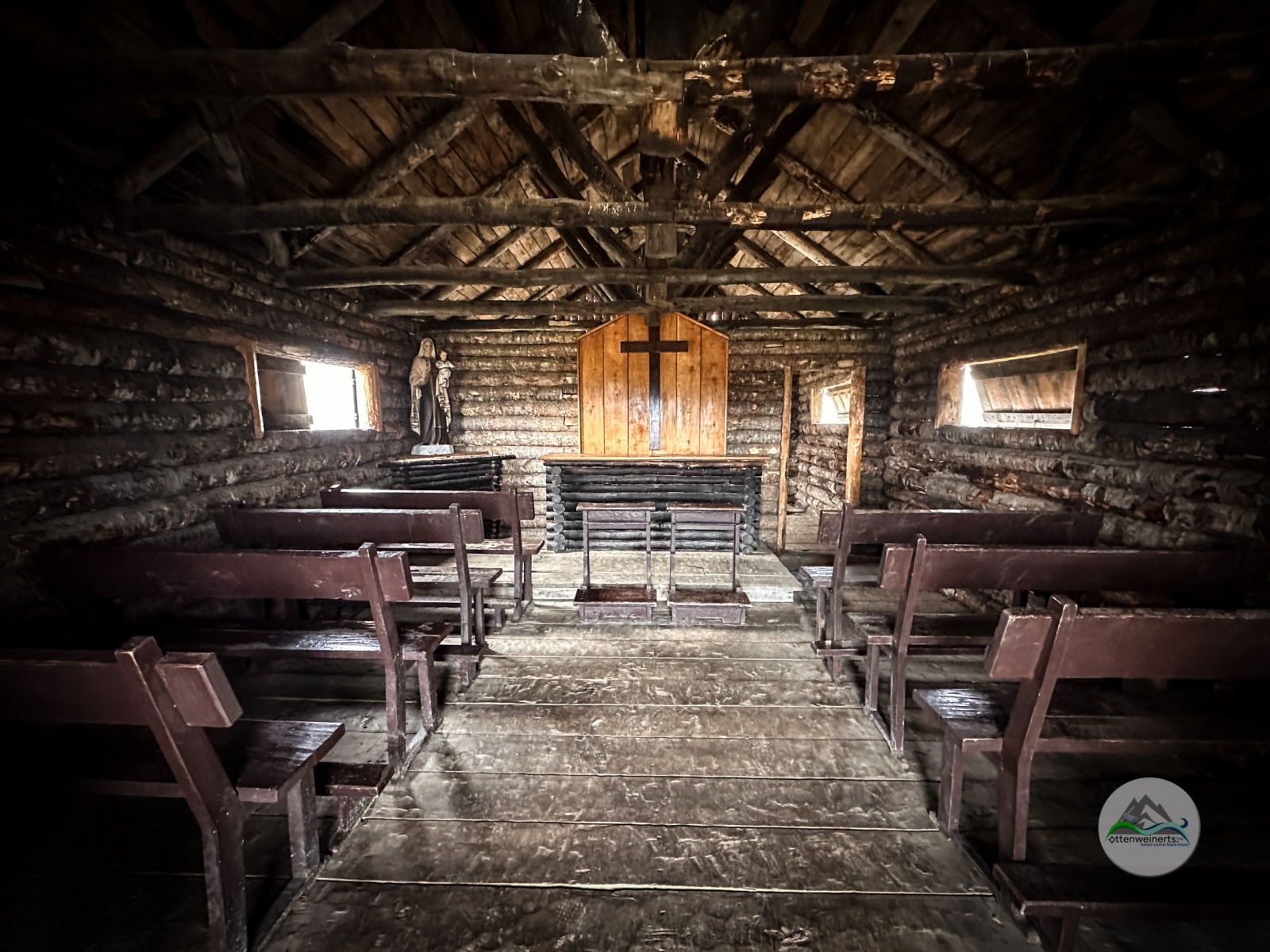
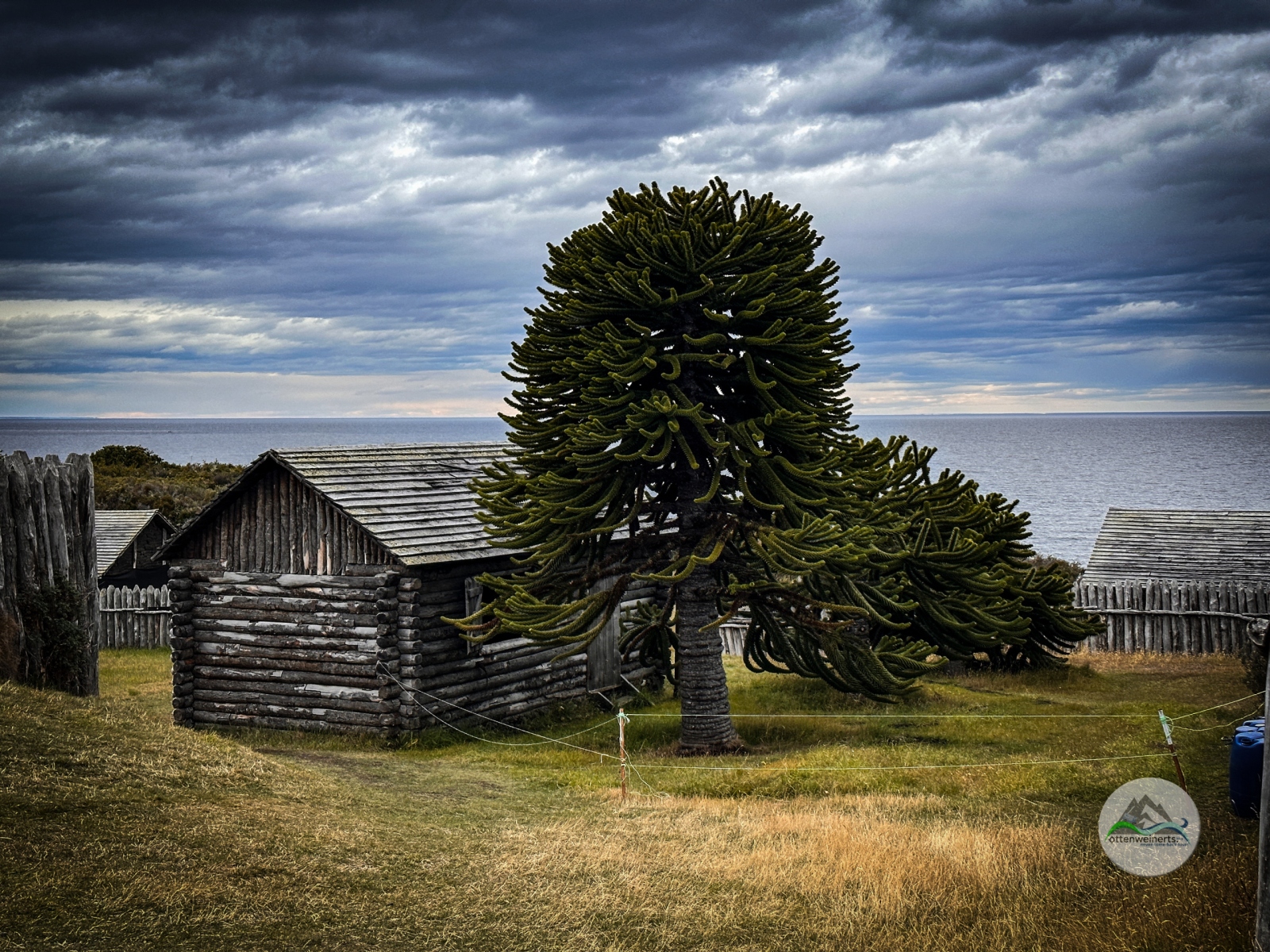
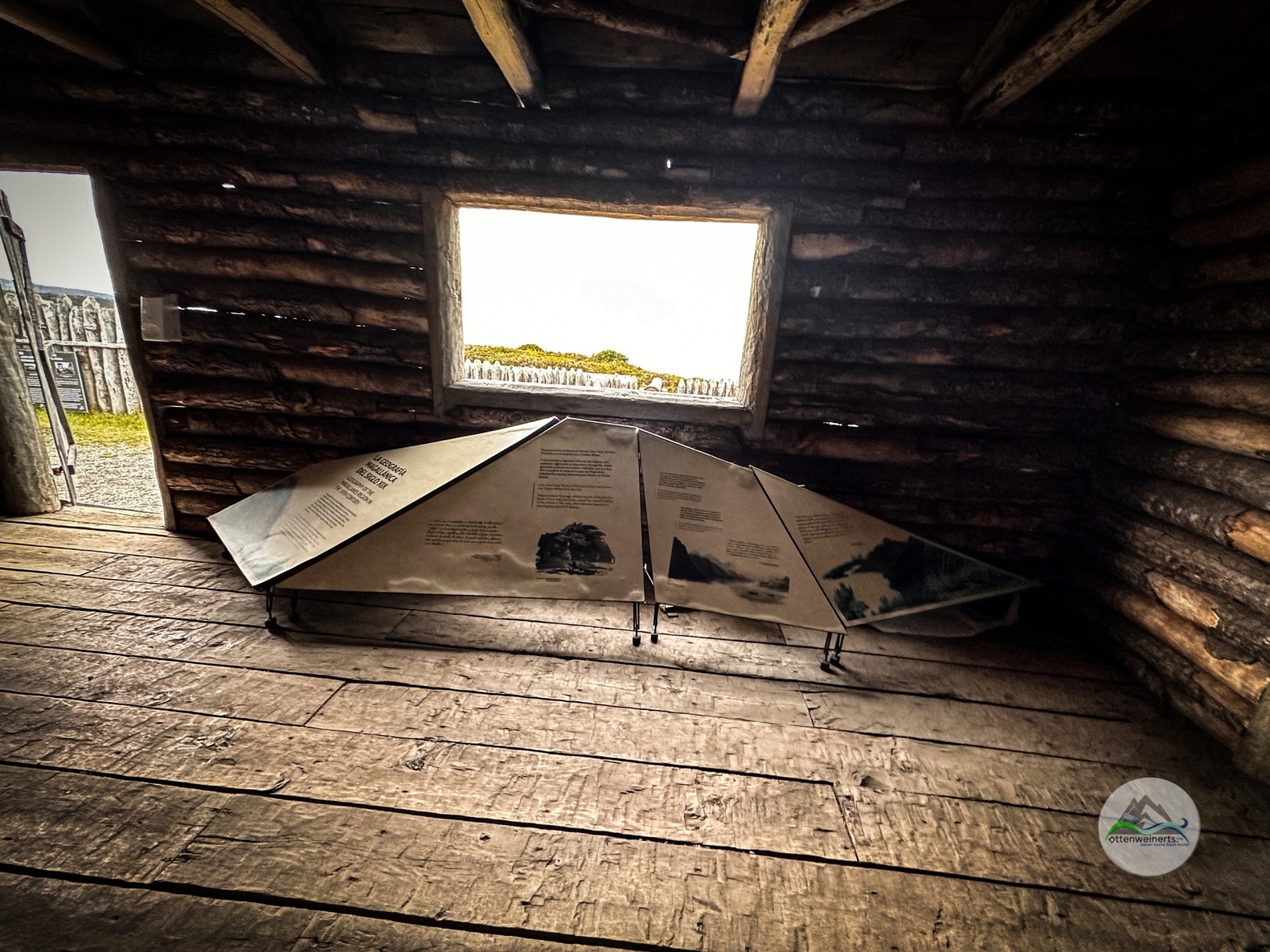
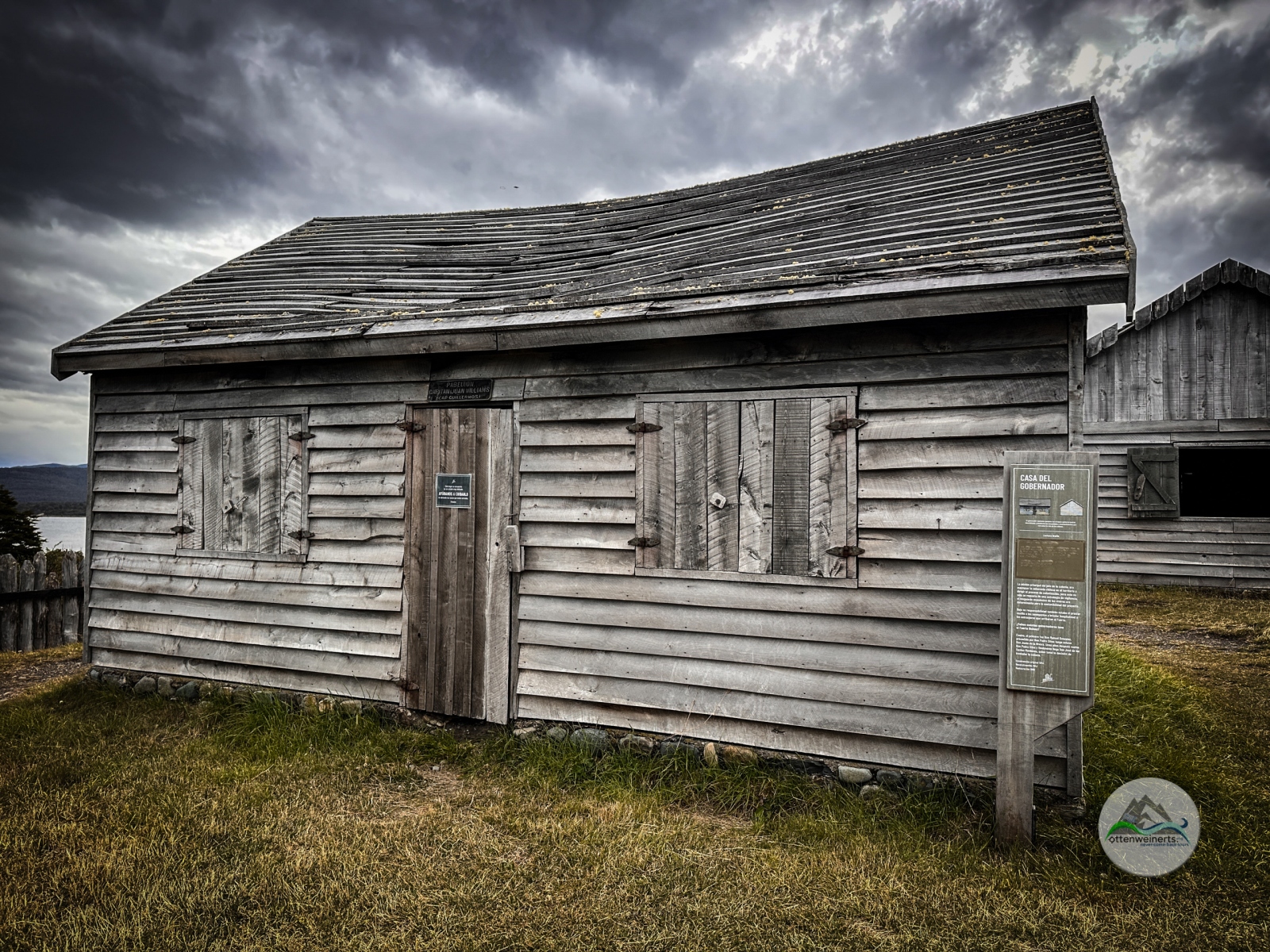
Nach einem Kaffee kehren die Lebensgeister zurück, und wir besuchen zuerst das sehr gut gemachte Museum im Untergeschoss des Besucherzentrums. Geologie, Fauna und Flora der Region sind auf spanisch und englisch gut erklärt, sowie die Geschichte von Fort Bulnes, der ersten spanische Siedlung. Fort Bulnes wurde rekonstruiert – die Lage des Forts ist zwar malerisch und bietet gute Aussicht, aber weder Trinkwasser, noch Weideflächen oder Ackerland, daher wurde das Fort aufgegeben und die nördlich gelegene Bucht von „Sandy Point“ als neuer Standort auserkoren – das heutige Punta Arenas.

Vom Mirador aus sehen wir in die nächste Bucht, wo ein Denkmal an die unglückliche Siedlung Rey Felipe erinnert: 37 Kolonisten sollten dort das Land für den spanischen König in Besitz nehmen und urbar machen. Ohne ausreichend Vorräte und Nachschub überlebte ein einziger der Siedler, der 3 Jahre später vom englischen Piraten Cavendish gerettet wurde. Alle anderen verhungerten, und der Ort wurde in „Hungerhafen“ – Puerto Hambre – umgetauft. 

Am Rückweg nach Punta Arenas sehen wir wieder eine Schar rosa Hühnchen auf Stelzen. Für mich waren und sind Flamingos untrennbar mit Sonne und Sommer, Urlaub und Wärme verbunden. Gut, es ist gerade Sommer hier, die Sonne scheint auch und wir sind auf Urlaub, aber Wärme? Nicht wirklich. Und eigentlich sehen die Vögel auch aus, als wäre ihnen kalt, die Hälse eingefahren und die Schnäbel im Gefieder versteckt. Verständlich, es bläst kalter Wind. Und der begleitet uns nach Punta Arenas, wo wir uns nochmals für die Nacht an der Costanera einparken.

Day 332 / 308 – A faro, a fort and freezing flamingoes

2 days ago, we chatted with a nice local couple who recommended visiting the lighthouse, Faro San Isidro – an easy walk of 1,5 hours over a distance of 2,5 miles, starting at the parking lot at the end of Ruta 9. After breakfast we put on our hiking boots, take the walking sticks and start the hike. The landscape is beautiful – woods to our right, water to our left and snow-covered mountains in the background. After a few hundred yards, the path leaves the forest and leads down to the beach – and from now on the hike gets tiresome. We walk on either wet sand which sticks to our shoes, on loose pebbles or on moist, slippery rocks with slippery, moist marine vegetation. We have to cross four small creeks, without bridges, of course. After almost 2 miles we can see the lighthouse building in the distance, but it looks still far away – and it is, 2 more miles to walk on the beach. But it was worth it, the view from the lighthouse is breath-taking – the Strait of Magellan to our feet, the Darwin Cordillera in the back and a lot of wild fowl on the beach and in the water. Only three other tourists are here – and they are from Germany.
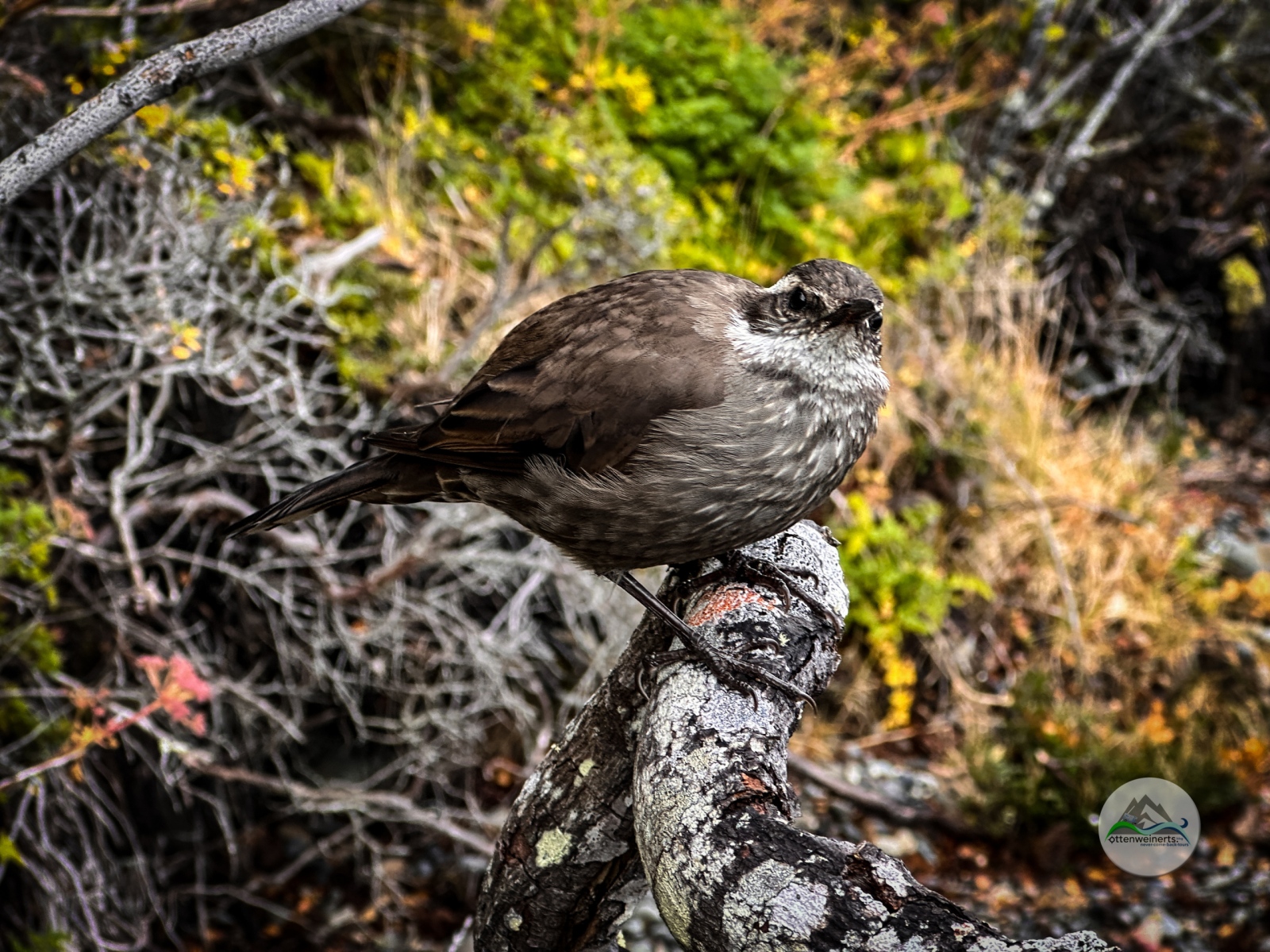
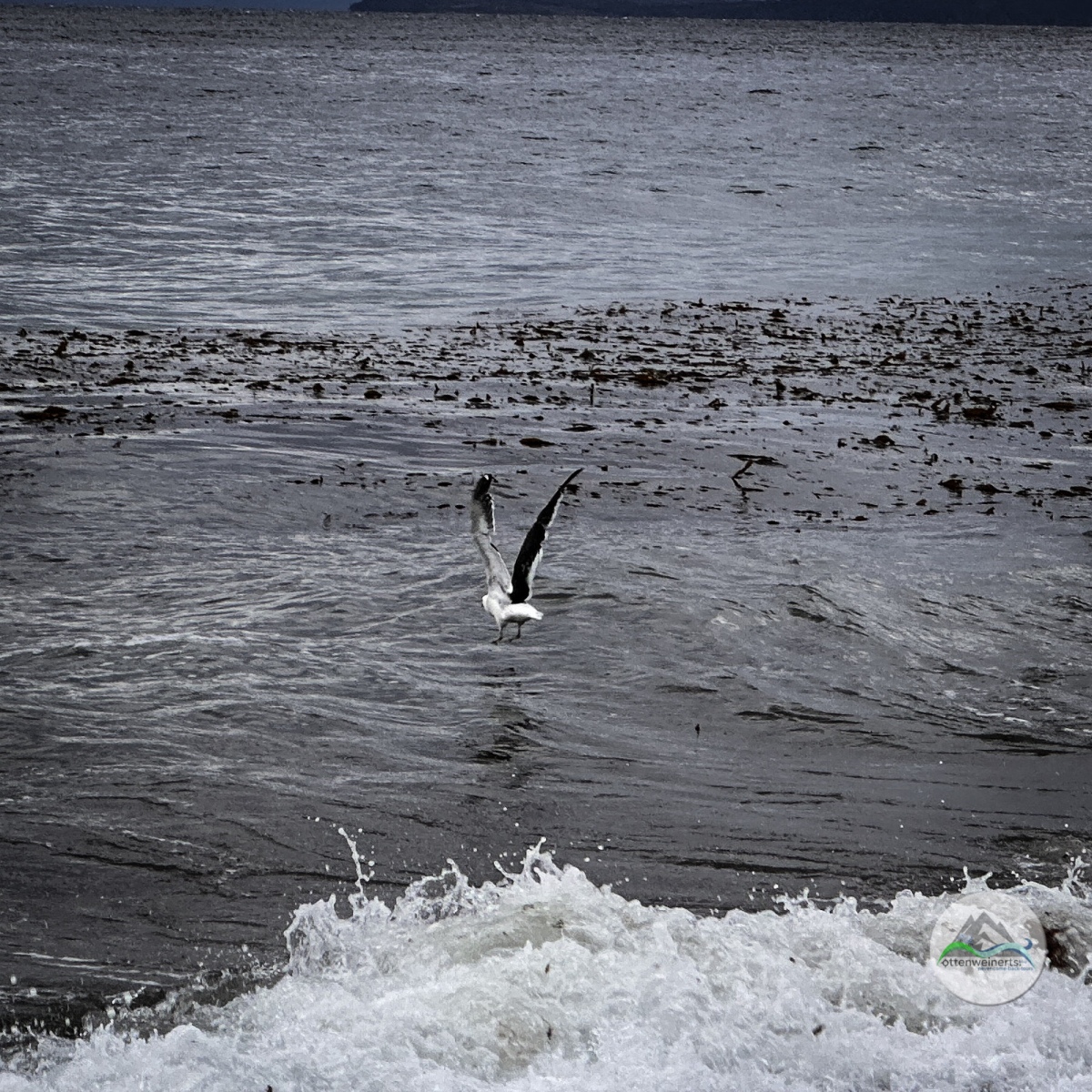
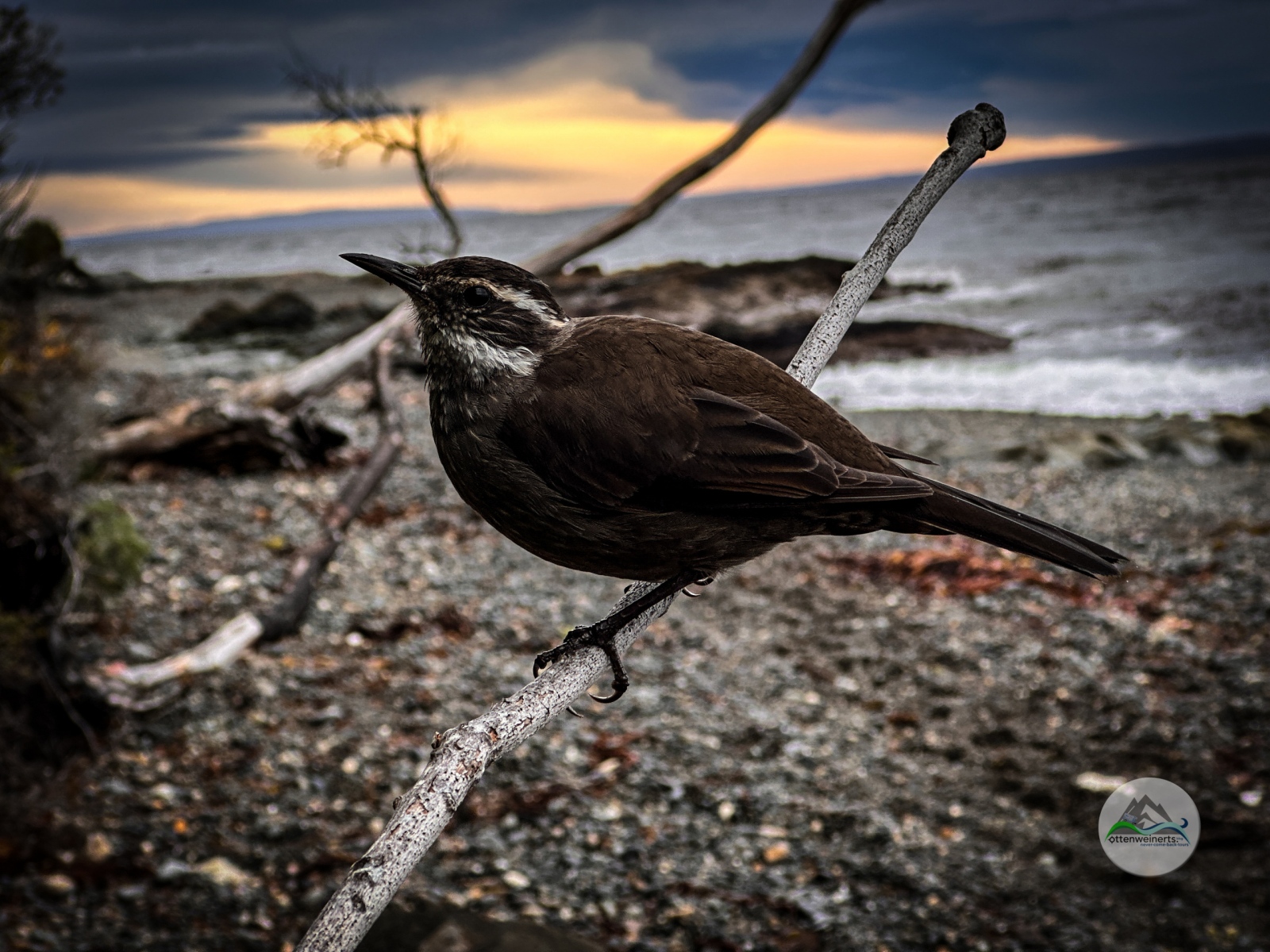
The building is closed, through one of the windows we can see a complete whale skeleton, tools and paint. Maybe this building will be a museum in the future. We start the 4 miles hike back which turns out to be really exhausting, on the loose pebbles, on the sticky sand and over the creeks, where our shoes get wet. After almost 5 hours, we are back at our brave camper, hungry, but too tired to cook. We drive the few miles back to Fuerte Bulnes, go straight to the cafeteria at the visitor center and order pizza.
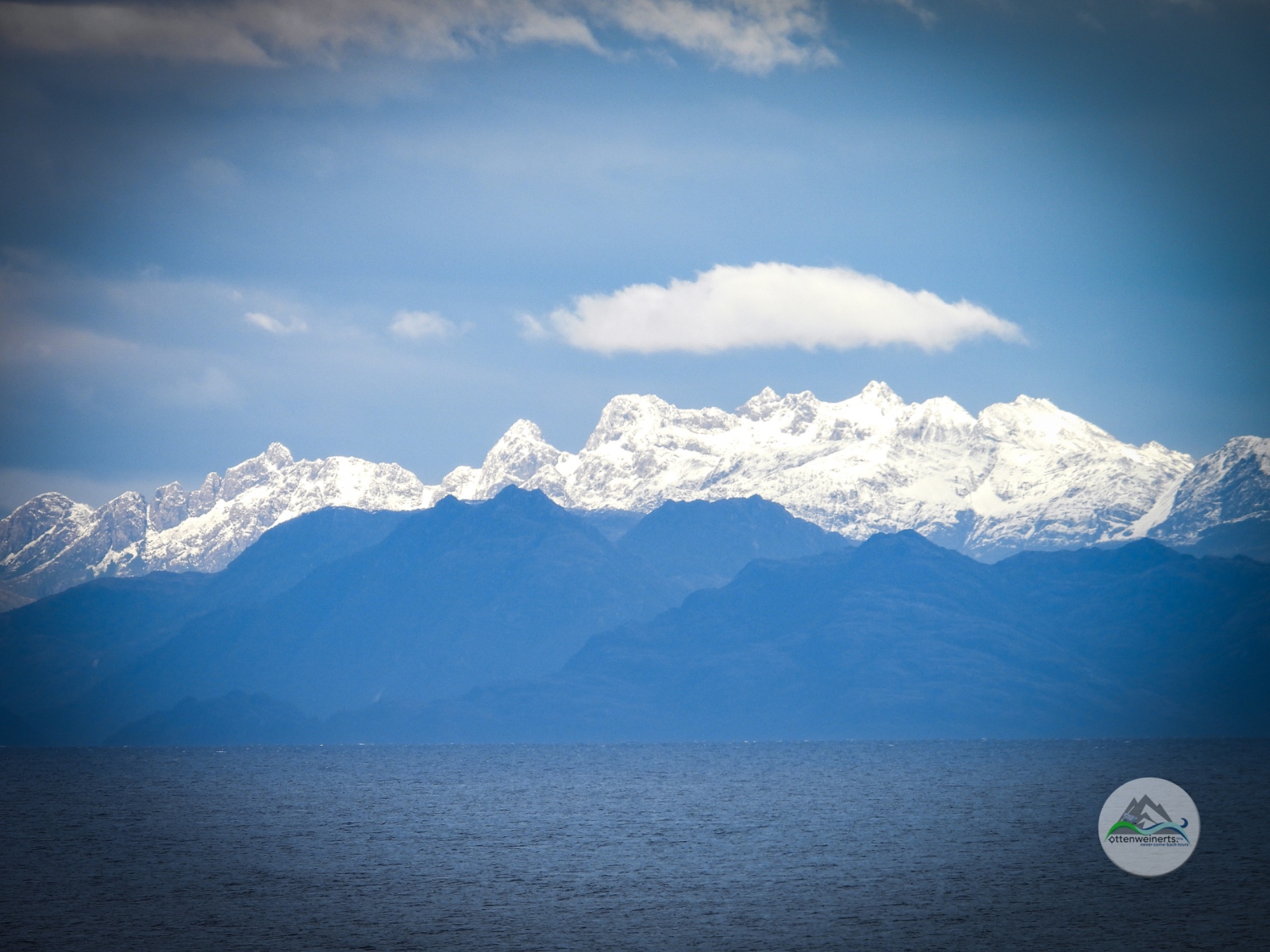
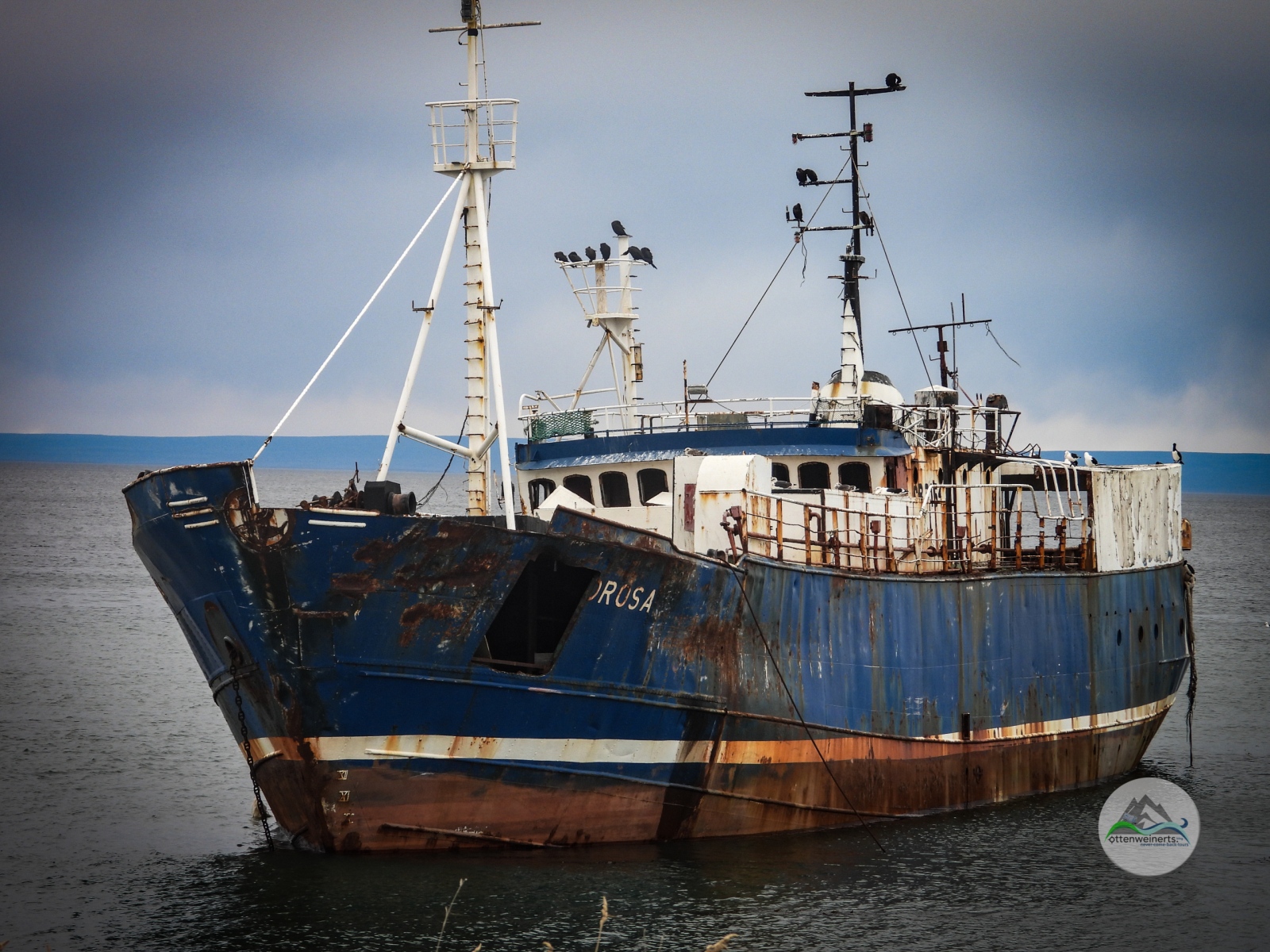
After lunch and coffee, we feel better, and visit the very interesting museum. Geology, fauna and flora of the region are explained in Spanish and English, and also the history of Fort Bulnes, the first Spanish settlement. The Fort has been reconstructed – the location is very scenic, but there is neither fresh water nor land for agriculture; therefore, the settlers gave the fort up and moved to a new location further north, called Sandy Point – today´s Punta Arenas.

From the mirador, we see the monument in the bay north of Fuerte Bulnes, reminder of the tragic story of the settlement Rey Felipe: 37 colonists went ashore, but didn´t have enough supplies to survive in the harsh climate. Only one man survived, he got rescued by the English pirate Cavendish three years later. All the others starved to death, therefore the place was renamed Puerto Hambre – Hunger Haven. 

On the way back to Punta Arenas we see a flock of pink chicken on stilts again. For me, flamingoes are a synonym of sun and summer, vacation and warmth. Ok, it is summer here right now, the sun is shining and we are on vacation, but warmth? Not really. And the birds do look as if they were cold, with their necks folded and their beaks tucked into their feathers. A cold wind is ruffling their feathers, and the wind accompanies us to Punta Arenas, to our parking spot at the costanera.

Route 230315