Archiv der Kategorie: Sprache

251001 – Mittwoch, 1.10.2025 –  Nepal Tag 7 – von Gorkha nach Pokhara –

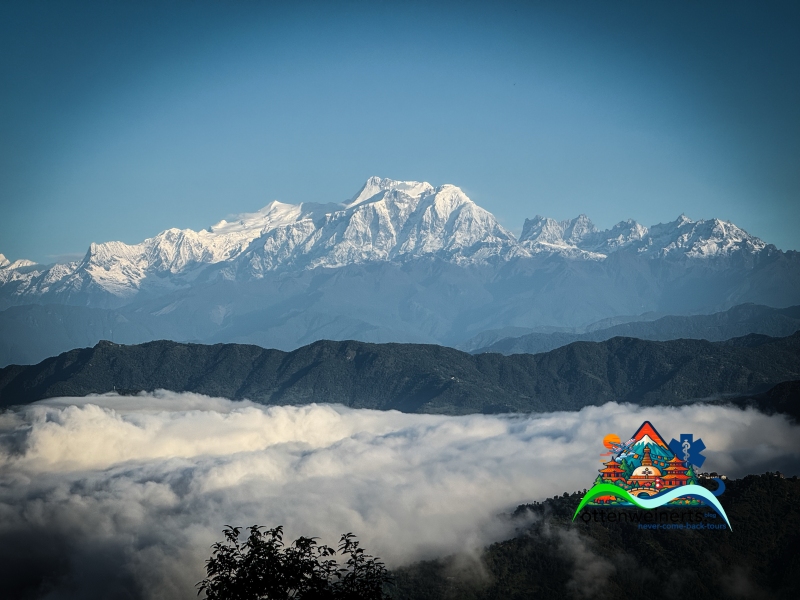
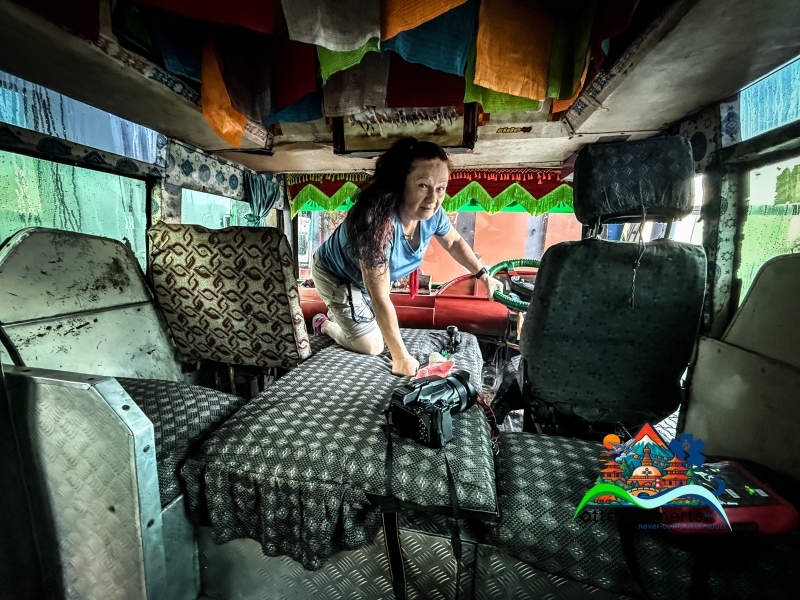
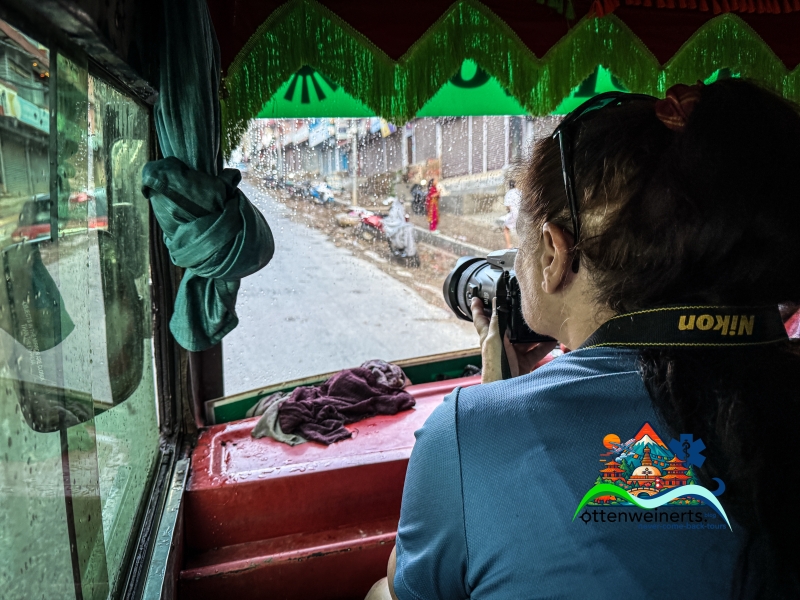
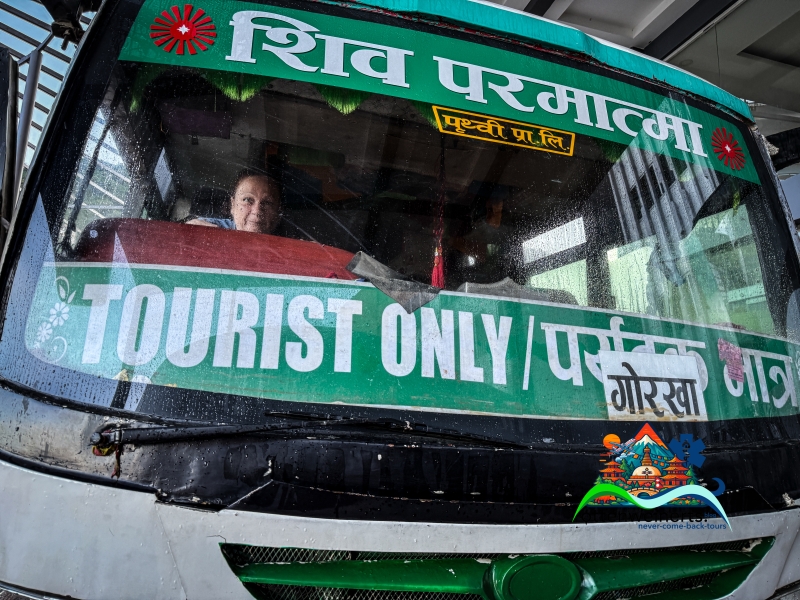
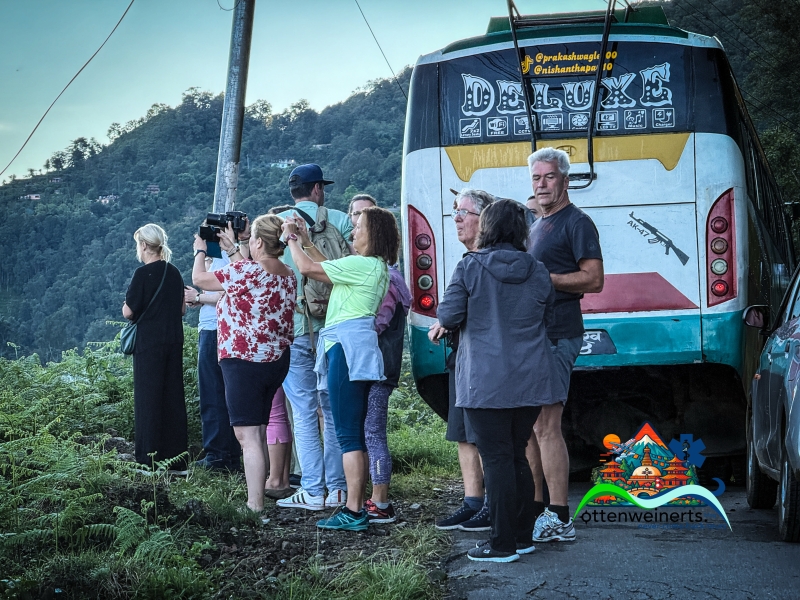
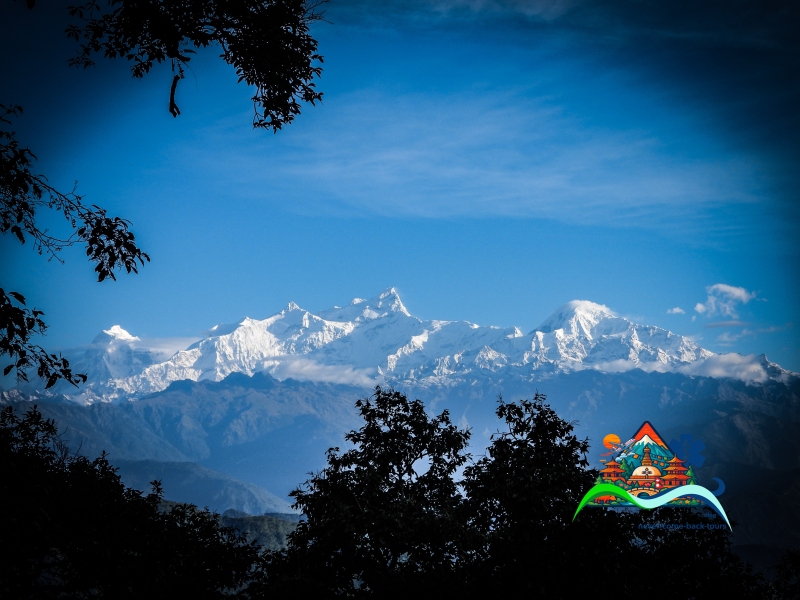
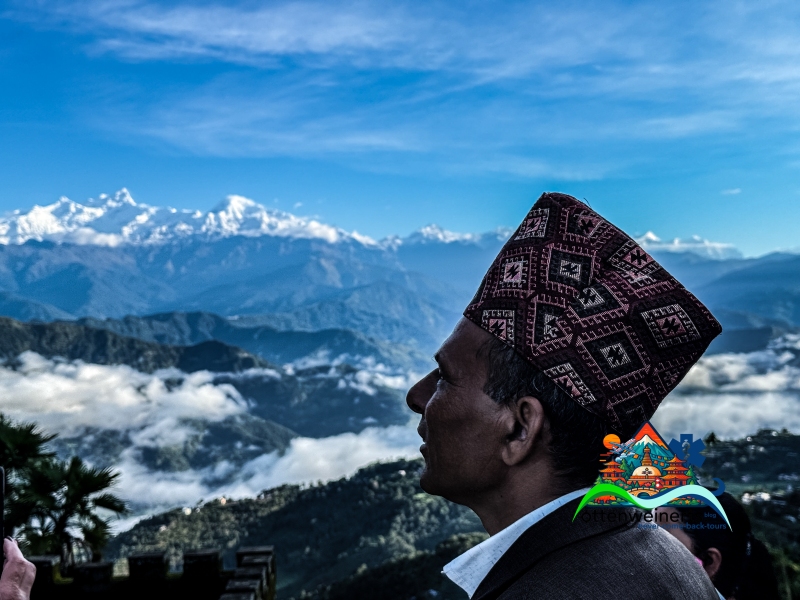
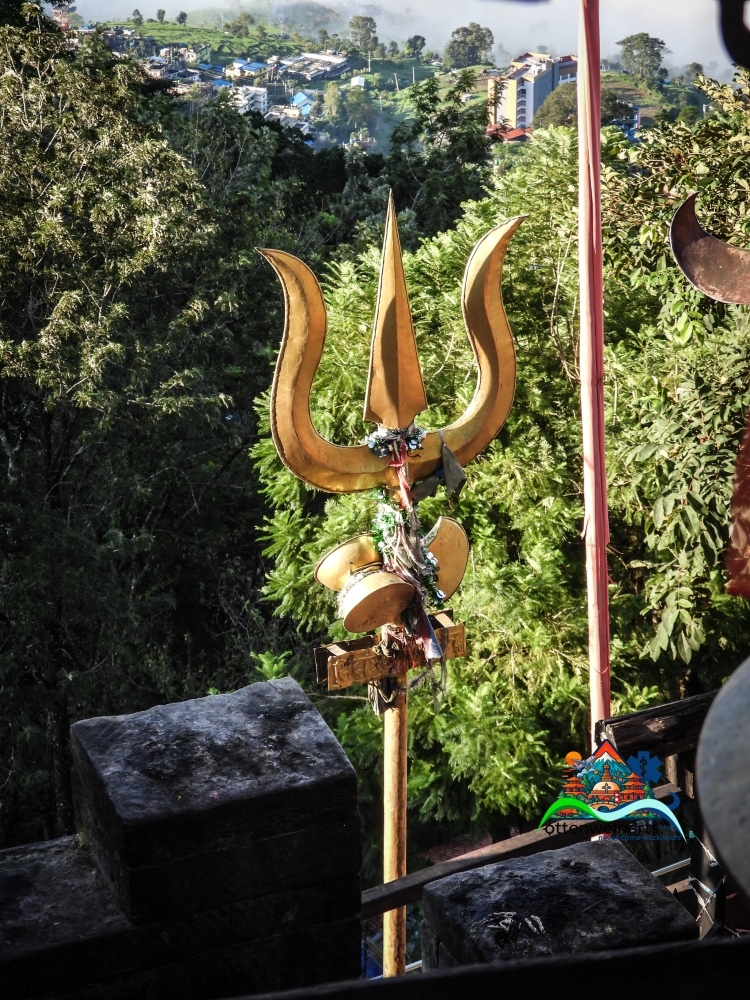
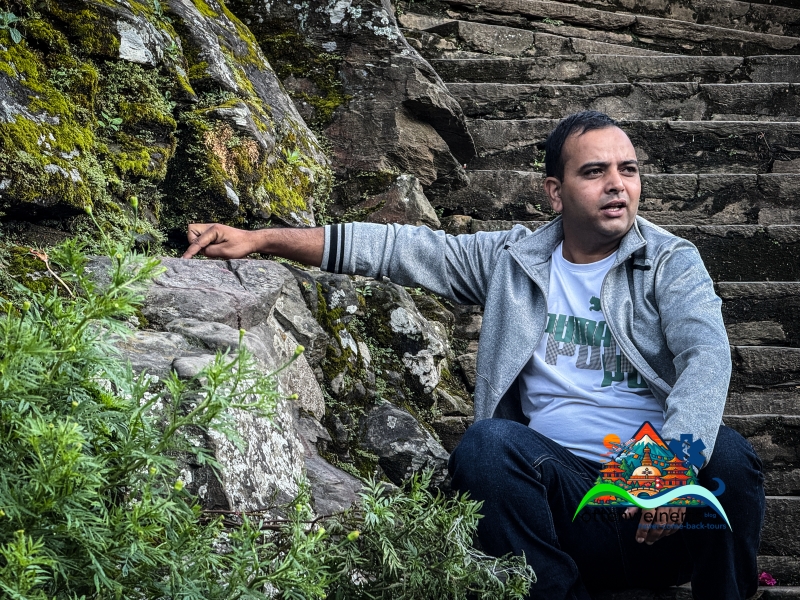
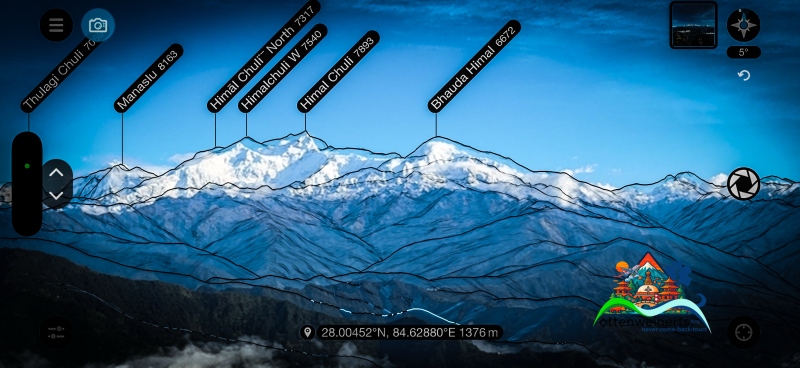
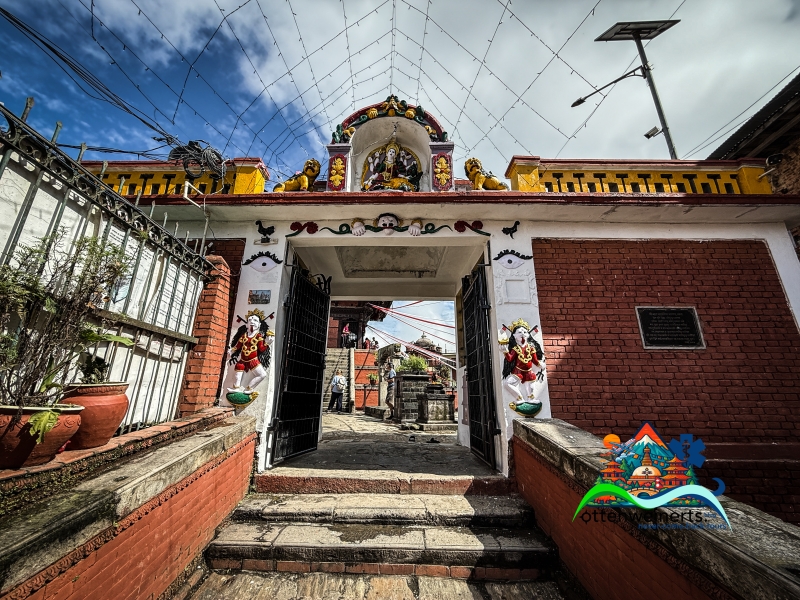
Und schon wieder um 6:00 Uhr aufstehen – diesmal, um mit dem öffentlichen Bus zum oberen Palast von Gorkha zu fahren, dann steile Stufen hochzuklettern und von hier aus die majestätische Anapurnakette und den Manaslu bei strahlendem Sonnenschein und ohne Wolken zu sehen. 

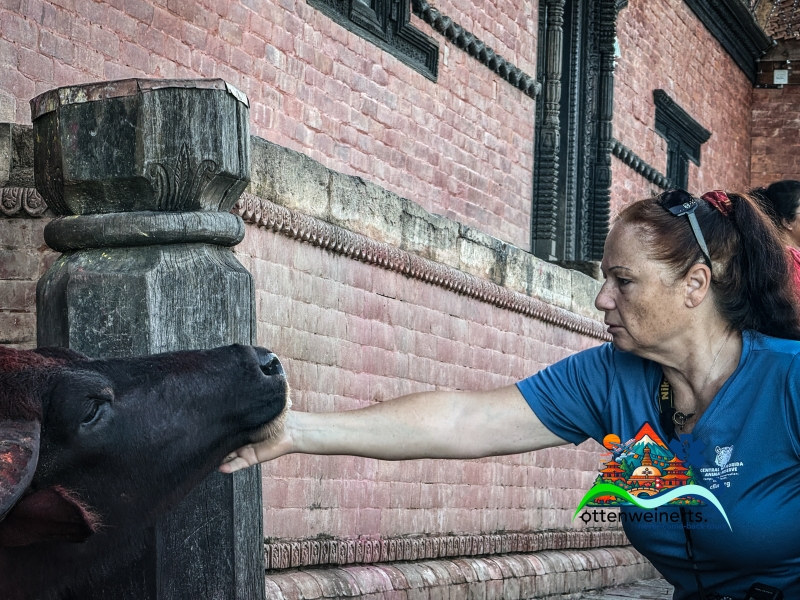
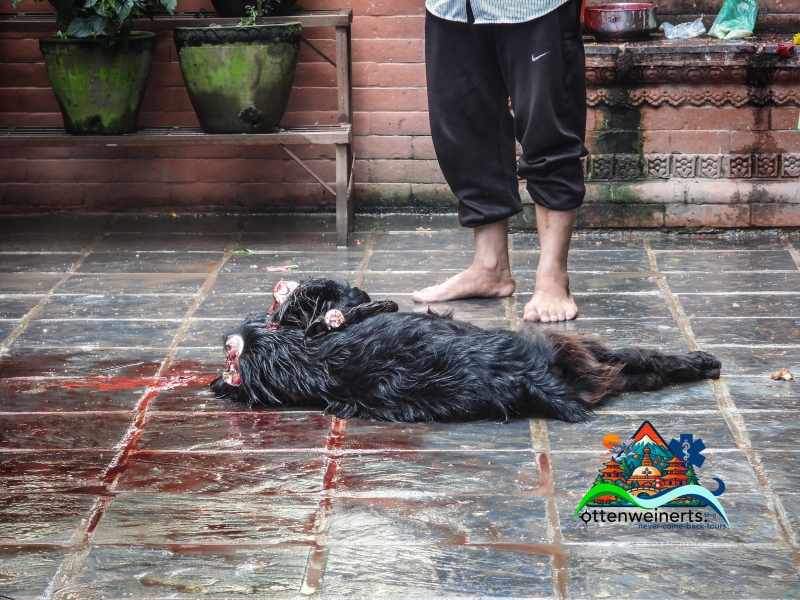
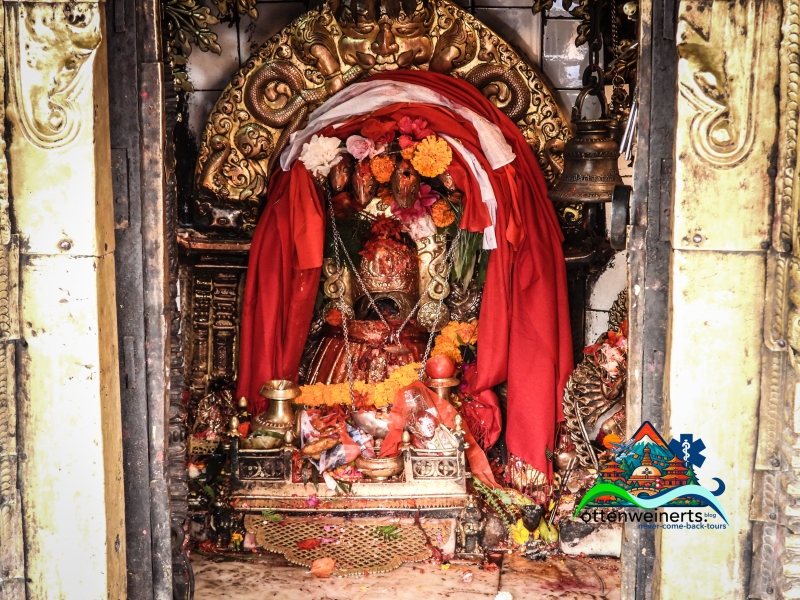
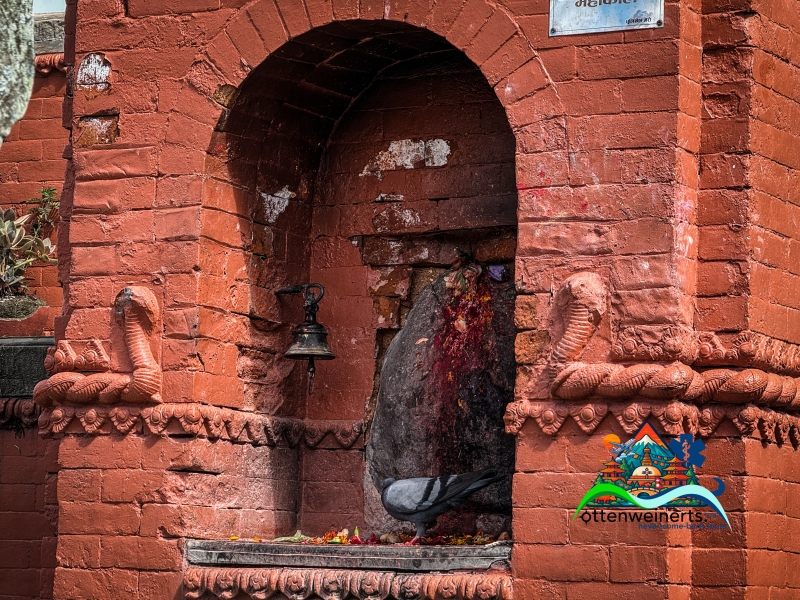
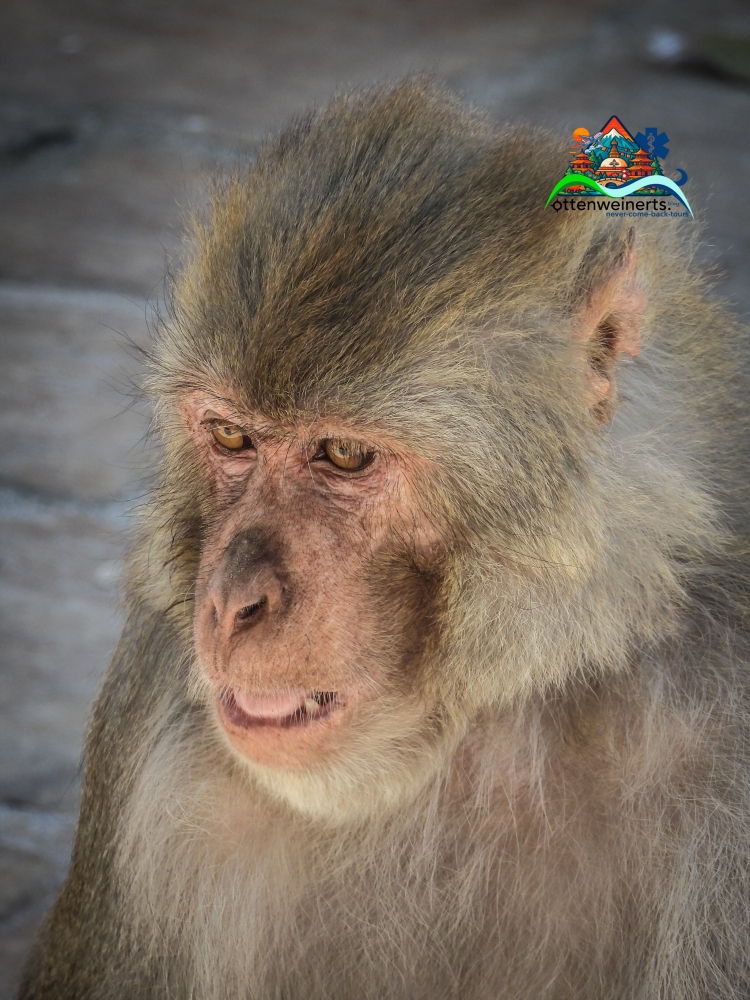
Im Tempel des Palastes warten drei Wasserbüffel nichtsahnend auf ihr Ende – heute Abend werden sie zu Ehren der Göttin Kali geopfert. Einige Ziegen mussten gestern bereits ihr Leben lassen, und so stapfen die unerschrockenen Touristen barfuß, weil Tempelareal, durch Ziegenblut und Wasserbüffelfladen. Der Rhesusaffe oben auf der Antenne denkt sich wahrscheinlich seinen Teil.

Zurück im Hotel haben wir uns eine Dusche und Frühstück verdient, dann geht es schon weiter westwärts nach Bandipur. Die „Königin des Hügels“ ist über eine zwar recht gut asphaltierte, aber dennoch abenteuerliche Straße erreichbar. 

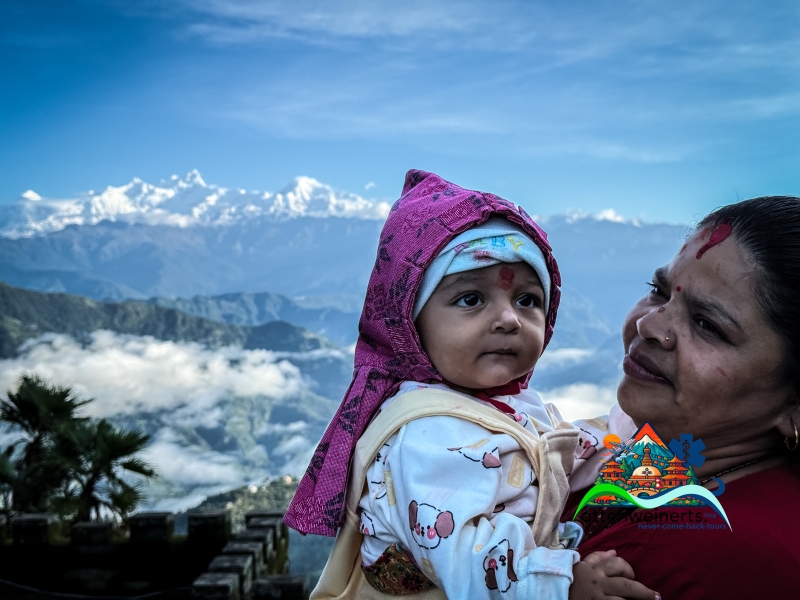
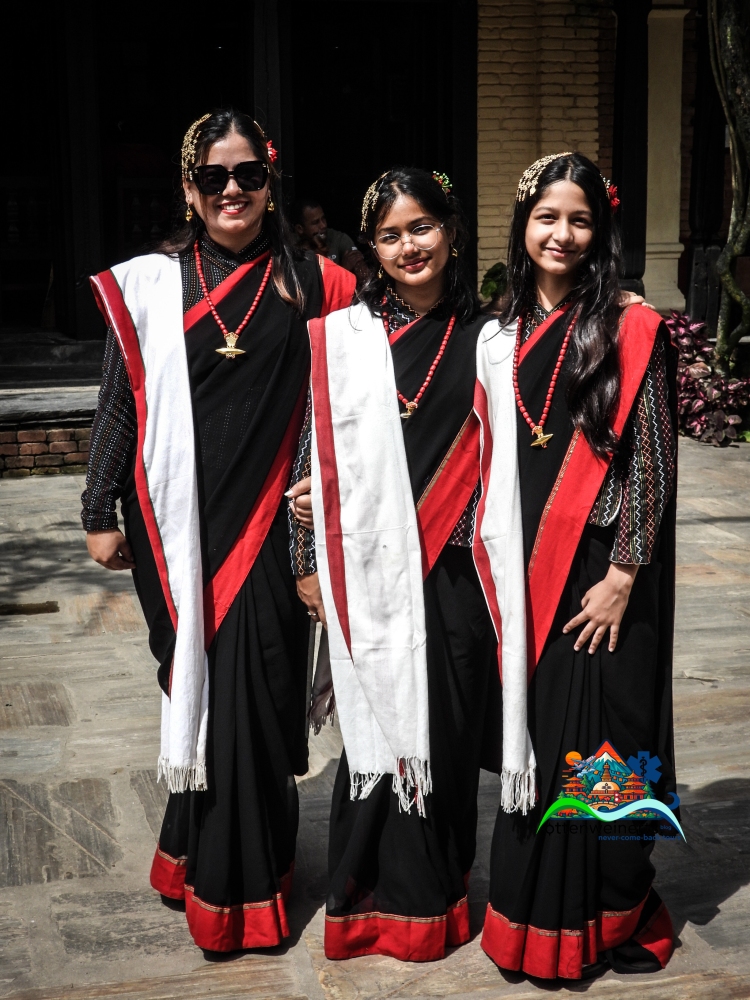
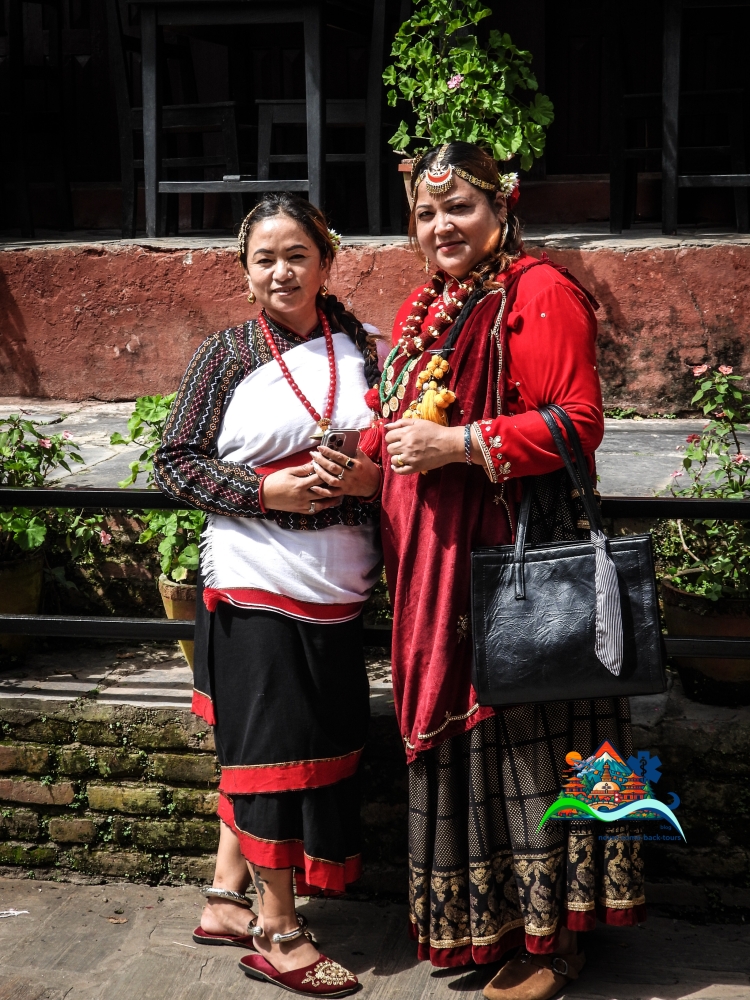
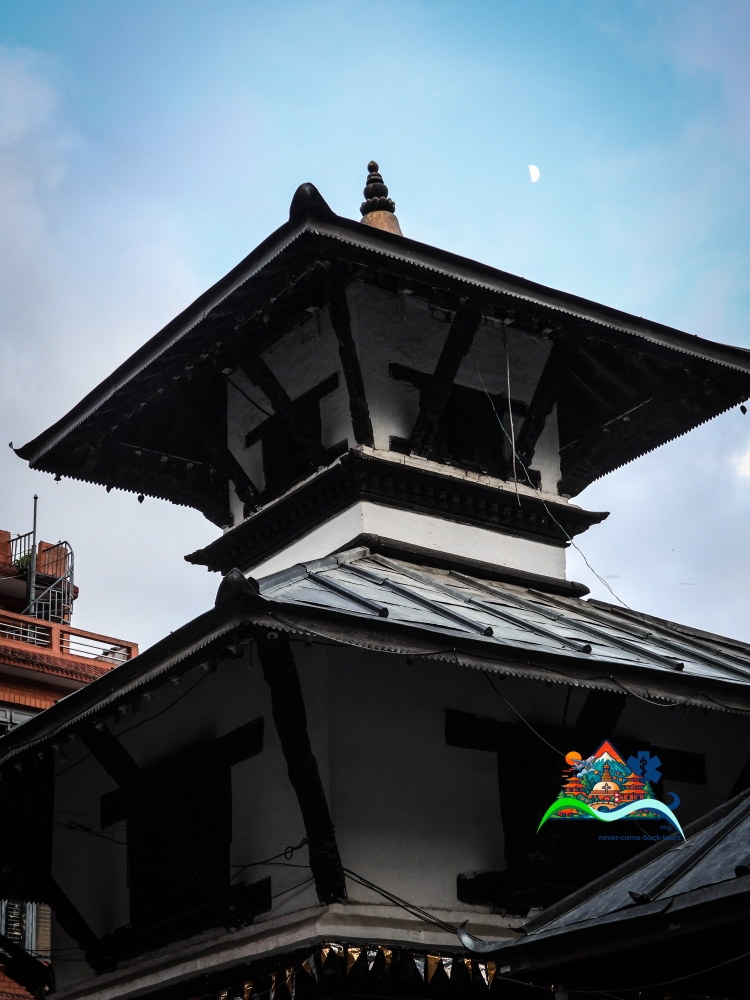
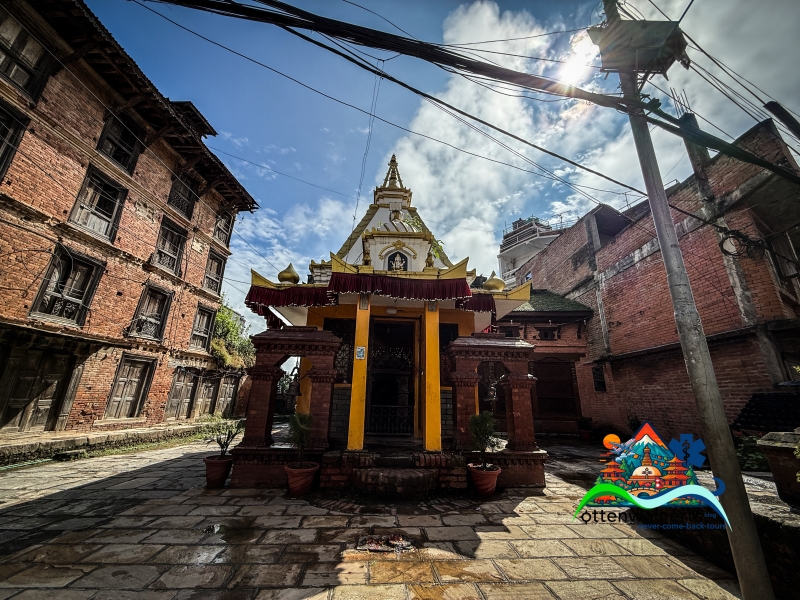
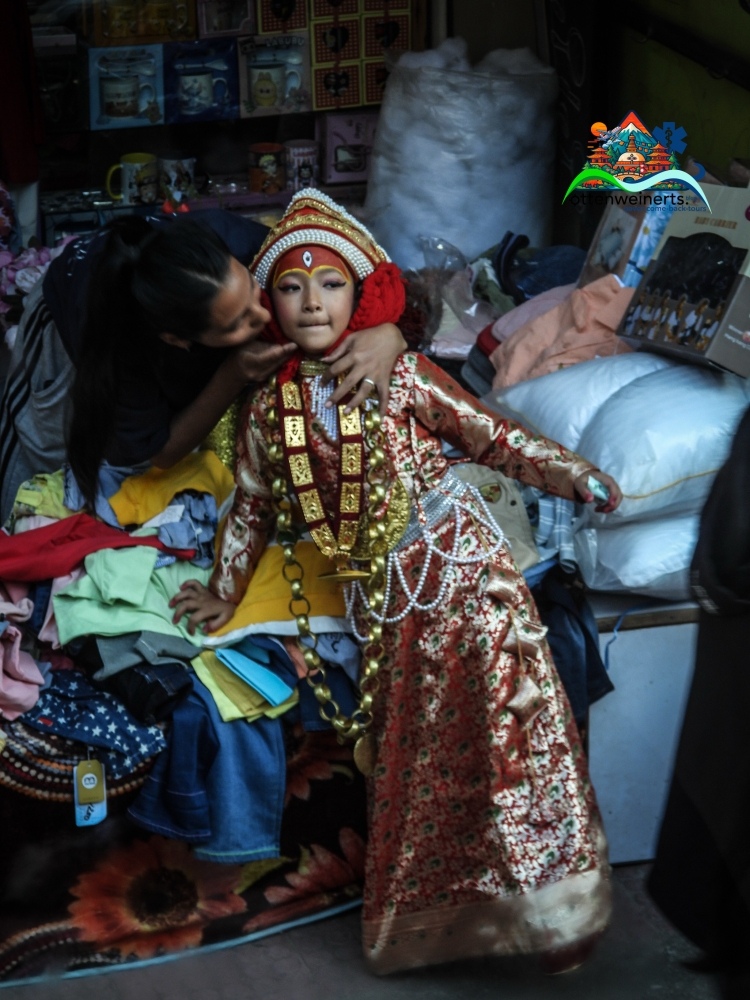
Der Ortsteil Bandipur Bazar ist aufgeräumt und hübsch herausgeputzt, aber auch sehr touristifiziert. Man sieht aber nicht nur Ausländer, sondern auch Nepalesen in wunderschönen, bunten Trachten. Vorbei an mehreren Hindu-Tempeln wandern wir zur Seilbahn-Bergstation, die in unserem Reiseführer beschrieben ist. Aber, Überraschung: die Seilbahn ist noch gar nicht fertig.

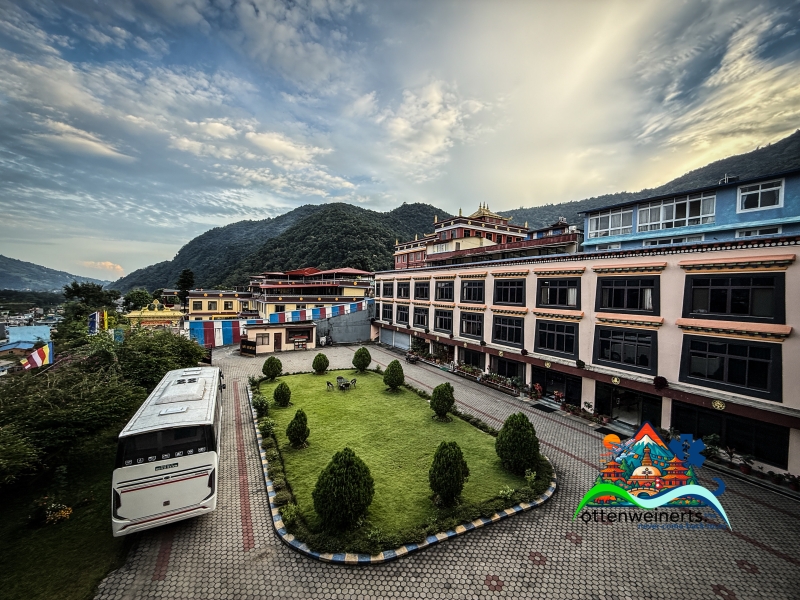
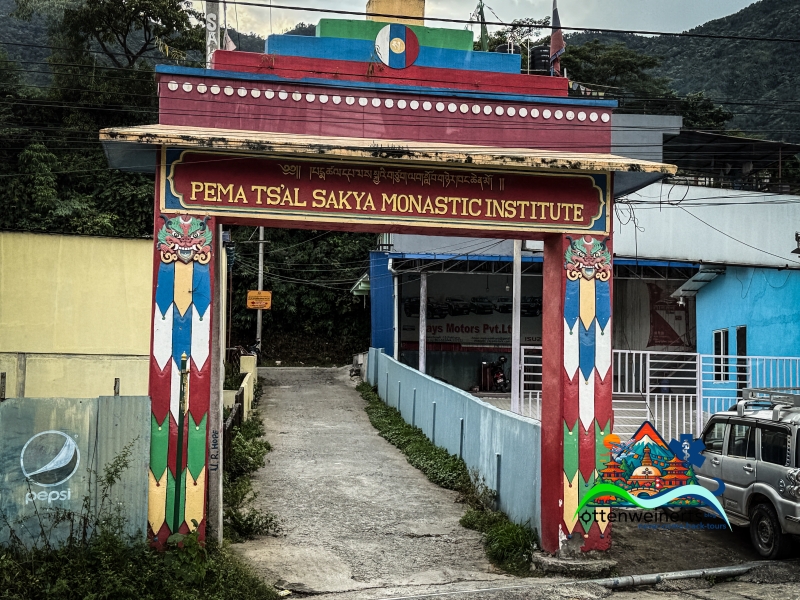
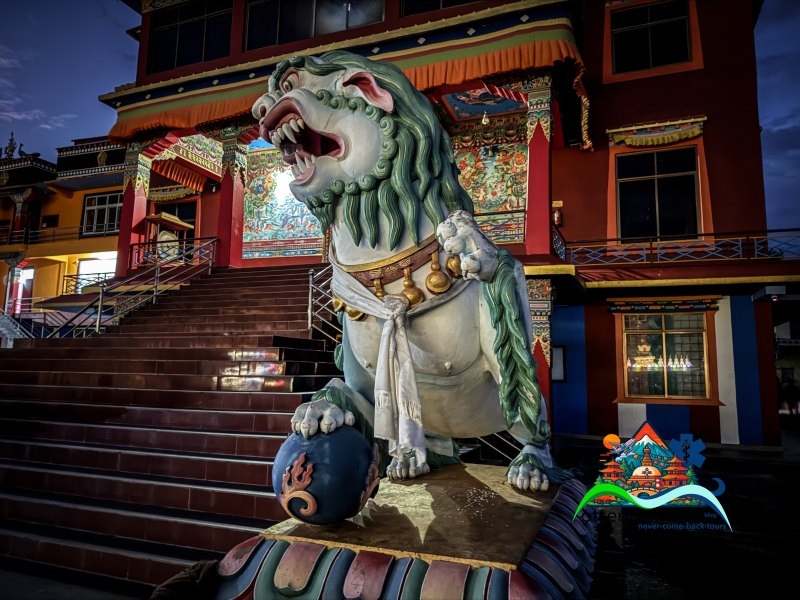
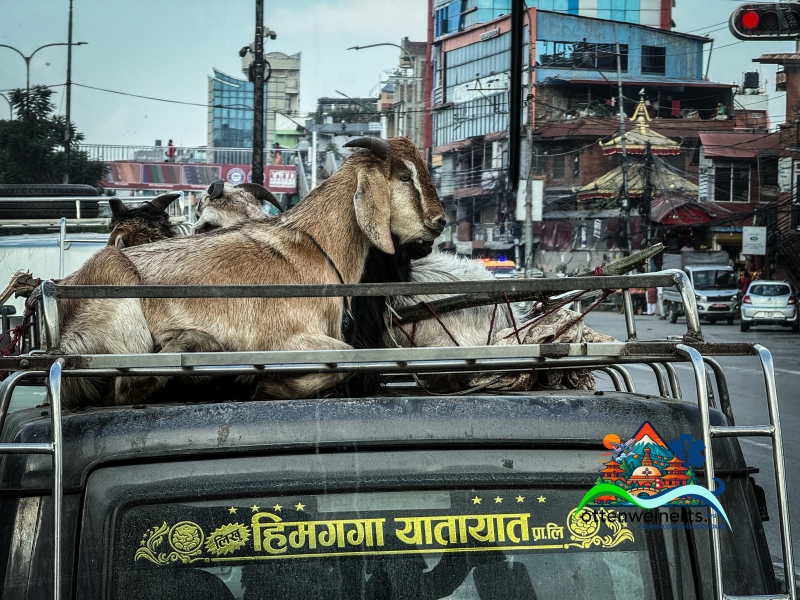
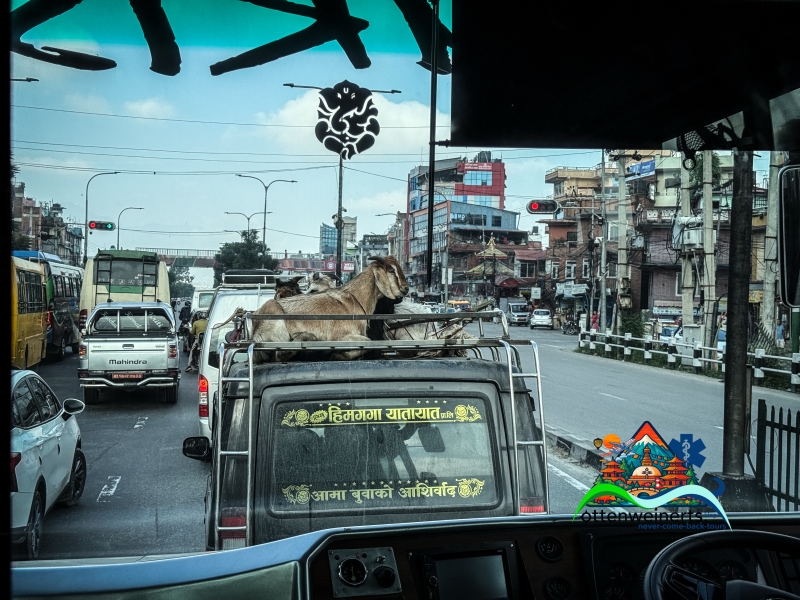
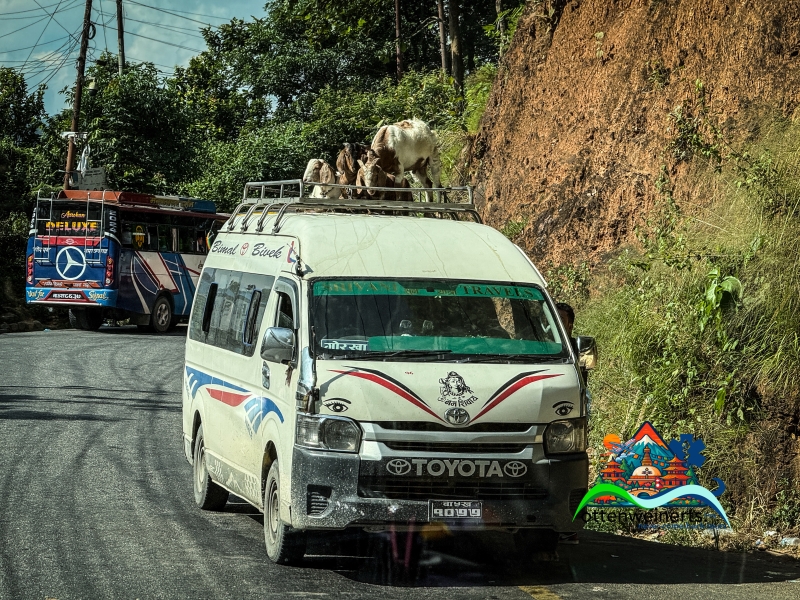
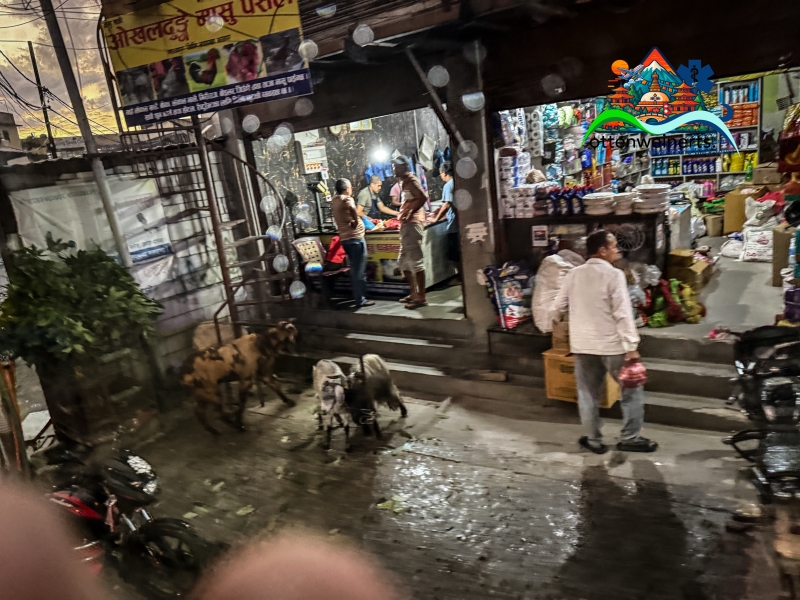
Nach der Mittagspause fahren wir die Abenteuerstraße wieder hinunter, weiter nach Westen. Am Straßenrand warten viele Ziegenbesitzer auf Käufer und die Ziegen damit auf ihr Ende – morgen ist der Höheudes Dashain-Festes. Wir fahren durch Pokhara nach Hemaja zum Pema Ts‘al Sakya Monastic Institute, einem buddhistischen Kloster mit Gästehaus, wo wir heute übernachten. Reiseleiter Yam hat uns „einfache Zimmer“ angekündigt, und wir waren auf so etwas wie Klosterzellen eingestellt. Aber die Zimmer sind groß, hell und freundlich und durchaus auf Hotelniveau – das Gästehaus ist einfach eine Einnahmequelle für die Mönche. 

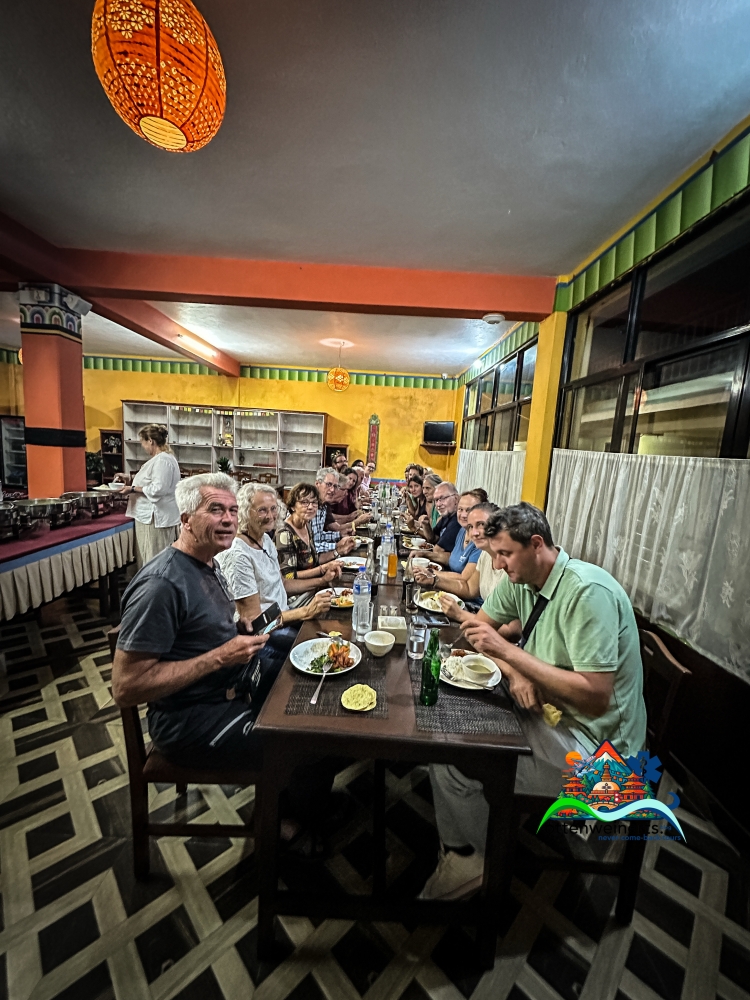
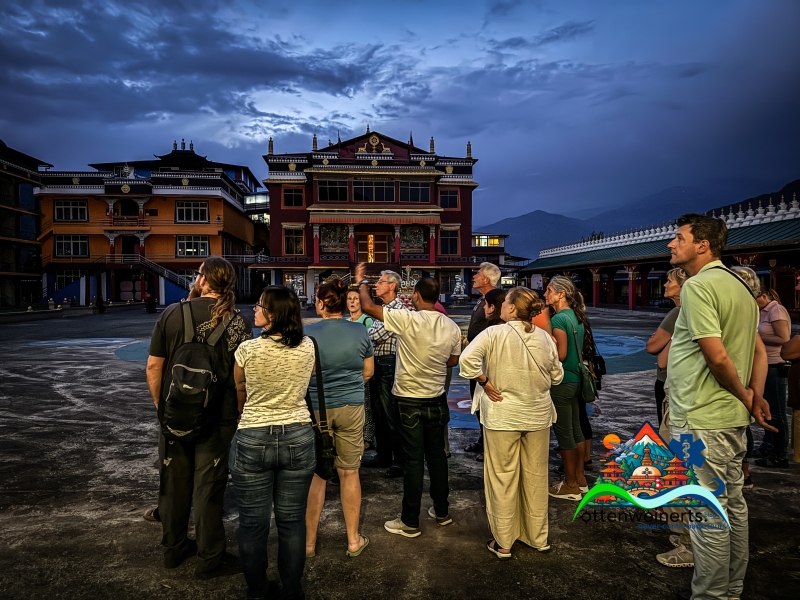
Einem kurzen Rundgang durch das Areal folgt das gemeinsame, natürlich vegetarische Abendessen und dann fallen wir nur mehr ins Bett – wir wollen bei der Morgenzeremonie der Mönche dabei sein, also wieder vor 6 Uhr aufstehen …. Gähn ….

Wednesday, 1 October 2025 – Nepal Day 7 – from Gorkha to Pokhara

And once again, up at 6:00 a.m. – this time to take the public bus up to the upper palace of Gorkha, where we have to climb steep steps to admire the majestic Annapurna range and Manaslu, shining in brilliant sunshine without a single cloud in sight.

In the palace temple, three unsuspecting water buffalo are waiting for their end – this evening they will be sacrificed in honor of the goddess Kali. Several goats already lost their lives yesterday, and so the fearless tourists are walking barefoot (temple grounds!) through goat blood and buffalo droppings. The rhesus monkey up on the antenna is probably having its own thoughts about all this.

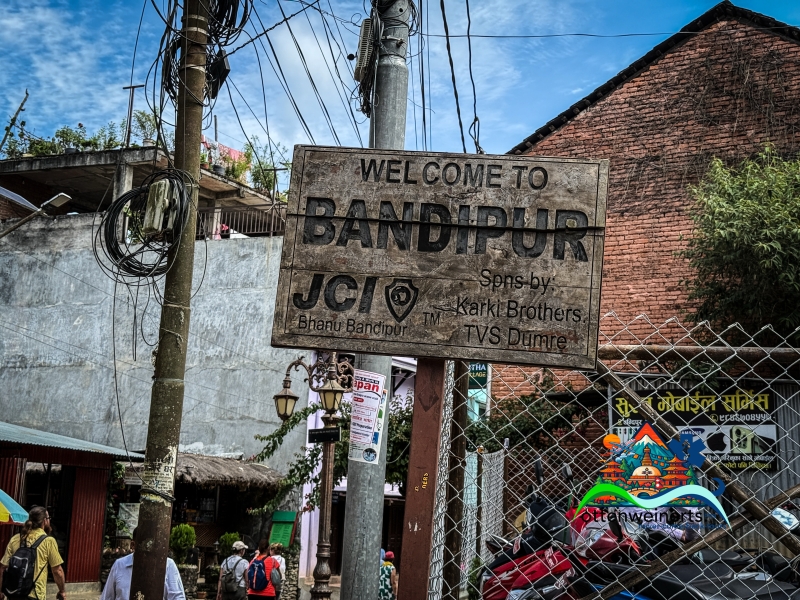
Back at the hotel, we’ve earned a shower and breakfast, and then we continue westwards to Bandipur. The “Queen of the Hill” can be reached via a road that is quite well paved but still rather adventurous.

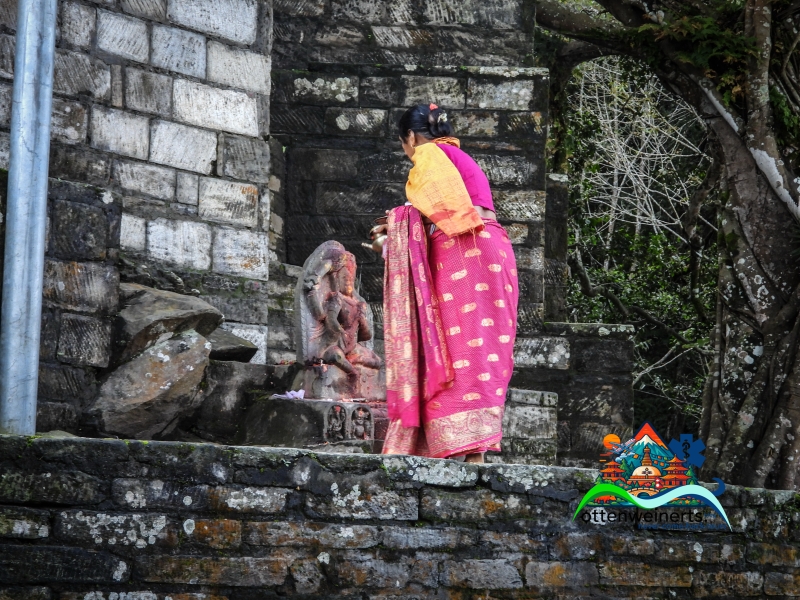
The Bandipur Bazar district looks very nice, but at the same time heavily touristified – not only foreigners visit here, but also Nepalis in beautiful, colorful traditional dresses. Passing several Hindu temples, we hike up to the cable car mountain station mentioned in our guidebook. But surprise: the cable car isn’t even finished yet.

After our lunch break we drive the adventurous road back down and head further west. Along the roadside many goat owners wait for buyers – and the goats, in turn, wait for their end, since tomorrow is the peak of the Dashain festival. We drive through Pokhara to Hemaja, to the Pema Ts’al Sakya Monastic Institute, a Buddhist monastery with a guesthouse where we will spend the night. Our tour guide Yam had announced “simple rooms,” so we expected something like monastery cells. But the rooms are large, bright, and friendly, quite on hotel level – the guesthouse is simply a source of income for the monks.

A short tour of the grounds is followed by a communal (of course vegetarian) dinner, and then we just collapse into bed – we want to attend the monks’ morning ceremony, which means another wake-up before 6 a.m. … yawn …

250930 – Dienstag, 30.9.2025 – Nepal Tag 6 – von Nagarkot nach Gorkha –

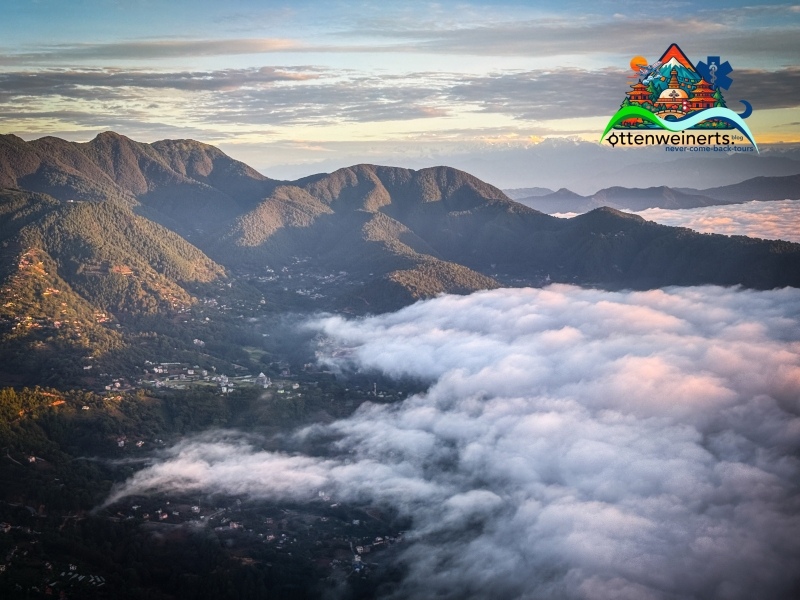
Wir haben heute eine Strecke von 170 km vor uns – daher müssen wir um 5:45 aufstehen.  Die Berge schlafen noch, leider hinter einer Wolkendecke, also nichts mit Sonnenaufgang über dem Mt. Everest. Um 6:15 gibt’s Frühstück und um 7:00 ist Abfahrt.

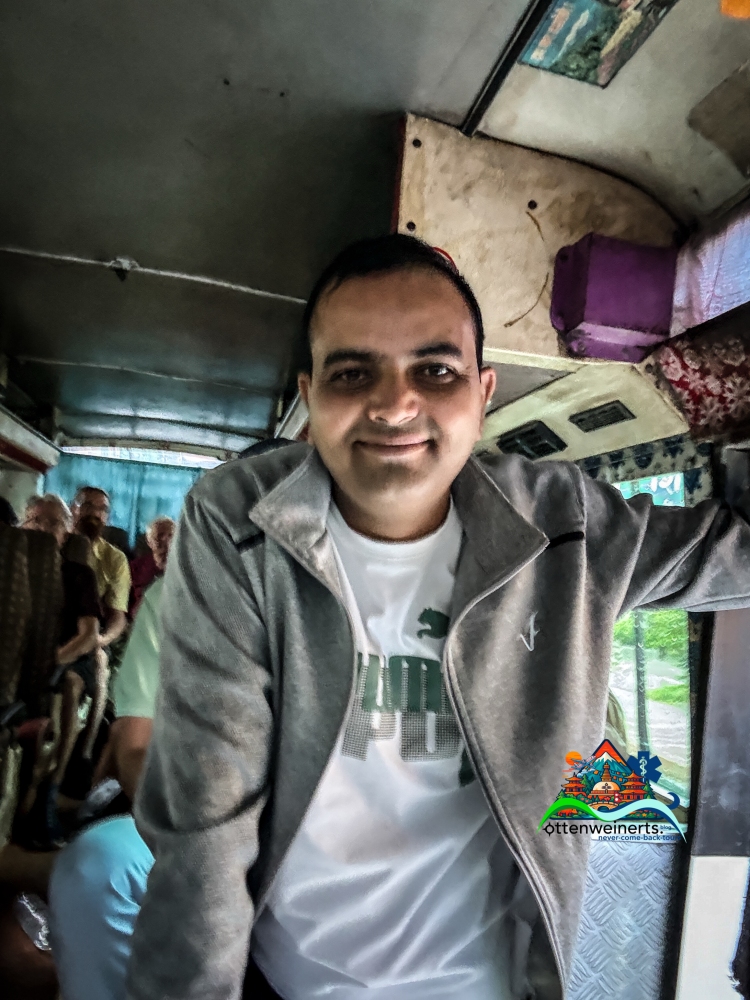
Yam erzählt uns während der Busfahrt immer etwas über Land und Leute – so etwa über die jüngste politische Vergangenheit von der Abschaffung der Monarchie bis zu den aktuellen politische Unruhen, oder  über das Schul- und Bildungssystem. Wir haben gehört,  das von den 30 Millionen Nepalesen etwa 10 Millionen im Ausland leben und heute erklärt uns Yam das Kastensystem – mega kompliziert und mittlerweile eigentlich verboten, aber in den Köpfen vor allem der älteren Generation noch immer drinnen.

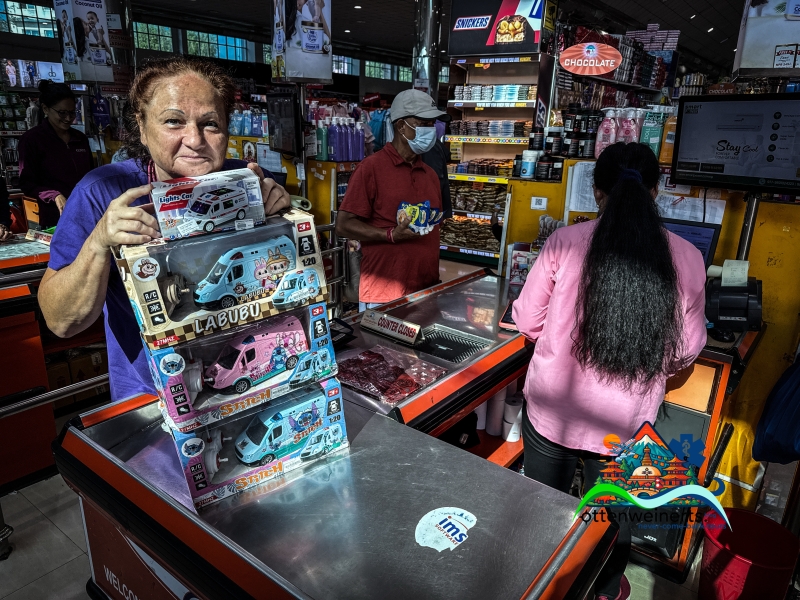
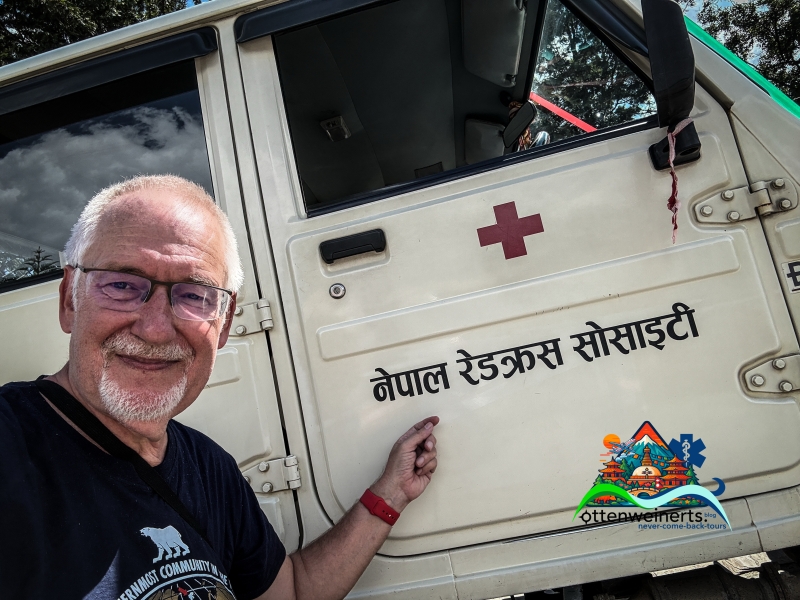
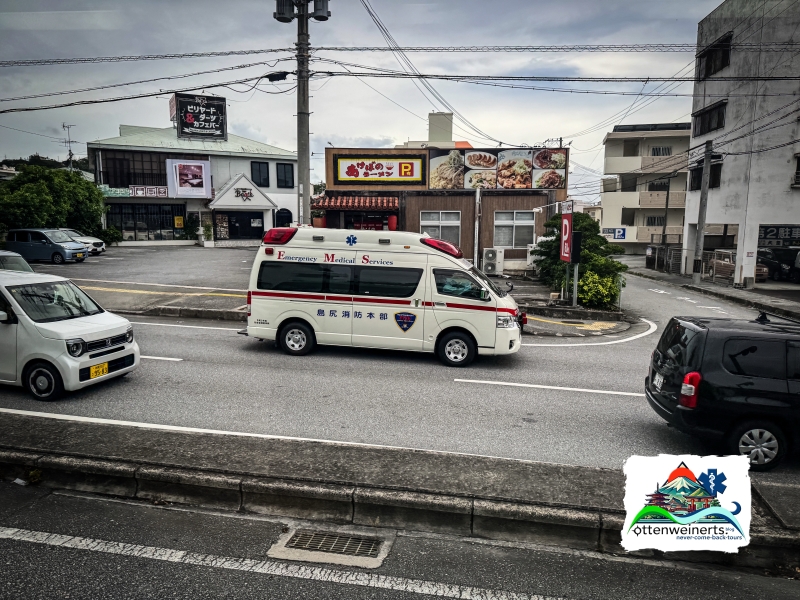
Eine kurze Pause in Kalanki bei Kathmandu beschert uns vier neue Ambulanzen für die Sammlung, dann geht es weiter nach Westen. Wir haben heute Glück mit dem Verkehr, es sind wenig Fahrzeuge auf den Straßen, vor allem kaum LKWs (LKW Fahrverbot wegen des Dashainfest). Ein Langstreckenbus fällt uns auf, für die 1.100 km von Neu-Delhi nach Kathmandu braucht er zwischen zwei und drei Tage.

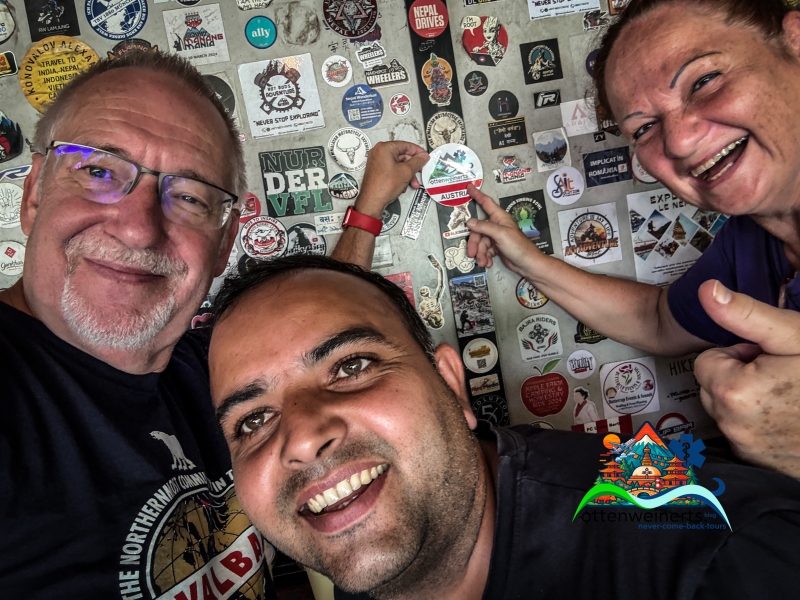
Nächster Halt: 2 Souvenir T-Shirts gehen mit, und ein Ottenweinerts-Sticker bleibt hier.

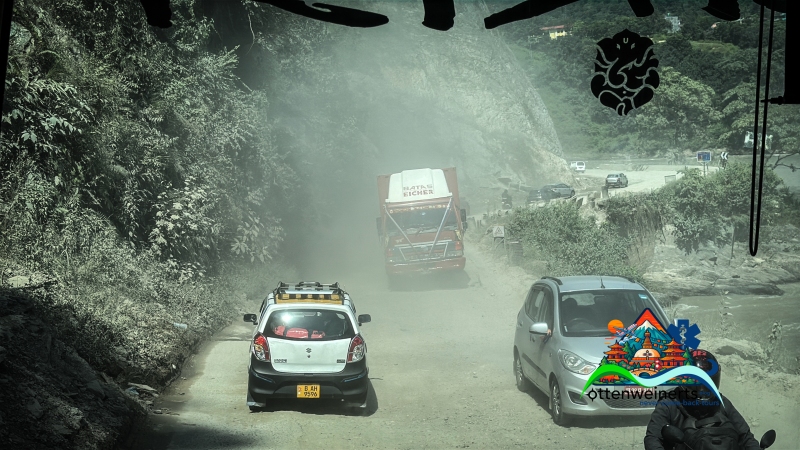
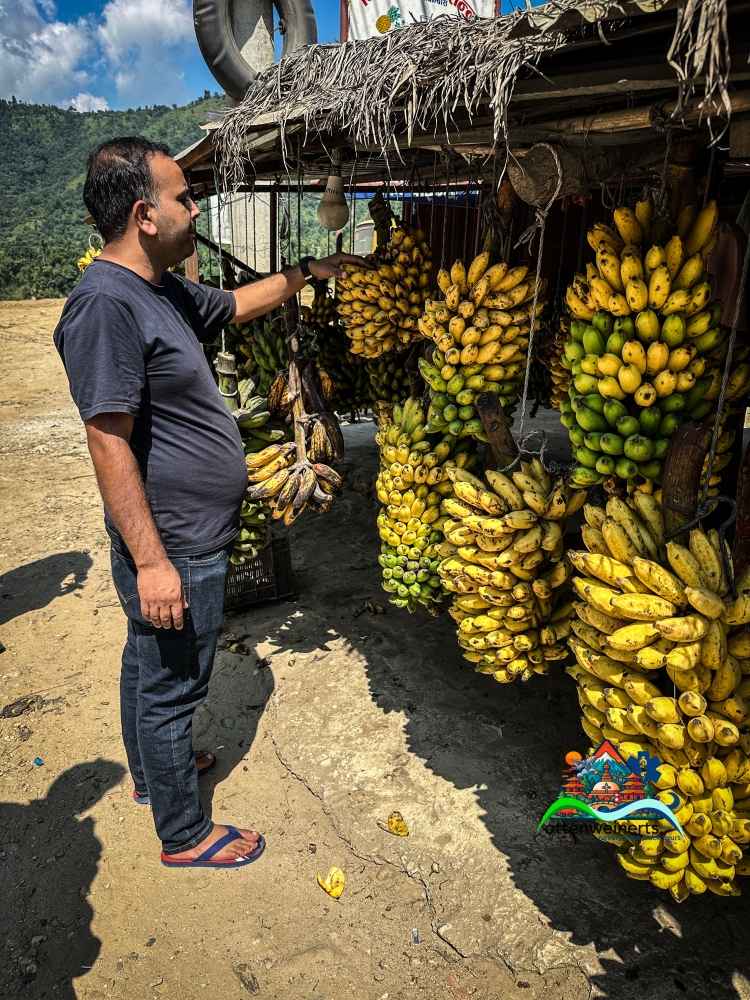
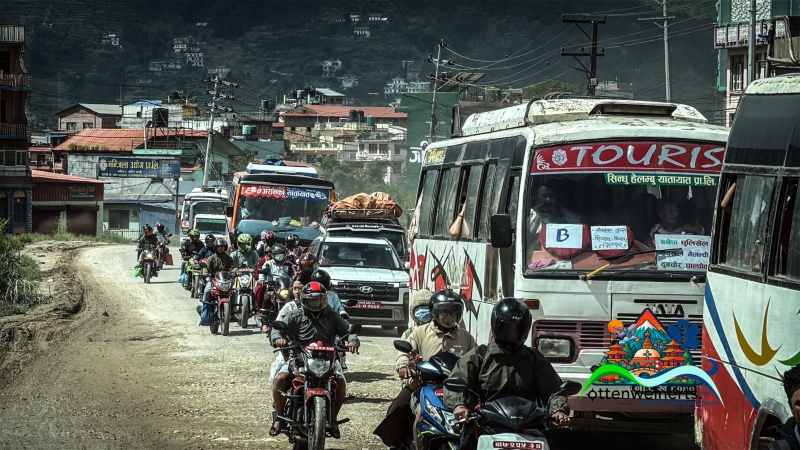
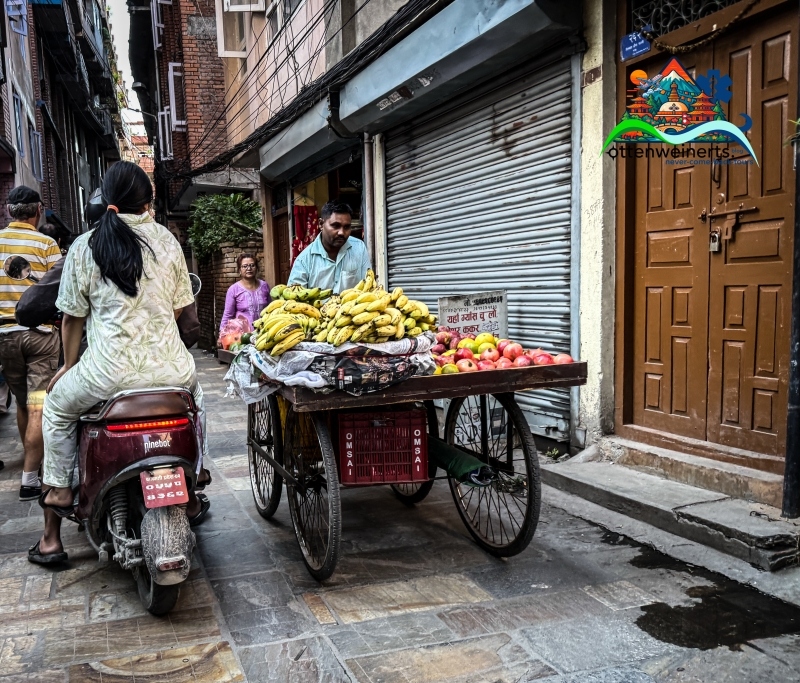
Es geht weiter am Prithvi Highway nach Westen – auch diese Straße hat die Bezeichnung Highway wahrscheinlich nur, weil sie die einzige OstWest-Verbindung darstellt. Links und rechts sehen wir Hügellandschaft mit subtropischer Vegetation, Terrassenfelder mit Reis- und Gemüseanbau, und dazwischen Bananenstauden – und Yam kauft für uns Babybananen.

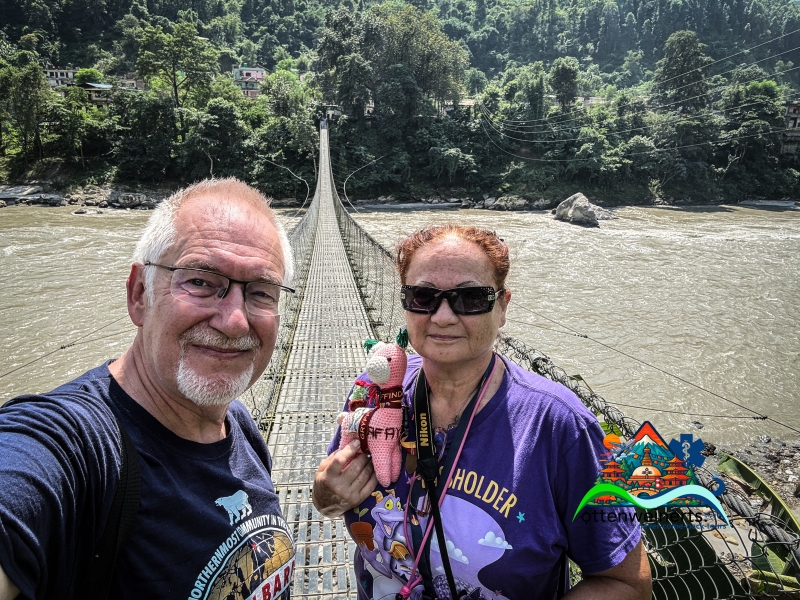
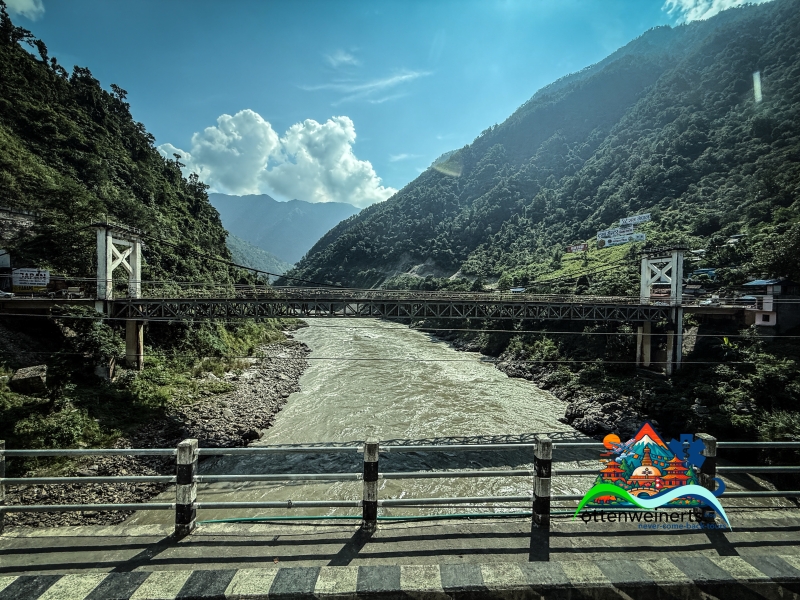
Der Highway folgt dem Trisuli-Fluß, etliche Hängebrücken führen ans andere Ufer – und die Touristen müssen natürlich auch eine solche überqueren. und dahinter kommt dann das Motorrad.

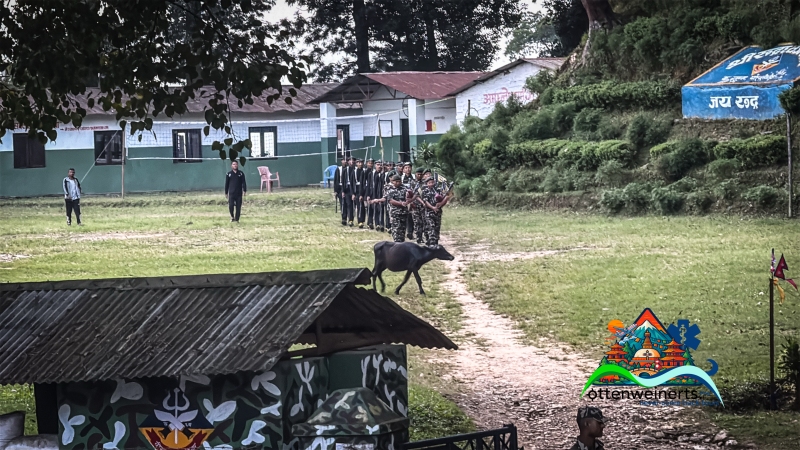
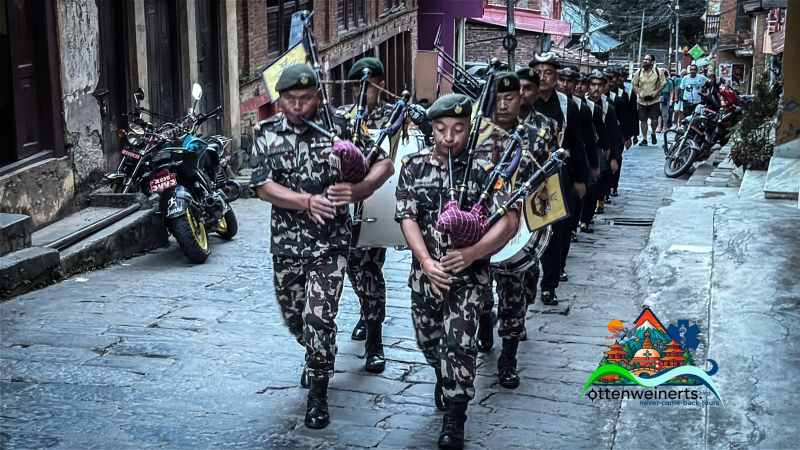
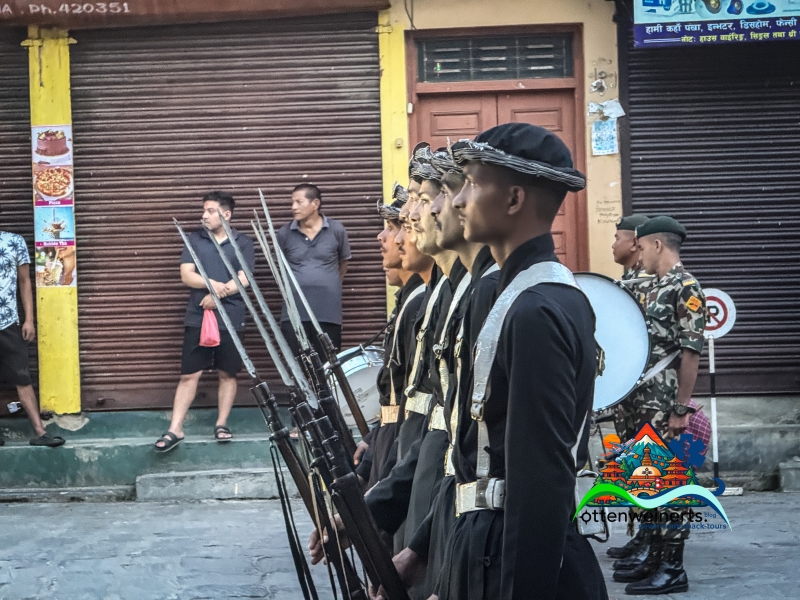
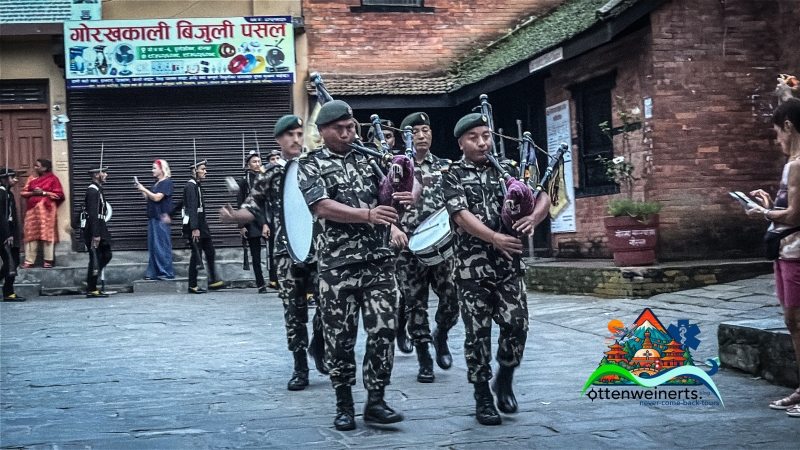
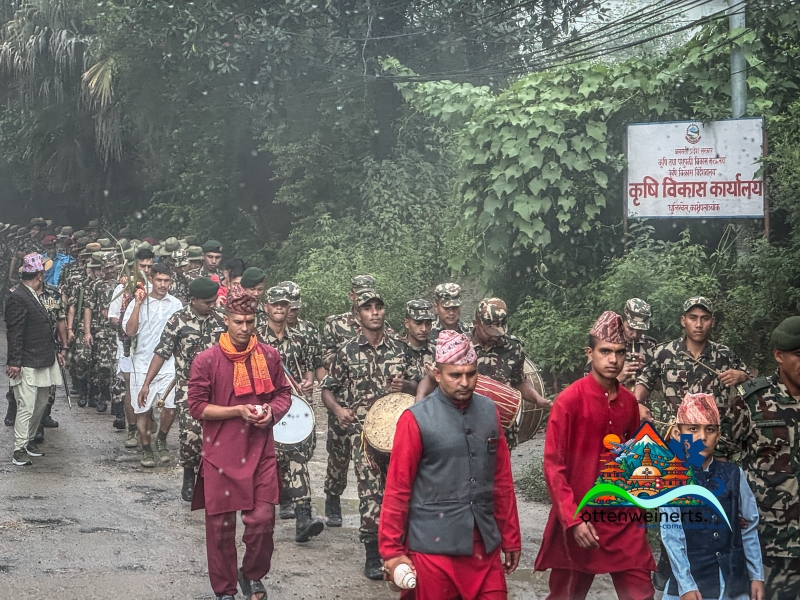
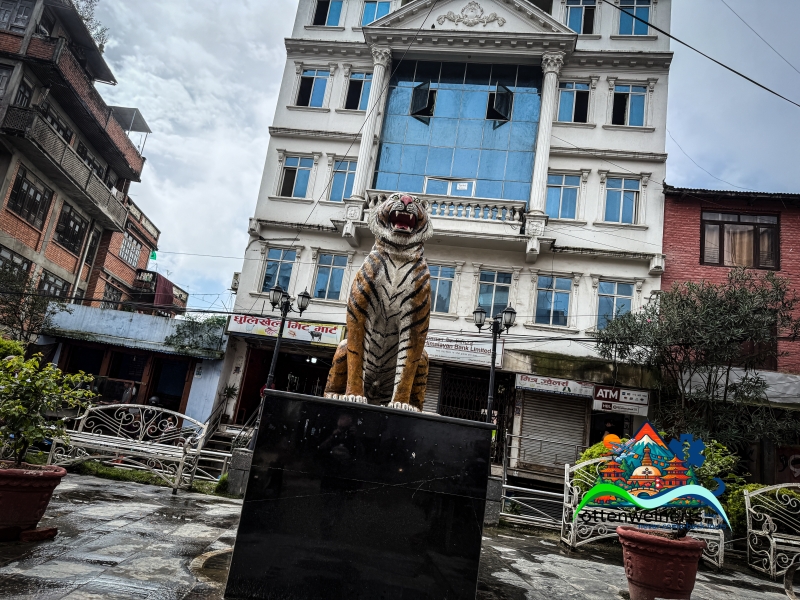
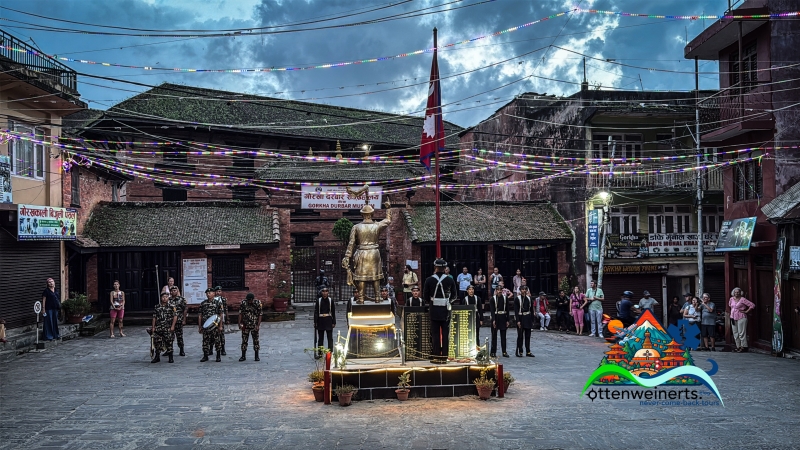
Der Highway gabelt sich, die linke Strecke führt nach Süd-Westen und nach Indien, wir biegen rechts ab, überqueren eine Brücke über den Trisuli und folgen dann weiter dem Marsyangdi River nach Norden, auf dem erstaunlich guten Abukhaireni-Gorkha-Highway. In Gorkha sehen wir vor dem Abendessen noch die allabendliche Flaggenzeremonie – Militärmusik mit Dudelsack und eine Garde Truppe marschieren auf den Hauptplatz, wo ein Denkmal des „Vaters von Nepal“ über einer Landkarte wacht. Prithvi Narayan Shah wurde hier geboren und bestieg im Alter von 20 Jahren den Thron. In 17 Jahren Krieg eroberte er all die  kleinen Königreiche und vereinte das Land – Gorkha wird auch „Wiege von Nepal“ genannt. Morgen in der Früh werden wir dann den Königspalast besuchen

Tuesday, 30 September 2025 – Nepal Day 6 – from Nagarkot to Gorkha

Today we have a distance of 170 km ahead of us – which means we have to get up at 5:45. The mountains are still asleep, unfortunately hidden behind a blanket of clouds, so no sunrise over Mt. Everest for us. Breakfast is at 6:15, and departure at 7:00.

During the bus ride, Yam always tells us something about the country and its people – for example, about recent political history, from the abolition of the monarchy to current political unrest, or about the school and education system. We had already heard that of Nepal’s 30 million people, about 10 million live abroad, and today Yam explains the caste system to us – incredibly complicated and nowadays technically banned, but still deeply ingrained in the minds, especially with the older generation.

A short stop in Kalanki near Kathmandu adds four new ambulances to our collection, and then we continue westwards. Today we are lucky with the traffic: there are few vehicles on the roads, hardly any trucks (truck ban due to the Dashain festival). One long-distance bus catches our eye: for the 1,100 km from New Delhi to Kathmandu, it needs between two and three days.

Next stop: two souvenir T-shirts are coming with us, and one Ottenweinerts sticker stays behind.

We continue west along the Prithvi Highway – a road probably called “highway” only because it is the only east-west connection. On both sides we see hilly landscapes with subtropical vegetation, terraced fields of rice and vegetables, and in between banana plants – Yam buys baby bananas for us.

The highway follows the Trisuli River, with numerous suspension bridges leading to the other side – and of course the tourists also have to cross one. Right behind us, a motorcycle also uses the bridge.

The highway divides – the left route leads southwest to India, but we turn right, cross a bridge over the Trisuli, and continue following the Marsyangdi River northwards, on the surprisingly good Abukhaireni–Gorkha Highway. In Gorkha, before dinner, we witness the evening flag ceremony – military music with bagpipes, and a guard troop marching onto the main square, where a monument of the “Father of Nepal” watches over a map of the country. Prithvi Narayan Shah was born here and ascended the throne at the age of 20. In 17 years of war, he conquered the many small kingdoms and united the land – Gorkha is also called the “Cradle of Nepal.” Tomorrow morning we will then visit the royal palace

250929 – Montag, 29.9.2025 – Nepal Tag 5 – Dhulikel, Changu Narayan und Nagarkot – 

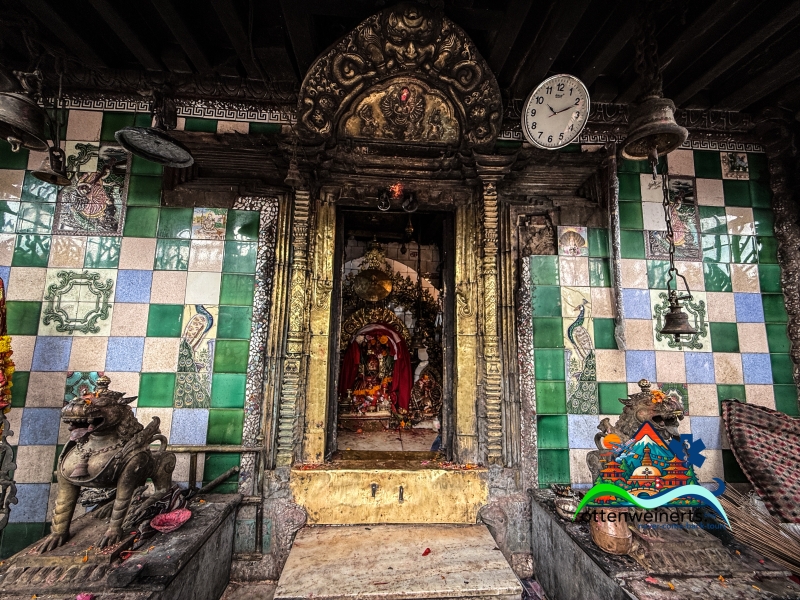
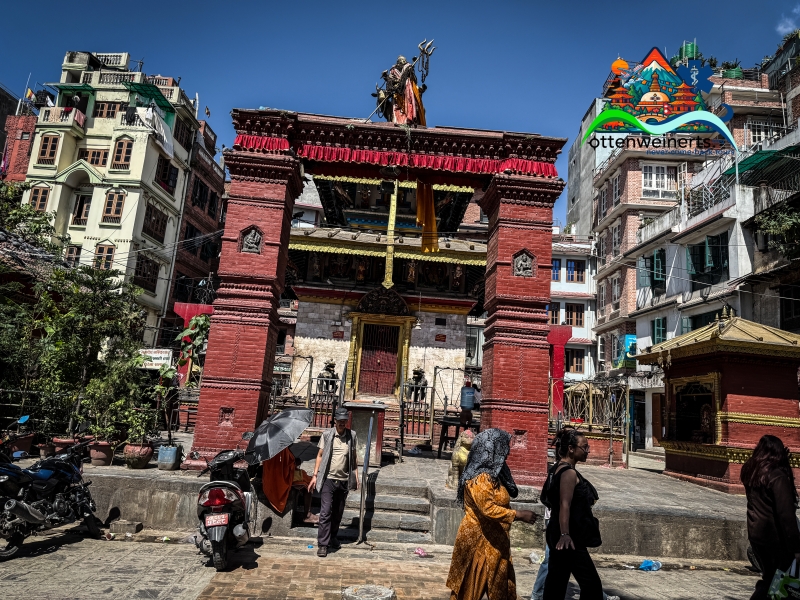
Auch in Dhulikhel gibt es eine nette kleine Altstadt, mit interessanten Wandmalereien und Shivatempel – von der Innenbesichtigung schreckt uns allerdings die tote, kopflose Ziege ab, die anlässlich des Dashain-Festes ihr Leben lassen musste. Hinduismus wäre eindeutig keine Religion für uns. 

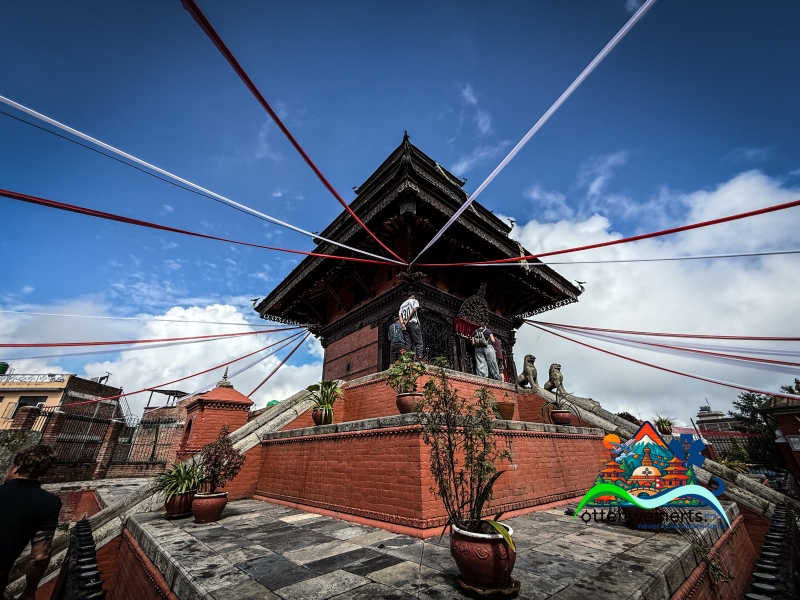
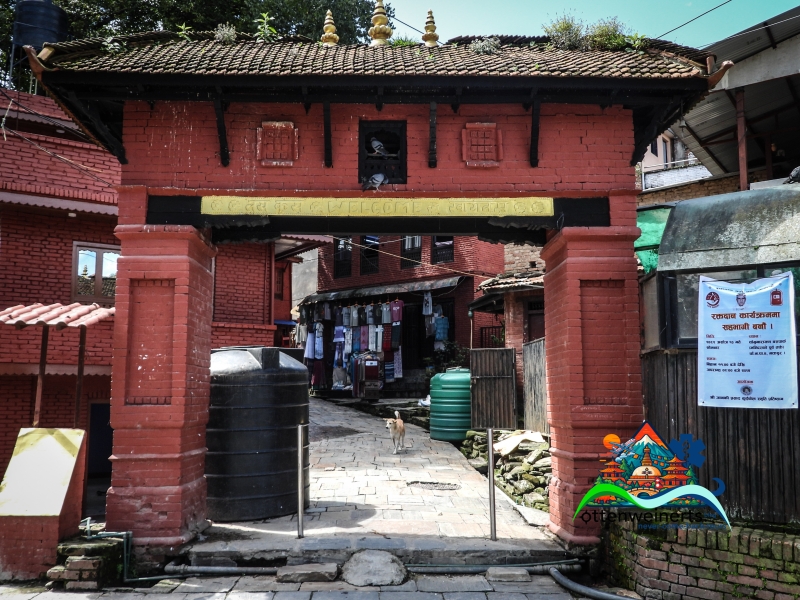
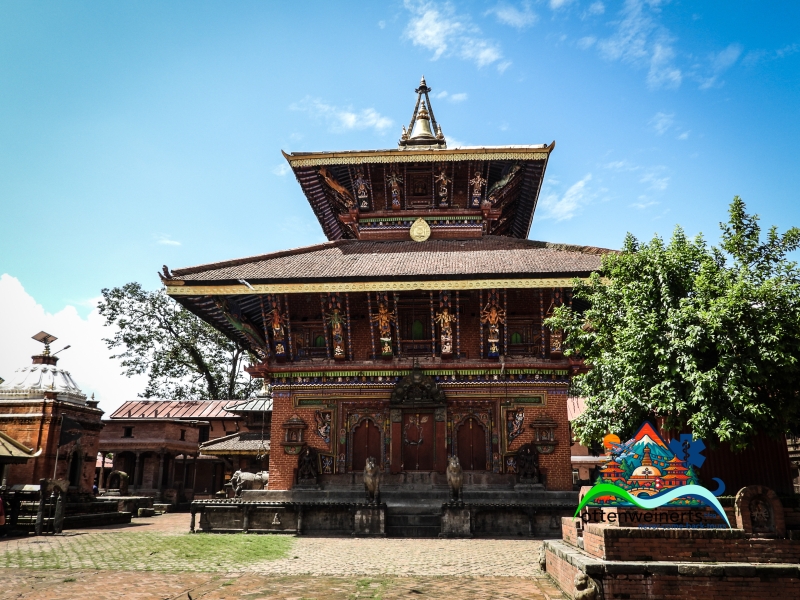
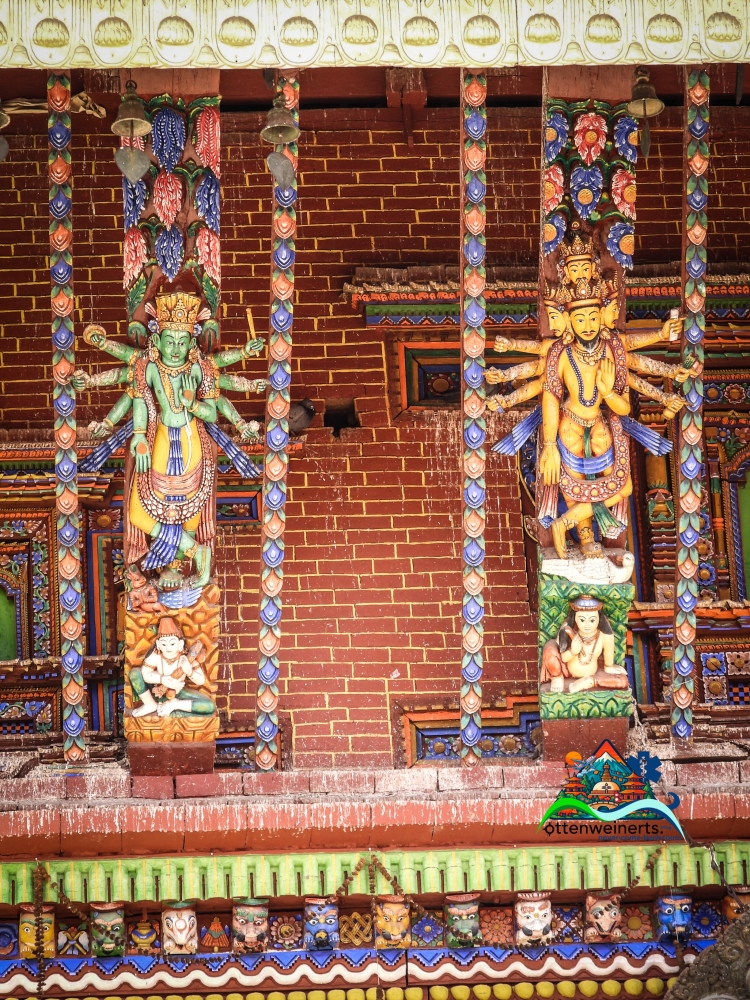
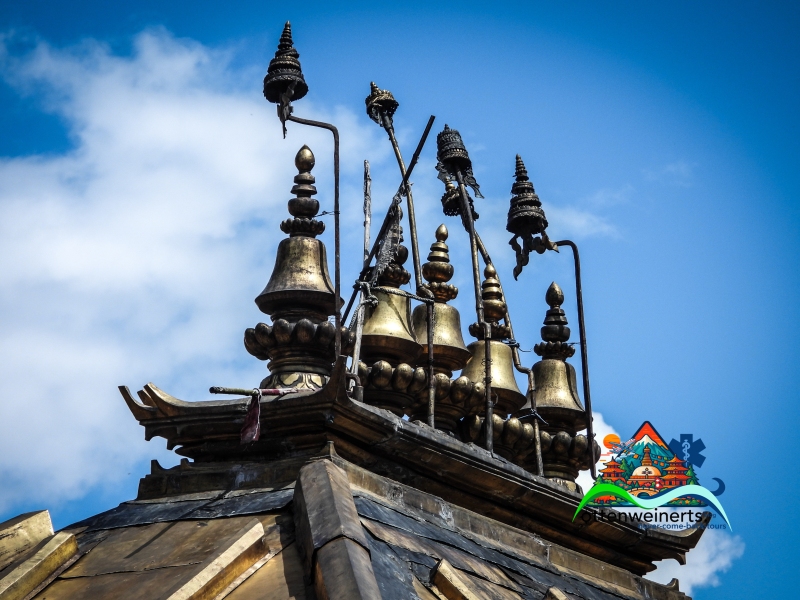
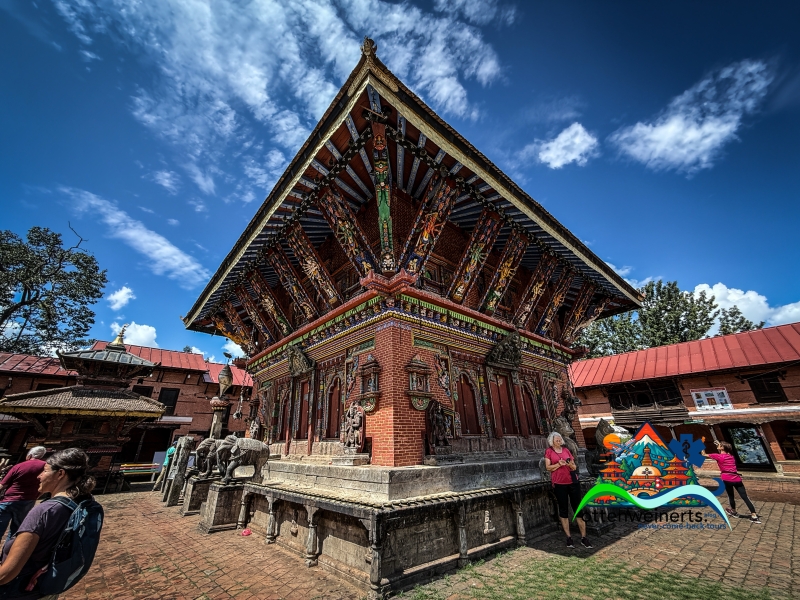
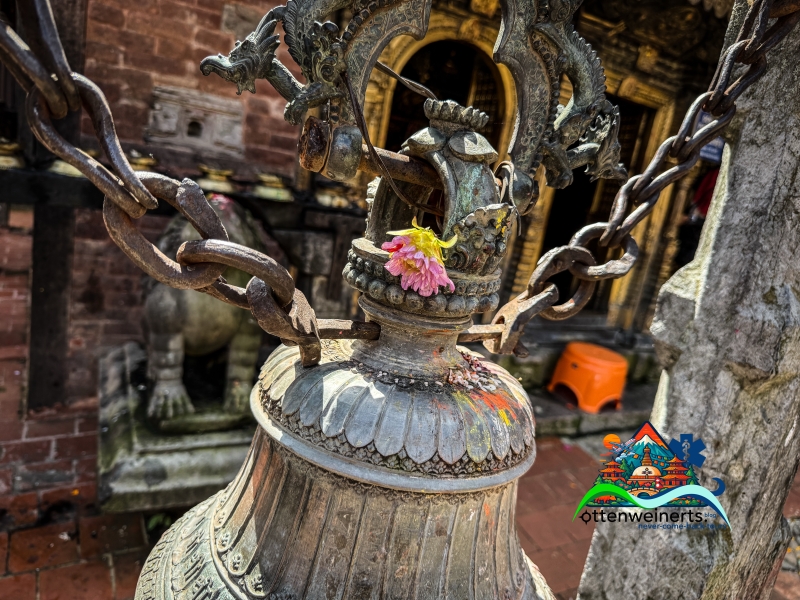
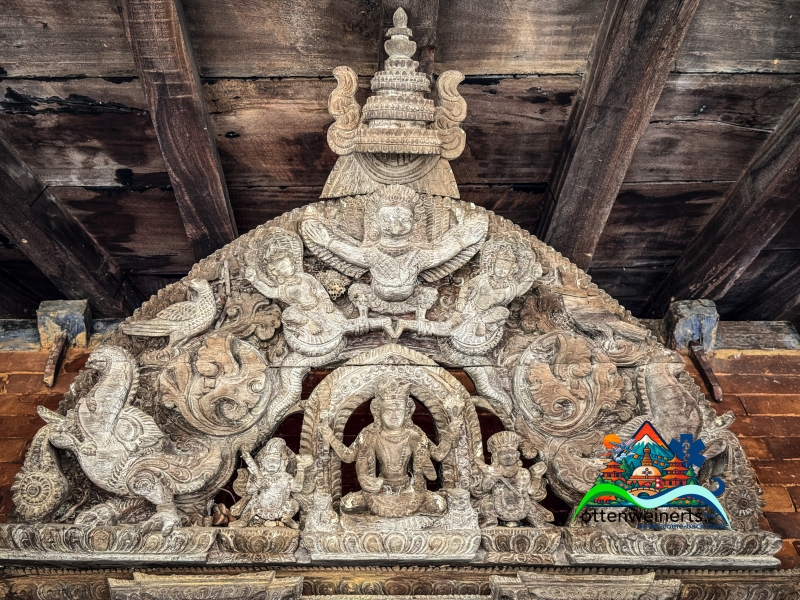
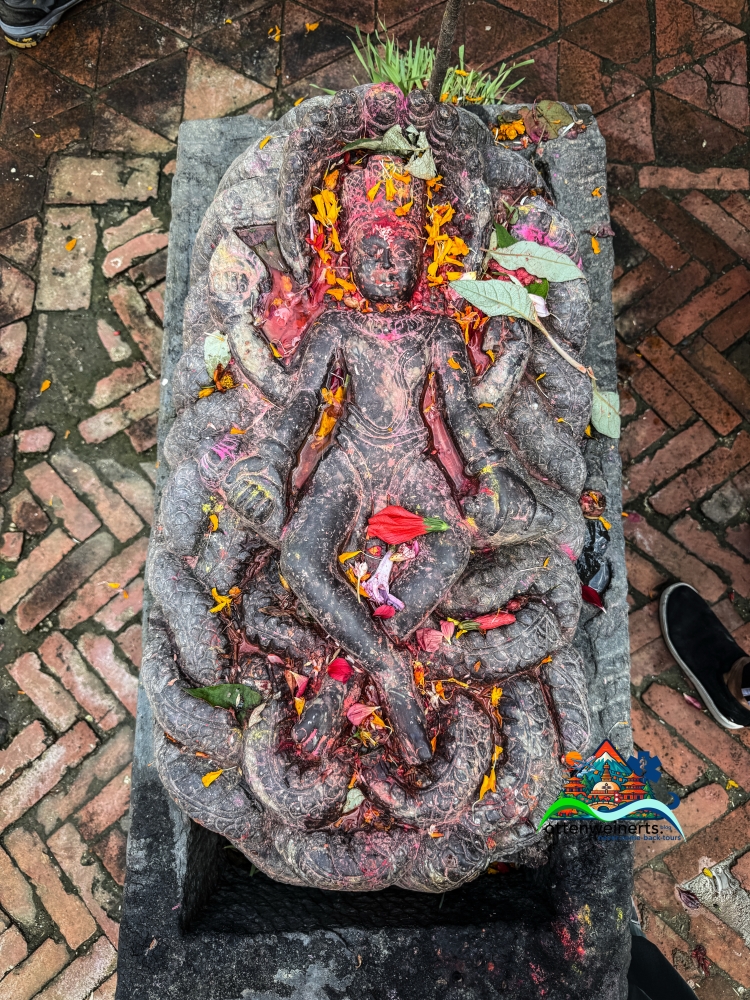
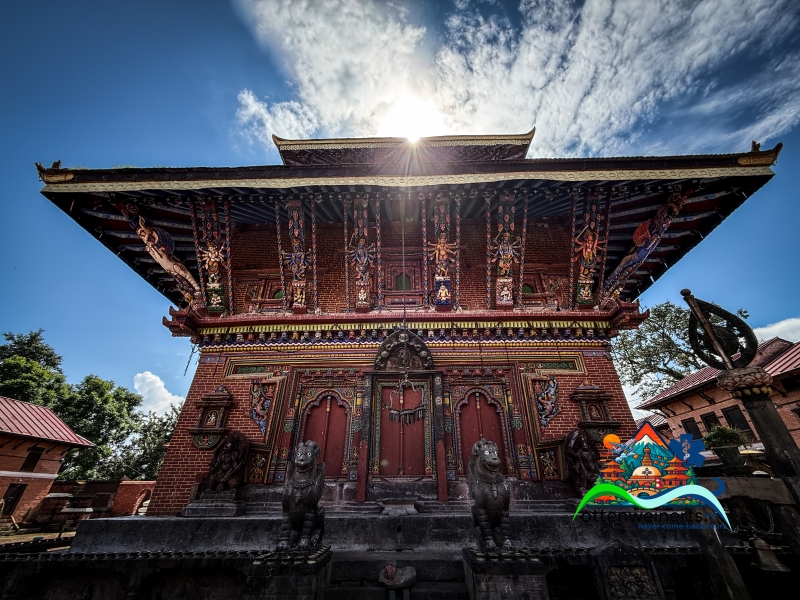
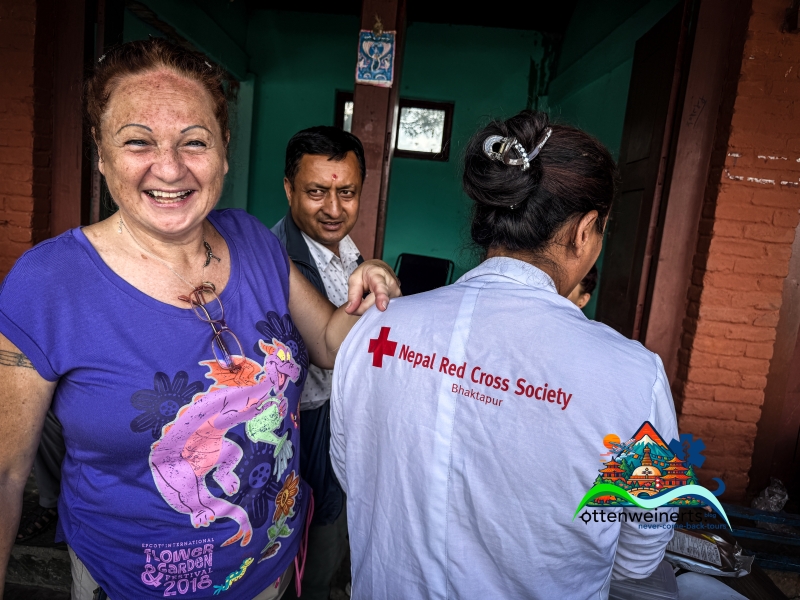
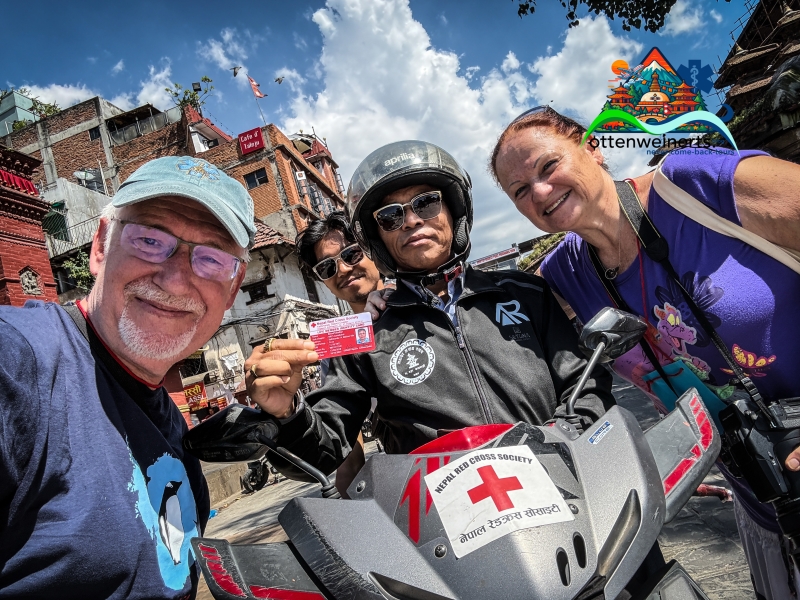
Dann geht es zuerst am Araniko -“Highway” zurück Richtung Westen und weiter auf einer engen, steilen Straße nach Norden – auf dieser Strecke leistet unser Busfahrer Millimeterarbeit, Gegenverkehr bedeutet Adrenalin. Zahlt sich aber aus, oben am Hügel liegt Changu Narayan, der älteste Hindu-Tempel Nepals. Mehrfach bei Erdbeben zerstört, wurde dieser Vishnu / Narayan geweihte Tempel immer wieder aufgebaut, opulent verziert und bunt bemalt. Und hier treffen wir wieder Familienmitglieder – heute veranstaltet das nepalesische Rote Kreuz eine Blutspende-Aktion.

Nach einer kurzen Mittagspause bricht der Großteil unserer Truppe zu einer Wanderung auf – wir lassen das heute aus. Es ist heiß, die Strecke geht laut Reiseleiter Yam einige Zeit doch eher steil bergauf, meine Schuhe sind nach der gestrigen Schlammschlacht noch immer nass, und mein linkes Knie ist auch noch immer beleidigt. Also fahren wir mit dem Bus zum Treffpunkt in Tulkot. Von dort ist es nur mehr eine halbe Stunde Fahrt zu unserem heutigen Hotel in Nagarkot – von wo man abends einen tollen Sonnenuntergang über dem Dhaulagiri im Westen erleben kann – wenn es nicht gerade einen Wolkenbruch gibt so wie jetzt.

Na vielleicht haben wir morgen früh mehr Glück mit dem Sonnenaufgang über Mt. Everest und Kanchenjunga. Achja, das Wort des Tages: Jaya hos – Prost

Monday, 29.9.2025 – Nepal Day 5 – Dhulikhel, Changu Narayan and Nagarkot

Dhulikhel also has a charming little old town, with interesting wall paintings and Shiva temples – but we’re put off from going inside by the sight of a dead, headless goat sacrificed for the Dashain festival. Hinduism is definitely not a religion for us.

Then we head back west, at first along the Araniko “Highway” and continue north on a narrow, steep road – our bus driver is working within inches here, and oncoming traffic means pure adrenaline. But it’s worth it: on the hilltop lies Changu Narayan, the oldest Hindu temple in Nepal. Destroyed several times by earthquakes, this temple, dedicated to Vishnus incarnation Narayan, has always been rebuilt, richly decorated, and colorfully painted. And here we meet family members again – today the Nepalese Red Cross is organizing a blood drive.

After a short lunch break, most of our group sets off for a hike – we skip it today. It’s hot, the trail apparently climbs quite steeply for some time according to our guide Yam, my shoes are still wet from yesterday’s mud battle, and my left knee is still acting up. So we take the bus to the meeting point in Tulkot instead. From there, it’s just another half-hour drive to our hotel in Nagarkot for the night – where you can enjoy a fantastic sunset over Dhaulagiri in the west… unless, like today, there’s a downpour.

Well, maybe we’ll have better luck tomorrow morning with the sunrise over Mt. Everest and Kanchenjunga. Oh yes, the word of the day: Jaya hos – Cheers!

250928 – Sonntag, 28.9.2025 – Nepal Tag 4- Kloster Namo Buddha und Wanderung –

Heute in der Früh geht es zur Namo Buddha Monastery, einen buddhistischen Kloster, in dem 200 Mönche leben. Am Weg dorthin erklärt uns Reiseleiter Yam die Grundzüge des Buddhismus; Buddha wurde ja als Prinz Siddhharta Gautama in Lumbini hier in Nepal geboren.

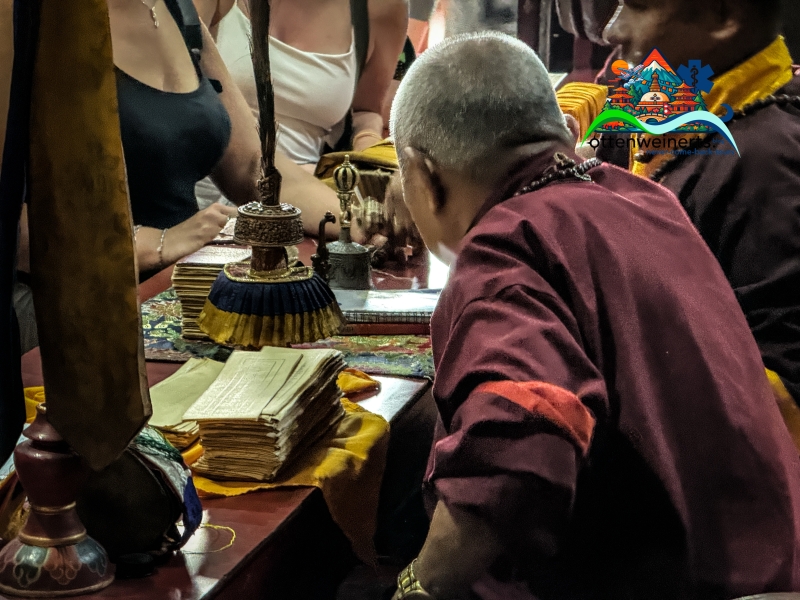
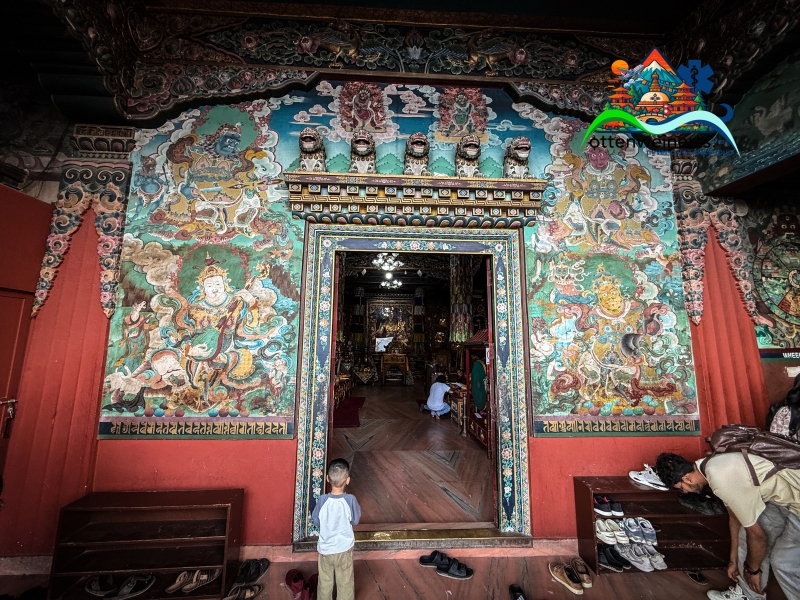
Wir haben Glück und kommen zu einer Zeremonie zurecht– das gemeinsame Gebet der Mönche in der opulent geschmückten großen Halle dauert knapp eine Stunde. Wir verstehen zwar kein Wort, aber es ist trotzdem eindrucksvoll, hat meditativen Charakter und ist sehr entspannend – wenn da nicht dazwischen die Schalmeien, Tschinellen und Gyalingtrompeten wären, die einen ordentlichen Wirbel machen. 

Nach der Zeremonie unterhalten wir uns ein wenig mit den Mönchen, die auch recht gut englisch sprechen, dann geht es noch ein Stückchen den Hügel hinauf. Am Kloster-Areal finden sich acht Stupas, natürlich mehrere Souvenirshops sowie am Gipfel noch eine einzelne Stupa, mit Gebetstüchern behangen. Die Aussicht von hier oben ist phänomenal.

Nach einer Kaffeepause beginnt dann die auch im Programm angekündigte Wanderung, aber erfreulicherweise hat unser Reiseleiter das heutige Programm für uns umgedreht – wir sind mit dem Bus zum Kloster hinauf gefahren und wandern den Rückweg zu Fuß, größtenteils bergab. Unterwegs begegnet wir weiteren Einheimischen wie etwa einer Baby-Himalaya-Schmucknatter oder einer wunderschön gefärbten Geisterheuschrecke.

Es ist heiß und wir sind jedem einzelnen Baum für den Schatten dankbar. Allerdings halten sich an einigen schattigen Stellen noch Wasserlöcher und schlammige Passagen nach dem Regen der letzten Nacht. Und ein kleiner Fehltritt führt dann zu meinem ersten unfreiwilligen Kniefall in Nepal und ich bleibe mit beiden Schuhen im Matsch stecken. Mein linkes Knie protestiert lauthals, und die Kamera ist mit Schlamm bedeckt.  

Am Abend stellt sich dann heraus, dass der Kamera nichts passiert ist – sie war zu dem Zeitpunkt nicht eingeschalten, das Objektiv war nicht ausgefahren, und der Schlamm klebt nur außen an der Hülle fest. Die Schuhe und die Kleidung kann man waschen, und meiner Haut hat die Schlammpackung auch nicht geschadet.

Sunday, September 28, 2025 – Nepal Day 4 – Namo Buddha Monastery and Hike

This morning we head to Namo Buddha Monastery, a Buddhist monastery where 200 monks live. On the way, our guide Yam explains the basics of Buddhism; after all, Buddha was born as Prince Siddharta Gautama, in Lumbini, here in Nepal.

We are lucky to arrive just in time for a ceremony – the monks’ communal prayer in the opulently decorated main hall lasts nearly an hour. We don’t understand a word, but it is still impressive, with a meditative character and very relaxing – if it weren’t for the interludes of shawms, cymbals, and gyaling trumpets creating quite a loud sound.

After the ceremony we chat a little with the monks, who speak quite good English, then we continue a bit further up the hill. The monastery grounds feature eight stupas, of course several souvenir shops, and at the summit one solitary stupa draped with prayer flags. The view from up here is phenomenal.

After a coffee break we set out on the hike that was also announced in the program, but fortunately our guide rearranged today’s schedule for us – we took the bus up to the monastery, now we are walking back down on foot, mostly downhill. Along the way we encounter more locals, such as a baby Himalayan trinket snake and a beautifully colored ghost grasshopper.

It is hot, and we are grateful for every single tree that offers shade. However, in some shaded spots there are still waterholes and muddy patches left over from last night’s rain. One small misstep leads to my first involuntary kneefall in Nepal, and both my shoes get stuck in the mud. My left knee protests loudly, and the camera ends up covered in muck.

In the evening it turns out that nothing happened to the camera – at the time it wasn’t switched on, the lens wasn’t extended, and the mud only stuck to the outside of the casing. Shoes and clothes can be washed, and my skin feels nice and smooth after the mud bath.

250927 – Samstag, 27.9.2025 – Nepal Tag 3 – Mt. Everest –

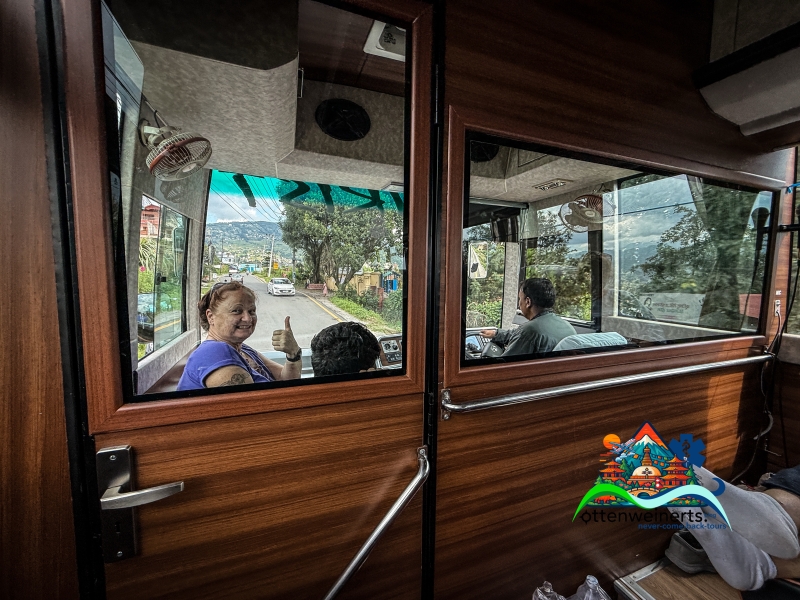
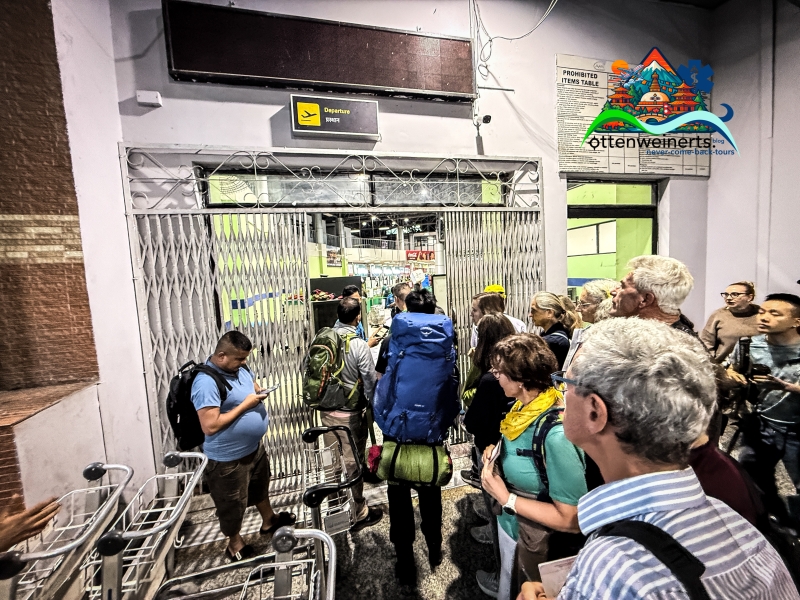
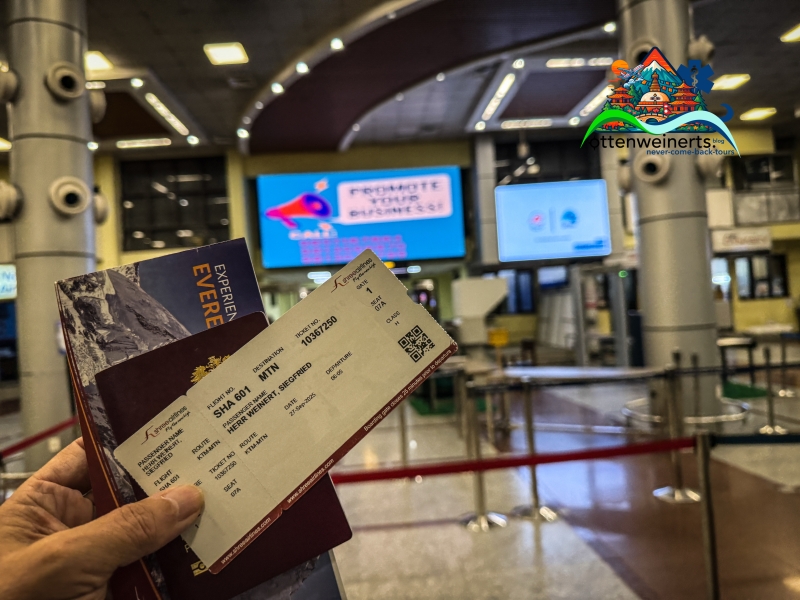
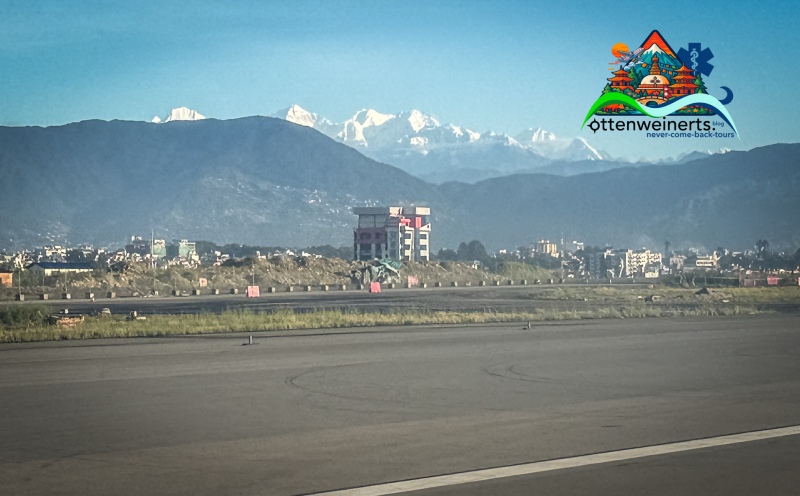
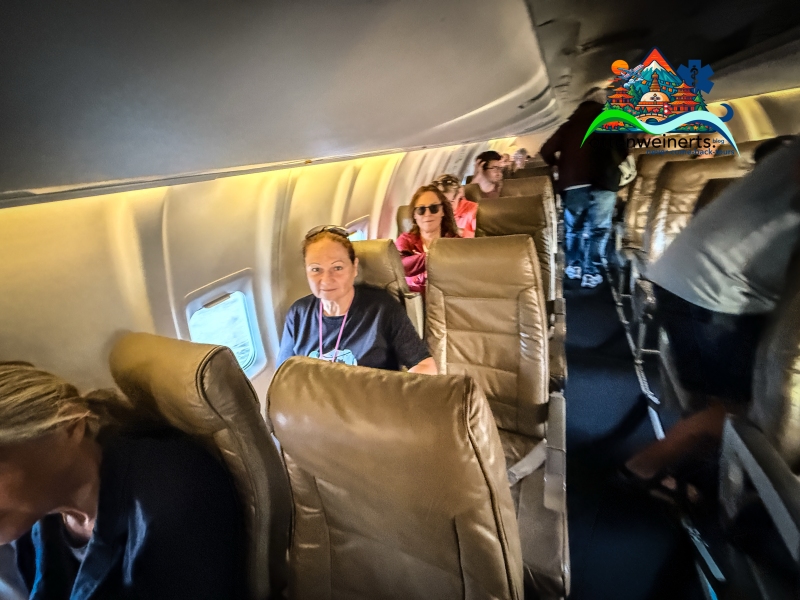
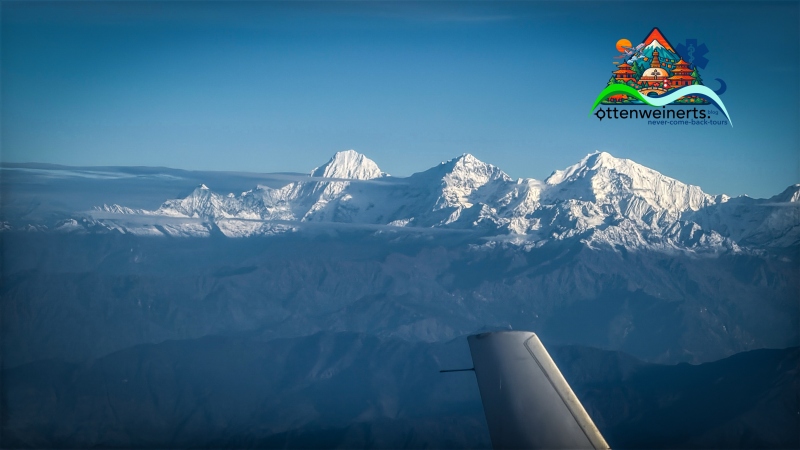
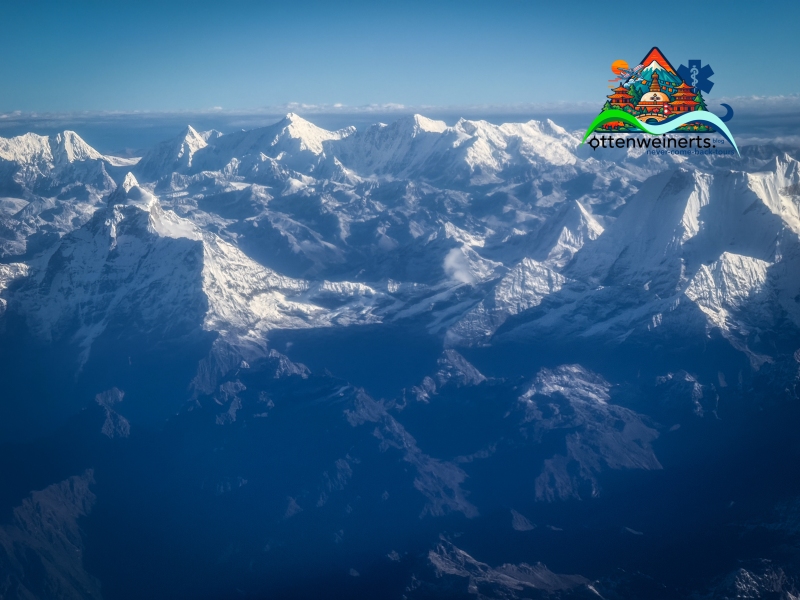
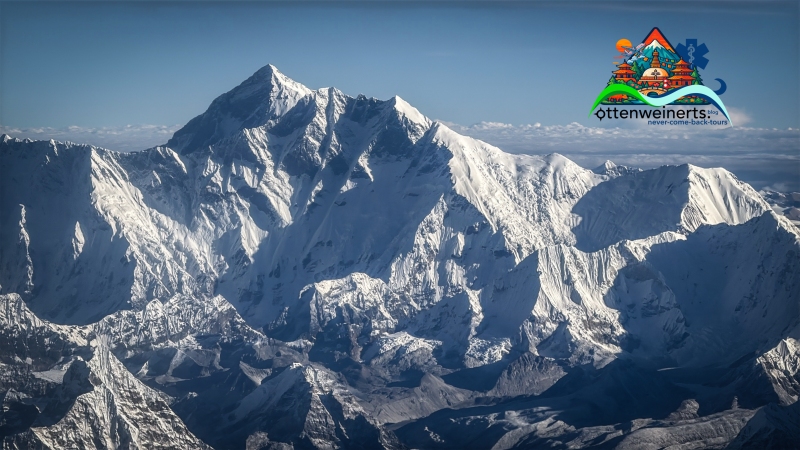
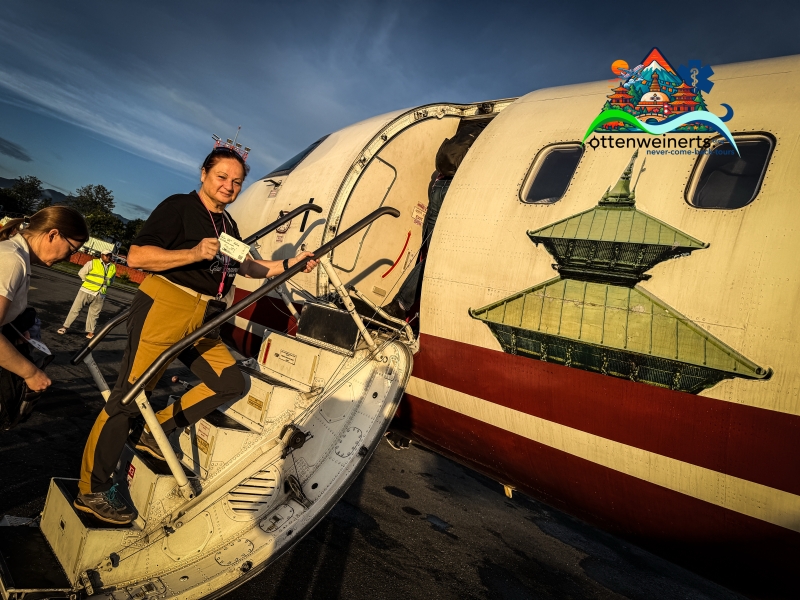
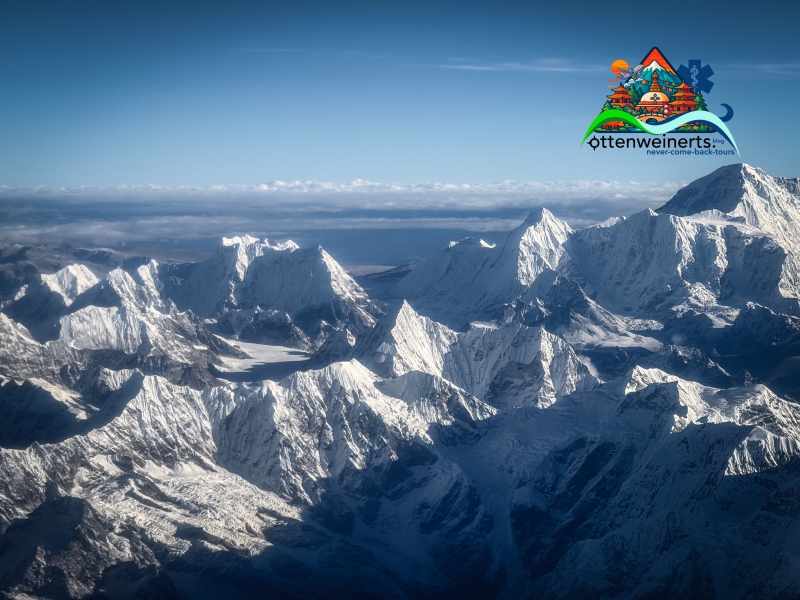
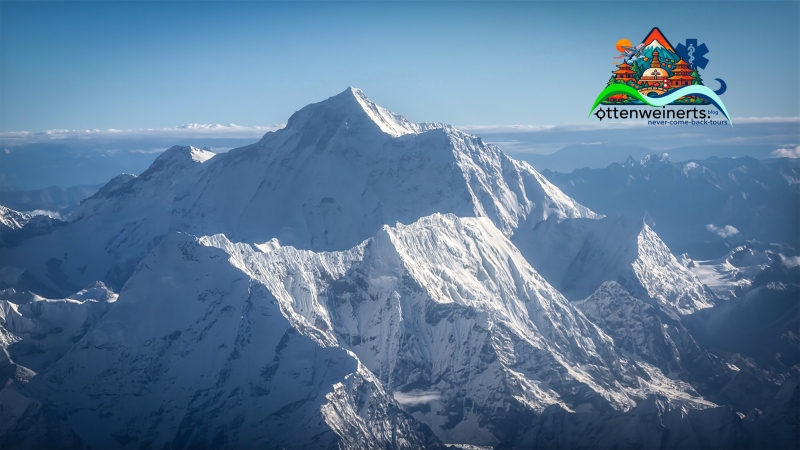
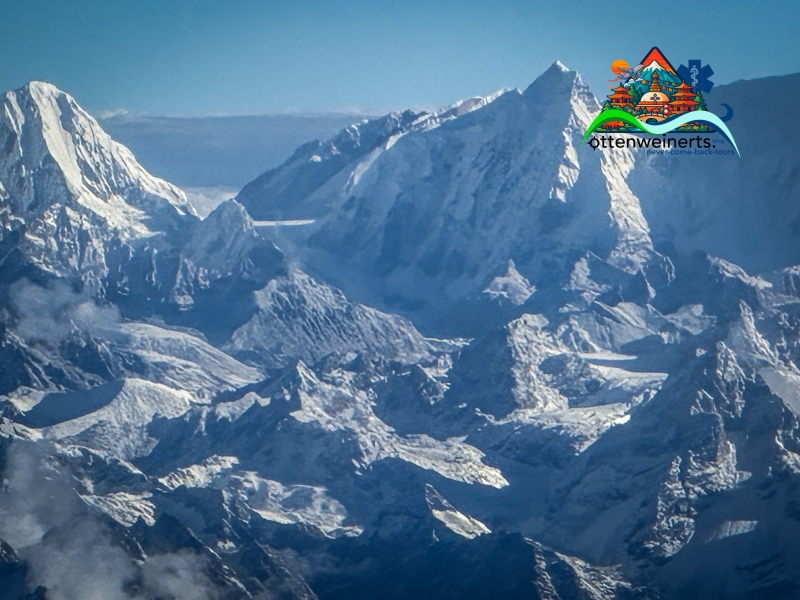
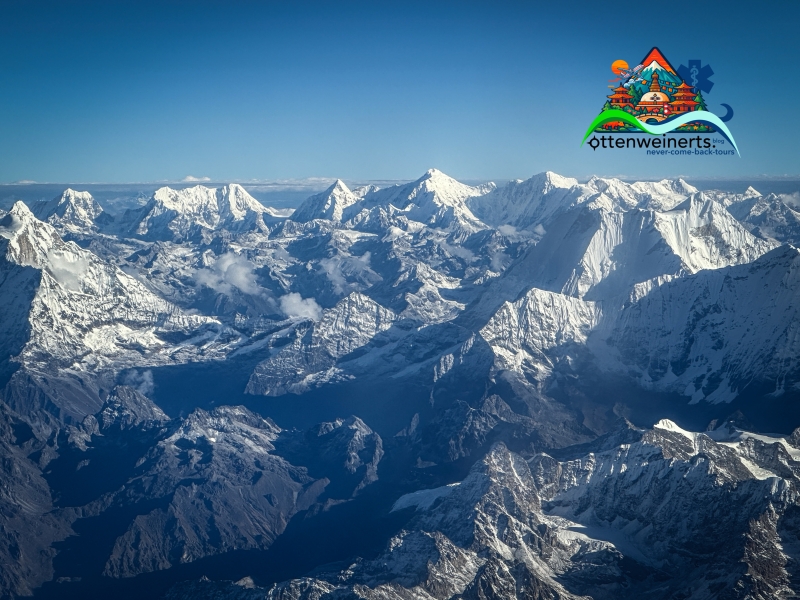
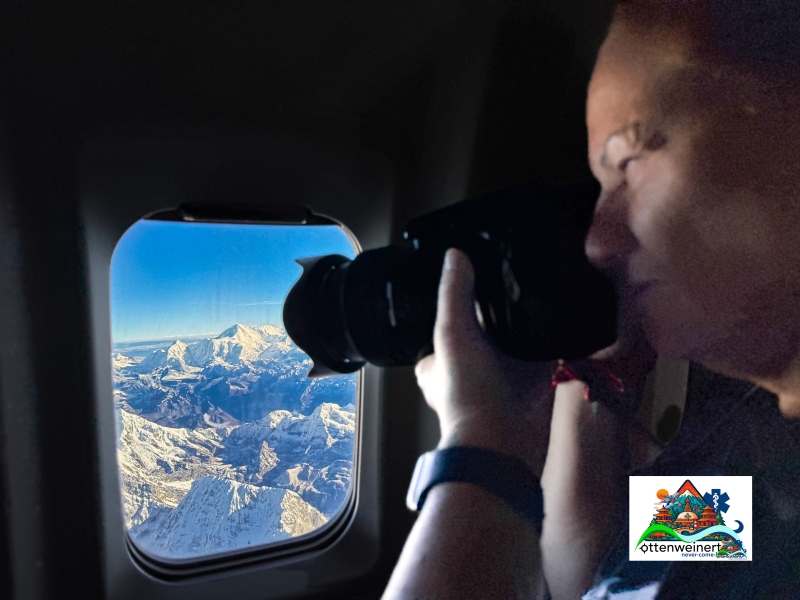
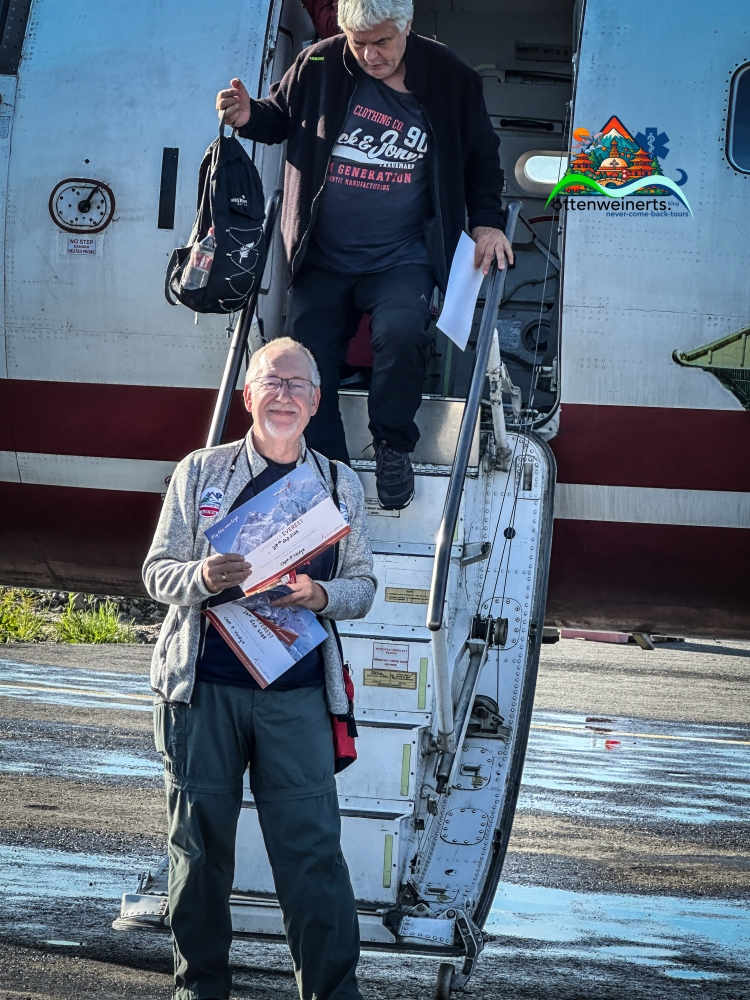
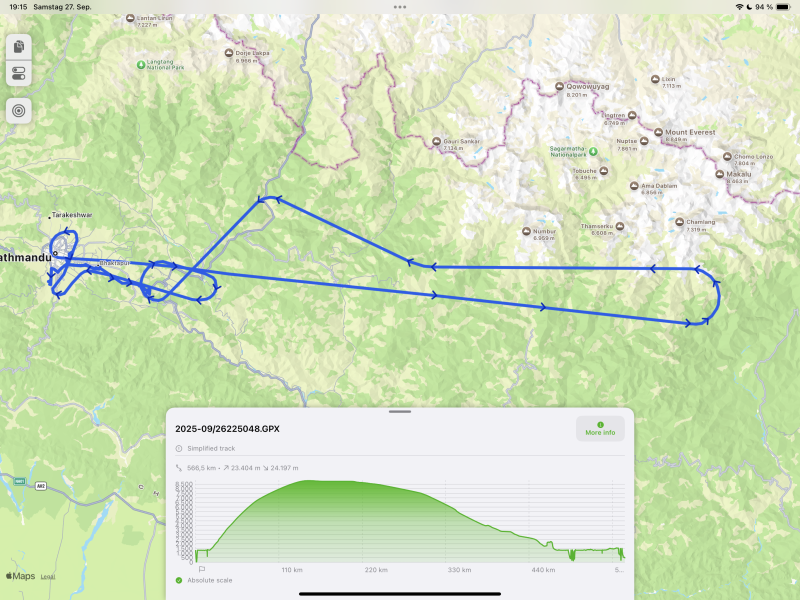
Warum läutet der Wecker um 4:30, also kurz nach Mitternacht?? Ach ja, Reiseleiter Yam hat für uns einen tollen Ausflug abseits des regulären Programms organisiert. Wir sollten um 5:30 am Flughafen sein, aber der Verkehr ist auch am frühen Morgen schon die Hölle – doch das Flugzeug wartet auf uns. Shree Airlines bietet knapp 1stündige Rundflüge an, jeder hat einen Fensterplatz, und so kommen wir in den Genuss, Mt. Everest, Lhotse und Makalu, also dem höchsten sowie dem viert- und fünfthöchsten Berg der Erde auf Augenhöhe zu begegnen, ohne Aufstieg vom Basislager, ohne zusätzlichen Sauerstoff oder Sherpas. 

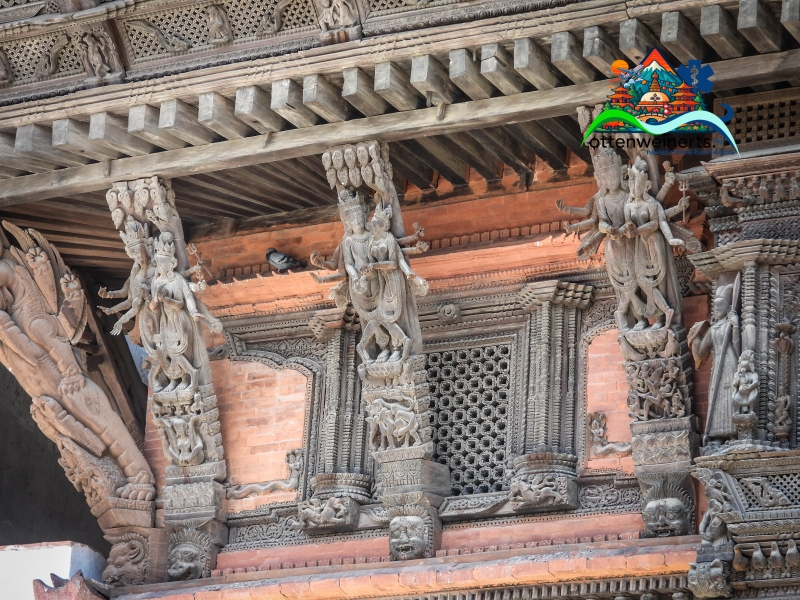
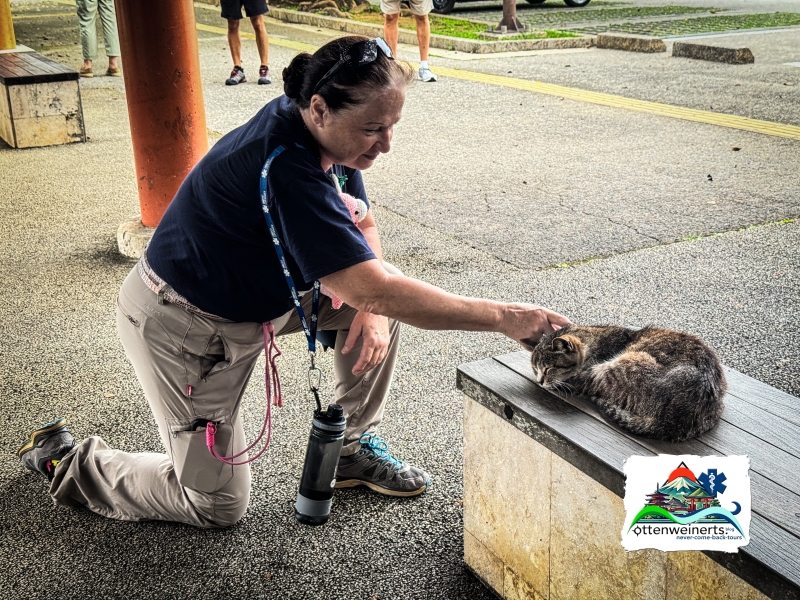
Dann geht es zurück ins Hotel, nach dem Frühstück brechen wir auf Richtung Bungamati und Karyabinayak / Khokna, zwei alte Dörfer der Newari, berühmt für ihre kunstvollen Schnitzereien an Türen, Fenstern und Balkonen. Auch hier finden sich die zentralen Plätze mit Tempeln, vieles ist noch eingerüstet- das große Erdbeben von 2015 hat hier viele Todesopfer gefordert und einen Großteil der Häuser zerstört. Hunde, Katzen, Gänse und Ziegen koexistieren friedlich zwischen den Baumaterialhaufen – die Ziegen kümmern sich auch vorbildlich um die Reste der Opfergaben, da ist kein Altar zu hoch. 

Auf der Fahrt nach Dhulikel, Richtung tibetische Grenze, geht unser “Sprachkurs mit Yam” weiter: am ersten Tag haben wir “Namaste – Guten Tag” gelernt, gestern “dhanyabaad – danke” (Eselsbrücke für uns: Tanja ist im Bad- Tanjabad). Das heutige Wort des Tages ist die passende Antwort auf dhanyabaad, nämlich “Svagatom – Bitte sehr” (Eselsbrücke für uns: der Schwager heißt Tom – Svagatom). Ob sich die Familienverhältnisse dann ändern, wenn Schwager Tom mit Tanja im Bad ist, blieb allerdings unbeantwortet….

Saturday, 27 September 2025 – Nepal Day 3 – Mt. Everest

Why does the alarm go off at 4 a.m, shortly after midnight?? Ah yes, our tour guide Yam has arranged a great excursion for us, in addition to the regular program. We were supposed to be at the airport by 5:30, but even in the early morning traffic is hell – still, the plane waits for us. Shree Airlines offers short round-trip flights of just under an hour, everyone gets a window seat, and so we have the privilege of seeing Mt. Everest, Lhotse, and Makalu – the highest, fourth-highest, and fifth-highest mountains in the world – at eye level, without climbing from base camp, without extra oxygen, and without Sherpas.

Then it’s back to the hotel, and after breakfast we set off toward Bungamati and Karyabinayak / Khokna, two ancient Newari villages, famous for their intricate carvings on doors, windows, and balconies. We visit the central squares with their temples, many still under scaffolding – the great earthquake of 2015 claimed many lives here and destroyed much of the housing. Dogs, cats, geese, and goats coexist peacefully among the piles of building materials – the goats also dutifully take care of the remains of the offerings; no altar is too high for them.

On the drive to Dhulikel, towards the Tibetan border, our “language course with Yam” continues: on the first day we learned Namaste – good day, yesterday dhanyabaad – thank you(mnemonic for us: “Tanja is in the bath – Tanjabad”). Today’s word of the day is the proper reply to dhanyabaad, namely Svagatom – you’re welcome (mnemonic for us: “there is a man called Tom, and he is the brother-in-law; the German word for brother-in-law is Schwager, Svagatom”). Whether family relations would change if brother-in-law Tom joined Tanja in the bath, however, was left unanswered….

250926 – Freitag, 26.9.2025 – Nepal Tag 2 – Kathmandu Durbar Square und Boudhanath –

Das Heritage Hotel ist ein schönes altes Gebäude mit Stil und Geschichte, wir haben hervorragend geschlafen und fühlen uns fit für das Besichtigungsprogramm in Kathmandu. Das müssen wir uns allerdings verdienen – der Verkehr ist auch heute unglaublich dicht. Das Wochenende steht vor der Tür, das Dashain-Fest auch, und alle wollen zu ihren Familien. Ambulanzen stecken genauso im Verkehr fest wie wir, Rettungsgasse gibt’s hier nicht.

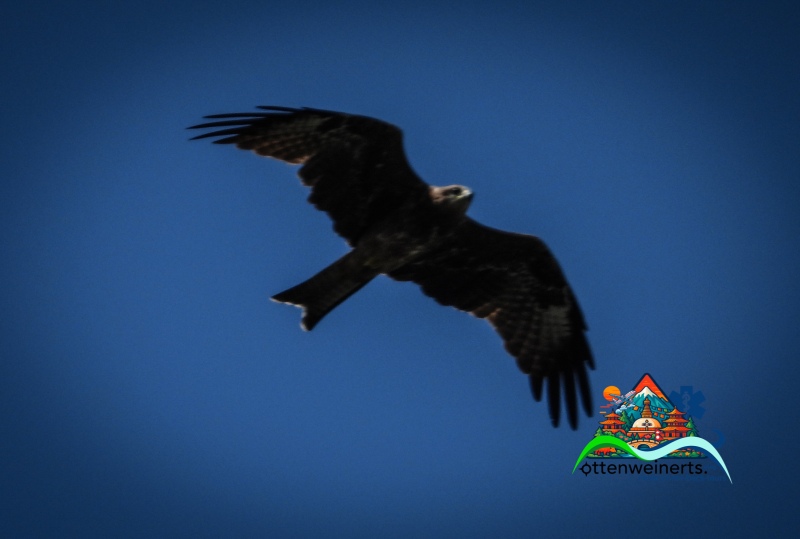
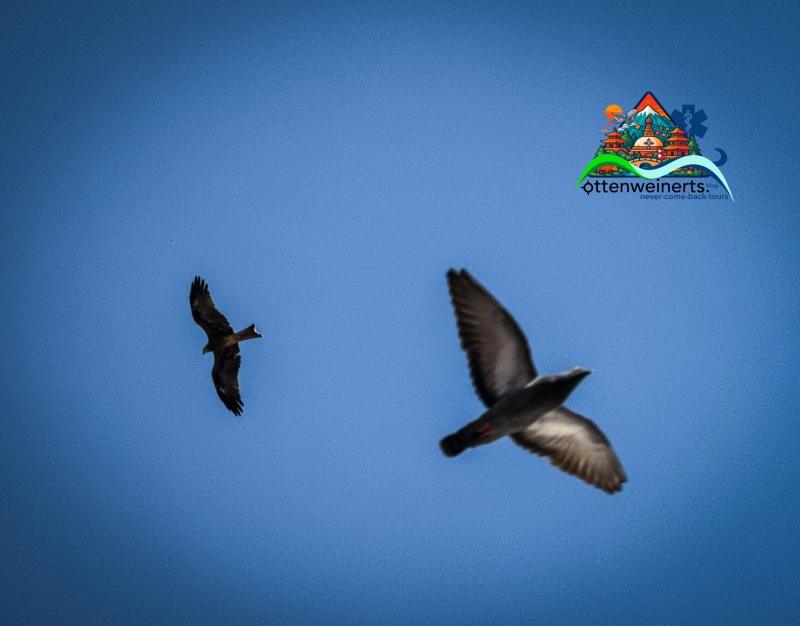
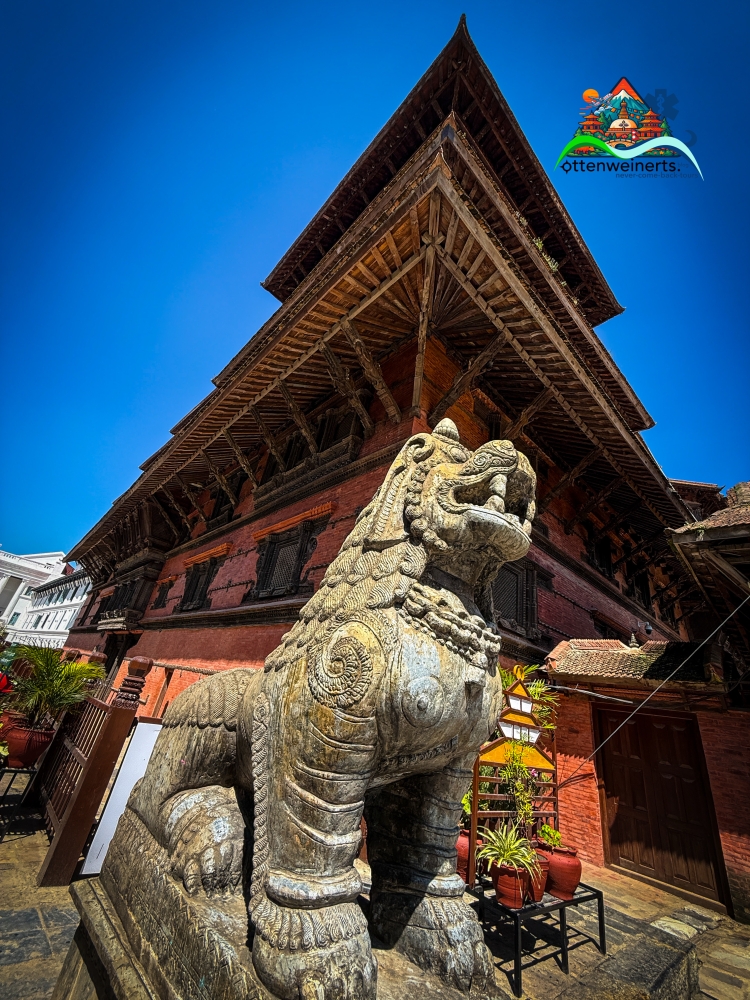
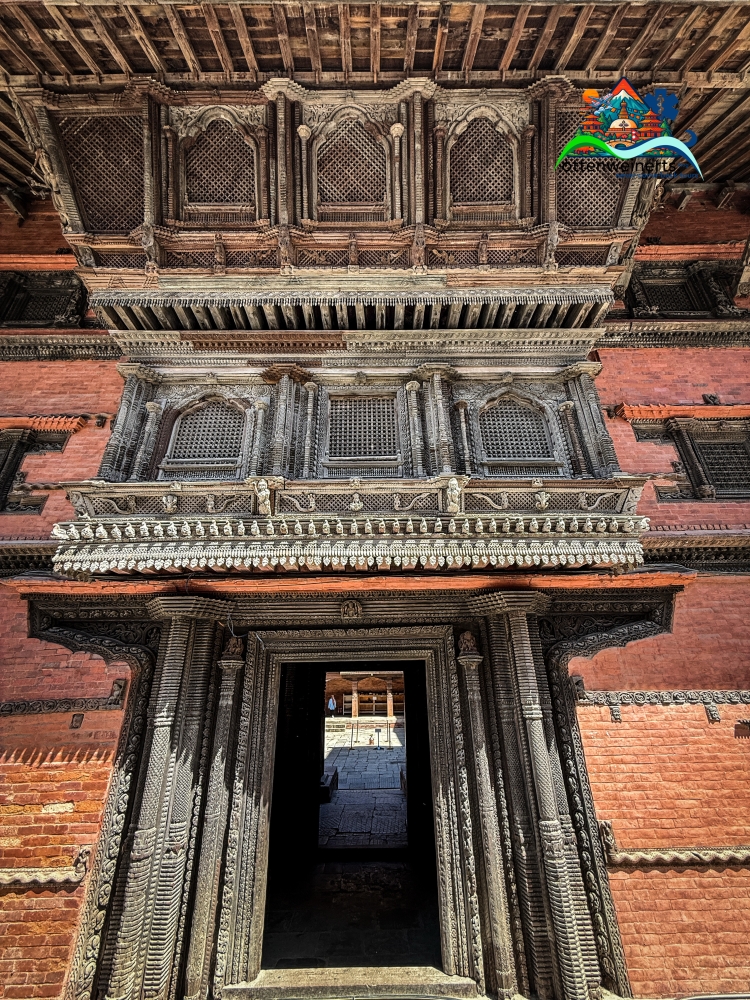
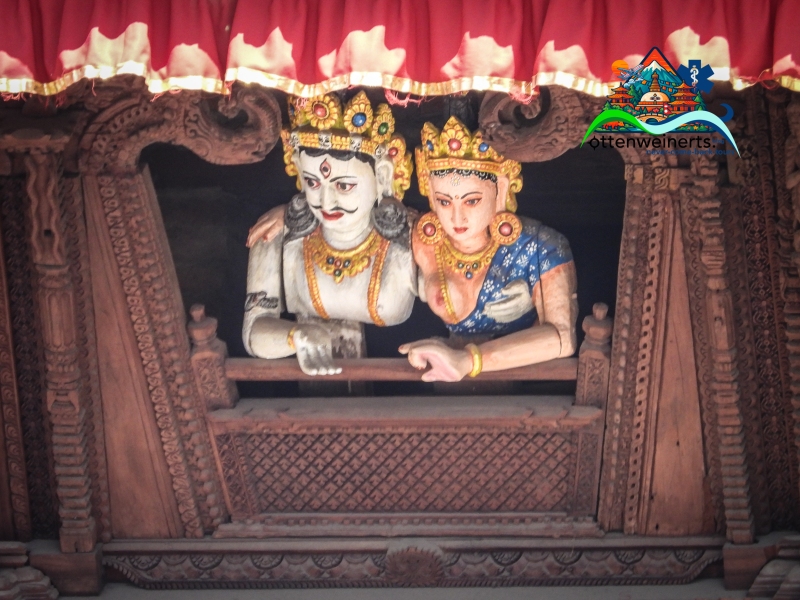
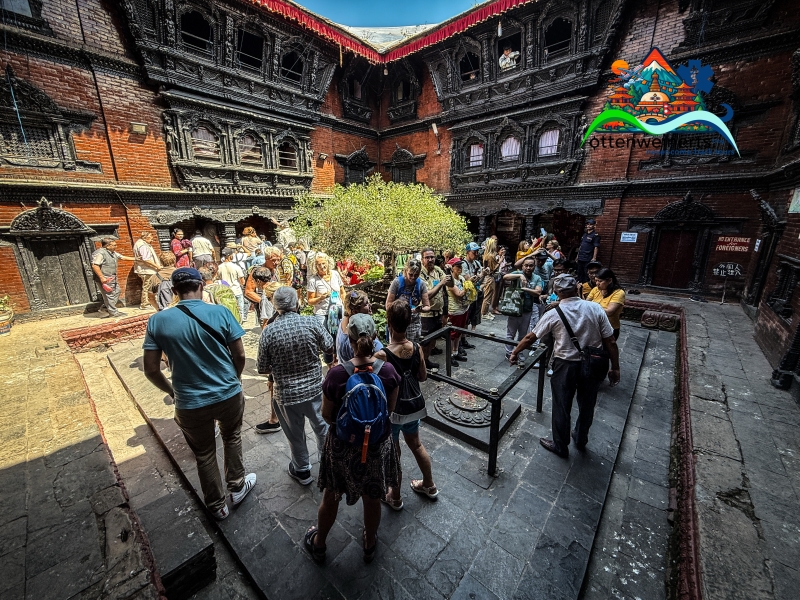
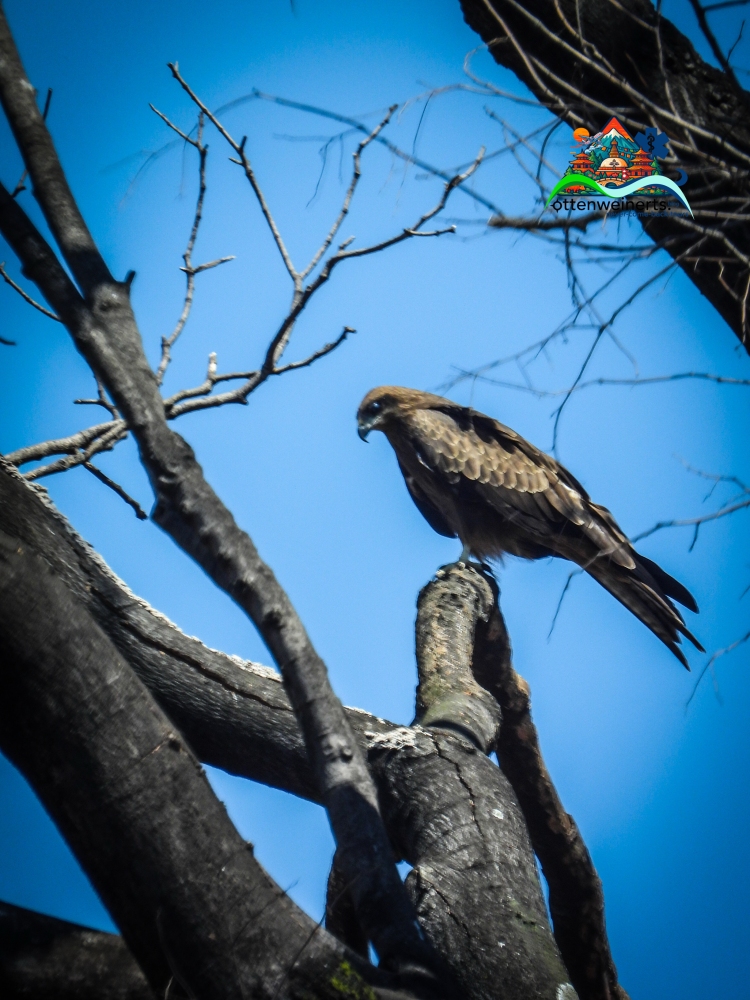
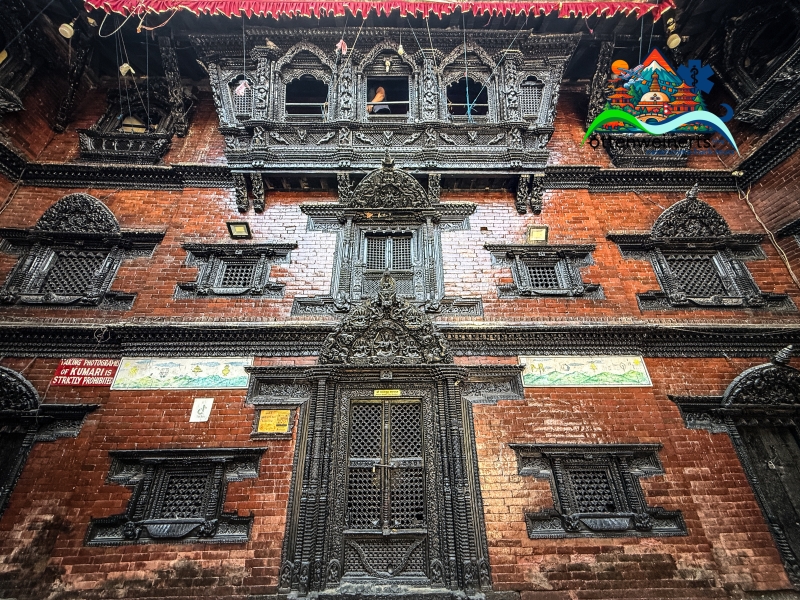
Am Durbar Square angekommen, besuchen wir als erstes die Royal Kumari in ihrem Palast – hier aber nur auf Distanz. Touristen dürfen nur in den Innenhof, wo sich die lebende Göttin für etwa 20 Sekunden am Fenster zeigt; fotografieren ist streng verboten. Dann geht es in den beeindruckenden Palast mit Museum (fotografieren verboten) und hinauf auf die 9stöckige Pagode mit tollem Ausblick auf all die Tempel und Pagoden am Platz; darüber schweben Schwarzmilane scheinbar schwerelos. Einiges ist noch eingerüstet – Folgen des schweren Erdbebens 2015 – der Rhesus-Affe verwendet den Baustellenzaun als Kletterhilfe. 

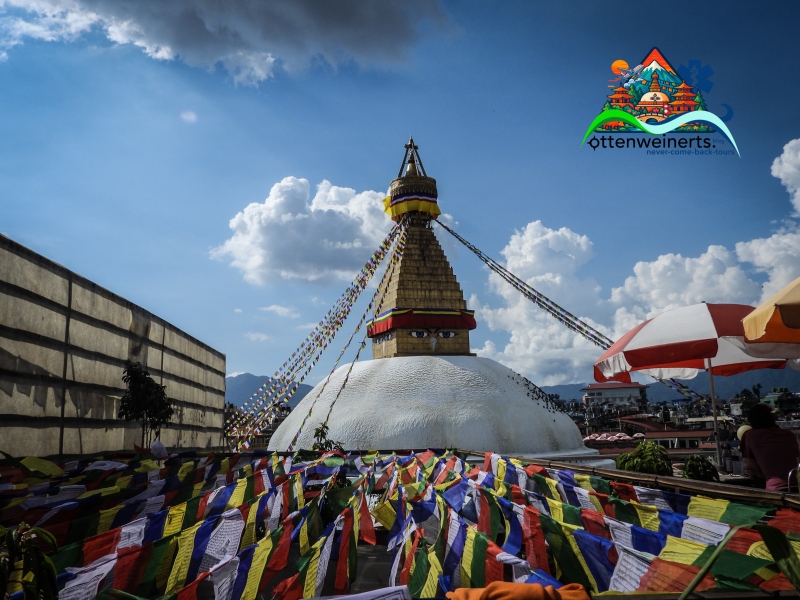
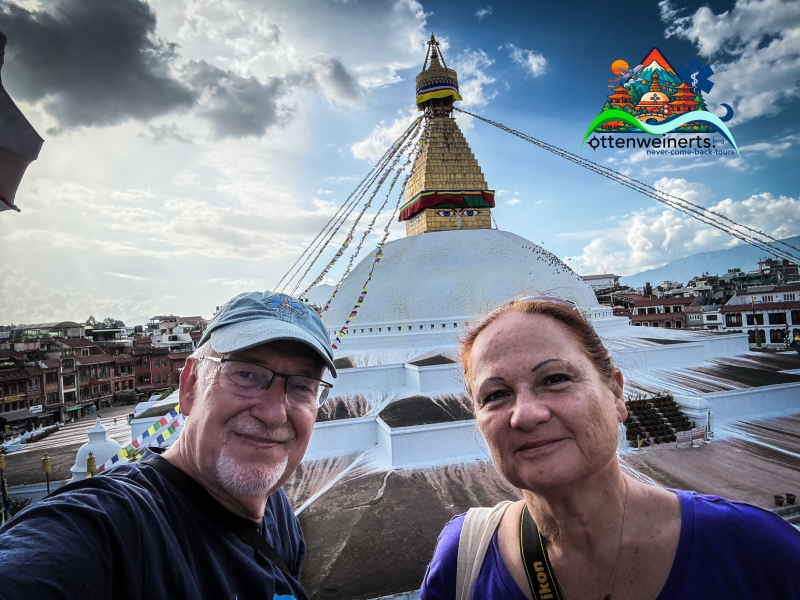
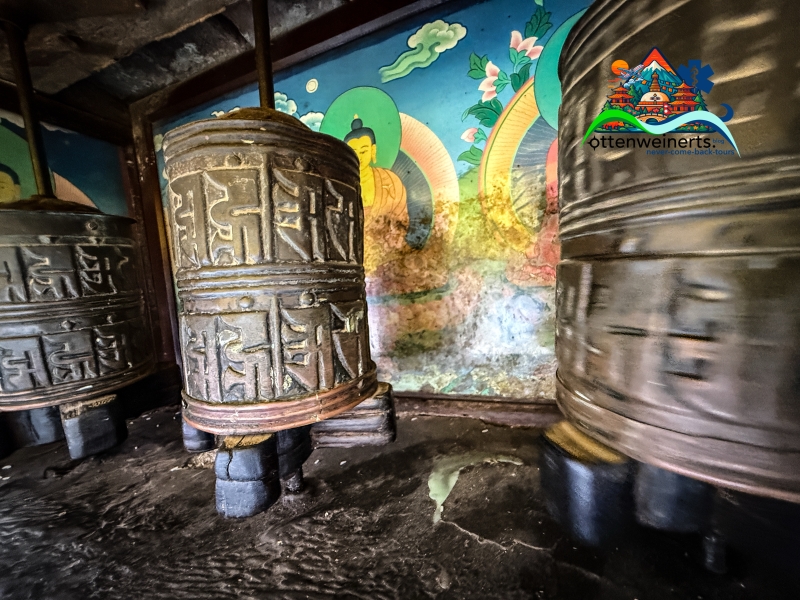
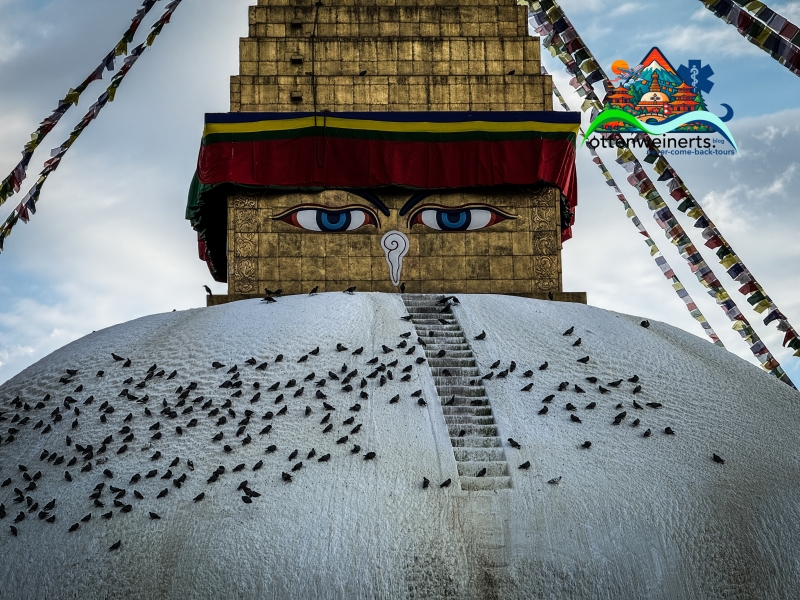
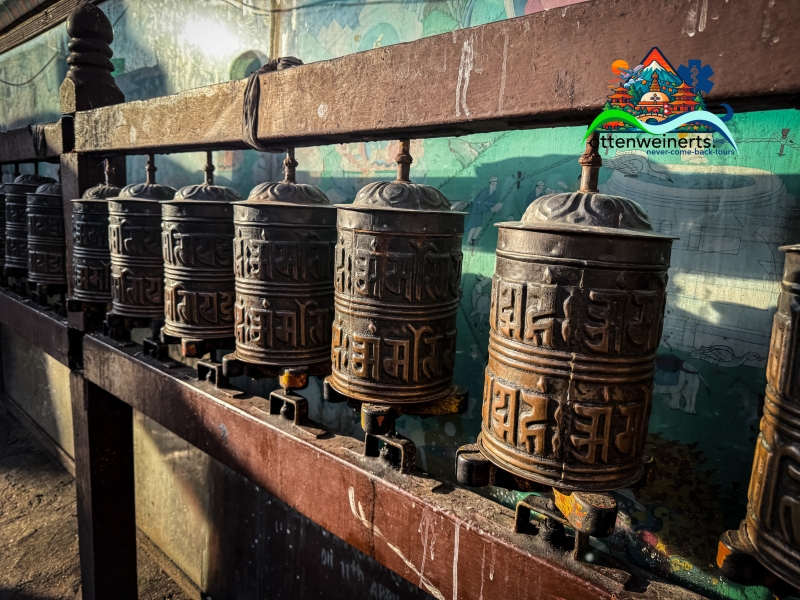
Wir fahren weiter nach Boudhanath, nordöstlich von Kathmandu, dem Zentrum des tibetischen Buddhismus in Nepal. Hier machen wir erstmal Mittagspause in einem der netten Dachgartencafés, die den runden Platz mit der beeindruckenden Stupa säumen. Die allessehenden Augen wachen über die hunderten Gläubigen, die im Uhrzeigersinn um die Stupa wandern, die Gebetsmühlen drehen – auch im Uhrzeigersinn – und Gebete murmeln. Und wir Touristen laufen mit – natürlich auch im Uhrzeigersinn. 

Anschließend statten wir dem buddhistischen Kloster und der Malereischule hier am Platz noch einen Besuch ab, und am Weg zurück zum Bus finden wir Rettungsauto Nr 4 für unsere Sammlung. 

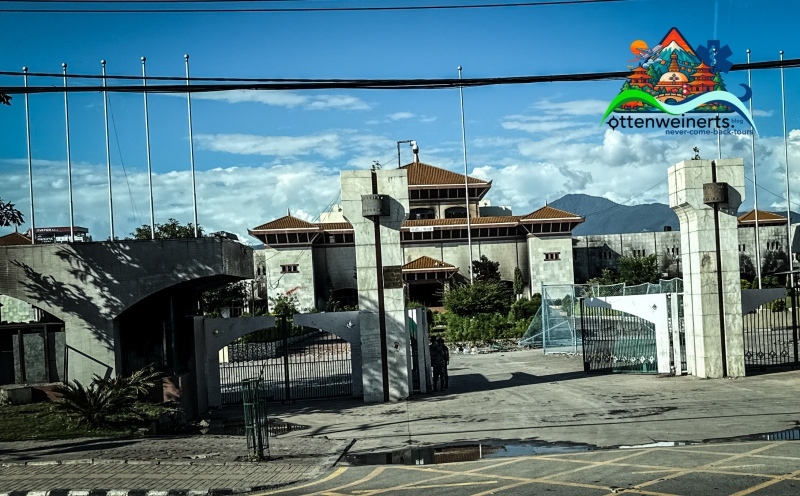
Während der Rückfahrt zum Hotel erklärt uns Reiseleiter Yam die politische Situation und die Hintergründe der Unruhen von vor 2 Wochen – einen Haufen verbrannter Motorräder sowie schwarze Brandspuren am Parlament und an einer Polizeistation haben wir ja gesehen. Momentan ist die Lage ruhig, und wir können unsere Tour wie geplant fortsetzen.

Friday, September 26, 2025 – Nepal Day 2 – Kathmandu Durbar Square and Boudhanath

The Heritage Hotel is a beautiful old building full of style and history. After a good night’s sleep we feel ready for the sightseeing program in Kathmandu. But we have to earn it – the traffic is unbelievably dense again today. The weekend is around the corner, the Dashain festival as well, and everyone wants to get home to their families. Ambulances are stuck in traffic just like we are; there’s no emergency lane here.

At Durbar Square, our first stop is the Royal Kumari in her palace – but only from a distance. Tourists are only allowed into the courtyard, where the living goddess appears at the window for about 20 seconds; photography is strictly forbidden. Then we enter the impressive palace with its museum (no photography allowed) and climb the 9-story pagoda, which offers a wonderful view of all the temples and pagodas in the square. Black kites hover above, seemingly weightless. Some buildings are still covered in scaffolding – consequences of the devastating 2015 earthquake – and a rhesus monkey uses the construction fence as climbing equipment.

We continue on to Boudhanath, northeast of Kathmandu, the center of Tibetan Buddhisms in Nepal. First, we take a lunch break in one of the charming rooftop cafés which surround the circular square with its impressive stupa. The all-seeing eyes watch over the hundreds of devotees walking clockwise around the stupa, turning prayer wheels – also clockwise – and murmuring prayers. And we tourists join in, of course also clockwise.

Afterwards, we pay a visit to the Buddhist monastery and the painting school on the square, and on the way back to the bus we find rescue vehicle no. 4 for our collection.

During the return drive to the hotel, our guide Yam explains the political situation and the background of the unrest two weeks ago – we had already seen a heap of burned motorcycles as well as black scorch marks on the parliament building and a police station. For now, the situation is calm, and we can continue our tour as planned.

250925 – Donnerstag, 25.9.2025 – Nepal Tag 1- Willkommen in Nepal –

Donnerstag, 25.9.2025 – Nepal Tag 1- Willkommen in Nepal

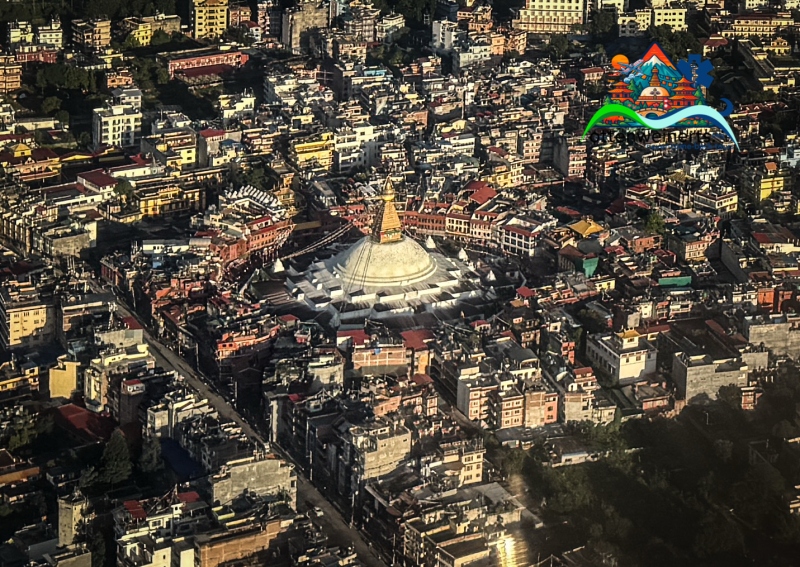
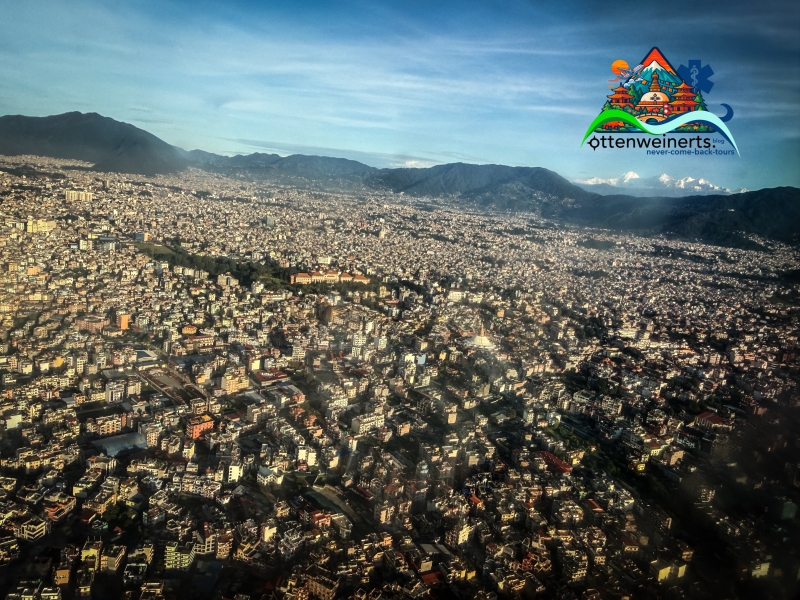
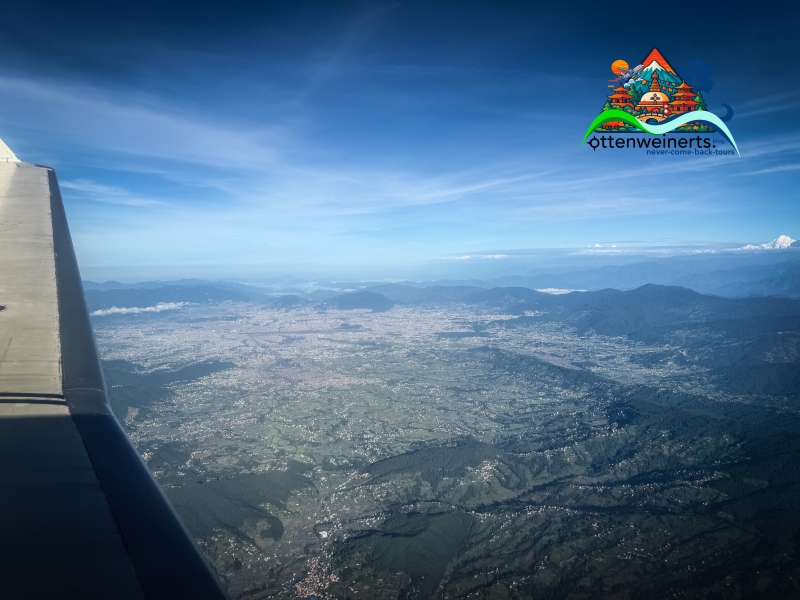
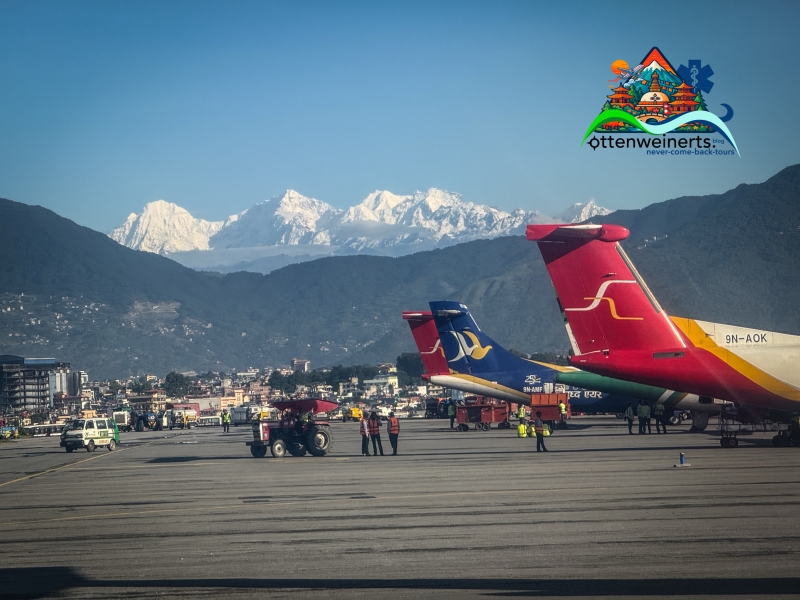
Im Morgenlicht grüßen die ersten der berühmten 8000er, bevor wir in Kathmandu landen. Das Visum haben wir uns schon beim nepalesischen Konsulat in Wien besorgt, die Einreise ist somit problemlos und sehr rasch –  bis die Koffer alle da sind und die Reisegruppe komplett ist, dauert es dann aber zwei Stunden, und die Fahrt ins Hotel in Bahktapur noch einmal eine Stunde. Die Hälfte unserer 22köpfigen Reisegruppe macht dann schlapp und geht schlafen, die Nacht im Flieger war doch recht kurz.

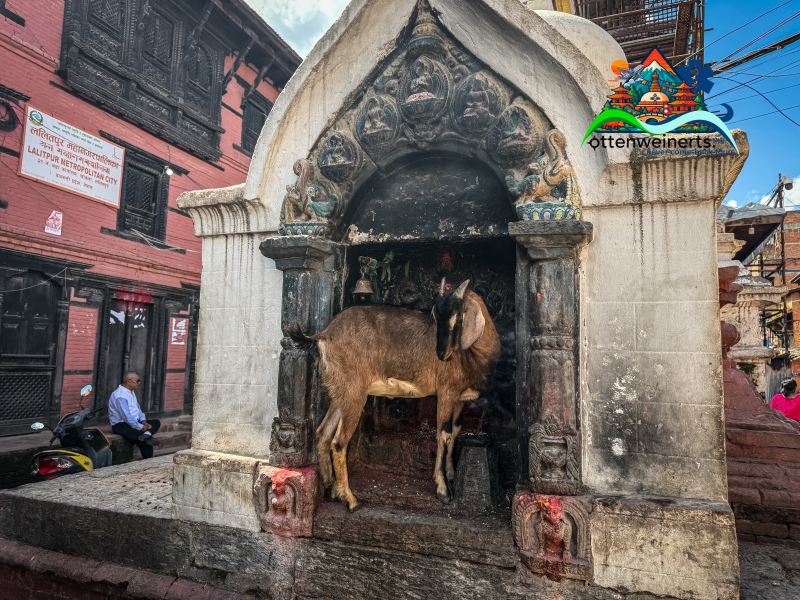
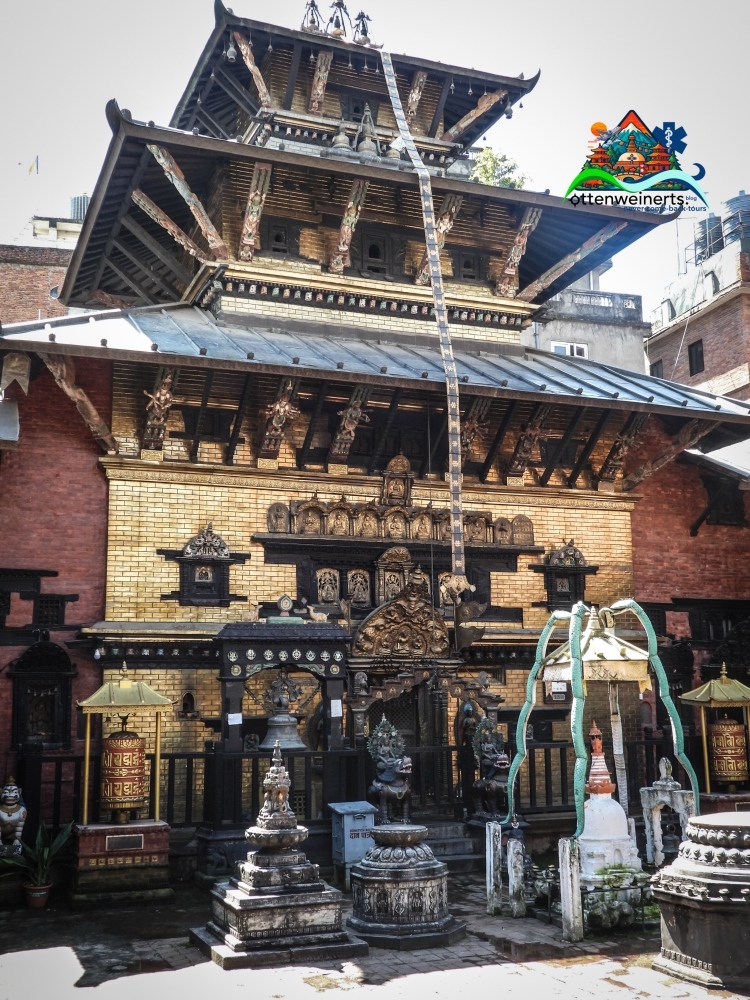
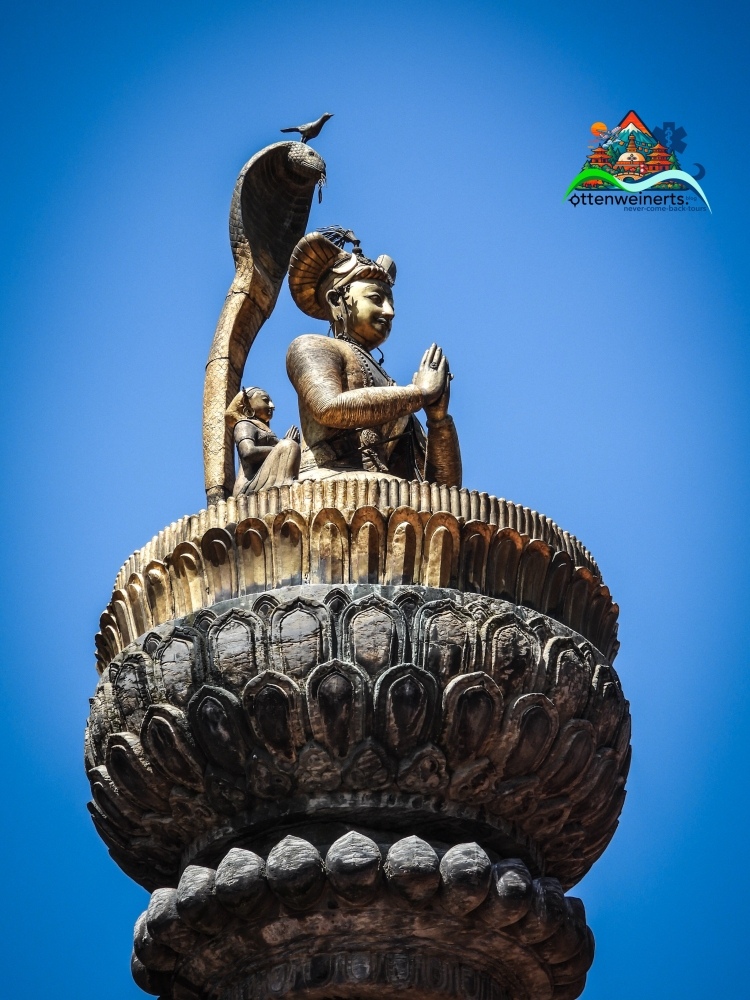
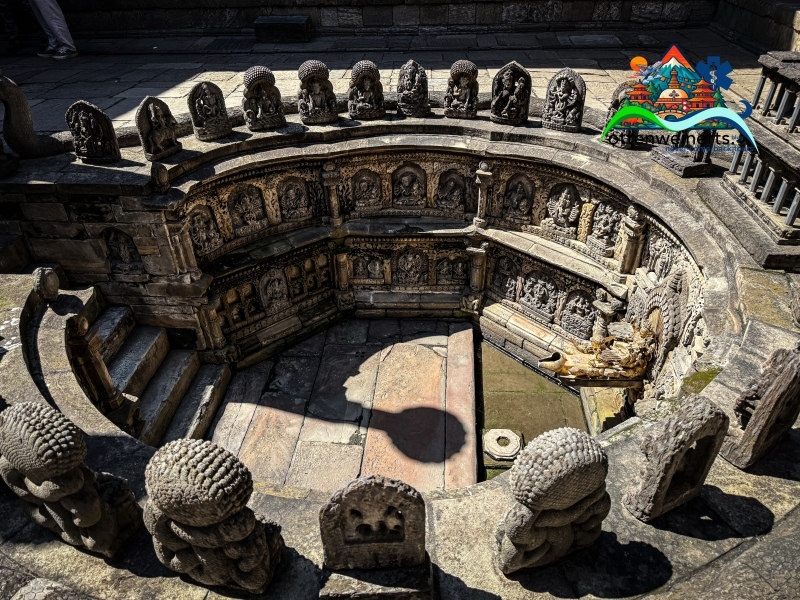
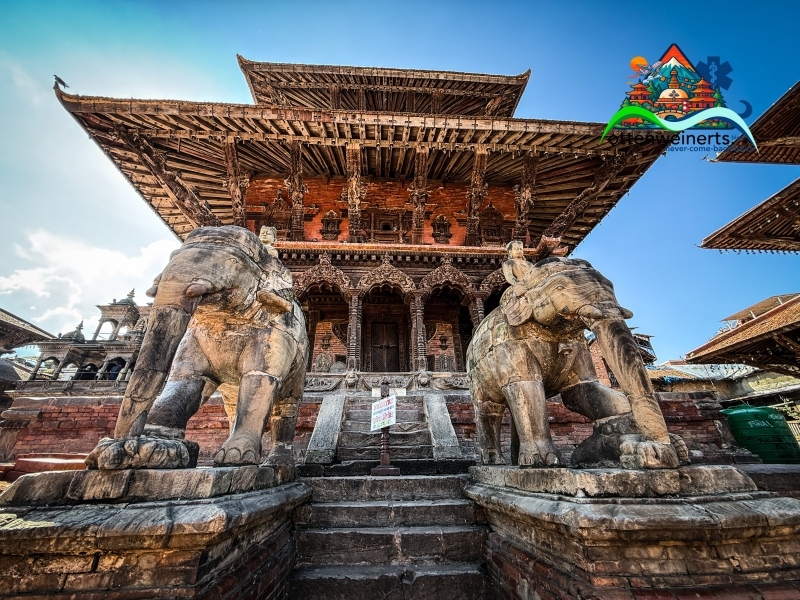
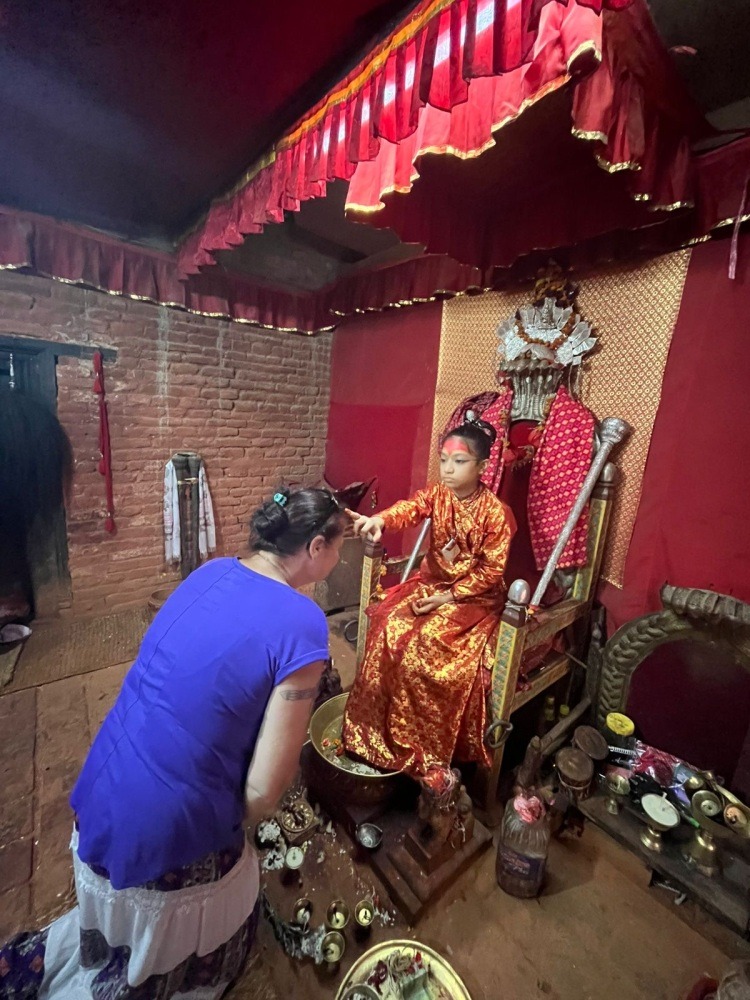
Für die anderen hat Reiseleiter Yam einen Ausflug nach Patan (Lalitpur) im Angebot – die ehemalige Königsstadt hat eine sehr hübsche Altstadt, der Königspalast am Durbar Square, umgeben von zahlreichen Hindu-Tempeln, beherbergt ein sehenswertes Museum. In der Nähe liegt der Goldene Tempel, ein beeindruckendes buddhistisches Heiligtum, und im Palast der Kumari segnet uns die lebende Göttin mit einem roten Farbtupfer auf der Stirn.

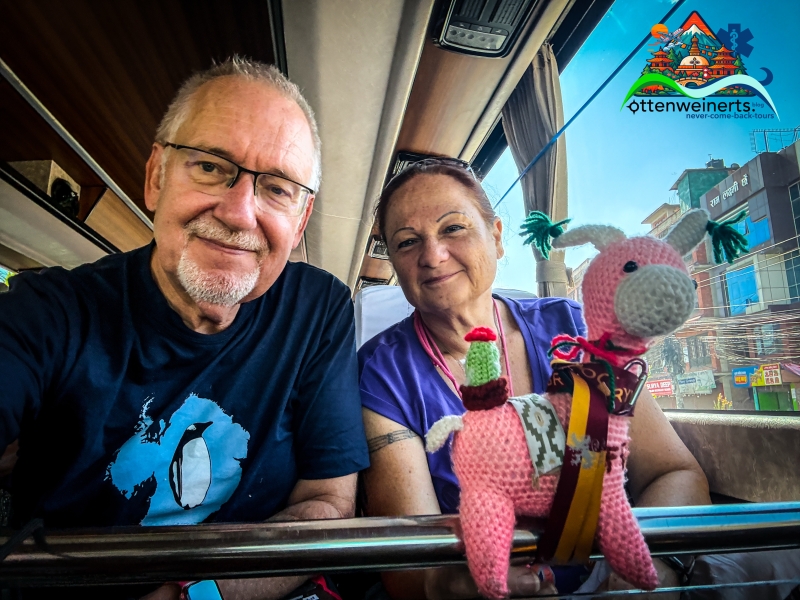
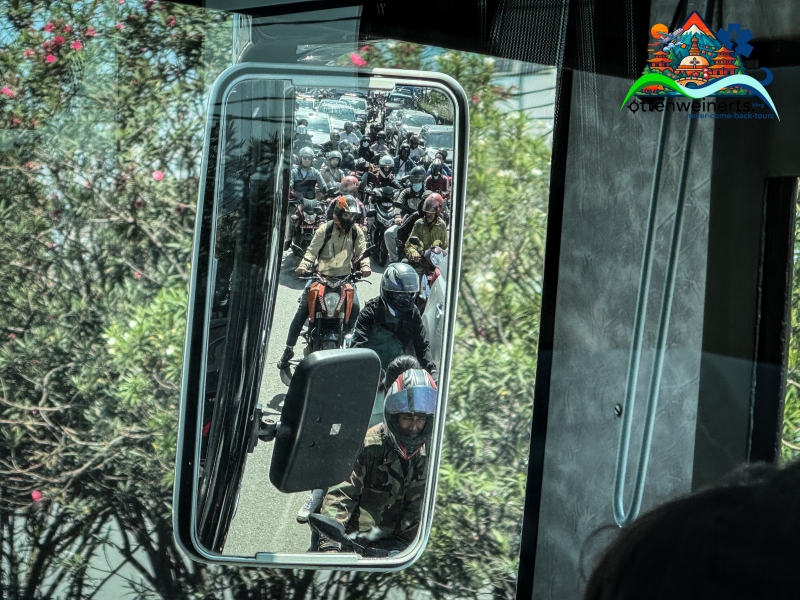
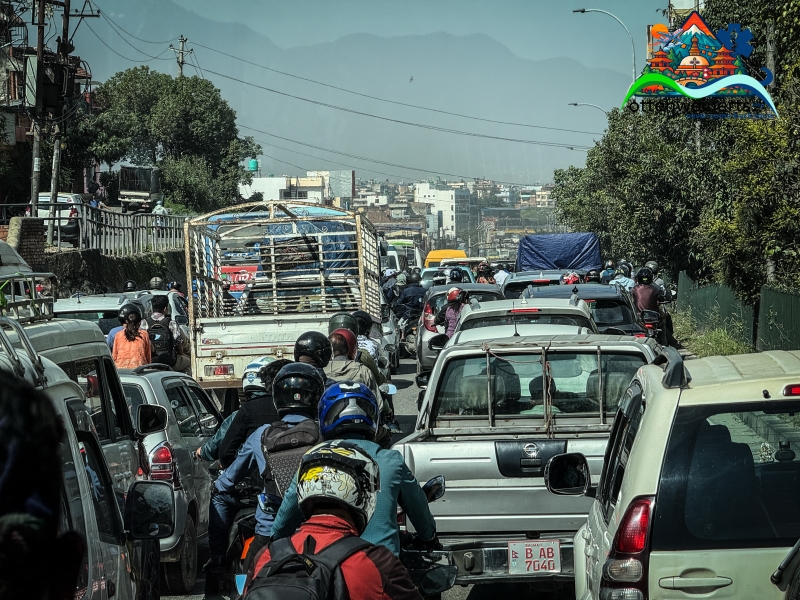
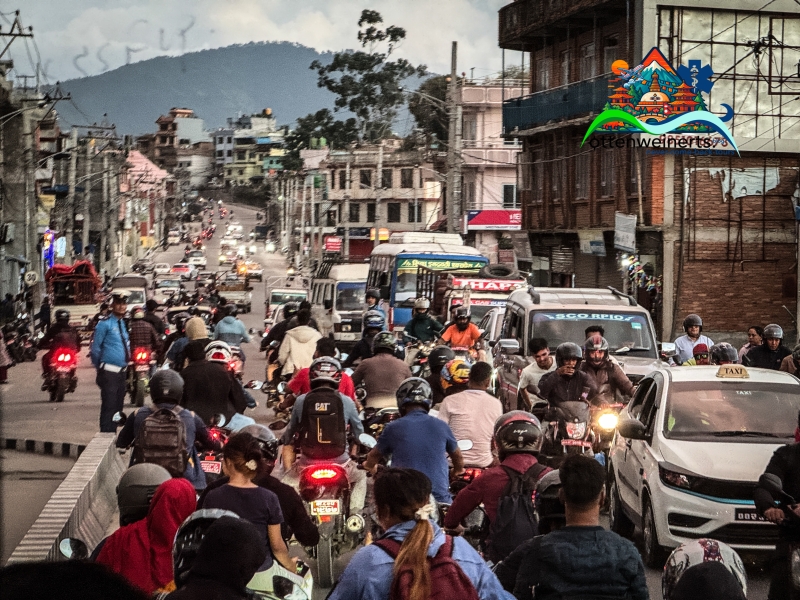
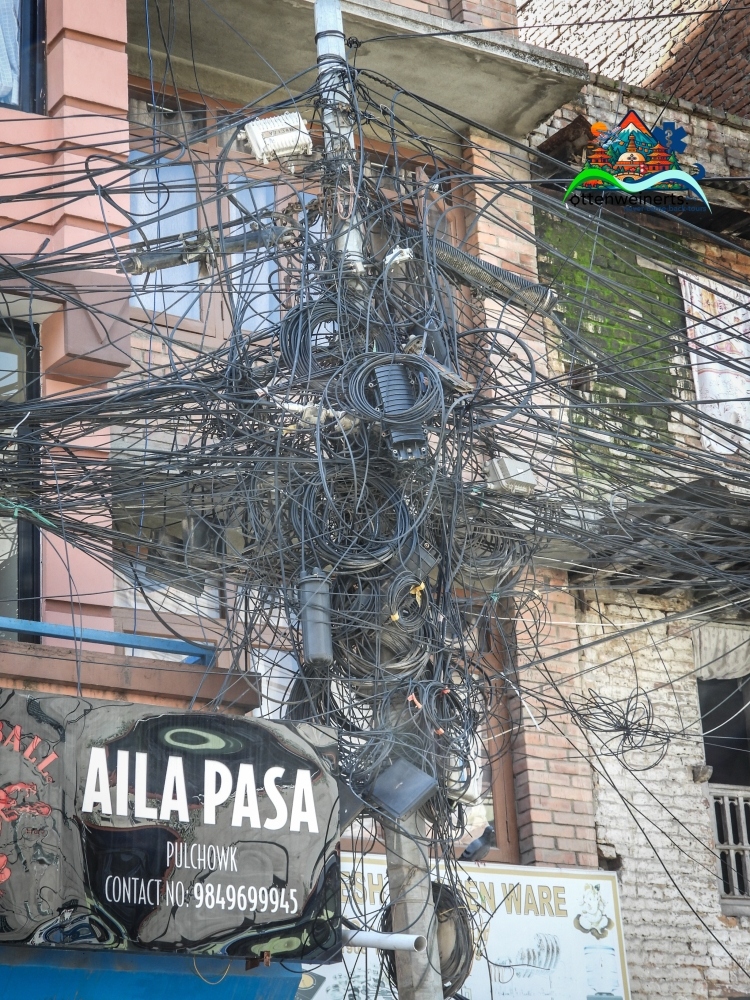
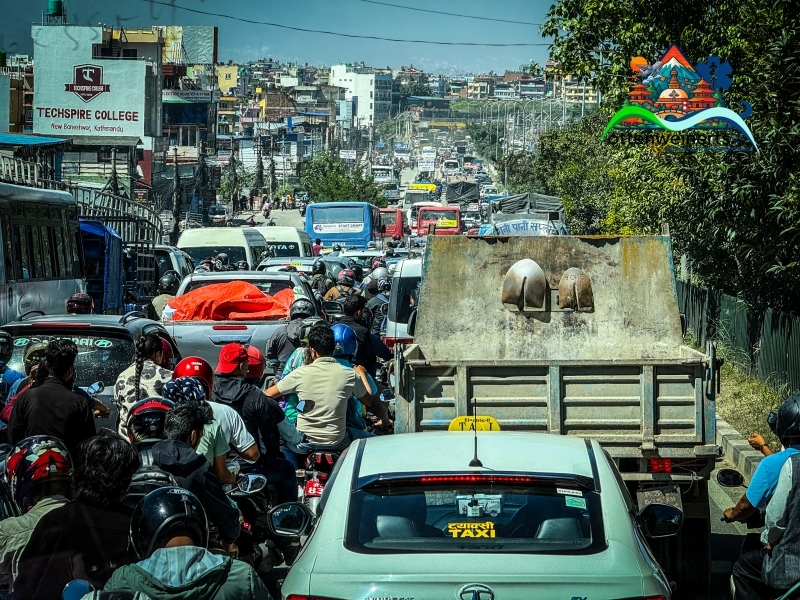
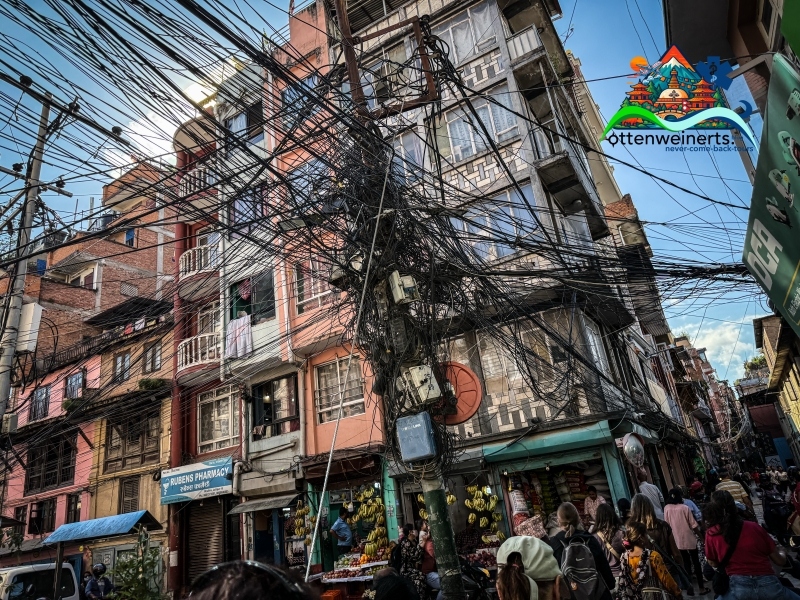
Anschließend quält sich unser Reisebus wieder eine Stunde zurück zum Hotel – der Verkehr ist chaotisch, aber unser Busfahrer hat die Ruhe weg und außerdem einen guten Beifahrer, der die Mopeds wegräumt und die Stromkabel hochhält, damit der Bus unten durchfahren kann. Und überhaupt, die Stromkabel!! 

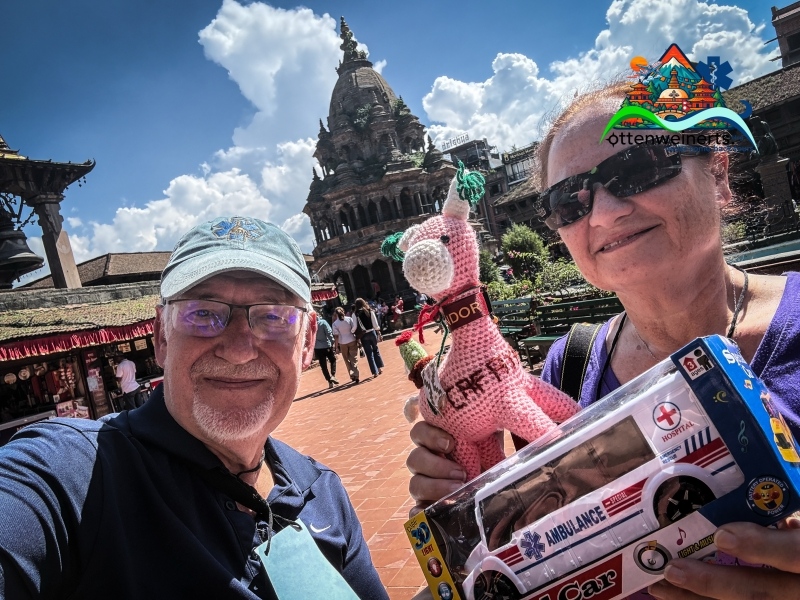
Dennoch: unser erster Eindruck ist durchaus positiv: freundliche Menschen, viel Sehenswertes, Gottseidank schönes Wetter mit blauem Himmel und strahlendem Sonnenschein, und ein grossartiger Tourguide, der fließend Deutsch spricht. Und die ersten drei Rettungsautos für die Sammlung haben wir auch schon gefunden!

Thursday, 25.9.2025 – Nepal Day 1 – Welcome to Nepal

In the morning light, some of the famous 8,000-meter peaks welcome us just before we land  in Kathmandu. We had already arranged our visas at the Nepalese consulate in Vienna, so immigration is smooth and quick – but it still takes two hours until all the luggage has arrived and the group of travelers is complete, and then another hour’s drive to the hotel in Bhaktapur. Half of our group of 22 gives in to fatigue and goes to sleep – after all, the night on the plane was rather short.

For the others, our guide Yam offers an excursion to Patan (Lalitpur). The former royal city has a very charming old town; the royal palace on Durbar Square, surrounded by numerous Hindu temples, houses an impressive museum. Nearby is the Golden Temple, an awe-inspiring Buddhist sanctuary, and in the palace of the Kumari, the living goddess blesses us with a red mark on our foreheads.

Afterward, our tour bus struggles back for another hour to the hotel – the traffic is chaotic, but our bus driver remains unshaken, and he has an excellent co-driver who moves the motorbikes out of the way and lifts the power lines so the bus can pass underneath. And speaking of power lines – that’s something we have to get used to!

Nevertheless, our first impression is thoroughly positive: friendly people, great cultural heritage to discover, thankfully beautiful weather with blue skies and brilliant sunshine, and a fantastic tour guide who is fluent in German. And we’ve already found three new ambulances for our collection!

250524 – Tag 23 – Kreuzfahrt Tag 3 / Samstag, 24. Mai – Okinawa –

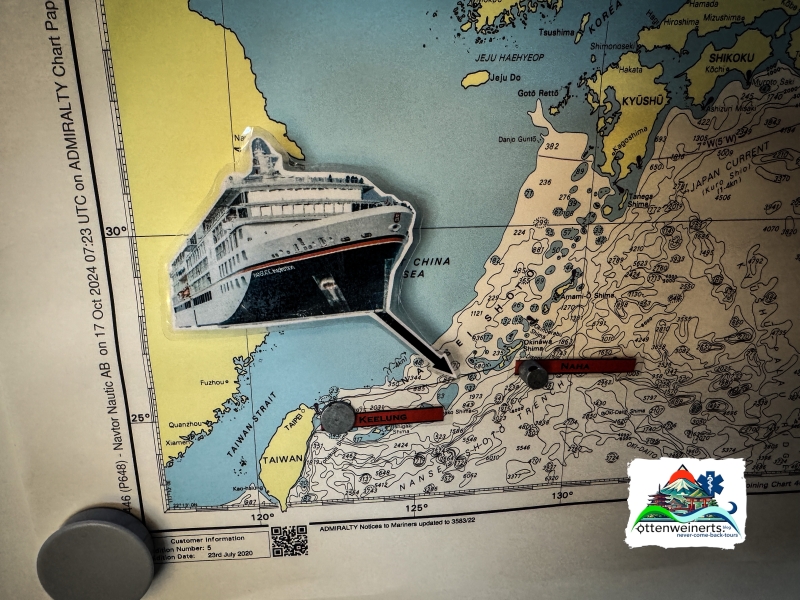
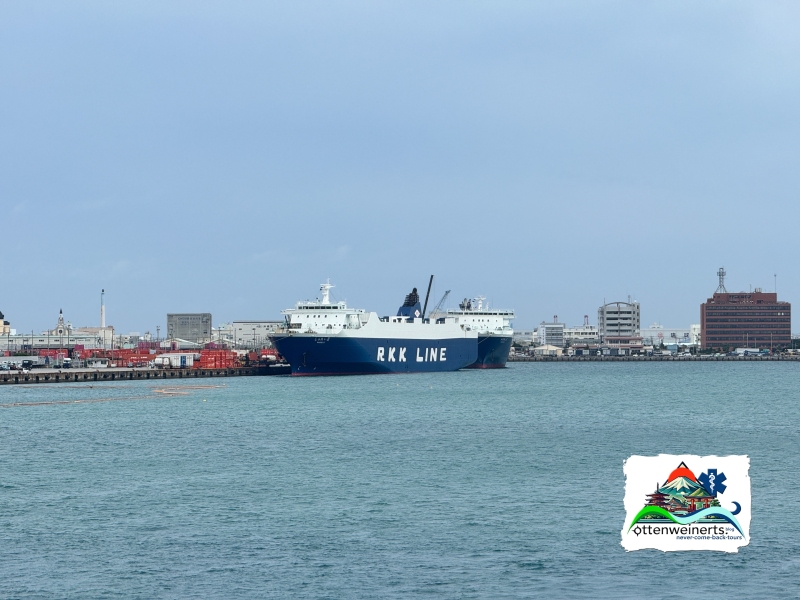
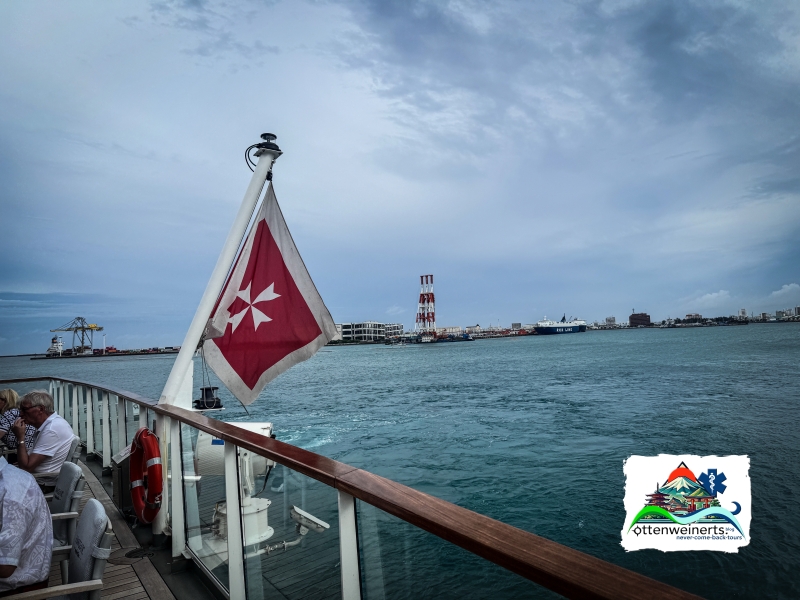
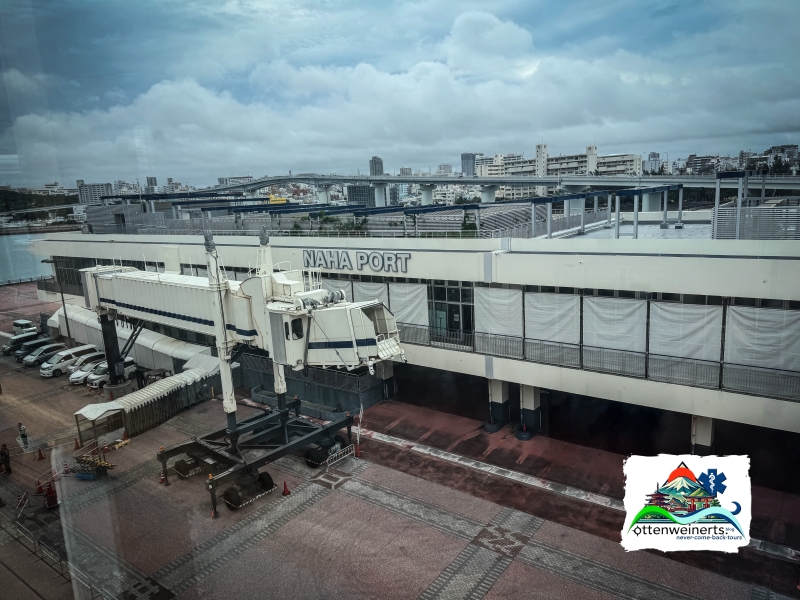
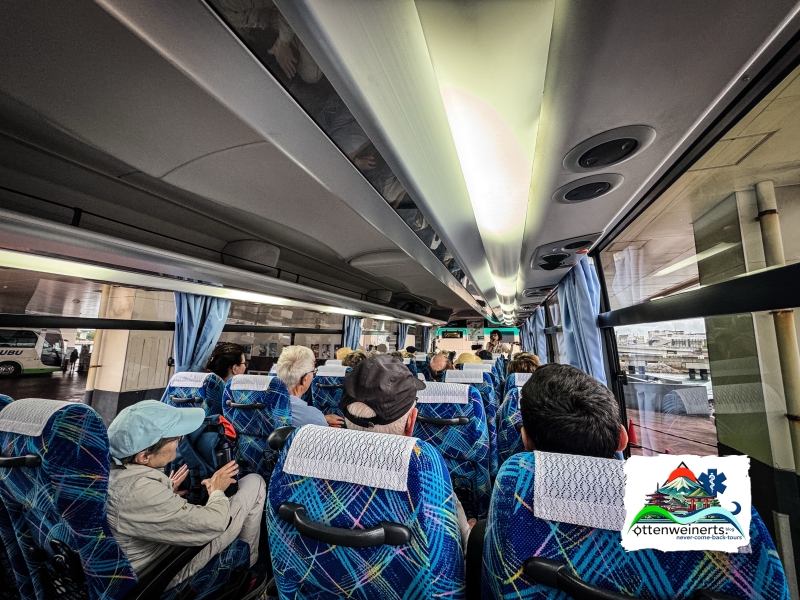
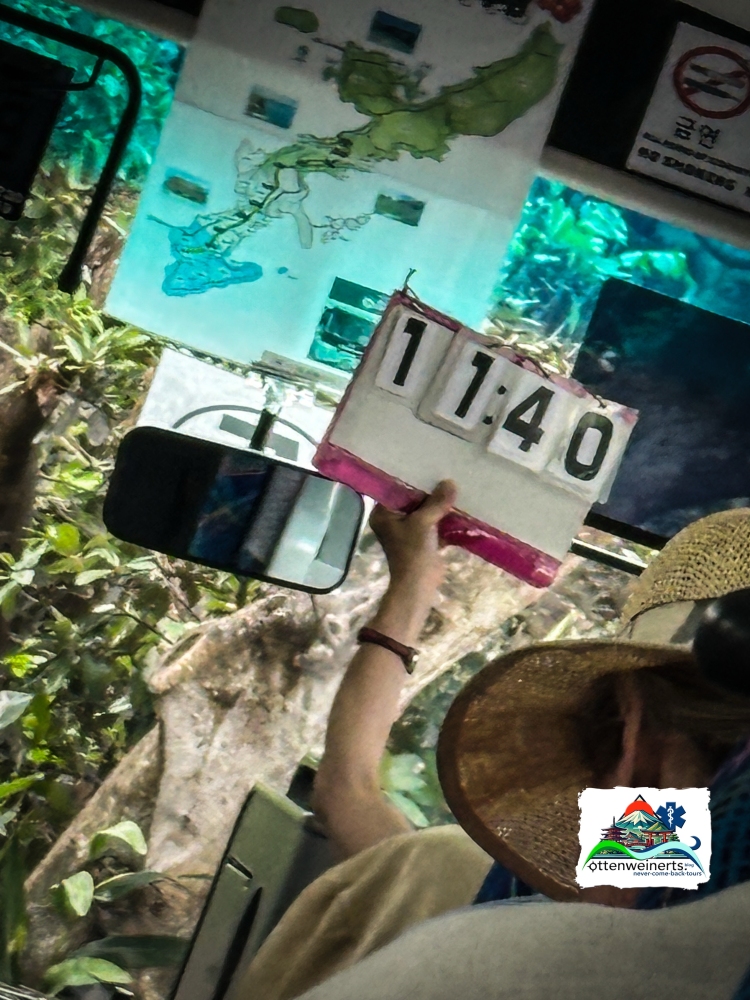
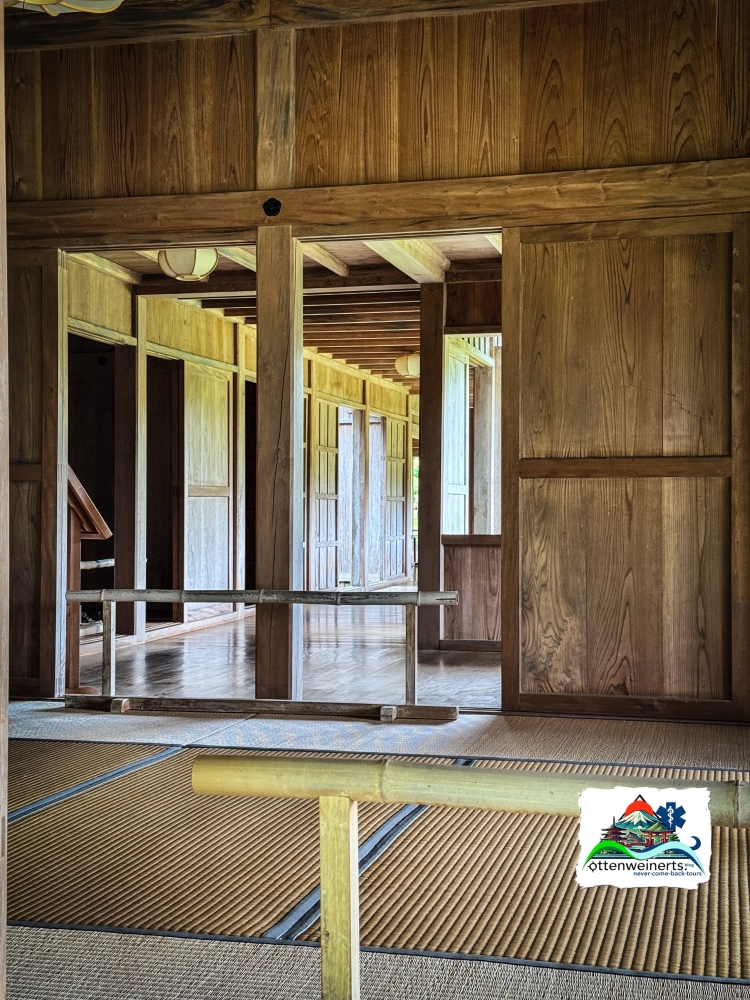
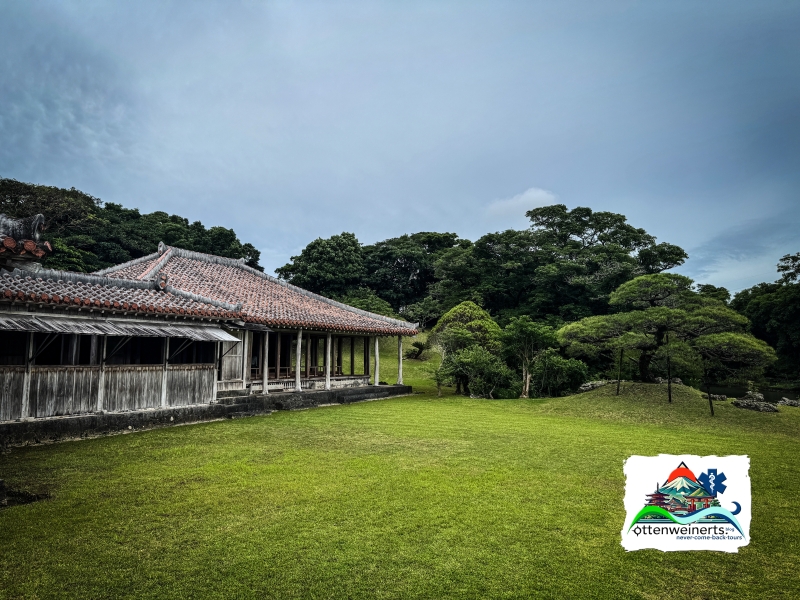
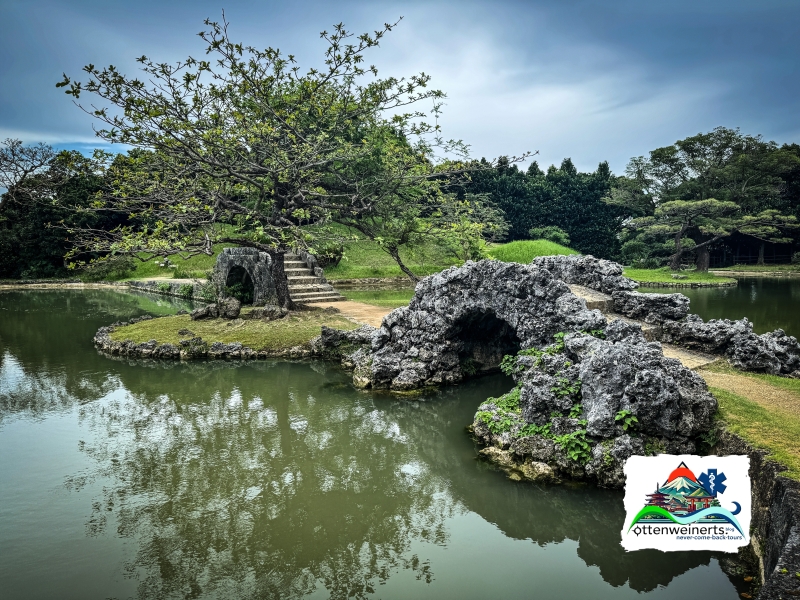
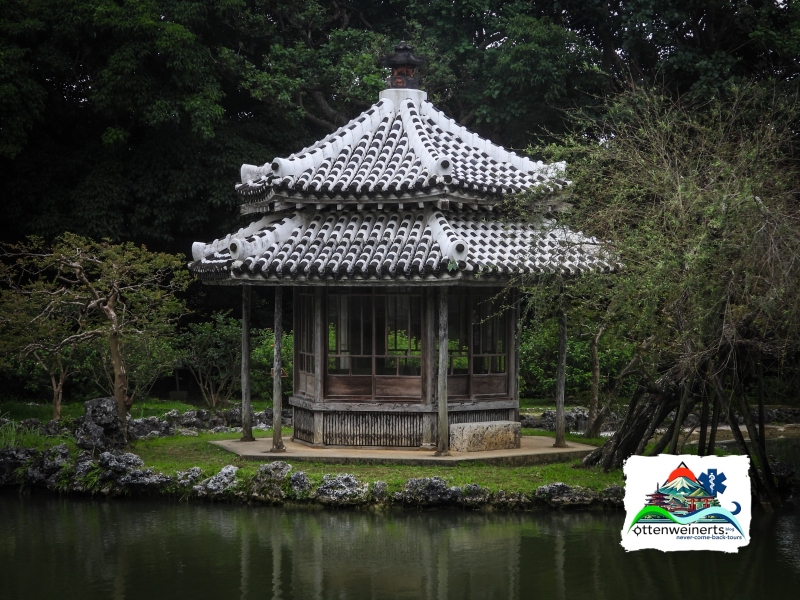
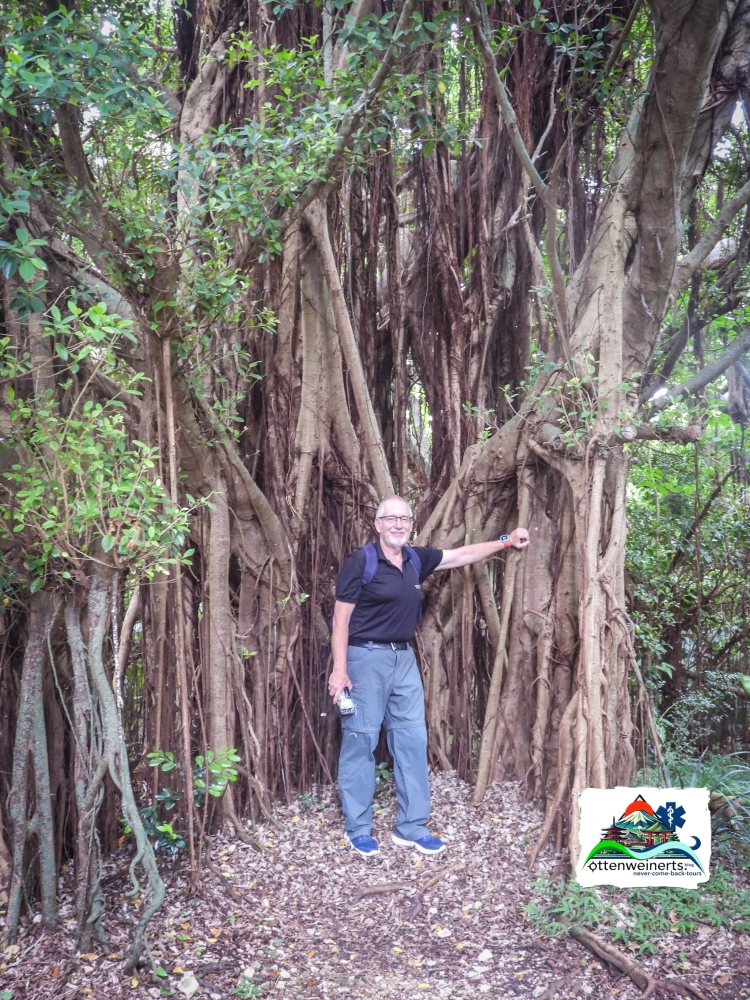
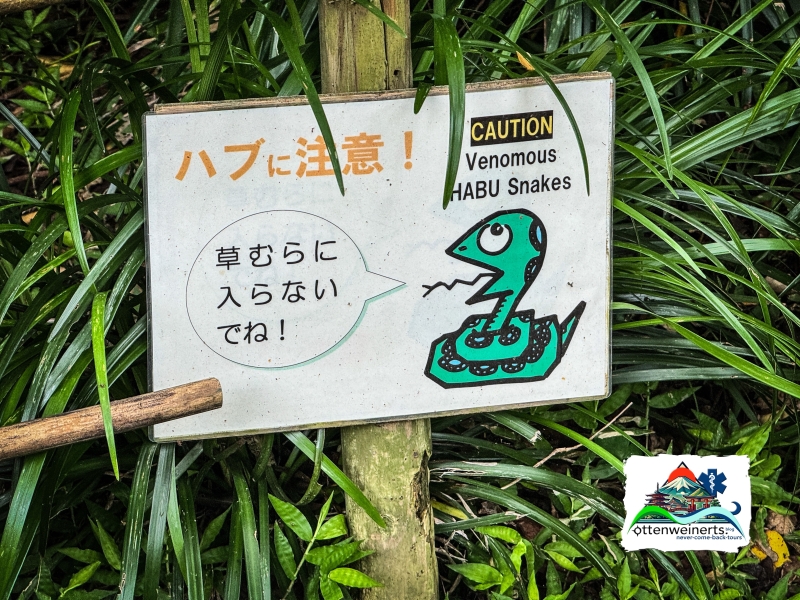
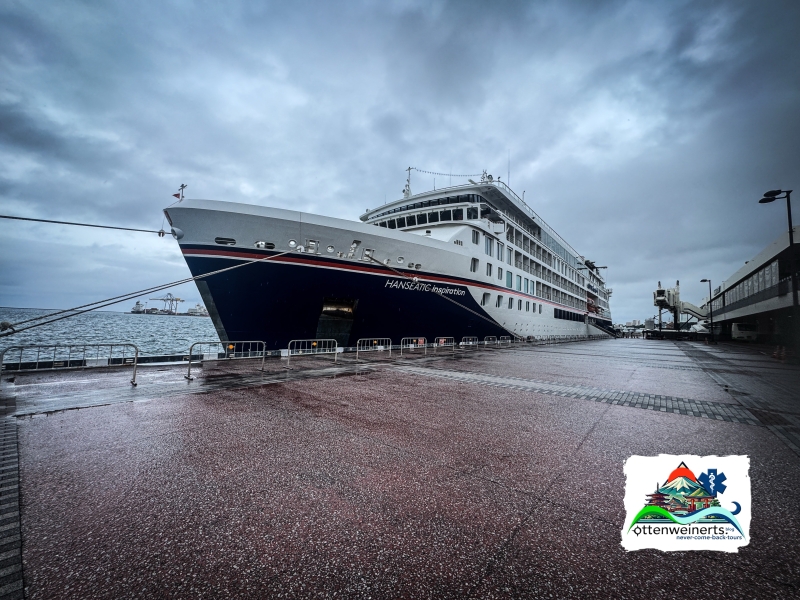
Der erste Landgang beginnt mit der Einreise in Japan, das heißt Paß- und Zollformalitäten am Kreuzfahrtpier von Naha erledigen, dann zurück aufs Schiff. Um kurz nach 10 Uhr startet unser erster Ausflug „Eindrücke von Okinawa“. Der Bus mit der laut Ankündigung sehr gut deutsch sprechenden einheimischen Tourbegleiterin bringt uns zuerst zum Shikinaen Garten, einem ehemaligen Anwesen der königlichen Familie von Ryukyu, komplett mit Wohngebäuden, Teich, steinernen Brücken und kleinem Pavillon, und viel gepflegtem Grün. Und scheinbar Giftschlangen.

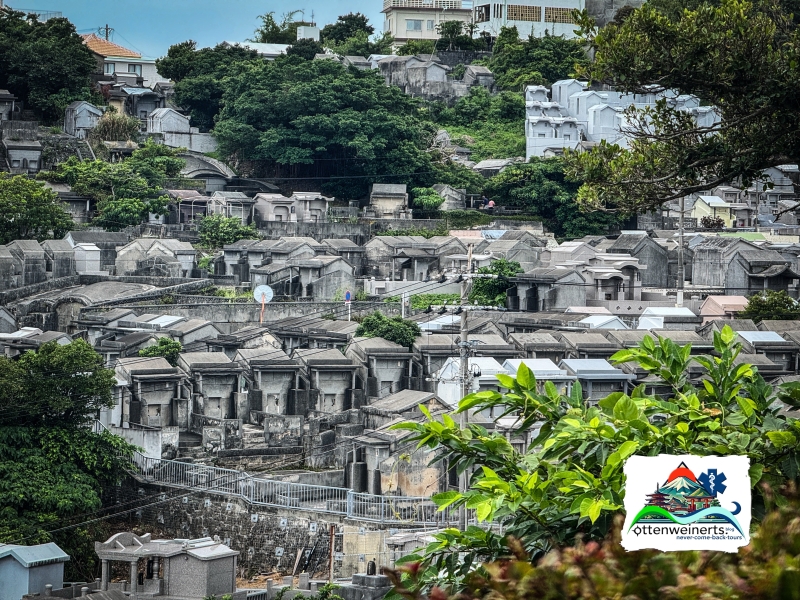
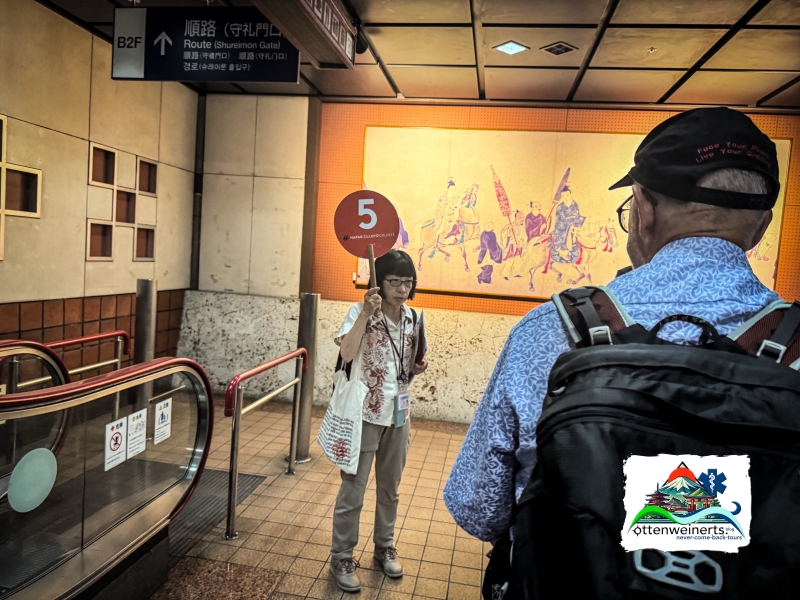
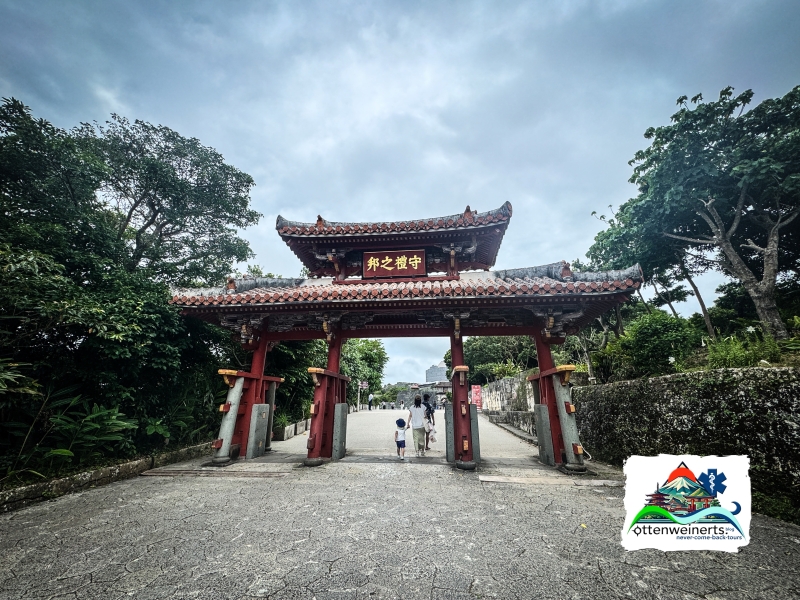
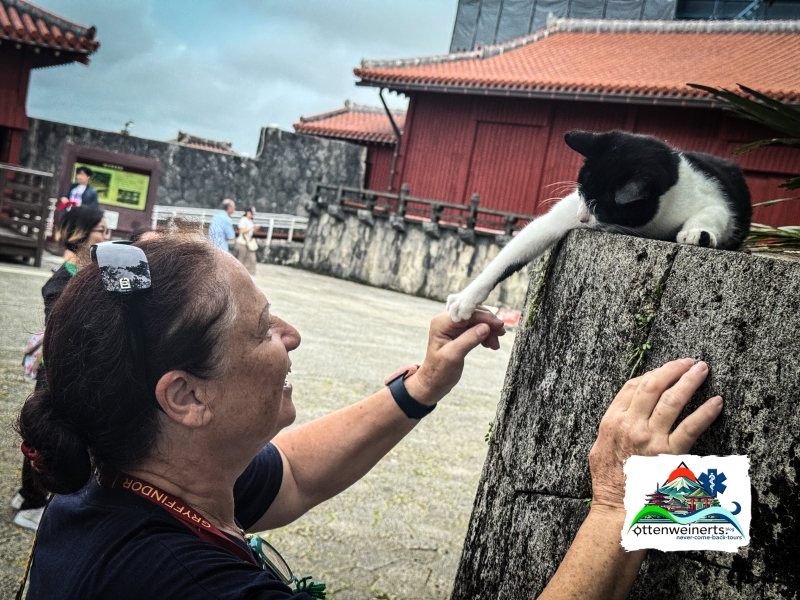
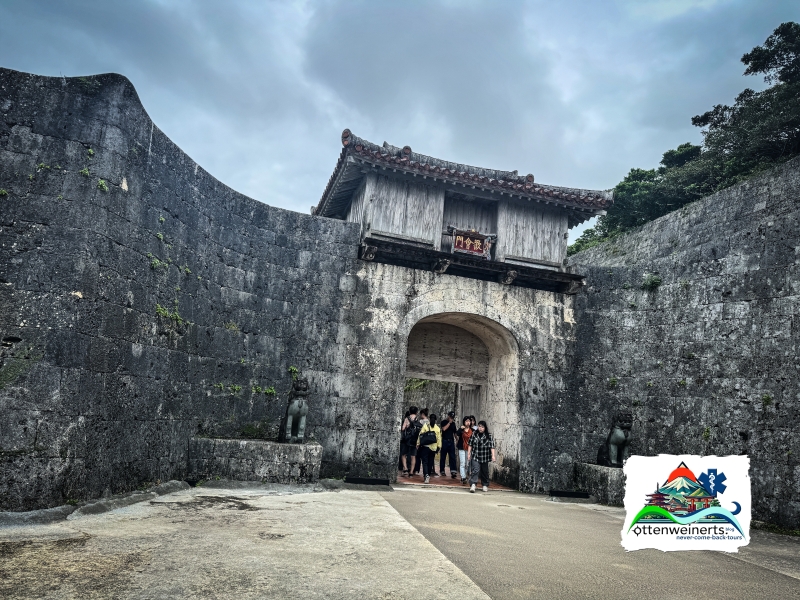
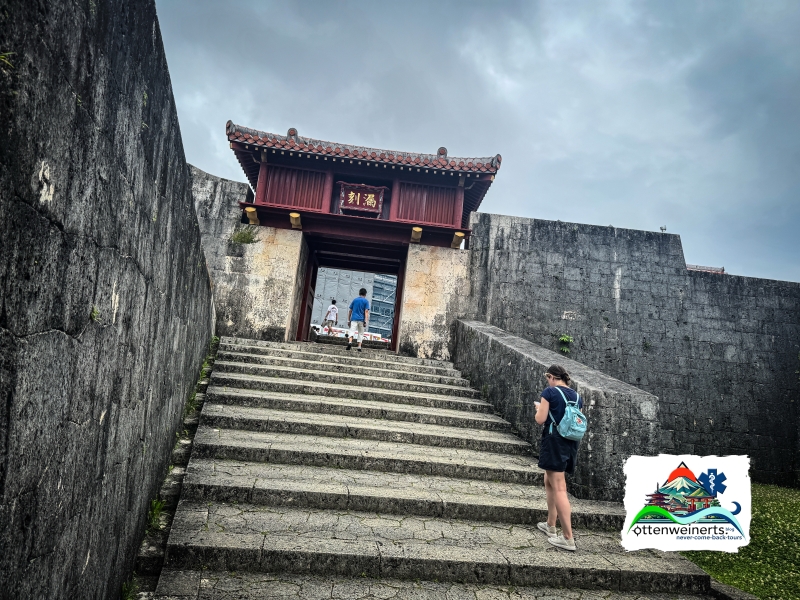
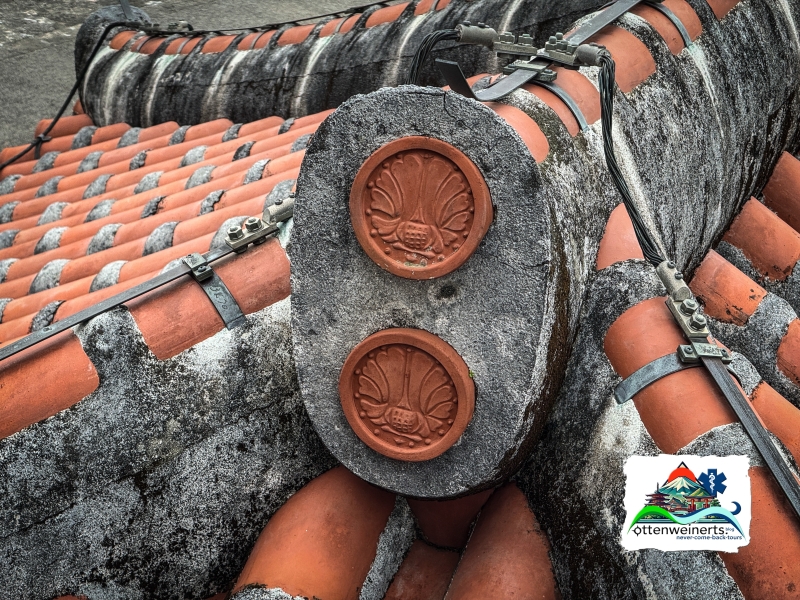
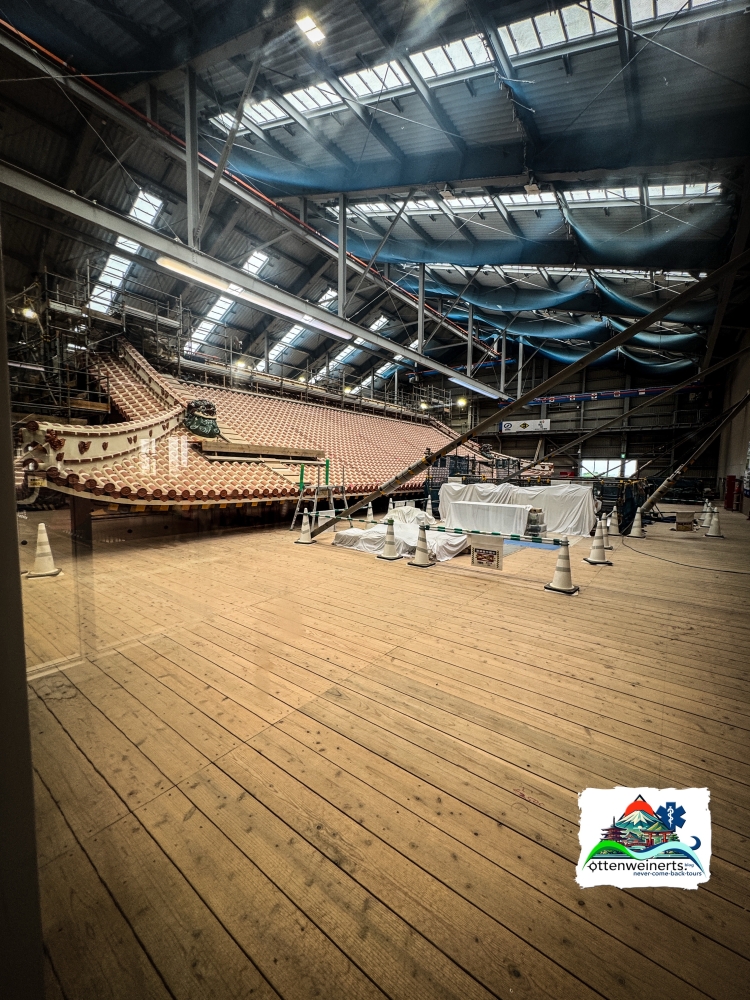
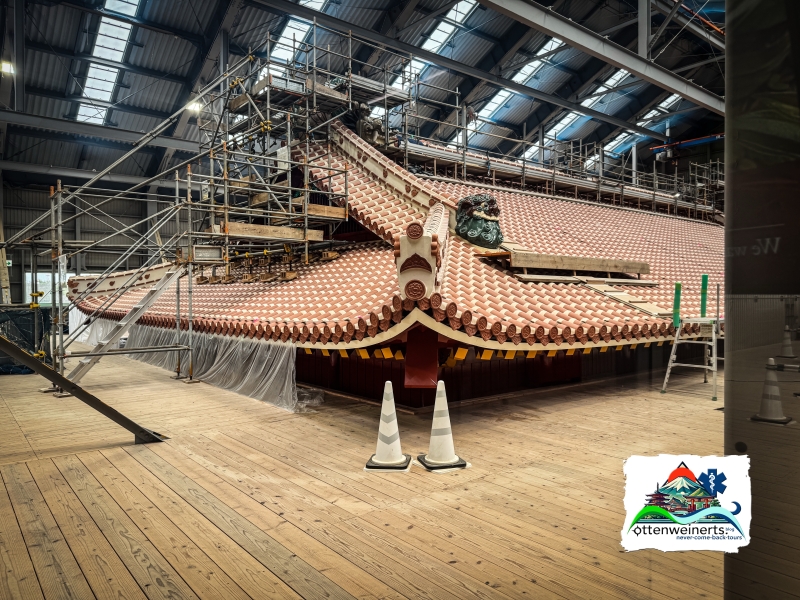
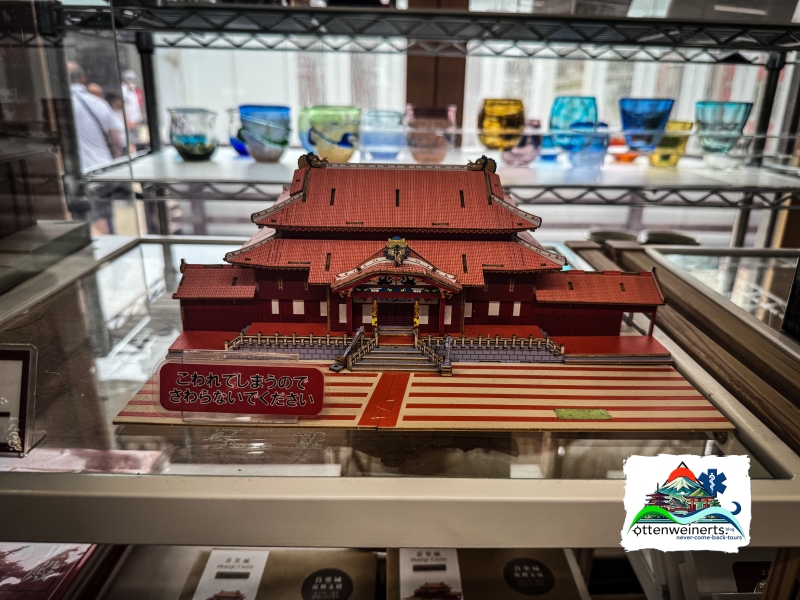
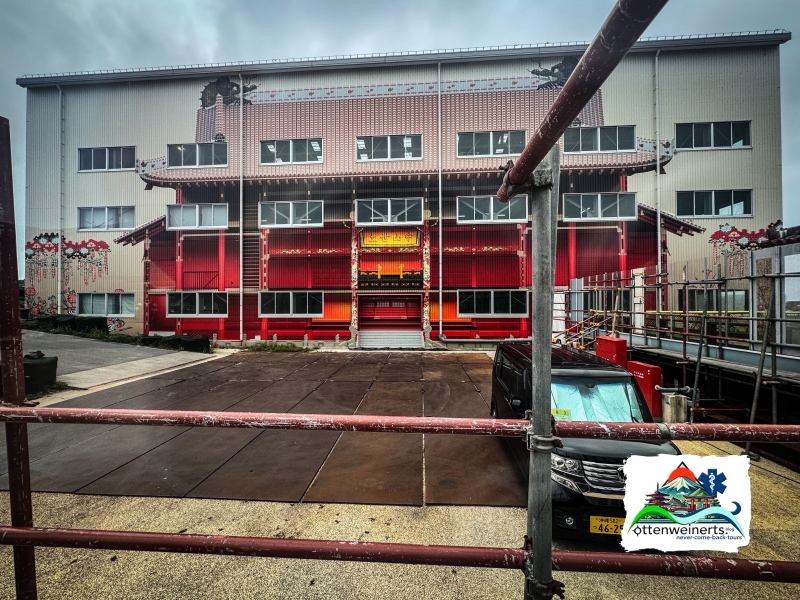
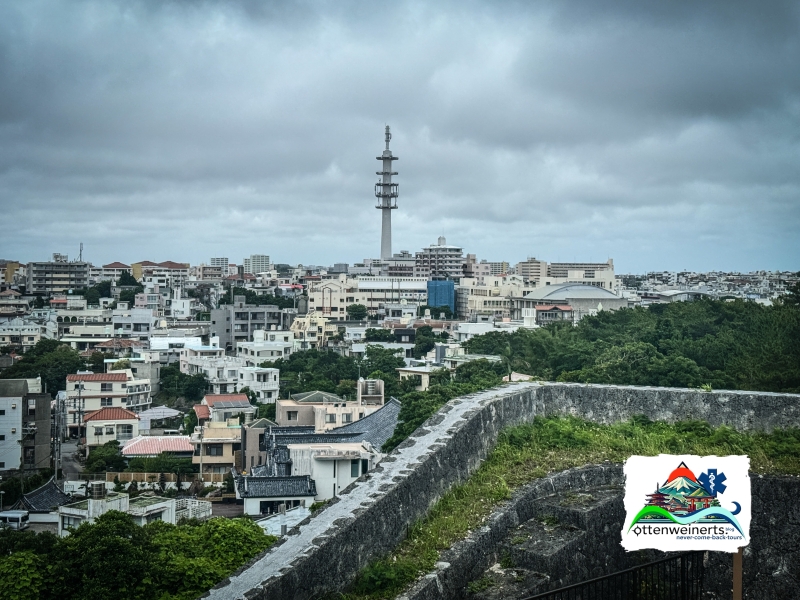
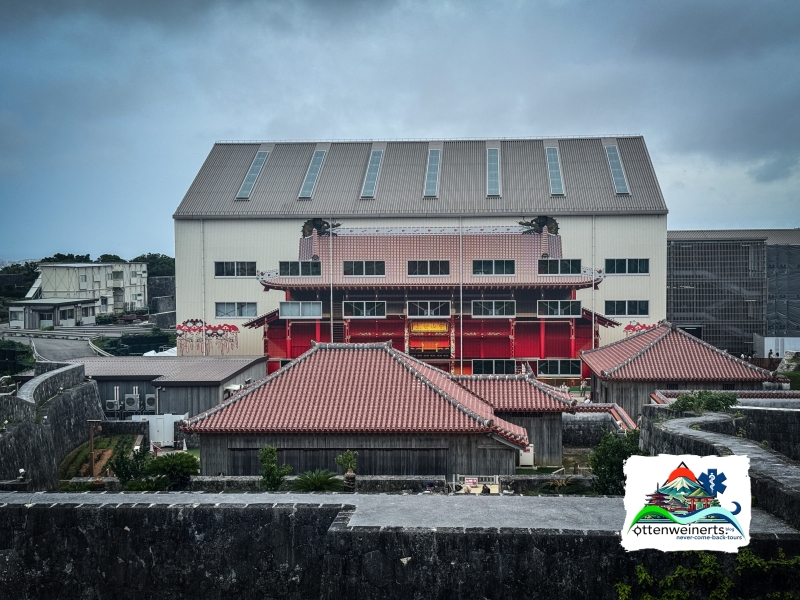
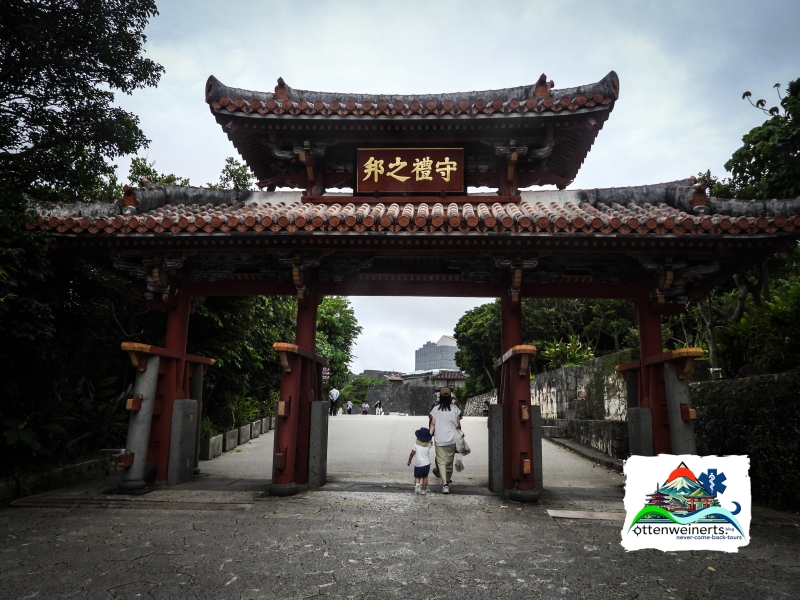
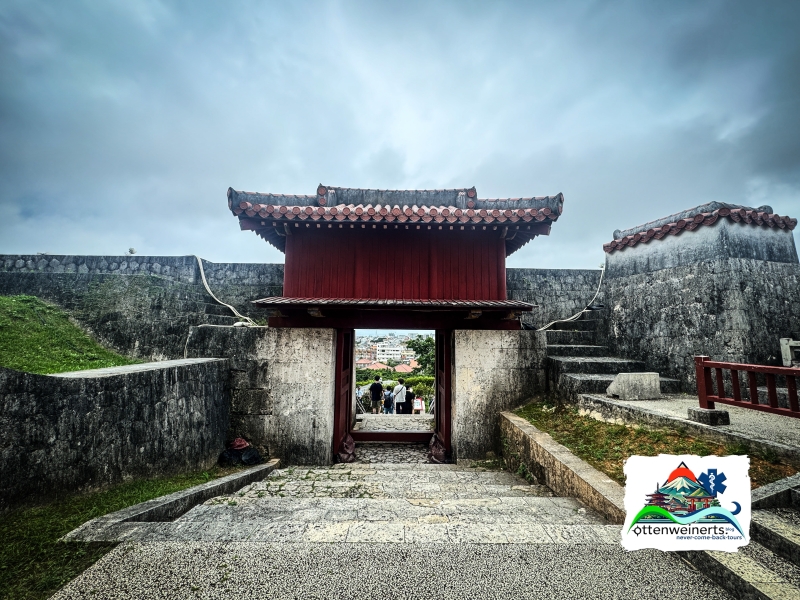
Von dort geht es weiter zum Shurijo Schloss (unser Bus fährt hier tatsächlich in die Tiefgarage), welches der königlichen Familie bis zum Ende des Ryukyu Königreichs 1879 als Wohnsitz diente. Durch etliche verschiedene Tore geht es hügelaufwärts bis zum Hauptgebäude, welches laut Fotografien unglaublich prunkvoll und beeindruckend gewesen sein muss – bevor es 2019 leider einem Feuer zum Opfer fiel. Inzwischen wurde mit der Rekonstruktion begonnen. Über die Überreste des Palasts hat man eine große Halle gebaut, um die Arbeiten witterungsgeschützt durchzuführen zu können. Und die Besucher können sich auf drei Ebenen vom Fortgang der Arbeiten ein Bild machen.

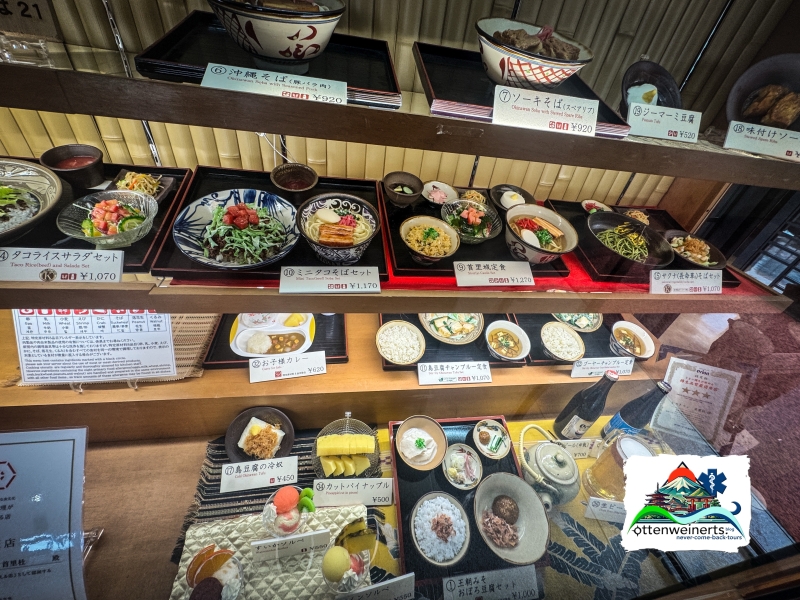
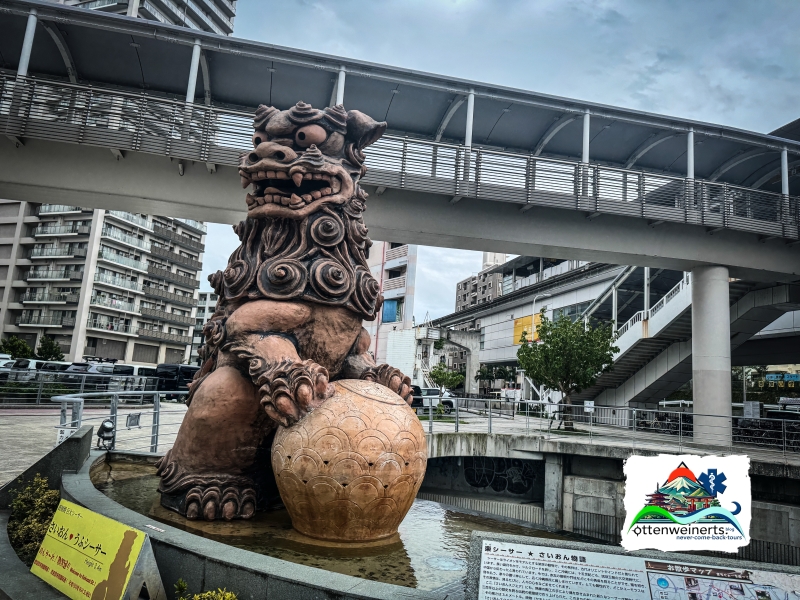
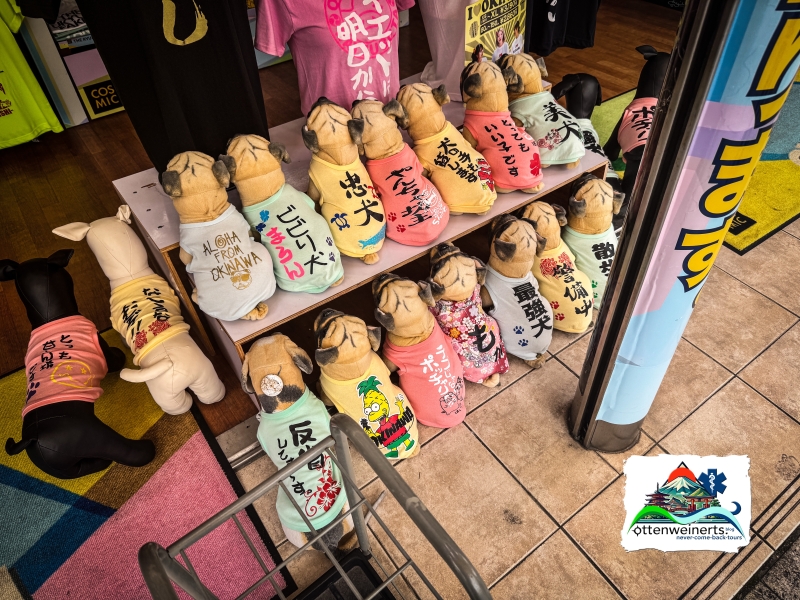
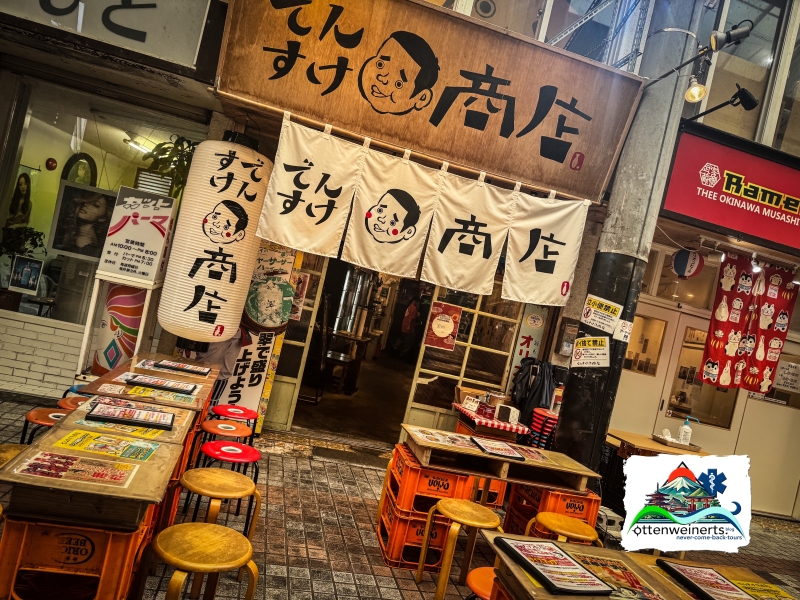
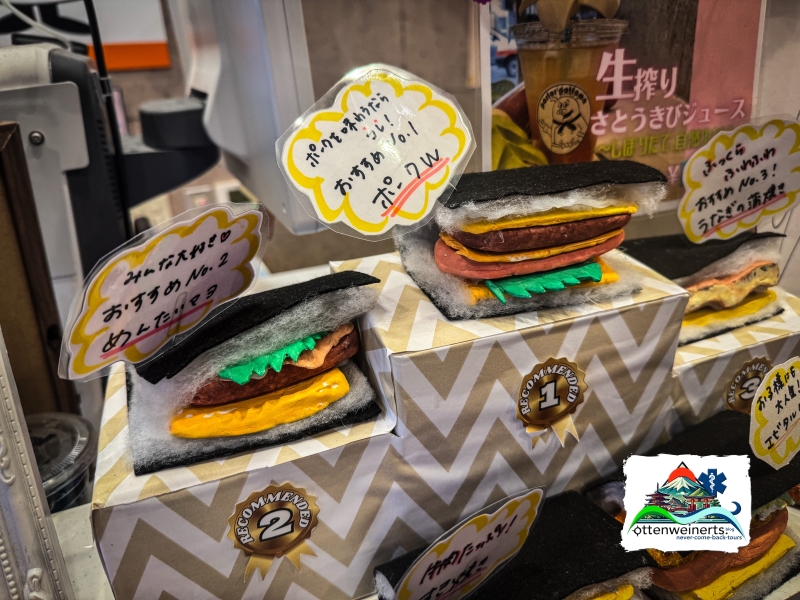
Anschließend bringt uns der Bus ins Stadtzentrum von Naha, zur Kokusai-dori, einer bekannten Einkaufsstraße. Wir ziehen voller Hoffnung los, aber es gibt hier eigentlich nur Souvenirs und Kitsch, und dazwischen Cafés und Restaurants. Wir finden zwar ein paar Patches mit Rettungsdienstbezug (Henri Dunant Starfleet International finden wir besonders kreativ), aber Spielzeug suchen wir vergeblich, auch in den wenigen Kaufhäusern, und es ist furchtbar laut, aus beinahe jedem der grell-bunten Shops dröhnt Musik und dazwischen japanische Texte aus den Lautsprechern. Hungrig lassen wir uns in einem kleinen Schnellrestaurant nieder, wo so etwas wie „Maki-Burger“ angeboten wird. Eine gute Wahl – erstens hat es gut geschmeckt, und zweitens haben wir somit genau die 15 Minuten, die der tropische Regenguss gedauert hat, im Trockenen verbracht.  

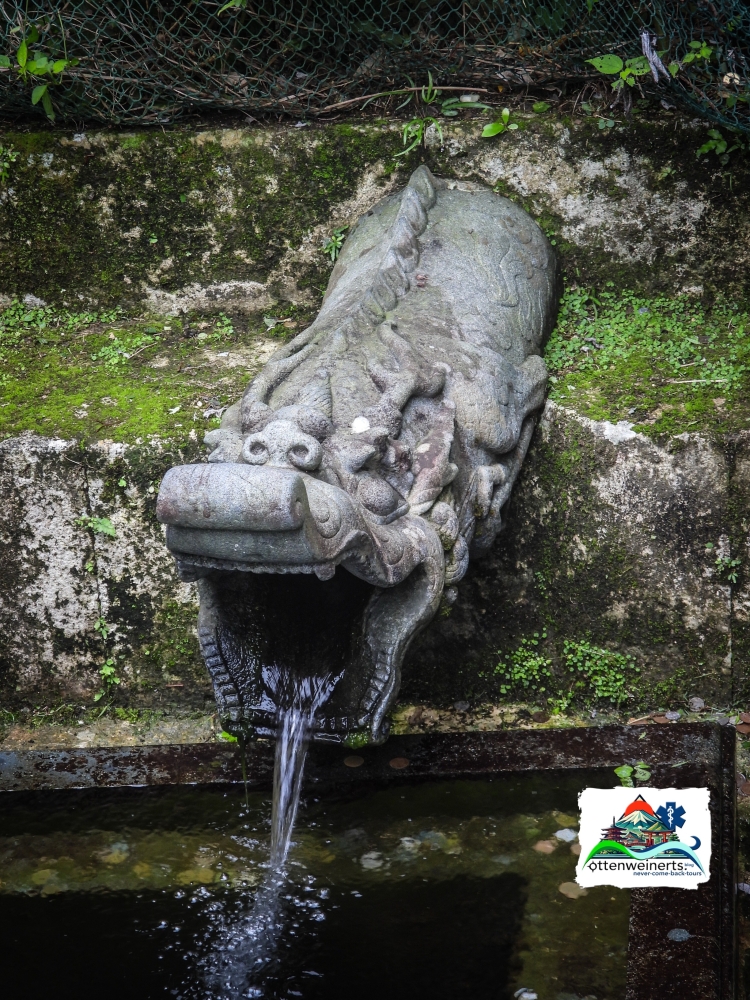
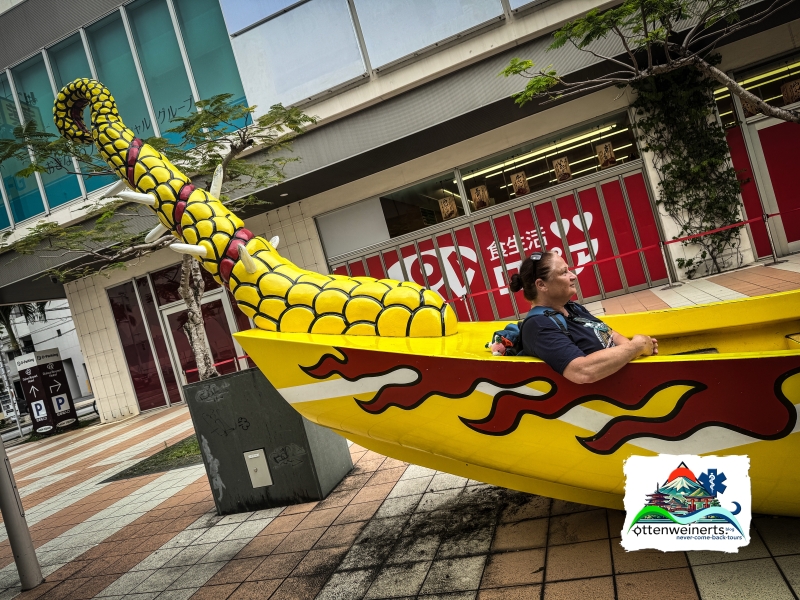
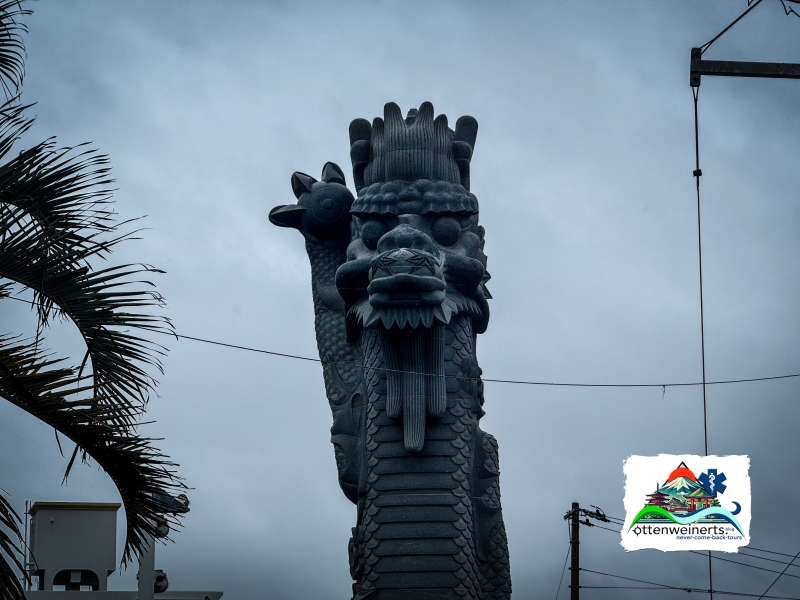
Wir machen uns auf den Weg zum Schiff, vorbei an den beiden imposanten Drachensäulen, die die Straße in die Stadt bewachen. Zurück an Bord finden wir für morgen abend eine Einladung: „Ihre Offiziere laden Sie zum Dinner ins Nikkei Restaurant ein“. Oh Schreck – wir haben natürlich nichts Passendes zum Anziehen mit, und was ist eigentlich der Anlass? Wir fragen an der Rezeption nach: diese Einladung erging an alle Gäste, die zum ersten mal mit Hapag-Lloyd Cruises unterwegs sind, und es ist eine Art „Speed-Dating“: nach jedem Gang wechseln die Offiziere den Tisch. Aha. Wir fragen nach wegen dem Dress-Code, und erhalten den guten Rat, wir mögen uns doch in der Bordboutique angemessene Kleidung besorgen. Nein, vielen Dank – abgesehen vom Preisniveau würden wir die hier angebotenen Stücke niemals freiwillig anziehen. Also melden wir uns einfach vom Event ab und lassen auch das Angebot fürs Champagnertasting (Unkostenbeitrag € 90,00 pro Person) dankend aus. Dafür schauen wir uns im Bordfernsehen die Aufzeichnung des gestrigen Experten-Vortrages an: Landeskunde Japan – eine allgemeine Einführung in das Land – Christian Wagner ist mit einer Japanerin verheiratet, lebt seit Jahren in Japan und weiß wovon er spricht – vielen Dank für den interessanten und witzigen Vortrag – Arigato gozaimas!

Day 23 – Cruise Day 3 / Saturday, May 24 – Okinawa

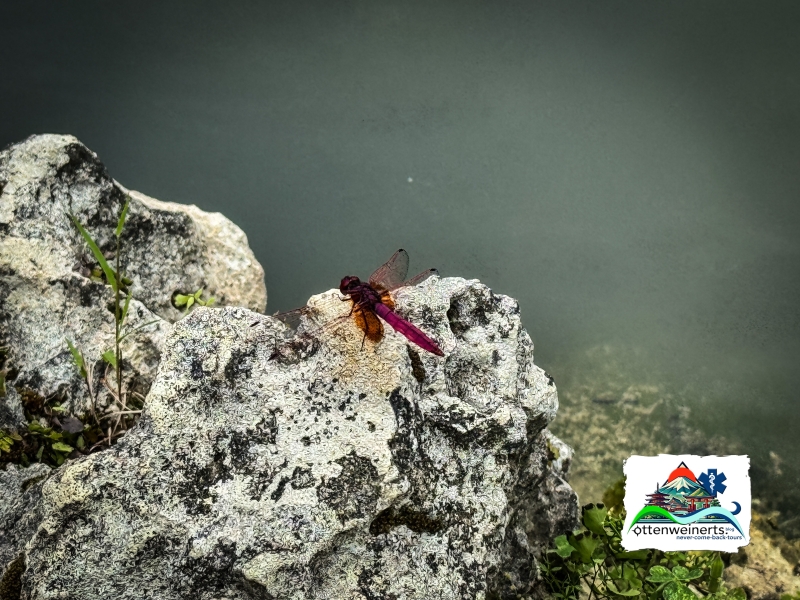
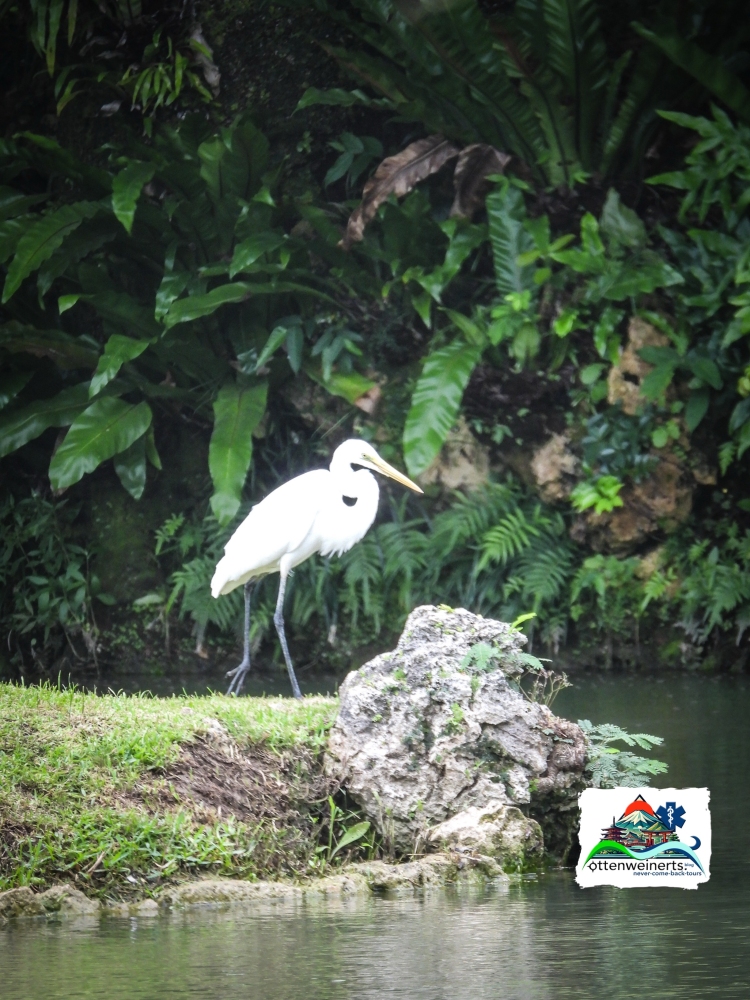
Our first shore excursion begins with immigration into Japan, this means passport and customs checks at the Naha cruise terminal, then back onboard. Shortly after 10 a.m., our excursion “Impressions of Okinawa” starts. The bus and our local guide (supposedly fluent in  German), takes us to Shikinaen Garden, once an estate of the royal Ryukyu family, with the (very humble) royal residence, ponds, stone bridges, a small pavilion, and beautifully maintained greenery. And possibly venomous snakes.

Next stop: Shurijo Castle (our bus actually drives into the underground parking garage), the royal family’s residence until the end of the Ryukyu Kingdom in 1879. We walk uphill, passing several gates to reach the main building, which, according to photos, was stunningly beautiful before being destroyed by fire in 2019. Reconstruction has started—visitors can view the work across three levels under a large protective hall built over the ruins.

After that, we head to Naha city center and Kokusai-dori, a well-known shopping street. Full of hope, we explore, only to find mostly souvenirs and kitsch, with cafés and restaurants in between. We find a few EMS-themed patches (we find “Henri Dunant Starfleet International” especially creative), but no toys—even in the few department stores. It’s terribly loud, with blaring music and Japanese announcements from every garish shop. Hungry, we settle into a small fast-food place offering “Maki-Burgers.” A good choice—tasty, and we stay dry during the 15-minute tropical downpour.

On our way back, we pass the two impressive dragon pillars guarding the street. Back onboard, we find an invitation for tomorrow evening: “Your officers invite you to dinner at the Nikkei Restaurant.” Oh no—we don’t have anything to wear! What’s the occasion? Reception desk informs us it’s for first-time Hapag-Lloyd guests—sort of a speed-dating dinner where officers change tables after each course. We ask about the dress code and are advised to buy something appropriate at the onboard boutique. No, thank you—not just because of the prices, but we would never wear those outfits voluntarily. We politely decline both the dinner and also the € 90-per-person champagne tasting. Instead, we watch yesterday’s recorded lecture on Japanese culture by Christian Wagner. He’s married to a Japanese woman and lives in Japan—a great, informative, and funny talk. Arigato gozaimasu!

250622 & 250623 – Tag 52 & 53 – Sonntag, 22. & Montag, 23. Juni – auf nach Hause –

Wir haben gestern alle Koffer fertig gepackt, stehen heute zeitig auf, und kurz vor 7 Uhr warten wir schon vor dem Hotel auf den Flughafen-Shuttlebus. Am Flughafen Narita klappt alles, nach dem check-in genießen wir einen Kaffee in der Lounge, als wir sehen, dass die ursprüngliche Abflugzeit von 11:10 auf 13:10 verschoben wird, und die Ankunft in Wien somit auf 20:00 Uhr Ortszeit. Na gut, ist auch kein Problem.

Die Probleme beginnen erst etwas später, als dann plötzlich „flight cancelled“ zu lesen ist – knapp 300 Passagiere, von rat- und hilflos bis leicht wütend, stürmen zum Service-Counter, der diesen Namen eigentlich nicht verdient. Zwei junge, des Englischen nur mäßig mächtige ANA-Mitarbeiter bemühen sich nach Kräften, die Meute zu bändigen, aber leider erfolglos. Wir versuchen, über die Austrian App einen anderen Heimflug zu bekommen – wir bekommen 6 verschiedene Alternativen angeboten, aber keine funktioniert.

Der Anruf beim AUA Service Center war außer vollkommen sinnlos nur teuer, aber aus unerfindlichen Gründen funktioniert die Umbuchung via App dann plötzlich, und wir ergattern mit viel Glück die letzten 2 Plätze auf der Abendmaschine nach Frankfurt. Dann trotten wir mit knapp 300 anderen, teils sehr frustrierten Passagieren, die noch kein Umbuchungsglück hatten, Richtung Immigration – wir müssen wieder in Japan einreisen, unsere schon eingecheckten Koffer wieder abholen und dann auch noch den Flughafen wechseln. Es geht zum Haneda Airport auf der anderen Seite von Tokyo, 75 km entfernt – aber es gibt zumindest einen direkten Shuttlebus.

Am Flughafen Haneda heißt es dann wieder einchecken, was hier unglaublich lange dauert. Wir verziehen uns wieder in die Lounge und hoffen, dass jetzt nichts mehr Unvorhergesehenes passiert. Kurz vor 20 Uhr dürfen wir dann endlich einsteigen, und der mehr als 14 Stunden lange Flug mit ANA verläuft ereignislos und ruhig, wir konnten gut schlafen.

Um 5 Uhr früh ist unsere Maschine die erste, die in Frankfurt landet, und die automatischen Passkontroll-Gates sind noch geschlossen. Warum eigentlich? Na weil die Kollegen von der Grenzpolizei erst um 5 Uhr Dienstbeginn haben, die sind noch nicht da … aha, wir dachten, automatische Gates funktionieren ohne menschliches Personal, aber gut.
Schlussendlich sitzen wir im AUA-Flieger nach Wien, wo wir gegen 10:00 Uhr landen; alle drei Koffer mit allen 88 (in Worten: achtundachtzig) Neuzugängen für unsere Sammlung sind auch wohlbehalten angekommen, ein UBER bringt uns nach Hause und ich kann meinen Zahnarzt-Termin um 11:30 tatsächlich einhalten. Und um 18 Uhr beginnt mein Nachtdienst … eigentlich bräuchten wir nach diesen 7,5 Wochen Abenteuer jetzt mal 2 Wochen Urlaub zur Erholung 

Day 52 & 53 – Sunday, June 22 & Monday, June 23 – Heading Home

We finished packing all our suitcases yesterday, we get up early today, and just before 7 AM we’re already waiting outside the hotel for the airport shuttle bus. Everything goes smoothly at Narita Airport, and after check-in we enjoy a coffee in the lounge when we notice that the original departure time of 11:10 a.m. has been delayed to 1:10 p.m., meaning we’ll arrive in Vienna around 8 p.m. local time. Well, that’s fine too.

The problems don’t start until a bit later, when suddenly “flight cancelled” appears on the screen – nearly 300 passengers, ranging from helpless and bewildered to mildly angry, rush to the service counter, which honestly doesn’t deserve that name. Two young ANA staff members, only modestly proficient in English, do their best to calm the crowd – unfortunately, without much success.

We try to rebook through the Austrian Airlines app and are offered 6 different alternatives, none of which work. Calling the AUA Service Center turns out to be both utterly useless and expensive – but then, for some inexplicable reason, the app finally lets us rebook, and with a lot of luck we manage to snag the last 2 seats on the evening flight to Frankfurt.

We then shuffle along with around 300 other, partially very frustrated passengers who haven’t had any luck rebooking, back to immigration – we have to re-enter Japan, retrieve our already-checked baggage, and also switch airports. We head to Haneda Airport on the other side of Tokyo, 75 km away – thankfully, there’s at least a direct shuttle bus.

At Haneda, we have to do the whole check-in procedure again – which takes an unbelievably long time. Afterwards, we retreat once more to the lounge and hope that nothing else goes wrong. Shortly before 8 p.m., we are finally boarding, and the 14-hour flight with ANA passes quietly and without incident – we manage to get some good sleep.

At 5 a.m., our plane is the first to land in Frankfurt – but the automated passport control gates are still closed. Why? Because the border police don’t start their shift until 5 a.m. – they’re not here yet. And here we thought automated gates were supposed to work without human personnel…..

In the end, we board our Austrian Airlines flight to Vienna, where we land around 10 a.m. All three of our suitcases – containing 88 (in words: eighty-eight) new additions to our collection – arrive safely as well. An Uber takes us home, and I actually make it to my dentist appointment at 11:30.

And at 6 p.m., my night shift begins… Honestly, after these 7.5 weeks of adventure, we could really use another two weeks of vacation – just to recover 😊
250621 – Tag 51 – Samstag, 21.6 – Abschiedsrunde durch Tokyo DisneySea –

Es ist mindestens genauso heiß wie vorgestern, und es sind gefühlt noch ein paar Tausend Besucher mehr hier (eine Quelle im Internet spricht von einer Maximalkapazität von 85.000 Besuchern im Park – glauben wir gern). Wir erkunden heute viele kleine Winkel und Ecken, die wir vorgestern ausgelassen haben, streifen durch die Shops, und fahren nochmals „Frozen“ und „Peter Pan“ – zwei tolle Attraktionen, ganz anders als in WDW – und „die Reise zum Mittelpunkt der Erde“, ein Ride, den es in keinem anderen Disney Park gibt. Die zweite auf Jules Vernes Romanen basierende Attraktion, „20.000 Meilen unter dem Meer“, ist leider wegen Wartungsarbeiten nach wie vor geschlossen. Dafür geht sich heute der „Tower of Terror“ aus- und auch hier ist die Story rund um die Attraktion komplett unterschiedlich zu Florida.

Für uns WDW-geeichte Touristen sind ein paar Dinge sehr ungewohnt in den beiden Disney Parks hier. So soll man etwa für Shows eine online Reservierung mittels App vornehmen; auch für die Schnellrestaurants ist das zu empfehlen, ansonsten lange Wartezeiten – in die Restaurants mit Bedienung kommt man ohne Reservierung sowieso nicht hinein. Warteschlangen bei HotDog und Eis-Ständen um die 30 Minuten, dafür gibt es kaum Möglichkeiten, zwischendurch schnell einen Kaffee zu bekommen. 

Die Eintrittstickets in den Park sind mit umgerechnet 50 € relativ günstig, dafür kann man dann für einzelne Attraktionen extra Tickets für einen schnellen Zugang kaufen; diese sind aber bereits am Vormittag alle ausverkauft. Für die abendlichen Shows mit Licht, Sound und Feuerwerk werden in beiden Parks tatsächlich Stehplätze (STEH!Plätze) verkauft- und die sind schon in der Früh alle vergriffen. Durch einen glücklichen Zufall bekommen wir aber ein tolles Plätzchen mit guter Sicht und erleben als Abschuss unseres Besuchs im Tokyo Disney Ressort und unserer 7wöchigen Asienreise ein grandioses Spektakel auf der Lagune. Und nein, wir sind definitiv nicht zu alt für Disney!!

Day 51 – Saturday, 21 June – Farewell Tour through Tokyo DisneySea

It’s at least as hot as it was two days ago, and it feels like there are a few thousand more visitors here today (one source online says the park’s maximum capacity is 85,000 people — we can easily believe that). Today, we explore many little corners and hidden spots that we skipped last time, wander through the shops, and ride Frozen and Peter Pan again — two amazing attractions, completely different from WDW — and Journey to the Center of the Earth, a ride you won’t find in any other Disney Park. Unfortunately, the second attraction based on Jules Verne’s novels, 20,000 Leagues Under the Sea, is still closed for maintenance. But today we do manage to get on the Tower of Terror — and here too, the storyline is completely different from the attraction in Florida or California.

For us as Walt Disney World–seasoned visitors, some things in the two Disney parks here are quite unusual. For example, you’re supposed to make online reservations for shows using the app; it’s also recommended for quick-service restaurants, otherwise you’ll face long waits — and you won’t get into table-service restaurants at all without a reservation. There are 30-minute lines just for hot dogs or ice cream stands, yet surprisingly few places where you can quickly grab a coffee in between.

Park admission is relatively affordable at around €50, but then you can buy individual tickets for fast access to certain attractions — although these are all sold out by the morning. For the evening shows with lights, sound, and fireworks, both parks actually sell standing-room only tickets — and these are already gone early in the day. By a stroke of luck, though, we manage to snag a great spot with a clear view and get to enjoy an incredible show on the lagoon — the perfect finale to our visit to Tokyo Disney Resort and to our seven-week Asia trip. And no — we are definitely not too old for Disney!