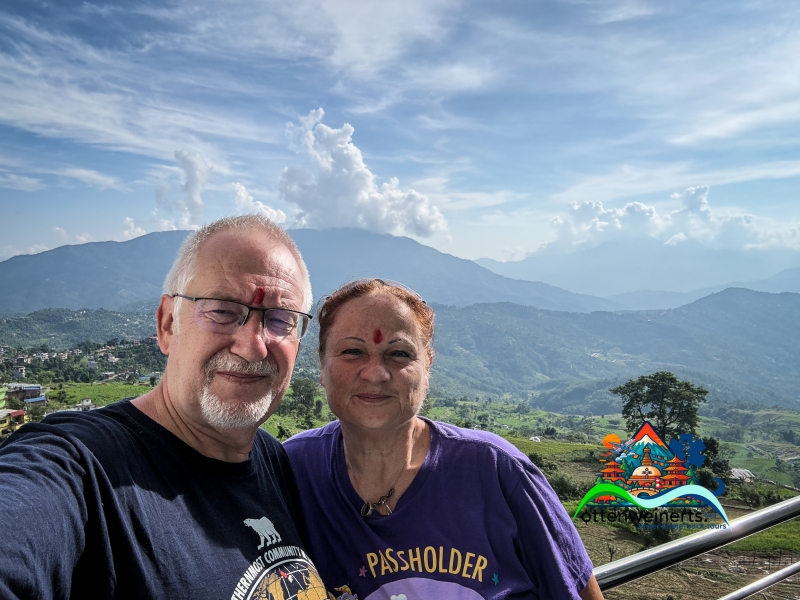
Wir haben heute eine Strecke von 170 km vor uns – daher müssen wir um 5:45 aufstehen. Die Berge schlafen noch, leider hinter einer Wolkendecke, also nichts mit Sonnenaufgang über dem Mt. Everest. Um 6:15 gibt’s Frühstück und um 7:00 ist Abfahrt.
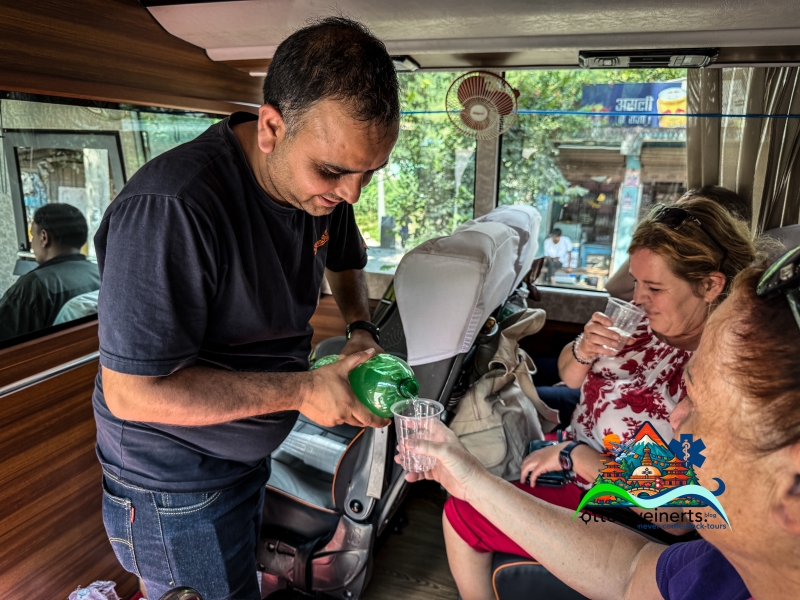
Yam erzählt uns während der Busfahrt immer etwas über Land und Leute – so etwa über die jüngste politische Vergangenheit von der Abschaffung der Monarchie bis zu den aktuellen politische Unruhen, oder über das Schul- und Bildungssystem. Wir haben gehört, das von den 30 Millionen Nepalesen etwa 10 Millionen im Ausland leben und heute erklärt uns Yam das Kastensystem – mega kompliziert und mittlerweile eigentlich verboten, aber in den Köpfen vor allem der älteren Generation noch immer drinnen.
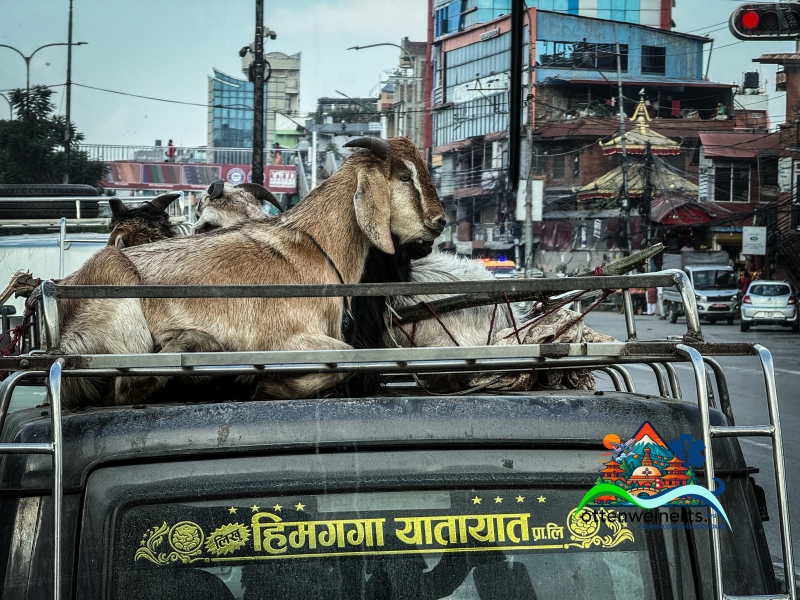
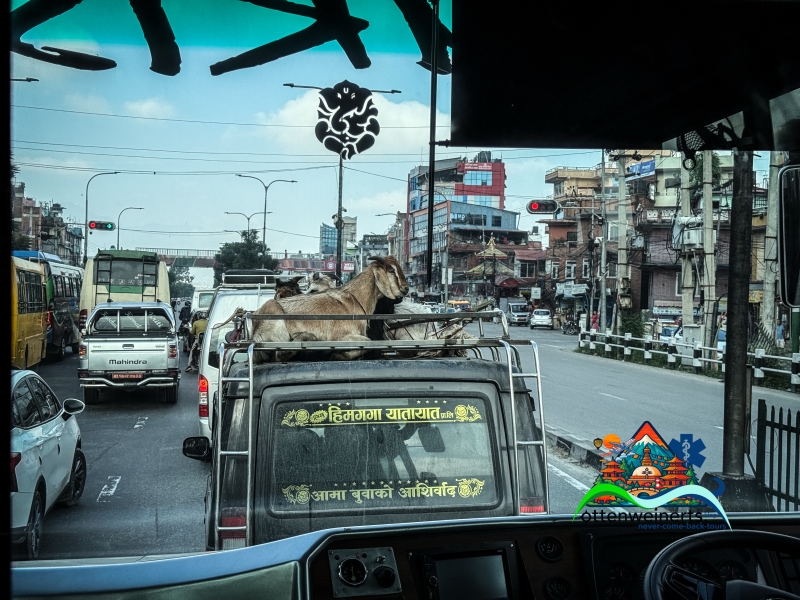
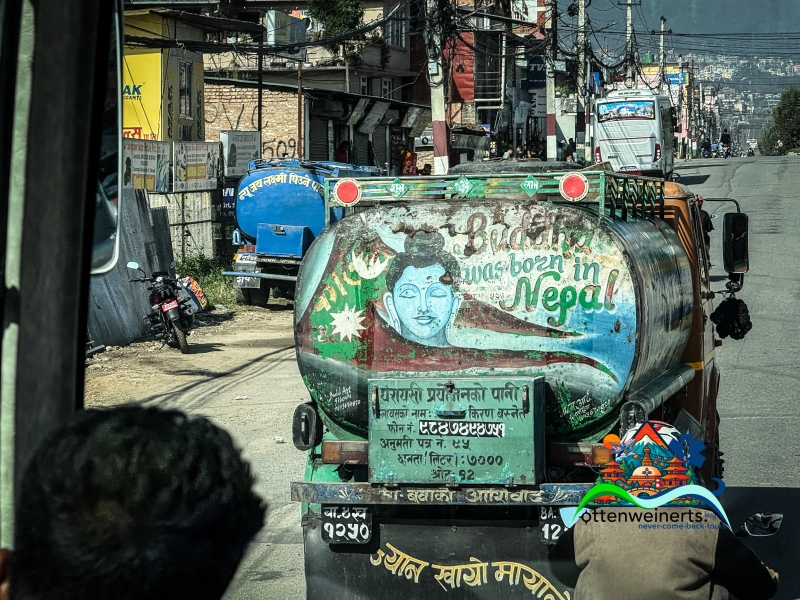
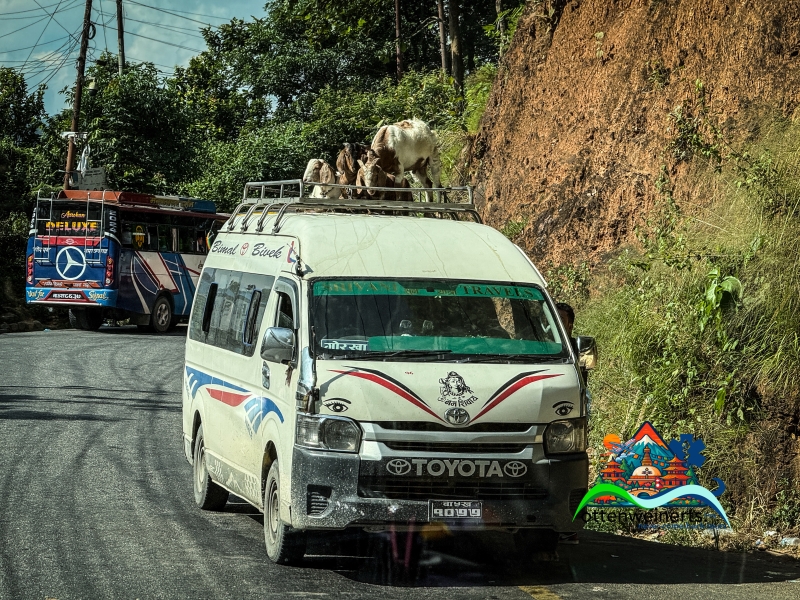
Eine kurze Pause in Kalanki bei Kathmandu beschert uns vier neue Ambulanzen für die Sammlung, dann geht es weiter nach Westen. Wir haben heute Glück mit dem Verkehr, es sind wenig Fahrzeuge auf den Straßen, vor allem kaum LKWs (LKW Fahrverbot wegen des Dashainfest). Ein Langstreckenbus fällt uns auf, für die 1.100 km von Neu-Delhi nach Kathmandu braucht er zwischen zwei und drei Tage.
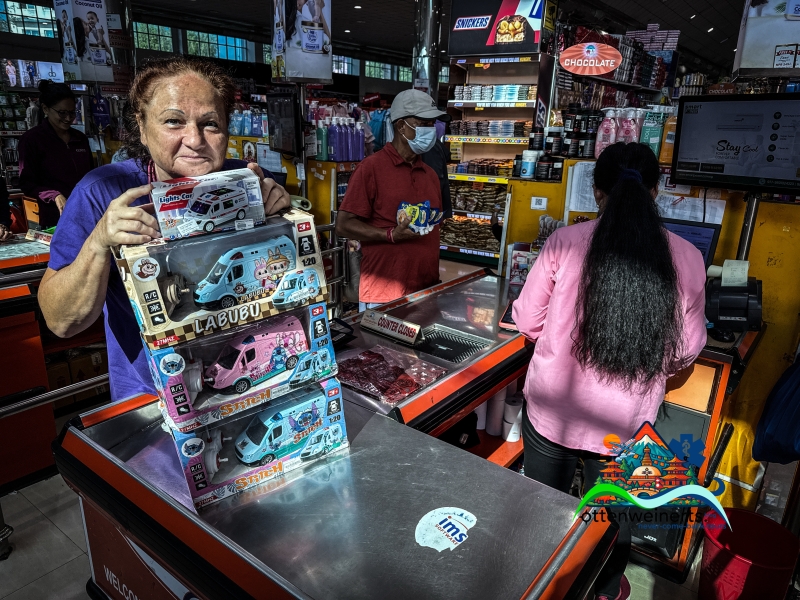
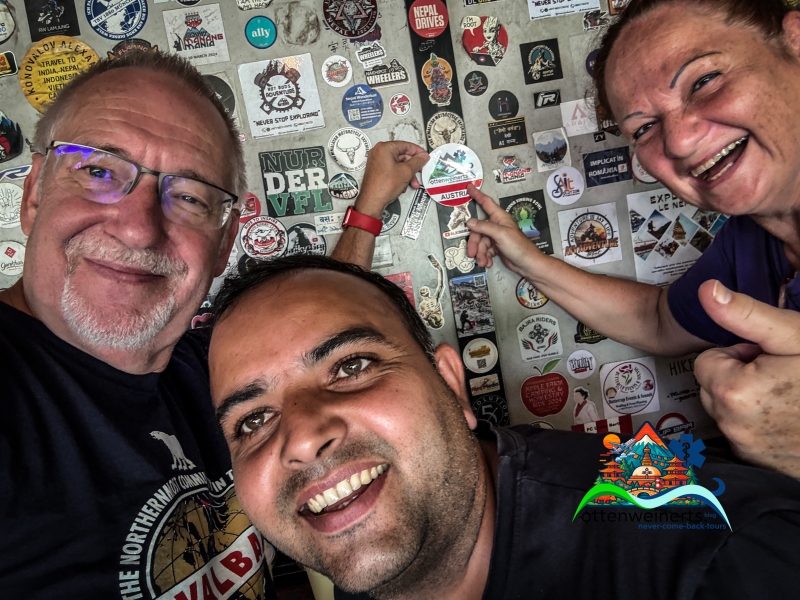
Nächster Halt: 2 Souvenir T-Shirts gehen mit, und ein Ottenweinerts-Sticker bleibt hier.
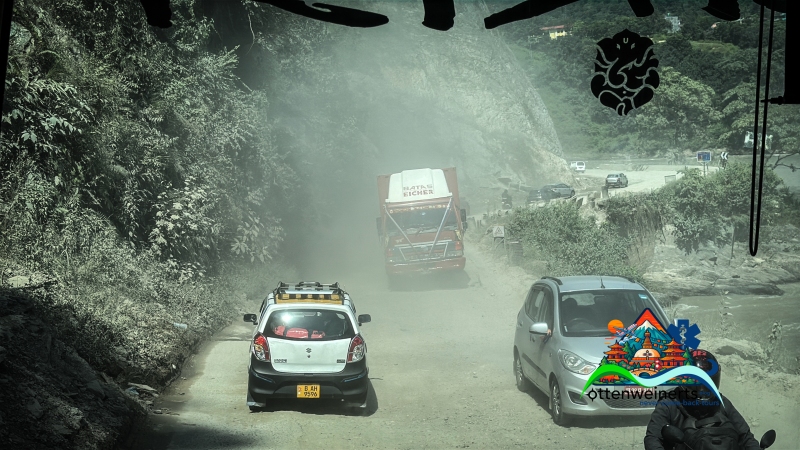
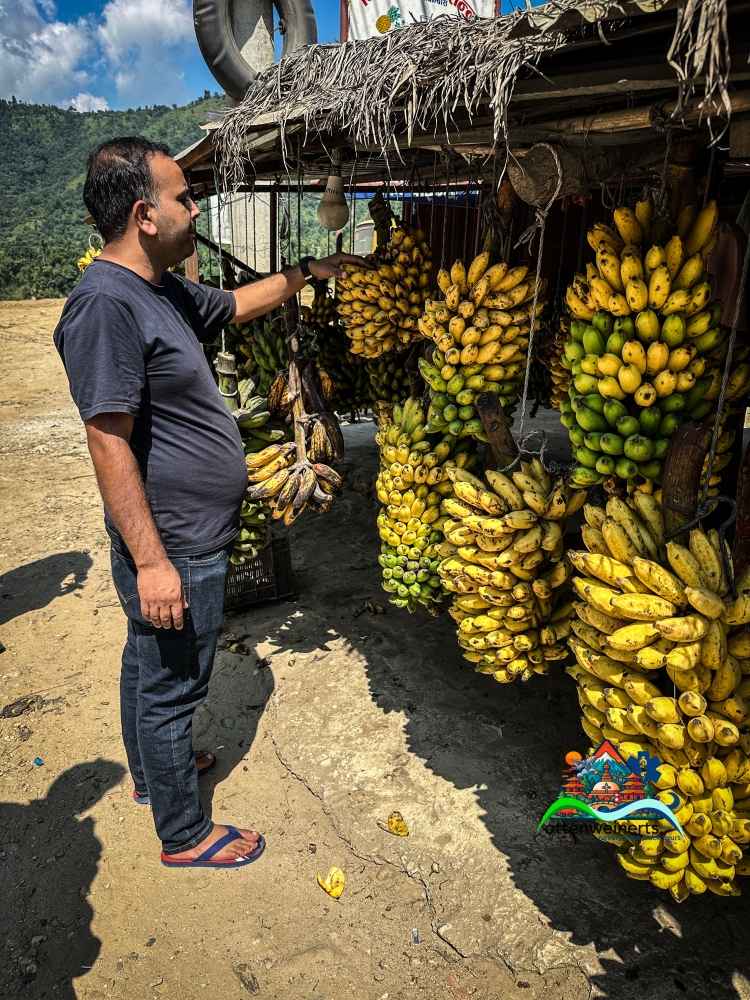
Es geht weiter am Prithvi Highway nach Westen – auch diese Straße hat die Bezeichnung Highway wahrscheinlich nur, weil sie die einzige OstWest-Verbindung darstellt. Links und rechts sehen wir Hügellandschaft mit subtropischer Vegetation, Terrassenfelder mit Reis- und Gemüseanbau, und dazwischen Bananenstauden – und Yam kauft für uns Babybananen.
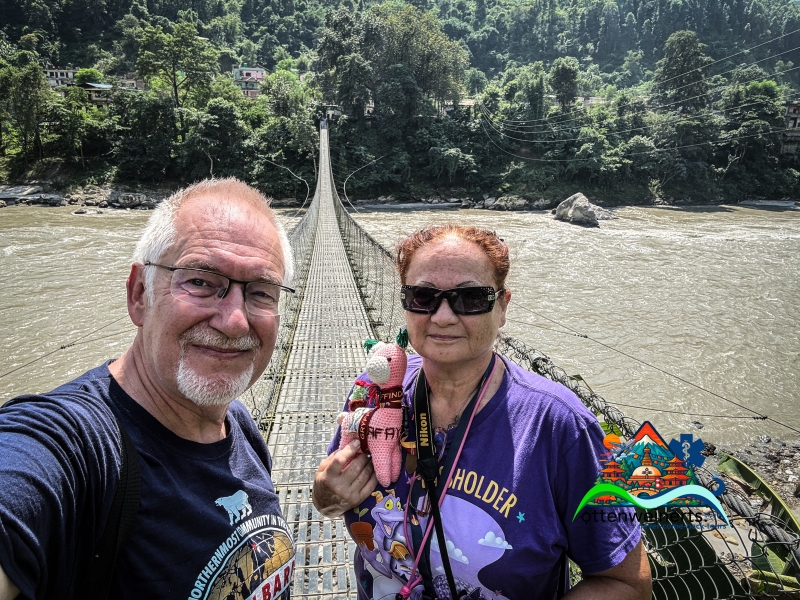
Der Highway folgt dem Trisuli-Fluß, etliche Hängebrücken führen ans andere Ufer – und die Touristen müssen natürlich auch eine solche überqueren. und dahinter kommt dann das Motorrad.
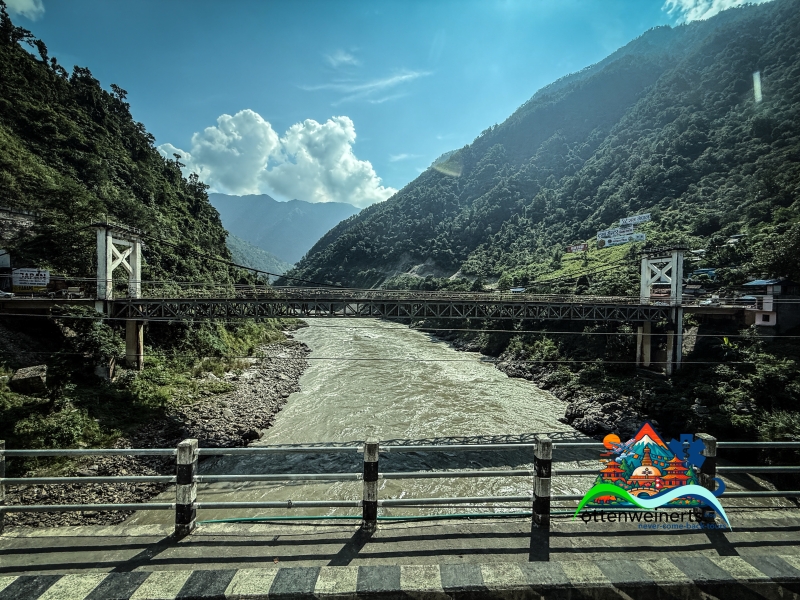
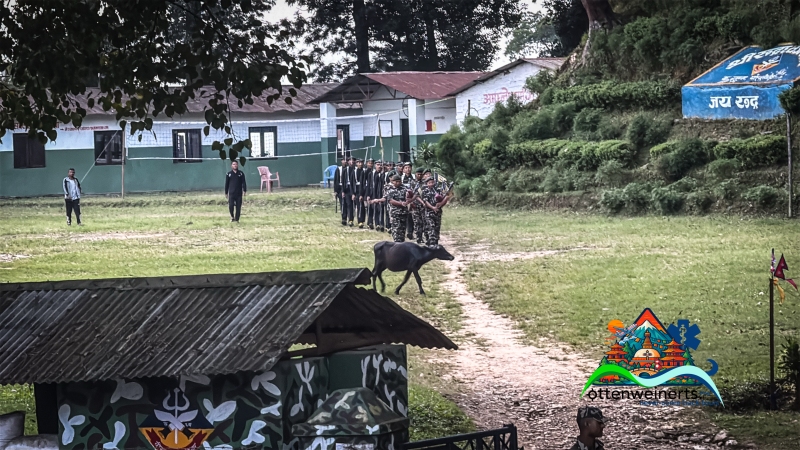
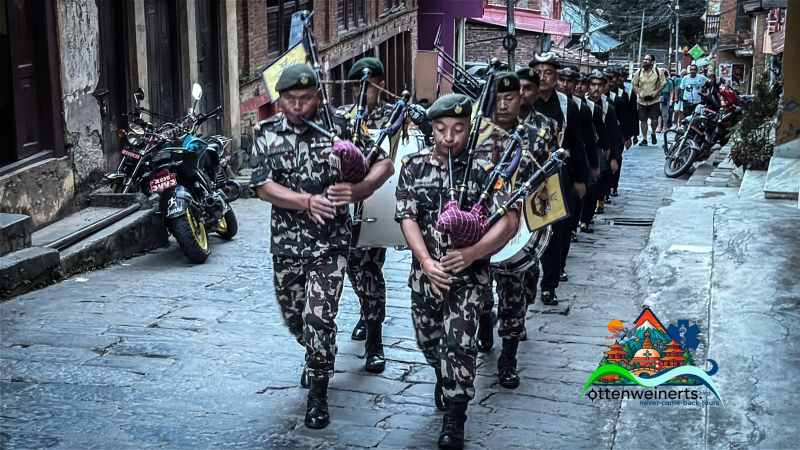
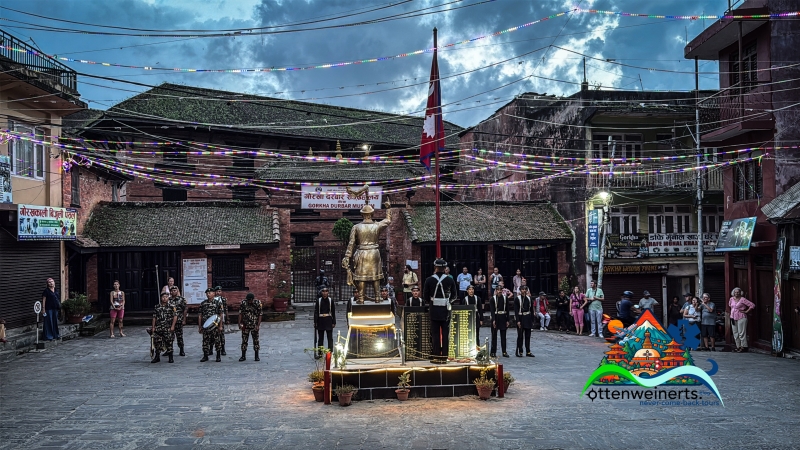
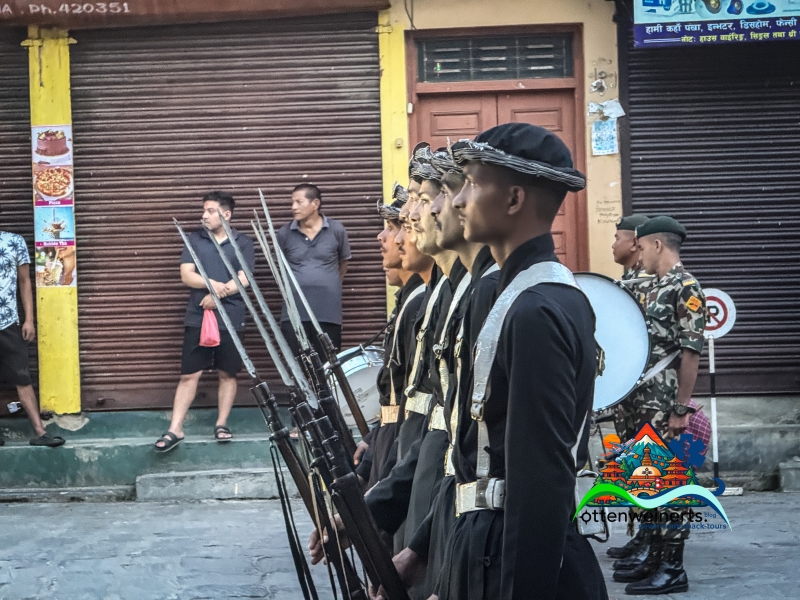
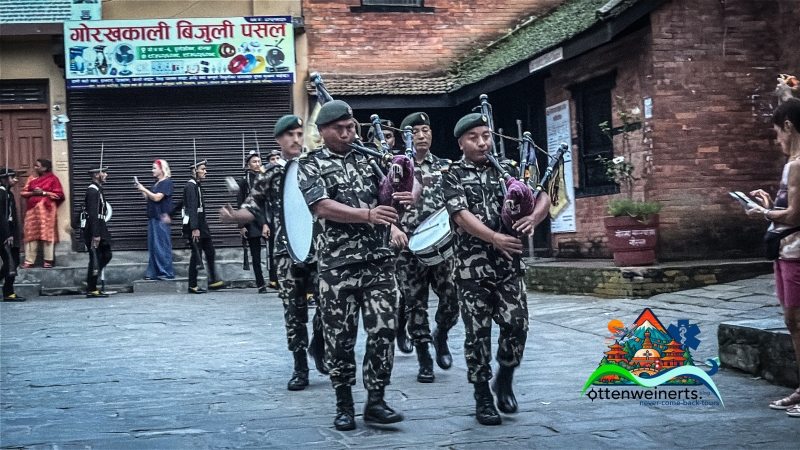
Der Highway gabelt sich, die linke Strecke führt nach Süd-Westen und nach Indien, wir biegen rechts ab, überqueren eine Brücke über den Trisuli und folgen dann weiter dem Marsyangdi River nach Norden, auf dem erstaunlich guten Abukhaireni-Gorkha-Highway. In Gorkha sehen wir vor dem Abendessen noch die allabendliche Flaggenzeremonie – Militärmusik mit Dudelsack und eine Garde Truppe marschieren auf den Hauptplatz, wo ein Denkmal des „Vaters von Nepal“ über einer Landkarte wacht. Prithvi Narayan Shah wurde hier geboren und bestieg im Alter von 20 Jahren den Thron. In 17 Jahren Krieg eroberte er all die kleinen Königreiche und vereinte das Land – Gorkha wird auch „Wiege von Nepal“ genannt. Morgen in der Früh werden wir dann den Königspalast besuchen
Tuesday, 30 September 2025 – Nepal Day 6 – from Nagarkot to Gorkha
Today we have a distance of 170 km ahead of us – which means we have to get up at 5:45. The mountains are still asleep, unfortunately hidden behind a blanket of clouds, so no sunrise over Mt. Everest for us. Breakfast is at 6:15, and departure at 7:00.
During the bus ride, Yam always tells us something about the country and its people – for example, about recent political history, from the abolition of the monarchy to current political unrest, or about the school and education system. We had already heard that of Nepal’s 30 million people, about 10 million live abroad, and today Yam explains the caste system to us – incredibly complicated and nowadays technically banned, but still deeply ingrained in the minds, especially with the older generation.
A short stop in Kalanki near Kathmandu adds four new ambulances to our collection, and then we continue westwards. Today we are lucky with the traffic: there are few vehicles on the roads, hardly any trucks (truck ban due to the Dashain festival). One long-distance bus catches our eye: for the 1,100 km from New Delhi to Kathmandu, it needs between two and three days.
Next stop: two souvenir T-shirts are coming with us, and one Ottenweinerts sticker stays behind.
We continue west along the Prithvi Highway – a road probably called “highway” only because it is the only east-west connection. On both sides we see hilly landscapes with subtropical vegetation, terraced fields of rice and vegetables, and in between banana plants – Yam buys baby bananas for us.
The highway follows the Trisuli River, with numerous suspension bridges leading to the other side – and of course the tourists also have to cross one. Right behind us, a motorcycle also uses the bridge.
The highway divides – the left route leads southwest to India, but we turn right, cross a bridge over the Trisuli, and continue following the Marsyangdi River northwards, on the surprisingly good Abukhaireni–Gorkha Highway. In Gorkha, before dinner, we witness the evening flag ceremony – military music with bagpipes, and a guard troop marching onto the main square, where a monument of the “Father of Nepal” watches over a map of the country. Prithvi Narayan Shah was born here and ascended the throne at the age of 20. In 17 years of war, he conquered the many small kingdoms and united the land – Gorkha is also called the “Cradle of Nepal.” Tomorrow morning we will then visit the royal palace