Archiv der Kategorie: Nepal

251006 – Montag, 6.10.2025 – letzter Tag in Nepal – ab nach Hause –

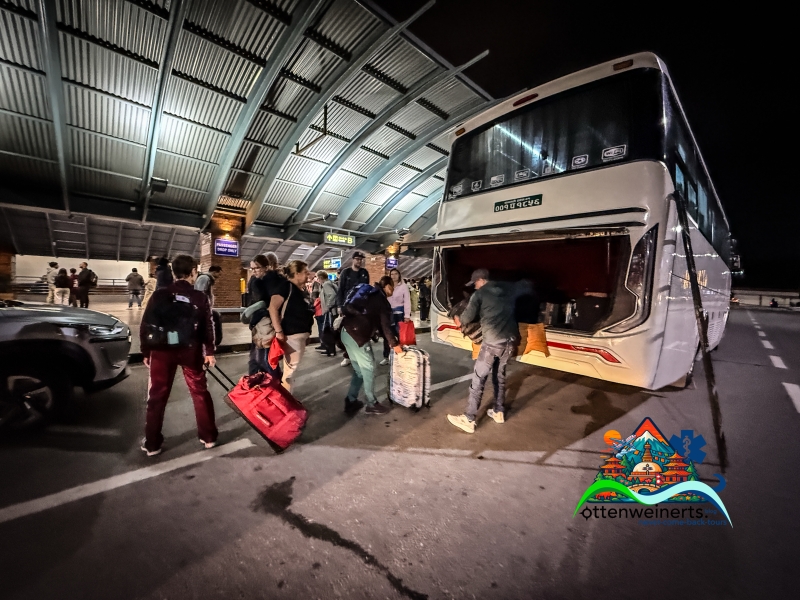
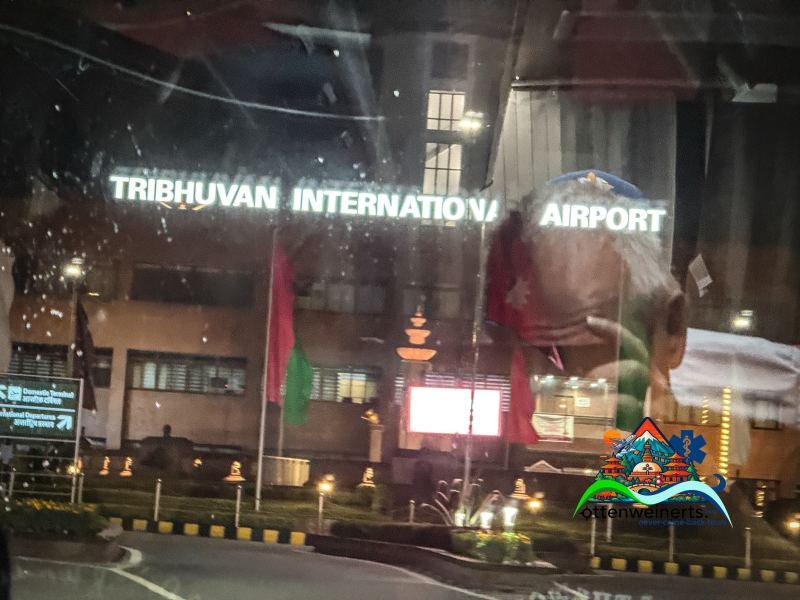
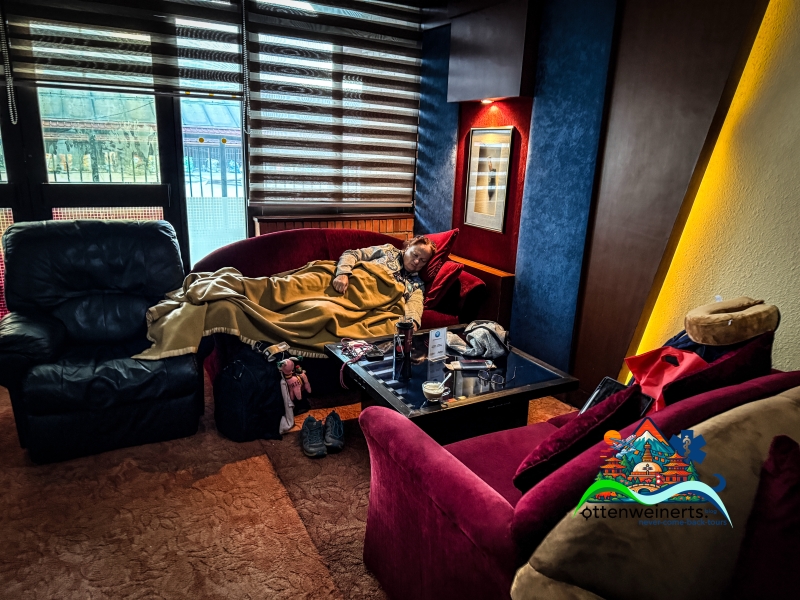
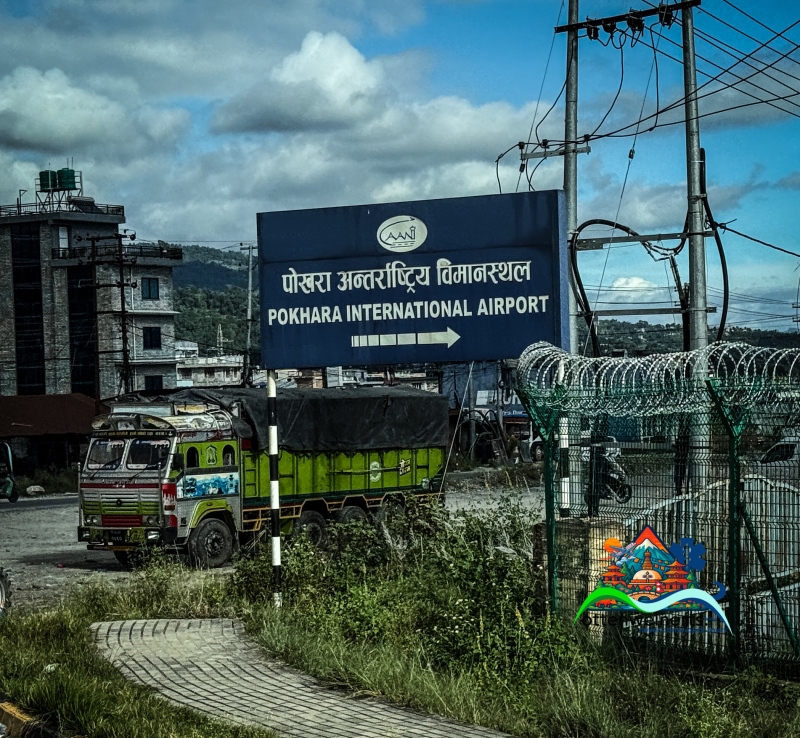
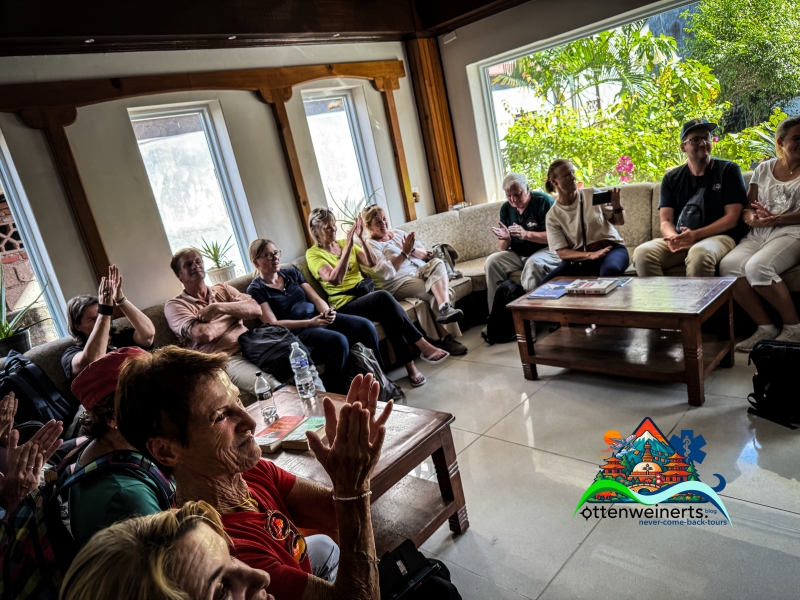
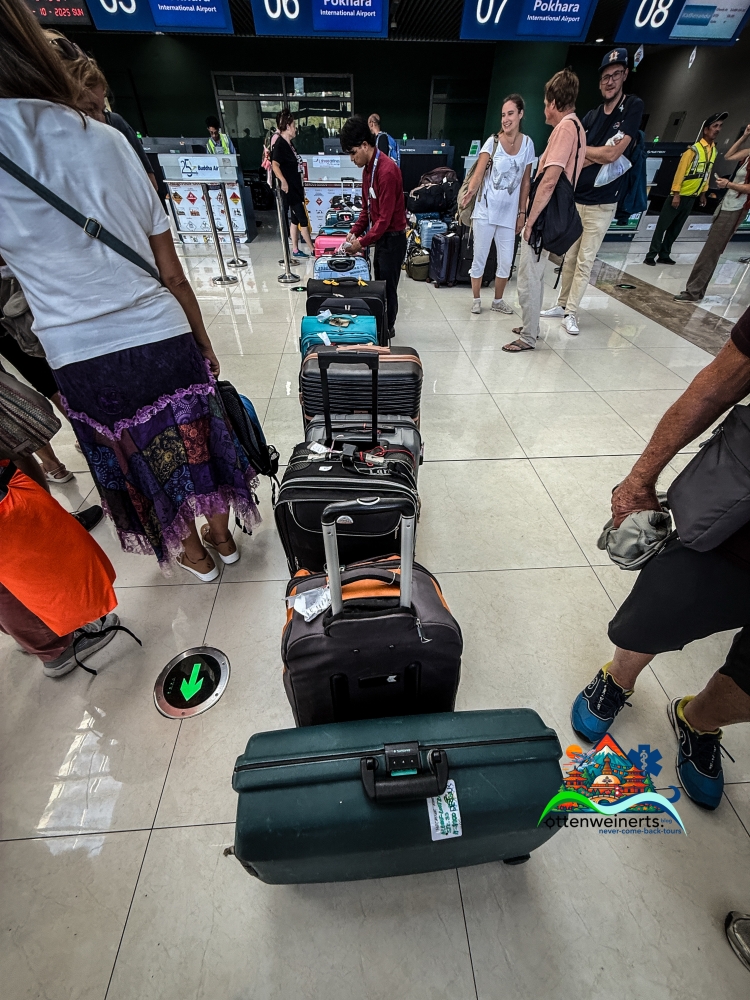
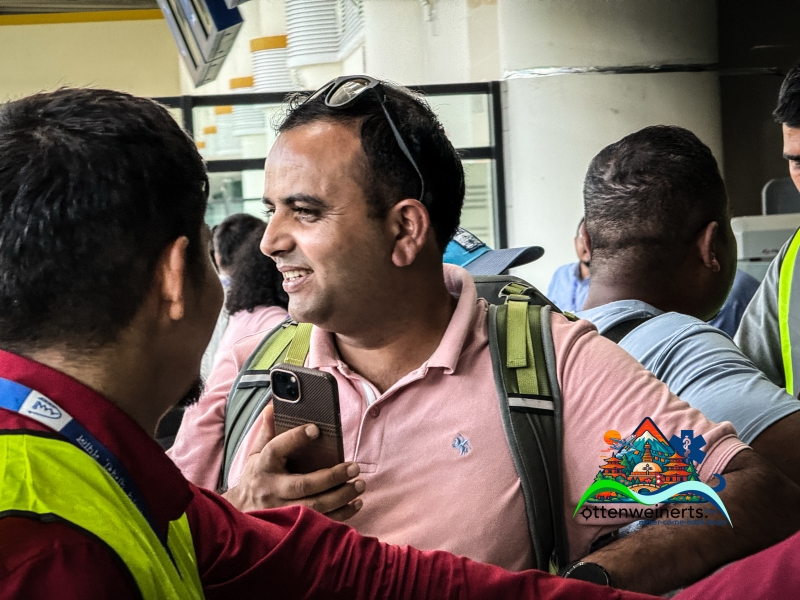
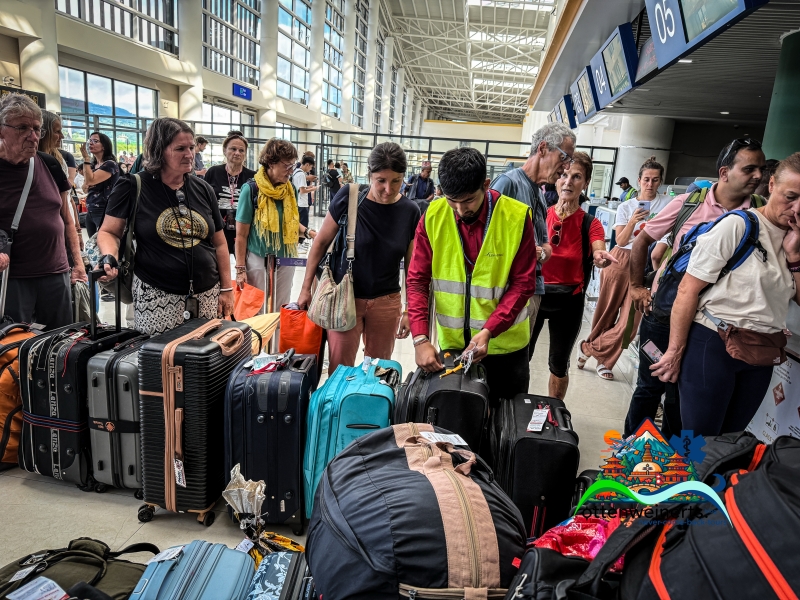
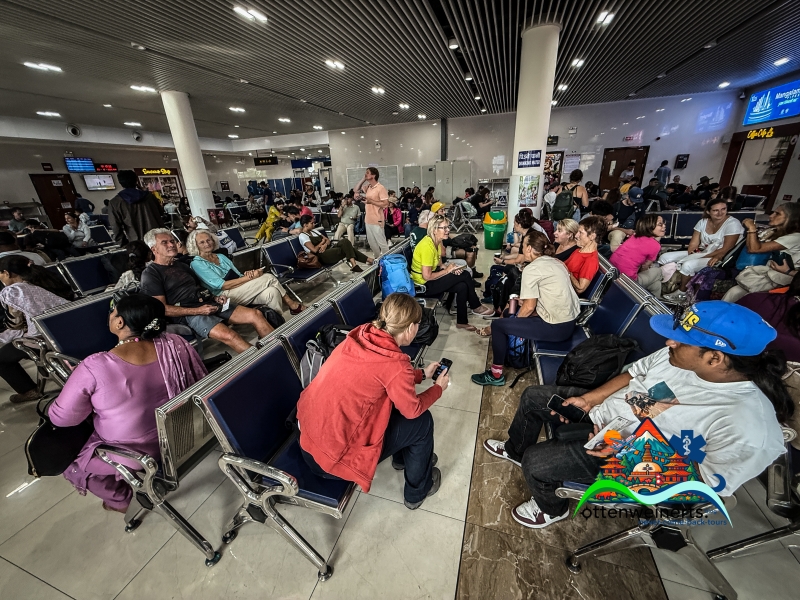
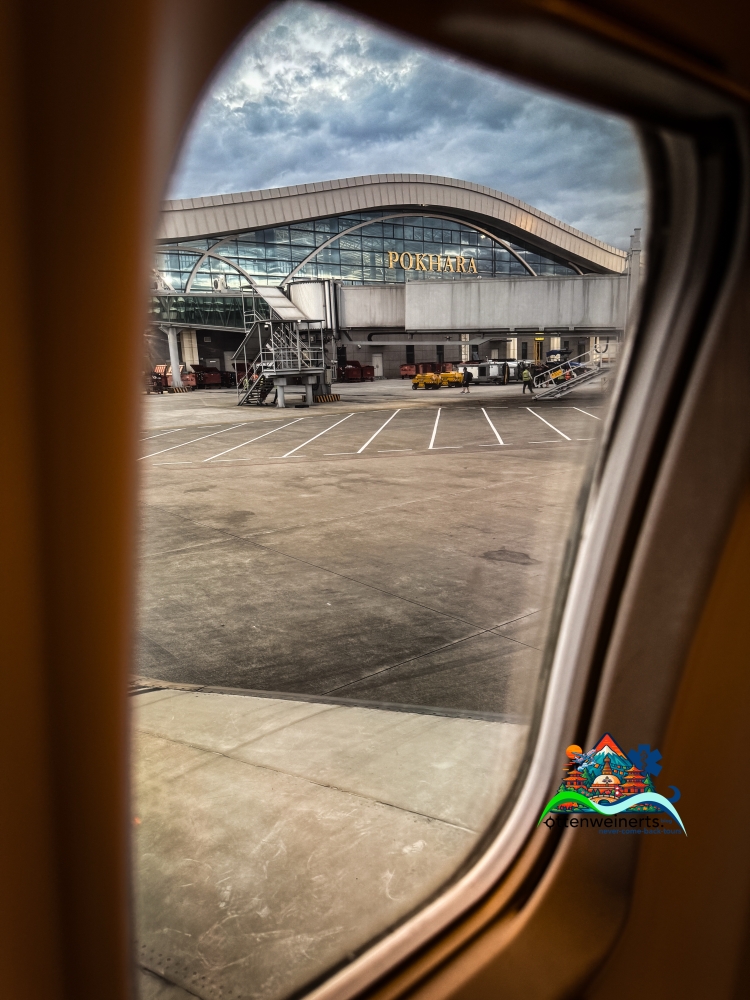
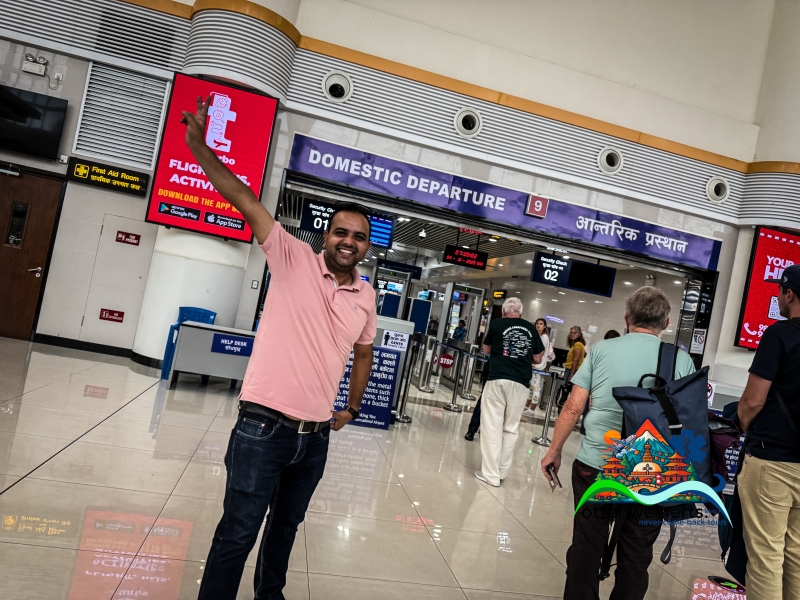
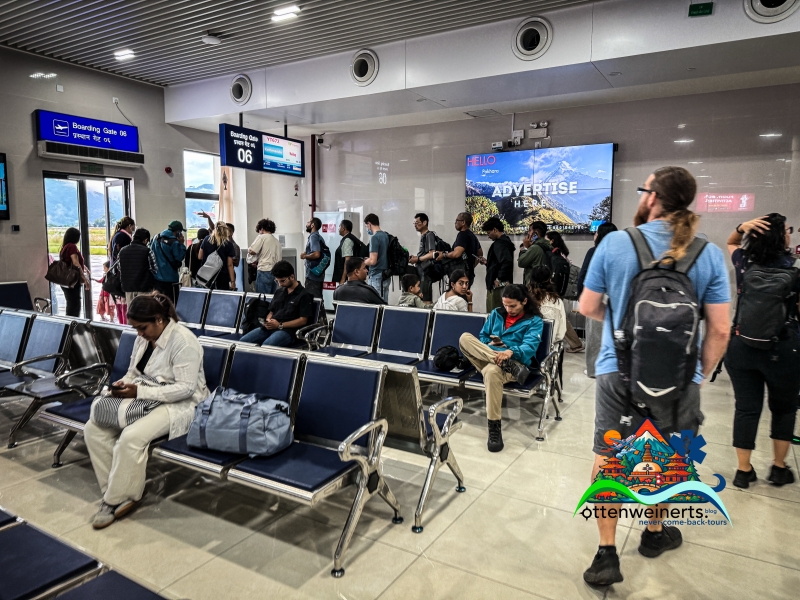
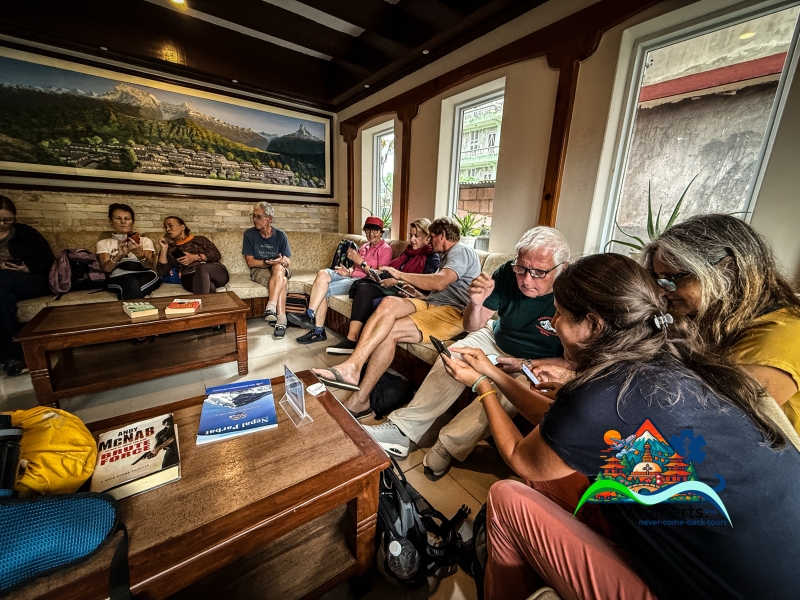
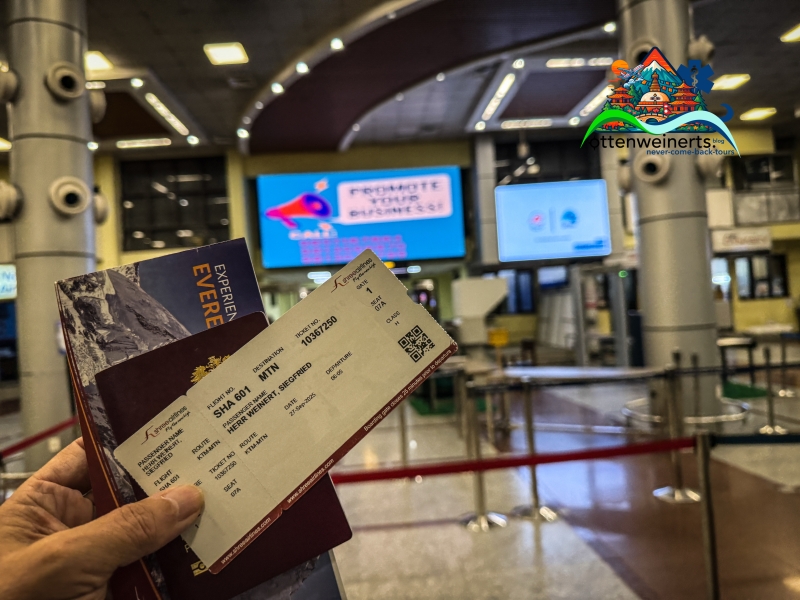
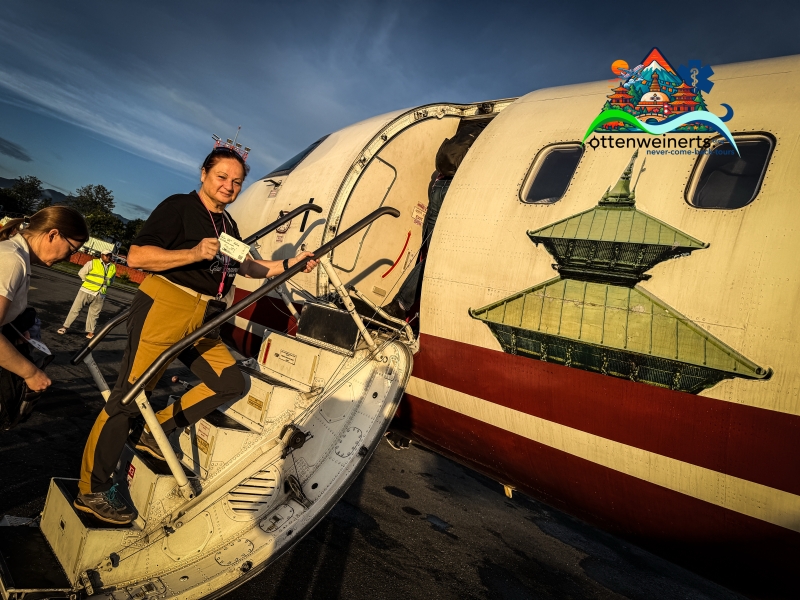
Ein letztes Mal früh aus dem Bett, Lunchpaket ausfassen und ab zum Flughafen. Alles klappt, wir verabschieden uns von Yam, schnappen unsere Koffer und checken ein. Dann haben wir wieder viel Zeit, weil unser Flug ist mehr als eine Stunde verspätet – wir finden ein ruhiges Eckchen mit Couch, wo meine Verkühlung und ich uns mental auf den bevorstehenden Flug vorbereiten können.

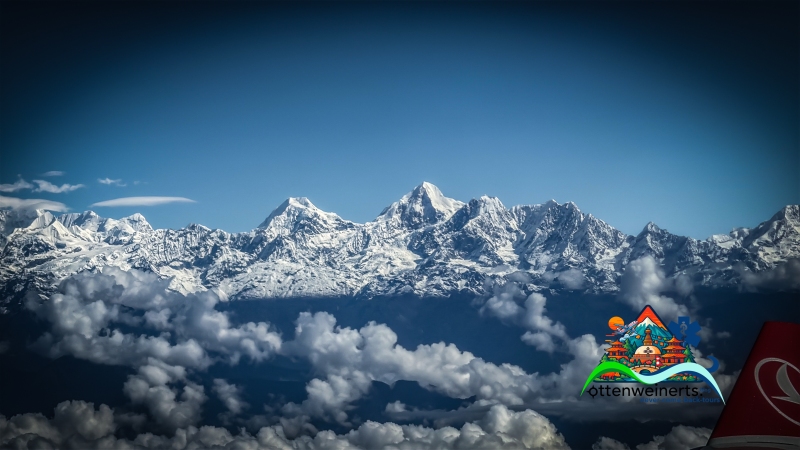
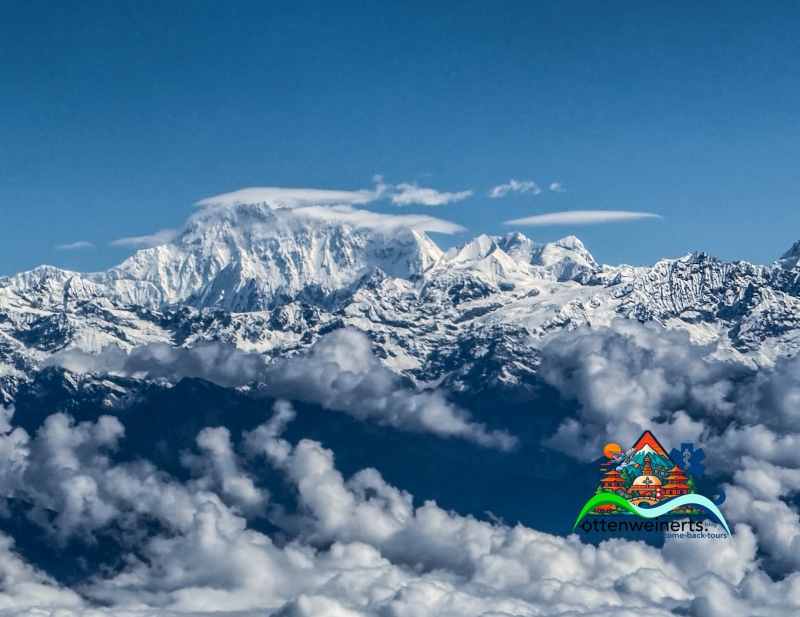
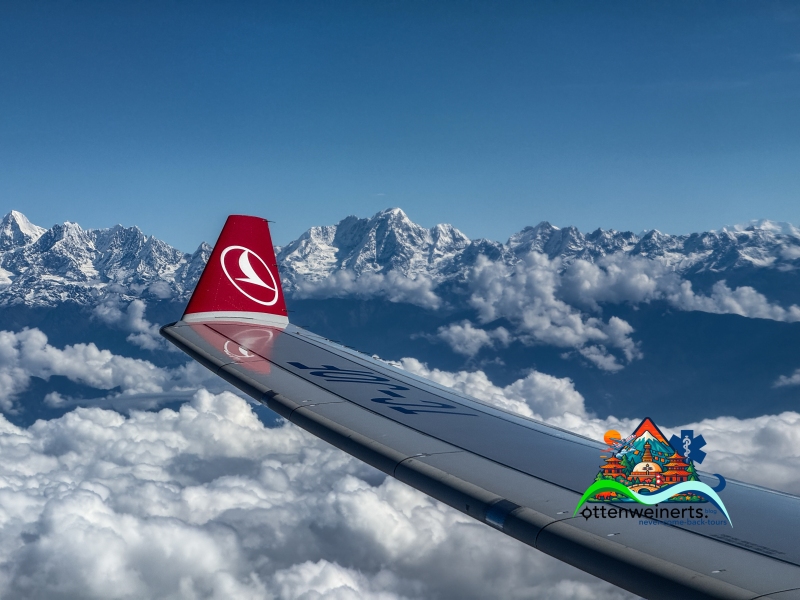
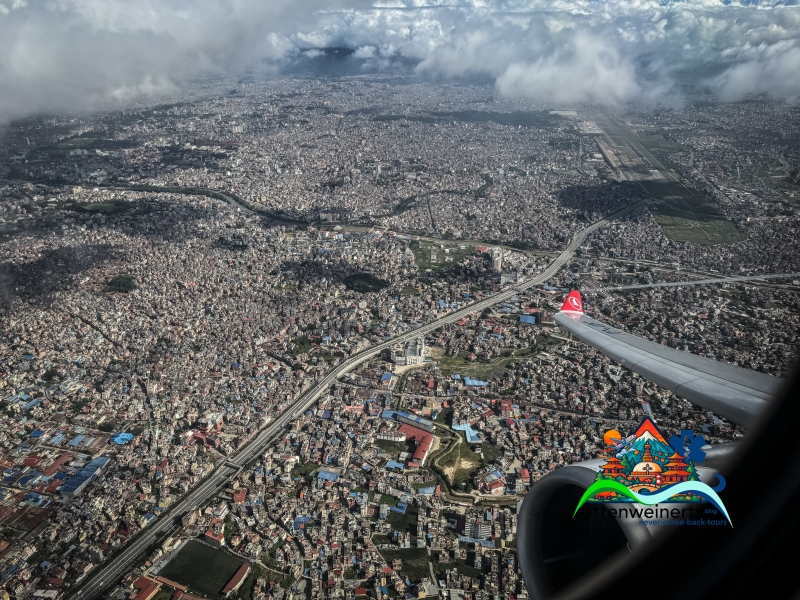
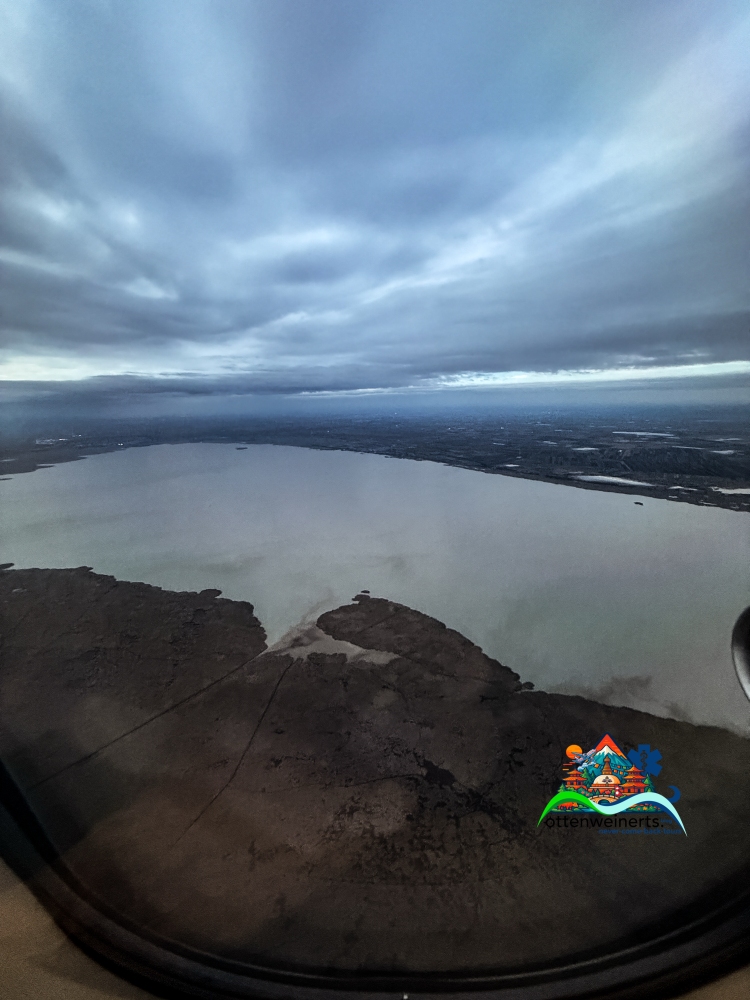
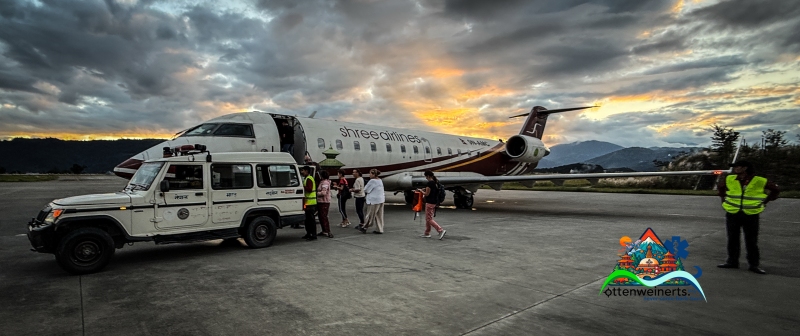
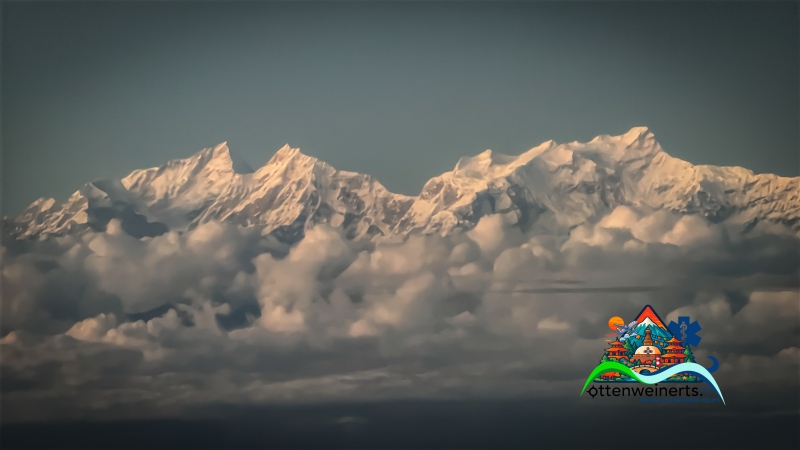
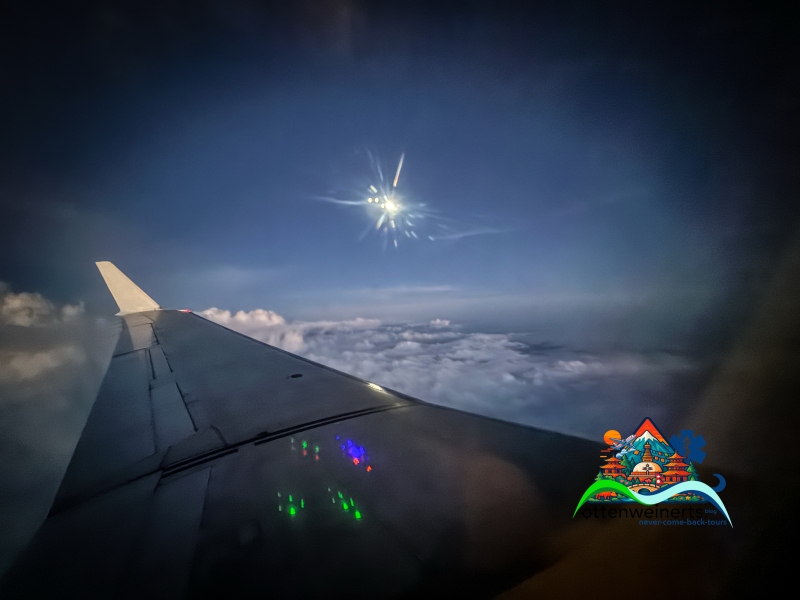
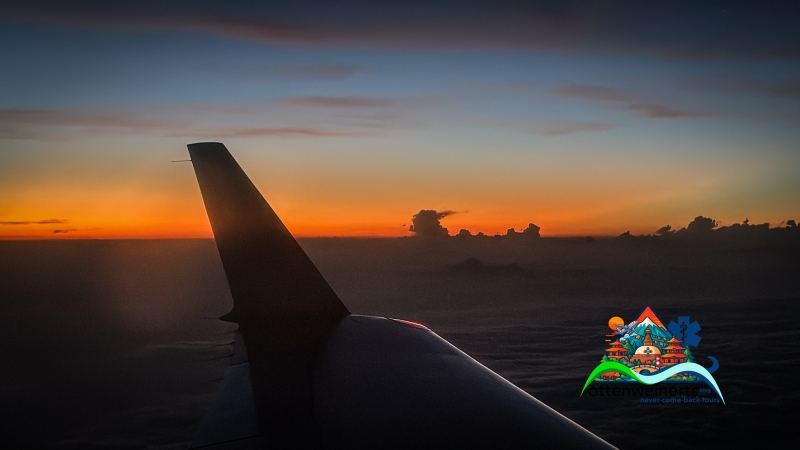
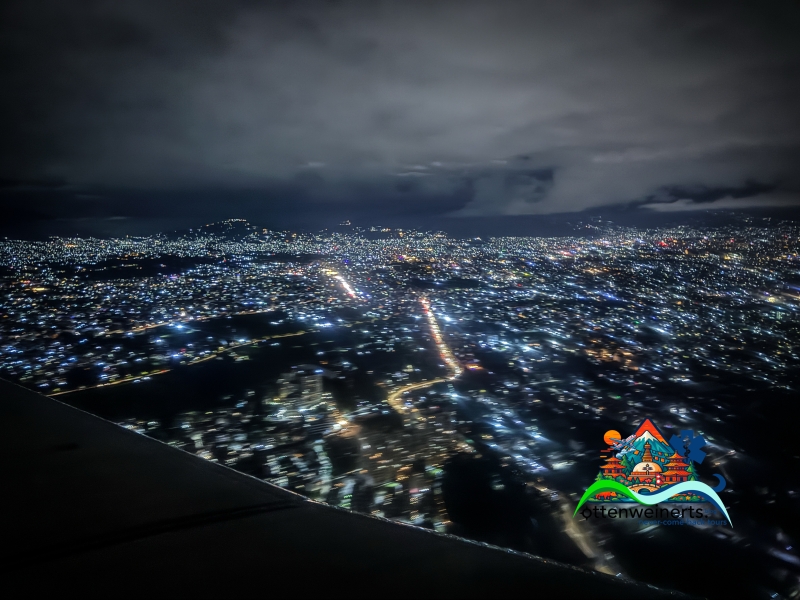
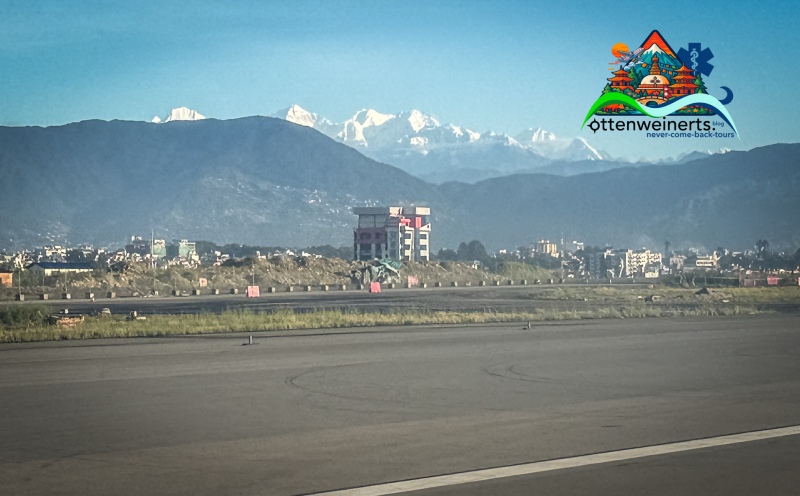
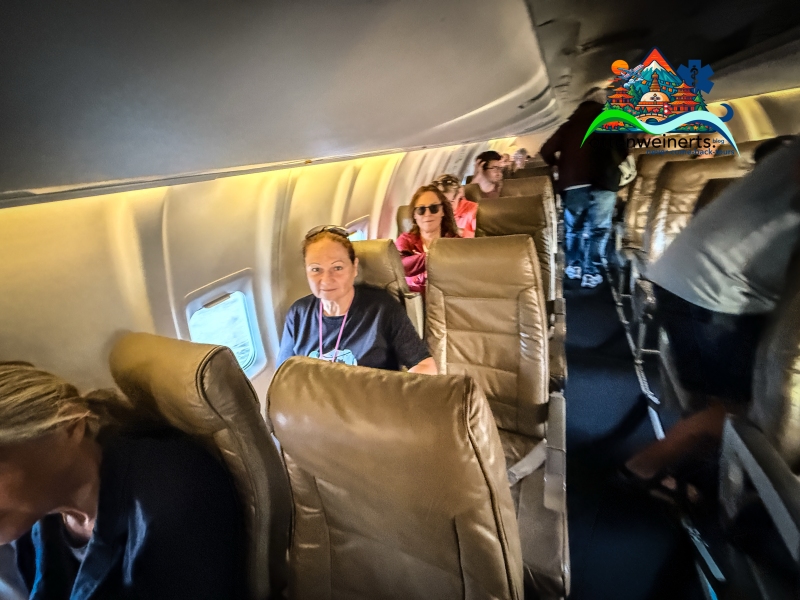
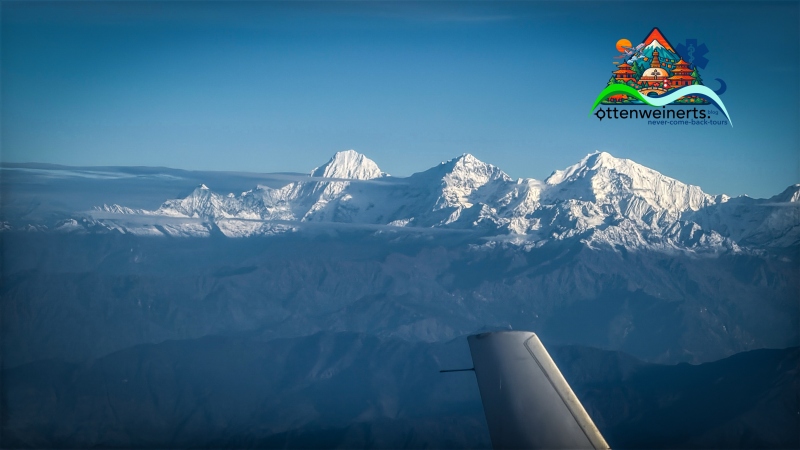
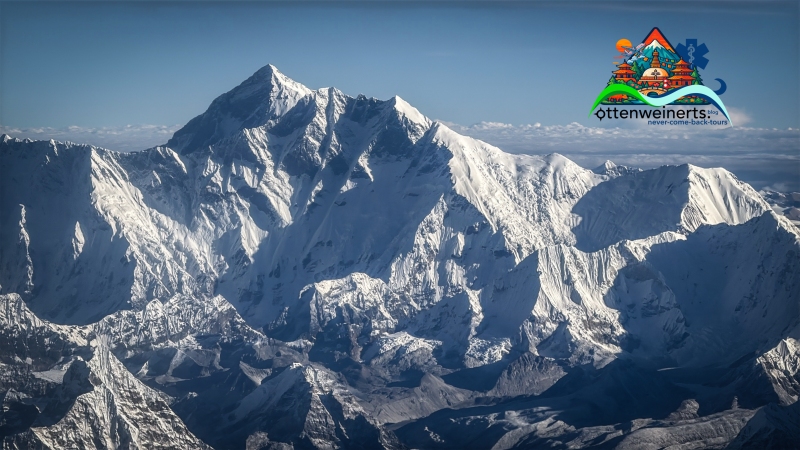
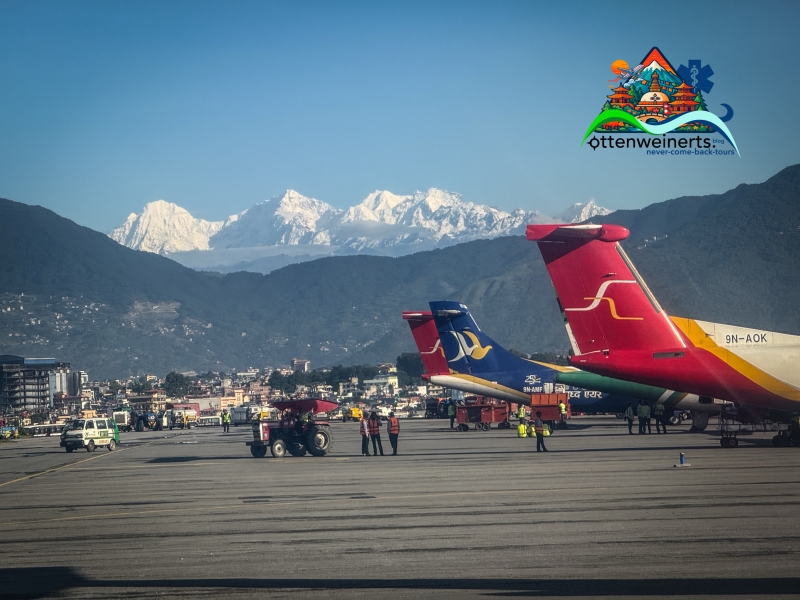
Dann geht es Richtung Heimat – wir winken ein letztes Mal zum Mt. Everest hinüber – wir haben ein großartiges Land kennen gelernt, zumindest ein Stückchen davon. Es gibt hier noch so viel mehr zu sehen und zu entdecken – und Yam hat ja gesagt, nach Nepal muß man dreimal kommen, oder 108 mal (die heilige Zahl). Also wer weiß …..

Monday, October 6, 2025 – Last Day in Nepal – Heading Home

One last early morning: get up, pick up our packed lunch, and off to the airport. Everything goes smoothly; we say goodbye to Yam, grab our suitcases, and check in. Then we have plenty of time again, as our flight is more than an hour delayed – we find a quiet corner with a couch where my cold and I can mentally prepare for the upcoming flight.

Then it’s time to head home – we wave one last goodbye toward Mt. Everest. We’ve gotten to know a wonderful country, at least a small part of it. There’s still so much more to see and discover here – and as Yam said, one must come to Nepal three times, or 108 times (the sacred number). So who knows…

251005 – Sonntag, 5.10.2025 – Nepal Tag 11 – warten, warten, warten …. –

Heute ist vom gestrigen Nebel nichts mehr zu sehen, blauer Himmel, Sonne und ein paar

Wolken. Auch in Kathmandu hat sich die Situation beruhigt, der Flughafen ist wieder offen, und Yam ist ganz sicher, dass wir es heute in die Hauptstadt schaffen. Nur wann, ist die Frage … momentan gegen Mittag.

Wir dürfen unsere Zimmer bis Mittag behalten, und das ist gut so – leider bin ich ein Opfer der Klimaanlage geworden – die Nase rinnt, die Augen tränen und der Hals kratzt. Also verkrieche ich mich unter die Bettdecke, werfe Neo-Citran und Nasentropfen ein und hoffe, dass ich den kurzen Flug ohne Ohrenprobleme überstehe. Andernfalls müssen wir uns überlegen, ob wir noch in Kathmandu bleiben – verkühlt soll man nicht fliegen (sag ich meinen Patienten immer). Das Visum würde uns einen Aufenthalt bis 9. Oktober ermöglichen.

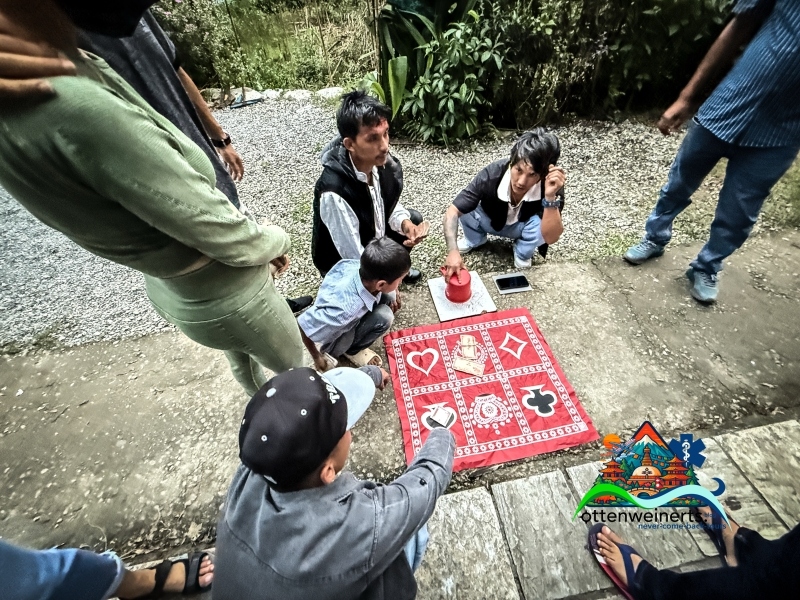
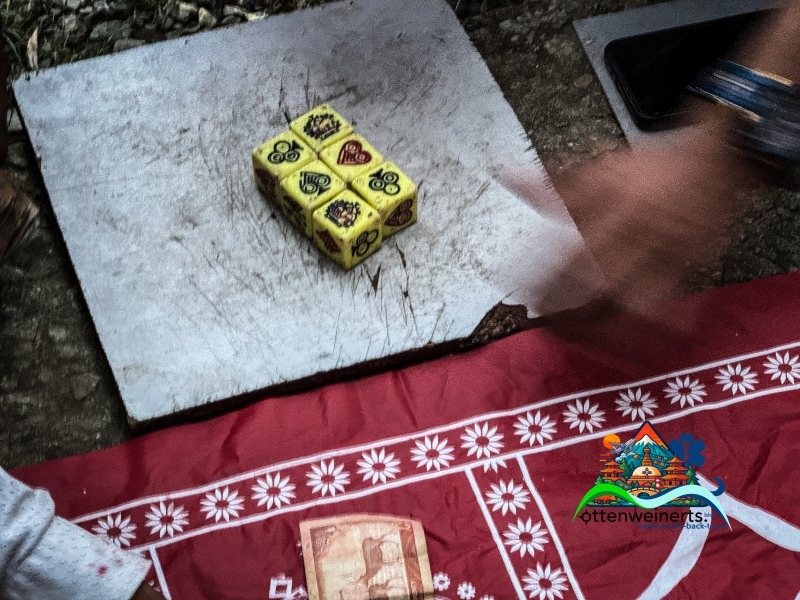
Yam kommt mit einer neuen Abfahrtszeit- Bus fährt um 14:45, Flug geht um 16:00 Uhr. Der Rest der Gruppe macht, was Touristen halt so machen, wenn Zeit totgeschlagen werden muss, Ausflüge aber nicht mehr möglich sind: spazieren gehen, fotografieren, Mittagessen, Massage, Karten spielen, oder noch ein bisschen shoppen, um die letzten Rupien loszuwerden. Oder arbeiten, wie mein Mann… 

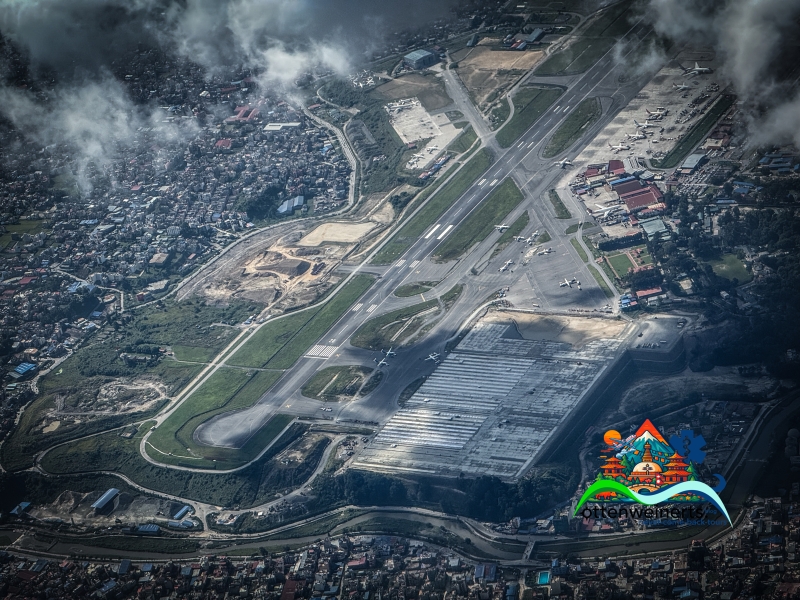
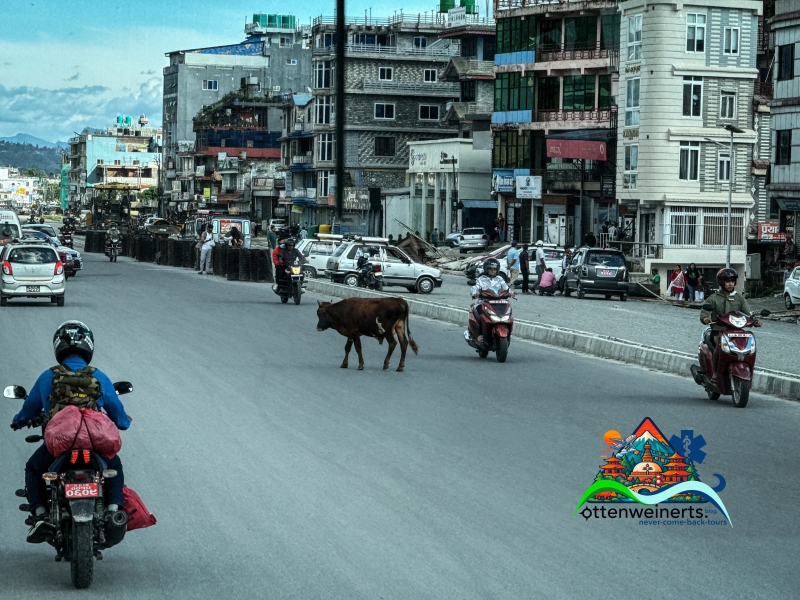
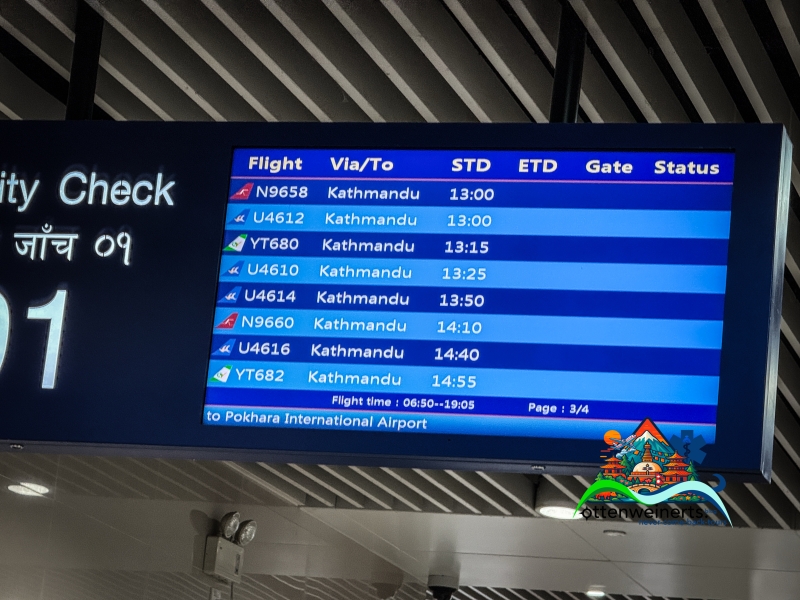
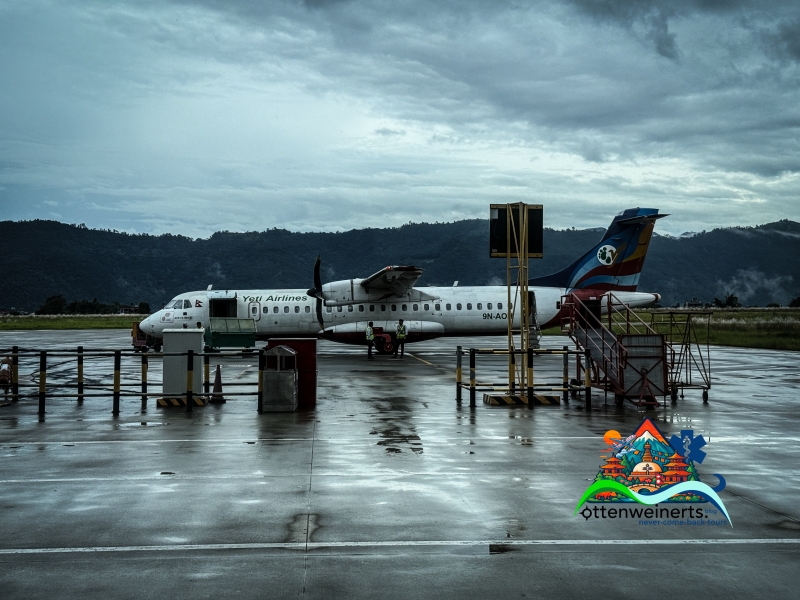
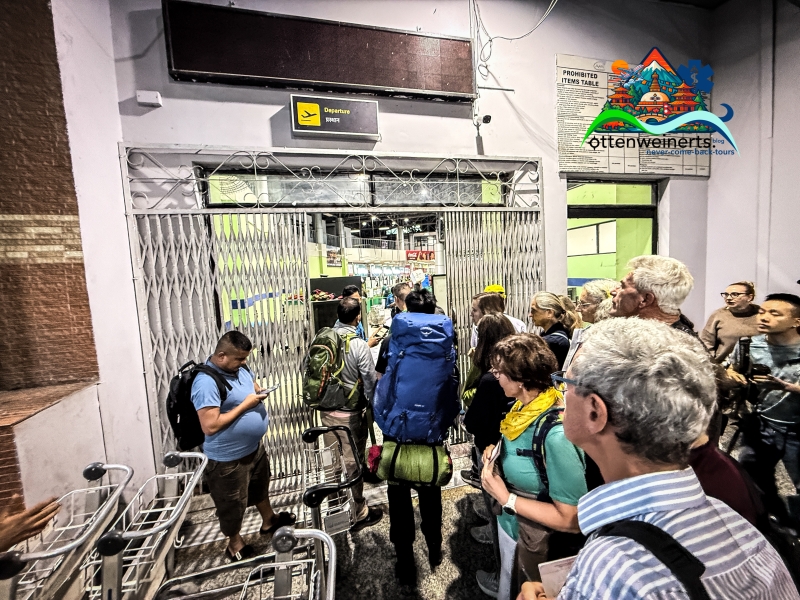
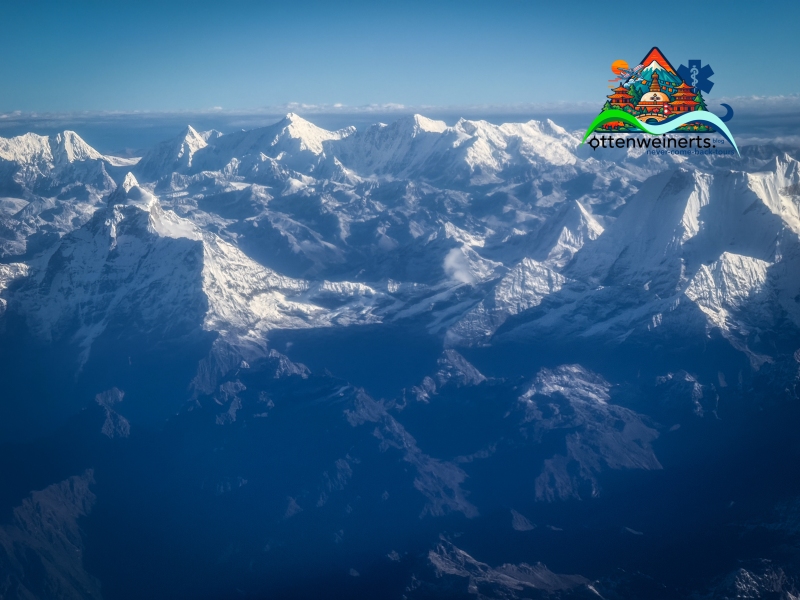
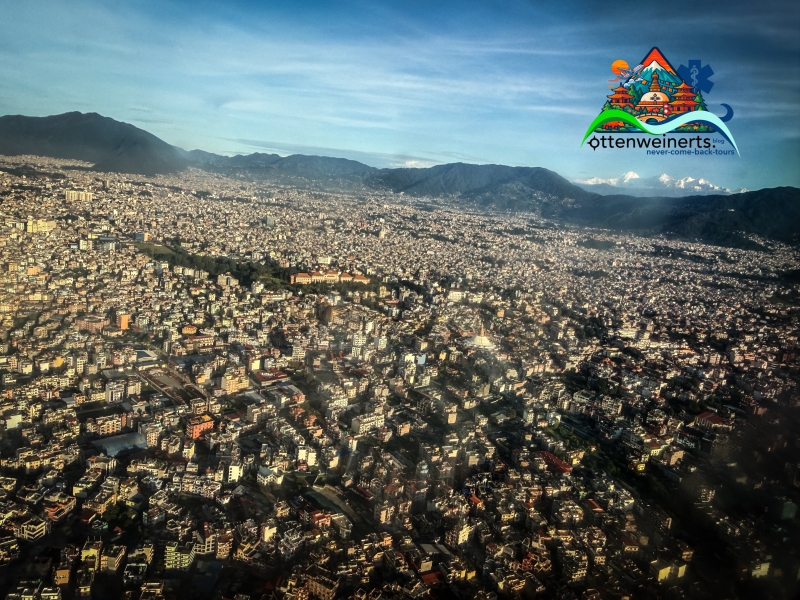
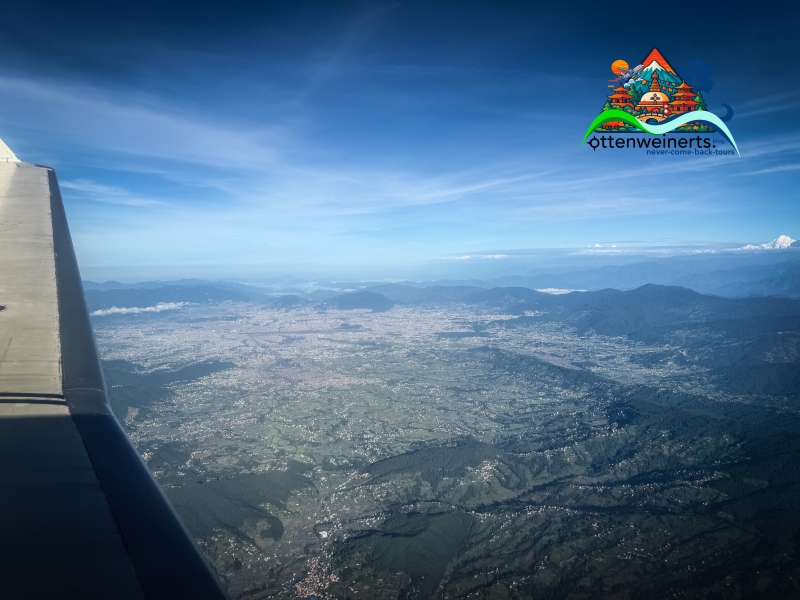
Dann verabschieden wir uns offiziell von unserem supertollen Fahrer und seinem Beifahrer, weil am Flughafen werden wir keine Zeit mehr dafür haben. Dort ist dann auch wirklich die Hölle los – das Dashain- Fest ist ja vorbei, alle wollen zurück nach Kathmandu – vor allem auch die, die für gestern einen fix gebuchten Linienflug hatten und hier gestrandet sind. Und diese Passagiere haben Vorrang, daher verschiebt sich unser Flug immer weiter nach hinten – Shree Airlines, Buddha Air und Yeti Air fliegen ohnehin schon quasi im Stundentakt. Kurz vor 18:00 Uhr ist es dann endlich soweit, wir dürfen einsteigen, bekommen nochmal die Berge im Norden zu sehen und landen kurz vor 19:00 Uhr in Kathmandu. Und meine Ohren haben brav ohne Probleme durchgehalten.

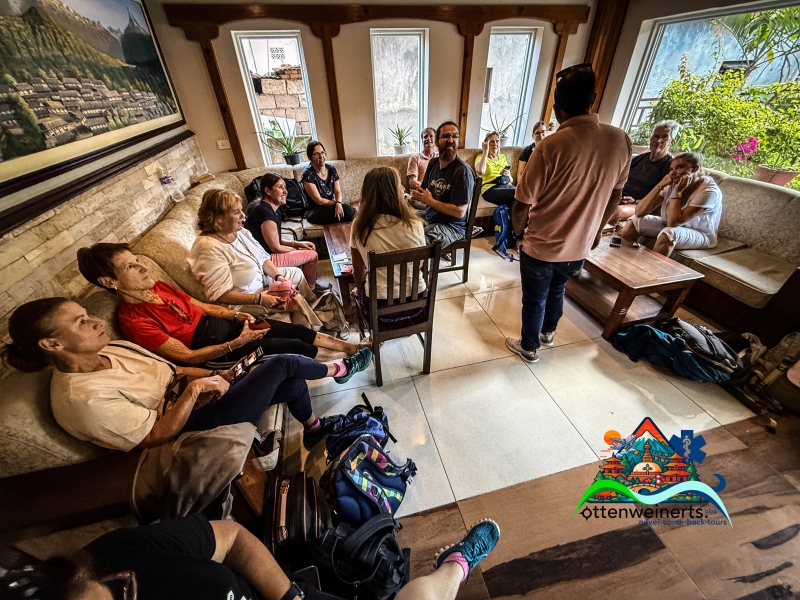
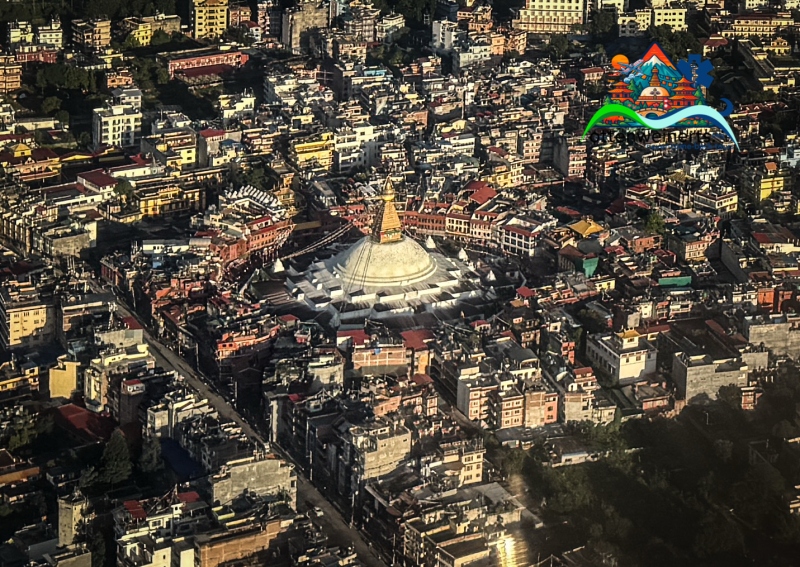
Dummerweise ist es jetzt schon viel zu spät für Besichtigungen – wir hätten noch die zeremonielle Leichenverbrennungsanlage Pashupathinat, ganz in der Nähe des Flughafens, und die Swayambhu Stupa (Affentempel) am Programm gehabt, aber es geht sich leider nicht mehr aus. Wir fahren direkt ins Hotel, wo schon ein paar Mitarbeiter von Yams Reiseagentur auf uns warten – die übrigens auch sehr gut Deutsch sprechen. Es gibt eine sehr nette Abschlussbesprechung, und dann fallen wir ins Bett – Abfahrt morgen früh ist um 4:30, das heißt wieder kurz nach Mitternacht aufstehen …. Gähn ….

Sunday, October 5, 2026 – Nepal, Day 11 – waiting, waiting, waiting…

Today there’s no trace left of yesterday’s fog — blue skies, sunshine, and a few clouds. Things have also calmed down in Kathmandu; the airport is open again, and Yam is confident we’ll make it to the capital today. The only question is when… at the moment, it looks like around noon.

We’re allowed to keep our rooms until noon, which is good — unfortunately, I’ve fallen victim to the air conditioning: my nose is running, my eyes are watering, and my throat is scratchy. So I crawl under the blanket, take some Neo-Citran and nasal drops, and hope I’ll survive the short flight without ear trouble. Otherwise, we’ll have to think about staying longer in Kathmandu — never fly with a cold (I always tell my patients that). Our visa would allow us to stay until October 9.

Yam comes with a new departure time — the bus leaves at 2:45 p.m., the flight at 4:00 p.m. The rest of the group does what tourists usually do when there’s time to kill but no excursions possible: go for walks, take photos, have lunch, get massages, play cards, or do a bit more shopping to get rid of the last rupees. Or work, like my husband…

Then we officially say goodbye to our fantastic driver and his assistant, since there won’t be time at the airport. And indeed, it’s absolute chaos there — Dashain festival is over, and everyone wants to get back to Kathmandu, especially those who had confirmed flights yesterday but got stranded here. Those passengers have priority, so our flight keeps getting pushed back — Shree Airlines, Buddha Air, and Yeti Air are already flying practically every hour.

Finally, just before 6:00 p.m., it’s our turn to board. We get another view of the mountains to the north and land in Kathmandu just before 7:00 p.m. My ears behaved perfectly — no problems at all.

Unfortunately, it’s now far too late for sightseeing — we had planned to visit the ceremonial cremation site at Pashupatinath, near the airport, and the Swayambhu Stupa (Monkey Temple), but there’s no time left. We drive straight to the hotel, where a few colleagues from Yam’s travel agency are already waiting for us — and they speak excellent German, by the way. We have a very nice final meeting, and then collapse into bed — departure tomorrow morning is at 4:30, which means getting up shortly after midnight again… Yawn…

251004 – Samstag, 4.10.2025 – Nepal Tag 10 – in Pokhara gestrandet –

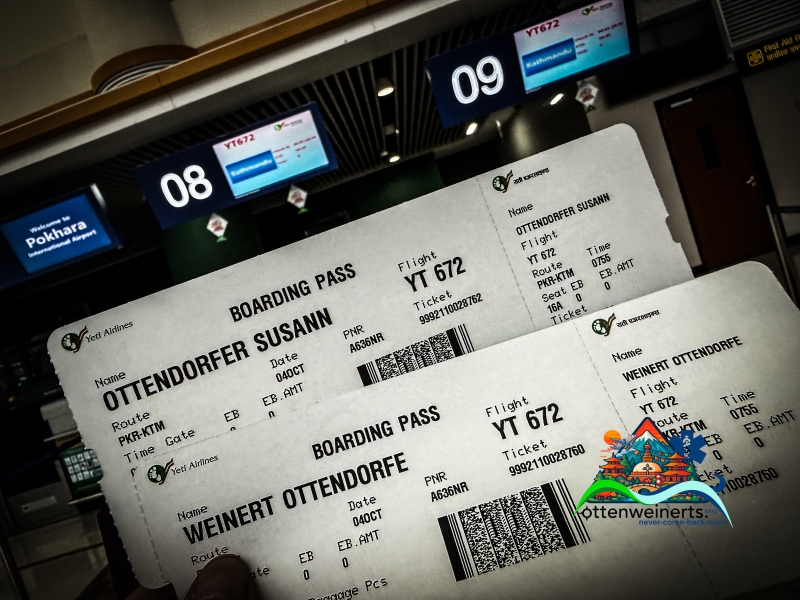
Und plötzlich, über Nacht, ist alles anders – gestern noch Sonne und blauer Himmel, heute Nebel. Yam setzt die Hälfte unserer Gruppe, die lieber fliegen als fahren möchte, am Flughafen ab und organisiert die Bordkarten, um dann mit dem Rest unserer Reisegruppe im Bus den Rückweg nach Kathmandu auf der Straße anzutreten. Unser Flug hat Verspätung, dennoch sitzen wir recht gut gelaunt am Flughafen, aber langsam sickern die Nachrichten der letzten Nacht durch. Es hat in Kathmandu und im Kathmandu-Tal extreme Unwetter mit großen Regenmengen gegeben, Straßen sind gesperrt, weil verschüttet oder einfach abgerutscht. Es hat viele Unfälle gegeben und leider sind auch Tote und Verletzte zu beklagen.

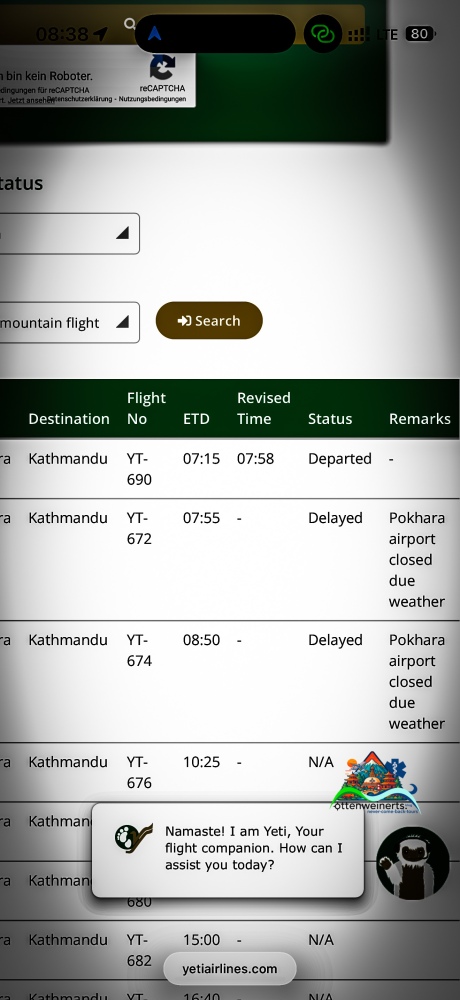
Und auch Yam kommt mit unserem Bus nicht sehr weit: etwa 80 km östlich von Pokhara, an der Abzweigung der H05 nach Indien, ist Schluß – Straße gesperrt, und zwar für die nächsten 3 Tage, kein Durchkommen möglich – der Bus muss umdrehen. Und auch wir am Flughafen haben Pech – nach mehrmaligem Verschieben wird unser Flug, so wie auch alle anderen Flüge nach Kathmandu für heute abgesagt- der Tribhuvan Flughafen in der Hauptstadt ist wegen der extremen Wetterbedingungen gesperrt. Also sammelt uns Yam wieder ein, die Reiseagentur hat inzwischen ein Hotel in Pokhara für heute Nacht organisiert.

Nach dem Abendessen beratschlagen wir: es gibt eigentlich nur 2 Optionen: morgen nach Kathmandu fliegen (das Wetter soll angeblich morgen besser werden) oder in Pokhara warten, bis die Straßenverbindungen wieder offen sind – aber das dauert voraussichtlich mehrere Tage, und übermorgen ist diese Reise ja schon zu Ende und wir wollen (fast) alle heimfliegen. Also hoffen wir auf Flugwetter morgen ….

Saturday, 4 October 2025 – Nepal Day 10 – Stranded in Pokhara

And suddenly, overnight, everything changes – yesterday blue sky and sunshine, today fog). Yam drops half of our group — those who prefer to fly rather than take the bus — off at the airport, organizes our boarding passes, and then sets off by road back towards Kathmandu with the rest of the group. Our flight is delayed, but we’re still in fairly good spirits at the airport. Gradually, though, the news from last night starts to reach us. There have been extreme storms with heavy rainfall in Kathmandu and the Kathmandu Valley. Roads are closed — either buried or washed away. There have been many accidents, and sadly, there are reports of dead and injured.

Yam doesn’t get very far with the bus either: about 80 km east of Pokhara, at the junction of the H05 road to India, the route is blocked — the road is closed for the next three days, no passage possible — the bus has to turn back. And we at the airport don’t have any luck either: after several delays, our flight, like all other flights to Kathmandu, is finally canceled — Tribhuvan Airport in the capital is closed due to the extreme weather conditions. So Yam comes to collect us again, meanwhile the travel agency has arranged a hotel in Pokhara for tonight.

After dinner, we discuss our options: there are really only two. Either fly to Kathmandu tomorrow (the weather is supposedly expected to improve), or stay in Pokhara and wait until the roads reopen — but that will probably take several days, and the day after tomorrow this trip is already supposed to end, with (almost) all of us flying home. So we’re hoping for flying weather tomorrow…
251003 – Freitag, 3.10.3025 – Nepal Tag 9 – Pokhara –

Ausschlafen – das hat gut getan heute! Von der Dachterasse sehen wir die Berge und eine riesige Ganesha-Statue. Nach dem Frühstück spazieren wir die paar Minuten zum Seeufer und besteigen die Tretboote, die uns zur Insel Tal Barahi Mandir bringen, einem beliebten Ausflugsziel mit Tempel, angefütterten Tauben und  wohlgenährten Fischen. Dann geht es weiter zum Devis Wasserfall, den wir von oben besichtigen und dabei auch gleich selbst Fotomotive für andere Touristen werden. Geht’s dir gut Es gäbe auch die Möglichkeit, in die Gupteshwar Mahadev Cave hinunter zu steigen, um den Wasserfall aus der Höhle von unten und hinten anzusehen. Aber Reiseleiter Yam rät uns davon ab – rutschige Stufen, tropfende Höhlendecke, Verletzungsgefahr – also lassen wir das lieber bleiben.

Wir haben den Nachmittag zur freien Verfügung, also schauen wir uns als erstes das International Mountain Museum an. Ein sehr interessantes, sehr großes Museum, mit viel Informationen über die majestätischen Berge im Norden Nepals und die jeweils erstbesteigenden Teams – hier dürfen natürlich auch die Österreicher Reinhold Messner und Peter Habeler, Herbert Tichy und Sepp Joechler nicht fehlen. Außerdem werden die verschiedenen im Norden Nepal heimischen Volksgruppen sehr gut beschrieben, mit Alltagsgegenständen, Zeremonialgefäßen und Trachten. Eine sehr sehenswerte Fotoausstellung vergleicht Frauen in den Alpen – zu unserer Überraschung finden wir schwarz-weiß Fotos aus den vierziger Jahren aus Österreich (zB Stubaital, Tux), die Fotos aus Nepal gegenübergestellt sind. 

Nach einer kurzen Mittagspause nehmen wir ein Taxi zum Gurkha Memorial Museum, welches sich mit der Geschichte dieser Eliteeinheit und ihrer Mitglieder beschäftigt. Die Anfänge gehen auf einen bewaffneten Konflikt zwischen der britischen Ost-Indien-Kompanie und dem KönigreichNepal im Jahr 1815 zurück, im Endeffekt dienten bis zu 120.000 Gurkhas sowohl in der indischen als auch in der britischen Armee, wo viele von ihnen mit dem Victoria-Kreuz ausgezeichnet wurden. Auch in der jüngsten Vergangenheit wurden Gurkhas in internationalen Konflikten, oft im Rahmen von UN- oder NATO-Mandaten eingesetzt- so etwa 1982 auf den Falkland-Inseln, im Yugoslavien-Krieg, im Kosovo, in Mazedonien oder in Afghanistan. Auf jeden Fall ein sehr informatives Museum, das man nicht verpassen sollte. 

Vom Gurkha Museum nehmen wir ein Taxi hinauf zur Bergstation der Gondelbahn in Sarangkot, laufen dann noch ein Stückchen weiter bis zum Aussichtsturm ganz oben – von hier sieht man Hemaja, wo wir vorgestern Nacht im Kloster übernachtet haben. Außerdem gibt es hier einen Hindutempel und den riesigen, 5gesichtigen Ganesha, den wir vom Hotel aus gesehen haben. Mit der Gondelbahn – natürlich eine Doppelmayer-Bahn – geht es hinunter und mit einem Taxi zurück ins Hotel, wo wir unsere Koffer packen. Wir haben für morgen die Wahl, entweder mit dem Bus viele Stunden mit extrem viel Verkehr zurück nach Kathmandu zu rumpeln (das Dashain-Fest ist vorbei, alle wollen zurück in die Hauptstadt) oder zu fliegen. Wir entscheiden uns für den knapp halbstündigen Flug, weil wir dann anschließend auch die zeremonielle Verbrennungsstätte Pashupathinath, ganz in der Nähe des Flughafens in Kathmandu besuchen können.

Friday, 3 October 3025 – Nepal Day 9 – Pokhara

Sleeping in – that felt great today! From the rooftop terrace we can see the mountains and a huge Ganesha statue. After breakfast, we take a short walk to the lakeshore and board pedal boats that bring us to the island Tal Barahi Mandir, a popular excursion spot with a temple, well-fed pigeons, and even better-fed fish. Then we continue on to Devi’s Waterfall, which we view from above—while at the same time becoming photo subjects for other tourists.

We could also descend into the Gupteshwar Mahadev Cave to see the waterfall from below and behind, but our guide Yam advises against it – slippery steps, dripping cave ceiling, risk of injury – so we decide to skip that.

The afternoon is free, so we first visit the International Mountain Museum. It’s a very large and interesting museum, with plenty of information about the majestic mountains of northern Nepal and the first ascents – of course, the Austrians Reinhold Messner and Peter Habeler, Herbert Tichy, and Sepp Joechler are also featured. The various ethnic groups native to northern Nepal are well described, with displays of everyday objects, ceremonial vessels, and traditional costumes. A particularly impressive photo exhibition compares women in the Alps – to our surprise, we find black-and-white photographs from 1940s Austria (e.g., Stubaital, Tux) juxtaposed with images from Nepal.

After a short lunch break, we take a taxi to the Gurkha Memorial Museum, which explores the history of this elite unit and its members. The origins go back to an armed conflict between the British East India Company and the Kingdom of Nepal in 1815. In the end, up to 120,000 Gurkhas served in both the Indian and British armies, with many of them being awarded the Victoria Cross. Even in recent times, Gurkhas have taken part in international conflicts, often under UN or NATO mandates – for example, in 1982 in the Falklands, during the Yugoslav Wars, in Kosovo, Macedonia, and Afghanistan. A very informative museum that should not be missed.

From the Gurkha Museum, we take a taxi up to the mountain station of the cable car in Sarangkot, and then walk a bit further to the viewing tower at the top – from here, we can see Hemaja, where we spent the night at the monastery two days ago. There’s also a Hindu temple here and the enormous five-faced Ganesha which we saw from our hotel. We take the cable car – an Austrian Doppelmayr product – down again and a taxi back to the hotel, where we pack our suitcases.

Tomorrow we have two choices: either take the bus back to Kathmandu – a long, bumpy ride with extremely heavy traffic (since the Dashain festival has ended and everyone is heading back to the capital) – or fly. We decide on the short half-hour flight, which will also allow us to visit the Pashupatinath ceremonial cremation site, located near the airport in Kathmandu.

251002 – Donnerstag, 2.10.2025 – Nepal Tag 8 – Pokhara –

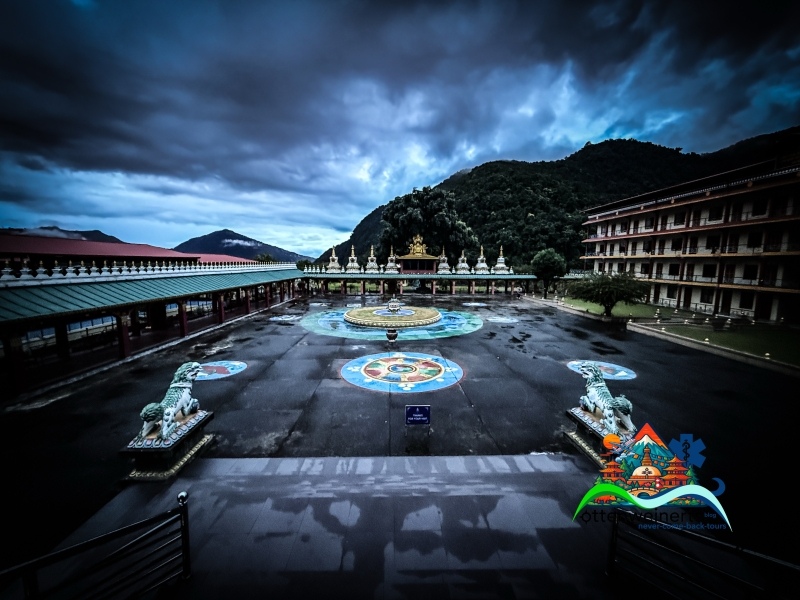
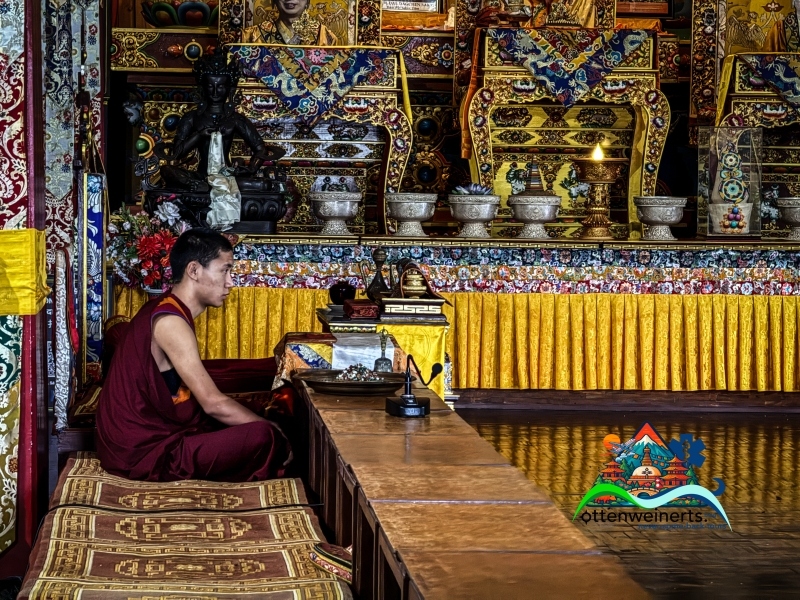
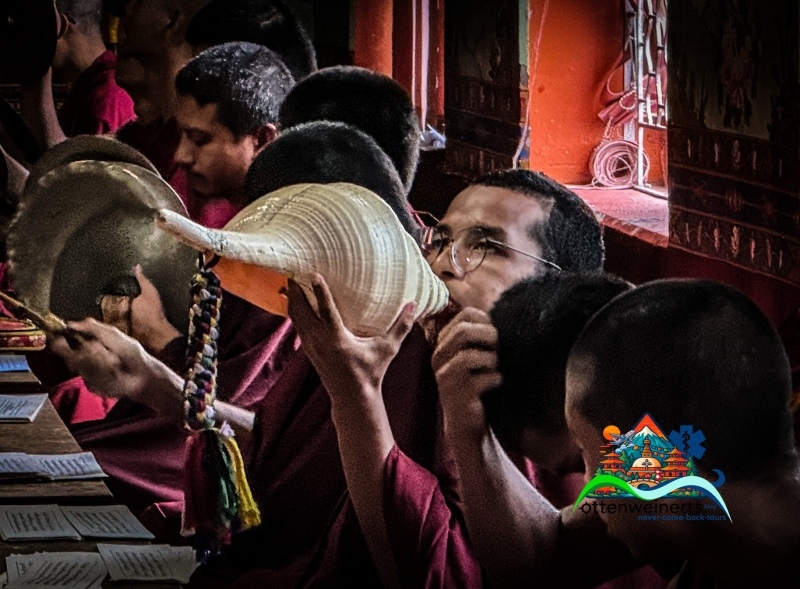
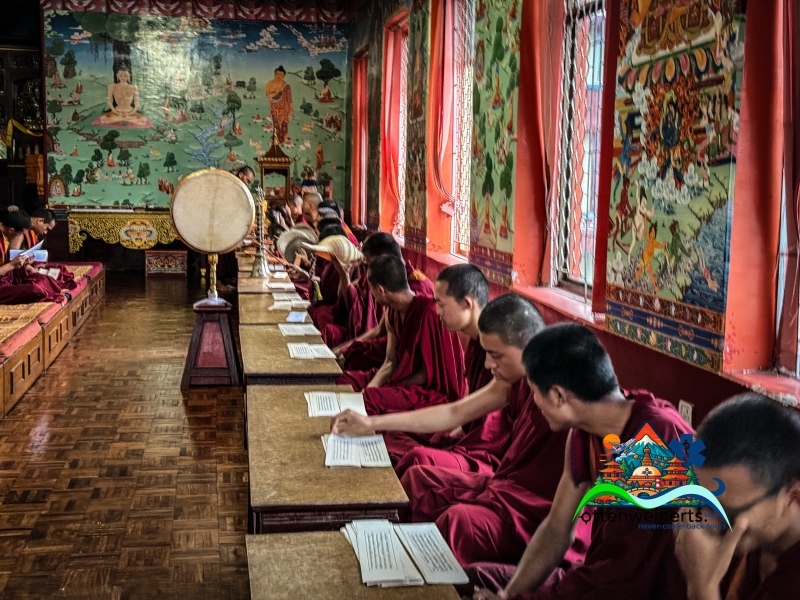
Und nochmal vor 6 Uhr aufstehen – wir dürfen bei der Morgenzeremonie der Mönche dabei sein, und hier wird dann tatsächlich neben Schalmeien und Tschinellen auch ein Muschelhorn (eigentlich ist es ja ein Schneckenhorn) verwendet – hat einen ganz eigenen, durchdringenden Ton. 

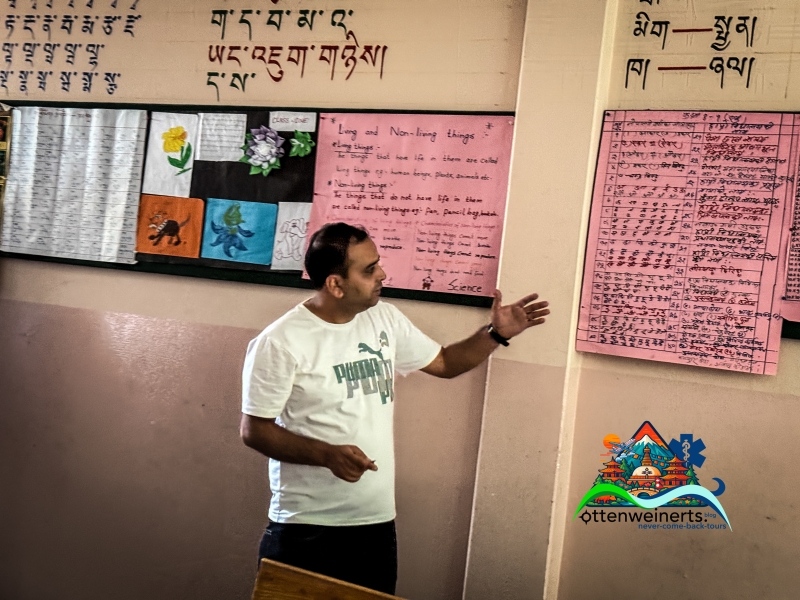
Nach dem Frühstück besuchen wir die klostereigene Schule, in die Kinder ab dem Alter von fünf Jahren aufgenommen werden. Hier bekommen sie eine solide Ausbildung – viele der Kids stammen aus vielen verschiedenen der 124 nepalesischen Volksstämme, oft aus den Bergregionen im Norden, wo gar kein Nepali gesprochen wird. Hier lernen sie neben der nepalesischen Sprache auch die tibetische – die heiligen buddhistischen Schriften sind auf tibetanisch – und englisch sowie Mathematik. 

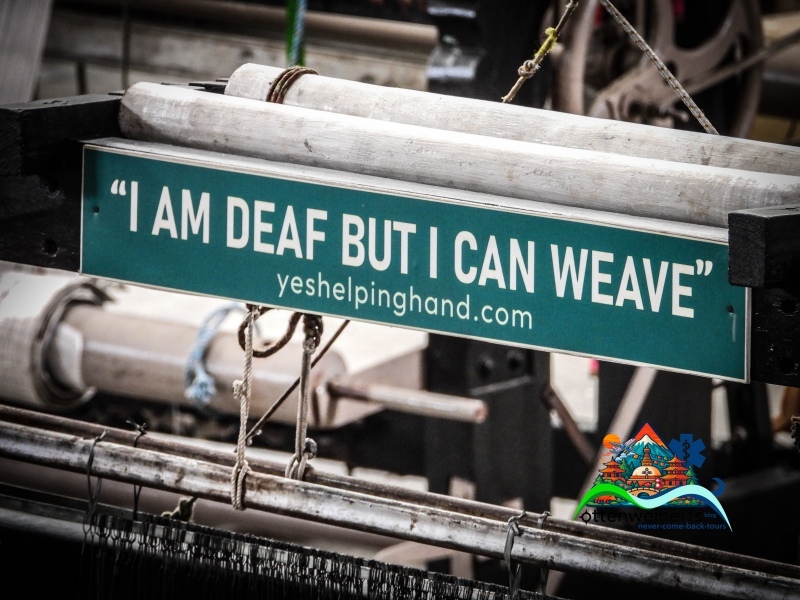
Dann spazieren wir zur Jangchub Choeling Monastery, auch ein buddhistisches Kloster mit Schule, das einer anderen Richtung des Buddhismus angehört. Hier finden wir dann auch die Gebetsfahnen, die wir zuhause aufhängen wollen. Unser Reisebus holt uns ab, und wir fahren zurück Richtung Pokhara, wo wir zuerst einen hinduistischen Hochzeitstempel und dann eine ganz spezielle Manufaktur besuchen: “Yes helping hand” bietet Arbeitsplätze für Menschen mit besonderen Bedürfnissen. Hier werden wunderschöne Pullover und Mützen gestrickt, Teppiche gewebt und Bilder gemalt

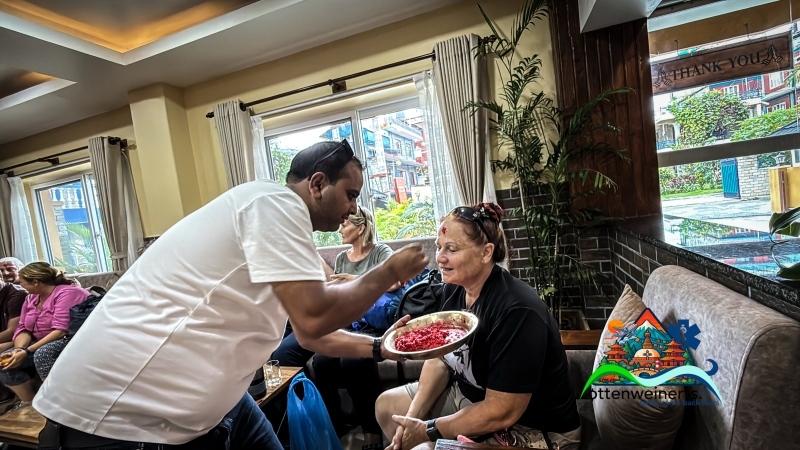
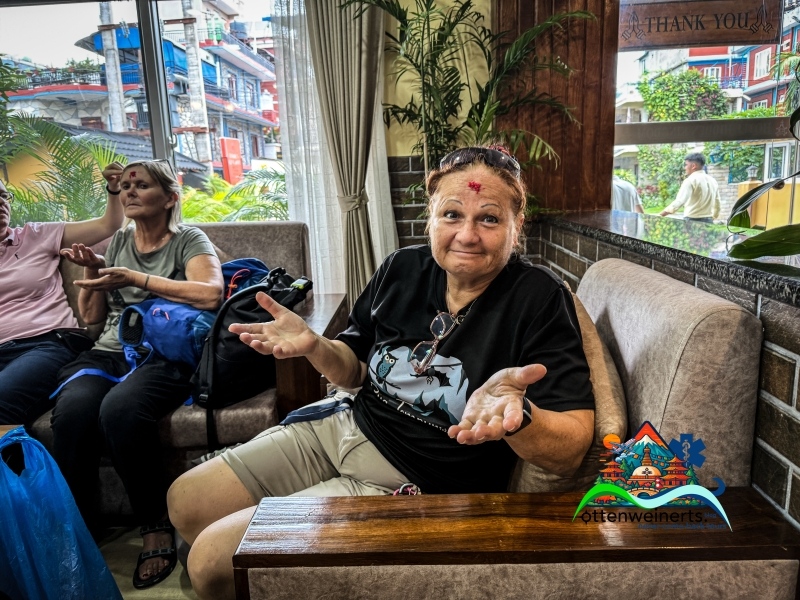
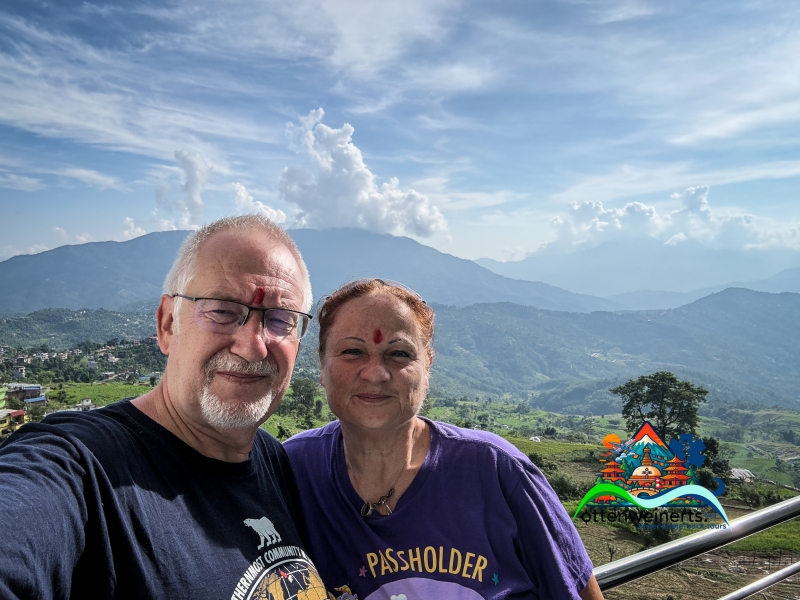
Im Hotel angekommen überrascht uns Reiseleiter Yam: am heutigen Festtag malen Eltern ihren Kindern das Tika und Jamara-Zeichen auf die Stirn (besteht aus Reis, roter Farbe, Zucker und Joghurt) und überreichen Grünzeug und Geld. Yam übernimmt diese Rolle jetzt für die ganze Gruppe – wir bekommen einen roten Klecks auf die Stirn, ein paar grüne Zweige und Geldscheine – die Herren 5 Rupien, die Damen 10. 

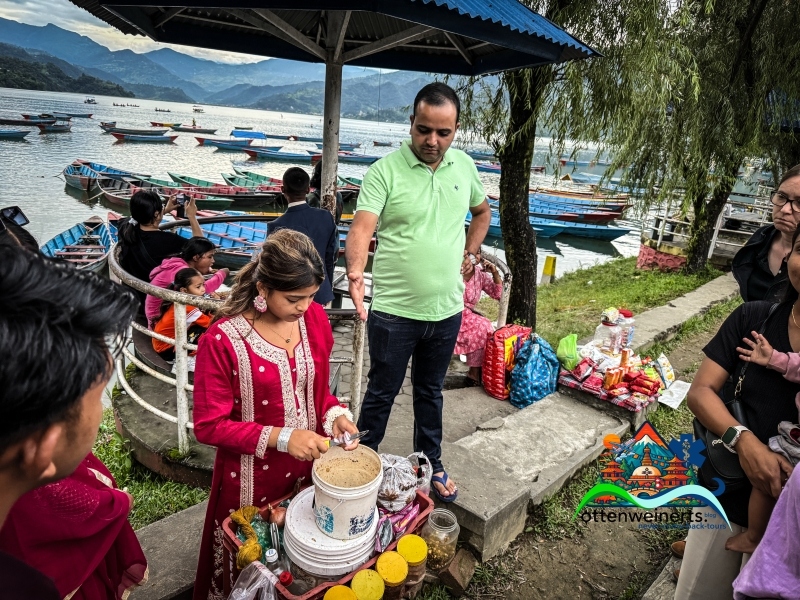
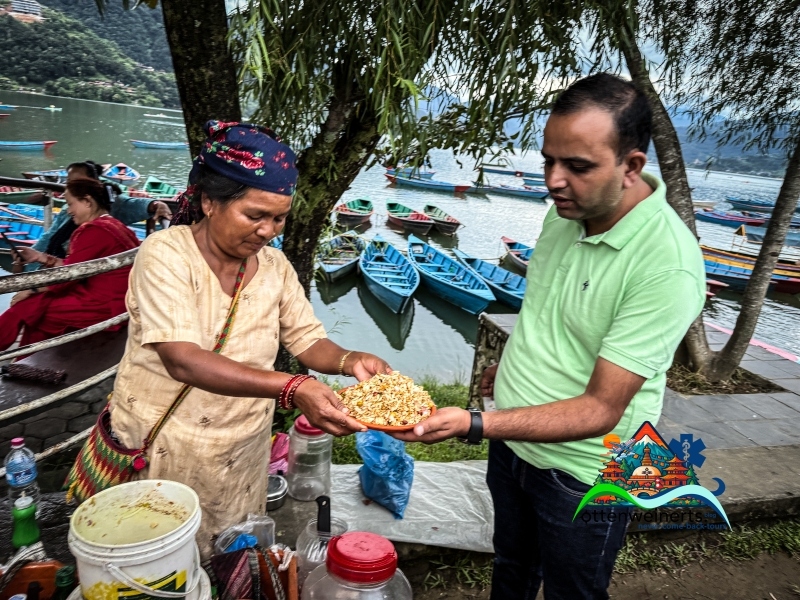
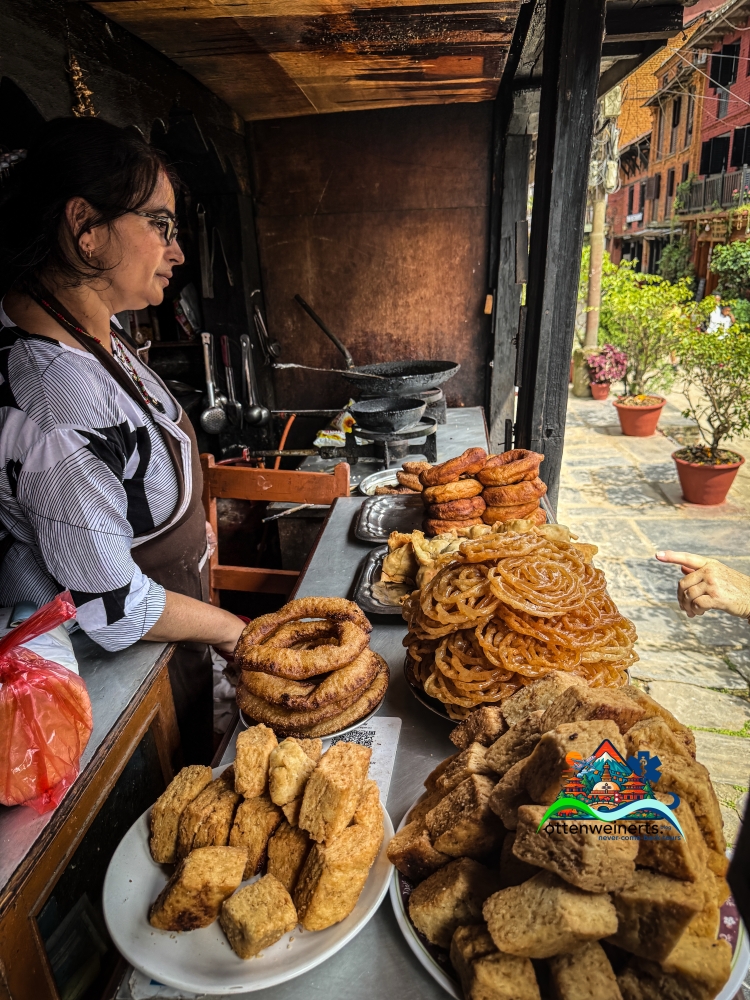
Nach ein wenig Relaxen im Hotel machen wir einen Spaziergang zum See und wandern die Uferpromenade entlang. Dort laufen uns vier  Neuzugänge für unsere Sammlung zu, und Sigi ist mutig und probiert eine lokale Spezialität, Chatpatte, bestehend aus Kartoffel, Gurke, Knoblauch, rohen Instantnudeln, Puffreis, Bohnen, diversen Gewürzen mit ein paarmal umrühren – fertig. Etwas gewöhnungsbedürftig, aber gar nicht schlecht.

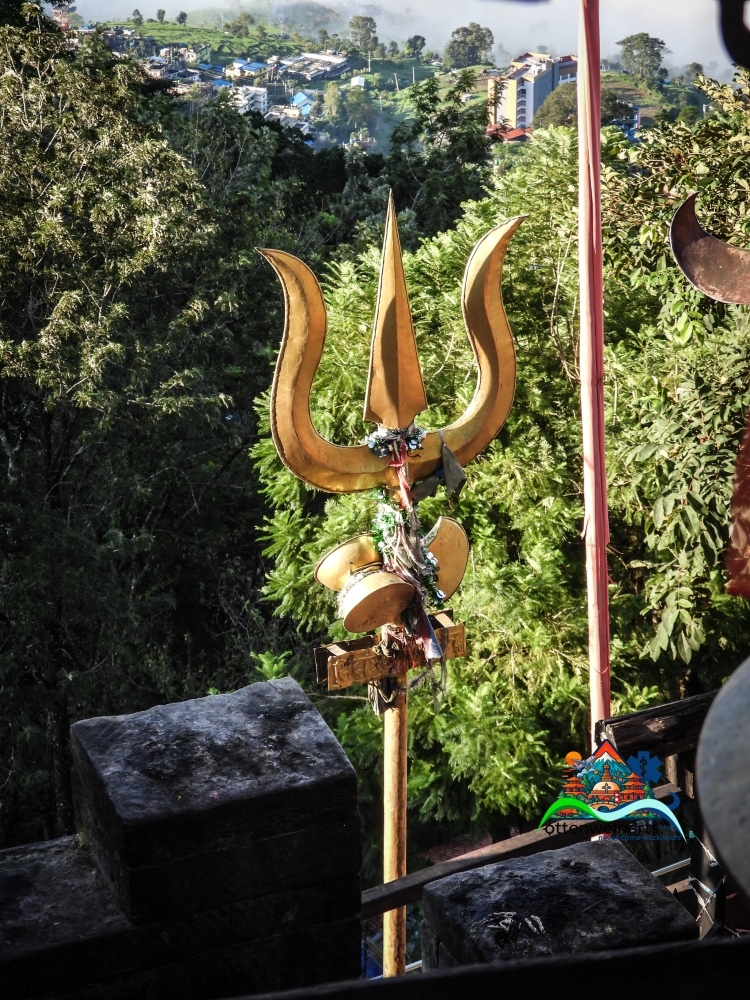
Nach dem Abendessen ziehen wir uns aufs Zimmer zurück und genießen den Abend am Balkon, mit Aussicht auf die große Weltfriedenspagode und die Shiva-Statue am Hügelkamm am anderen Seeufer.

Thursday, October 2, 2025 – Nepal Day 8 – Pokhara

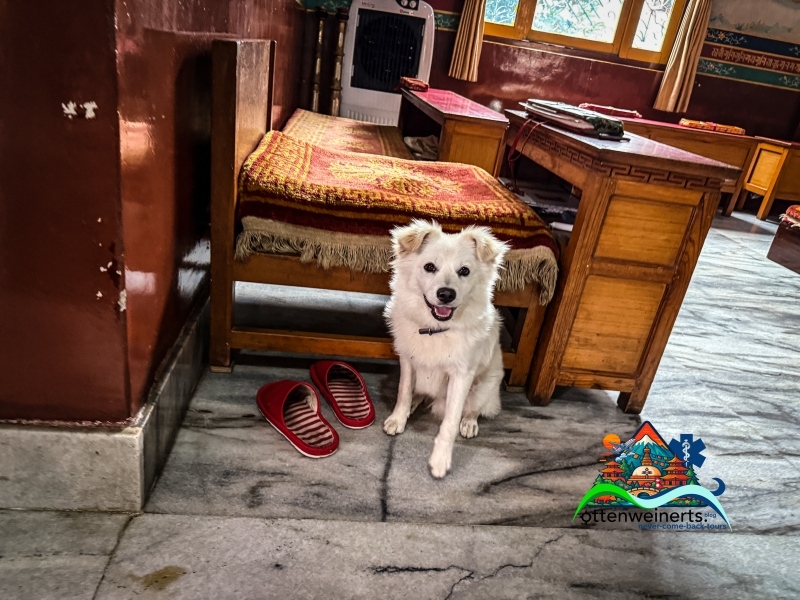
And once again, up before 6 a.m. – we’re allowed to attend the monks’ morning ceremony, and here, alongside shawms and cymbals, they actually use a conch shell (technically a snail shell) which has a unique, piercing tone.

After breakfast, we visit the monastery’s school, which admits children from the age of five. They receive a solid education here – many of the kids come from different ethnic groups among Nepal’s 124 tribes, often from northern mountain regions where Nepali isn’t even spoken. Here they learn Nepali, Tibetan – since the sacred Buddhist scriptures are written in Tibetan – as well as English and mathematics.

We then take a walk to the Jangchub Choeling Monastery, another Buddhist monastery with a school, belonging to a different branch of Buddhism. There we finally find the prayer flags we want to take home. Our tour bus picks us up, and we head back toward Pokhara, where we first visit a Hindu wedding temple and then a very special workshop: “Yes Helping Hand”, which provides jobs for people with special needs. Beautiful sweaters and hats are knitted here, carpets are woven, and paintings are created

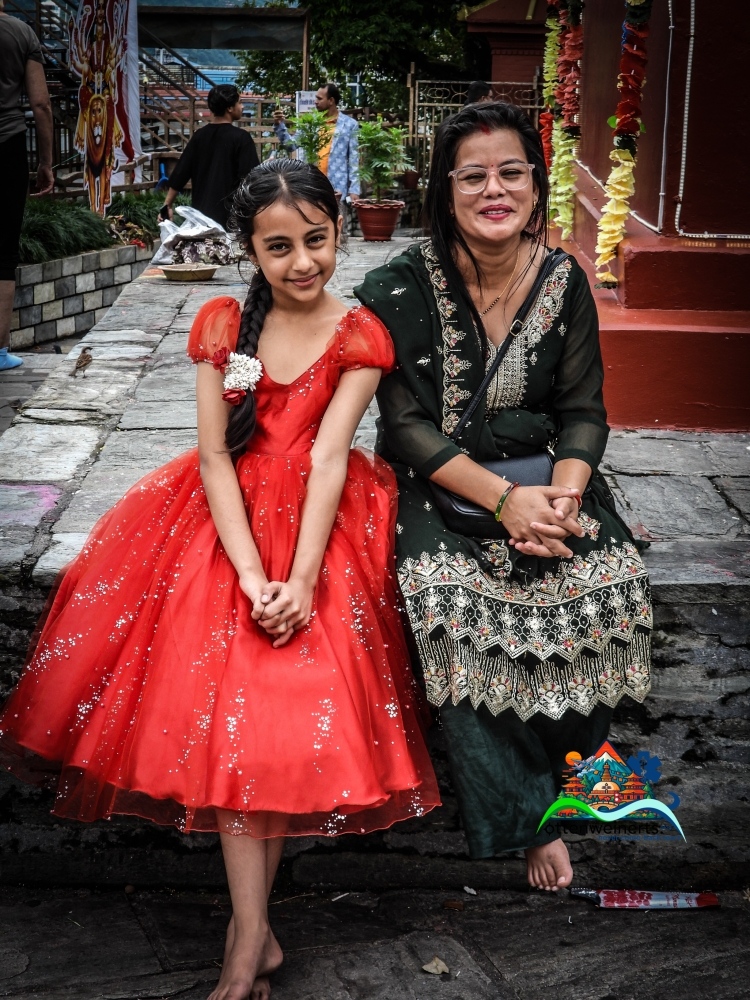
When we arrive at the hotel, our guide Yam has a surprise for us: today is the festival day, when parents paint the Tika and Jamara mark on their children’s foreheads (made of rice, red dye, sugar, and yogurt) and give them flowers and money. Yam takes on this role for the whole group – we each receive a red mark on the forehead, a few green sprigs, and some banknotes – 5 rupees for the men, 10 for the women.

After a bit of relaxation at the hotel, we take a walk to the lake and stroll along the waterfront promenade. There we come across four new additions to our collection, and Sigi bravely tries a local specialty called Chatpatte – a mix of potato, cucumber, garlic, raw instant noodles, puffed rice, beans, and various spices, stirred together a few times – and ready. A bit unusual, but actually quite good.

After dinner, we retreat to our room and enjoy the evening on the balcony, overlooking the great World Peace Pagoda and the Shiva statue on the ridge across the lake.

251001 – Mittwoch, 1.10.2025 –  Nepal Tag 7 – von Gorkha nach Pokhara –

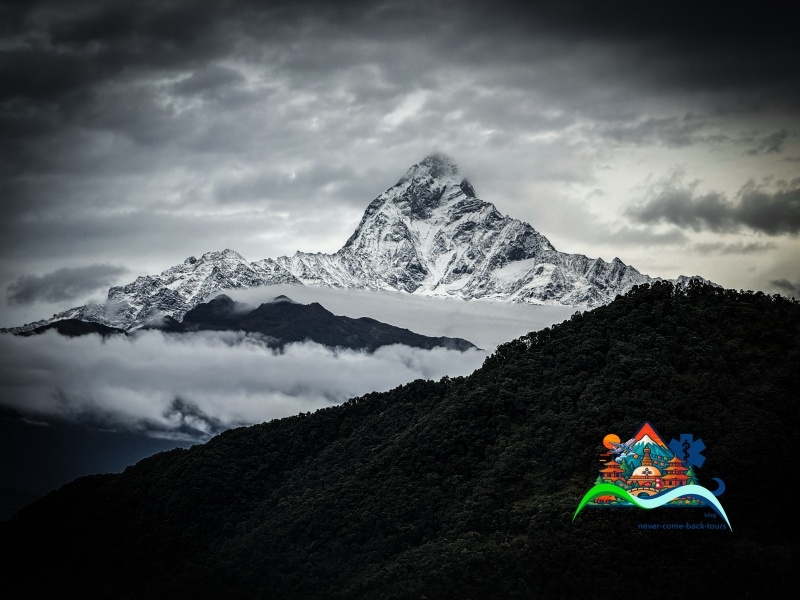
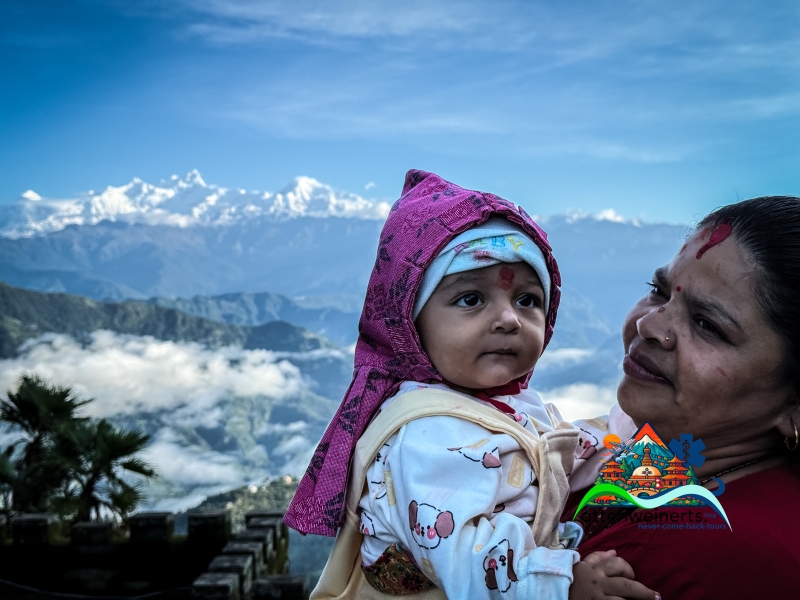
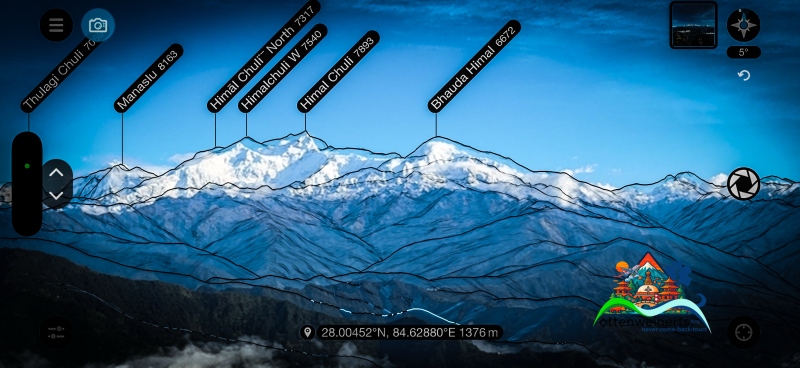
Und schon wieder um 6:00 Uhr aufstehen – diesmal, um mit dem öffentlichen Bus zum oberen Palast von Gorkha zu fahren, dann steile Stufen hochzuklettern und von hier aus die majestätische Anapurnakette und den Manaslu bei strahlendem Sonnenschein und ohne Wolken zu sehen. 

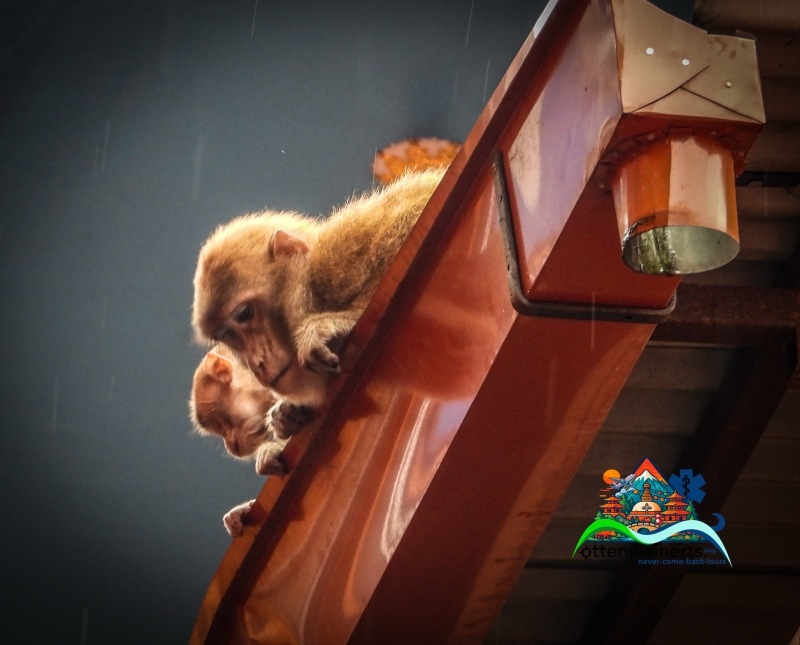
Im Tempel des Palastes warten drei Wasserbüffel nichtsahnend auf ihr Ende – heute Abend werden sie zu Ehren der Göttin Kali geopfert. Einige Ziegen mussten gestern bereits ihr Leben lassen, und so stapfen die unerschrockenen Touristen barfuß, weil Tempelareal, durch Ziegenblut und Wasserbüffelfladen. Der Rhesusaffe oben auf der Antenne denkt sich wahrscheinlich seinen Teil.

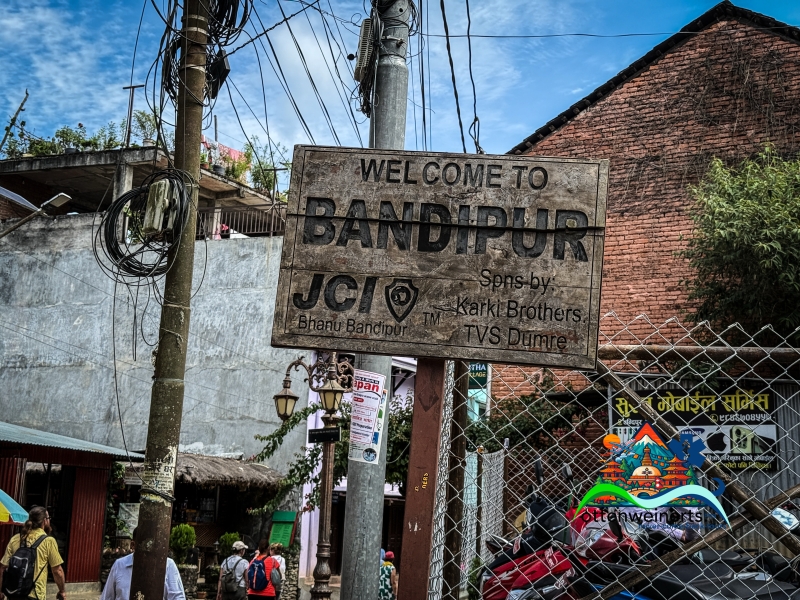
Zurück im Hotel haben wir uns eine Dusche und Frühstück verdient, dann geht es schon weiter westwärts nach Bandipur. Die „Königin des Hügels“ ist über eine zwar recht gut asphaltierte, aber dennoch abenteuerliche Straße erreichbar. 

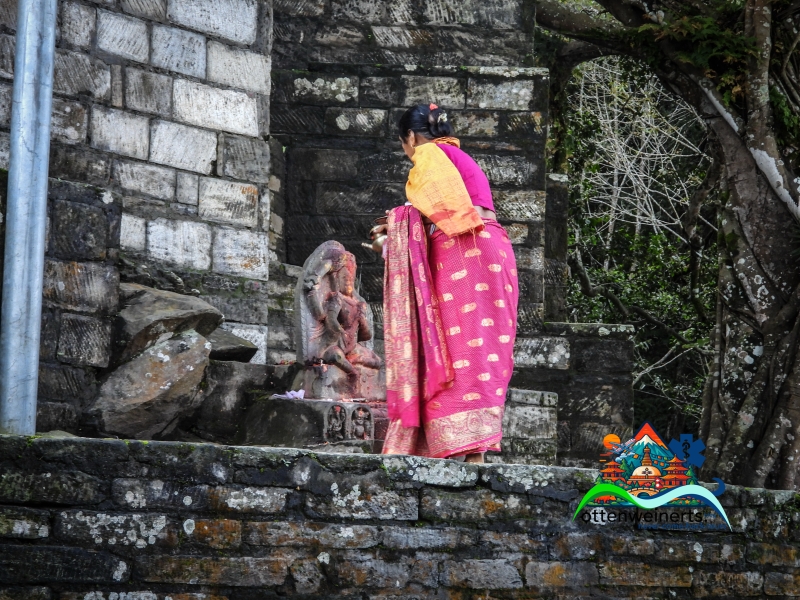
Der Ortsteil Bandipur Bazar ist aufgeräumt und hübsch herausgeputzt, aber auch sehr touristifiziert. Man sieht aber nicht nur Ausländer, sondern auch Nepalesen in wunderschönen, bunten Trachten. Vorbei an mehreren Hindu-Tempeln wandern wir zur Seilbahn-Bergstation, die in unserem Reiseführer beschrieben ist. Aber, Überraschung: die Seilbahn ist noch gar nicht fertig.

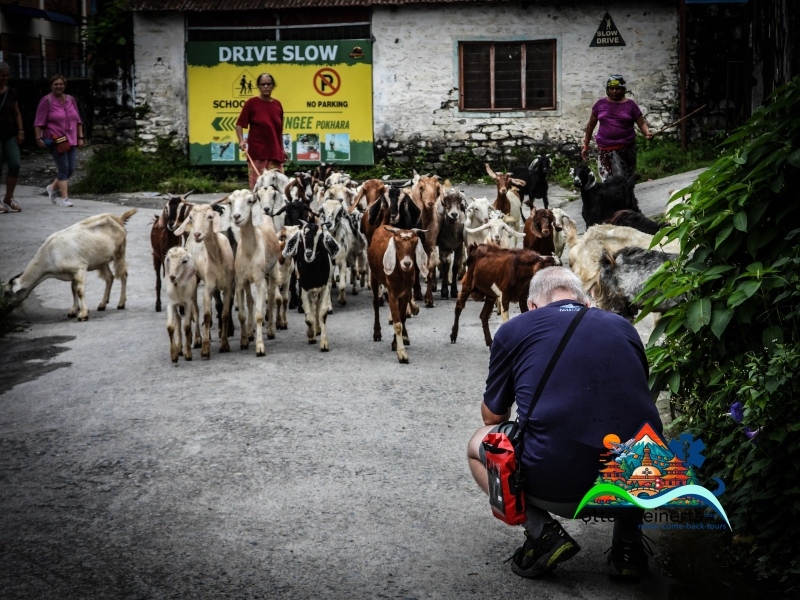
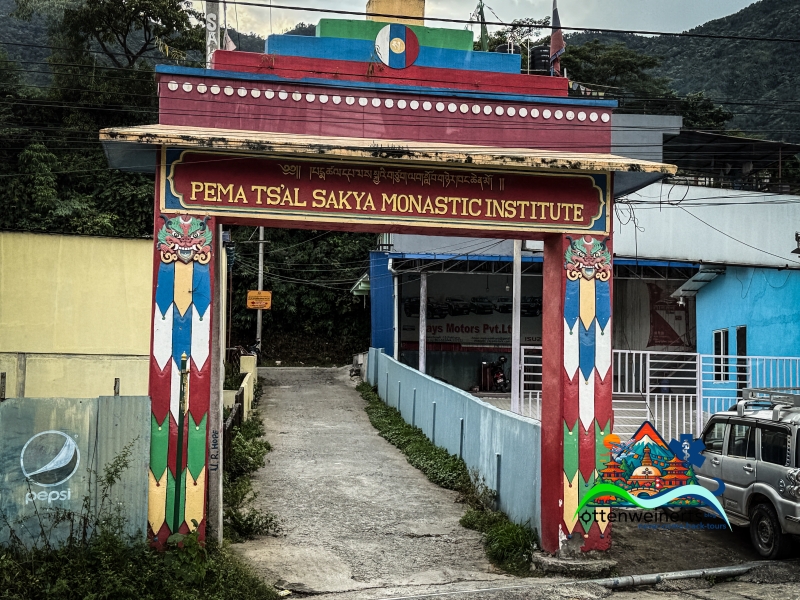
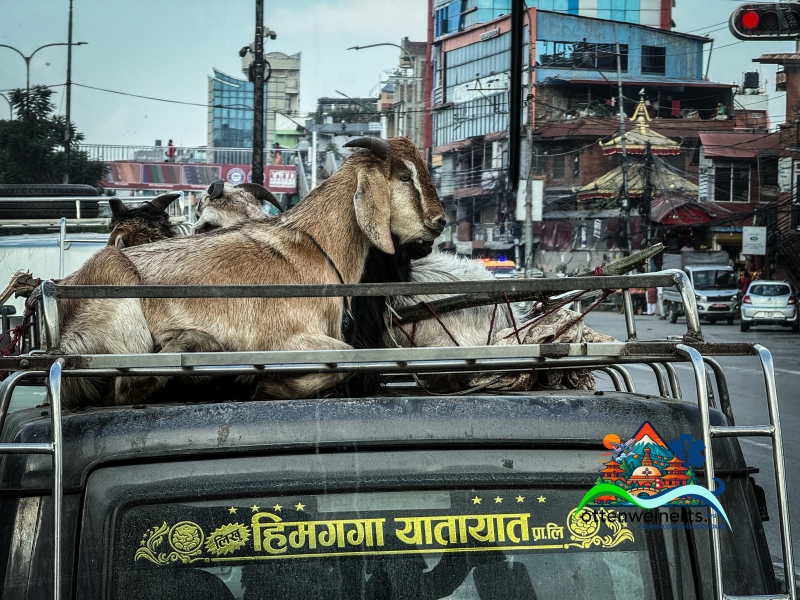
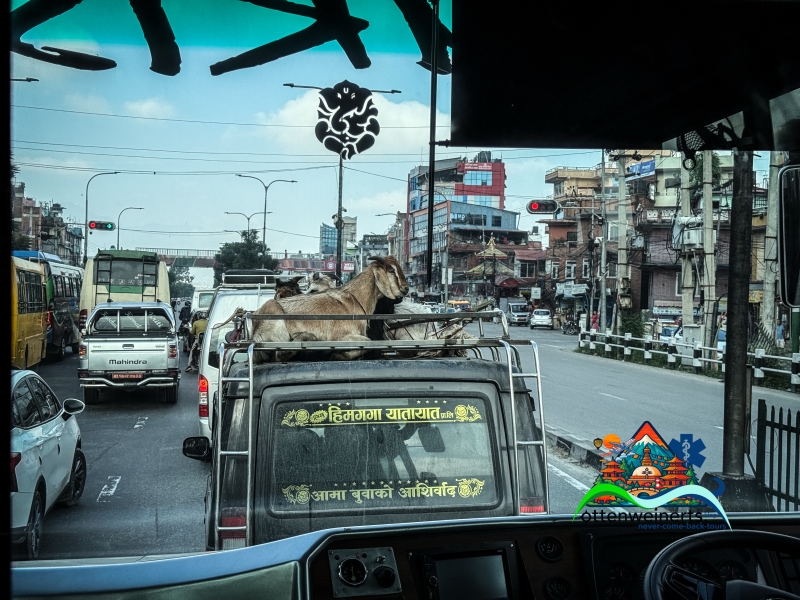
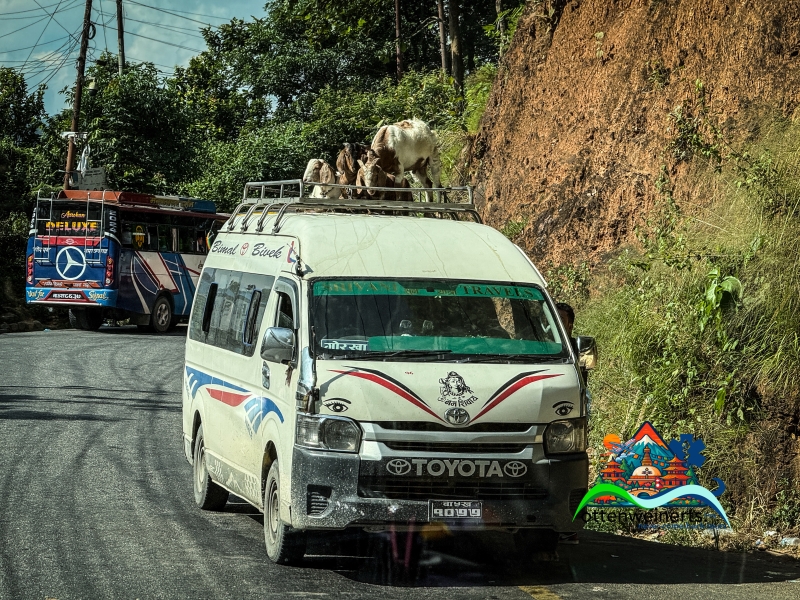
Nach der Mittagspause fahren wir die Abenteuerstraße wieder hinunter, weiter nach Westen. Am Straßenrand warten viele Ziegenbesitzer auf Käufer und die Ziegen damit auf ihr Ende – morgen ist der Höheudes Dashain-Festes. Wir fahren durch Pokhara nach Hemaja zum Pema Ts‘al Sakya Monastic Institute, einem buddhistischen Kloster mit Gästehaus, wo wir heute übernachten. Reiseleiter Yam hat uns „einfache Zimmer“ angekündigt, und wir waren auf so etwas wie Klosterzellen eingestellt. Aber die Zimmer sind groß, hell und freundlich und durchaus auf Hotelniveau – das Gästehaus ist einfach eine Einnahmequelle für die Mönche. 

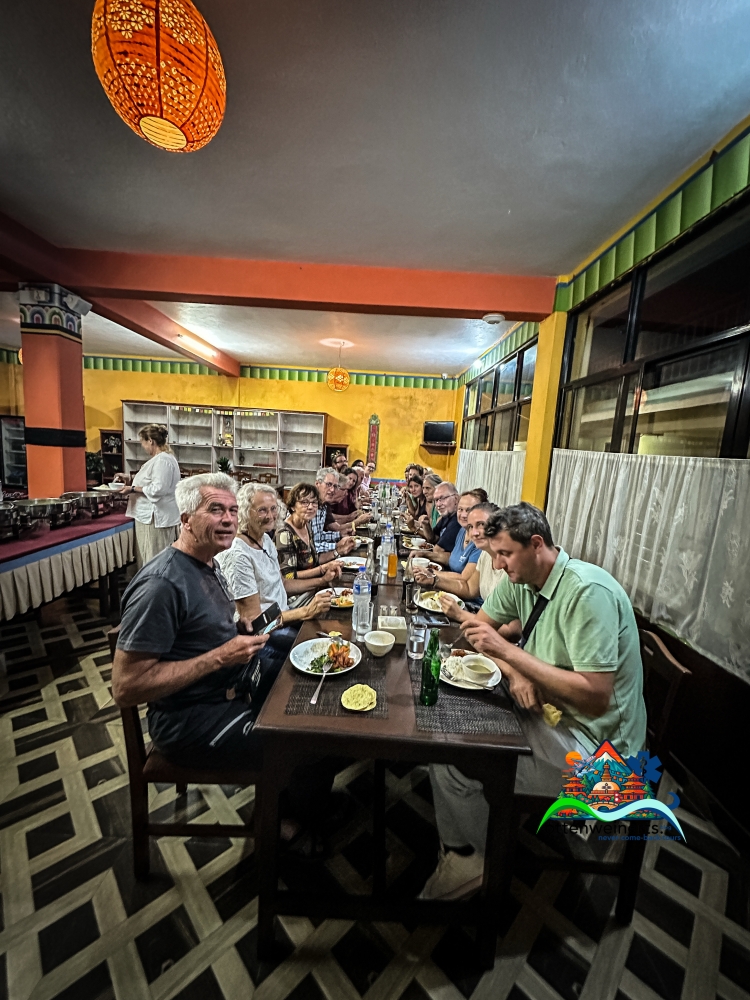
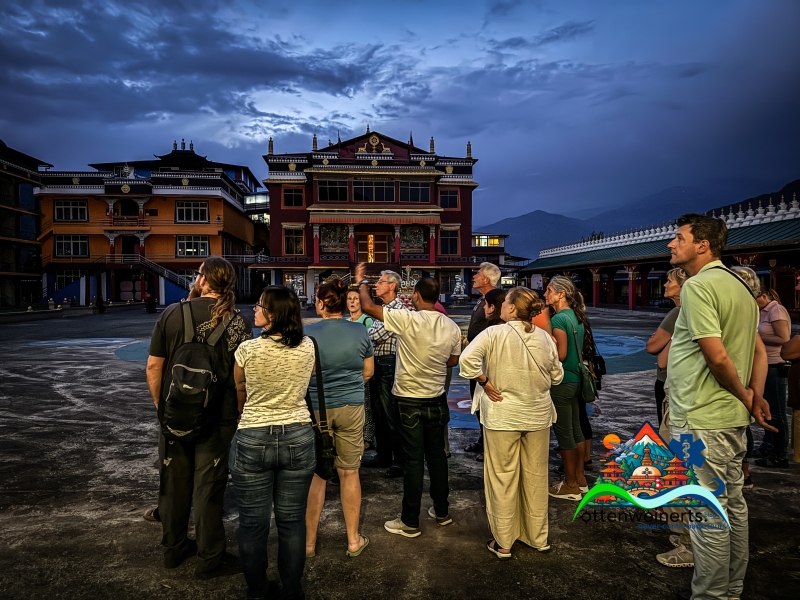
Einem kurzen Rundgang durch das Areal folgt das gemeinsame, natürlich vegetarische Abendessen und dann fallen wir nur mehr ins Bett – wir wollen bei der Morgenzeremonie der Mönche dabei sein, also wieder vor 6 Uhr aufstehen …. Gähn ….

Wednesday, 1 October 2025 – Nepal Day 7 – from Gorkha to Pokhara

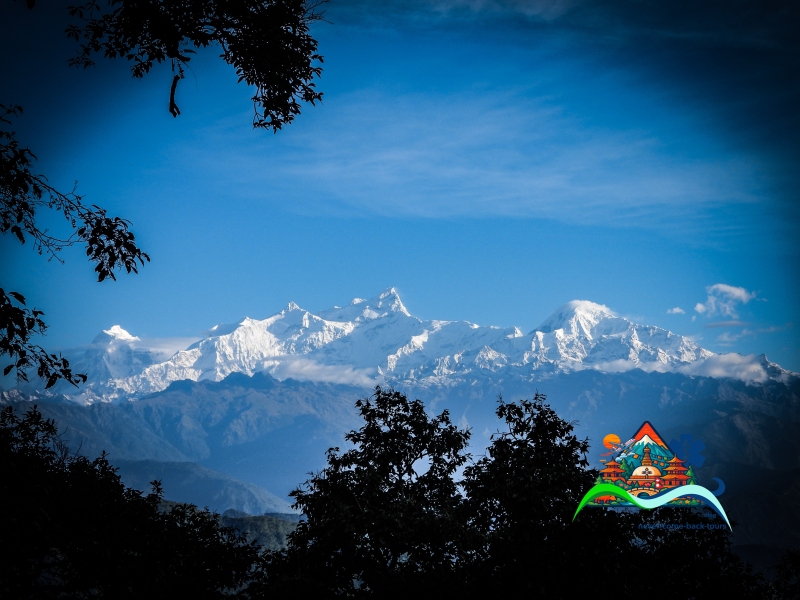
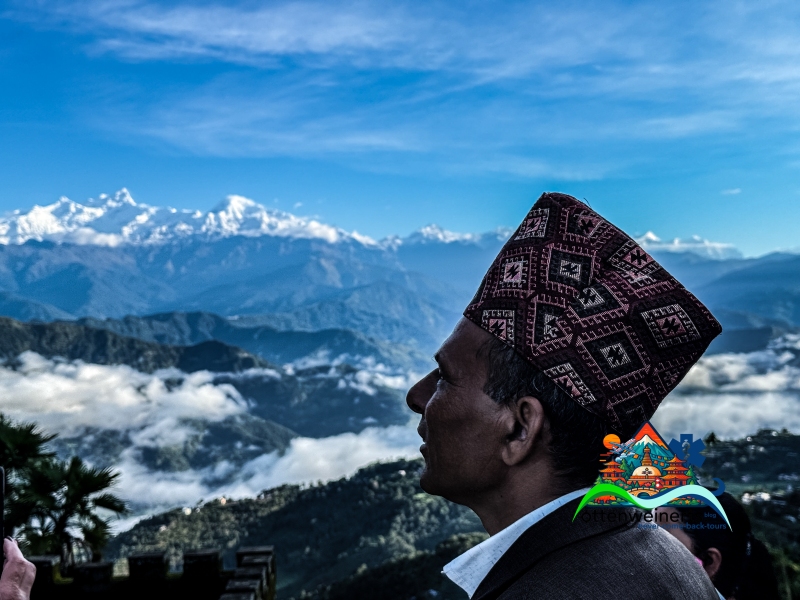
And once again, up at 6:00 a.m. – this time to take the public bus up to the upper palace of Gorkha, where we have to climb steep steps to admire the majestic Annapurna range and Manaslu, shining in brilliant sunshine without a single cloud in sight.

In the palace temple, three unsuspecting water buffalo are waiting for their end – this evening they will be sacrificed in honor of the goddess Kali. Several goats already lost their lives yesterday, and so the fearless tourists are walking barefoot (temple grounds!) through goat blood and buffalo droppings. The rhesus monkey up on the antenna is probably having its own thoughts about all this.

Back at the hotel, we’ve earned a shower and breakfast, and then we continue westwards to Bandipur. The “Queen of the Hill” can be reached via a road that is quite well paved but still rather adventurous.

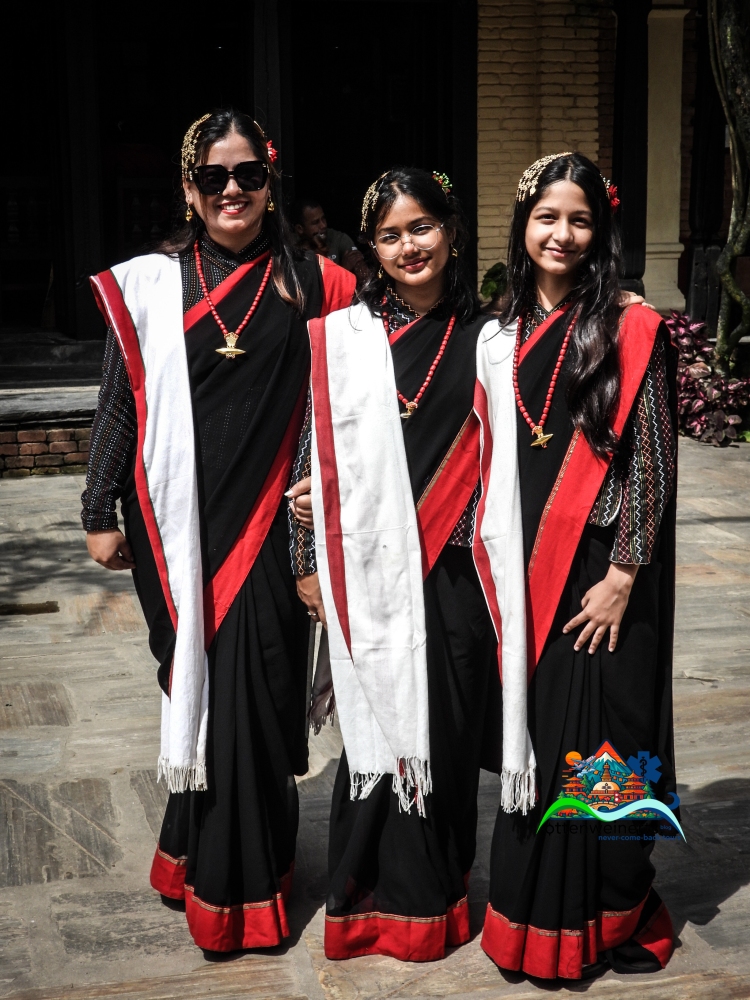
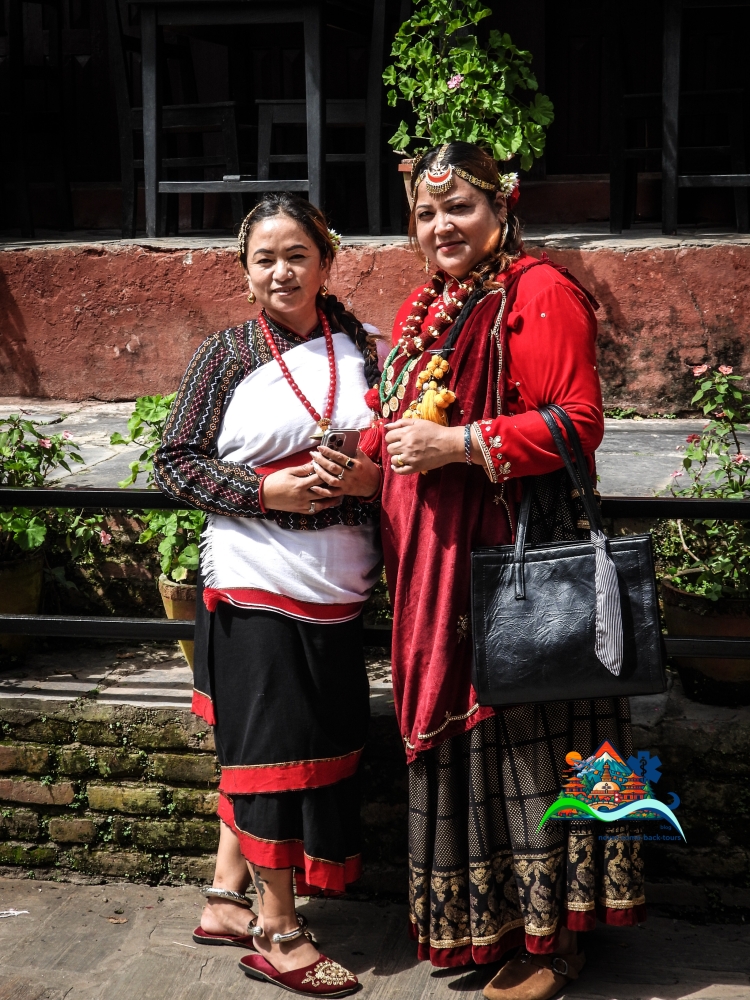
The Bandipur Bazar district looks very nice, but at the same time heavily touristified – not only foreigners visit here, but also Nepalis in beautiful, colorful traditional dresses. Passing several Hindu temples, we hike up to the cable car mountain station mentioned in our guidebook. But surprise: the cable car isn’t even finished yet.

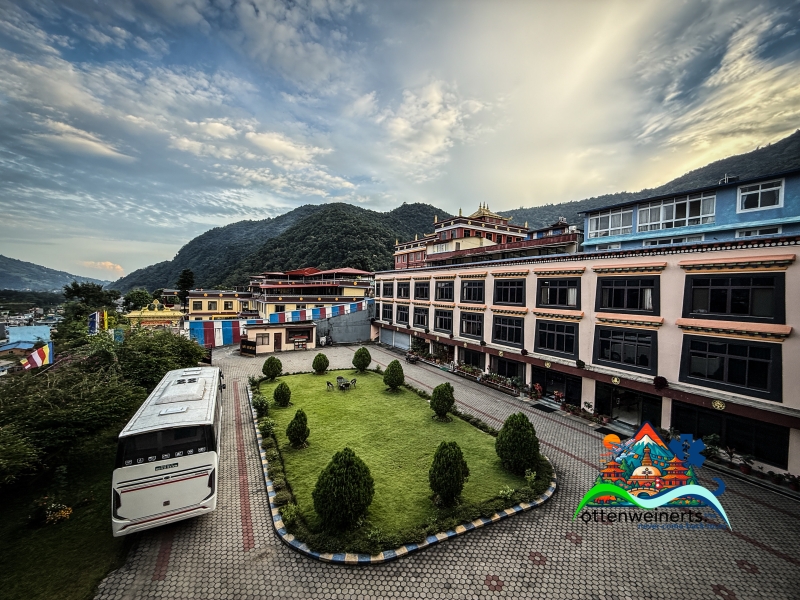
After our lunch break we drive the adventurous road back down and head further west. Along the roadside many goat owners wait for buyers – and the goats, in turn, wait for their end, since tomorrow is the peak of the Dashain festival. We drive through Pokhara to Hemaja, to the Pema Ts’al Sakya Monastic Institute, a Buddhist monastery with a guesthouse where we will spend the night. Our tour guide Yam had announced “simple rooms,” so we expected something like monastery cells. But the rooms are large, bright, and friendly, quite on hotel level – the guesthouse is simply a source of income for the monks.

A short tour of the grounds is followed by a communal (of course vegetarian) dinner, and then we just collapse into bed – we want to attend the monks’ morning ceremony, which means another wake-up before 6 a.m. … yawn …

250930 – Dienstag, 30.9.2025 – Nepal Tag 6 – von Nagarkot nach Gorkha –

Wir haben heute eine Strecke von 170 km vor uns – daher müssen wir um 5:45 aufstehen.  Die Berge schlafen noch, leider hinter einer Wolkendecke, also nichts mit Sonnenaufgang über dem Mt. Everest. Um 6:15 gibt’s Frühstück und um 7:00 ist Abfahrt.

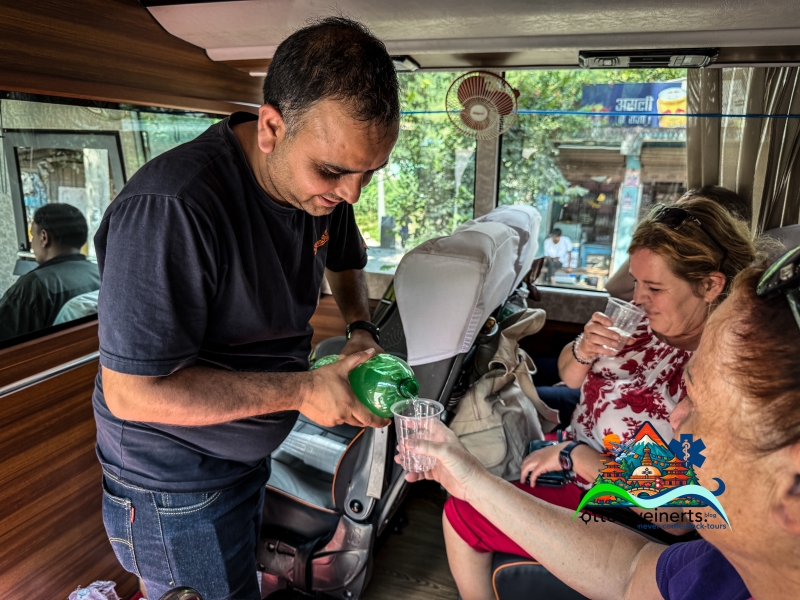
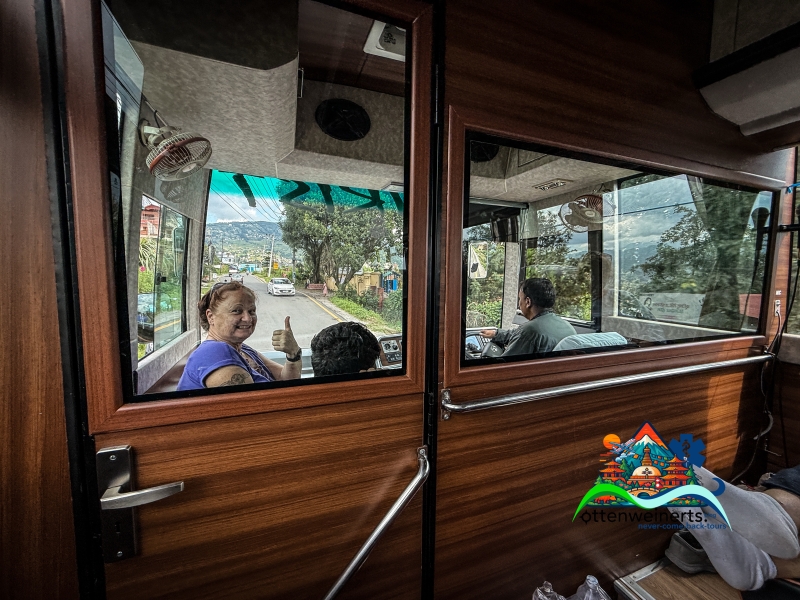
Yam erzählt uns während der Busfahrt immer etwas über Land und Leute – so etwa über die jüngste politische Vergangenheit von der Abschaffung der Monarchie bis zu den aktuellen politische Unruhen, oder  über das Schul- und Bildungssystem. Wir haben gehört,  das von den 30 Millionen Nepalesen etwa 10 Millionen im Ausland leben und heute erklärt uns Yam das Kastensystem – mega kompliziert und mittlerweile eigentlich verboten, aber in den Köpfen vor allem der älteren Generation noch immer drinnen.

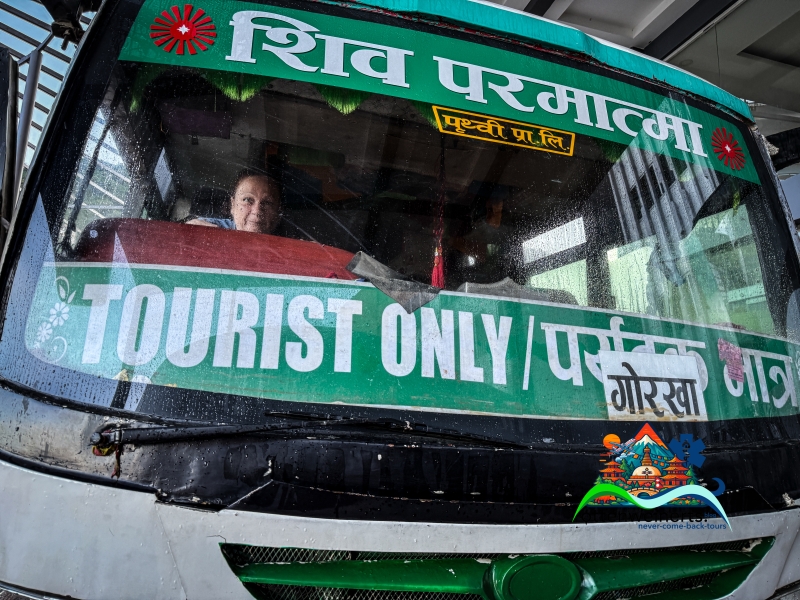
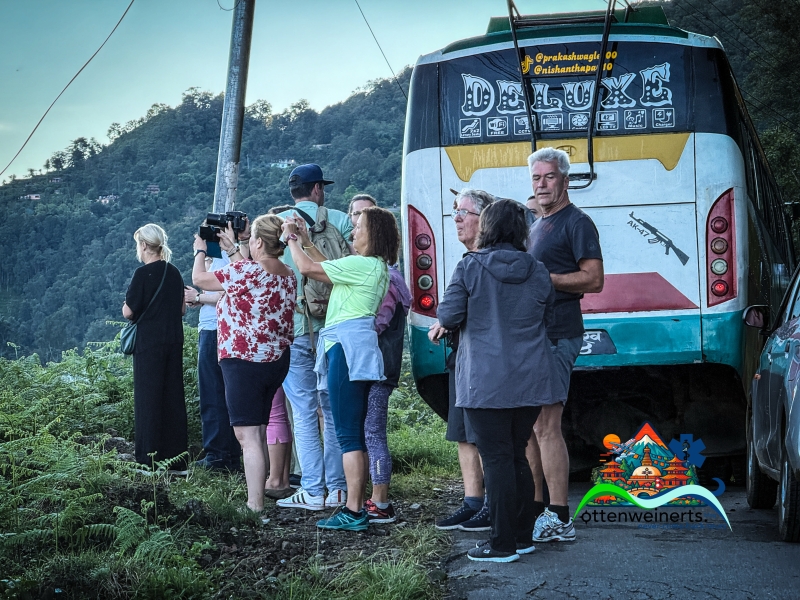
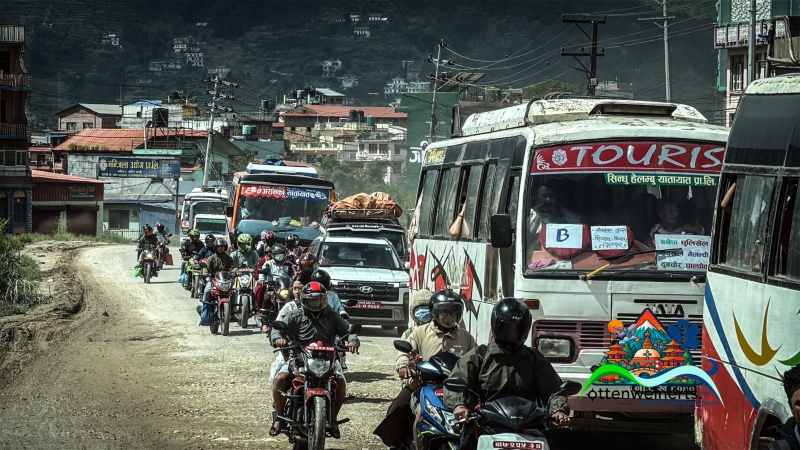
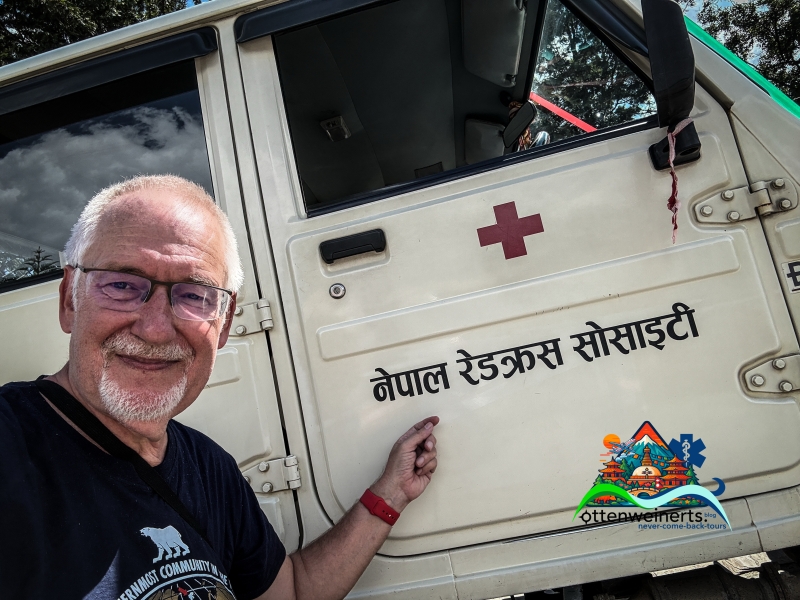
Eine kurze Pause in Kalanki bei Kathmandu beschert uns vier neue Ambulanzen für die Sammlung, dann geht es weiter nach Westen. Wir haben heute Glück mit dem Verkehr, es sind wenig Fahrzeuge auf den Straßen, vor allem kaum LKWs (LKW Fahrverbot wegen des Dashainfest). Ein Langstreckenbus fällt uns auf, für die 1.100 km von Neu-Delhi nach Kathmandu braucht er zwischen zwei und drei Tage.

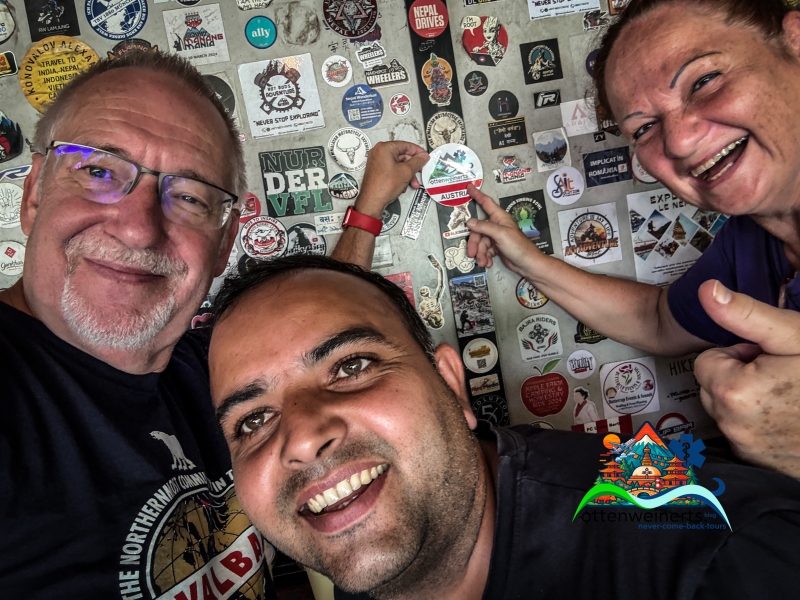
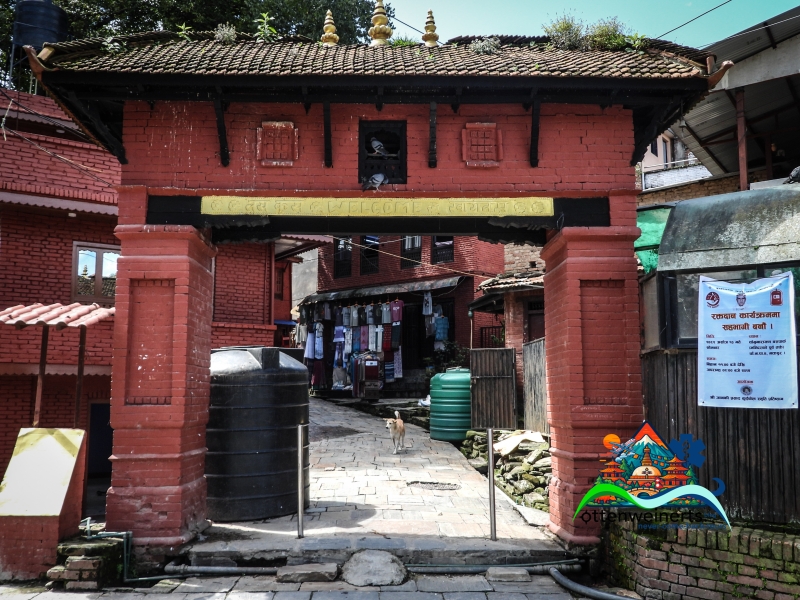
Nächster Halt: 2 Souvenir T-Shirts gehen mit, und ein Ottenweinerts-Sticker bleibt hier.

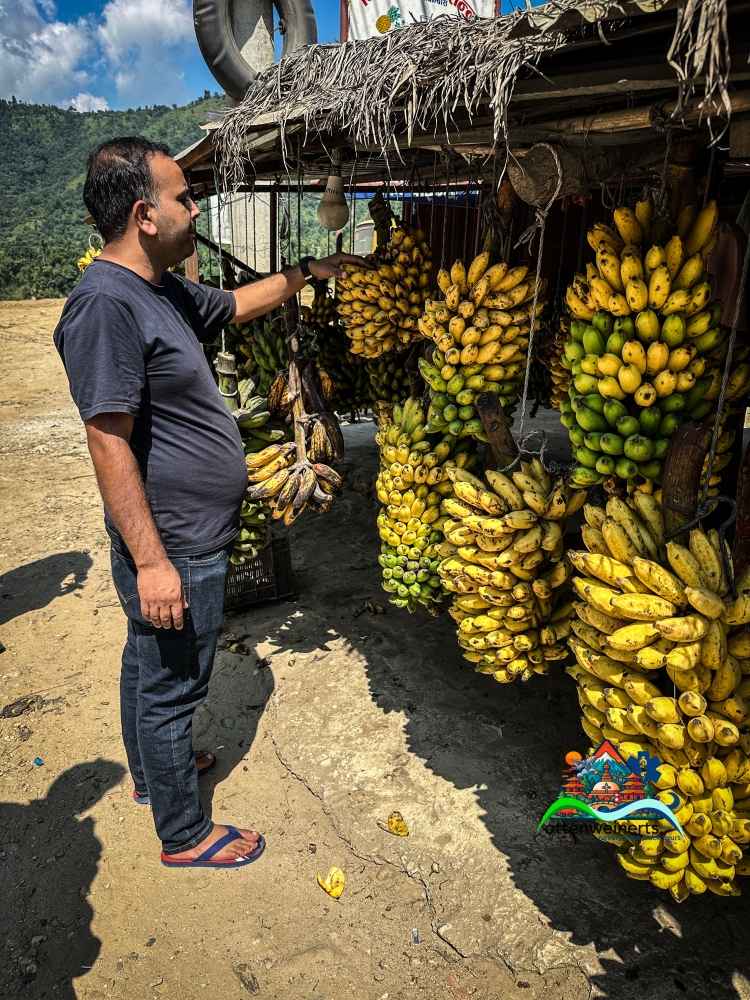
Es geht weiter am Prithvi Highway nach Westen – auch diese Straße hat die Bezeichnung Highway wahrscheinlich nur, weil sie die einzige OstWest-Verbindung darstellt. Links und rechts sehen wir Hügellandschaft mit subtropischer Vegetation, Terrassenfelder mit Reis- und Gemüseanbau, und dazwischen Bananenstauden – und Yam kauft für uns Babybananen.

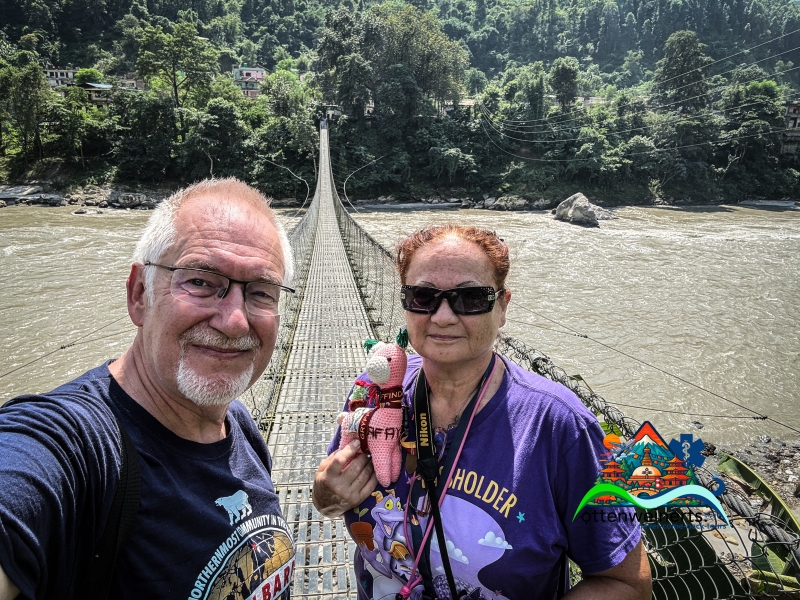
Der Highway folgt dem Trisuli-Fluß, etliche Hängebrücken führen ans andere Ufer – und die Touristen müssen natürlich auch eine solche überqueren. und dahinter kommt dann das Motorrad.

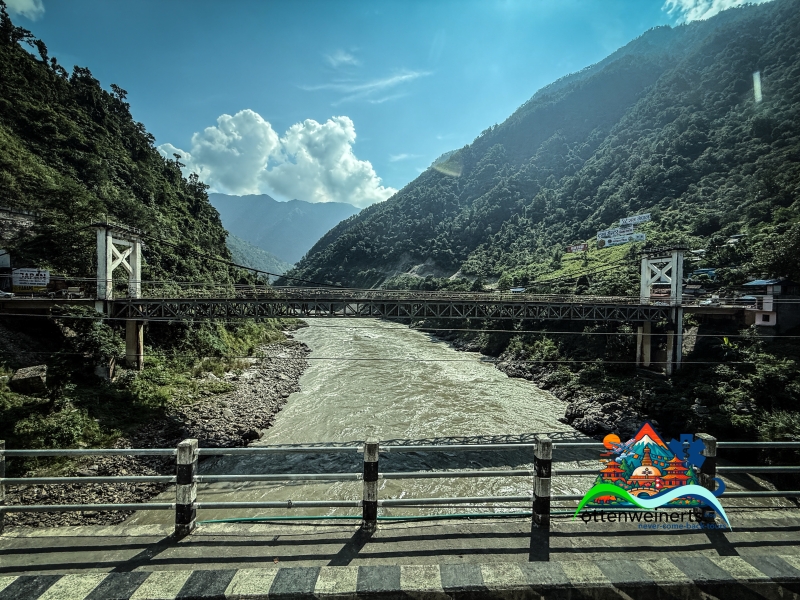
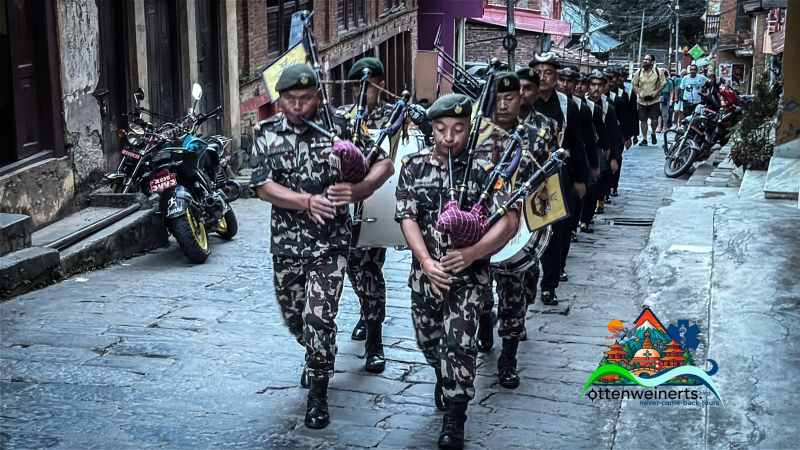
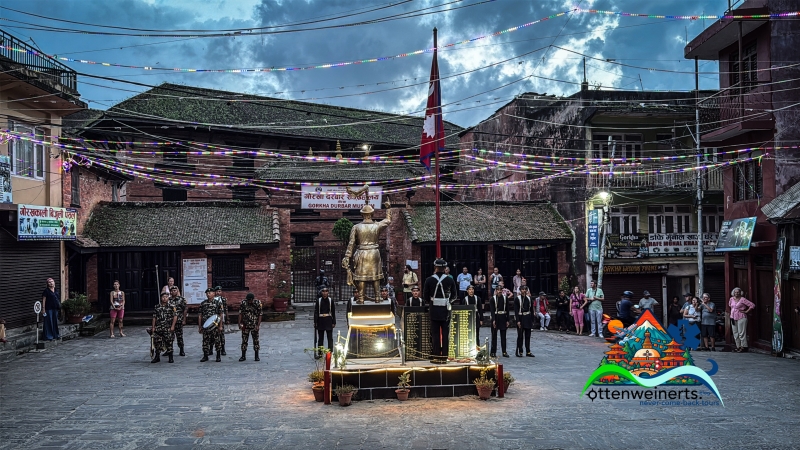
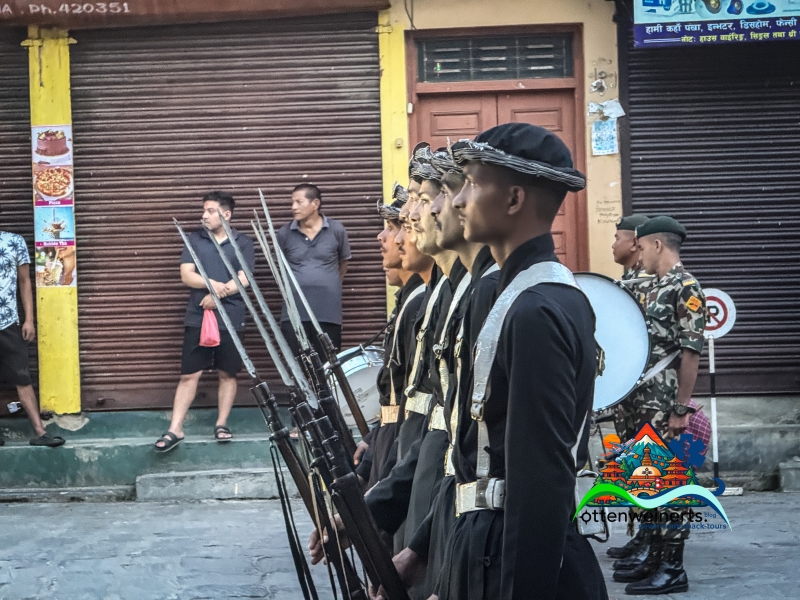
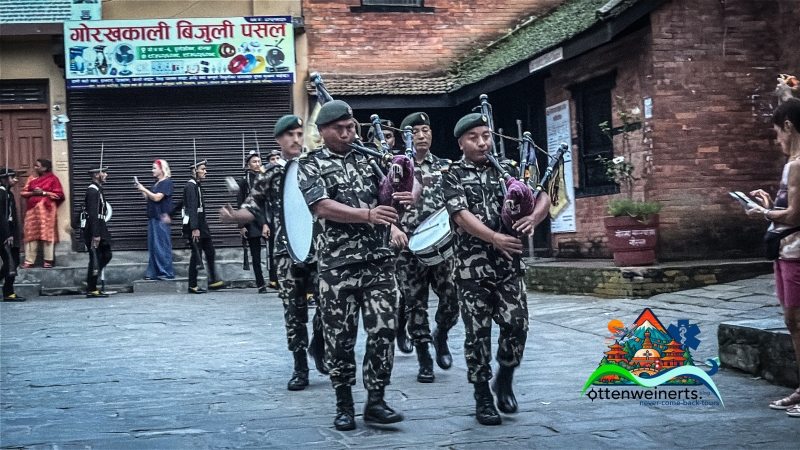
Der Highway gabelt sich, die linke Strecke führt nach Süd-Westen und nach Indien, wir biegen rechts ab, überqueren eine Brücke über den Trisuli und folgen dann weiter dem Marsyangdi River nach Norden, auf dem erstaunlich guten Abukhaireni-Gorkha-Highway. In Gorkha sehen wir vor dem Abendessen noch die allabendliche Flaggenzeremonie – Militärmusik mit Dudelsack und eine Garde Truppe marschieren auf den Hauptplatz, wo ein Denkmal des „Vaters von Nepal“ über einer Landkarte wacht. Prithvi Narayan Shah wurde hier geboren und bestieg im Alter von 20 Jahren den Thron. In 17 Jahren Krieg eroberte er all die  kleinen Königreiche und vereinte das Land – Gorkha wird auch „Wiege von Nepal“ genannt. Morgen in der Früh werden wir dann den Königspalast besuchen

Tuesday, 30 September 2025 – Nepal Day 6 – from Nagarkot to Gorkha

Today we have a distance of 170 km ahead of us – which means we have to get up at 5:45. The mountains are still asleep, unfortunately hidden behind a blanket of clouds, so no sunrise over Mt. Everest for us. Breakfast is at 6:15, and departure at 7:00.

During the bus ride, Yam always tells us something about the country and its people – for example, about recent political history, from the abolition of the monarchy to current political unrest, or about the school and education system. We had already heard that of Nepal’s 30 million people, about 10 million live abroad, and today Yam explains the caste system to us – incredibly complicated and nowadays technically banned, but still deeply ingrained in the minds, especially with the older generation.

A short stop in Kalanki near Kathmandu adds four new ambulances to our collection, and then we continue westwards. Today we are lucky with the traffic: there are few vehicles on the roads, hardly any trucks (truck ban due to the Dashain festival). One long-distance bus catches our eye: for the 1,100 km from New Delhi to Kathmandu, it needs between two and three days.

Next stop: two souvenir T-shirts are coming with us, and one Ottenweinerts sticker stays behind.

We continue west along the Prithvi Highway – a road probably called “highway” only because it is the only east-west connection. On both sides we see hilly landscapes with subtropical vegetation, terraced fields of rice and vegetables, and in between banana plants – Yam buys baby bananas for us.

The highway follows the Trisuli River, with numerous suspension bridges leading to the other side – and of course the tourists also have to cross one. Right behind us, a motorcycle also uses the bridge.

The highway divides – the left route leads southwest to India, but we turn right, cross a bridge over the Trisuli, and continue following the Marsyangdi River northwards, on the surprisingly good Abukhaireni–Gorkha Highway. In Gorkha, before dinner, we witness the evening flag ceremony – military music with bagpipes, and a guard troop marching onto the main square, where a monument of the “Father of Nepal” watches over a map of the country. Prithvi Narayan Shah was born here and ascended the throne at the age of 20. In 17 years of war, he conquered the many small kingdoms and united the land – Gorkha is also called the “Cradle of Nepal.” Tomorrow morning we will then visit the royal palace

250929 – Montag, 29.9.2025 – Nepal Tag 5 – Dhulikel, Changu Narayan und Nagarkot – 

Auch in Dhulikhel gibt es eine nette kleine Altstadt, mit interessanten Wandmalereien und Shivatempel – von der Innenbesichtigung schreckt uns allerdings die tote, kopflose Ziege ab, die anlässlich des Dashain-Festes ihr Leben lassen musste. Hinduismus wäre eindeutig keine Religion für uns. 

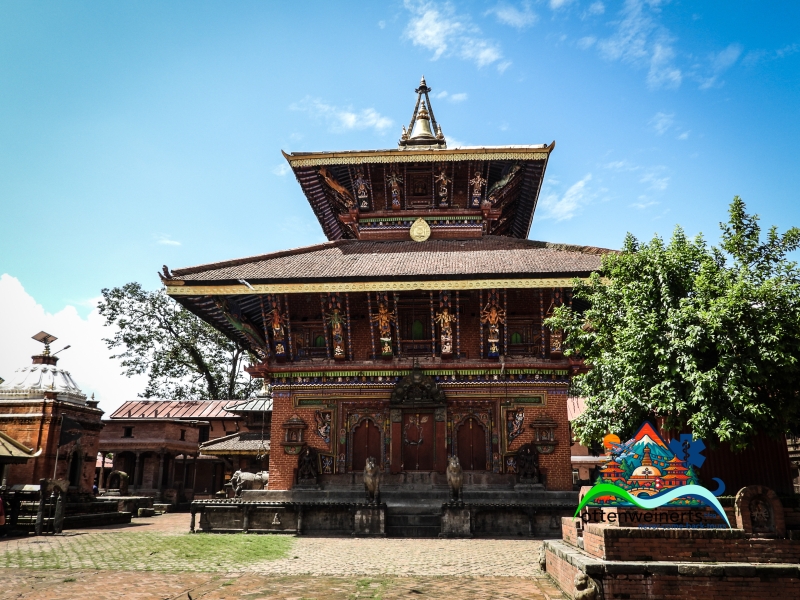
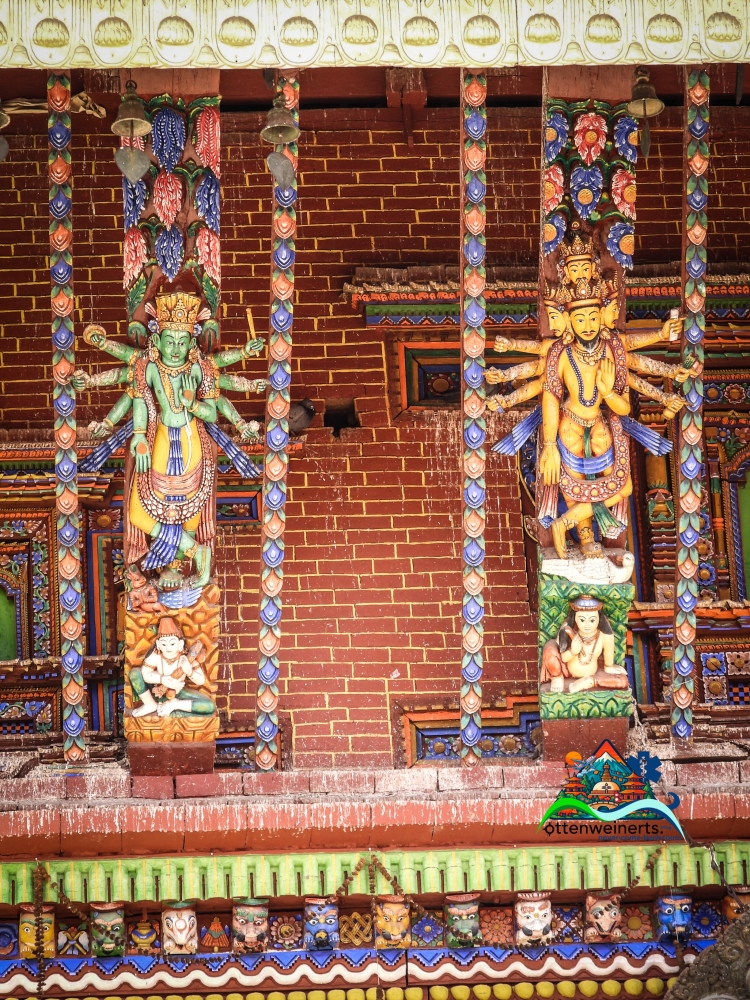
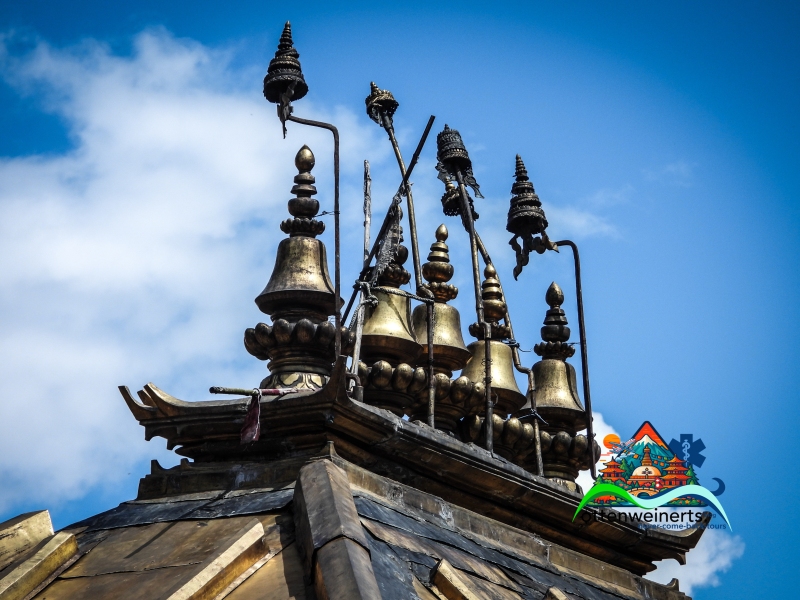
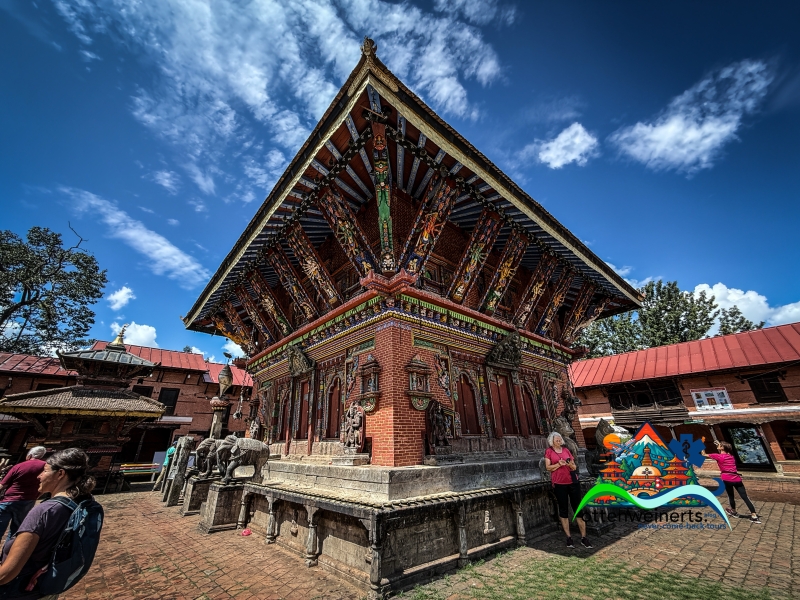
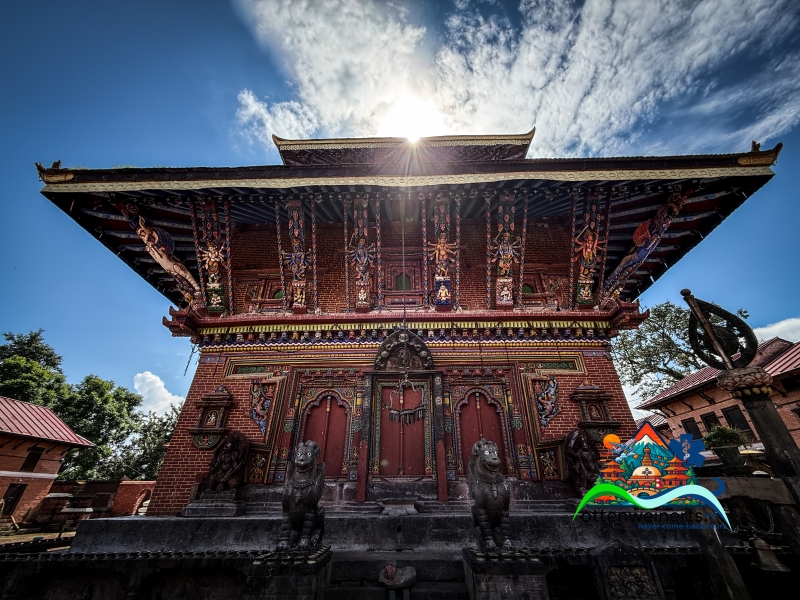
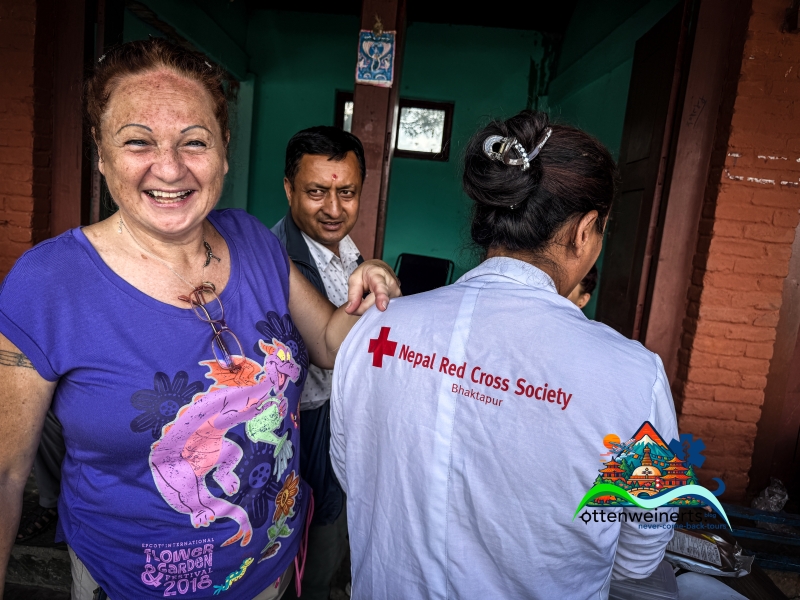
Dann geht es zuerst am Araniko -“Highway” zurück Richtung Westen und weiter auf einer engen, steilen Straße nach Norden – auf dieser Strecke leistet unser Busfahrer Millimeterarbeit, Gegenverkehr bedeutet Adrenalin. Zahlt sich aber aus, oben am Hügel liegt Changu Narayan, der älteste Hindu-Tempel Nepals. Mehrfach bei Erdbeben zerstört, wurde dieser Vishnu / Narayan geweihte Tempel immer wieder aufgebaut, opulent verziert und bunt bemalt. Und hier treffen wir wieder Familienmitglieder – heute veranstaltet das nepalesische Rote Kreuz eine Blutspende-Aktion.

Nach einer kurzen Mittagspause bricht der Großteil unserer Truppe zu einer Wanderung auf – wir lassen das heute aus. Es ist heiß, die Strecke geht laut Reiseleiter Yam einige Zeit doch eher steil bergauf, meine Schuhe sind nach der gestrigen Schlammschlacht noch immer nass, und mein linkes Knie ist auch noch immer beleidigt. Also fahren wir mit dem Bus zum Treffpunkt in Tulkot. Von dort ist es nur mehr eine halbe Stunde Fahrt zu unserem heutigen Hotel in Nagarkot – von wo man abends einen tollen Sonnenuntergang über dem Dhaulagiri im Westen erleben kann – wenn es nicht gerade einen Wolkenbruch gibt so wie jetzt.

Na vielleicht haben wir morgen früh mehr Glück mit dem Sonnenaufgang über Mt. Everest und Kanchenjunga. Achja, das Wort des Tages: Jaya hos – Prost

Monday, 29.9.2025 – Nepal Day 5 – Dhulikhel, Changu Narayan and Nagarkot

Dhulikhel also has a charming little old town, with interesting wall paintings and Shiva temples – but we’re put off from going inside by the sight of a dead, headless goat sacrificed for the Dashain festival. Hinduism is definitely not a religion for us.

Then we head back west, at first along the Araniko “Highway” and continue north on a narrow, steep road – our bus driver is working within inches here, and oncoming traffic means pure adrenaline. But it’s worth it: on the hilltop lies Changu Narayan, the oldest Hindu temple in Nepal. Destroyed several times by earthquakes, this temple, dedicated to Vishnus incarnation Narayan, has always been rebuilt, richly decorated, and colorfully painted. And here we meet family members again – today the Nepalese Red Cross is organizing a blood drive.

After a short lunch break, most of our group sets off for a hike – we skip it today. It’s hot, the trail apparently climbs quite steeply for some time according to our guide Yam, my shoes are still wet from yesterday’s mud battle, and my left knee is still acting up. So we take the bus to the meeting point in Tulkot instead. From there, it’s just another half-hour drive to our hotel in Nagarkot for the night – where you can enjoy a fantastic sunset over Dhaulagiri in the west… unless, like today, there’s a downpour.

Well, maybe we’ll have better luck tomorrow morning with the sunrise over Mt. Everest and Kanchenjunga. Oh yes, the word of the day: Jaya hos – Cheers!

250928 – Sonntag, 28.9.2025 – Nepal Tag 4- Kloster Namo Buddha und Wanderung –

Heute in der Früh geht es zur Namo Buddha Monastery, einen buddhistischen Kloster, in dem 200 Mönche leben. Am Weg dorthin erklärt uns Reiseleiter Yam die Grundzüge des Buddhismus; Buddha wurde ja als Prinz Siddhharta Gautama in Lumbini hier in Nepal geboren.

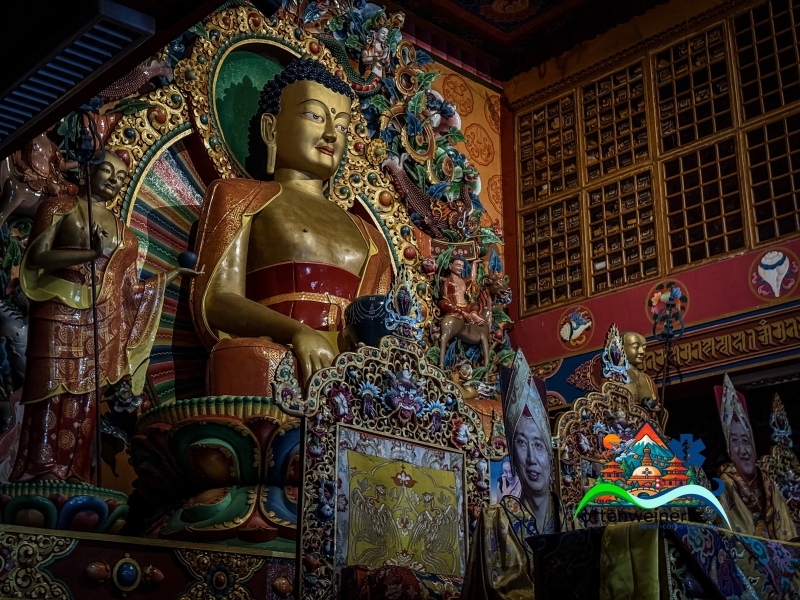
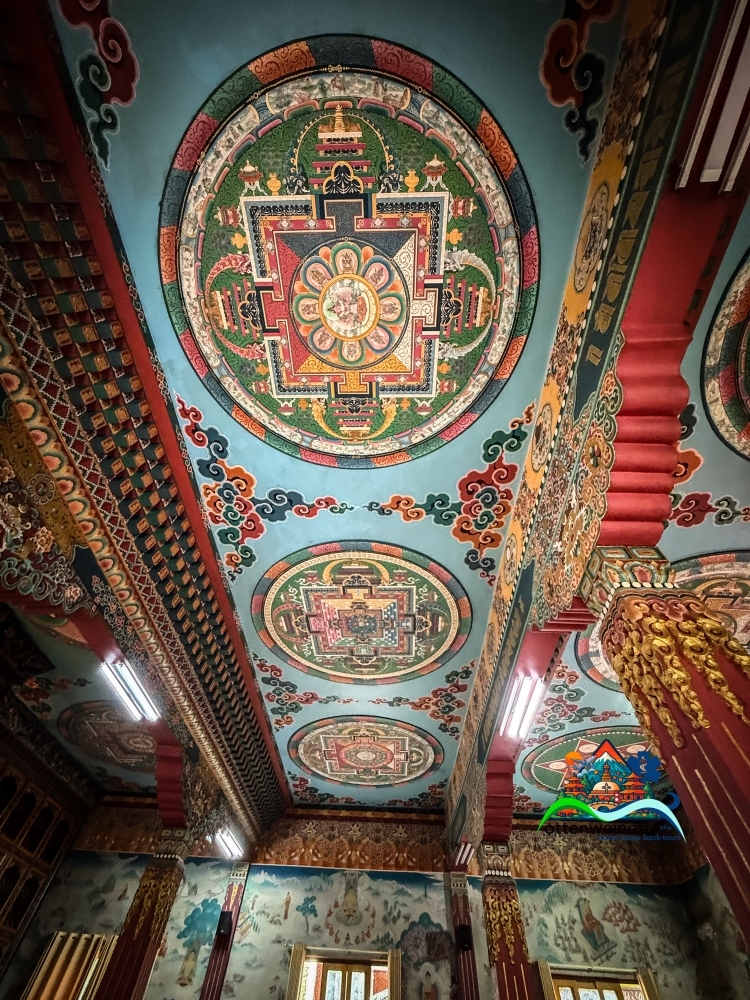
Wir haben Glück und kommen zu einer Zeremonie zurecht– das gemeinsame Gebet der Mönche in der opulent geschmückten großen Halle dauert knapp eine Stunde. Wir verstehen zwar kein Wort, aber es ist trotzdem eindrucksvoll, hat meditativen Charakter und ist sehr entspannend – wenn da nicht dazwischen die Schalmeien, Tschinellen und Gyalingtrompeten wären, die einen ordentlichen Wirbel machen. 

Nach der Zeremonie unterhalten wir uns ein wenig mit den Mönchen, die auch recht gut englisch sprechen, dann geht es noch ein Stückchen den Hügel hinauf. Am Kloster-Areal finden sich acht Stupas, natürlich mehrere Souvenirshops sowie am Gipfel noch eine einzelne Stupa, mit Gebetstüchern behangen. Die Aussicht von hier oben ist phänomenal.

Nach einer Kaffeepause beginnt dann die auch im Programm angekündigte Wanderung, aber erfreulicherweise hat unser Reiseleiter das heutige Programm für uns umgedreht – wir sind mit dem Bus zum Kloster hinauf gefahren und wandern den Rückweg zu Fuß, größtenteils bergab. Unterwegs begegnet wir weiteren Einheimischen wie etwa einer Baby-Himalaya-Schmucknatter oder einer wunderschön gefärbten Geisterheuschrecke.

Es ist heiß und wir sind jedem einzelnen Baum für den Schatten dankbar. Allerdings halten sich an einigen schattigen Stellen noch Wasserlöcher und schlammige Passagen nach dem Regen der letzten Nacht. Und ein kleiner Fehltritt führt dann zu meinem ersten unfreiwilligen Kniefall in Nepal und ich bleibe mit beiden Schuhen im Matsch stecken. Mein linkes Knie protestiert lauthals, und die Kamera ist mit Schlamm bedeckt.  

Am Abend stellt sich dann heraus, dass der Kamera nichts passiert ist – sie war zu dem Zeitpunkt nicht eingeschalten, das Objektiv war nicht ausgefahren, und der Schlamm klebt nur außen an der Hülle fest. Die Schuhe und die Kleidung kann man waschen, und meiner Haut hat die Schlammpackung auch nicht geschadet.

Sunday, September 28, 2025 – Nepal Day 4 – Namo Buddha Monastery and Hike

This morning we head to Namo Buddha Monastery, a Buddhist monastery where 200 monks live. On the way, our guide Yam explains the basics of Buddhism; after all, Buddha was born as Prince Siddharta Gautama, in Lumbini, here in Nepal.

We are lucky to arrive just in time for a ceremony – the monks’ communal prayer in the opulently decorated main hall lasts nearly an hour. We don’t understand a word, but it is still impressive, with a meditative character and very relaxing – if it weren’t for the interludes of shawms, cymbals, and gyaling trumpets creating quite a loud sound.

After the ceremony we chat a little with the monks, who speak quite good English, then we continue a bit further up the hill. The monastery grounds feature eight stupas, of course several souvenir shops, and at the summit one solitary stupa draped with prayer flags. The view from up here is phenomenal.

After a coffee break we set out on the hike that was also announced in the program, but fortunately our guide rearranged today’s schedule for us – we took the bus up to the monastery, now we are walking back down on foot, mostly downhill. Along the way we encounter more locals, such as a baby Himalayan trinket snake and a beautifully colored ghost grasshopper.

It is hot, and we are grateful for every single tree that offers shade. However, in some shaded spots there are still waterholes and muddy patches left over from last night’s rain. One small misstep leads to my first involuntary kneefall in Nepal, and both my shoes get stuck in the mud. My left knee protests loudly, and the camera ends up covered in muck.

In the evening it turns out that nothing happened to the camera – at the time it wasn’t switched on, the lens wasn’t extended, and the mud only stuck to the outside of the casing. Shoes and clothes can be washed, and my skin feels nice and smooth after the mud bath.

250927 – Samstag, 27.9.2025 – Nepal Tag 3 – Mt. Everest –

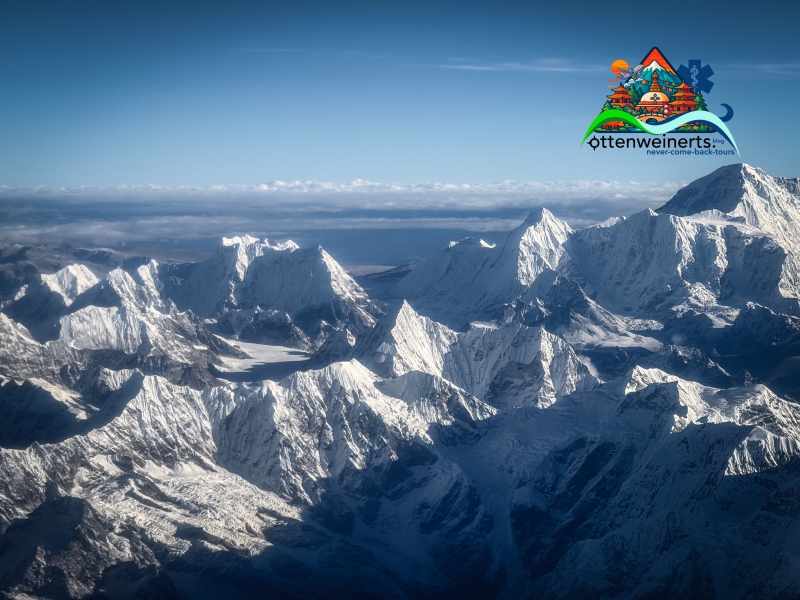
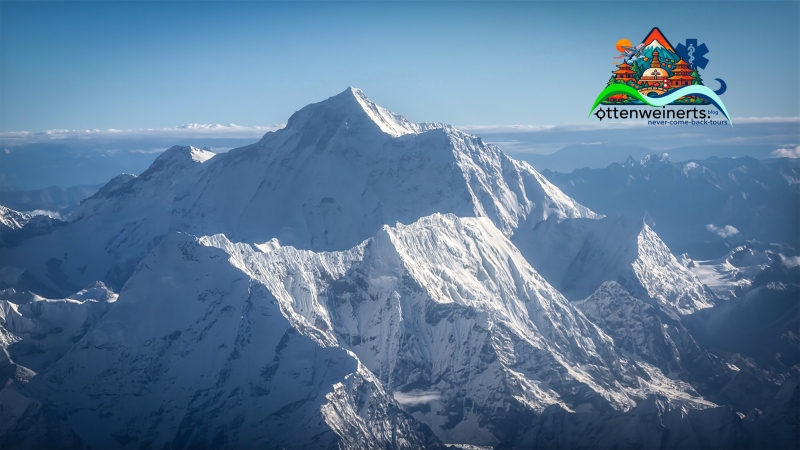
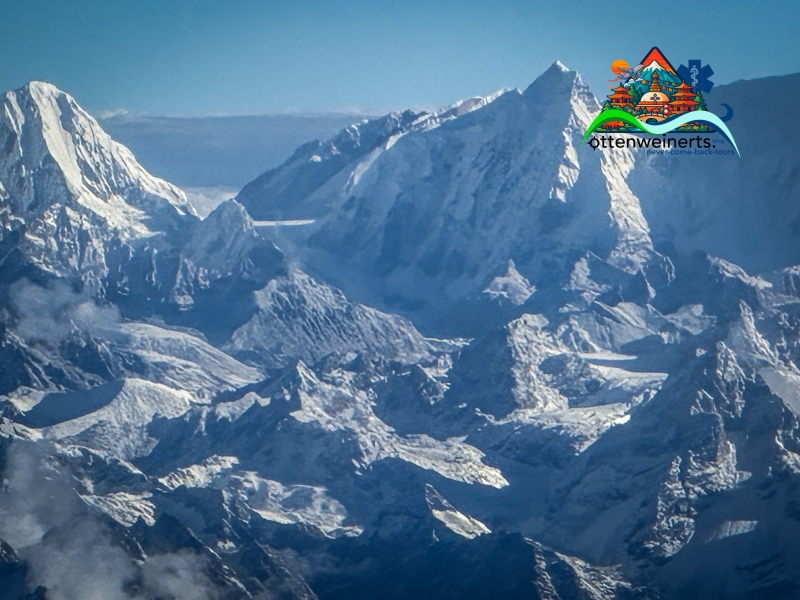
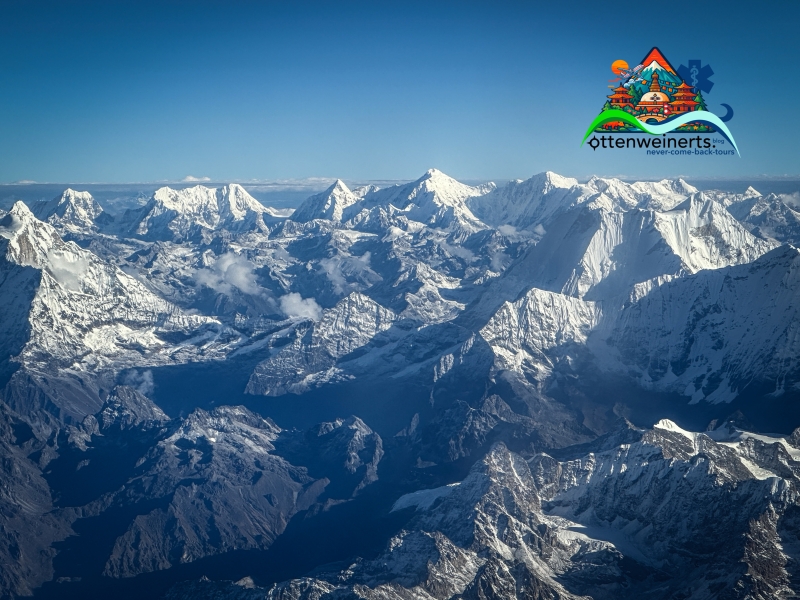
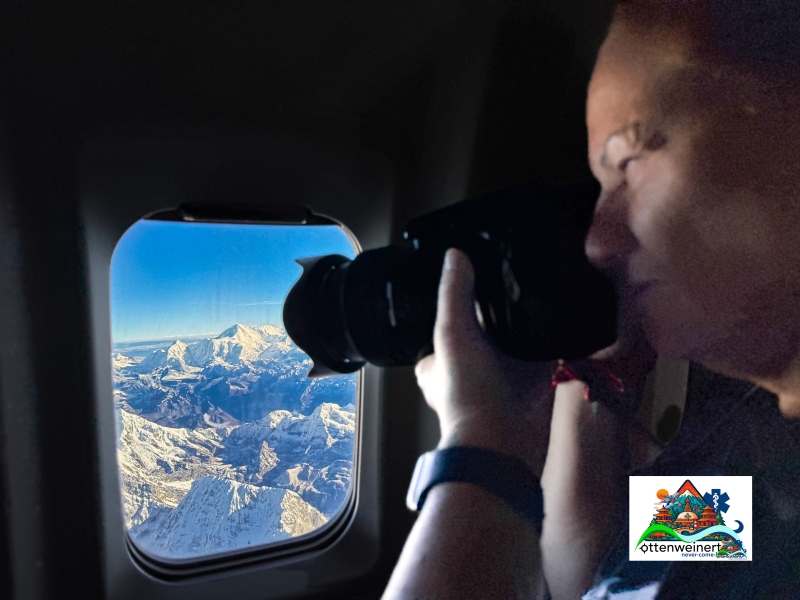
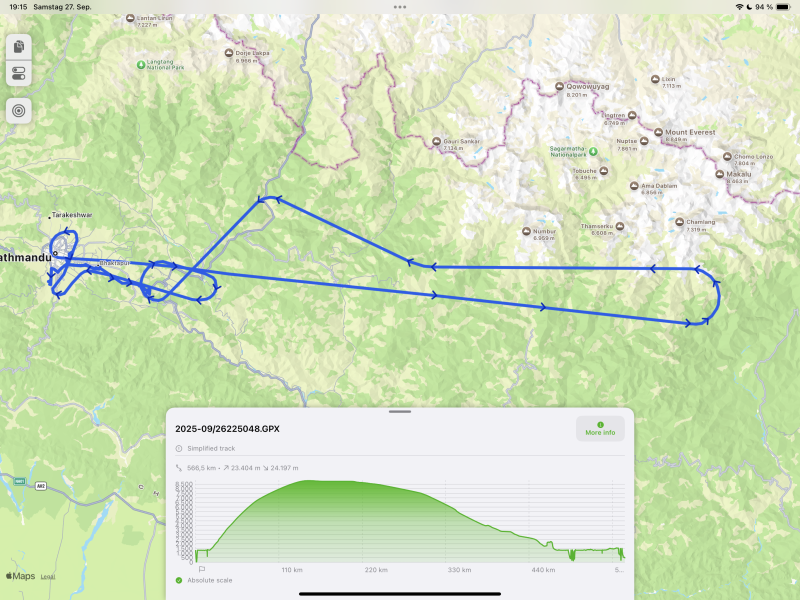
Warum läutet der Wecker um 4:30, also kurz nach Mitternacht?? Ach ja, Reiseleiter Yam hat für uns einen tollen Ausflug abseits des regulären Programms organisiert. Wir sollten um 5:30 am Flughafen sein, aber der Verkehr ist auch am frühen Morgen schon die Hölle – doch das Flugzeug wartet auf uns. Shree Airlines bietet knapp 1stündige Rundflüge an, jeder hat einen Fensterplatz, und so kommen wir in den Genuss, Mt. Everest, Lhotse und Makalu, also dem höchsten sowie dem viert- und fünfthöchsten Berg der Erde auf Augenhöhe zu begegnen, ohne Aufstieg vom Basislager, ohne zusätzlichen Sauerstoff oder Sherpas. 

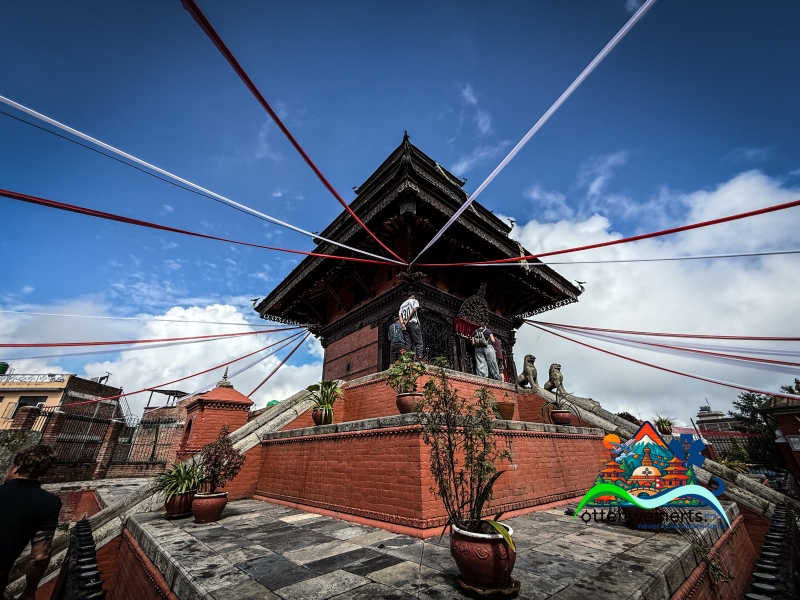
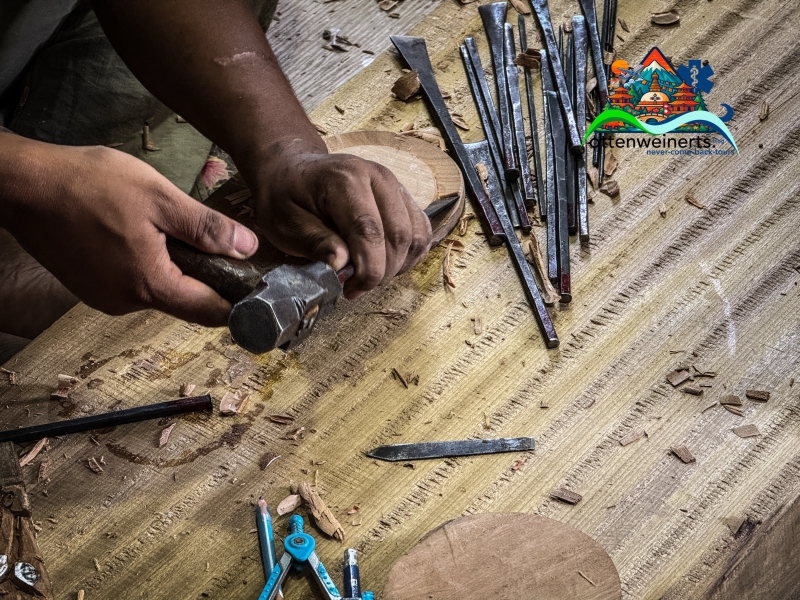
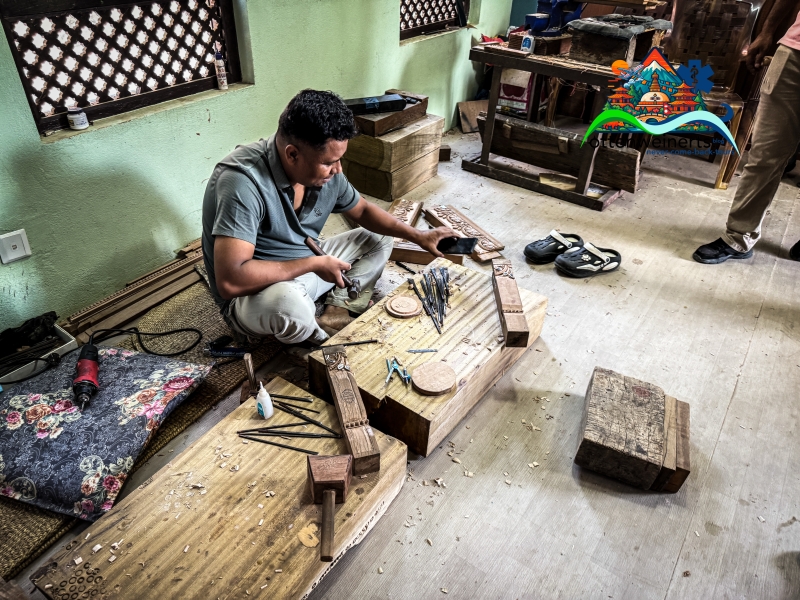
Dann geht es zurück ins Hotel, nach dem Frühstück brechen wir auf Richtung Bungamati und Karyabinayak / Khokna, zwei alte Dörfer der Newari, berühmt für ihre kunstvollen Schnitzereien an Türen, Fenstern und Balkonen. Auch hier finden sich die zentralen Plätze mit Tempeln, vieles ist noch eingerüstet- das große Erdbeben von 2015 hat hier viele Todesopfer gefordert und einen Großteil der Häuser zerstört. Hunde, Katzen, Gänse und Ziegen koexistieren friedlich zwischen den Baumaterialhaufen – die Ziegen kümmern sich auch vorbildlich um die Reste der Opfergaben, da ist kein Altar zu hoch. 

Auf der Fahrt nach Dhulikel, Richtung tibetische Grenze, geht unser “Sprachkurs mit Yam” weiter: am ersten Tag haben wir “Namaste – Guten Tag” gelernt, gestern “dhanyabaad – danke” (Eselsbrücke für uns: Tanja ist im Bad- Tanjabad). Das heutige Wort des Tages ist die passende Antwort auf dhanyabaad, nämlich “Svagatom – Bitte sehr” (Eselsbrücke für uns: der Schwager heißt Tom – Svagatom). Ob sich die Familienverhältnisse dann ändern, wenn Schwager Tom mit Tanja im Bad ist, blieb allerdings unbeantwortet….

Saturday, 27 September 2025 – Nepal Day 3 – Mt. Everest

Why does the alarm go off at 4 a.m, shortly after midnight?? Ah yes, our tour guide Yam has arranged a great excursion for us, in addition to the regular program. We were supposed to be at the airport by 5:30, but even in the early morning traffic is hell – still, the plane waits for us. Shree Airlines offers short round-trip flights of just under an hour, everyone gets a window seat, and so we have the privilege of seeing Mt. Everest, Lhotse, and Makalu – the highest, fourth-highest, and fifth-highest mountains in the world – at eye level, without climbing from base camp, without extra oxygen, and without Sherpas.

Then it’s back to the hotel, and after breakfast we set off toward Bungamati and Karyabinayak / Khokna, two ancient Newari villages, famous for their intricate carvings on doors, windows, and balconies. We visit the central squares with their temples, many still under scaffolding – the great earthquake of 2015 claimed many lives here and destroyed much of the housing. Dogs, cats, geese, and goats coexist peacefully among the piles of building materials – the goats also dutifully take care of the remains of the offerings; no altar is too high for them.

On the drive to Dhulikel, towards the Tibetan border, our “language course with Yam” continues: on the first day we learned Namaste – good day, yesterday dhanyabaad – thank you(mnemonic for us: “Tanja is in the bath – Tanjabad”). Today’s word of the day is the proper reply to dhanyabaad, namely Svagatom – you’re welcome (mnemonic for us: “there is a man called Tom, and he is the brother-in-law; the German word for brother-in-law is Schwager, Svagatom”). Whether family relations would change if brother-in-law Tom joined Tanja in the bath, however, was left unanswered….