Archiv der Kategorie: Belize

220902 – San Ignacio >

Freitag/Friday, September 2, 2022

Tag 138 – San Ignacio

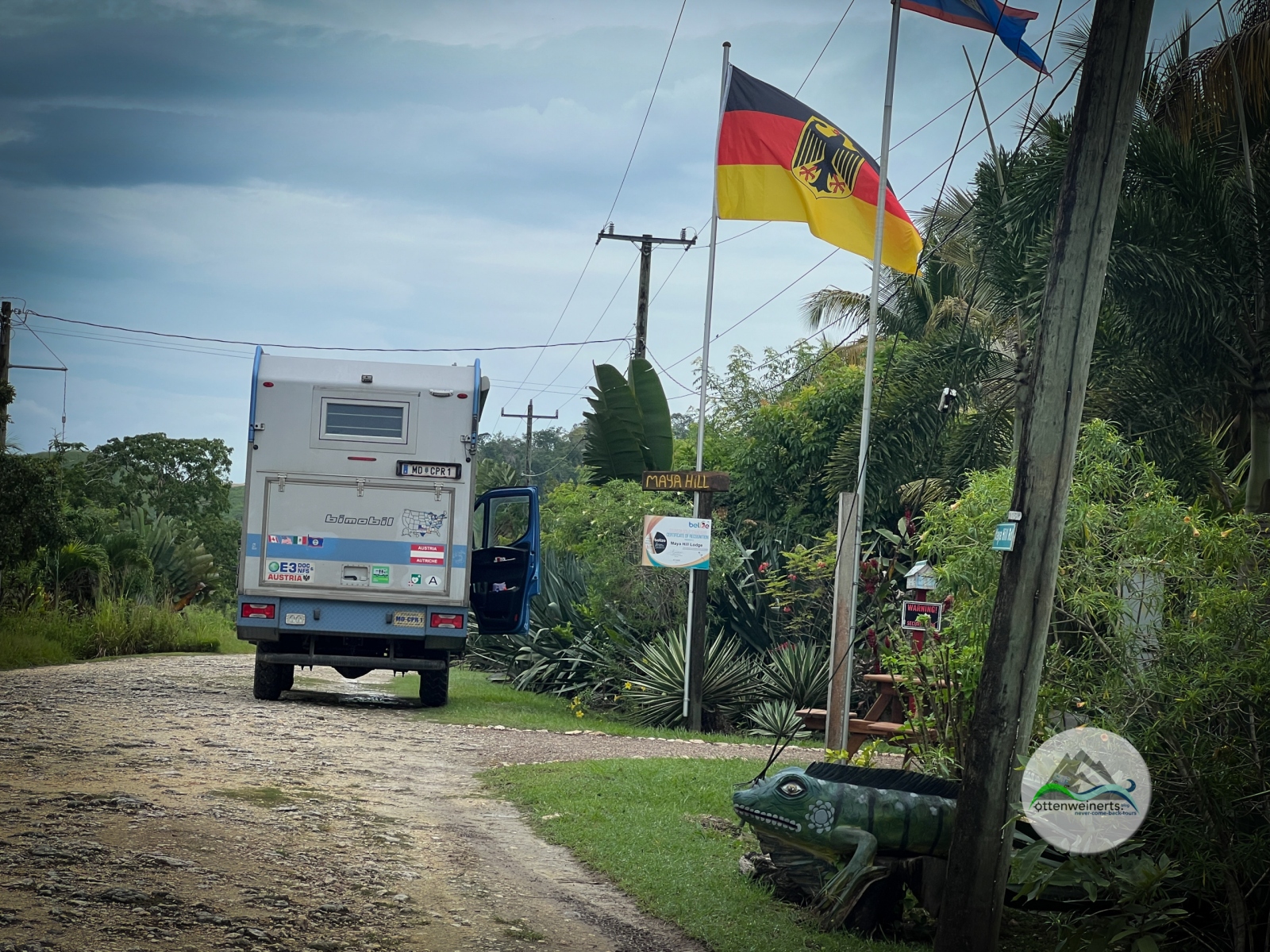
In der Früh wollten wir uns eigentlich in ein Cave Tubing Abenteuer stürzen – Regen die ganze Nacht über macht das aber unmöglich – sobald die Wasserstände steigen, wird Cave Tubing nicht mehr angeboten, damit man dann nicht eingeschlossene Touristen aus Höhlen retten muss. Stattdessen machen wir uns auf den Weg nach San Ignacio. Unterwegs beschließen wir spontan, bei der Maya Hill Lodge in Blackmann Eddy Village vorbeizuschauen. Besitzer Dr. André Scholz hat uns seit Wochen per email unterstützt und versucht, passende Reifen für unser Krasses Pferd aufzutreiben, und dafür wollten wir uns gerne persönlich bedanken. Nach einer netten Plauderei mit André und Gattin Monika geht es zum San Ignacio Resort, wo das Green Iguana Project beheimatet ist.

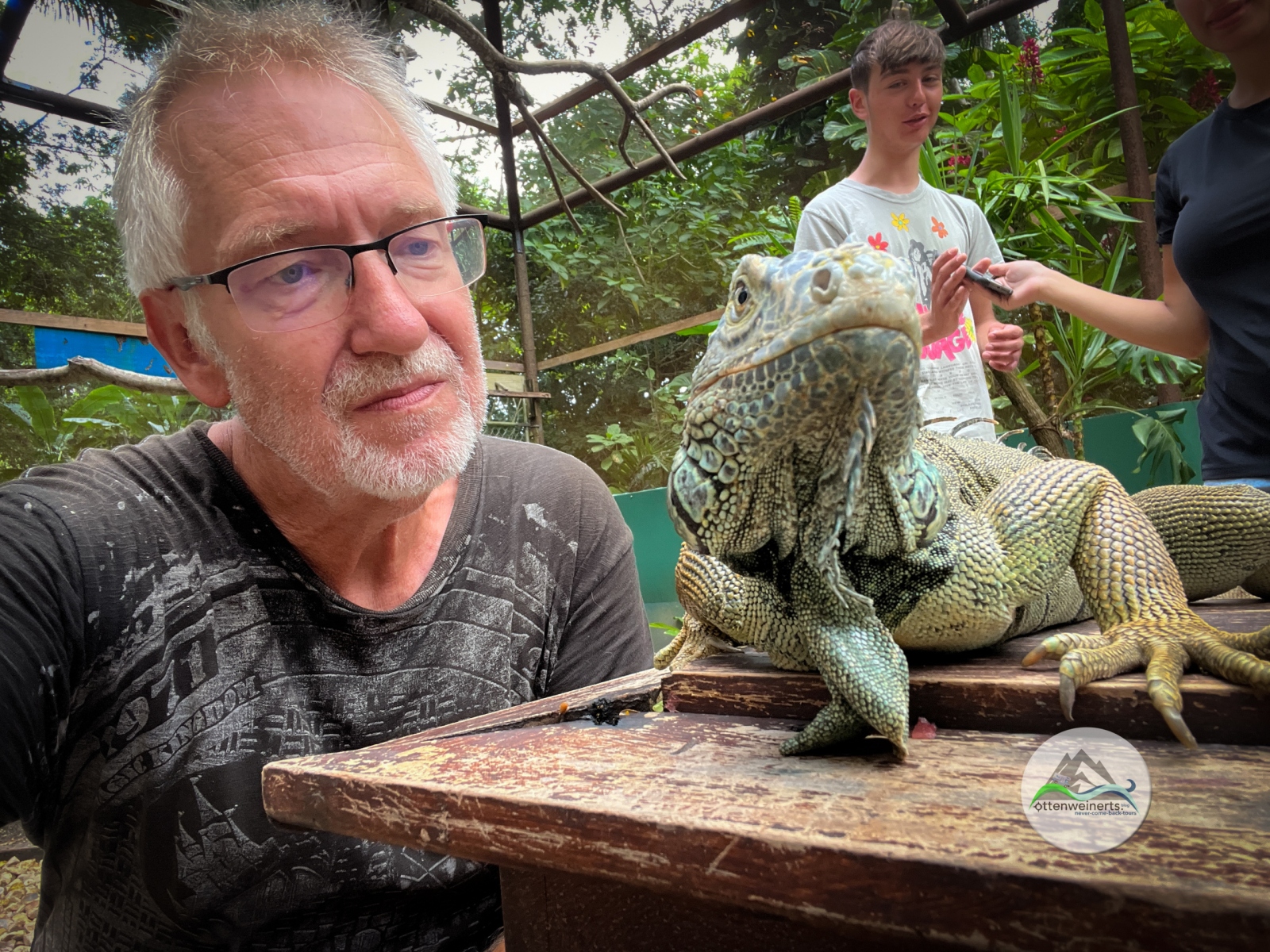
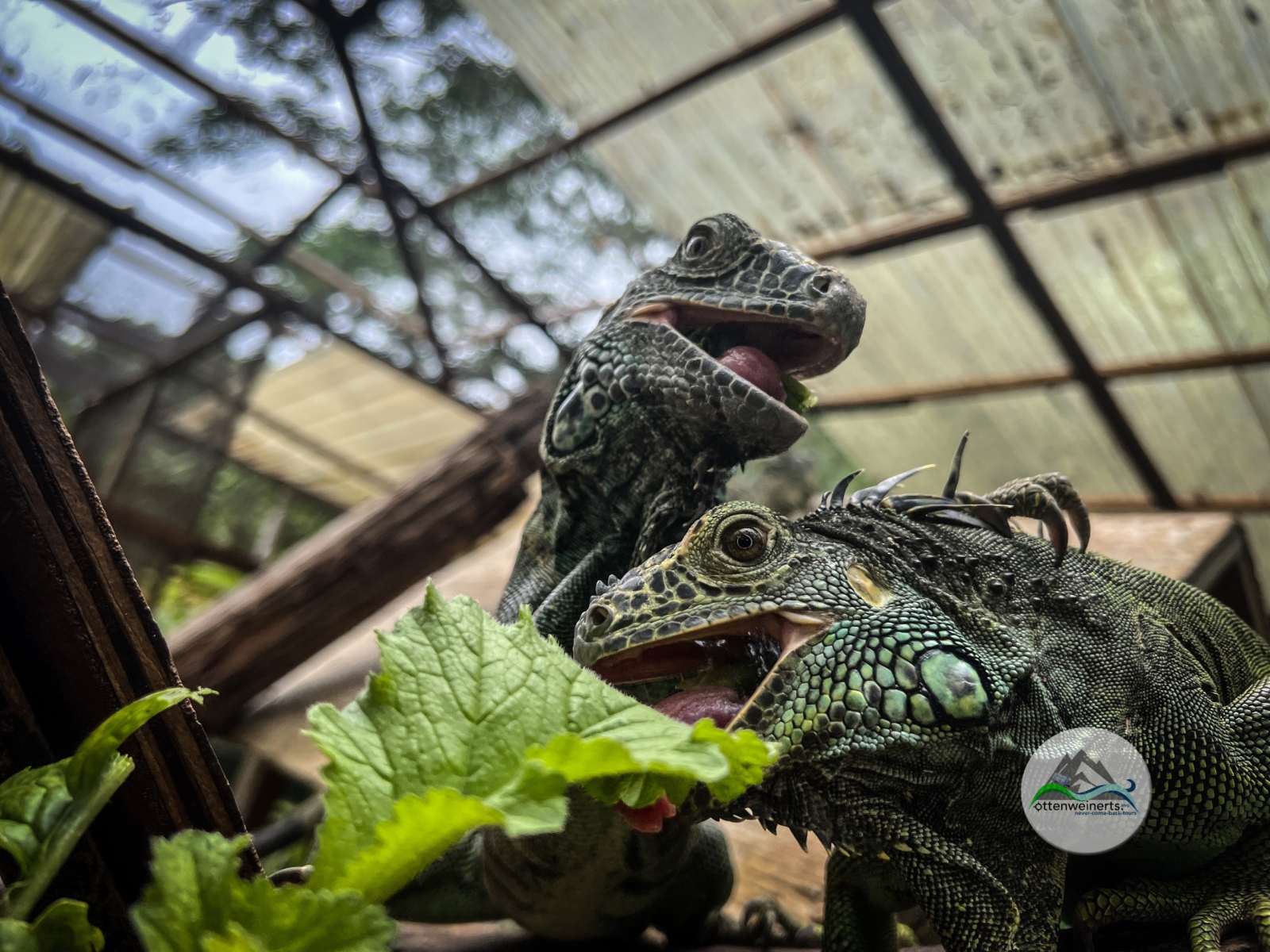
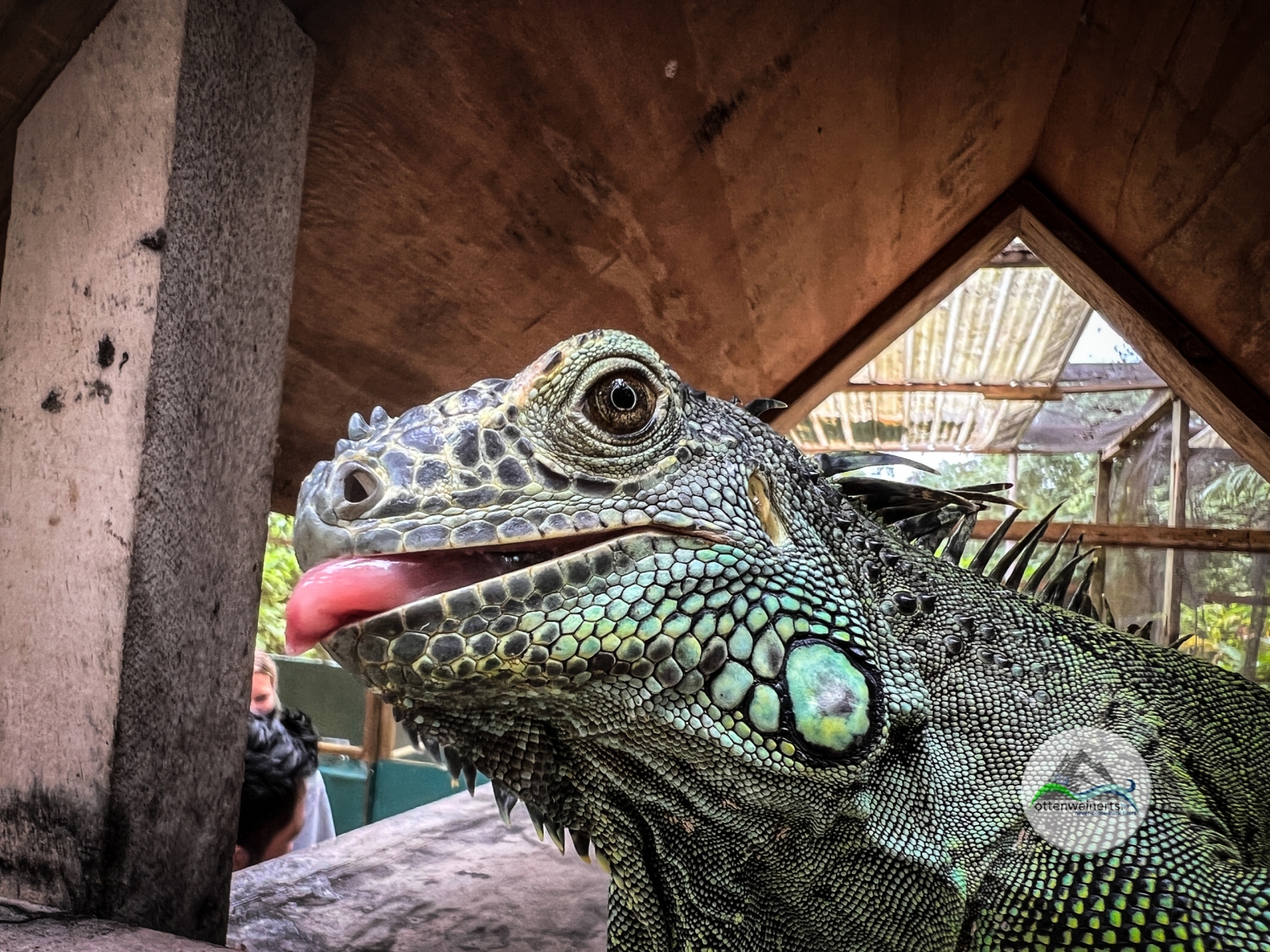
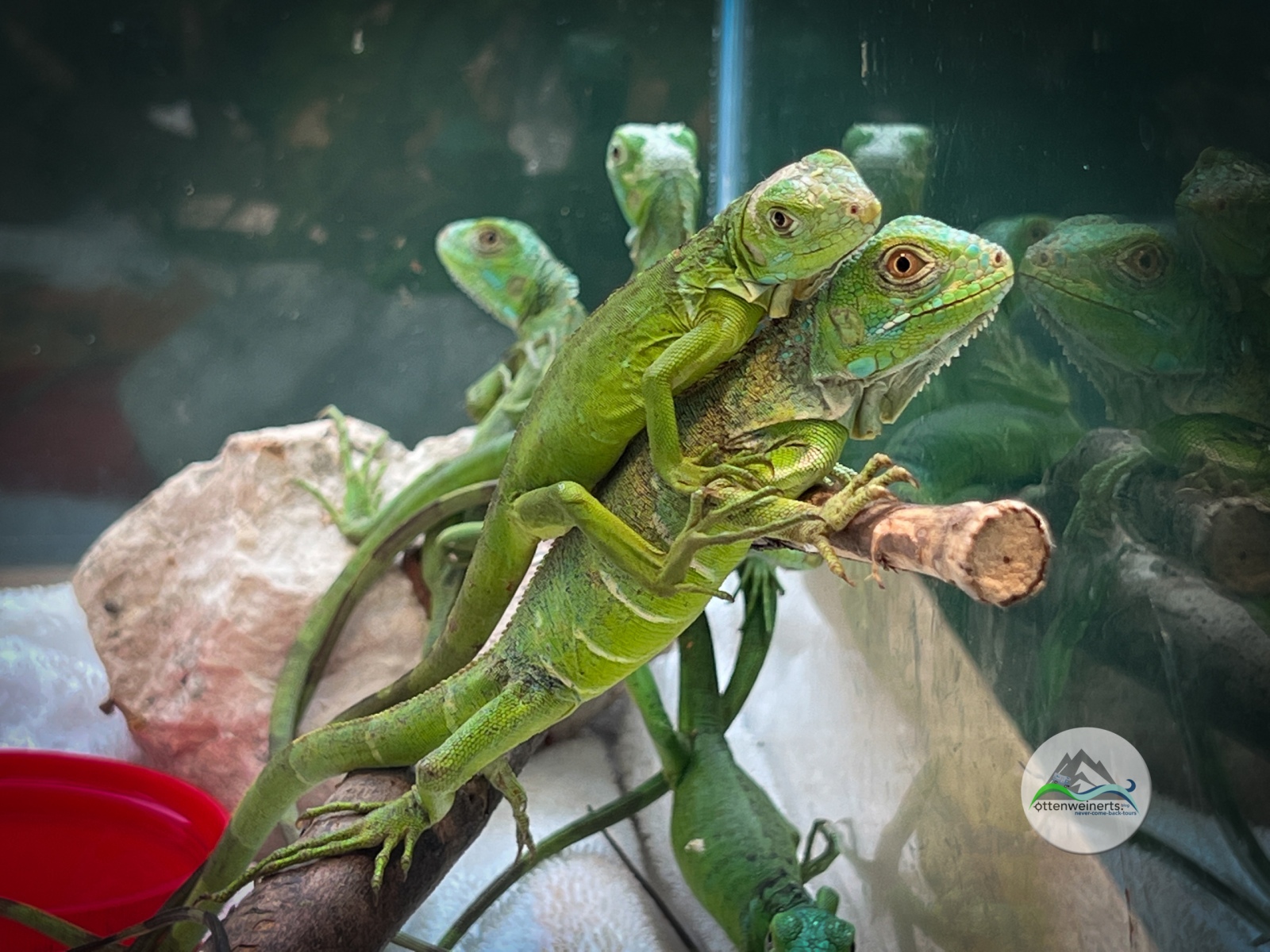
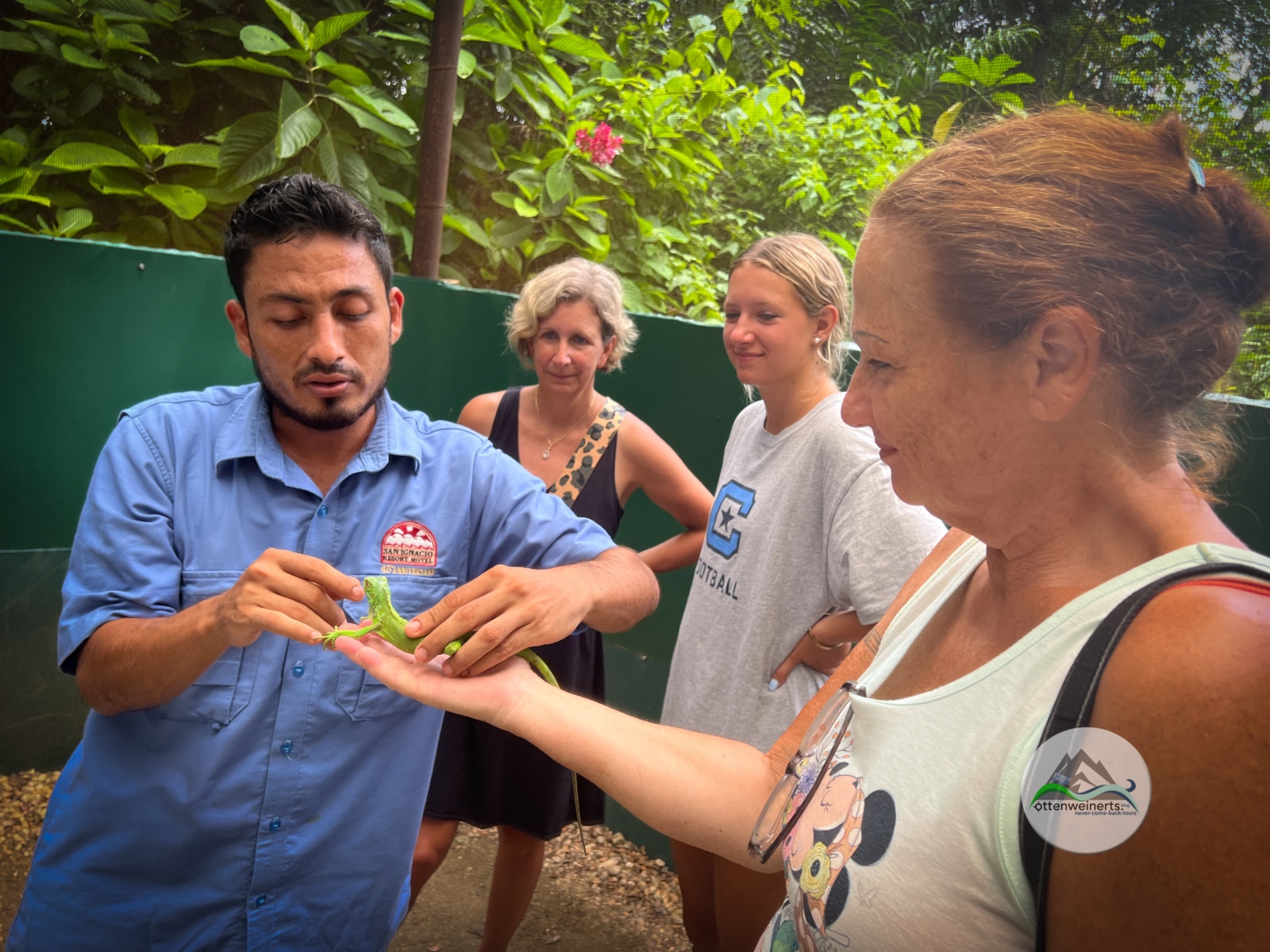
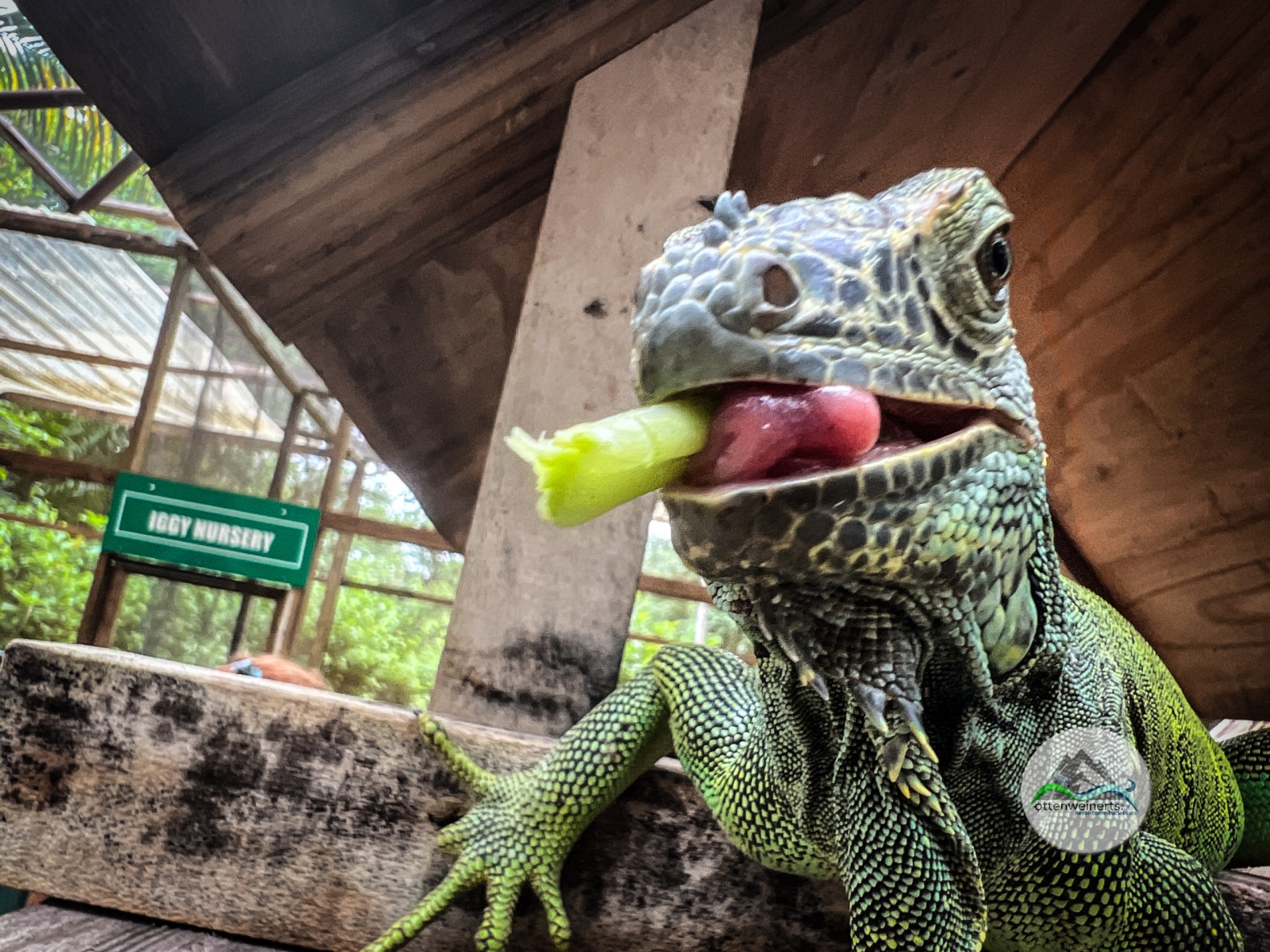
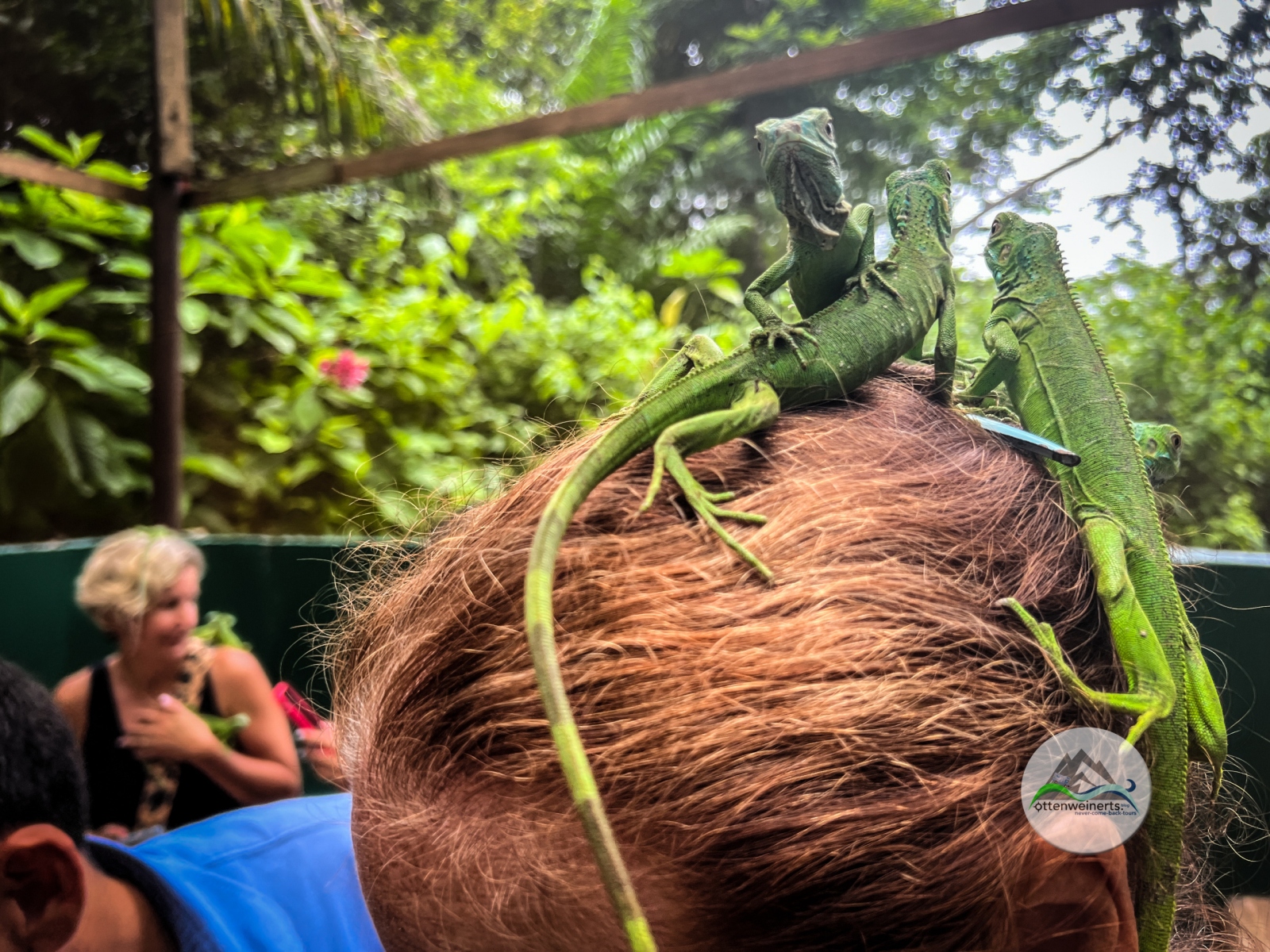
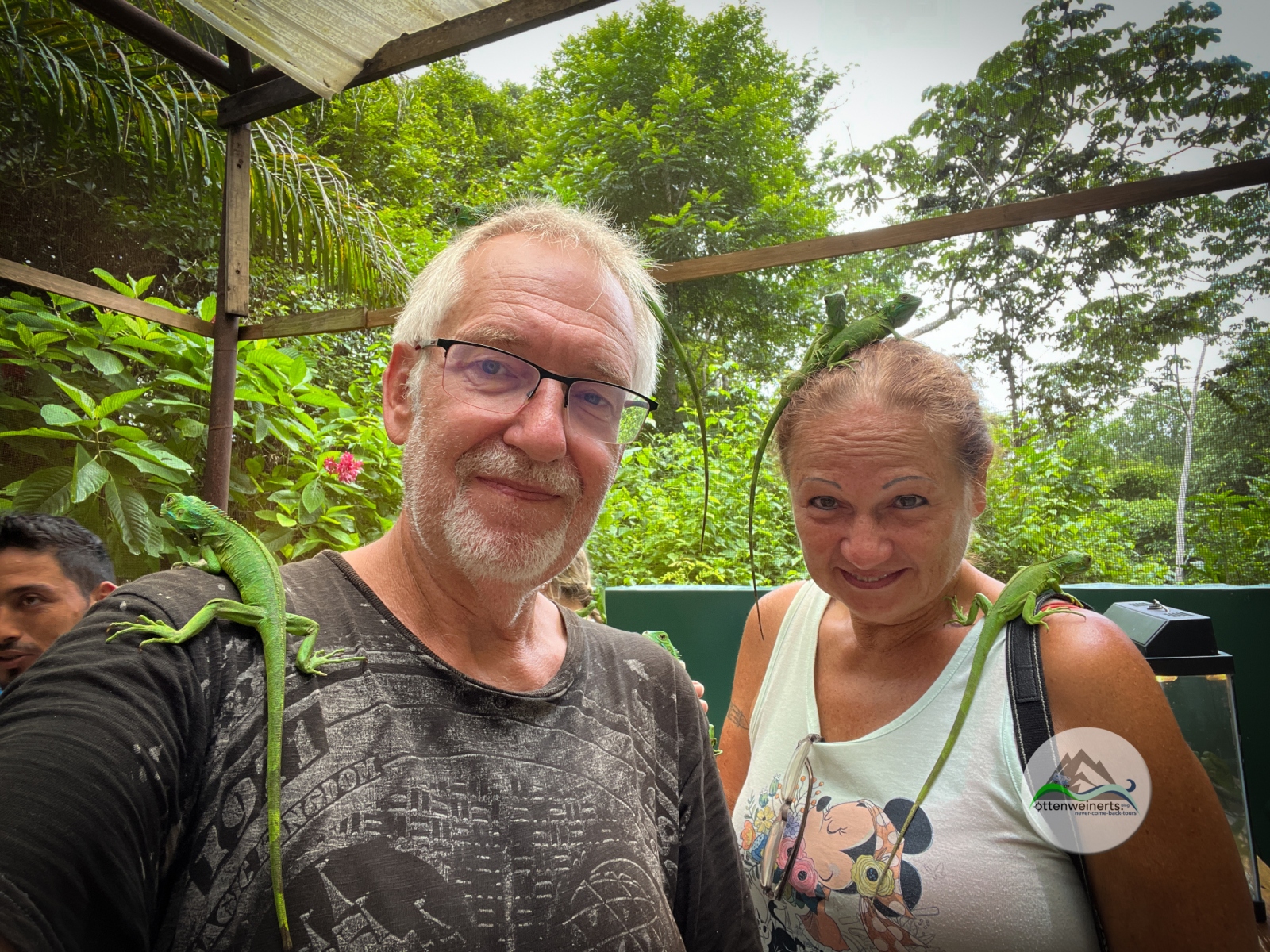
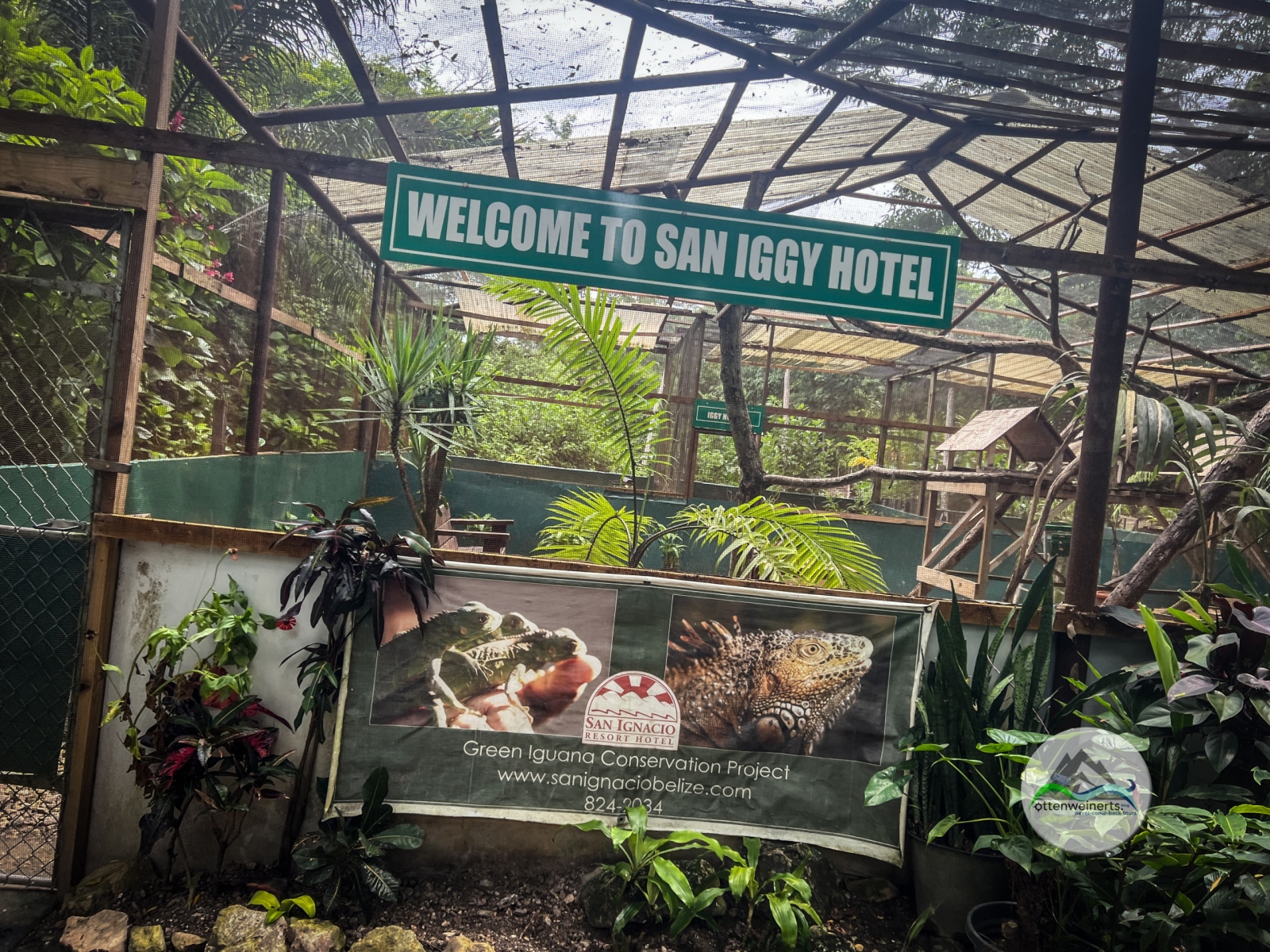
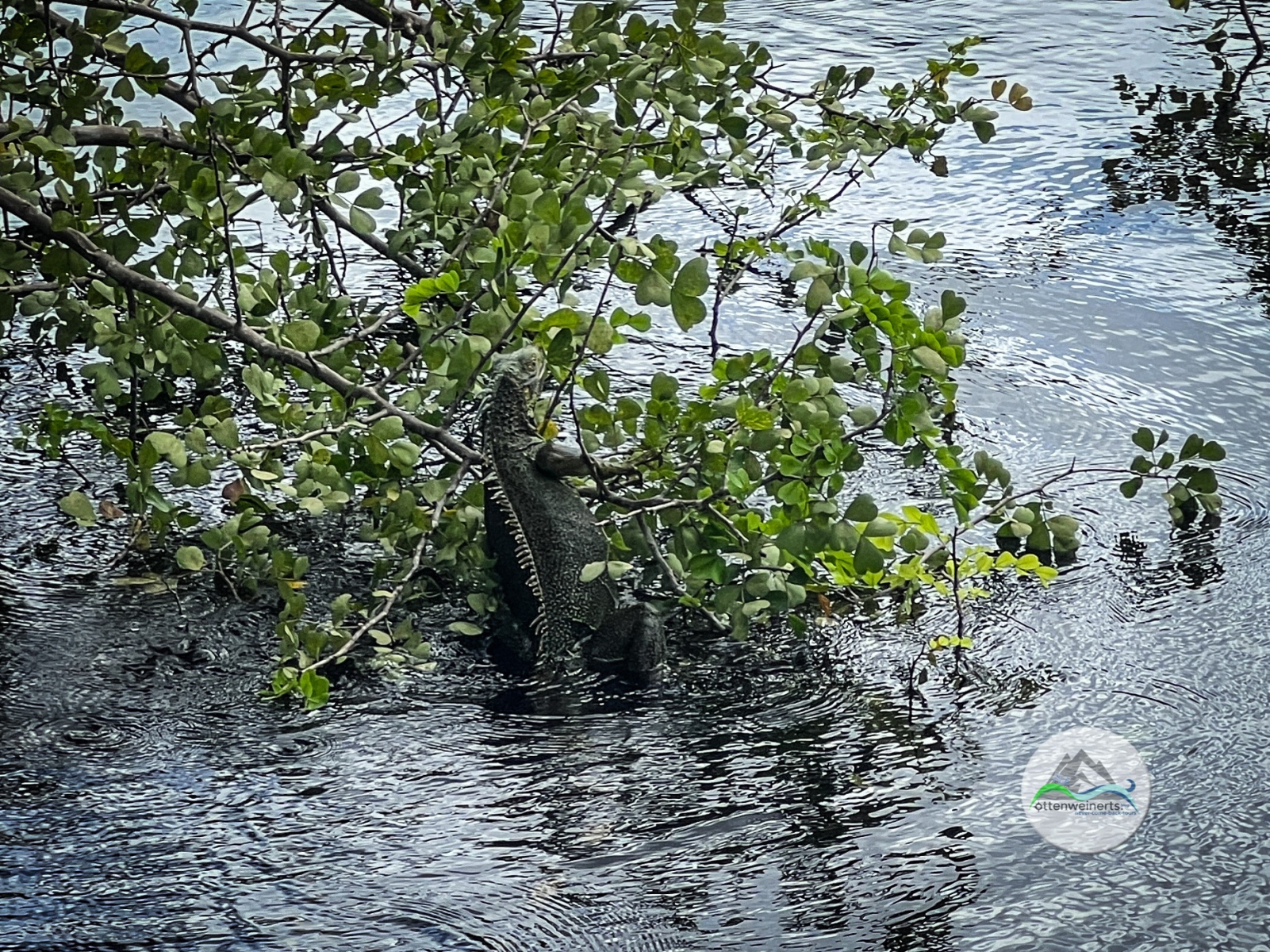
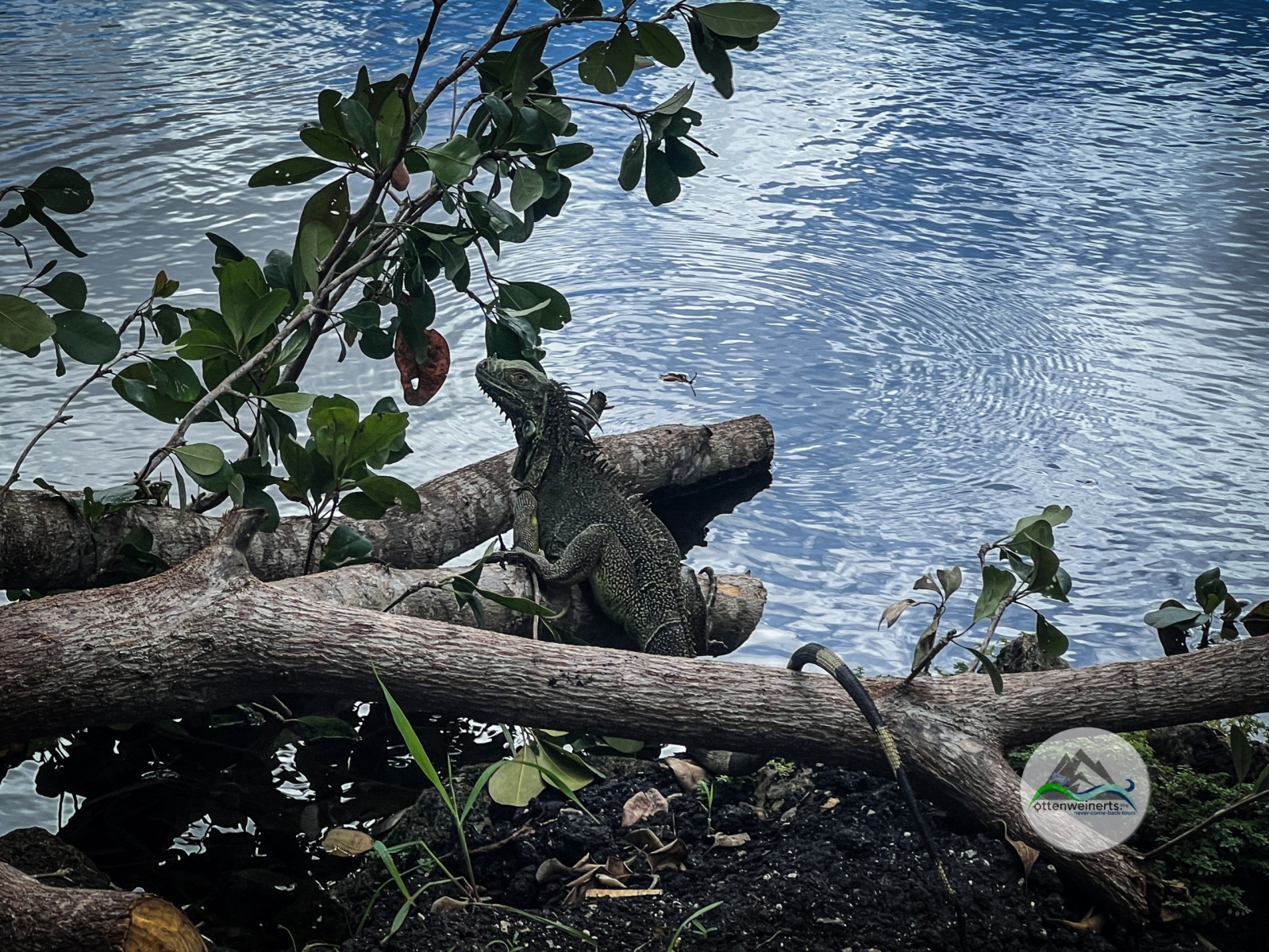
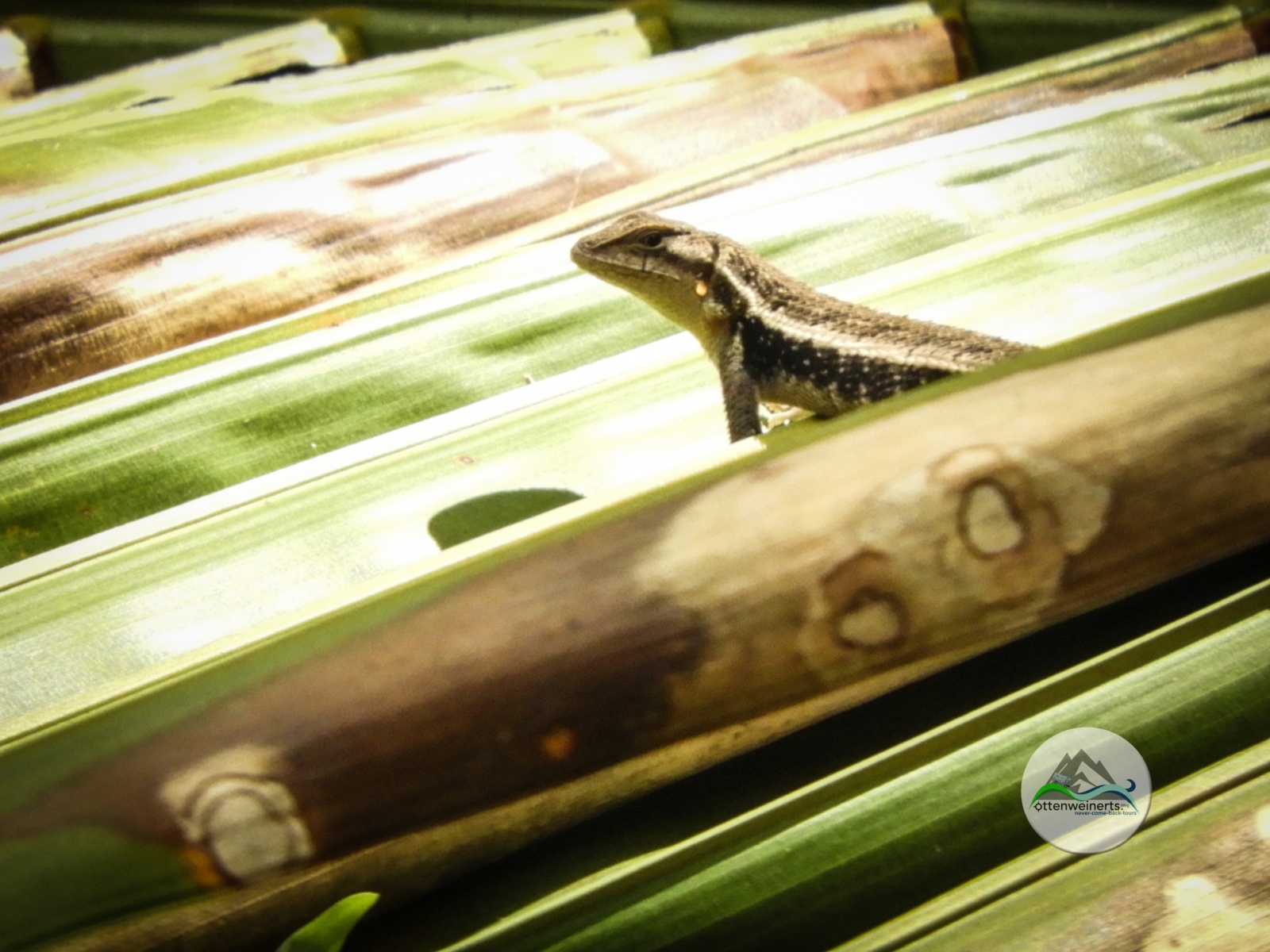
Wir kennen ja mittlerweile die scharz-braun-grauen Iguanas, die „Tempelwächter“, die es überall in Belize gibt. Das grüne Iguana dagegen ist eine gefährdete Art – sie sind reine Vegetarier und schmecken angeblich gut, werden daher gejagt und gegessen („Bamboo chicken“ ist KEIN Hühnchen, haben wir heute gelernt!). Im Rahmen dieses Projekts sind hier zwei Iguana-Männchen und viele Iguana-Damen hier im „Hotel San Iggy“ zu Hause, deren Aufgabe die Arterhaltung ist. Außerdem werden Iguana-Eier überall aufgesammelt und hier zum Schlüpfen gebracht. Der Nachwuchs wird aufgezogen, dann werden die Jungtiere in die Freiheit entlassen.

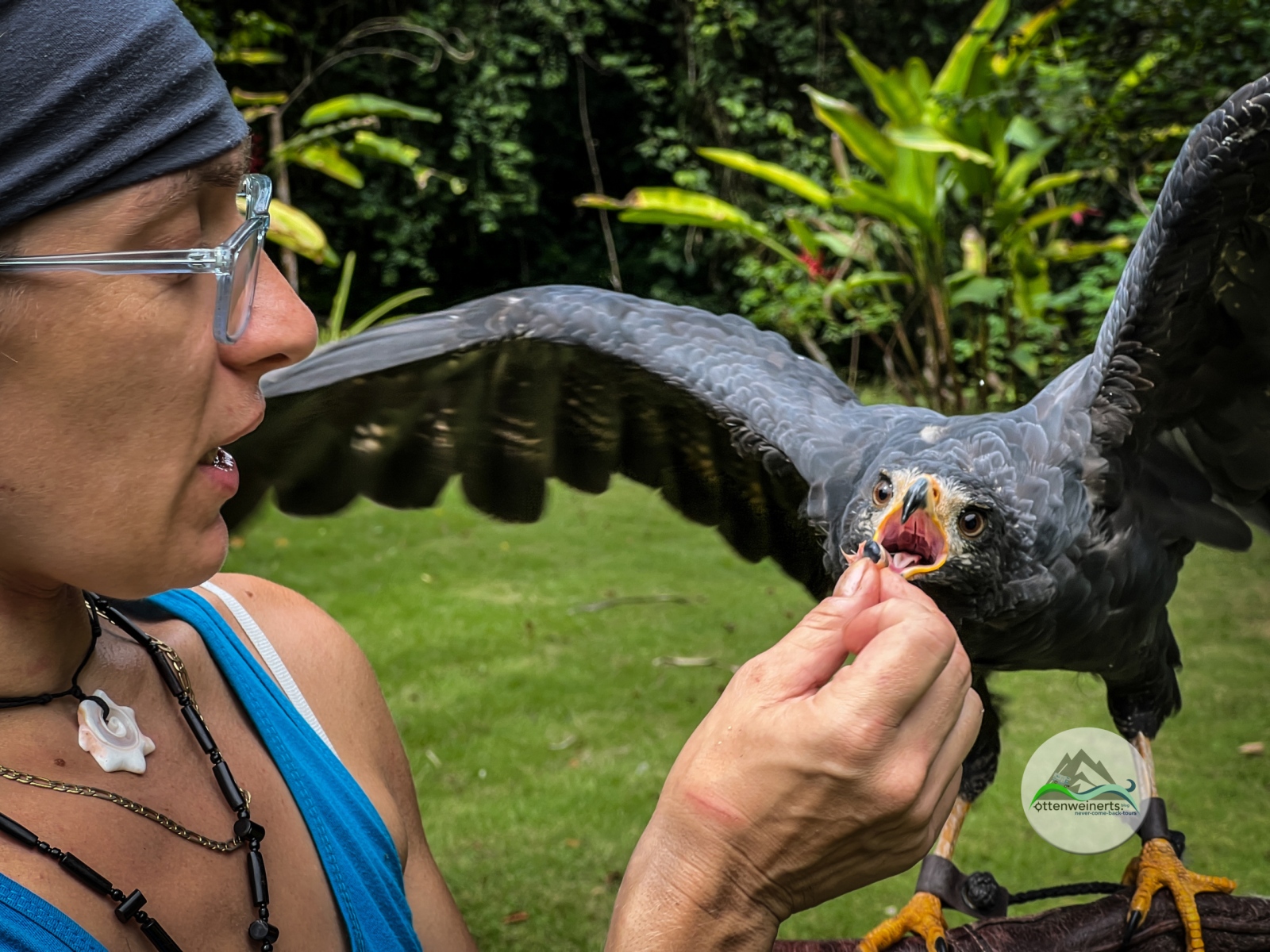
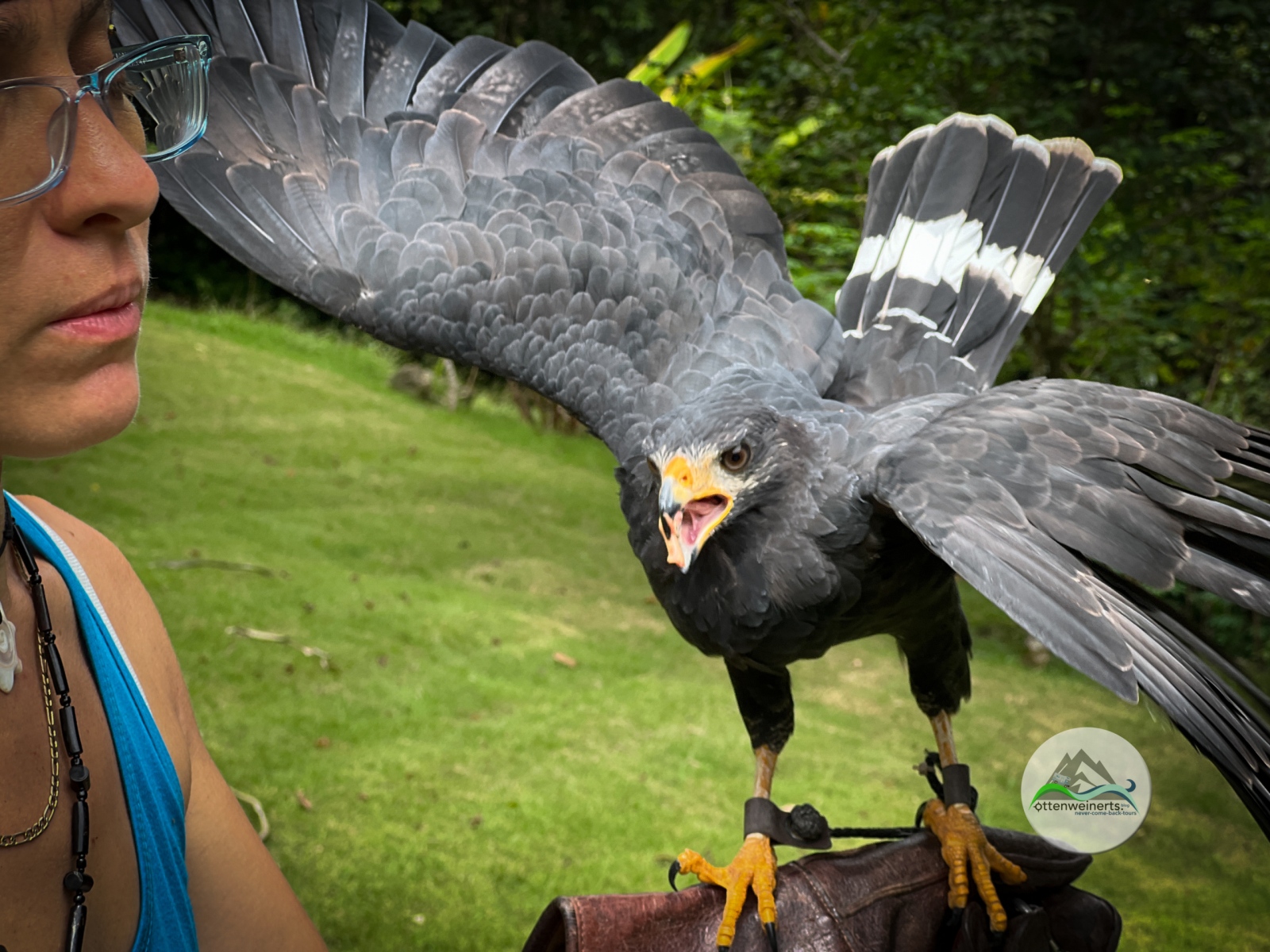
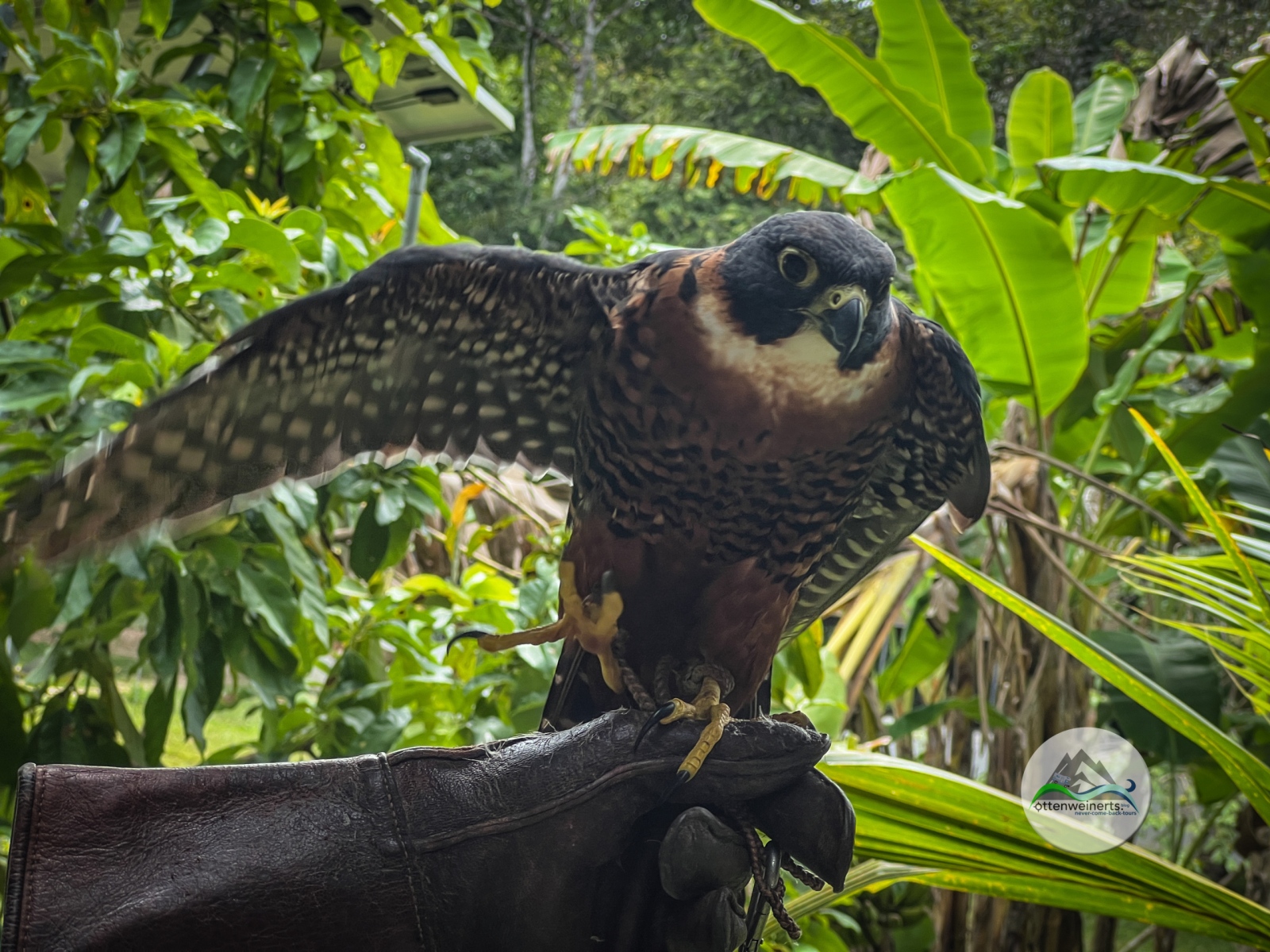
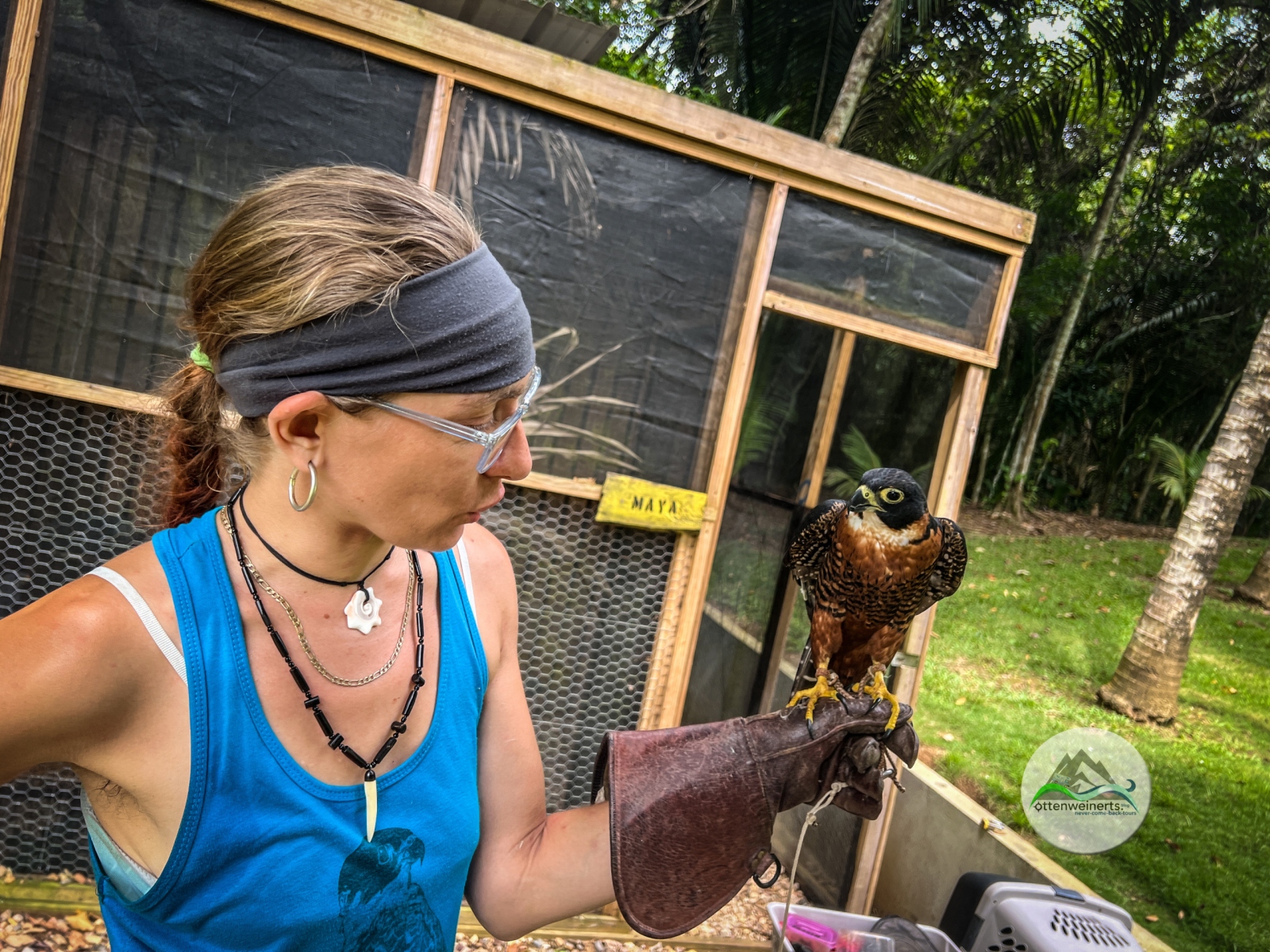
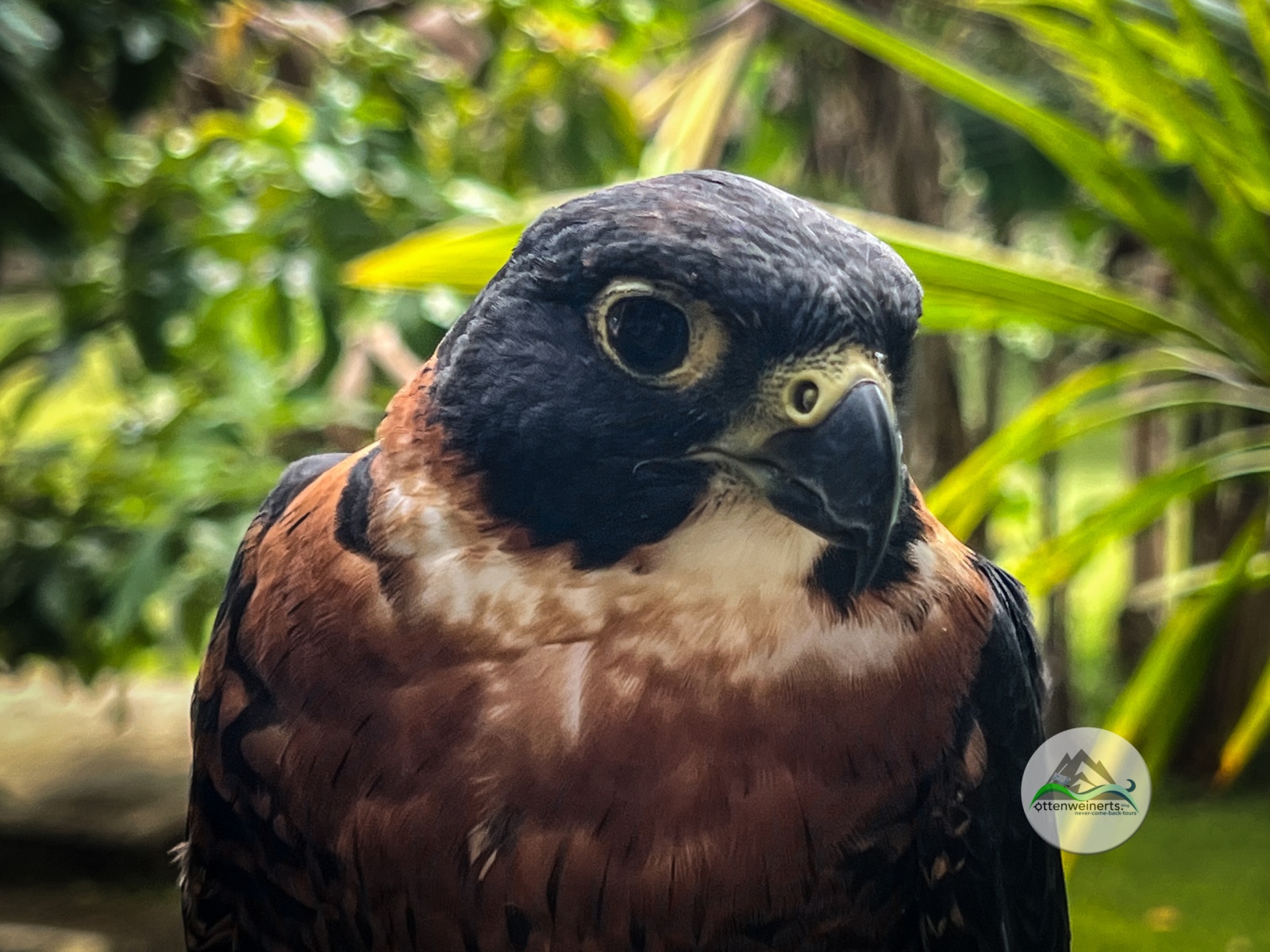
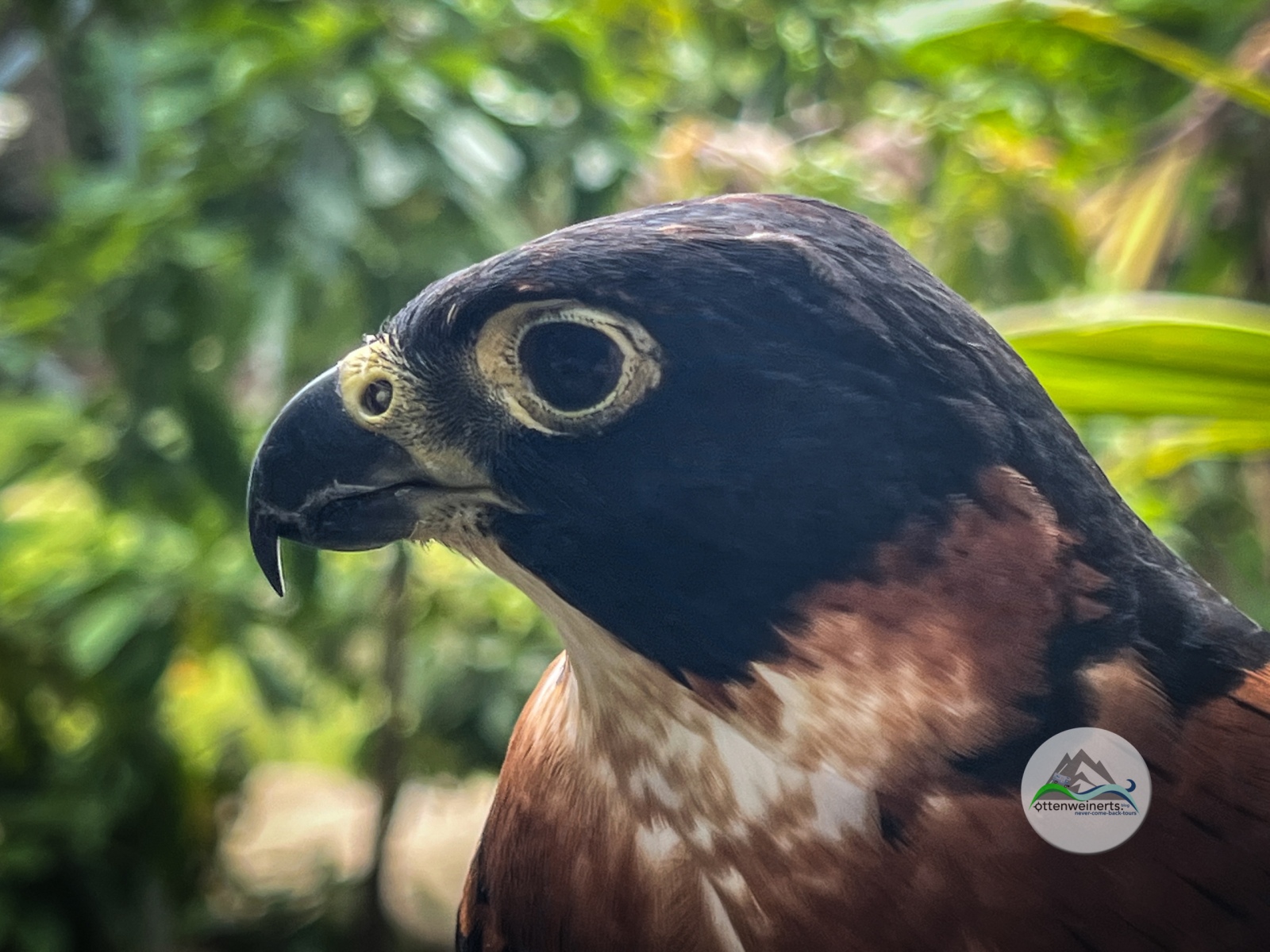
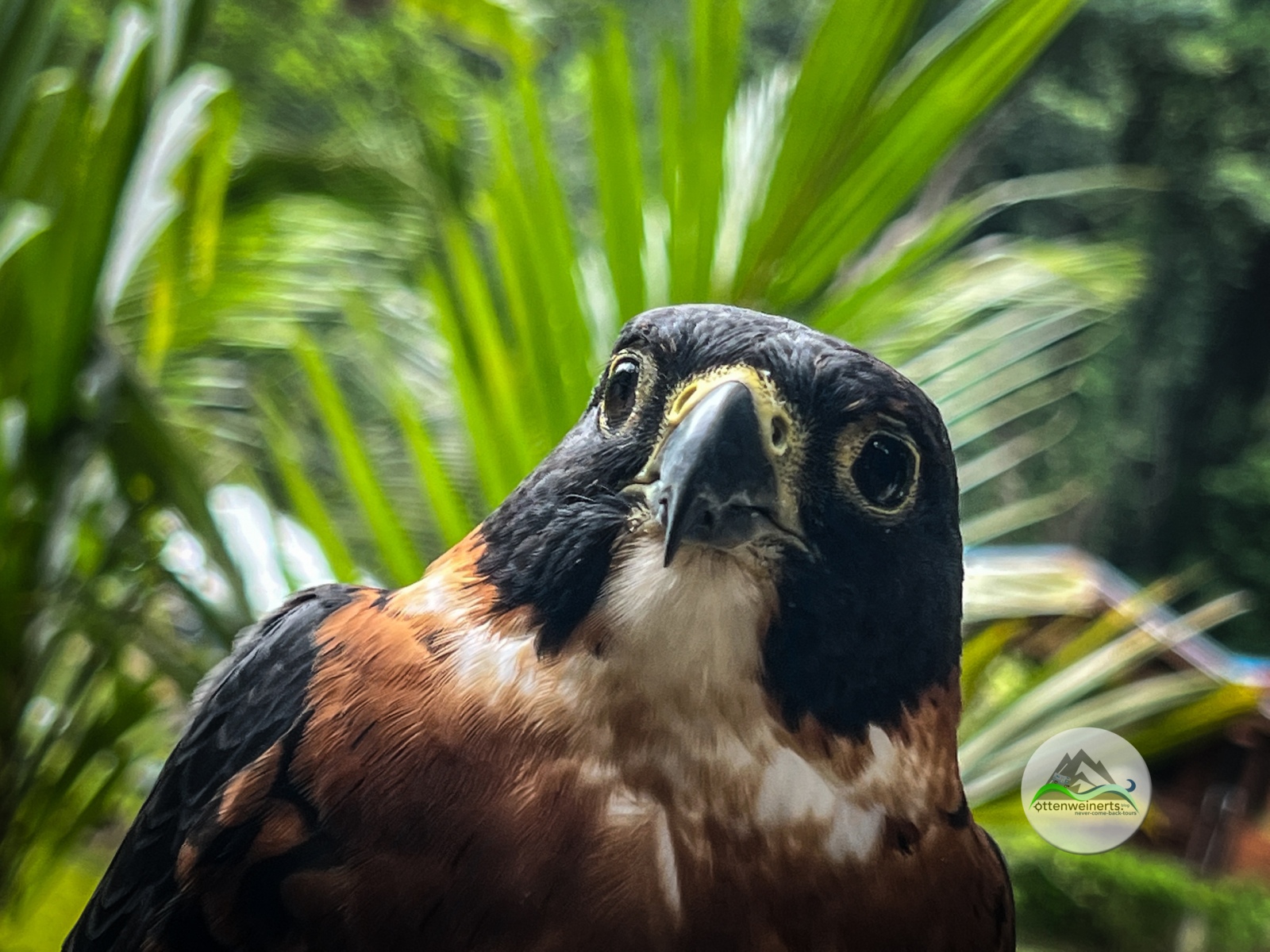
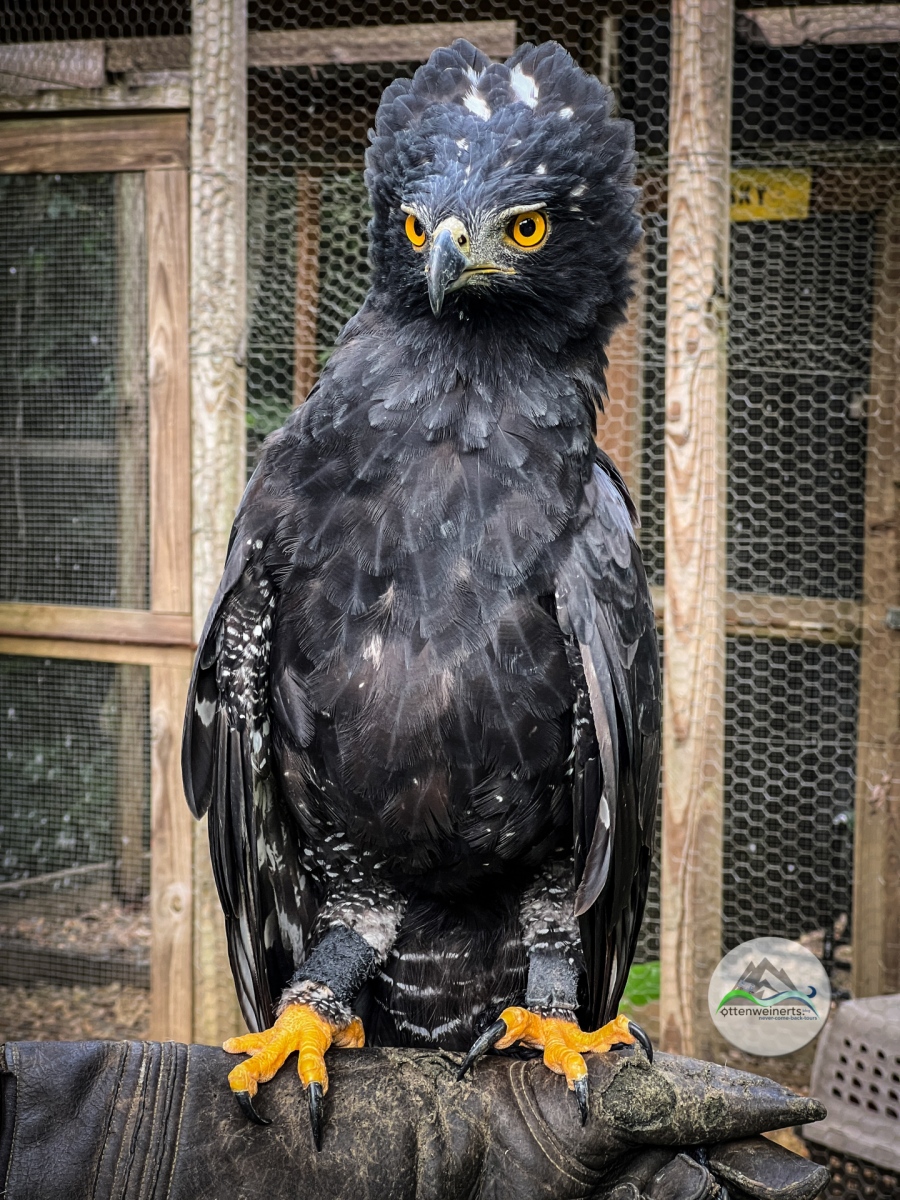
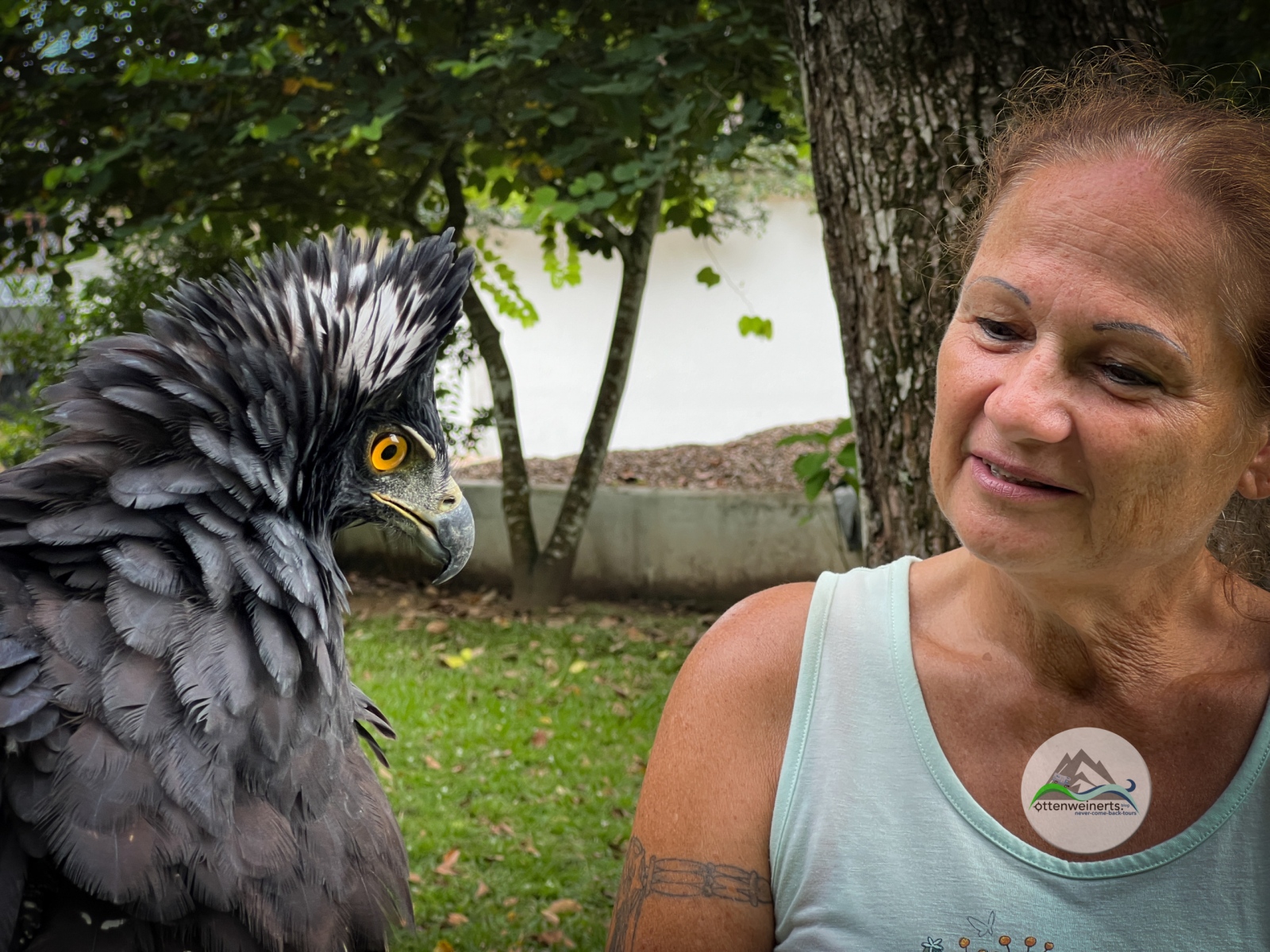
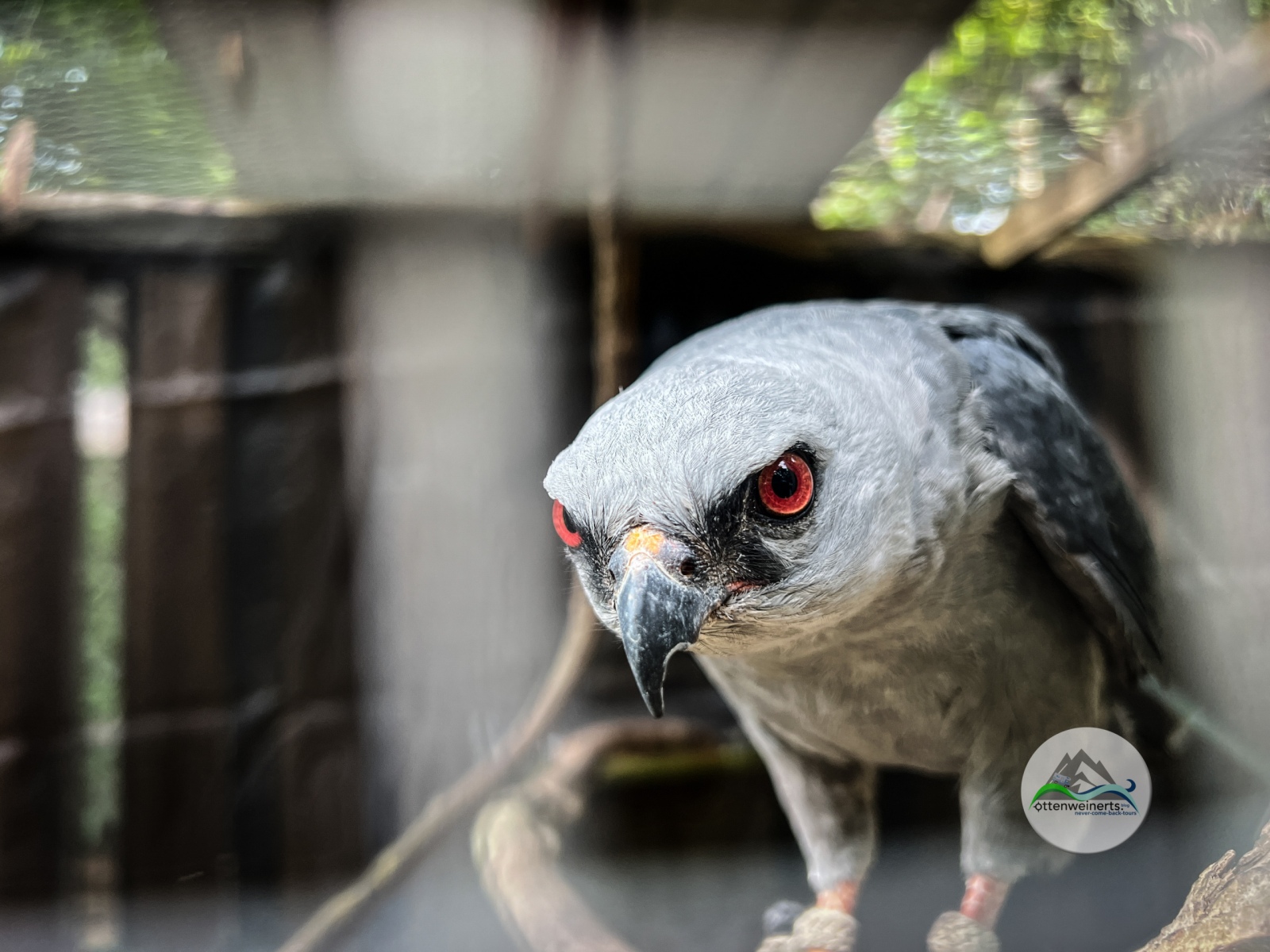
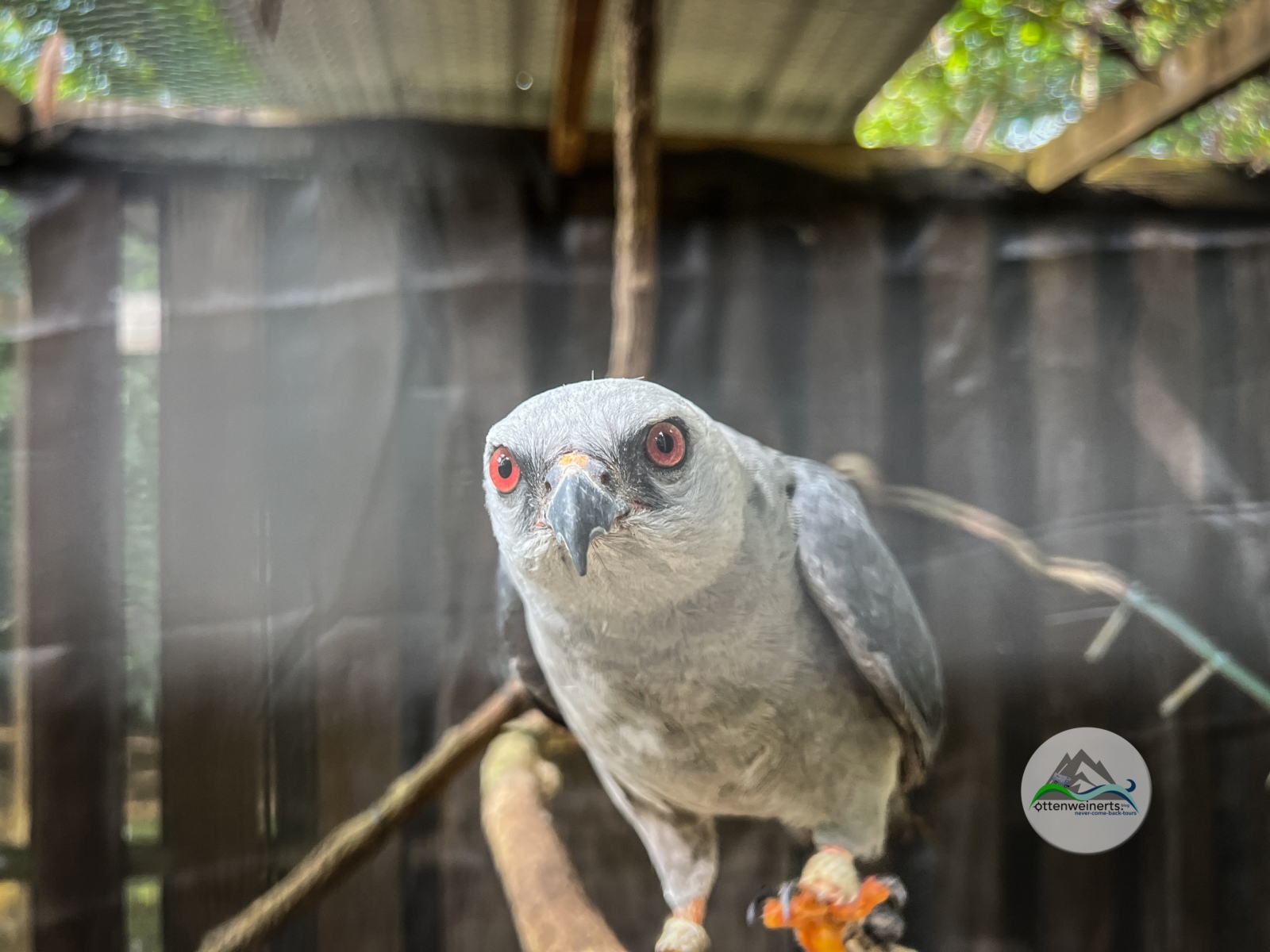
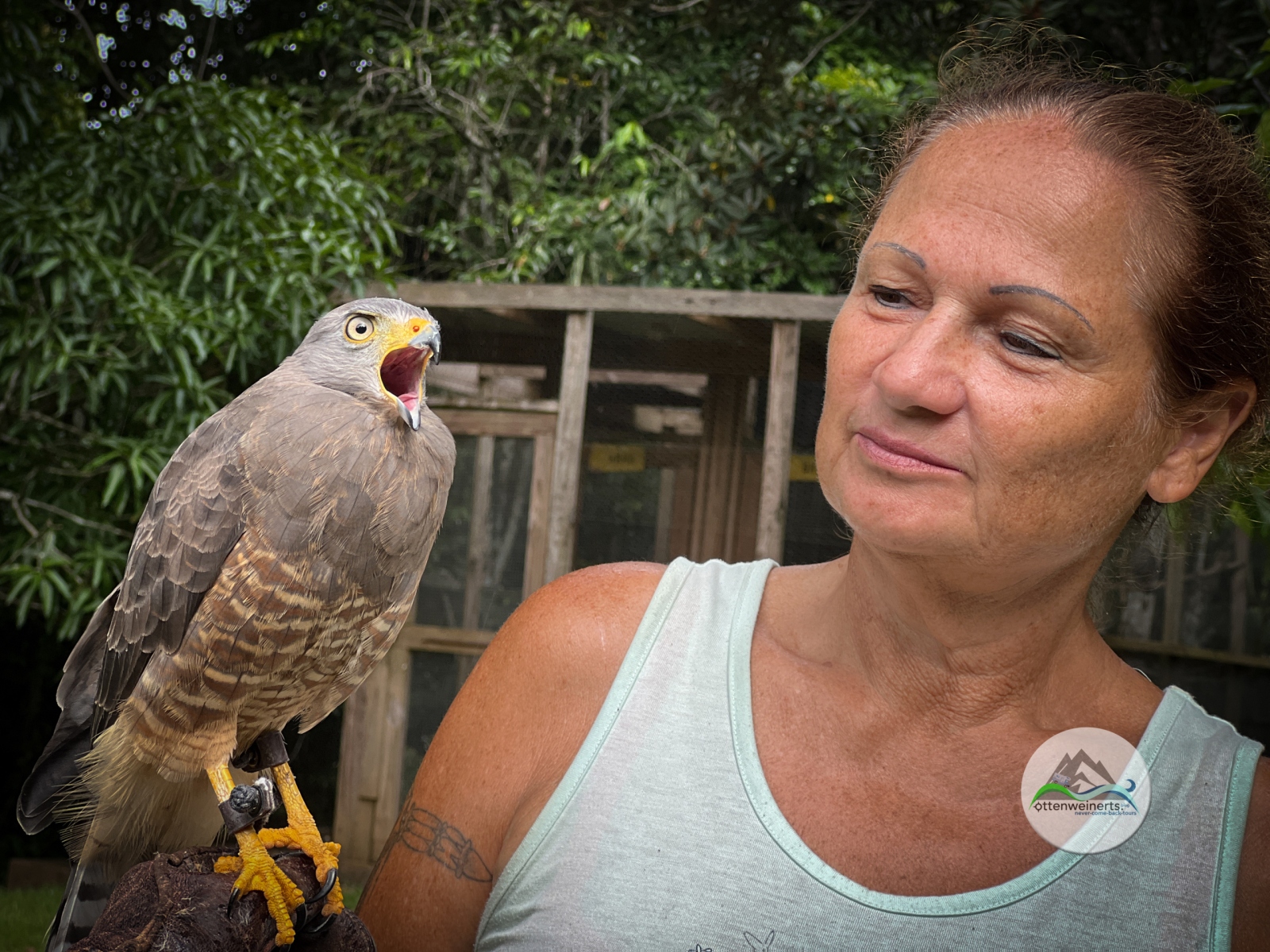
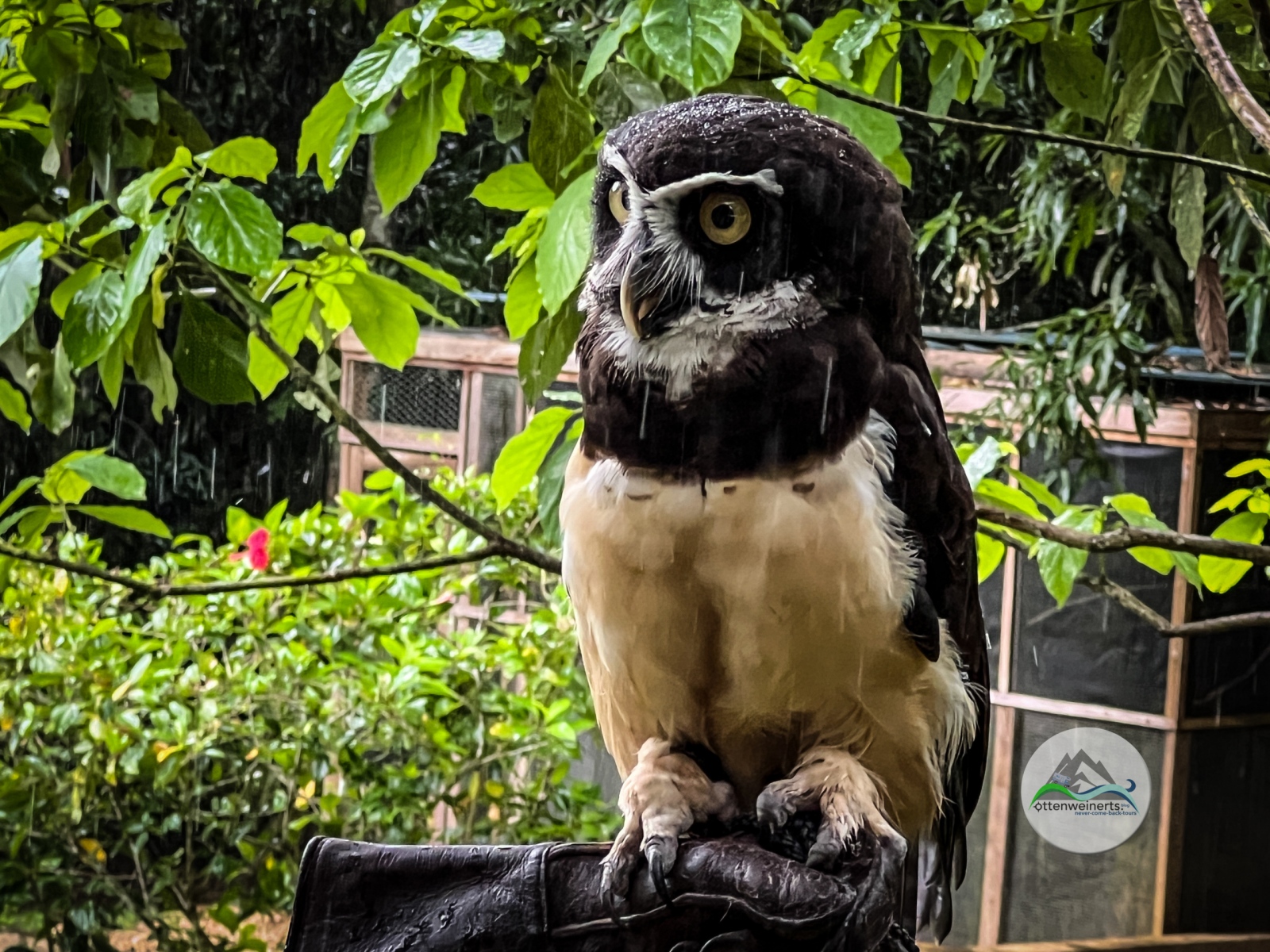
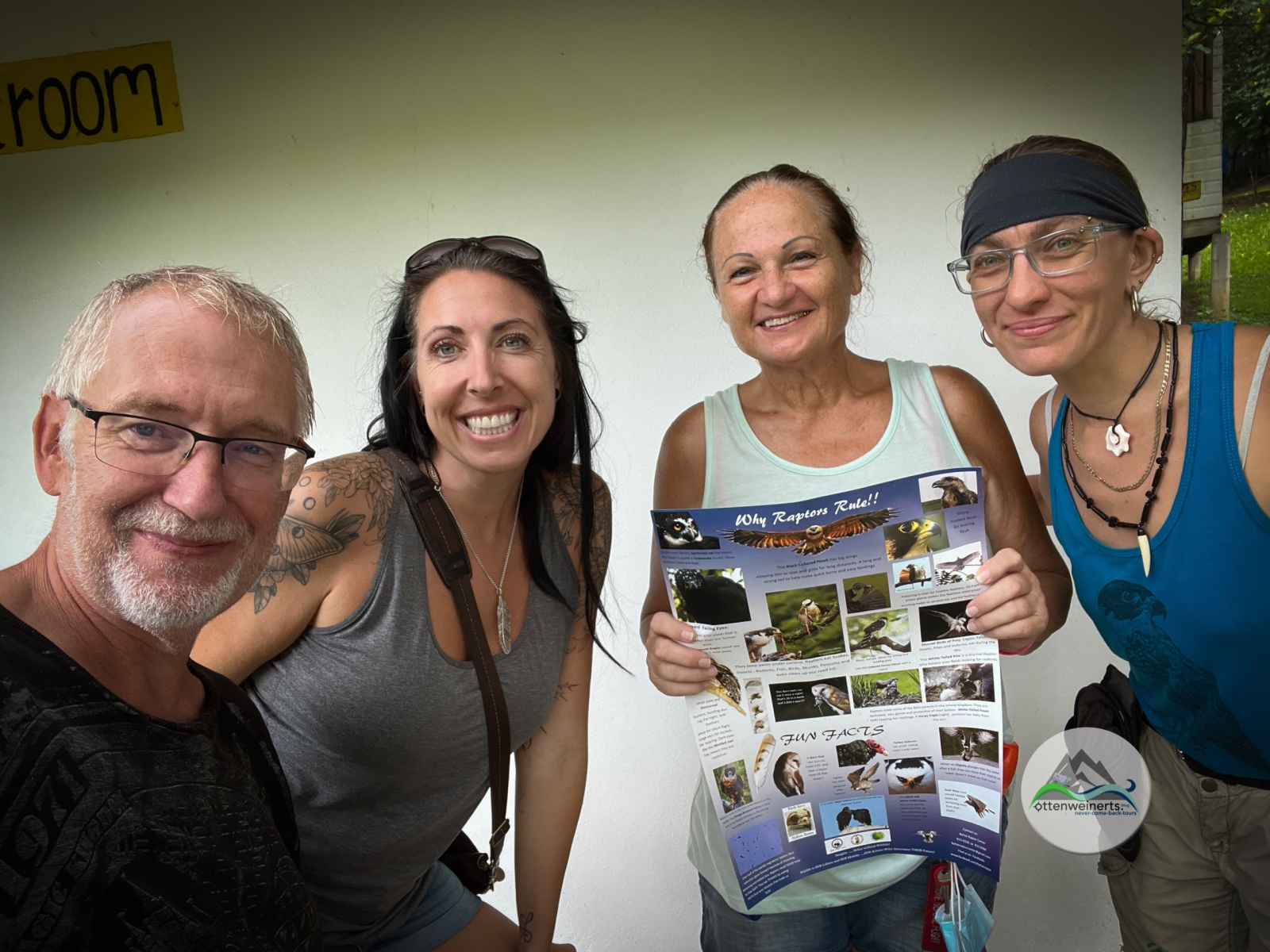
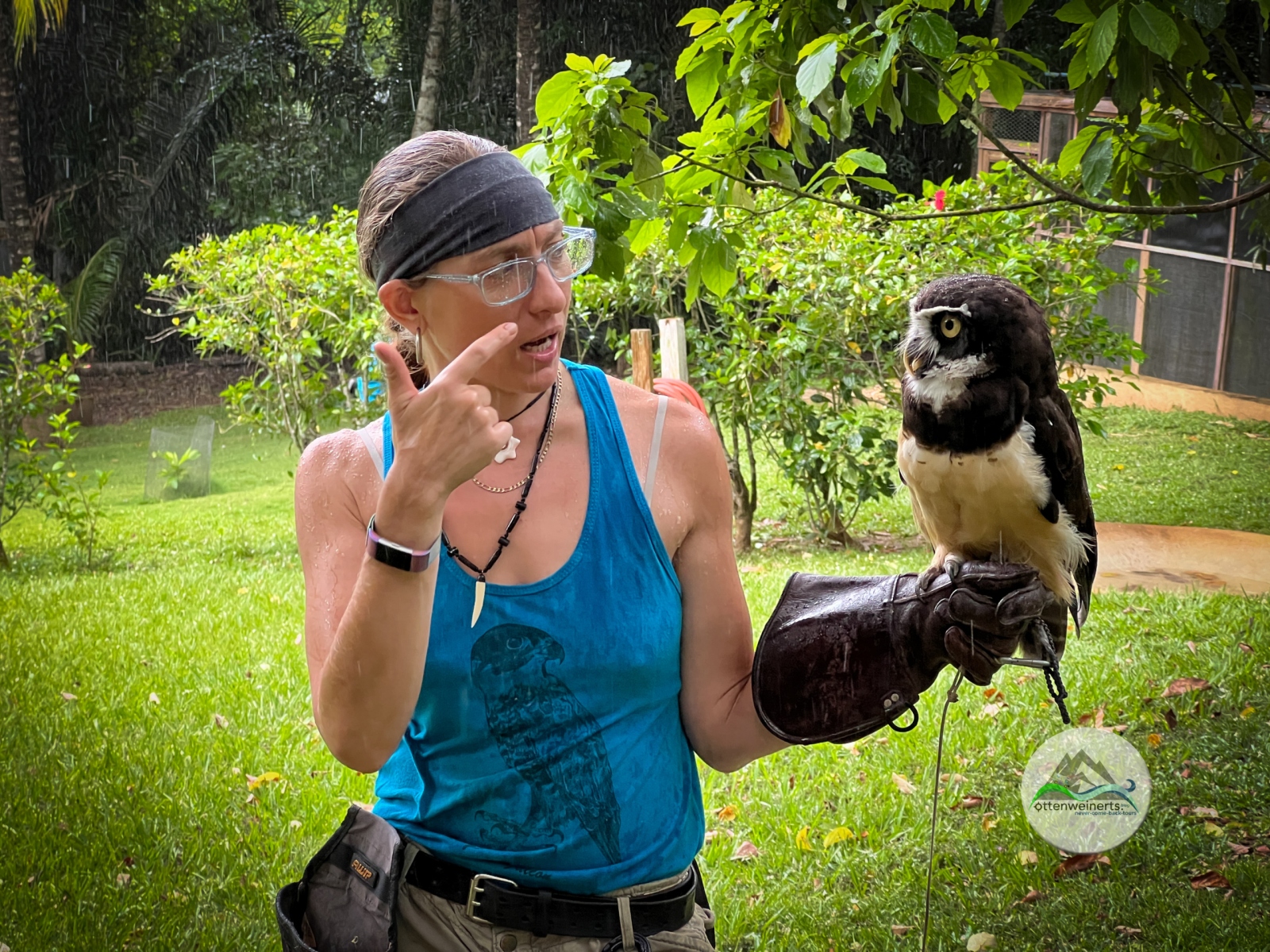
Von dort ging es weiter zum Belize Raptor Center, und dieses Highlight mussten wir uns schwer verdienen – die einzige Zufahrtsstraße ist eigentlich nur mit einem Fahrzeug mit entsprechender Bodenfreiheit, am besten aber mit Allrad zu bewältigen, vor allem wenn es regnet. Dafür hat sich der Ausflug aber wirklich gelohnt. Das Raubvogel-Zentrum nimmt oft verletzte Raubvögel an, die nach Versorgung und Rehabilitation wieder in die Freiheit entlassen werden können; andererseits beherbergt es Vögel, die aus physischen oder sonstigen Gründen nicht mehr ausgewildert werden können und daher Dauergäste sind. Wir hatten daher das Vergnügen, etliche der Dauerbewohner aus der Nähe kennenzulernen, so etwa Zion, den schwarzen Falken; Toothless, den Weißschwanzaar; Odin, den einäugigen grauen Falken; Maya, die Orangebrust-Falkendame; eine Pygmäen-Eule; Athena, die Prachtadler-Dame und Okna, den schwarzen Prachtadler; „Oma“ Luna, die alte Brilleneulendame und noch viele weitere gefiederte Bewohner. Das Raptor Center ist eine Non-Profit-Organisation und auf Spenden angewiesen; es werden verschiedene Touren für Besucher geboten, und die äußerst motivierten und kenntnisreichen MitarbeiterInnen gehen mit etlichen der Vögel als „Botschafter“ in Schulen, in Unternehmen oder auch zu Farmern, um Aufklärungsarbeit zu betreiben. 

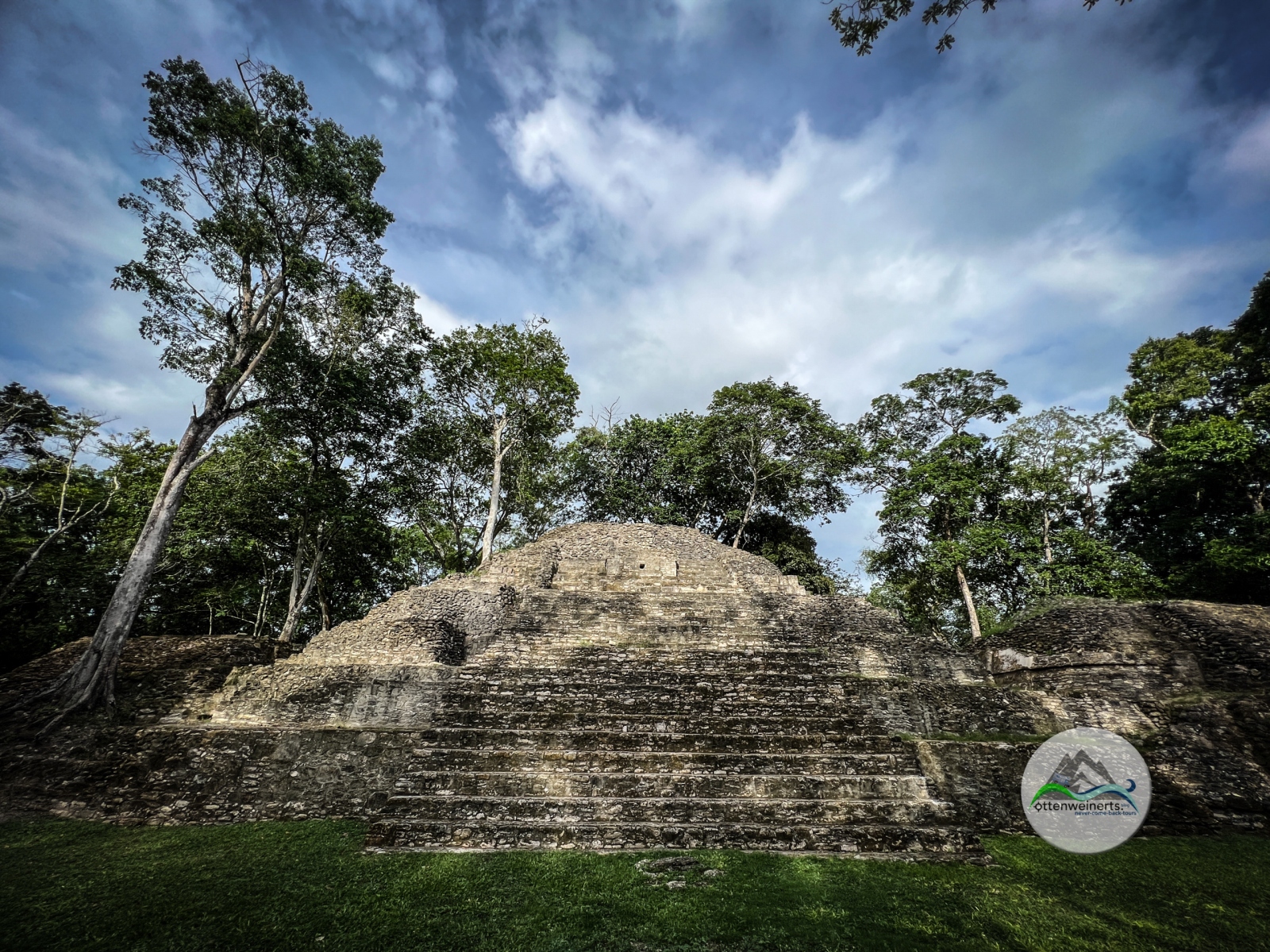
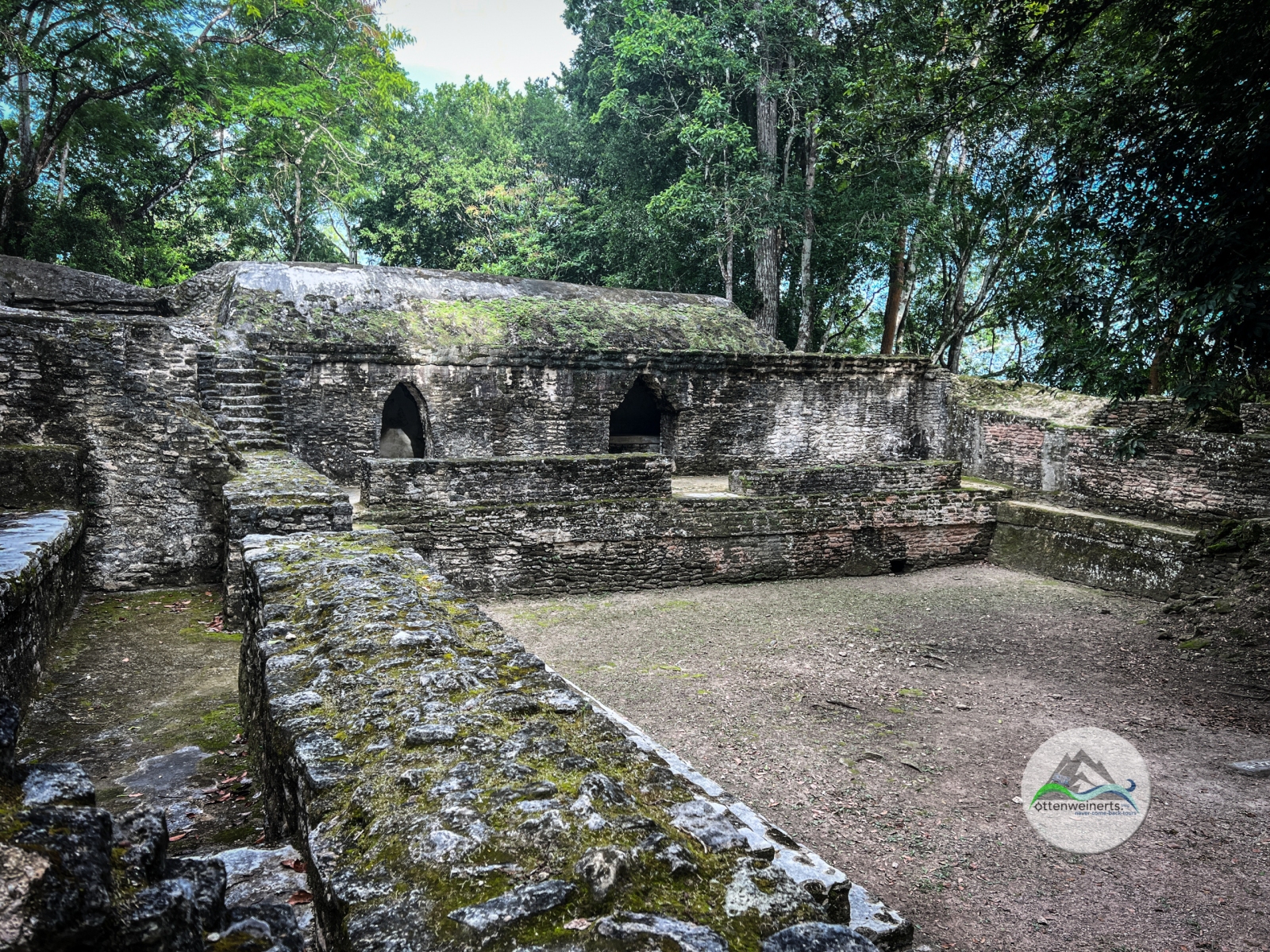
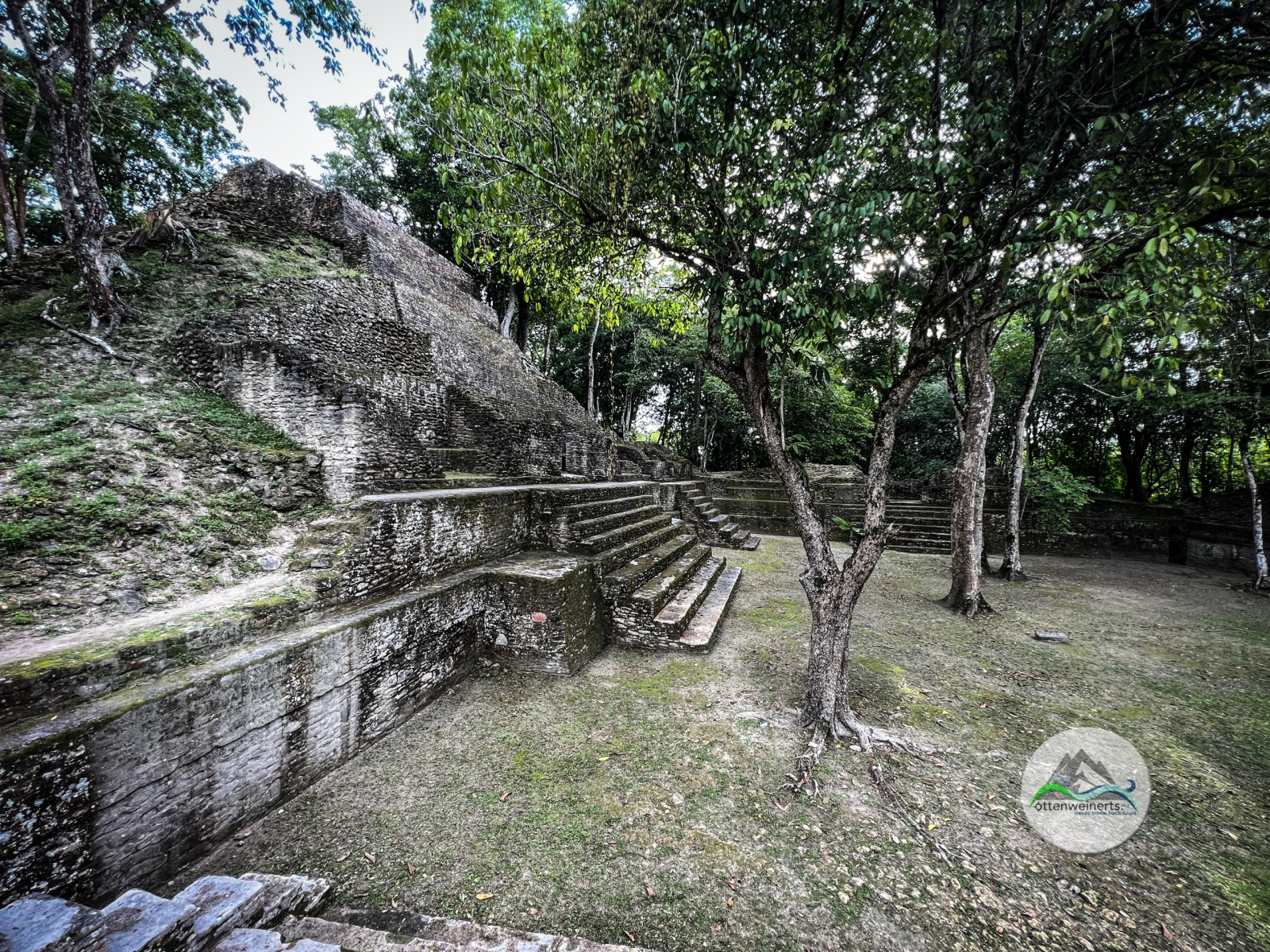
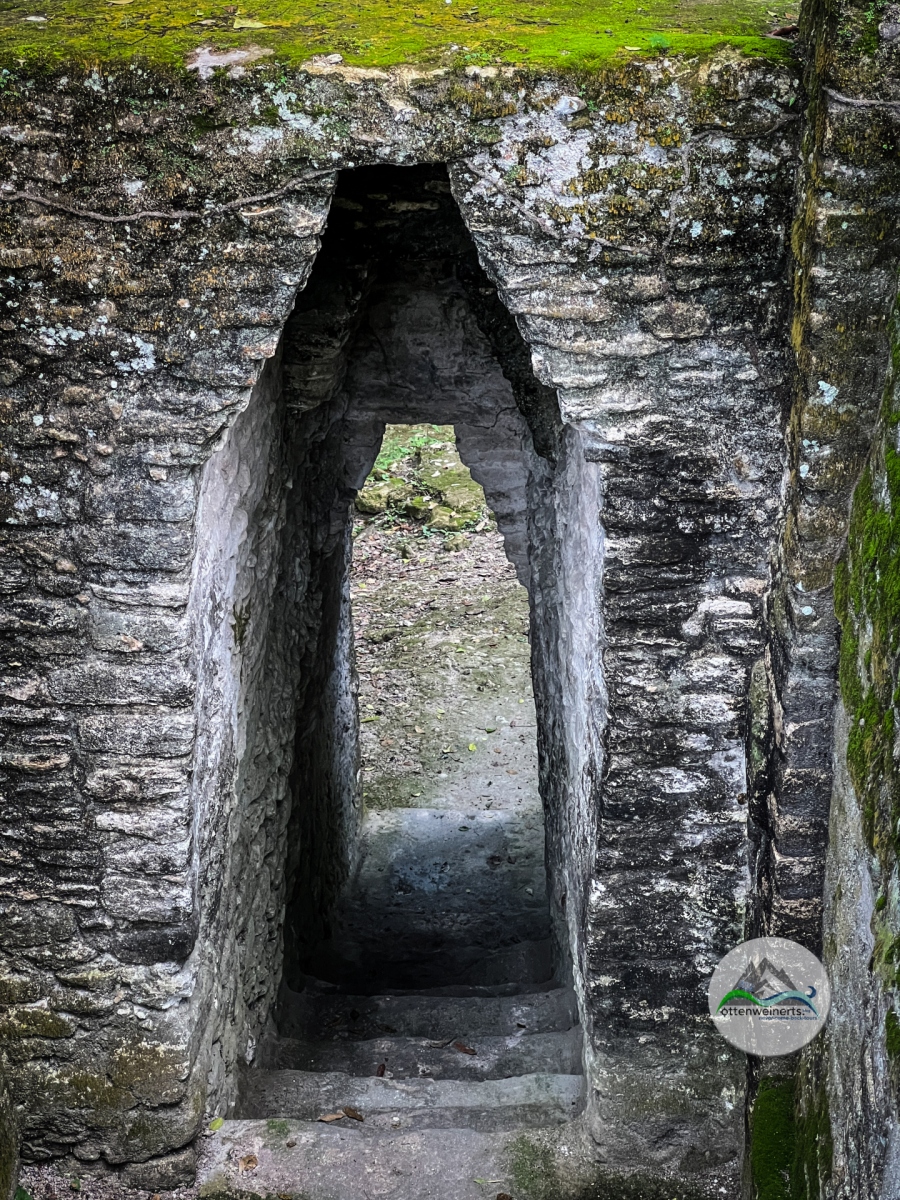
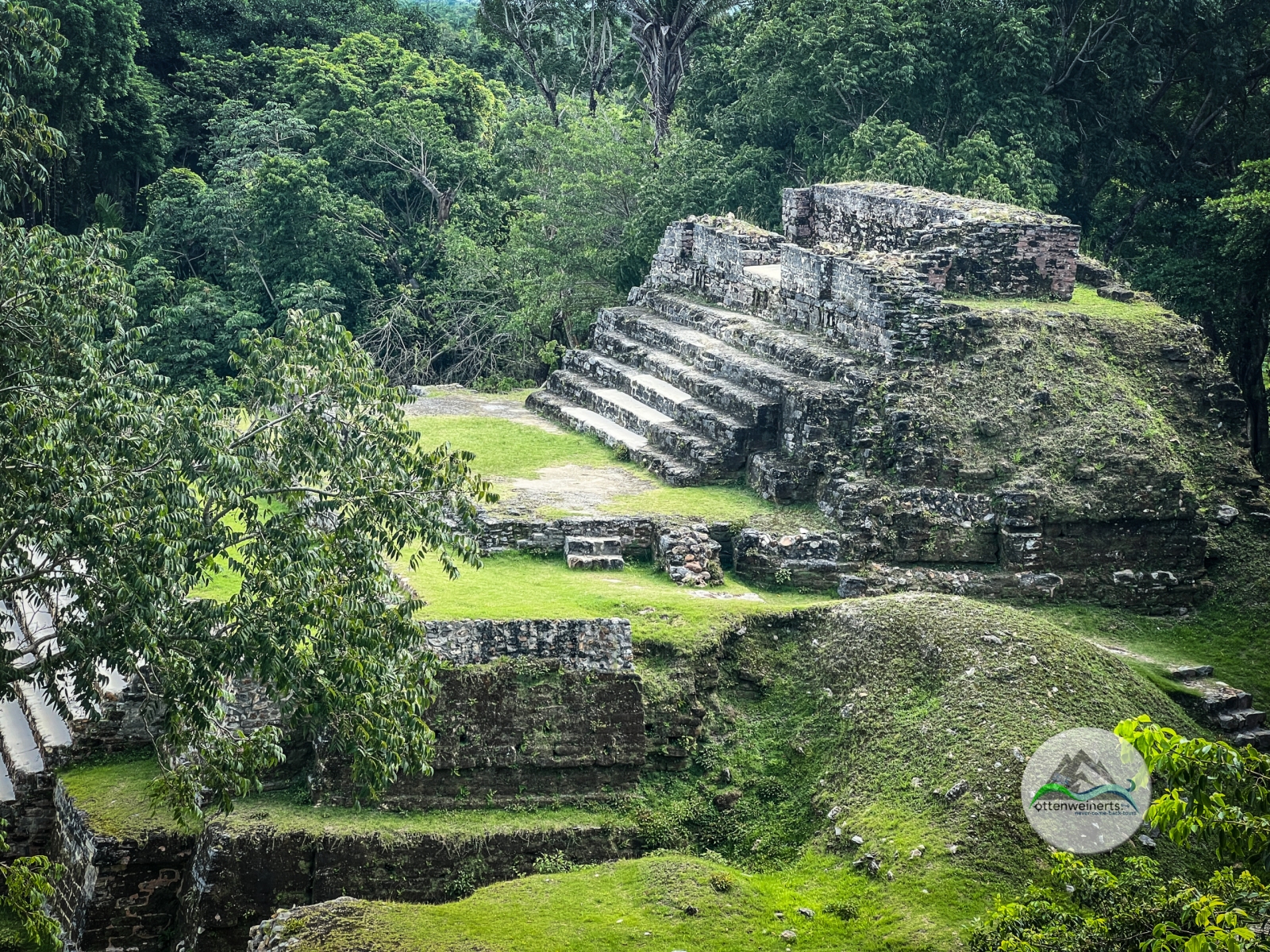
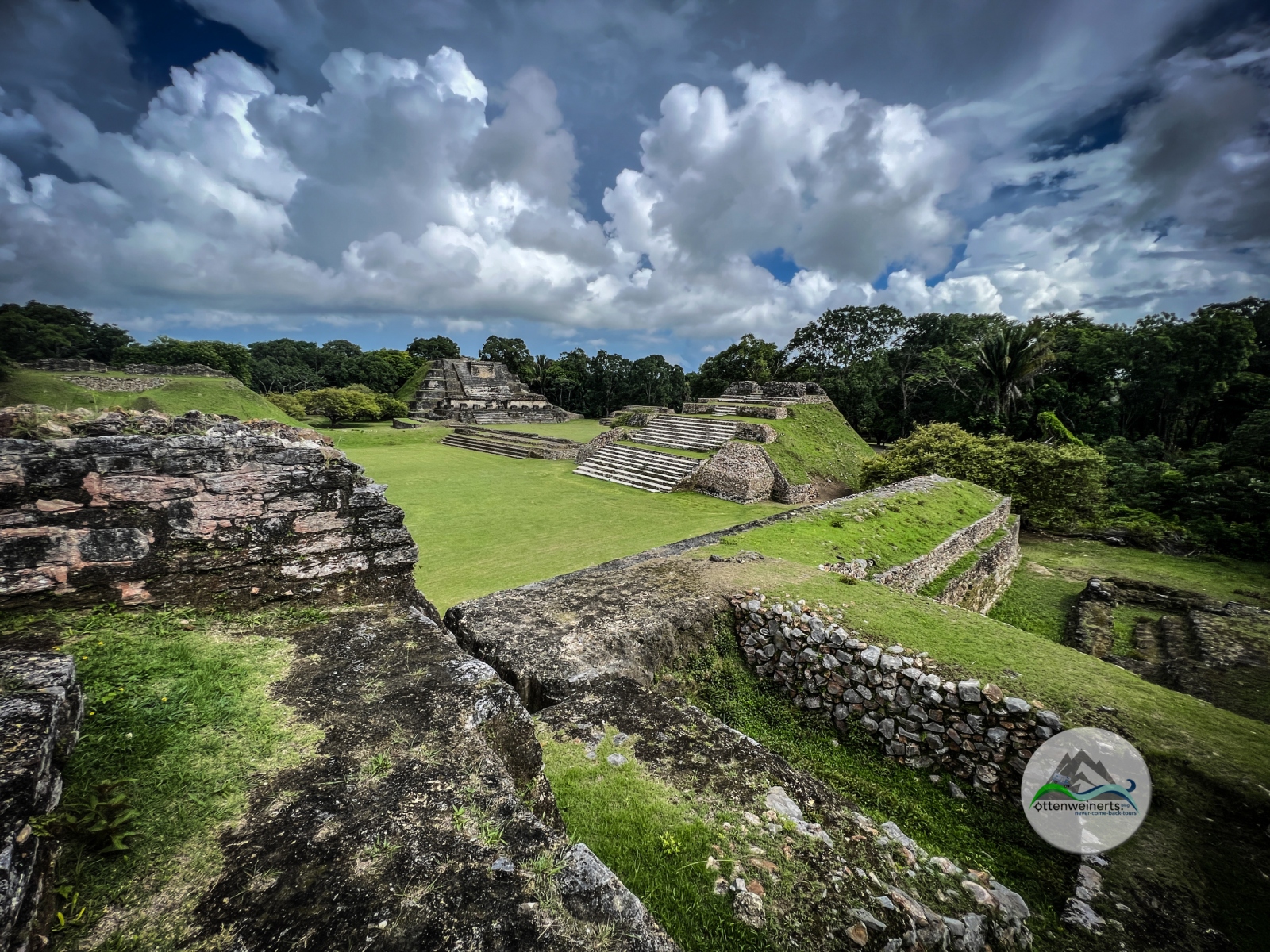
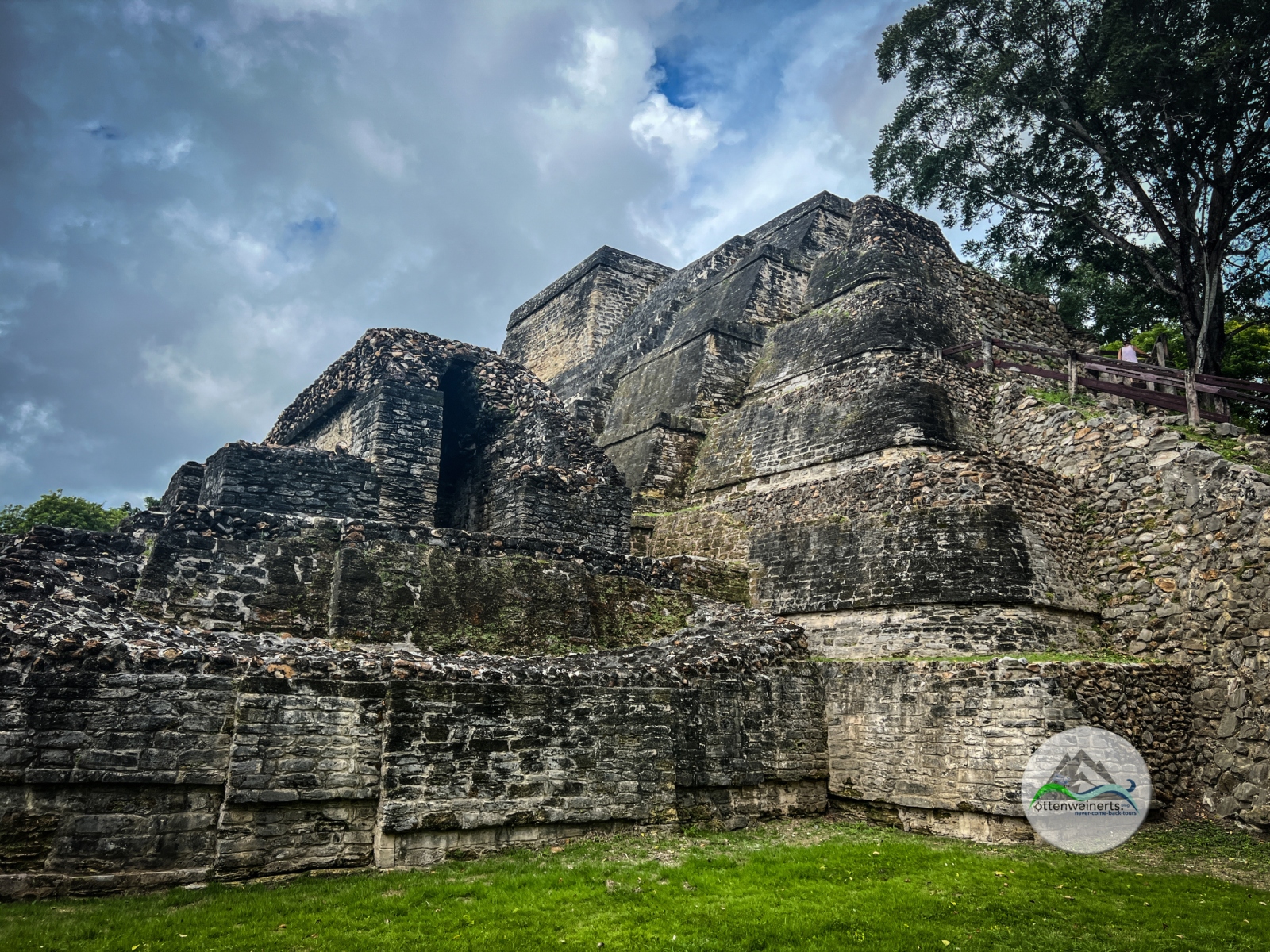
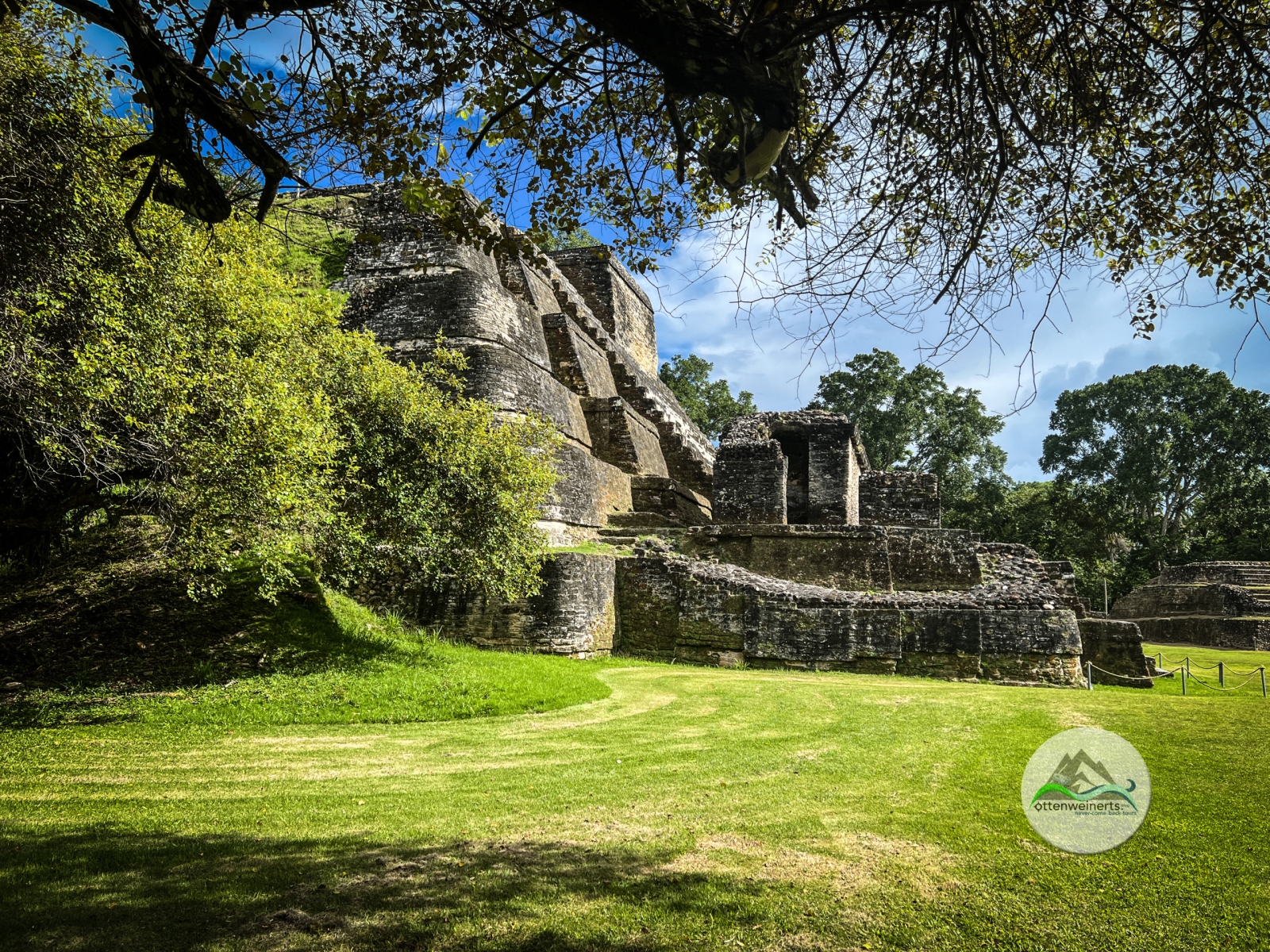
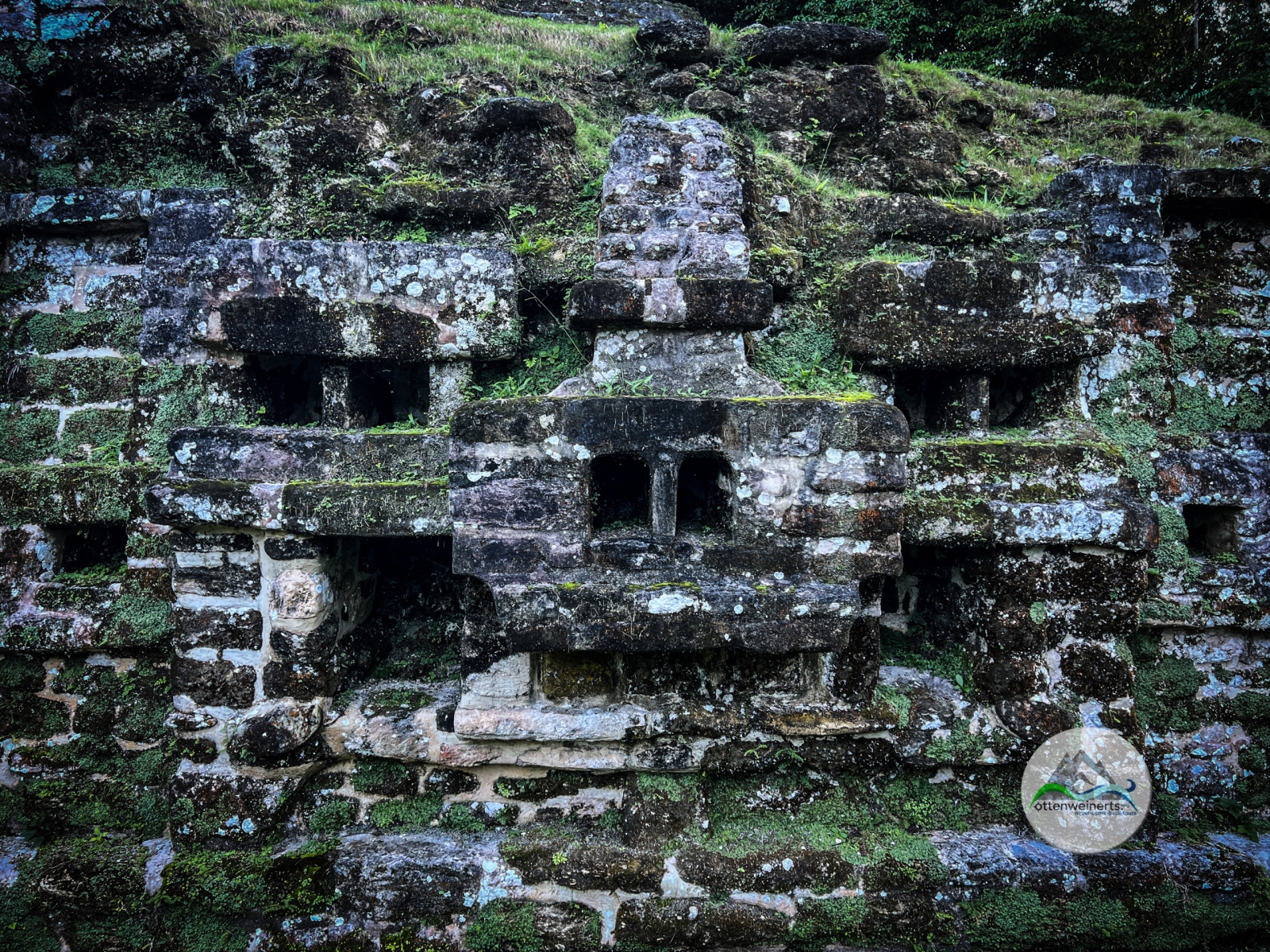
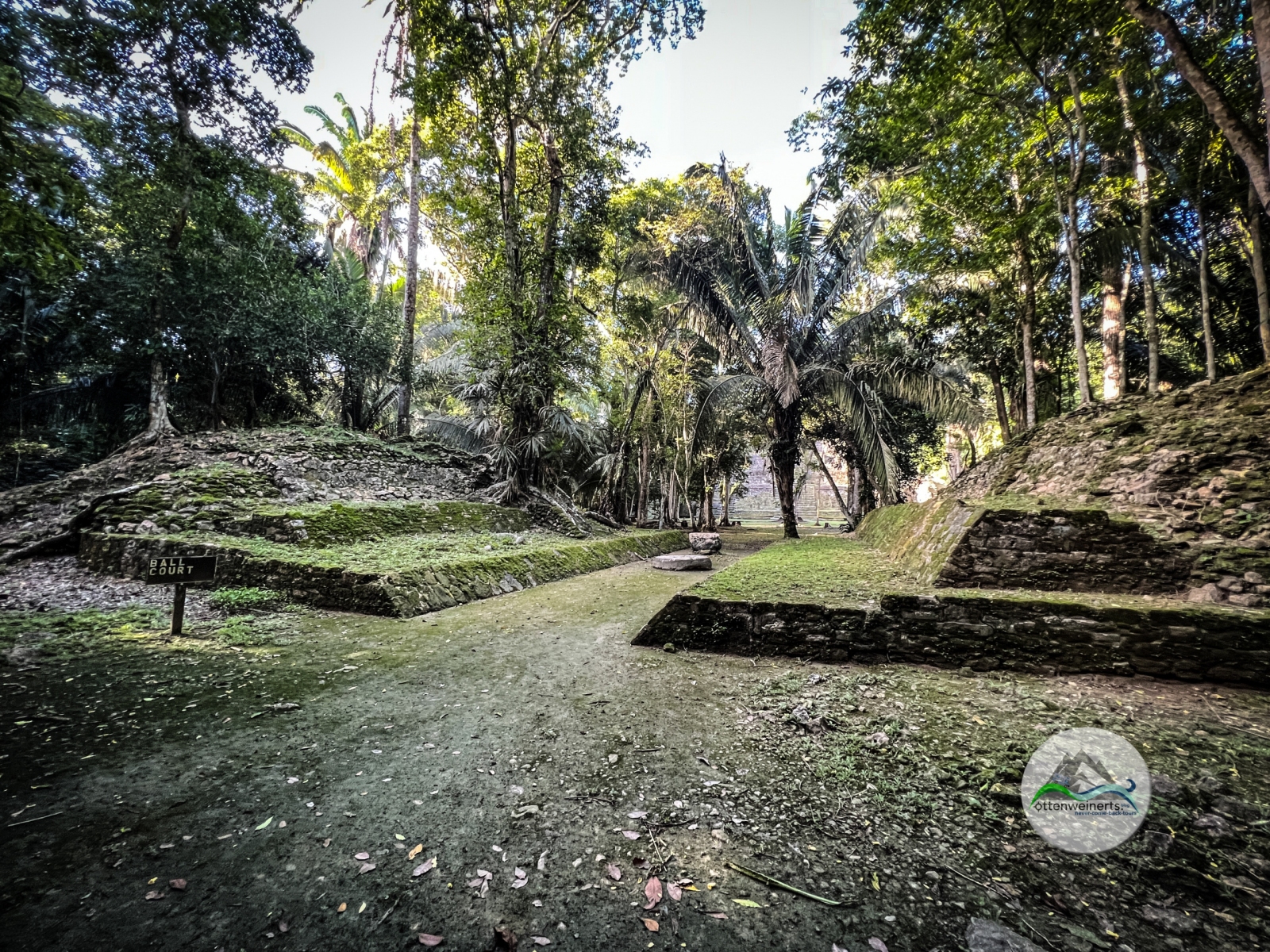
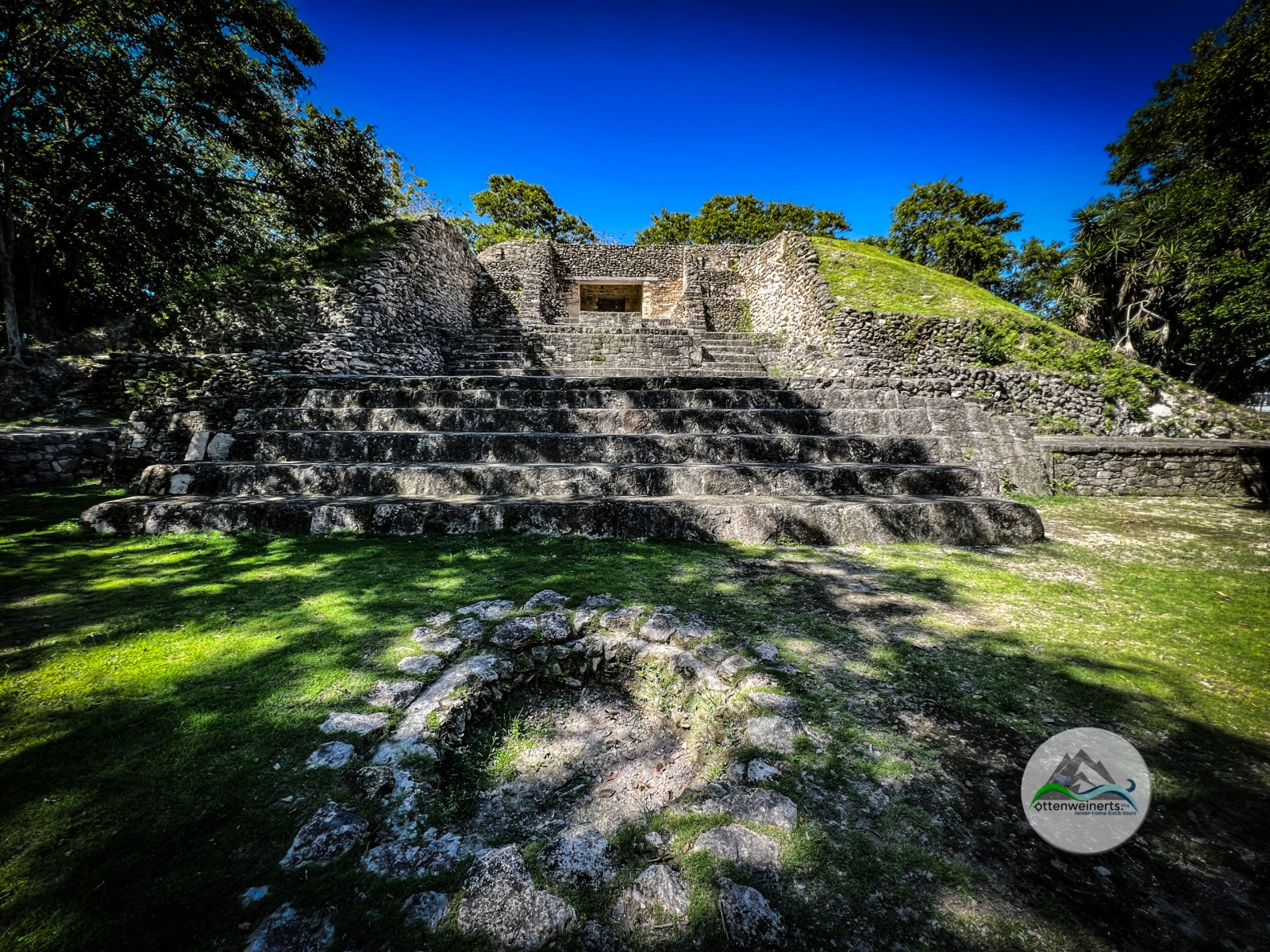
Schließlich haben wir uns noch die Maya Ruinen von Cahal Pech angesehen, der ältesten bekannten Maya-Stätte im Belize River Valley. Es gibt hier mehrere miteinander verbundene Plazas zwischen den Tempel- und Palastruinen, zwei Pelota-Courts, viele Bäume, Ruhe, keine Touristen und erfreulicherweise auch weder Moskitos noch Sandmücken (die haben uns gestern im Zoo ordentlich erwischt). Und dann ist es auch schon wieder kurz vor 18 Uhr, es wird dämmrig. Wir steuern einen netten Campingplatz im Ort an, hängen uns an eine Steckdose und beginnen die allabendlichen Arbeiten – Fotos sortieren und sichern, Blog und Reisetagebuch schreiben, Reisestrecke und Ausgaben notieren. Morgen noch ein Tag Belize, dann geht es schon Richtung Grenze zu Guatemala.

Day 138 – San Ignacio

The plan for this morning was to go cave-tubing, but rain all night long made that impossible – as soon as the water level rises, there is no more cave-tubing – no one wants to have to rescue tourists caught in flooded caves. Instead we drive towards San Ignacio, and on the way we spontaneously decide to visit Maya Hill Lodge in Blackmann Eddy Village. The owner, Dr. Andre Scholz, has been helping us for the last weeks via email, trying to find tires with the right dimension for our camper, and for that we wanted to say “thank you” in person. After a nice chat with Andre and his lovely wife Monika we continue to the San Ignacio Resort, where the Green Iguana Project is located.

We have seen a lot of black, grey and brown Iguanas, the “temple guards” as we call them, they are to be found everywhere in Belize. But the green Iguana is an endangered species – they are vegetarians and said to be very tasty, therefore they are hunted and eaten (“Bamboo chicken is NO chicken, as we learned today!). This project houses 2 male and a harem of female Iguanas in “Hotel San Iggy” – their job is simply reproduction. On the other hand, staff collects Iguana eggs wherever they find them to hatch them here. The babies are kept here until they are ready to be released.

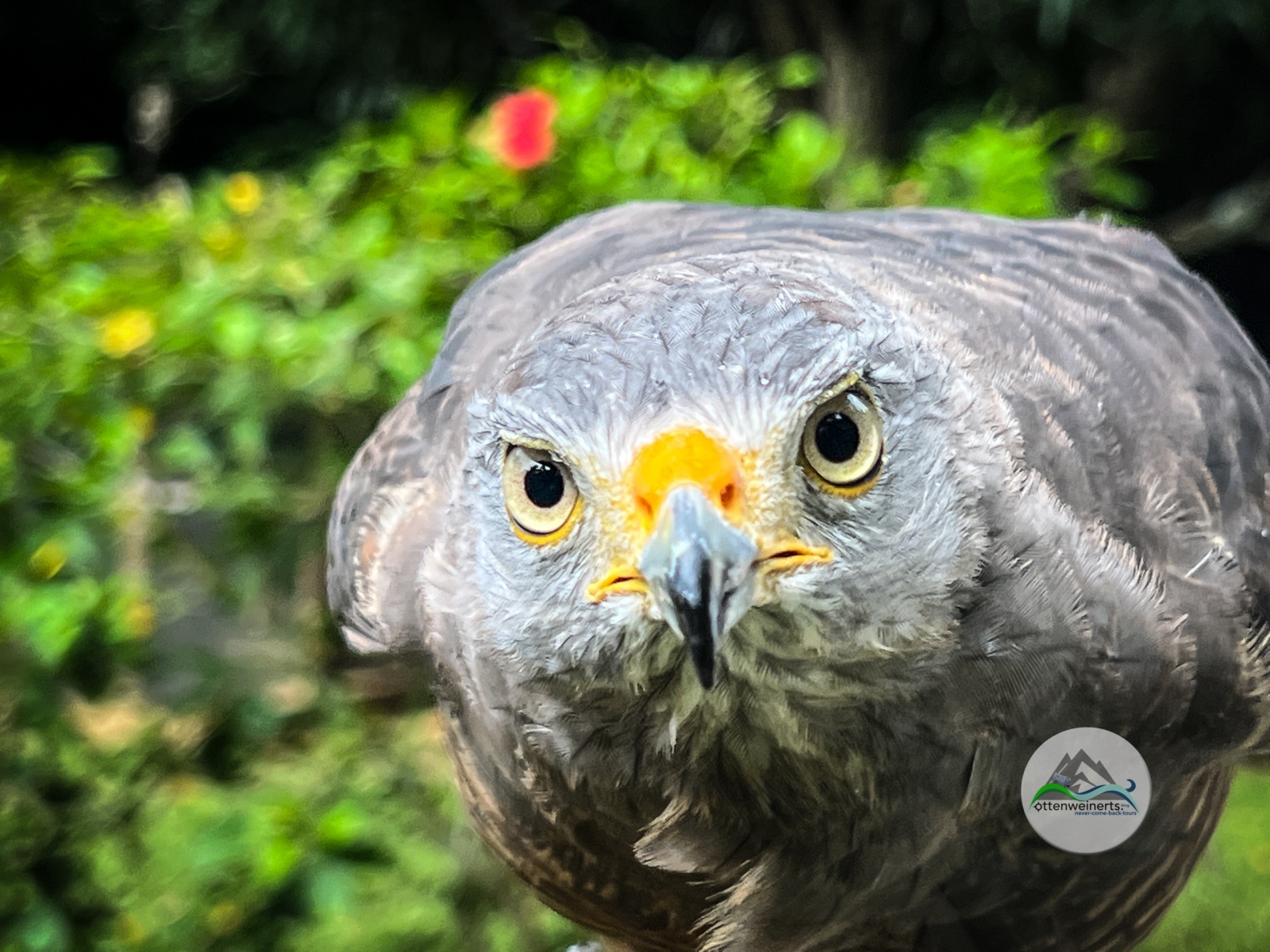
Then we drove to the Belize Raptor Center – and the drive was an adventure in its own. For the only road leading to the center, you need a vehicle with high ground clearance, or better a 4-wheel-drive, especially when it is raining. But it was worth it! The center often receives injured birds which – after treatment and rehab – can be released into the wild again; it also houses raptors which cannot be released anymore due to physical or other reasons; therefore, they are permanent guests. So, we had the great pleasure to meet several of the permanent residents up close, like Zion, the Common Black Hawk; Toothless, the white-tailed Kite; Odin, the one-eyed Grey Hawk; Maya, the orange-breasted Falcon; a Pygmy Owl; Athena, the ornate Hawk Eagle and Okna, the black Hawk eagle; Grandma Luna, the elderly Spectacled Owl and several others. The Raptor center is a non-profit organization, depending on donations; apart from offering different tours for visitors, the highly motivated and knowledgeable staff also takes the feathered “ambassadors” to schools, companies or farmers to inform and educate.

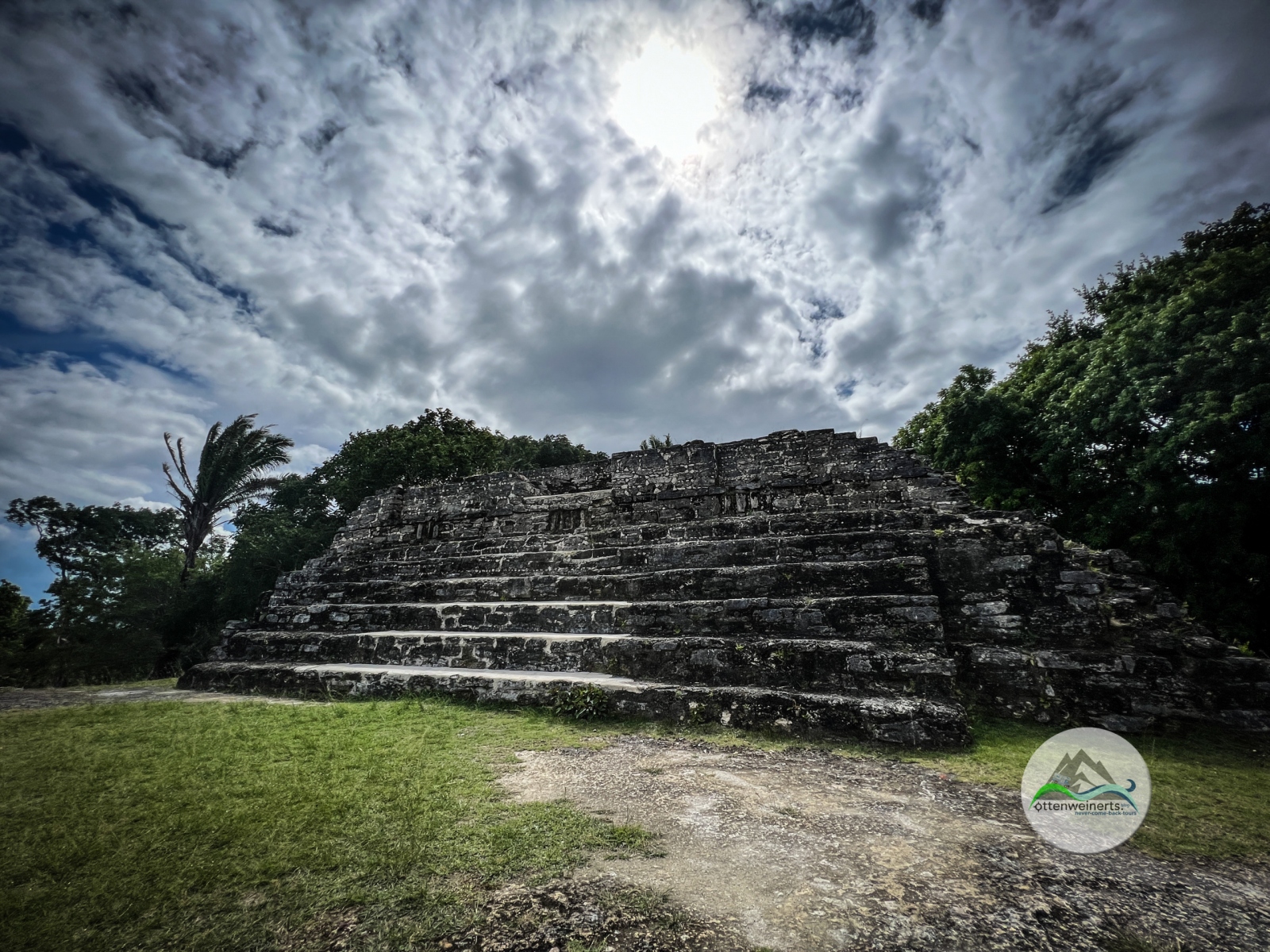
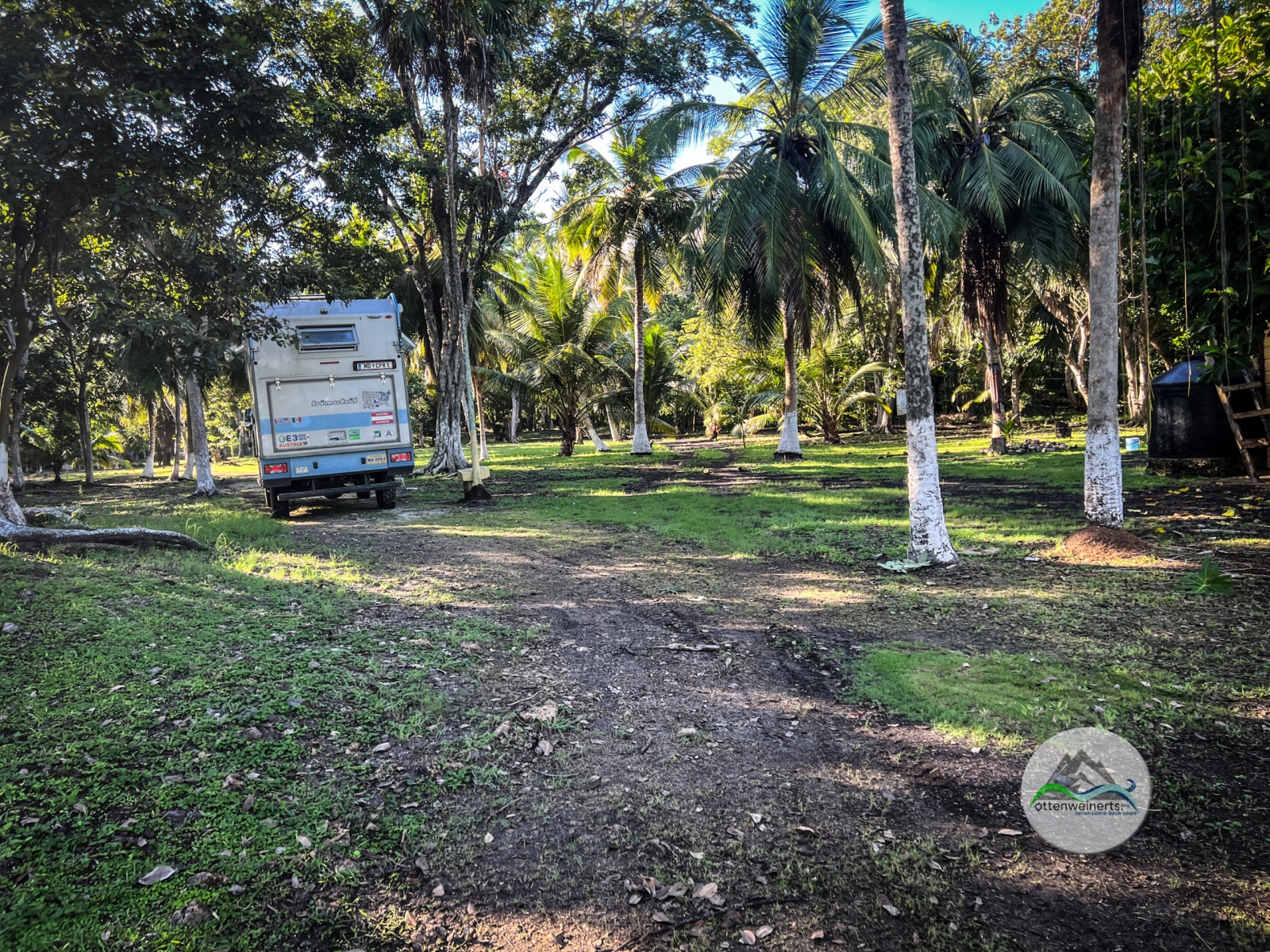
Last stop for today: the Maya ruins of Cahal Pech, the oldest known Maya place in the Belize River Valley. There are several interconnected plazas between the temple and palace ruins, two Pelota courts, a lot of trees, peace and quiet, no tourists and luckily no mosquitoes or sandflies either (they got us good yesterday at the zoo!). And all of a sudden it is almost 6 pm, it is getting dark. We drive to a nice camping place in town, plug our camper in (there was not much sunshine today to recharge our battery) and start the daily tasks – sort and save the pictures, write blog and travel diary, document the driven route and the expenses. One more day in Belize tomorrow, then we will continue west, direction Guatemala.
Route 220902

220901 – Von Belize City nach Belmopan >

Donnerstag/Thursday, September 1, 2022

Tag 137 – Von Belize City nach Belmopan

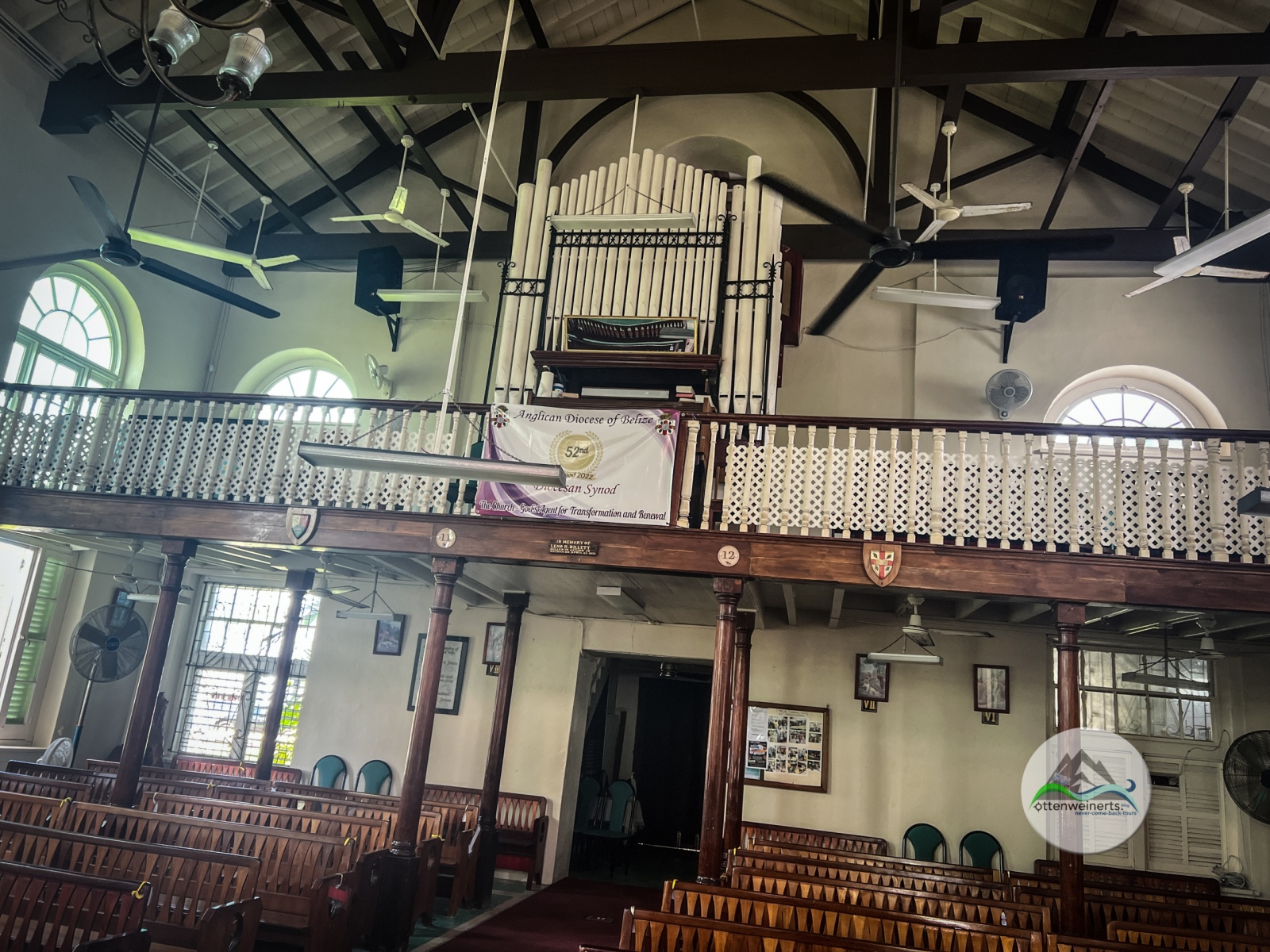
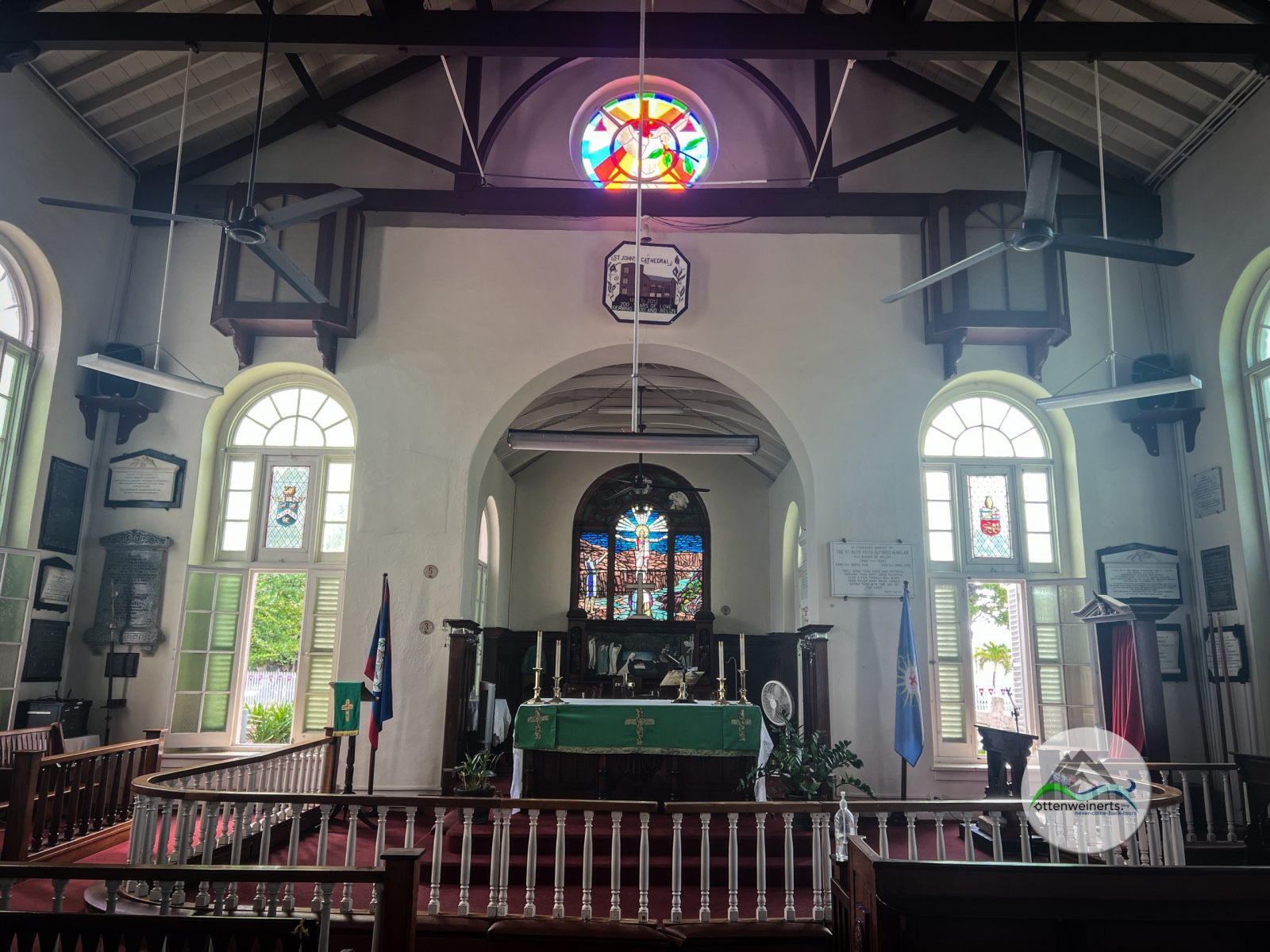
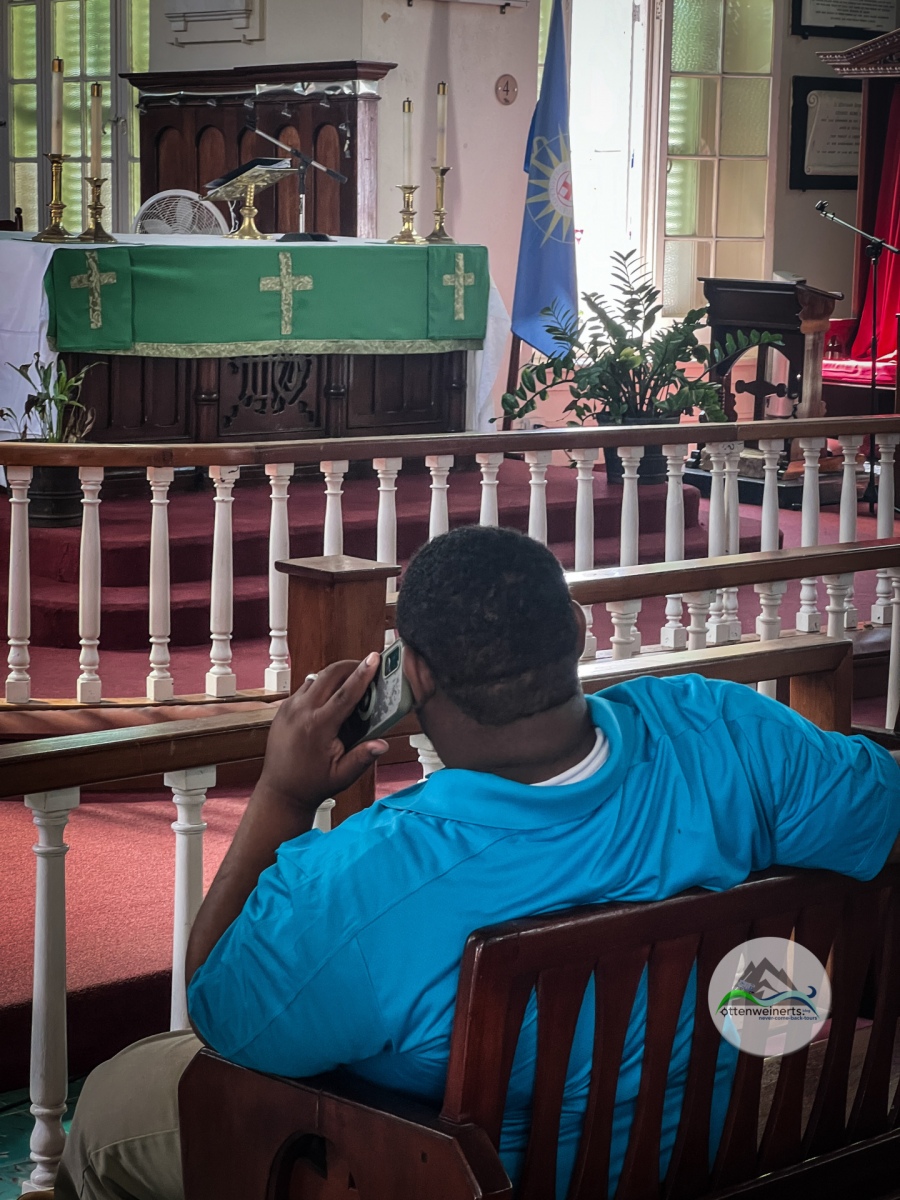
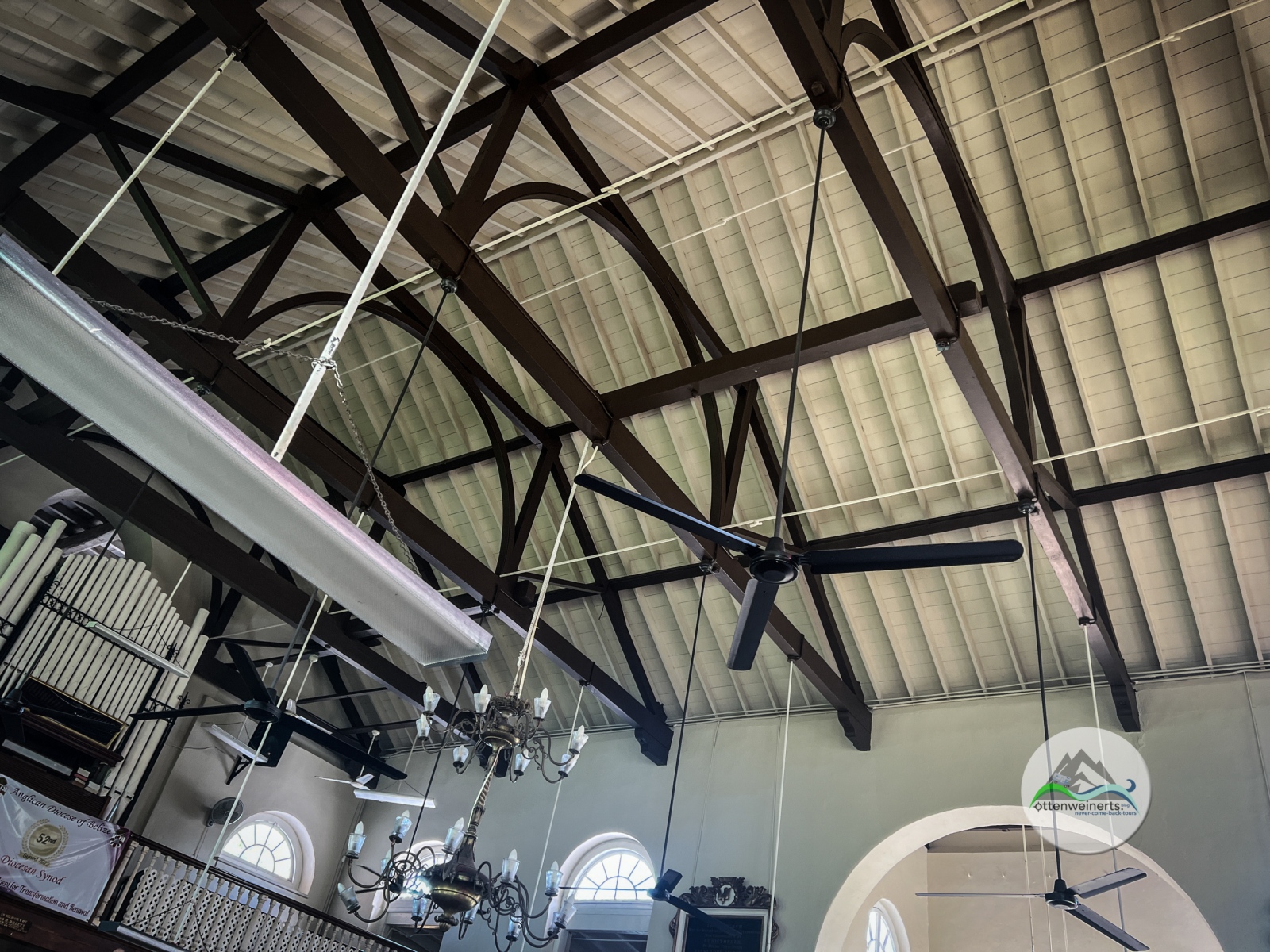
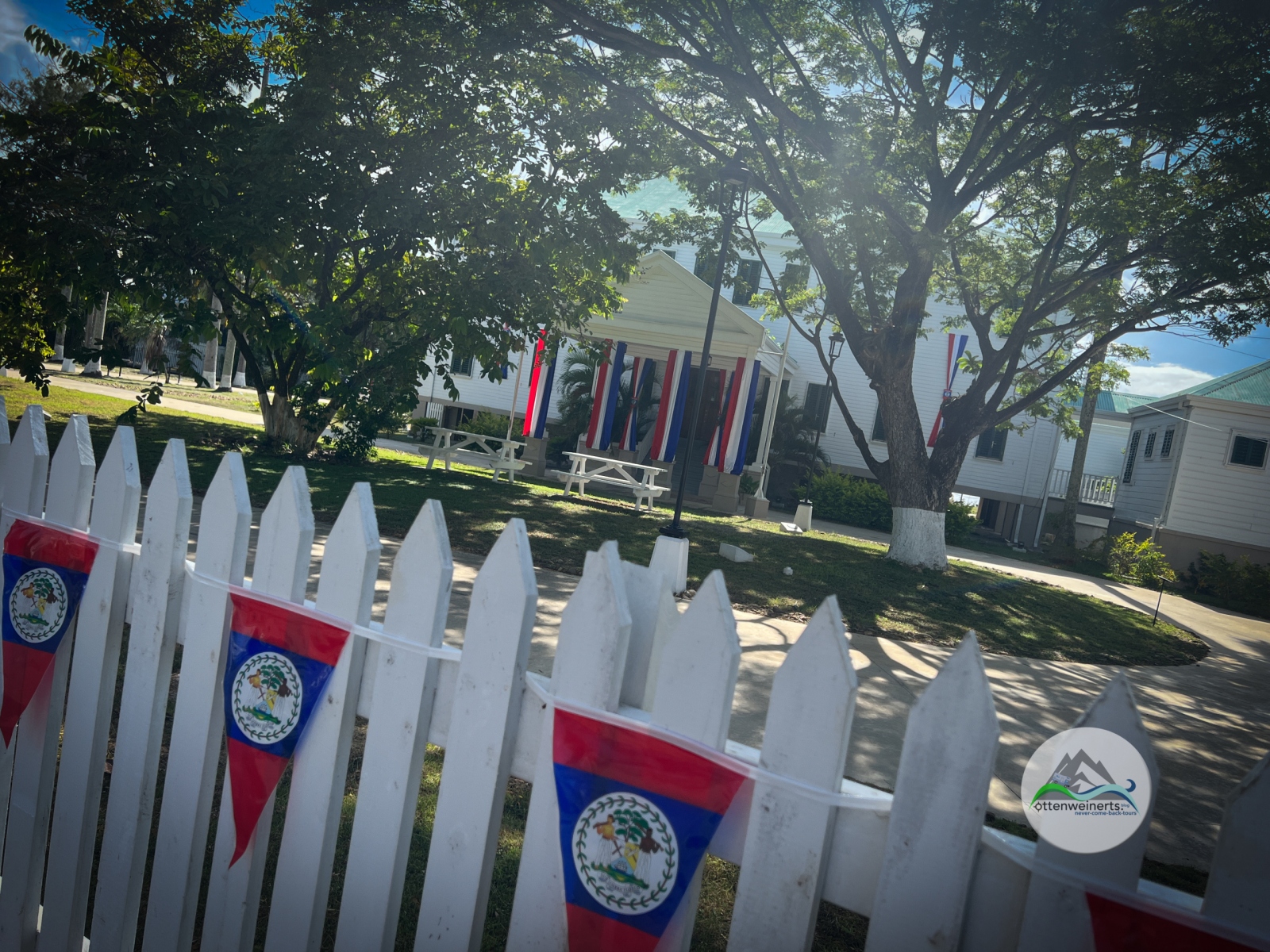
Wir verlassen den Norden von Belize City über die fast 100 Jahre alte Drehbrücke – 1923 installiert, ist sie angeblich die älteste, noch funktionierende manuell betriebene Brücke dieser Art weltweit. Allerdings wird sie nur noch ganz selten gedreht, nämlich um Booten das Einlaufen in den Haulover Creek zu ermöglichen, wenn Hurrikans angesagt sind. Die nächste alte Dame, die wir besuchen, ist St. John´s Cathedral, die älteste anglikanische Kirche in Mittelamerika, erbaut von 1812 bis 1820, mit aus England herbeigeschafften Ziegeln. Vis-a-vis, mit Flaggen und Fähnchen verziert, steht das schmucke Government House.

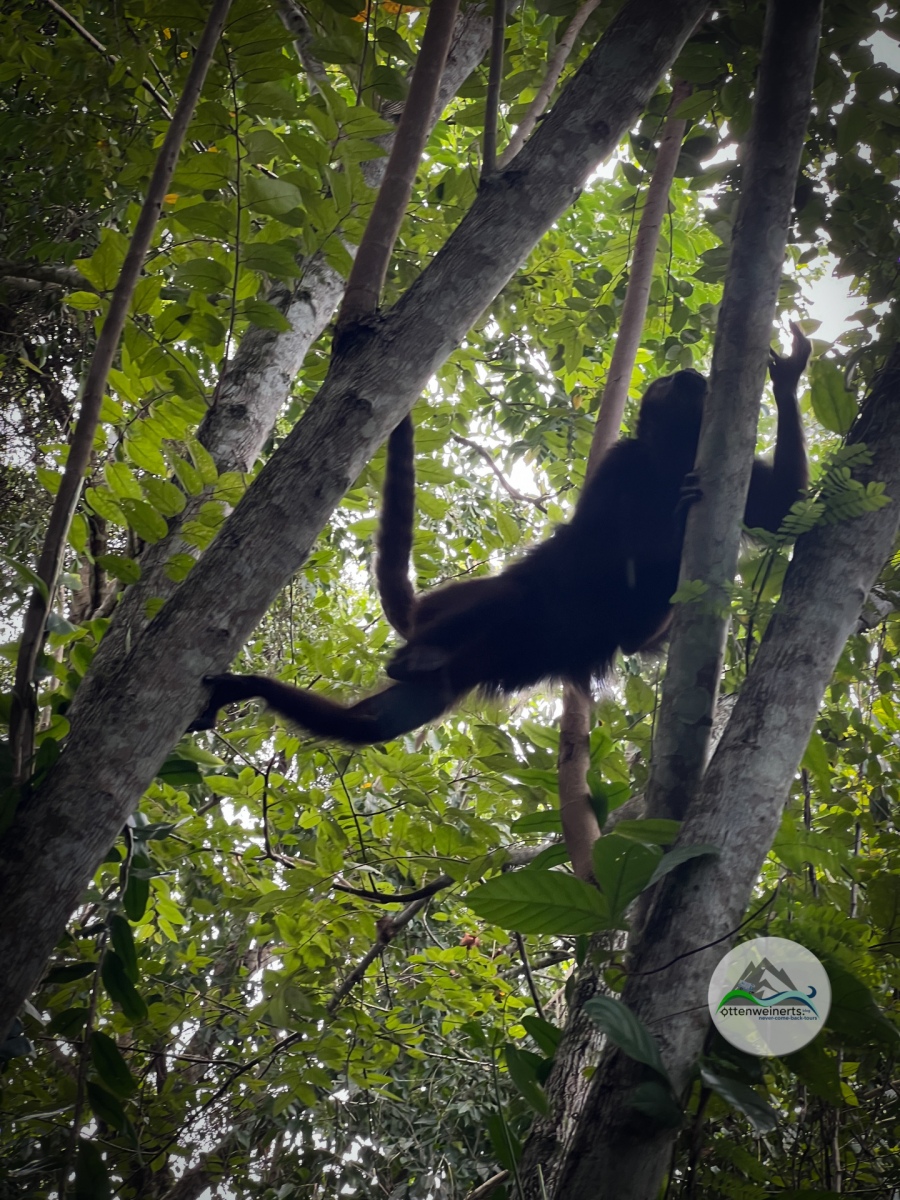
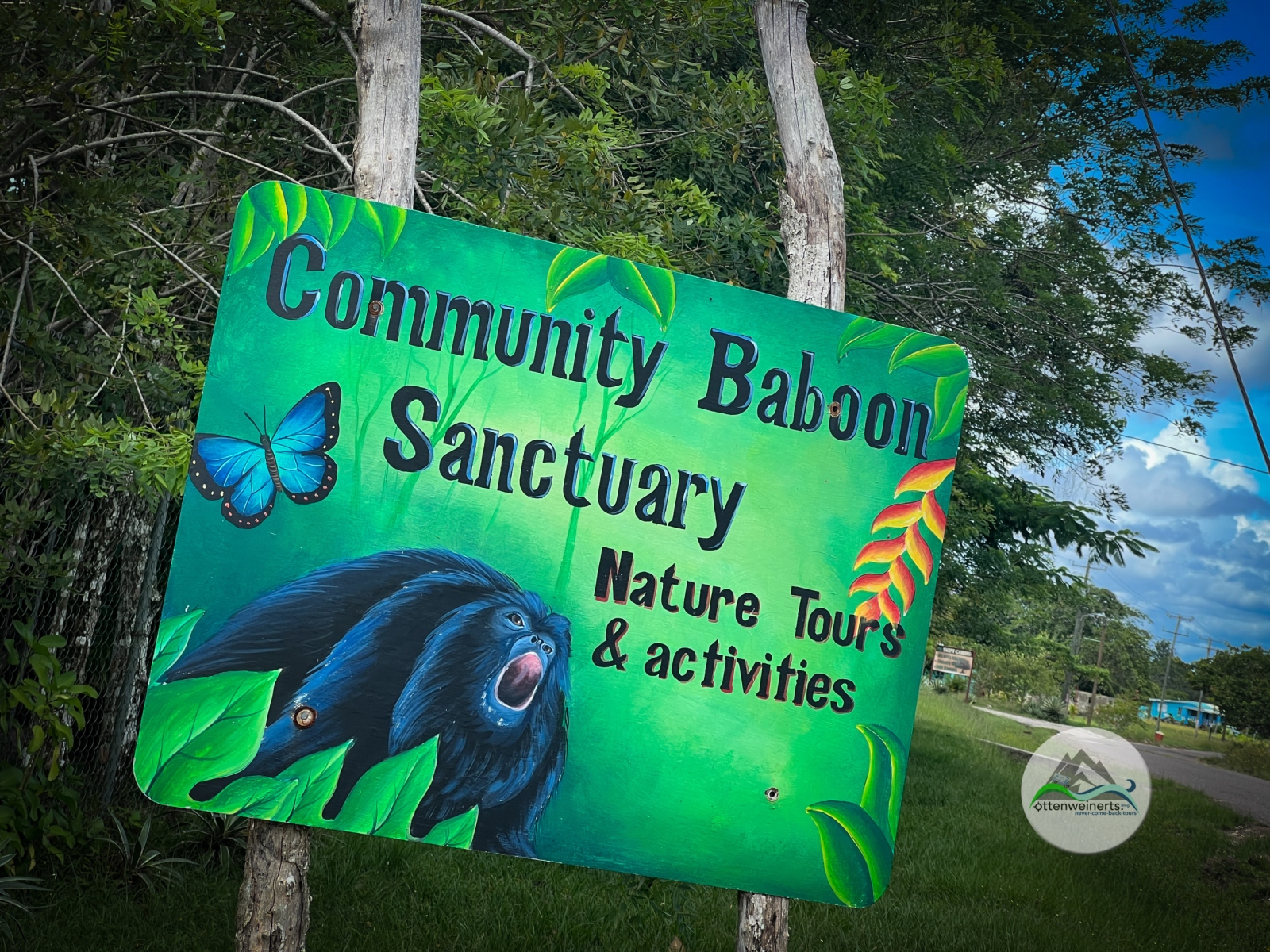
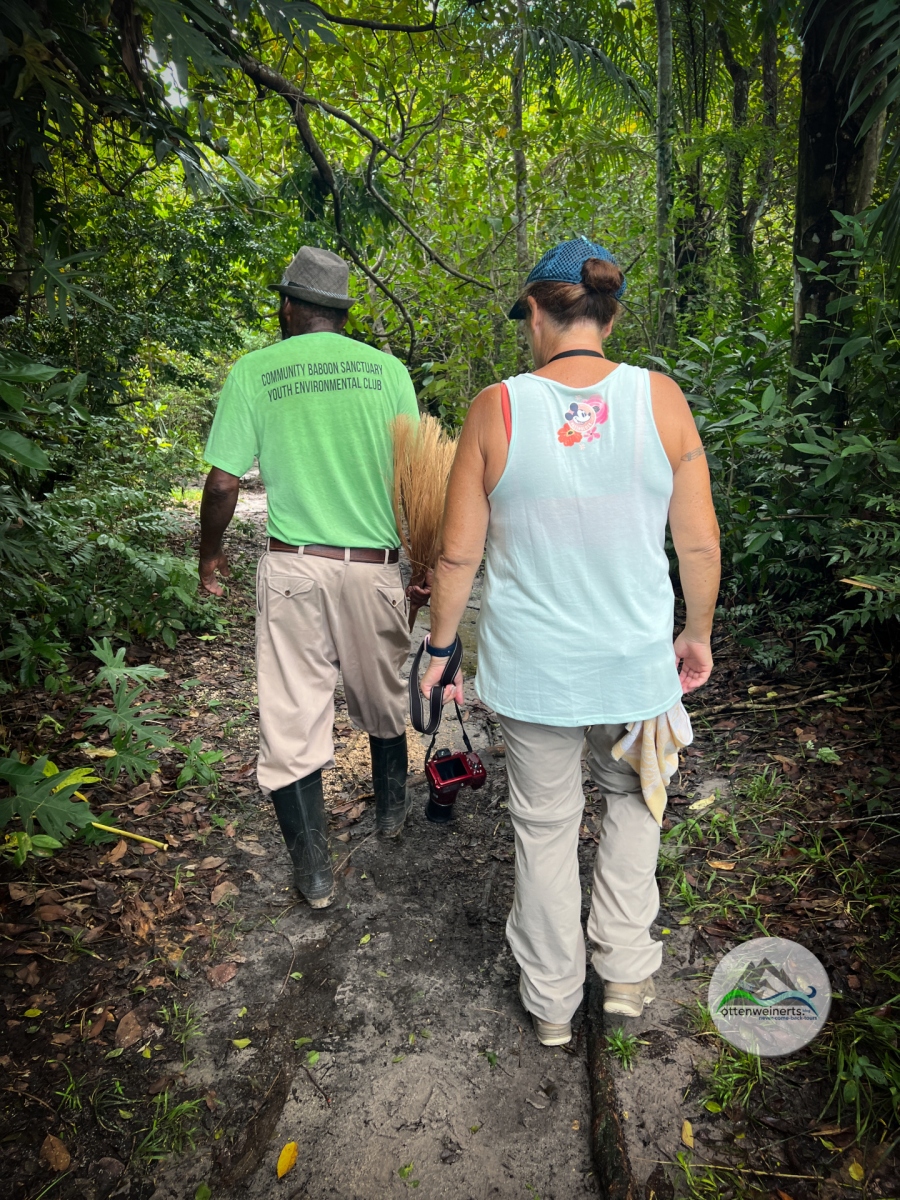
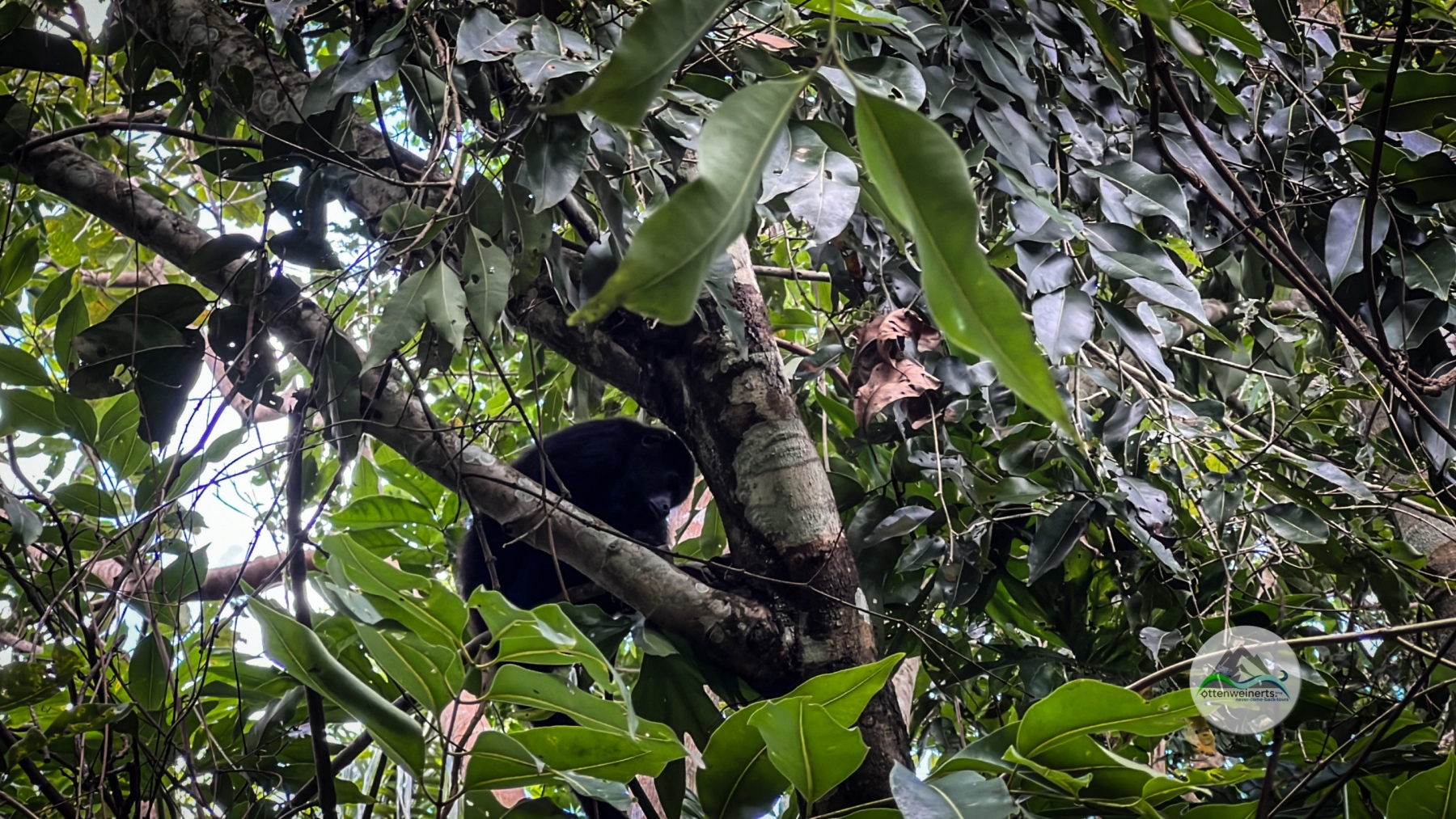
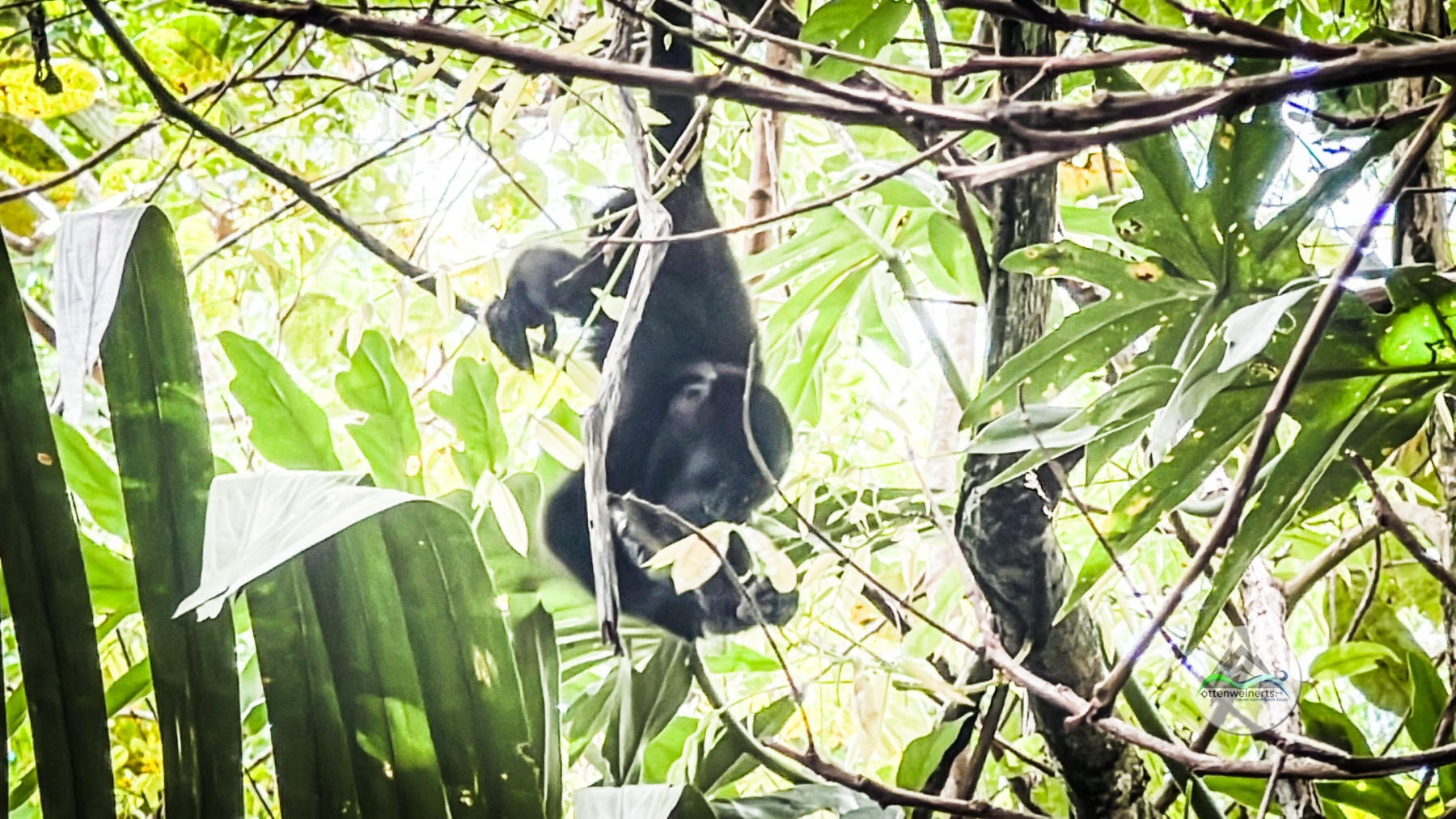
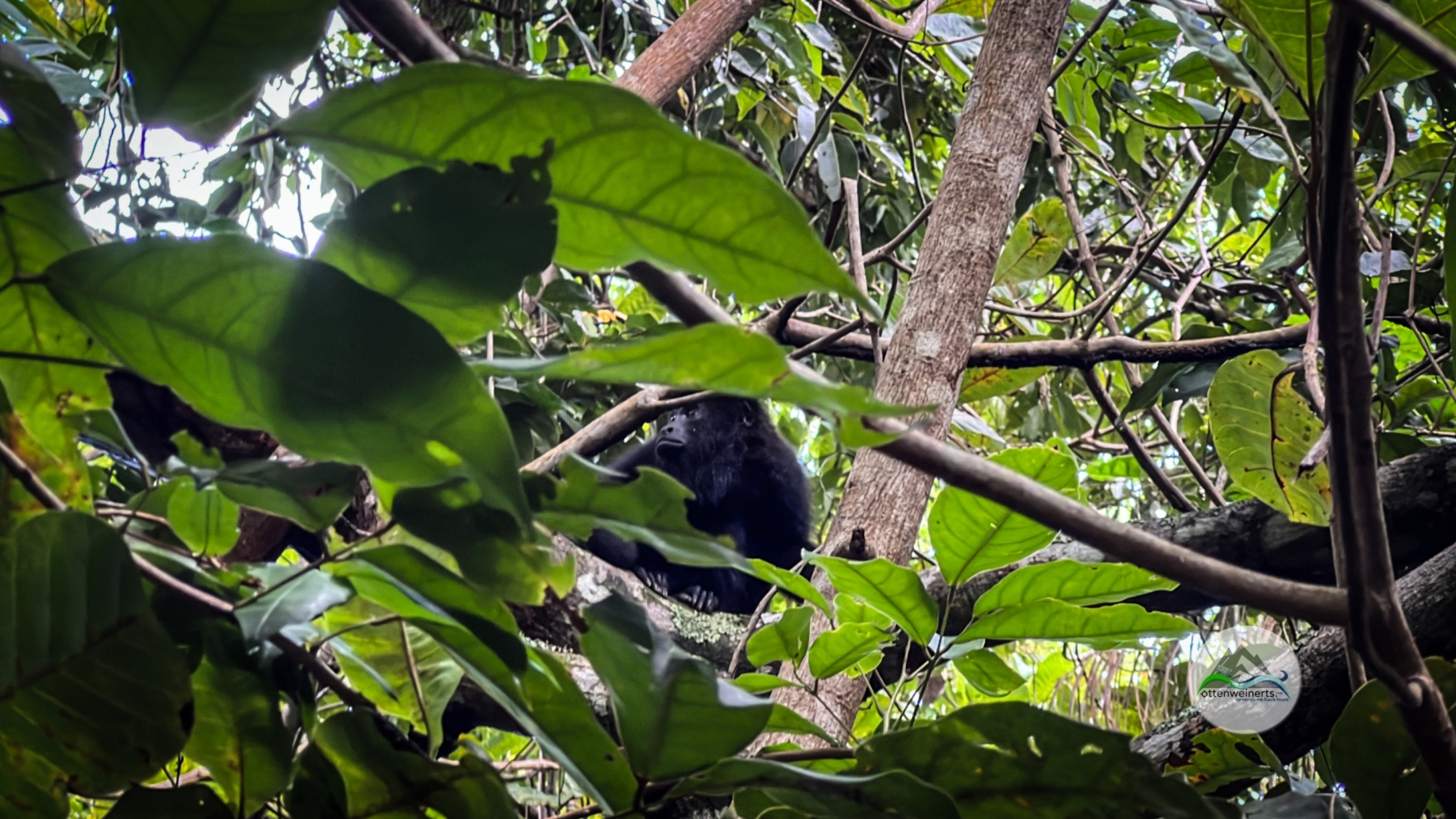
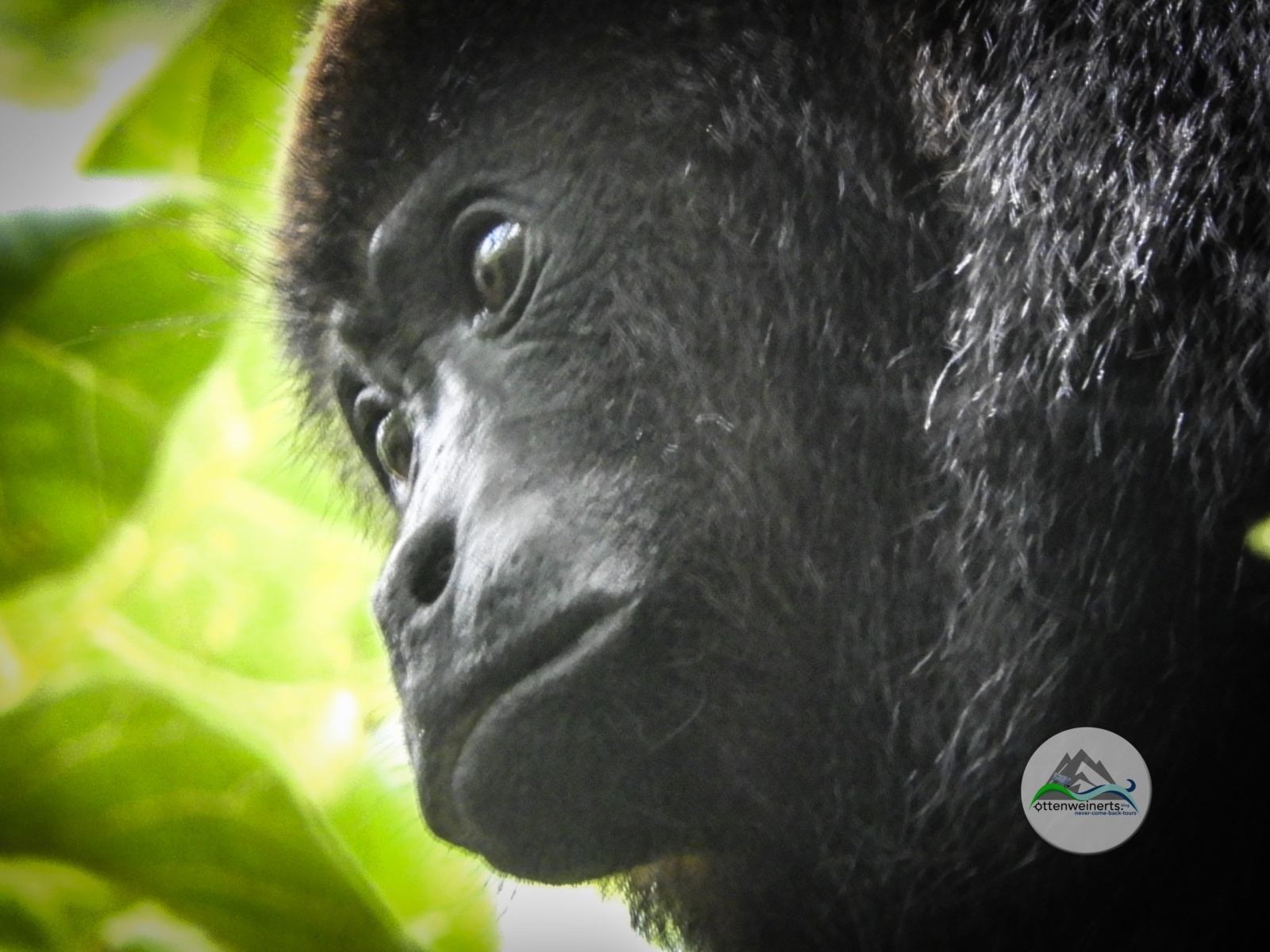
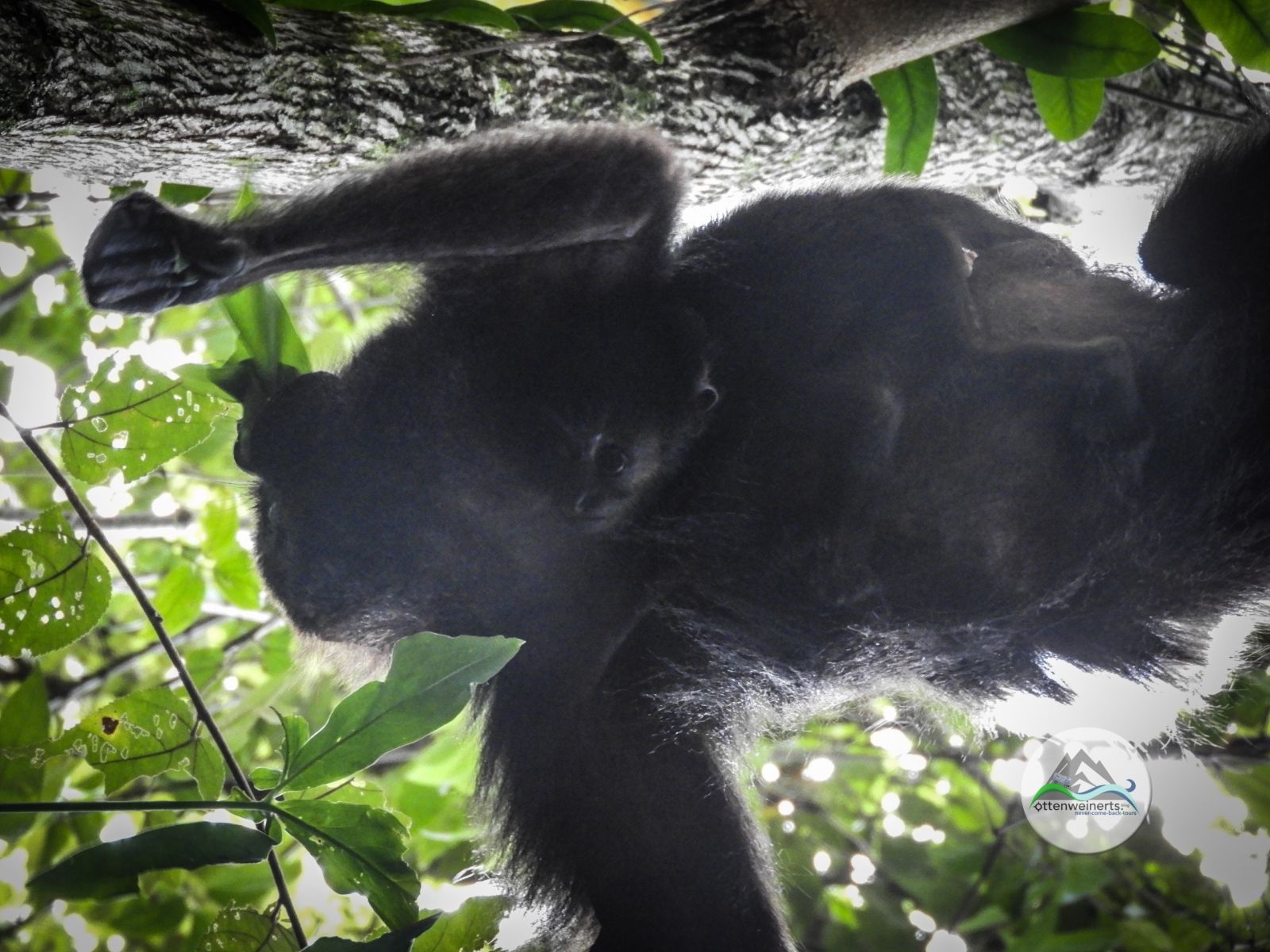
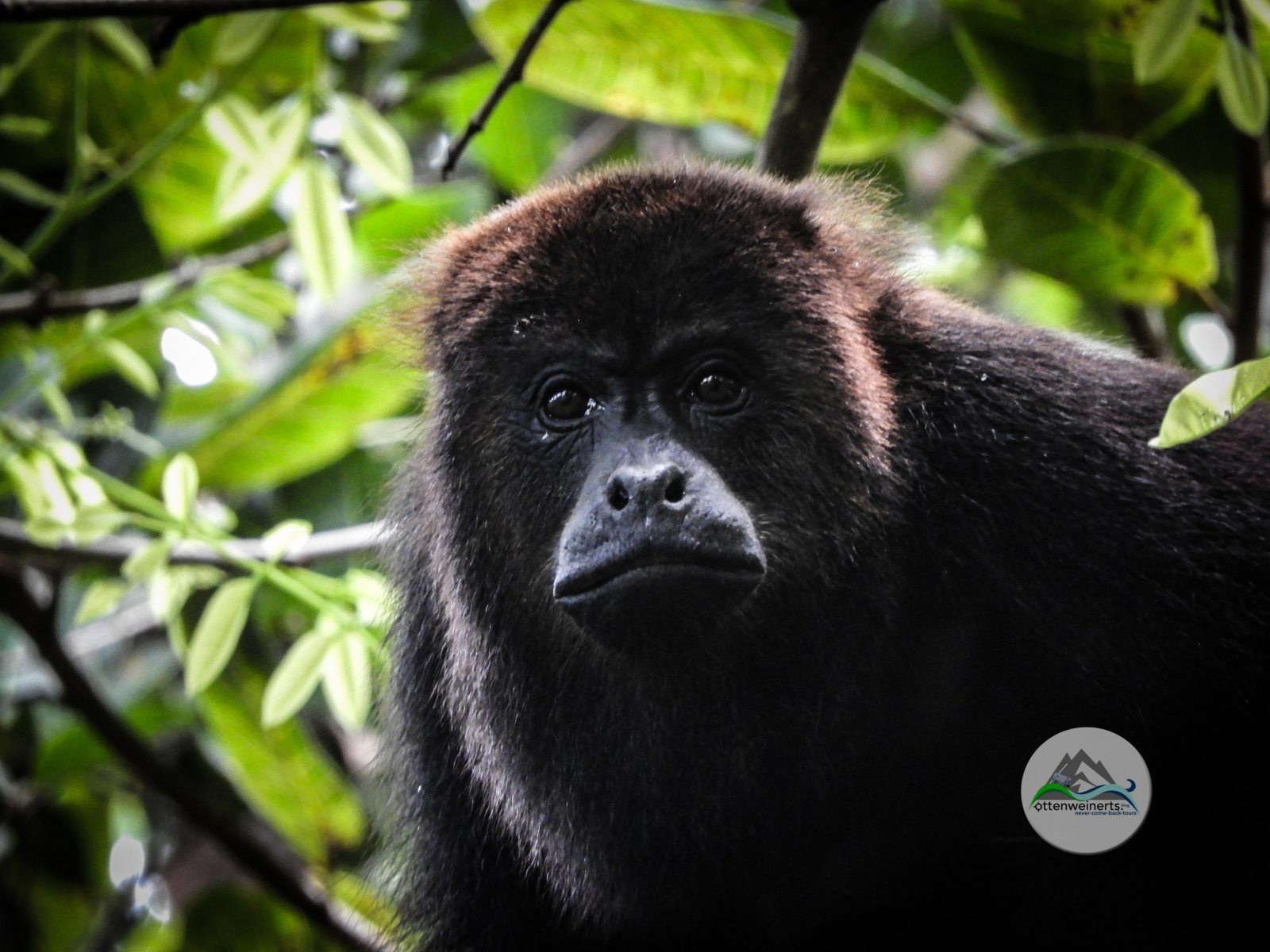
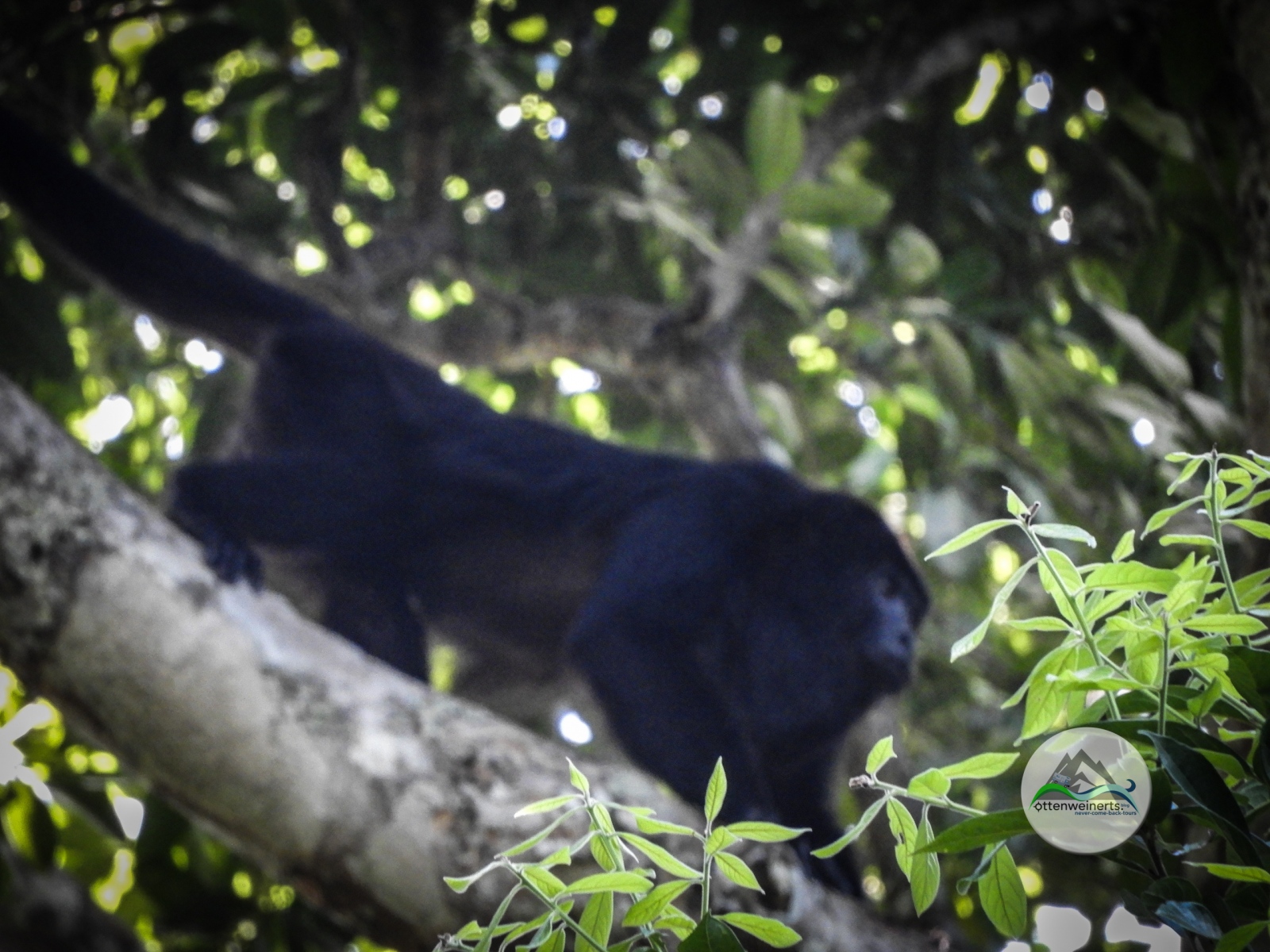
Nächster Stopp: das Community Baboon Sanctuary, 40 km westlich von Belize City – hier sind natürlich keine Baboons zu Hause, sondern Brüllaffen, die aber seinerzeit von den ersten Siedlern als Baboons bezeichnet wurden, und der Name ist geblieben. Das Sanctuary ist kein Zoo, es gibt keine Zäune, die Tiere leben frei und werden auch nicht gefüttert – es handelt sich um eine freiwillige Initiative. Die Grundbesitzer verpflichten sich, den Lebensraum der Affen, nämlich den Urwald zu erhalten; es gibt ein kleines Museum und dann führt der Guide die Besucher in den Urwald – und wenn man Glück hat, so wie wir heute, dann sieht man eine ganze Affenfamilie mit ein paar Kleinen in den Bäumen herumturnen oder nur am Greifschwanz hängend nach Früchten angeln. 

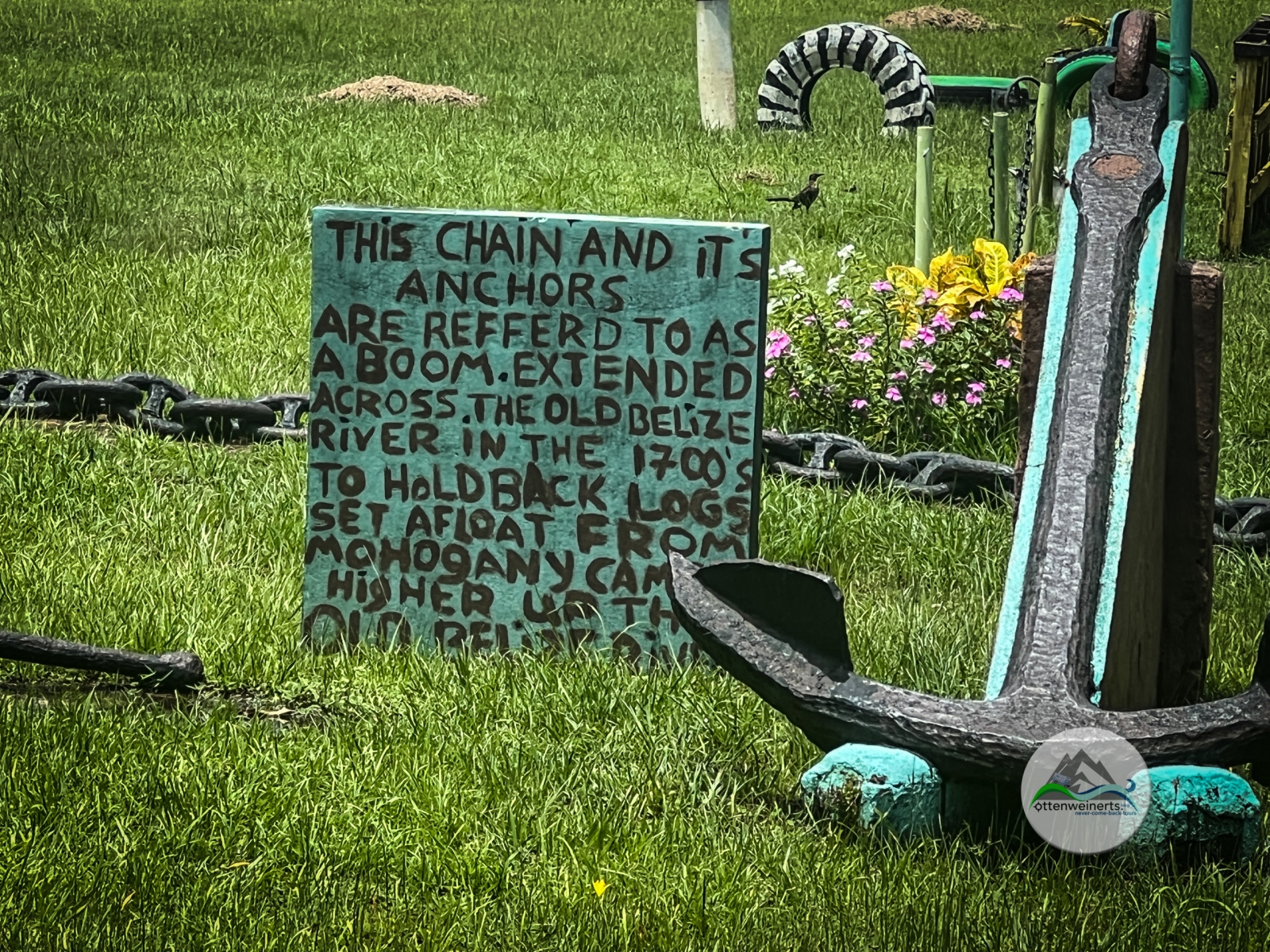
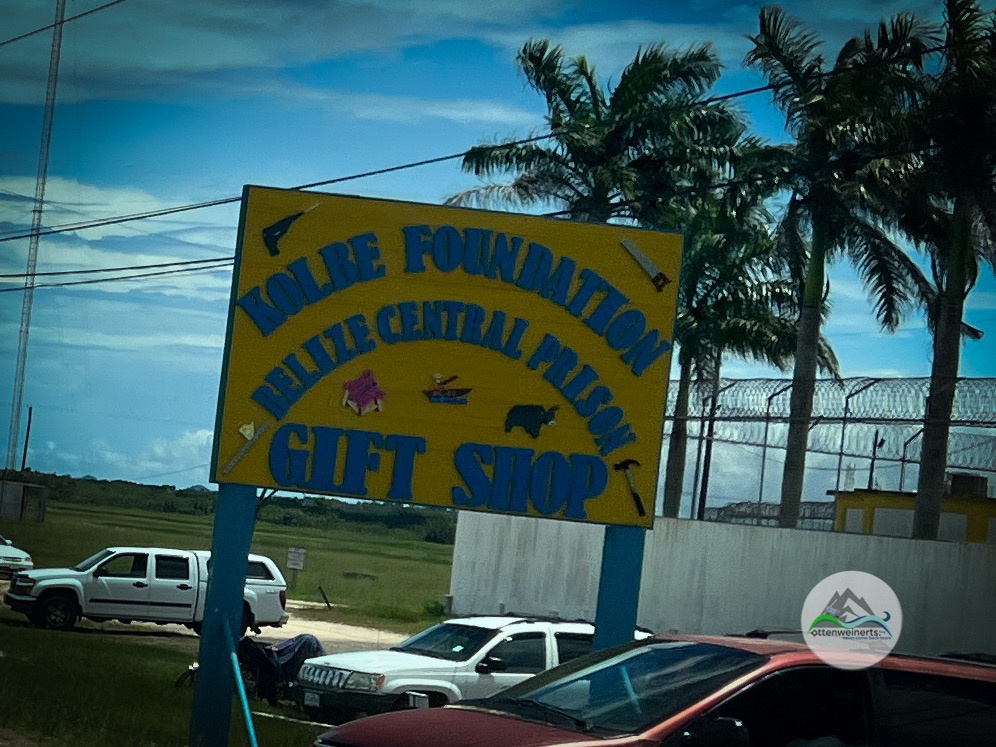
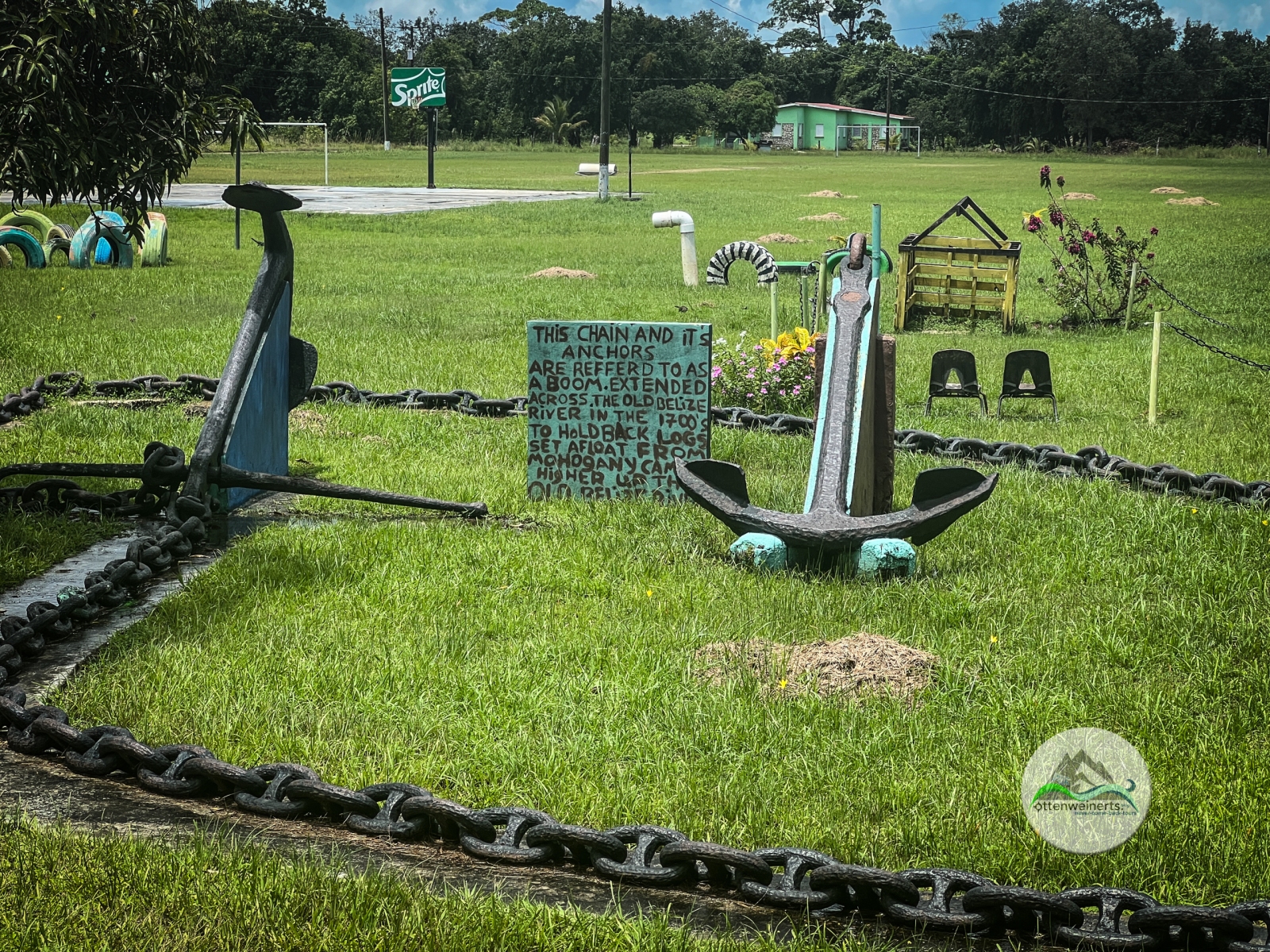
Am Rückweg fahren wir durch Burrell Boom – ein Teil des Namens liegt quasi im Park – eine riesige Ankerkette, die früher über den Belize River gespannt wurde, um die den Fluß hinabgeflössten Edelholz-Baumstämme abzufangen – und die Kette wurde als „Boom“ bezeichnet. Dann passieren wir das „Hattieville Ramada“, wie das Zentralgefängnis von Belize im Volksmund bezeichnet wird. Rehabilitation statt Isolation ist hier die Devise, und so gibt es unter anderem eine Gärtnerei und einen Souvenirshop, alle Produkte werden von den Häftlingen hergestellt, und der Erlös fließt in den Erhalt der Anstalt.

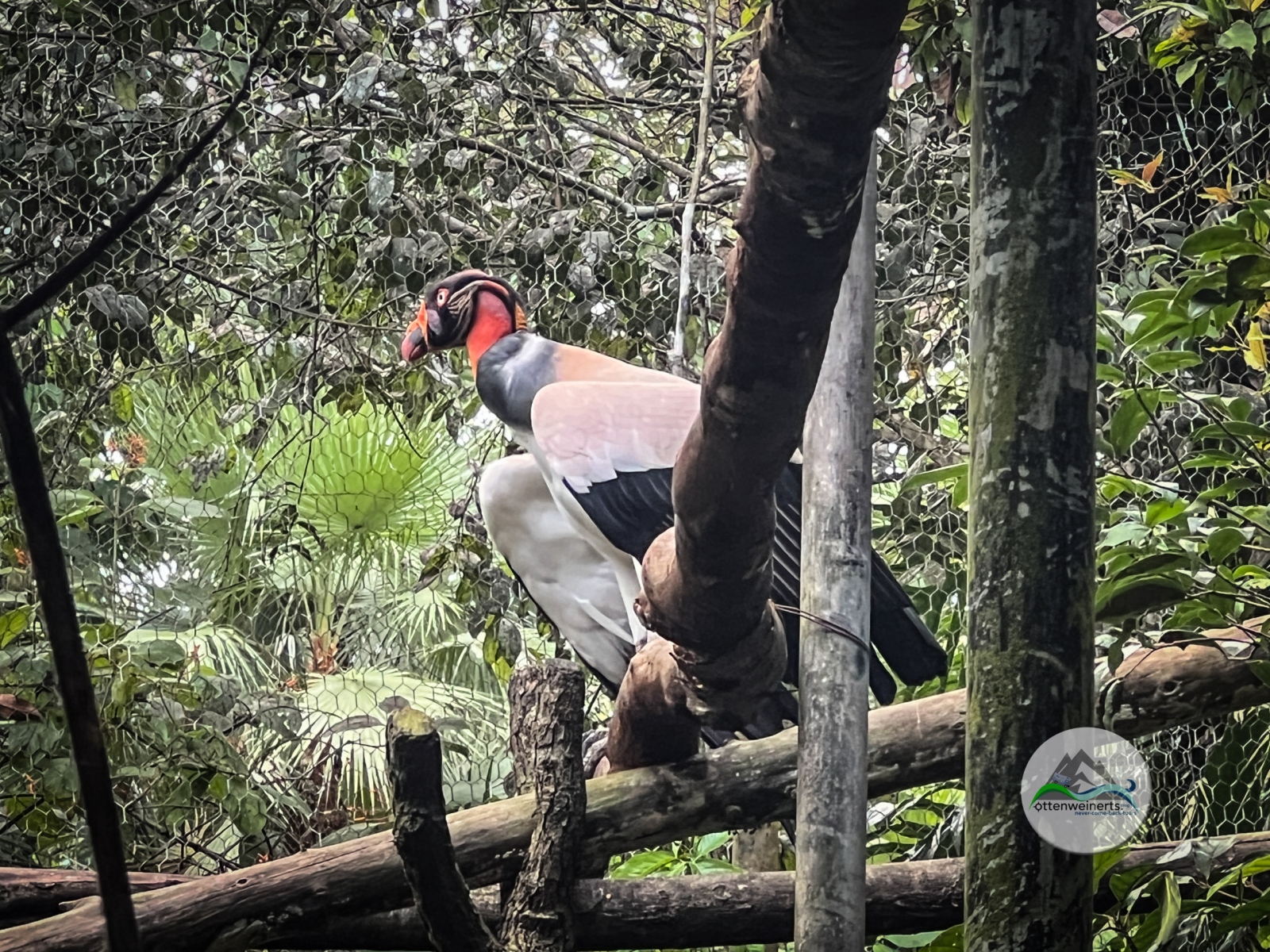
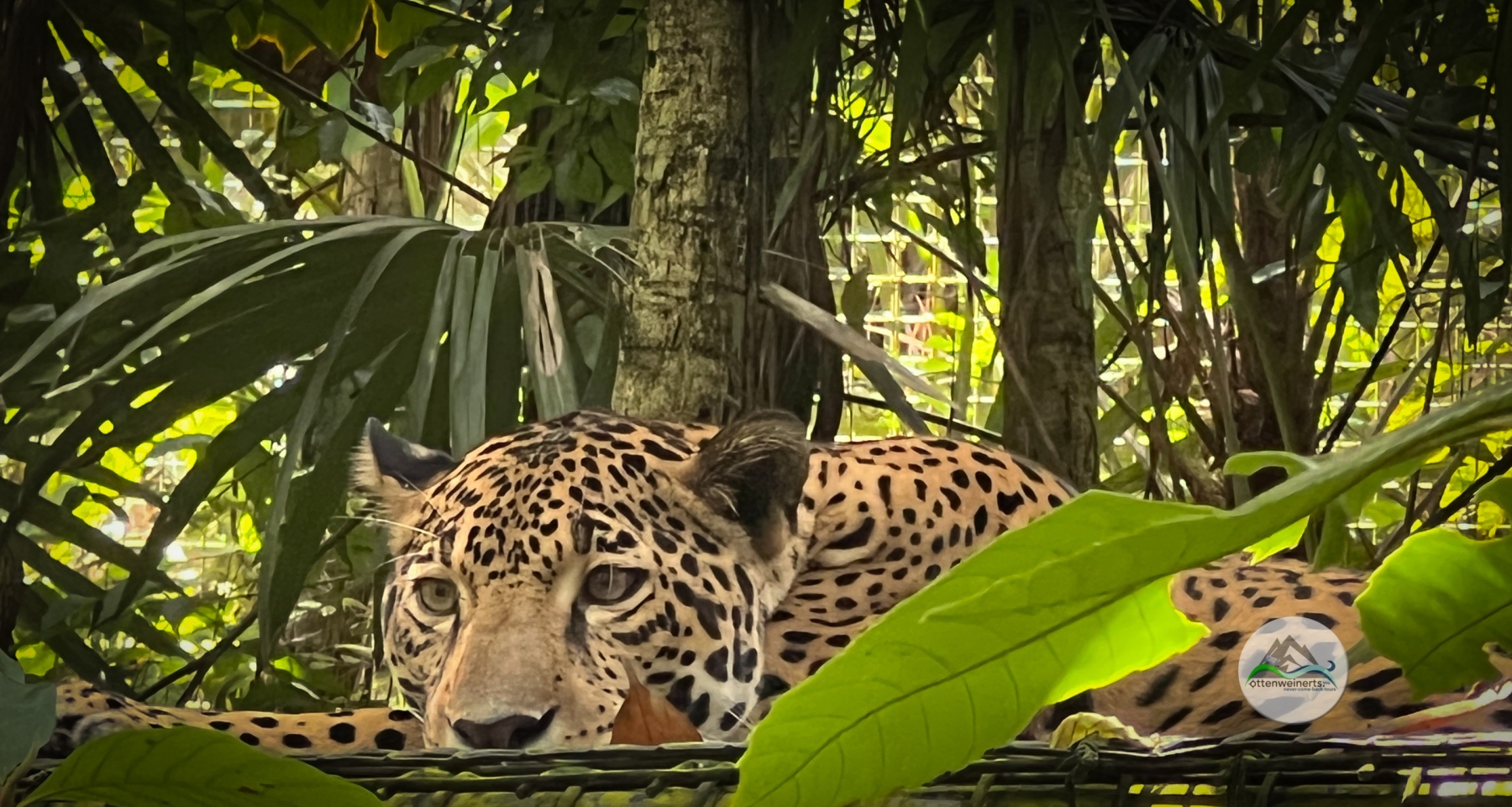
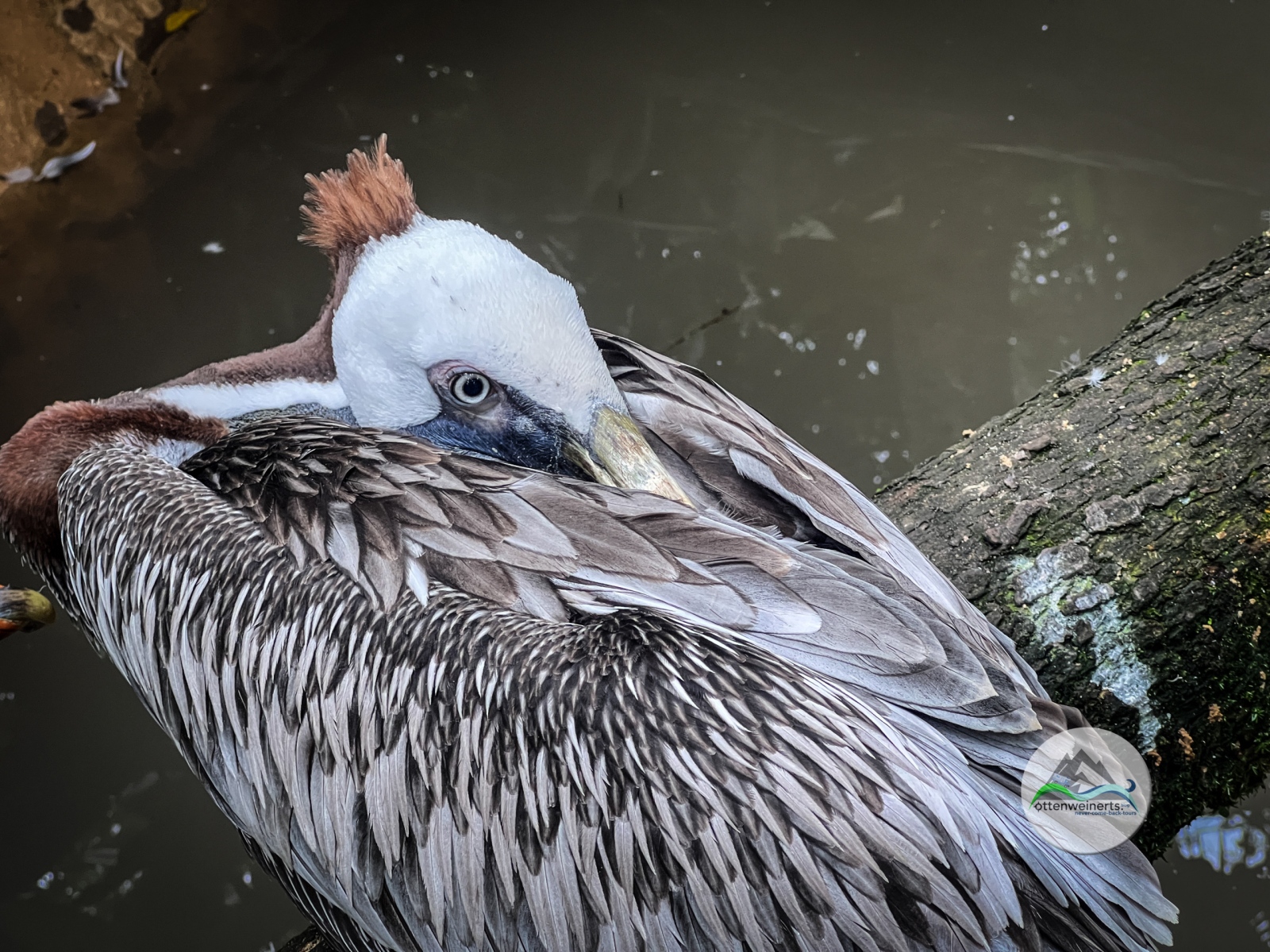
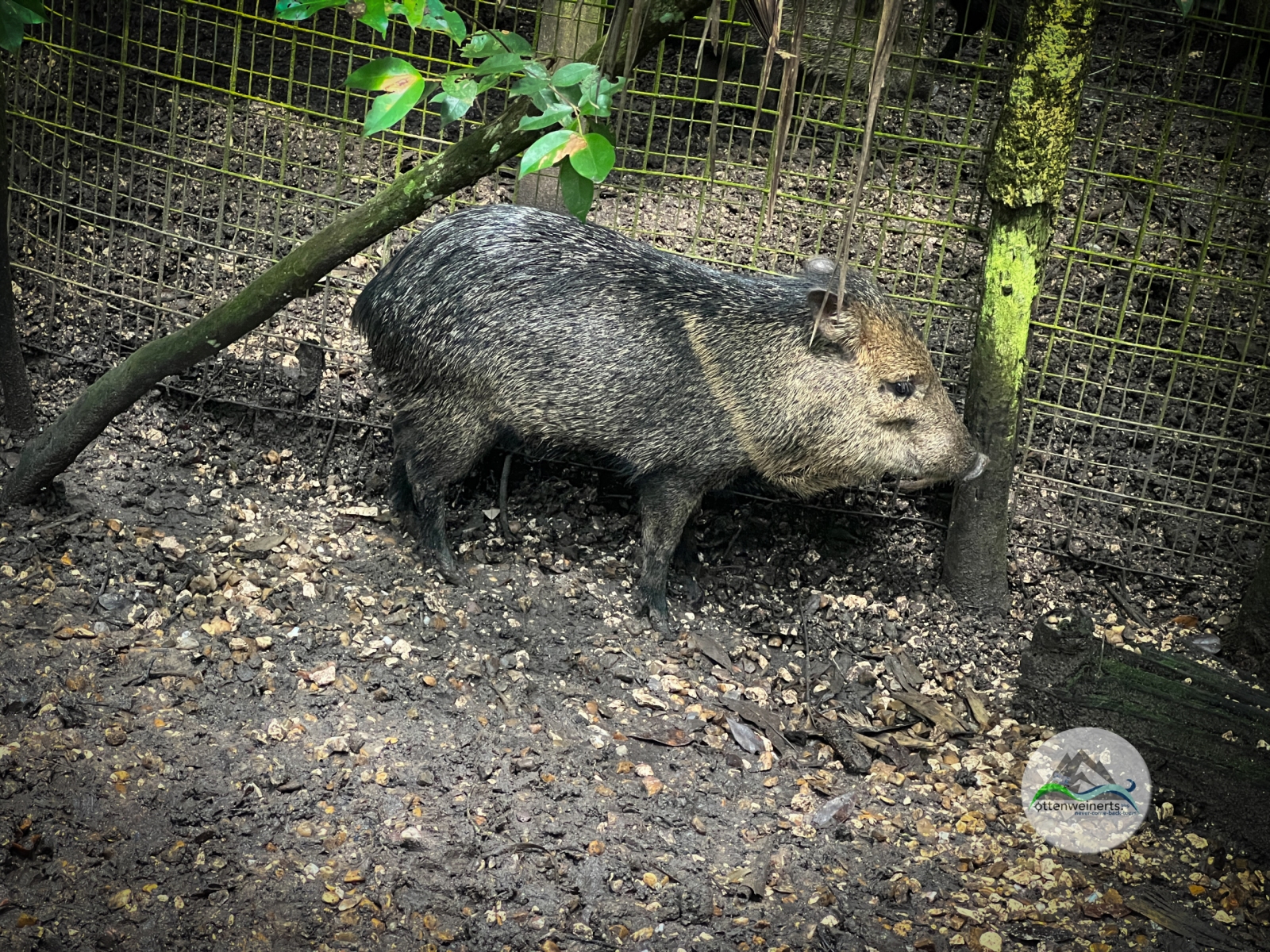
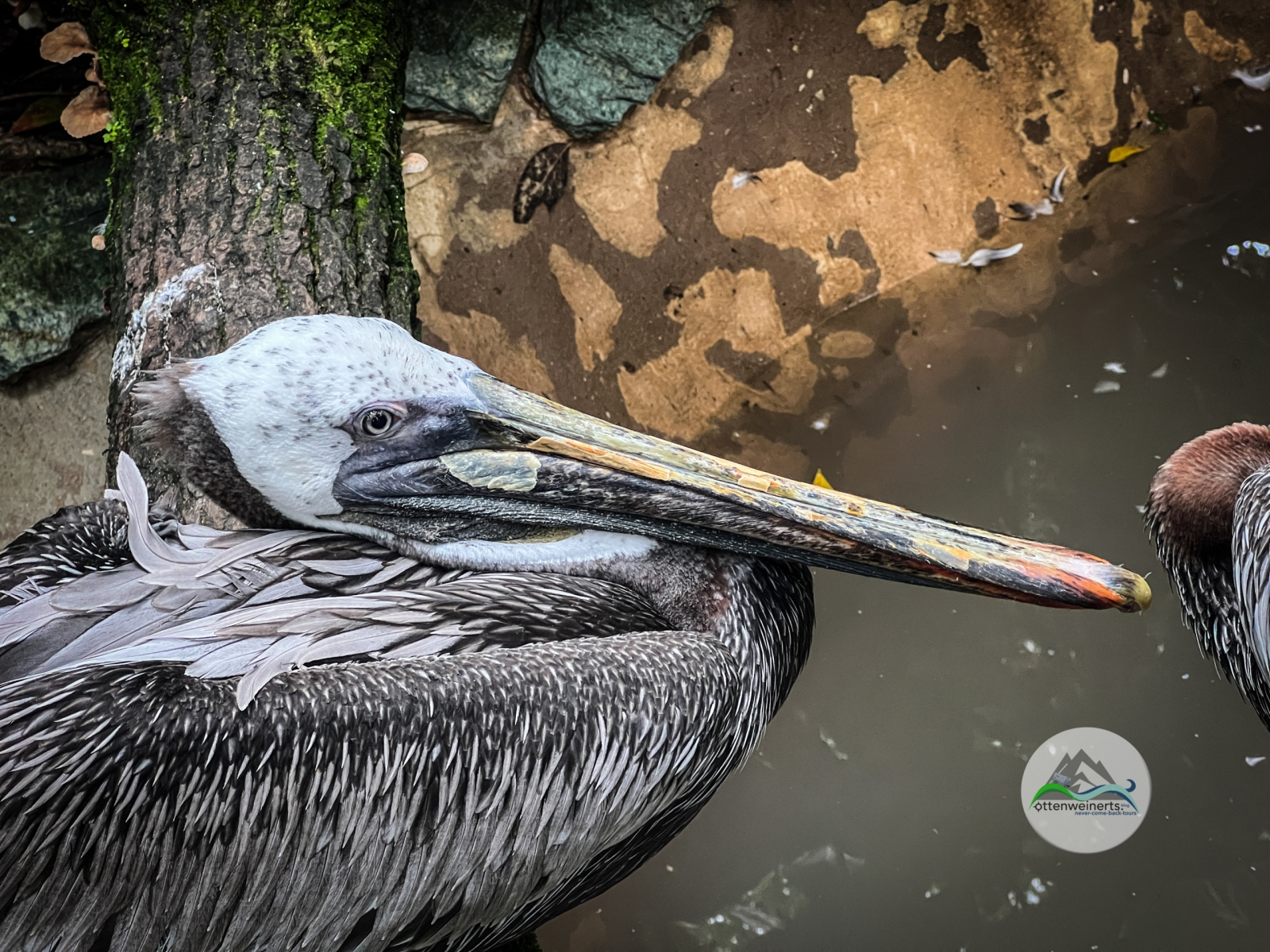
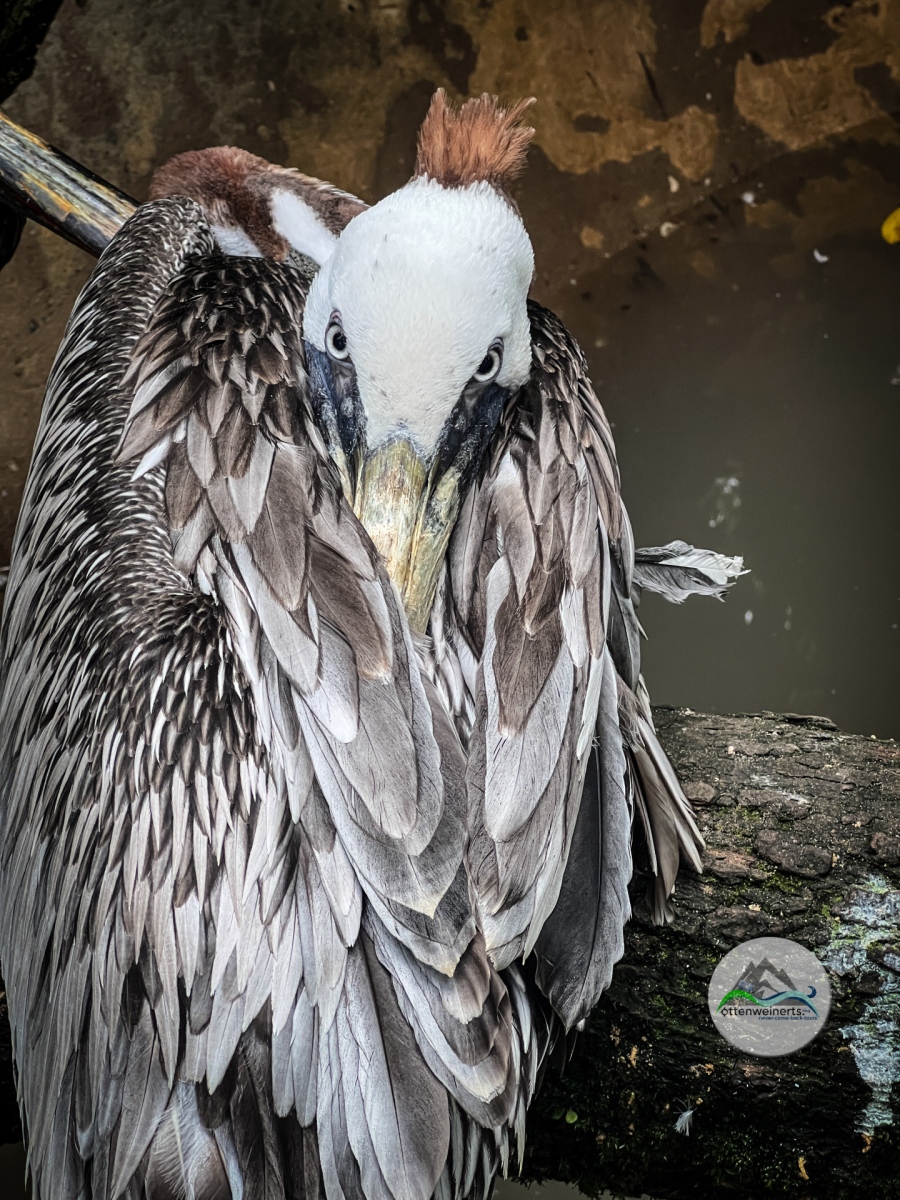
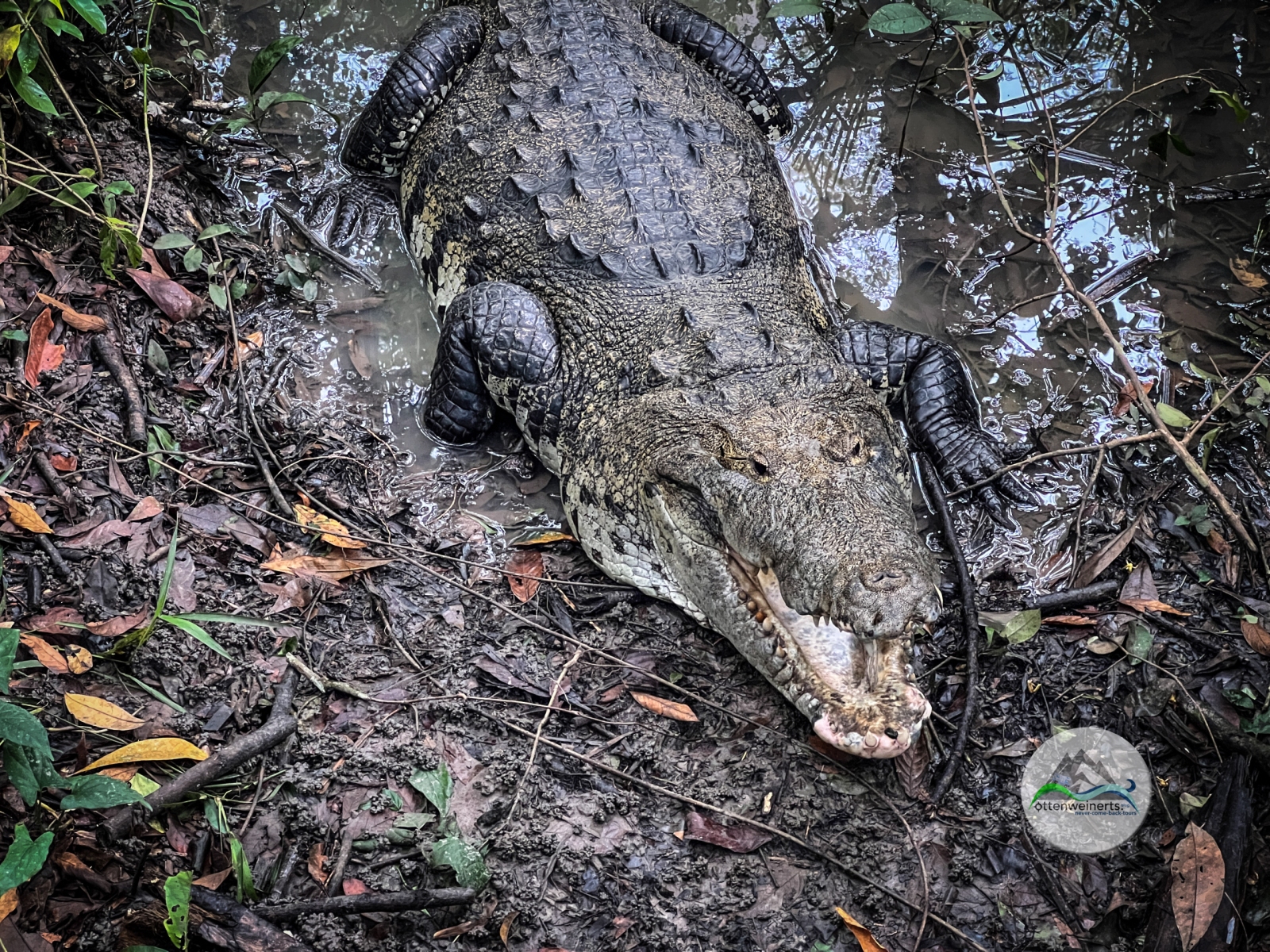
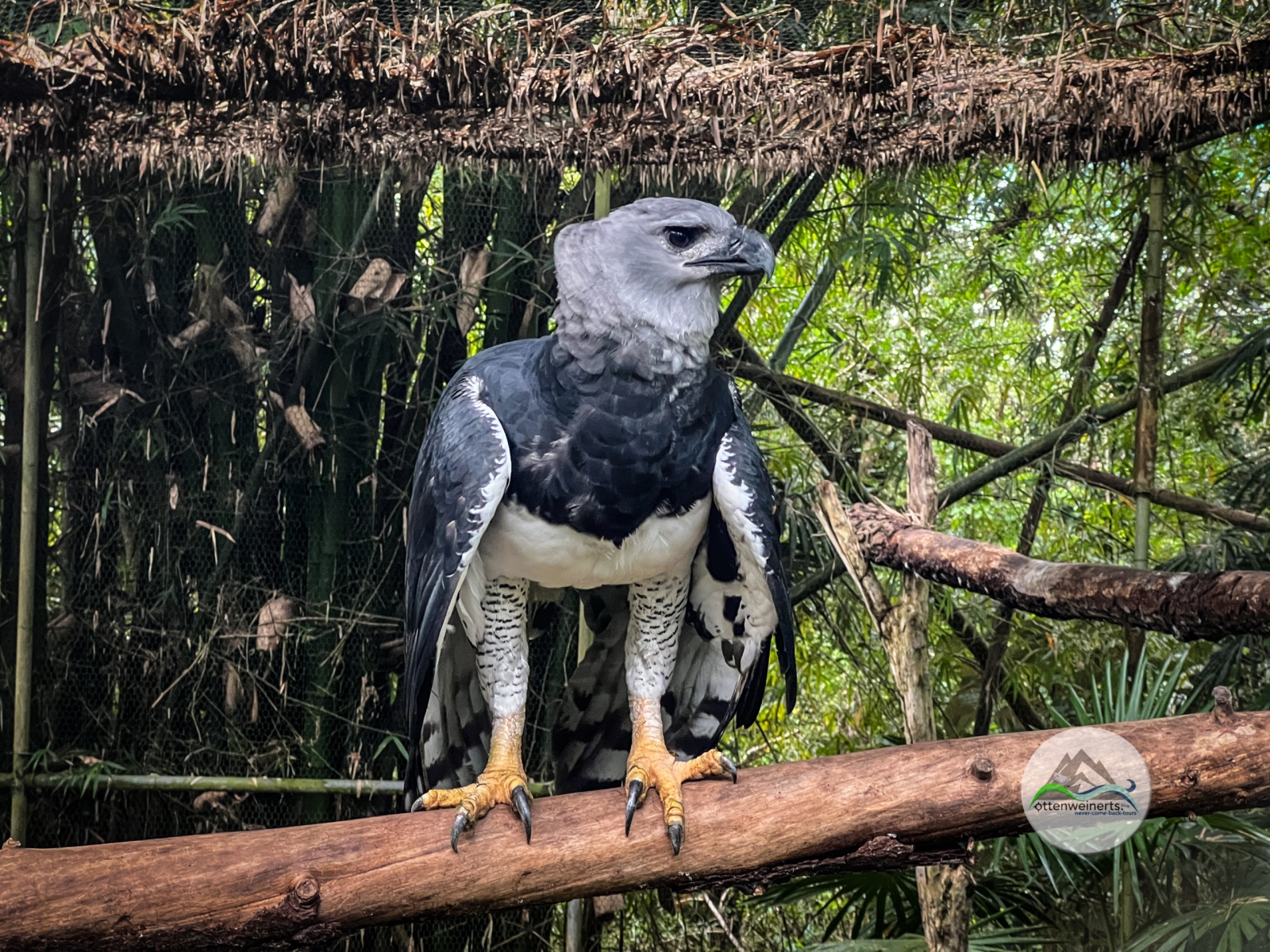
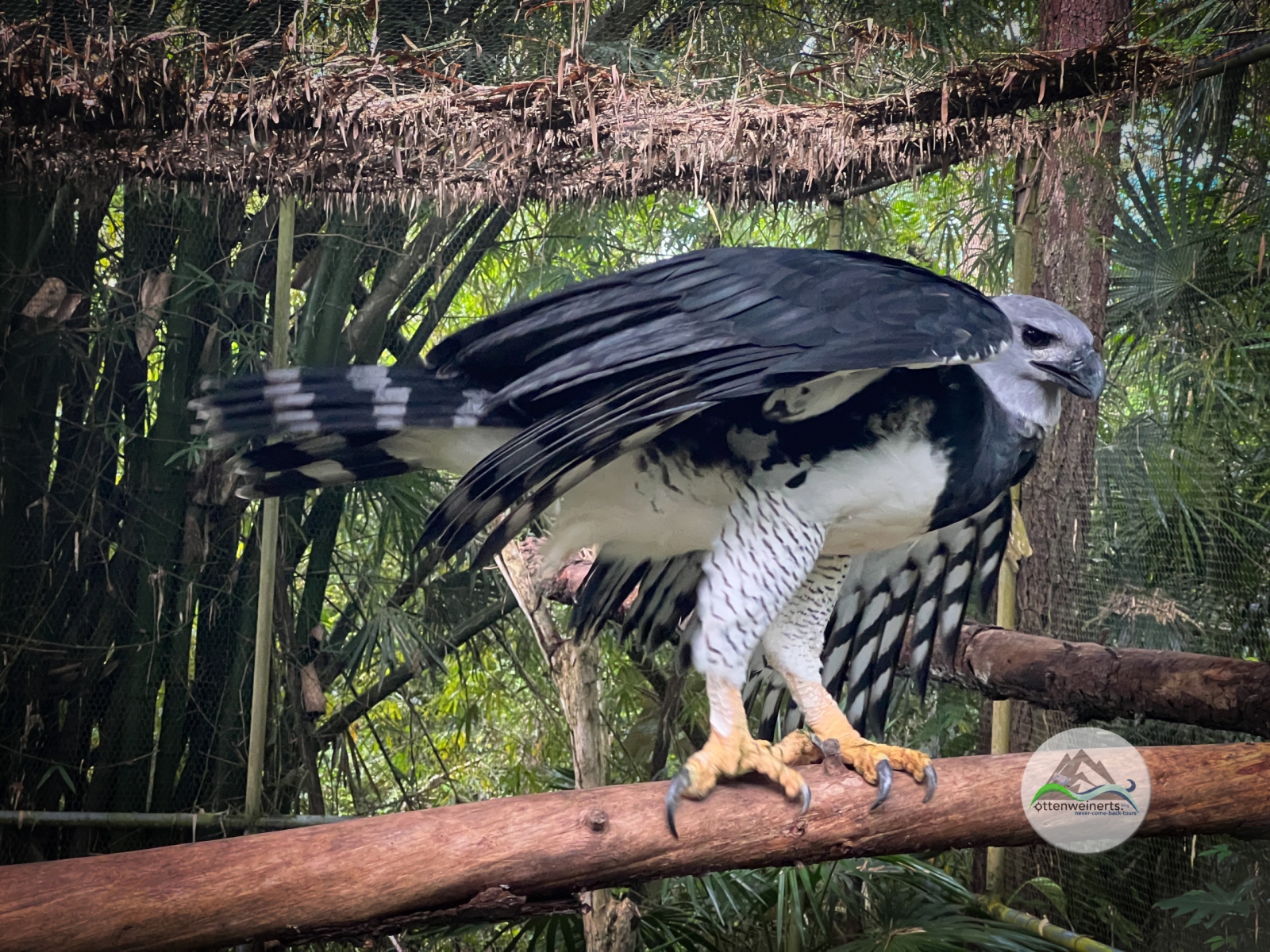
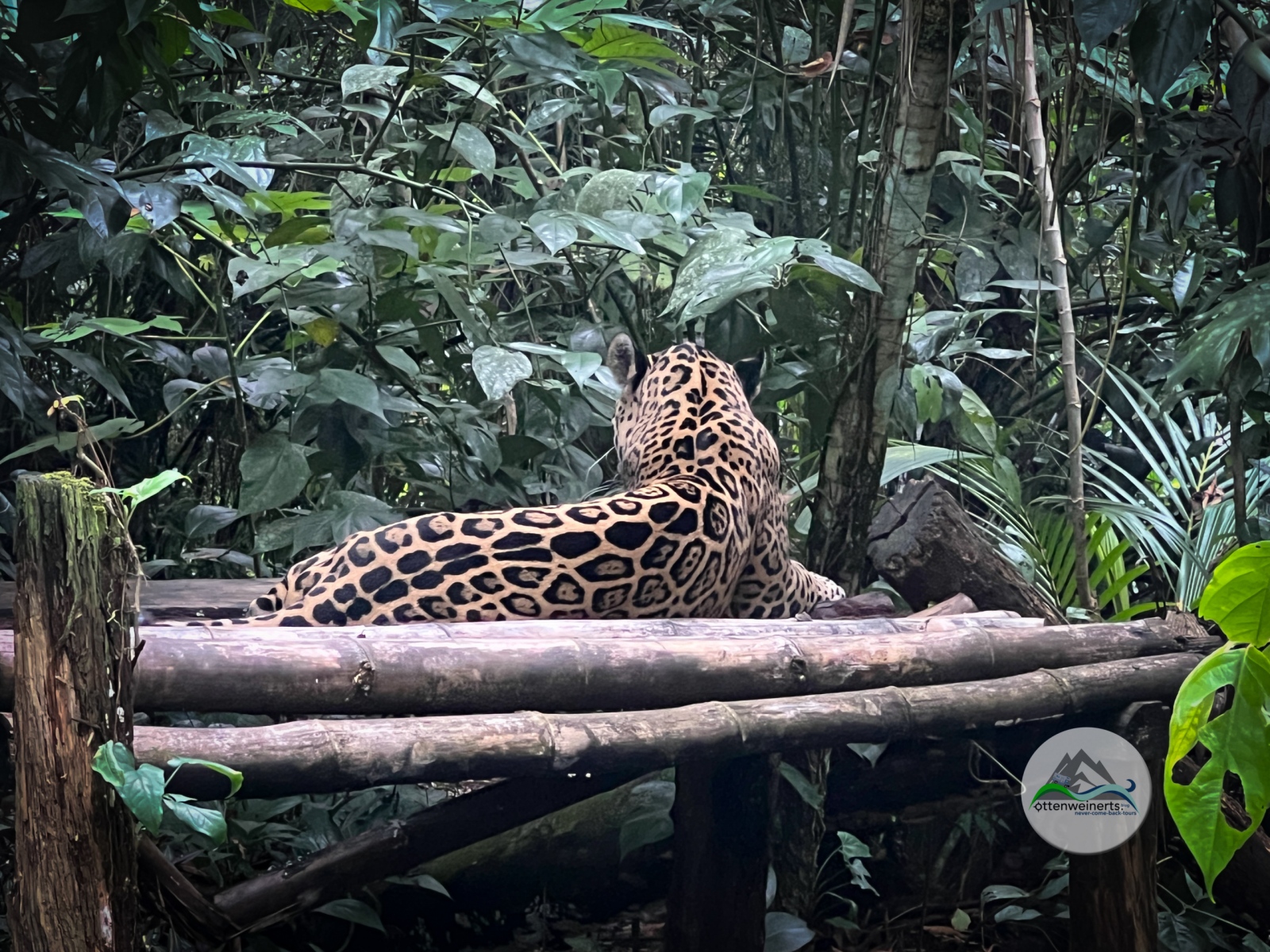
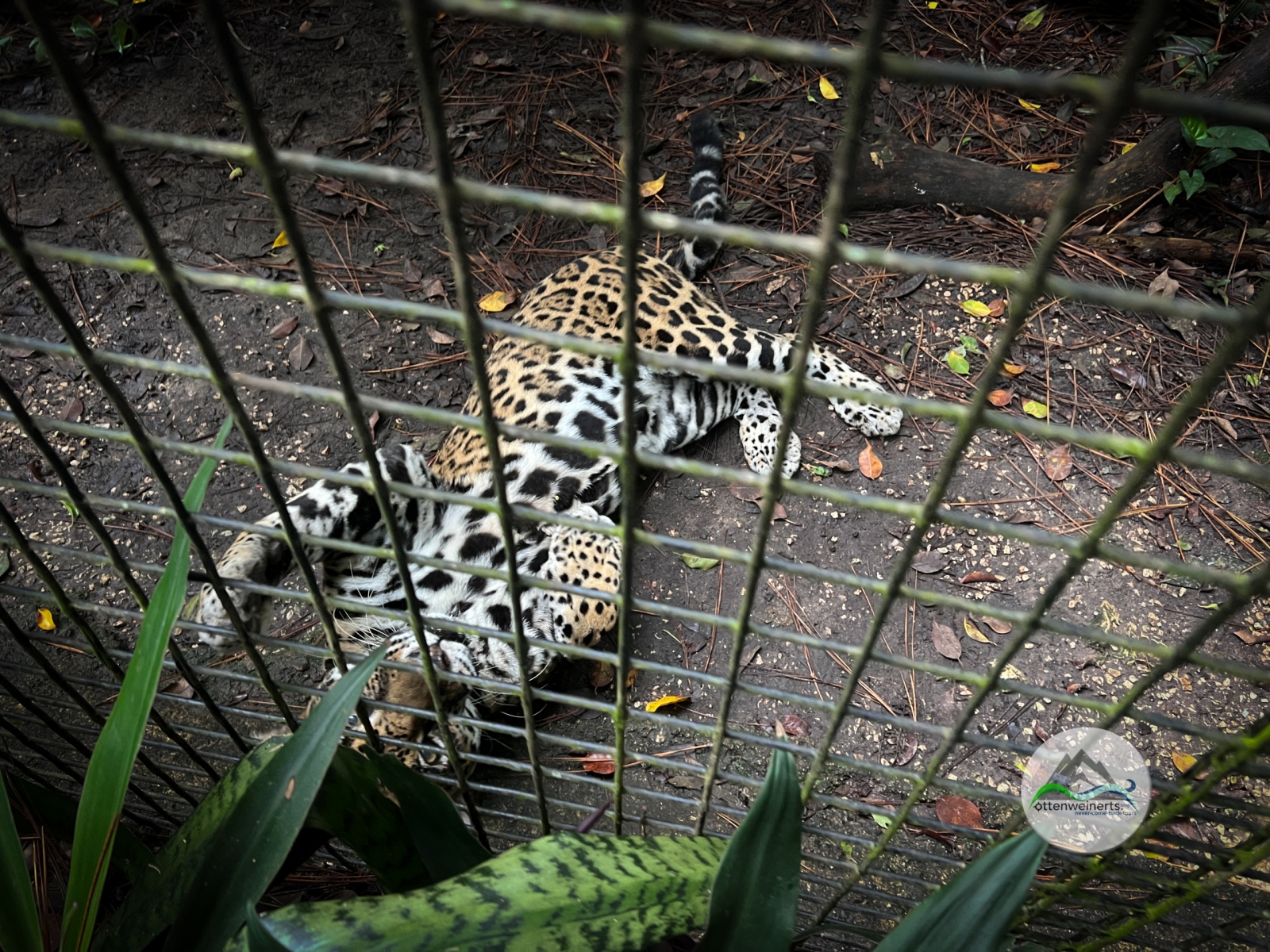
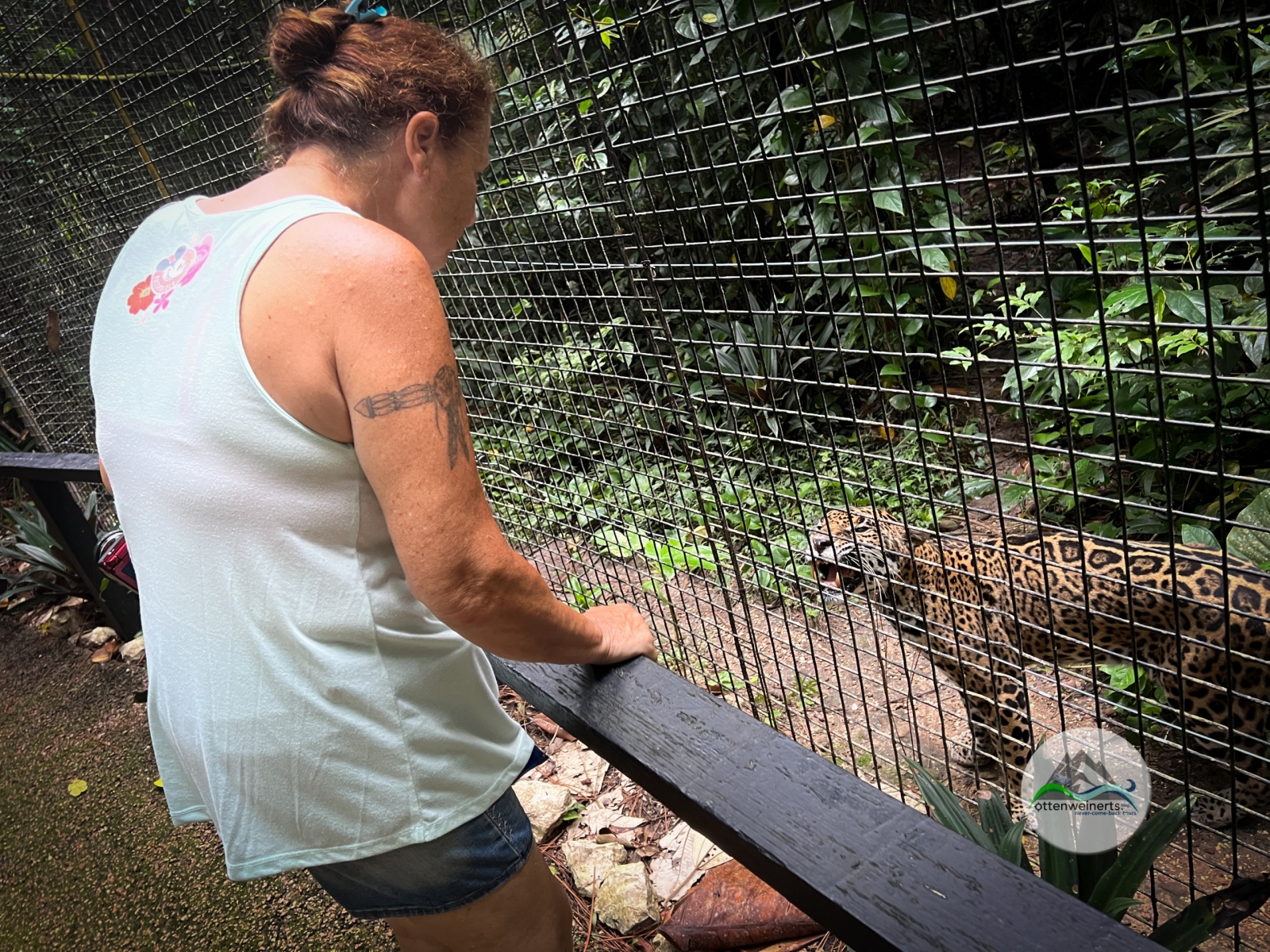
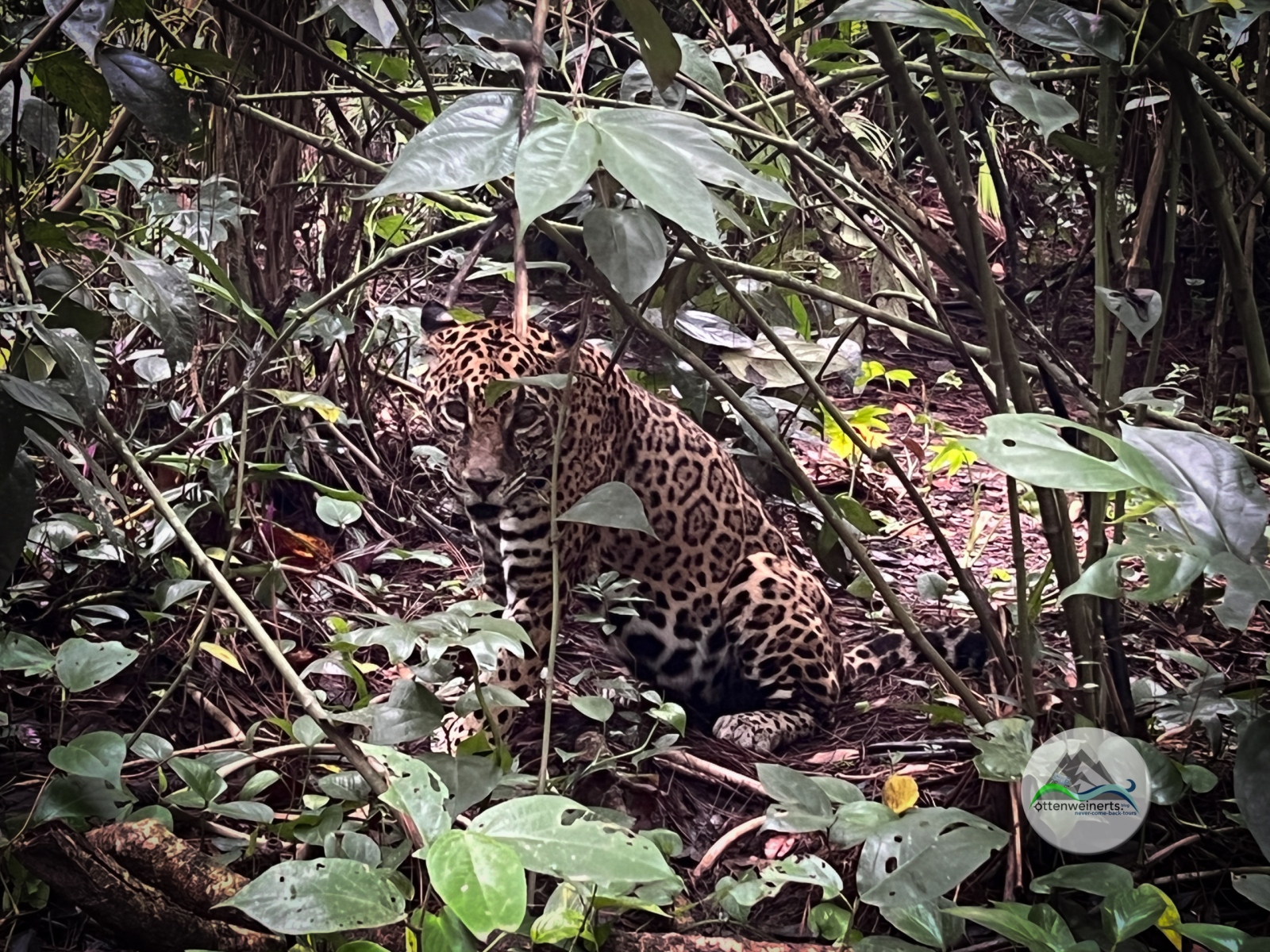
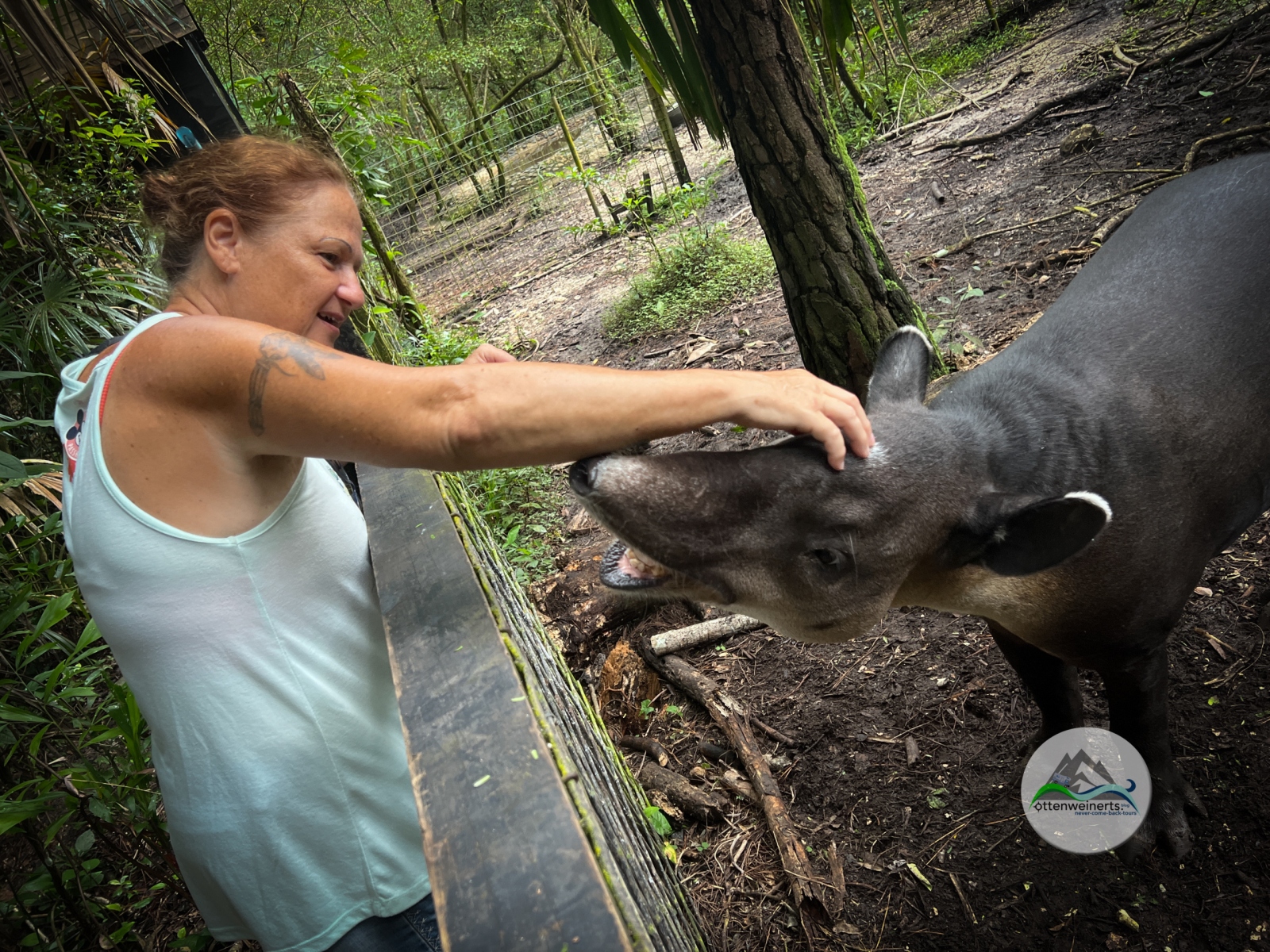
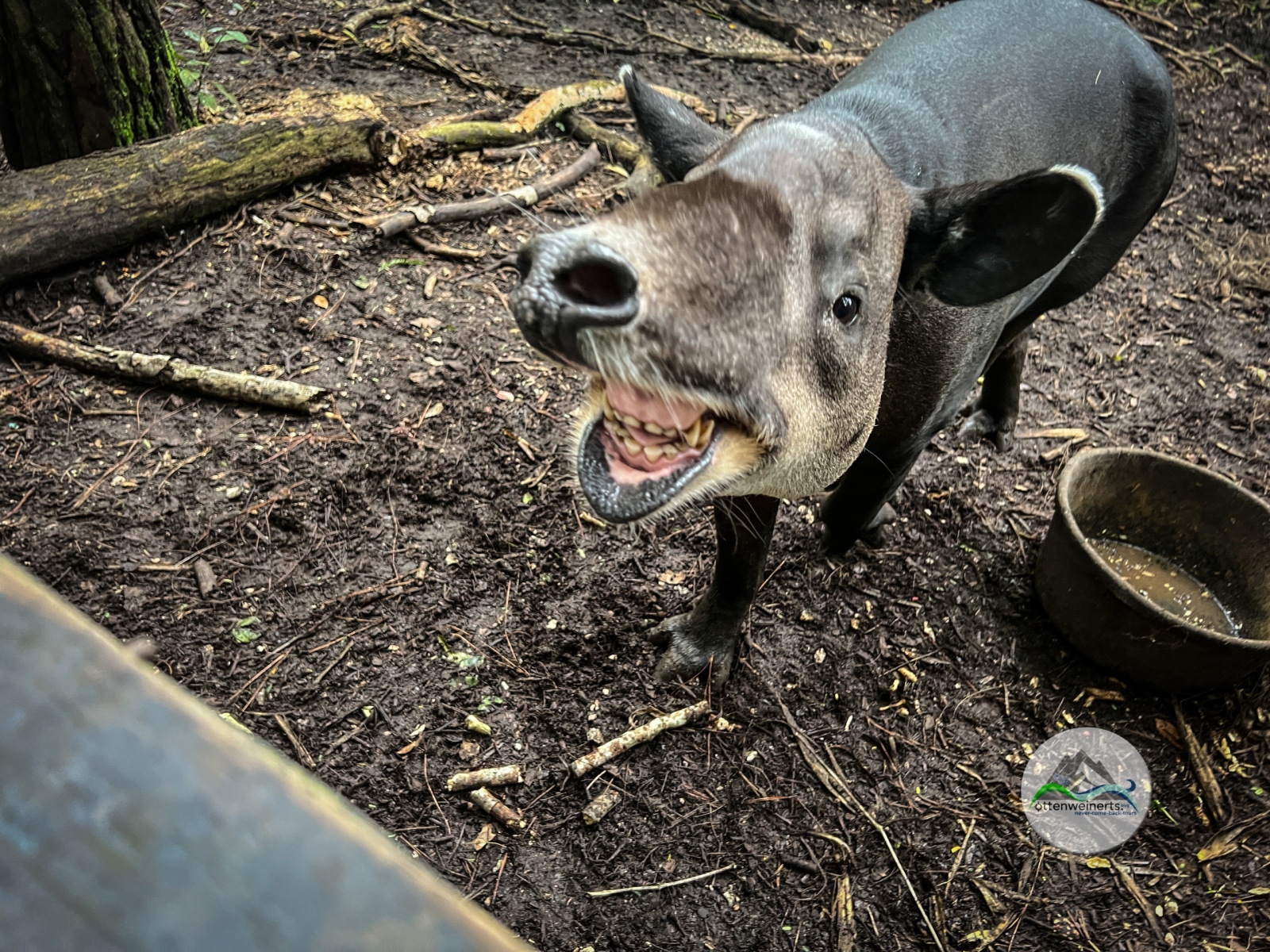
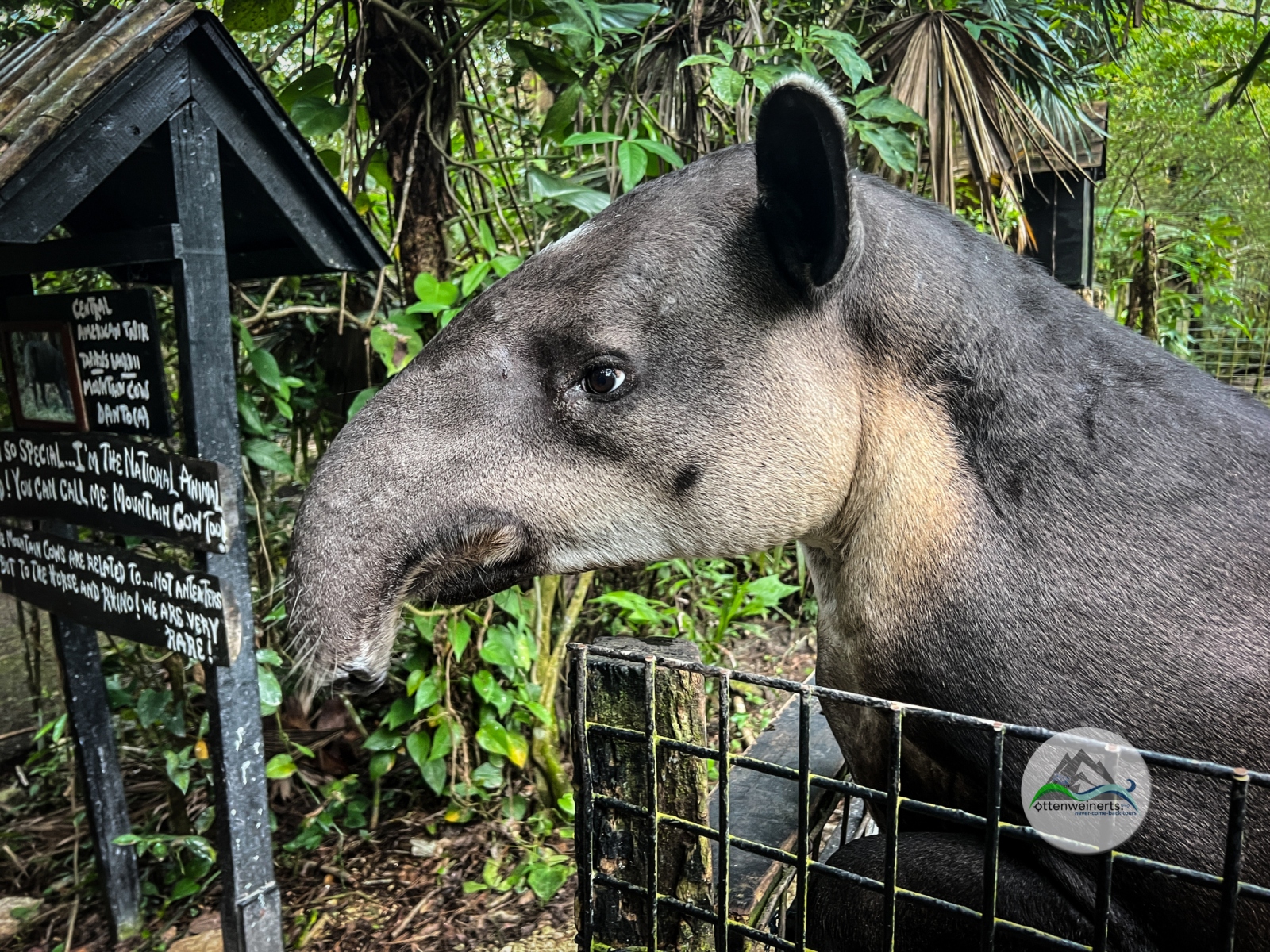
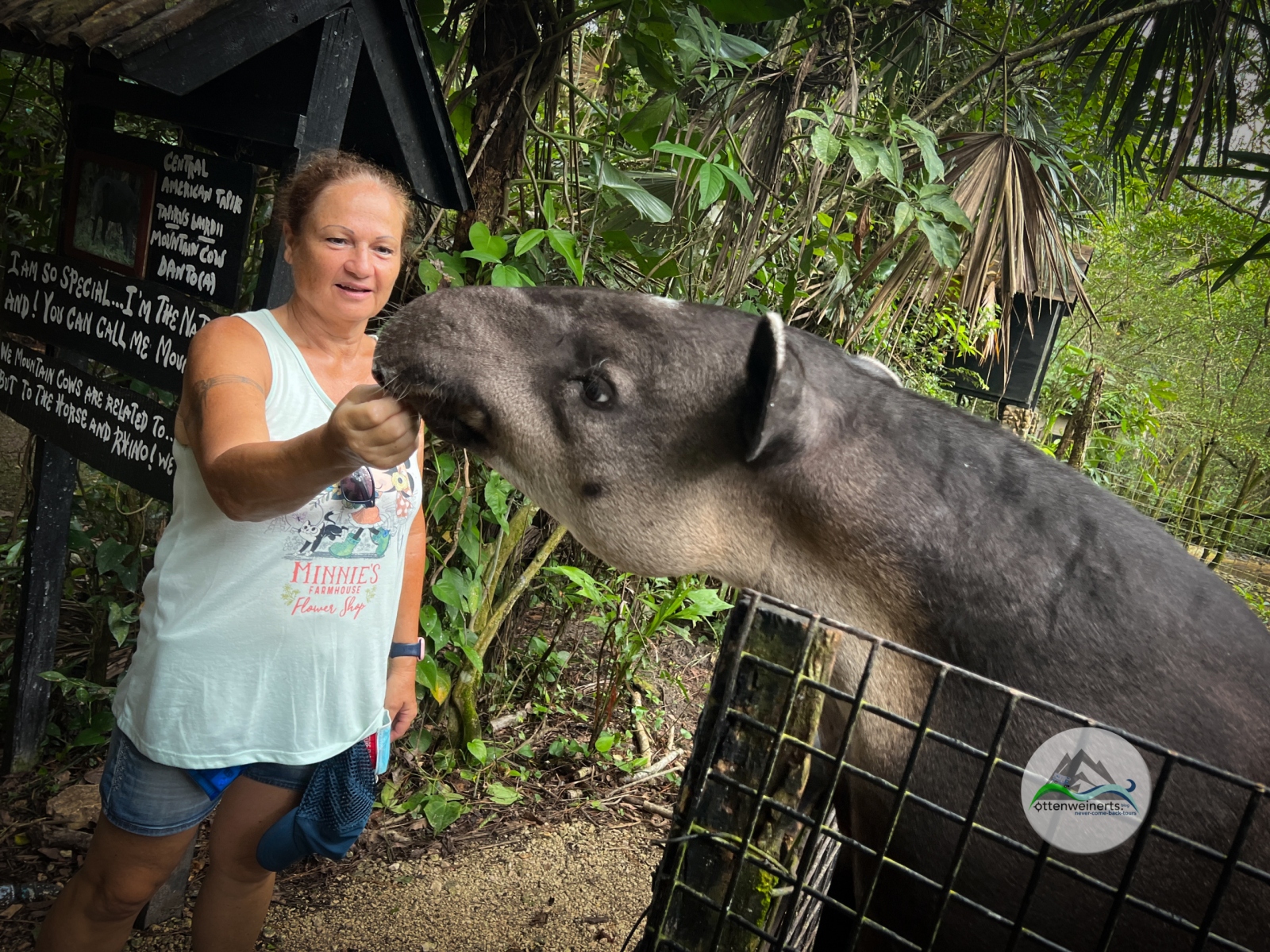
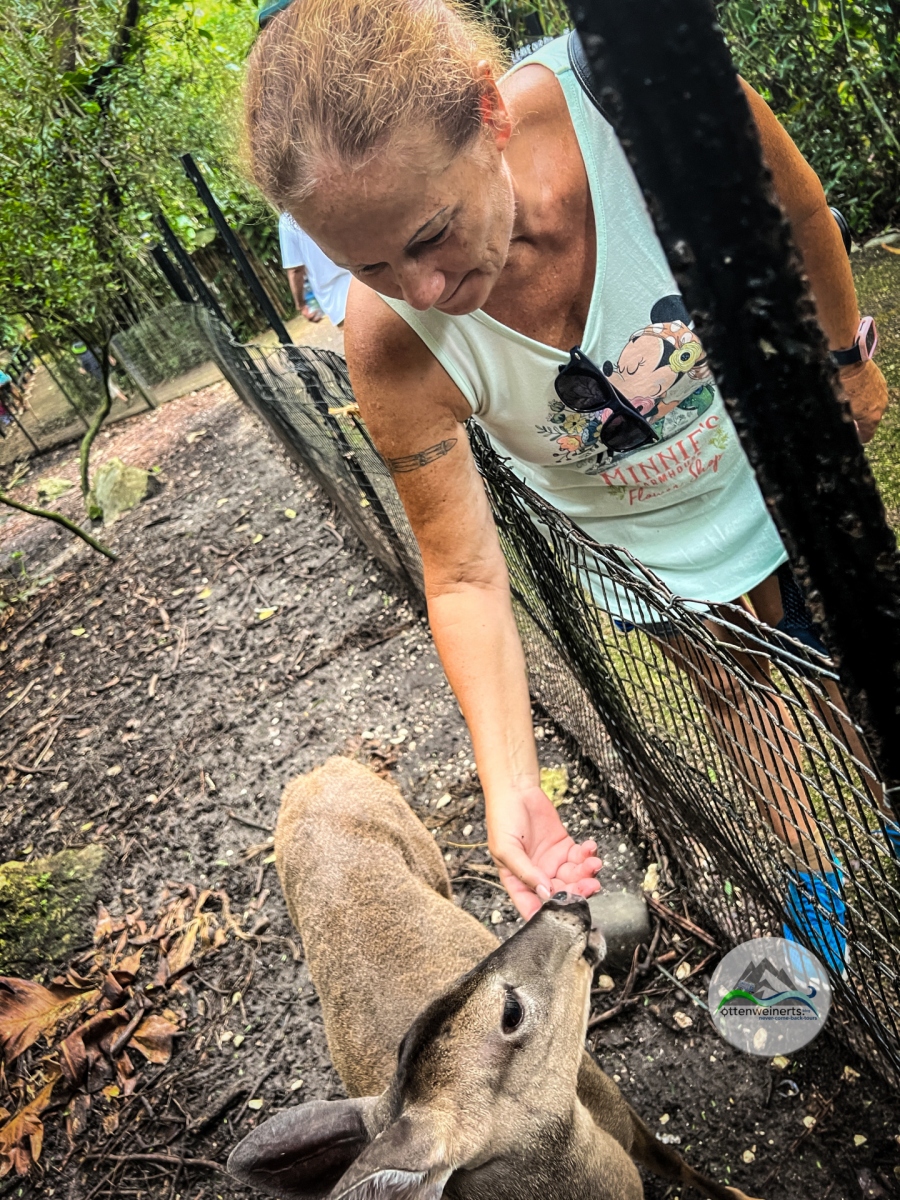
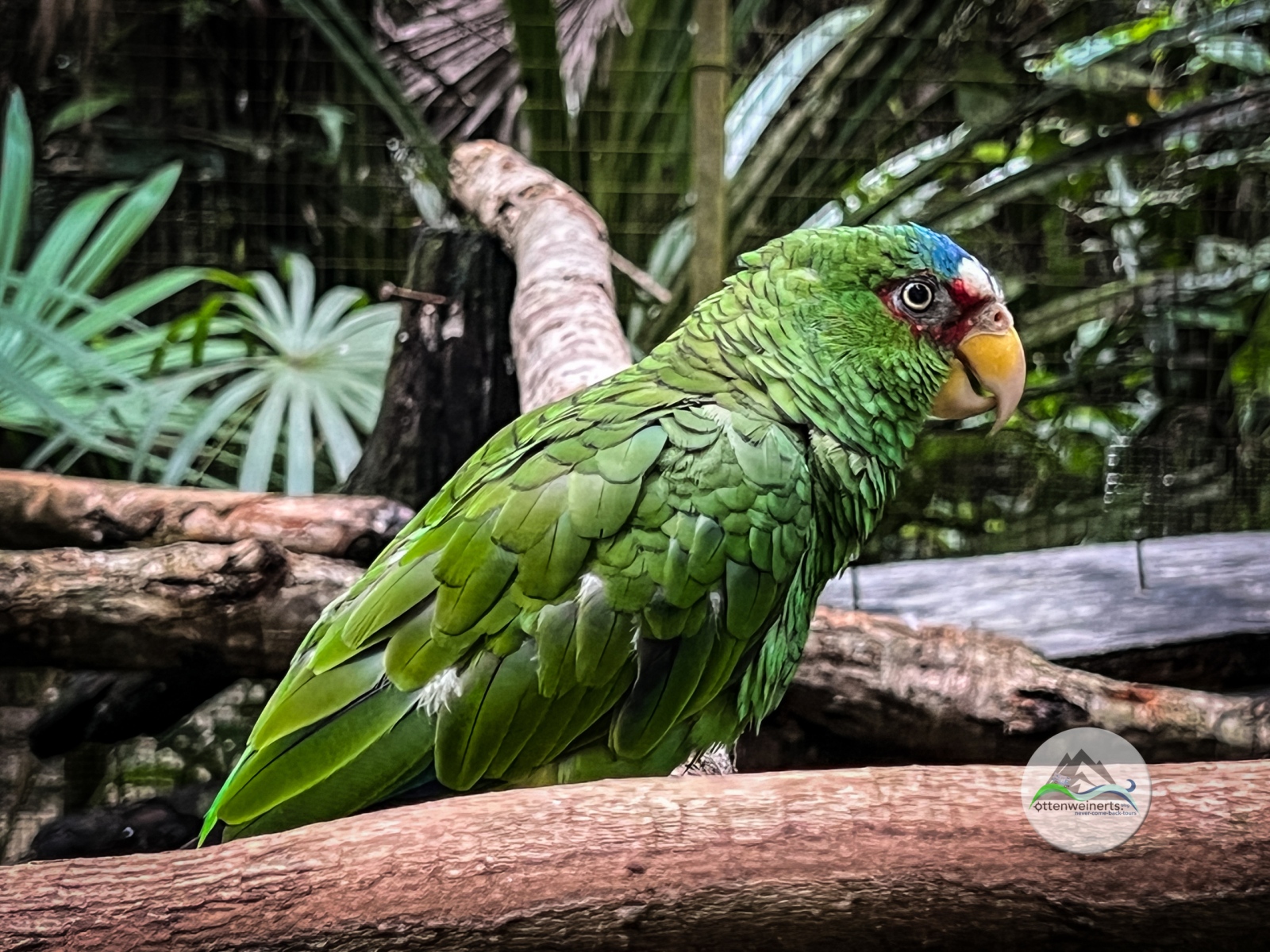
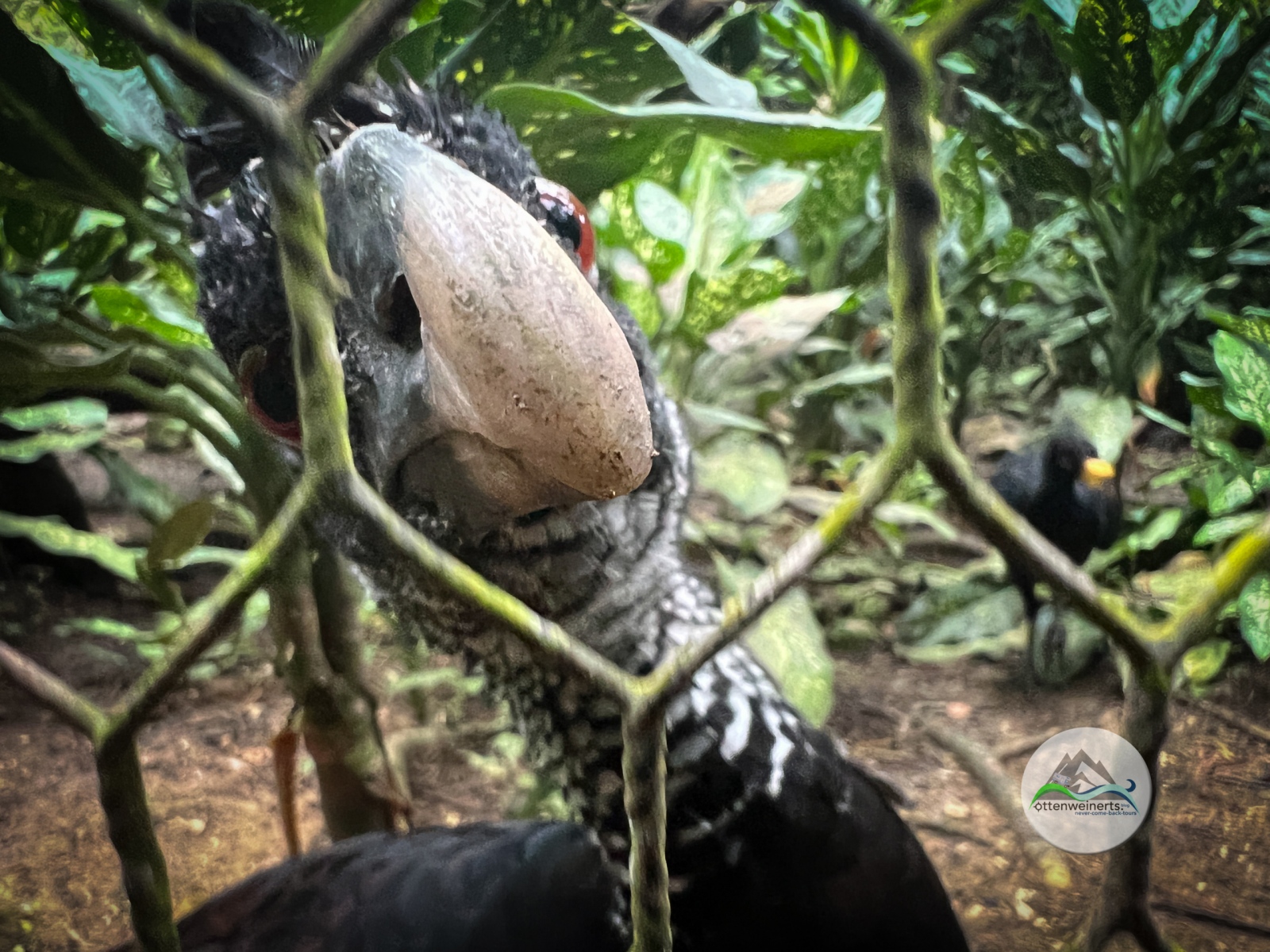
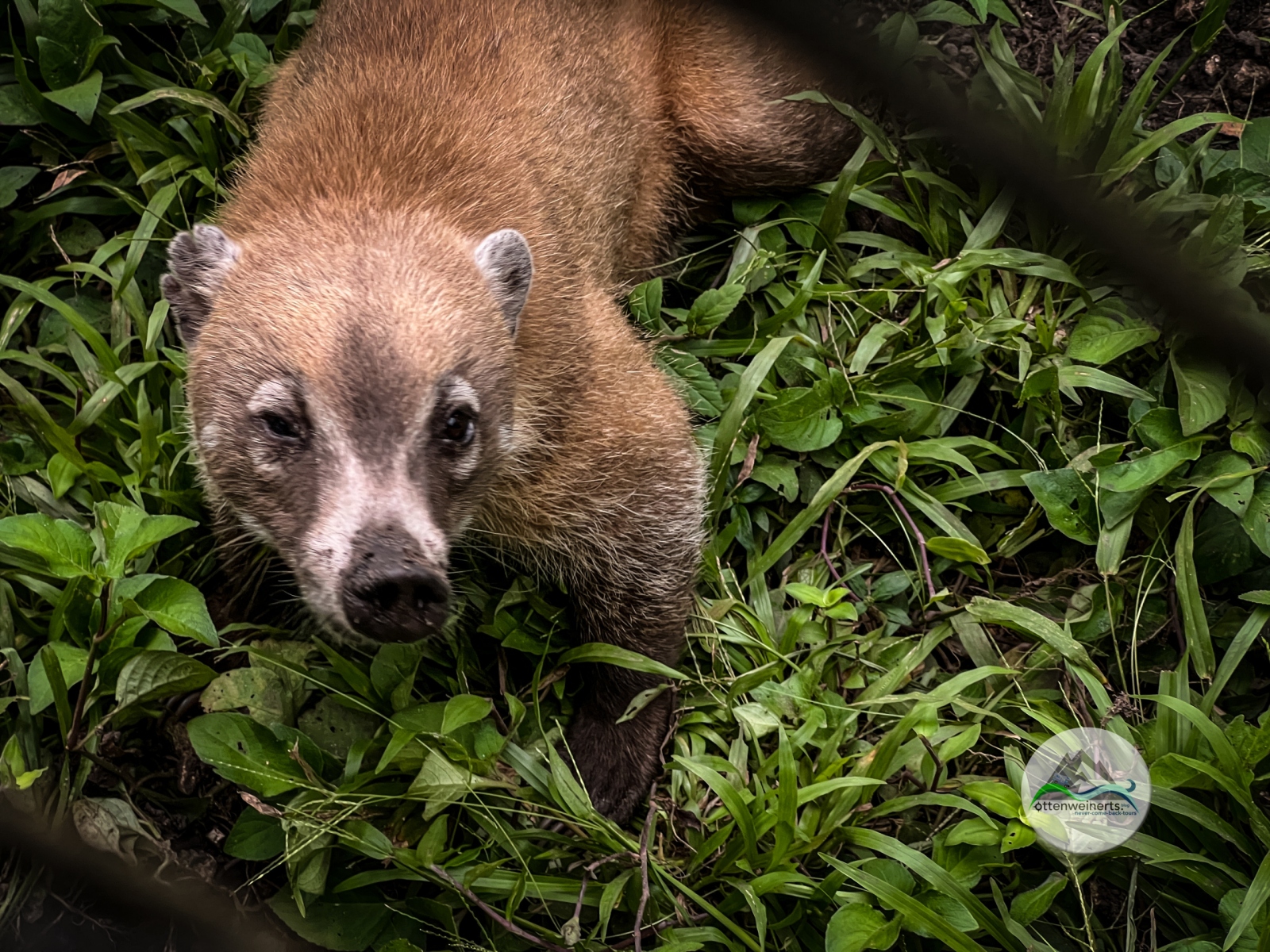
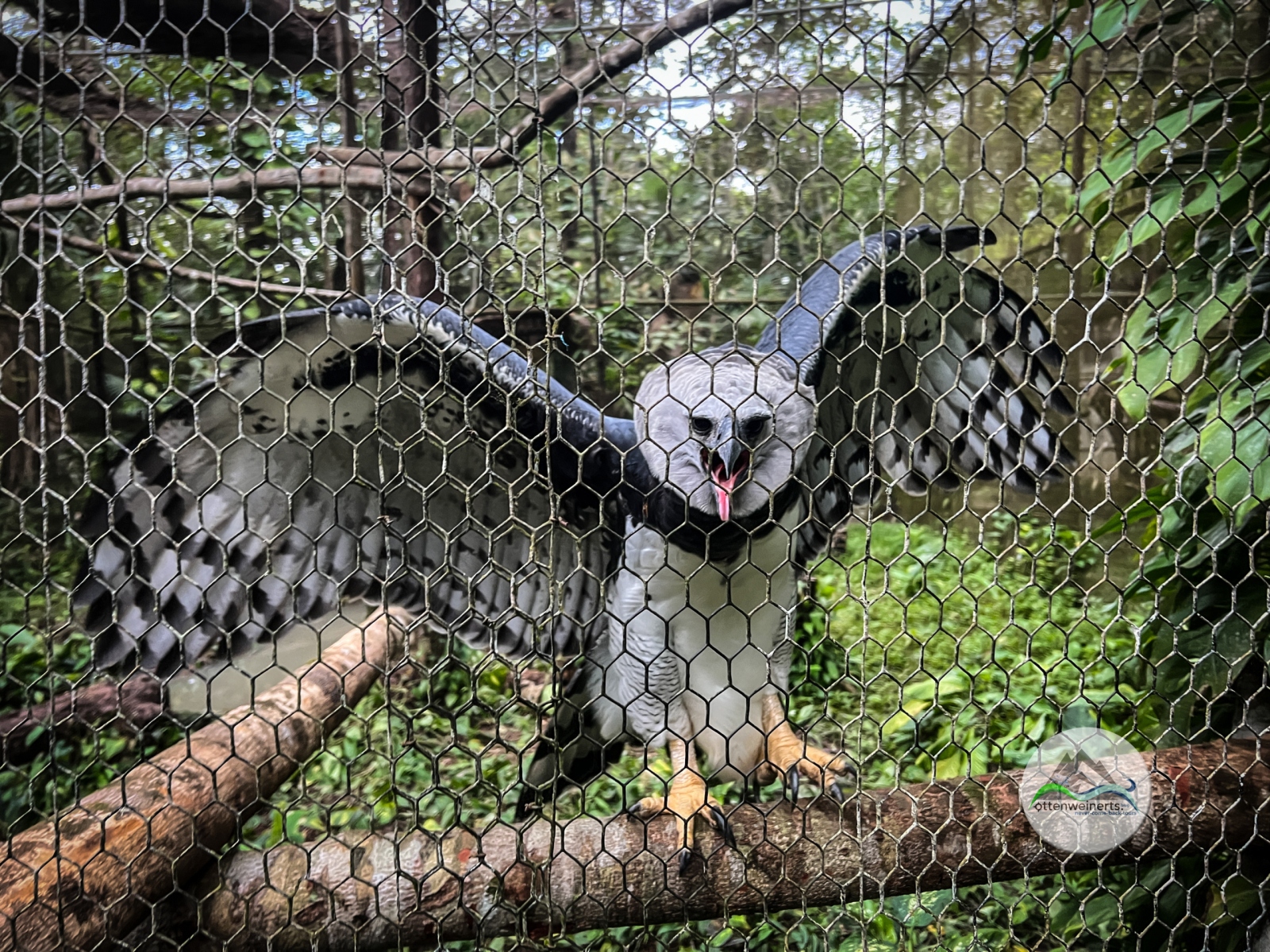
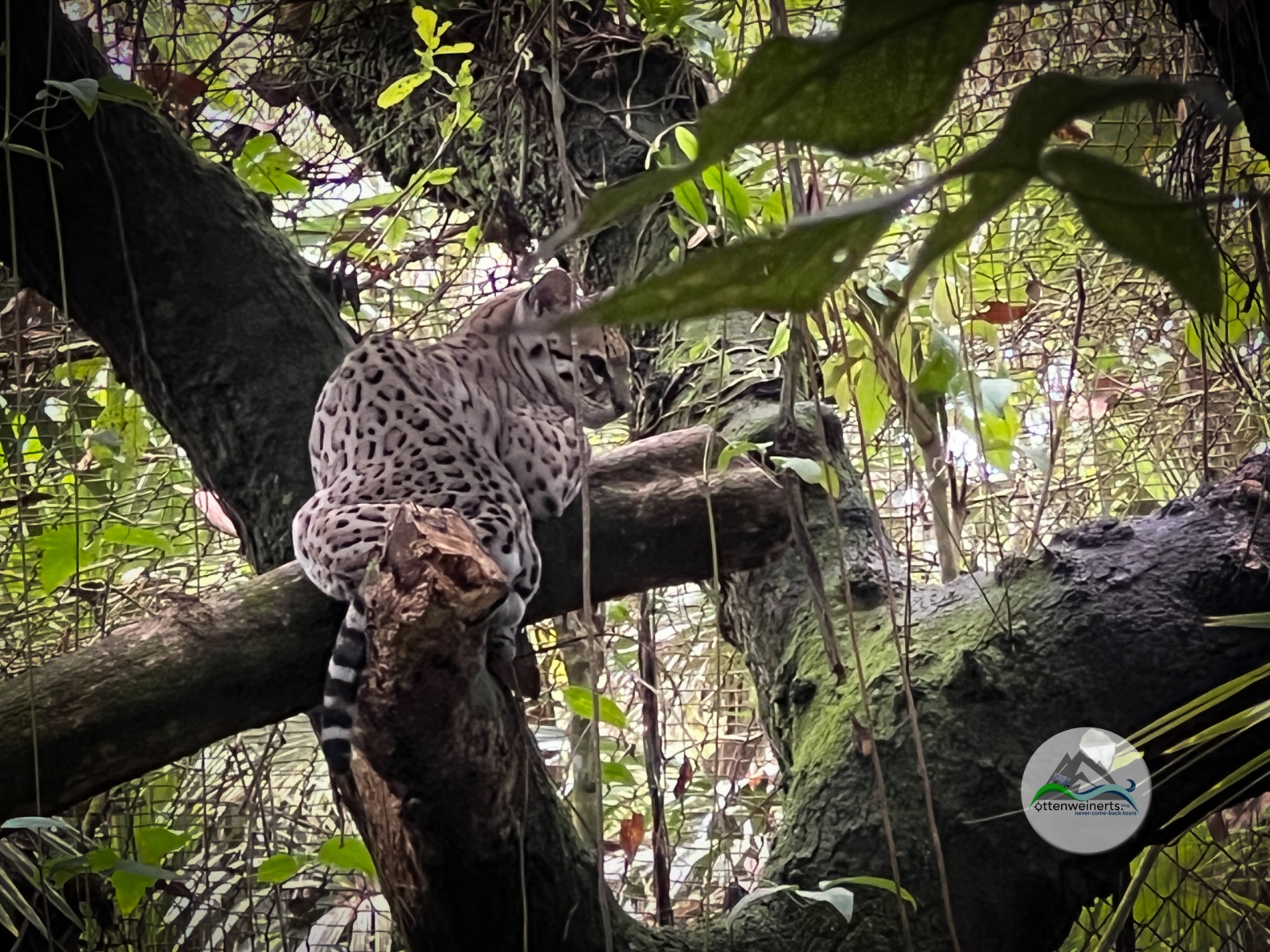
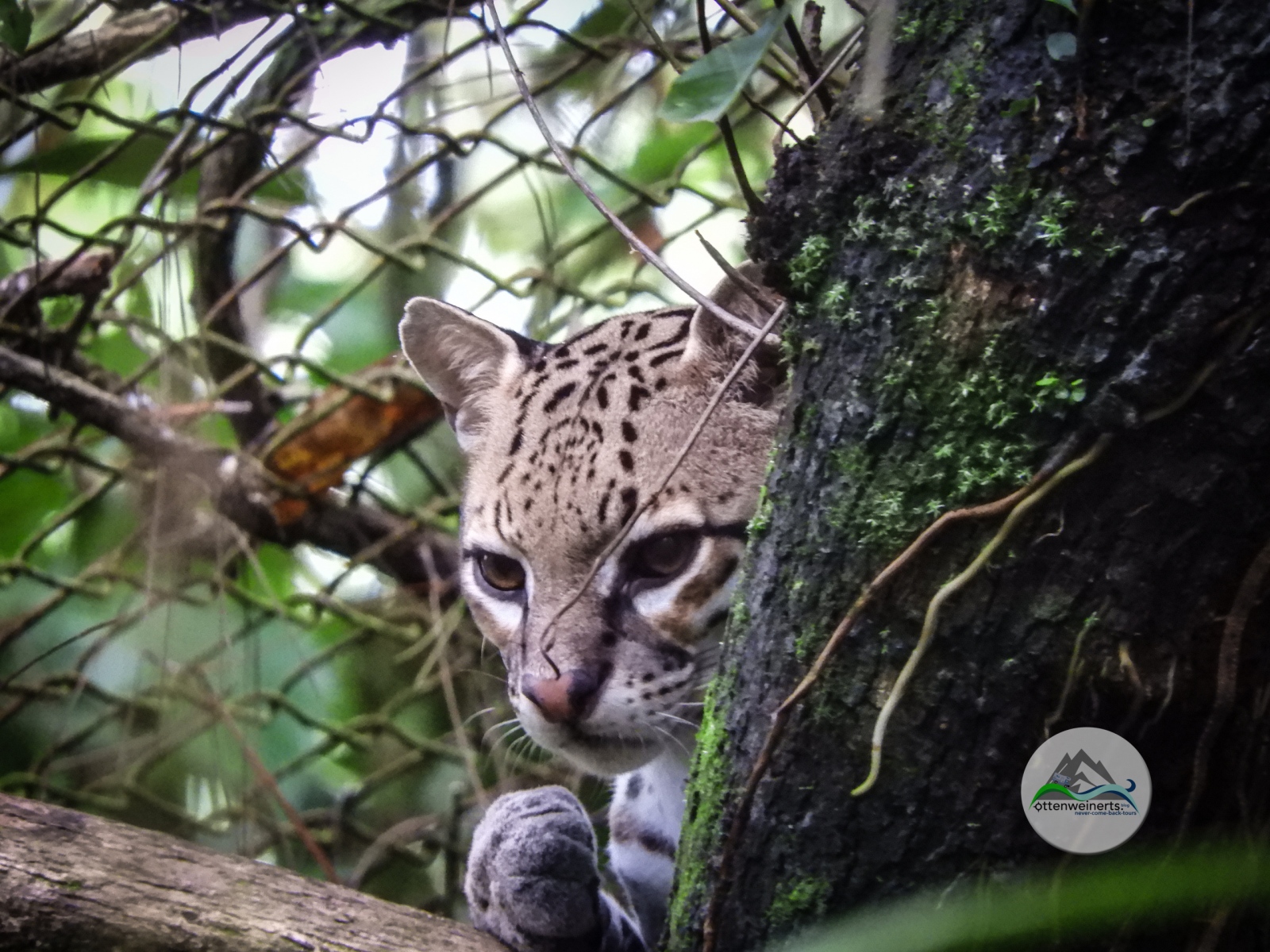
Dann freuen wir uns auf den Belize Zoo, der auch eine spezielle Geschichte hat: nach Dreharbeiten zu einem Dokumentarfilm über Belize wurden die dafür benötigten Tiere, allesamt an Menschen gewöhnt, der Tiertrainerin überlassen, die einfach ein Schild mit „Belize Zoo“ auf die Straße stellte. Als immer mehr Besucher kamen, wurde klar, dass viele Bewohner von Belize ihr Wappentier, den Tapir, noch nie gesehen hatten, geschweige denn Jaguar, Ozelot oder Harpie. Im Laufe der Jahre wuchs die Menagerie zu einem richtigen Zoo heran, mit ausschließlich in Belize heimischen Tieren; alle Tiere sind entweder gerettet, verwaist oder aus illegaler Heimtierhaltung, und können nicht mehr ausgewildert werden. Und so haben wir das Glück, vier der fünf heimischen Katzenarten zu sehen – Ozelot, Margay, Jaguarundi und Sylvia, die Jaguardame, die sich leise pfauchend auf dem Boden wälzt; Indy, der Tapir, frisst uns aus der Hand; die wunderschönen Harpien und auch die Königsgeier setzen sich fotogen in Pose, ein paar aus ihrem Gehege ausgebüchste Agutis wieseln durch die Gegend, die Coatimundis sind geschäftig, die Cassuare zum Schreien komisch, das seltene Morlet-Krokodil ist völlig unbeeindruckt, die Jabiru-Störche sind riesig, die braunen Pelikane schläfrig und die Pecaris mit Fressen beschäftigt. Die Tiere haben große Gehege hier im Dschungel, die somit ihrem natürlichen Habitat entsprechen – dieser Zoo hat uns wirklich gut gefallen. Und am Schluss treffen wir auch noch Dalena Lesso und Prof. Stephen Zitzer – die Kollektion der Vögel aus Belize, die wir gestern im Museum of Belize City gesehen haben, geht auf ihre Initiative zurück; Prof. Zitzer hat alle Vögel selbst präpariert und ausgestopft.

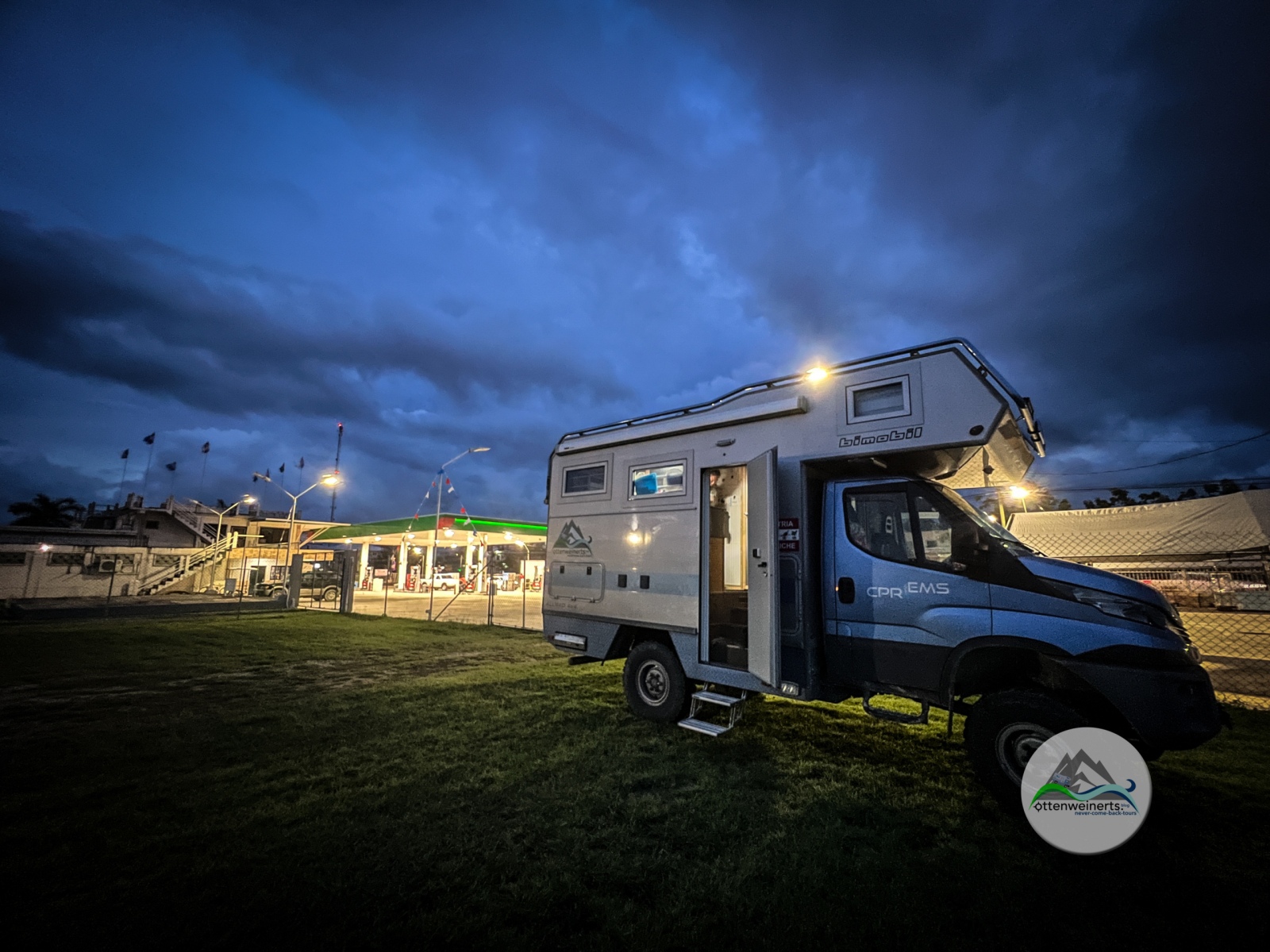
Dann steuern wir Belmopan an, die Hauptstadt von Belize, wo wir über Nacht bleiben wollen – und sind etwas verwirrt: irgendwie können wir keine Struktur erkennen, obwohl Belmopan ja nach dem großen Hurrikan von 1961, der die alte Hauptstadt Belize City verwüstet hat, auf dem Reißbrett geplant and angelegt wurde. Stadtzentrum finden wir keines, und die Straßen sind teilweise nicht asphaltiert, mit Schlaglöchern übersät, einige sogar unpassierbar. Den Campingplatz, den wir ansteuern wollten, finden wir auch nicht, also fragen wir kurzerhand auf einer Puma-Tankstelle, ob wir über Nacht bleiben dürfen. Die nette Dame an der Kassa freut sich, dass Touristen mal nicht nur tanken, sondern auch hier bleiben wollen, noch dazu mit so einem ausgefallenen Fahrzeug; sie ruft ihren Chef an, der gibt das OK und wir bekommen ein Plätzchen im abgezäunten Parkplatz. Um 21 Uhr ist Licht aus bei der Tankstelle, und wir freuen uns auf eine ruhige Nacht.

Day 137 – From Belize City to Belmopan

We leave the northern part of Belize City via the almost 100 years old swing bridge – installed in 1923, this is said to be the oldest, still working bridge of its kind worldwide. But the bridge is operated only when Hurricans are announced, to allow boats to enter Haulover Creek for safety. The next Old Lady we visit, is St. John´s Cathedral, die oldest Anglican Church in Middle America, built between 1812 and 1820 with bricks shipped over from England. On the other side of the road there is the Government House, adorned with a lot of flags.

Next stop: the Community Baboon Sanctuary, 26 miles west of Belize City – there are no Baboons living here, of course, but Howler Monkeys; the first settlers called them Baboons, and the name stuck. The sanctuary is not a zoo, there are no fences, the animals live free and they are not fed – the sanctuary is a voluntary initiative where the landowners pledge to conserve the natural habitat of the Howler Monkeys, the jungle. There is a small museum on site, and then the guide leads the way into a patch of jungle. If you are lucky – as we were today – you get to see a whole family of Howler Monkeys with little ones, monkeying around in the trees or just hanging upside down, holding on to a branch with their tail.

On the way back we drive through Burrell Boom – a part of the town´s name is on display in the central park, so to speak – a huge iron chain with two anchors; the chain, called “boom”, was extended across the Belize River by loggers to catch the mahogany logs floating downstream. Then we pass the “Hattieville Ramada” – that is the nickname of Belize´s central prison. Rehabilitation instead of Isolation is the motto; there is a flower nursery and a souvenir shop, all items are produced by the inmates, and all revenue is used for the maintenance of the prison.

And then we are looking forward to visit the Belize Zoo with its unique background: after filming a documentary about Belize the starring animals, all of them used to be around humans, were left in the care of the animal trainer, who simply put a sign “Belize Zoo” on the street. As more and more visitors poured in, it became clear that many Belizeans had never seen their own national animal, the tapir, let alone jaguar, ocelot or harpy eagle. Over the years the menagerie grew into a real zoo for Belizean animals. All the animals were orphaned, rescued or confiscated from illegal pet ownership, and cannot be released into the wild. Therefore, we get to see four of the five Belizean cats – ocelot, margay, jaguarundi and Sylvia, the jaguar, who is rolling on the floor like our cats at home. Indy, the tapir, happily accepts some leaves and flowers, the magnificent harpy eagles and the king vultures pose for our camera, a few escaped agutis explore the zoo, the coatimundis seem to be very busy, the cassuar birds look very funny, the rare Morlet´s crocodile is not impressed at all, the jabiru storks are huge, the brown pelicans are tired and the pecaris are having dinner. The animals have large enclosures here in the jungle, their natural habitat – we liked this special zoo very much! And at the exit we meet Dalena Lesso and Stephen Zitzer, PhD – they initiated the exhibition of Belizean Birds at the Museum of Belize in Belize City which we saw yesterday.

Then we drive to Belize´s capital Belmopan where we want to stay for the night – and now we are confused. After the big hurricane in 1961 which destroyed much of the former capital Belize City, Belmopan was planned on the drawing board – but we cannot identify any structure or even the town center. Many streets are unpaved, with lots of holes, some streets are flooded and we have to turn back. We also can´t find the camping area where we had planned to stay, so we ask at the Puma gas station if we may spend the night here. The nice lady at the cashier is delighted that foreign tourists don´t only fill up their car – especially one like ours -, but want to stay; she calls her boss, he says yes and so we get a spot at their safe parking lot. At 9 pm the gas station is dark, and we are looking forward to a quiet night.

Route 220901

220831 – Barrier Reef & Belize City 

Mittwoch/Wednesday, August 31, 2022

Tag 136 – Barrier Reef & Belize City 

Bei “Tauchen in Belize” denkt man als erstes an das berühmte Blue Hole. Wär auch sicher sehr schön gewesen, geht aber nicht, wenn man mit Camper unterwegs ist. Das Fahrzeug zwei oder drei Tage (und Nächte!) unbemannt in Belize City stehen zu lassen, um von einem der vorgelagerten Cayes Tauchausflüge zu machen, kommt für uns nicht in Frage; meinen Mann zwei oder drei Tage mit dem Camper alleine zu lassen, um von den Cayes aus tauchen zu gehen, kommt für mich nicht in Frage. Also freue ich mich einfach über zwei entspannte Tauchgänge am Barriere Riff. Ein gesundes, intaktes Riff, Hummer, Muränen, Rochen, ein Kofferfisch in einem großen Schwamm, Feuerfische und schöne Korallenformationen gibt es zu sehen.

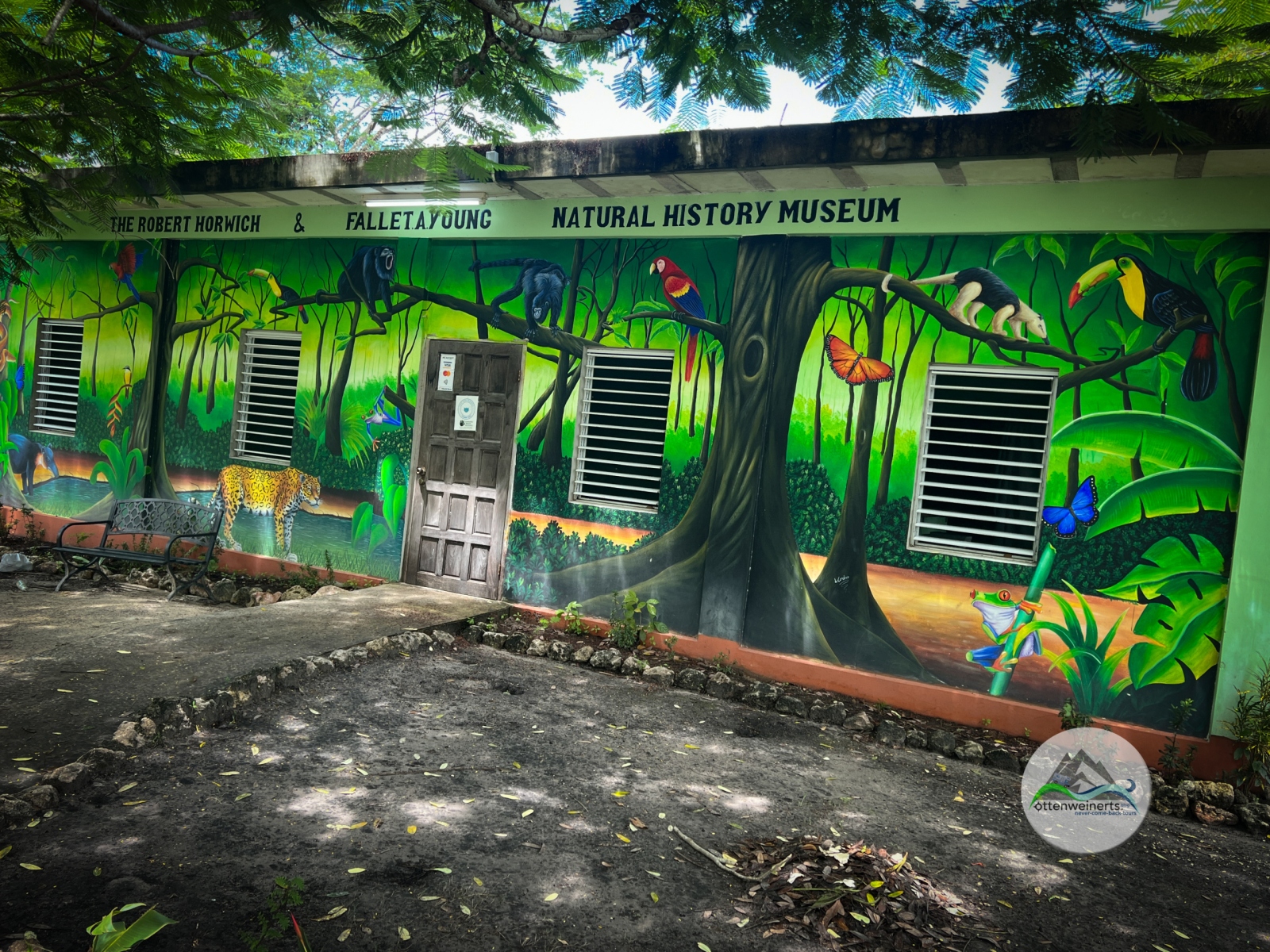
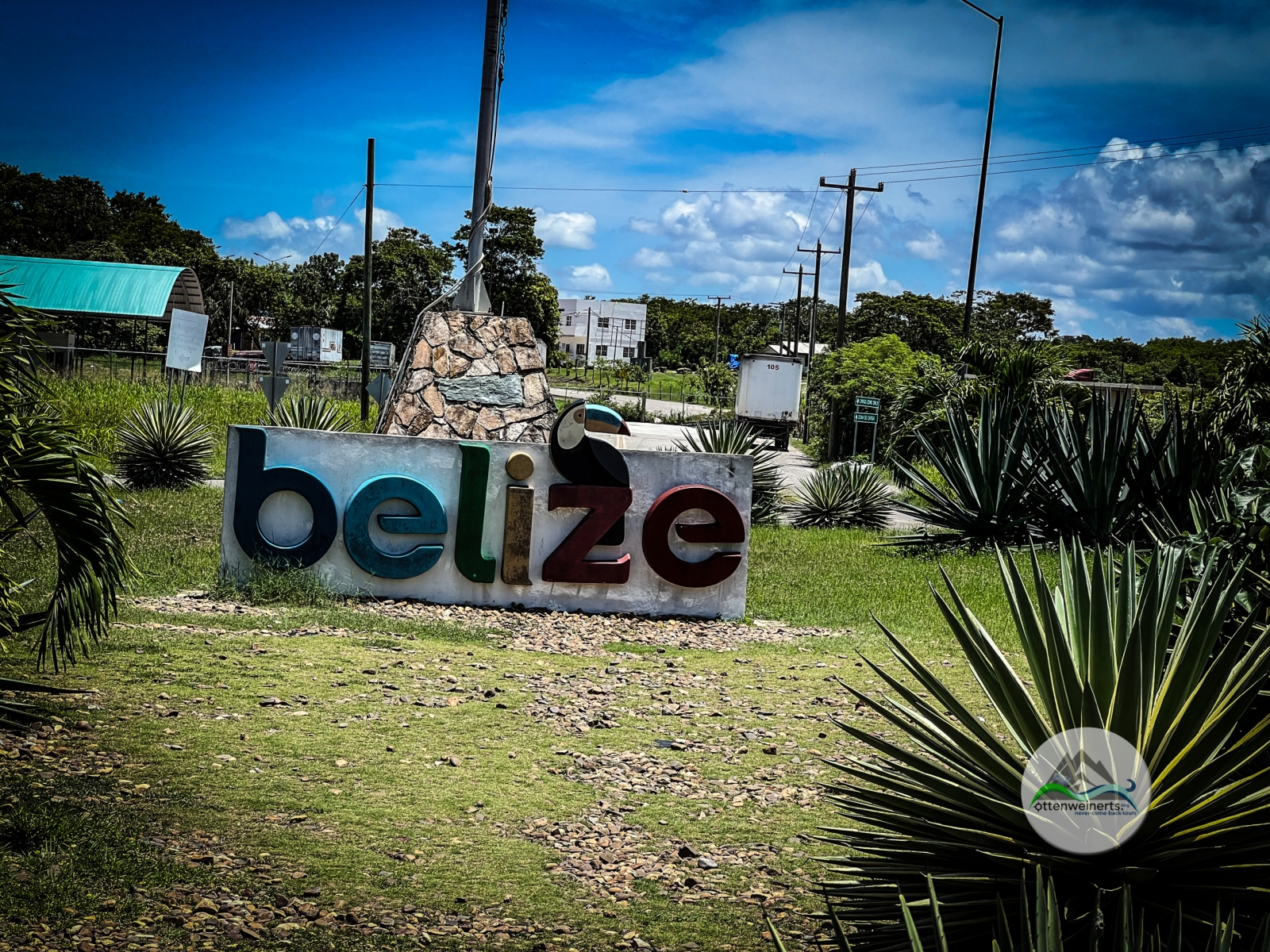
Am Nachmittag unternehmen wir einen Spaziergang durch die Stadt, vorbei am „BELIZE“-Zeichen und am Leuchtturm mit dem Grab von Baron Bliss, dem in England geborenen Wohltäter von Belize, der dem Staat sein gesamtes Vermögen vermacht hat. Im Belize Museum, dem ehemaligen Gefängnis, findet sich eine etwas bedrückende Ausstellung zur Geschichte der Sklaverei in Belize, weiters eine nach 9/11 aus den Ruinen des World Trade Center geborgene Flagge von Belize und eine Münzen- und Banknotensammlung. Im Obergeschoß eine Sammlung einheimischer Vögel – einige davon haben wir tatsächlich schon live vor die Kamera bekommen, einen Toucan, Belize´s Nationalvogel aber noch nicht. Na, vielleicht morgen.

Tag 136 – Barrier Reef & Belize City

The famous Blue Hole is the first thing that comes to mind when mentioning Scuba diving in Belize. It certainly would have been nice to go diving there, but difficult when traveling with a camper. Leaving the camper alone for two or three days (and nights!) in Belize City in order to stay at one of the Cayes to go driving from there, was out of the question for us. Leaving my husband alone with the camper tow or three days to go diving, was out of the question for me. So I am just happy about two relaxed dives at the Barrier Reef – a healthy, intact reef with sting rays, lobsters, moray eels, a puffer fish in a giant sponge, lionfish and beautiful corals. 

In the afternoon we stroll through Belize City, pass the “BELIZE” sign and the lighthouse with the tomb of Baron Bliss, the English benefactor of Belize, who left his fortune to the country. The Belize Museum, in the former jail, has a slightly depressing exhibition on the history of slavery in the country, a Belize National flag which was saved from the rubble after 9/11 and collection of coins and paper money.

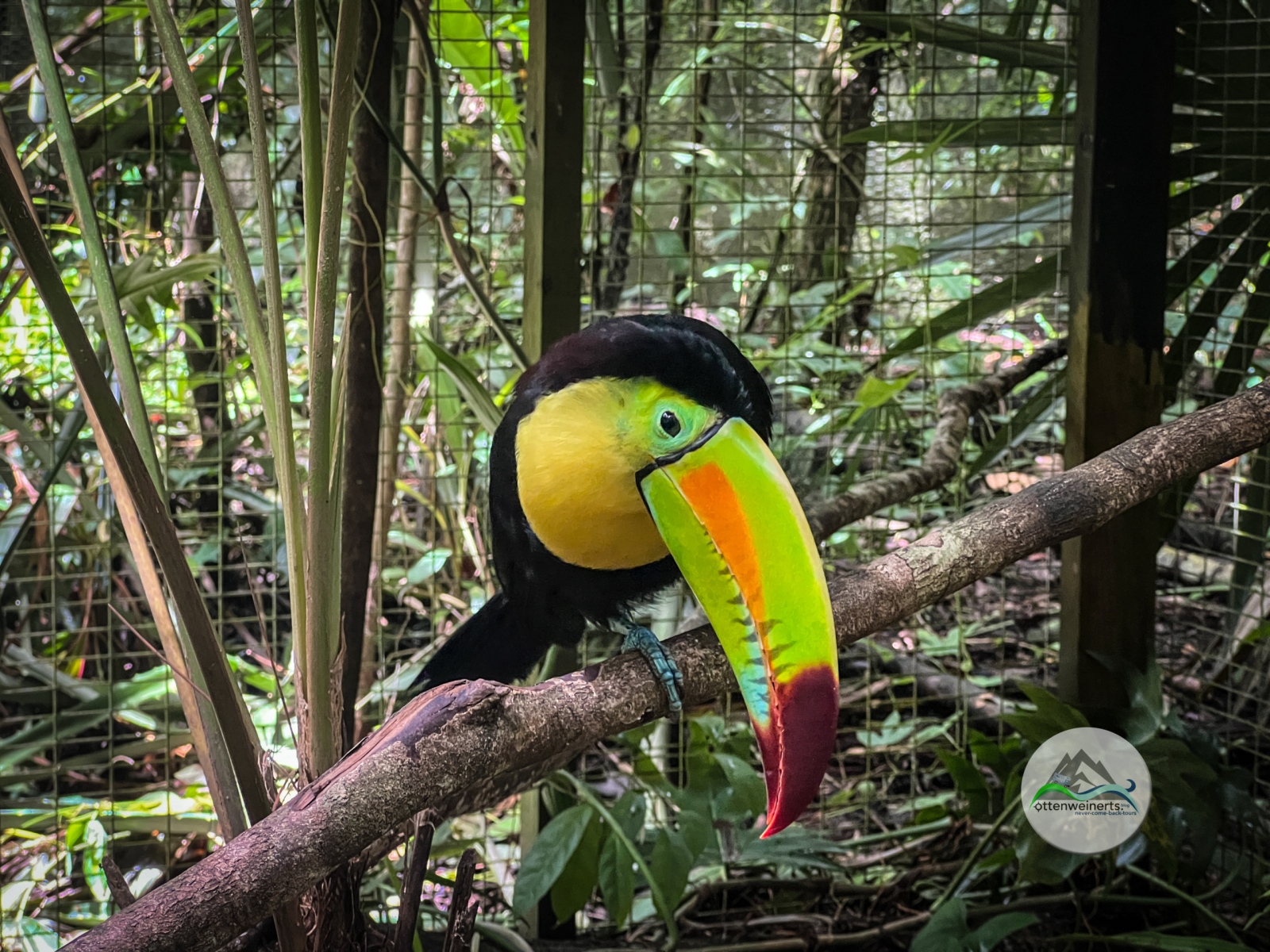
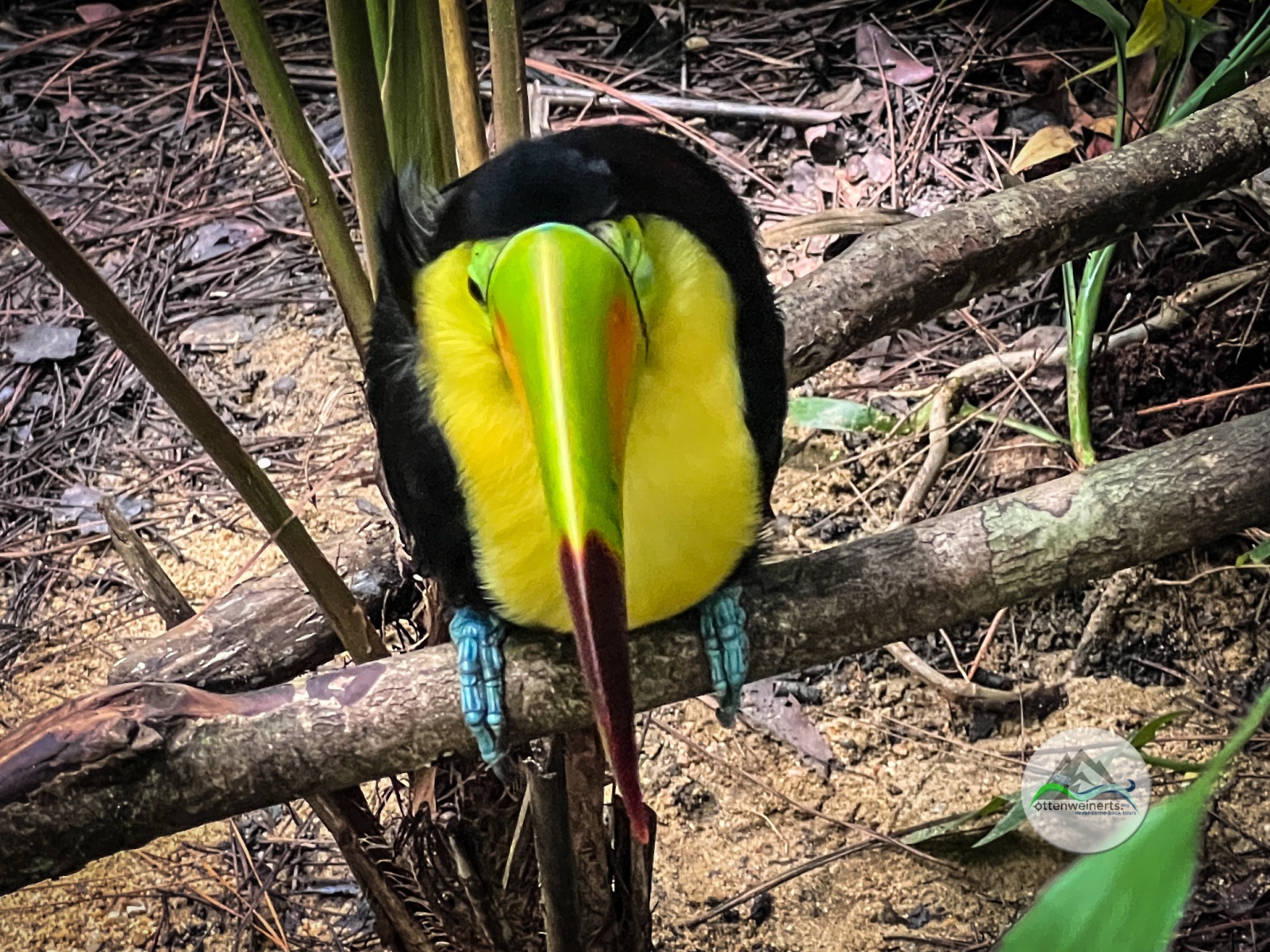
In the upper floor there is a nice collection of native birds – some of them we have already seen and on camera, but no Toucan, Belize´s national bird, yet. Well, maybe tomorrow.

Route 220831

220830 – Von Orange Walk Town nach Belize City >

Dienstag/Tuesday, August 30, 2022

Tag 135 – Von Orange Walk Town nach Belize City

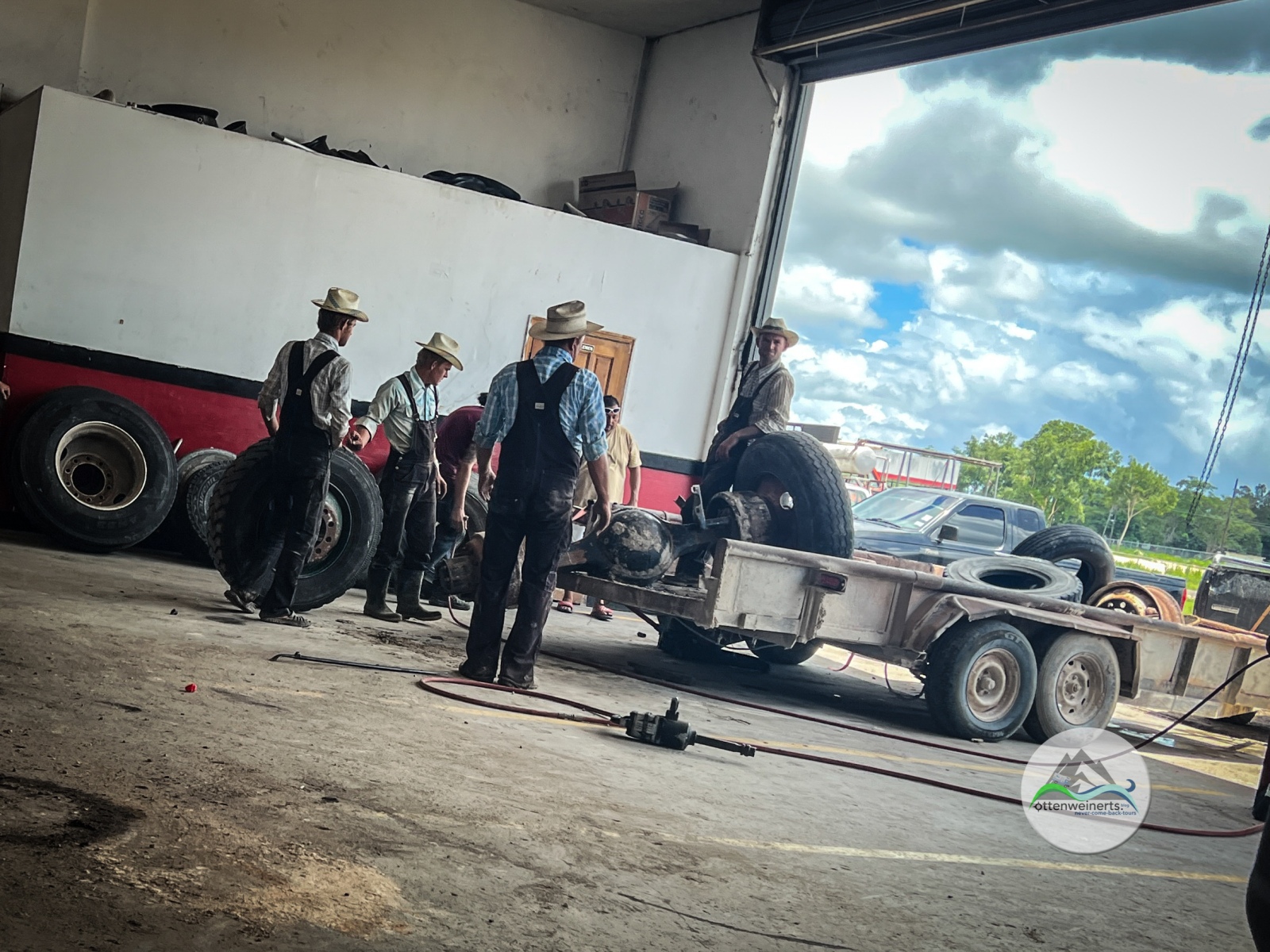
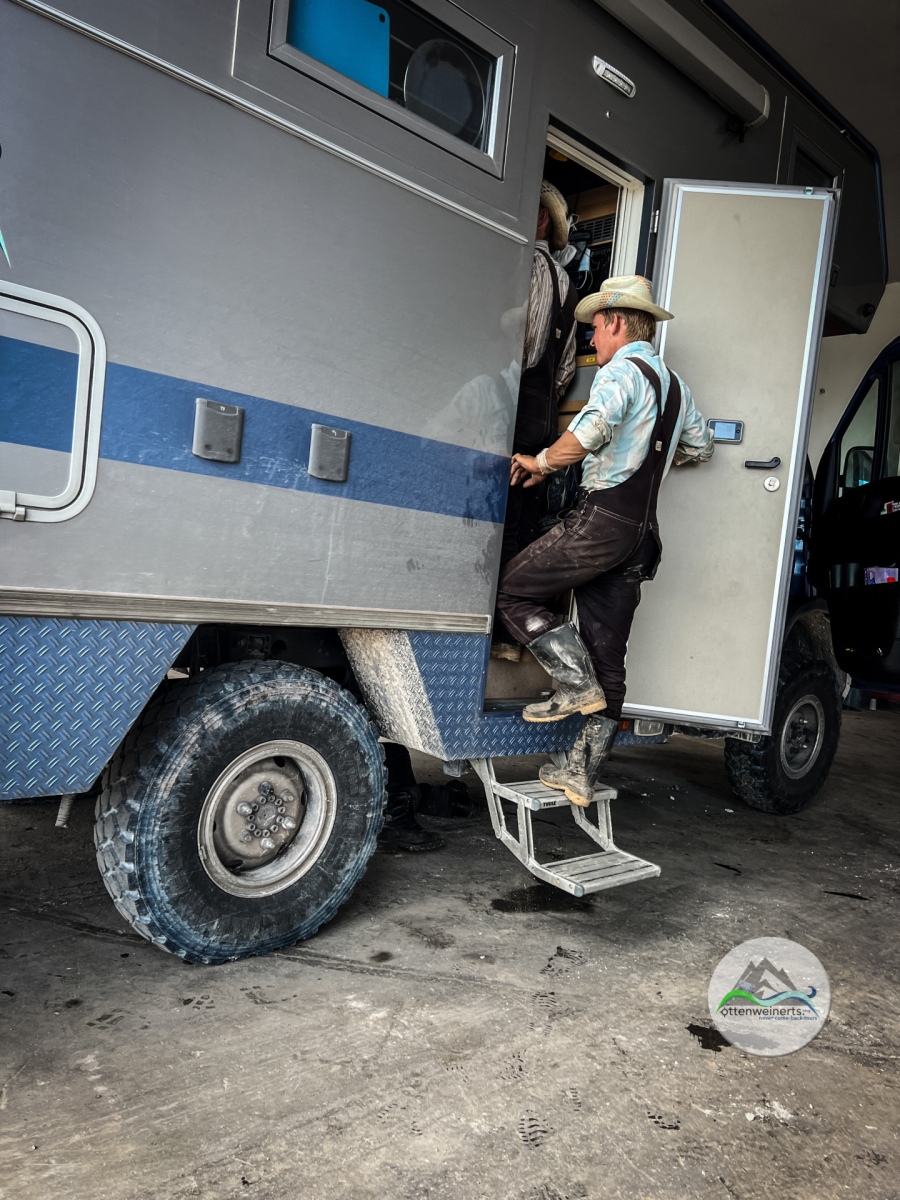
In der Früh getrödelt – nochmals schwimmen gegangen, mit den Einheimischen geplaudert (Iguanas, Specht & Co), Auto gesäubert und Einkauf erledigt. Dann fahren wir an Caribbean Tire vorbei und beschließen spontan, den schon etwas abgefahrenen Reifen links vorne gegen den bereits geflickten Reservereifen zu tauschen, damit das Auto ruhiger fährt. Die Jungs sind großartig, Reifenwechsel ist gar kein Problem, und währenddessen komme ich mit Abraham & Abraham ins Gespräch, Mennoniten, die auch zum Reifenwechseln da sind, und unser Auto bestaunen und schließlich sogar von innen begutachten. Und jetzt löst sich auch das Rätsel, warum wir den autostoppenden Mennoniten gestern nicht verstanden haben – man spricht untereinander Plaudietsch, und ansonsten Kreolisch und Spanisch, aber nur sehr wenig Englisch

Dann geht es in den Belize District, nach Altun Ha. Eine wunderbare Anlage, gepflegt, und wir sind wieder mal die einzigen Besucher. Den berühmten Tempel des Sonnengottes kennt jede/r in Belize, und nach ein paar Bier auch jeder Tourist – der Tempel findet sich in stilisierter Form auf der Belikin-Bierflasche. Das berühmteste Fundstück aus diesem Tempel, ein 15 cm großer, aus Jade geschnitzter Kopf des Sonnengottes Kinich Ahau, ist das größte jemals in einer Maya-Stätte gefundene Jadeobjekt, und quasi ein Nationalheiligtum. Die Skulptur hier im Museum ist eine Reproduktion, das Original befindet sich im Tresor der Nationalbank von Belize, wird – wenn es für eine Ausstellung ausgeliehen wird – für 5 bis 10 Millionen US $ versichert, ist für Belize aber unbezahlbar; ein kleines Abbild des Jadekopfes findet sich auf jeder Banknote in der linken oberen Ecke.
Nach einer netten Plauderei mit Alvin vom Ticketschalter respektive archäologischem Institut und einem guten Kaffee bei Enrique, der eigentlich aus Trinidad & Tobago stammt, fahren wir nach Belize City. Ich habe bereits in der Früh ein Tauchcenter per email kontaktiert, aber keine Antwort bekommen. Wir finden den Shop auch tatsächlich in Belize City, stehen aber vor verschlossenen Türen. Die nächste Tauchbasis existiert scheinbar nur auf Google Maps, aber nicht im wirklichen Leben – zumindest kennt der nette Einheimische, den ich um Unterstützung ersuche, keine Tauchbasis, die sich genau vis-a-vis von seinem Haus befinden sollte. Wir fahren auf gut Glück die nächste Adresse an, der Shop ist finster, aber auf Klopfen wird tatsächlich geöffnet – ja, morgen ist noch Platz am Boot und ich kann mitfahren – Freude groß!

Zur Feier des Tages gönnen wir uns heute Abend das Radisson in Belize City – als Hintergrund, wir stehen genau vor dem Hotel am Kai, gut bewacht vom Security Guard in seinem Häuschen, die Wellen plätschern an die Kaimauer, es weht eine angenehm kühle Brise und es gibt keine Moskitos. So mögen wir das!

Day 135 – From Orange Walk Town to Belize City

In the morning we took our time – went swimming in the pool again, talked to the natives (Iguana, woodpecker & co), cleaned the camper and then went shopping. When we passed Caribbean Tire, we spontaneously decided to change our rather worn left tire in the front and put the patched spare tire there, hoping the car would run more smoothly afterwards. The guys at Caribbean Tire are great, changing the tires is no problem at all. In the meantime, I get to talk to Abraham and Abraham, Mennonites, who also are here to change some tires – they look at our camper all the time, finally I invite them in to have a look around. And now a puzzle is solved – we didn´t understand the hitchhiking Mennonite at Lamanai yesterday because they speak Plaudietsch, and Creole and Spanish as needed, but only very little English.

Then we continue to Altun Ha in Belize District. A beautiful place, well maintained, and we are the only visitors. Everyone in Belize knows the Temple of the Sun God and after a few beers every tourist does, too – a stylized drawing of the Temple is on the label of Belikin Beer. The most famous object ever found here is a 6 inch jade head of the sun god, Kinich Ahau, the largest jade object ever found at a Maya site, and a national treasure for Belize. The sculpture here in the museum is a reproduction, the original rests in the vault of Belize´s National Bank; when it is taken out for an exhibition, the insurance amount is between 5 and 10 million US dollars – but for Belize the artefact is priceless. A small picture of the jade head is on every Belize Dollar bill in the upper left corner.

After a nice chat with Alvin from the ticket counter respectively the archeological institute and a good cup of coffee at Enrique´s who is originally from Trinidad & Tobago, we drive to Belize City. I had written an email to a dive center there in the morning, but got no answer – we find the place but the doors are locked, no one there. The next place obviously only exists on Google Maps, but not in real life – at least the nice local gentleman I am asking for help has never heard of a dive center which should be right opposite his house. We try a third address – the shop is dark, but after knocking the door opens – yes, there is room on the boat and I can go diving tomorrow – I am happy!

To celebrate, we decide to stay at the Radisson Belize City – at the kai, right in front of the hotel and a security guard next to us; the sound of the waves, a cool breeze and no mosquitos – that´s the way we like it!

Route 220830

220829 – Von Corozal nach Orange Walk >

Montag/Monday, August 29, 2022

Tag 134 – Von Corozal nach Orange Walk

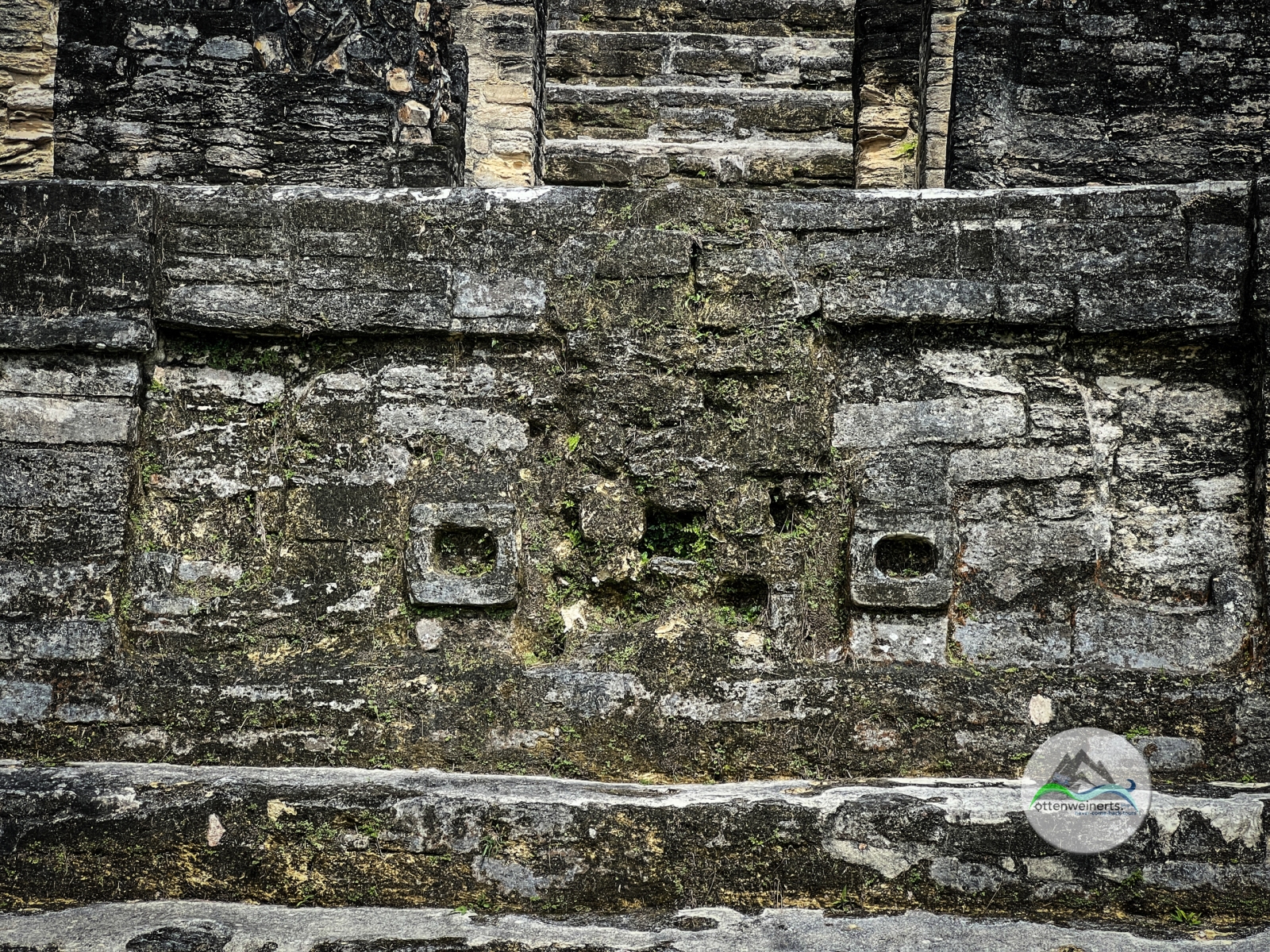
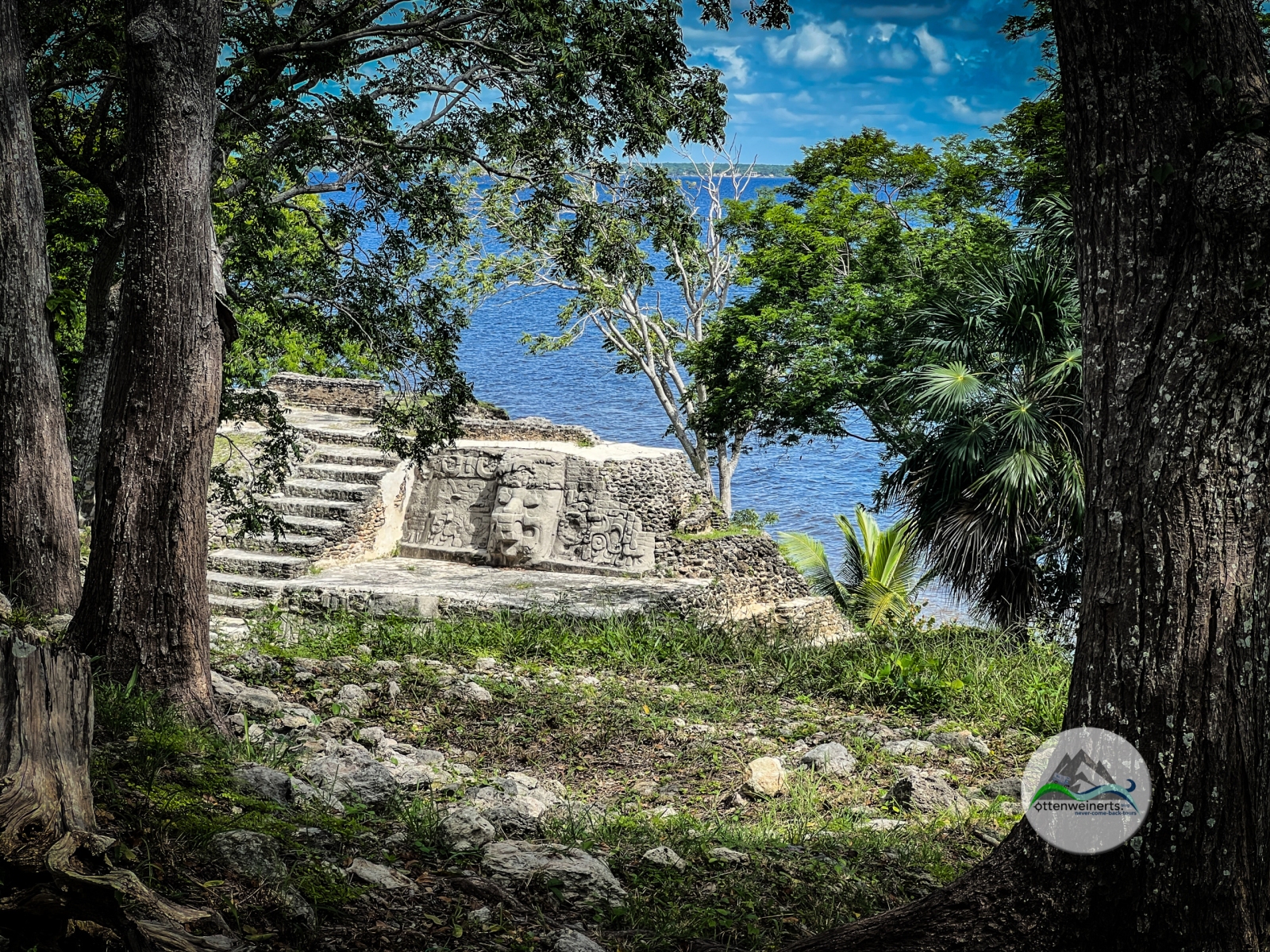
Nach einer ruhigen Nacht begeben wir uns nochmals zu den Ruinen von Cerro Maya, diesmal besser ausgerüstet, langärmelig, langhosig und mit Hut mit Moskitonetz – und gut war´s, die Moskitos von gestern haben alle ihre Freunde und Verwandten eingeladen, um die Österreicher zu begrüßen. Lang halten wir es nicht aus hier, auch wenn die Masken am Tempel vor dem Hintergrund der Lagune wirklich großartig sind.

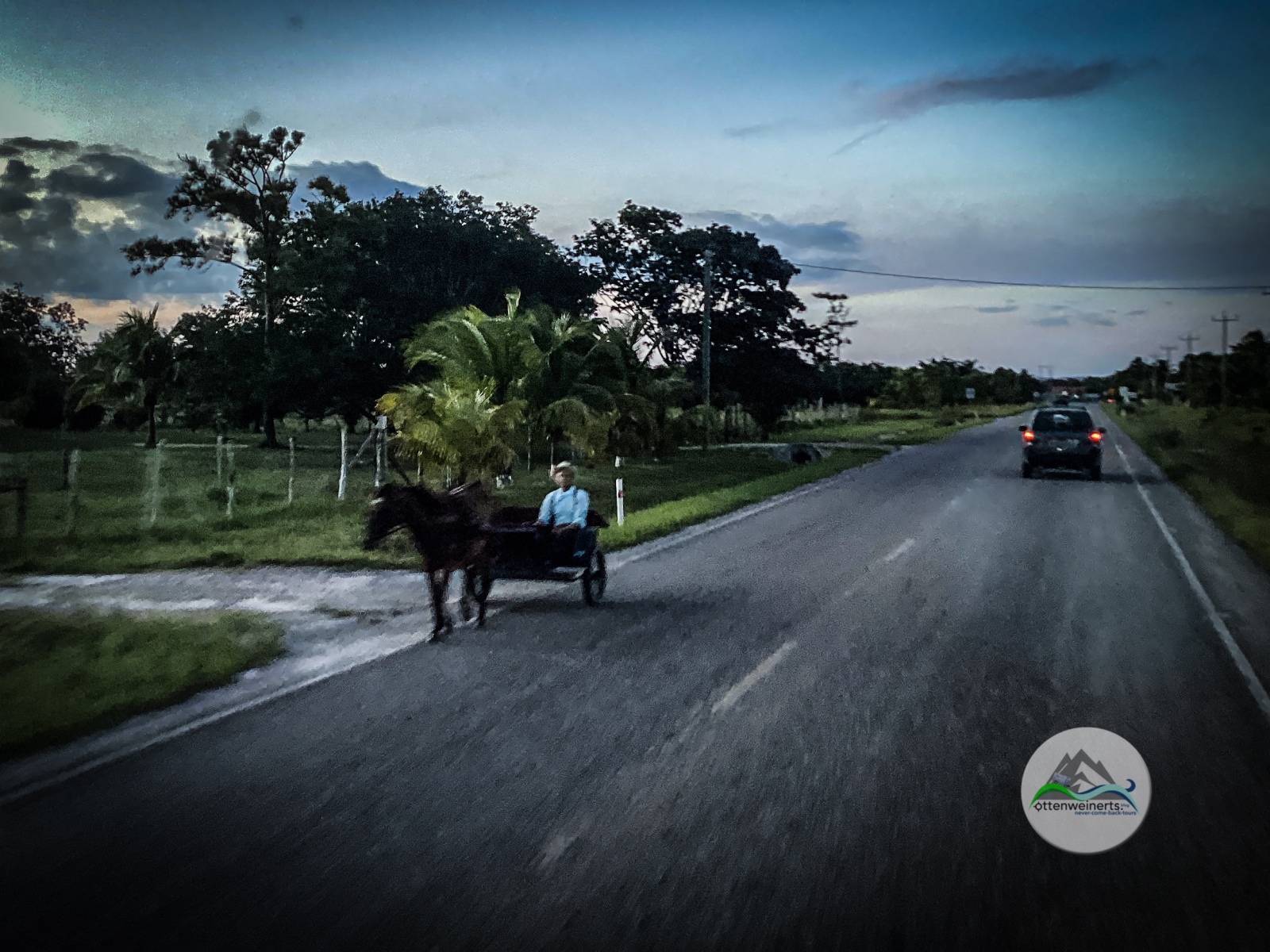
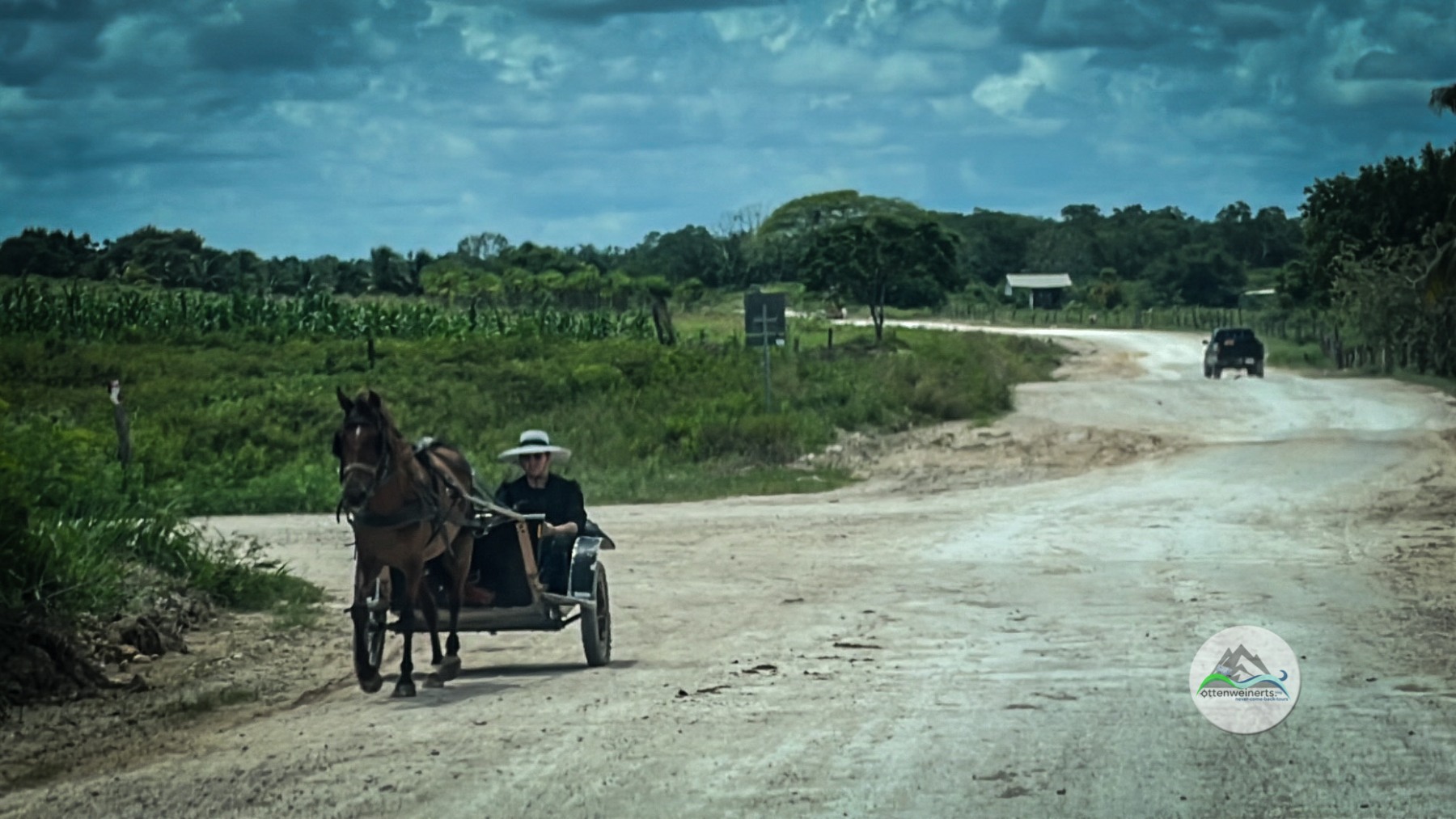
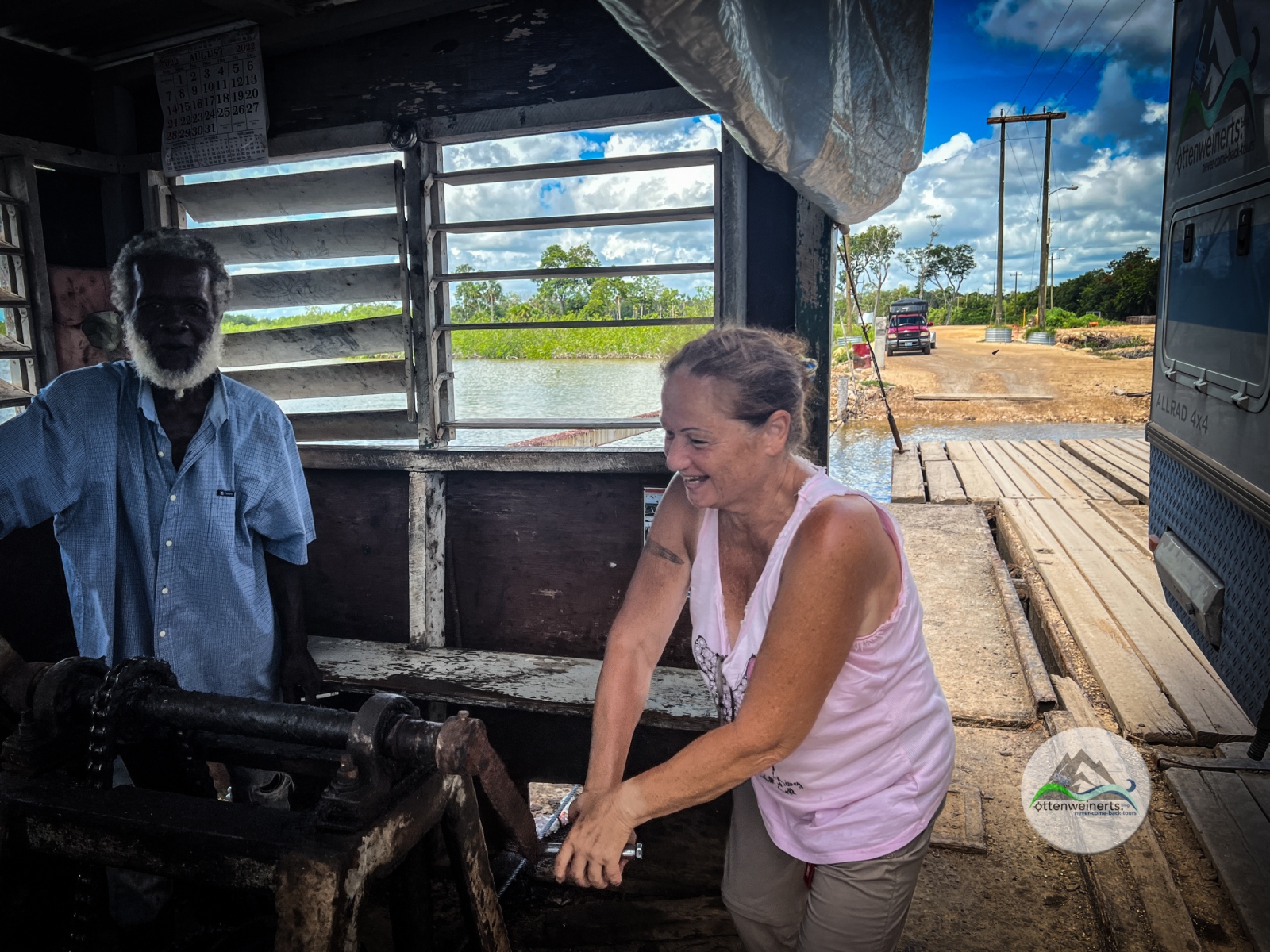
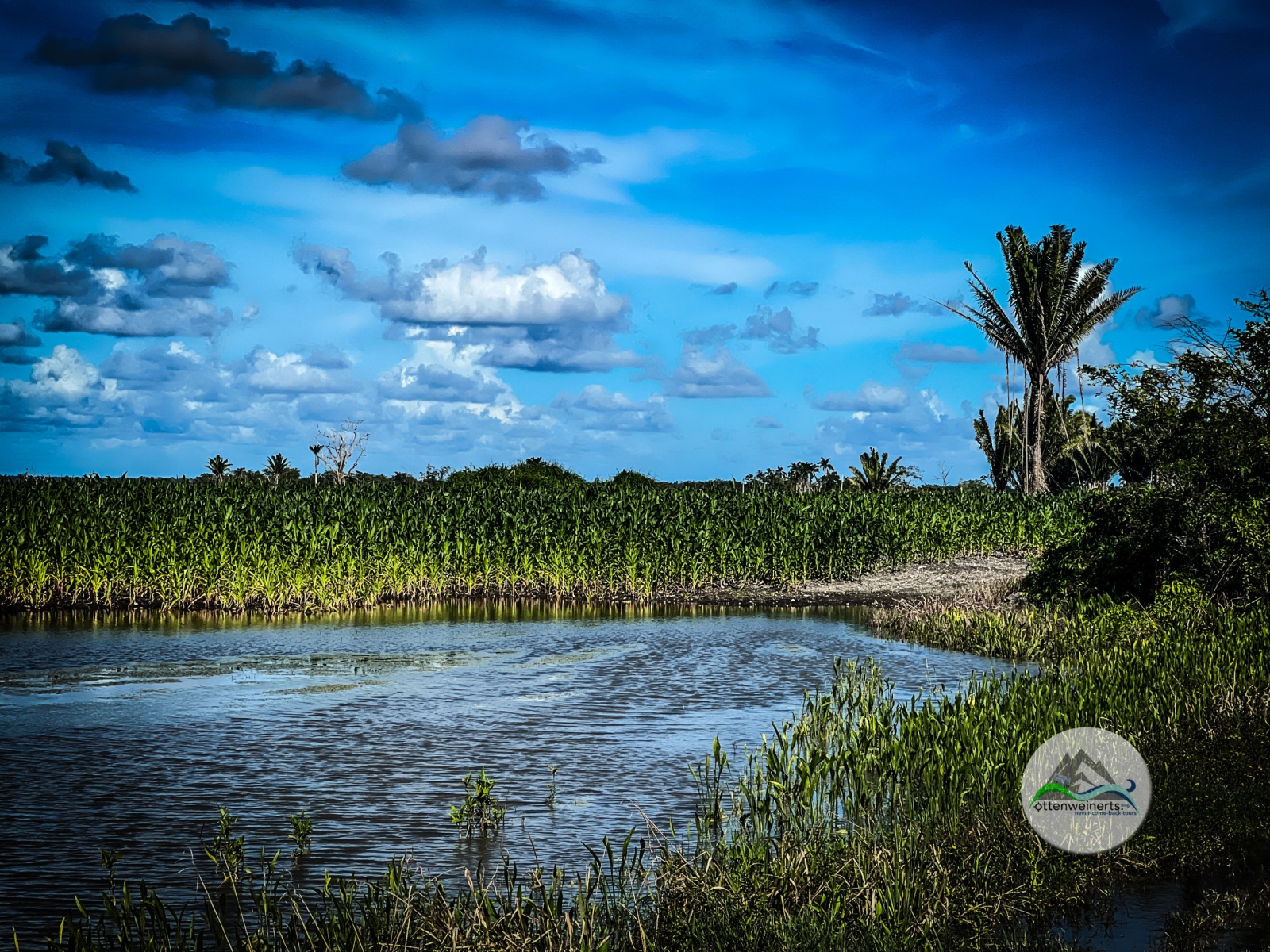
Wir fahren weiter Richtung Süden, der mit Löchern übersäte, holprige Weg ist genauso schlecht wie der von gestern, und wieder gibt es eine Fähre – diesmal darf die Touristin mitkurbeln. Im Gebiet Little Belize fahren wir durch Farmland – Plantagen, soweit das Auge reicht, und hin und wieder ein Pferdewagen, gelenkt von einem Mann in Latzhosen und Strohhut oder einer Frau in langem, dunklem Kleid mit Spitzenhäubchen oder auch Strohhut – wir sind im Mennonitengebiet.

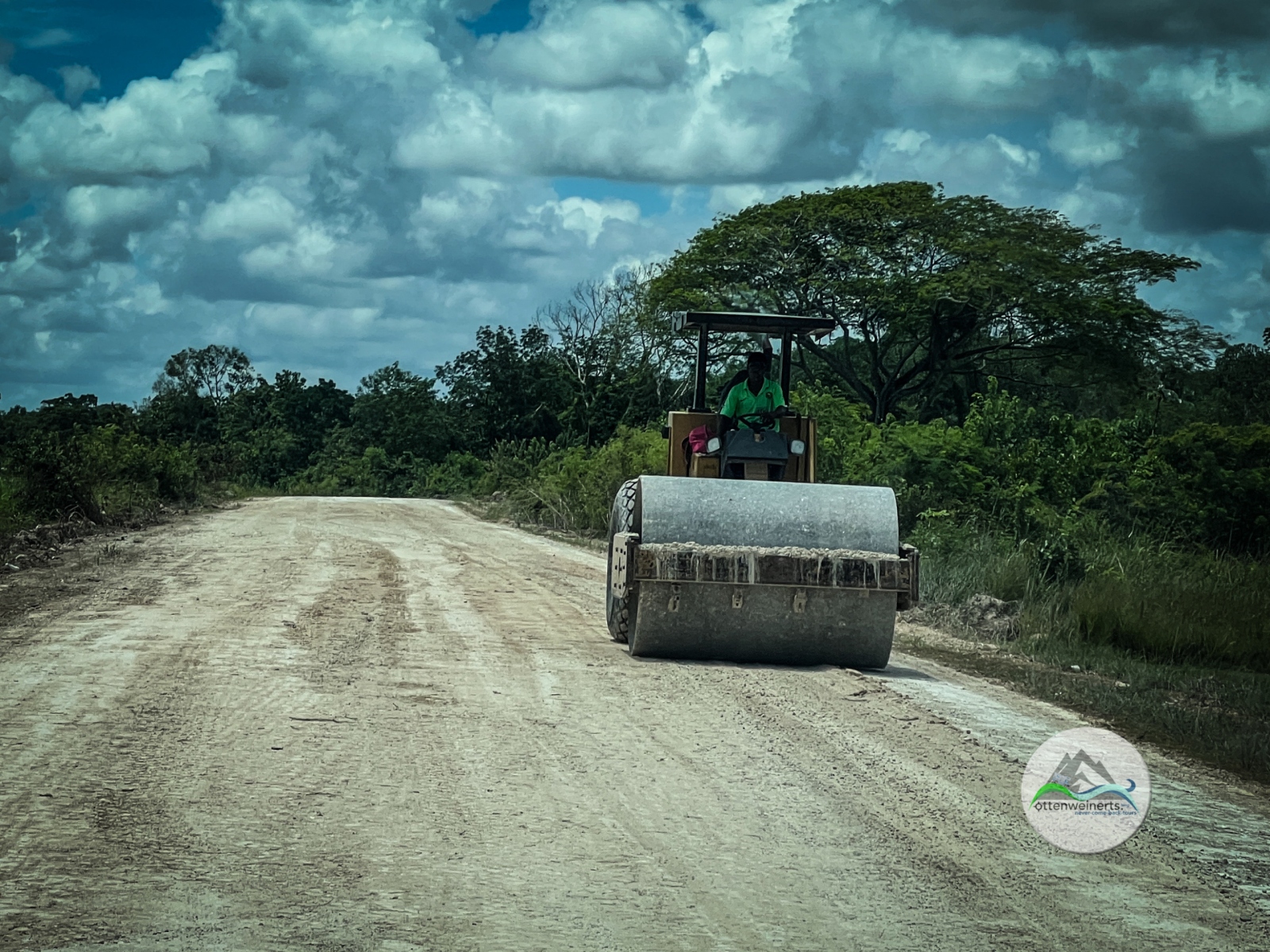
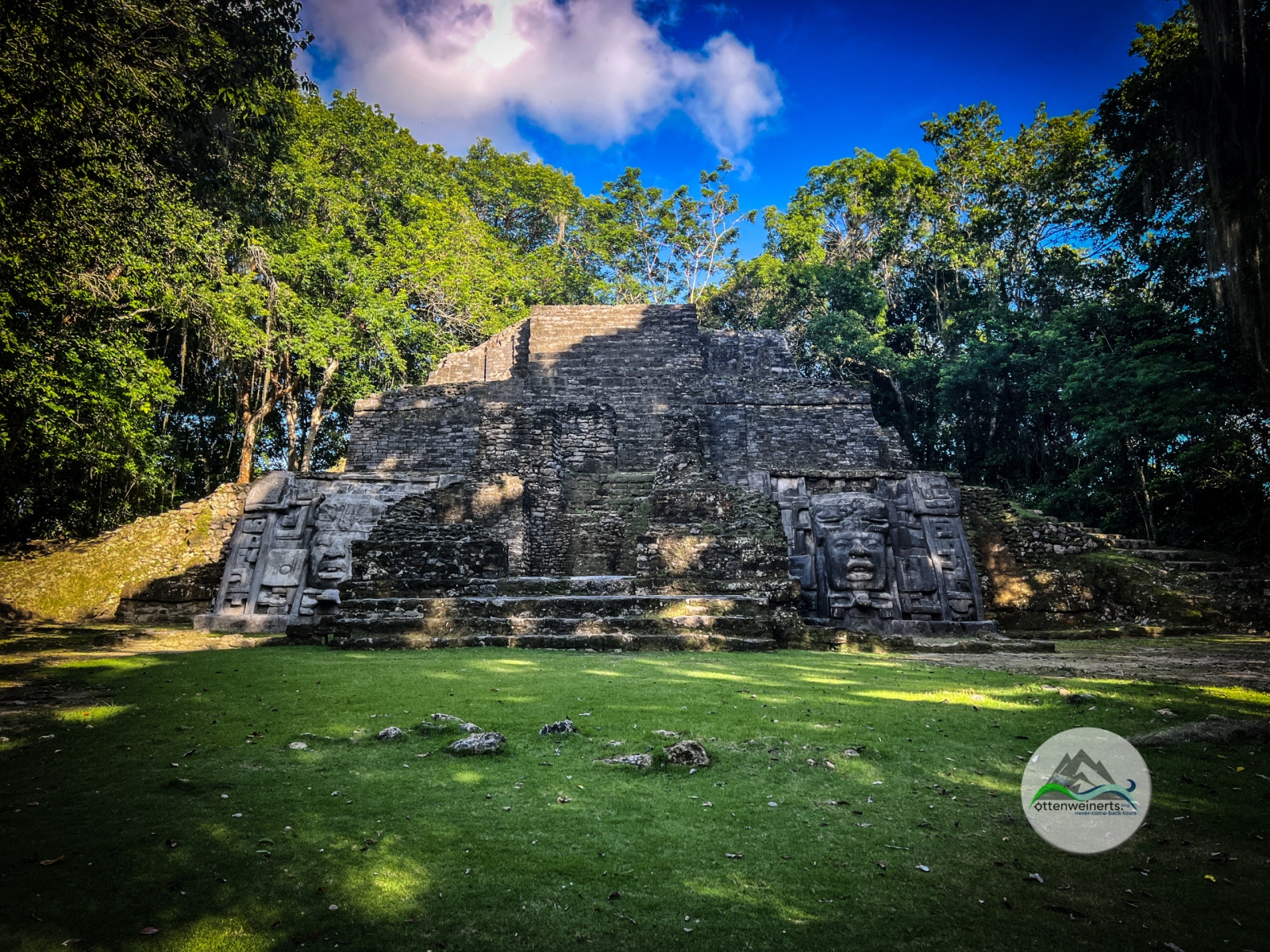
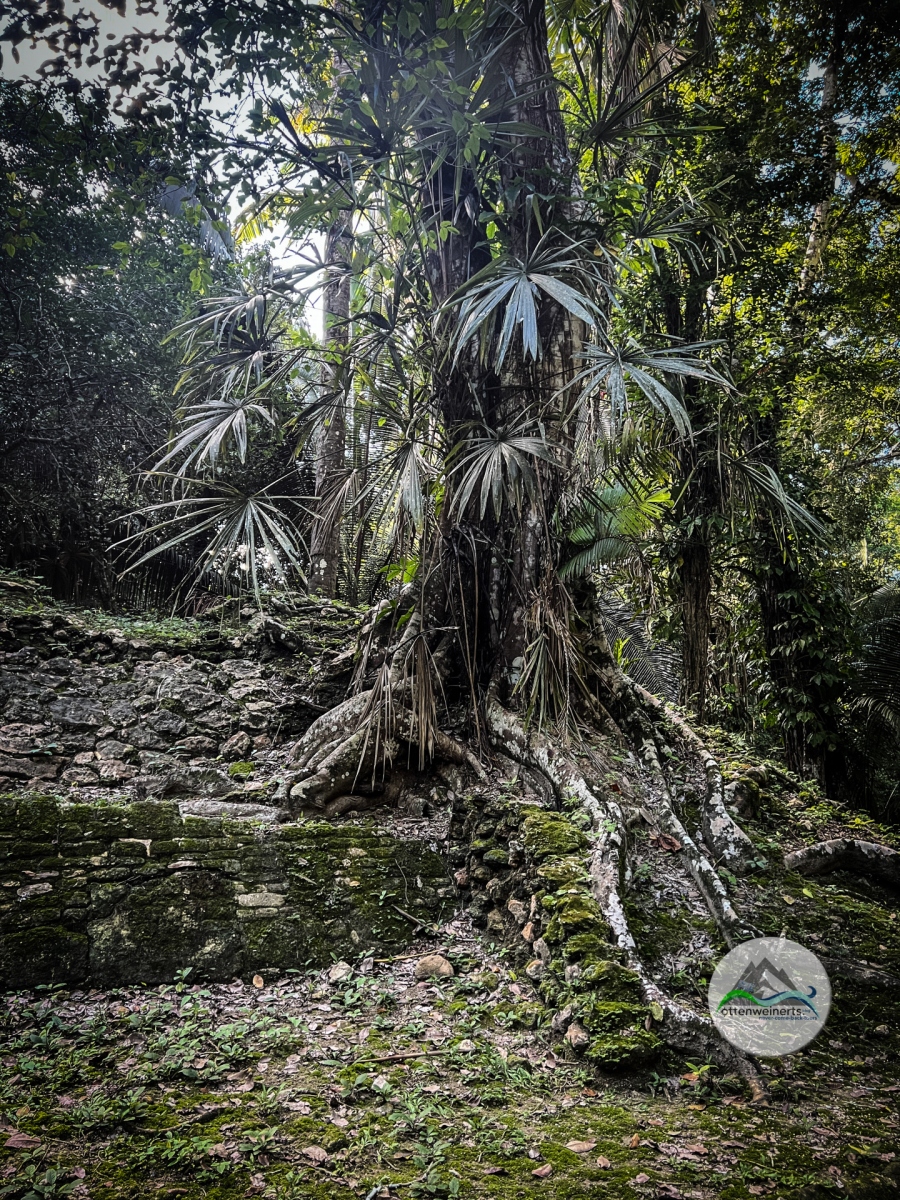
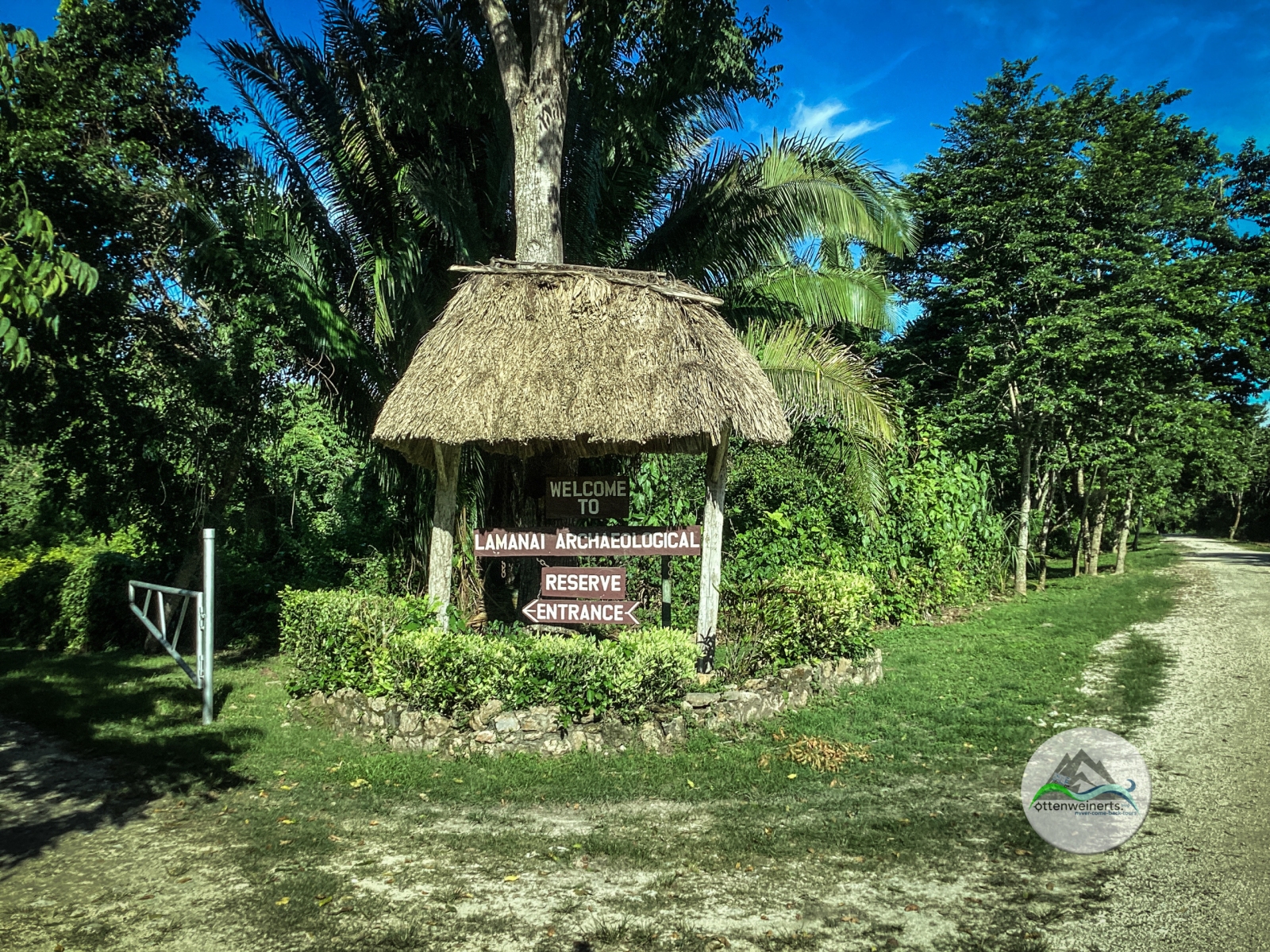
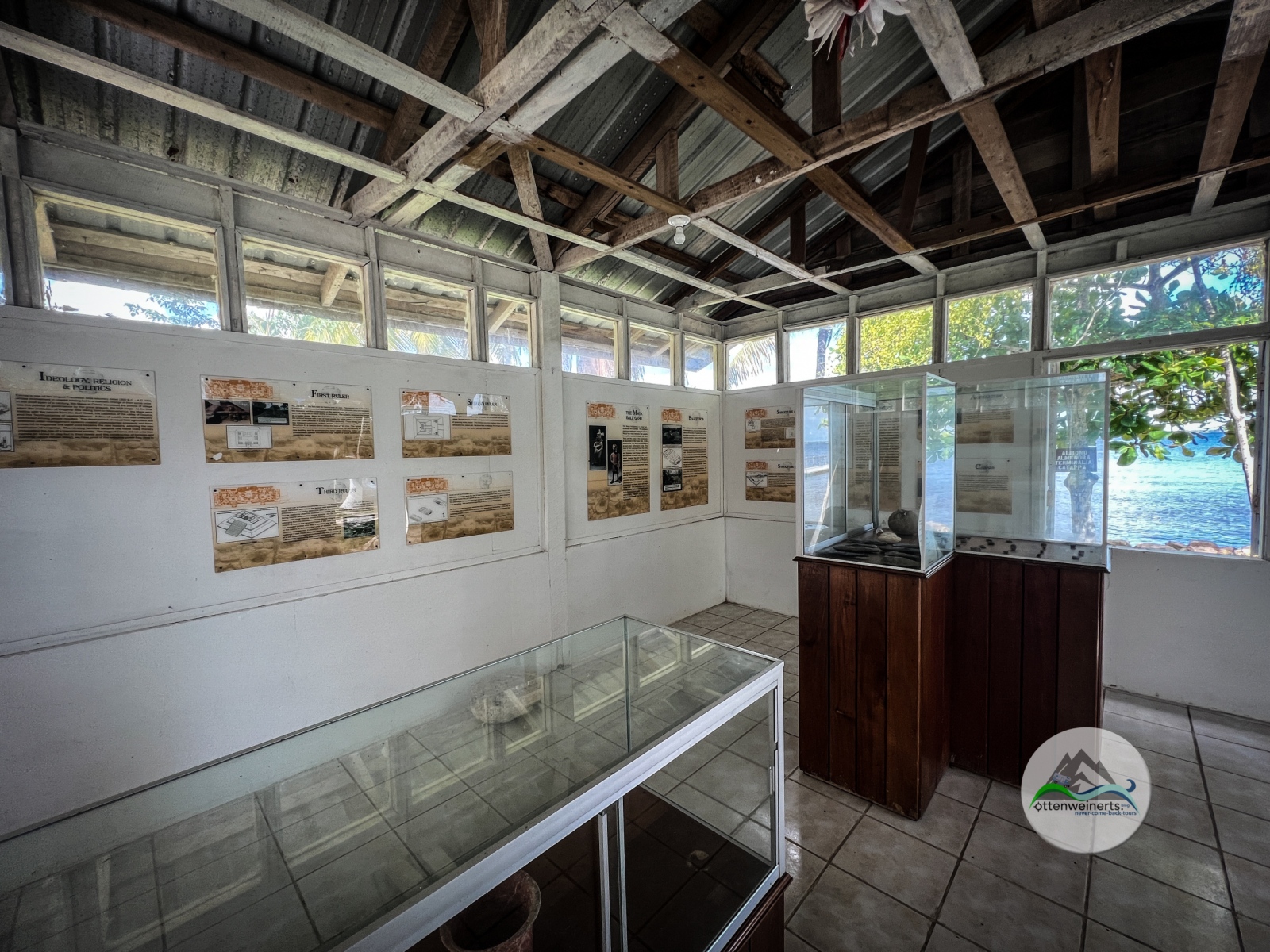
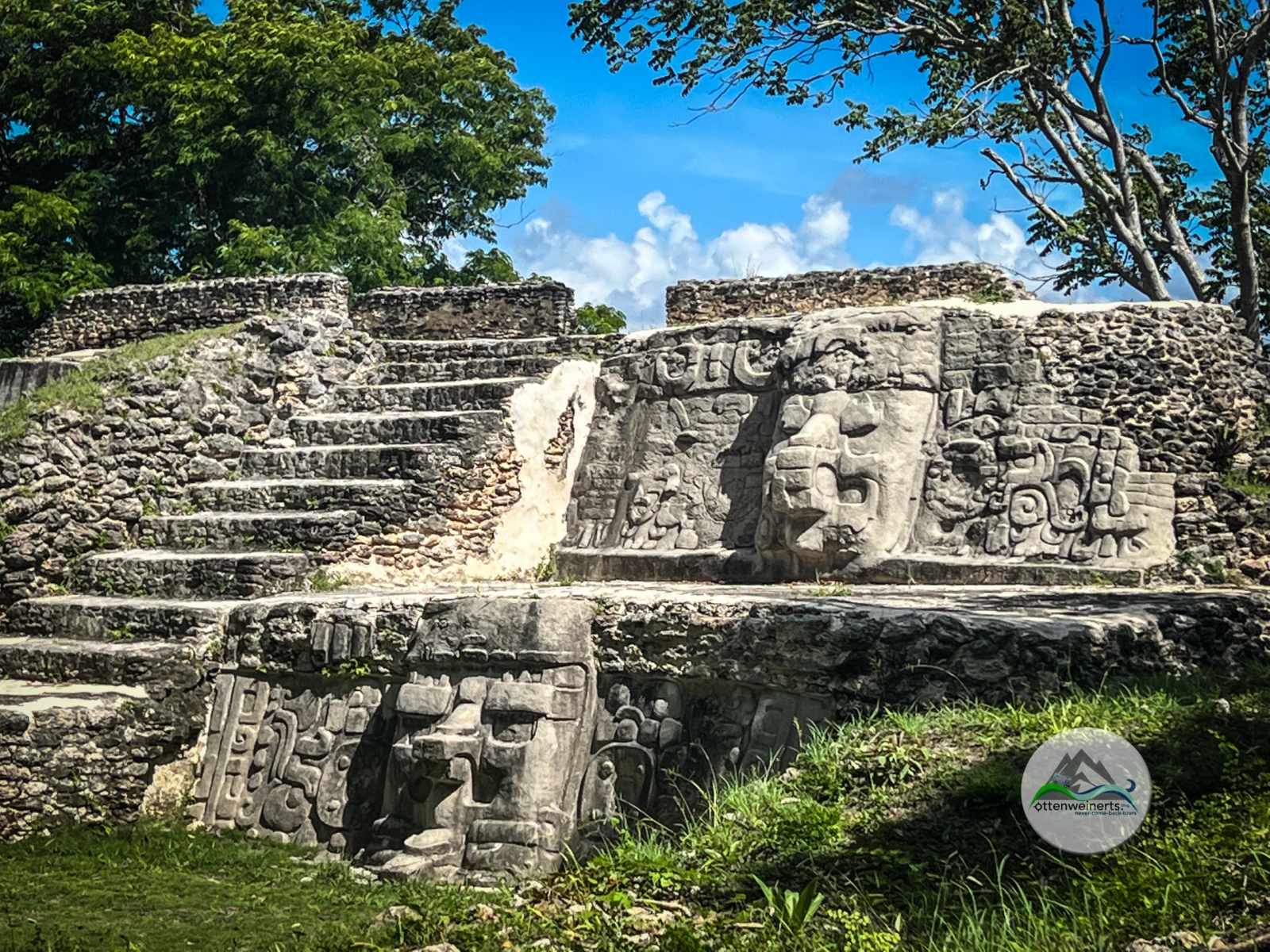
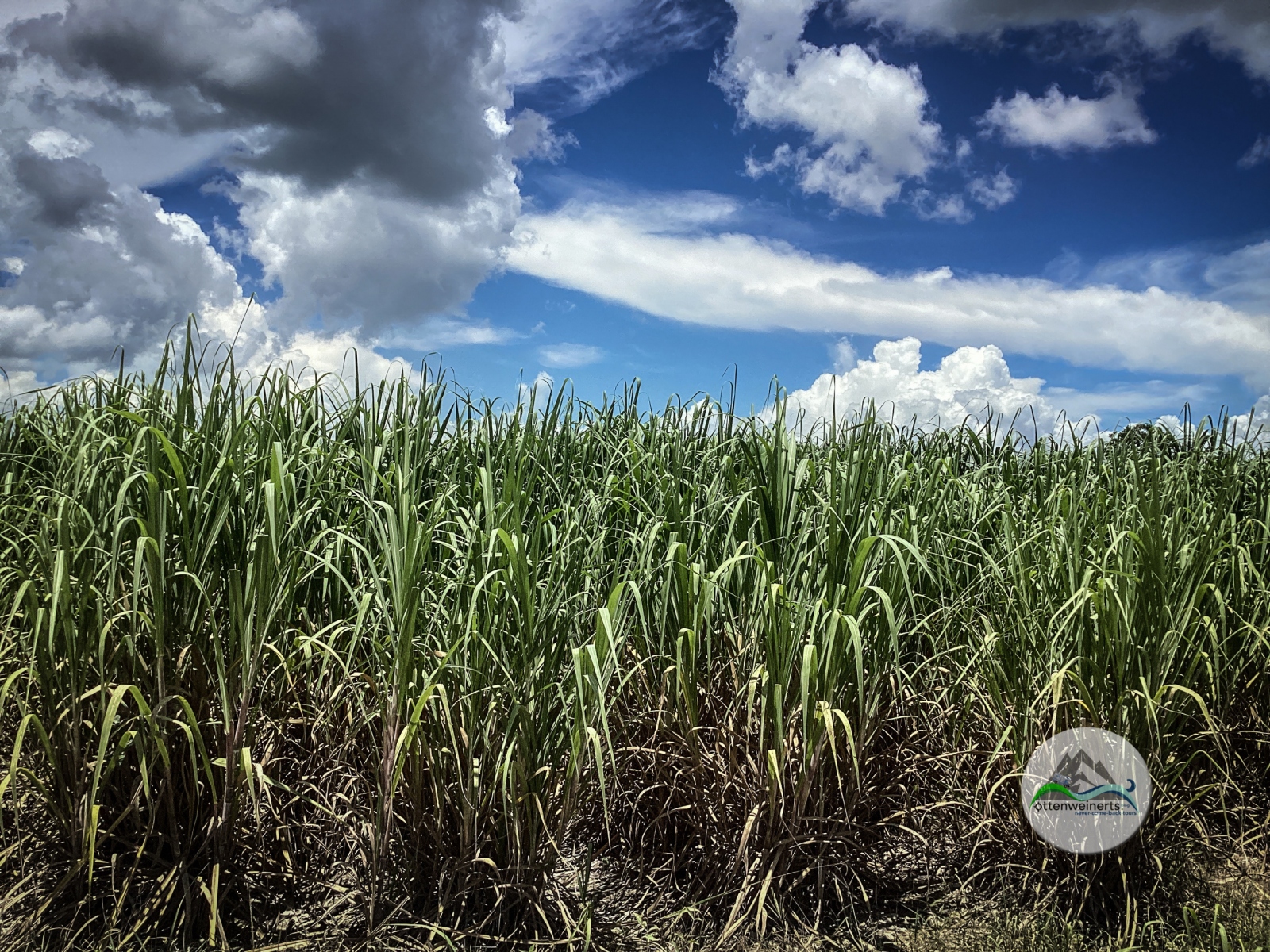
Endlich kommen wir nach Orange Walk Town, der Hauptstadt des gleichnamigen Distrikts, wo es ordentliche Straßen gibt und auch Sim-Karten – wir haben wieder Internet, das Navigieren (bisher nur mit Pocket Earth) wird wieder einfacher und die Reiseplanung natürlich auch. Das ermutigt uns, nach Lamanai zu fahren, sind ja nur 50 Kilometer, und die ersten 30 davon auch ordentlich asphaltiert. Nach den letzten 20 ist uns klar, warum die meisten Touristen diesen Ausflug per Boot von Orange Walk Town unternehmen und sich die elende Piste ersparen. Wir haben eine ganze Stunde länger gebraucht als Google Maps uns vorgegaukelt hat, waren kurz nach 16 Uhr beim Ticketschalter und mussten betteln, dass wir noch eingelassen werden. Dafür waren wir die einzigen Besucher und mussten uns die großartige Maya-Stätte nur mit den hier lebenden Brüllaffen teilen. Der Masken-Tempel, der Jaguar-Tempel und der Pelota-Platz (der kleinste von allen bekannten Maya-Stätten) waren beeindruckend.

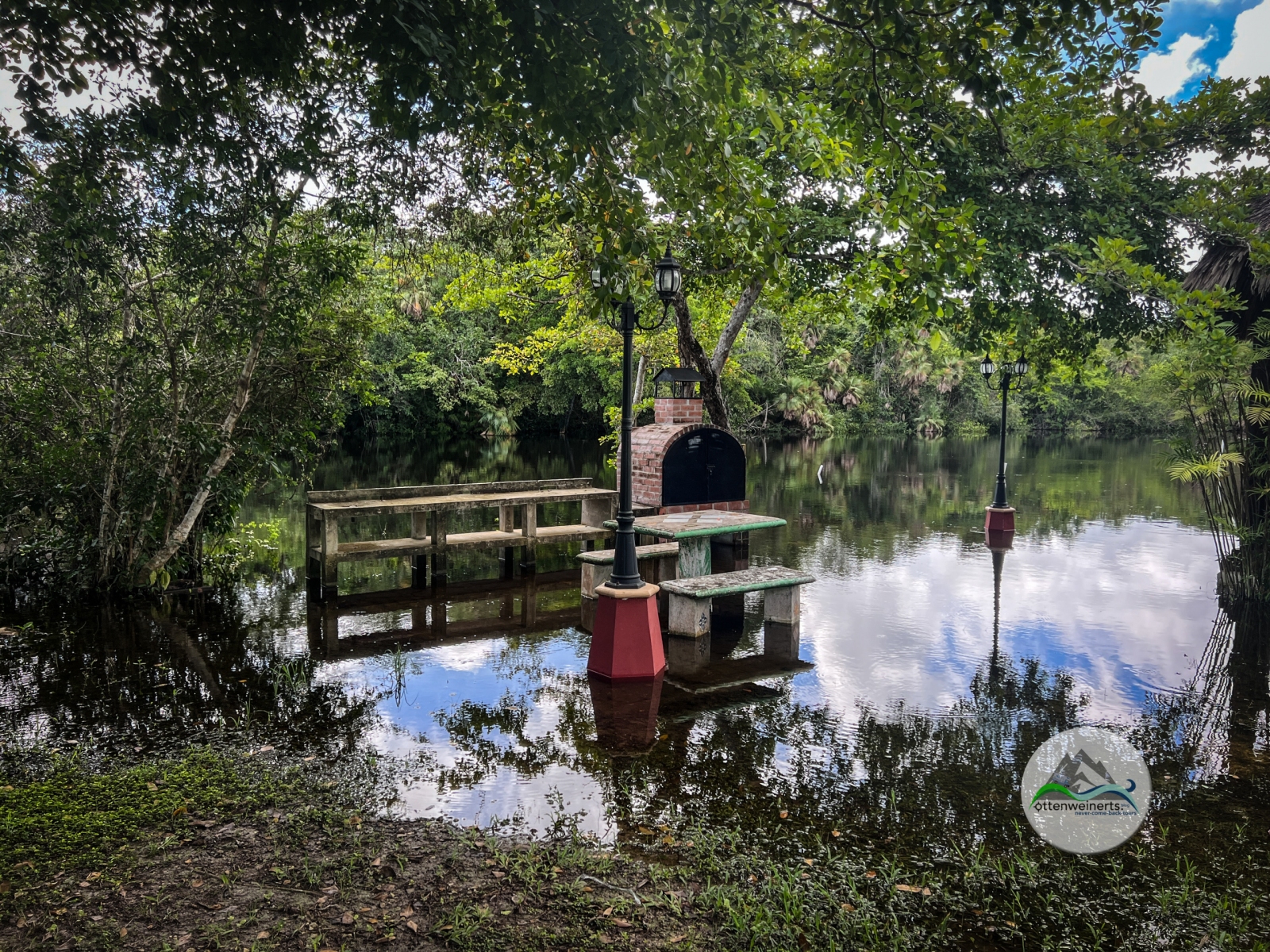
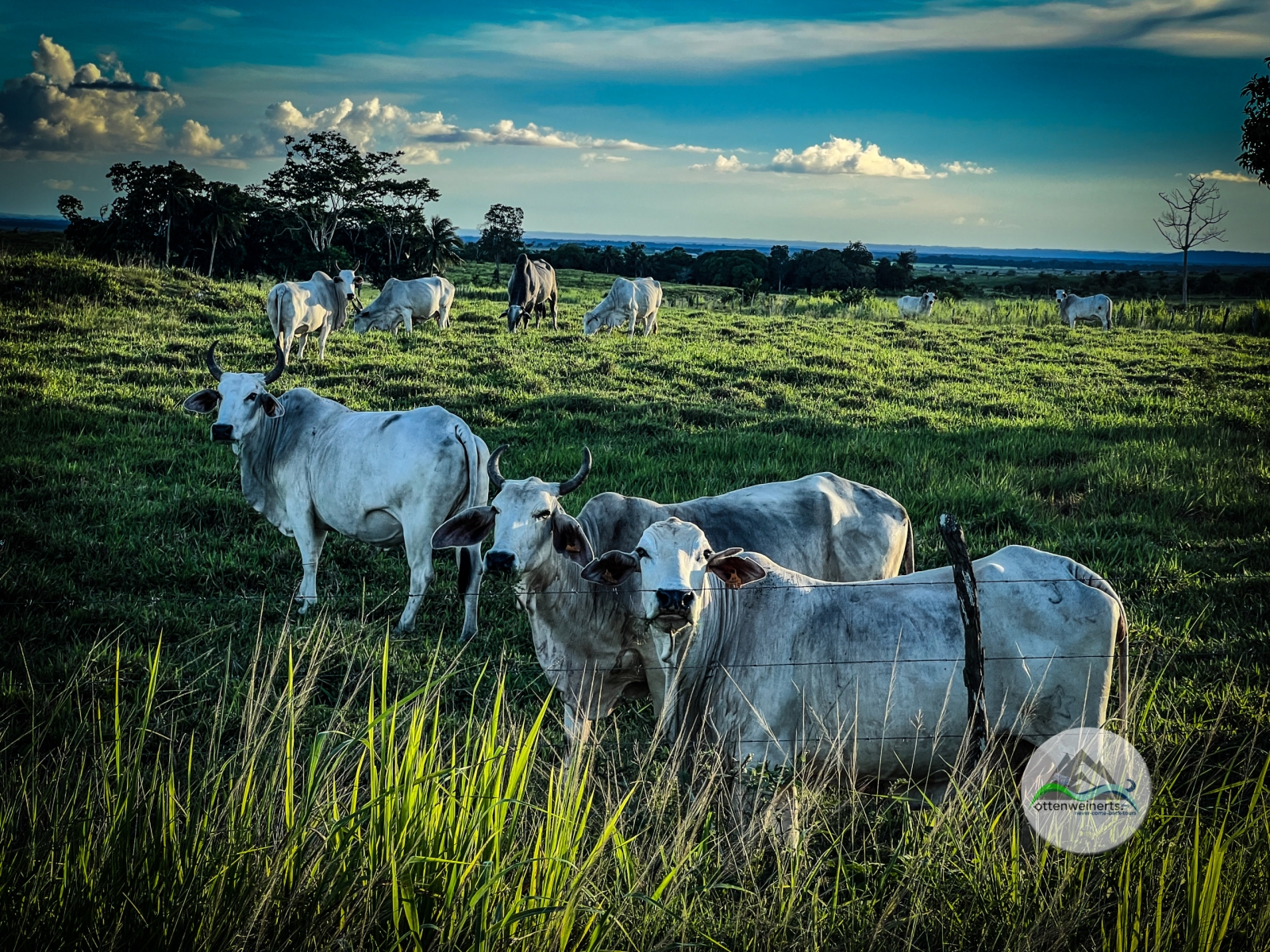
Und dann mussten wir die ganze Strecke natürlich wieder zurückrumpeln, vorbei an einem blonden, autostoppenden Herrn in Latzhose mit Strohut (wir haben ihn nicht verstanden, Englisch war das eher nicht, Spanisch definitiv nicht – könnte plaudietsch gewesen sein – ein Mennonite also), vorbei an Kühen unter Palmen (ein seltsamer Anblick für uns) und vorbei an drei blonden, blauäugigen kleinen Jungs in Latzhosen und Strohhüten, die neben Papas Traktor standen – eindeutig Mennoniten. Um 18:30 sind wir endlich wieder zurück in Orange Walk Town, es ist stockdunkel und wir steuern einfach ein Resort am New River an – für ein paar Belize-Dollar dürfen wir dort mit unserem Krassen Pferd über Nacht bleiben, Pool mit Massage-Wasserfall und WiFi inklusive. Und erstaunlicherweise ohne Moskitos, obwohl es gerade eine Überschwemmung gab.

Tag 134 – From Corozal to Orange Walk

After a quiet night we start again to the ruins of Cerro Maya, this time well equipped with long trousers, longs sleeves and mosquito-net hats – and that was a good idea because yesterday´s mosquitos invited all their friends and families to come and greet the Austrians. So we don´t stay long, although the masks at the temple, with the lagoon in the background, look great.

We continue south, the dirt road with lots of holes is as bad as the road yesterday, and we have  to take a ferry again – this time the tourist also gets to work the crank. In Little Belize we drive through farmland, crops to the horizon, and every now and then a horse-drawn buggy with a man in dungarees  and a straw hat or a woman in a long black dress and bonnet or also straw hat – we are in Mennonite country.

Finally, we reach Orange Walk Town, the district´s capital, with regular paved roads and also shops where we can buy a sim card – we have internet connection, navigating gets easier again and planning, too. That encourages us to drive to Lamanai, it´s only 31 miles, and the first 18 are paved. After the last 12 miles though we know why most of the tourists take a boat trip from Orange Walk Town to Lamanai and spare themselves the miserable dirt road. It took as an hour longer than Google Maps told us, we arrived a few minutes after 4 pm and had to beg at the ticket counter that they let us in. But we were the only visitors and had to share this great place only with the resident howler monkeys. The Mask Temple, the Jaguar Temple and the pelota court (the smallest of all known Maya places) were really impressive.

And then we had to shake, rattle and roll all the way back, passing a hitchhiking blonde gentleman in dungarees and a straw hat – we did not understand him, he probably was not talking English, definitely not Spanish, might have been Plautdietsch – a Mennonite; passing cattle grazing under palm trees (a strange view for Austrians); passing three little boys, blonde with blue eyes, in dungarees and straw hats, standing near papa´s tractor – definitely all Mennonite. At 6:30 pm we are finally back in Orange Walk Town, it is pitch black and we simply drive to a Resort on the New River – for a few Belize $ we may stay there overnight, pool with massage waterfall and WiFi included, but without mosquitoes, although they had flooding the last days.

Route 220829

220828 – Hasta luego, México – Hello, Belize! >

Sonntag/Sunday, August 28, 2022

Tag 133 – Hasta luego, México – Hello, Belize!

Fazit Mexico: 

Landschaft: unglaublich schön, sehr abwechslungsreich, von Wüste bis Dschungel, Süßwasserseen und Meer – alles dabei (und dabei haben wir die Pazifikküste noch nicht mal gesehen).

Menschen: offen, freundlich, höflich, sehr hilfsbereit, und interessiert bis neugierig (an unserem Krasses Pferd, natürlich). Alle Kontakte mit der Polizei, egal ob Policia Vial oder Municipal, bis hin zur Guardia Nacional, verliefen völlig unkompliziert, korrekt, und sehr freundlich, bis hin zu Umarmungen.

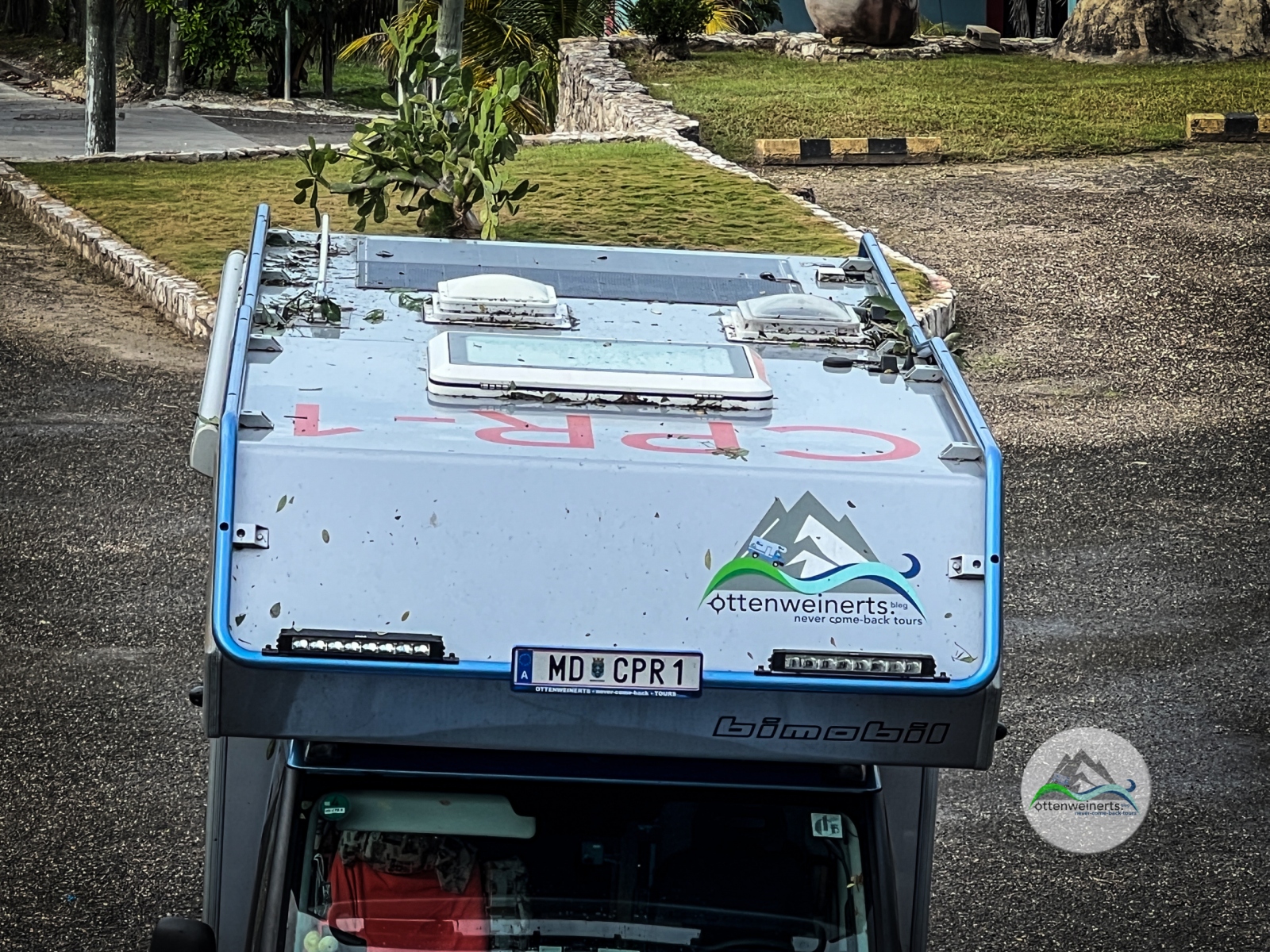
Straßen und Verkehr: naja. Die Maut-Autobahnen sind ok, auf allen anderen Straßen muss man jederzeit mit „Topes“ – Schwellen rechnen (hin und wieder angekündigt, oft aber auch nicht), und mit großen, bösen Löchern (die manchmal mit Autoreifen oder Ästen „abgesichert“ sind). Stopptafeln werden hier meist als Empfehlung interpretiert, aber der Verkehr fließt ziemlich ruhig, und gehupt wird kaum. Der Pannenstreifen ist zum Fahren da, damit auch bei doppelten Sperrlinien problemlos überholt werden kann. Dafür haben wir auch nach fast vier Wochen nicht verstanden, wer wann warum und auf welche Seite blinken sollte; der Gebrauch der Warnblinkanlage dagegen ist hier ganz normal – für langsame Fahrzeuge, vor Topes, oder sonstigen Hindernissen. Wo LKWs durchfahren, geht es sich auch für uns meist mit der Höhe aus, und die Bäume am Straßenrand sind entsprechend ausgeschnitten. Koloniale Innenstädte sind verkehrstechnisch schon für den Normalverkehr eine Herausforderung, für uns nicht zu bewältigen, wegen Straßenbreite und vor allem wegen tief hängender Kabel und Leitungen.
Essen: soooo gut, vor allem das frische Obst und Gemüse. Und die Verpflegung ist wirklich einfach – es gibt eigentlich überall Straßenstände mit Tacos, Tortas, Tamales, Empanadas, Sopes, …..

Sicherheit und Übernachtung: wir hatten keinerlei Probleme, nicht zu Fuß tagsüber in den Städten, nicht mit dem Auto unterwegs auf einsameren Nebenstraßen und auch nicht in der Nacht auf unseren Stellplätzen. Niemand hat uns je von einem Nachtplatz vertrieben, bei den Pemex-Tankstellen und einzelnen Bodega Aurrera-Supermärkten haben wir immer gefragt, bei den Truck-Stopps und Walmart / Chedraui / Soriana-Parkplätzen haben wir uns dann einfach irgendwo am Rand unauffällig hingestellt.

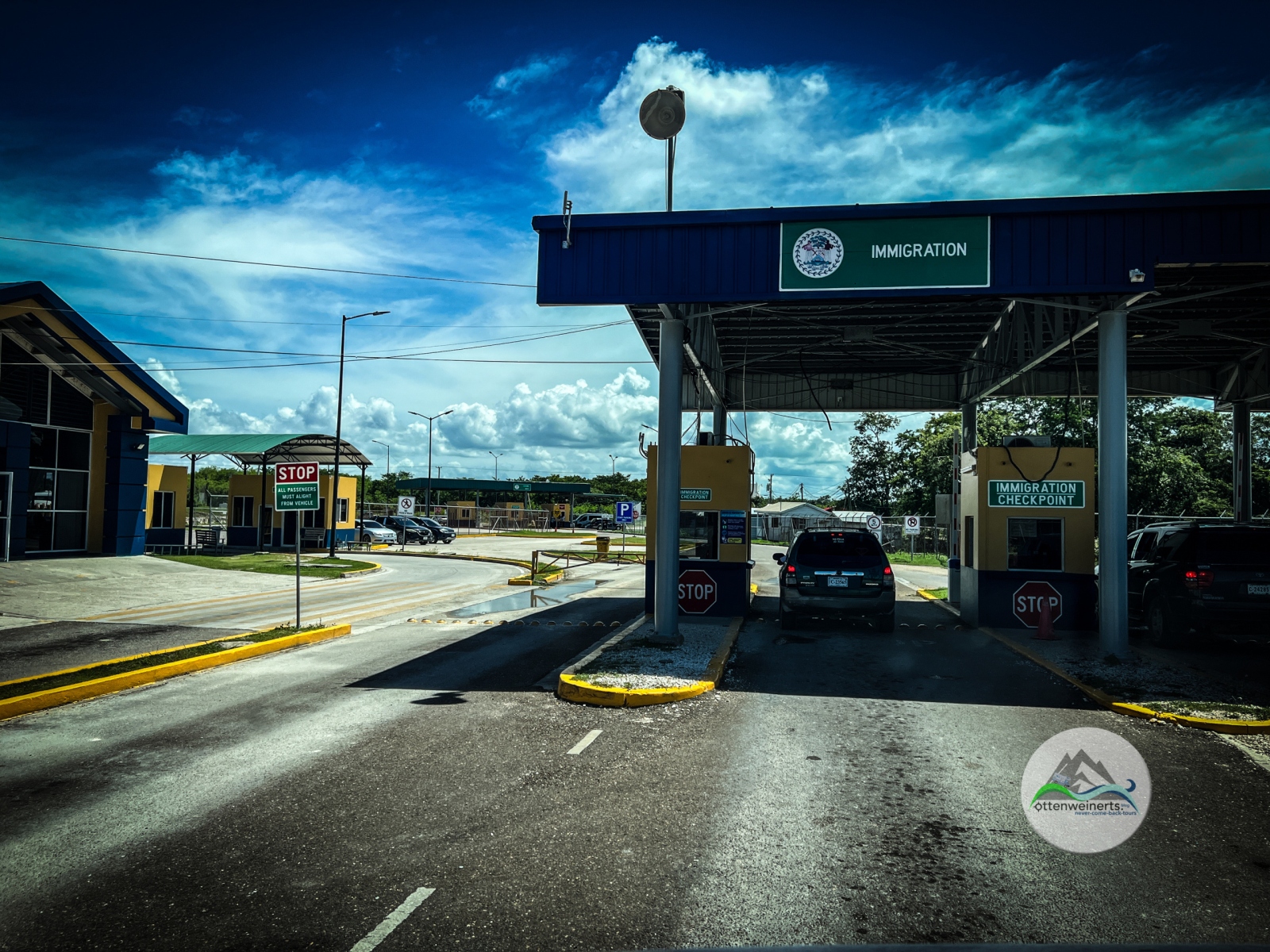
Belize: der Grenzübertritt war völlig problemlos, Ausreisestempel für uns und unser Auto bei der mexikanischen Behörde abholen, Rücküberweisung des Deposits beantragen, weiter Richtung Belize und mit dem Auto durch eine Desinfektionsmittel-Sprühanlage, dann bei der Grenzkontrolle Belize je ein Formular für uns und für unser Krasses Pferd ausfüllen, die Autoimportgebühr 30 Belize-Dollar zahlen, weiter zum Versicherungsmakler und Autoversicherung für 14 Tage abschließen (kostet 58 BZ$) und das war´s. Impfnachweise hat niemand verlangt, Tests auch nicht. Dann ging es nach Corozal, zuerst zur Maya-Ruine Santa Rita, und anschließend zum Kaffee, und dann gab es eine Überraschung nach der anderen:

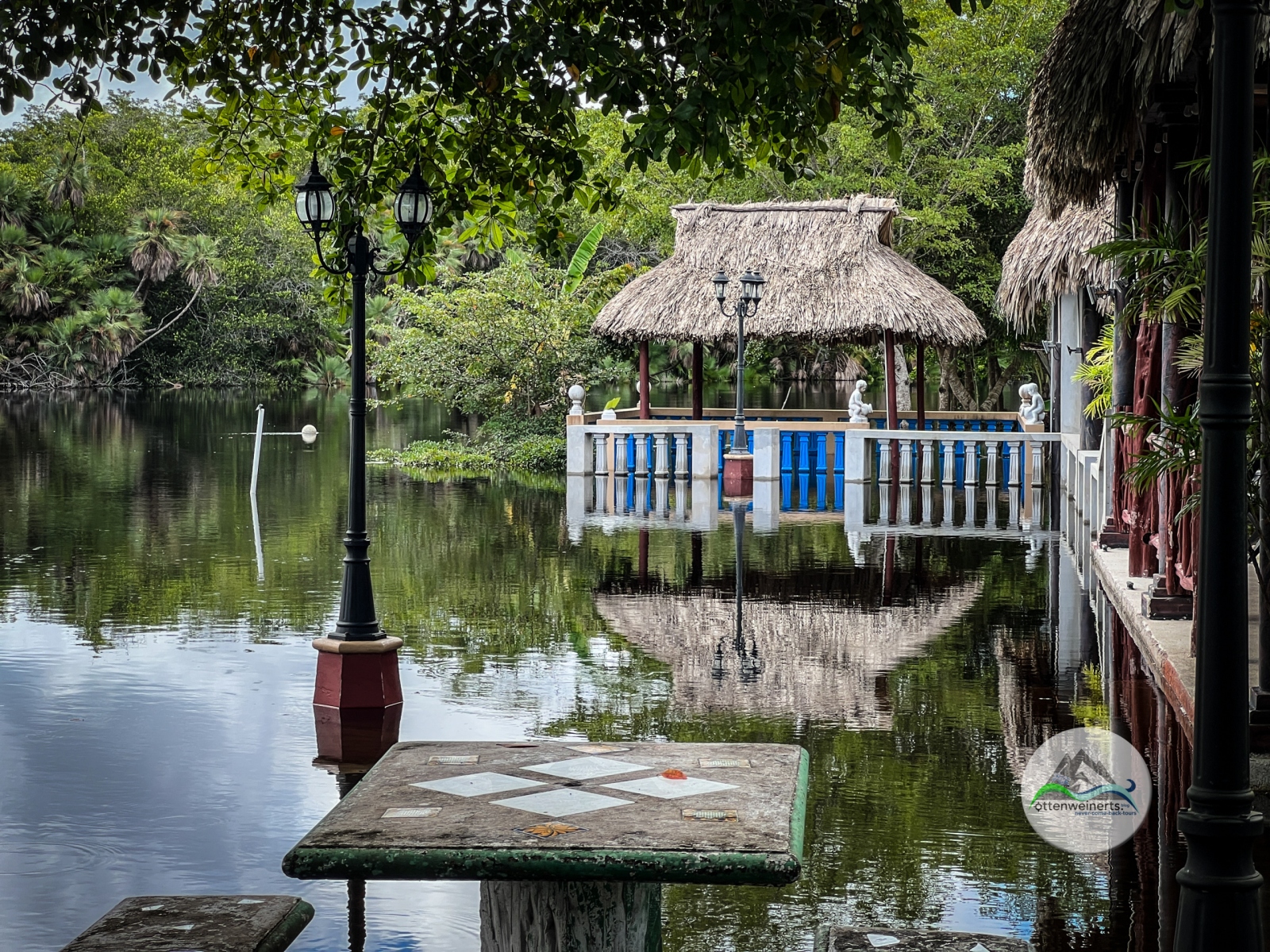
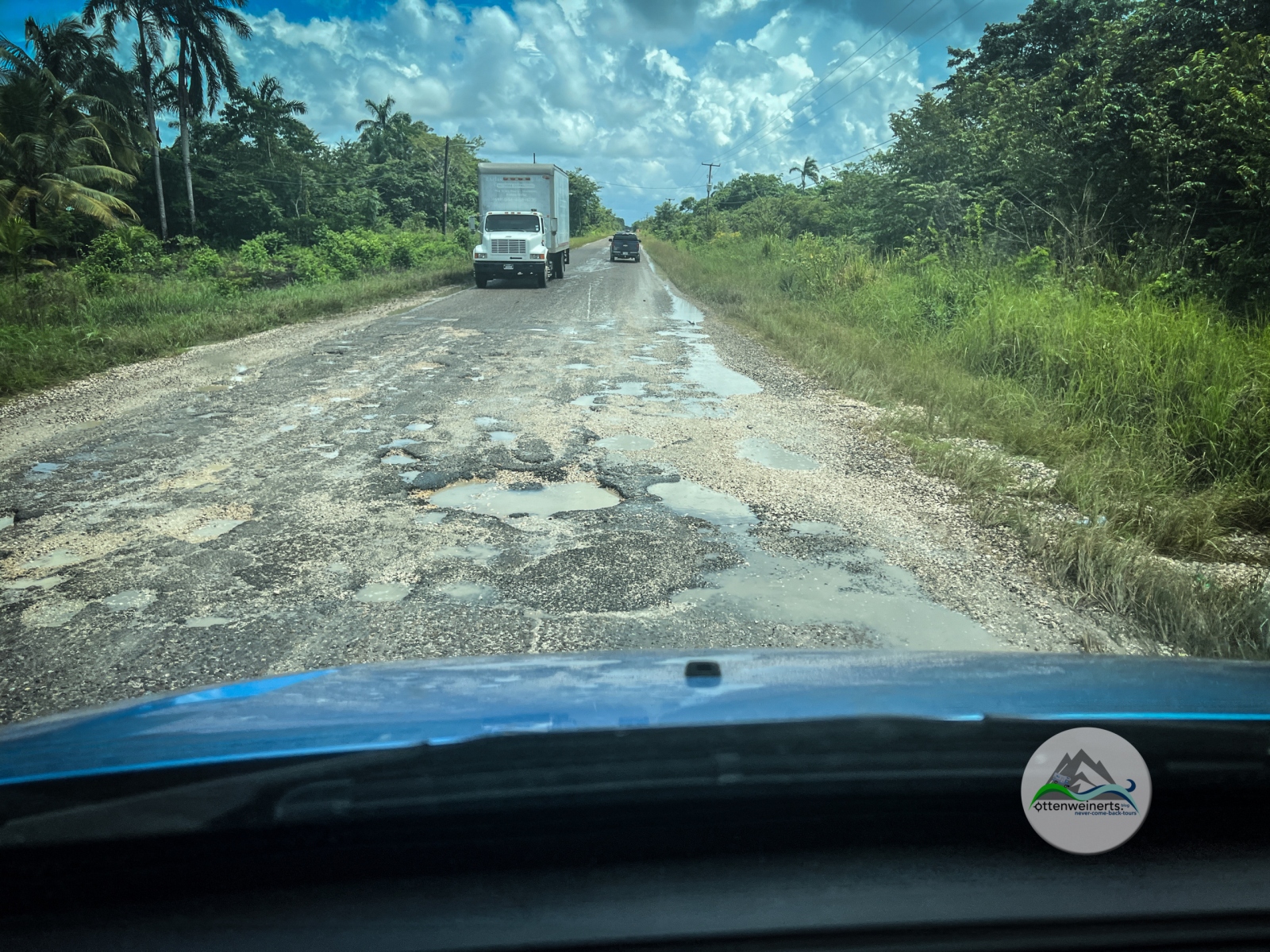
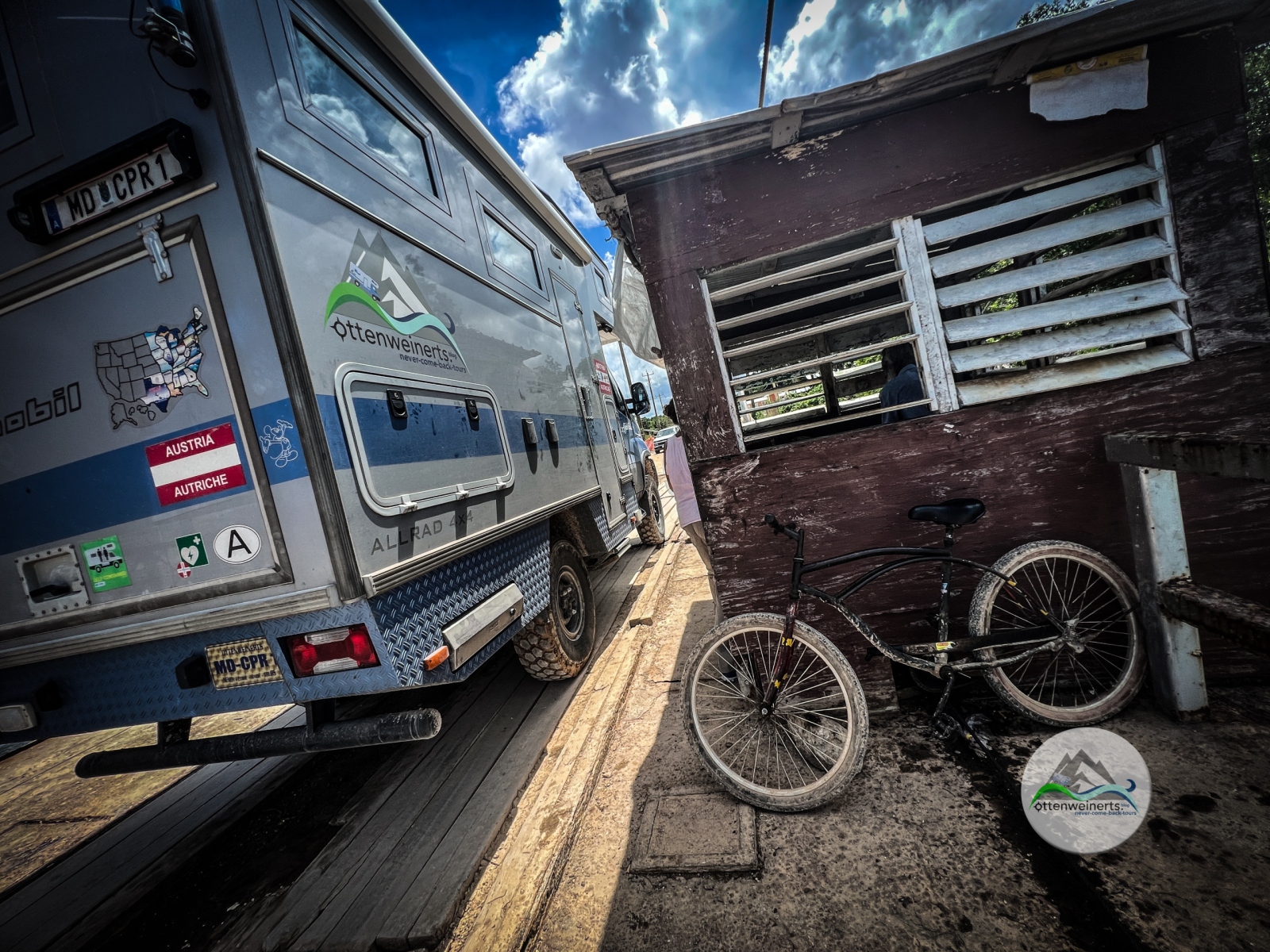
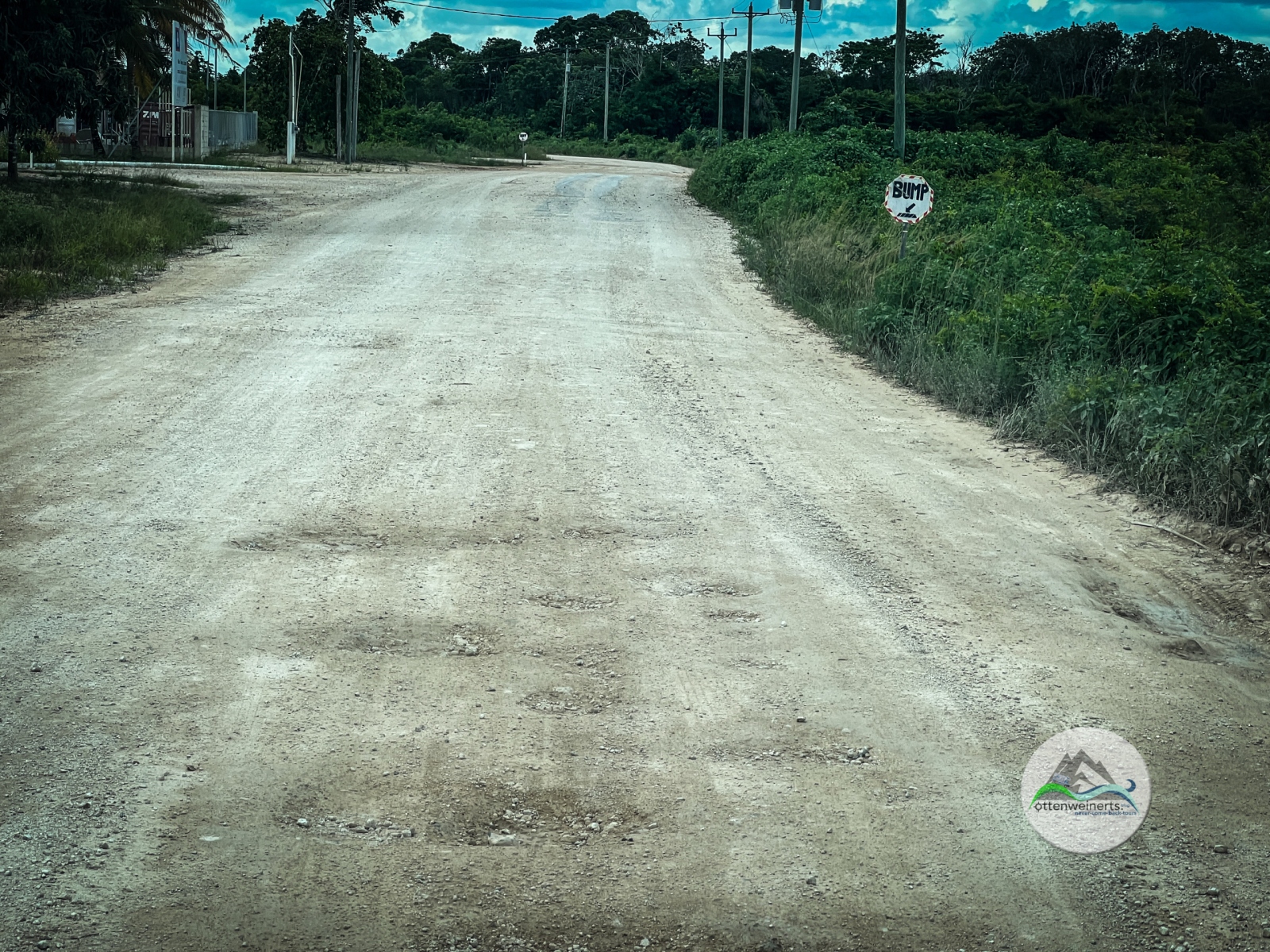
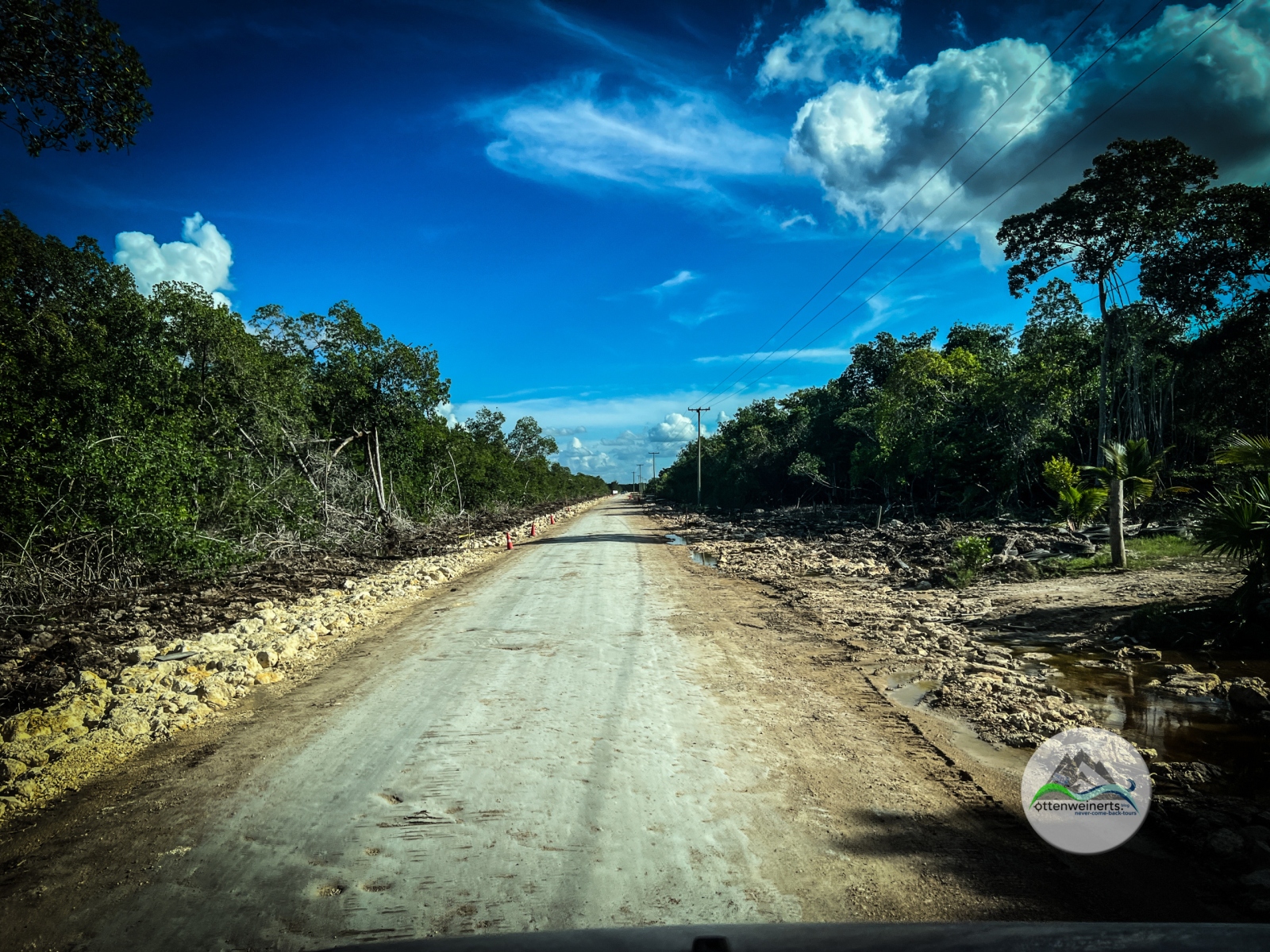
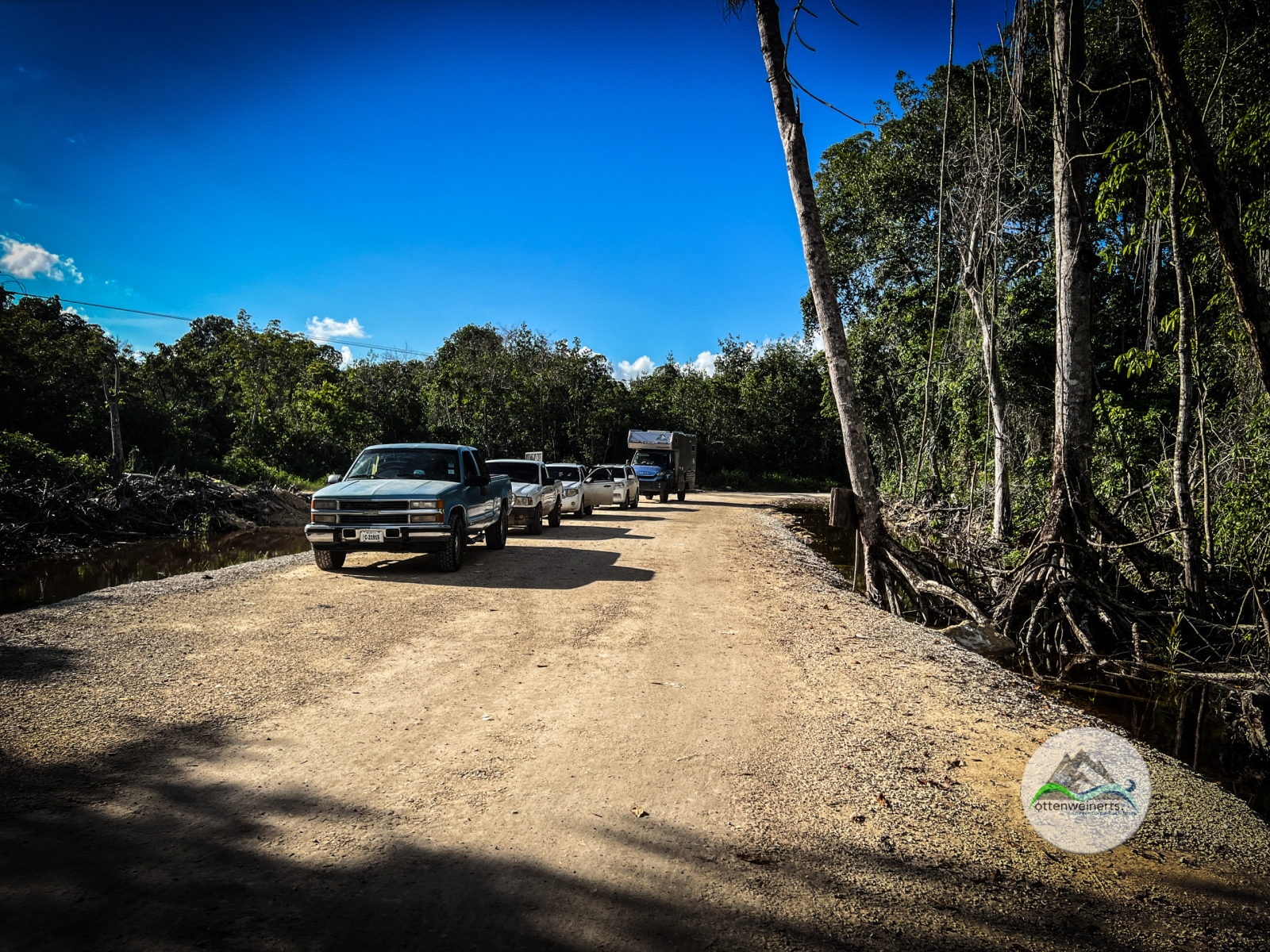
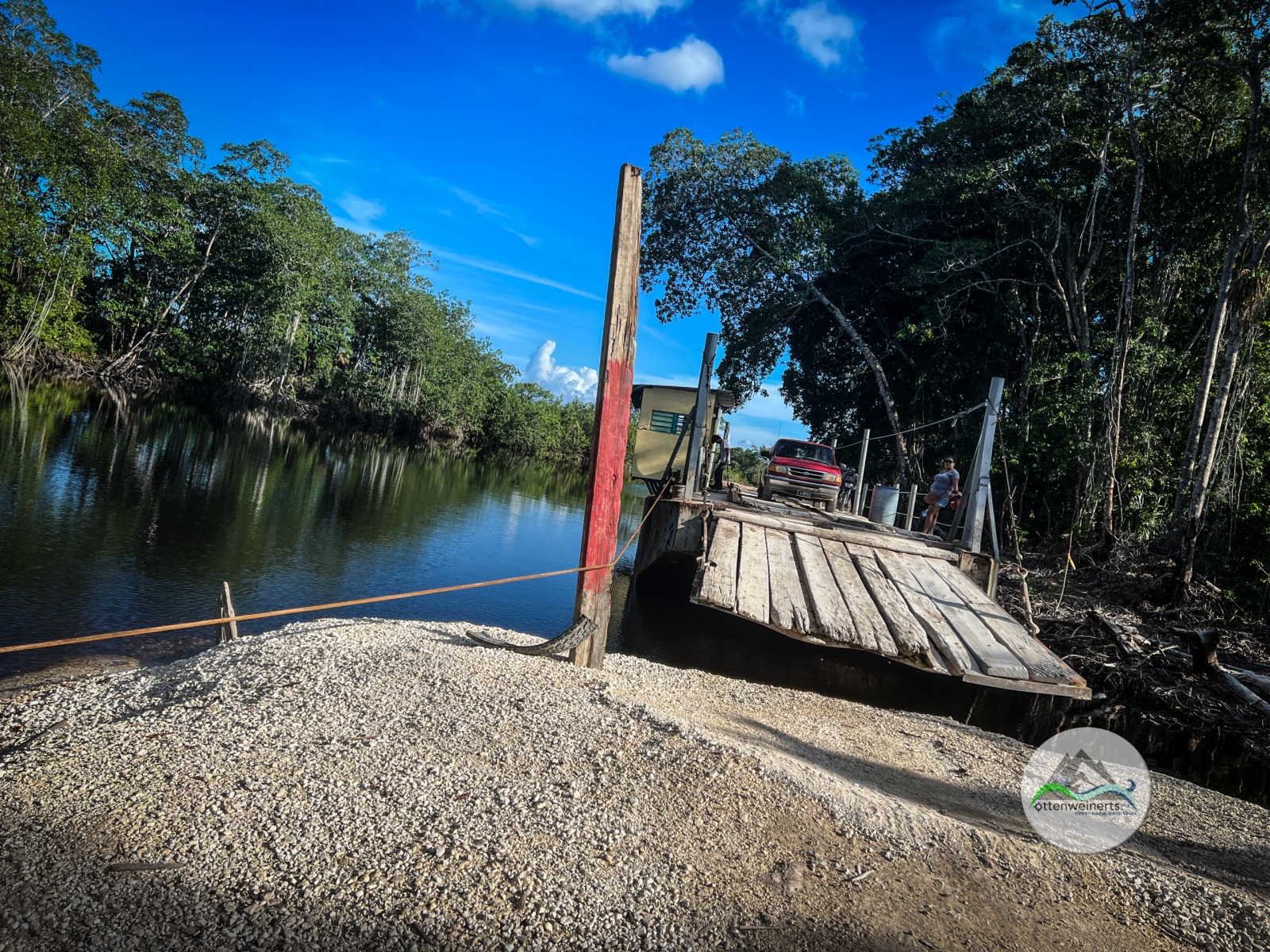
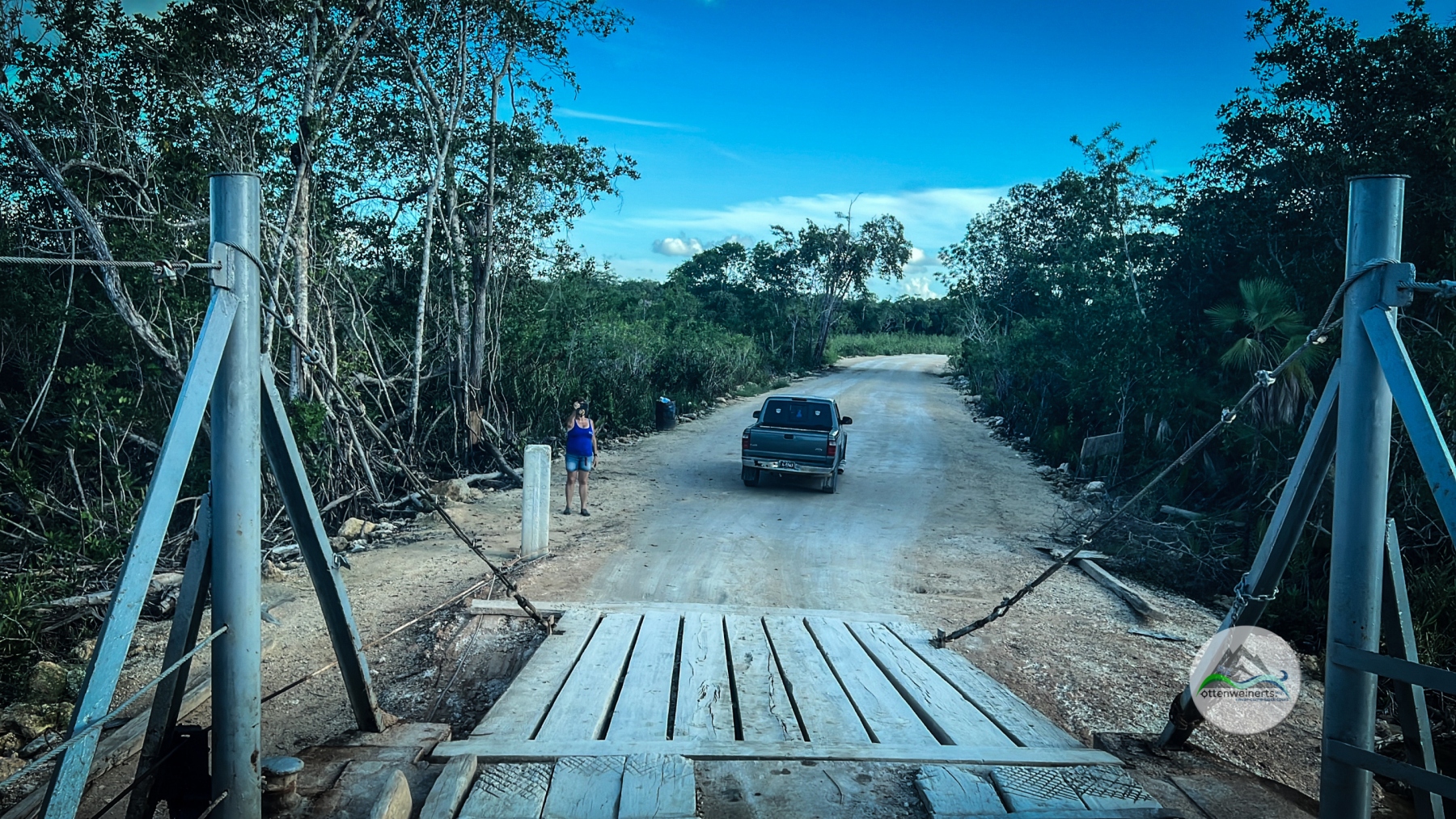
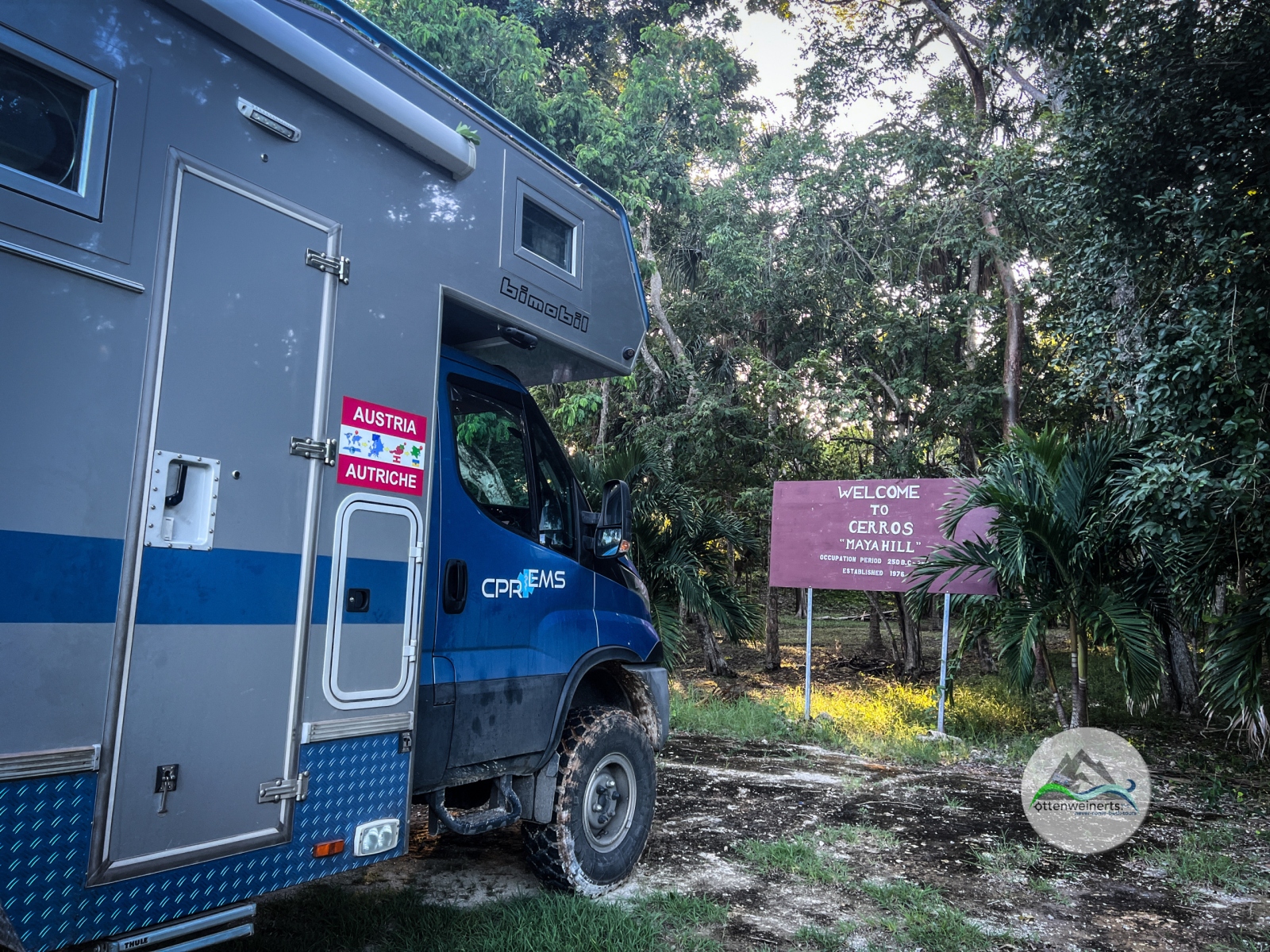
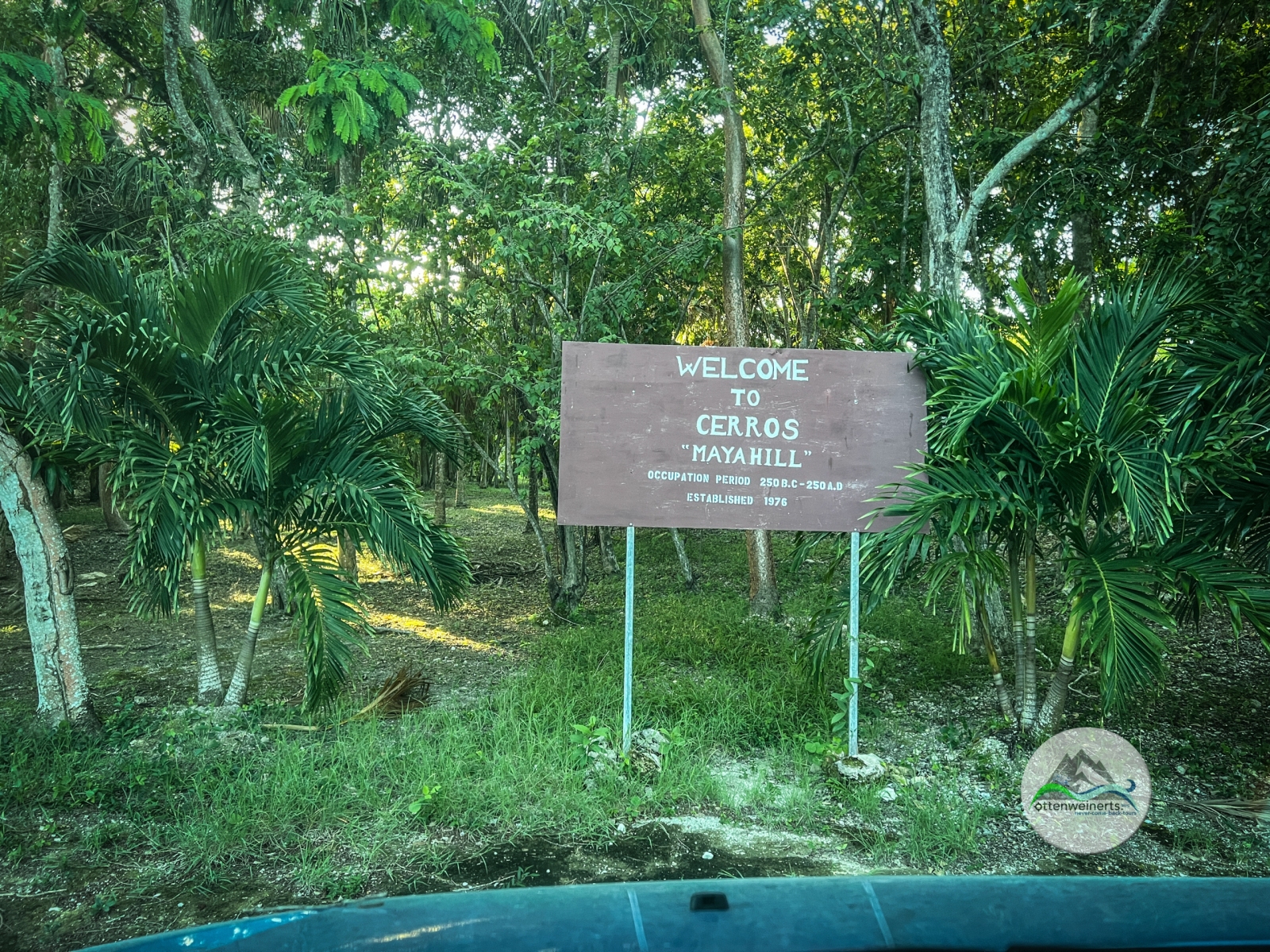
Unser Internet funktioniert hier nicht – Belize ist eines der wenigen Länder, wo Skyroam nicht geht. Die „paar Kilometer“ und knapp 30 Minuten, die Google Maps (als es noch funktionierte) für die Strecke von Corozal nach Cerro Maya veranschlagt hat, entpuppten sich als schlimme Schlagloch- und Baustellenstrecke in zwei Teilen – mit einer hölzernen, handbetriebenen Fähre dazwischen. (Wie wir die Fähre gesehen haben, wollten wir eigentlich am liebsten umdrehen). Und die archäologische Zone Cerro Maya ist wirklich immer offen (konnten wir in Corozal nicht glauben, als uns die Einheimischen das gesagt haben) – die Wächter wohnen hier, und wenn Besucher kommen, werden Tickets verkauft, egal um welche Uhrzeit. Schlussendlich durften wir sogar hier übernachten, da wir nicht im Dunklen zurückfahren wollten, mega-kitschiger Sonnenuntergang inbegriffen; unglaublich viele Moskitos leider auch, deswegen haben wir nach einem kurzen Rundgang die Erkundung des restlichen Gebietes auf morgen früh verschoben.

Day 133 – Hasta luego, México – Hello, Belize!

Our impressions from Mexico:

Landscape: incredibly beautiful and varied, from dessert to jungle, fresh water lakes to the sea (and we haven´t even seen the Pacific coast yet)

People: friendly, polite, helpful, interested, and curious about our camper, of course. All our contacts with the police – including highway and local police and also the national guard – were uncomplicated, correct and very friendly, once we were even hugged good-bye.

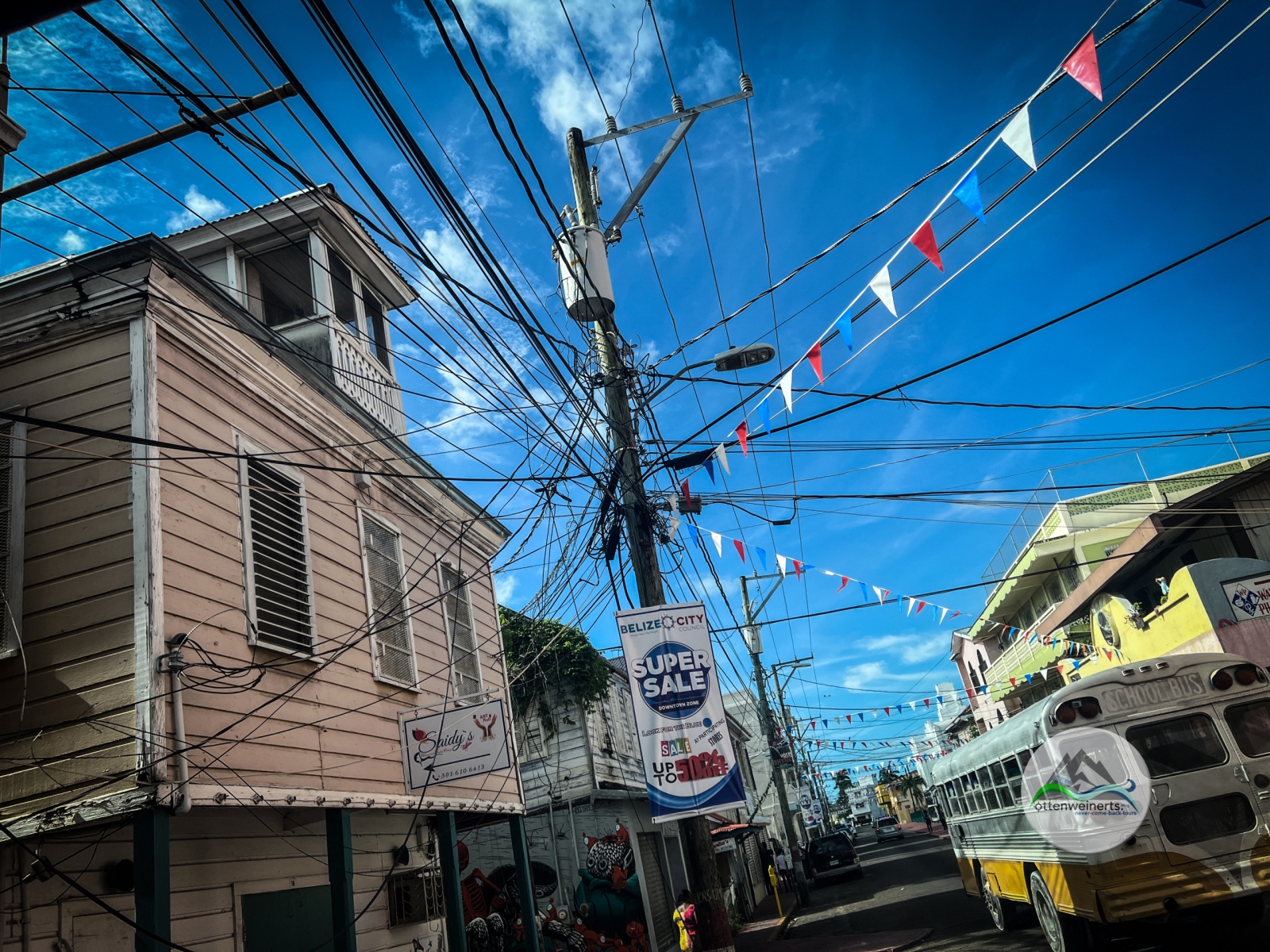
Roads and Traffic: well … the “cuota”-highways (toll highways) are ok, on all other roads there can be “topes” – speed bumps – anytime, sometimes announced by a sign, more often not, and big, bad holes in the road (sometimes secured by old tires or branches from trees). Stop signs are seen as recommendations, but traffic usually flows constantly, with very little honking. The emergency lane is used as a regular driving lane so that passing is possible even when there are double yellow lines in the middle. On the other hand, after almost four weeks in Mexico, we still have no idea, who should use the indicators when, why and on which side; but using the hazard lights is normal – for slow vehicles, or for braking because of topes or other road blocks. Streets used by trucks are usually ok for our high vehicle, most of the trees on the side are trimmed accordingly. The centers of the old colonial towns are a challenge even for regular sized cars, impossible to drive for us because they are very narrow and the phone lines and other cables are hanging low.

Food: sooo good – most of all fresh fruit and vegetables. And getting something to eat is really easy –  there are street vendors everywhere, selling tacos, tortas, tamales, empanadas, sopes, …

Security and parking overnight: we never encountered any problems, neither walking through the towns, nor driving on back country roads nor during the nights at our parking spots. No one ever made us leave or turned us away; we usually asked if we could stay when we pulled in at Pemex gas stations or Bodega Aurrera supermarkets; at truck stops or supermarkets like Walmart, Chedraui and Soriana we just parked out of the way.

Belize: Crossing the border was easy: getting the exit stamps from the Mexican side for us and our car into the passports, ask for the refund of the deposit for the car, then continue towards Belize, driving the car through a disinfect car wash, filling in a form each for us and our car at Belize immigration, paying the 30 BZ$ for the car import and getting car insurance for 2 weeks (58 BZ$) – and that´s that. No one wanted to see our vaccination certificates, no one asked for COVID tests. So we drove to Corozal, paid a short visit to the Maya ruins of Santa Rita, got coffee and continued on – only to stumble from one surprise to the next:

Our internet doesn´t work here – Belize is one of the very few countries, where Skyroam has no contract. The route from Corozal to Cerro Maya, a “few miles” and 30 minutes according to Google maps (while it was still functioning) turned out to be a very bad dirt road with big holes and construction sites in 2 parts – with a wooden, hand cranked ferry in between! (seeing this we were on the point of turning around and driving back). And the archeological zone on Cerro Maya is really always open (we couldn´t believe it when the locals told us that in Corozal). The guards live here, and when visitors come, they sell the tickets, no matter what time of day. Finally, we decided to stay here, we didn´t want to drive the bad roads back in the dark. We got a real kitschy sunset, and an overwhelming welcome – by myriads of mosquitos – so, after a short look around, we postponed the exploration of the archeological site till tomorrow.

Route 220828