Archiv der Kategorie: Arctic

240713 – Zeitreise / Time travel >

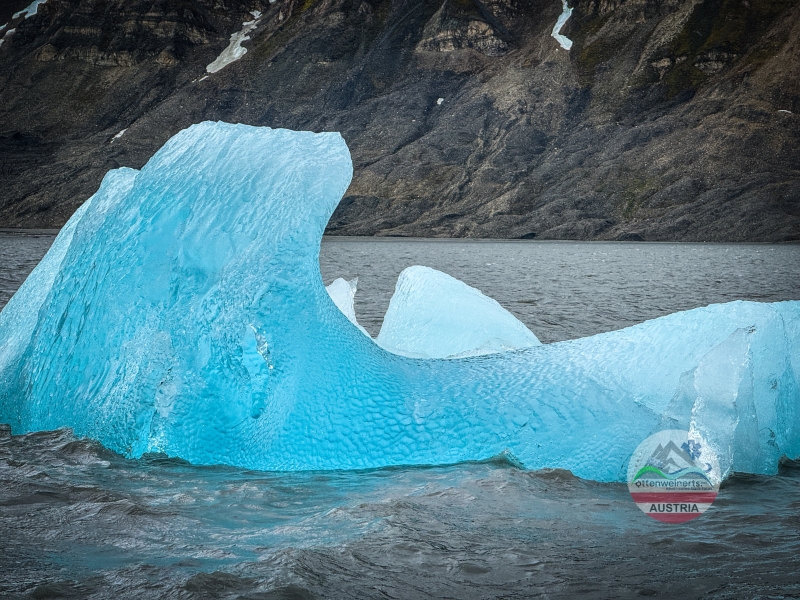
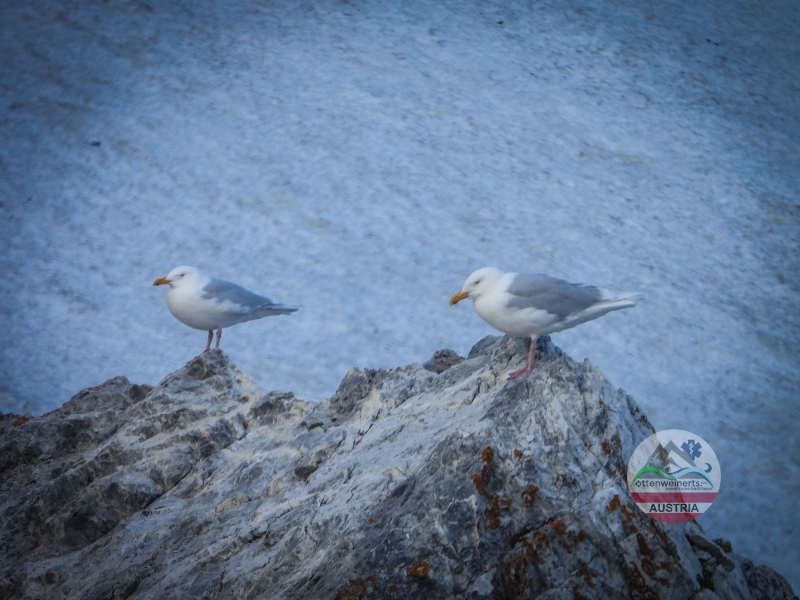
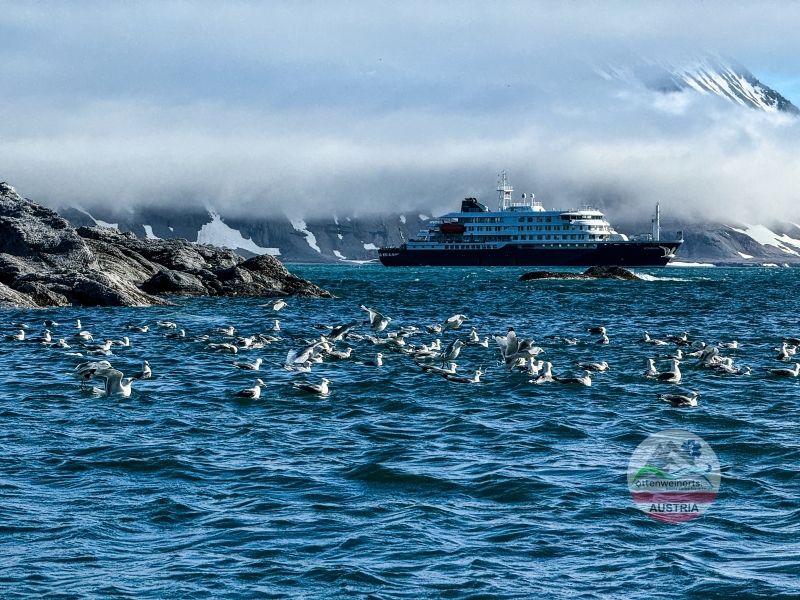
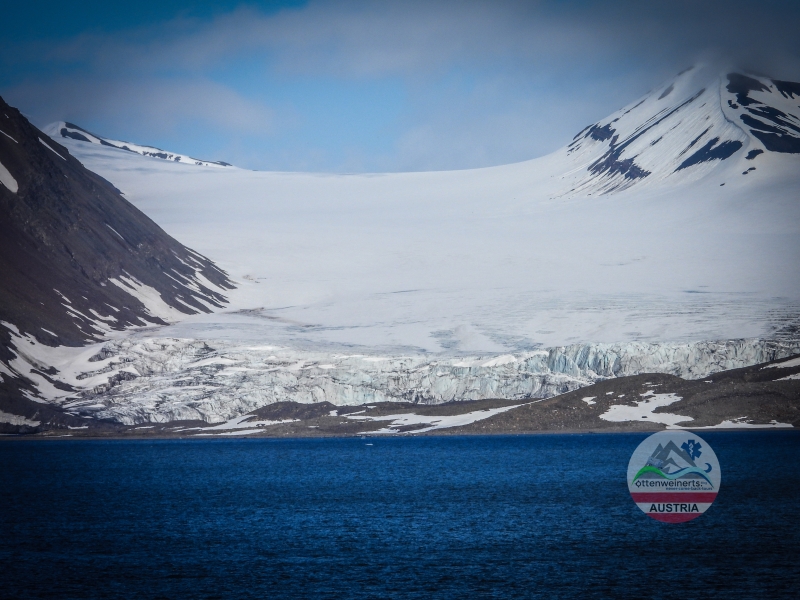
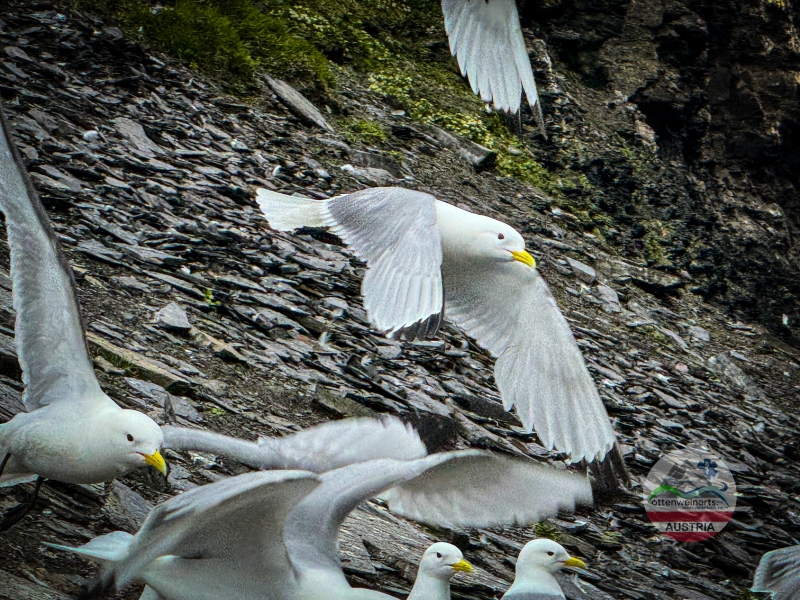
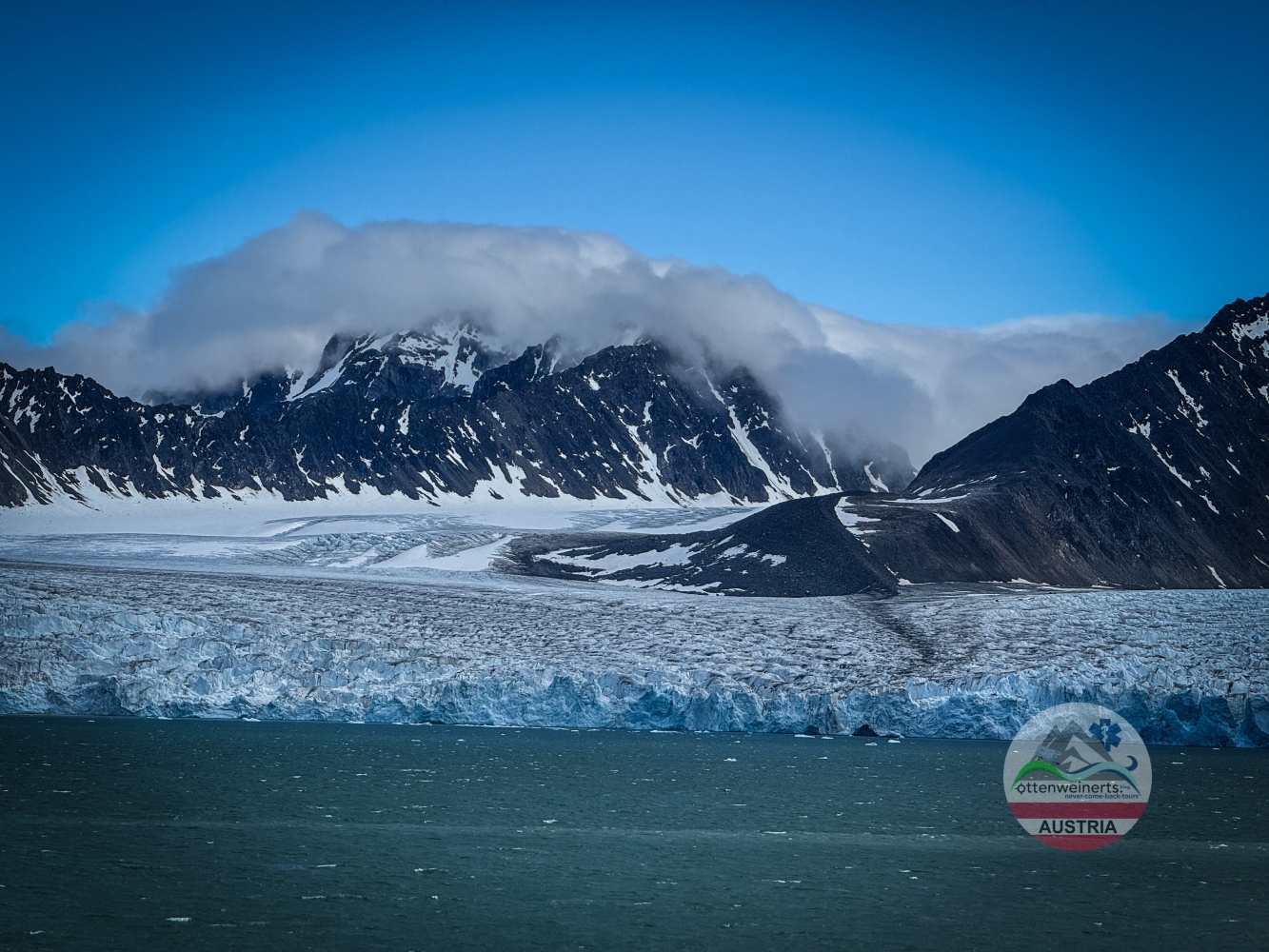
In der Früh sammelt der Bus die Touristen aus den verschiedenen Hotels in Longyearbyen ein und bringt uns in den Hafen, zu unserem Schiff, der Billefjord. Wir fahren in den Isfjord hinaus, wenden uns nach rechts in den Sassenfjorden, recht nah an den Steilklippen, wo Vogelkolonien brüten. Eissturmvögel, Dreizehenmöwen und Papageitaucher begleiten uns. Unser Mittagessen kommt frisch vom Grill, dazu gibt’s das grandiose Panorama des gewaltigen Nordenskjöldgletschers.

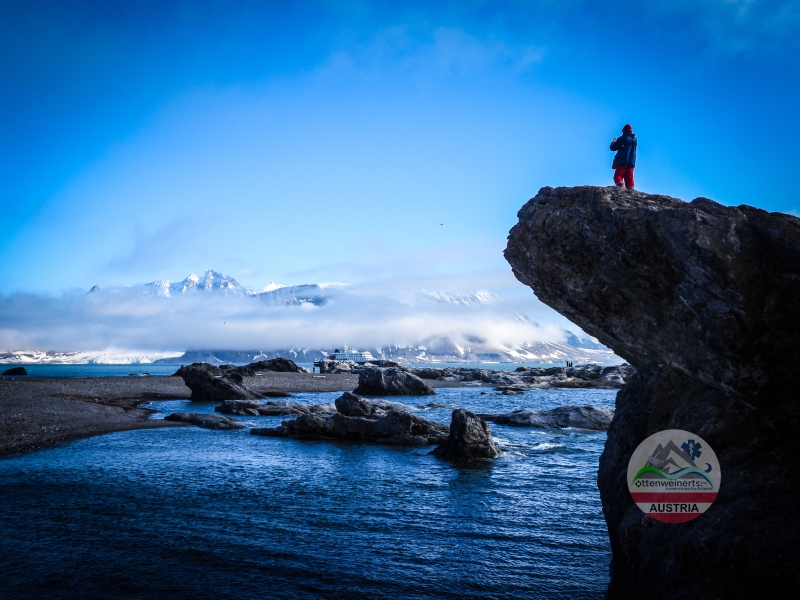
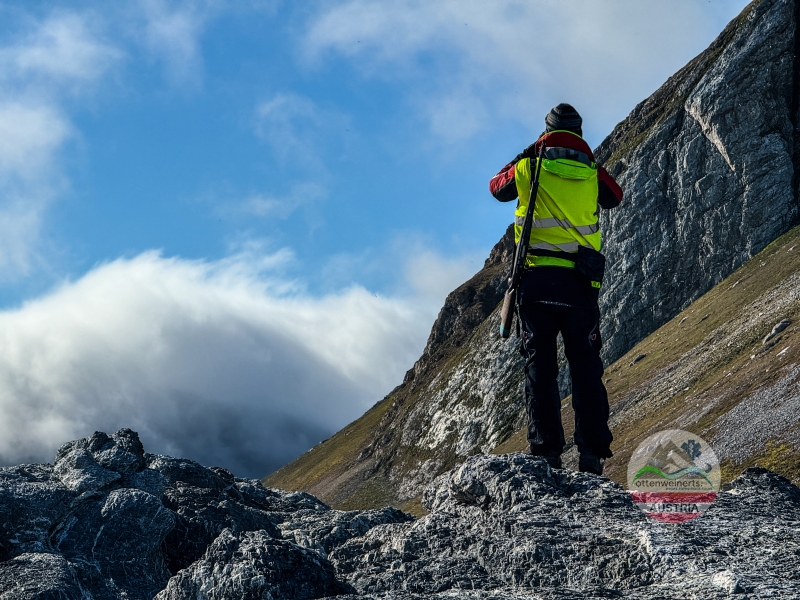
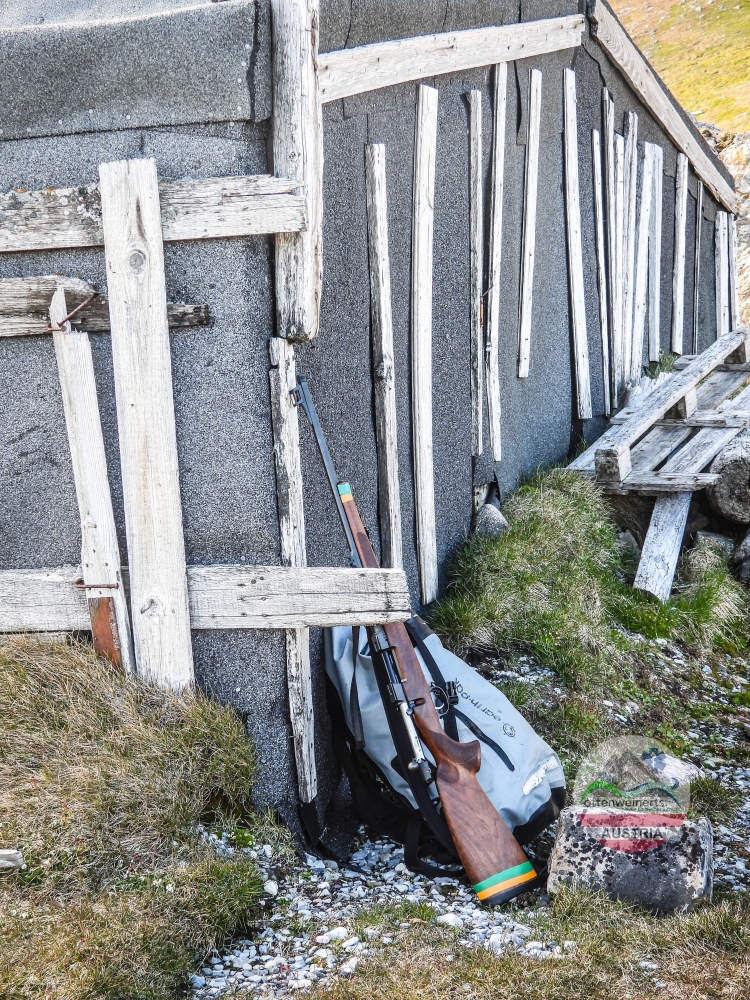
Auf der Nordseite des Fjords kommen dann schon die ersten Industrieruinen in Sicht – stillgelegte Förderbänder und Kohlerutschen, verlassene Gebäude mit kaputten Fenstern. Am leise vor sich hinrostenden Kran im Hafen flattern sowohl die alte sowjetische als auch die aktuelle russische Fahne, und unsere lokale Reiseführerin Olga trägt ein Gewehr. Wegen eventueller Eisbären natürlich. Wir sind in Pyramiden angekommen, in der Vergangenheit. 1920 gegründet, Ende der 1920er von der russischen Bergbaugesellschaft Arktikugol übernommen, wurde hier bis 1998 Kohle abgebaut, dann wurde der Ort aufgegeben. Die letzte geförderte Tonne Kohle ruht in einem Wagon vor der roten Stahlpyramide, dem Symbol des Ortes.

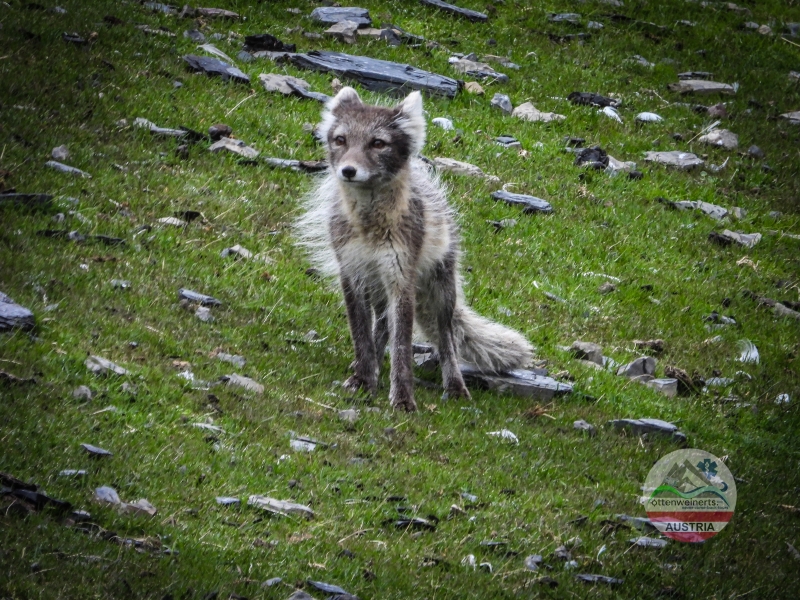
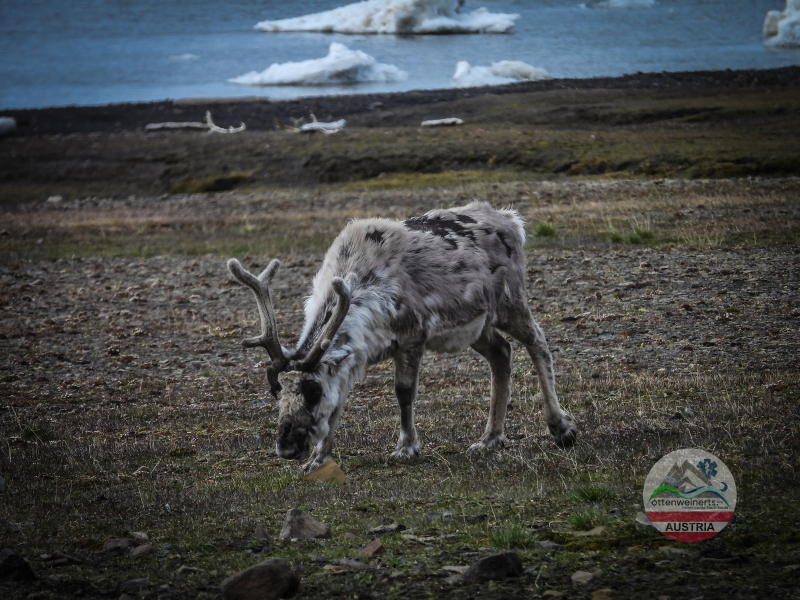
Neben dem verlassenen Heliport grast friedlich ein Rentier, und vor einem heute noch – allerdings nur von Scharen von Möwen – bewohnten Gebäude gibt ein Polarfuchs eine Extravorstellung. Wir bekommen etliche Gebäude von innen zu sehen – so etwa ein Veranstaltungsgebäude mit einem großartigen Mosaik im ersten Stock, den Swimming Pool, die Kulturhalle mit Theater und Kinosaal, Sporthalle, Ballettsaal und Musikzimmer. Die Lenin-Büste vor der Kulturhalle blickt die Straße des „60. Jahrestag des großen Oktobers“ hinunter und auf den Nordenskjöldgletscher im Hintergrund. Im Souvenirshop gibt es Borscht, 40%igen Vodka und Eisbär-Matrioschkapuppen zu kaufen. Etwa dreißig Einwohner hat Pyramiden heute, zumindest im Sommer, und das hauptsächlich wegen der Touristen; im Winter ist es eine echte Geisterstadt.

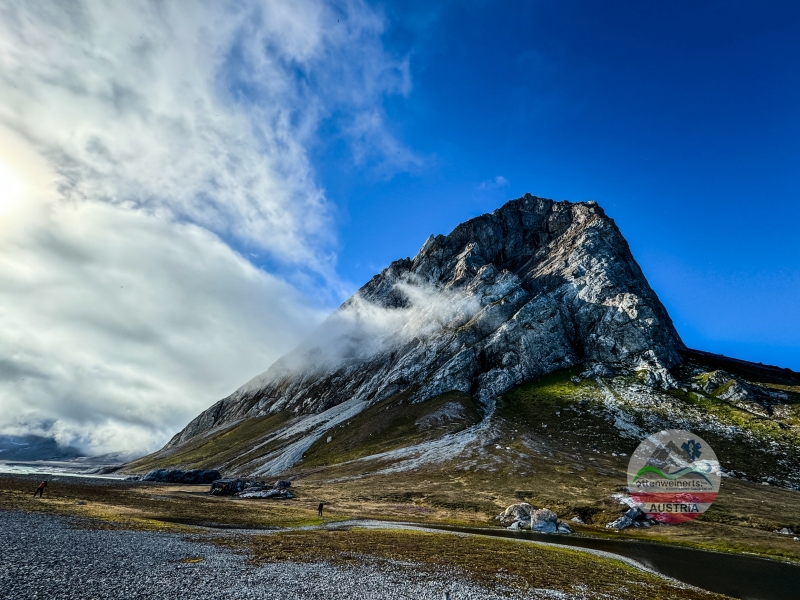
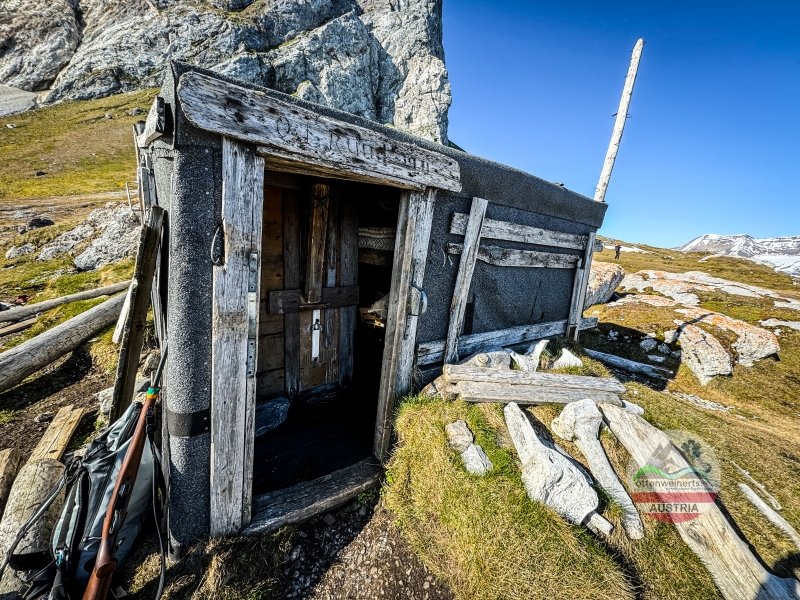
Nach dieser Zeitreise fahren wir weiter bis in die Skansbukta mit ihren mächtigen, festungsähnlichen Felsformationen, an deren Fuß ebenfalls noch Zeugen aus der Bergbauvergangenheit zu sehen sind, hier der Eingang zu einer Gipsmine und ein paar Schienenreste. Ein Stück weiter nach Westen kommen wir dann am „schwedischen Haus“ vorbei, einem Schauplatz dramatischer Ereignisse. 17 Männer, Besatzungsmitglieder zweier im Eis eingeschlossenen Walfängerschiffe, retten sich im Winter 1872 hierher. Das Haus war komplett ausgestattet, mit genügend Feuerholz und Vorräten, vor allem Lebensmitteln in Dosen, um hier überwintern zu können. Dennoch starben alle 17 Männer, kurz hintereinander, aus lange ungeklärter Ursache. Erst 2008 ergab die Obduktion einiger der im Permafrost gut erhaltenen Leichen, dass die Männer alle an einer Bleivergiftung gestorben waren, weil sie das Essen in den mit Blei hergestellten Dosen erhitzten.

Gegen Abend sind wir zurück in Longyearbyen. Wir sichten die vielen, vielen Fotos von heute, und dann packen wir unsere Koffer – morgen geht es zurück nach Oslo.

Saturday, July 13th – Time travel

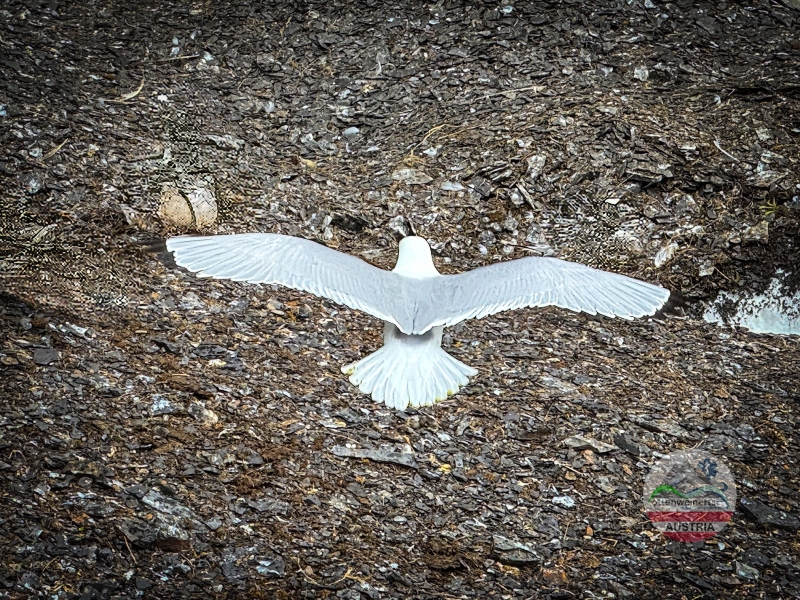
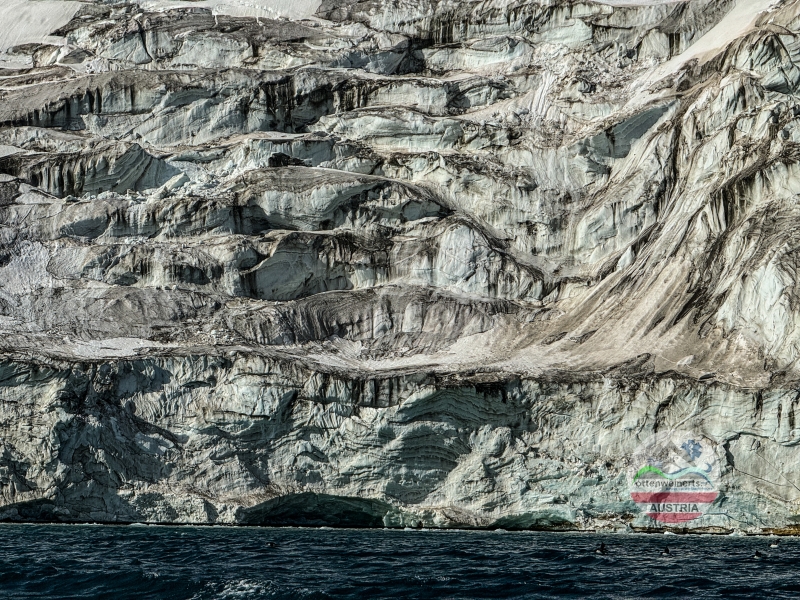
In the morning, the shuttle bus collects the tourists from various hotels in Longyearbyen, bringing them to the “Billefjord”, our ship for today´s adventure. We move out into the Isfjord and turn right into the Sassenfjorden, close to the steep cliffs where large colonies of seabirds are nesting. Arctic fulmars, kittiwakes and puffins are accompanying us. For lunch, the chef is preparing a barbecue right in front of the magnificent panorama of the powerful Nordenskjöld glacier.

On the northern shore of the fjord, we see the remains of some industrial buildings – shut down conveyor belts and coal chutes, abandoned buildings with broken windows. In the harbor, the old loading crane with both the old Sovjet Union as the actual Russian flag on top is silently rusting into oblivion; and Olga, our guide, is carrying a rifle – you never know if there is a polar bear behind the corner. We have arrived in Pyramiden, and in the past. The coal mining town was founded in 1920 by a Swedish company, taken over by the Russian mining company Arktikugol in the late 1920s, operating till 1998, then it was given up and everybody left. The last ton of coal ever mined here sits in a wagon at the foot of the red steel pyramid, the symbol of the town.

Next to the empty heliport, a reindeer is grazing, and in front of one of the derelict but still inhabited buildings (hundreds of kittiwakes live and breed here) an arctic fox is giving an extra performance for the delighted tourists. We visit several buildings like an event building with a fantastic mosaic on the second floor, the swimming pool, the cultural events hall with theater and cinema, ball court, ballet room and music room. In front of the cultural hall, a Lenin bust is looking down the Street of the „60th anniversary of the glorious October“, with the Nordenskjöldbreen in the background. The souvenir shop offers borscht, vodka (40% alcohol …) and russian polar bear stacking dolls. During the summer, there are about 30 people living here, mainly because of tourism; during the winter, Pyramiden is a real ghost town.

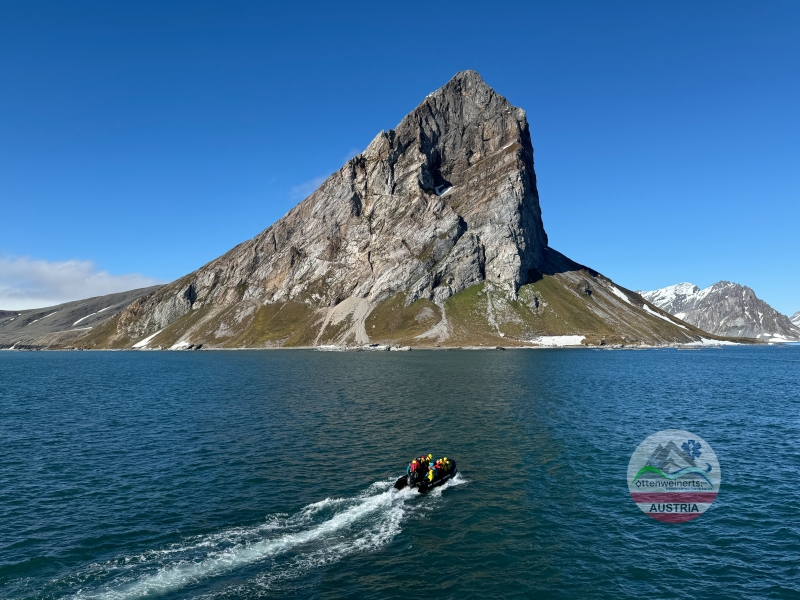
After this time travel we sail on to the Skansbukta with its massive, fortress-like rock formations; at the foot of the rocks, we again see silent witnesses of the mining history, like the entrance to a gypsum mine and the remains of train tracks. A bit later, we pass the “Swedish Hut”, the scene of dramatic events in the winter of 1872, when 17 men, part of the crew of two whaling ships which were caught in the ice, arrived here. The hut was completely equipped with enough firewood and provisions, including lots of canned food, to survive the winter; nevertheless, all 17 men died within a short period of time. In 2008, when the remains of the men, very well preserved in the permafrost, where exhumed, the cause for their deaths were found out – it was lead poisoning because the men heated their food in the lead-lined cans.

In the evening, we arrive in Longyearbyen. We try to sort the many, many photos we took today, and then we pack our suitcases – we will fly back to Oslo tomorrow.

240712 – wieder in Longyearbyen / back in Longyearbyen #oceanwideexpeditions >

Heute weckt uns zum letzten Mal Marcel‘s liebliche Stimme – nach dem Frühstück heißt es Abschied nehmen.

Wir sind mit der Kreuzfahrt rundherum zufrieden – das Expeditionsteam hat uns bestens betreut, die Schiffsbesatzung hat uns rund um Spitzbergen, hinauf ins Packeis und sicher wieder zurückgebracht und die Hotelcrew hat uns verwöhnt. Und wir haben die „Big 5“ der Arktis in ihrem natürlichen Umfeld zu sehen bekommen – Eisbären und Polarfüchse, Walrosse, Wale, und Rentiere. Und jede Menge Seevögel. Und wir haben wieder viele liebe Menschen kennengelernt, wir hoffen, den einen oder die andere irgendwo auf der Welt mal wieder zu sehen.

In Longyearbyen deponieren wir unser Gepäck im Hotel, dann marschieren wir als Erstes zum Krankenhaus. Nein, es geht uns gut, aber wir haben während der Reise bei einem Vortrag die Geschichte der holländischen Forscher gehört, die 1988 eine folgenschwere Begegnung mit einem jungen Eisbären hatten. Der Wissenschafter, mehr oder weniger skalpiert, wurde gerettet und im Longyearbyen Hospital zusammengeflickt. Der Bär hat nicht überlebt und steht nun ausgestopft im Krankenhaus-Foyer.

Von dort geht es weiter ins Svalbard Museum, das uns jetzt wie eine Zusammenfassung unserer Reise vorkommt – erdgeschichtliche Entwicklung, Geologie, Fauna und Flora, Entdeckung und Eroberung dieser Welt hoch im Norden – vieles davon haben wir in den letzten 10 Tagen zu sehen und / oder zu hören bekommen. Ebenso im North Pole Expedition Museum, wo wir wieder Fritjof Nansen, Umberto Nobile und Roald Amundsen begegnen, aber auch Walter Wellman, einem unerschrockenen, aber nicht ganz so erfolgreichen amerikanischen Polar-Abenteurer, von dem wir bisher noch nichts gehört haben.

Dann laufen wir Richtung Hafen, sehen ein Marineschiff, einen seltsam aussehenden offiziellen Kreuzer (Sysselmestre) und ein riesiges Kreuzfahrtschiff, die Viking Star, für knapp 1000 Passagiere. Nein, danke, nichts für uns. An der Straße zum Hafen finden wir das RotKreuz-Gebäude, das wir im Vorbeifahren gesehen hatten – keine Rettungswache wie bei uns, sondern mehr ein Depot für Hilfsgüter, soweit wir das durch die Fensterscheiben erkennen können. Das Rote Kreuz hat hier andere Aufgaben als bei uns, daher finden wir den lokalen Rettungswagen auch nicht hier, sondern auf der Feuerwache. Charles, der nette Rettungswagenfahrer, führt uns herum und erzählt uns ein wenig über den Dienstbetrieb.

Dann haben wir uns eine Pause im Café Huskies verdient, wo man am Weg zur gemütlichen Sitzecke über ein oder mehrere der fluffigen Angestellten steigen muss. Die Hunde sind absolut gechillt, an Touristen gewöhnt und lassen sich willig streicheln und fotografieren. Und der Kaffee ist auch sehr gut.

Anschließend erledigen wir noch das Pflicht-Shopping – ein T-Shirt aus Svalbard muss natürlich sein. Im Hotel bereiten wir uns dann noch auf morgen vor – wir haben ja noch einen ganzen Tag Zeit, daher haben wir heute in der Früh spontan für morgen eine Schiffstour nach Pyramiden gebucht, in der Hoffnung, dass das Wetter mitspielt.

Friday, July, 12th – back in Longyearbyen

Today, expedition leader Marcels´ lovely voice wakes us up for the last time – after breakfast, we have to check out and disembark. We are very very happy about this cruise – the expedition team was fantastic, the captain and his crew took us around Spitzbergen, high up into the pack ice and safely back again, and the hotel crew pampered us. And we got to see the “big 5” of the Arctic in their natural habitat – polar bear and arctic fox, walrus, whale and reindeer. And plenty of sea birds. And we met some very lovely and special people whom we hope to meet again, somewhere on the globe.

In Longyearbyen, we check in at the hotel, and then we visit the hospital. Not to worry, we are fine, but during our cruise we heard the story of the Dutch polar explorer, who had an unfortunate encounter with a young polar bear in 1988. The scientist got more or less scalped, but he was saved and treated in this hospital. The bear on the other hand didn´t survive – he is on display in the hospital´s lobby.

Then, we visit the Svalbard Museum which seems like a recap of the past 10 days to us – geology and paleontology, fauna and flora, the history of discovery and conquest of this hostile environment high up in the north – we have seen and / or heard a lot about all that during our expedition. Same experience in the North Pole Expedition Museum, where we meet Fritjof Nansen, Umberto Nobile and Roald Amundsen again, but also Walter Wellman, a fearless but not very successful American polar explorer, about whom we haven´t heard anything so far.

Afterwards, we walk towards the harbour, we see a marine vessel, the funny looking ship of the Sysselmaster, and a huge cruise ship, the Viking Star, with room for 1000 passengers. Not our way to travel. We also find the Red Cross building but it´s not an ambulance station, it seems to be a depot for disaster relief goods and machines (as far as we can see through the windows). The local Red Cross doesn´t offer any ambulance service here that´s why we find Spitzbergen´s ambulance not here, but at the fire station. Charles, the lovey EMT on shift, shows us around and talks about the work they do here.

Now we have earned a break, at Café Huskies, where you have to make your way to the cozy couches by stepping over one or more of the fluffy employees. These huskies are absolutely chilled, they are used to tourists and love being cuddled and photographed. And the coffee is very good, too.

Finally, we have to do some shopping – leaving Spitzbergen without some T-Shirts is a no-go. At the hotel, we prepare for tomorrow – we have one more day left here, so we spontaneously booked a boat tour to Pyramiden, hoping for nice weather tomorrow.
240711 – Planung versus Realität / Plan versus reality #oceanwideexpeditions >

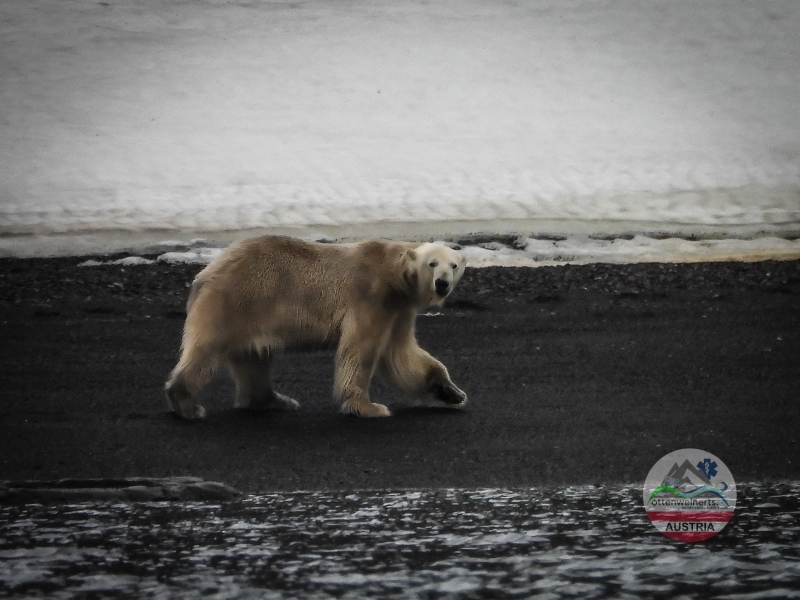
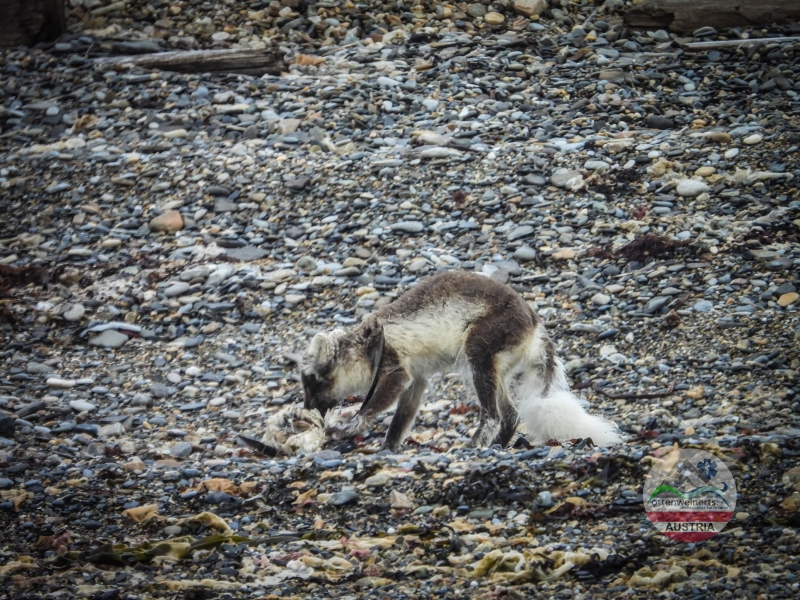
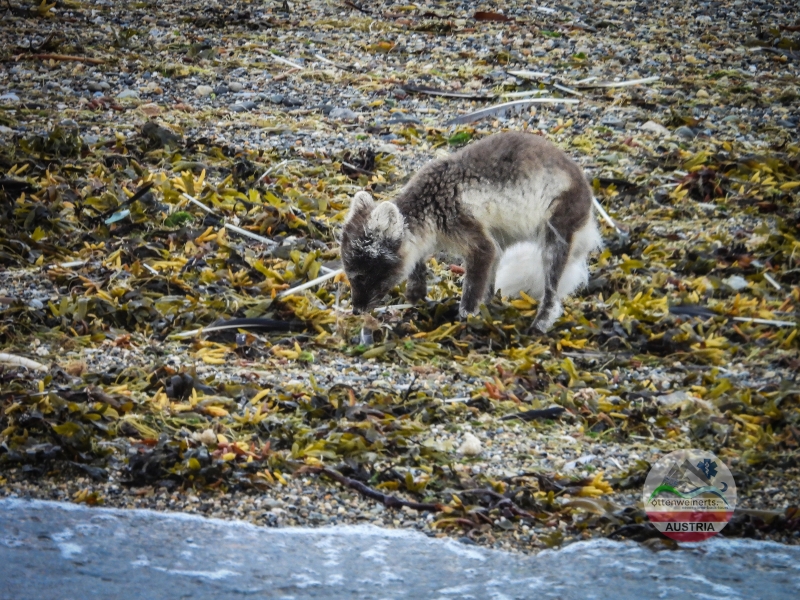
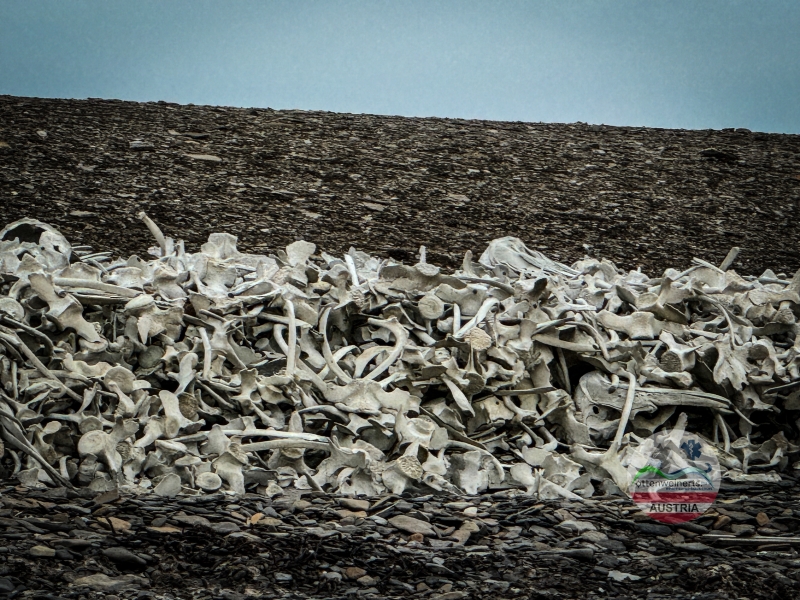
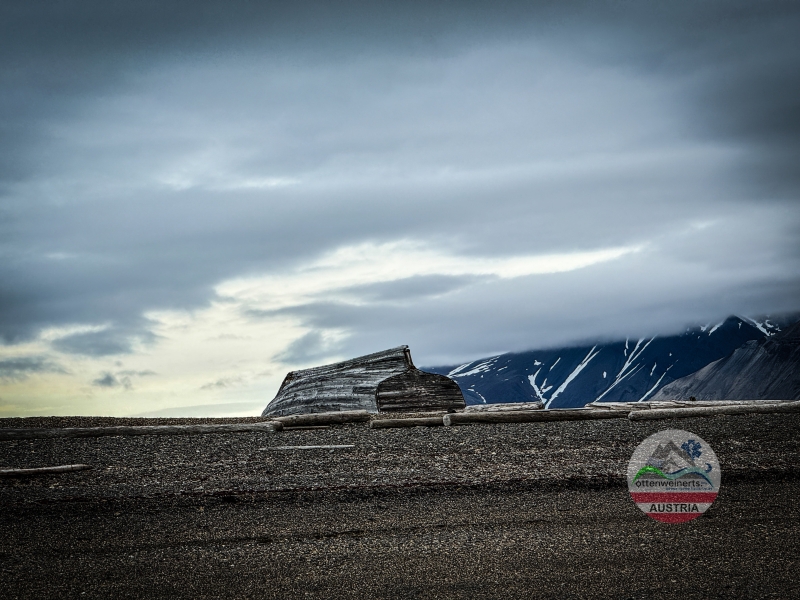
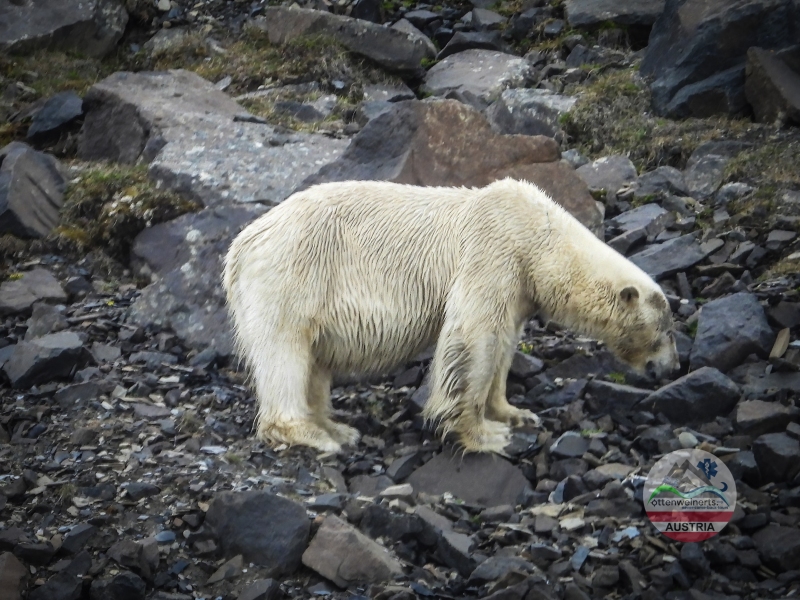
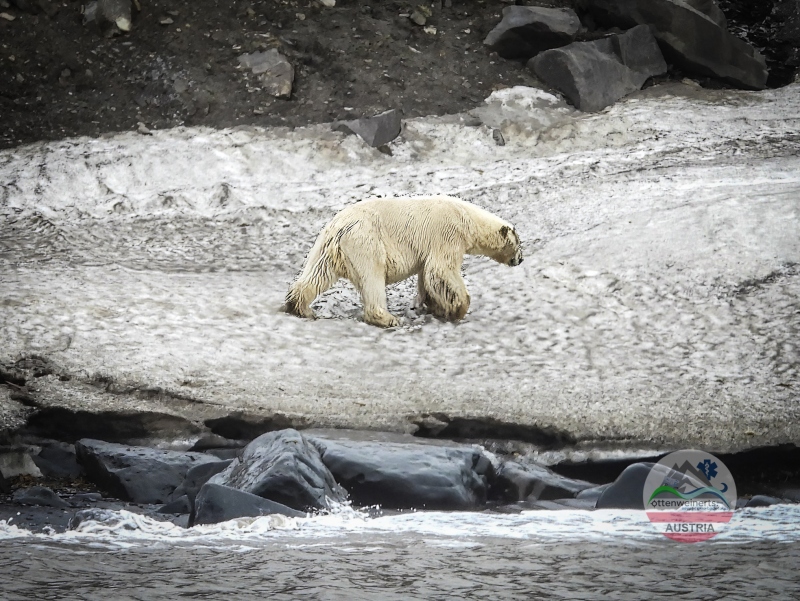
Die für heute früh geplante Landung mit Spaziergang in Fleur de Lyshamna im Van Keulenfjord muss auf eine Zodiac-Cruise geändert werden – das Scout-Team hat einen Eisbären gesichtet, damit ist ein Landgang nicht möglich – Flexibilität ist bei Expeditionskreuzfahrten einfach erforderlich. Macht nichts, der Eisbär spaziert freundlicherweise am Strand entlang und wir folgen ihm mit den Zodiacs durch mehrere Buchten. Wir kommen an Hütten vorbei, die auch heute noch in Gebrauch sind, der „Walfriedhof“ in der Nähe – Haufen ausgebleichter Belugaschädel und Knochen – zeugt von den blutigen Ereignissen vergangener Jahrhunderte. Dann sichten wir einen Polarfuchs, der an mehreren Stellen am Strand Essbares findet, in Form toter Vögel. Sehr lebendig dagegen sind die Küstenseeschwalben (Arctic Terns), die hier ihr Mittagessen jagen, der Schneeammer (Snow Bunting) und die Eiderente, die über unser Zodiac hinwegfliegt.

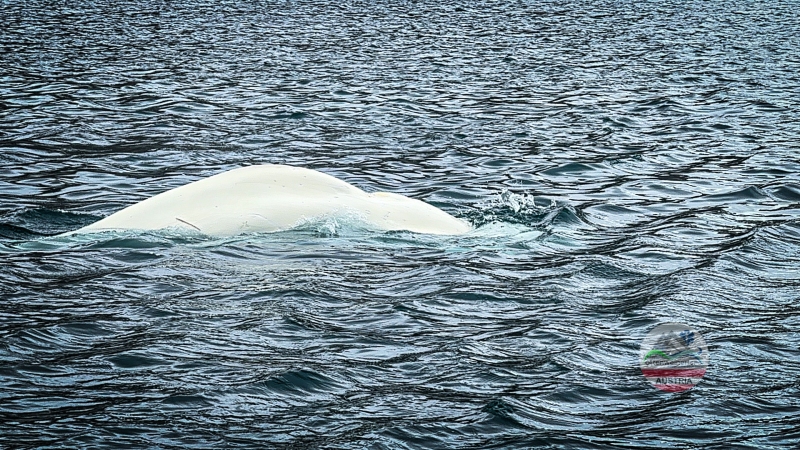
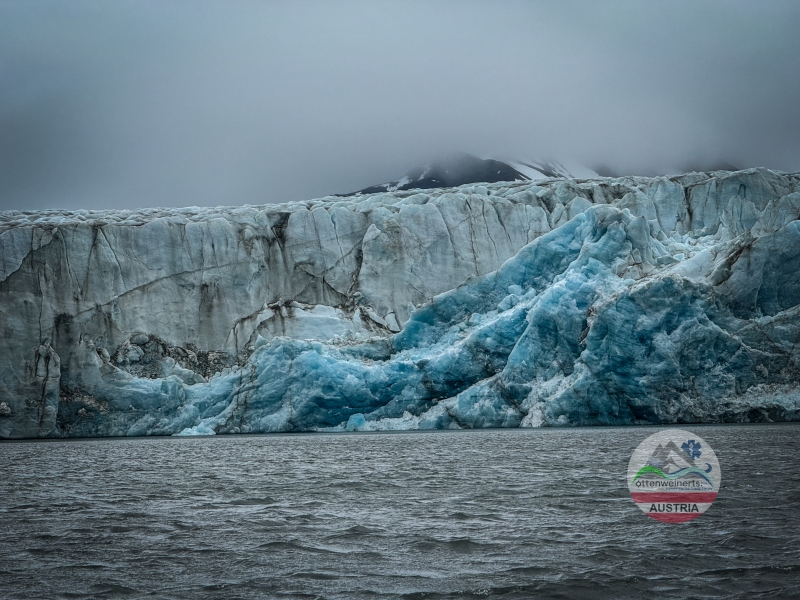
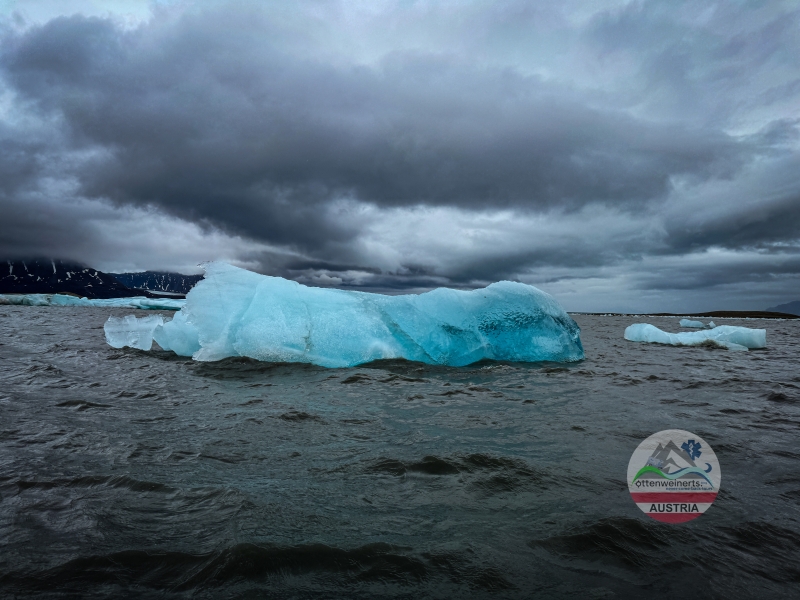
Auch der Nachmittag verläuft anders als geplant – wir bemerken, dass unser Schiff eine Kehrtwendung macht, und an der Akseløya, der langgestreckten Insel am Eingang des Van Mijenfjords entlang wieder nach Süden fährt. Und dann kommt auch schon die Durchsage – Wellen und Wind verhindern den Landgang am Ingeborgfjellet am nördlichen Ufer des Bellsund, und Captain und Expeditionsleiter suchen gemeinsam nach einer alternativen Landungsmöglichkeit im Süden des Sunds – aber auch das ist nicht möglich. Also wird es eine Zodiac-Cruise im Recherchefjord, in der Lagune vor dem Recherchegletscher. Und das war eine gute Entscheidung, denn dort bekommen auch wir endlich Belugas zu sehen!

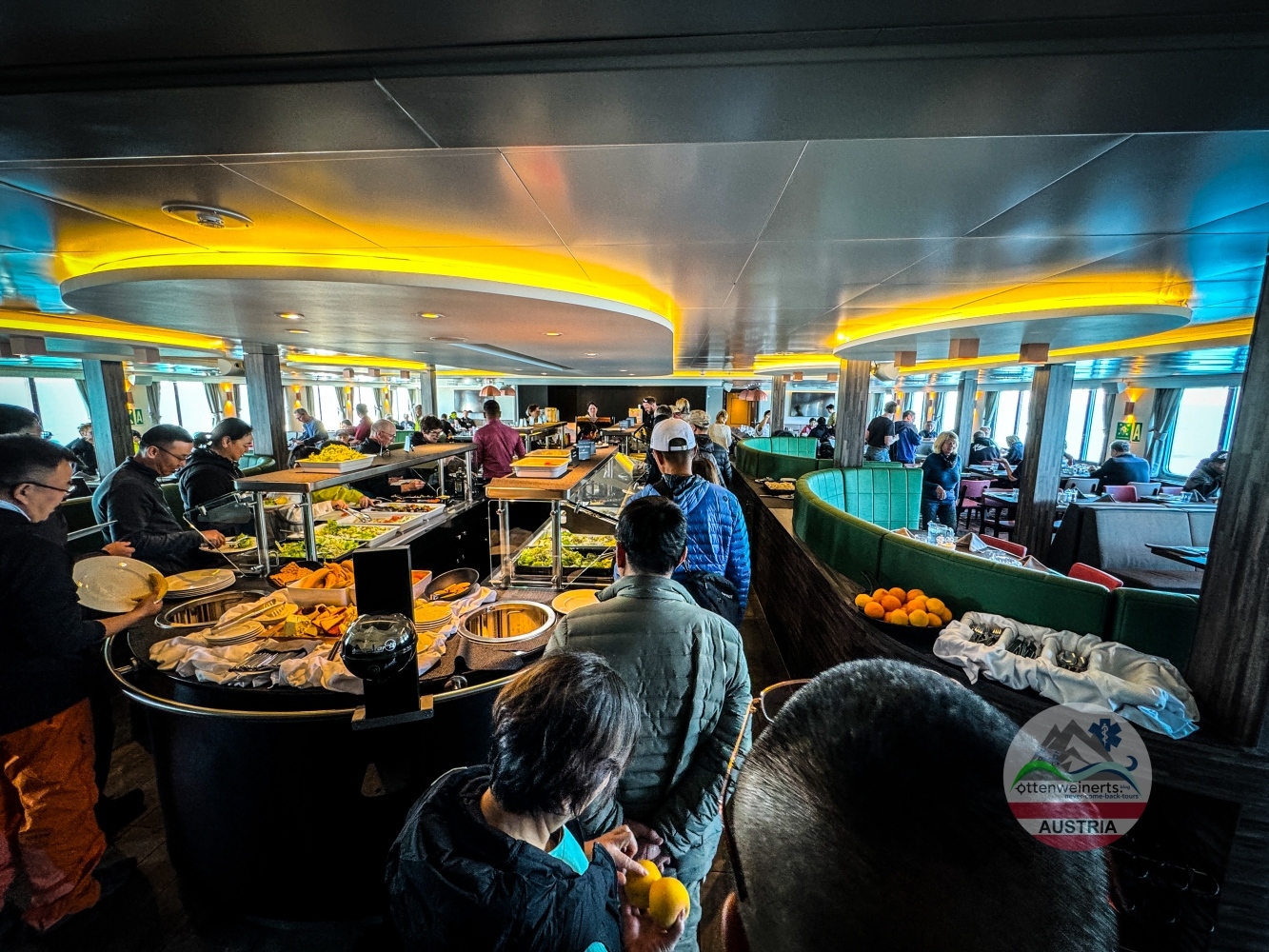
Das allabendliche Treffen in der Lounge beginnt heute mit Sekt, der Captain und das Expeditionsteam verabschieden sich von uns, dann bekommen wir noch ein Video mit Fotos und Filmsequenzen von unserer Reise zu sehen, zusammengestellt von Gabi. Beim Abendessen verabschiedet sich dann auch die Hotel- und Küchencrew von uns, das heutige Dessert, die Eistorte „baked Alaska“ ist mit 2 Eisbären verziert.

THURSDAY, July 11th – Plan versus reality

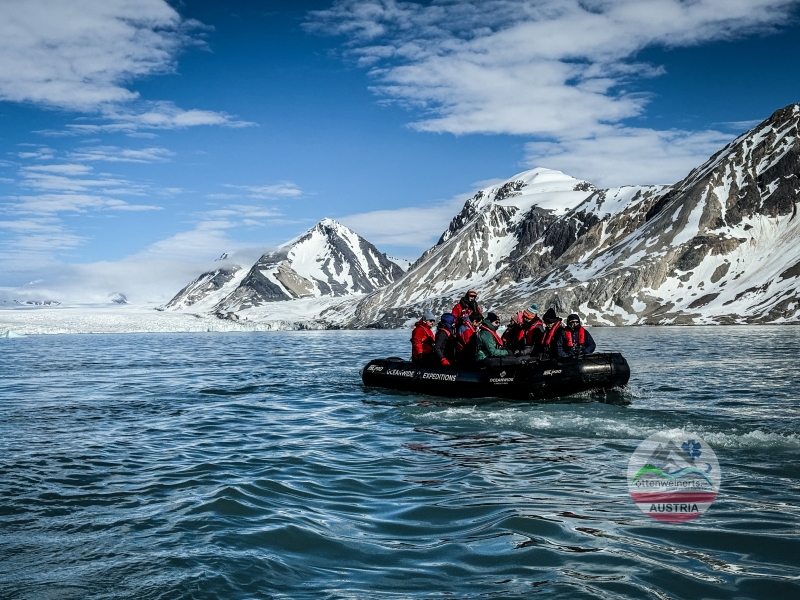
The plan for this morning – landing in Fleur de Lyshamna in the Van Keulenfjord and going for a hike there had to be changed to a zodiac cruise because the early morning scout team had discovered a polar bear on the way to the planned landig sight. Therefore, a landing is impossible – flexibility is a necessity for an expedition cruise, so we followed the polar bear with our zodiacs, along the shore line, through several bays. We pass several trapper huts, some still in use; a whale cemetery nearby (actually just some heaps of whale skulls and bones bleaching in the sun) is witness to the bloody events which took place here in the last centuries. We also spot an arctic fox dining on birds´ carcasses. And very much alive birds – arctic terns, snow buntings and common eider – are flying over our heads.

In the afternoon we also have to change our plans; as we notice that our ship is taking a 180 degree turn and heading south again, along the shore of Akseløya, the long stretched island at the mouth of the Van Mijenfjord, we get the information that wind and swell are prohibiting the planned landing at Ingeborgfjellet at the northern shore of Bellsund. Captain and expedition leader are trying to find an alternative landing site in the south of the sund, but this is impossible as well. Instead, we take a zodiac cruise in the Recherchefjord, in the lagune at the foot of the Recherche Glacier. And that was a lucky decision because there, finally, we get to see some Beluga whales.

Todays´recap starts with sparkling wine, Captain Artur and the expedition team bid us farewell, and then we get to see a film about our 10 days adventure, edited by Gabi. At dinner, the hotel and the kitchen crew also say farewell, presenting us a baked ice cream cake, adorned with two polar bears.

240710 – Im Hornsund / In the Hornsund #oceanwideexpeditions >

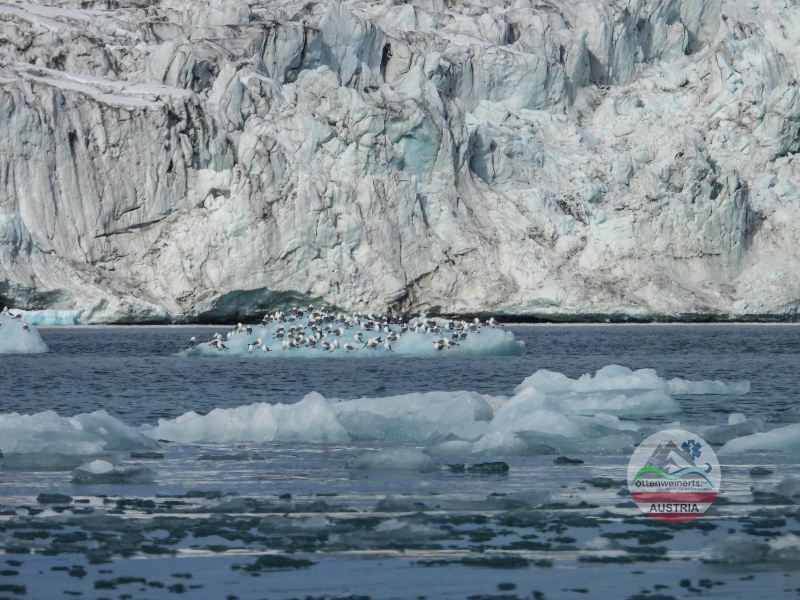
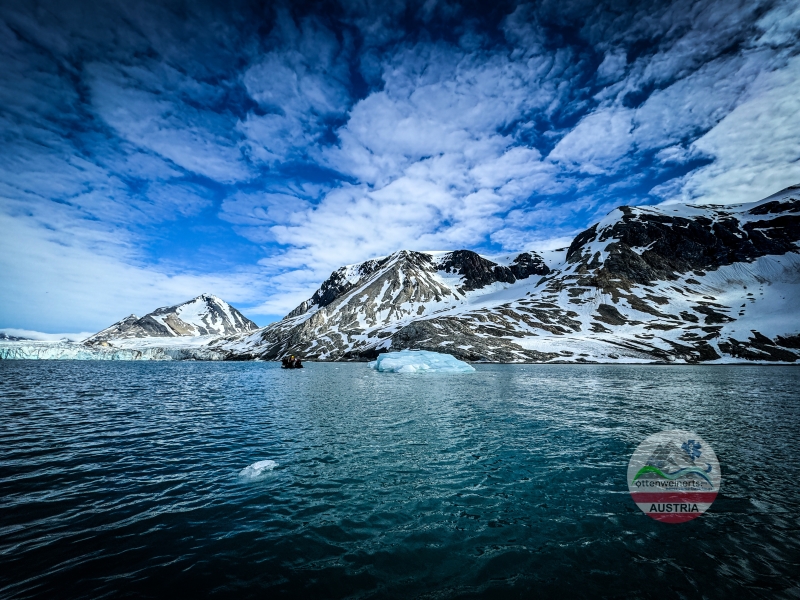
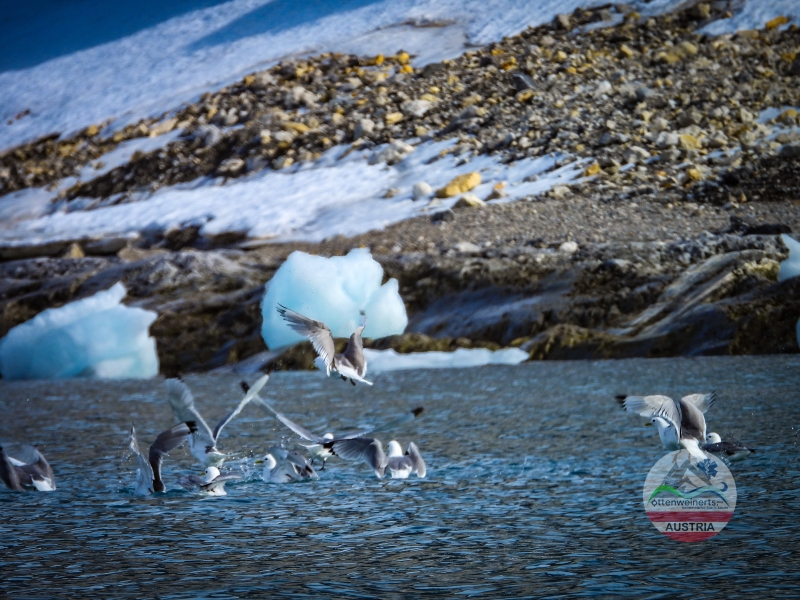
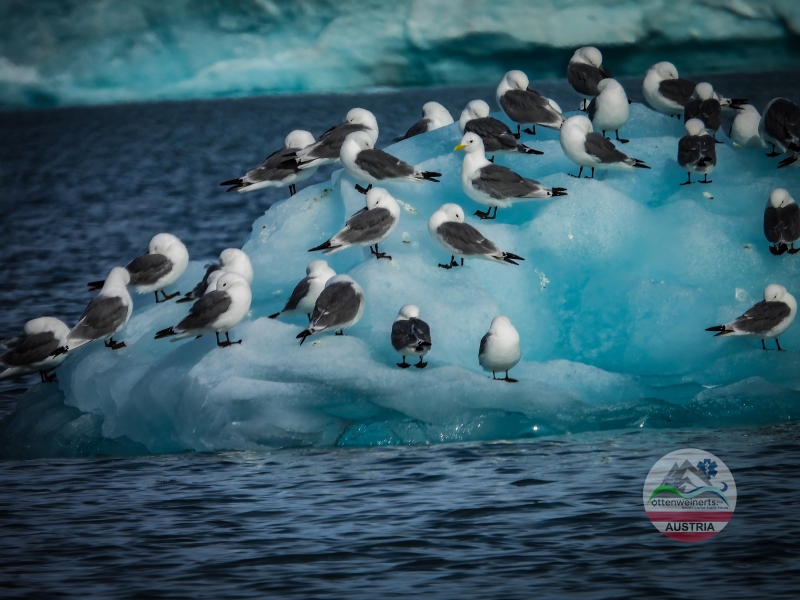
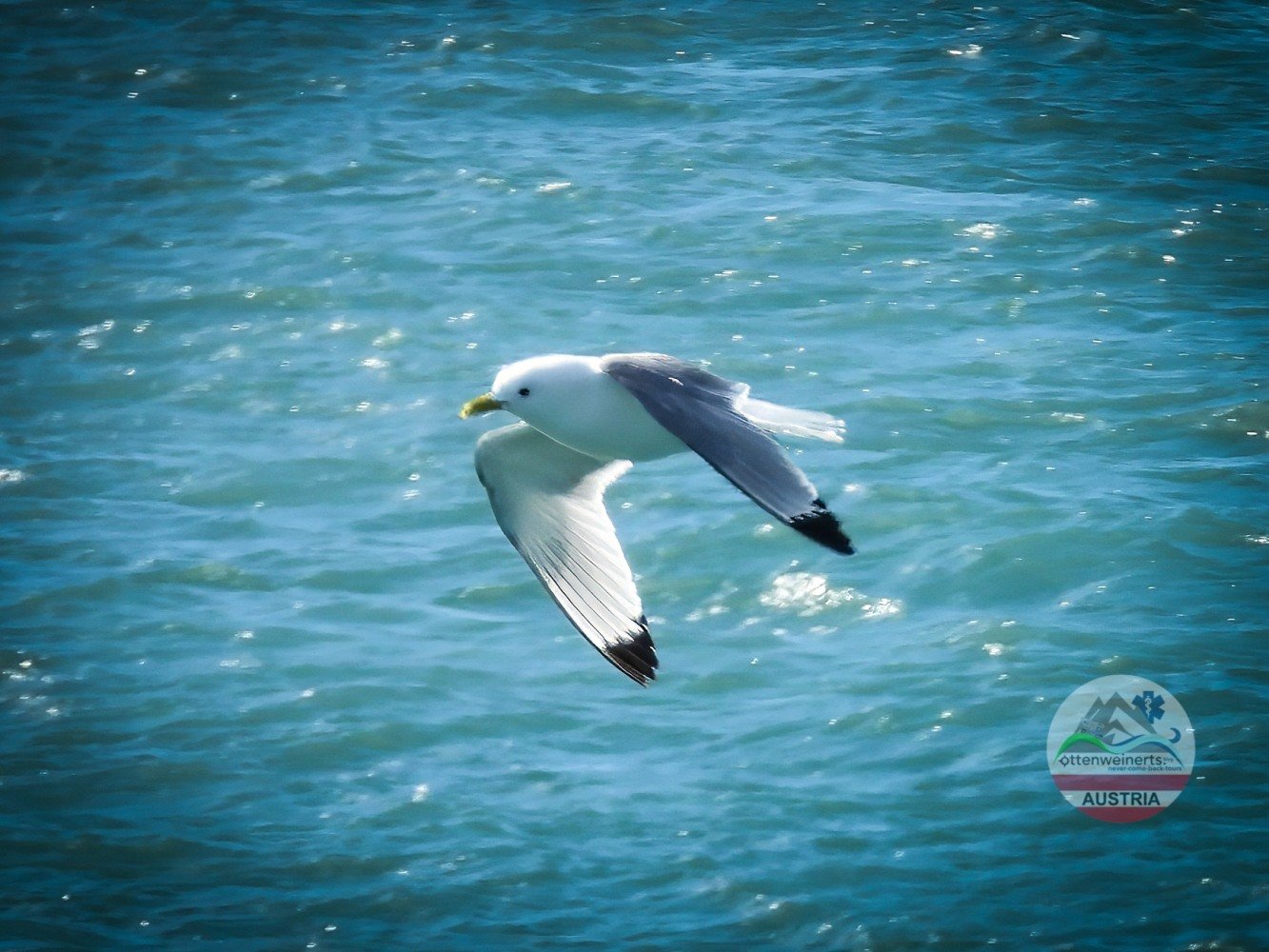
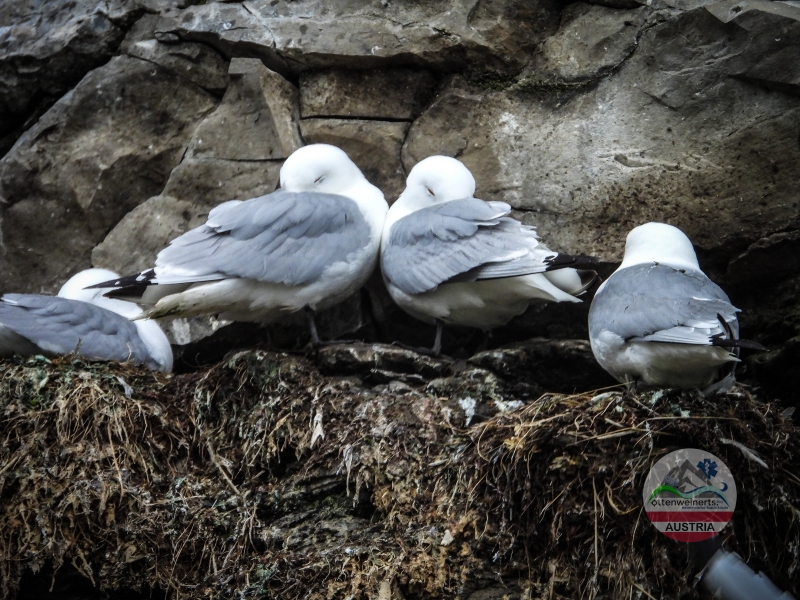
Über Nacht sind wir im Hornsund angekommen, dem südlichsten der großen Fjorde Spitzbergens. Wir frühstücken vor dem großartigen Panorama der Burgerbukta, dann geht es bei strahlendem Sonnenschein mit den Zodiacs in die Vestre Burgerbukta, den westlichen Teil der Bucht, bis zum Paierbreen am Ende, einem malerischen Gletscher. Auf einzelnen Eisschollen stehen ganze Scharen von Dreizehenmöwen, viele davon schlafen im Stehen.  Wir sehen auch Papageitaucher und Eiderenten, eine Gruppe von Zodiacs hat auch das Glück, eine Familie Belugawale kurz zu sichten.

Nach dem Mittagessen hören wir uns den Vortrag von Julian über „Svalbards Journey through the ages“ an – kaum zu glauben, dass Svalbard vor etwa 350 Millionen Jahren mal am Äquator lag und von dichtem Urwald bedeckt war.

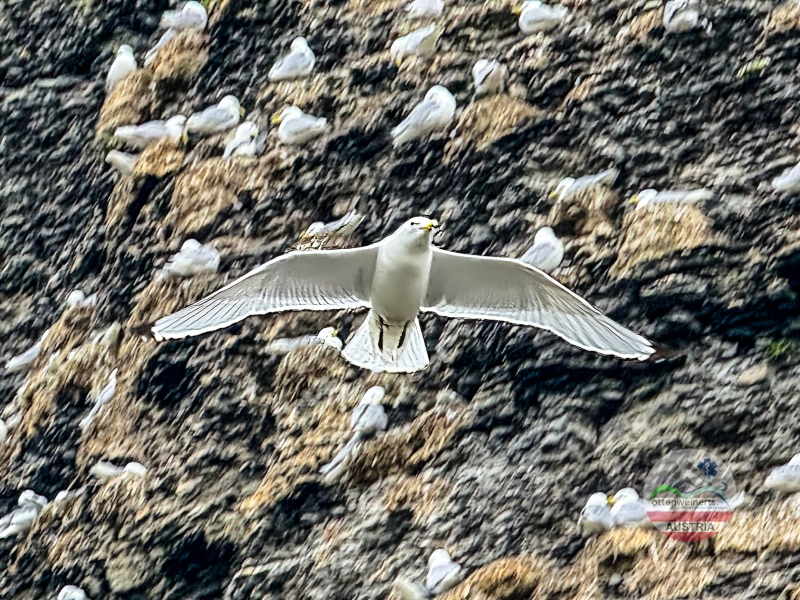
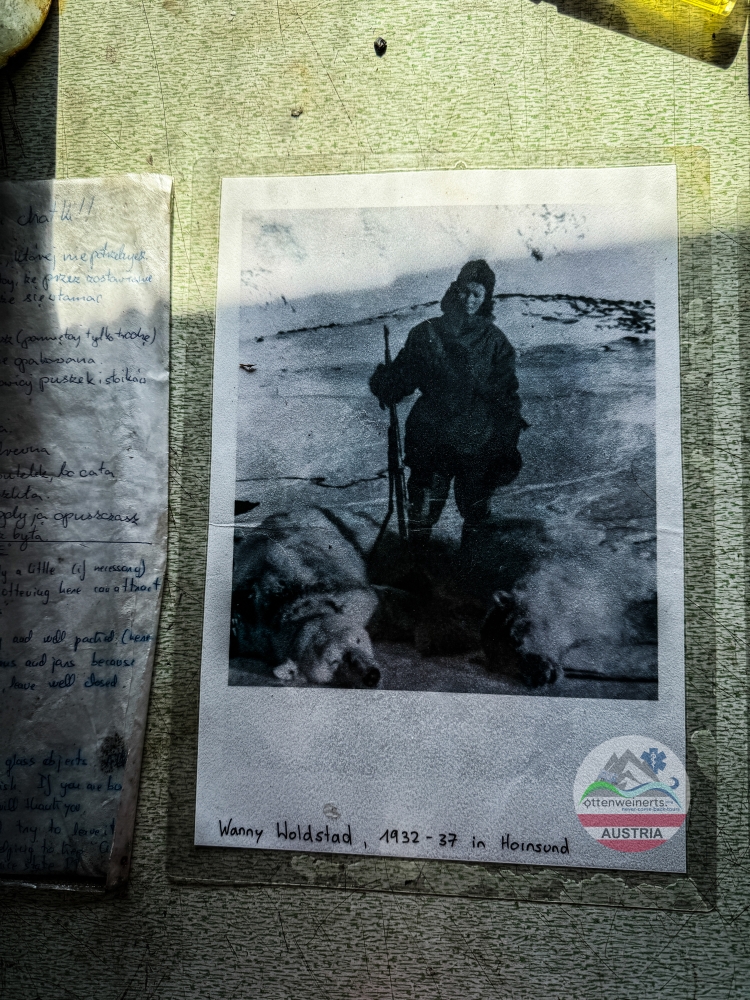
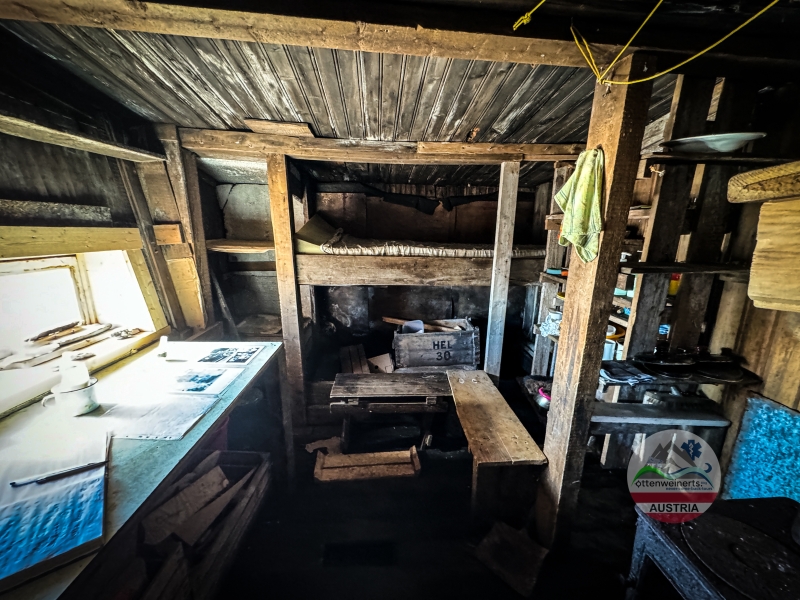
Am Nachmittag landen wir bei Gnålodden, wo noch die Hütte der – zumindest in Norwegen – berühmten Walfängerin Wanny Wolstad steht. Tausende Dreizehenmöwen und Lummen brüten in den Steilklippen, sie sind nicht zu überhören. Von riesigen Felsen am Ufer sieht man über die Bucht, im Wasser dümpeln ein paar Papageitaucher, am Strand läuft eine Schneeammer aufgeregt herum, und auf einem der Felsen bewacht ein Paar Dreizehenmöwen ihren flauschigen, grauen Nachwuchs.

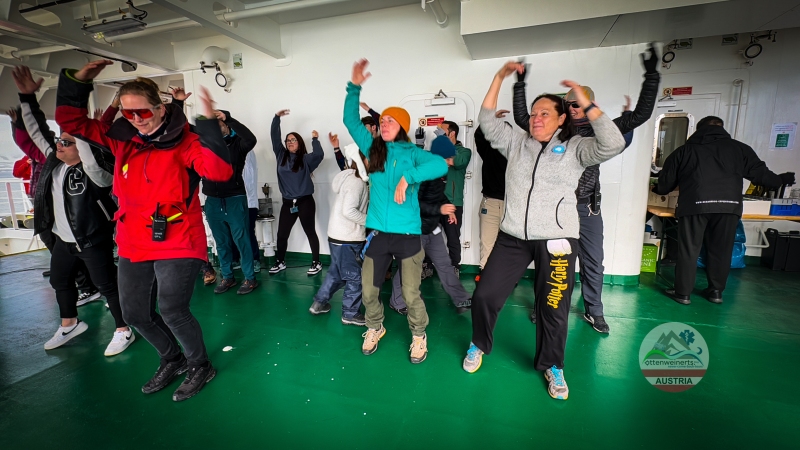
Abends erfahren wir von Hazel Wissenswertes über Belugas, und Gabi bringt uns die Geschichte der polnischen Polarstation im Hornsund näher. Anschließend gibt es Barbecue im Freien auf Deck 5, und dann Disco; anfangs schauen wir noch zu, aber bei „YMCA“ schließe ich mich dann der fröhlich tanzenden Gruppe an.

WEDNESDAY, July 10th – In the Hornsund

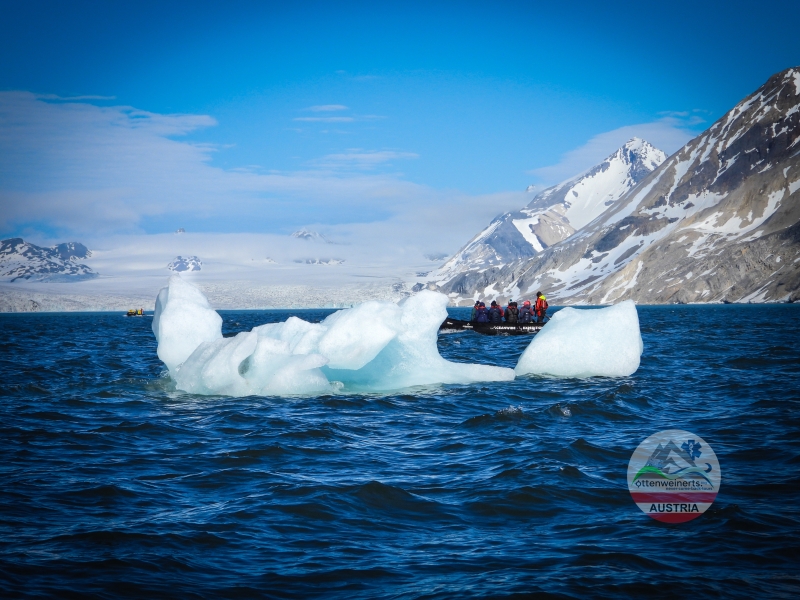
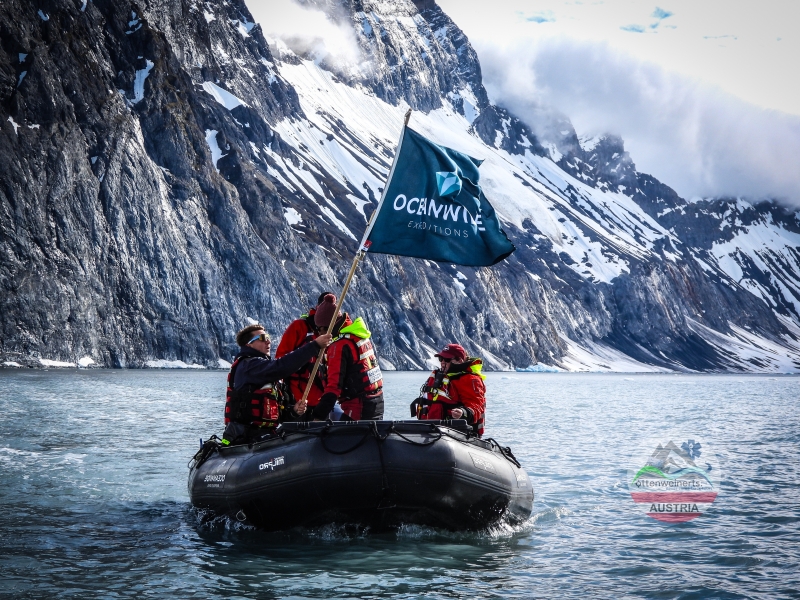
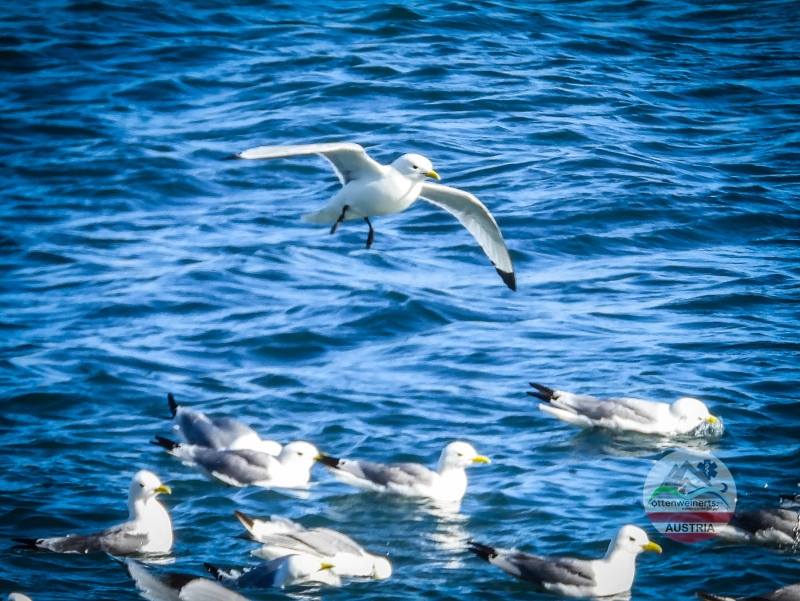
During the night, we arrived at the Hornsund, the southernmost of the large Fjords of Spitzbergen. After breakfast in front of the magnificent scenery of the Burgerbukta, we take the zodiacs for a cruise into the Vestre Burgerbukta, the western part of the fjord, until we arrive in front of the Paierbreen, a magnificent glacier. Small ice foes are floating in the water, populated by large flocks of kittiwakes, many of them standing and sleeping. There are puffins and common eiders flying above our heads, and one lucky group of zodiacs gets to see a small family of Beluga whales.

After lunch, we listen to Julian´s presentation about über „Svalbard´s Journey through the ages “– hard to believe that the archipelago of Svalbard was located at the equator and covered by dense forests – about 350 million years ago.

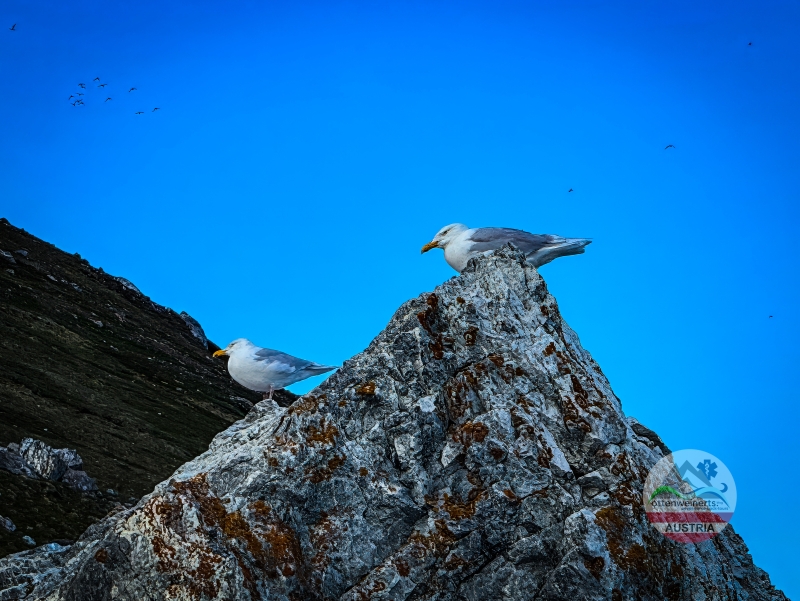
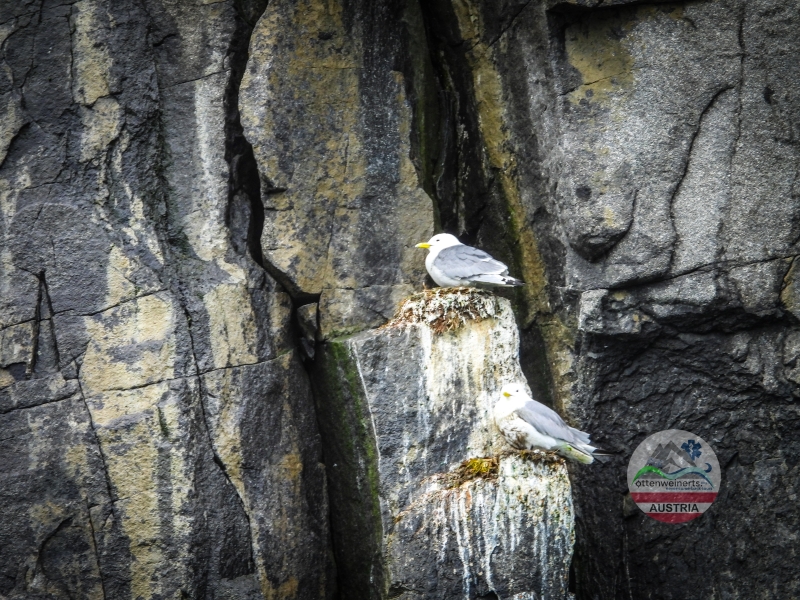
In the afternoon, we land at Gnålodden, near the hut of the – at least in Norway – famous female whale hunter Wanny Wolstad. Thousands of kittiwakes and guillemots are nesting in the steep cliffs, and they are making a lot of noise. From the top of the huge boulders on the beach, we get a good view over the bay; a handful of puffins is bobbing on the waves, a snow bunting is running around on the beach, and on top of one of the large boulders, a pair of kittiwakes is guarding its grey, fuzzy offspring.

In the evening, Hazel presents facts about Beluga whales, and Gabi talks about the Polish polar research station in the Hornsund. Tonight, we have dinner outside – the chefs have prepared a barbecue on deck 5, and then it´s disco night; at first, we just observe, but then they play “YMCA”, and I find myself at the dancefloor, in the middle of the group, dancing the night away.

240709 – Eisbär und Polarfuchs / polar bear and arctic fox #oceanwideexpeditions >

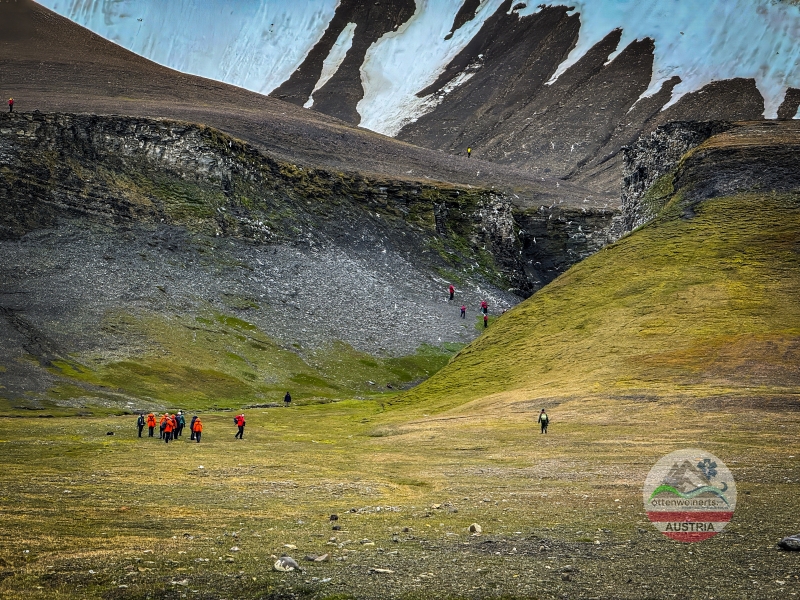
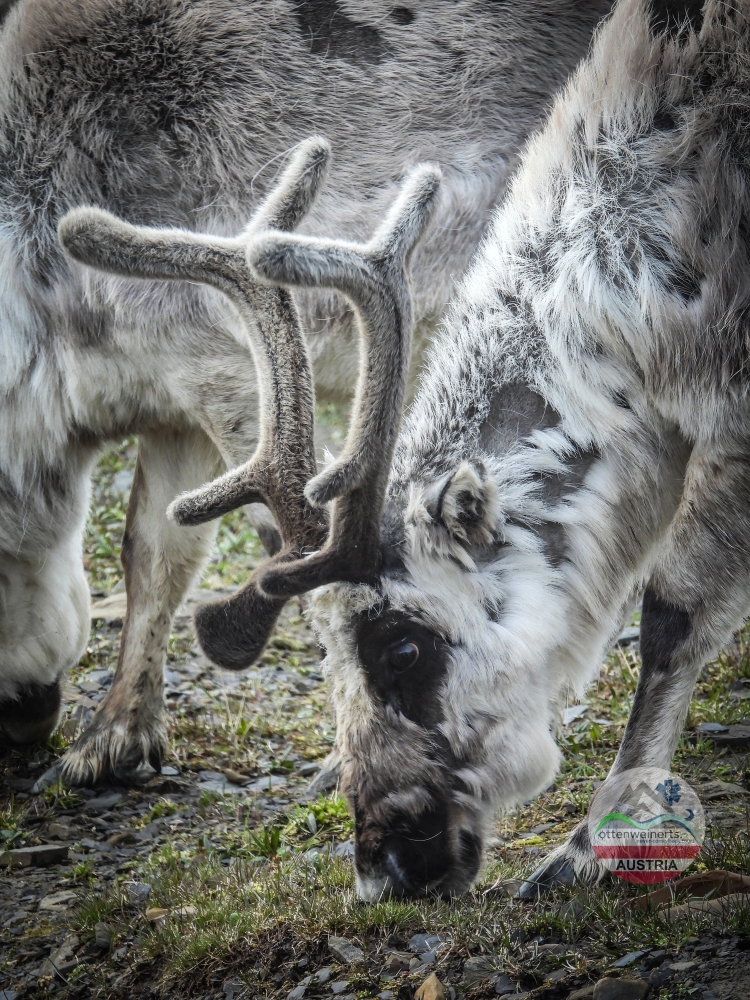
Über Nacht haben wir die Hinlopenstraße hinter uns gelassen, sind an der Ostseite der Barentsøya (Barents-Insel) nach Süden gefahren und ankern mittlerweile am Eingang des Freemansunds vor Kap Waldenburg. Die Zodiacs bringen uns an Land, in den steilen Klippen der Canyons brüten Tausende Dreizehenmöwen – ein eindrucksvolles Geräuscherlebnis in dem schmalen Canyon. Ein Polarfuchs ist auf der Suche nach Beute und lässt sich auch von uns nicht stören; und die Rentiere sind sowieso völlig unbeeindruckt von den Touristen.

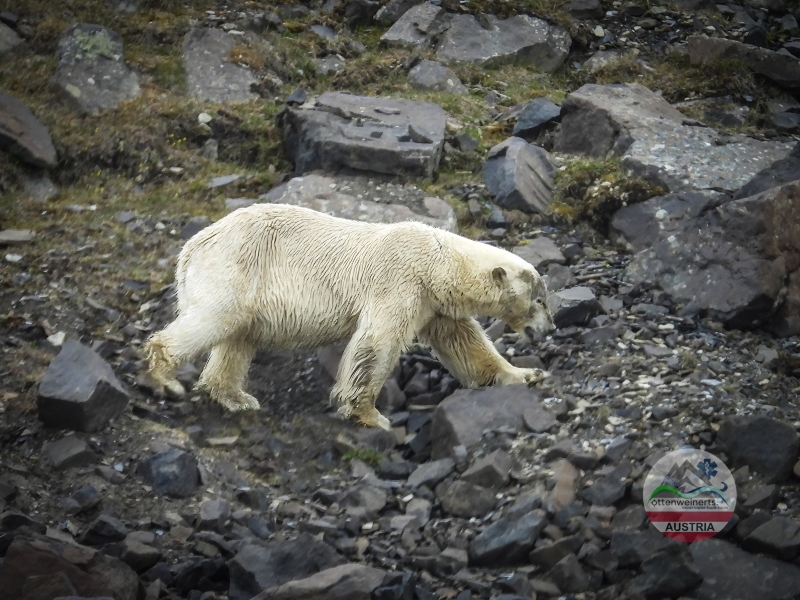
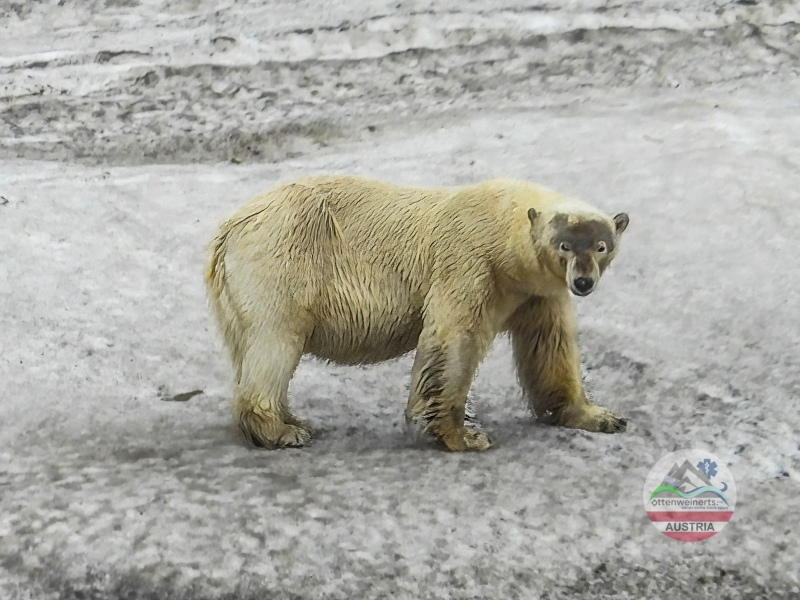
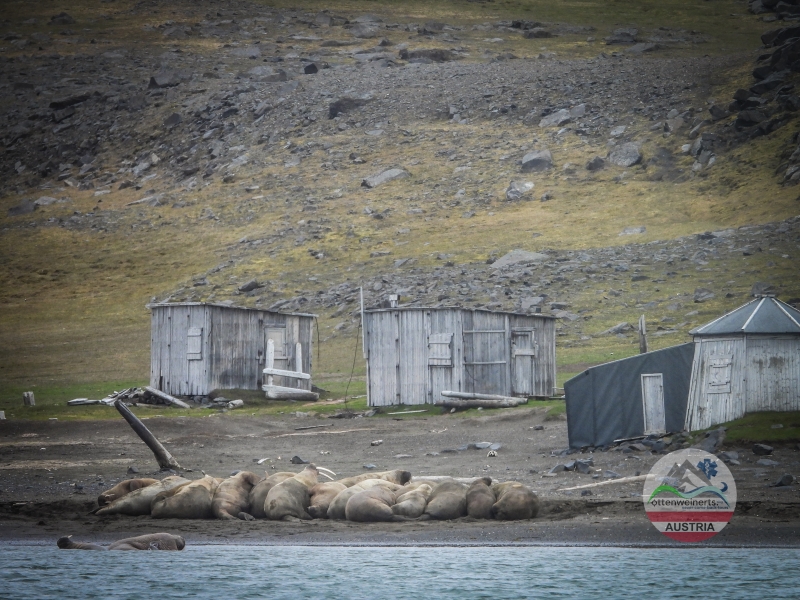
Über Mittag fahren wir den Freemansund zwischen Barentsøya und Edgeøya, der drittgrößten Insel des Svalbard-Archipels, weiter nach Westen. Nachmittags wäre eine weitere Landung geplant gewesen, am Kap Lee an der Nordwestspitze der Edgeøya, aber ein vormittags von einem anderen Schiff gesichteter Eisbär ändert alle Pläne (eine Landung bei Eisbärensichtung ist ohnehin nicht möglich). Also warm anziehen, rein in die Zodiacs und hinter dem Eisbären her. Und der Bär tut uns wirklich den Gefallen, gemächlich die Küste entlang zu spazieren, vor der grandiosen Kulisse der Steilhänge, auf denen auch noch Rentiere grasen. Zum Abschluss machen wir noch einen Abstecher Richtung Dolerittneset, wo sich vor drei alten, grauen Trapperhütten eine Herde Walrosse am Strand räkelt.

Am Abend erzählt uns Philipp über die Pomoren, russische Jäger aus dem Weißmeergebiet, die im 17. Jhd. nach Svalbard kamen und bis etwa 1850 hier lebten und jagten. Dann berichtet Tom über die niederländische Forschungsstation, die von 1968-1989 in Kap Lee existierte. 4 Forscher verbrachten die Winter hier – ihre Ergebnisse führten direkt zur Restriktion der Eisbärjagd in 1971 und dem kompletten Verbot und dem Schutz der Eisbären im Jahr 1974. Außerdem war einer der 4 Forscher später an der Gründung von Oceanwide Expeditions beteiligt. Und abschließend erfahren wir von Grant Wissenswertes über Wellengang, Wind und Strömung.

Nach dem Abendessen sichern wir auf Empfehlung des Captains alle Gegenstände in unserer Kabine – wir fahren von der Westküste Edgeoyas nach Süden, um den südlichsten Zipfel von Spitzbergen herum, auf offener See, und nach Mitternacht wird stärkerer Wind und damit auch Wellengang erwartet – haben wir ja in Grants Vortrag gerade gehört.

Tuesday, July 9th – polar bear and arctic fox

During the night, we left Hinlopen Strait, passed the east side of Barentsøya and entered the Freemansund where we dropped anchor close to cape Waldenburg. The zodiacs transport us to shore and we walk towards the canyon between the steep cliffs where thousands of kittiwakes are nesting – an impressive sound experience in the narrow canyon. An arctic fox is searching for his lunch, obviously not at all disturbed by the many tourists with their cameras, and the reindeer are utterly unimpressed by us.

During lunch, we follow the Freemansund between the islands Barentsøya and Edgeøya, Svalbard’s third-largest island, westwards. The plan was to land at Cape Lee on the northwestern tip of Edgeøya, but a polar bear sighting by another ship changes that plan – it´s not possible to land anywhere near polar bears. So, we dress warmly, enter the zodiacs and head towards the shore where the bear was spotted. And there he is, trotting along the beach, in front of the grand backdrop of the steep slopes where reindeer are grazing – very picturesque. And so are the walruses, lying around on the shore at Dolerittneset, in front of three old, grey wooden trapper huts.

In the evening, Philipp from Germany presents a lecture about the Pomors, Russian hunters from the White Sea area who came to Svalbard in the 17th century and lived here until 1850, give or take. Then Tom from the Netherlands talks about the Dutch research station, existing at Cape Lee from 1968 to 1989. Four researchers spent the winters here, and their research results led directly to the restriction of polar bear hunt in 1971 and consequently to the total ban of polar bear hunt in 1974. On top of that, one of these researchers was later involved in the founding of Oceanwide Expeditions. And then Grant from South Africa explains the basics about swell, wind and currents.

After dinner, we secure all loose items in our cabin – we will be cruising from the west side of Edgeøya southwards, around the southernmost tip of Spitzbergen on the open sea, and the captain is expecting a bit of wind and therefore some swell after midnight – exactly what we learned in Grants´ presentation.

240708 – Fuchs, du hast die Lumme gestohlen / Fox, you have stolen the guillemot #oceanwideexpeditions >

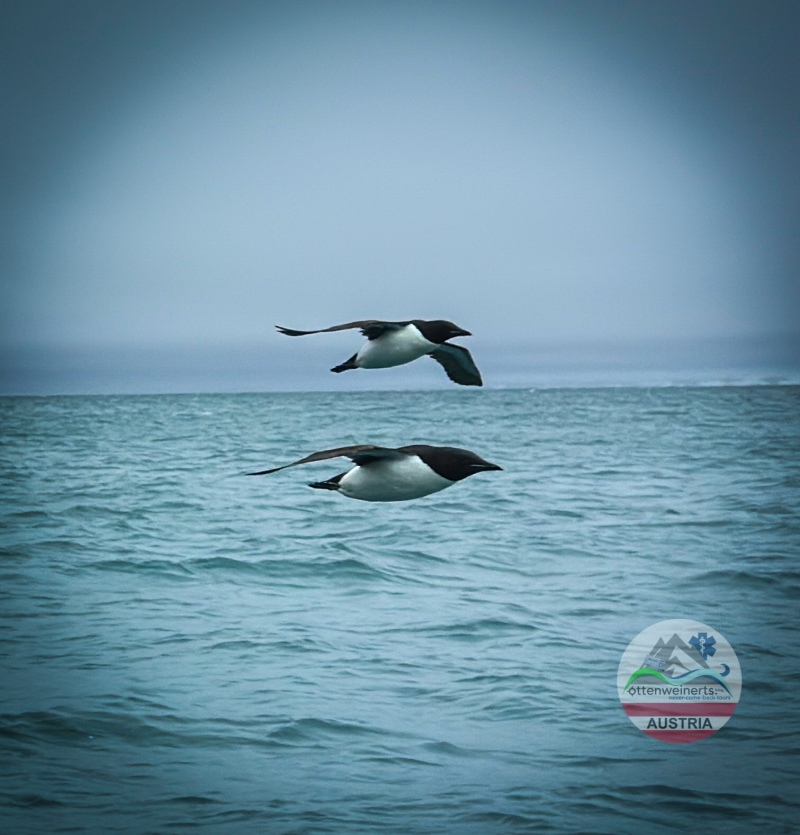
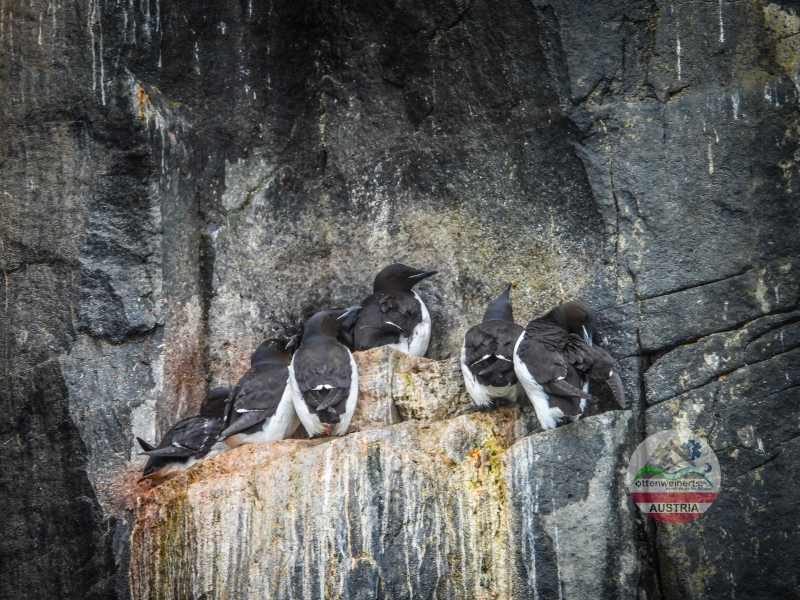
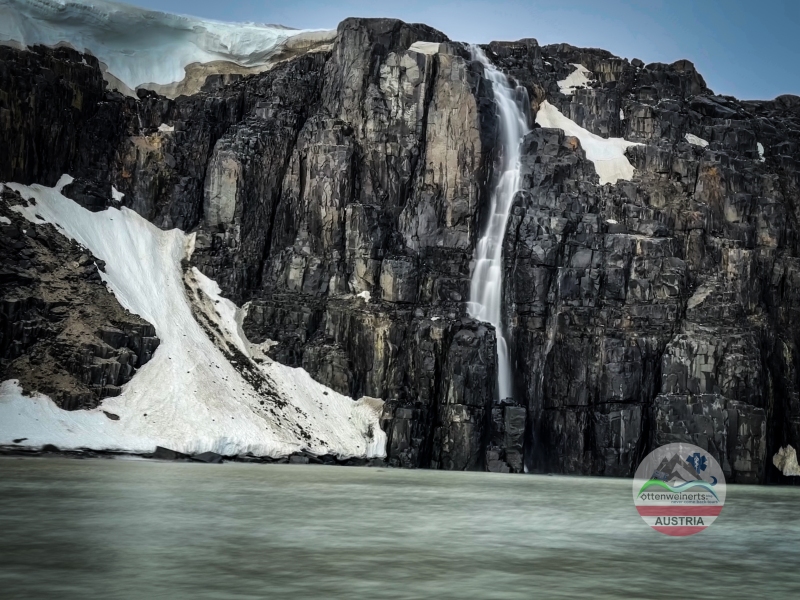
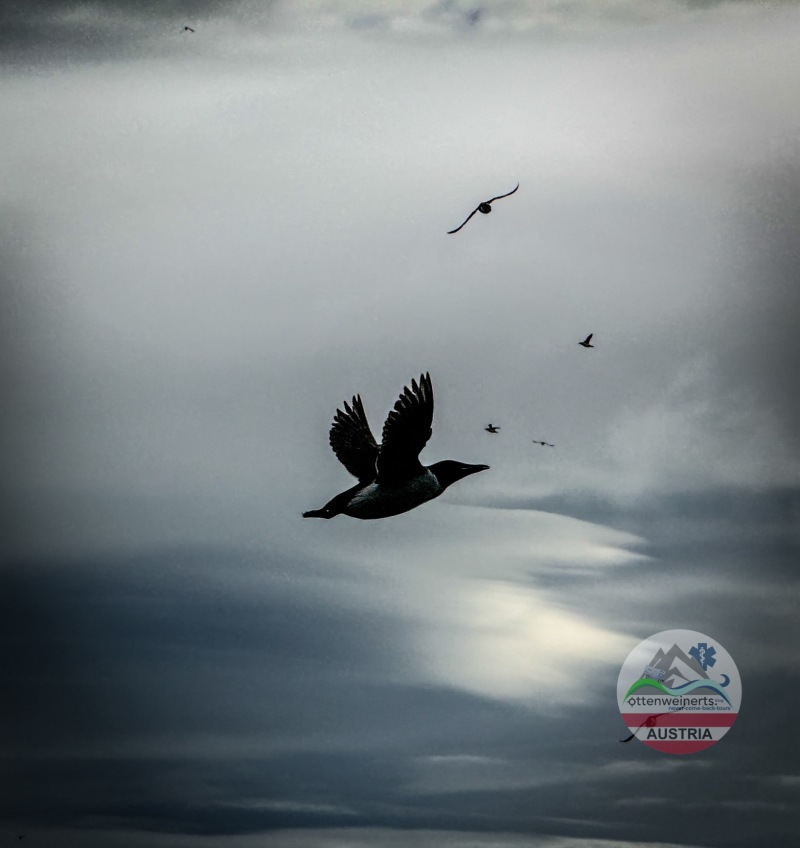
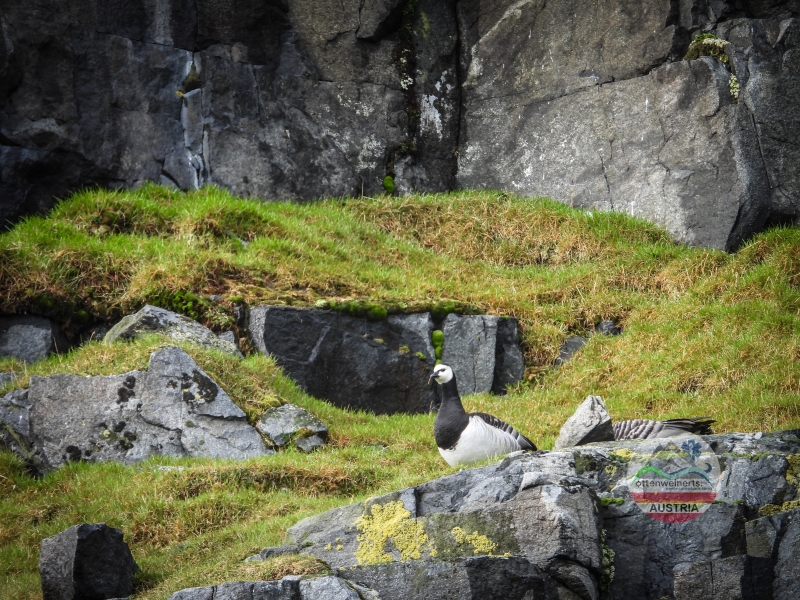
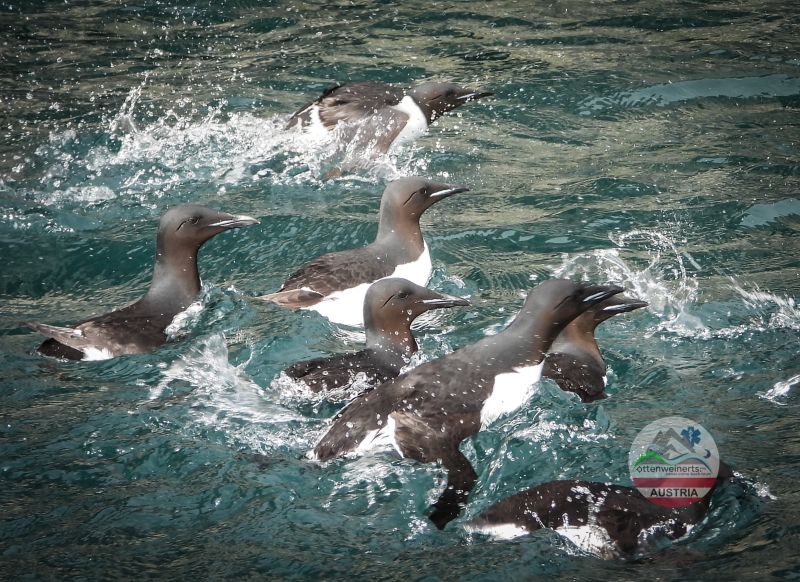
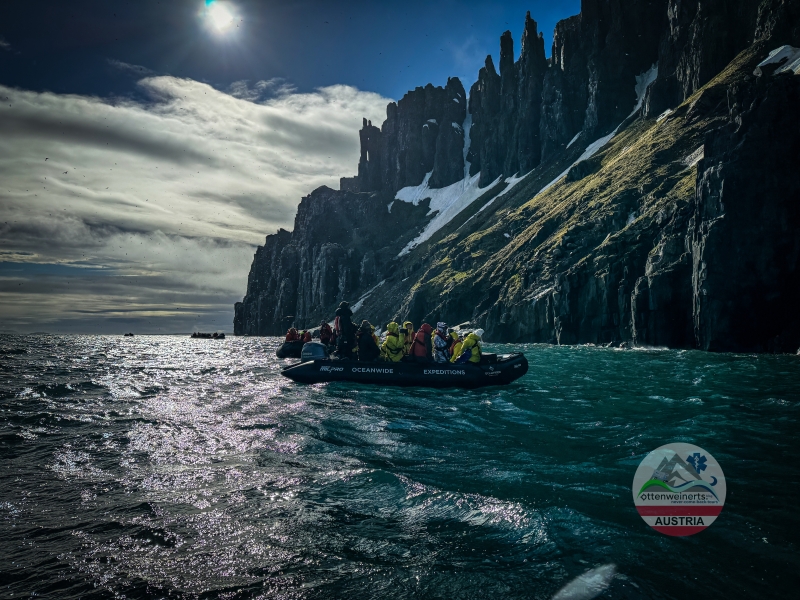
Die See in der Hinlopenstraße hat sich über Nacht beruhigt, dem Zodiacausflug zu den Vogelfelsen steht nichts im Wege. Der Alkefjellet, der „Lummenfelsen“ besteht aus bis 100 m hohen, steilen, zerklüfteten, schwarzen Basalttürmen – hier brüten über 60.000 Paare Dickschnabellummen, dazwischen einige Dreizehenmöwen und vereinzelte Paare Weißwangengänse und Eiderenten. Jede Nische, jeder Vorsprung ist bewohnt, der Flugverkehr ist entsprechend dicht (wird werden gewarnt, NICHT mit offenem Mund in den Himmel zu schauen, um unwillkommene Überraschungen zu vermeiden), auch im Wasser herrscht zeitweise Gedränge. Die Lummen sind quasi die Pinguine des Nordens – zwar nicht mit ihnen verwandt und außerdem flugfähig, aber mindestens so zahlreich, auch mit torpedoförmigem Körper und unglaublich schnelle und elegante Schwimmer unter Wasser.

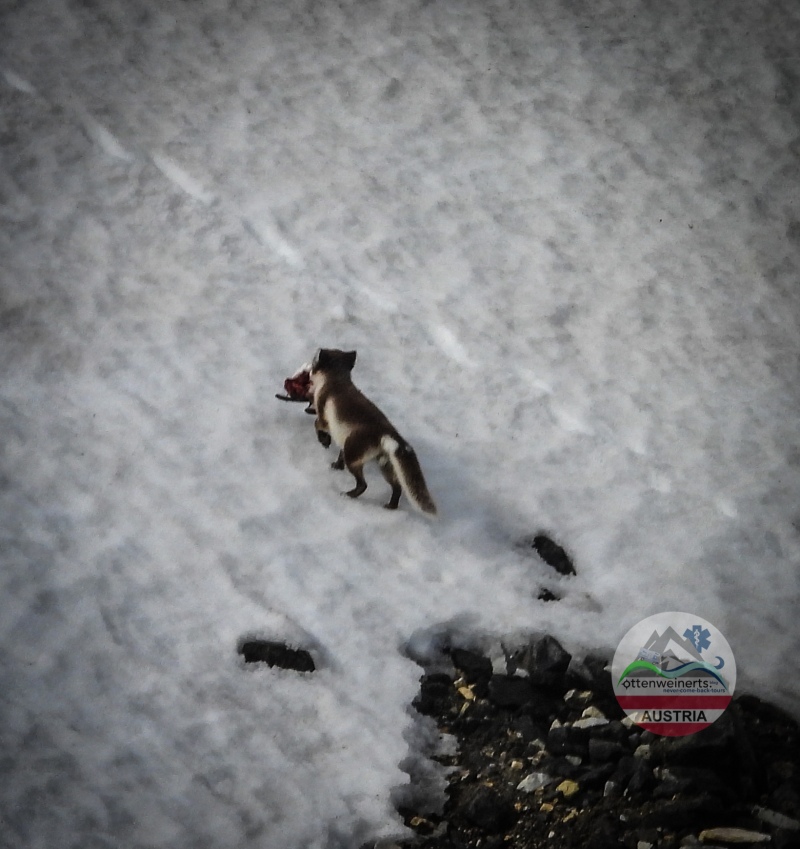
Blauer Himmel, Sonnenschein, glitzernde Schneefelder zwischen den Basalttürmen – und dort sehen wir frische Spuren, und am Ende auch den Verursacher, einen Polarfuchs mit seiner Beute im Maul, einem – hoffentlich schon toten – Vogel.

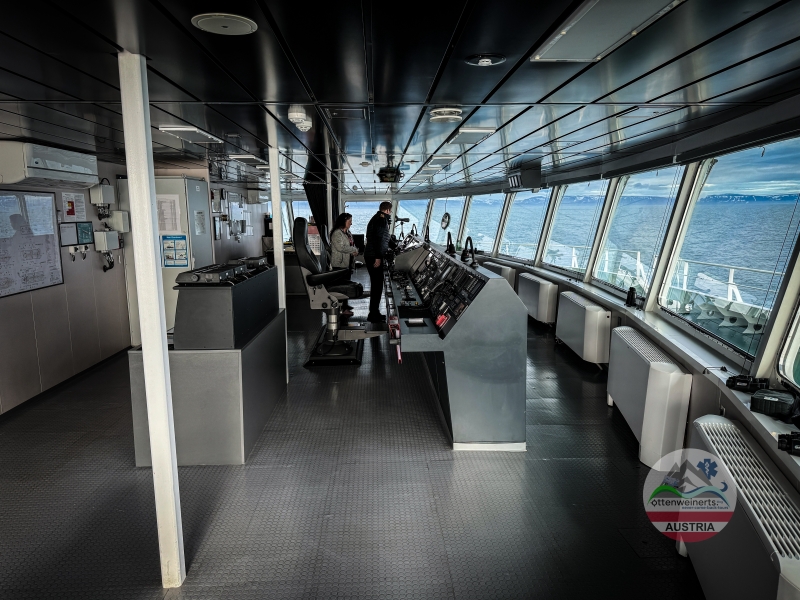
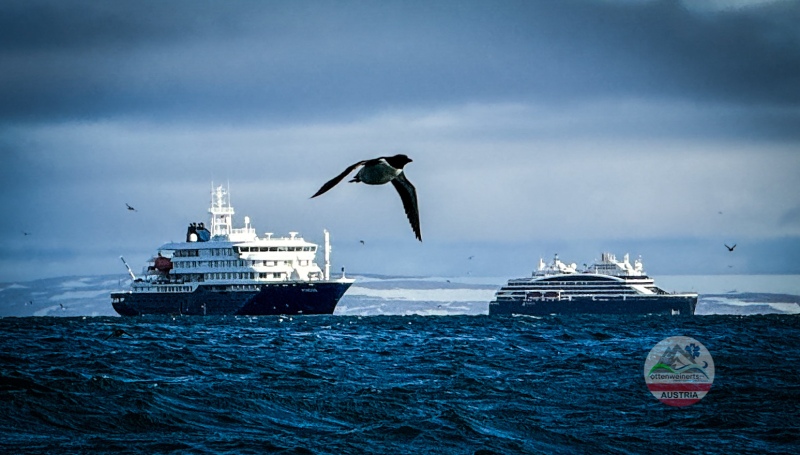
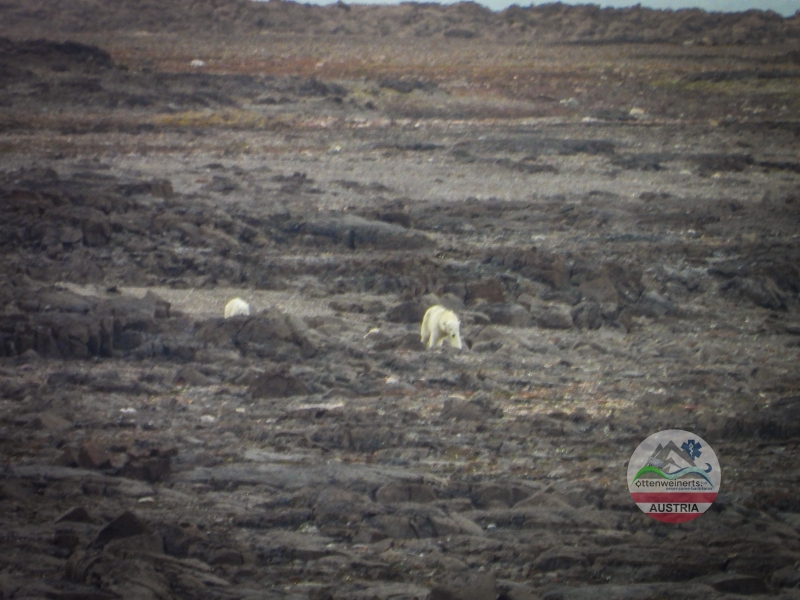
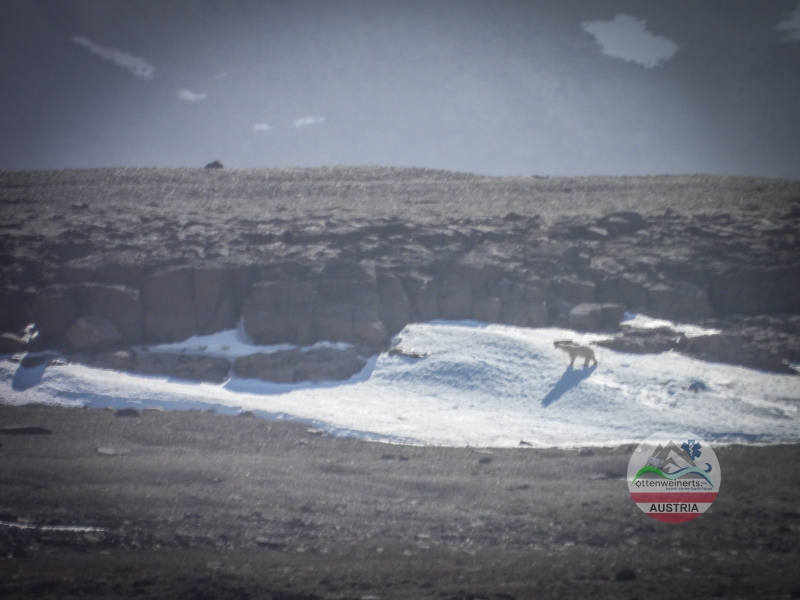
Kurz vor dem Mittagessen, bereits zurück am Schiff, sammeln sich etliche unserer Expeditionsguides mit Ferngläsern zuerst auf der Brücke auf Deck 7 und starren angestrengt auf einen kleinen Streifen Land, dann verlagert sich die Party auf das offene Observationsdeck 8 – ich folge ihnen unauffällig. Als die Durchsage „Eisbär auf 9 Uhr“ durch die Lautsprecher kommt, habe ich bereits etliche Fotos und ein paar Minuten Video aufgenommen. Wir sehen ein einzelnes Männchen und eine Eisbärmama mit einem Jungen auf der Insel Gyldenøyane umherstreifen. Sowohl diese sehr gute Beobachtungsmöglichkeit als auch der stark auffrischende Wind ändern das geplante Nachmittagsprogramm. Der Landgang in der Palanderbukta wird gestrichen, weil das Einsteigen aus dem Schiff in die Zodiacs zu riskant wäre. Statt deswegen fahren wir immer wieder um die Insel herum, und die Eisbären spielen mit und lassen sich gerne fotografieren und filmen. Auf der anderen Seite der Insel taucht dann ein beeindruckendes Schiff auf, die Commandante Charcot, der weltgrößte Passagier-Eisbrecher, der direkt über den Nordpol fährt.

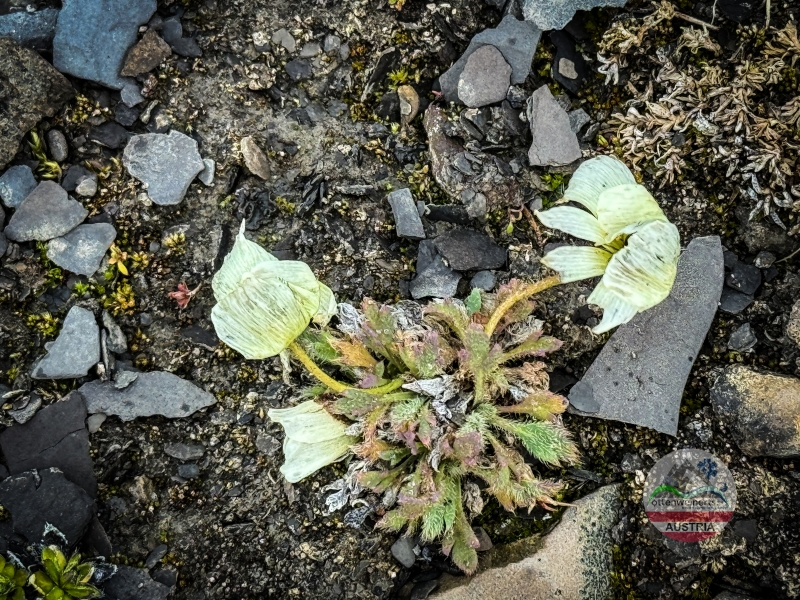
Am späteren Nachmittag berichtet Simon über Alken – Papageitaucher (Puffins), Gryllteisten (Black Guillemots), Dickschnabellummen (Brunnich’s Guillemots), Trottellummen (Common Guillemots), Razorbills, und Krabbentaucher (Little Alks). Fran präsentiert anschließend Pflanzen der Arktis, von Saxifragas über Butterblumen bis zu Bäumen wie Zwergbirke und Polarweide – winzige Pflanzen, die wir nie im Leben als Bäume identifiziert hätten. Unsere Hondius fährt inzwischen weiter die Hinlopenstraße nach Süden, Richtung Brasvellbreen, ein Gletscher mit sensationellen Schmelzwasserfällen an der Südostspitze von Nordaustland. Leider müssen wir uns mit den Bildern in unserem Reiseführer begnügen, der dichte Nebel hüllt die Landschaft komplett ein.

Monday, July 8th – Fox, you have stolen the guillemot

During the night, the sea has calmed down, there is almost no swell, so we start our zodiac cruise to the bird cliffs. “Alkefjellet”, the Auk Mountain, consists of up to almost 330 ft high, steep, rugged black basalt cliffs – about 60.000 pairs of Brunnich’s Guillemots have their nests here, and in between there are Kittiwakes, barnacle geese and common eider ducks. Every nook and cranny are inhabited, there is immense air traffic (we are warned NOT to look up with our mouths open in awe, in order to avoid some surprise deliveries from above), even in the water there is a lot of hustle and bustle. The auks are the penguins of the north, so to speak – not related and able to fly, but at least as numerous as penguins in the south with a torpedo-shaped body, and they are incredibly fast and elegant swimmers under water.

Brilliant sunshine, blue sky and glistening snow patches between the basalt towers – and there we see fresh tracks in the snow, and then we spot the one who made them: an arctic fox with his pray in his mouth, a – hopefully already dead – guillemot.

Back on the ship, just before lunch, several guides gather on the bridge on deck 7, staring through their binoculars on a small piece of shore of Gyldenøyane island, then they all move up to the open observation deck 8. I follow them, and when we hear the ship wide announcement “polar bear at 9 o´clock”, I have already taken a lot of pictures and some minutes of video. We get to see a single male and a mum with her cub walking around. This exciting observation as well as the increasing swell change the planned activities for this afternoon. The landing in Palanderbukta is cancelled because the swell makes getting into the zodiacs too risky. Instead, we cruise around Gyldenøyane island, and the polar bears happily pose for the many cameras of the excited expedition participants. On the other side of the island, the “Commandante Charcot” appears, the world´s largest ice breaker, the only passenger ship able to directly to the North Pole.

In the afternoon, Simon gives a brilliant lecture about auks (not hawks, not orcs) – Puffins, Black Guillemots, Brunnich’s Guillemots, Common Guillemots, Razorbills, and Little Auks. Then, Fran presents the plant world of the arctic, from saxifrage and buttercups to trees like dwarf birch and arctic willow – tiny plants which we would never have identified as trees. In the meantime, our ship is heading south in the Hinlopen Strait, towards Brasvellbreen, a glacier with sensational waterfalls at the southeast corner of North Austlandet. Unfortunately, we have to believe it and be content with pictures because dense fog is covering the scenery completely.

240707 – Im Packeis / in the pack ice #oceanwideexpeditions >

Wir verbringen heute den ganzen Tag im Packeis, schieben Eisschollen beiseite und pflügen uns den Weg bis 80° 55´ nördliche Breite, dem nördlichsten Punkt unsers Abenteuers. Das wird dann gebührend mit heißem Kakao mit Schlagobers am Vorderdeck gefeiert. Dann kommen wir im Gespräch mit Captain Artur drauf, dass er Oleg, den Captain auf unserer Antarktisreise voriges Jahr, gut kennt – wir machen Selfies und bitten Artur, Oleg viele Grüße auszurichten.

Eissturmvögel, Gryllteisten (Black Guillemots) und Eismöwen begleiten uns, sogar zwei Papageitaucher (Atlantic Puffins) fliegen über uns hinweg. Eisbären sehen wir heute leider keine, aber dafür ein Walross und mehrere Grönlandwale (Bowhead whales), und das ist eine kleine Sensation. Die Tiere wurden am Höhepunkt der Walfängerei beinahe ausgerottet, der heutige Bestand zwischen Grönland und Svalbard wird auf etwa 300 Tiere geschätzt. Sichtungen sind daher extrem selten, also haben wir Glück gehabt.

Während der Captain und ein Teil der Expeditionscrew auf der Brücke mit Ferngläsern Ausschau halten, hören wir uns Hazels Vortrag über Eisbären an – Verbreitungsgebiet, Populationen, Anatomie, Fortpflanzung – ganz besonders interessant finden wir, dass es – sehr selten, meist in Gefangenschaft – Kreuzungen zwischen Eisbären und Grizzlybären gibt, sogenannte „Grolars“ oder „Pizzlies“.

Marcos nachmittäglichen Vortrag über Entwicklung und Dynamik von Eis verschlafen wir dummerweise, aber dafür sind wir dann bei Williams mitreißender Präsentation über den norwegischen Nationalhelden Fritjof Nansen dabei, über den wir ja in Oslo schon viel gelernt haben. Anschließend berichtet Kaitlyn noch mehr Wissenswertes über Grönlandwale.

Kurz nach dem Abendessen, wir sind bereits nach Süden unterwegs mit Kurs auf die Hinlopenstraße, wird die See etwas ungemütlich und die sonst immer offene Brücke ist geschlossen. Die Antiemetika-Party startet, und die ersten Passagiere verlangen nach der Schiffsärztin (nein, das bin gottseidank nicht ich). Wir dagegen hören uns den spannenden Vortrag von Jens an, über Umberto Nobile und seine Luftschiff-Expeditionen zum Nordpol und die Rettungsmissionen nach der zweiten, missglückten Fahrt mit der „Italia“.

Inzwischen ist der Nebel sehr dicht, die Wellen noch höher und das Schiff rollt vor sich hin. Hoffentlich sind die Bedingungen morgen früh besser – sonst wird das mit dem geplanten Zodiacausflug zum Alkefjellet, dem Vogelfelsen, nichts werden.

Sunday, July 7th – in the pack ice

We spend the whole day in the drifting pack ice, move ice floes out of the way, making it to 80° 55´north, the northernmost point of our expedition – and we celebrate in style, with hot chocolate with whipped cream, outside on deck of course. While talking to Captain Artur we find out that he knows Oleg, the captain of the Ocean Victory (Antarctic adventure last year) very well – we take selfies and ask Captain Artur to relay our greetings.

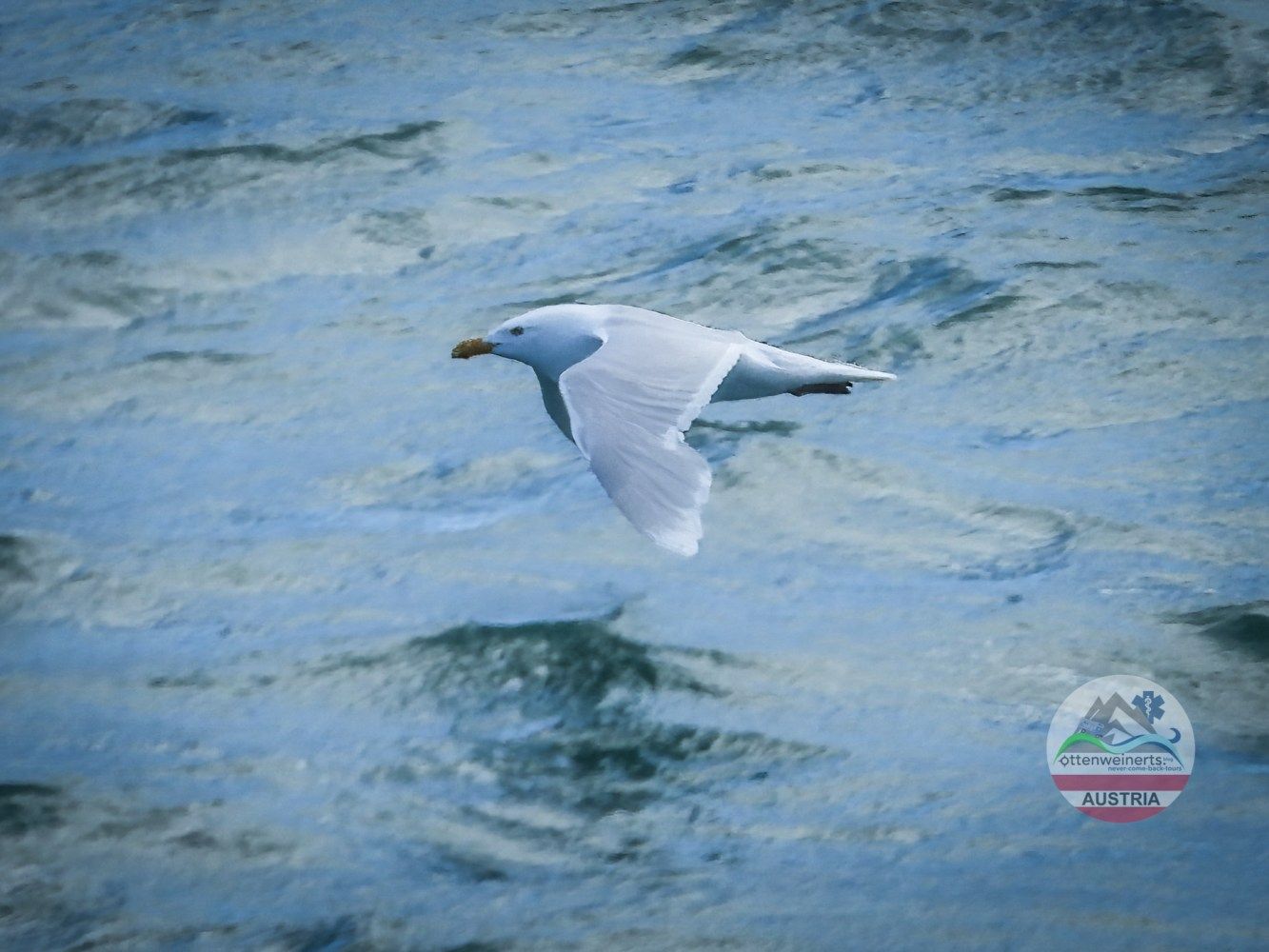
Northern Fulmars, black Guillemots and black-legged kittiwakes are accompanying us, even two Atlantic puffins fly over the ship. We don´t get to see any polar bears today, but a very picturesque walrus and several bowhead whales. And this is a sensation because these magnificent animals got almost extinct by whaler; the actual population between Greenland and Svalbard is estimated maximum of 300 animals. Therefore, sightings are extremely rare, and we were very luck to see them.

While the captain and part of the crew are on the bridge, trying to find more wildlife with their binoculars, we listen to Hazel´s lecture about polar bears – distribution area, population, anatomy, reproduction. One very interesting aspect are the very rare “grolars” or “pizzlies”, the offspring of polar bears and grizzly bears.

After lunch, we fall asleep in our cabin, therefore missing Marco´s lecture about development and dynamics of sea ice, but we wake up in time for Williams´ exciting presentation about the Norwegian national hero Fritjof Nansen and Kaitlyns´ lecture about bowhead whales.

Soon after dinner, already on our way south towards Hinlopen Strait, the sea gets a bit unpleasant, the usually open bridge is closed. The antiemetic party has started, passengers start asking for the ships´ doctor (and no, this time it´s not me, fortunately). We are feeling ok and we listen to Jens´ presentation about Umberto Nobile, his airship expedition to the North Pole and the rescue missions after the second, ill-fated attempt with the “Italia”. Meanwhile, the fog got very dense, the swell has increased and the ship is rolling from one side to the other. We hope that conditions will be better tomorrow, otherwise the zodiac outing to Alkefjellet, the bird cliffs, won´t be possible.

240706 – Tag des Walrosses / Day of the walrus #oceanwideexpeditions >

Über Nacht sind wir zu den 7 Inseln gefahren, der nördlichsten europäischen Landmasse, die noch mit „normalen“ Mitteln erreichbar ist, nur mehr 1024,3 km vom Nordpol entfernt. Vormittags kreuzen wir zuerst mit den Zodiacs vor Phippsøya, benannt nach Constantine John Phipps, der 1773 vergeblich versuchte, von hier aus den Nordpol zu erreichen. Er hatte übrigens einen 14jährigen Landsmann an Bord, den späteren Admiral Lord Nelson; eine der 7 Inseln heißt daher Nelsonøya. Einer der Guides fischt ein Stückchen Treibeis aus dem Wasser, in dem arktischer Krill zu sehen ist, sogar ohne Lupe.

Für die Walrossherde am Strand von Phippsøya brauchen wir weder Lupe noch Fernglas, denn wir können sie schon hören und riechen, bevor wir sie sehen, und Dickschnabellummen (Brunich‘s Guillemots) und Trottellummen (Common Guillemots) begleiten uns. Dann gehen wir an Land, spazieren über den Strand, vorbei an dem Walfischwirbel vor der alten Hütte und sammeln ein paar Plastikteile ein, die sich hierher verirrt haben.

Nachmittags kreuzen wir bei strahlendem Sonnenschein und blauem Himmel vor Parryøya, benannt nach William Edward Parry, der 1827 einen – ebenfalls missglückten – Versuch machte, mit Rentieren und Schlittenbooten den Pol zu erreichen. Und hier glühen die Kameras – auf einem warmen Felsen räkeln sich Dutzende Walrosse in der Sonne, etliche Kälber sind auch dabei, und ein paar der neugierigen Tiere schwimmen immer wieder in unsere Richtung. An den Steilklippen brüten Dreizehenmöven (Kittiwakes), im Schnee darunter sind – nicht mehr frische – Fuchs- und Eisbärspuren zu sehen.

Abends präsentiert Marcel den Plan für morgen, wir fahren noch weiter nach Norden, ins Packeis, in der Hoffnung, dort dann Eisbären zu sichten. Anschließend erzählt uns Hazel viel Wissenswertes über Walrosse und Julian spricht über „die alten Steine von Svalbard“, die Gesteinsarten und Formationen.

Saturday, July 6th – Day of the walrus

In the morning, we wake up near the 7 Islands, the northernmost European landmass reachable by normal means, only 636,47 miles away from the North Pole. We take a zodiac cruise near Phippsøya, named after Constantine John Phipps, who unsuccessfully tried 1773 to reach the North Pole from here. He had a 14-year-old fellow Englishman with him, the future admiral Lord Nelson – one of the 7 islands is named Nelsonøya. One of our guides fishes a piece of drift ice out of the water to show us the embedded krill, visible even without a magnifying glass.

And there is also no need for magnifying glass or binoculars to spot the group of walruses at the shore of Phippsøya – we can hear and smell them before they come into sight. A lot of sea birds – Brunich‘s Guillemots and Common Guillemots are accompanying us, we take our zodiacs to the shore, walk along the beach near the old whale bones and collect some plastic garbage.

In the afternoon – perfect sunshine and blue skies – we cruise near Parryøya, named after William Edward Parry, who made another failed attempt to reach the North Pole in 1827, with reindeer and sledge-boats. And here, our cameras are in danger of overheating – on a nice, sunny, rocky beach, there are dozens of walruses including many calves, enjoying the sun, and a few very inquisitive animals are ogling us, obviously as curios about us as we are of them. On the cliffs above, kittiwakes are nesting, in the snow at the foot of the cliffs we can see tracks of arctic fox and polar bears.

In the evening, at the daily recap, Marcel presents the plans for tomorrow – we will go further north, into the pack ice, hoping to see polar bears there. Afterwards, marine mammal expert Hazel talks about walruses and geologist Julian talks about the “old rocks of Svalbard”, rock morphology and formations.

240705 – Kein Eisbär in Texas / No polar bear in Texas #oceanwideexpeditions >

Um 6:45 weckt uns die liebliche Stimme von Marcel, unserem Expeditionsleiter, mit der Meldung „Eisbär voraus“. Schlaftrunken schlüpfen wir in ein paar warme Kleidungsschichten, schnappen die Kameras, begeben uns ans Vorderdeck und halten Ausschau. Einer der Guides hat ein Beweisfoto auf seiner Kamera und zeigt uns, wo der Eisbär sein soll. Ich sehe tatsächlich einen leicht gelblichen Fleck im weißen Schnee weit voraus am Ufer und drücke voller Begeisterung immer wieder auf den Auslöser. Nachher bewundern wir viele Fotos von dem hübschen Felsen im Schnee ….. der Bär war längst auf und davon.

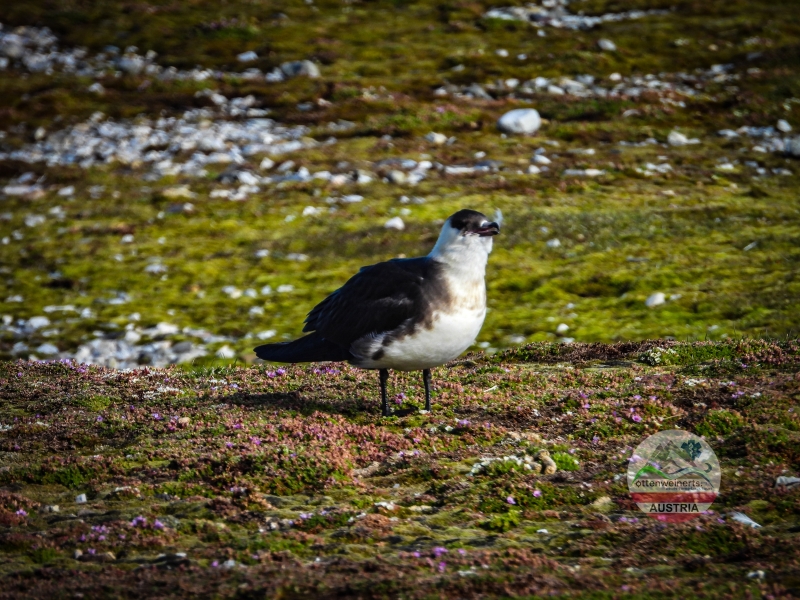
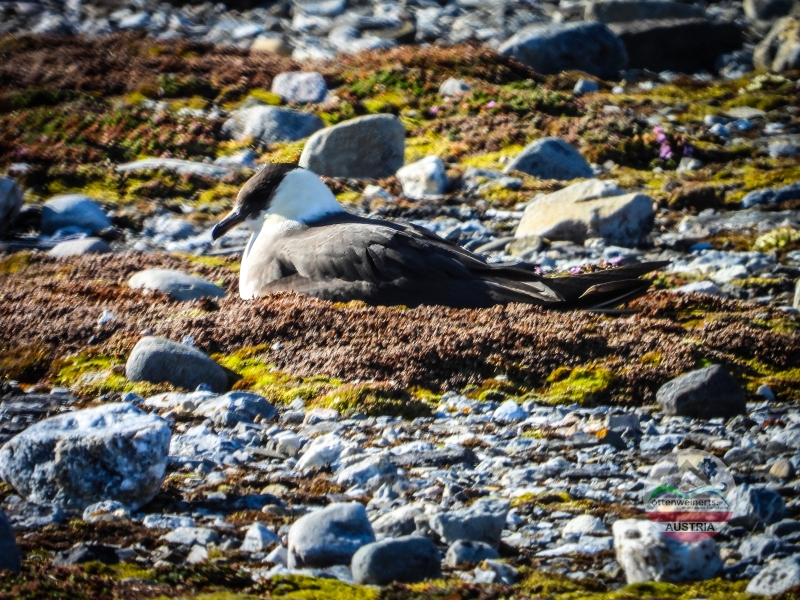
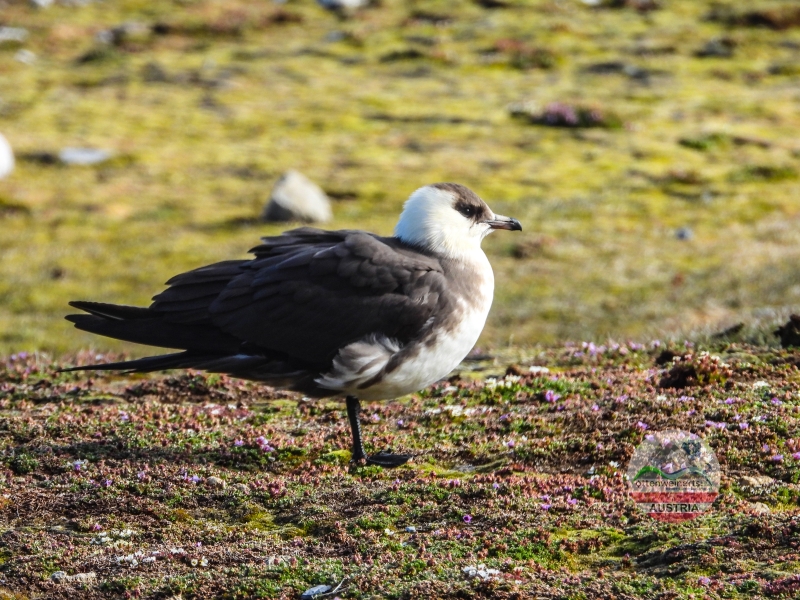
Nach dem Frühstück geht es mit den Zodiacs an Land, zur „Texas Bar“, einer Trapperhütte von 1927 – hat nichts mit Texas zu tun und ist auch keine Bar – die Erbauer haben sich einfach einen Spaß erlaubt. Aber auf den Regalen stehen immerhin noch etliche Alkoholflaschen, gefüllt natürlich! Von dort machen wir einen Rundgang, wo wir unter anderem nördliche Alpennelken sehen und unseren ersten Sterntaucher – sehr entspannt, weil gut getarnt, nur am roten Fleck am Hals erkennbar. Die Skuas (große Raubmöwen) dagegen sind äußerst verärgert und fliegen heftige Attacken auf eine Touristengruppe – wahrscheinlich zu nahe am Nest vorbeigekommen.

Dann gibt es die Möglichkeit für einen „polar plunge“, der hier allerdings ein „polar swim“ ist, das heißt am Ufer ausziehen, ins Wasser waten und schwimmen – und das kostet deutlich mehr Überwindung als der Sprung direkt vom Schiff in die eisigen antarktischen Fluten voriges Jahr. Egal, wir sind hier, es ist die wahrscheinlich einzige Chance in meinem Leben, nördlich vom Polarkreis schwimmen zu gehen, also ab ins Wasser. War gar nicht so schlimm, meine Zehen sind bloß ein wenig taub für den Rest des Tages. Sigi hat eine gute Ausrede – er ist für die Dokumentation zuständig.

Nach dem Mittagessen folgt eine Zodiactour zum Monacobreen, dem Monaco-Gletscher, benannt nach Prinz bzw. Fürst Albert von Monaco, der Ende des 19. / Anfang des 20. Jhds mehrere Spitzbergen-Expeditionen finanzierte und auch selbst teilnahm. Wir haben wieder Glück mit dem Wetter, erst gegen Ende der Tour beginnt es leicht zu regnen, aber da sind wir schon fast zurück bei unserem Schiff. Nach der abendlichen Zusammenfassung des Tages hören wir von Marco Basics der Glaziologie, und dann ist wieder Ornithologe Simon dran, diesmal erzählt er uns einiges über Skuas, die großen Raubmöwen.
Nach dem Abendessen überqueren wir den 80. Breitengrad bei Moffen Island, wo sich mehrere kleine Herden Walrosse am Strand ausruhen – haben wir auch noch nie in freier Wildbahn gesehen – das entschädigt uns für den „Eisbärfelsen“ von heute früh.

Friday, July 5th – No polar bear in Texas

At 6:45 a.m., our expedition leader Marcel´s lovely voice gets us to jump out of our beds – a polar bear is in sight. Half asleep, we put some warm clothes on, pick up the cameras and make our way to the deck. One of the guides has proof – a photo on his camera, and he points in the direction where the bear is supposed to be. I actually spot a yellowish spot in the white snow, and I hit the button on the canmera many times. Afterwards we admire the many, many pictures of …. the pretty yellowish rock in the snow – the polar bear was long gone.

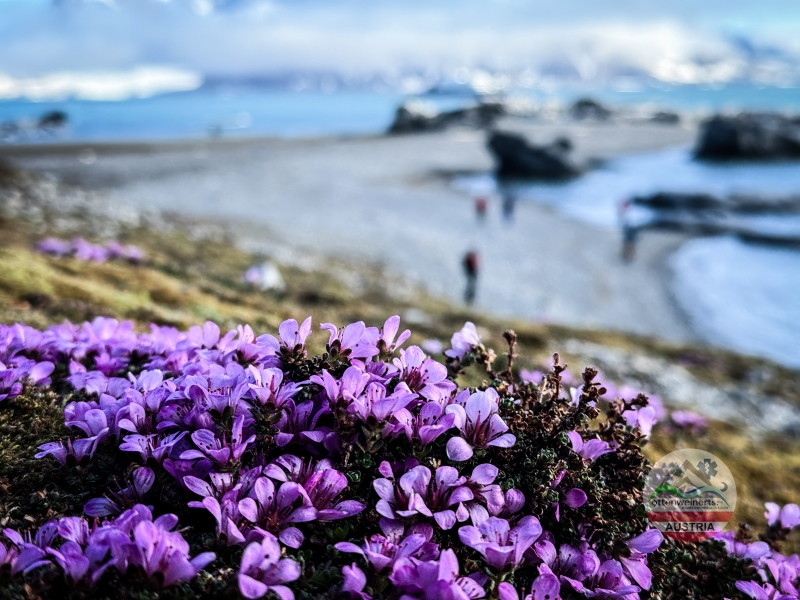
After breakfast, we take the zodiacs for a landing at “Texas Bar”, a trapper hut from 1927. There is no connection with Texas whatsoever, and it´s also not a bar – the builders of the hut were just having fun. But there are some alcohol bottles on the shelves inside the hut, most of them still containing liquids. We take a walk, get to see purple saxifrages and a red-throated diver – very relaxed because he is very well camouflaged, only the red coloration on his throat is visible. The skuas on the other hand are very annoyed, flying attacks on one of our groups – maybe they got too close to their nest.

Then we have the opportunity for a polar plunge, which turns out to be a polar swim rather than a plunge – we have to undress at shore, walk into the water until it´s deep enough and then swim – and that is much harder than the plunge directly from the zodiac into the icy waters of Antarctica last year. Doesn´t matter, it´s probably my one and only chance to go swimming so close to the North Pole, so off with clothes and into the water. Wasn´t so bad, by the way, just my toes are feeling a bit numb for the rest of the day. Sigi has a good excuse – he is responsible for documenting the whole endeavor.

After lunch, we go on a zodiac cruise towards the Monaco glacier, named after Prince Albert of Monaco who financed and also accompanied several expeditions to Spitzbergen around the turn of the last century. We are in luck with the weather again, it starts raining at the end of our tour when we are almost back at the ship. After today´s recap, Marco from Italy presents a lecture about the basics of glaciology, and ornithologist Simon talks about Skuas, the huge predatory gulls.

After dinner, we cross 80° latitude near Moffen island, where several groups of walruses are napping at the shore – we have never seen walruses in their natural habitat, that sort of compensates this mornings´ “polar bear rock”.

240704 – in der nördlichsten Siedlung der Welt / the world´s northernmost community #oceanwideexpeditions >

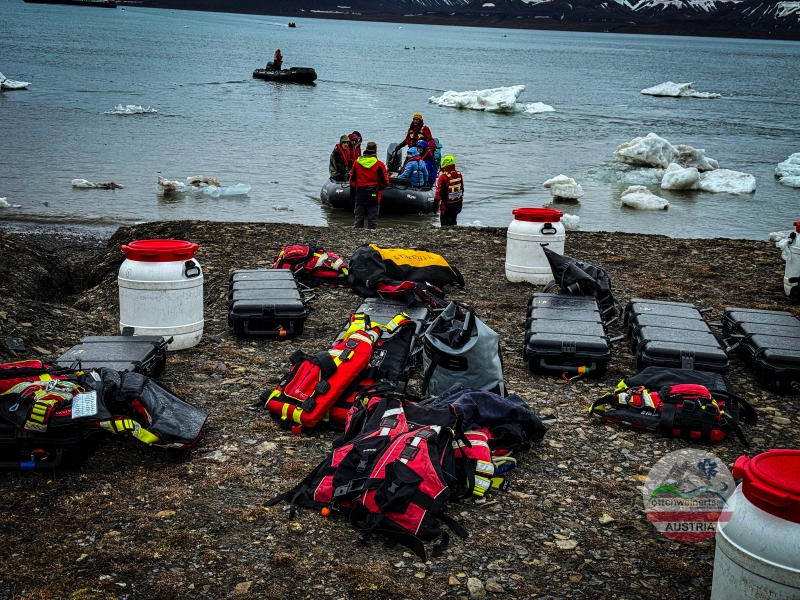
Über Nacht haben wir die Strecke bis in den Krossfjord an Spitzbergens Westküste zurückgelegt. Heute morgen gibt es zuerst Frühstück mit Aussicht auf den Lilliehookbreen (Gletscher) bei strahlendem Sonnenschein, und dann noch weitere verpflichtende Briefings: Richtiges Verhalten im Zodiac (nicht aufstehen ohne den Fahrer zu fragen), Regeln für den Landgang (nichts hinterlassen, nichts mitnehmen) und was tun bei Eisbär-Sichtungen (nicht anlocken, nicht streicheln). Vor dem Mittagessen bekommen wir unsere Leih-Gummistiefeln ausgefolgt, die wir dann am frühen Nachmittag im Kingsfjord das erste Mal benötigen.

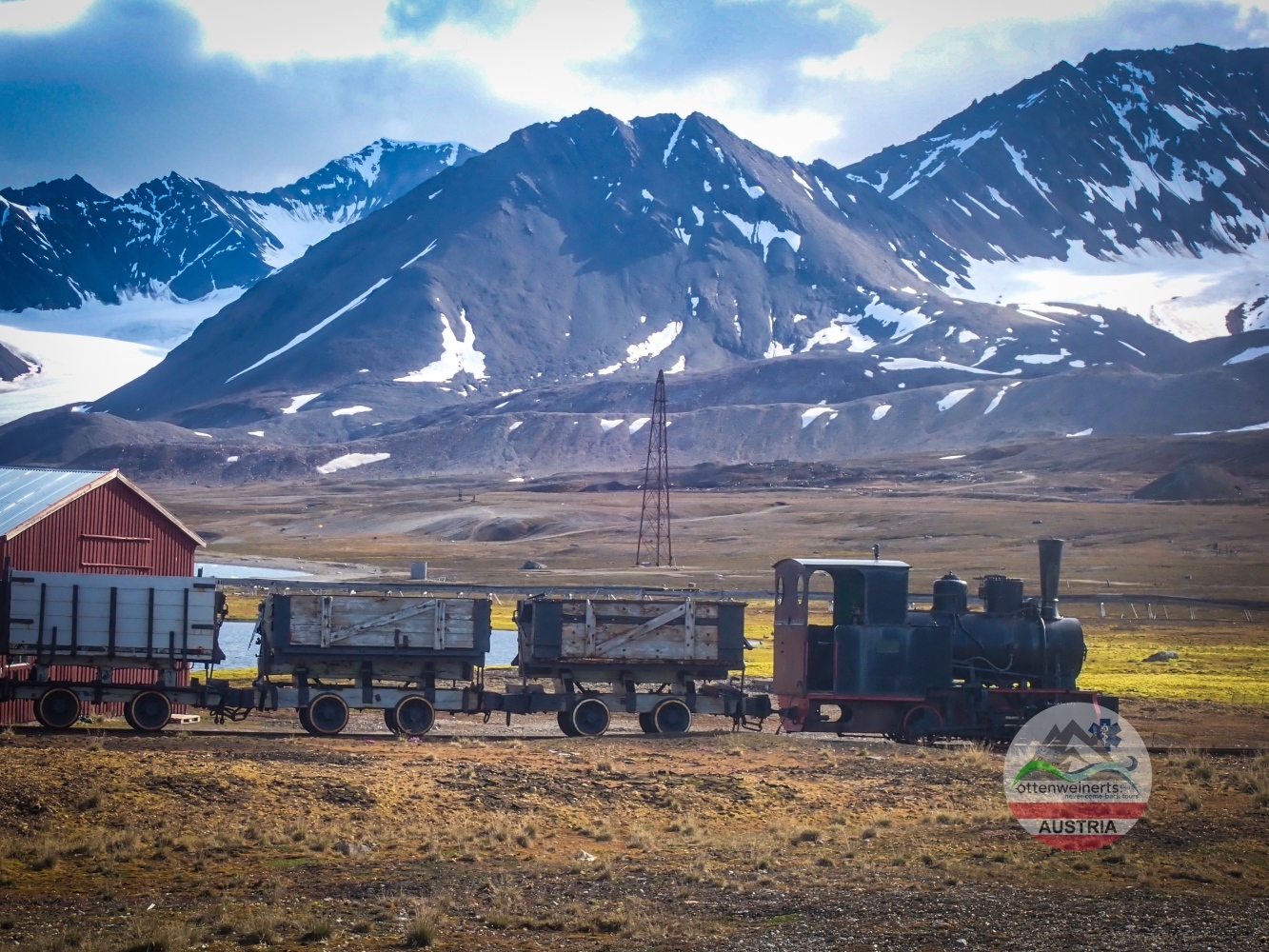
Mit den Zodiacs landen wir in Ny-Ålesund, die nördlichste Siedlung der Welt, einst als Bergbausiedlung gegründet; die alte Lokomotive für den Kohletransport steht noch hier. Ein schweres Grubenunglück bedeutete 1963 das Ende des – ohnehin nicht sehr rentablen – Kohlebergbaus. Heute arbeitet hier eine internationale Wissenschaftergemeinschaft an Forschungsgebieten im Bereich Klima und Umwelt, Atmosphäre, marines Leben und Ozeanographie. Für unsere chinesischen Mitreisenden ist ein Selfie vor der chinesischen „Yellow River Research Station“ natürlich ein Muss.

Wir wandern durch die kleine Ortschaft mit knapp unter 200 Bewohnern (zumindest jetzt, im Polarsommer), schauen in das alte Postamt (leider gibt’s den alten Poststempel nicht mehr, weil Touristen ihre Reisepässe damit gestempelt haben – hätten wir natürlich nie getan, niemals, wir doch nicht…….), und kaufen ein paar Souvenirs im nördlichsten Shop der Welt, wo man schon weit vorausplant: auf den T-Shirts steht Ny-Alesund, 79° nördliche Breite – das wird aufgrund der Plattentektonik in ein paar Jahrmillionen auch zutreffen. Jetzt ist die korrekte Verortung 78°55´, und damit etwa 9 km vom 79. Breitengrad entfernt.

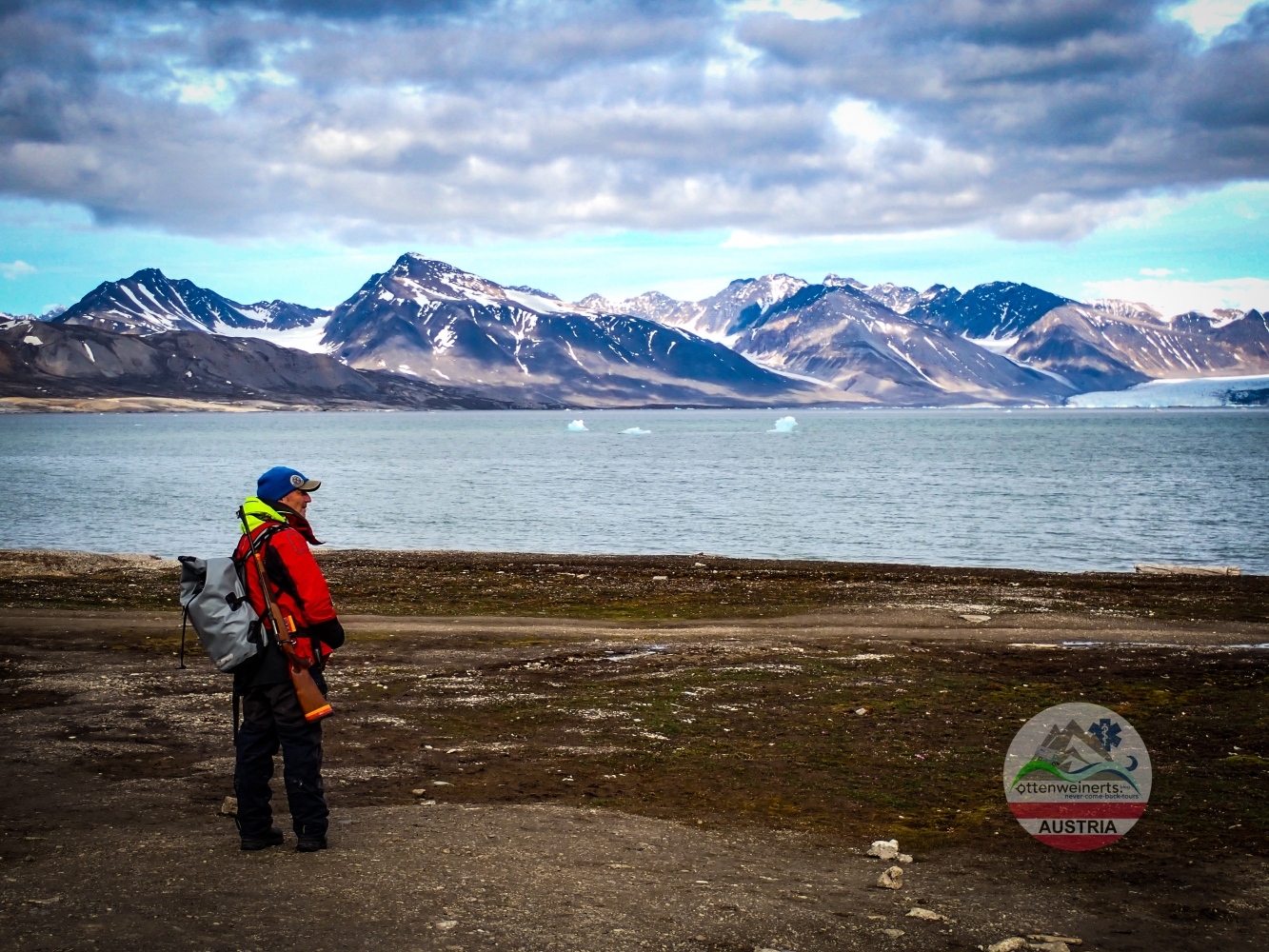
Bei der Büste von Roald Amundsen sammelt sich die Gruppe, um dann geschlossen zum Amundsen-Mast zu marschieren, an dem die Luftschiffe „Norge“ und „Italia“ für die Nordpolexpeditionen 1926 und 1928 vor ihrem Start verankert waren. Der Mast liegt außerhalb der sicheren Zone, daher sind unsere Guides mit Gewehren bewaffnet, für den Fall eines unvorhergesehenen Eisbär-Kontakts. Und im Hintergrund grasen friedlich ein paar Rentiere – übrigens: Rentierbullen tragen ihr Geweih im Sommer, im Herbst werfen sie es ab. Rentierkühe dagegen sind im Winter mit Geweih bewaffnet – also die Rentiere, die Santas Schlitten ziehen, sind lauter Damen!!

Am Rückweg, immer auf den gekennzeichneten Wegen, um die empfindliche Tundra-Flora nicht zu zertrampeln und um brütende Vögel nicht zu stören, erfahren wir im Museum noch mehr Details über die von hier gestarteten Expeditionen sowie über das Leben in diesem abgeschiedenen Ort. Und in der Nähe der Hundebehausungen sehen wir Wissenschafter bei der Arbeit – eine Küstenseeschwalbe wird eingefangen, vermessen, gewogen und beringt – der Rest ihrer Familie ist ziemlich empört und fliegt laut schimpfend Angriffe auf die Forscherin.

Nach der allabendlichen Zusammenfassung der Ereignisse des Tages mit Blick auf den Plan für morgen hören wir noch zwei Kurzvorträge: William aus Frankreich berichtet über Salomon August Andree, der 1897 beim Versuch, mit seinem Ballon zum Nordpol zu fahren, umkam; und von Simon aus Schottland erfahren wir Wissenswertes über Arctic Terns, also Küstenseeschwalben – genau die verteidigungsfreudigen Vögel, die wir nachmittags beobachten konnten.

THURSDAY, July 4th – the world´s northernmost community

In the night, we reached the Krossfjord at Spitzbergen´s west coast – we are having breakfast in front of the magnificent Lilliehook Breen (Glacier), and then there are some more mandatory briefings: how to behave in a zodiac (don´t get up without asking the driver), landing rules (don´t leaving anything, don´t take anything) and polar bear rules (don´t lure them, don´t try to cuddle). After that, it´s boots party – we get our borrowed rubber boots which we will need for the first time in the afternoon in Kingsfjord.

The zodiacs transport us to Ny-Ålesund, the world´s northermost community and another former coal mining town; the old locomotive and some lorries are still visible. A tragic mining accident in 1963 meant the end of the – anyway not very profitable – coal mine. Today, Ny-Ålesund is an international research station where experts from all over the world live and research in the fields of climate and environment, atmosphere, marine life and oceanography. And all of the Chinese guests on board our ship had to take selfies in front of the Chinese “Yellow River” research station.

We stroll through the small village with almost 200 inhabitants (at least now, during the summer), look into the old post office (unfortunately the old postmark is gone because tourists stamped their passports with it – we would never have done that, never ever, of course not ….), and we buy some souvenirs in the northernmost souvenir shop which is fit for the future: the T-Shirts read “Ny-Ålesund, 79° North” – which will be true in a few million years because of the plate tectonics. Now, the correct geographic position is 78°55´ and therefore about 5,6 miles south of latitude 79° north.

Then, we gather at the bust of Roald Amundsen and walk as a group to the Amundsen mast, where the airships “Norge” and “Italia” were moored before their start towards the North Pole in 1926 and 1928 respectively. The mast is located outside the safe perimeter, so our guides are carrying rifles in case of an unexpected meeting with a polar bear. But we see only some reindeer grazing in the background; by the way: male reindeer have their antlers in summer and loose them in autumn. Female reindeer on the other hand, get theirs in autumn and carry them all winter. Therefore, the reindeer pulling Santa´s sleigh – they are all girls!!!

On the way back, always on the marked paths in order not to trample the delicate vegetation or disturb nesting birds, we visit the local museum to learn more about the expeditions which started from here and about life in this secluded place. Near the dog kennel, we see researchers at work – a captured artic tern gets measured, weighed and a ring is put on its leg. The rest of the tern family is rather annoyed, flying heavy attacks on the researcher.

In the evening, after today´s recap, we hear two very interesting lectures: William from France tells us the story of Salomon August Andre, who died trying to reach the North Pole with his balloon in 1897; and Simon from Scotland informs us about Arctic terns – exactly the defensive birds we could watch in action this afternoon.