Sonntag / Sunday / Domingo, November 13, 2022
Tag 210 – Quito II
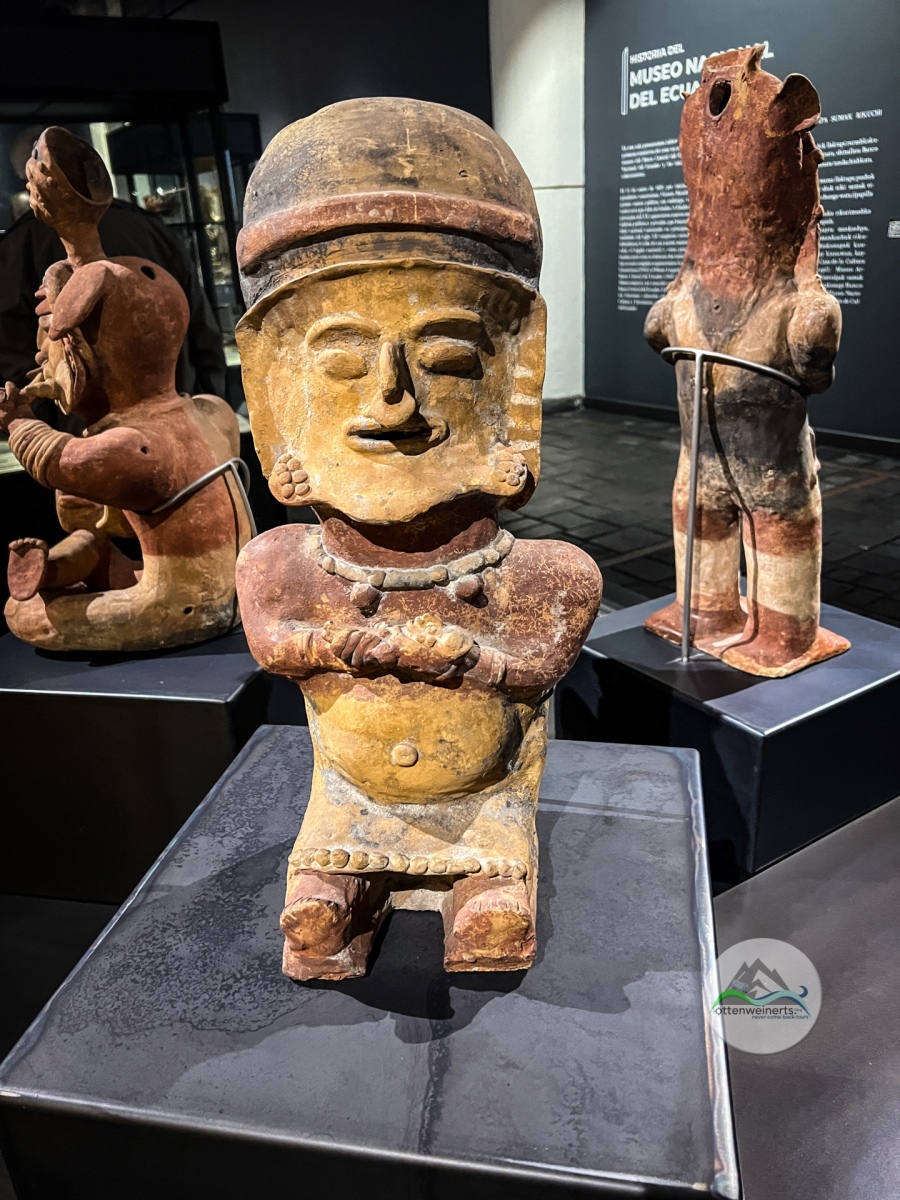
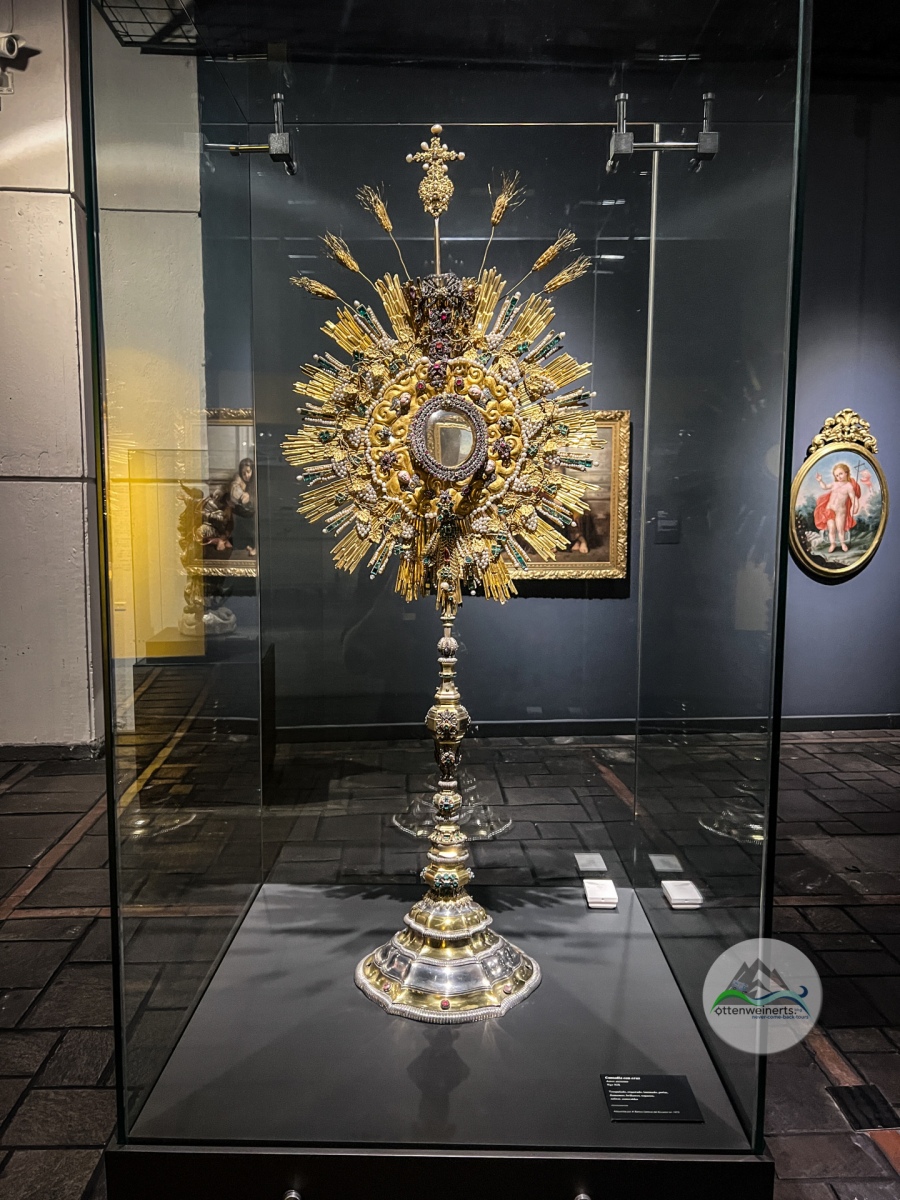
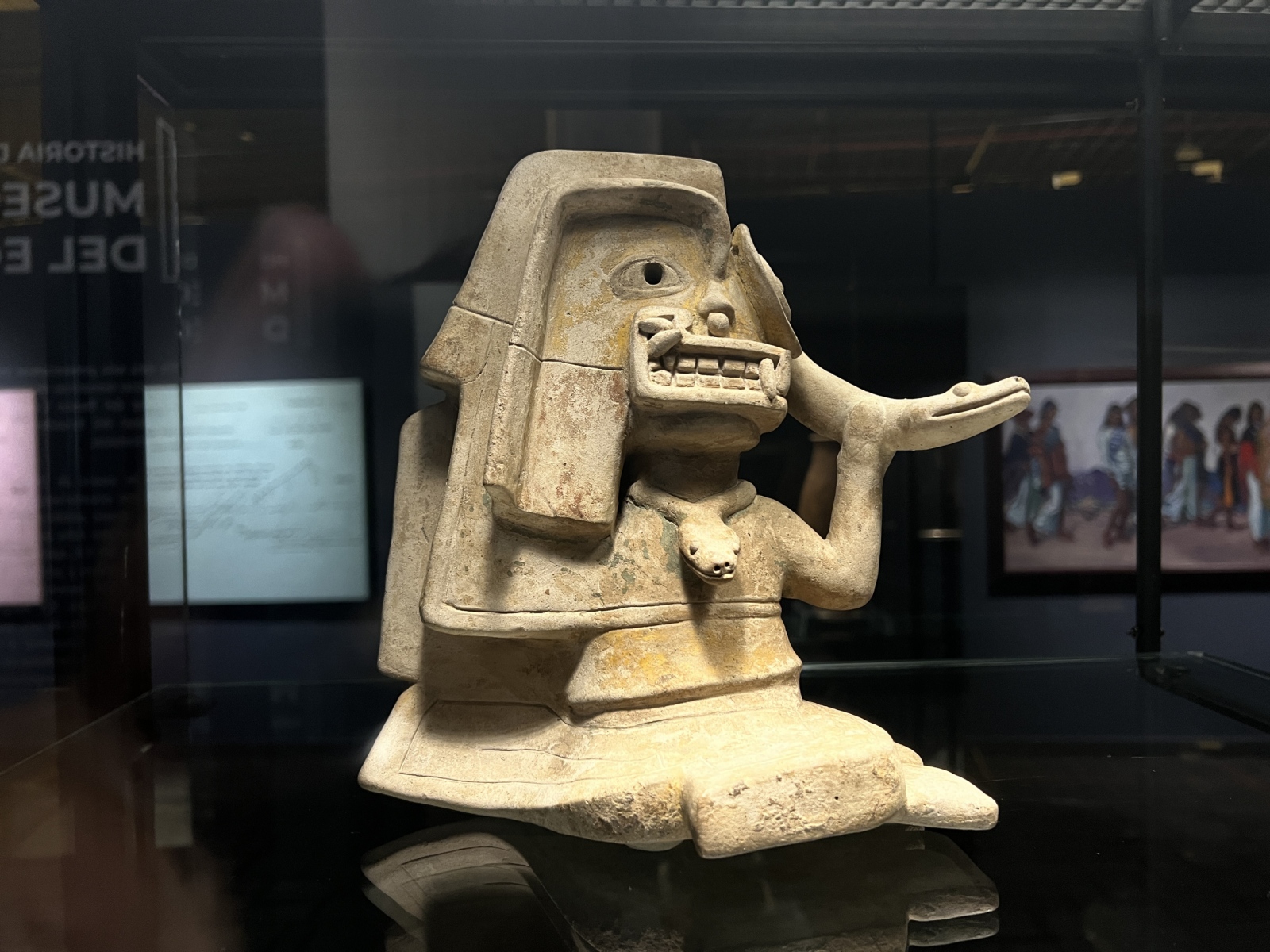
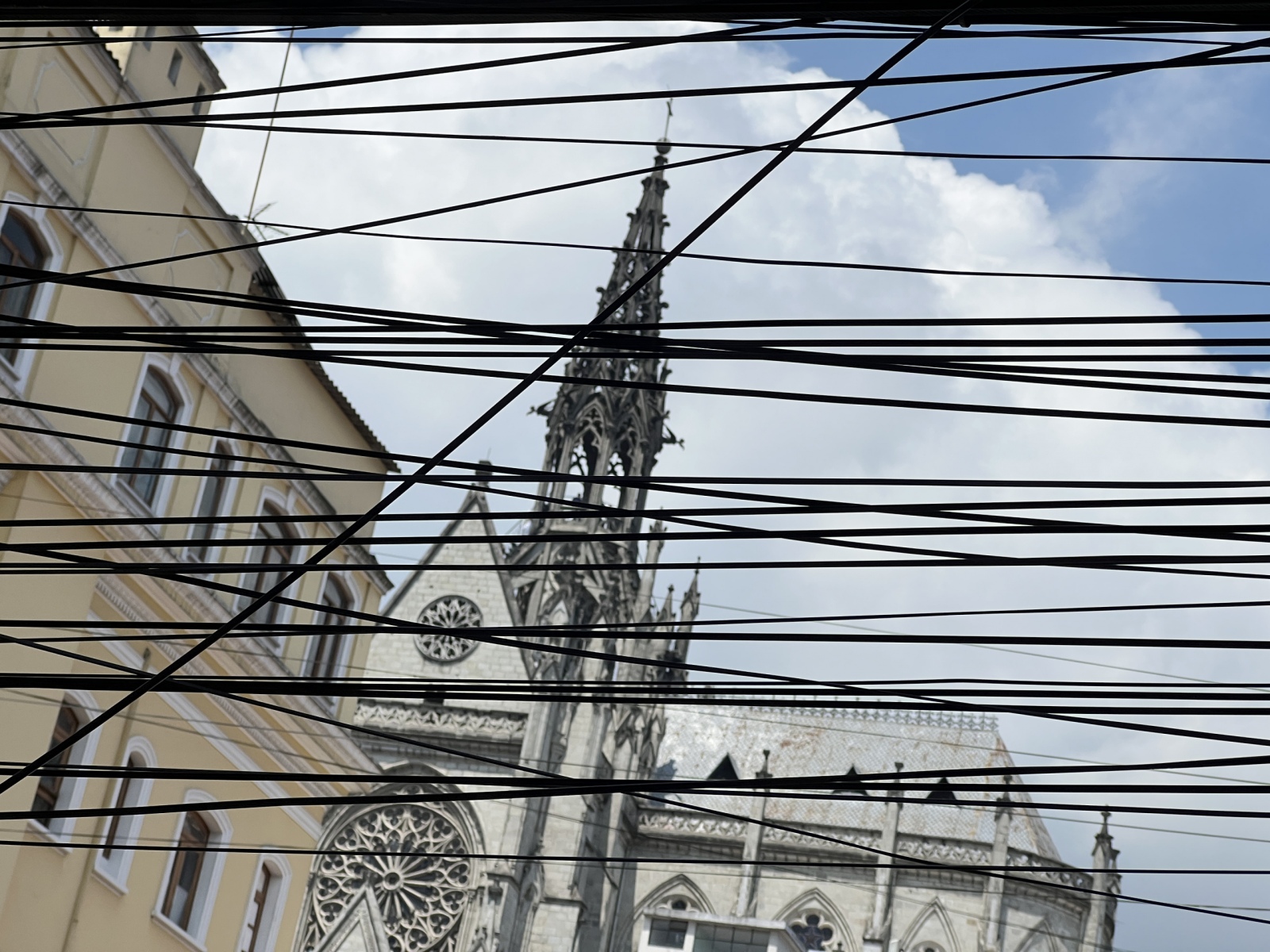
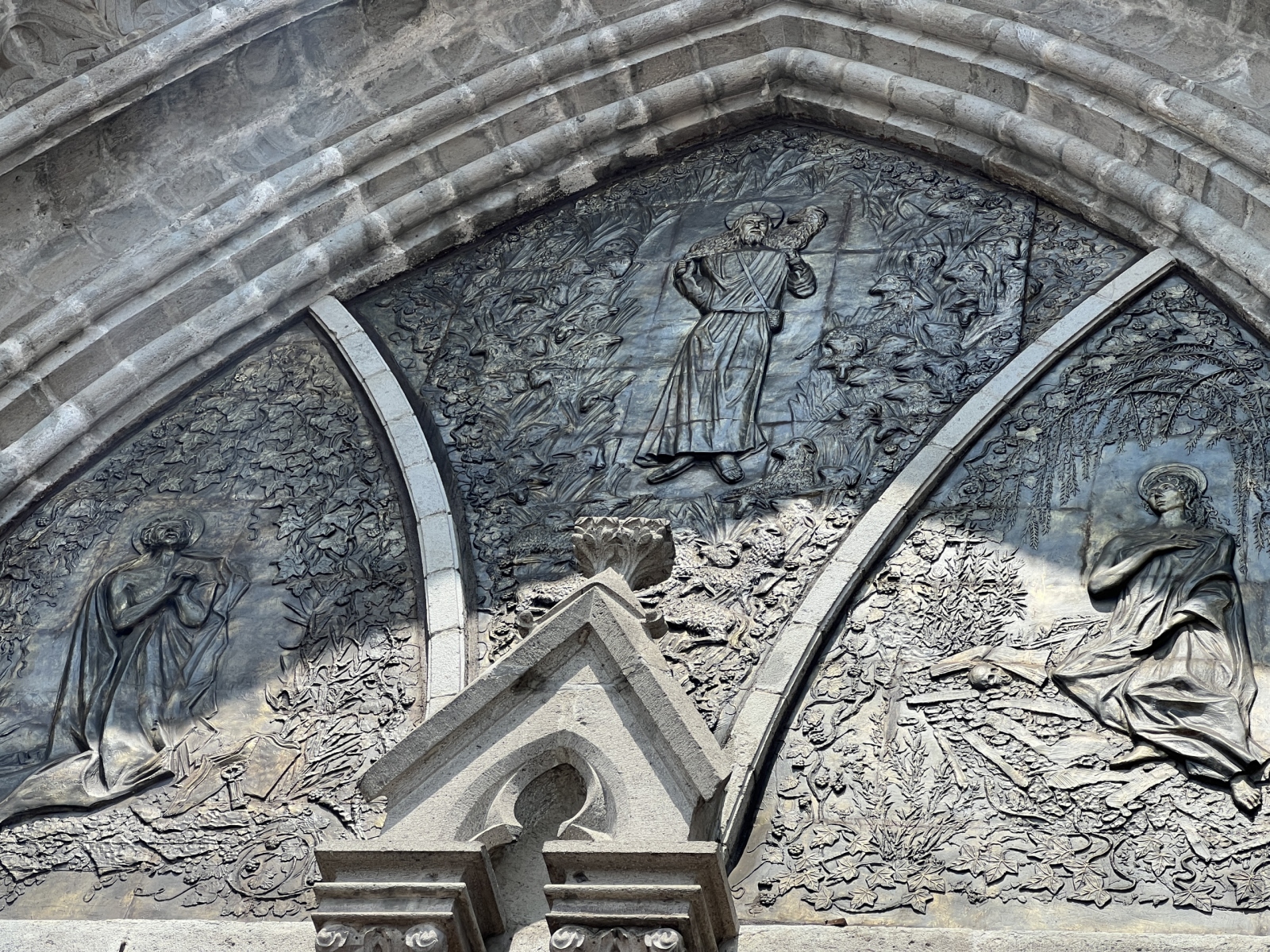
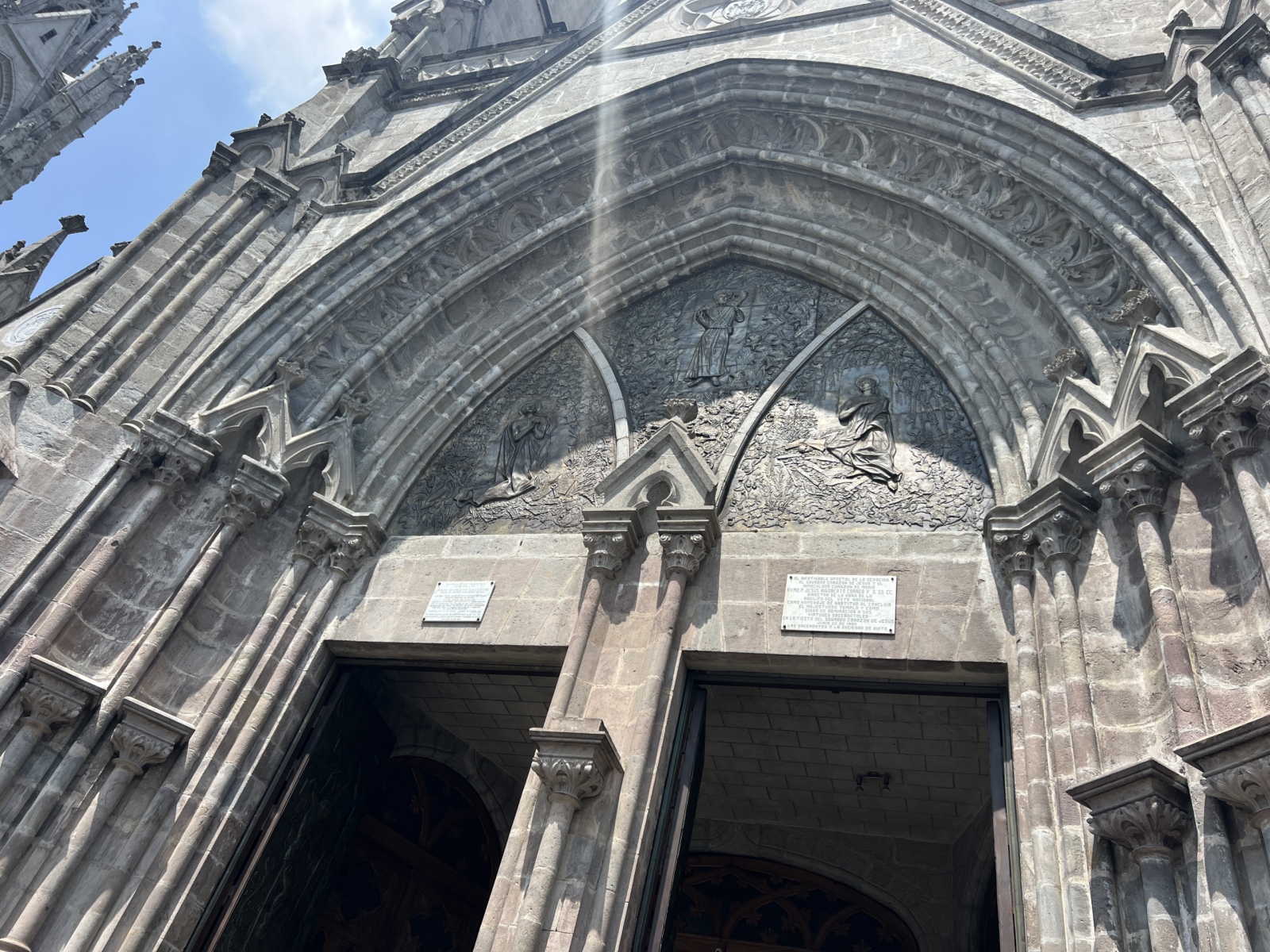
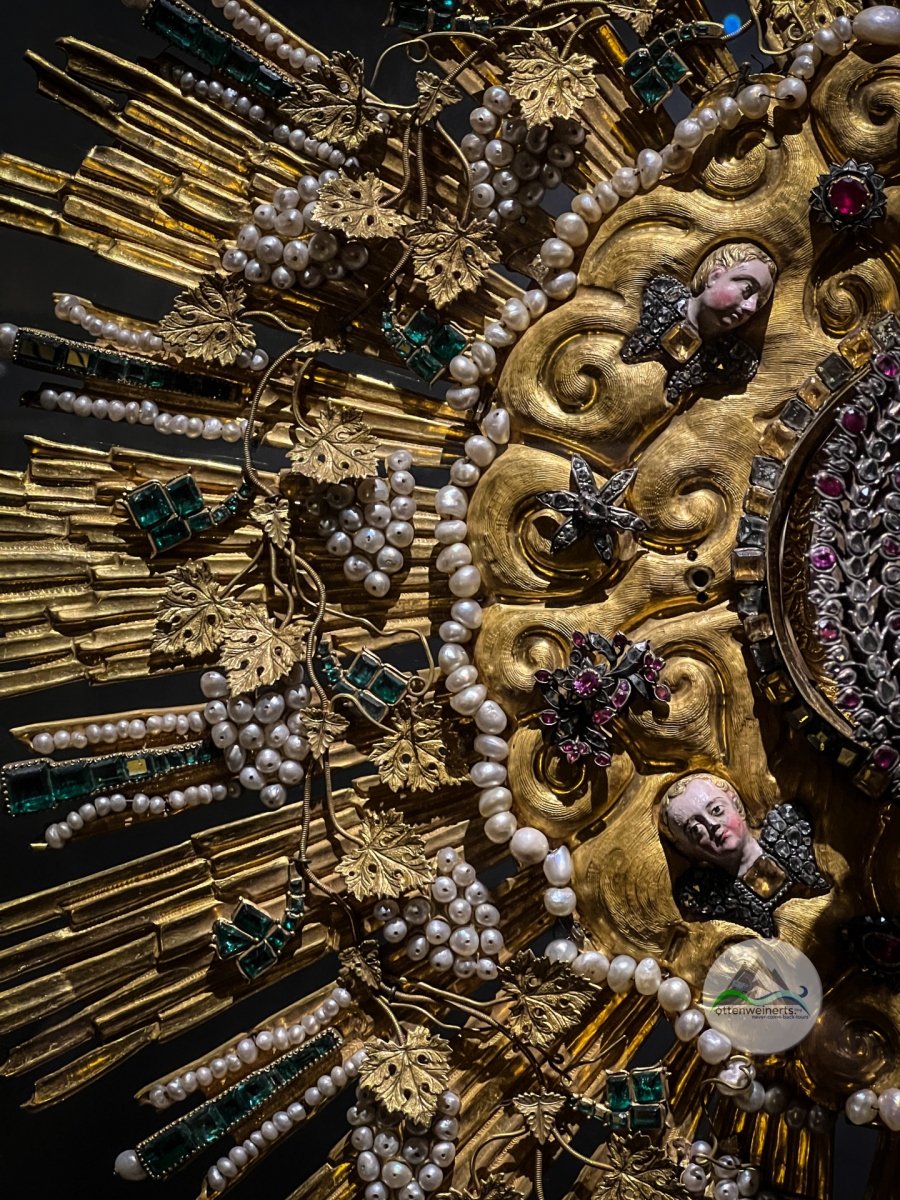
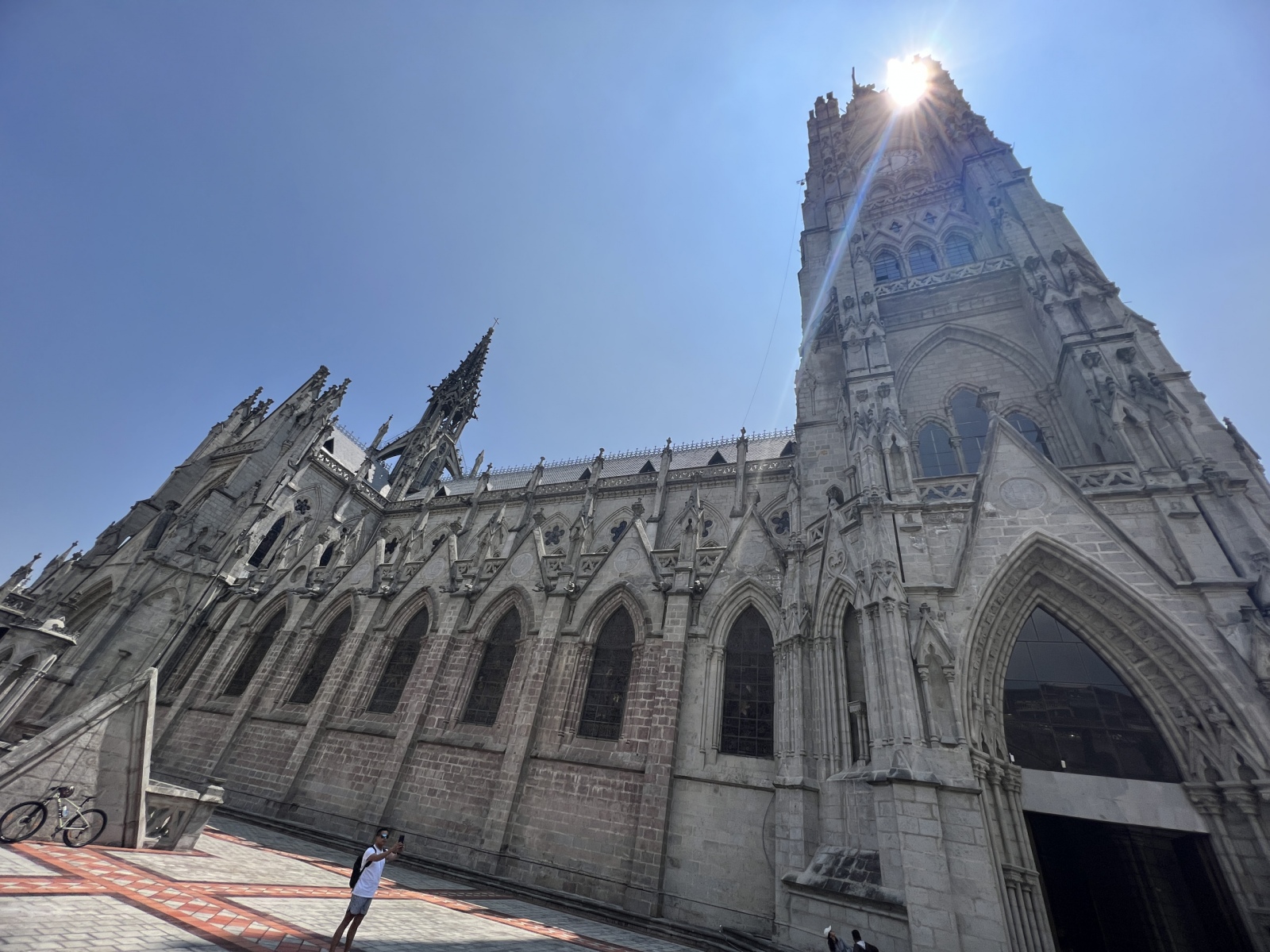
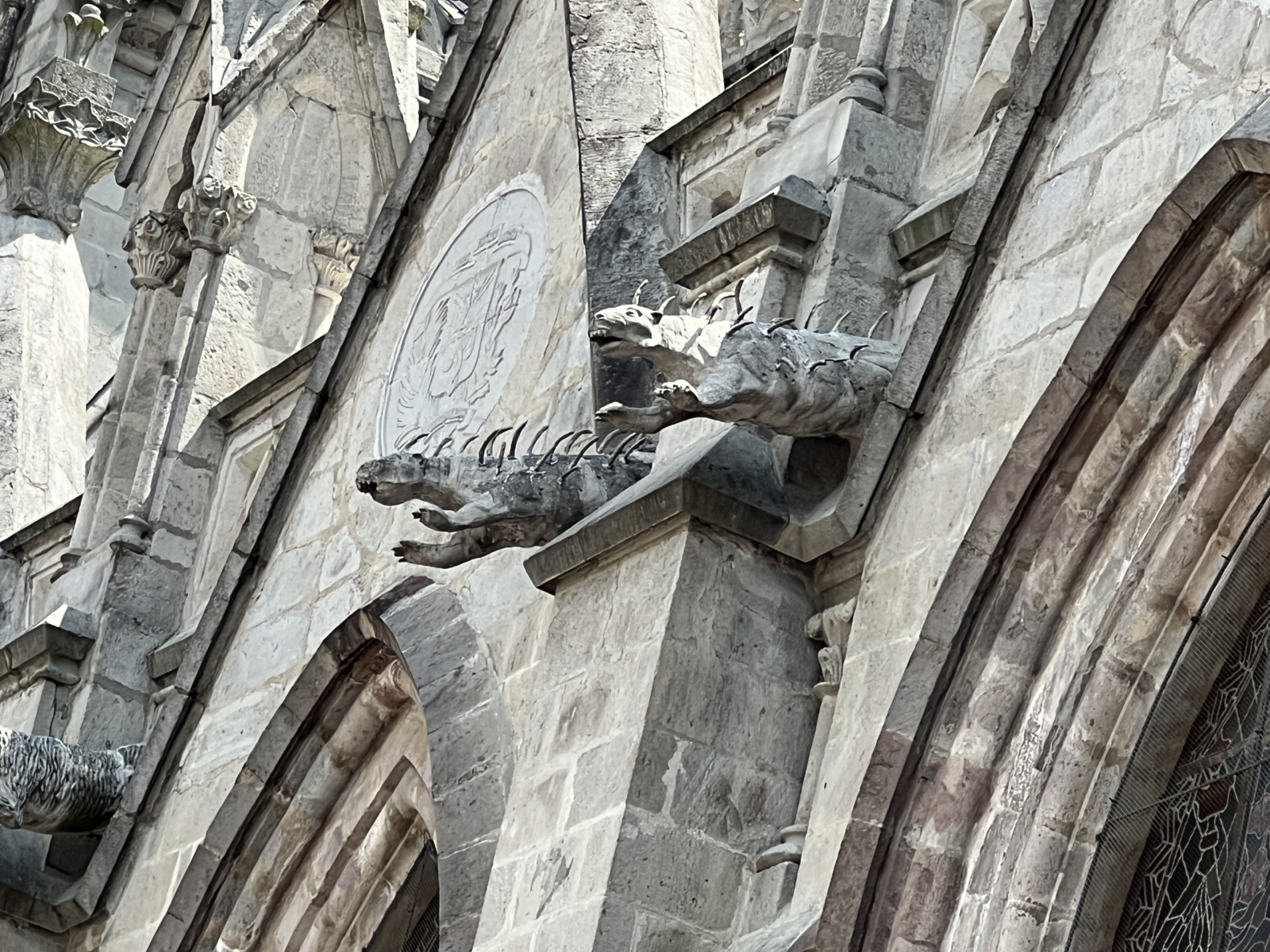
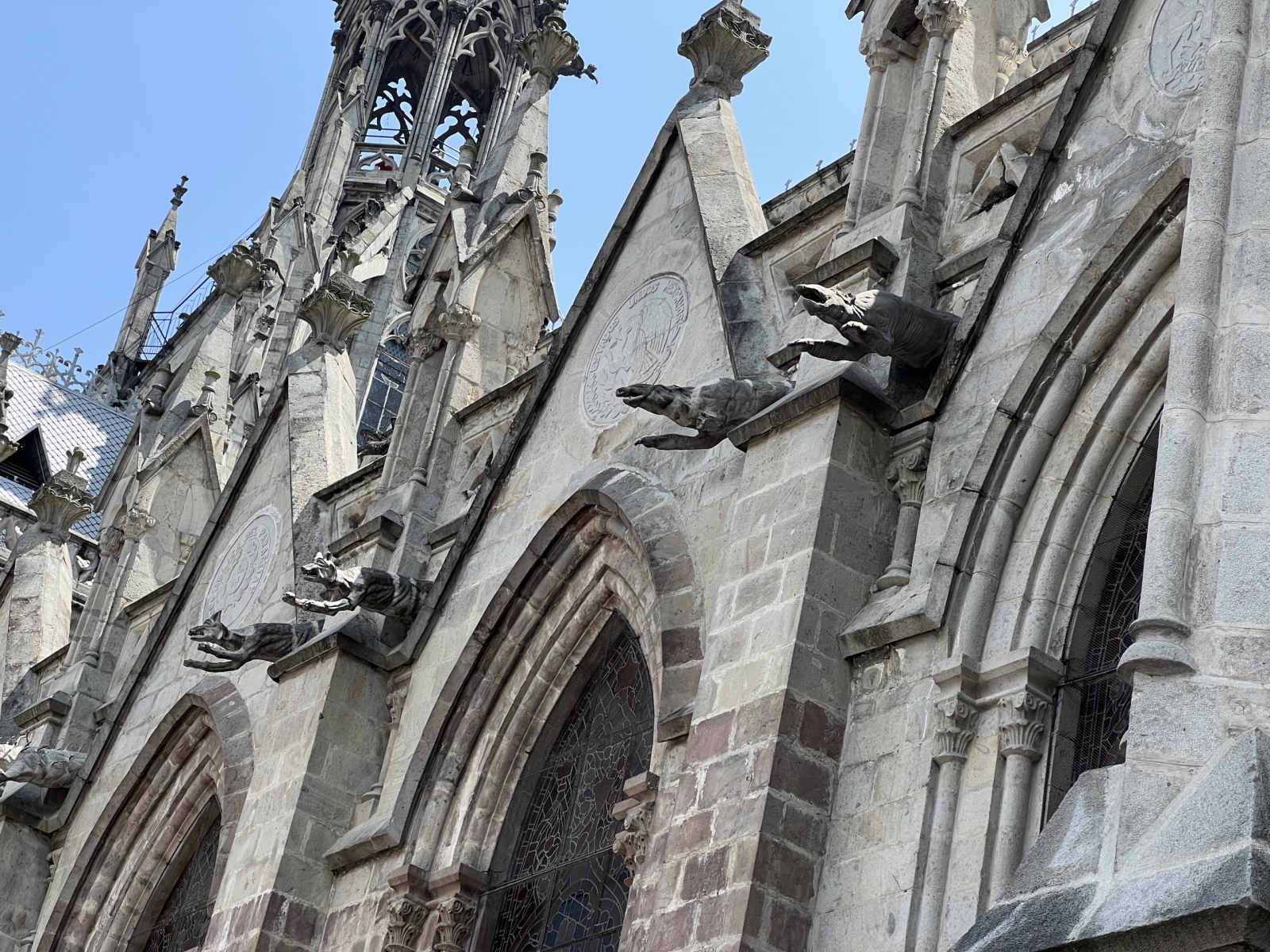
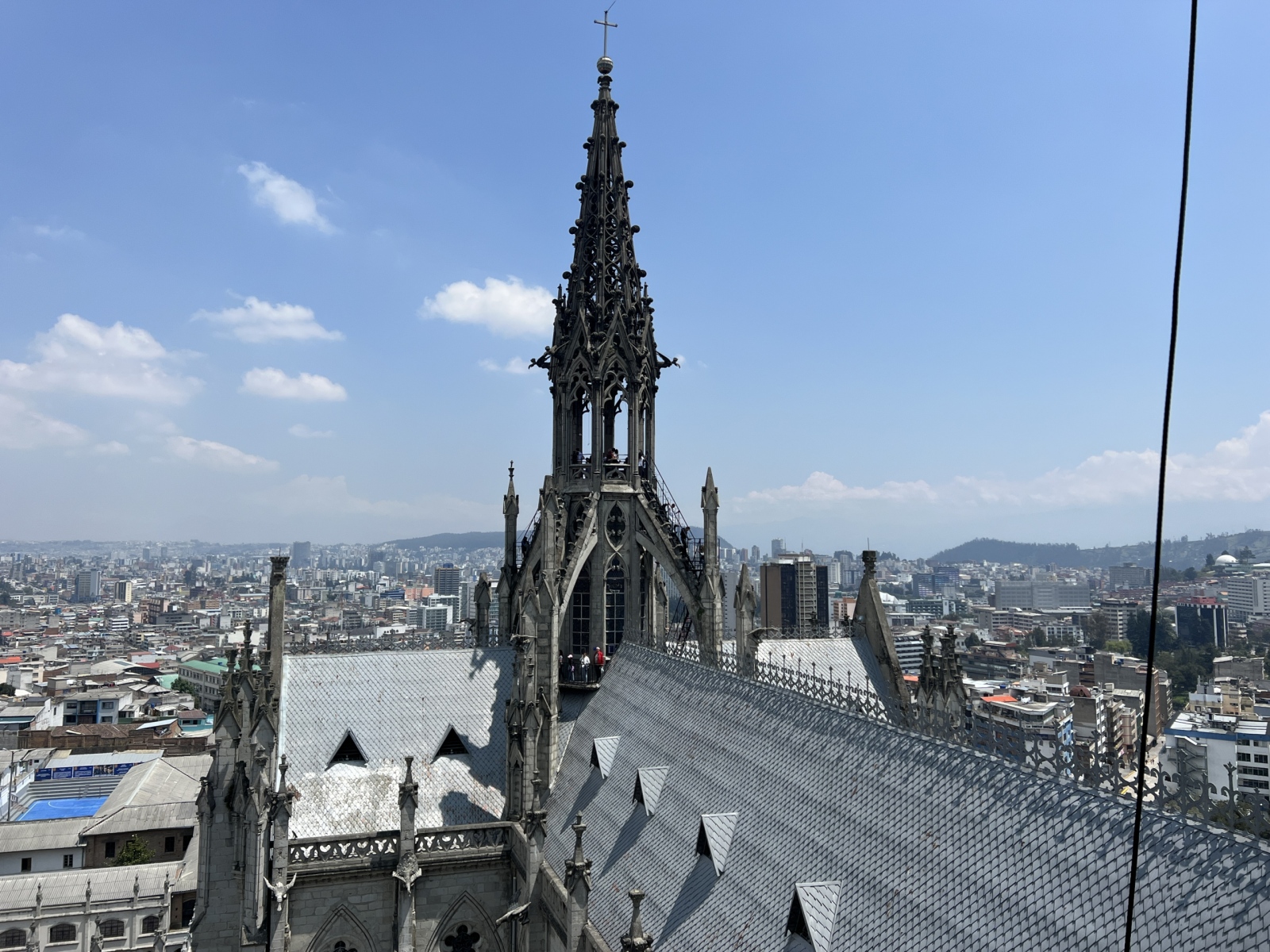
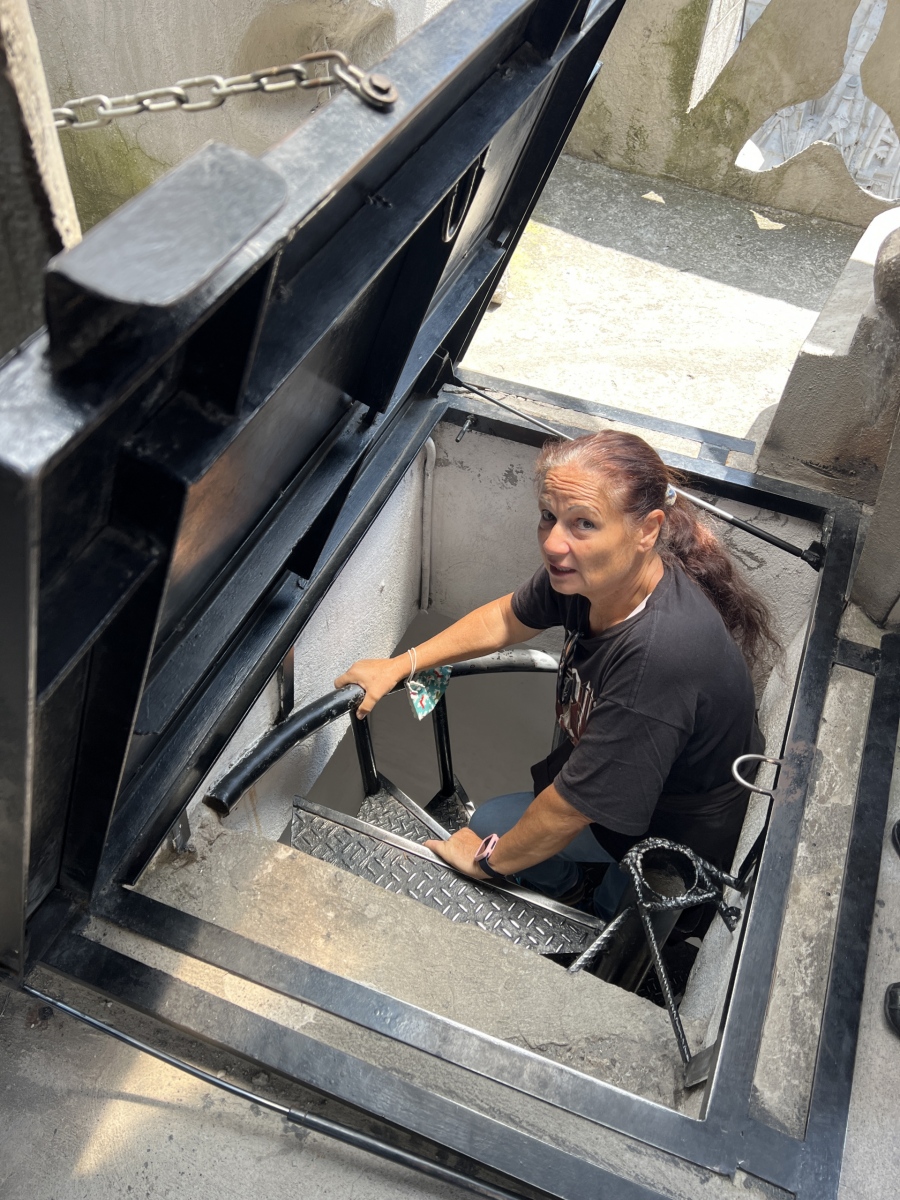
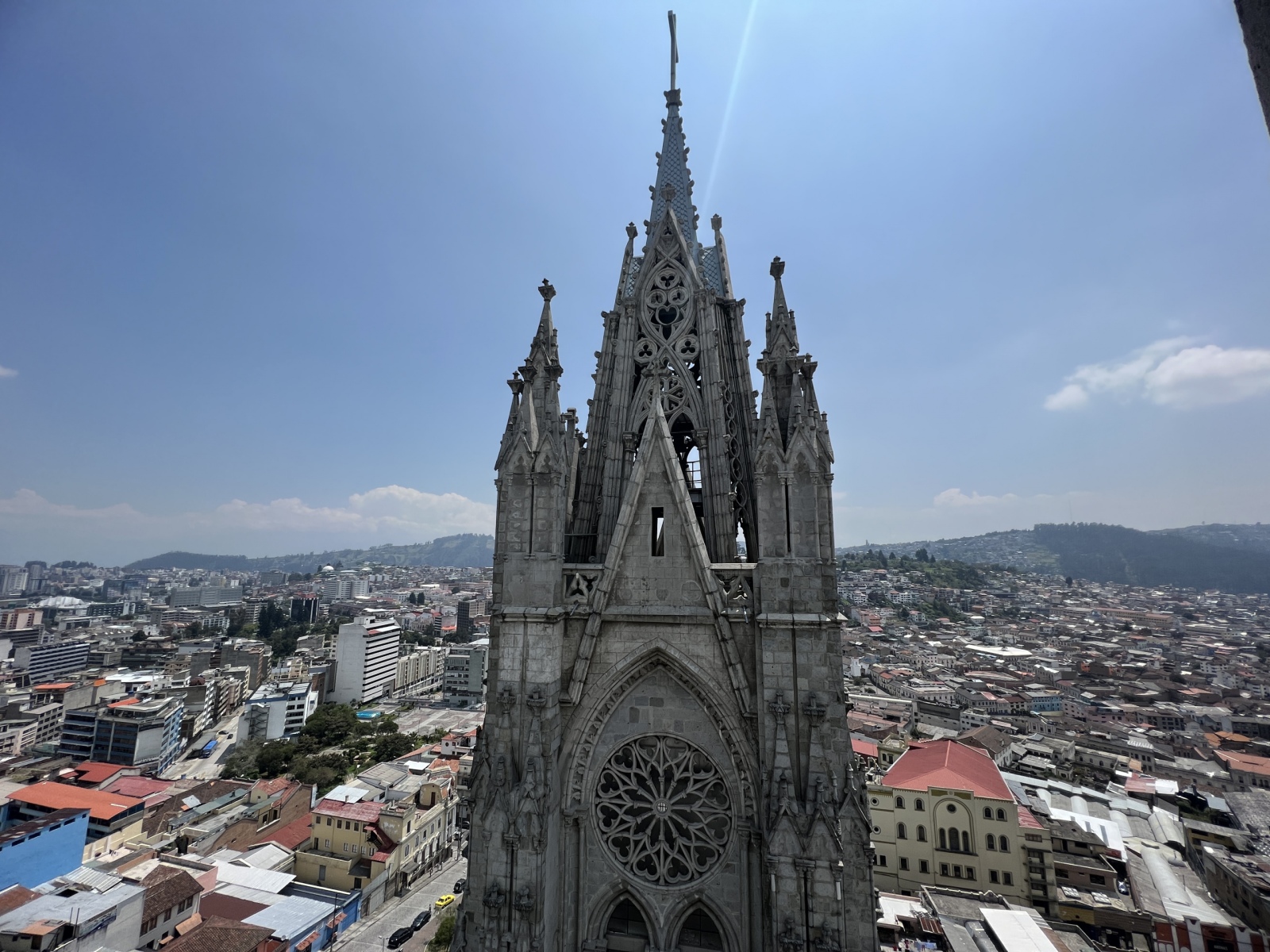
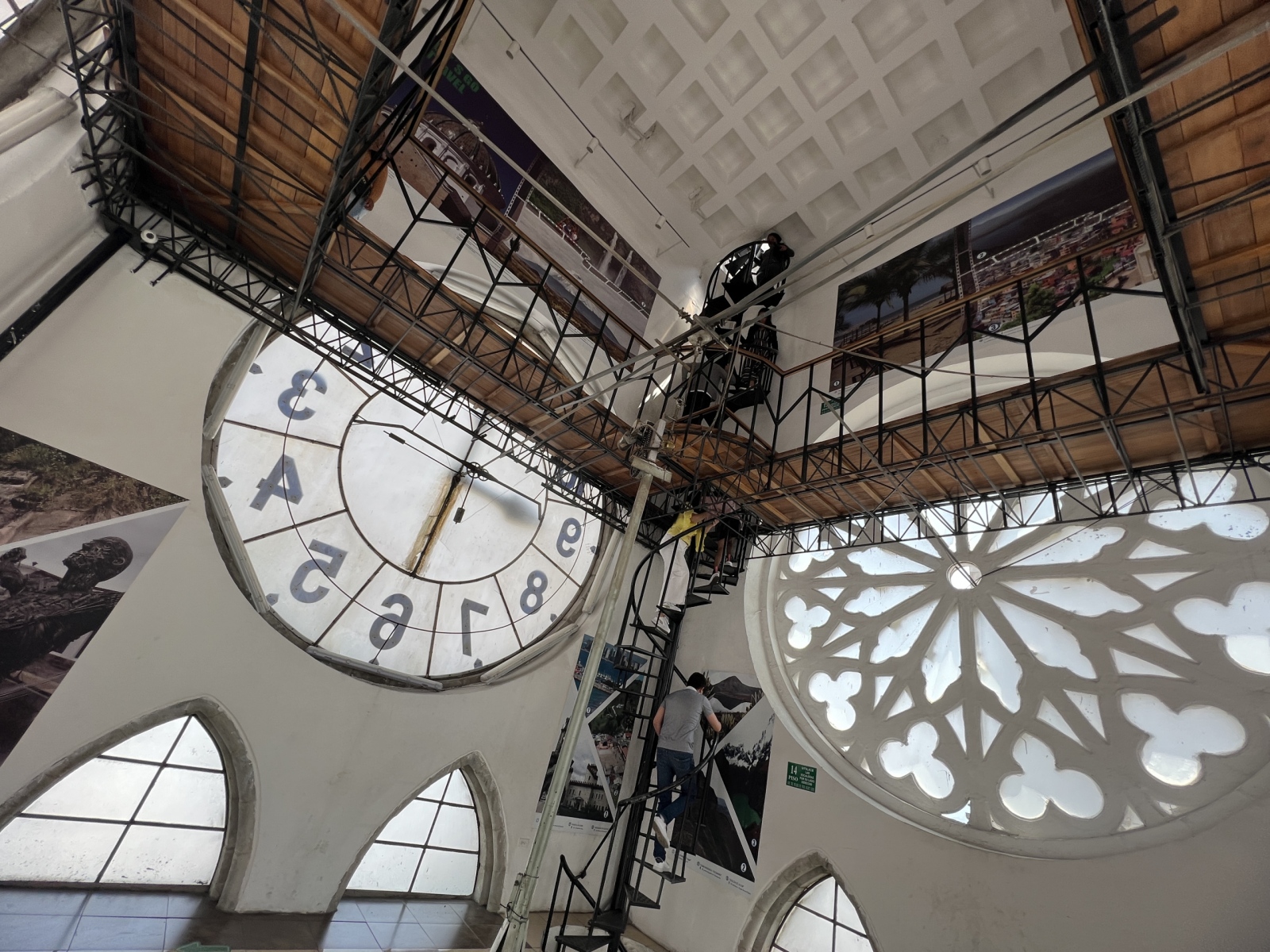
Wir beginnen den Tag im Museo Nacional, aber leider ist zurzeit wegen Umbau- und Renovierungsarbeiten nur ein winziger Teil der Kunst- und Kulturschätze zugänglich. Die goldene Sonnenmaske, das wohl berühmteste Ausstellungsstück, bekommen wir nicht zu sehen. Dafür bekommen wir dann Quito von oben zu sehen, und zwar von den Türmen der Basilika de Voto Nacional. Besonders bemerkenswert sind die Wasserspeier an dieser neugotischen Kirche – wir finden Löffelreiher und Pfaue, Kondore und Pelikane, Schildkröten, Leguane und Jaguare.
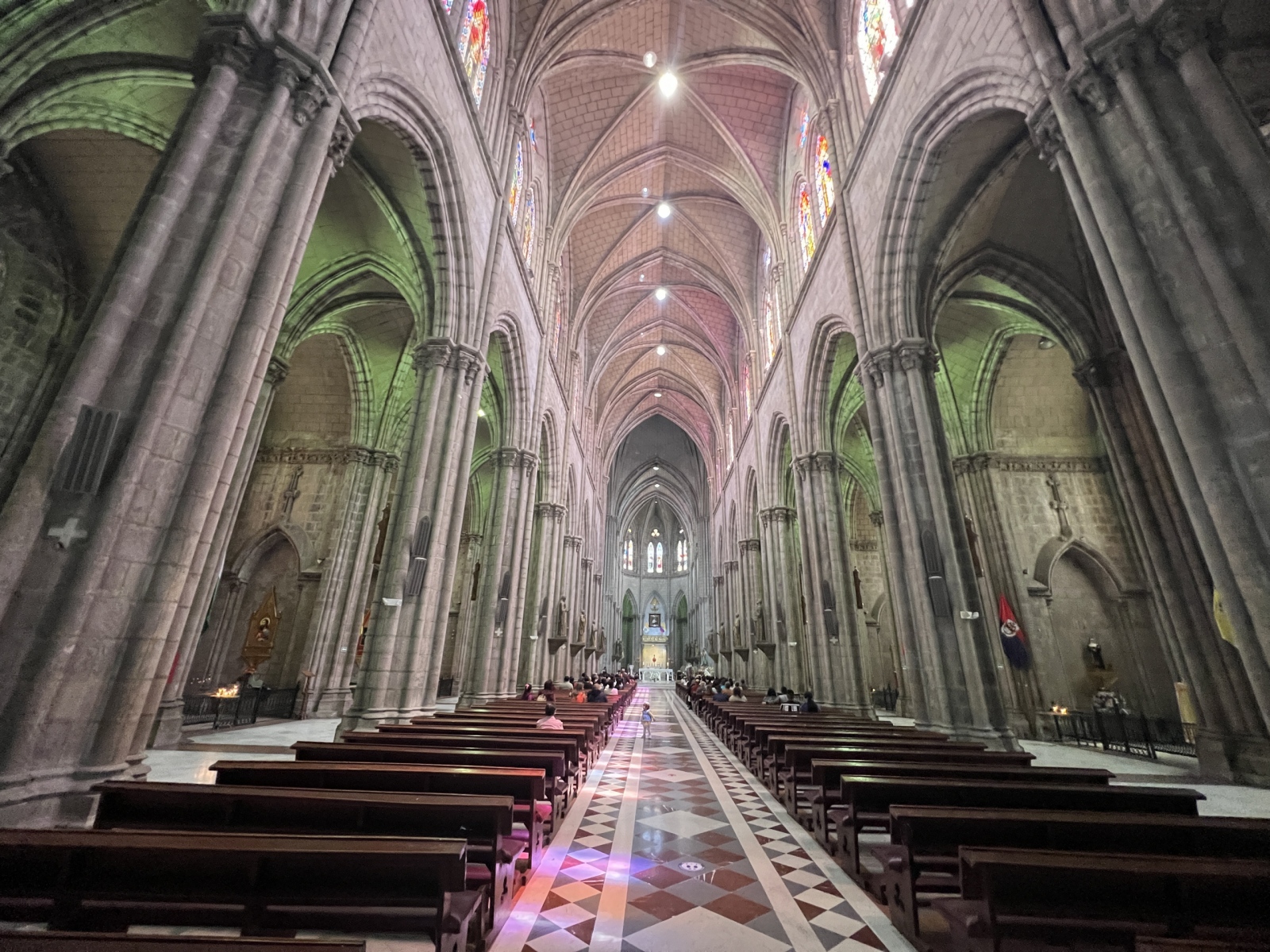
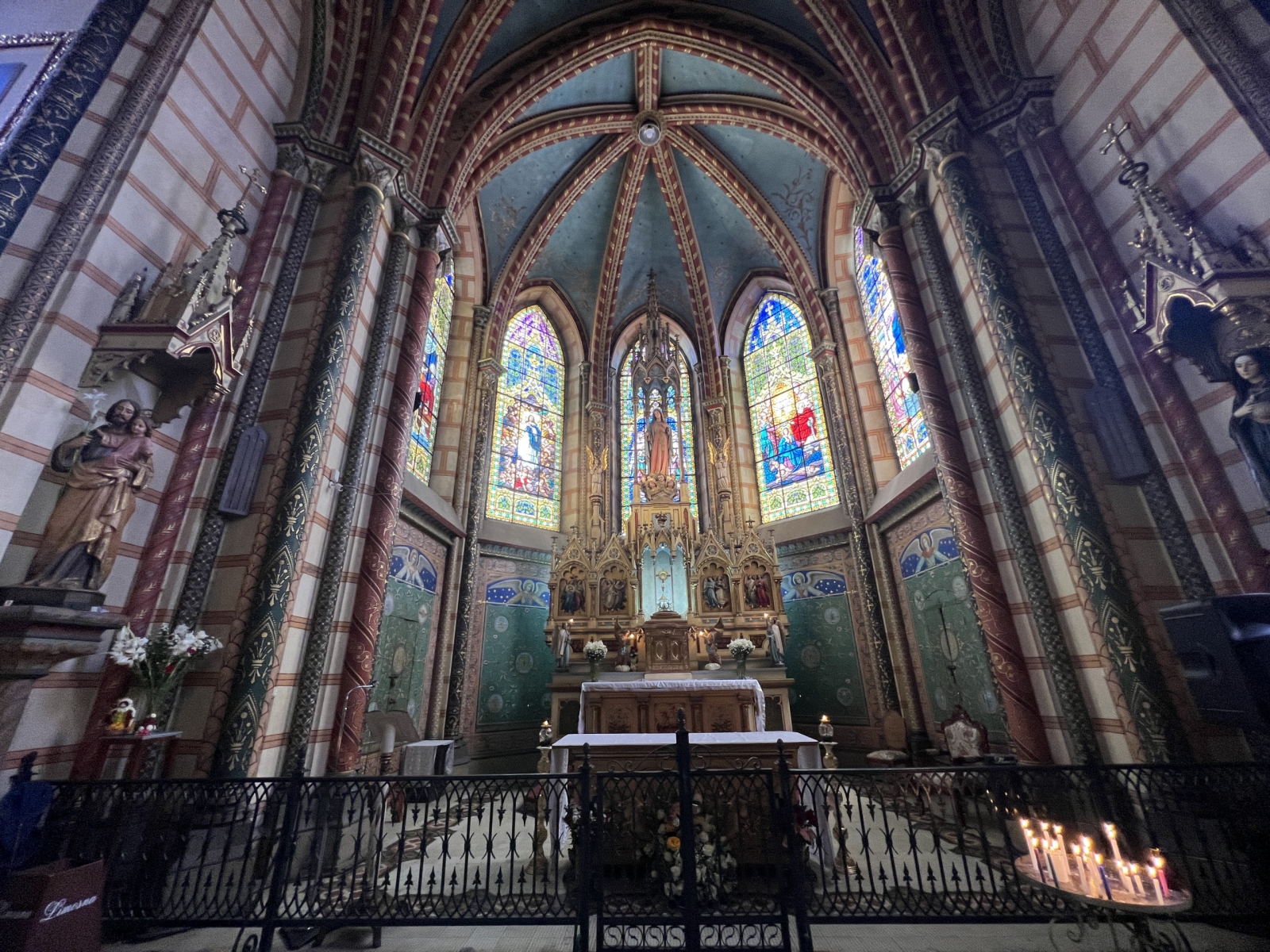
Von dort geht es zum Erzbischöflichen Palais mit seinen Arkaden und Innenhöfen, wo die Restaurants wie Gemäldegalerien anmuten. Der Präsidentenpalast an der Gran Plaza kann heute leider nicht besichtigt werden, aber die wohl prächtigste Kirche der Stadt, die Iglesia de la Compagnia de Jesus, hat geöffnet. Die Jesuitenkirche beeindruckt mit ihrer verschwenderischen goldenen Pracht.
Das Museo del Carmen Alto dagegen beschreibt das einfache Leben der Karmeliterinnen; und im riesigen und sehr empfehlenswerten Museo de la Ciudad gleich gegenüber, einem ehemaligen Spital, kann man die Geschichte Quitos von den ersten Siedlern bis zur Gegenwart nachvollziehen.
Day 210 – Quito II
We start the day at the National Museum, but unfortunately, we don´t get to see the golden sun mask, the most famous exhibit – due to renovation and remodeling only a tiny part of the collections is accessible. But afterwards we get to see Quito from above, from the towers of the Basilica de Voto Nacional. The most impressive parts for us are the gargoyles – we find spoonbills and peacocks, condors and pelicans, turtles, iguanas, and jaguars.
Then we stroll through the former archbishop´s palais, with arcades and patios, where the restaurants look like picture galleries. The presidential palace at the Gran Plaza is not open for visits today, but the Iglesia de la Compania de Jesus is accessible – with all its golden interior undoubtedly Quito´s most magnificent church.
The Museum of Carmen Alto, on the other hand, describes the simple and strict life of the nuns of the Order of Carmel; and on the other side of the street, the spacious and very interesting Museum of the City of Quito, a former hospital, visualizes the history of the city from the first settlers to the presence.