Heute lernen wir Autobus fahren in Beijing – ist auch ganz easy, die Route sucht man sich mit Amap, an der Haltestelle sind die Autobusnummern am Boden aufgemalt, und den QR-Code von Alipay scannt man einfach beim Ein- und Aussteigen. Eine Fahrt kostet 1 Yuan – ca. 12,5 Eurocent.
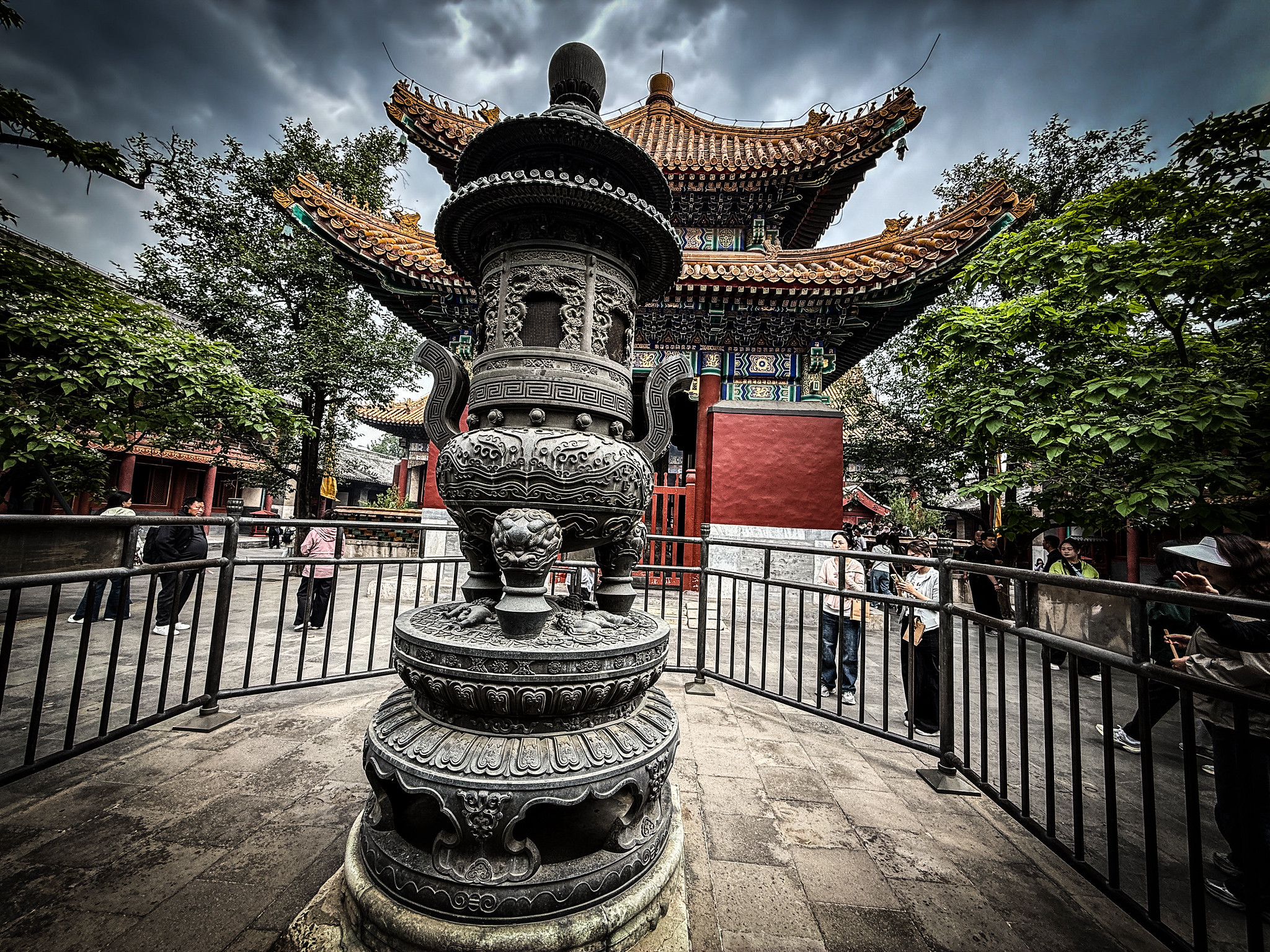
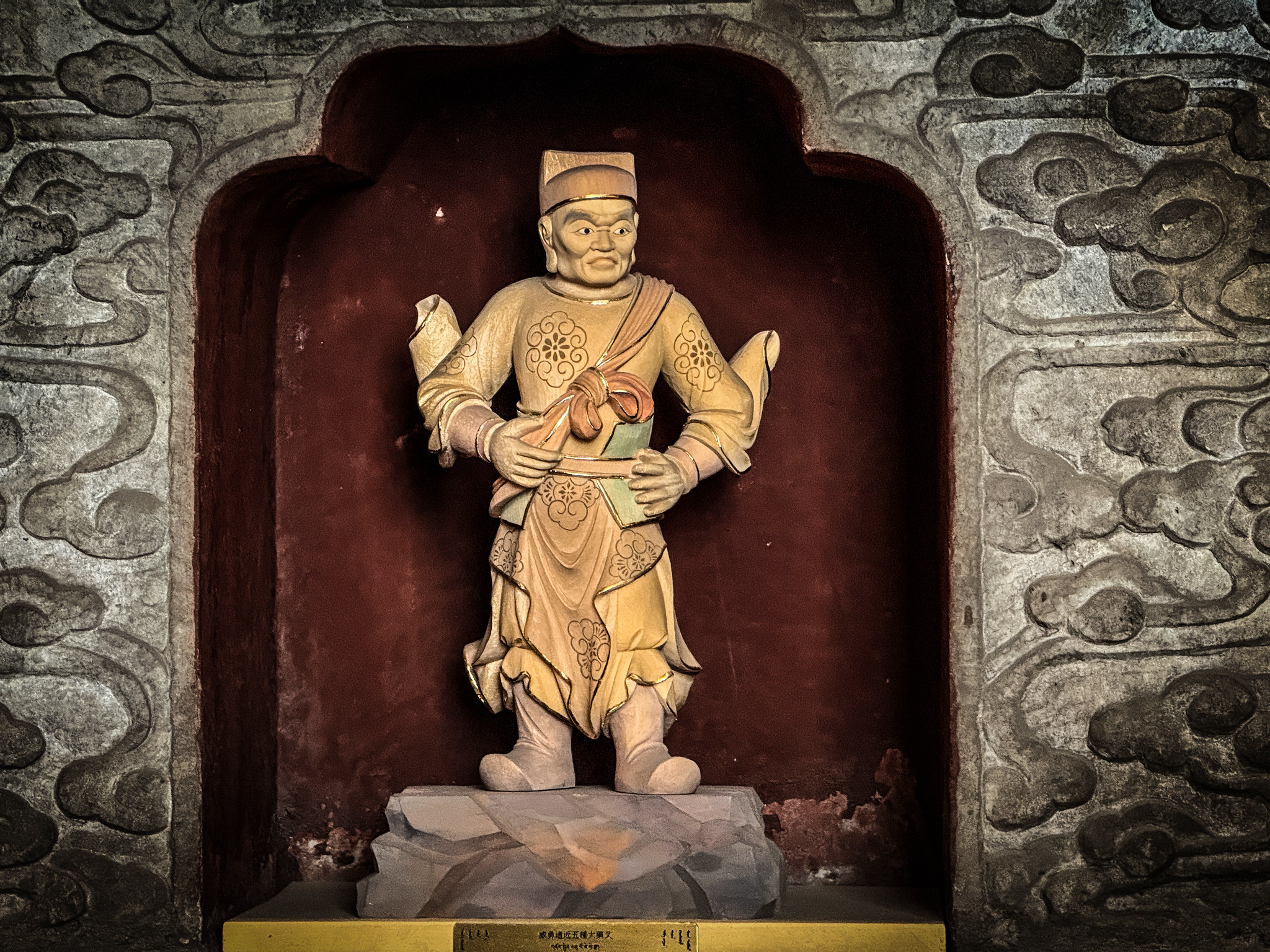
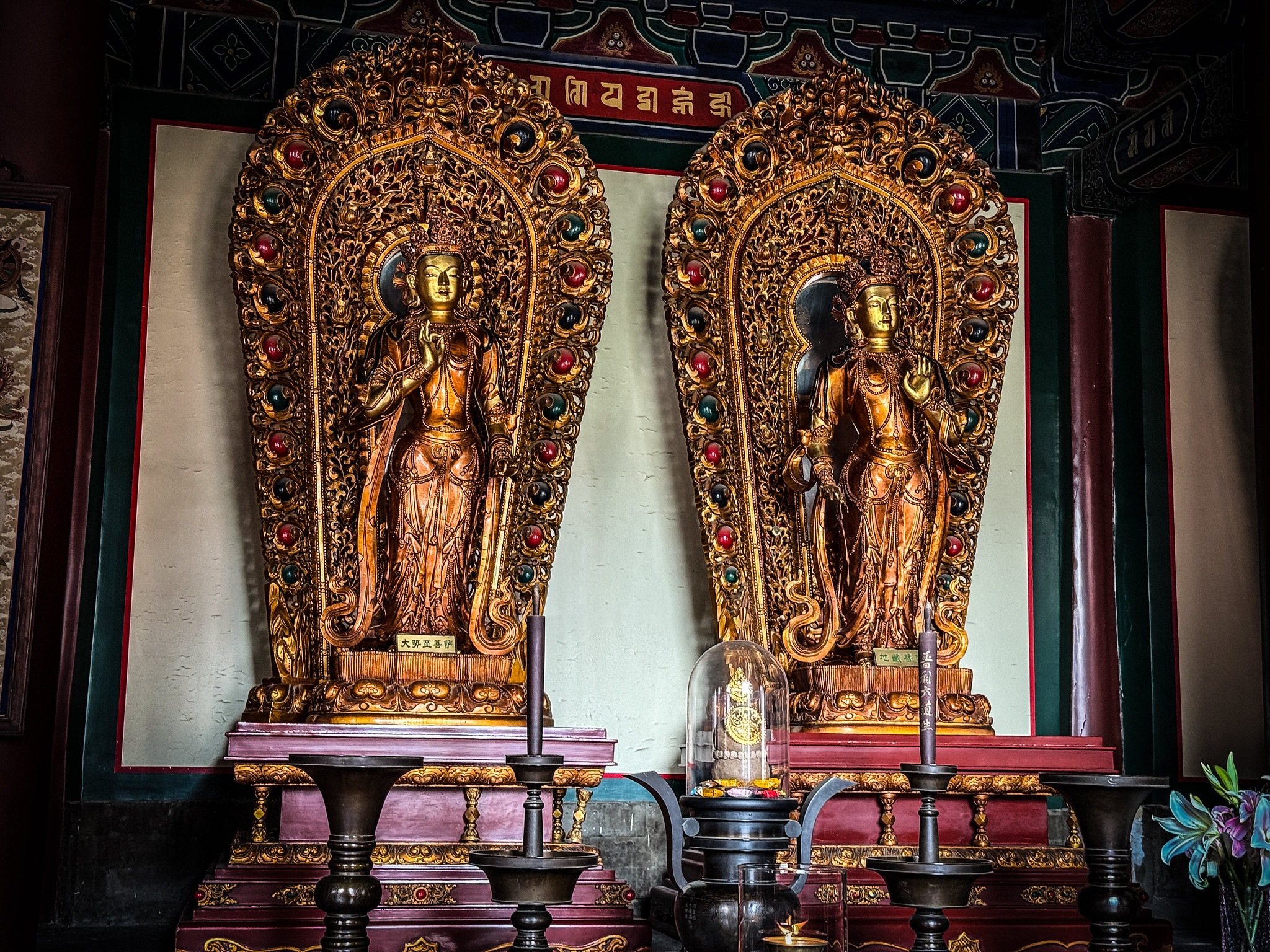
Als erstes geht es zum Yonghe-Tempel, dem „Palast des Friedens und der Harmonie“, der eigentlich als Prinzenresidenz errichtet und erst später in einen lamaistischen Tempel umgewandelt wurde – daher auch der Name Lama-Tempel. Nicht nur Touristen finden den Weg hierher, sondern auch viele Gläubige mit Unmengen an Räucherstäbchen – es ist ein sehr aktiver Tempel, ganz besonders verehrt wird die 18 m hohe Buddhastatue, die aus einem einzigen Sandelholzbaum geschnitzt wurde.
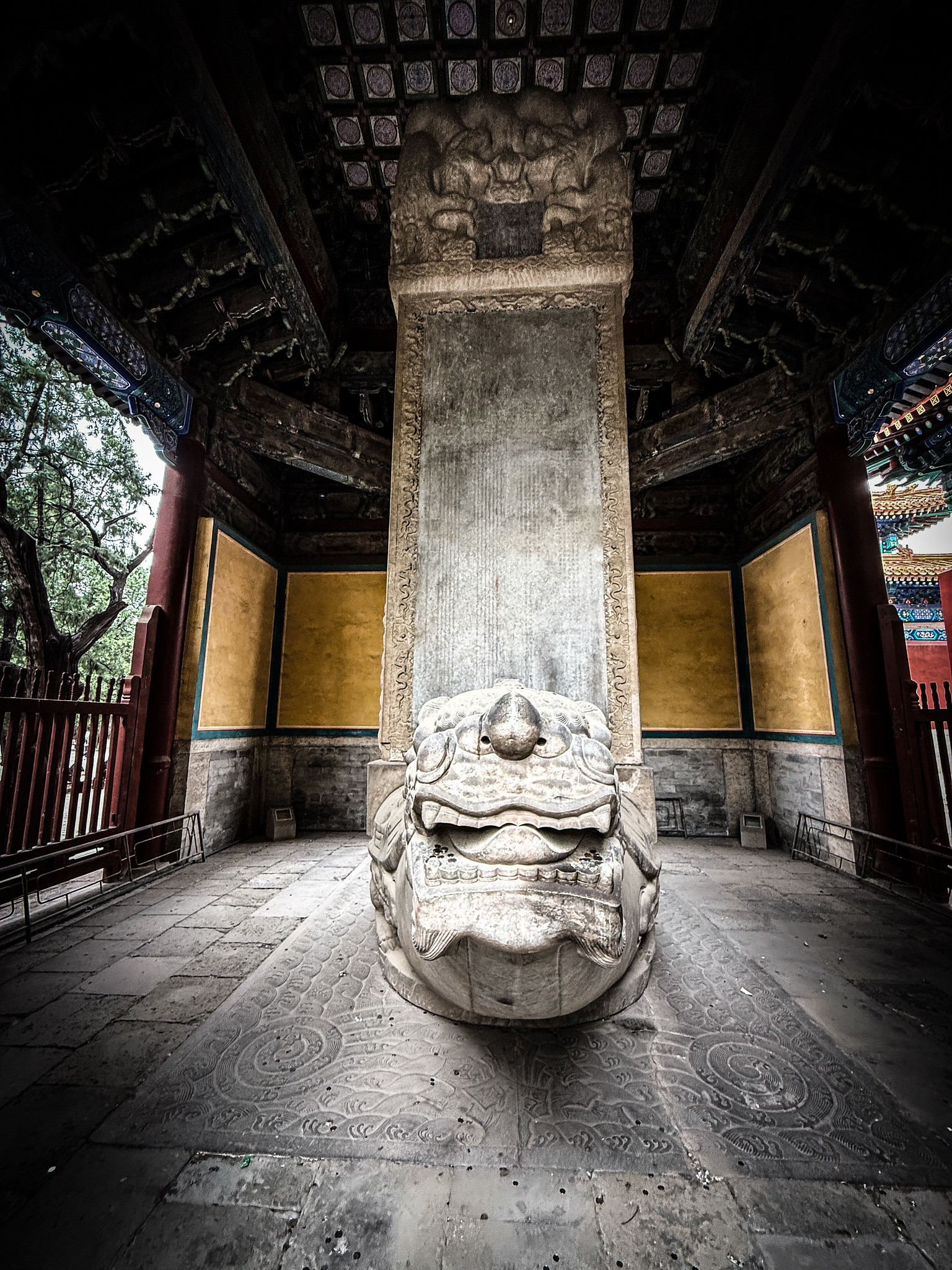
Deutlich ruhiger und beschaulicher geht es im Konfuzius Tempel zu, zwischen den einzelnen Hallen und Pavillons mit Stelen mit konfuzianischen Texten und den Namen erfolgreicher Prüflinge spenden jahrhundertealte Zedern Schatten. Die gesamte Anlage mit klassisch chinesischer Architektur strahlt Würde und Frieden aus.
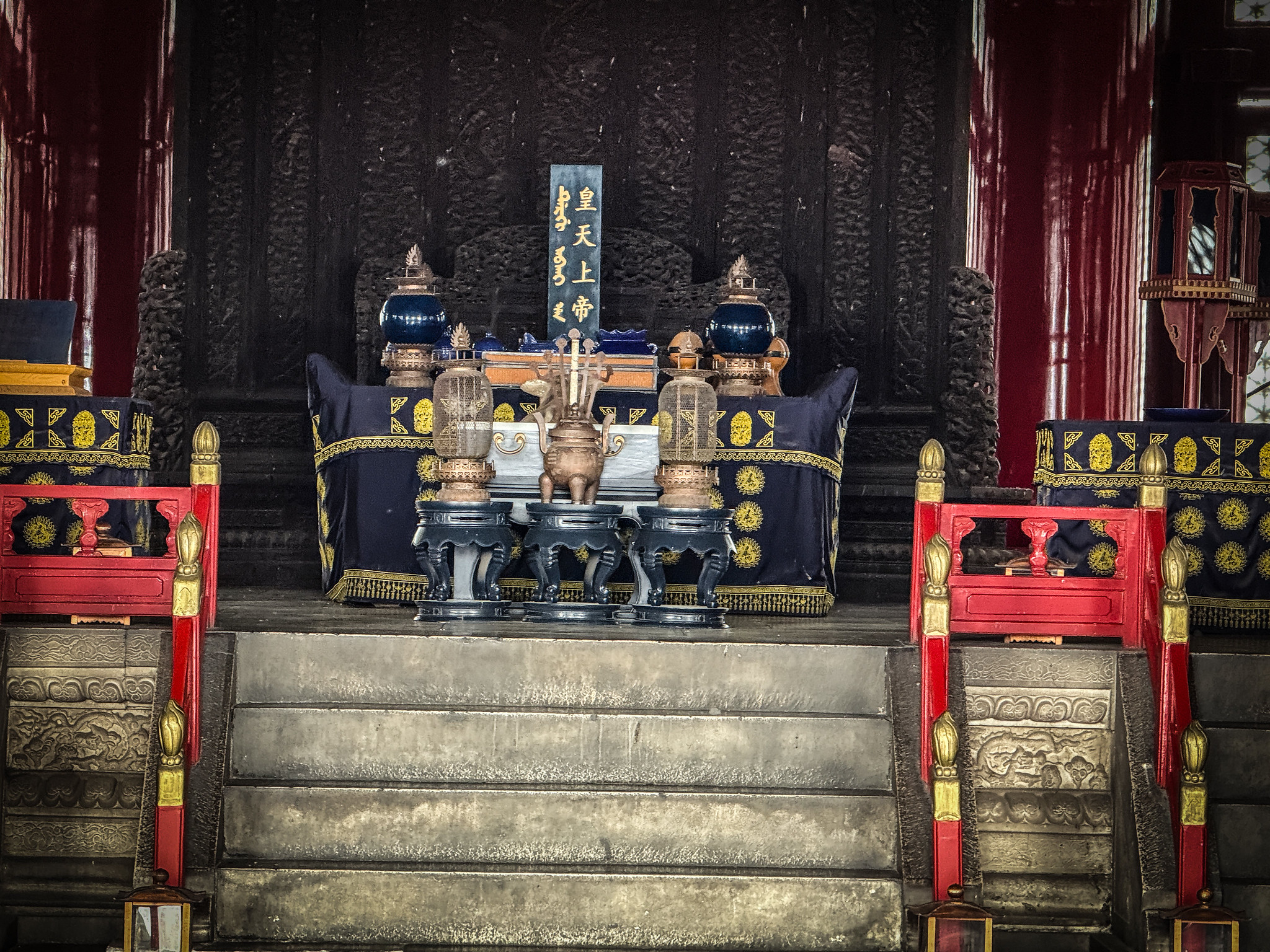
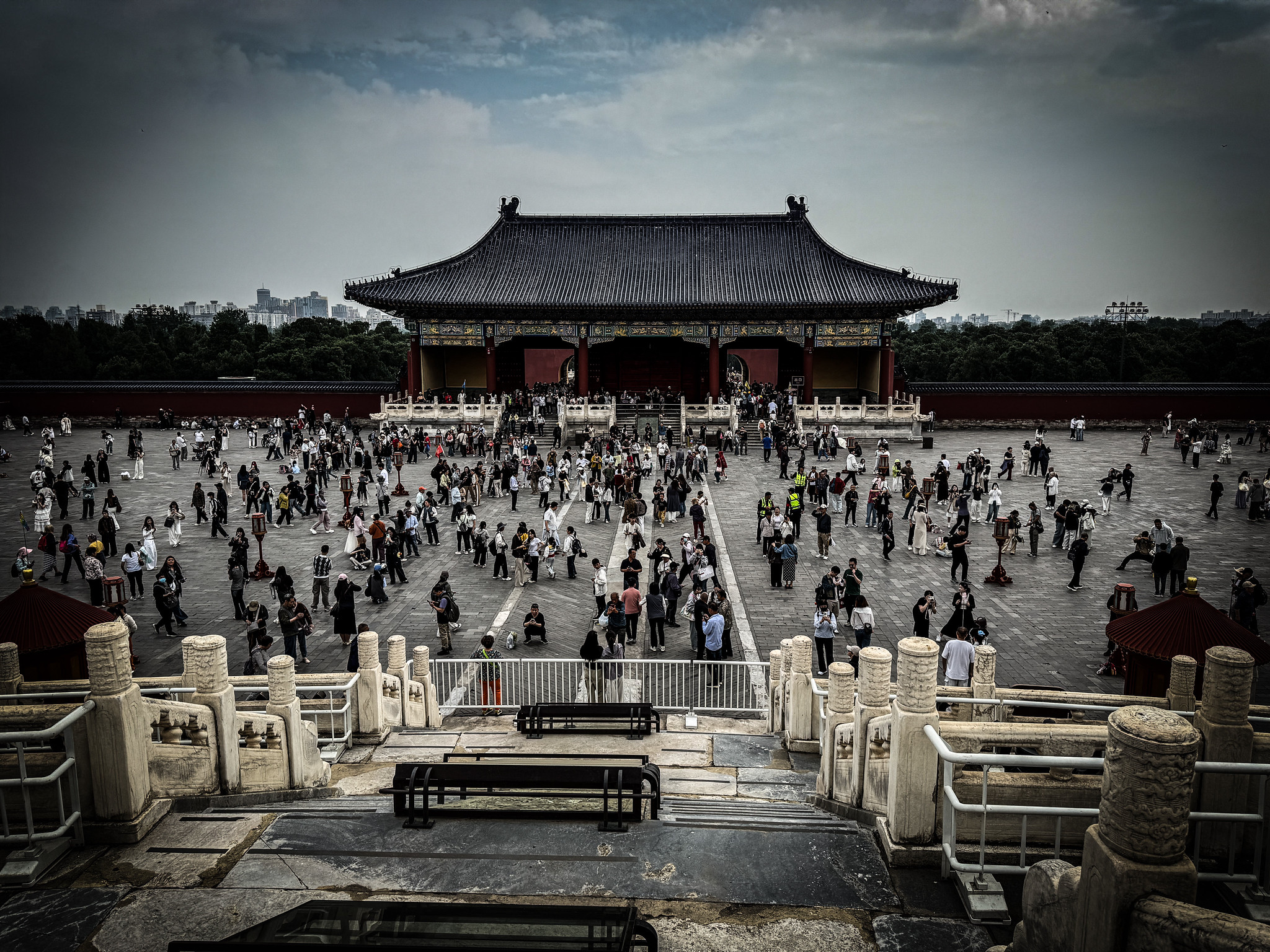
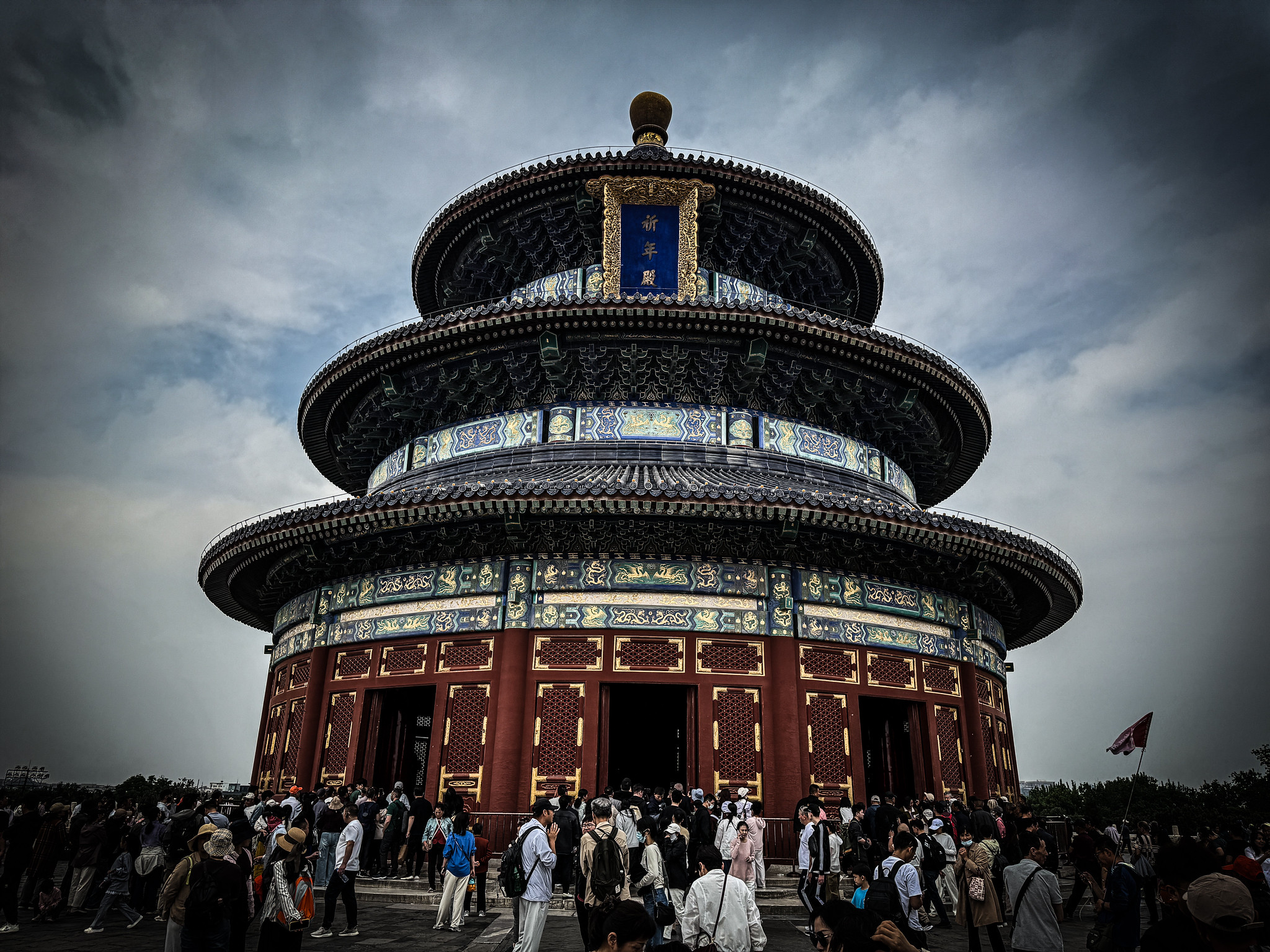
Was für ein Kontrast zu unserem nächsten Ziel – Himmelstempel und Halle des Erntegebets. Hier drängen sich unglaublich viele Besucher um die wenigen Öffnungen der Tempel, die einen Blick ins Innere erlauben – aber es ist ja auch eines der Wahrzeichen Beijings (wir kennen den kleinen Nachbau in Epcot in Walt Disney World – jetzt sehen wir endlich das Original).
Anschließend geht es gemütlich teils mit dem Bus, teils zu Fuß zurück zum Hotel (heute waren es „nur“ 21.457 Schritte oder 13,9 km). Beijing gefällt uns gut, und wir freuen uns schon auf morgen, auf die Universal Studios.

Saturday, May 9 – Three Temples in Beijing –
Today we learn how to ride the bus in Beijing — it’s actually very easy. You plan your route with Amap, the bus numbers are painted on the ground at the stops, and you simply scan the Alipay QR code when boarding and exiting. One ride costs 1 yuan — about 12.5 euro cents.
Our first stop is the Yonghe Temple, the “Palace of Peace and Harmony,” which was originally built as a prince’s residence and only later converted into a Lamaist temple — hence the name Lama Temple. Not only tourists come here, but also many worshippers carrying huge bundles of incense sticks. It is a very active temple, especially famous for the 18-meter-high Buddha statue carved from a single sandalwood tree.
Things are much quieter and more tranquil at the Confucius Temple. Between the various halls and pavilions, with steles bearing Confucian texts and the names of successful examination candidates, centuries-old cedars provide shade. The entire complex, with its classic Chinese architecture, radiates dignity and peace.
What a contrast to our next destination — the Temple of Heaven and the Hall of Prayer for Good Harvests. Enormous crowds gather around the few openings that allow a glimpse inside the temples — but it is also one of Beijing’s landmarks (we know the small replica at EPCOT in Walt Disney World — now we finally get to see the original).
Afterwards, we make our way back to the hotel, partly by bus and partly on foot (today it was “only” 21,457 steps or 13.9 km). We really like Beijing, and we’re looking forward to tomorrow’s visit to Universal Studios Beijing.